Publisher’s version / Version de l'éditeur:
Journal of Glaciology, 3, 24, pp. 257-260, 1959-01-01
READ THESE TERMS AND CONDITIONS CAREFULLY BEFORE USING THIS WEBSITE.
https://nrc-publications.canada.ca/eng/copyright
Vous avez des questions? Nous pouvons vous aider. Pour communiquer directement avec un auteur, consultez la première page de la revue dans laquelle son article a été publié afin de trouver ses coordonnées. Si vous n’arrivez pas à les repérer, communiquez avec nous à [email protected].
Questions? Contact the NRC Publications Archive team at
[email protected]. If you wish to email the authors directly, please see the first page of the publication for their contact information.
NRC Publications Archive
Archives des publications du CNRC
This publication could be one of several versions: author’s original, accepted manuscript or the publisher’s version. / La version de cette publication peut être l’une des suivantes : la version prépublication de l’auteur, la version acceptée du manuscrit ou la version de l’éditeur.
Access and use of this website and the material on it are subject to the Terms and Conditions set forth at
Compactibility of newly fallen snow in Eastern Canada
Williams, G. P.
https://publications-cnrc.canada.ca/fra/droits
L’accès à ce site Web et l’utilisation de son contenu sont assujettis aux conditions présentées dans le site LISEZ CES CONDITIONS ATTENTIVEMENT AVANT D’UTILISER CE SITE WEB.
NRC Publications Record / Notice d'Archives des publications de CNRC:
https://nrc-publications.canada.ca/eng/view/object/?id=5a428dfd-2d71-47d0-b8cf-7b9c5043ceae https://publications-cnrc.canada.ca/fra/voir/objet/?id=5a428dfd-2d71-47d0-b8cf-7b9c5043ceaeSer
TH1N21r2
no.
74
c. 2
NATIONAL
RESEARCH
COUNCIL
CANADA
DIVISION O F BUILDING RESEARCH
A N A L Y Z E D
COMPACTlBlLlTY OF NEWLY FALLEN SNOW IN
EASTERN CANADA
BYG.
P.
WILLIAMS
R E P R I N T E D F R O M JOURNAL O F GLACIOLOGY VOL. 3, N O 24, OCTOBER 1958, P. 257-
260 R E S E A R C H PAPER NO. 7 4 O F THEDIVISION O F BUILDING RESEARCH
OTTAWA
JANUARY
1959
This p u b l i c a t i o n
i s
being d i s t r i b u t e d b y
t h e Division o f Building Research of t h e N a t i o n a l
Research Council a s
a
contribukion towards b e t t e ~
b u i l d i n g i n Canada.
It
s
h o d d not be reproduced
1i n whole o r i n p a r t , without permission o f t h e o r i -
g i n a l publisher.
The D i v i s i o n would be glad Lo be
o f a s s i s t a n c e i n o b t a i n i n g such permission.
F u b l i c a t i o n s of t h e Division of Building
Research may be obtained by mailing t h e a p p r o p r i a t e
r e m i t t a n c e ,
( a Dank, Express, o r Post Office Money
Order o r a cheque made payable a t p a r i n Ottawa,
Lo t h e Receiver General of Canada, c r e d i t N a t i o n a l
Research c o u n c i l ) t o t h e N a t i o r a l Research Council,
Ottawa.
Stamps a r e not acceptable.
A
coupon system has been introduced t o
make payments f o r p u b l i c a t ions r e l a t i v e l y simple.
Coupons a r e a v a i l a b l e i n denominations
of
5,
25,
and
9
c e n t s ,
and may be obtained by making a
re-
m i t t a n c e
as
i n d i c a t e d above.
These coupons may b e
used
f o r t h e purchase of
a l l N a t i o n a l Research
Council p u b l i c a t i o n s i n c l u d i n g s p e c i f i c a t i o n s
of
Reprinted from the Journal of Glaciology, Vol. 3, No. 24, 1958, pages 257-260 -
C O M P A C T I B I L I T Y O F . N E W L Y F A L L E N S N O W I N
E A S T E R N C A N A D A *
By G. P. WILLIAMS
(Snow and Ice Section, Division of Building Research, National Research Council, Canada)
ABSTRACT. The critical dcnsity of newly fallen snow w a s measured during the 1956-57 winter season a t two stations: Montrcal Road Laboratories of the National Research Council, Ottawa, and the University of New Brunswick, Fredericton, New Brunswick. The relative compacted density or compactibility of newly fallen snow w a s found to depend on undisturbed density and snow temperature. A statistical equation was developed relating snow temperature and unclisturbed density to the compacted density of the snow sample. Additional tests undcr cold room conditions indicate that grain size and grain-size distribution also have a n appreciable effect on compacted density.
R h s u ~ B . Pendant la saison cl'hiver 1956-1957 on a mcsurk, pr&s de deux stations, la densitt critique de la neige fraichement tombtc. L'une de ces stations se trouvait dans les laboratoires du Conseil National des Recherches, route dc Montreal a Ottawa, tandis que l'autre ttait situee a 1'UniversitC d u Nouveau- Brunswick, A Fredericton, dans la province du Noi~\.eau-Brunswick. O n s'est aperqu que la densite relative de compaction ou "compactibilitd" de la neige fraichement tombte dtpendait de la densitt naturelle de cette neige ct de sa temperature. O n a mis au point une Gquation statistique Ctablissant un rapport entre la temperature d'unc parcelle de neige et sa densite naturelle d'une part et sa densit6 de compaction d'autre part. D'autres essais effectues en chambre froide, ont permis de dCceler l'effet sensible qu'ont la dimension des grains et leur repartition sur la densite de compaction.
INFOR~IMION on silow compaction is essential in solving many practical problems related to snow such as the development of over-snow vehicles, snow clearing by mechanical means and compacting snow for road construction. Although there have been some fundamental studies on snow compaction,' apparently no effort has been made to develop a means of measuring the variation in the compactibility of new snow under different climatic con- ditions. This report presents a simple method for measuring the compactibility of newly fallen snow. These compactibility measurements were taken for the Division of Building Research during the 1956-57 season. While the emphasis in this report is on newly fallen snow the principles could probably be applied to other snow types.
Different procedures have been used for describing snow cover in terms of grain size, shape, density, and hardness.',3 These measurements, however, do not always describe snow adequately from an engineering viewpoint. I t is considered that a snow classification which treats the sncw mass as a n aggregate is more useful for engineering purposes than one based on individual constituents of the snow mass. This implies that the behaviour of a snow type can be predicted more readily from observations of how the snow mass behaves under various tests than by observations of grain size, shape, and distribution. Measurements on undisturbed density and hardness are measurements which treat the snow mass as a n aggregate but few attempts have been made to relate these to the qualitative behaviour of snow.4
I n the field of soil mechanics attempts to relate grain-size characteristics to soil constants such as permeability have been consistently disappointing.5 T h e trcnd has been to study the maximum and minimum porosities of granular soil in order to bring the complex phenomena of soil behaviour to a common basis6, 7
I n studies by Nuttal and ~inelli,' the term "critical density" has been applied to snow types. I n this paper the authors suggest that below this critical density snow will absorb normal stresses primarily through packing; above this critical density the snow cover will fail hydrodynamically. The work of Kragelski,9 indicates that there is a critical density for snow types, beyond which a great deal of additional energy is required to obtain a small increase in density.
*
This is a contribution from the Division of Building Research of the National Research Council of Canada a n d is published with the approval of the Director of the Division.258 J O U R N A L O F G L A C I O L O G Y
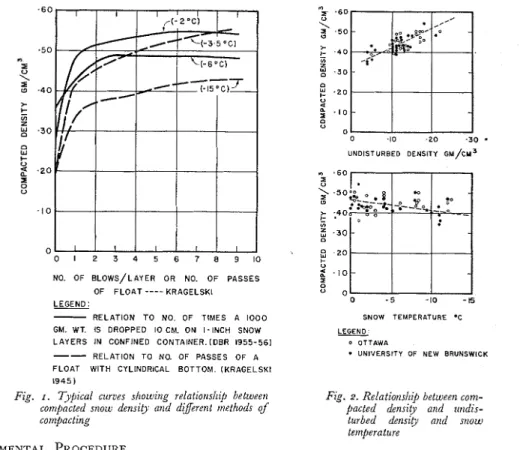
Fig. I compares the densities Kragelski obtained for the number of passes of a float, t o
the densities the author obtained by dropping a 1000 gm. weight through a height of 10 cm.
o n confined snow samples. Both sets of data indicate that the critical density is dependent on snow temperature and is a measurable snow property. I t was thus decided to measure the critical density along with other snow characteristics of newly fallen snow under a range of snow conditions.
NO. OF BLOWS/LAYER OR NO. OF PASSES OF F L O A T ---- KRAGELSKI
LEGEND:
-
RELATION T O NO. OF TIMES A 1 0 0 0 GM. WT. IS DROPPED 10 CM. ON I - I N C H SNOW L A Y E R S IN CONFINED CONTAINER.(DBR 1955-561--
RELATION T O NO. OF PASSES OF A F L O A T WITH CYLINDRICAL BOTTOM. (KRAGELSKI 1 9 4 5 1F i g . I . T y j ~ i c a l czirues showing relationslril, between cotr~jacted snow d e n s i b and digerent rnethods o f cornfiacting
UNDISTURBED DENSITY G M / C Y ~
SNOW TEMPERATURE 'C
LEGEND 0 OTTAWA
UNlVERStTY OF NEW BRUNSWICK
Fig. 2. Relatior~slrjl between com- !acted densib and zit~dis-
turbed detzsily and snow te~nfierature
The physical properties of necvly fallen snow were investigated during the 1956-57 winter season at two snow survey stations: the Montreal Road Laboratories of the National Research Council, Ottawa, and the University of New Brunswick a t Fredericton, N.B. T h e following snow properties were recorded : snow temperature, undisturbed density, compacted density and snow hardness. I n addition, the amount of each snowfall, general type of snow and air temperature were recorded.
Snow temperature, snow hardness and undisturbed density were measured using the same general procedure used in the Snow Survey of Canada.Io T h e compacted density was determined by dropping a 1000 gm. weight from a height of 10 cm. on snow packed in layers
in a 250 cm.3 container. This technique was developed for measuring the free water content of wet snow."
I n addition to measuring the properties of newly fallen snow, some compaction tests were made on granular snow in the cold room of the Division, in order to determine the effect of grain size and grain-size distribution on the density to which snow can be compacted.
EXPERIMENTAL RESULTS
C O M P A C T I B I L I T Y O F N E W L Y F A L L E N S N O W 259
between compacted density and snow temperature. These scatter diagrams indicate a general straight-line relationship between these variables.
Using the methods of correlation analysis outlined by Ezekiel," a statistical analysis was made of the data shown in Fig. 2.
The equation :
2'-
= 0.347 +o ' 750xI +o .ooogx,was obtained using: - ( 1 )
2'-
= compacted density in gm.lcm.3X,
= undisturbed density in gm.lcm.3 X, = snow temperature (" C.)The standard error of estimate for this equation was found to be equal to o .025 gm.lcm.3 which measures the closeness with which the estimated values agree with the original values. I n other words, by knowing the undisturbed density and snow temperature, it is possible to estimate the compacted density within f 0.025 gm.lcm.3 approximately 70 per cent of the time.
The coefficient of multiple correlatioil was calculated to be equal to 0.77. This figure gives a measure of the proportion of the variation in the compacted density which can be explained by variation in snow temperature and undisturbed density values. While this coefficient is not high it must be remembered that these data were obtained under field conditions by independent observers, and therefore some of the variation is probably due to experimental techniques.
The main value of equation ( I ) is that the relative compacted density or compactibility
of newly fallen snow can be estimated and compared by making two simple snow measure- ments: undisturbed density and snow temperature.
Two variables which were not measured but which might affect the compacted density are grain size and grain-size distribution. In newly fallen snow it is difficult to make any objective measurement of these two variables. I t is possible that undisturbed density does give a measure of their effect. T o evaluate the effect of grain size and grain-size distribution, compaction tests were conducted in the laboratory on granular snow, screened to different grain sizcs and grain-size distribution.
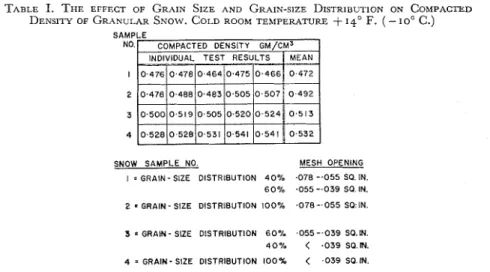
Table I records the results of these compaction tests under constant cold room tempera-
TABLE I. THE EFFECT OF GRAIN SIZE A N D GR~IN-SIZE DISTRIBUTION ON COMPACTED
DENSITY OF G R ~ U L A R SNOW. COLD ROOM TEMPERATURE
+
14' F. ( - 10' C.)SAMPLE
COMPACTED DENSITY GM/CM3 D I V ~ U A L TEST R E S U ; ~
? ,
SNOW SAMPLE NO. MESH OPENING I = GRAIN- SIZE DISTRIBUTION 4 0 % .078 - . 0 5 5 SQ. IN.
6 0 % ,055 - , 0 3 9 SO. IN. 2 = GRAIN- SIZE DISTRIBUTION 100Dk , 0 7 8 - , 0 5 5 SQIN S = GRAW- SUE DISTRIBUTION 6 0 % , 0 5 5 - , 0 3 9 SQ.PI.
4 0 % < . 0 3 9 S Q . N . 4 = GRAIN- SIZE DISTRIBUTION 100% < , 0 3 9 SQ.IN.
ture of
+
14" F. ( - 10" C.). Sample No. 2 compared with No. 4 indicates that the finer grain size can be compacted to a higher density than the coarse grain size. Sample NO. I compared260 J O U R N A L O F G L A C I O L O G Y
with sample No. 3 indicates that the proportion of fines in the material also can affect the com- pacted density. A comparison of sample No. I and sample No. 2 indicates that this is not
necessarily true. Probably some measure of grain shape is also needed to analyse these tests properly. I n general this result is similar to porosity determinations of granular materials, which indicate that the higher the proportion of smaller particles the denser the packing of the material.'3 I t should be emphasized that this laboratory experiment was with old granular snow and the results do not necessarily apply to freshly fallen snow.
CONCLUSIONS
T h e measurements made on the properties of newly fallen snow indicate that the density to which freshly fallen snow can be compacted by a standard technique is largely dependent on the snow temperature and the undisturbed density. These tests were made on dry snow. I t has been shown I' that the compacted density of wet snow depends on the amount of free water held in the wet snow. Further tests might indicate that a modified form of equation ( I ) would be valid for wet snow conditions.
T h e measurements required are simple and can readily be done under field conditions. T h e data obtained indicate that reasonably consistent results can be obtained by observers located several hundred miles apart.
I t has also been shown that the smaller the proportion of fine, granular snow, the higher the compacted density. I t is possible that the undisturbed density term in equation ( I ) gives
somemeasure of the grain size and grain-size distribution effect. ACKNOWLEDGEMENTS
T h e author is indebted to the observers Messrs. J. MciVally and D. L. Seheult for taking the field observations at Ottawa and Fredericton respectively, and to Mr. L. W. Gold for helpful criticism of this report.
Special ackno~.ledgcment is also made of the co-operation of Professor L. R . Seheult, Faculty of Forestry, University of New Brunswick, under whose supervision the work a t Fredericton was carried out.
MS. received 1 1 December 1957
R E F E R E N C E S
I. Taylor, A. Snow compaction. Snow, Ice and Pertnafrost Research Establishnzet~t, Report No. 13, 1953.
2. T h e Internatio~lal Classification of Snow (with special reference to snow on the ground) issued by the
Commission on Snow and Ice of the International Association of Hydrology. ~Vational Research Council o f Canada, Associate Committee otz Soil and S n o w hIechanics, O t t a w a , Technical ~Uemorandtlrn 31, I 954.
3. Smith-Johannsen, R . Snow data. U11iot1 Cdoddsique et G i o p / y s i q ~ ~ e Intertiationale. ilssociation Ititertiatiotiale d'Hyd7-ologie Scientifique. ilssemblie Cdnhale d'Oslo, Tome 2, 1948, p. 153-56.
4. Gold, L. W. The strength of snow in compression. Jorcrtzal o f Glaciolop, Vol. 2, No. 20, 1956, p. 719-25. 5. Terzaghi, I<., and Peck, L. Soil n~echat~ics in engineering practice. John Wiley & Sons, 1948.
6. Burmister, D. M. The importance and practical use of relative density in soil mechanics. Proceedings, dtnerican Society f o r Testing Materials, Vol. 48, 1948, p. 1249-68.
7. I<olbusze\vski, J. J. An experimental study of tlle maximum and minimum porosities of sand. Proceedit~gs, Secot~d Itlt. Confereelice on Soil Mechanics and Foundation Engineering, 1948, p. I 58-65.
8. Nuttal, C. J., and Finelli, .J. P. Vehicles in snow. A critical review of the state of the art. U.S. A m y , Corj~s o f Engineers, Walcrrvays E.x/~eriment Station, Vicksburg, Miss. Tech. Memo. No. 3-414, 1955.
9. Kragel'skiy, I. V. Tc1;hnologicheskiy ailaliz orudiy dlya uplotneniya sncga [Technological analysis of snow cornprcssion equipment]. (111 FijikomekhaniclteskGe svoystva snega i ikh prirnenetiiye u aerodronzr~om i dorozhom stroitel'stve [Physical and n~eciianical properties o f snow and their utili jation in airfield and road constr~~ction]. Moscow, Akademiya Nauk SSSR [Academy of Scicnces of the U.S.S.R.], 1945, p. 29-42.)
10. Klein, G. J., Pearce, D. C., and Gold, L. W . Mcthod of measuring the significant characteristics of a snow
cover. National Research Council o f Canada, rlssociate Committee on Soil and Sttow Mechanics, Ottawa, Technical Memorandum I 8 , I 950.
I I . Williams, G. P. A field determination of the Gee water content in wet snow. Proceedir~gs, Western Stlow Conference 1956. (Also issued by National Research Council of Canada, Division of Building Research, as NRC No. 41 lo.)
12. Ezekiel, M. Methods of correlation analysis. Second Edition, John Wiley & Sons, 1953. 13. Muskat, M. TheJlow ofhomogeneousJluids throtighporous media. Ann Arbor, J. W. Edwards, 1946.