HAL Id: hal-01159207
https://hal.archives-ouvertes.fr/hal-01159207
Submitted on 6 Jan 2021
HAL is a multi-disciplinary open access
archive for the deposit and dissemination of
sci-entific research documents, whether they are
pub-lished or not. The documents may come from
teaching and research institutions in France or
abroad, or from public or private research centers.
L’archive ouverte pluridisciplinaire HAL, est
destinée au dépôt et à la diffusion de documents
scientifiques de niveau recherche, publiés ou non,
émanant des établissements d’enseignement et de
recherche français ou étrangers, des laboratoires
publics ou privés.
Atlantic Ocean
Mar Benavides, Maren Voss
To cite this version:
Mar Benavides, Maren Voss. Five decades of N2 fixation research in the North Atlantic Ocean.
Fron-tiers in Marine Science, FronFron-tiers Media, 2015, 2, pp.40. �10.3389/fmars.2015.00040�. �hal-01159207�
Edited by: Claire Mahaffey, University of Liverpool, UK Reviewed by: Mark Moore, University of Southampton, UK Ajit Subramaniam, Lamont-Doherty Earth Observatory/Columbia University, USA *Correspondence: Mar Benavides, Centre National de la Recherche Scientifique/Institut National des Sciences de l’univers, Institut de Recherche pour le Développement, Mediterranean Institute of Oceanography, Aix Marseille Université, Université de Toulon, 101 Promenade Roger Laroque, BP A5, 98848 Nouméa cedex, New Caledonia [email protected]
Specialty section: This article was submitted to Marine Biogeochemistry, a section of the journal Frontiers in Marine Science Received: 22 January 2015 Accepted: 27 May 2015 Published: 11 June 2015 Citation: Benavides M and Voss M (2015) Five
decades of N2fixation research in the
North Atlantic Ocean. Front. Mar. Sci. 2:40. doi: 10.3389/fmars.2015.00040
Five decades of N
2
fixation research
in the North Atlantic Ocean
Mar Benavides1* and Maren Voss2
1Centre National de la Recherche Scientifique/Institut National des Sciences de l’univers, Institut de Recherche pour le
Développement, Mediterranean Institute of Oceanography, Aix Marseille Université, Université de Toulon, UM 110, Nouméa,
New Caledonia,2Department of Biological Oceanography, Leibniz Institute for Baltic Sea Research, Rostock, Germany
Dinitrogen (N2) fixation (the reduction of atmospheric N2 to ammonium by specialized
prokaryotic microbes), represents an important input of fixed nitrogen and contributes significantly to primary productivity in the oceans. Marine N2 fixation was discovered
in the North Atlantic Ocean (NA) in the 1960s. Ever since, the NA has been subject to numerous studies that have looked into the diversity and abundance of N2-fixing
microbes (diazotrophs), the spatial and temporal variability of N2 fixation rates, and the
range of physical and chemical variables that control them. The NA provides 10–25% of the globally fixed N2, ranking as the third basin with the largest N2 fixation inputs in
the world’s oceans. This basin suffers a chronic depletion in phosphorus availability, more aeolian dust deposition than any other basin in the world’s oceans, and significant nutrient inputs from important rivers like the Amazon and the Congo. These characteristics make it unique in comparison with other oceanic basins. After five decades of intensive research, here we present a comprehensive review of our current understanding of diazotrophic activity in the NA from both a geochemical and biological perspective. We discuss the advantages and disadvantages of current methods, future perspectives, and questions which remain to be answered.
Keywords: Nitrogen, nifH, tropical, upwelling, Amazon River plume, phosphorus, N*
Introduction
Dinitrogen (N2)fixation–the reduction of atmospheric nitrogen to ammonia- is an energy intensive
process performed by prokaryotes from a variety of habitats, including rice fields, lacustrine waters, and the ocean (Karl et al., 2002). In the latter, N2fixation provides an input of fixed nitrogen that
may become the primary source of this nutrient when other inputs like coastal runoff, atmospheric deposition, or subsurface nutrient upwelling and diffusion are minor or insufficient to meet the photosynthetic phytoplankton demand. This can be the case in some of the remote and chronically stratified oligotrophic subtropical gyres, which make up approximately half of the world’s ocean surfaces. In that sense, N2fixation plays a key role in sustaining primary production on a global
basis, powering the biological carbon pump and eventually conferring the oceans the ability to sequester atmospheric carbon dioxide (CO2). The availability of fixed nitrogen ultimately depends
on the difference between “gains” and “losses” through N2fixation vs. denitrification and anammox
(Falkowski, 1997; Gruber and Galloway, 2008), and so does the magnitude and distribution of diazotrophic activity in the oceans (Weber and Deutsch, 2014). As a result, the complexity of the many reactions involved between the different nitrogen chemical forms and the diversity of the microorganisms responsible for them have encouraged a wide body of research in the last decades
(Zehr and Kudela, 2011). A better understanding of the nitrogen cycle is needed in order to predict the behavior of our oceans in the light of climate change and other anthropogenic perturbations.
Probably due to the proximity to the wealthier surrounding countries of North America and Europe, the North Atlantic Ocean (NA) has been subject to the vast majority of the N2 fixation related studies conducted so far. Marine nitrogen
fixation was first observed in the NA in the early 1900s. After
Brandt (1899) introduced the concept of limiting nutrients in controlling phytoplankton production in the ocean, the German scientists Joseph Keutner and Wilhelm Benecke firstly reported that diazotrophic bacteria common in terrestrial environments like Clostridium and Azobacter were also present in the sea, and hence their role in providing these nutrients could be important (Mills, 2012). Modern marine N2 fixation research
in the NA was pioneered by the research of Richard Dugdale, John Goering, and colleagues in the tropical and subtropical Northwest Atlantic (NWA) (Dugdale et al., 1961, 1964; Goering et al., 1966). These authors found considerable 15N atom % excess values (up to 0.9) after incubating isolated Trichodesmium colonies in the presence of 15N
2. Intrigued by the recurrent
observation of Trichodesmium in offshore nutrient-poor waters of the NWA,Goering et al. (1966)conducted further research in an area affected by the Amazon River plume. In subsequent years, the drawdown of dissolved inorganic carbon (DIC) at BATS in the absence of sufficient nitrate was tentatively attributed to N2 fixation, possibly in combination with atmospheric
nitrogen deposition and deviations from Redfield stoichiometry (Michaels et al., 1994). Overcoming the temporal and spatial scale constraints of in situ 15N2 uptake measurements, the
calculation of the N∗ parameter–a quasi-conservative tracer
which indicates the excess of nitrate as compared to phosphate considering the Redfield ratio of nitrate:phosphate ratio (N:P) = 16:1 (Michaels et al., 1996; Gruber and Sarmiento, 1997)– allowed basin-scale estimations of nitrate concentrations in excess of that predicted by Redfield stoichiometry. Michaels et al. (1996) calculated a nitrogen excess generation rate of 51.8–89.6 Tg N y−1 in the top 1000 m of the Sargasso Sea,
followed by Gruber and Sarmiento (1997) who estimated a fixed nitrogen excess rate of 28 Tg N y−1 for the tropical and
subtropical NA. The estimated nitrogen excess was attributed to N2 fixation, predominantly by Trichodesmium (Gruber and
Sarmiento, 1997). Trichodesmium is strongly limited by the availability of iron, which is a cofactor of its nitrogenase enzyme and makes an important part of its biomass (Berman-Frank et al., 2001). Early on, the importance of the input of Saharan dust with relatively high iron content to the NA was related to N2 fixation activity by Trichodesmium and the subsequent
formation of a nitrogen excess signal (Duce et al., 1991; Michaels et al., 1996; Gruber and Sarmiento, 1997 the role of iron in shaping diazotrophic activity and diversity is further discussed in Section Responses to Atmospheric Dust Inputs below). At that time, the continued observation of dense surface blooms of Trichodesmium in the NWA and in the Caribbean Sea (e.g.,
Carpenter and Price, 1977), together with the associated high N2
fixation rates observed (Carpenter and Romans, 1991), pointed
toward a prominent role for this conspicuous cyanobacterium in N2fixation activity in the NA. Research was not strictly limited
to Trichodesmium, as other diazotrophs could be studied with the microscopy-based techniques of the time, notably diatom-diazotroph associations (DDAs). These DDAs are commonly formed by the cyanobacteria Richelia intracellularis and Calothrix rhizosoleniae which form symbiotic associations with several diatom genera like Rhizosolenia, Hemiaulus, and Chaetoceros (e.g.,Carpenter et al., 1999).
During the late 1990s and 2000s, the especial interest in Trichodesmium as a key species made way for a great deal of research initiatives focused on the independent contribution of this cyanobacterium to basin or global-scale N2 fixation (e.g.,
estimated at 22.4 Tg N y−1for the NA byCapone et al., 2005).
These added to a variety of studies on its physiology, autoecology, and distribution (recently reviewed by Bergman et al., 2012). Later studies found that Trichodesmium is mostly restricted to the tropical and subtropical NWA waters due to their growth temperature optimum (24–30◦C; Breitbarth et al., 2007), and
their preference for low dissolved inorganic nitrogen and calm stratified waters (Bergman et al., 2012).
The revolutionary application of polymerase chain reaction (PCR) techniques to amplify the nifH gene (Zehr et al., 1998)– the gene encoding the iron subunit of the nitrogenase enzyme-revolutionized the way diazotrophy was scrutinized in the ocean. Molecular studies unveiled the ubiquity of unicellular diazotrophic cyanobacteria (UCYN) which can equal or even exceed N2fixation rates by Trichodesmium (Falcón et al., 2004;
Montoya et al., 2004), as well as inhabit colder and more nutrient rich areas of the NA. Studies targeting the nifH gene in the tropical and subtropical NA have found a predominance of Trichodesmium, followed by UCYN-A, with the latter present in deeper and colder waters than the former (Langlois et al., 2005, 2008; Goebel et al., 2010). The distribution of these two phylotypes seems to follow a “shifting” pattern, so that Trichodesmium may dominate at the surface while UCYN-A dominates in deeper levels of the photic zone (Langlois et al., 2005). Additionally, current evidence points toward the dominance of Trichodesmium in the NWA while UCYN-A dominates in the NEA (Agawin et al., 2014). Other UCYN like Crocosphaera (UCYN-B) and UCYN-C phylotypes have also been recurrently detected in the NA, however in much lower abundances (e.g.,Langlois et al., 2008).
Five decades have passed since the work of Dugdale et al. (1964)in the Sargasso Sea. Numerous studies on the ecological, biogeochemical and molecular aspects of diazotrophy have arisen since then, and work in the NA now represents the greatest number of N2 fixation and diazotrophic diversity
studies of the world’s oceans (Luo et al., 2012). Despite this, other facets of diazotrophy are not well-constrained yet. The discovery of new organisms with surprising metabolisms like the unicellular diazotrophic cyanobacterium UCYN-A (Candidatus Atelocyanobacterium thalassa; Zehr et al., 2008; Thompson et al., 2012), the measurement of significant N2 fixation rates
in unexpected habitats (e.g., Bonnet et al., 2013), and the possibility that global N2fixation rates have been systematically
for plenty of new questions still to be answered, including: how much do heterotrophic diazotrophs and UCYN contribute to total N2fixation?, how much does N2fixation contribute to new
production and what is its role in the biological carbon pump?, can the methodological underestimation of available N2fixation
rates explain the current differences between denitrification and nitrogen fixation at a global scale?, to what extent published N2 fixation rates are affected by 15N2 gas contamination?,
and, how will diazotrophs respond to climate change? The advent of new molecular biology methods, high resolution mass spectrometry techniques and single-cell techniques, together with more powerful modeling approaches should provide new insights and answers to these questions.
It is the purpose of this review to synthesize the knowledge gained on the distribution, magnitude and controls of diazotrophic activity and diversity in the pelagic NA through the years, providing an outlook toward better constraints of basin-scale N2 fixation rates and identification of the various
diazotroph species including previously unexplored sites with diverging environmental conditions. Benthic -and coral-associated N2fixation studies are out of the scope of this review.
The reader is referred to comprehensive reviews on those topics (seeCapone et al., 2008).
Physical and Chemical Controls of
Diazotrophic Activity, Diversity, and
Distribution
Diazotrophic activity and diversity is known to be regulated by a variety factors, broadly divided into physical (light, temperature, salinity, water column stability, turbulence, mesoscale variability, density fronts), and chemical factors (N:P ratios and iron availability, among other trace metals) (Luo et al., 2014). Both groups of controlling factors are inextricably connected as physical structures induce changes in nutrient availability patterns (e.g., diffusion through fronts, upwelling in the core of eddies, etc.). The NA spans a suite of regional environments where the physical and/or chemical constraints can be substantially different. For example, we can compare the turbulent, cold and nutrient rich waters of the Northwest African upwelling to the stratified and oligotrophic Sargasso Sea, the steep gradients of the Gulf Stream to the Amazon River plume, and the highest desert dust aeolian inputs in the world (Jickells, 2005). In this section we explore how these different factors shape the distribution and activity of diazotrophs in the NA.
Impact of Physical Factors on Diazotrophy
Hydrographic structures such as filaments, eddies or fronts can have profound effects on biological activity. Besides the changes in nutrient availability that these structures may cause, the spatial distribution of microorganisms can also change in response to physical forcing phenomena. For example, phytoplankton activity may be reduced when cells are transported to dimmer waters in an anticyclonic eddy, or cells can accumulate along a density front between riverine and open ocean waters.
In the case of diazotrophs, Trichodesmium is an obvious candidate to experience physical-driven changes in its spatial
distribution given the buoyancy conferred by intracellular gas vesicles (Villareal and Carpenter, 2003). Local accumulations of Trichodesmium have been observed in anticyclonic eddies across the NA (Davis and McGillicuddy, 2006), with an increasing abundance toward the West. In the NEA however, Trichodesmium is too scarce and usually present as free trichomes instead of colonies (Moore et al., 2009; Fernández et al., 2010; Benavides et al., 2011). This low abundance probably prevents any structuring effects from mesoscale activity (Agawin et al., 2013). However, relative peaks of Trichodesmium abundance have been observed in typical NEA hydrographic structures such as the Azores Front or the upwelling filament off Cape Ghir (in the Northwest Africa coastal upwelling;Benavides et al., 2011).
In terms of N2 fixation activity, diazotrophs may respond
to changes in nutrient availability caused by hydrographic phenomena. To date, research on this aspect of marine diazotrophy has been sparse, especially in the Atlantic as relative to the Pacific. The few studies available do not reveal a clear trend between hydrographic features and N2 fixation activity trends.
For example,Agawin et al. (2013)could not find a relationship between anticyclonic/cyclonic eddies and N2fixation rates have
been observed in the eddy field downwind of the Canary Islands (Agawin et al., 2013). Ultimately, the study of how physical forcing influences N2fixation requires research strategies capable
of resolving meso- and submesoscale features.
Another important factor controlling the activity of nitrogen fixers is light. Light provides energy for N2 fixation and
determines the circadian rhythm of autotrophic diazotrophs. In heterocystous diazotrophs, carbon and N2 fixation can take
place concurrently, however non-heterocystous diazotrophs are challenged to protect nitrogenase from photosynthesis-derived oxygen. Trichodesmium possesses a photosynthetic apparatus adapted to a high-light regimes and uses a combined approach of high respiration rates and intracellular spatial segregation which allows it to fix both carbon and N2 during daylight
hours (Capone, 1997; Berman-Frank et al., 2007), while UCYN (Zehr et al., 2008) species must perform carbon fixation during daylight, while using the obtained carbohydrates to sustain N2
fixation at night. As such, light controls the physiology of photosynthetic diazotrophs, while heterotrophic bacterial and archaeal diazotrophs may not be affected and have been shown to express the nifH gene independently of light availability (Church et al., 2005). However, the potential circadian rhythms of these diazotrophs is not yet well-understood.
On a greater scale, light levels structure how diazotrophs are distributed in the water column. While Trichodesmium usually prefers the top sunlit 75 m, most UCYN tend to appear at deeper depths and down to ∼150 m (e.g.,Langlois et al., 2008). The lower availability of light at these depths presumably results in a less efficient photosynthesis and hence less evolution of oxygen, thus making it easier for UCYN species to protect their nitrogenase (Karl et al., 2002). Alternatively, UCYN-A presents a more complex situation as this group is not capable of carrying out the oxygen-evolving steps of photosynthesis and because it is thought to be an extracellular symbiont of an eukaryotic algae that does require light for photosynthesis (Zehr et al., 2008; Thompson et al., 2012). While UCYN-A or Crocosphaera can
appear at deeper levels of the water column than Trichodesmium, some studies have shown that their abundance still tends to be greater at the surface (Luo et al., 2012). Finally, the statistical analysis of global N2 fixation data and diazotroph abundance
data indicates that solar radiation is the most influencing factor determining diazotrophic activity, and explains why the highest N2 fixation rates and abundances of diazotrophs have been
reported for the tropical and subtropical bands of the oceans, which also receive the greatest amounts of light worldwide (Luo et al., 2014). However, it must be borne in mind that different diazotroph phylotypes have different responses to daily fluctuations in irradiance (e.g.,Church et al., 2005). Finally, the presence and activity of heterotrophic diazotrophs in aphotic waters (e.g., Hewson et al., 2007; Bonnet et al., 2013; Rahav et al., 2013) challenges this strict control and defines physiological differences among diazotrophic species.
Nutrient and Trace Metal Controls
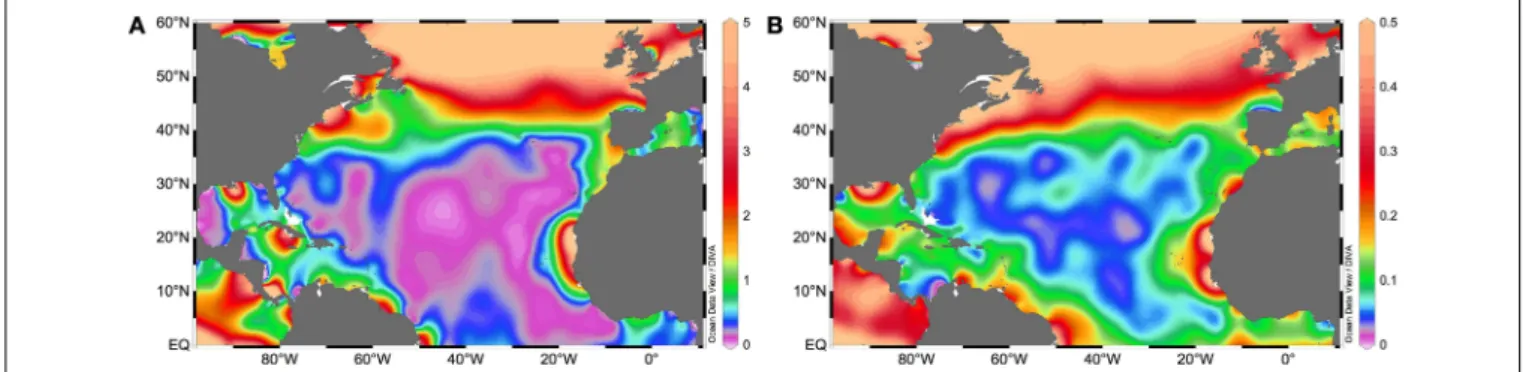
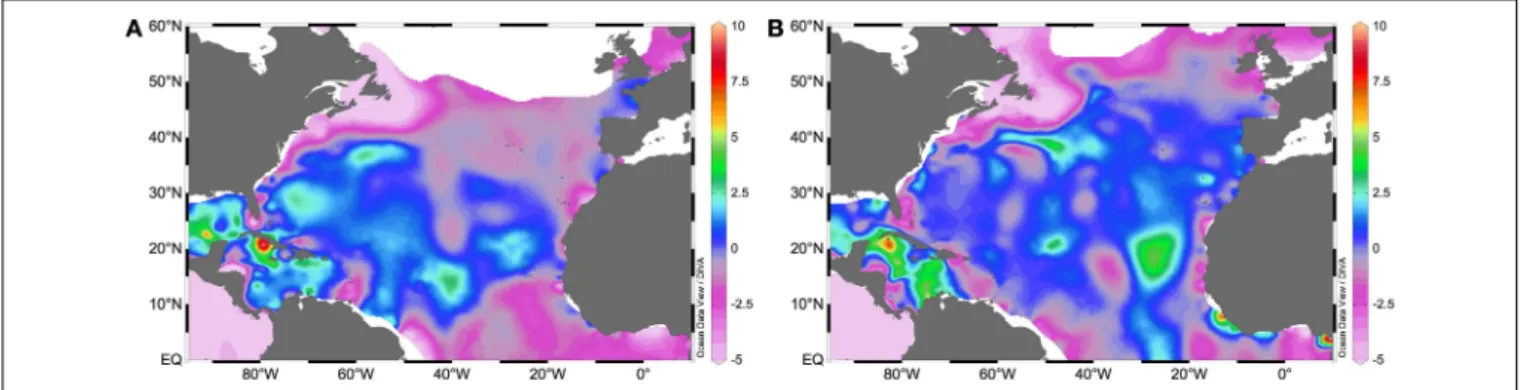
Fertilization of the photic layer of the oceans depends principally on upwelling, Ekman pumping, mixing, fronts, convection (in polar and temperate regions mainly) and vertical diffusion of deeper waters rich in remineralized nutrients, the remineralization efficiency on those deeper waters, and finally on how the aforementioned physical processes are constrained by the formation and transport of mode waters (Palter et al., 2005). Other external sources include atmospheric deposition, and internal sources include in situ regeneration processes like photic layer nitrification or dissolved organic matter (DOM) breakdown into bioavailable molecules through remineralization and photobleaching processes (e.g., Hedges, 2002; Yool et al., 2007). The NA is largely composed of a subtropical gyre where nitrate and phosphate concentrations are low (Figures 1A,B). This gyre is flanked by more nutrient-rich areas such as the Northwest African upwelling system, the Equatorial upwelling region, the Amazon River plume, the Gulf Stream, and the subpolar gyre. These nutrient-rich flanks fertilize the oligotrophic central gyre via advection and epipycnal (along isopycnals) mixing (Pelegrí et al., 2006). The NA subtropical gyre differs from others in that it receives the greatest quantity of desert dust worldwide, which in principle alleviates iron limitation in diazotrophs (Jickells, 2005). The extent to which nutrients and trace metals control N2 fixation vary depending
on the diazotroph phylotype, their physiology and nutrient requirements (reviewed inSohm et al., 2011c). These are trends that at present are only fairly clear for Trichodesmium (Bergman et al., 2012). In this section we explore how the distribution of nutrients and the input of aeolian trace metals controls N2
fixation and shapes the distribution of different diazotrophic phylotypes in the NA.
Inorganic and Organic Nutrients Driving the Distribution of Diazotrophic Activity
N2fixation provides a source of nitrogen that is unaccompanied
by a concomitant input of phosphorus, eventually resulting in increased N:P ratios (with respect to the canonical Redfield ratio of N:P = 16:1; Redfield et al., 1963). This imbalance creates a fixed nitrogen excess signal in the NA (Redfield et al., 1963; Gruber and Sarmiento, 1997), which has been attributed to enhanced N2 fixation activity driven by the high
aeolian iron supply (Michaels et al., 1996, 2001; Gruber and Sarmiento, 1997). As aforementioned, iron plays a key role in controlling diazotrophic activity and diversity in the ocean (see also Section Responses to Atmospheric Dust Inputs). This N:P imbalance results in a severe phosphorus deficiency in the NA basin, a feature which is remarkably different from the other basins of the world’s oceans (Wu, 2000; Ammerman et al., 2003). Conversely, high concentrations of dissolved inorganic nitrogen forms (mainly nitrate and ammonium) are usually considered to inhibit diazotrophic activity, given that N2fixation
is energetically expensive relative to the assimilation of more readily available dissolved inorganic nitrogen forms (Holl and Montoya, 2005).
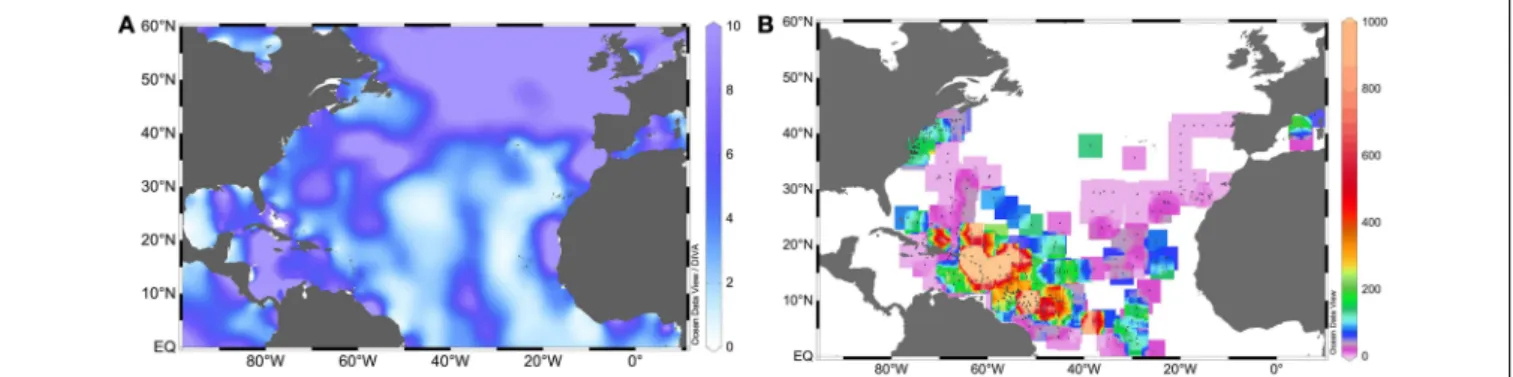
The comparison of nitrate and phosphate concentrations (Figures 1A,B), with the distribution of N:P ratios (Figure 2A), and that of integrated N2 fixation rates (Figure 2B) reveals
a greater diazotrophic activity in relatively phosphate rich waters (0.1–0.3 µM; Figure 1B) where nitrate is low (<0.5 µM;
Figure 1A), leading to low N:P ratios. Indeed, the relationship between phosphate supply or phosphate concentrations and N2
fixation rates has been documented for different locations of the NA (e.g.,Fernández et al., 2012; Benavides et al., 2013d), although this does not hold true in all cases (Turk et al., 2011), because the response of diazotrophs to phosphate limitation may vary geographically and with each diazotroph phylotype
FIGURE 2 | Surface NA (A) N:P ratios (as nitrate divided by phosphate concentrations retrieved from the World Ocean Atlas 2013,Garcia et al., 2013),
and (B) integrated N2fixation rates (in µmol N m−2d−1) (data retrieved from the Luo et al. online database,Luo et al., 2012).
(Turk-Kubo, 2012). In sites of nitrate and concomitant phosphate loading such as the Amazon River plume in the NWA or the Equatorial upwelling on the NEA, N2 fixation is thought to be
fueled by excess phosphate remaining after the consumption of nitrate by non-N2 fixing phytoplankton (Subramaniam et al.,
2008, 2013). As such, diazotroph abundances peak where nitrate is exhausted but there remains enough phosphate to fuel N2
fixation, such as in the mesohaline waters (salinities 30–35) of the Amazon River plume (Subramaniam et al., 2008). Integrated N2
fixation rates associated with the plume and East of the Caribbean Sea easily reach values >1000 µmol N m−2 d−1 (Figure 2B).
Within the plume, DDAs dominate (mainly Richelia-Rhizosolenia symbioses which benefit from excess silica also provided by the river), closely followed by Trichodesmium. UCYN phylotypes are found where the plume meets the saltier waters of the open ocean (Foster et al., 2007). Similarly, in the NEA where the Congo River plume meets the Equatorial upwelling -note that the mouth of the Congo is in the southern hemisphere, but its plume affects the NA- and phosphate concentrations are relatively high (0.18 µM;Subramaniam et al., 2013), the abundances of DDAs and Trichodesmium are greatest within the plume and at the edge of the upwelling, while UCYN-A abounds within the area influenced by the upwelling (Foster et al., 2009). In general, high abundances of Trichodesmium are observed down to 75 m depth (Luo et al., 2012), and their geographical extent ranges from the waters adjacent to the Amazon plume to the eastern NA coast along the Equator.
Away from relatively phosphate-rich waters, active diazotroph assemblages in the inner oligotrophic subtropical gyre are likely sustained by phosphate transferred vertically (diapycnal mixing), transported along isopycnals (epipycnal mixing), or advected from the surrounding gyre flanks (Pelegrí et al., 2006), such as excess phosphate from the Gulf Stream (Palter et al., 2011). Alternatively, dissolved organic phosphorus transported to the interior of the gyre from the productive NEA coastal and Equatorial upwelling sites (Mather et al., 2008; Reynolds et al., 2014) may play an important role in supporting N2 fixation (Mahaffey et al., 2014). The ability of
the NEA coastal upwelling sites to partly sustain autotrophic and heterotrophic production within the subtropical gyre has been widely recognized. For example, the Canary Current
upwelling exports ∼60% of production as dissolved organic matter (DOM) (Álvarez-Salgado et al., 2007), while dissolved organic nitrogen and dissolved organic phosphorus are estimated to support 40–70% of export production within the gyre (Torres-Valdés et al., 2009; Reynolds et al., 2014). The role of DOM in sustaining N2 fixation is much less known. In the
tropical and subtropical NA phosphate concentrations are too low to sustain Trichodesmium growth using this compound as the solely source of phosphorus (Sohm and Capone, 2006). Indeed, molecular biology approaches have demonstrated that Trichodesmium is capable of taking up dissolved organic phosphorus in the form of phosphomonoesters via alkaline phosphatase activity (Dyhrman et al., 2002), or as phosphonates via a carbon-phosphorus bond (C-P) lyase pathway (Dyhrman et al., 2006). The only other marine diazotroph that has been studied in terms of their dissolved organic phosphorus acquisition capability is Crocosphaera watsonii, which does not possess the genes to utilize phosphonates, but it does have the genes to hydrolyze phosphomonoesters, as well as a suite of genes for inorganic phosphorus transport (high-affinity and low-affinity phosphate transport genes) (Dyhrman et al., 2006). Despite these differences in dissolved organic phosphorus uptake capability, whether the differential distribution of Trichodesmium vs. Crocosphaera responds to phosphomonoesters and phosphonates distributions in the NA is unknown, a fact further worsened by the dearth of knowledge regarding the composition of the dissolved organic phosphorus pool in the ocean (Karl and Björkman, 2002; Kononova and Nesmeyanova, 2002).
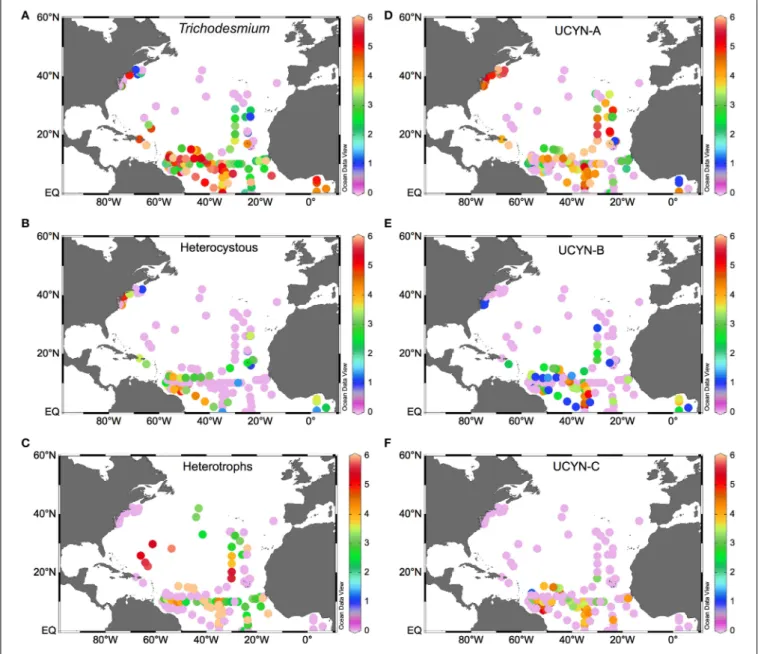
Within the NA subtropical gyre, UCYN-A and Trichodesmium are the most abundant phylotypes (Figure 3), although they appear to be spatially segregated (Montoya et al., 2007; Agawin et al., 2014; Ratten et al., 2014). While UCYN occupy a wide latitudinal and longitudinal range (Figures 3C,D), Trichodesmium is constrained to <30◦N in the NWA, with the exception of the data reported by Mulholland et al. on the US East Coast (Mulholland et al., 2012, Figure 3A). Indeed, most of the N2fixation in the NWA is supported by Trichodesmium, and
a greater contribution by UCYN phylotypes is found in the NEA (Montoya et al., 2007). UCYN-C is less abundant than the other UCYN and appears on a narrower latitudinal range (<20◦N),
FIGURE 3 | Surface distribution of diazotroph phylotypes in the NA (as log10nifHcopies L−1). (A) Trichodesmium, (B) symbiont heterocystous
diazotrophs -sum of Richelia and Calothrix associated species-, (C) heterotrophic diazotrophs, (D) UCYN-A, (E) UCYN-B, (F) UCYN-C.
mostly over the NWA (Figure 3F). Nevertheless, it must be borne in mind that matching N2fixation activity to the presence
on diazotrophs based solely on nifH abundance as determined by qPCR may lead to misleading results, and nifH expression can be high in low abundance phylotypes (Turk-Kubo, 2012).
This spatial segregation may not be straightforward given that the low nitrate-high phosphate (low N:P ratio) conditions responsible for them occur in both the Amazon River plume and in the upwelling-affected areas of the NEA. However, upwelling-affected waters are colder, which likely explains the lower abundance of diazotrophic organisms in the NEA as compared to the NWA (Figure 3), and the lower N2fixation rates
(generally <1 nmol N L−1 d−1;Moore et al., 2009; Fernández
et al., 2010; Benavides et al., 2011). The low N2 fixation rates
of the NEA do not likely represent an important source of new production in this area (Benavides et al., 2013b). Thus, it appears that the fixed nitrogen requirements of autotrophic planktonic communities in the NEA are met by a combination of atmospheric fixed nitrogen deposition (as this area is located downwind of European industrialized countries), in situ remineralization of advected DOM and, to a minor extent, in situ photic nitrate regeneration (nitrification) and N2 fixation.
However, the presence of N2fixation activity and/or diazotrophic
microorganisms in the cold and nutrient rich waters of the NA such as upwelling sites (Voss et al., 2004; Foster et al., 2009; Benavides et al., 2011; Subramaniam et al., 2013; Agawin et al., 2014) or mesopelagic waters (Hewson et al., 2007) has been observed, though their ecological role in these environments is
unclear and warrants further study. High dissolved inorganic nitrogen environments have been usually regarded as inhibitory for diazotrophic activity (Holl and Montoya, 2005). However, this effect is not clear. Recent culture and field studies indicate that diazotrophy can continue upon exposure to dissolved inorganic nitrogen (nitrate and ammonium) as long as phosphate is available (reviewed in Knapp, 2012). Furthermore, active N2 fixation in dissolved inorganic nitrogen-rich environments
suggests that restricting diazotrophy studies to the upper ocean layer of the tropics and subtropics can result in large underestimations of N2 fixation rates (Raimbault and Garcia,
2008; Benavides et al., 2011; Sohm et al., 2011b; Bonnet et al., 2013).Foster et al. (2009)found UCYN-A over the Equatorial upwelling region in the Gulf of Guinea. Although these authors did not find a high level of nifH expression in UCYN-A, in a later study Subramaniam et al. (2013) reported N2 fixation
rates between 15 and 424 µmol N m−2 d−1 for the same site,
with a ∼50% contribution of the <10 µm fraction presumably including UCYN-A. Similarly, in the upwelling sites of Cape Silleiro (Northwest Iberian peninsula) and Cape Ghir (Northwest Africa), the <10 µm fraction contributed 60–90% of total N2
fixation, although the rates were much lower (Benavides et al., 2011). Finally, this group was found in high abundances along the East Coast of the US where it occurred at high dissolved inorganic nitrogen concentrations and comparatively low temperatures (Mulholland et al., 2012). Relatively high abundances of DDAs have been also reported off the eastern US coast, which could be due to actual in situ growth or as a result of transport from Amazon River plume affected waters along the Gulf Stream (Ratten et al., 2014).
In summary, N:P ratios seem to shape the distribution of diazotrophs and their associated N2 fixation rates, while
the phosphorus requirements of diazotrophs could be met by direct uptake of dissolved organic phosphorus or hydrolysis of these compounds into inorganic phosphorus (however note that UCYN-A does not possess the genes needed to use dissolved organic phosphorus; Tripp et al., 2010). Trichodesmium needs low N:P ratios, UCYN can stand higher dissolved inorganic nitrogen concentrations, DDAs need low N:P accompanied by sufficient silica, and heterotrophic diazotrophs seem to be more flexible and better able to exploit the DOM accumulated in the inner subtropical gyre.
When dividing the NA into its western (80–40◦W) and
eastern (40–0◦W) sides, and considering three latitudinal
bands (Tropic 0–23.5◦N, Subtropic 23.5–40◦N, and Temperate
>40◦N), the distribution of nifH copies per liter of different diazotroph phylotypes show interesting patterns (based on the database of Luo et al., 2012; Table 1–note that the number of data points is strikingly different between latitude/longitude ranges-). The dominance of Trichodesmium in the tropical and subtropical NWA becomes evident, with one order of magnitude higher abundances than its eastern counterpart. Heterocystous diazotrophs are also clearly dominant in the NWA due to the influence of the Amazon River plume. The distribution of heterotrophic diazotrophs is more disparate, with two orders of magnitude higher abundance in the tropical
NEA than in the NWA, but three orders of magnitude higher TA
B L E 1 | A v e ra g e ± s ta n d a rd d e v ia ti o n n if H c o p ie s L − 1o f d if fe re n t d ia z o tr o p h p h y lo ty p e s a s d e te rmi n e d b y q P C R . W e s t (8 0 –4 0 ◦W ) E a s t (4 0 –0 ◦W ) T ri c h o d e s m iu m D D A s H e te ro tr o p h s U C Y N -A U C Y N -B U C Y N -C T ri c h o d e s m iu m D D A s H e te ro tr o p h s U C Y N -A U C Y N -B U C Y N -C Tro pic (0 –2 3.5 ◦ N) 1 .4 ± 3 .4 × 1 0 5 4 .3 ± 2 1 × 1 0 5 8 1 ± 3 2 0 1 .1 ± 4 .7 × 1 0 7 2 .6 ± 1 6 × 1 0 4 6 .9 ± 2 4 × 1 0 3 7 .1 ± 2 3 × 1 0 4 8 4 ± 3 3 0 9 .9 ± 4 1 × 1 0 2 4 .4 ± 1 3 × 1 0 4 4 .3 ± 2 1 × 1 0 3 1 .8 ± 4 .6 × 1 0 3 Su btr op ic (2 3.5 –4 0 ◦ N) 4 .4 ± 2 3 × 1 0 3 1 .1 ± 3 .2 × 1 0 4 1 .0 ± 2 .5 × 1 0 3 2 .1 ± 7 .7 × 1 0 6 4 7 ± 5 1 0 1 .3 ± 3 .2 × 1 0 2 2 .0 ± 6 .7 × 1 0 2 1 8 ± 9 7 1 .8 ± 7 .2 × 1 0 4 4 9 ± 2 6 0 0 T em pe ra te (> 40 ◦ N) 1 .0 ± 3 .0 × 1 0 4 3 .2 ± 9 .7 × 1 0 2 6 .9 ± 1 1 × 1 0 2 2 .7 ± 3 .3 × 1 0 5 0 0 n /a n /a n /a n /a n /a n /a D a ta c o m pi le d fr o m th e L u o e t a l. da ta ba s e ( L u o e t a l., 2012 ). n /a in di c a te s n o da ta a va ila bl e .
abundance in the subtropical NWA than in the NEA (Table 1). It is perhaps remarkable that heterotrophic diazotrophs in temperate waters are only one order of magnitude lower than in subtropical waters of the NWA. Nevertheless, the abundance of heterotrophic diazotrophs needs to be interpreted with great caution as their diversity is less explored than that of UCYN and contamination problems with PCR reagents are well known (Zehr et al., 2003). UCYN-A is also more abundant in the NWA as compared to the NEA. Their average abundances decrease by one order of magnitude by latitudinal band in the NWA, and surpass the average abundances of the NEA by more than two orders of magnitude. UCYN-B seem to be more homogenously distributed, with similar abundances in the tropical and subtropical NEA and NWA, and practically absent at temperate latitudes. This seems also to be the case of UCYN-C, which is however constrained to tropical latitudes. It should be noted that the NWA has been more extensively researched in terms of diazotrophic activity and diversity than the NEA, and therefore these averages could be biased by undersampling. This is clearly reflected by the generally higher standard deviation values of the NEA average nifH abundances, as well as by the number of data included for these analyses (NWA = 136 data points, NEA = 30 data points).
Responses to Atmospheric Dust Inputs
The nitrogenase enzyme consists of an iron subunit (dinitrogenase reductase), and an iron-molybdenum subunit (dinitrogenase) (Postgate, 1982), which makes iron an essential metal for diazotrophs. Due to the low solubility of iron in the oxidized and slightly basic contemporary ocean (Liu and Millero, 2002), planktonic microorganisms have developed specialized iron scavenging mechanisms to provide them with the iron needed for the functioning of many photosynthetic and respiratory redox enzymes. For example, conspicuous pelagic diazotrophs like Trichodesmium and Crocosphaera express the IdiA protein in response to iron stress (Webb et al., 2001). Pioneering studies showed that the addition of iron enhanced growth and N2 fixation rates in cultured and field populations
of Trichodesmium (Rueter, 1988; Paerl et al., 1994). Later, the cellular iron quotas of Trichodesmium were reported to be very high (Berman-Frank et al., 2001), with iron requirements during diazotrophic growth found to be as much as five-fold greater than when grown on ammonium (Kustka et al., 2003). When grown under moderate iron deficiency, cultured Crocosphaera responds by reducing its cellular size to overcome the limitation of growth and N2fixation, while severe iron deficiency leads to
disruption of the diazotrophic activity (Jacq et al., 2014). The release of extracellular polysaccharides has been hypothesized as an iron binding strategy in Crocosphaera (Sohm et al., 2011a), and in unidentified pico- and nano-sized diazotrophs of the NEA (Benavides et al., 2013c). UCYN-A increases nifH expression upon the addition of Fe or Saharan dust (Turk-Kubo, 2012; Krupke et al., 2014), suggesting that its N2fixation activity may
be partially controlled by dust deposition events, the chemical processes by which dust-derived Fe is dissolved into seawater, as well as any Fe-binding strategies of these microbes may have (Benavides et al., 2013c).
The biochemical mechanisms by which diazotrophs obtain iron in situ have yet to be fully characterized, but several experiments have confirmed that in situ N2 fixation activity
responds to iron inputs. For example, Mills et al. (2004)
reported a two- to three-fold increase of N2 fixation rates
upon iron and phosphorus enrichment of seawater samples collected in the tropical NA. Langlois et al. (2012) observed an equivalent enhancement of N2 fixation rates in response
to Saharan dust additions, which was also accompanied by an increase in the abundance of nifH phylotypes. In accordance with these artificially fertilized bioassays, natural peak inputs of Saharan dust to the NEA have been observed to increase N2
fixation rates and UCYN abundance by ∼90–∼60%, respectively (Benavides et al., 2013c). Dust inputs may also affect diazotrophic communities in areas distant from the NEA. For example, sporadic peaks in Trichodesmium abundance are often observed off Florida as a response to dust deposition (Lenes et al., 2001). This phenomenon produces enough dissolved organic nitrogen to promote toxic phytoplankton blooms (Lenes and Heil, 2010). These results confirm that N2fixation reacts to dust and/or iron
additions in time scales of hours to days.
The NA receives more desert dust than any other basin in the world, providing an estimated iron deposition of 6 Tg Fe y−1 (Prospero et al., 1996). Despite this great supply, the
potential bioavailability of the iron deposited with dust is not well-understood (Mahowald et al., 2009). Significant correlations between dissolved iron concentrations, dust deposition rates (or dust deposition proxies like aerosol optical depth at 550 nm) and N2fixation rates or diazotroph phylotypes abundance have
been recurrently reported in the NA (e.g.,Moore et al., 2009; Fernández et al., 2010; Benavides et al., 2013d; Ratten et al., 2014). In addition, it is now clear that the shifts in the geographical extent of coverage of the intertropical convergence zone (ITCZ) controls iron inputs and hence N2fixation activity in the tropical
and subtropical Atlantic (Schlosser et al., 2013). This “iron-rich cloud” acts as a frontier between the phosphorus-rich/iron-poor South Atlantic, and the phosphorus-poor/iron-rich NA (Capone, 2014).
Despite the evident control of iron on N2 fixation in the
NA, it is unclear why the North Pacific has comparable N2
fixation rates given the negligible aeolian iron inputs to this basin (Mahowald et al., 2009). The predominance of different diazotroph phylotypes in the North Pacific and the North Atlantic has been hypothesized as an explanation for these differences (Deutsch et al., 2007), although the nifH sequences of different phylotypes isolated from the NA seem to be highly similar to those from the North Pacific (Langlois et al., 2005). As Luo et al. suggested (2014), other explanations include the saturation of N2fixation by present iron supply, the adaptation
of diazotrophs to low iron environments, and/or the biological unavailability of the iron deposited to the ocean. These authors also reported a poor relationship between N2 fixation and dust
deposition from a global database (Luo et al., 2012), suggesting that iron is not the ultimate controlling factor of marine diazotrophy on a global basis (Luo et al., 2014). This implies that while empirical evidence suggests dust explains short-term diazotrophic responses, it cannot explain N2 fixation rates on a
basin-scale or over geological time-scales in the NA (Straub et al., 2013).
N
2Fixation Contribution to New Production
and Nitrogen Excess in the North Atlantic
Diazotrophic N2 fixation has been classically regarded as
an important contribution to new production in chronically stratified oligotrophic areas of the oceans where the upwelling of deep nitrate rich waters is inhibited (Karl et al., 2002). Several studies in the NA have compared the upward diffusive flux of nitrate to15N-labeled nitrate uptake rates. In most cases, nitrate uptake is greater than nitrate diffusion (e.g.,Planas et al., 1999
see Table 2), a difference attributed to external fixed nitrogen inputs via atmospheric deposition, in situ remineralization of advected DOM, photic zone nitrification and/or N2 fixation
(Capone et al., 2005; Landolfi et al., 2008; Mouriño-Carballido et al., 2011; Benavides et al., 2013b). The comparison of nitrate diffusive fluxes to in situ N2fixation rates has resulted in a wide
range of results (Tables 2, 3).
Capone et al. (2005)calculated that N2fixation rates ranged
from 50 to 180% of the parallel measured nitrate diapycnal
fluxes in the tropical NWA, suggesting the major influence of diazotrophy in sustaining new production over this area. In the central subtropical and equatorial NA (∼30◦W),
Mouriño-Carballido et al. (2011)reported a contribution of N2 fixation
to total new nitrogen inputs to the mixed layer of 22% (12◦S to
16◦N) and 2% (16 to 9◦N). More recently,Painter et al. (2013)
reported a contribution of 62% in an area north of that studied by Mouriño-Carballido et al. (26.5◦N–29.5◦W)2011.
Differences between these estimates may arise from a variety of factors, including the geographical variability of hydrographic factors. The transport of nitrate into the surface layer occurs in two different ways, by advection, upwelling, or turbulent diffusion. Upwelling is caused by a vertically upward velocity (which is driven in general by the curl of the wind stress;
Yoshida, 1967), or horizontal deformation fields in velocity (e.g., divergence or stretching deformation; Dippner et al., 2007). Turbulent diffusion depends on the gradient of the nitrate concentration and the characteristics of the turbulence field such as the vertical shear of the velocity field and the stability of the water column given by the vertical density gradient. The intensity of the turbulence and the depth of mixed layer are driven by the wind speed (Mellor and Yamada, 1982). Thus, nitrate uptake by phytoplankton is not directly coupled to N2fixation, but the
TABLE 2 | Compilation of nitrate diapycnal flux data in the NA.
Location µmol N m−2d−1 Tg N y−1 References
Subtropical NA (“Beta-Triangle”: 26.5◦N × 38.5◦W, 32.5◦N × 30.0◦W, 22.5◦N × 28.5◦W) 1644 329.3 Jenkins, 1982
Whole NA 100 20.0 Michaels et al., 1996
NA (anticyclonic eddy at 60◦N) 1250 250.4 Law et al., 2001
Central Atlantic Ocean (35◦S–28◦N) 380–838 76.1–167.9 Planas et al., 1999
Equatorial NA 137 27.4 Oschlies, 2002
Subtropical and tropical NWA 46–736 9.2–147.4 Capone et al., 2005
Subtropical NA (Canary Current-North Equatorial Current) 270 54.1 Dietze et al., 2004
Subtropical NA (WOCE section A05; 24.5◦N) 860 172.3 Bahamón et al., 2003
Subtropical NEA (Eddy field southern Canary Islands) 1710 342.5 González-Dávila et al., 2006
Subtropical NEA (Azores Current-Subtropical Front) 10 2.0 Mouriño et al., 2004
Central Atlantic Ocean (31◦S–16◦N) 840 168.3 Mouriño-Carballido et al., 2011
Subtropical NEA (Northwest African upwelling) 20–180 4–36.1 Arcos-Pulido et al., 2014
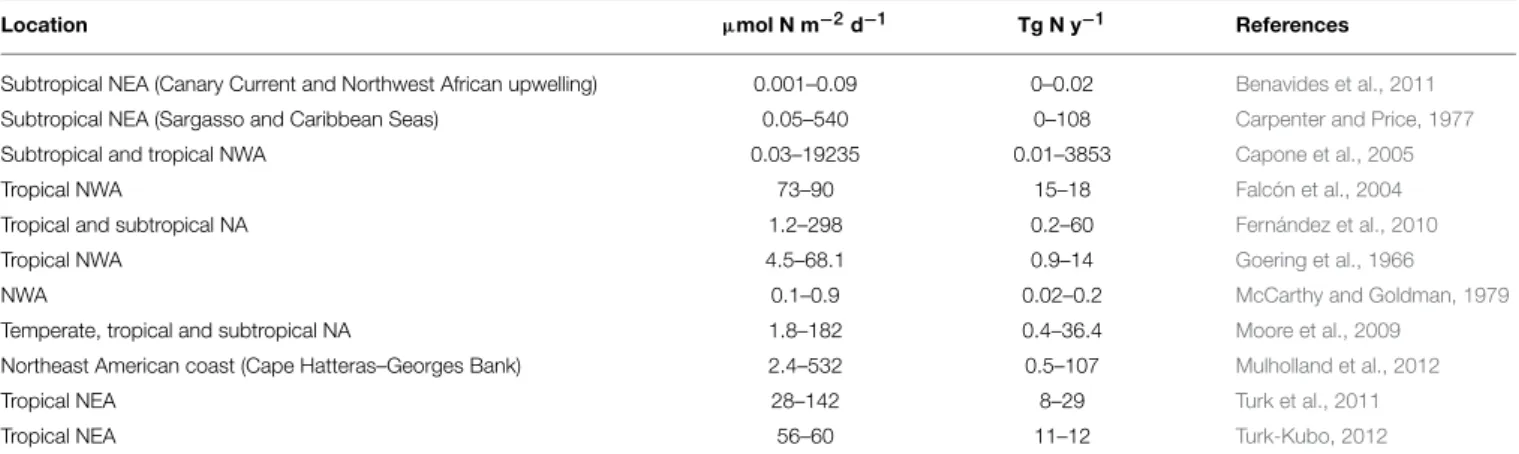
TABLE 3 | List of integrated N2fixation rates from the NA, compiled in Luo et al.Luo et al., 2012.
Location µmol N m−2d−1 Tg N y−1 References
Subtropical NEA (Canary Current and Northwest African upwelling) 0.001–0.09 0–0.02 Benavides et al., 2011
Subtropical NEA (Sargasso and Caribbean Seas) 0.05–540 0–108 Carpenter and Price, 1977
Subtropical and tropical NWA 0.03–19235 0.01–3853 Capone et al., 2005
Tropical NWA 73–90 15–18 Falcón et al., 2004
Tropical and subtropical NA 1.2–298 0.2–60 Fernández et al., 2010
Tropical NWA 4.5–68.1 0.9–14 Goering et al., 1966
NWA 0.1–0.9 0.02–0.2 McCarthy and Goldman, 1979
Temperate, tropical and subtropical NA 1.8–182 0.4–36.4 Moore et al., 2009
Northeast American coast (Cape Hatteras–Georges Bank) 2.4–532 0.5–107 Mulholland et al., 2012
Tropical NEA 28–142 8–29 Turk et al., 2011
enhanced stability of the water column in the NWA as compared to the NEA translates into a lessened nitrate diffusion, which eventually makes the contribution of N2 fixation to total fixed
nitrogen inputs greater than that derived from nitrate diffusion (Capone et al., 2005; Montoya et al., 2007).
In addition, the inherent seasonal variability of the NA, and the intermittent nature of mesoscale and submesoscale features may result in a highly variable contribution of N2 fixation
to new production (Mouriño-Carballido et al., 2011; Painter et al., 2013). Finally, other factors such as the application of theoretical vs. empirical estimated turbulent diffusion coefficients (Kz) (Mouriño-Carballido et al., 2011; Arcos-Pulido et al.,
2014), biases derived from measuring N2 fixation on sporadic
Trichodesmium blooms (which might be not be representative of the long-term situation; Capone et al., 2005), 15N2 method
underestimations (Mohr et al., 2010), or overestimations (Dabundo et al., 2014 see discussion below), and substantial nitrate regeneration in the photic zone (Yool et al., 2007), may also play an important role.
The N2fixation rates reported in these studies are strikingly
different. Capone et al. (2005) reported Trichodesmium-associated integrated N2 fixation rates averaging 239 µmol N
m−2 d−1 (but up to 19235 µmol N m−2 d−1, see Table 3),
whileMouriño-Carballido et al. (2011)andPainter et al. (2013)
reported bulk seawater N2 fixation rates ranging from 1.3 to
154.5 µmol N m−2 d−1 and 15.4 to 95.6 µmol N m−2 d−1,
respectively. Thus, it is clear that the contribution of N2fixation
to new production is greater in Trichodesmium-dominated waters of the NWA (Montoya et al., 2007), whereas minimal in the UCYN-dominated waters of the NEA (Benavides et al., 2013b; Arcos-Pulido et al., 2014).
Although N2 fixation has traditionally been regarded as an
important source of new production, little is known about the fate of this fixed N2 or to what extent it fuels the biological
carbon pump (Mulholland, 2007). The efficiency of fixed N2
transfer between trophic compartments and the mechanisms by which it is governed remain unclear (Mulholland, 2007), and whether the process is more efficient in Trichodesmium vs. UCYN or heterotrophic diazotrophs is yet to be determined. In principle, the transfer of fixed N2 should be highly efficient
because the product of this reaction is ammonium, which is readily available to photoautotrophic microbes. Trichodesmium also releases large amounts of fixed N2as labile dissolved organic
nitrogen (Capone et al., 1994; Sipler et al., 2013), and the role of UCYN in providing these organic compounds could also be important (Benavides et al., 2013d). Modern high-resolution mass spectrometry techniques such as nano-scale secondary ion mass spectrometry (nanoSIMS) have recently been used to yield new insights into the efficiency of this transfer and the partitioning of fixed N2 between planktonic groups in different
trophic levels. Symbiotic diazotrophs represent clear examples of fixed N2transfer, like UCYN-A, which has been found to provide
fixed N2 to its prymnesiophyte host from whom it receives
carbon compounds (Thompson et al., 2012). This transfer has also been demonstrated in DDAs (Foster et al., 2011). However, the fate of N2 fixed by other non-symbiotic diazotrophs is
unknown.
From a geochemical perspective, the recognition of biological N2 fixation as a significant input of fixed nitrogen to the NA
has also been sustained by the recurrent observation of an excess fixed nitrogen signal over the intermediate waters of this basin (Michaels et al., 1996; Gruber and Sarmiento, 1997). The role of this excess in counterbalancing fixed nitrogen losses in oxygen minimum zones (OMZs) has been repeatedly discussed in the literature (e.g.,Codispoti, 2007), and has even prompted improvements of the15N2 fixation method that can potentially
reconcile geochemical and biological estimates of N2fixation in
the ocean (Großkopf et al., 2012). Low phosphate availability can be driven by either diazotrophic phosphate-drawdown boosted by high iron availability in mid to low latitudes (Wu, 2000; Mather et al., 2008; Sohm and Capone, 2010) or by low non-Redfieldian (N:P <16) fast-growing phytoplankton nutrient uptake ratios at higher latitudes (Mills and Arrigo, 2010). Both N2 fixation and non-Redfieldian nutrient uptake patterns leave
a fixed nitrogen excess signal (depicted by the N∗ parameter)
which is maximal in mode waters (isopycnal surface σθ =
26.5 or 18◦C water, and σ
θ = 27.1 or Subpolar Mode Water
(SPMW) (e.g.,Gruber and Sarmiento, 1997; Hansell et al., 2004), as shown in Figure 4. This excess nitrogen signal has been translated into basin-wide N2 fixation rates ranging from ∼5
FIGURE 4 | N* values (µM) at (A) σθ= 26.5or 18◦C water, and at (B)
σθ= 27.1or Subpolar Mode Water. N* was calculated as N* = [NO
− 3] −
16 × [PO3−4 ], where [NO−3] is the concentration of nitrate and [PO3−4 ] is the
concentration of phosphate, both in µM. Nitrate and phosphate
concentration data were retrieved from the World Ocean Atlas 2013 (Garcia
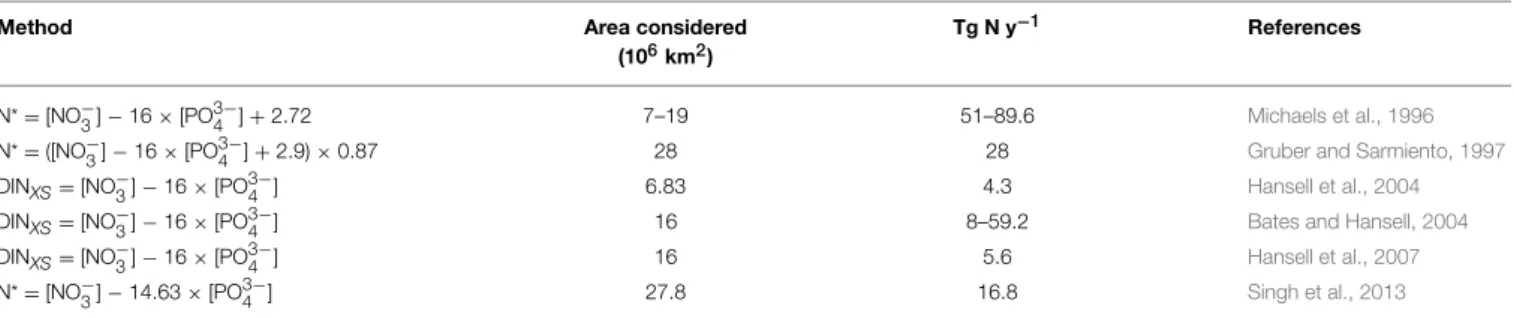
TABLE 4 | Estimates of N2fixation using a geochemical approach (N*) for different areas of the North Atlantic Ocean.
Method Area considered Tg N y−1 References
(106km2)
N* = [NO−
3] − 16 × [PO3−4 ] + 2.72 7–19 51–89.6 Michaels et al., 1996
N* = ([NO−
3] − 16 × [PO3−4 ] + 2.9) × 0.87 28 28 Gruber and Sarmiento, 1997
DINXS=[NO−
3] − 16 × [PO3−4 ] 6.83 4.3 Hansell et al., 2004
DINXS=[NO−
3] − 16 × [PO3−4 ] 16 8–59.2 Bates and Hansell, 2004
DINXS=[NO−3] − 16 × [PO3−4 ] 16 5.6 Hansell et al., 2007
N* = [NO−
3] − 14.63 × [PO3−4 ] 27.8 16.8 Singh et al., 2013
to 90 Tg N y−1 (Table 4) for the NA tropical and subtropical
waters.
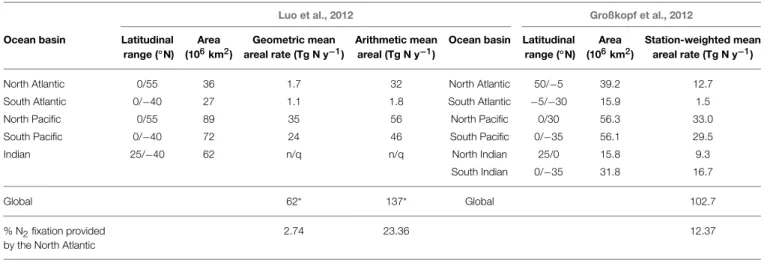
The rates estimated by Michaels et al. (1996) are four- to seven-fold higher than the most recent direct estimate rate (12.8 Tg N y−1; see the Supplementary Information ofGroßkopf
et al., 2012), while the estimates ofHansell et al. (2004, 2007)
are more conservative. However, it must be noted that these estimations rely on the extrapolation of nitrate excess formation rates over different areas of the NA (Table 4). In a recent paper,
Singh et al. (2013) revisited the magnitude and distribution of N∗ in the NA taking into account other factors causing
positive N∗ values. They calculated a basin-wide nitrate excess
rate formation of 16.8 Tg N y−1, which is reasonably close
to the average direct N2 fixation rate calculated by Großkopf
et al. (2012). N2 fixation rates derived from N∗ estimates
are potentially overestimated by non-diazotrophic positive N∗
signatures such as atmospheric deposition and of high N:P ratio compounds, and lateral advection of high N:P DOM (Landolfi et al., 2008; Letscher et al., 2013; Singh et al., 2013). Also, the high N:P uptake quotas typical of slow-growing picocyanobacteria which dominate subtropical gyres (i.e. Prochlorococcus) may reduce fixed nitrogen availability promoting diazotrophy which eventually produces a nitrogen excess signal in the thermocline of the NA subtropical gyre via (Mills and Arrigo, 2010). AsSingh et al. (2013)stated, the N∗parameter has to be interpreted with
caution, because positive N∗ values are caused by a variety of
processes other than N2 fixation. Predominantly, the temporal
and spatial scales taken into account when deriving N2 fixation
rates from N∗and from direct 15N
2 incubations are strikingly
different. According to the timescales of thermocline ventilation, present N∗ observations likely reflect the N
2 fixation activity
that occurred a decade before (Gruber and Sarmiento, 1997). Moreover, positive N∗ signals travel downstream from the
formation site along isopycnal surfaces (Hansell et al., 2004). As a result, there is a considerable spatial and temporal lag between the process and its signature. The N∗signature is undoubtedly
affected by atmospheric nitrogen deposition (which usually has high N:P; Duce et al., 1991), and by non-Redfieldian fluxes and remineralization of organic matter (Zamora et al., 2010; Singh et al., 2013). In turn, N2 fixation rates derived from
15N
2incubations assess the uptake of N2in a closed volume of
water (usually ranging from hundreds of mL to <5 L), along a limited incubation time (hours to days), in a specific geographical location and water column depth. In summary, while N∗offers an
easy and large-scale alternative to evaluate N2fixation, it must be
interpreted with great care, taking into account all other possible sources of positive N∗, which might be difficult to constrain.
In general, the rates obtained with geochemical approaches exceed those obtained with biological approaches two to seven-fold (Tables 3, 4), although both types of estimates are highly variable and arguably have considerable uncertainties. This could either mean that geochemical-approach methods overestimate N2 fixation rates, or alternatively biological-approach methods
underestimate (Mohr et al., 2010; Großkopf et al., 2012) or overestimate them (Dabundo et al., 2014). While the underestimation of N2 fixation rates by incomplete dissolution
of the15N
2bubble during short duration incubations generally
translates into two to six-fold increases of the rates (Mohr et al., 2010; Großkopf et al., 2012; Wilson et al., 2012; Benavides et al., 2013d), the use of contaminated 15N2 gas stocks with other
nitrogen compounds besides N2(notably ammonium) may result
in N2fixation rates of 0.01 to 530 nmol N L−1d−1(as estimated
byDabundo et al., 2014). The upper limit of this broad range is of serious concern, as these rates surpass N2fixation rates reported
in many marine systems. However, the degree of contamination depends on the brand of 15N2 used (Dabundo et al., 2014),
and thus not all published studies can be considered to be equally overestimated. Since current geochemical methods are not able to discern N2 fixation from other processes resulting
in nitrogen excess signals, these methods are prone to result in overestimations of N2fixation rates. Improvements in the large
scale estimation of N∗as well as in the empirical measurement
of 15N
2 fixation rates should bring denitrification and N2
fixation rates closer in the near future, eventually elucidating a contemporary balanced oceanic nitrogen cycle.
Crossing Boundaries: Heterotrophic and
Aphotic N
2Fixation
Oceanic N2fixation was once attributed solely to the filamentous
cyanobacterium Trichodesmium (e.g., Capone, 1997). As discussed earlier, the advent of molecular techniques identified the previously unrecognized prevalence of UCYN (Zehr et al., 1998). These methodological approaches have also enabled the detection of non-cyanobacterial diazotrophs (bacteria and archaea), although their role in global marine N2 fixation
has been largely overlooked (Farnelid and Riemann, 2008). Heterotrophic diazotroph nifH sequences group into four major clusters, namely Cluster I (including molybdenum nitrogenases
from cyanobacteria, α-, β-, and γ-proteobacteria, and vanadium nitrogenases from γ-proteobacteria), Cluster II (composed of archaeal nitrogenases and bacterial iron nitrogenases, also including methanogens), Cluster III (comprising anaerobic bacteria and sulfate-reducing δ-proteobacteria), and Cluster IV (which includes non-functional archaeal nifH homologs). Present estimates indicate that heterotrophic nifH sequences account for >80% of the total number of nifH clones obtained from marine samples in a range of studies (Farnelid and Riemann, 2008). This high proportion highlights the need to understand the quantitative role of heterotrophic N2 fixation,
although the usual nested PCR approach taken to obtain these clones (Zehr et al., 1998; Zehr and Turner, 2001) is not quantitative and hence the numerical majority of heterotrophic nifH derived from these methods is arguable (Riemann et al., 2010; Farnelid et al., 2011; Turk-Kubo et al., 2014) However, inconsistencies between the presence and the expression of their nifH genes has lead to skeptical points of view concerning their importance and contribution to total N2 fixation (Turk-Kubo
et al., 2014).
The ecological role and the energy sources that maintain heterotrophic N2 fixation are uncertain. The differences
between day and night heterotrophic nifH expression are not significant (Church et al., 2005; Moisander et al., 2014), suggesting the activity of these organisms could be independent of light. This opens the possibility of active N2 fixation
below the euphotic zone, challenging the paradigm that N2
fixation is constrained to sunlit oligotrophic epipelagic waters. On the contrary, the predominance of non-cyanobacterial nitrogenase gene amplicons from surface oceanic waters collected around the world (Farnelid et al., 2011), suggests that heterotrophic diazotrophs may also obtain their energy through photoheterotrophic processes (e. g., Riemann et al., 2010; Moisander et al., 2014). This possibility is also supported by the significant relationship between solar light radiation and euphotic zone N2 fixation rates obtained worldwide (Luo
et al., 2014), as previously hypothesized for the North Pacific by
Karl et al. (2008). In any case, photic and aphotic heterotrophic diazotrophs probably belong to different phylotypes and obtain energy through different metabolic strategies.
Heterotrophic metabolisms imply that a source of bioavailable organic matter is needed for growth. At depth, fixed nitrogen concentrations are high and the lability of organic matter is low (Hedges, 2002), which inevitably leads to questions about the ecological benefit of aphotic heterotrophic N2fixation. However,
aphotic N2fixation could well-occur in association with particles.
Organic materials leaking from particles as a result of bacterial extracellular enzyme activity may be an important source of sustenance for heterotrophic N2fixation (Riemann et al., 2010).
In addition, particles may provide unique oxygen-deficient loci where the nitrogenase enzyme would be protected from destruction (Riemann et al., 2010). The pioneering work of Hans Paerl on particle-attached N2 fixation (Paerl, 1985; Paerl and
Prufert, 1987) has, unfortunately, not been continued in modern microbial oceanography research, although some authors are currently working on the nitrogen metabolism of diazotrophic filamentous cyanobacteria aggregates (Klawonn et al., 2015).
Heterotrophic N2 fixation activity has been confirmed in the
coastal OMZ off Peru (Bonnet et al., 2013; Loescher et al., 2014), and in the oxygen-deficient waters of the Baltic Sea chemocline (Farnelid et al., 2013). However, matching rates to diazotroph phylotypes has been difficult (e.g.,Turk-Kubo et al., 2014). Moreover, the mechanisms by which these organisms obtain energy are unknown. It has been hypothesized that in such environments, heterotrophic N2fixation could be sustained
by organic matter oxidation processes like denitrification or sulfate reduction, through the use of electron acceptors such as nitrate, nitrite or sulfate (Bonnet et al., 2013; Loescher et al., 2014).
In comparison with other oceanic basins, the NA OMZ is less pronounced than that of the Southeast Pacific (Stramma et al., 2008a). In principle, this would indicate a minor role for heterotrophic N2 fixation in the NA OMZ as compared
to the Southeast Pacific, unless these heterotrophs rely on oxygen-poor microzones provided by particle-attached modes of living. In the NA,Baltar et al. (2009)observed an equatorward increase in bacterial abundance and activity in the mesopelagic and bathypelagic zones, related to a higher abundance of suspended particles. The potential role of these microhabitats in sustaining pelagic heterotrophic N2 fixation in the North
Atlantic is an unsolved mystery. In the Sargasso Sea,Hewson et al. (2007)detected heterotrophic nifH genes in mesopelagic to abyssopelagic waters. Although these authors did not provide parallel N2 fixation rates, the presence of these phylotypes
suggests that nitrogenase activity should be significant there. To our knowledge, there are no other aphotic diazotrophy studies in the NA. In this basin, the dependence of aphotic prokaryotes on particulate organic matter (Baltar et al., 2009) and on nutrient availability controlled by water mass mixing (Reinthaler et al., 2013) suggests that heterotrophic aphotic N2 fixation may be
affected by these factors too. In the future, new investigations coupling organic matter characterization, nifH quantification and N2fixation rate measurement in aphotic waters should help
reveal the real importance of aphotic diazotrophy. Considering N2 fixation rates in aphotic waters could potentially increase
global estimates enough to reconcile present differences between N2 fixation and denitrification (Bonnet et al., 2013), which has
important consequences in the ability of our oceans to maintain uptake of CO2(Codispoti, 2007).
What is there Left to be Known?
Ever since the pioneering work ofDugdale et al. (1961), the North Atlantic has been subject to a great amount of diazotrophy-related studies, with a clear NWA bias in their geographical distribution. To date, we have amassed considerable good knowledge of the distribution and magnitude of N2fixation rates,
the abundance and distribution of common qPCR target groups (most commonly UCYN-A, -B, -C, Trichodesmium and Het-1), and the importance of phosphorus and aeolian dust-related iron in controlling diazotrophic activity and diversity in this basin. After five decades of N2fixation research in the North Atlantic,
there are still open questions to be answered, which are also open questions for N2fixation research in other basins:
1. How do different groups contribute to N2 fixation rates?:
Many authors have used size-fractionation to ascribe rates to different groups of diazotrophs (e.g.,Moore et al., 2009; Benavides et al., 2011). Such manipulations are prone to alter the behavior of the cells and to enhance dissolved organics release, among a variety of other problems (Mulholland, 2007; Benavides et al., 2013d). The comparison of in situ N2
fixation rates with parallel nifH copy abundance has been used extensively to indicate which groups are responsible for the measured activity (most studies are compiled in
Luo et al., 2012), but the presence of nifH genes does not guarantee a measurable N2 fixation activity (Turk-Kubo,
2012). The tropical and subtropical NA has been long thought to be dominated by Trichodesmium, but despite they abound in the western NA, on a general basis UCYN phylotypes are more abundant (especially UCYN-A; Luo et al., 2012), and nifH expression by UCYN can be more important than by Trichodesmium locally, suggesting that in fact UCYN may be more representative of bulk N2 fixation
rates than Trichodesmium, and changing classic paradigms of Trichodesmium dominance in the NA (Turk-Kubo, 2012). Still, the quantification of nifH transcripts does not indicate how to divide the measured N2 fixation activity among
the active phylotypes found (Church et al., 2005). The identity-activity matching problem is worsened by the lack of specificity of currently published qPCR primer-probe sets, a problem which is being solved in part for some phylotypes like UCYN-A (Thompson et al., 2014). The development of single-cell approaches like nanoSIMS combined with halogen in situ hybridization (HISH-SIMS) has allowed the quantification of specific N2fixation rates (Thompson et al., 2012; Krupke et al.,
2013, 2014) although the HISH procedure has been shown to dilute the15N signal, resulting in inaccurate rates (Musat et al.,
2014). Other procedures like the combined use of catalyzed reporter deposition fluorescence in situ hybridization (CARD-FISH) with flow cytometry sorting holds great promise, but also comes with difficulties (McInnes et al., 2014). In summary, the combination of new methodologies and the development of single-cell approaches is significantly increasing our capability to quantify compound fluxes within and between planktonic cells, but there is much work to be done before straight-forward methodologies are developed and all aforementioned drawbacks are overcome. All in all, the days of compound “black box” studies are soon to be over.
2. Where does the fixed N2 go?: N2 fixation is considered an
input of “new nitrogen” (sensuDugdale and Goering, 1967), as it comes from outside the system and not from in situ recycled production. As a new nitrogen source, diazotrophy-derived fixed nitrogen theoretically fuels export production (Capone et al., 2005). In practice however, current research has not resolved whether fixed N2is preferentially transferred
to higher trophic levels, recycled via the microbial loop, or if it fuels export production and the biological pump (Mulholland, 2007), nor have any of these fluxes been accurately quantified, largely due to the lack of appropriate methods. DDAs seem to clearly contribute to carbon sequestration and supply
fixed nitrogen for remineralization at depth, as it has been seen in the Amazon River plume and at station ALOHA (Subramaniam et al., 2008; Karl et al., 2012), which is logical given the sinking character of these symbioses. The role of slow sinking diazotrophs like UCYN or floating colonies like those of Trichodesmium is relatively unknown. Over the past two decades several authors have quantified the release of recently fixed N2in the form of ammonium and/or
dissolved organic nitrogen, mainly from Trichodesmium (Glibert and Bronk, 1994; Mulholland et al., 2004), but also from smaller diazotrophs (Benavides et al., 2013a,d). The metabolism behind this behavior is unknown, but this activity is recurrently found in different marine systems and culture studies like those referenced above. The lability of dissolved organic nitrogen and its potential to fuel autotrophic production is not well-understood due to constraints in compositional analysis (Bronk et al., 2007). Recent advances in DOM characterization are currently starting to answer some of these questions. For example, Sipler et al. (2013)
have shown that Trichodesmium produces labile dissolved organic nitrogen compounds capable of triggering toxic microalgae blooms. Integrative approaches including stable isotope tracing experiments in combination with state-of-the-art DOM characterization techniques hold great promise for new discoveries.
The other path of fixed nitrogen transfer is direct consumption of diazotrophs by higher trophic levels. Cyanobacteria had been traditionally considered being less palatable than other phytoplankton due to their low nutritional value and the toxin production in the cells (Sellner, 1997). There are two pathways that transport fixed nitrogen to upper trophic levels. One is the direct ingestion of cyanobacteria (e.g., for Trichodesmium filaments by a harpacticoid copepod Macrosetella gracilis; O’Neil and Roman, 1994), or the uptake of released fixed nitrogen (as described above) by heterotrophic bacteria, entering the microbial food web. Subsequently, microzooplankton sustaining their growth on fixed nitrogen can be consumed by mesozooplankton (Sellner et al., 1994; Montoya et al., 2002; Wannicke et al., 2013). Up the chain, this transport of fixed nitrogen can even stimulate fish production (Rolff et al., 2007).Montoya et al. (2002)estimated that the contribution of diazotrophy to the transfer of bulk surface particulate nitrogen can be as high as 30–40% in a bloom of Trichodesmium. However, when the abundance of cyanobacterial cells is low, the transfer may be also low and hence their contribution to mesozooplankton nutrition negligible (Wannicke et al., 2010). A mesocosm study revealed a strong dependency of grazing processes on the development of heterocysts (Chan et al., 2006). Successful growth could be interrupted by a high grazing activity of zooplankton, which may reduce the filament length and heterocyst frequency in cyanobacteria, as it occurs with Anabaena (Chan et al., 2006). In summary, cyanobacteria play a significant but mainly indirect role for the nitrogen transfer to higher trophic levels. The role of large colony forming species vs. the role of unicellular species cannot be currently assessed.