Attribute Affinity: U.S. Natives’ Attitudes Toward Immigrants
The MIT Faculty has made this article openly available. Please share
how this access benefits you. Your story matters.
Citation Berinsky, Adam J. et al. "Attribute Affinity: U.S. Natives’ Attitudes Toward Immigrants." Political Behavior 42, 3 (December 2018): 745– 768 © 2018 Springer Science Business Media, LLC
As Published https://doi.org/10.1007/s11109-018-9518-9 Publisher Springer Science and Business Media LLC
Version Author's final manuscript
Citable link https://hdl.handle.net/1721.1/128522
Terms of Use Creative Commons Attribution-Noncommercial-Share Alike Detailed Terms http://creativecommons.org/licenses/by-nc-sa/4.0/
Attribute Affinity:
U.S. Natives’ Attitudes Toward Immigrants
Adam J. Berinsky (MIT), Tesalia Rizzo (MIT) & Leah R. Rosenzweig
(Institute for Advanced Study in Toulouse) & Elisha Heaps
∗†November 23, 2018
Abstract
We examine the extent to which relevant social identity traits shared between two individuals—what we term “attribute affinity”—can moderate out-group hostility. We argue that in-group affinity is a powerful force in shaping preferences over potential immigrants. We focus on two closely related, yet distinct, dimensions of identity: re-ligion and religiosity. Using evidence from three surveys that included two embedded experiments, we show that sharing strength in religious practice can diminish strong aversion to immigrants of different religious affiliations. We find that, among highly re-ligious U.S. natives, anti-Muslim bias is lower toward very rere-ligious Muslims, compared to non-religious Muslims. This attenuating effect of attribute affinity with respect to religiosity on anti-Muslim bias presents the strongest evidence supporting our argu-ment.
Keywords: Immigration, Public Opinion
∗Elisha Heaps contributed with the conception and early data collection for this paper. The remainder
of the authors contributed equally to the paper.
†For comments, the authors are grateful to Daniel de Kadt, Nicolas Dumas, James Dunham, Daniel
Hopkins, Jonathan Phillips, Kyle Shohfi, Michael Tessler, Cara Wong, three anonymous reviewers, as well as participants at MPSA 2014, Harvards Working Group in Political Psychology 2014, MITs Political Ex-periments Research Lab 2014, and George Washington University. Leah Rosenzweig gratefully acknowledges support through the ANR Labex IAST.
Data and supporting materials necessary to reproduce the numerical results in the article are available in the Political Behavior Dataverse (https://dataverse.harvard.edu/dataverse/polbehavior).
Over the last decade, a burgeoning literature on public opinion toward immigration has sought to understand the factors that shape the willingness of natives to accept newcomers into their midst. There are two main schools of thought in this area. The first argues that economic threats in the labor market drive opposition to immigration (Dancygier and Donnelly 2013; Malhotra, Margalit and Mo 2013; Mayda 2006; Scheve and Slaughter 2001). Such work has been criticized by a second set of scholars who argue that conflict over cultural values—most notably language, religion or ethnicity— not economic competition fuels hostility toward out-groups (Brader, Valentino and Suhay 2008; Citrin et al. 1997; Citrin and Wright 2009; Kalkan, Layman and Uslaner 2009; Sears, Sidanius and Bobo 2000; Sniderman and Hagendoorn 2007; Strabac and Listhaug 2008). This body of work differs in its particulars, but like the labor market competition scholarship, it rests on a foundation of threat. Whether the source is economic or cultural, the dominant view in this literature is that natives reject immigrants because they feel threatened by these outsiders.
While the prevailing focus on out-group aversion provides an important understanding of the structure of attitudes toward immigrants, this view is only part of the story. A focus on out-group aversion overlooks the fact that identity is fluid and multidimensional (Chandra 2012). Out-group aversion and in-group attraction are independent forces that can shape attitudes in different ways (Brewer 2007). Under some circumstances, shared attributes can help to counter out-group aversion (Dunning and Harrison 2010).
In this paper, we focus on what we term “attribute affinity,” the process by which existing shared characteristics along salient dimensions of identity can engender positive attachments regardless of out-group aversion along other dimensions. As an empirical demonstration of the argument, we examine the interaction between natives’ and immigrants’ attributes. Consistent with the common in-group identity model (Gaertner and Dovidio 2000), we argue
that when natives recognize that they share salient identity characteristics with immigrants, they are more likely to feel affinity toward those immigrants.
We show that attribute affinity on particular dimensions may even reduce out-group bias on other dimensions (Riek et al. 2010). Through a series of experiments, we show that attribute affinity on salient and valued aspects of an individual’s identity can moderate neg-ative attitudes toward out-groups. Interestingly, we find that affinity on the dimension of religiosity can diminish strong aversion with respect to specific religious affiliation; among very religious natives, anti-Muslim bias is lower toward very religious Muslims than toward non-religious Muslims. This attenuating effect of attribute affinity with respect to religios-ity on anti-Muslim bias represents our strongest evidence of how attribute affinreligios-ity shapes attitudes towards immigrants.
Attitudes Toward Immigrants
The dominant paradigm that scholars have used to understand the politics of immigration in the United States is Realistic Conflict Theory. Realistic Conflict Theory argues that struc-tural threats in a group’s social environment—be they perceived or real—define individual attitudes toward other groups. These threats might arise from conflict over scarce jobs, territorial boundaries and power (Bobo 1983; Sherif 1966), or conflict over differing cultural values or worldviews (Kinder and Sears 1981; Sears, Sidanius and Bobo 2000).
One significant thread in the immigration literature focuses on perceived economic threats. Some authors claim that natives feel threatened by immigrants with a similar skill level with whom they might compete in the labor market (Dancygier and Donnelly 2013; Malhotra, Margalit and Mo 2013; Mayda 2006; Scheve and Slaughter 2001). Others argue that current citizens feel economically threatened by low-skilled immigrants whom they anticipate will become a fiscal burden on the country (Hanson, Scheve and Slaughter 2007; O’Rourke and Sinnott 2006). Regardless of the particulars of the arguments, this body of work posits that
a fear of economic consequences—both direct and indirect—drives opposition to immigrants. Many of these theories have not withstood empirical scrutiny in the United States, Canada, nor Western Europe (Citrin et al. 1997; Ford, Morrell and Heath 2012; Hainmueller
and Hiscox 2010; Hainmueller, Hiscox and Margalit 2015; Harell, Soroka and Iyengar 2011).1
The failure to find consistent empirical support for theories based on economic interest has led scholars to focus on other sources of threat. Most notably, a large body of research has focused on sources of cultural threat. This literature is closer to Social Identity The-ory (SIT), which posits that an individual’s identity is a reflection of the variety of social groups of which she is a member (Tajfel and Turner 1979). However, whereas SIT argues that identity shapes social relations through the positive effect of in-group membership, the political science literature on immigration has overwhelmingly focused on how cultural traits are perceived as threatening. In particular, most of this research has found that threats to the in-group’s cultural values—such as an immigrant’s inability to speak the language, her religion or ethnicity—fuel hostility toward out-groups (Brader, Valentino and Suhay 2008; Citrin et al. 1997; Citrin and Wright 2009; Sears, Sidanius and Bobo 2000; Sniderman and Hagendoorn 2007).
While fruitful, this debate has remained narrow in its focus. Scholars argue over the relative importance of economic and cultural threats in determining attitudes toward im-migrants, but consistently emphasize out-group aversion. Although exploring the origins of out-group aversions is undoubtedly important, it provides an incomplete picture of the structure of group-based political thinking, including attitudes toward immigrants.
1In fact, irrespective of other abilities, most natives prefer potential immigrants with high skill levels
(using level of education as a proxy for skill). These studies find that highly skilled immigrants are preferred to low-skilled immigrants, regardless of a native’s own skill level, suggesting that this preference is not driven by different levels of threat perception about one’s own job.
Importance of In-Group Affinity
Moving beyond the prevailing attention to out-group aversion, this paper draws on social psychology theories to highlight the importance of in-group affinity in the formation of attitudes toward immigrants. For instance, Social Identity Theory suggests that threats are not necessary to produce hostility or prejudice (Brewer 1979, 1999, 2007; Tajfel 1982). Brewer (1999) argues that out-group hate does not explain in-group bias and inter-group discrimination, which are instead “motivated by preferential treatment of in-group members rather than direct hostility toward out-group members” (429). In other words, in-group and out-group attitudes are independent forces that interact, but are not reciprocal.
In-group attitudes can be more powerful than out-group aversion. Studies in social
psychology illustrate that manipulating in-group boundaries can make people more help-ful toward in-group members (Dovidio et al. 1997) and work harder for those identified as in-groups than out-groups (Worchel et al. 1998). Scholars also find that in-group members are more likely to help fellow in-group members than harm out-group members (Crisp and
Hewstone 2007; Kenworthy et al. 2003; Vanman et al. 1997).2 In this vein, Gaertner and
Do-vidio (2000) propose the Common In-group Identity Model, which argues that out-group bias can be diminished when individuals are recateogrized to be part of the same superordinate in-group. Heightening the salience of in-groups, therefore seems like a promising strategy.
Consistent with this focus on common in-group identity, we turn our focus to in-group affection as an independent contributor to the formation of attitudes toward immigrants. Given ample findings that out-group hostility plays an important role in shaping attitudes toward immigrants, we consider how the two might interact. Can in-group attraction interact with—or even counteract—independently produced out-group bias in preferences over
immi-2Political scientists also incorporate social identity into studies of public opinion. Most notably, Kinder
and Kam (2009) focus on what they argue is a tendency to “divide the world into in groups and out groups” or ethnocentrism (76). For instance, the authors argue that high levels of ethnocentrism among U.S. natives drive negative attitudes toward immigrants.
grants? Other studies highlight the importance of shared ethnicity, class, gender, and religion as drivers of in-group affection or homophily (Adida, Laitin and Valfort 2015; McPherson, Smith-Lovin and Cook 2001). Drawing on these studies, we explore the degree to which similarity breeds in-group affection and attribute affinity can decrease out-group dislike on different dimensions.
We propose that shared attributes between natives and immigrants can activate a recat-egorization of immigrants from out-group members on that dimension to in-group members along another dimension. The positive affect, resulting from shared characteristics along salient dimensions of identity, leads to what we call “attribute affinity”— the process by which the recognition of shared characteristics with the target of evaluation triggers a sense of shared identity and engenders in-group attachments along these dimensions, leading to
more favorable judgments of that target.3
The Role of Religion and Religiosity
The process of attribute affinity suggests that respondents will evaluate individuals based on their specific traits and that these evaluations will be more positive toward individuals with whom they share key characteristics. Specifically, we aim to test whether natives who share particular attributes with potential immigrants evaluate those immigrants more favorably. We focus on two complementary dimensions of respondents’ identities: affiliation with a particular religious tradition (Islam or Judaism, for example) on the one hand and strength
of commitment—religiosity—on the other.4
Religious affiliation and religious commitment are related but distinct concepts (Green 2007). This is especially true in the contemporary U.S., where differences in the intensity
3Although drawing from common in-group identity, our argument is not about any aspect of identity
becoming superordinate or recategorized – instead we suggest that simply the recognition of shared charac-teristics on one dimension may override aversion along another.
4In this study, we use frequency of attendance at religious services as a proxy for religiosity. To test its
of religious commitment have displaced discord between different religions and religious de-nominations (Guth and Green 1993). Religion may be particularly important when it comes to attitudes toward immigrants as it is seen “as a socially acceptable form through which U.S. immigrants can articulate, reformulate, and transmit their ethnic culture and identities”
(Foner and Alba 2008, 378).5
Several studies have examined the role of religion and religiosity in influencing general attitudes toward immigration policy. For example, Margolis (2018) posits that U.S. citizens of different religions react to religious and secular messages about immigration differently. Daniels and Von Der Ruhr (2005), find that more religious Christians are more likely to prefer stricter immigration laws (see also Knoll 2009). But little work has been done on the independent and interactive effects of diverse aspects of religious identity on attitudes towards out-groups such as immigrants (though see: Ben-Nun Bloom, Arikan and Courte-manche 2015).
The Role of Islam
We place special focus on one denomination, in particular, Islam. Overwhelming evidence suggests that Muslims are the least liked religious group, not just in the U.S. but across the globe (Fetzer and Soper 2003; Kalkan, Layman and Uslaner 2009; Strabac and Listhaug 2008). Although the immigration literature has maintained a significant focus on attitudes toward stigmatized immigrants like Muslims (Creighton and Jamal 2015), this literature has mostly considered Muslims as a distinct ethnic group, neglecting the broader power of religion and religiosity in determining attitudes toward immigrants. An exception is Adida, Laitin and Valfort (2016) who argue that Senegalese Muslim immigrants are discriminated against not because they are foreign or ethnically distinct, but because they are Muslim.
Because hostility tends to be strongest toward Muslims immigrants, one might expect any
5Though, as we note below, such a pattern does not hold for individuals from “outsider” religions, such
similarities on other identity dimensions to have a null or trivial effect on attitudes toward this immigrant group. Research shows that Americans are averse to Muslims because their religious practices are different from the Judeo-Christian U.S.-native mainstream (Kalkan,
Layman and Uslaner 2009).6 In this case, the presence of multiple dimensions of identity,
such as religion (Islam) and religiosity (intensity of religious practice), could reinforce in-group boundaries and exacerbate out-in-group bias (Tajfel and Turner 1979). Thus, religious Muslims may be seen as more prototypically “Muslim” than non-religious Muslims, thereby exacerbating out-group bias.
Alternatively, if we are correct, attribute affinity on one dimension could mitigate even the strongest hostility toward Muslim immigrants. This represents a strong test for our argument: are respondents who do not share religious affiliation with Muslim immigrants
but do share the same level of religiosity less hostile toward these potential immigrants?7
Research Design and Data Collection
In order to assess the process of attribute affinity, we collected data through three different studies. Each study builds upon the previous one in its complexity and in isolating our key variables of interest, namely religion and religiosity. Table 1 lists the key characteristics of each of the three experiments.
6While attitudes toward Muslims tend to differ by political affiliation, Americans on both sides of the
aisle support keeping Muslims out of the country or subjecting them to additional surveillance (Sides and Mogahed 2018). The same survey evidence suggests that Americans view Muslims as religious and believe they hold outdated views of women, gays, and lesbians.
7Attitudes toward Muslims have likely been influenced by the September 11, 2001 events and the resulting
portrayal of Muslims in the media, where they are frequently associated with threatening images of terrorists
(Cimino 2005; Oswald 2005; Putnam 2002; Schildkraut 2002; Shaheen 2003). It should be noted that
Creighton and Jamal (2015) find that U.S. natives are equally opposed to Muslim and Christian immigrants. While U.S. Christians are explicitly biased against Muslim immigrants, they also hold implicit biases against Christian immigrants of specific nationalities and ethnicities.
T able 1: Researc h Design Date of Study Sample Size Sampling Strategy (US citizens) T reatmen t Outcome Main Results Y ouGo v-religion Ma y 2013 1000 national Immigran t’s religion Cho ose immigran t to admit in to US Resp onden ts prefer im migran ts of their o wn religion o v er othe rs MT urk-religion/religiosit y Ma y 2013 530 o v ersamp led religious resp onden ts on MT urk Immigran t’s religion (Christian/Muslim); Immigran t’s religiosit y (attends services: at least once a w eek/at most once or twice p er y ear) Cho ose immigran t to admit and rat e b oth (1-7 scale) Religious Catholic re sp onden ts prefer religious Muslim immigr an ts to non-religious Muslim im migran ts SSI-conjoin t Jan uary 2014 1571 div erse national sample Conjoin t design–6 immigran t attributes Cho ose immigran t to admit and rat e b oth (1-7 scale) Religious resp onden ts pr efer religious Muslim immigr an ts to non-religious Muslim im migran ts
First, we employed a national survey of 1000 respondents conducted by YouGov in May
2013 (in what follows, we refer to this study as “YouGov–religion”).8 We wanted to measure
the relevant characteristics that influence U.S. natives’ attitudes toward prospective immi-grants. To do so, we informed the respondents that the U.S. can only allow into the country a limited number of legal immigrants each year and requested that respondents keep this fact
in mind while answering our questions.9 We asked respondents to tell us what
characteris-tics they would use when deciding which immigrants they would admit. We also presented a choice task related to selecting immigrants for entrance into the United States, providing them only with immigrants’ religion. The purpose of the YouGov–religion survey experiment was to observe how shared traits between natives and immigrants correlated with attitudes toward immigrants.
Second, we implemented an experiment using subjects collected through Amazon’s Me-chanical Turk (MTurk) in May 2013 (we call this study “MTurk–religion/religiosity”). In this experiment, we elicited preferences from 530 respondents over what type of immigrants
they would prefer to admit into the United States.10 After reminding respondents that each
year the United States allows into the country a limited number of immigrants, we asked them to indicate their preference over types of immigrants on the basis of the immigrants’ religion and religiosity. Respondents were shown two immigrant profiles, each of which was randomly assigned to be either Catholic or Muslim and either religious (attends religious services “at least once a week”) or non-religious (attends religious services “at most once or
8YouGov interviewed 1089 respondents from May 2 to May 6, 2013. Then, respondents were matched
down to a sample of 1000 to produce the final dataset. The respondents were matched on gender, age, race, education, party identification, ideology, and political interest. Using the 2010 American Community Survey, YouGov then weighted the matched set of survey respondents to known characteristics of the general population of the U.S.
9We emphasized that we were solely concerned with legal immigrants to rule out natives’ attitudes
toward illegal immigrants, which may be driven by other socially undesirable characteristics (Wright, Levy and Citrin 2015).
10We oversampled religious respondents on MTurk using contacts from previous studies on religion
be-cause, in general, respondents on MTurk are less likely to be affiliated with a religion than the overall United States population (Berinsky, Huber and Lenz 2012).
twice a year”). Two immigrant profiles were randomly selected without replacement from the four treatment conditions displayed in Table 2. Respondents viewed these two profiles sequentially and were asked whether they would prefer to admit or not to admit the immi-grant into the U.S. They answered on a seven point scale from “strongly prefer not to admit” to “strongly prefer to admit.” This MTurk–religion/religiosity experiment was specifically designed to test whether religiosity played a role in preference over Muslim immigrants.
Table 2: Treatment Conditions for MTurk–religion/religiosity Experiment Religion
Religiosity
Non-Religious Muslim Non-Religious Catholic
Religious Muslim Religious Catholic
Note: Non-Religious immigrants were presented to respondents as attending religious services “at most once or twice a year.” Religious immigrants were said to attend religious services “at least once a week.”
Finally, we conducted a survey of 1571 respondents in January 2014, using samples
collected by Survey Sampling International (SSI), an Internet survey company.11 In this
study, we employed a paired profile conjoint experiment in which two profiles were presented simultaneously to respondents (Hainmueller, Hopkins and Yamamoto 2014). We refer to this study as “SSI–conjoint” in the text.
As shown below in Figure 1, each respondent received two randomly created profiles at the same time, which varied on six characteristics or attributes. The experimental design asked respondents to act as an immigration official who would choose to allow into the country
11SSI recruits participants through various online communities, social networks, and website
advertise-ments. SSI makes efforts to recruit hard-to-reach groups, such as ethnic minorities and seniors. These potential participants are then screened and invited into the panel. When deploying a particular survey, SSI randomly selects panel participants for survey invitations. We did not employ quotas but asked SSI to recruit a target population that matched the (18 and over) 2010 census population on education, gender, age, geography, and income (based on the premeasured profile characteristics of the respondents). The resulting sample is not a probability sample but a diverse national sample. SSI samples have been used in a number of recent publications in political science.
one of the two applicants. We included two outcome measures. First, the respondent was forced to select one of the two immigrant profiles for entry into the United States. Second, individuals were asked to rate each immigrant on a scale from one to seven, where one indicated they would “absolutely not admit the immigrant” and seven indicated they would
“absolutely admit the immigrant.”12
Figure 1: Sample Immigrant Profiles from SSI–conjoint Study
Table 3 lists all attributes of the potential immigrants and the possible levels attributes could take. On our key attributes of interest, religion and religiosity, we included the follow-ing levels. For religious affiliation, we employed: Catholic, Hindu, Jewish, Muslim,
Protes-tant, and atheist.13 To proxy for an immigrant’s religiosity, we used frequency of attendance
12Hainmueller, Hangartner and Yamamoto (2015) test several vignette experimental designs and find
advantages to both measures, both in terms of their accuracy in calculating effects and predicting real life outcomes.
13We selected major world religions: Christianity (Catholic and Protestant denominations), Islam, and
Hinduism. We also included atheists and Jews because we wanted enough variation in our variable of interest and, particularly, enough variation in religious affiliation for each country of origin in our experiment.
at religious services (“More than once a week”, “Once a week”, “Once or twice a month”,
“A few times a year”, “Seldom”, “Never”).14
14Although we assigned the attribute-levels at random, we included one restriction over the possible
pro-files that the respondents saw. “Atheist” is one of the levels of the religion attribute and it is unrealistic to present respondents with atheist immigrants who attended religious services. Therefore, we restricted the possible combinations of immigrants such that atheist immigrants would always “Never” attend religious services. Hainmueller, Hopkins and Yamamoto (2014) state that the randomization of profiles (an identifica-tion assumpidentifica-tion in conjoint analysis), requires that the randomizaidentifica-tion scheme assign a non-zero probability to all the possible attribute combinations for which the potential outcomes are defined. Because the control observation for each attribute-level is all other attribute-levels, removing theoretically problematic combi-nations makes it impossible to analyze causal quantities for these attribute-levels. We are not particularly concerned, as these combinations are not crucial for our results.
Table 3: Immigrant Attributes and their Levels (SSI–conjoint Study) Gender Female Male Country of Origin Mexico France Germany India Iraq Nigeria Philippines Russia Education Level No formal education
Equivalent to completing fourth grade in the US Equivalent to completing eighth grade in the US Equivalent to completing high school in the US Equivalent to completing two years of college in the US Equivalent to completing a college degree in the US Equivalent to completing a graduate degree in the US Language Skills
During admission interview, this applicant spoke through an interpreter
During admission interview, this applicant tried to speak English but was unable During admission interview, this applicant spoke broken English
During admission interview, this applicant spoke fluent English Religion Atheist Catholic Hindu Jewish Muslim Protestant
Attends Religious Services More than once a week Once a week
Once or twice a month A few times a year Seldom
Most respondents evaluated seven pairs of immigrants. However, if respondents indicated they were Mormon, Eastern or Greek Orthodox, Jewish, Muslim, Buddhist, Hindu, atheist, or agnostic (each of which comprise between 1-5% of the U.S. population), we presented them with 10 pairs, as we anticipated a very small sample size and wanted to maximize inferential power for these smaller subsamples of the population.
In selecting the attributes that influence respondents’ attitudes toward immigrants, it was important to consider a potential trade-off identified by Hainmueller, Hopkins and Yamamoto (2014). On the one hand, too few attributes might induce respondents to infer an immigrant’s omitted characteristics from the included ones. For instance, respondents might use the country of origin to infer an immigrant’s religion. On the other hand, including too many attributes would risk overwhelming respondents and might induce them to disregard all but a couple of key attributes when evaluating immigrants. For these reasons, in addition to our two attributes of interest (religion and religiosity), we included characteristics commonly identified as important predictors of attitudes toward immigrants, namely gender, country of origin, language skills or ability to speak English, and education level. Including these attributes would also allow us to benchmark the substantive size of the attribute affinity effect against well-established effects in the literature.
Conjoint analysis is especially useful for our purposes because it allows us to randomly assign at once multiple attributes to hypothetical immigrant profiles. Thus, we provide respondents with several social categories along which they might be similar to, or different from, immigrants. Not only can we measure the marginal impact of different attributes on respondents’ decision whether to admit the immigrant and respondents’ rating evaluations, but we can also observe which social identities are most and least preferred by different respondents. Furthermore, our design allows us to test our theory of attribute affinity by exploring the interactions between attributes—in this case religion and religiosity.
Does Religion Matter?
Do respondents consider religion to be an important characteristic when evaluating what immigrants to allow into the United States? To answer this question, we asked respondents in the YouGov–religion survey: “If you had to decide if a person should be allowed to immi-grate into the U.S., how important would each of the following characteristics be in informing your choice?” The characteristics included the immigrant’s level of education, religion, mar-ital status, and number of children. Respondents rated each characteristic simultaneously. Since we know education plays an important role in shaping attitudes toward immigrants (Hainmueller and Hiscox 2010), we can observe the relative self-reported importance of reli-gion using education as a benchmark.
Similarly to previously cited studies, Table 4 shows that respondents report education as the most important dimension, while religion seems to play a relatively small role.
Table 4: Importance of each Dimension in Evaluating Immigrants –scale from 0 to 100 (YouGov-religion Study) Category Mean Education 56.67 Number of kids 38.99 Religion 26.15 Marital status 25.57
Note: In the rating task, the slider mark was originally set at 50, in the middle of the 0-100 scale.
However, to more directly tap preferences, later in the same survey, we asked respondents to complete the following task: “Imagine the following individuals are applying to emigrate in the United States. They are all from the same country but have different religions. If it were up to you to decide and you could only admit three applicants, who would you be
most likely to admit?” We showed respondents eight immigrants from different religions15
and asked them to select three to admit.
Our results demonstrate that, notwithstanding the relatively low aggregate rating of the stated importance of religion, respondents’ own religion greatly influenced their preferences. Specifically, we find that 90% of all respondents across all religions selected an immigrant of
their own religion to admit into the United States.16 This overwhelming preference for one’s
own religion over others strongly suggests that religion does play an important role in the absence of other cues.
Among these respondents, we find that attribute affinity with respect to religion operates even at the denominational level. In particular, Catholic and Protestant respondents discern and differentiate between immigrants from these two denominations, as shown in Figure 2. Catholic respondents significantly prefer immigrants of their own religion over all others. They also significantly prefer Catholics to Protestants. Approximately 91% of Catholic respondents chose to admit a Catholic immigrant, while only 57% of Catholic respondents chose to admit a Protestant immigrant. The difference in these means is highly significant (p-value less than .001). Similarly, 87% of Protestants admitted Protestant immigrants, while only 68% of Protestant respondents chose to admit a Catholic immigrant. The difference in these means is also highly significant (p-value less than .001). This finding is especially surprising because scholars of religion have argued that previous tensions between Catholics and Protestants that arose from denominational differences largely dissipated toward the end of the twentieth century (Green 2007; Layman 1997).
Buddhist, and Eastern or Greek Orthodox.
16Psychologists have long known that individuals often fail to accurately report their underlying mental
processes (Nisbett and Wilson 1977). When individuals are asked to report their cognitive processes, they often do so on the basis of a priori judgments. Our results demonstrate that irrespective of the stated importance of religion, respondents’ own religion greatly influenced their preferences.
Figure 2: Protestant and Catholic Respondent Preferences over Immigrants of each Religion (YouGov-religion Study) 0 25 50 75 Catholic Protestant Religion of Respondent
% of respondents (per religion)
Immigrant's Religion
Catholic Protestant
Clearly, although respondents might believe they do not consider religion in determining their preferences over immigrants, they do (Creighton and Jamal 2015). Admittedly, this is a somewhat stylized example because we provided respondents only with information on the immigrants’ religion. However, as we will demonstrate in the next section, we uncover comparable patterns in the multidimensional SSI–conjoint experiment.
Attribute Affinity for Religious Denominations
Having established that religion is a relevant trait in deciding admission of immigrants, we next sought to calculate the relative effect of the immigrant’s attributes over preferences. To do this, we use a conjoint experiment where we randomly assign six attributes to immigrant profiles. To look at the effect of an individual level of an attribute, we calculate the marginal effect of an attribute averaged over the joint distribution of the remaining attributes (Hain-mueller, Hopkins and Yamamoto 2014), also known as the average marginal component
effect (AMCE). We calculate the AMCE with a linear regression estimator by regressing our outcome variable on the six sets of dummy variables that compose the attributes that we
study.17 Figure 3 shows the change in probability of an immigrant being preferred for
ad-mission into the United States when they possess a particular attribute level relative to the base reference category (centered at zero). Positive effects suggest that respondents prefer to admit an immigrant with that trait to immigrants who have the base category. Negative effects imply the reverse. The results presented here focus on our immigrant characteristic of interest and are a subset of the full results of all immigrant characteristics, which are presented in the Supporting Information.
We have argued that attribute affinity predicts preference; respondents will prefer to admit immigrants like themselves. Affinity should determine preference regardless of out-group aversion. Indeed, this is the case. As Figure 3 illustrates, respondents prefer to admit
immigrants with whom they share a religious affiliation compared to all other religions.18
Catholic respondents prefer Catholic immigrants, Protestants prefer Protestant immigrants, Jewish respondents prefer Jewish immigrants, and atheists prefer atheist immigrants—by margins ranging from 5% to 21%—holding all other attributes constant. The point estimates, although at times noisy, are comparable to the effect of education and language ability in shaping preferences over immigrants (see Figure 8 in the Supporting Information).
17Because our treatment and outcome variables are binary (either an immigrant has or does not have
an attribute and a respondent either accepts one or the other immigrant), the linear regression estimator is fully nonparametric.
18The relatively small sample size of United States respondents identifying with the smaller religions
randomly assigned to the immigrant profiles (Hinduism, Islam) prevent us from drawing inferences about these groups.
Figure 3: Respondent Preferences Over Immigrants of the Same and Different Religions (SSI–conjoint Study) ● ● ● ● ● ● Atheist Catholic Hindu Jewish Muslim Protestant −0.5 −0.4 −0.3 −0.2 −0.1 0.0 0.1 0.2 0.3 0.4 0.5 Change in Pr(Immigrant Preferred for Admission to U.S.)
Immigr ant's Religion Catholic Respondents ● ● ● ● ● ● Atheist Catholic Hindu Jewish Muslim Protestant −0.5 −0.4 −0.3 −0.2 −0.1 0.0 0.1 0.2 0.3 0.4 0.5 Change in Pr(Immigrant Preferred for Admission to U.S.)
Immigr ant's Religion Protestant Respondents ● ● ● ● ● ● Atheist Catholic Hindu Jewish Muslim Protestant −0.5 −0.4 −0.3 −0.2 −0.1 0.0 0.1 0.2 0.3 0.4 0.5 Change in Pr(Immigrant Preferred for Admission to U.S.)
Immigr ant's Religion Jewish Respondents ● ● ● ● ● ● Atheist Catholic Hindu Jewish Muslim Protestant −0.5 −0.4 −0.3 −0.2 −0.1 0.0 0.1 0.2 0.3 0.4 0.5 Change in Pr(Immigrant Preferred for Admission to U.S.)
Immigr
ant's Religion
Atheist Respondents
Note: This plot shows estimates of the effects of the immigrant’s religion on the probability of being preferred for admission to the United States, broken down by respondents of different religions. The estimates are based on the regression estimators with standard errors clustered by respondent; bars represent 95% confidence
intervals. The points without horizontal bars denote the reference category for each attribute. In the
Catholic, Protestant, and Jewish respondent plots, confidence intervals for atheist immigrants are wider because some combinations of atheist immigrant profiles were restricted, limiting the sample size of the profiles with an atheist immigrant.
As we found in the YouGov–religion survey described above, the conjoint analysis pre-sented in Figure 3 demonstrates that both Catholic and Protestant respondents significantly prefer to admit immigrants of their own denomination. With our conjoint data, we regressed all attributes on our outcome variable and found that Catholic respondents were approxi-mately 7.5% less likely to allow a Protestant immigrant into the United States than a fellow Catholic. For Protestant respondents, the likelihood that they will allow a Catholic im-migrant into the United States decreases by approximately 5%, compared to a Protestant immigrant. These differences are significant at the 5% level. Taken together, these results suggest that individuals do discern between specific attributes, preferring their own to others, to formulate an opinion on particular immigrants.
These findings strongly suggest that in-group affinity on the dimension of religion plays an important role in shaping preferences toward immigrants. In line with previous research, our results show that attribute affinity influences attitudes regardless of the existence of other out-group biases. When grouped together, all out-groups are evaluated worse than a respondent’s in-group. However, when we disaggregate these groups, we find variation across out-groups—a finding that a generalized notion of out-group bias cannot fully ex-plain. Specifically, consistent with previous findings on the relationship between religion and immigration, all respondents tend to view Muslims more negatively than other religious groups.
However, the variation across out-groups suggests that general out-group aversion is not the sole driving force of preferences. These findings motivate our hypothesis that the inter-action between shared traits and out group identities plays an important role in moderating people’s negative reactions to immigrants. We move to a separate set of analyses to distin-guish between the strength of attribute affinity and out-group bias.
Religion and Religiosity
As we discussed above, a person’s religious identity is composed of two dimensions: the type of religious beliefs held and the strength of those beliefs. These dimensions are not independent of each other, but they are distinct (see Green 2007; Guth and Green 1993). For instance, Layman (1997) argues that as tensions between Christians and Jews and Catholics and Protestants diminished during the past century, a “new religious cleavage [arose] that pits individuals who remain committed to orthodox religious beliefs and practices against individuals who have abandoned traditional orthodox in favor of more modern views” (289). This new religious cleavage provides inspiration for an interesting test of our argument. In a context where religiosity is a relevant dimension of identity that influences attitudes, we aim to test the extent to which affinity may foster positive reactions based on in-group membership on one dimension (religiosity) when out-group bias dominates over another (religion).
We argue that, irrespective of subscription to a specific religion, affinity can also take hold in an individual’s strength of religiosity. In our analysis, we measure religiosity using a single variable—frequency of attendance to religious services. Religious service attendance is useful because it stands out as a behavior practiced and viewed as normative across many traditions (Mockabee, Monson and Grant 2001) unlike reading scripture or holding specific beliefs, which are more associated with certain religious denominations than others. Religious service attendance, therefore, measures religiosity in a manner that is applicable to many
religious faiths.19 This variable is measured the same way for hypothetical immigrants and
respondents. We define “non-religious respondents” as those who attend religious services
19We additionally tested whether our measure of religiosity (attendance at religious services) corresponds
to the salience of religiosity as an identity. In our YouGov—religion survey, we asked respondents how important religion is in their lives (“Extremely important”,“Very important”,“Somewhat important”,“Not very important”,“Not at all important”). Figure 1 in the Supporting Information shows that our measure of religiosity is highly correlated with self-reported levels of importance of religion, suggesting that our measure is capturing both the strength and salience of religiosity.
“never” or “seldom.” We code “very religious” respondents as those who reported going to
religious services “more than once a week” or “once a week.”20
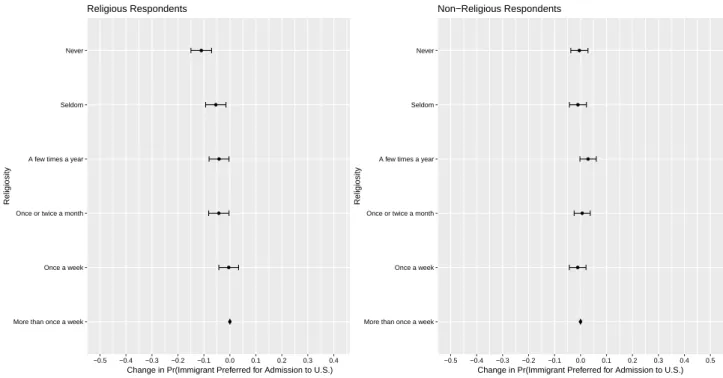
Figure 4: Attribute Affinity and Religiosity (SSI–conjoint Study)
● ● ● ● ● ●
More than once a week Once a week Once or twice a month A few times a year Seldom Never
−0.5 −0.4 −0.3 −0.2 −0.1 0.0 0.1 0.2 0.3 0.4 0.5
Change in Pr(Immigrant Preferred for Admission to U.S.)
Religiosity Religious Respondents ● ● ● ● ● ●
More than once a week Once a week Once or twice a month A few times a year Seldom Never
−0.5 −0.4 −0.3 −0.2 −0.1 0.0 0.1 0.2 0.3 0.4 0.5
Change in Pr(Immigrant Preferred for Admission to U.S.)
Religiosity
Non−Religious Respondents
Note: This plot shows estimates of the effects of the immigrant’s religiosity on the probability of being preferred for admission to the United States. Here we see estimates for religious and non-religious respon-dents. The estimates are based on the regression estimators with standard errors clustered by respondent; bars represent 95% confidence intervals. The points without horizontal bars denote the reference category for each attribute. Atheists immigrants were removed from the sample.
Figure 4 uses the same SSI–conjoint data employed in the last section and shows that religious respondents have a strong preference for immigrants who are more religious— attending religious services more often— compared to those who attend religious services less frequently. That is, regardless of the potential immigrant’s religion, religious respondents prefer religious immigrants over non-religious immigrants. Not surprisingly, non-religious respondents do not have preferences over an immigrant’s level of religiosity. Our survey
pro-20We exclude atheists from both the respondent sample and immigrant profiles since they are not
vides evidence that for non-religious respondents, religiosity is simply not a salient dimension of identity (see Supporting Information).
This finding suggests that, among those individuals for whom religiosity is a salient identity dimension, the out-group bias against Muslims described in the previous section could potentially be moderated by the immigrant’s degree of religiosity. In other words, at least for some respondents, one element of religious identity could temper the other.
We find that this is indeed the case. In line with our theory of attribute affinity, we find that affinity in a trait like religiosity increases in-group preference, and more surprisingly, can moderate anti-Muslim bias. More importantly, we are able to replicate this finding with two different experiments conducted with different samples more than half a year apart from
each other.21 The first comes from our 2013 MTurk–religion/religiosity study, the design
of which is described above (as presented in Table 2). Recall that this experiment is a fully crossed 2x2 design, where respondents are asked to rate potential immigrants who are either Catholic or Muslim and either religious or non-religious. Thus, respondents were exposed to one of four hypothetical immigrant types each of the two times they were asked to rate potential immigrants. Figure 5 displays our respondents’ mean evaluations for each of these four types. We present these results separately for Catholic respondents with different levels of religiosity: consistent with our previous analysis, we define non-religious Catholic respondents as those who answered that they attend religious services “seldom” or “never.” Religious Catholic respondents are those who reported that they attend religious services
21We ran another similar experiment in 2015 where we included an additional treatment arm that
pre-sented respondents with a Muslim immigrant without any information about religiosity. The experiment presented respondents with two immigrant profiles sequentially. We managed to replicate our results as we did with the conjoint analysis only in the first period, not the second. We find that, in line with our theory of attribute affinity, religious respondents prefer religious over non-religious Muslims. However, we are careful in interpreting these results because of their instability (see Supporting Information for details). Although we cannot explain this instability, we suspect that events relating to Islamic extremism that occurred be-tween our experiments, such as the Charlie Hebdo attacks and the increased media coverage of the Islamic State, may have influenced our respondents’ answers in ways we did not anticipate. However, given the strong findings from our first two experiments—conducted using different methods on different samples—we are confident that the initial results we report in this paper are not simply statistical flukes.
“once a week” or “more than once a week.”
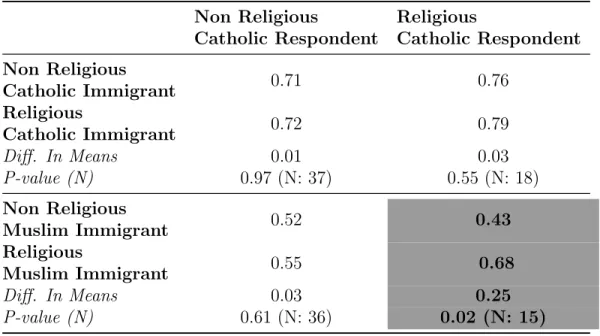
Table 5 presents the average ratings of religious and non-religious Catholic respondents by immigrant religious affiliation and levels of religiosity. Comparing the top and bottom panels, we observe that, in the aggregate, all Catholics prefer Catholics over Muslims on average. However, religious and non-religious Catholic individuals respond differently. Looking first at non-religious Catholics (left hand column), we see that these respondents do not make a distinction between Muslims and Catholics based on the immigrant’s level of religiosity (the difference in means is .01 for Catholic immigrants and .03 for Muslim immigrants, neither is statistically significant). This result is consistent with our theory of attribute affinity since it seems that religiosity is not as salient a trait for non-religious Catholics as would be the case for religious Catholics.
Table 5: Mean Ratings of Immigrants (Mturk–religion/religiosity Study) Non Religious Catholic Respondent Religious Catholic Respondent Non Religious Catholic Immigrant 0.71 0.76 Religious Catholic Immigrant 0.72 0.79 Diff. In Means 0.01 0.03 P-value (N) 0.97 (N: 37) 0.55 (N: 18) Non Religious Muslim Immigrant 0.52 0.43 Religious Muslim Immigrant 0.55 0.68 Diff. In Means 0.03 0.25 P-value (N) 0.61 (N: 36) 0.02 (N: 15)
Note: Averages are normalized to fit a scale of (0,1) based on the rating given to each immigrant on a 7 point scale: Absolutely not admit the immigrant to the United States (1), Definitely admit the immigrant to the United States (7). Standard errors are clustered by respondent. Averages calculated using the MTurk 2013 data. In parentheses is the total number of unique respondents in each cell (N).
com-pare attitudes towards Catholic immigrants shown in the first and second row of the top panel on the right hand side, we observe a negligible difference in averages (0.03, with a p-value < 0.55). That is, religious Catholics evaluate both religious and non-religious Catholic potential immigrants equally. However, religious Catholics change their attitudes towards Muslims, according to the religiosity of potential immigrants. The top two rows of the bottom panel of Table 5 (shaded in gray) demonstrate that the difference in attitudes towards religious and non-religious Muslims is significantly and substantively large among religious Catholic respondents in favor of religious Muslim immigrants — about 1.2 standard deviation change (difference of 0.25, p-value of < 0.02). In other words, religious Catholic respondents dif-ferentiate between religious and non-religious Muslims in a way that non-religious Catholics do not — and are more positive towards religious Muslims. The right hand side of the lower panel in Table 5, shaded in gray, shows that the mean rating between religious and non-religious immigrants is only significantly different and positive when religious Catholics evaluate Muslims. The difference in mean preference is significant at conventional levels (p-value < .02), clustering standard errors by respondent.
The MTurk–religion/religiosity experiment was designed to test our hypothesis on Catholics.22
However, our finding extends beyond this particular sample; we replicate the results using our SSI–conjoint data.
It is important to note that we replicate the MTurk–religion/religiosity findings using a very different design that incorporates a much more realistic profile of immigrants. Further-more, the SSI–conjoint study was fielded more than half a year after we conducted the first study, and we do so among a broader and more diverse group of respondents. Specifically, we used our conjoint data collected in 2014 and conducted an analysis similar to the MTurk
22The findings in this sample cannot rule out that this pattern is particular to religious Catholic
respon-dents because in the full sample of religious responrespon-dents there is a slight preference for religious Muslims over non-religious Muslim immigrants (difference in means of .06, p-value=.86), but the difference is not statistically distinguishable from zero.
experiment, but examined all respondents who identify with a religion (i.e. everyone except
atheists).23
To mimic the analytical strategy of our MTurk–religion/religiosity study, we aggregated respondents into one group who identify with any religion but are non-religious (those who “never” or “seldom” attend religious services) and religious respondents (those who reported they attend religious services “more than once a week” or “once a week,”) who practice any religion into a second group. As with our MTurk experiment, we present ratings separately for religious respondents and for non-religious respondents. Similarly, for the purposes of analysis, we categorize immigrant profiles along two dimensions: (1) those that are Muslim versus any other religion (excluding atheists) and (2) those that are non-religious versus religious.
Table 6 shows the mean rating normalized to fit a scale from 0 to 1 using the same scale used in Table 5. We asked respondents to provide a rating for every different type of immigrant they saw—Muslim or non-Muslim—broken down by the religiosity of the re-spondent. Replicating our main result from the previous study, looking at the bottom right corner of the table, we find that religious respondents rate religious Muslim immigrants sig-nificantly higher than non-religious Muslim immigrants. At the same time and in contrast to the MTurk experiment, non-religious respondents significantly prefer non-religious Muslims. This difference can be seen on the left column of the bottom panel. This difference aside, the difference in means in how religious respondents evaluate Muslim immigrants remains and — albeit smaller in magnitude than the one presented in Table 4 — it represents 17% of a standard deviation change. The difference in means between evaluations of religious and non-religious Muslims for religious respondents—both measured by rating evaluation and
23Similar to the MTurk–religion/religiosity experiment, we asked respondents to rate each immigrant on
a 7-point scale (see Figure 1). Including atheists that report attending religious services does not change the results.
choice task24—is significantly different from zero and substantively important.25 These re-sults provide additional evidence that similarity in religiosity can moderate strong out-group aversion to Muslims.
24The difference in means between religious respondents’ evaluations of religious and non-religious Muslims
is practically the same size as when measured using a 7 point scale rating dependent variable and is significant at p < 0.08.
25Instead of seven pairs, we showed 10 pairs of profiles to respondents of minority religions such as
Mormons, Greek Orthodox, Jews, Muslims, Buddhists, Hindus, and atheists. Therefore, when we pool all religious respondents, we are in fact over-representing these religions relative to their population size. We ran the analyses both with all profiles and as well as with just the first seven that each respondent saw. The results do not change with the modification in the sample size.
Table 6: Mean Ratings of Immigrants (SSI–conjoint Study) Non Religious Respondent Religious Respondent Non Religious Immigrant (non-Muslim) 0.54 0.56 Religious Immigrant (non-Muslim) 0.55 0.61 Diff. In Means 0.01 0.05 P-value (N) 0.13 (N: 621) <0.001 (N: 473) Non Religious Muslim Immigrant 0.52 0.49 Religious Muslim Immigrant 0.49 0.54 Diff. In Means -0.03 0.05 P-value (N) 0.05 (N: 583) 0.03 (N: 447)
Note: Averages are normalized to fit a scale of (0,1) based on the rating given to each immigrant on a 7 point scale: Absolutely not admit the immigrant to the United States (1), Definitely admit the immigrant to the United States (7). Standard Errors are clustered by respondent. Averages calculated using the SSI 2014 data. In parentheses is the total number of unique respondents in each cell (N).
Our results in this section are especially important. Although we find that Muslim
immigrants are by far the least preferred immigrant group in our data, in-group affinity with respect to religiosity does attenuate the stigma toward Muslims. As we mentioned before, highly religious Muslims are commonly seen as more threatening than secular ones. If explanations of attitudes toward immigrants were driven by out-group bias alone, then we would expect strongly religious non-Muslim U.S. natives to feel even more threatened
by immigrants who strongly practice Islam. Strikingly, this is not what we find. Attribute affinity on one dimension of identity can moderate out-group bias produced by another dimension. Taken together, the results from the three experiments suggest that in-group affinity not only shapes preferences among group identity labels such as religion, but affinity is also borne out of other shared attributes, including religiosity. Indeed, the effect of shared attributes on preferences is so strong that it can even attenuate the most strongly held
out-group prejudice.26
Conclusion
There is little debate that out-group aversion influences public opinion and political behavior. But out-group aversion is not the whole story. The literature on anti-immigrant sentiment overwhelmingly characterizes immigrant identities as unidimensional in their “otherness” or “foreignness.” However, an important literature in comparative politics emphasizes the multidimensionality of identity as it relates to the formation of attitudes and behaviors to-ward out-groups. Shared traits between in and out-groups can be conduits for collaboration: cross-cutting cleavages may lessen ethnic mistrust. This study focuses on religious identities, which are particularly important in diverse contexts (Adida, Laitin and Valfort 2013). We draw on existing literature on social identity and immigration, as well as a growing liter-ature on the role of religion in shaping attitudes toward out-groups, and apply it to the increasingly salient case of attitudes toward immigrants in the United States. We find that shared attributes, or attribute affinity, goes beyond promoting homophily and can also lessen out-group aversion.
26We designed the SSI–conjoint experiment in 2014 to specifically test our theory on religion and religiosity,
but we also use the data to test the relevance of attribute affinity with respect to other interactive aspects of identity. Specifically, between race on the one hand and language skills on the other. We find that although the statistical significance fails to reach standard levels, attribute affinity mitigates negative reactions in these cases. Although only suggestive, this evidence further strengthens our theory and emphasizes the importance of studying the effect of the interaction of different identity attributes on attitudes toward out-groups.
In particular, we show that aversion may be blunted by in-group affection induced by attribute affinity. Such affinity can abate feelings of out-group hostility and can be quite powerful under certain circumstances. Indeed, our studies suggest that attribute affinity may even attenuate out-group bias of highly stigmatized groups, such as Muslim immigrants. Our findings support a new, more nuanced, understanding of how inter-group relations can shape public opinion.
Such findings have important relevance for today’s politics. Increasing international
conflicts are creating acute immigration crises across the globe. Many countries are expe-riencing huge influxes of immigrants searching for new homes. As immigration becomes an increasingly salient political issue, policy makers need to understand how natives perceive immigrants. In a context where immigration law is being regulated based on the type and practice of religions, this study is of particular relevance. Efforts to integrate newcomers into society should not only consider the role of differences between natives and immigrants, but also their similarities. Future research should focus on the relative importance of other traits that can be shared by different individuals such as race or language and the degree to which these interact and moderate out-group biases. Our findings suggest that policy makers seeking to engender public support for pro-immigration policies may find it fruitful to highlight shared attributes between immigrants and natives.
It is beyond the scope of this paper to explore all the possible mechanisms that may explain exactly how attribute affinity determines or shapes public opinion. Our findings, however, highlight the need to investigate more closely the effect of inter-group relations on public opinion through the lens of in-group attachment. Future work should investigate the relative strength of different aspects of an individual’s identity over attitudes and opin-ion formatopin-ion toward outsiders. Furthermore, country specific contexts may determine the traits that might engender affinity. Extrapolating these findings beyond the United States context may be unwise due to the differing degree of salience that religion has in other
contexts. However, this paper highlights the importance of moving beyond prejudice and out-group analyses when studying attitudes in other contexts as a fruitful future direction of the literature.
References
Adida, Claire L, David D Laitin and Marie-Anne Valfort. 2015. “Religious Homophily in a Secular Country: Evidence from a Voting Game in France.” Economic Inquiry 53(2):1187– 1206.
Adida, Claire L, David D Laitin and Marie-Anne Valfort. 2016. Why Muslim Integration Fails in Christian-Heritage Societies. Harvard University Press.
Adida, Claire L, David Laitin and Marie-Anne Valfort. 2013. “Region of Origin or Reli-gion? Understanding Why Immigrants from Muslim-majority Countries are Discriminated against in Western Europe.”.
Ben-Nun Bloom, Pazit, Gizem Arikan and Marie Courtemanche. 2015. “Religious Social Identity, Religious Belief, and Anti-Immigration Sentiment.” American Political Science Review 109(2):203–221.
Berinsky, Adam J., Gregory A. Huber and Gabriel S. Lenz. 2012. “Evaluating Online Labor Markets for Experimental Research: Amazon.com’s Mechanical Turk.” Political Analysis 20(3):351–368.
Bobo, Lawrence. 1983. “Whites’ Opposition to Busing: Symbolic Racism or Realistic Group Conflict?” Journal of Personality and Social Psychology 45(6):1196–1210.
Brader, Ted, Nicholas A. Valentino and Elizabeth Suhay. 2008. “What Triggers Public Opposition to Immigration? Anxiety, Group Cues, and Immigration Threat.” American Journal of Political Science 52(4):959–978.
Brewer, Marilynn B. 1979. “In-group Bias in the Minimal Intergroup Situation: A Cognitive-Motivational Analysis.” Psychological Bulletin 86(2):307–324.
Brewer, Marilynn B. 1999. “The Psychology of Prejudice: Ingroup Love or Outgroup Hate?” Journal of Social Issues 55(3):429–444.
Brewer, Marilynn B. 2007. “The Importance of Being We: Human Nature and Intergroup Relations.” American Psychologist 62(8):728.
Chandra, Kanchan. 2012. Constructivist theories of ethnic politics. Oxford University Press. Cimino, Richard. 2005. “No God in Common: American Evangelical Discourse on Islam
after 9/11.” Review of Religious Research 47(2):162–174.
Citrin, Jack, Donald P. Green, Christopher Muste and Cara Wong. 1997. “Public Opinion toward Immigration Reform: The Role of Economic Motivations.” The Journal of Politics 59(3):858–881.
Citrin, Jack and Matthew Wright. 2009. “Defining the Circle of We: American Identity and Immigration Policy.” The Forum 7(3):1–20.
Creighton, Mathew J. and Amaney Jamal. 2015. “Does Islam Play a Role in Anti-Immigrant Sentiment? An Experimental Approach.” Social Science Research 53:89–103.
Crisp, Richard J. and Miles Hewstone. 2007. “Multiple Social Categorization.” Advances in Experimental Social Psychology 39:163–254.
Dancygier, Rafaela M. and Michael J. Donnelly. 2013. “Sectoral Economies, Economic Con-texts, and Attitudes toward Immigration.” The Journal of Politics 75(1):17–35.
Daniels, Joseph P and Marc Von Der Ruhr. 2005. “God and the global economy: Religion and attitudes towards trade and immigration in the United States.” Socio-Economic Review 3(3):467–489.
Dovidio, John F., Samuel L. Gaertner, Ana Validzic, Kimberly Matoka, Brenda Johnson and Stacy Frazier. 1997. “Extending the Benefits of Recategorization: Evaluations, Self-Disclosure, and Helping.” Journal of Experimental Social Psychology 33(4):401–420. Dunning, Thad and Lauren Harrison. 2010. “Cross-cutting cleavages and ethnic voting: An
experimental study of cousinage in Mali.” American Political Science Review 104(1):21–39. Fetzer, Joel S. and J. Christopher Soper. 2003. “The Roots of Public Attitudes toward State Accommodation of European Muslims’ Religious Practices before and after September 11.” Journal for the Scientific Study of Religion 42(2):247–258.
Foner, Nancy and Richard Alba. 2008. “Immigrant Religion in the US and Western Europe: Bridge or Barrier to Inclusion?” International Migration Review 42(2):360–392.
Ford, Robert, Gareth Morrell and Anthony Heath. 2012. “Fewer but Better? Public Views about Immigration.” The British Social Attitudes 29.
Gaertner, Samuel L and John F Dovidio. 2000. “Reducing intergroup bias: The common ingroup identity model.”.
Green, John Clifford. 2007. The Faith Factor: How Religion Influences American Elections. Westport, CT: Greenwood Publishing Group.
Guth, James L. and John C. Green. 1993. “Salience: The Core Concept?”. In Rediscovering the Religious Factor in American Politics, ed. David C. Leege and Lyman A Kellstadt. Armonk, NY: ME Sharpe, 157–74.
Hainmueller, Jens, Daniel J. Hopkins and Teppei Yamamoto. 2014. “Causal Inference in Conjoint Analysis: Understanding Multidimensional Choices via Stated Preference Ex-periments.” Political Analysis 22(1):1–30.
Hainmueller, Jens, Dominik Hangartner and Teppei Yamamoto. 2015. “Validating Vignette and Conjoint Survey Experiments against Real-World Behavior.” Proceedings of the Na-tional Academy of Sciences 112(8):2395–2400.
Hainmueller, Jens and Michael J. Hiscox. 2010. “Attitudes toward Highly Skilled and Low-Skilled Immigration: Evidence from a Survey Experiment.” American Political Science Review 104(1):61–84.
Hainmueller, Jens, Michael J Hiscox and Yotam Margalit. 2015. “Do concerns about la-bor market competition shape attitudes toward immigration? New evidence.” Journal of International Economics 97(1):193–207.
Hanson, Gordon H., Kenneth Scheve and Matthew J. Slaughter. 2007. “Public Finance and Individual Preferences over Globalization Strategies.” Economics & Politics 19(1):1–33. Harell, Allison, Stuart N Soroka and Shanto Iyengar. 2011. “Attitudes toward immigration
and immigrants: The impact of economic and cultural cues in the US and Canada.” http://papers.ssrn.com/sol3/papers.cfm?abstract_id=1901722.
Kalkan, Ozan K., Geoffrey C. Layman and Eric M. Uslaner. 2009. “Bands of Others?
Attitudes toward Muslims in Contemporary American Society.” The Journal of Politics 71(3):847–862.
Kenworthy, Jared B., Carrie J. Canales, Kimberlee D. Weaver and Norman Miller. 2003. “Negative Incidental Affect and Mood Congruency in Crossed Categorization.” Journal of Experimental Social Psychology 39(3):195–219.
Kinder, Donald R. and Cindy D. Kam. 2009. Us Against Them: The Ethnocentric Founda-tions of American Opinion. Chicago, IL: University of Chicago Press.
Kinder, Donald R. and David O. Sears. 1981. “Prejudice and Politics: Symbolic Racism Versus Racial Threats to the Good Life.” Journal of Personality and Social Psychology 40(3):414.
Knoll, Benjamin R. 2009. “And who is my neighbor? Religion and immigration policy attitudes.” Journal for the Scientific Study of Religion 48(2):313–331.
Layman, Geoffrey C. 1997. “Religion and Political Behavior in the United States: The Impact of Beliefs, Affiliations, and Commitment from 1980 to 1994.” Public Opinion Quarterly 61(2):288–316.
Malhotra, Neil, Yotam M. Margalit and Cecilia H. Mo. 2013. “Economic Explanations for Opposition to Immigration: Distinguishing between Prevalence and Conditional Impact.” American Journal of Political Science 57(2):391–410.
Margolis, Michele F. 2018. “How far does social group influence reach? Identities, elites, and immigration attitudes.” The Journal of Politics 80(3):000–000.
Mayda, Anna M. 2006. “Who is Immigration? A Cross-Country Investigation of Individual Attitudes toward Immigrants.” The Review of Economics and Statistics 88(3):510–530. McPherson, Miller, Lynn Smith-Lovin and James M Cook. 2001. “Birds of a feather:
Ho-mophily in social networks.” Annual review of sociology 27(1):415–444.
Mockabee, Stephen T, Joseph Quin Monson and J Tobin Grant. 2001. “Measuring reli-gious commitment among Catholics and Protestants: A new approach.” Journal for the Scientific Study of Religion 40(4):675–690.
Nisbett, Richard E. and Timothy D. Wilson. 1977. “Telling More Than We Can Know: Verbal Reports on Mental Processes.” Psychological Review 84(3):231.
O’Rourke, Kevin H. and Richard Sinnott. 2006. “The Determinants of Individual Attitudes towards Immigration.” European Journal of Political Economy 22(4):838–861.
Oswald, Debra L. 2005. “Understanding Anti-Arab Reactions Post-9/11: The Role of
Threats, Social Categories, and Personal Ideologies.” Journal of Applied Social Psychology 35(9):1775–1799.
Putnam, Robert D. 2002. “Bowling Together.” The American Prospect 13(3):20–22.
Riek, Blake M, Eric W Mania, Samuel L Gaertner, Stacy A McDonald and Marika J Lam-oreaux. 2010. “Does a Common Ingroup Identity Reduce Intergroup Threat?” Group Processes & Intergroup Relations 13(4):403–423.
Scheve, Kenneth F. and Matthew J. Slaughter. 2001. “Labor Market Competition and Individual Preferences over Immigration Policy.” Review of Economics and Statistics 83(1):133–145.
Schildkraut, Deborah J. 2002. “The More Things Change... American Identity and Mass and Elite Responses to 9/11.” Political Psychology 23(3):511–535.
Sears, David O., Jim Sidanius and Lawrence Bobo. 2000. Racialized Politics: The Debate about Racism in America. Chicago, IL: University of Chicago Press.
Shaheen, Jack G. 2003. “Reel bad Arabs: How Hollywood vilifies a people.” The Annals of the American Academy of Political and Social Science 588(1):171–193.
Sherif, Muzafer. 1966. Group Conflict and Co-operation: Their Social Psychology. London, U.K.: Routledge & K. Paul.
Sides, John and Dalia Mogahed. 2018. “Muslims in America: Public Perceptions in the Trump Era.”.
Sniderman, Paul M. and Aloysius Hagendoorn. 2007. When Ways of Life Collide: Multi-culturalism and its Discontents in the Netherlands. Princeton, NJ: Princeton University Press.
Strabac, Zan and Ola Listhaug. 2008. “Anti-Muslim Prejudice in Europe: A Multilevel Analysis of Survey Data from 30 Countries.” Social Science Research 37(1):268–286. Tajfel, Henri. 1982. “Social Psychology of Intergroup Relations.” Annual Review of
Psychol-ogy 33(1):1–39.
Tajfel, Henri and John C. Turner. 1979. ”An Integrative Theory of Intergroup Conflict”. In The Social Psychology of Intergroup Relations, ed. W.G. Austin and S. Worchel. Monterey, CA: Brooks-Cole, 33–37.
Vanman, Eric J., Brenda Y. Paul, Tiffany A. Ito and Norman Miller. 1997. “The Modern Face of Prejudice and Structural Features that Moderate the Effect of Cooperation on Affect.” Journal of Personality and Social Psychology 73(5):941–959.
Worchel, Stephen, Hank Rothgerber, Eric A. Day, Darren Hart and John Butemeyer. 1998. “Social and Identity and Individual Productivity within Groups.” The British Journal of Social Psychology 37(4):389–413.
Wright, Matthew, Morris Levy and Jack Citrin. 2015. “Public Attitudes Toward Immigra-tion Policy Across the Legal/Illegal Divide: The Role of Categorical and Attribute-Based Decision-Making.” Political Behavior pp. 1–25.