HAL Id: hal-00302052
https://hal.archives-ouvertes.fr/hal-00302052
Submitted on 8 Aug 2006HAL is a multi-disciplinary open access
archive for the deposit and dissemination of sci-entific research documents, whether they are pub-lished or not. The documents may come from teaching and research institutions in France or abroad, or from public or private research centers.
L’archive ouverte pluridisciplinaire HAL, est destinée au dépôt et à la diffusion de documents scientifiques de niveau recherche, publiés ou non, émanant des établissements d’enseignement et de recherche français ou étrangers, des laboratoires publics ou privés.
Distribution, magnitudes, reactivities, ratios and diurnal
patterns of volatile organic compounds in the Valley of
Mexico during the MCMA 2002 and 2003 field
campaigns
E. Velasco, B. Lamb, H. Westberg, E. Allwine, G. Sosa, J. L. Arriaga-Colina,
B. T. Jobson, Alexander Hoole, P. Prazeller, W. B. Knighton, et al.
To cite this version:
E. Velasco, B. Lamb, H. Westberg, E. Allwine, G. Sosa, et al.. Distribution, magnitudes, reactiv-ities, ratios and diurnal patterns of volatile organic compounds in the Valley of Mexico during the MCMA 2002 and 2003 field campaigns. Atmospheric Chemistry and Physics Discussions, European Geosciences Union, 2006, 6 (4), pp.7563-7621. �hal-00302052�
ACPD
6, 7563–7621, 2006 Measurements of volatile organic compounds in the Valley of Mexico E. Velasco et al. Title Page Abstract Introduction Conclusions References Tables Figures J I J I Back CloseFull Screen / Esc
Printer-friendly Version
Interactive Discussion Atmos. Chem. Phys. Discuss., 6, 7563–7621, 2006
www.atmos-chem-phys-discuss.net/6/7563/2006/ © Author(s) 2006. This work is licensed
under a Creative Commons License.
Atmospheric Chemistry and Physics Discussions
Distribution, magnitudes, reactivities,
ratios and diurnal patterns of volatile
organic compounds in the Valley of
Mexico during the MCMA 2002 and 2003
field campaigns
E. Velasco1,*, B. Lamb1, H. Westberg1, E. Allwine1, G. Sosa2, J. L. Arriaga-Colina2, B. T. Jobson3,**, M. Alexander3, P. Prazeller3, W. B. Knighton4, T. M. Rogers4, M. Grutter5, S. C. Herndon6, C. E. Kolb6, M. Zavala7, B. de Foy7,*, R. Volkamer8, L. T. Molina7,*, and M. J. Molina7
1
Laboratory for Atmospheric Research, Department of Civil and Environmental Engineering, Washington State University, Pullman WA, USA
2
Laboratorio de Qu´ımica de la Atm´osfera, Instituto Mexicano del Petr´oleo, M´exico D.F., M´exico
3
Atmospheric Sciences. Battelle Pacific Northwest National Laboratory, Richland WA, USA
4
Department of Chemistry and Biochemistry, Montana State University, Bozeman MO, USA
5
Centro de Ciencias de la Atm ´osfera, Universidad Nacional Aut ´onoma de M ´exico, M ´exico D.F., M ´exico
6
Center for Atmospheric and Environmental Chemistry, Aerodyne Research Inc., Billerica, MA, USA
ACPD
6, 7563–7621, 2006 Measurements of volatile organic compounds in the Valley of Mexico E. Velasco et al. Title Page Abstract Introduction Conclusions References Tables Figures J I J I Back CloseFull Screen / Esc
Printer-friendly Version
Interactive Discussion
7
Department of Earth, Atmospheric, and Planetary Sciences, Massachusetts Institute of Tech-nology, Cambridge MA, USA
8
Department of Chemistry and Biochemistry, University of California, San Diego, USA
∗
now at: Molina Center for Energy and the Environment (mce2.org), La Jolla CA, USA
∗
now at: Washington State University, Pullman WA, USA
Received: 7 July 2006 – Accepted: 1 August 2006 – Published: 8 August 2006 Correspondence to: E. Velasco ([email protected])
ACPD
6, 7563–7621, 2006 Measurements of volatile organic compounds in the Valley of Mexico E. Velasco et al. Title Page Abstract Introduction Conclusions References Tables Figures J I J I Back CloseFull Screen / Esc
Printer-friendly Version
Interactive Discussion
Abstract
A wide array of volatile organic compound (VOC) measurements was conducted in the Valley of Mexico during the MCMA-2002 and 2003 field campaigns. Study sites in-cluded locations in the urban core, in a heavily industrial area and at boundary sites in rural landscapes. In addition, a novel mobile-laboratory-based conditional sampling
5
method was used to collect samples dominated by fresh on-road vehicle exhaust to identify those VOCs whose ambient concentrations were primarily due to vehicle emis-sions. Five distinct analytical techniques were used: whole air canister samples with Gas Chromatography/Flame Ionization Detection (GC-FID), on-line chemical ionization using a Proton Transfer Reaction Mass Spectrometer (PTR-MS), continuous real-time
10
detection of olefins using a Fast Olefin Sensor (FOS), and long path measurements us-ing UV Differential Optical Absorption Spectrometers (DOAS). The simultaneous use of these techniques provided a wide range of individual VOC measurements with different spatial and temporal scales. The VOC data were analyzed to understand concentra-tion and spatial distribuconcentra-tions, diurnal patterns, origin and reactivity in the atmosphere
15
of Mexico City. The VOC burden (in ppbC) was dominated by alkanes (60%), followed by aromatics (15%) and olefins (5%). The remaining 20% was a mix of alkynes, halo-genated hydrocarbons, oxyhalo-genated species (esters, ethers, etc.) and other unidentified VOCs. However, in terms of ozone production, olefins were the most relevant hydrocar-bons. Elevated levels of toxic hydrocarbons, such as 1,3-butadiene, benzene, toluene
20
and xylenes were also observed. Results from these various analytical techniques showed that vehicle exhaust is the main source of VOCs in Mexico City and that diur-nal patterns depend on vehicular traffic. Finally, examination of the VOC data in terms of lumped modeling VOC classes and its comparison to the VOC lumped emissions reported in other photochemical air quality modeling studies suggests that some, but
25
not all, VOC classes are underestimated in the emissions inventory by factors of 1.1 to 3.
ACPD
6, 7563–7621, 2006 Measurements of volatile organic compounds in the Valley of Mexico E. Velasco et al. Title Page Abstract Introduction Conclusions References Tables Figures J I J I Back CloseFull Screen / Esc
Printer-friendly Version
Interactive Discussion
1 Introduction
Volatile organic compounds (VOCs) play a key role in photochemical air quality in ur-ban atmospheres. In the presence of sunlight and nitrogen oxides (NOx), VOCs ox-idation produces secondary products including radicals (e.g., hydroxyl, hydroperoxy, organoperoxy), oxygenated organics (e.g., aldehydes, ketones, acids, nitrates,
perox-5
ides), and inorganics (e.g., carbon monoxide, ozone, hydrogen peroxide, nitric acid) (Finlayson-Pitts and Pitts, 1997). It has been demonstrated that many of these sec-ondary compounds may have direct health impacts (Evans et al., 2002, and references therein), and that some individual VOCs are extremely toxic pollutants (e.g., the car-cinogens benzene and 1-3-butadiene).
10
Mexico City with a population of 19 million is a good example of a megacity with severe air pollution problems. It is situated in the Valley of Mexico and is the capital city of a developing country. Mexico City is in the subtropical zone and at high altitude which makes combustion processes less efficient leading to enhanced VOC emissions. Mexico City’s high altitude (∼2240 m) and low latitude (19◦250N), result in subtropical
15
weather and intense solar radiation that accentuate the VOC evaporative emissions from a variety of sources such as storage and distribution of gasoline, solvent-base cleaning, painting, and industrial processes. However, the main contributors to high VOC concentrations in Mexico City are the extensive presence of aged industrial op-erations (more than 53 000 industries) and a relatively old vehicle fleet (more than 3.5
20
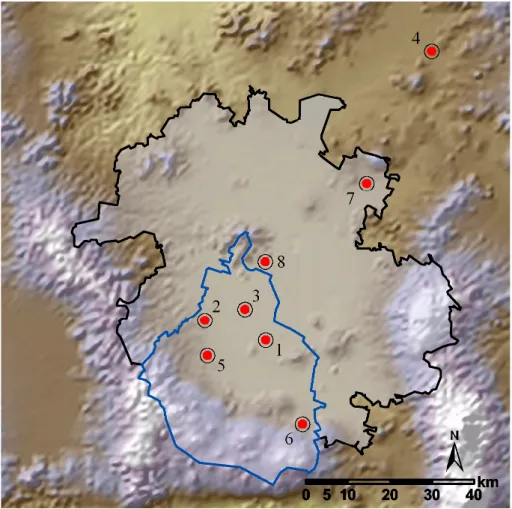
million vehicles with an average age of ∼9 years). The elevated anthropogenic emis-sions, the intense solar radiation and area’s topography with mountains to the west, east and south of the valley (see Fig. 1) produce elevated levels of photochemical pollutants on a daily basis (Molina and Molina, 2002).
Many researchers have addressed the VOC pollution problem in Mexico City.
Ambi-25
ent VOC concentrations have been evaluated since the early 90’s (Raga et al., 2001 and references therein). All of these studies have consistently reported high concen-trations of propane, butane and other low molecular weight alkanes, which have been
ACPD
6, 7563–7621, 2006 Measurements of volatile organic compounds in the Valley of Mexico E. Velasco et al. Title Page Abstract Introduction Conclusions References Tables Figures J I J I Back CloseFull Screen / Esc
Printer-friendly Version
Interactive Discussion attributed to liquefied petroleum gas (LPG) leakage during handling, distribution and
storage. LPG is the main fuel for cooking and water heating in Mexican households. High ambient concentrations of photochemical reactive VOCs, such as olefins and aro-matics, have been reported as well (Mugica et al., 2002a; Arriaga et al., 1997). These two VOC groups have been identified as the main species responsible for the ozone
5
and secondary organic aerosol formation in Mexico City (Gasca et al., 2004; Mugica et al., 2002a). High levels of aromatic hydrocarbons, particularly of toluene, benzene and xylenes, have been detected in different microenvironments and associated with diverse public transport systems in Mexico City (Shiohara et al., 2005, Gomez-Perales et al., 2004; Cruz-Nu ˜nez et al., 2003; Bravo et al., 2002; Ortiz et al., 2002; Meneses et
10
al., 1999).
From source apportionment studies, it has been determined that motor-vehicles, es-pecially gasoline vehicles, are the main source of aromatic hydrocarbons (Mugica et al., 2003). Emissions profiles for on-road motor-vehicles have been obtained from tun-nel studies (Mugica et al., 1998). Schifter et al. (2003) estimated on-road emissions
15
of total hydrocarbons using remote sensors, and recently Zavala et al. (2006) and Rogers et al. (2006) quantified mobile emissions of benzene, toluene, formaldehyde and acetaldehyde via mobile laboratory “chase” experiments for real on-road condi-tions. However, vehicular emissions in Mexico City are still uncertain due to the lack of reliable fleet emission factors and daily activity levels (Gakenheimer et al., 2002). VOC
20
emission profiles are also available for food cooking, asphalt application and painting operations, among other types of sources in Mexico City (Vega et al., 2000; Mugica et al., 2001). The biogenic component in the VOC emission burden has been estimated to contribute no more than 7% in the Valley of Mexico (Velasco, 2003).
During the last decade, a number of policies and actions have been enacted to
de-25
crease VOC emissions in Mexico City, among them, the installation of vapor recovery systems in fuel service stations, the banning of heavy fuel oil, the phasing out of leaded gasoline, the availability of diesel with reduced sulfur content and the substantial reduc-tion of olefins, as well as benzene and other aromatic hydrocarbon content in gasoline.
ACPD
6, 7563–7621, 2006 Measurements of volatile organic compounds in the Valley of Mexico E. Velasco et al. Title Page Abstract Introduction Conclusions References Tables Figures J I J I Back CloseFull Screen / Esc
Printer-friendly Version
Interactive Discussion Arriaga-Colina et al. (2004) reported that, as result of these emission control
mea-sures, ambient VOC concentrations have stabilized and possibly decreased in the last 10 years, despite the growth in the vehicular fleet and other activities. However, ambi-ent VOC levels still remain high and contribute to the exceedences of the national air quality standard for ozone on 70% of the days each year (110 ppb/1 h average; GDF,
5
2004).
Although some advances have been achieved, it is clear that a better understanding of photochemical pollution in the complex urban ecosystem of Mexico City is needed to support effective air quality emission control strategies. In this context, a number of US and Mexican institutions and agencies participated in the Mexico City Metropolitan
10
Area 2002 and 2003 (MCMA-2002 and MCMA-2003) field campaigns. MCMA-2002 was an exploratory campaign performed in February 2002, and MCMA-2003 was an intensive five-week field study during April and May, 2003. The goals of both field studies were to update and improve the emissions inventory of Mexico City, and to gain a better understanding of the chemistry and transport processes driving
atmo-15
spheric pollution in the valley. As part of the effort to meet these goals, a wide array of VOC measurements was conducted at airshed boundary sites, central urban core sites, and downwind urban receptor sites. Four different analytical methods were used: VOC speciation by Gas Chromatographic analysis using Flame Ionization Detection (GC-FID), olefin detection with a Fast Olefin Sensor (FOS), determination of a number
20
of oxygenated and aromatic VOCs by Proton Reaction Transfer Mass Spectroscopy (PTR-MS), and measurements of selected VOCs using Differential Optical Absorp-tion Spectroscopy (DOAS). Key aspects of these VOC measurements were the large number of individual species measured under a variety of spatial and temporal scales employed in the measurements.
25
This manuscript presents a summary of results from the different VOC measure-ments in terms of the distribution, magnitudes, and diurnal patterns of selected VOCs. Ratios of individual VOC species are used to characterize different sites, to investigate the relative reactivity of different species and to determine their origins through
ACPD
6, 7563–7621, 2006 Measurements of volatile organic compounds in the Valley of Mexico E. Velasco et al. Title Page Abstract Introduction Conclusions References Tables Figures J I J I Back CloseFull Screen / Esc
Printer-friendly Version
Interactive Discussion parisons with source signatures, in particular with vehicle exhaust profiles. In addition,
the ambient VOC data has been compared to the lumped VOC emissions classes re-ported by West et al. (2004) to model the photochemical processes in the atmosphere of Mexico City. It has been suggested that VOC emissions are underestimated in the official emissions inventory by a factor of 3 from analysis of the VOC/NOxratio
(Arriaga-5
Colina et al., 2004) and from ozone modeling exercises (West et al., 2004). However, eddy covariance flux measurements of selected VOCs during the MCMA-2003 cam-paign suggest that for the VOC classes measured, the VOC emissions reported in the emissions inventory are generally correct (Velasco et al., 2005).
2 Monitoring sites
10
During the MCMA-2002 study, five sites were selected for measuring ambient VOCs with instantaneous canister samples. For the MCMA-2003 study, two 2002 sites were excluded and three new sites were included, and diverse measurement techniques were implemented. Figure 1 shows a map of the Valley of Mexico indicating the mon-itoring sites where VOC measurements were performed in both campaigns. Overall,
15
eight sites were employed; four locations were urban sites with different mixtures of commercial, residential, and light industrial activity (La Merced, Constituyentes, Pe-dregal and CENICA), one location was in an industrial section of the city (Xalostoc), and three locations were boundary sites in rural areas (La Reforma, Teotihuacan and Santa Ana Tlacotenco). Table 1 lists a summary of these sites and VOC measurement
20
ACPD
6, 7563–7621, 2006 Measurements of volatile organic compounds in the Valley of Mexico E. Velasco et al. Title Page Abstract Introduction Conclusions References Tables Figures J I J I Back CloseFull Screen / Esc
Printer-friendly Version
Interactive Discussion
3 Instrumentation
3.1 Gas chromatography separation and flame ionization detection (GC-FID)
Ambient VOC samples were collected from all monitoring sites in Summa® electro-polished stainless-steel canisters. During the MCMA-2002 study, 46 samples were filled instantaneously, while for the MCMA-2003 study, 184 samples were collected
5
with a three hour averaging interval using automated samplers. From both studies, 64% of the samples were collected during the morning rush traffic period (06:00 to 09:00 h) when VOC concentrations are strongly related to traffic emissions and before photochemical processing has started. The remaining samples were collected during the late morning and early afternoon hours.
10
Canister samples were collected and analyzed by two different research groups: Washington State University (WSU) and the Mexican Petroleum Institute (IMP). WSU collected and analyzed 78% of the samples. During the MCMA-2003 study, WSU collected all its samples with a XonTech, Inc. Air Sampler model 910PC. Half of the samples were analyzed on-site within 24 h of collection; the remainder samples were
15
returned to WSU for analysis. IMP collected samples only in 2003 using an AVOCS Anderson Automated Sampler with a Viton diaphragm pump. Both groups analyzed their samples using methodology similar to the US EPA compendium methods TO-14/15 (USEPA, 1999a). The GC analysis utilized cryogenic pre-concentration by draw-ing air from the canisters through a stainless-steel loop containdraw-ing glass beads (60/80
20
mesh) and cooled to liquid oxygen temperature. WSU employed a Hewlett-Packard 6890 Series chromatograph. The GC was equipped with a 30-m fused silica DB-1 column (0.32 mm i.d. and 1 µm film thickness) with a 2 ml min−1carrier flow. Prior to sample injection, the oven was cooled to −50◦C. During analysis, the oven tempera-ture was raised at 4◦C min−1 to a final temperature of 150◦C. The total analysis time
25
was approximately one hour. Detector response was calibrated with NIST traceable 2,2-dimethylbutane standard. A minimum detection limit of 20 pptC was determined.
ACPD
6, 7563–7621, 2006 Measurements of volatile organic compounds in the Valley of Mexico E. Velasco et al. Title Page Abstract Introduction Conclusions References Tables Figures J I J I Back CloseFull Screen / Esc
Printer-friendly Version
Interactive Discussion Individual species were identified by retention times.
IMP conducted their analysis using a Hewlett-Packard 5890 Series II chromatograph containing a 60-m Quadrex fused silica glass capillary column (0.32 mm i.d. and coated with a 1 µm film thickness) at a flow of 2 ml min−1. The oven temperature started at −50◦C and was heated up to 200◦C at a rate of 8◦C min−1. The FID response was
5
calibrated with a certified high-purity propane standard from Praxair. The detection limit was determined to be 1 ppbC. Individual species were identified by retention times using a mixture of 55 hydrocarbons (Scott Specialty Gases NIST Traceable), and a certified mixture of 33 halogen-containing compounds (Spectra Gases, with 10% ana-lytical accuracy).
10
3.2 The Proton Transfer Reaction Mass Spectrometry (PTR-MS)
The Proton Transfer Reaction Mass Spectrometry identifies VOCs in ambient air as their molecular mass plus one. This technique creates ions by transferring a H+ from H3O+ to the VOCs followed by mass spectroscopy detection of the product ions (Lindinger et al., 1998). The PTR-MS does not employ a column, so response times
15
are short (seconds) and automated, continuous measurements can be made over ex-tended periods of time. Specificity in the PTR-MS is achieved by the soft ionization (minimal fragmentation) and the response is limited to species with a greater proton affinity than water. In cases where several VOCs produce the same M+1 ion, indi-vidual species quantification is not possible. For example, the signal at mass 121
20
(C3-benzenes) is comprised of i and n-propylbenzene, three ethyltoluene and three trimethylbenzenes isomers. Validation of PTR-MS measurements have been per-formed by de Gouw et al. (2003) and Warneke et al. (2003) to determine the set of VOCs that are suitable for measurement with this technique.
During the MCMA-2003 field campaign, two PTR-MS instruments were used. One
25
was operated at the CENICA site by the Pacific Northwest National Laboratory (PNNL), and the second PTR-MS instrument, belonging to Montana State University (MSU), was housed in a mobile laboratory for on-road vehicle emissions studies and both
ACPD
6, 7563–7621, 2006 Measurements of volatile organic compounds in the Valley of Mexico E. Velasco et al. Title Page Abstract Introduction Conclusions References Tables Figures J I J I Back CloseFull Screen / Esc
Printer-friendly Version
Interactive Discussion fixed site and mobile ambient pollutant measurements (Kolb et al., 2004; Herndon et
al., 2005; Zavala et al., 2006; Rogers et al., 2006). During selected periods, the mobile laboratory was employed as a fixed monitoring station at La Merced, Santa Ana Tlaco-tenco and Pedregal sites. This manuscript presents only PTR-MS measurements from fixed-sites. The species monitored by PTR-MS included benzene, toluene, styrene,
5
C2-benzenes, C3-benzenes, naphthalene, phenol, cresols, methanol, acetaldehyde, acetone and acetonitrile. The C2-benzenes are represented by mass 107, which has contributions from ethylbenzene, o,m and p-xylene, and benzaldehyde (de Gouw et al., 2003).
Both PTR-MS instruments were calibrated in the field using a multi-component gas
10
standard that contained the species reported here. The calibration standard was di-luted with humidified zero air in order to generate a multipoint calibration curve from 1 to 50 ppbv. Calibrations were performed every 2–3 days. The instrument background was automatically recorded every 3 h by switching the sample flow to a humid zero air stream. Zero air was continuously generated by passing ambient air through a
15
Pt-catalyst trap heated to 300◦C. Background count rates were subtracted from the ambient data.
3.3 Fast Olefin Sensor (FOS)
Continuous real-time measurements of olefin concentrations were made at the CENICA site during the MCMA-2003 study by WSU using a FOS. The FOS is a fast
20
isoprene sensor (Guenther and Hills, 1998) based on chemiluminescence that occurs when an olefinic bond reacts with ozone. The chemiluminescent response varies con-siderably for individual olefins. In an urban atmosphere where numerous olefins are present, it is necessary to evaluate the FOS response to as many olefins as possible. For Mexico City, we determined response characteristics for five olefins (propylene,
25
ethylene, isoprene, 1-butene and 1-3 butadiene). Since NO levels are known to be high in the Mexico City atmosphere, we investigated potential interferences due to its reaction with ozone. Nitric oxide gave no response in this test. Response results for
ACPD
6, 7563–7621, 2006 Measurements of volatile organic compounds in the Valley of Mexico E. Velasco et al. Title Page Abstract Introduction Conclusions References Tables Figures J I J I Back CloseFull Screen / Esc
Printer-friendly Version
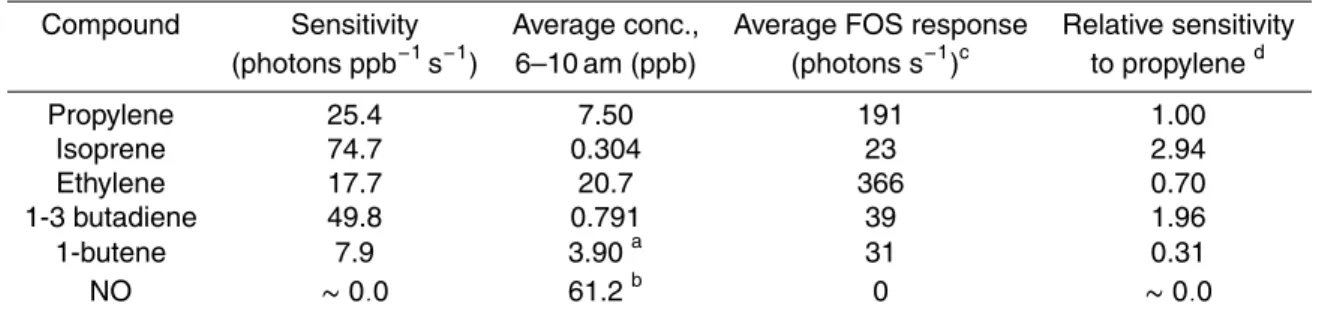
Interactive Discussion the olefins are shown in Table 2 along with their corresponding relative sensitivities to
propylene. It was found that the FOS is more sensitive to 1-3-butadiene and isoprene than to propylene; however, their ambient concentrations were much lower than the ambient levels of propylene. In contrast, species with a lower sensitivity than propy-lene, but with high concentrations in urban atmospheres (e.g. ethylene) can produce
5
large signals.
During the campaign, the FOS was calibrated 3 times per day using dilutions from a propylene standard (Scott Specialty Gases, 10.2 ppm, ±5% certified accuracy). The linear slope of instrument response versus propylene concentration and the zero level exhibited relatively little drift during the study period: 14% and 9%, respectively.
10
3.4 Differential Optical Absorption Spectroscopy (DOAS)
Two research grade, long path DOAS instruments were installed at the CENICA site during the MCMA-2003 study. DOAS is based on the UV-molecular absorption of atmo-spheric gases and measures continuously concentrations of a number of trace gases averaged over a long optical path. In brief, for these two DOAS, light from broadband
15
UV/vis light sources (Xe-short arc lamps) were projected into the open atmosphere onto a distant array of retro reflectors, which folded the light paths back into the instru-ments where spectra were recorded using Czerny-Turner type spectrometers coupled to 1024-element PDA detectors. One DOAS measured formaldehyde and glyoxal, and its results are discussed elsewhere (Volkamer et al., 2005). The second DOAS
mea-20
sured a larger number of VOCs: formaldehyde, benzene, toluene, m-xylene, p-xylene, mono-substituted alkylbenzenes (C2 and higher), phenol, p-cresol, styrene, naphtha-lene and benzaldehyde. These VOCs were measured by observing their unique spe-cific narrow-band (<5 nm) absorption structures trough a light path of 430 m (total 860 m) at a height of 16 m. Spectra were recorded by sequentially observing 40-nm
25
wide wavelength intervals in the wavelength range between 240 and 375 nm at 0.2 nm FWHM spectral resolution. The time resolution of recording a full cycle of spectra var-ied between 30 s and 4 min, depending on the abundance of UV-light absorbing ozone.
ACPD
6, 7563–7621, 2006 Measurements of volatile organic compounds in the Valley of Mexico E. Velasco et al. Title Page Abstract Introduction Conclusions References Tables Figures J I J I Back CloseFull Screen / Esc
Printer-friendly Version
Interactive Discussion Absorptions of atmospheric oxygen were eliminated using the interpolation approach
of Volkamer et al. (1998), using oxygen column densities of 3.7×10¹⁷molecules cm−2 and 4.1×10¹⁷molecules cm−2, and updated evaluation routines. Reference spectra of aromatic compounds were recorded by introducing quartz-cuvettes filled with vapor into the lightbeam, and these spectra were calibrated to the absorption cross-sections
5
(Etzkorn et al., 1999). The mean detection limits in ppbv were: 5 (formaldehyde), 1 (benzene, toluene, m-xylene), 0.3 (p-xylene), 1.8 (ethylbenzene-equivalents), 0.5 (styrene), 0.06 (phenol, p-cresol), 0.2 (benzaldehyde), and 0.08 (naphthalene).
Also, during the MCMA-2003 study the National Autonomous University of Mexico (UNAM) deployed a commercial DOAS system (Opsis, Model AR500) at the La Merced
10
site to measure ambient concentrations of benzene and toluene. The measurements were performed along a 426 m optical path. The transmitting and receiving telescopes were installed on top of two four-story buildings with the beam trajectory 20 m above the surface. The acquisition time was set to 5 min. Concentrations of benzene and toluene were retrieved using the internal evaluation software of the instrument. The instrument
15
response was corrected based on a multipoint calibration performed in the laboratory and adjusted for real temperature and pressure conditions. No humidity correction was applied. Prior to the measurements reported here, a reference spectrum (background) was stored for every spectral region used in the analysis using a calibration bench (Opsis CB100, RE060 and CA150) with no gas cells installed. A wavelength precision
20
test was also performed using a low-pressure mercury lamp (CA004). More details are provided by Grutter and Flores (2004).
4 Ambient air inter-comparison of GC, PTR-MS and DOAS measurements for
selected VOCs
Table 1 shows that at 50% of the monitored sites, two or more different techniques
25
were used to measure VOCs. This provides the opportunity to inter-compare data to verify that they yield consistent results. Figures 2a and b show time series of benzene
ACPD
6, 7563–7621, 2006 Measurements of volatile organic compounds in the Valley of Mexico E. Velasco et al. Title Page Abstract Introduction Conclusions References Tables Figures J I J I Back CloseFull Screen / Esc
Printer-friendly Version
Interactive Discussion and toluene mixing ratios measured by GC-FID (WSU), PTR-MS (MSU) and
commer-cial DOAS (UNAM) at the La Merced site. Both figures show generally good temporal agreement for benzene and toluene. Some differences between concentration levels measured by DOAS and the other two methods are to be expected. The DOAS signal represents average concentrations over an open path distance of about 426 m while
5
the PTR-MS and GC data are from measurements at a specific location. The PTR-MS technique is the most sensitive to transient plumes from close-by sources because it measures in real-time with very little temporal averaging. This feature can be seen in Fig. 2a where benzene concentrations determined by the PTR-MS are much more variable than those from DOAS or GC-FID. For example the hourly standard deviations
10
of concentrations measured by the PTR-MS are twice those measured by DOAS. Fur-thermore, it is evident in this figure that the GC results agree better with the PTR-MS than with DOAS which is expected since both GC and PTRMS were point measure-ments at the same location.
During the afternoon hours the benzene concentrations measured by DOAS showed
15
a peak that was not registered by the other two techniques. It is unusual to see a benzene peak in the 12:00–16:00 time period, when atmospheric photochemistry is at its highest rate. Also the relative decrease observed for toluene does not match that of benzene, indicating that the toluene to benzene ratio as calculated from the commercial DOAS data appears to be subject to diurnal variability. It is well known that Opsis DOAS
20
measurements of benzene require an offset correction, which has been applied to the data. The reason for the high benzene values in the afternoon is not easily understood. Kim (2004) and Pinhua et al. (2004) have reported poor correlations between DOAS measurements of benzene and GC-FID measurements for urban environments.
The toluene time series shows better agreement between techniques and a more
25
normal urban pattern of high nighttime and early morning concentrations and much lower levels during the midday period. Jobson et al. (2006)1 present a more detailed
1
Jobson, B. T., Alexander, M. L., Prazeller, P., Berkowitz, C. M., Westberg, H., Velasco, E., Allwine, E., Lamb, B., Volkamer, R., Molina, L. T. and Molina, M. J.: Intercomparison of volatile
ACPD
6, 7563–7621, 2006 Measurements of volatile organic compounds in the Valley of Mexico E. Velasco et al. Title Page Abstract Introduction Conclusions References Tables Figures J I J I Back CloseFull Screen / Esc
Printer-friendly Version
Interactive Discussion inter-comparison with the same three techniques at the CENICA site. They found that
the level of agreement between point and long path techniques is influenced by wind direction, but in general terms they also found relatively good agreement between GC, PTR-MS and the research grade DOAS.
Figure 3 shows time series plots of C2-benzenes and C3-benzenes measured by the
5
MSU PTR-MS together with GC-FID samples collected during the same time periods at the Pedregal, Santa Ana Tlacotenco and La Merced sites. At La Merced and Pedregal sites, good agreement between methods for the two aromatic groups was observed. Temporal variability correlate well and GC-FID mixing ratios were always within the one standard deviation range of the PTR-MS measurements, but the agreement was not
10
as good at the Santa Ana Tlacotenco site. GC-FID C3-benzenes concentrations were quite often above the one standard deviation range of the PTR-MS concentrations. Note that concentrations at this site were one order of magnitude smaller than concen-trations at the other sites. The agreement between GC and PTR-MS for benzene was not as good at the rural Santa Ana Tlacotenco site (not shown here) as at the urban
15
sites. GC-FID measurements of benzene were always near the lower limit of the one standard deviation range of the PTR-MS concentrations. This difference is likely due to PTR-MS interferences from higher aromatics such as ethylbenzene. Partial fragmen-tation of mono-alkyl aromatics occurs in the PTR-MS. This fragmenfragmen-tation produces a positive artifact for benzene measurements. Jobson et al. (2006)1 determined an
20
overestimation of ∼16% for PTR-MS measurements at the CENICA site. A compari-son of the benzene/ethylbenzene ratio between the different sites shows that the ratio at Santa Ana Tlacotenco was low, indicating a higher presence of ethylbenzene than benzene in relation to urban sites. For the ambient concentrations of toluene, we found that PTR-MS and GC-FID measurements agreed closely at all three sites.
25
Analytical consistency was examined for the two GC techniques by collecting parallel samples using WSU and IMP canister samplers. WSU reported 57 hydrocarbons up
organic carbon measurements techniques and data from the MCMA 2003 field experiment, in preparation, 2006.
ACPD
6, 7563–7621, 2006 Measurements of volatile organic compounds in the Valley of Mexico E. Velasco et al. Title Page Abstract Introduction Conclusions References Tables Figures J I J I Back CloseFull Screen / Esc
Printer-friendly Version
Interactive Discussion to 10 carbons, while IMP quantified 104 VOCs up to 12 carbons, including oxygenated
and halogenated species. The extra 47 species determined by IMP represented less than 10% of the total VOC burden. Halogenated species comprised about 2.5% of the total VOCs. Analytical results for the each of the 57 compounds directly compared during four different sampling periods showed a VOCWSU/VOCIMP ratio between 0.9
5
and 1.10.
A comparison of the FOS response to the sum of olefins as measured simultane-ously with the canister sampling system suggests that the total olefin level detected by the FOS is larger than the sum of identified olefins from canister samples. The ratio between the sum of olefins measured by canisters and the FOS signal showed a
me-10
dian of 0.48. This suggests that 52% of olefins detected by the FOS remain unknown or that the use of propylene as the calibration standard does not adequately represent the urban olefin mix. Additional laboratory studies are needed resolve this uncertainty. However, it can be affirmed that the FOS measures a mix of VOCs responding as propylene and can be used to provide a continuous and fast response measurement
15
of the olefinic VOC mix in an urban atmosphere.
5 Results and discussion
5.1 Diurnal patterns of various VOCs at selected sites
Although the VOC time series shown in Figs. 2, and 3 only cover a few days, in addition to the diurnal patterns of olefins measured by FOS in Fig. 4 and four aromatic species
20
measured by DOAS in Fig. 5 at the CENICA site, they provide some insight concerning the diurnal pattern of VOCs at sites with different characteristics in the Valley of Mexico. For example, at the La Merced and CENICA sites, concentrations of benzene, toluene, C2-benzenes and C3-benzenes reach their highest level during the morning rush hour. The mixing height in Mexico City grows rapidly as soon as solar heating of the surface
25
ACPD
6, 7563–7621, 2006 Measurements of volatile organic compounds in the Valley of Mexico E. Velasco et al. Title Page Abstract Introduction Conclusions References Tables Figures J I J I Back CloseFull Screen / Esc
Printer-friendly Version
Interactive Discussion found surface temperature inversions below 500 m for most nights of the campaign, and
growth of the boundary layer up to a maximum of 4000 m during the day. Emissions due to vehicle traffic begin around 06:00 h and stay high during the day. This explains the increase in concentrations during the morning which reach a maximum around 09:00 after sunrise, but before the mixing layer has started to grow. Once the mixed
5
layer begins to deepen, the concentrations drop until evening.
It is interesting to compare the relative strengths of the morning and evening VOC concentration peaks at La Merced or CENICA with those at Pedregal. At La Merced and CENICA, the morning peak is very strong and in the afternoon, the VOC peak is barely perceptible. At Pedregal, the morning and afternoon peaks are of equal
magni-10
tude, but overall levels are lower than at La Merced by around a factor of three. Traffic counts performed during the MCMA-2003 campaign on avenues close to the two sites indicated that at La Merced traffic stays high from 06:00 h until late evening whereas at Pedregal there is the typical morning and afternoon rush hour peaks. Meteorological analysis in de Foy et al. (2005a) found that in the basin, which includes La Merced,
15
winds are very calm at sunrise leading to minimal horizontal dispersion. By sunset, wind speeds have reached a maximum leading to substantial dilution. At the Pedregal site, there are slope flows from the basin rim during the early morning hours leading to greater dispersion than at the La Merced site. In the evening, there is transport away from urban areas and out of the valley.
20
Santa Ana Tlacotenco is a rural site on the edge of the urban area on mountain slopes (see Fig. 1) surrounded by cactus fields. It is located close to the Chalco pass in the southeast part of the basin where a low level jet forms in the afternoon bringing in clean cool air from the Valley of Cuautla (Doran and Zhong, 2000). Analysis of this feature during the MCMA-2003 field campaign shows that on 15 April, southerly
25
winds blew the urban plume towards the site, and the jet formed around 16:00 h. This explains the three peaks observed in the diurnal profile for that day. There is a small rush hour peak due to local emissions. These are swiftly diluted, but concentrations rise again when the urban plume reaches the site. The low level jet brings in clean air
ACPD
6, 7563–7621, 2006 Measurements of volatile organic compounds in the Valley of Mexico E. Velasco et al. Title Page Abstract Introduction Conclusions References Tables Figures J I J I Back CloseFull Screen / Esc
Printer-friendly Version
Interactive Discussion and concentrations rise again after its passage as winds calm and the mixing layer has
collapsed. This is in agreement with Raga et al. (1999) who estimated a 3 h transport time from the urban area to the basin perimeter. In general, local concentrations of benzene, toluene, C2-benzenes and C3-benzenes were lower than 1 ppbv during the entire diurnal cycle. However, a number of spikes with higher concentrations were
5
observed, at least one of which, in the evening of 15 April, was due to a neighboring trash fire.
The FOS provided an alternative method to measure concentrations of olefins in real time at the CENICA site during the MCMA-2003 study. As shown in Fig. 4, the diurnal average pattern of olefinic VOCs detected by the FOS exhibits a similar pattern to what
10
would be expected for typical pollutants emitted by mobile sources (INE, 2000). The highest olefin concentrations were measured at 07:00 h and ranged from 30 to 87 ppbv, averaging 58 ppbv. This morning peak is attributed to the release of anthropogenic emissions into a shallow mixed layer as the work day begins followed by a rapid dilution as the sun warms the surface and expands the mixed layer. Low olefin concentrations
15
were observed during the afternoon, with an average of 6.6 ppbv, when dilution through the deep mixed layer was large and emissions were reduced compared to morning periods. The diurnal olefin pattern was relatively constant during the entire study. The MCMA-2003 field campaign included the Holy Week (14–20 April), a period in which the vehicular traffic is reduced as many of the city residents leave for the holiday period.
20
By taking measurements before, during and after this period, we expected to obtain data to help determine the influence of vehicular emissions upon atmospheric pollution. The FOS reported a small difference of 6 ppbv in the olefin mixing ratio during the early morning peak between Holy Week and the other two measurement weeks.
Figure 5 shows the diurnal profiles of benzene, toluene, m-xylene and p-xylene
mea-25
sured by DOAS at the CENICA site. Overall, the diurnal profiles of all compounds are well correlated. It is interesting to note, that the toluene to benzene ratio at the CENICA site is independent from the time of day (see Fig. 5e). The slope of a linear regression to subsets of data during the morning, evening and at night are constant to within 10%
ACPD
6, 7563–7621, 2006 Measurements of volatile organic compounds in the Valley of Mexico E. Velasco et al. Title Page Abstract Introduction Conclusions References Tables Figures J I J I Back CloseFull Screen / Esc
Printer-friendly Version
Interactive Discussion (see Table 3), reflecting negligible photochemical aging due to the dominant influence
of fresh emissions on atmospheric concentrations also during the day. The m-xylene to p-xylene ratio was determined as 3.5.
A comprehensive analysis of the diurnal patterns of benzene and toluene measured at La Merced by DOAS is provided by Grutter and Flores (2004), as well as for a few
5
hydrocarbons using a Fourier Transform Infrared Spectrometer (Grutter et al., 2003). Jobson et al. (2006)1 describe in detail the diurnal patterns of a number of VOCs measured by PTR-MS at the CENICA site.
5.2 Ambient mixing ratios and hydrocarbon reactivity
The highest ambient mixing ratios of VOCs in the atmosphere of Mexico City occur
10
during the morning rush hours (06:00 to 09:00 h). An analysis of the canister sam-pling from the four urban monitoring sites (Pedregal, La Merced, CENICA and Con-stituyentes) during this morning period provides a description of the VOC species that contribute to photochemical ozone and haze production in Mexico City. On the basis of average concentrations, the 10 most abundant VOCs for those sites were in decreasing
15
order: propane (127±63 ppbv), n-butane (50±25), ethylene (20±11), i-butane (18±9), i-pentane (17±9), ethane (17±11), toluene (13±9), acetylene (13±8), n-pentane (7±4), and MTBE (7±4). The numbers at the right of the ± symbol indicate the one standard deviation. For some species, in particular aromatics, the standard deviation showed high values in urban and rural sites. Consider they represent the average concentration
20
of different sites with similar characteristics and that the study embraced a short num-ber of samples. In general, VOC mixing ratios observed in this study are slightly lower than those reported in previous studies (Arriaga et al., 1997; Mugica et al., 2002a), which is consistent with the conclusion of Arriaga et al. (2004) that ambient VOC con-centrations have stabilized or possibly started to decrease. The elevated levels of low
25
molecular weight alkanes measured here are consistent with those reported in the first VOC study in Mexico City (Blake and Sherwood, 1995), and they are attributable mainly to the widespread use of LPG as a cooking and water heating fuel.
ACPD
6, 7563–7621, 2006 Measurements of volatile organic compounds in the Valley of Mexico E. Velasco et al. Title Page Abstract Introduction Conclusions References Tables Figures J I J I Back CloseFull Screen / Esc
Printer-friendly Version
Interactive Discussion It is useful to examine the VOC distribution in an urban area in terms of reactivity
with the hydroxyl radical (OH), which in fact represents the contribution of each VOC species to the OH loss rate. The OH loss rate is a measure of the initial peroxy rad-ical formation rate, which is frequently the rate-limiting step in ozone formation. The actual amount of ozone produced by a given hydrocarbon depends on their particular
5
oxidation mechanism, the abundance of other hydrocarbons, and NOx concentrations (Carter, 1994). While realizing that this approach does not account for the full atmo-spheric chemistry of the compounds considered, it provides a useful approximation of their relative contributions to daytime photochemistry. For this purpose, Table 4 lists the major hydrocarbons in the atmosphere of the Valley of Mexico by reactivity with
10
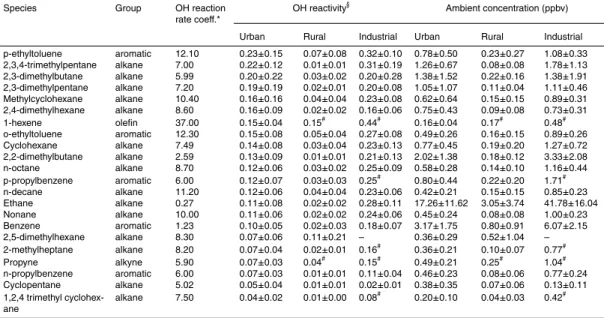
OH along with their average ambient concentrations during the morning rush hour. Av-erage reactivity levels and concentrations are shown in columns according to the site type: urban, rural (Santa Ana Tlacontenco, La Reforma and Teotihuacan) and industrial (Xalostoc). For the urban sites, the reactivity values were calculated independently for each monitored site but, as the results were quite similar, only the reactivity values
cal-15
culated for the average concentrations are presented. VOCs are sorted in descending order according to their reactivity in urban sites. It is important to point out that many oxygenated VOCs and carbonyls were not considered in this analysis, and therefore it is more appropriate to use the term non methane hydrocarbons (NMHC) instead of VOCs. The OH reaction rate coefficients shown in Table 4 correspond to the
coeffi-20
cients published by Atkinson (1994, 1997) at 298 K and 1 atm. Where no information was available, the OH reaction rate coefficient was estimated from information on sim-ilar compounds.
The ten most important NMHC in the urban atmosphere of the Valley of Mexico in terms of OH reactivity include two aromatics, six olefins and two alkanes: ethylene,
25
propylene, propane, n-butane, m,p-xylenes, i-butene, methyl-1-butene, toluene, 2-methyl-2-butene and t-2-butene. It is important to point out that the two most reac-tive NMHC at urban sites were also the top two NMHC reported for the industrial site. These species are olefins mainly emitted by vehicles with high concentrations and high
ACPD
6, 7563–7621, 2006 Measurements of volatile organic compounds in the Valley of Mexico E. Velasco et al. Title Page Abstract Introduction Conclusions References Tables Figures J I J I Back CloseFull Screen / Esc
Printer-friendly Version
Interactive Discussion reaction rate coefficients. Also, it is important to highlight that the elevated
concentra-tions of propane and n-butane are sufficient to rank these two alkanes among the top 5 NMHC, even though their reactivity rate coefficients are small compared to those for olefins and aromatics.
Overall, major NMHC in terms of ozone production in the Valley of Mexico
corre-5
spond to NMHC of anthropogenic origin. Biogenic NMHC seem to be relatively in-significant. Isoprene concentrations were low (0.33±0.27 ppbv in urban sites) and were assumed to have their origin more in vehicle exhaust than in vegetation. Olefin fluxes did not show the typical biogenic peak of isoprene around noon when solar radia-tion and temperature are highest (Velasco et al., 2005). Vegetaradia-tion was sparse at
10
the three monitored rural sites, and, therefore, isoprene concentrations were also low (0.07±0.04 ppbv). At rural sites, low molecular weight alkanes were the most abundant species, having their origin in LPG leakages as it has been discussed before. At rural sites, one of the most reactive hydrocarbon was styrene, with ambient concentrations similar to those observed at urban sites (0.57±0.22 ppbv). The presence of styrene in
15
these rural environments is attributed to local biomass and trash burning.
A comparison of the reactivity levels between the urban sites and industrial site in-dicates that on average the industrial location’s atmosphere is 1.8 times more reactive than at the urban sites. Half of the measured VOCs at the industrial site had reactivity levels between 1.4 and 2.1 times higher than at the urban sites. A similar
compari-20
son between urban and rural sites shows that the urban atmosphere is 4.6 times more reactive than the rural atmosphere in the Valley of Mexico.
5.3 Distribution of VOCs by compound type
Figure 6 shows the VOC distributions by compound type during the morning (06:00 to 09:00 h) and afternoon (12:00 to 15:00 h) from canister samples collected and
an-25
alyzed by the WSU and IMP groups. Note that concentrations are in ppbC. Hereafter all contribution fractions are based on ppbC, as well. In the morning, the entire val-ley experiences a relatively homogeneous mix of VOCs consisting of ∼60% alkanes,
ACPD
6, 7563–7621, 2006 Measurements of volatile organic compounds in the Valley of Mexico E. Velasco et al. Title Page Abstract Introduction Conclusions References Tables Figures J I J I Back CloseFull Screen / Esc
Printer-friendly Version
Interactive Discussion ∼15% aromatics, ∼5% olefins and a remaining 20% of alkynes, halogenated
hydro-carbons, oxygenated species (esters, ethers, carbonyls, etc.) and other unidentified VOCs. In our study, concentrations of total VOCs in the industrial area were 1.6 times higher than at urban sites during the morning period, while concentrations at rural sites were about one-sixth of those measured at the urban locations. In the afternoon,
5
VOC concentrations were less and the distribution among species was different with a higher contribution of unidentified VOCs at the urban sites. The reduction in concen-trations from morning to afternoon were: alkanes 70%, olefins 60%, aromatics 53%, and unidentified VOCs 20%. Lower afternoon concentrations are normally ascribed to increased dispersion and photochemical oxidation during the midday period. However,
10
employing these mechanisms alone is insufficient to explain those reductions, because the relatively unreactive alkanes showed the largest proportional loss. Emission rates must be a factor, as well, with a large decrease in alkane emissions relative to aro-matics and olefins. Santa Ana Tlacotenco, a rural downwind boundary site, showed an opposite pattern. Relatively low local emissions coupled with transport emissions
15
from the urban region resulted in afternoon VOC concentrations 2.4 higher than in the morning.
Hydrocarbons
At urban and industrial sites during the morning period, hydrocarbons with four or less carbons represent the major fraction of the alkanes and alkenes. The main contributors
20
are propane, n-butane, ethylene, propylene, and the sum of i-, t-2- and -c-2 butenes. 1,3-butadiene is a four-carbon diene that is considered to be a carcinogenic and repro-ductive toxicant to humans, whose main source is vehicle exhaust (USEPA, 1999b). 1,3-butadiene is of concern in Mexico City because of its relatively elevated concentra-tions: 0.55 and 0.63 ppbv at urban and industrial sites, respectively.
25
The most abundant aromatics were the BTEX species (benzene, toluene ethyl-benzene and the xylene isomers). They accounted for about 75% of the aromatic burden. The average toluene concentration was 13.45±9.33 ppbv at urban sites
ACPD
6, 7563–7621, 2006 Measurements of volatile organic compounds in the Valley of Mexico E. Velasco et al. Title Page Abstract Introduction Conclusions References Tables Figures J I J I Back CloseFull Screen / Esc
Printer-friendly Version
Interactive Discussion and 30.35±7.07 ppbv at the industrial area. Total xylene concentrations averaged
15.35±4.68 ppbv at the industrial site and about half of that (7.75±8.14) in the ur-ban area. Ethylbenzene had average concentrations about the same as the indi-vidual xylene isomers with concentrations of 1.62±1.43 ppbv in the urban areas and about 3.12±0.97 ppbv in the industrial region. Benzene averaged 6.07±2.15 and
5
3.17±1.75 ppbv at the industrial and urban sites, respectively. The urban benzene concentration determined in this study is similar to that reported by Bravo et al. (2002) for residential areas in southwest Mexico City.
Oxygenated hydrocarbons
Methyl tertiary-butyl ether (MTBE) is the only oxygenated VOC listed in Table 4. MTBE
10
is used as an additive in unleaded gasoline to enhance the combustion efficiency. In our canister samples, MTBE contributes no more than 2% to the total VOC burden of the Valley of Mexico. Ethyl tertiary butyl ether (ETBE) was another oxygenated VOC identified in the samples analyzed by IMP. ETBE is not included in Table 4 because it was measured at only half of the sites (Xalostoc, Pedregal, CENICA and La Merced).
15
Average ETBE concentrations were 0.3 and 0.6 ppbv at urban and industrial sites, respectively. Both, MTBE and ETBE have their origin in vehicle exhaust due to incom-plete combustion and gasoline evaporation from fueling stations and vehicle gasoline tanks.
During the MCMA-2003 study, ambient concentrations of formaldehyde were
mea-20
sured by DOAS at two different sites: CENICA and La Merced. The monthly average concentrations at CENICA and La Merced were 8.2±4.6 and 6.0±4.7 ppbv, respectively (Volkamer et al., 2005; Grutter et al., 2005). Garcia et al. (2005) determined on a 24 h average basis, that mobile and industrial sources contribute 42% to the ambient con-centration of formaldehyde, the atmospheric oxidation of numerous VOCs contribute
25
greater than 38% and the remaining 20% is due mainly to uncounted industrial pro-cesses.
Glyoxal was another oxygenated hydrocarbon detected directly by DOAS at the 7584
ACPD
6, 7563–7621, 2006 Measurements of volatile organic compounds in the Valley of Mexico E. Velasco et al. Title Page Abstract Introduction Conclusions References Tables Figures J I J I Back CloseFull Screen / Esc
Printer-friendly Version
Interactive Discussion CENICA site in 2003. Volkamer et al. (2005) found that glyoxal is predominantly formed
from airborne VOC oxidation in the atmosphere of Mexico City, reaching peaks around 1.8 ppbv between 10:00 and 13:00 h. The ambient concentrations of glyoxal were about one order of magnitude less affected by vehicle emissions than those of formaldehyde, and thus present a well suitable indicator molecule for VOC oxidation processes.
5
Halogenated hydrocarbons
The GC-FID technique can be used to identify halogenated VOCs, but not to precisely quantify their concentration, since halogenated VOCs contain other atoms besides car-bon and hydrogen. However, IMP quantified 14 halogenated VOCs at the Xalostoc, Pedregal, CENICA and La Merced sites. Table 5 shows that the halogenated species
10
contribute less than 2% to the total VOC burden. All of them are emitted by anthro-pogenic sources. Many of them are classified as toxic and carcinogenic species, and others, such as the vinyl chloride, are suspected to cause congenital malformation (IPCS, 2005). Another concern is the very long atmospheric residence times of some halogenated VOCs, in particular chlorofluorocarbons such as Freon-113. They can
15
eventually diffuse into the stratosphere where photolysis produces chlorine radicals, which catalytically destroy ozone and indirectly contribute to the greenhouse effect. Even though the use of chlorofluorocarbons as refrigerants is not allowed anymore, chlorofluorocarbon emissions occur during the disposal of refrigeration units and, in developing cities such as Mexico City, leakage from old residential refrigerators may
20
also be a significant source. This may be the reason why ambient concentrations of Freon-113 were higher for urban sites than for the industrial site.
5.4 Comparison of ambient VOC concentrations to vehicles exhaust signatures Since roadway vehicle emissions are normally the dominant VOC source in urban ar-eas (Watson et al., 2001), it was of interest to compare the mixing ratios obtained from
25
ACPD
6, 7563–7621, 2006 Measurements of volatile organic compounds in the Valley of Mexico E. Velasco et al. Title Page Abstract Introduction Conclusions References Tables Figures J I J I Back CloseFull Screen / Esc
Printer-friendly Version
Interactive Discussion during mobile vehicle chase experiments.
In brief, vehicle chase measurements were made using the Aerodyne mobile labora-tory equipped with several instruments to characterize emissions from vehicles under actual driving conditions (see Herndon et al., 2005, 20062; Zavala et al., 2006; Rogers et al., 2006). In chase mode, the Aerodyne van was driven immediately behind a
se-5
lected vehicle for approximately 5 to 20 min. Vehicle plume samples were collected with an auto-sampling system that included a fast response CO2sensor (LICOR LI-7000). Distinct peaks in the CO2mixing ratio during a vehicle chase indicated interception of the exhaust plume. When the CO2 levels were elevated above a selected threshold, a conditional VOC sampler was manually activated to sample into a “chase”
canis-10
ter and when CO2 levels were below the threshold, air was channeled into an “urban background” canister (Herndon et al., 2005; 20062).
For the comparison between ambient and vehicular emission data, it is necessary to remove the impact of photochemical aging on source signatures. This is achieved by regressions between species with similar atmospheric lifetimes. The source ratio is
15
preserved for species with similar lifetimes because photochemical loss and mixing will result in similar rates of concentration change (Parrish et al., 1998). This procedure allowed all of the ambient data to be used, including afternoon data when mixing ratios were typically lower due to mixing and photochemical removal. The slope obtained in ambient data plots defines the source ratio that can be directly compared to the
20
vehicular chase measurements and literature values. In practice, there are a limited number of species that can be employed in this analysis because photochemical loss rates must be similar. We have generally constrained the hydrocarbon pairings such that OH rate coefficients differ by 20% or less. The exception is the regression between propene and ethene where rate constants differ by a factor of three.
25
Correlations between selected alkenes, alkanes and aromatics are shown in Figs. 7,
2
Herndon, S. C., Kolb, C. E., Lamb, B., Westberg, H., Allwine, E., Velasco, E., Knighton, B., Zavala, M., Molina, L. T. and Molina, J. M.: Conditional sampling of volatile organic compounds in on-road vehicle plumes, in preparation, 2006.
ACPD
6, 7563–7621, 2006 Measurements of volatile organic compounds in the Valley of Mexico E. Velasco et al. Title Page Abstract Introduction Conclusions References Tables Figures J I J I Back CloseFull Screen / Esc
Printer-friendly Version
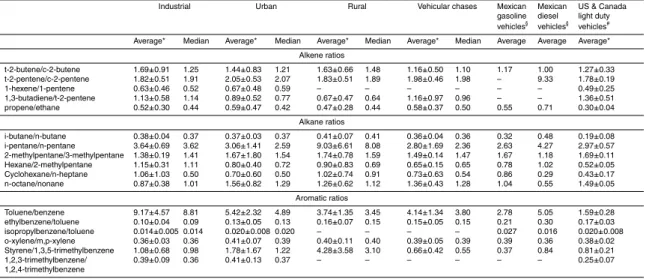
Interactive Discussion 8 and 9, respectively. The average ratios from the vehicular chase data and from the
ambient sampling at urban, rural and industrial sites are tabulated in Table 6. In ad-dition, Table 6 shows average exhaust ratios for Mexican gasoline and diesel vehicles from a tunnel study conducted in Mexico City (Mugica et al., 2001). An average ve-hicle exhaust ratio for light duty veve-hicles calculated by Jobson et al. (2004) from six
5
published tunnel studies conducted in the 1990s in US and Canada is included in the table, as well.
In the alkene group, t-2-pentene versus c-2-pentene exhibits excellent agreement between the ambient and vehicular emission ratios. The ambient concentrations span three orders of magnitude due to atmospheric processing and variations in source
10
strength. In general, the highest concentrations were recorded during vehicular chase experiments. In a few cases, ambient industrial and urban samples approached ve-hicle chase concentrations. The very good agreement between the exhaust emission and ambient ratios for the 2-pentenes clearly implies a vehicle exhaust source signa-ture. The t-2-butene versus the c-2-butene correlation shows reasonable agreement
15
between vehicular chase emissions, ambient ratios and literature values. The similarity of the ambient and vehicle exhaust ratios for these species suggests vehicle exhaust as their primary source. For 1-hexene and 1-pentene, ambient data showed considerable scatter suggesting that each site is impacted by a mix of different sources, and that sources and emission rates of 1-hexene are not strongly correlated with sources and
20
emission rates of 1-pentene. The propylene:ethylene ratio displays a fair correlation but contains considerable scatter. The vehicle emission ratio (0.58±0.37) bisects the ambient data, but the large amount of scatter about this ratio is indicative of multiple independent sources. The exhaust emissions ratio itself has a high degree of scatter, suggesting that the emission relation of these species may vary considerably within
25
the Mexican fleet. As indicated previously, propylene and ethylene rate constants vary much more than for the other alkene pairs, which may contribute also to the poor cor-relations observed for these species.
ve-ACPD
6, 7563–7621, 2006 Measurements of volatile organic compounds in the Valley of Mexico E. Velasco et al. Title Page Abstract Introduction Conclusions References Tables Figures J I J I Back CloseFull Screen / Esc
Printer-friendly Version
Interactive Discussion hicular emission and literature values. Note that the average ratios in Table 6 for
am-bient (0.38 industrial and 0.37 urban) and vehicle exhaust (0.36) are essentially equal. Mugica et al. (2001) reported exhaust emission ratios of 0.32 and 0.48 for gasoline and diesel vehicles in Mexico. These results suggest that vehicle exhaust is an impor-tant source of n-butane and i-butane, even though a source apportionment analysis by
5
Mugica et al. (2002b) determined that vehicle exhaust contributes 20% to the emission of these two alkanes, while handling and distribution of LPG releases ∼65%. Although LPG powered vehicles represent less than 1% of the total fleet, they should also be considered important sources. Schifter et al. (2000) evaluated the LPG vehicles pro-gram implemented in Mexico City and found that 95% of them have emissions that
ex-10
ceed those required by environmental regulations. The LPG fleet is composed mainly by vehicles used intensively (light and heavy duty trucks, and small buses with a 20 passenger capacity). Gasca et al. (2004) reported that tailpipe and evaporative emis-sions of i-butane contribute 16% and 28%, respectively, to the total VOC emisemis-sions from LPG vehicles, and 17% and 21% of n-butane.
15
Good agreement between 2-methylpentane: 3-methylpentane ambient, vehicle chase and literature ratios implicate vehicle exhaust emissions as the primary source of these VOCs in the Mexico City atmosphere. For the other alkane pairs listed in Ta-ble 6, agreement between ambient and vehicle exhaust ratios was not as good. The ambient ratios generally followed the vehicular emissions line, but with considerable
20
scatter. This suggests that species such as isopentane, n-pentane, hexane, cyclohex-ane, n-heptcyclohex-ane, n-nonane and n-octane are emitted by vehicles, but also by a variety of other anthropogenic sources.
As illustrated in Fig. 9, the ratios of i-propylbenzene and styrene with other aromatics displayed significant scatter suggesting the importance of non-vehicle anthropogenic
25
sources, such as industries and trash burning, for these two VOCs. The xylenes showed excellent agreement with vehicle exhaust ratios, in fact they showed the best agreement among all correlated VOCs, indicating clearly that their source is vehicle exhaust. The ethylbenzene:toluene average ratios from vehicle exhaust and ambient
ACPD
6, 7563–7621, 2006 Measurements of volatile organic compounds in the Valley of Mexico E. Velasco et al. Title Page Abstract Introduction Conclusions References Tables Figures J I J I Back CloseFull Screen / Esc
Printer-friendly Version
Interactive Discussion measurements agreed quite well although there was more scatter in the data. The
toluene versus benzene ratio violates the assumption of similar OH reactivity, but is shown to illustrate the variability. It varied from 3.7 at rural sites to 9.2 at the industrial site. The median ratio at urban sites determined from the canisters (4.9) was similar to that determined by research grade DOAS at CENICA (5.5) and the ratio published by
5
Bravo et al. (2002) for residential areas of Mexico City (4.8). A number of mobile-lab and DOAS measurements of toluene were not correlated with elevated CO2 concen-trations, indicating non-combustion sources.
Another method of comparing the ambient data to the roadway vehicle exhaust sig-nature is to compare ratios using a tracer species as a reference. In this case, we
10
compared hydrocarbon abundances relative to acetylene since acetylene is known to be a good marker for vehicular fuel combustion (Barletta et al., 2002). The use of ratios compresses the large differences in concentration that exist between the various en-vironments and provides a direct comparison of hydrocarbon distribution patterns. To eliminate changes in the ratio due to photochemical aging, the ambient data were
re-15
stricted to the morning period between 06:00 and 09:00 h. Figure 10 shows the median values of the VOC/acetylene ratios together with the 10th and 90th percentile ranges. A good correlation can be seen between vehicle exhaust and ambient ratios at ur-ban sites with all exhaust ratios falling within the 10–90 percentile confidence interval. Species with the highest OH reactivity showed larger deviations from the exhaust ratio
20
suggesting that, even in samples collected during the early morning hours, a chemi-cal aging bias may affect the data. Reactive species such as 1,3-butadiene, isoprene, 1-pentene, 1,2,4-trimethylbenzene and 1,3,5-trimethylbenzene had median ratios that were between 30 and 45% of the exhaust values. For example, while the abundances of 1,3-butadiene and 1,3,5-trimethylbenzene relative to acetylene at urban sites were
25
31 and 44% those of the on-road vehicle emission samples, the ambient MTBE and toluene ratios with acetylene agreed well with the exhaust ratio. This would support a chemical age argument because 1,3-butadiene and 1,3,5-trimethylbenzene are about ten times more reactive with OH than MTBE and toluene. It is important to highlight
ACPD
6, 7563–7621, 2006 Measurements of volatile organic compounds in the Valley of Mexico E. Velasco et al. Title Page Abstract Introduction Conclusions References Tables Figures J I J I Back CloseFull Screen / Esc
Printer-friendly Version
Interactive Discussion that the C2–C4 alkanes (ethane, propane, i-butane and n-butane), and ethyl acetate
showed higher ratios compared to exhaust values at urban sites. This is what would be expected if other anthropogenic sources contribute to low molecular weight alkane emissions. All olefin and aromatic ratios were lower than the vehicle chase ratios, which is consistent with an ageing bias. Interestingly, the 90th percentile ambient
ra-5
tio boundary agrees very well with the vehicle chase ratio. The 90th percentile data perhaps reflects fresher emissions and less aging bias.
5.5 Comparison of ambient VOC concentrations to the emissions inventory
The ambient VOC data can be compared to the distribution of VOC classes repre-sented in the most recent emissions inventory derived for air quality modeling in
Mex-10
ico City (West et al., 2004). This emissions inventory was based on annual emissions reported in 1998 (CAM, 2001). The official inventory was created by local govern-ment authorities using bottom-up methods and emissions factors which were either measured locally or taken from elsewhere. The VOC speciation was based on the SAPRC-99 chemical mechanism for VOC reactivity assessment (Carter, 2000) and a
15
standard mixture of hydrocarbons in urban atmospheres in the United States (Jeffries et al., 1989). The speciation was determined for each source category using emis-sions profiles measured in Mexico City (Mugica et al., 1998, 2002b; Vega et al., 2000). These profiles were adjusted to include species and source categories not measured in Mexico City using emissions profiles from the SPECIATE database (USEPA, 1993).
20
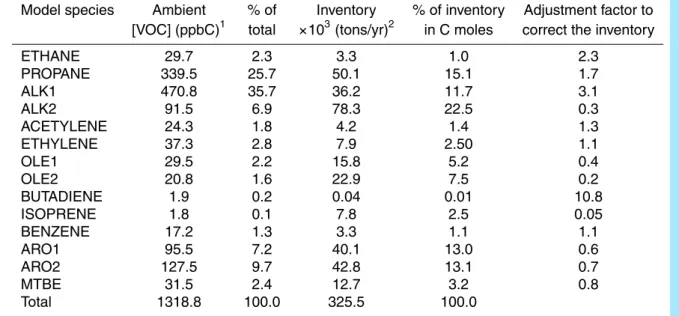
The median VOC ambient data from MCMA-2002 and 2003 are lumped into the inventory modeling classes in Table 7. For comparison, the total emissions by each class are also included in the table along with the corresponding percentage of the total. The comparison was limited to the morning period between 06:00 and 09:00 h when concentrations are strongly related to anthropogenic emissions before the
photo-25
chemistry occurs. The column showing the adjustment factor, which takes into account the molecular weight of each class, reflects the degree of change needed to yield the same distribution in the emissions inventory as observed in ambient VOC