COMMUNAUTE FRANCAISE DE BELGIQUE
UNIVERSITE DE LIEGE – GEMBLOUX AGRO-BIO TECH
Volatile Organic Chemicals in the Rhizosphere of
Barley, and their Role on the Foraging Behavior of
Wireworms (Coleoptera: Elateridae)
Fanny BARSICS
Dissertation originale présentée en vue de l’obtention du grade de docteur en sciences agronomiques et ingénierie biologique
Promoteurs : Dr François J. Verheggen Prof. Eric Haubruge
2012
COMMUNAUTE FRANCAISE DE BELGIQUE
UNIVERSITE DE LIEGE – GEMBLOUX AGRO-BIO TECH
Volatile Organic Chemicals in the Rhizosphere of
Barley, and their Role on the Foraging Behavior of
Wireworms (Coleoptera: Elateridae)
Fanny BARSICS
Dissertation originale présentée en vue de l’obtention du grade de docteur en sciences agronomiques et ingénierie biologique
Promoteurs : Dr François J. Verheggen Prof. Eric Haubruge
Copyright. Aux termes de la loi belge du 30 juin 1994, sur le droit d'auteur et les droits voisins, seul l'auteur
a le droit de reproduire partiellement ou complètement cet ouvrage de quelque façon et forme que ce soit ou d'en autoriser la reproduction partielle ou complète de quelque manière et sous quelque forme que ce soit. Toute photocopie ou reproduction sous autre forme est donc faite en violation de la dite loi et des modifications ultérieures.
Barsics Fanny (2015). Volatile Organic Chemicals in the Rhizosphere of Barley, and their Role on the Foraging Behavior of Wireworms (Coleoptera: Elateridae). (PhD Thesis) Gembloux, Belgique, University of Liège, Gembloux Agro-Bio Tech, 182 p., 8 tabl., 14 fig.
Abstract – Many species of wireworms, the larvae of click beetles (Coleoptera: Elateridae), are known as worldwide belowground pests of a large range of crops including cereals. Pesticide based agricultural practices seem to have allowed significant population reduction in the past, but there is an increasing need for alternative control methods. In the first Chapter of this work, we review the current knowledge concerning 1) Integrated Pest Management (IPM) of wireworms and 2) their chemical ecology. These reviews shed light on promising approaches to develop new management strategies, as well as gaps of knowledge to be filled in that purpose. One of them is investigated here.
The research aim of this PhD thesis (detailed in Chapter II) is the identification of the volatile organic compounds (VOC) released by the roots and used by wireworms to locate their food source. To achieve this goal, we defined three objectives: 1) developing a behavioral assay suitable for the study of wireworm orientation behavior under exposure to root-produced VOC; 2) profiling VOC released in the rhizosphere, according to different growth conditions; and 3) evaluating the role of the identified VOC on wireworm foraging behavior. Our experimental model involved Agriotes sordidus Illiger wireworms and
Hordeum distichon L. (spring barley).
In Chapter III, we report on the developmental steps of an adequate olfactometric method for wireworms. This includes an initial setup, the “Y-shaped” olfactometer, and dual-choice pipes gathering the necessary upgrades to efficiently observe the behavior of wireworms exposed to a VOC source. By resorting to live roots in a variety of features, we attempted to highlight appropriate abiotic and biotic experimental parameters, as well as the limits to the use of our olfactometric devices. The bioassays confirmed the attraction of wireworms towards VOC emitted by live roots. With a first sampling method on excised roots, Solid – Phase Micro – Extraction (SPME – semi-quantitative), coupled to Gas Chromatography – Mass Spectrometry (GC-MS), we detected a high number of molecules that might act as semiochemicals on wireworms, notably in our bioassays.
In the fourth Chapter, the bioassays were performed with selected VOC, detected during the chemical profiling. Firstly, we assessed if wireworms were attracted towards 2-pentylfuran, the main VOC highlighted with SPME. The molecule was submitted to the larvae by encapsulation in alginate beads. An adequate formulation allowed reaching an emission rate matching quantification estimates. In the aim to improve the VOC profiling, we also used Dynamic Head-Space Sampling (DHS), on roots ground in liquid nitrogen. It highlighted four volatile aldehydes. Their biological activity on wireworms was evaluated thanks to glass wool/triacetin-based dispensers, inserted in the dual-choice pipes.
Through this work, we show that VOC produced by barley roots carry information useable by foraging wireworms. The two sampling methods indicate two different modalities of root-VOC production and are encouraging for further understanding of belowground VOC production and emission. The developed olfactometric method and related results open new perspectives to increase knowledge on wireworm ecology. Combined to other developments in research on their management, they could lead to interesting, innovative and ecological management practices.
Barsics Fanny (2015). Le Rôle des Composés organiques Volatils de la Rhizosphère de l’Orge sur le Comportement des Larves de Taupins (Coleoptera : Elateridae). (Thèse de doctorat) Gembloux, Belgique, Université de Liège, Gembloux Agro-Bio Tech, 182 p., 8 tabl., 14 fig.
Résumé – Les « vers fils-de-fer » sont les larves des taupins (Coléoptères, Elateridae). Beaucoup d’espèces se développent dans le sol et sont reconnues comme ravageurs de multiples cultures dont des céréales. Les pesticides semblent avoir mené à la réduction des populations par le passé, mais il existe un besoin croissant de méthodes de lutte alternatives. Dans le Chapitre I de ce travail, nous révisons les connaissances actuelles 1) en matière de Lutte Intégrée contre les Ravageurs (LIR) appliquée aux larves de taupins, et 2) au sujet de leur écologie chimique. Nous dévoilons les approches prometteuses pour le développement de nouvelles stratégies de gestion, et les manques de connaissance à endiguer pour y parvenir. Nous investiguons l’une de ces voies dans cette thèse.
Notre objectif de recherche (détaillé au Chapitre II) est l’identification des composés organiques volatils (COV) émis par les racines, et utilisés par les larves pour localiser leur source de nourriture. Cela se décline en trois sous-objectifs : 1) développer un système d’observation du comportement d’orientation des larves de taupins soumises à des COV racinaires ; 2) définir les COV émis par des racines sous différentes conditions de croissance ; et 3) évaluer leur rôle sur le comportement des larves. Le modèle expérimental implique le taupin Agriotes sordidus Illiger et l’orge de printemps, Hordeum distichon L.
Dans le Chapitre III, nous développons une méthode olfactométrique adaptée aux vers fils-de-fer. Ceci inclut l’utilisation d’olfactomètres « en Y », et de tubes à choix-double pourvus des améliorations nécessaires pour observer efficacement l’orientation de larves exposées à des COV. Par recours à des racines vivantes produites sous diverses conditions expérimentales, nous identifions les paramètres expérimentaux biotiques et abiotiques adéquats, ainsi que les limites d’utilisation des tubes. Nous montrons que les larves sont attirées par les COV issus de racines vivantes. Une méthode d’échantillonnage, la Micro-Extraction sur Phase Solide (SPME – méthode semi-quantitative), couplée à la Chromatographie en Phase Gazeuse – Spectrométrie de Masse (GC-MS), permet la détection de nombreuses molécules à caractère potentiellement sémiochimique, notamment dans nos tests biologiques.
Dans le Chapitre IV, les tests biologiques sont réalisés avec des COV détectés durant le profilage chimique des racines. Nous déterminons si les larves sont attirées par le 2-pentylfurane, un composé détecté par SPME. Il est diffusé dans les tubes à choix double grâce à une encapsulation en billes d’alginate. Une formulation adéquate permet un taux d’émission proche des quantités estimées émises lors des prélèvements par SPME. Pour améliorer le profilage de COV, nous utilisons l’Échantillonnage Dynamique en Espace de tête (DHS), sur des racines broyées en azote liquide. Cela montre quatre aldéhydes volatils. Leur activité biologique sur les taupins est testée grâce à des diffuseurs basés sur un mélange en triacétine intégré dans de la laine de verre.
Ce travail démontre que les COV racinaires sont porteurs d’informations utilisées par les larves de taupins. Les méthodes d’échantillonnage de COV montrent des aspects différents de leur production et sont encourageantes pour la compréhension future de l’émission de COV souterrains. Notre méthode olfactométrique et les résultats y afférent ouvrent de nouvelles perspectives d’amélioration des connaissances écologiques sur les larves de taupins. Combinées à d’autres développements dans la recherche sur leur gestion, cela pourrait mener à des méthodes de lutte intéressantes, innovantes et écologiques.
There are many people whom I wish to thank for their constant support, sharing of ideas, and most importantly for helping me keeping it up day after day during recent years.
I express my deepest regards to my advisor, Dr. François J. Verheggen, firstly for offering me the opportunity to work in the field of pest chemical ecology, secondly for keeping me on the main experimental track while I always wanted to investigate many ideas at the same time.
I would like to thank Prof. Eric Haubruge, the co-promoter of this work, as well as Prof. Frédéric Francis, the Head of the Unit of Functional and Evolutionary Entomology. Thank you for your suggestions and guidance.
I am very thankful to Prof. Marie-Laure Fauconnier, coordinator of the Rhizovol Project and Head of the General and Organic Chemistry Unit, in which I spent a lot of time and energy. Thank you for your availability and support.
I also would like to thank Pr. Georges Lognay and Jean-Baptiste Thibord for all our constructive discussions.
I express my gratitude to Dr. Pierre Delaplace, who advised and supported me many times. You participated in the shaping of my scientific mind, and I hope I will have the opportunity to work with and learn from many people like you again.
Bérénice, thank you for the fun we had, especially during the last few months. I have enjoyed our conversations, either work-related (very often) or not (quite rare). I hope our paths will cross on a common project in the future. (Seriously, we should think about it).
Delphine, you inspired me and your supportive friendship was essential.
Antoine Boullis, Delphine Durieux, Bérénice Fassotte, Landry Sarles, Pauline Legrand, Aboulkacem Lemtiri, William Luwaert, Nina Madas, and Elise Speybrouck, it was a pleasure to share an office with you.
Julien Bauwens, Jeannine Bortels, Émilie Bosquée, Rudy Caparros Megido, Lara De Backer, Jessica Dekeirsscheiter, David Dujeu, Maud Fagan, Aline Guidolin, Émilie Joie, Gil Leclercq, Thomas Lopes, Marceline Nyiranduwamungu, Nicolas Poncelet, Laurent Serteyn, Alabi Taofic, Axel Vandereycken, Sophie Vandermotten, Sophie Van Parijs, Jaime Verdugo Leal, Catherine Wuilleaume, Lara Zirbes, you are fantastic colleagues. Sharing the daily coffee break and the “NLHT%M Tuesdays” in such good company is priceless. Thank you for your sense of humor, your art of kayaking, your support and counseling.
Benjamin Delory, thank you for all suggestions, and discussions. You are brilliant. Stéphanie Heuskin, thank you for sharing your experience and sense of accuracy. I want to thank all research members of the Rhizovol project: Aurélie Gfeller, Morgan Laloux, Laura Hirtt and Nicolas de la Vallée Poussin; as well as Laura Resteigne and Rémi Latine for their involvement in my research. To everyone I met in Arvalis (Montardon, France), especially Laurent Maunas and Julie Capdevielle, thank you for your welcoming spirit and help on wireworm supply.
I am very thankful to a high number of colleagues in Gembloux Agro-Bio Tech. I would like to thank every one of the General and Organic Chemistry Lab for their good mood and work assistance, and the people of the Forest Resources Management Unit, with
whom I spent awesome moments, either watching football games or enjoying the classical annual festive events of our beautiful Faculty.
Professor Tom Baker, there are no words for expressing how honored I am to have benefitted from your experience and long practice of chemical ecology. I am also grateful to all professors involved in Insect Chemical Ecology 2014 in Penn State University and to all students who participated and made it unforgettable; to Pr. Rod Blackshaw and Dr. Bob Vernon, two amazing wirewormers (or should I say wirewormists? – we need to agree on a term), who make you feel part of the team in no time; to Pr. Tariq Butt, whose early encouragements gave me a fantastic boost during the second year of work; to Dr. Carly Benefer and Claudia Ritter for your friendship and collaboration; to Lorenzo Furlan for publication advising; and finally to Pr. Michael Traugott for inviting me in Innsbruck where I met all these researchers with whom I have shared more than a scientific field.
During the last four years and so long before that, my family never stopped supporting me. My mother Viviane, my father Joseph, my sister Catherine, David Pasteger, my Mammy Marguerite, my Nonno Vittorio, my godmother Béatrice and her husband Patrick, my cousins Marine and Pauline and my godfather Michel and his family. I am so thankful to have such amazing parents. Thank you for your daily support and for your sense of humor. Catherine, thank you for guiding me in the arcane paths of the PhD and making me benefit from your own experience. I love you all.
A lot of friends were around in good or bad times. Jöran Beekerk van Rüth, Alexandre Bleus, Quentin Bogaerts, Mégane Cloix, Julie Dacosse, Delphine Daniels, Jérôme Debruxelles, Alix Demelenne, Déborah Deraedt, Maud Évrard, Florence Hecq, Éléonore Horge, Pierre Magnée, Anne-Sophie Moreau, Hugo Nemes, Philippe Rizzo, Alicia Ruiz, Thomas Schillings, Aline Serteyn, Damien Watrin, Leslie Wilmet-Barsics, and the basketball teams and delegates of the CS Outremeuse Club.
To conclude this acknowledgement section on a funny tone, here are some amazing things I’ve learned about my coworkers… The Chief knows an extraordinary amount of Walloon sayings. Curiously, they are often entomology related. The best one is “On n'fé
nin des mohes a deûs cous” (i.e. “One can’t create flies with two butts”). The Former Chief
does not like when chairs are stolen, and is unstoppable when involved in crazy bets. My advisor, a.k.a “The First”, “Optimus Prime”, or “Primy”, has terrific diabolo skills. In the Unit, everybody has excellent culinary abilities and likes barbecues and whatever drinks come along with the meat. Many coworkers are excellent river swimmers or tiger sharks. A few people are addicted to a strange worldwide treasure hunt. I got caught in the game easily. In their passion for entomology, they even help some peculiar bugs travelling. One of these cachers works in my office. She is unbreakable, although she tries to prove that wrong. The French buddies like Belgium and are amazed by our version of the French language. One of them works with the “zaidenôseuh”. I still have no idea what this is.
TABLE OF CONTENTS
Chapter I – Introduction – Wireworm Management and Improvement of Integrated
Strategies ... 1
Chapter I.1 – Wireworms’ Management: An Overview of the Existing Methods, with Particular Regards to Agriotes spp. (Coleoptera: Elateridae) ... 4
1. Introduction ... 4
2. Species Identification, Lifecycle and Key Moments for Crop Protection ... 6
3. Available Data on the Chemical Ecology of Wireworms ... 10
4. From Risk Assessment to Mass Trapping ... 12
5. Management practices ... 20
6. From Broadcast Application of Synthetic Insecticides to Environmentally Friendly Alternatives ... 22
7. Biological Control Using Micro- and Macro-organisms ... 30
8. Conclusions ... 33
Chapter I.2 – The Foraging Behavior and Sensory Apparatus of Wireworms ... 36
1. Introduction ... 37
2. The Foraging Behavior of Wireworms ... 38
3. Wireworm Chemoreceptors ... 45
4. Discussion ... 52
Chapter II – Objectives ... 76
Chapter III – Barley – Wireworm Interactions ... 82
Chapter III.1 - A Simple Device to Investigate the Role of Root-emitted Volatile Organic Compounds on Wireworm Orientation ... 86
1. Introduction ... 87
2. Material and Methods ... 87
3. Results and Discussion ... 89
Chapter III.2 - Characterization of Volatile Organic Compounds emitted by Barley (Hordeum distichon L.) Roots and their Attractiveness to Wireworms ... 91
1. Introduction ... 92
2. Methods and Materials ... 94
3. Results ... 100
4. Discussion ... 108
Chapter III.3 - Exploring the Potential of Dual-Choice Devices with Live-Baits: Opportunities and Limits ... 112
1. Introduction ... 113
2. Materials and Methods ... 114
3. Results ... 116
4. Discussion ... 117
Chapter IV – Identification, Quantification, and Biological Activity of Volatile Organic Chemicals produced by Barley Roots ... 130
Chapter IV.1 - Taking it Down to the VOC Level ... 134
1. Introduction ... 135
2. Materials and Methods ... 135
3. Results and Discussion ... 139
4. Conclusion ... 140
Chapter IV.2 - Attraction of Wireworms towards Root-produced Volatile Aldehydes 141 1. Introduction ... 142
2. Material and Methods ... 143 3. Results ... Error! Bookmark not defined.
4. Discussion ... 149
Chapter V – Conclusions and Perspectives ... 156
1. Development of an Olfactometer Suitable for Behavioral Experimentations on Wireworms exposed to Root-Produced VOC ... 158
2. Identification and Quantification of the VOC produced by Barley Roots according to Different Growth Conditions ... 160
3. Evaluation of the Biological Activity of the Identified VOC on the Foraging Behavior of Wireworms ... 163
Chapter VI – Scientific Communications ... 176
1. Publications ... 178
2. Communications ... 180
LIST OF FIGURES
Figure I.1. The foraging behavior of wireworms, redrawn and adapted from Johnson and
Gregory (2006). ... 41
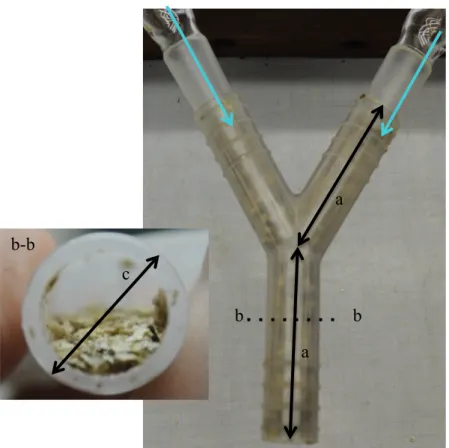
Figure III.1. Y-shaped olfactometers. ... 89
Figure III.2. Dual-choice olfactometer used for the orientation experimentation of A. sordidus towards the blend emitted by 7-d-old barley roots. ... 98
Figure III.3. Ten olfactometers with 7-day-old barley seedlings as baits for wireworms. . 99
Figure III.4. Optimization of the HS-SPME-GC-MS method. ... 103
Figure III.5. Typical GC–MS chromatogram of the SPME analysis of VOC emitted by excised 21-day-old barley roots. ... 104
Figure III.6. Attraction of wireworms towards VOC emitted by healthy 7-day-old roots. ... 108
Figure III.7. Attraction of wireworms towards chopped roots and fungus infected roots. 117 Figure IV.1. Trapping of 2-pentylfuran emitted by alginate beads. ... 137
Figure IV.2. Emission rate of 2 g of alginate beads loaded with 2-pentylfuran ... 139
Figure IV.3. Wireworms are attracted towards 2-pentylfuran (first line). ... 139
Figure IV.4. Chromatograms scaled on the four aldehydes. ... 148
Figure IV.5. Proportion of wireworms succeeding in reaching one side of the olfactometer. ... 149
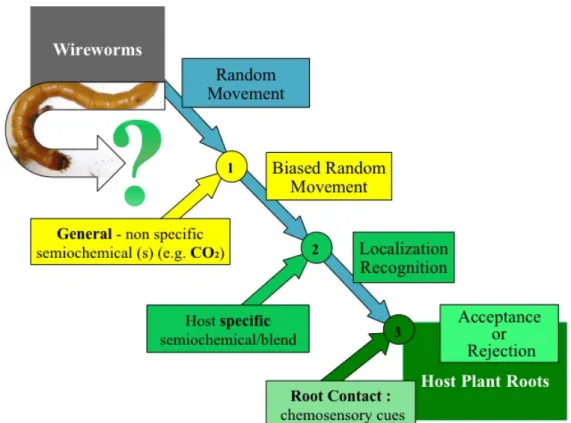
Figure V.1. The foraging behavior of wireworms, where the localization/recognition step is gradually overlapped by acceptance/rejection cues. ... 166
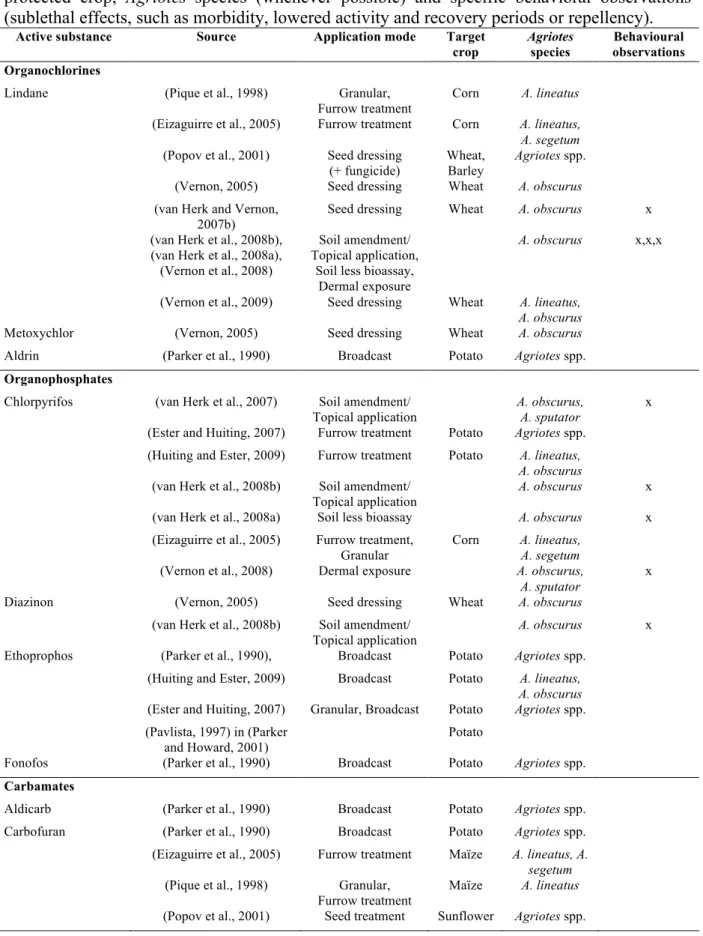
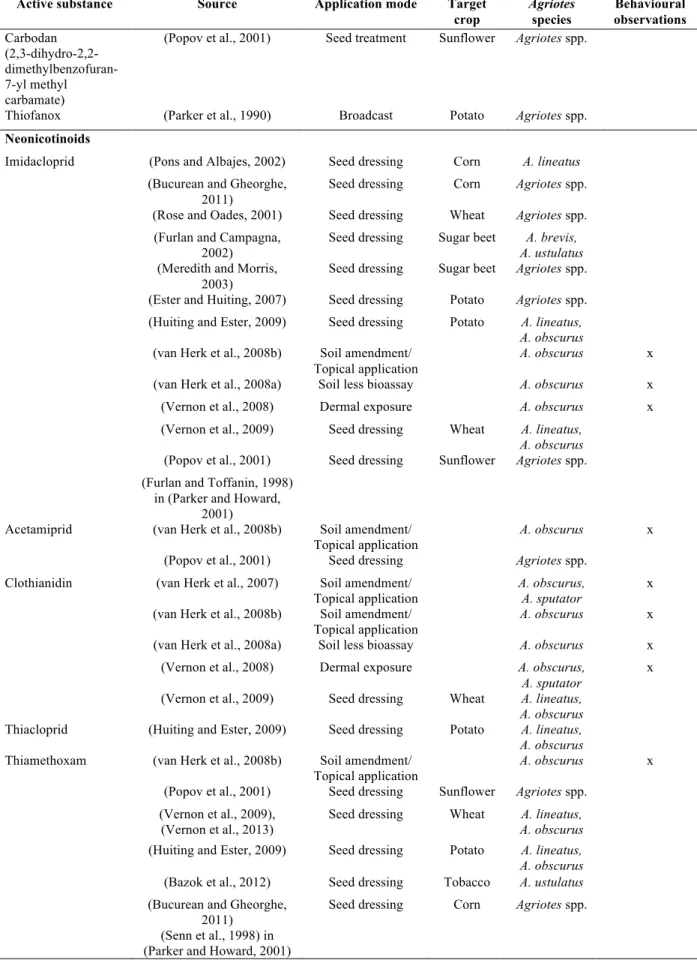
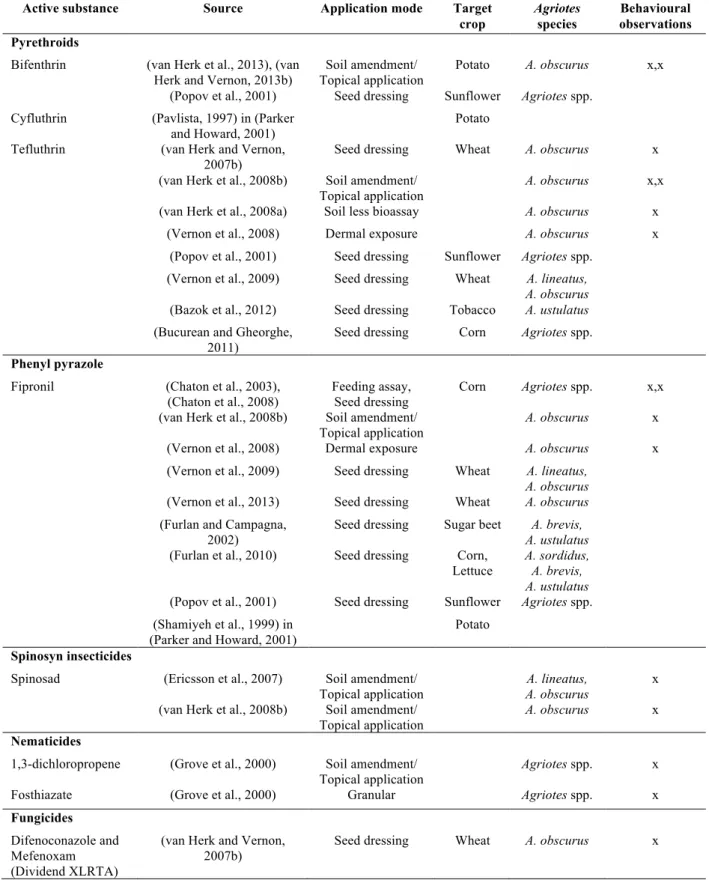
LIST OF TABLES Table I-1. Insecticides tested against Agriotes since 1990, with sources, mode of application, protected crop, Agriotes species (whenever possible) and specific behavioral observations (sublethal effects, such as morbidity, lowered activity and recovery periods or repellency). ... 27
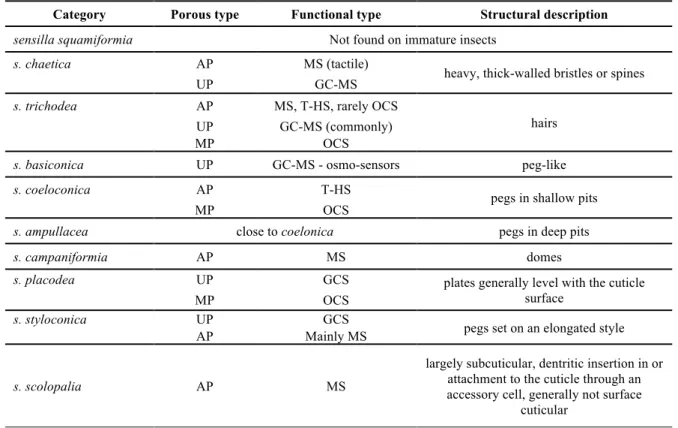
Table I-2. Sensilla commonly found on immature insects, based on ... 46
Table I-3. Anatomical locations and functions of sensilla found on wireworms. ... 47
Table III-1. Equations of the calibration curves. ... 97
Table III-2. Volatile organic compounds emitted by excised barley roots aged of 21 days, analysed by a HS-SPME GC-MS method ... 102
Table III-3. SPME analysis of VOC emitted by excised 7-d-old barley roots cultivated on Hoagland gelified medium ... 105
Table III-4. SPME analysis of VOCs emitted by excised 7-d-old barley roots cultivated in vermiculite. ... 106
Table IV-1. Compounds identified in the liquid-nitrogen ground root samples. Retention indexes, calibration equations and quantification results. ... 147
Chapter I – Introduction – Wireworm Management and
Improvement of Integrated Strategies
General Introduction
The current worldwide agricultural challenges involve a convolution of disciplines. The biggest concern consists in providing present and future generations food supplies with equivalent, if not better, nutritional quality than has been produced up to now (Gilland, 2002, El-Hage Scialabba, 2007, Niggli et al., 2007, Lairon, 2010). This means producing more, since populations are growing, while maintaining the integrity of ecosystems and their services (Pimentel et al., 1997, Daily et al., 1998, Foley et al., 2005, Tilman et al., 2011). As a consequence, we need to shift from intensive, health and environment threatening crop production methods, to safer and sustainable strategies. This implies the revision and optimization of agricultural systems. This idea has been reinforced in the last twenty-five years, as witness the many scientific reviews discussing promising biological methods (Vet and Dicke, 1992, Agelopoulos et al., 1999, Cook et al., 2007, Wenke et al., 2010, Witzgall et al., 2010). They are essentially based on understanding interactions between organisms of the environment (Duffy, 2002). Once these mechanisms are depicted, it is possible to manipulate them. Developing biological methods therefore necessitates an increase of ecological knowledge concerning organisms belonging to agricultural landscapes. Applied studies linking theoretical concepts, laboratory and field observations are essential in that approach (Vet and Dicke, 1992).
Among the factors determining the ecology and behavior of insects, one can find an abundant list of natural chemical compounds, which they produce or perceive from their environment. These semiochemicals carry information related to available resources, notably host physiological stage and suitability (Vet and Dicke, 1992, Kessler and Baldwin, 2001), and the presence of conspecifics (Carroll et al., 2006, Witzgall et al., 2010), competitors (Verheggen et al., 2013), preys (Svensson et al., 2004, Verheggen et al., 2008) or natural enemies (Cook et al., 2007). They govern many inter- and intra-specific interactions. Chemical ecology is the discipline describing these trophic interactions, considering the identities, roles and cause of emission of compounds in a given interactive model. Semiochemicals are of great interest for Integrated Pest Management (IPM) approaches, as they can be used to control agricultural pests, leading, in the most successful cases, to the reduction of noxious impact of intensive agriculture (Vet and Dicke, 1992, Agelopoulos et al., 1999, Cook et al., 2007). With the current health and environment concerns, global legislations progressively tend to favor control strategies involving natural control agents (i.e.
active substances, biocontrol agents), rather than synthetic chemicals (EC, 2009). A direct consequence is the progressive withdrawal from markets of synthetic compounds previously considered as the best treatments for crop threatening diseases and pests. The need for alternative strategies is therefore no longer an option, but is driven by Regulations (Jehle, 2011). This concerns many pests across the Class of Insects.
Wireworms are the larval stage of click beetles (Coleoptera: Elateridae) and many species are important pests of a wide range of cultivated crops. These species develop in the soil during several years before pupating and inflict damages hardly manageable once their populations are established. In Europe and North America, yield losses are often attributed to species of the genus Agriotes. Most of the recent research on their integrated management concerns tools to forecast wireworm swarming, and identify combinations of factors leading to it (Barsics et al., 2013). Investigating wireworm chemical ecology represents an interesting approach for completing currently developed management methods. The knowledge in this area is indeed characterized with gaps and could benefit from methodological and technological updates in several fields of bioengineering.
This introductive chapter is divided into two review papers, mostly addressing Agriotes wireworms, and shedding light on 1) recent advances in management strategies and promising approaches to improve them (Barsics et al., 2013), and 2) the available data regarding the chemical ecology of wireworm pest species, and the methods and techniques that should be combined in order to provide new usable information (Barsics et al., 2014b).
Finally, it should be clarified that wireworm species cited in this work are pests found in agricultural land, and information regarding other species, such as saproxylic species (e.g
Elater and Ampedus spp.) was not included in the reported literature. The conclusions at the
second section of this introduction can however be applied to these species, since data concerning their chemical ecology has already proven useful in conservation biology, notably involving the click beetle Elater ferrugineus (Svensson et al., 2004, Svensson and Larsson, 2008, Larsson and Svensson, 2009).
Chapter I.1 – Wireworms’ Management: An Overview of
the Existing Methods, with Particular Regards to
Agriotes spp. (Coleoptera: Elateridae)
Fanny Barsics, Eric Haubruge and François J. Verheggen
Department of Functional and Evolutionary Entomology, Gembloux Agro-Bio Tech, University of Liege. 2, Passage des Déportés, 5030 Gembloux, Belgium
Adapted from the reference - Barsics, F., Haubruge, E. & Verheggen, F. J. 2013. Wireworms' management: An overview of the existing methods, with particular regards to
Agriotes spp. (Coleoptera: Elateridae). Insects, 4(1), 117-152.
Abstract - Wireworms (Coleoptera: Elateridae) are important soil dwelling pests causing worldwide yield losses in many crops. The progressive restrictions in the matter of efficient synthetic chemicals for health and environmental care brought out the need for alternative management techniques. This paper summarizes the main potential tools that have been studied up to now and that could be applied together in integrated pest management systems, and suggests guidelines for future research.
Keywords: wireworms; click beetles; Agriotes; integrated pest management
1. Introduction
Wireworms are the larvae of click beetles (Coleoptera: Elateridae). They consist of more than 9,000 species distributed worldwide, (Jeuniaux, 1996) and some are important pests of a wide variety of crops, such as potato, cereals, carrot, sugar beet, sugarcane and soft fruits (Miles, 1942, Hall, 1990, Blot et al., 1999, Vernon et al., 2000, Johnson et al., 2008). In Europe, damages due to wireworm infestation are mainly attributed to the genus Agriotes Eschscholtz, as witnessed by the numerous studies aiming at their management. It comprises more than 200 species worldwide, including more than 100 in the Palearctic region (Jeuniaux, 1996). Different recent sampling plans set in all of Europe (pheromone traps, molecular identification of collected larvae) allowed a reliable species mapping, showing that Agriotes communities were widely distributed across the continent (Kudryavtsev et al., 1993, Furlan et
al., 2001b, Furlan et al., 2006, Pic et al., 2008, Burghause and Schmitt, 2011, Kozina et al., 2012, Mulercikas et al., 2012). Their distribution in North America is also well described (Lafrance and Cartier, 1964, Vernon et al., 2001). The genus Melanotus Eschscholtz is mostly studied in Japan (Melanotus okinawensis Ohira) and in the USA (Melanotus communis (Gyll.)) ((Kuhar and Alvarez, 2008, Lindroth and Clark, 2009, Arakaki et al., 2010, Cherry and Nuessly, 2010); the species Limonius canus Leconte, is responsible, with other of the genus, for crop damage alongside the western coast of North America (Williams et al., 1993, Pantoja et al., 2010, van Herk et al., 2010). Other genera strongly impacting agriculture are
Athous Eschscholtz, Conoderus Eschscholtz, Ctenicera Latreille and Hypolithus Eschscholtz
(Lafrance and Cartier, 1964, Doane et al., 1975, Chalfant et al., 1992, Seal et al., 1992, Seal and Chalfant, 1994, Cherry and Alvarez, 1995, Hemerik et al., 2003, Jedlicka and Frouz, 2007, van Herk and Vernon, 2007b, Kuhar and Alvarez, 2008, Vernon et al., 2008, Lindroth and Clark, 2009, Willis et al., 2010). The main effects of wireworm feeding on stem bases and belowground plant organs are seedling mortality (Balachowsky and Mesnil, 1936) and all implied yield losses. Damage to potato tubers largely consists of small holes, narrow tunnels, a couple or more millimetres deep, and scarring to the periderm, which can significantly reduce tuber quality (d'Aguilar et al., 1980, Johnson et al., 2008).
Despite the numerous studies conducted to improve their management, wireworms remain important pests. In the UK, lindane and aldrin remained the mainstay of wireworm control in potato crops, until well into the 1990s. Their apparent effectiveness even stifled research on alternative control strategies for thirty years (1960 to 1990) (Parker, 2005). Their withdrawal from registration for environmental and health concerns gave rise to the need for alternative control methods (Parker, 2005). Soil-incorporated organophosphorous and carbamate insecticides replaced organochlorines, but consequent control levels were overall variable (Edwards and Thompson, 1971, Parker et al., 1990). Due to similar adverse secondary effects, including long persistence in the environment (with dramatic effects on non-target species as shown recently for fonofos (Elliott et al., 2008)) and human health concerns, they were progressively withdrawn from the markets, and those remaining may soon be phased out, even in North America (Waliwitiya et al., 2005, Kuhar and Alvarez, 2008). Multiple alternatives to broadcast application of pesticides have been examined worldwide. Their implementation in Integrated Pest Management (IPM) systems should provide good results, but demonstrations of such synergistic interactions are still rare. This paper summarizes the key data that should be considered and the IPM strategies that could be
used against wireworms, with particular regards to Agriotes spp. in Europe, and suggests guidelines for future research.
2. Species Identification, Lifecycle and Key Moments for Crop Protection
The key moments for predicting the implementation of IPM strategies are, firstly, adult population emergence (before oviposition and/or field cultivation), in order to prevent population settling or reinforcements and to enhance eggs and first instars mortality. Secondly, the periods during which the larvae actively feed are important, in regard to the timing of the cultivation of sensitive crops (Furlan, 2004). It is crucial for crop protection to know the species distribution and the features of their lifecycles that help spotting the right timing for control measures.
Adults of all agronomically important species have been well described (Jagemann, 1955, Leseigneur, 1972, Lohse, 1979, Zeising, 1984, Platia, 1994, Jeuniaux, 1996, Cate and Platia, 1997, Laibner, 2000). Although many tools are available for the identification of
Agriotes wireworms, based on morphology (Emden, 1945, Dolin, 1964, Rudolph, 1974,
Dolin, 1978, Klausnitzer, 1994, Cocquempot et al., 1999, Pic et al., 2008) or on genetic footprints (Pic et al., 2008, Ellis et al., 2009, Staudacher et al., 2011a), in situ direct identification remains an issue. In most cases, determining if individuals belong to a species is more difficult for larvae than for click beetles, sometimes suggesting doubts as to their actual separation (Furlan, 2005). Nonetheless, molecular advances have rendered possible community description at field scale (Ellis et al., 2009). For both click beetles and wireworms, an identification key (morphological, including molecular validation, as was done by Pic et al. (2008) for France) that is valid for all regions concerned (mainly Europe) should be created, that is suitable for use by a large group of interested people (Furlan, 2005). Very recent molecular research suggested the possibility of cryptic wireworm species or misidentifications on Hypnoidus bicolor Eschscholtz populations in Canada, highlighting the necessity to consider that approach in identification (Benefer et al., 2013).
Reliable information concerning the biology of the different species can be obtained by studying concurrently their entire cycle under laboratory conditions (rearing chambers, constant conditions), in rearing cages close to natural conditions and in open fields (Furlan, 2005), as reported in several studies (Furlan, 1996, Furlan, 1998, Furlan, 2004). Their study across different regions is interesting, but a better overall understanding can result from the comparison of development cycles in different environments (Furlan et al., 2004b). Good
biological information is available for the following species: A. ustulatus Schäller (Hinkin, 1983, Furlan, 1994, Furlan, 1996, Furlan, 1998), A. sordidus Illiger (Furlan, 2004), A. brevis Candeze (Rusek, 1972, Masler, 1982) and A. litigiosus (information only available for
tauricus (Kosmacevskij, 1955)). Insufficient information is available for A. obscurus L.
(Roberts, 1919, Roberts, 1921, Roberts, 1922, Regnier, 1928, Roberts, 1928, Subklew, 1934, Balachowsky and Mesnil, 1936, Cohen, 1942, Evans and Gough, 1942, Gough and Evans, 1942, Miles, 1942, Langenbuch, 1972), A. sputator L. (Roberts, 1919, Roberts, 1922, Gough and Evans, 1942, Kosmacevskij, 1955) and A. lineatus L. (Roberts, 1919, Subklew, 1934, Langenbuch, 1972). Information about A. proximus Schwarz and A. rufipalpis Brullé is almost inexistent and should be completed following the methods used for species whose biology has already been described (Furlan, 2005).
Click beetles are characterized by a multi-year lifecycle that differs dramatically between species. They can be divided into two main groups. The first one is constituted of species with adults that do not overwinter, live a few days and lay eggs a few days after swarming (A.
ustulatus, A. litigiosus). The second one assembles species with adults that overwinter and
live for months. These lay eggs for a long period after adult hardening (A. sordidus, A. brevis,
A. lineatus, A. sputator, A. obscurus, A. rufipalpis and A. proximus) (Furlan, 2005). Adults
emerge from the soil in spring. A. sordidus usually appears from late March to early April (Furlan, 2004). Females of A. obscurus L., A. sputator L. and A. sordidus lay their eggs in May or June, singly or in clusters, below the soil surface (Evans and Gough, 1942, Miles, 1942, Furlan, 2004), while the oviposition peak of A. ustulatus occurs in July and early August (Furlan, 1996). Oviposition would be reduced on arable land compared with grass (Gough and Evans, 1942), where comparatively more wireworms survive the early instars (Jary, 1942), because the eggs benefit from the protection against desiccation. Conditions in grasslands are so stable that wireworms may remain in the top 12 cm of soil during their whole development (Miles, 1942). The monitoring of wireworm survival in different rotations (continuous, very short interruption between different crops, discontinuous, long periods with bare soil between crops, meadow) confirms that soil with continuous vegetation cover allows more wireworms to survive (Furlan et al., 2009). The embryonic development is inversely related to temperature (Furlan, 1998, Furlan, 2004): A. ustulatus eggs hatch in 13 days when maintained at 29 °C and in 45 days when maintained at 15 °C (Furlan, 1998), while in the U.K, under agronomic conditions, Agriotes spp. eggs only hatch after 46 weeks (Miles, 1942, Parker and Howard, 2001). Temperature also influences wireworm movement: A.
lineatus speed increases linearly from 8 to 19 °C in lab conditions, an important factor for
behavioral experiments (van Herk and Vernon, 2013a). Agriotes larvae rarely disperse between crops or move far in the soil, putatively as long as local food supply is sufficient (Hemerik et al., 2003, Schallhart et al., 2011). Resistance to starvation increases with the age of wireworms: the last instars of A. sordidus can survive up to one year without food at 20 °C (Furlan, 2004). Agriotes wireworms are predominantly phytophagous, with an influence of the type of vegetable food on growth rates (Evans and Gough, 1942). The youngest larvae need live vegetable material to grow (Evans and Gough, 1942, Furlan, 1998, Furlan, 2004). Besides crops and weeds, Agriotes spp. also feed on animal prey. Traugott et al. (2008), using naturally occurring stable isotope signatures, highlighted intraspecific trophic plasticity by showing that 10% of a population of A. obscurus fed primarily on animal prey. They may even feed on congeners: cannibalistic interactions have been reported, where larval density is high and food is scarce (Langenbuch, 1972, Furlan, 1998). Some studies report on soil organic matter as a possible alternative food source (Schaerffenberg, 1942, Langenbuch, 1972, Hemerik and de Fluiter, 1999), but there is no proof that wireworms can survive or grow solely on non-live vegetable tissues. Recent work proved that high instars of A.
obscurus predominantly fed on plant material (only 10% on soil organic matter, 95%
confidence limits: 0.20%) (Traugott et al., 2008). In a study based on the isotopic signatures of organisms according to their trophic levels, wireworms kept 128 days without food in moist garden soil only negligible fed on soil organic matter (Traugott et al., 2007), which confirms observations of Evans and Gough (1942). With PCR-based detection of plant DNA in soil-living insects, such as Agriotes larvae (Staudacher et al., 2011b), it is possible to examine whether general patterns exist as to their dietary choices. Although it is not yet possible to determine the amount of plant tissue per plant species consumed, it was shown that they seem to depreciate decayed plants, while no significant consumption of soil organic matter has been detected with this technique up to now (Wallinger et al., 2013). Living plant material would thus be by far the main food source of Agriotes wireworms all along their development, and soil organic matter cannot replace it.
According to the species, latitude, temperature and food availability during larval development, wireworms may pass through a variable number of instars. A. sordidus goes through 8 to 13 instars, depending essentially on the centigrade degree day accumulation (CDDA) since egg hatching. It also influences the number of years needed to complete the cycle and is strongly related to geographical location (Furlan, 1998, Furlan, 2004, Blot et al.,
2008). Agriotes wireworms in the U.K. (mainly A. obscurus, A. lineatus and A. sputator) develop up to four or five years before pupating (Miles, 1942). In contrast, A. sordidus is able to complete its whole lifecycle in 24 months, over two calendar years, provided that food is available and that 4,000 DD are accumulated during the first year of larval development. The cycle can last longer if no food is available for long periods. For some individuals maintained at 29 °C, three to four months can be enough to complete development from egg to adult (Furlan, 2004). Each larval instar passes through three phases: mandible hardening and darkening, feeding and pre-molting. The intense feeding phase associated with plant damage can last less than 20% (A.ustulatus), 25% (A.sordidus) or 29% (A. obscurus) of the whole development time (Evans and Gough, 1942, Furlan, 1998, Furlan, 2004). Wireworms generally have two intense activity periods that may result in significant crop damage over one calendar year, according to suitable temperature and moisture conditions in the different soil layers. They occur from March to May and from September to October (Balachowsky and Mesnil, 1936). The depth at which A. ustulatus larvae can be found depends mostly on late autumn, winter and early spring temperatures and on soil moisture during the rest of the year. It can be as deep as 60 cm in the winter. In spring, provided that soil temperatures are above 10 °C and there is suitable soil moisture content, most of the larvae are in the upper 20 cm of the soil (Furlan, 1998). In between sensitive periods, wireworms perform vertical migration related to soil temperature, soil moisture and soil type (Balachowsky and Mesnil, 1936, Furlan, 1998, Jung et al., 2012), the preferred range of soil moisture being related to soil type, especially to the permanent wilting point and the soil moisture tension (Jung et al., 2012). Evaluating the soil conditions during the critical phases of the cycle is of importance, as it shows the suitability of young larvae. High moisture and live roots in the upper layer of the soil in late May-June may cause severe attacks by A. sordidus the following autumn and subsequent years if nothing is undertaken to control the population (Furlan, 2004). The first crop threatening instars occur in the root layer sooner or later according to the duration of the lifecycle. A. obscurus starts damaging during their first spring, a year after eggs have hatched. They get increasingly harmful season after season (Balachowsky and Mesnil, 1936). A.
sordidus wireworms develop faster and reach a damageable size in only three to four months.
They may damage any sensitive crop sown in late summer or early autumn (Furlan, 2004). In some regions, especially with mild climates, impacts on crops may carry on all year long, even in the winter (Balachowsky and Mesnil, 1936). The length of 10 mm associated with yield losses is reached between the fifth and sixth instar for both A. sordidus and A. lineatus
wireworms, whilst the latter need two years to acquire it (two instars per year) (Balachowsky and Mesnil, 1936, Furlan, 2004). Most of the last instar larvae transform into pupae and adults in the summer. They pupate in the upper 30 cm of the soil and remain inside cells until the subsequent spring. Soil tillage can however induce cell breakage and adult emergence and exposure before spring (Furlan, 2004).
3. Available Data on the Chemical Ecology of Wireworms
The number of studies reporting on the orientation of soil insects in response to chemical cues released by roots has gradually increased, and the location of the latter by random insect movement is now seldom reported (Johnson and Gregory, 2006). To our knowledge, the first evidence of such response in wireworms was reported by Thorpe et al. (1946). The authors demonstrated elicitation of the biting response when wireworms (A. lineatus, A. obscurus and
A. sputator) encountered plant juices or solutions containing either one or more of a number
of carbohydrate, fatty or protein substances and certain common plant sugars (glucose, fructose, sucrose, galactose, maltose and stachyose). They all induced a biting response threshold progressively lowered with starvation, up to seven days. Substances eliciting orientation were also highlighted (aspartic acid, asparagine, malic acid, succinic acid, glutamine and glutamic acid). The sensitivity for the orientation response tends to vary with the nutritional state, as well as with season and time in relation to molt, as it does for biting (Thorpe et al., 1946). The perception of natural chemicals associated with the host plant will vary accordingly to physiological particularities of the plant, which has an impact on the host-plant choice at the individual scale. For example, A. obscurus wireworms are able to avoid high glycoalkaloid (mainly -solanine and -chaconine) and low sugar concentrations and also solanine and chaconine, compounds found in potatoes (Jonasson and Olsson, 1994), even if these are not the only ones responsible for varietal susceptibility (Johnson et al., 2008). Wireworms are able to orient towards carbon dioxide by klinotaxis (Klingler, 1957).
Ctenicera destructor responds to concentration differences of 0.002 mmol mol-1 (Doane et al., 1975). Carbon dioxide is perceived by clusters of sensilla on the labial and maxillary palps (observed on Limonius californicus, A. obscurus and A. lineatus) (Doane and Klingler, 1978). Other species probably perceive CO2 this way, as hypothesized for Limonius canus (Horton and Landolt, 2002). It remains unclear whether other volatile chemicals emitted by food baits or germinating seeds affect wireworm movements (Doane et al., 1975), and this question
obviously merits additional research efforts (Horton and Landolt, 2002), keeping in mind that physiological differences occur between species (Parker and Seeney, 1997).
Johnson and Gregory (2006) put forward a model of attraction/location of root feeding insects, including wireworms, towards root systems and based on three important phases (Johnson and Gregory, 2006). Insects first move at random, any orientation being under the influence of heterogeneity in soil architecture: they follow the lines of least resistance (Thorpe et al., 1946). When they perceive general (non-specific) semiochemical(s), such as CO2, the random movement is biased. The stronger vertical gradients (between the air and the upper soil) and the high density of roots question CO2 efficiency as a local host-locator, particularly for specialized herbivores in mixed plant communities (Johnson and Gregory, 2006). The rhizosphere is favorable for volatile-mediated communication, since volatiles are more likely to accumulate and reach their activity threshold than in the wind-exposed above-ground environment (Bailly and Weisskopf, 2012). The perception of host specific semiochemical(s), such as volatiles, would therefore elicit recognition of different host species (Johnson and Gregory, 2006). This step might explain the preference of A. obscurus and A. haemorrhoidalis for two nutrient-rich grassland plant species next to two nutrient-poor ones, observed by Hemerik et al. (2003). In the belowground interactions, it should be noted that there is a trend for low molecular weight compounds (e.g., alcohols, esters, aldehydes) to have ‘attractant’ properties, while hydrocarbons tend to be ‘repellent’ (Johnson and Nielsen, 2012). The final orientation step involves chemosensory cues at root surface, inducing acceptance or rejection. Root-associated microorganisms and co-occurring herbivores impact on these processes, equally affected by soil properties, whether they act on semiochemical diffusion or insect motility. Holistic approaches in realistic soil conditions should help determine the relative roles of CO2 and other volatiles as host location cues and how these relate to the host-plant range (Johnson and Gregory, 2006, Johnson and Nielsen, 2012).
The use of natural, plant-based chemistry is gaining greater attention, due both to increases in analytical capability and the enhanced ability to dissect complex biochemical systems (Waliwitiya et al., 2005). The soil volatiles are valuable infochemicals and will have to be considered to understand the entire integrity of the ecosystems. They constitute a new source of tools for belowground pest management (Agelopoulos et al., 1999, Wenke et al., 2010). Quantification of specific herbivore-induced released plant compounds and assessing their role in the increase or decrease of the attractiveness of a plant host to another type of herbivore will perhaps enhance our capability to manage populations of soil-dwelling
herbivore pests and, thus, secure optimal outputs. Filling the current gap of knowledge concerning the role of belowground host plant location cues should enhance the improvement of IPM tools against subterranean insect pests (Johnson and Nielsen, 2012), tools that would be very useful for wireworm control. The available data on wireworm chemical ecology will be deeper addressed in Chapter I.2, by reviewing 1) the compounds known to impact foraging and 2) the degree of knowledge related to the perception of these compounds.
4. From Risk Assessment to Mass Trapping
Wireworms do not cause systematic damage during all the critical cropping phases. The first step in their management consists in assessing the risk of crop damage, i.e., the level of populations in place, preferably in relation to crop sensitivity thresholds. For example, if early spring soil samplings indicate the presence of high levels of A. sordidus last instars, damage on sensitive crops sown during the same spring can be forecast; if high populations of younger larvae are found in June-July, severe attacks may occur in sensitive crops sown in late autumn or the following spring (Furlan, 2004). Crop rotation, availability of food resources through the season, climatic-agronomic features and soil characteristics are the main known factors influencing the composition of species communities and larval population density (Furlan, 2005). At the local scale, site-specific variables show a positive association with the level of infestation, like grass duration, surrounding grassy margins and weedy spots (Miles, 1942, Parker and Seeney, 1997, Kovacs et al., 2006, Hermann et al., 2012, Mulercikas et al., 2012). The presence of meadows and double cropping within the rotation cycles would result in a population increase of species overwintering as adults (Furlan, 2005). However, for A. ustulatus, a negative correlation has been observed between spatial distribution of larval population and grass cover (Toepfer et al., 2007). Another positive correlation is generally found with soil bulk density (Parker and Seeney, 1997, Kovacs et al., 2006, Hermann et al., 2012, Mulercikas et al., 2012). Correlations between soil humidity and infestation rate have also been reported (Lefko et al., 1998, Toepfer et al., 2007).
But, the real difficulty lies in mapping the zones where wireworm scouting should be performed preferentially because infestation is expected, combining time, space, agronomic and climatic variables (Lefko et al., 1998). The scale at which correlations are investigated is very important to define. In Hungary, when studied in small-scale maize fields and in a flat relief environment, A. ustulatus wireworm populations appeared clustered in 75% of cases
(Toepfer et al., 2007). A prediction model for wireworm activity and appearance in the damage zone, in relation to soil moisture, temperature and type, has been developed in Rhineland-Palatinate (Germany), with determination coefficients of 0.81 to 0.89 (Jung et al., 2012). That very promising tool in risk assessment deserves to be tested in other regions. Multiscale correlations can be sought between landscape factors and damage levels on particular crops (which implies prior definition of such levels). The distribution of wireworm damage in potato crops has been associated to landscape structure at a scale of 25 ha in Austria, grassy field margins being potentially the key landscape variable, sand content in the soil coming in second place (72% of the total variability explained by the two factors) (Hermann et al., 2012). Differences between Agriotes species distributions are closely linked to the scale and to species-specific factors. Predation, competition or social aggregation might intervene; the consideration of other pest/non-pest species in place is therefore essential (Toepfer et al., 2007, Benefer et al., 2010), as when studying wireworm chemical ecology. Highlighting association/dissociation between species could help define indicator species useful for management. The impact of field or site characteristics may differ drastically between species. Also, the association between certain species might be linked to differences in soil pH, grass duration and the amount of organic matter content between fields. For so many reasons, there is a strong necessity to separate taxa into species when assessing the pest-complex (Benefer et al., 2010). Disregarding the distribution of the species forming the community where integrated wireworm management is planned could serve for its useless modification, without even affecting its size or impact on belowground stages of the pest. Developed below as risk assessment or mass trapping tools, the sampling methods we mention in this paper also relate to that necessity.
4.1 Wireworm Sampling: From Prevention to Trap Crops
Several sampling methods for assessing infestation rate (number of wireworms per surface unit) have been developed over time. The infestation thresholds above which treatments are recommended depend on the species, the proportion of voracious instars in the catches, the sampling method and the crops concerned (Furlan, 2005). Also, the limit of detection of traps must be smaller than the damaging population threshold (Parker and Howard, 2001). Soil core sampling and counting of caught individuals lacks interest for growers and agronomists (Parker and Howard, 2001), because they are time-consuming (Lafrance and Tremblay, 1964, Furlan, 2005) and subject to significant sampling errors,
essentially due to the sampling effort, to the non-random aggregated distribution of the larvae (Salt and Hollick, 1946, Furlan and Burgio, 1999) and particularly important in the case of low, yet damageable wireworm populations (Yates and Finney, 1942). It is also important to consider that small larvae are more likely to be markedly aggregated, while medium-sized ones are more dispersed and large ones closer to random (Salt and Hollick, 1946). These patterns are involved in the interpretation of trap catches. Many bait-based sampling techniques have proven to be at least as effective as soil core for detecting wireworms (Parker, 1994, Parker, 1996, Horton and Landolt, 2002). Bait efficiency notably depends on the period of bait exposure (to be adapted according to case-specific parameters, such as trap handling or sowing period of the future crop) and the time of the year (Cherry and Alvarez, 1995, Parker, 1996, Arakaki et al., 2009, Landl et al., 2011). It decreases when alternative food sources are present, which occurs in freshly ploughed grass fields (Doane et al., 1975, Chabert and Blot, 1992, Parker and Howard, 2001). Germinating cereal seed baits, whose efficiency seems enhanced by daily irrigation (Arakaki et al., 2009), is the most efficient sampling technique (including cost and accuracy concerns) for determining wireworm populations in worldwide agricultural habitats and in grass fields, intended for arable production (Parker, 1994, Simmons et al., 1998, Horton and Landolt, 2002, Vernon et al., 2003, Brunner et al., 2005, Arakaki et al., 2009). Chabert and Blot (1992) used a modified version of traps designed originally against Melanotus spp. populations in the USA (Kirfman et al., 1986). Briefly, they consisted of 650 ml plastic pots filled with vermiculite and a mix of 30 ml of maize and 30 ml of wheat as baits, entirely watered and buried in the ground, covered with soil and a plastic lid, under a second soil layer. Traps were manually checked after 10 to 15 days. For an equivalent number of samplings, baited traps will allow the retrieval of two- to four-times more wireworms and save up to two thirds of the sampling time compared to simple soil core sampling (Chabert and Blot, 1992, Parker, 1994). On maize, the two techniques had comparable accuracies for high populations. When these decreased, accuracy remained acceptable with baited traps, while turning disastrous with soil cores. Such traps allowed linking the percentage of deceased plants to the wireworm infestation rate in several situations. For example, in maize, sowing before May 1st in fields infested by five to 10 larvae per square meter caused the destruction of 30% of the plants (Chabert and Blot, 1992). Bait traps are also better presence/absence indicators of wireworm infestation than soil cores alone, especially where populations are below the limit of detection of soil cores (in potato 62,500 wireworms/ha with 20 soil cores), even if the effective
sampling area of a trap may be influenced by many factors (Parker, 1994, Parker, 1996). In potato crops, there is a trend towards a higher level of damage in untreated plots with higher wireworm abundance, but even at densities of less than 100,000 larvae/ha, damage can range between 20% and 80% of tubers attacked (Parker et al., 1994), which is hardly useable in prediction models. Similar wide ranges were found in Romania: wireworm populations (mainly Agriotes) ranging from 510 larvae/m2 to 70100 larvae/sq.m will induce up to 31.6% of attacks on wheat, 22.5% on barley, 42.8% on corn seeds, 54.0% on corn at stem base, 64% on sunflower seed and 53.0% on sunflower at stem base (Popov et al., 2001). This emphasizes the difficulty to define infestation thresholds above which treatment has to be applied and is partly attributable to sampling accuracy. A remarkable example of efficient sampling plan to assess wireworm occurrence and control measure necessity was reported by Cherry et al. (2011). A sequential core-sampling plan at sugarcane planting was conducted to target areas needing treatment. If nine or more wireworms (Melanotus communis and
Conoderus spp.) were retrieved from a total of 25 samples evenly spaced in a diagonal field
transect, the latter were treated. By showing no significant differences in further yield and wireworm numbers between adjacent paired fields (identical agronomic conditions, one treated, the other untreated), they showed that both the sampling method and the used economic injury level allowed $100(US)/ha savings in unnecessary soil insecticide application (Cherry et al., 2013). In Italy, data collected over 15 years showed significant correlations between infestation rate or the average number of larvae per bait trap and damage in maize plants by A. brevis, sordidus and ustulatus (Furlan, 2005). Significant relationships between pre-planting catches of wireworms by baited traps and damage to maize plants were found for all three species, but symptoms of damage varied. When the population is greater than five larvae/trap, A. ustulatus larvae may significantly affect plant stands by damaging seeds. Agriotes brevis was found to be the most harmful, with catches above one per trap causing considerable plant damage that may result in a yield reduction. For the same damage level in maize fields, five-times more A. ustulatus larvae are needed. Agriotes sordidus has an intermediate damage potential (wireworm densities above two larvae/trap may cause a yield reduction). These thresholds are reliable for: 1) bare soil in which there are no alternative food sources, also after meadow (e.g., alfalfa and ryegrass) if this has previously been cultivated (in this case, the field has to have been ploughed at least three months before baited trap placement); 2) the average soil temperature at 10 cm depth is over 8 °C (for more than 10 days); and 3) the soil humidity is high (near to field water capacity) (Lorenzo Furlan -
personal communication). These examples highlight the accuracy needed as to the conditions in which thresholds are described.
It is generally admitted that further improvements in bait traps or other sampling methods will be needed to accurately estimate the density of wireworms. Considering the factors involved, the outcomes in terms of treatment decision baseline may be as various as existing agronomic situations, spatial distribution (large-scale patterns) and crop-wireworm species combinations. The combined use of soil-core sampling and bait trapping may give a more accurate representation of potentially damaging species present, because it reflects more properly the wireworm species and distribution within the soil (Benefer et al., 2012). The closer to reality the estimation of the population is, the more precisely damaging thresholds can be defined, therefore reducing unnecessary treatment cases.
In-soil baits are useful in wireworm mass trapping, trap crops being the most efficient in that purpose, providing a very attractive alternative food source. By planting wheat rows eight days in advance of intercropped rows of strawberries, the seedling mortality due to Agriotes feeding can be reduced from 43% in unprotected plots to 5.3% in plots with an intercrop of wheat (Vernon et al., 2000). Maize protection can also be achieved and enhanced as the plant species diversity in the trap rows increases. Molecular analysis of gut content screening for plant DNA (Staudacher et al., 2011b) outlines that wireworms are lured away from the target crop and also preferentially consume the intercrops (Thalinger et al., 2011), e.g. Pisum
sativum cv. Valverde are more attractive to wireworms than potatoes (Landl and Glauninger,
2013). These efficient techniques, difficult to set up at field scale, can only be developed with an economically interesting approach.
4.2 Pheromone Trapping: Mass Trapping and Monitoring
Three main elements account for the fascination of insect sex pheromones and their feasibility for insect management: 1) they are species-specific (even when synthetic and incomplete, and blends usually affect only the target, with the possible exception of taxonomically closely related species); 2) they are active in very small amounts; and 3) the vast majority are not known to be toxic to animals (Witzgall et al., 2010). The identification of click beetles sex-pheromone main compounds in the late 1980s provided the qualitative bases of sampling techniques and mating disruption/mass trapping according to species.
Geranyl and (E,E)-farnesyl esters are major components of Agriotes natural sex pheromones (Borg-Karlson et al., 1988). Some species of click beetles may contain up to 24
substances in their pheromone glands (Yatsynin et al., 1996). Tóth (2012) summarized the identification status of pheromones and attractants described in a variety of species among which 22 (73.3%) were Agriotes (Toth, 2013). Click beetles show a variety of responses according to changes taking place in the structure of the pheromone component, especially in its acyl group or allylic fragment (Siirde et al., 1993). The sex attractant pheromone of one species may act as a sex inhibitor with respect to the other (Siirde et al., 1993) through one of the compounds of the blend (Toth et al., 2008). The same component can capture different target species, e.g., geranyl hexanoate alone actively attracts both A. sordidus and A. rufipalis Brullé (Toth et al., 2002a). Geranyl butyrate (GB) and (E,E)-farnesyl butyrate (FB) were identified in the pheromone gland extract of females A. brevis as the major sex pheromone components. Used as field baits (Italy, Hungary, Bulgaria) where both A.sputator and A.
brevis were present, they selectively caught only A. brevis, whereas GB is also the main
pheromone component of A. sputator, suggesting that FB has a role in reproductive isolation (Toth et al., 2002b). On the other hand, one sex-pheromone can attract individuals of species other than the target one, depending on geographic location (Toth et al., 2003, Furlan et al., 2006, Toth et al., 2008, Burghause and Schmitt, 2011). For A. lineatus and A. proximus, the comparative study between pheromone profile and the mitochondrial cytochrome c oxidase subunit I gene even led to the consideration of a necessary taxonomic revision (Vuts et al., 2012).
The pheromone gland extract composition does not necessarily follow the proportions obtained by volatile collection when available, e.g., for A. lineatus and A. proximus (Vuts et al., 2012), while the optimal ratio of concerned compounds in pheromone lures is also different from the two latter extracts (Toth et al., 2008). In the future, if the pheromones of problematic species are to be analyzed by volatile collection (an unavailable method when most Agriotes gland extracts were studied in the 1980s), then more accurate pheromone elucidations may result. Besides, it has been noticed in some cases that females could be attracted towards blends of synthetic pheromonal compounds, revealing potential aggregation traits of the latter (Toth, 2013). The same analytical improvements could provide information to understand these observations.
Very recently, a binary combination of two synthetic floral compounds, (E)-anethol and (E)-cinnamaldehyde, was optimized as a female-targeted lure for female Agriotes ustulatus Schwartz click beetles, opening a new perspective for adult click beetle mass trapping (Toth et al., 2011, Toth, 2013), but most of the applied cases of adult monitoring have focused on
male click beetles thanks to pheromone traps. Guidelines for the synthesis of sex-pheromone, highly effective for baits, are available (Odinokov et al., 1991, Toth et al., 2003).
Several sex pheromone traps have been developed for monitoring all the most important
Agriotes species (Oleschenko et al., 1987, Kudryavtsev et al., 1993, Furlan et al., 2001c,
Vernon, 2004, Milonas et al., 2010). Among them, bottle traps (homemade funnel traps) and VARb funnel traps, an adaptation of CSALOMON Var funnel traps (Plant Protection Institute of Budapest, Hungary), were adapted for species privileging flying over crawling. TAL traps (adapted pitfall traps) and YATLOR traps, similar to the Estron trap described by Oleschenko (1987) and Kudryavtsev et al. (1993) were designed for species privileging crawling over flying. A combination of the bottom part of a YATLOR trap and the upper part resembling the bottle trap gave birth to a high capacity trap, the YATLORfunnel, or YATLORf trap, effective in monitoring all the target species during all the swarming season (Furlan et al., 2001c). It allowed detecting wireworm population levels in different European countries (Furlan et al., 2001b) and establishing distribution maps of the predominant species, even at low population densities (Furlan et al., 2006). Trap design matters: during the early part of the trapping season, traps into which both crawling and flying beetles can enter may capture significantly more individuals than designs which insects can only enter by flying. This has been observed for A. brevis and disappears later in the season. It indicates the need for traps suitable for use throughout the whole season (Toth et al., 2002b).
A ground-based pheromone trap highly efficient for monitoring A. lineatus and A.
obscurus has also been developed in Canada (the “Vernon Beetle Trap”, Phero Tech Inc.,
Delta, British Columbia) (Vernon, 2004), and attempts for their monitoring highlighted that pheromone trapping should be the choice method for their surveying in North America (Vernon and Tóth, 2007).
Blackshaw and Vernon (2006) demonstrated the usefulness of pheromone trapping as a sampling method in addressing ecological questions at a landscape scale, by studying the spatial stability in non-farmed habitats of male A. lineatus and A. obscurus (Blackshaw and Vernon, 2006). Click beetle species have been monitored thanks to large-scale pheromone trapping in Croatia. The abundance and dominance of A. lineatus decreased compared to average data from 1961-1990, abundance being negatively correlated with average air temperature. This result was postulated to be a potential effect of climate change (Kozina et al., 2012). In Rhineland-Palatinate (Germany), pheromone trap catches performed from 2008 to 2010, with the aim to define click beetle communities, highlighted the unexpected presence