HAL Id: hal-02284919
https://hal.inria.fr/hal-02284919
Submitted on 1 Oct 2019HAL is a multi-disciplinary open access
archive for the deposit and dissemination of sci-entific research documents, whether they are pub-lished or not. The documents may come from teaching and research institutions in France or abroad, or from public or private research centers.
L’archive ouverte pluridisciplinaire HAL, est destinée au dépôt et à la diffusion de documents scientifiques de niveau recherche, publiés ou non, émanant des établissements d’enseignement et de recherche français ou étrangers, des laboratoires publics ou privés.
Evolution of the human cold/menthol receptor, TRPM8
Samuel Blanquart, Anne-Sophie Borowiec, Philippe Delcourt, Martin Figeac,
Christopher Emerling, Andrea Meseguer, Morad Roudbaraki, Natalia
Prevarskaya, Gabriel Bidaux
To cite this version:
Samuel Blanquart, Anne-Sophie Borowiec, Philippe Delcourt, Martin Figeac, Christopher Emerling, et al.. Evolution of the human cold/menthol receptor, TRPM8. Molecular Phylogenetics and Evolution, Elsevier, 2019, 136, pp.104-118. �10.1016/j.ympev.2019.04.011�. �hal-02284919�
Article
Evolution of the human cold/menthol receptor, TRPM8
Samuel Blanquart1,a, Anne-sophie Borowiec2, Philippe Delcourt2, Martin Figeac3,4, Christopher A.
Emerling5, Andrea S. Meseguer5, Morad Roudbaraki2, Natalia Prevarskaya2 and Gabriel Bidaux2,6,7,a
1 Univ Rennes, Inria, CNRS, IRISA, Rennes F-35000, France.
2 Inserm, U-1003, Equipe labellisée par la Ligue Nationale contre le cancer, Villeneuve d’Ascq, F-59655 France; Université des Sciences et Technologies de Lille (USTL), Villeneuve d’Ascq, F-59655 France.
3 Université de Lille, plate-forme de génomique fonctionnelle et structurale, F-59000 Lille, France.
4 CHRU de Lille, cellule de bioinformatique du plateau commun de séquençage du CHRU de Lille, F-59000 Lille,
France.
5 Institut des Sciences de l'Evolution de Montpellier, ISEM, Univ Montpellier, CNRS, IRD, EPHE, Université
Montpellier, UMR5554, Montpellier, France.
6 Univ Lyon, CarMeN Laboratory, INSERM, INRA, INSA Lyon, Université Claude Bernard Lyon 1, 69550, Bron,
France
7 Hospices Civils de Lyon, Groupement Hospitalier EST, Département de Cardiologie, IHU-OPERA Bâtiment
B13, 69550, Bron, France
Running title: Evolution of human TRPM8 isoforms. aCorrespondence to:
Dr Gabriel Bidaux: CarMeN Laboratory, IHU Opera, INSERM U1060, Groupement Hospitalier EST, Bâtiment B13, 59 boulevard Pinel, F-69500 Bron, France. Tel: +33 (0) 478-777-047. Fax: +33 (0) 478-777-175. [email protected].
Dr Samuel Blanquart: IRISA Rennes, Campus universitaire de Beaulieu, 263 Avenue du Général Leclerc - CS 74205, 35042 RENNES Cedex, France. [email protected].
Keywords: cold and menthol receptor, isoforms, alternative transcription, splice variants, evolution, phylogenetics,
bioinformatics.
ABSTRACT
Genes showing versatile functions or subjected to fast expansion and contraction during the adaptation of species to specific ecological conditions, like sensory receptors for odors, pheromones and tastes, are characterized by a great plasticity through evolution. One of the most fascinating sensory receptors in the family of TRP channels, the cold and menthol receptor TRPM8, has received significant attention in the literature. Recent studies have reported the existence of TRPM8 channel isoforms encoded by alternative mRNAs transcribed from alternative promoters and processed by alternative splicing. Since the first draft of the human genome was accomplished in 2000, alternative transcription, alternative splicing and alternative translation have appeared as major sources of gene product diversity and are thought to participate in the generation of complexity in higher organisms. In this study, we investigate whether alternative transcription has been a driving force in the evolution of the human forms of the cold receptor TRPM8.
We identified 33 TRPM8 alternative mRNAs (24 new sequences) and their associated protein isoforms in human tissues. Using comparative genomics, we described the evolution of the human TRPM8 sequences in eight ancestors since the origin of Amniota, and estimated in which ancestors the new TRPM8 variants originated. In order to validate the estimated origins of this receptor, we performed experimental validations of predicted exons in mouse tissues. Our results suggest a first diversification event of the cold receptor in the Boreoeutheria ancestor, and a subsequent divergence at the origin of Simiiformes.
1. INTRODUCTION
fewer than 24,000 genes had been identified, which was widely considered to be far insufficient to explain human proteome complexity. The recent breakthrough of deep mRNA sequencing further emphasized the “one gene yields one mRNA” mismatch. In 2016, GenBank and Refseq cDNA databases referenced 152,726 and 110,720 human mRNAs, respectively, with an average number of mRNA isoforms per gene ranging from 4 to 8 in humans (Pan, et al. 2008). Moreover, in the same year, another study reported that the number of orthologous coding isoforms discovered in humans and mice has grown constantly over the past ten years (Blanquart, et al. 2016). However, the coverage bias at the 5’- and 3’-ends of mRNA sequencing results in underrepresentation of mRNA extremities (Kukurba and Montgomery 2015). This consequently impairs the search for alternative transcripts generated by alternative transcription: initiated by alternative promoters and/or terminated by alternative polyadenylation sites. In addition, shotgun mRNA-seq methods suffer from artifacts at the step of sequence reconstruction, even though statistical inference (Conesa, et al. 2016) and the use of orthologous pairs of splicing sites (Blanquart, et al. 2016) have greatly improved them in recent years. As a consequence, an astonishing proportion of isoforms remains unknown, which impairs our understanding of genes involved in adaptive traits.
Genes showing versatile functions or subjected to fast expansion and contraction during adaptation to species-specific ecological conditions, like sensory receptors for odors, temperature, pheromones and tastes (Nei, et al. 2008; Schuler, et al. 2015), are characterized by great evolutionary plasticity (Gracheva, et al. 2010; Zhao, et al. 2010; Jiang, et al. 2012; Key, et al. 2018), involving splicing and alternative transcription. Thermo-sensor molecules (proteins or RNA) shift their conformation when temperature decreases or increases in comparison to their physiological core temperatures. This shift in sensor conformations induces their activation which in turn triggers signaling pathways. Cold sensation in mammals is detected by several cold-sensors. Among them, the most preeminent one is the cold and menthol receptor, canonical TRPM8, which originated in the most recent common ancestor (MRCA) of Tetrapoda (McKemy, et al. 2002; Peier, Moqrich, et al. 2002; Peier, Reeve, et al. 2002; Moqrich, et al. 2005; Saito and Shingai 2006). Its activation in afferent nerves initiates action potentials that propagate towards the central nervous system (CNS). In homeotherms, the CNS compares outer and core body temperatures prior to inducing downstream processes of thermogenesis. Among those thermoregulation processes, non-shivering thermogenesis (NST) appeared later in Eutheria (Mezentseva, et al. 2008; Rial and Zardoya 2009; Oelkrug, et al. 2013). Indeed, canonical TRPM8 activation in afferent nerves has been reported to stimulate NST in mice (Ma, et al. 2012). These observations suggest that the canonical cold receptor TRPM8 and associated CNS-based control originated prior to NST.
Moreover, independent of CNS control, it has also been suggested that the fine-tuning of cell metabolic activity relies on a direct cold-sensing mechanism controlled by cells themselves. Along these lines, we have recently characterized TRPM8 channel isoforms expressed in human and mouse male germ cells (Borowiec, et al. 2016) and keratinocytes (Bidaux, et al. 2015; Bidaux, Borowiec, Prevarskaya, et al. 2016) that show specific subcellular localizations. These two organs are exposed to wide variations in temperature, and these TRPM8 isoforms trigger cell-specific thermoregulation mechanisms, independently from the CNS control. In addition, human non-channel TRPM8 isoforms have also been characterized, which negatively regulate the canonical cold sensor TRPM8 (Bidaux, et al. 2012; Fernandez, et al. 2012) and are involved in cancer cell survival (Peng, et al. 2015; Bidaux, Borowiec, Dubois, et al. 2016). Strikingly, all these TRPM8 isoforms are transcribed from alternative promoters in humans, initiated by alternative 5'UTR exons, and terminated by alternative exons including premature alternative stop codons and alternative 3’UTR regions.
Together, these observations suggest that the diversity of TRPM8 isoforms in humans and mice identified to date represent only a small fraction of the whole gene expression potential. A thorough identification of TRPM8 isoforms would improve our understanding of cold-sensing mechanisms in humans. Additionally, these observations raise the question of whether human isoforms are shared with other species, which may provide key insights regarding the co-evolution of TRPM8 across the Amniota tree of life and the origin of physiological adaptations to cold.
In this study, we revealed an outstanding diversity of 24 new transcript isoforms on humans - more than tripled the number of known transcript isoforms - generated through alternative transcription and/or alternative splicing. We assessed their expression in 12 human tissues and characterized the fraction of protein-coding mRNAs. We further analyzed the conservation of the human TRPM8 exons in 14 amniote TRPM8 genes and estimated origins and divergences of new exon forms in 8 amniote ancestors. Finally, predicted orthologous exons were experimentally validated in mouse TRPM8. Altogether, our results suggest that human isoform diversity originated in two major divergence events in the MRCAs of Boreoeutheria and Simiiformes. We then discuss possible correlations of this diversification of TRMP8 isoforms and the evolution of responses to cold.
2.1. Cell line culture. The HEK 293 and LNCaP cell lines were purchased from the American Type
Culture Collection (ATCC). HEK 293 were amplified in DMEM (Gibco®) supplemented with 10% FCS and kanamycin (100 µg/ml). LNCaP cells were cultured in RPMI medium 1640 (Gibco®) supplemented with 2% FCS, 1mM Sodium pyruvate, 1.5mM CaCl2, and kanamycin (100 µg/ml).
2.2. RACE-PCR. TRPM8 mRNAs were cloned with SMART RACE-PCR as described previously
(Bidaux, et al. 2015). The whole procedure is described in supplemental methods.
2.3. SOLiD3 mRNA sequencing. Total RNA quality was checked with the Agilent 2100 Bioanalyzer on a
RNA6000 nano chip. Total RNA was ribo-depleted with the Ribominus Eukaryote Kit for RNA-Seq. Next steps follow the SOLiD Whole Transcriptome Analysis Kit protocol (june 2009) from Applied Biosystems with the SOLiD total RNA-seq kit. The mean fragment length was 200bp. The final sequencing was done on a SOLiD3.5 system (Applied Biosystems) with 456 000 000 beads on a 50bp chemistry (Best+Good beads were ranging from 29% to 68%). The raw signal was aligned against hg19 reference converted to color-base with the bioscope packages from Applied Biosystems using the whole transcriptome pipeline. The whole procedure is described in supplemental methods.
2.4. RT-PCR for exon screening. In brief, total RNA was isolated from different cell lines with TRI
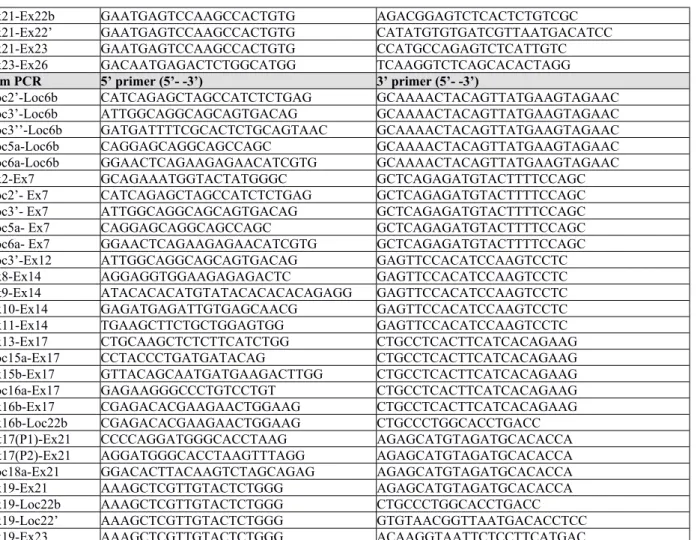
Reagent® (SIGMA), treated with DNase I (Life Technologies) and reverse transcribed with MuLV reverse transcriptase (Perkin Elmer). PCR was performed using 1 U AmpliTaq Gold (Perkin Elmer). The whole procedure is described in Supplementary Methods. PCR primers are listed in Table S1.
For the PCR-based screening of mouse TRPM8 exons, primers were designed at the human locus of the mouse sequence when we found an interspecies homology. When no homology with the human sequence could be found, we designed random primers in the mouse intron overlapping the human locus in order to demonstrate that it could not be amplified.
2.5. Cloning of TRPM8 mRNAs and long-distance RT-PCR. Three µg of human prostate mRNA was
reverse transcribed with PrimeScript Reverse Transcriptase (Takara). Specific primers (see Table S1) targeting the new 5’ extremities of TRPM8 mRNAs were used to amplify human prostate cDNA with Phusion Hot Start II High-Fidelity DNA Polymerase (Takara). PCR products were ligated in pGem-T easy vector (Promega) before transformation in JM109 chemo-competent bacteria. TRPM8 DNAs were transferred from pGem-T easy vector to pcDNA4.TO.A vector (Invitrogen) with a double SacII/Not I restriction.
2.6. HA-tag fusion proteins. TRPM8 DNA was cloned in pcDNA4.TO.A vector. The whole procedure is
described in Supplementary Methods.
2.7. Transfection. Plasmid transfection was carried out with X-tremeGENE HP DNA Transfection
Reagent (Roche) at a concentration of 4 µg per million cells.
2.8. Immunoblotting. Western blotting was performed as described in (Borowiec, et al. 2016). The whole
procedure is described in Supplementary Methods. The primary antibodies were: rabbit anti-HA tag (Ab9110, Abcam) diluted at 1/500 rabbit anti-TRPM8 tag (Alomone Labs Ltd) diluted at 1/500.
For the dot blot, protein samples were loaded on a nitrocellulose membrane in a 96-well Dot-Blot unit according to the manufacturer's instructions (Bio-Rad). When dryied, the membrane was incubated in blocking solution for 1 hour (TNT+3% milk) then hybridized with the primary antibody anti-HA tag diluted at 1/1500 in TNT+1% milk for 3h at room temperature. The following procedures were as described above (see “Western Blotting”).
2.9. Alignment construction. Complete TRPM8 genes were retrieved from the NCBI genome sequences
for 15 Amniota species: H.sa.: Homo sapiens; P.tr.: Pan troglodytes; M.ma.: Macaca mulatta; C.ja.: Callithrix
jacchus; R.no.: Rattus norvegicus; M.mu.: Mus musculus; C.l.f.: Canis lupus familiaris; E.ca.: Equus caballus;
B.to.: Bos taurus; S.sc.: Sus scrofa; M.do.: Monodelphis domestica; O.an.: Ornithorhynchus anatinus; T.gu.:
Taeniopygia guttata; G.ga.: Gallus gallus; A.ca.: Anolis carolinensis.
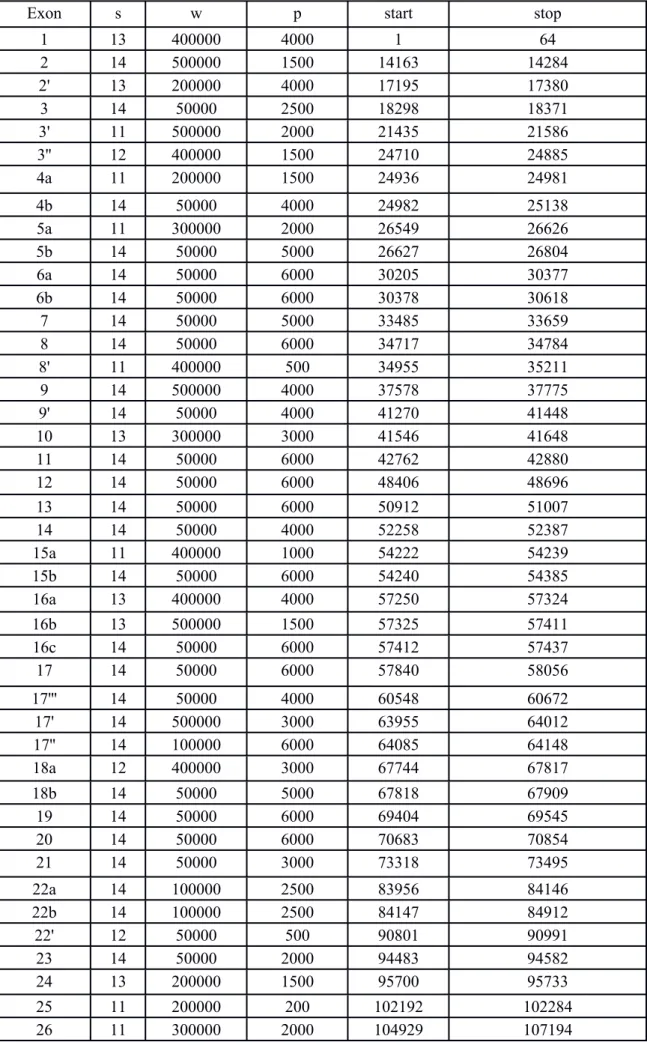
Gene alignments were constructed using the Mauve 2.3.1 package (Darling, et al. 2010). This genome aligner accounts for large indels, sequence translocations and inversions and aligns TRPM8 genes without prior knowledge of their respective structures. The program was parameterized with a guide tree corresponding to the known phylogeny of the 15 Amniota species considered (Prasad, et al. 2008; Alfoldi, et al. 2011) and using 300
combinations of parameter values (penalty p=200, 500, 1000, 1500, 2000, 2500, 3000, 4000, 5000 and 6000; weight w=50000, 100000, 200000, 300000, 400000 and 500000; seed s=10, 11, 12, 13 and 14). We retrieved multiple alignments corresponding to the loci of interest identified in the human TRPM8 gene: core exons, alternative exons, and proximal promoters initiating alternative transcription. Among the 300 alignments obtained per locus, a unique representative was selected by applying the following criteria: (i) in the selected alignment, each start (and stop) coordinate x is such that, in more than 50% of the 300 alignments, the start (and stop) coordinates x' belong to the interval [x-100, x+100], and (ii) the retained alignment displays the maximum number of homologous nucleotides per taxon (see alignment parameters in table S2). Coordinates of an exon include the exon nucleotides in addition to, where relevant, the flanking of the two first intronic nucleotides of their splice sites. The alignments with the 500 nucleotides preceding initiating-transcription exons identified in humans were retrieved.
2.10. Values related to the alignments. While considering the retained alignments and applying a
comparative genomics approach (Blanquart, et al. 2016), we evaluated the presence or absence of the following functional sites observed in human exons: the motifs “AG” of the acceptor splice site (A value) and the “GT” of the donor splice site ( D value), the start codon “ATG” (T value) and the stop codons “TAA”, “TAG” or “TGA” (P
value). Occurrences of putative orthologous stop codons were also assessed to appear in the same frame as
observed for the human stop codon. Moreover, we devised simple values to provide an overview of an exon alignment. One value, denoted G, indicates the proportion of homologous nucleotides shared between the ingroup and the outgroup defined at each ancestral node from the Amniota ancestor up to humans (i.e. the following MRCA, as defined in the NCBI Taxonmy Browser: Amniota, Mammalia, Theria, Boreoeutheria, Euarchontoglires, Simiiformes, Catarrhini, Homininae). This compactness value ranges from 0 (no homologous nucleotide shared between the ingroup and the outgroup sequences) to 1 (all nucleotide shared between the ingroup and the outgroup sequences). Based on the estimated branch lengths of the phylogenetic trees, two last values indicate the amount of divergence of a locus from a given ancestor (as defined above) relative to the amount of divergence observed in core coding exons. The I value applies to an ingroup lineage, and is estimated as follows: the sum of the branch lengths from an ancestor up to humans is calculated both given the exon alignment and given the concatenated core coding exons alignment. The ratio of the former with the latter sum yields I. The O value applies to the outgroup. The sum of all branch lengths of the outgroup is estimated both for the exon alignment and for the concatenated core coding exons. The ratio of the former with the latter sum yield O. Estimated I and O values close to 1 indicate that, since an ancestor, the evolutionary rate of a given exon is comparable to that of core coding exons. G’, I’ and O’ denote the same values as G, I, and O, but are related to the alignments of human proximal promoter regions.
2.11. Estimation of evolutionary rates. Branch lengths are estimated using a fixed tree topology (Prasad,
et al. 2008; Alfoldi, et al. 2011) and the GTR +Γ4 model, using PhyloBayes 3.0 (Lartillot, et al. 2009). Two MCMC chains were run for 10,000 cycles, discarding the first 1,000 samples as burn-in samples.
2.12. Detection of repeated elements. We used the RepeatMasker (Tarailo-Graovac and Chen 2009)
website to estimate occurrences of repeated elements in the human TRPM8 gene, using HMMER and default sensitivity options. We reported only repeated elements overlapping the studied loci. Putative insertion origins in proximal promoter regions were evaluated by eye directly from loci alignments.
2.13. Detection of transcription factor binding sites. We sought putative transcription factor binding sites
in proximal promoter alignments using the TFM-Explorer website (Tonon, et al. 2010), by applying the default parameters and the TRANSFAC matrices for vertebrates. Only sequences that diverged from the oldest ancestor displaying G > 0.66 were analyzed.
2.14. Estimation of the conservation of transcriptional potential. We defined rules to estimate the origin
of transcriptional potential of human exon. The origin indicates the ancestor in which the transcript structure appeared exactly as it is observed in humans. We assumed that an alternative transcript could not be older than the youngest of its exons. Likewise, the origin of a given exon structure was estimated to be the origin of the youngest of its functional features. When present, acceptor and donor splice sites (A and D) as well as start and stop codons (T and P) were interpreted as discrete states evolving among Amniota. Their origins were determined by applying the following decision rules, inspired from parsimony. (i) The origin of a functional site was assumed to be in the ancestor when it is conserved in all of the descendants, and absent in all other species, i.e. the most recent common ancestor (MRCA) of species sharing the functional site as a synapomorphy. (ii) However, in many cases, the site
could have encountered one or several losses or convergent appearances. We assumed that scenarios involving only convergent site losses are more likely than scenarios involving only convergent site appearances. Thus, the origin was assumed to have occurred by the ancestor whose descendants are the only species that display the signal. (iii) An exception to the previous rule is when a single site occurs in a distantly related group such that it necessitates a scenario in which numerous independent signal losses occurred across multiple species. Then a younger ancestor-satisfying rule (i) is selected. In practice, interpretation was very simple as over 82 decisions made, 60 applied rule (i) (synapomorphy), 20 applied rule (ii) (one to four losses), and 2 applied rule (iii) (exon 6b and 22’ where a single stop codon convergence was preferred over losses in 5 and 6 species, respectively). Moreover, we assumed that if an exon is functional since a given ancestor, it would have encountered selection pressures to conserve a relatively stable size in almost all of its descendants. Along this line, a G value substantially less than 1 would suggest that the exon was not functional in the ancestor. Thus, the origin of a human functional sequence is set to the oldest ancestor displaying G>0.66. This is an arbitrarily chosen threshold, because a single nucleotide indel could disrupt an exon coding function, and because little is known about the functional tolerance of UTR or promoter regions with respect to indels. Note finally that the other values, promoter TFBS, I and O, are difficult to interpret and were not directly considered for estimation of the loci origin.
2.15. Assessing human exon conservation through expression data in mice. Expression data in mice
allowed us to validate the exon origin estimates with respect to human and mouse MRCA: older or younger than Euarchontoglires. The exon origin stands for the ancestor which first acquired exactly the same structure as observed in humans (see above), but it does not indicate if the exon initially originated in this ancestor, or if it diverged from an older and different functional structure. When an exon is expressed in mice, this suggests (i) a human-mouse shared characteristic if the origin of the human exon structure is estimated to be older than the Euarchontoglires ancestor (exon orthology, case a), or (ii), an exon structure divergence within primates (case b). When a candidate locus is not expressed in mice, this suggests that (iii) the targeted locus had never been functional along the mouse lineage, if the exon structure is estimated younger than Euarchontoglires (case c), or (iv), if it is estimated older than Euarchontoglires, that the exon had been lost in the mouse lineage (case d). These decision rules are summarized in figure 5 C.
In cases a and c, both human exon origin and expression data in mice are congruent. In case a, the exon origin is estimated older than Euarchontoglires and the exon is also expressed in mice (human-mouse exon orthology). In case c, the estimated origin of the human exon is younger than Euarchontoglires and mice express no homologous locus (exon origination within Simiiformes). Thus, in the case where our exon origin estimates are globally correct, one expects to infer a majority of such predictions. In the cases b and d, human exon origin and expression data in mice are not congruent. Case d, exon loss in mice, could be considered with low ambiguity as soon as the exon structure appears highly conserved in all Amniota, except Murinae. Finally, in case b, where exon structure divergence within Simiiformes, appears most ambiguous as it is difficult to estimate whether the conservation of exon functionality exclusively relies on its sequence conservation (Supplementary Discussion).
2.16. Estimation of the conservation of translational potential. Putative functional orthology of a mouse
exon (case a) was further examined in light of the alternative coding potential of the exon in humans. If a functional alternative start or stop codon in a human exon is conserved at the same site and in the same reading frame in the putative orthologous mouse exon, then the human and mouse exons are also estimated to share functional orthology at the translational level. Finally, in case b, we distinguish between the case where the human exon is coding, in which the mouse also might have retained a coding potential, from the case where the human exon is non-coding, in which no indication would support the hypothesis that the mouse exon ever acquired a coding potential.
3. Results
3.1. Alternative exons confer the ability to express a large diversity of mRNAs from the human
TRPM8 gene. First, we report the cloning of both 5’ and 3’ human TRPM8 mRNA extremities by RACE-PCR in 4 human tissues (Fig. 1A). We experimentally identified 10 alternative exons that initiate mRNAs (denoted as 2’, 3’, 5a, 9’, 15a, 16a, 17’, 17’’, 17’’’ and 18a) and 3 alternative exons that terminate transcripts (6b, 22b and 22’). mRNA sequencing confirmed the detection of 58% of the new alternative exons, although it is known that mRNA extremities are down-represented with this technology (Fig. S1). Importantly, the examined human tissues have highly distinct potential to express these exons as revealed by a PCR screening assessing the expression of alternative exons in native mRNA (Fig. 1B, see also S2). While 90% of the alternative exons were expressed in the prostate, only 10% were detected in the bladder or in the heart (Fig. 1C). Using long-distance PCR, we then assessed whether all possible combinations of initiating and terminating transcription exons were expressed in
human tissues. We amplified and cloned as exhaustively as possible 20 alternative TRPM8 mRNAs among these 37 possible combinations of initiating/terminating exon pairs in human prostate, testis, liver and skin (Fig. 2A and 2B). In addition to these 20 alternative mRNAs, we cloned 14 splice variants. Four spliced exons were further detected: 3’’, 4a, 16d and 25’. Note that the exon16d/exon17 junction creates a premature stop codon (Fig. 2C). All sequences are presented in table S1. TRPM8 mRNA labels refer to the number of the initiating and terminating exons and, when required, the description of the splicing events (Fig. 2A). However, for the clarity of reading,
TRPM8 mRNAs have also been numerated from n°1, the canonical TRPM8 mRNA, to n°34 and they will be
mentioned as such throughout the manuscript (Fig. 2A). Note that exon 8’ was found in EST banks (GenBank), exon 17’’’ was cloned by PCR and exon 16 was half-skipped (second half part, dubbed 16c) in a RACE-PCR product, but none of these exons were confirmed by RACE-PCR or mRNA sequencing.
Thus, our attempt to exhaustively identify new TRPM8 isoforms provided a surprising diversity of 24 new transcripts involving 18 new exons. Overall including previous studies, we identified 34 TRPM8 transcript isoforms (Fig. 2A). This raised several key questions about the evolutionary history of the TRPM8 gene and the origination of the human TRPM8 isoforms that we investigate.
3.2. Expression and sequence evolution of human exons. Sequences of the TRPM8 gene from humans
and from 14 additional amniote species were aligned using Mauve (see Methods). The aligned regions occur in a collinear order in all 15 Amniota TRPM8 genes, indicating an absence of rearrangements in the order of the putative exon loci. We defined exons present in the canonical TRPM8 mRNA as “core exons”.
We analyzed the conservation of human exon features across the alignment (see Fig. S3A for a representative example) in order to infer their origin. Representative examples of this conservation analysis are shown in Figure 3A. The human core coding exon 17 possesses acceptor and donor splice sites (columns A and D, respectively) which are conserved across all of the examined Amniota TRPM8 genes. Loci homologous to the human exon 17 have identical lengths in all of the Amniota orthologs (G=1 for all ancestors; see Methods). Moreover, I and O indicate that substitution rates on exon 17 are roughly identical to that of the core coding exons. Altogether, these values indicate that, since the Amniota ancestor, the core coding exon 17 has likely evolved under strong negative selection, resulting in the maintenance of its length (G value), its splicing sites (A and D), and an evolutionary rate comparable to that of all the core coding exons. Thus, according to our origin estimation (see Methods), exon 17 structure is a synapomorphy of Amniota that most likely existed as a functional coding exon in the Amniota ancestor, and remained functional until the examined present Amniota. The same observations also hold for most core coding exons in almost all the analyzed taxa, with the exceptions of N- and C-terminal exons 2 and 25 which diverged later in Boreoeutheria most recent common ancestor (MRCA), most likely from an older exon structure, into the modern structure observed in human (see below and Fig. S3B). Thus, in the following, the term “diverged” will refer to the functional structure modification of an ancestral exon, defined as one or more origination or loss of splicing acceptor/donor sites, transcription-initiating/terminating sites or start/stop codon sites. Previous observations confirm that core coding exons have existed since the Amniota ancestor (Saito and Shingai 2006; Seebacher and Murray 2007).
Human alternative exons 16a, 17', 17'' and 18a are transcription-initiating exons preceded by alternative promoter regions. Human exons 22b and 22' are both stop coding and transcription-terminating exons, and hence, they include a stop codon and a terminating transcription sequence. Compared to core coding exons, alternative initiating exons and alternative terminating exons display weaker sequence conservation across Amniota (see G, I and O values in Fig. 3A), indicating that they probably appeared more recently during TRPM8 evolution. This additionally suggests that all of the aligned loci might not be expressed as functional exons in non-human TRPM8 genes. Different evolutionary scenarios could explain the origin of these six alternative exons (16a, 17', 17'', 18a, 22b and 22’) – estimated according to their homology to human and mouse genes and validated based on their expression in mouse tissues (see Methods). The human exon structure could have originated: (i) in the human/mouse MRCA or earlier (alternative exons 16a and 18a), (ii) in one of the Simiiformes MRCAs (exon 17''), (iii) in the boreoeutherian MRCA and subsequently, the exon may have been lost in the mouse lineage (exons 17' and 22'). Finally, the human exon structure may have diverged in Simiiformes, and therefore it has no counterpart in the mouse gene sharing an identical structure (exon 22b).
In human TRPM8, alternative exons 16a and 18a are immediately followed by the core coding exons 16b and 18b, respectively (Fig. 2A). As a consequence, they are always transcribed together with their associated core exons since they have no donor splice sites (Fig. 3A). Their G values are greater than a threshold of 0.66 since the Boreoeutheria ancestor, indicating that both exons share substantial sequence identity with a related locus in all other Boreoeutherian genes. Likewise, the proximal promoter region of exon 18a is conserved in all studied species, suggesting that it has been conserved and likely functional since the Boreoeutheria ancestor (G'>0.66), as it is in humans (see Methods). This is not the case for exon 16a, where the human proximal promoter region shows
similarities only with Pan troglodytes. Our origin estimation rules apply only to the G value of exons 16a and 18a (see Method) and indicate that both exons possibly originated in the Boreoeutheria ancestor. This estimation is consistent with the detected expression in mouse tissues of the homologous loci to the human exons 16a and 18a (Fig. 3B and 3C).
Regarding the origin of exons 17’ and 17’’, G and D, first the G value indicated a strong conservation of exon sequence lengths and suggested that both exons have been conserved since the Boreoeutheria ancestor. Next, we estimated that the donor splice sites of human exons 17’ and 17’’ are shared since the Boreoeutheria and Simiiformes MRCA, respectively (Fig. 3A). No homology to these human exons was detected in Murinae (mouse and rat) TRPM8 genes, and no expression of putative loci of intron 17 in mice was detected (Fig. 3B). We therefore deduced that the human structures of i) exon 17’ likely originated in the Boreoeutheria ancestor and was lost in the Murinae lineage, and ii) exon 17’’ diverged (origination of a new donor splice site) in the Simiiformes MRCA.
Finally, figure 3A presents the conservation patterns of terminating transcription and stop coding exons 22b and 22'. Exon 22b is a 3’ extension of the core coding exon 22a. Loci homologous to exon 22b display a weak conservation in non-Homininae (G), and no in-frame homologous stop codon was detected in non-human TRPM8 sequences (P). These observations suggest that the human structure of exon 22b might have originated in the Homininae and Homo ancestors, concerning its transcription and translation potential, respectively (see Methods). Inconsistently, mouse tissues express mRNA sequences, including the beginning of mouse intron 22, as an exon, which is therefore structurally homologous to the human exon 22b (Fig. 3C and S4). This suggests that the exon 22b diverged dramatically both in Homininae (divergence to a specific exon sequence and of a specific stop codon site) and Murinae (no aligned homologous loci), from an ancestral exon originated in the Euarchontoglires MRCA or earlier. Alternatively, the expressed mouse exon would be of a homoplastic origin, i.e. independently derived in the mouse lineage (see Supplementary Discussion). Whatever the true evolutionary scenario is, the human structure of exon 22b seems unrelated to any other loci in other TRMP8 genes, and therefore, it could have originated or diverged recently. Conversely, the lengths of loci homologous to the human exon 22' appear well conserved across Boreoeutheria (G). Homologous loci moreover possess acceptor splice sites shared in all Boreoeutheria except in Murinae and dog, which also suggests an exon origin in the Boreoeutheria ancestor. With respect to the exon coding potential, we detected homologous in-frame stop codons only in Pan troglodytes and Bos taurus (P). Thus, our origin estimation suggests exon transcription and translation potential originating in the Boreoeutheria and Homininae ancestors, respectively. We detected no mRNA including the homologous mouse locus (Fig. 3C and S4) that suggests an exon loss in mouse TRMP8.
3.3. Evolution of alternative human open reading frames and evidence for protein expression in human and mouse tissues. In order to validate the coding potential of the alternative transcripts identified in
humans, we fused in-frame the longest putative ORF of each TRPM8 mRNA with a HA-tag sequence and revealed protein expression by immunoblotting (see Methods). At first, we screened HA-tagged TRPM8 fusion proteins for each TRPM8 isoforms by dot-blot (Fig. S5), but we did not assess spliced forms. Secondly, immunoblotting (Fig. 4A, and see (Bidaux, et al. 2012; Bidaux, et al. 2015; Bidaux, Borowiec, Dubois, et al. 2016; Borowiec, et al. 2016)) confirmed the expression of proteins and determined their apparent size, allowing for selection of the most likely ORF in human TRPM8 (highlighted in blue in Fig. 2A). We previously demonstrated that the start and stop codons in human exons 2, 4b, 5b and 6b were functional in several alternative TRPM8 transcripts. As already discussed, core coding exons 2, 4b and 5b might be transcribed since the Amniota ancestor. With respect to translation potential (Bidaux, Borowiec, Dubois, et al. 2016), the two methionine-coding ATG codons, used as alternative start codons in human exons 4b and 5b, likely originated in the Simiiformes and Amniota MRCAs, respectively (Fig. 4A). Similar to the discussed case of exon 22b, the alternative stop coding exon 6b appears to be a synapomorphy of Simiiformes (G, P), but it is unexpectedly expressed in mouse tissues. As such, the mouse exon might also be coding.
Next, Phelps et al reported that the N-terminus of the TRPM8 channel is required for its translocation to the cell membrane (Phelps and Gaudet 2007). We thus expressed human channel-forming TRPM8 isoforms and assessed their ability to translocate to the plasmalemma. We found that long TRPM8 protein isoforms with short truncation of their N-terminus (n°4 and n°5) are translocated to the cell membrane in HEK cells (Fig. 4B). By contrast, 4TM-TRPM8 proteins (mRNAs n°15, n°21 and n°23) including eTRPM8 protein in epidermis (Bidaux, et al. 2015), are expressed but they did not reach the plasmalemma of HEK cells (Fig. 4C). The translation of mRNA n°4 and n°5 involve the start codons located in the exons 4b and 5b, and the stop codon located in the core coding exon 25 (Fig. 2A and 4B). Besides, the lower band detected around 100kDa in isoform n° 5 lane could have been translated from the ATG codon in exon 6a (expected size of the protein 106 kDa). As already discussed, human-like translational potential of these three exons could have originated as early as the Simiiformes, Amniota, and Boreoeutheria MRCAs. Importantly, a translational potential might not systematically be as old as the of the
related methionine codon ATG, but it could originate later on. Similar to the alternative start codon in exon 5b, the start codon in exon 17 has been shared since the Amniota MRCA (Fig. 3A). It is used in mRNA n°15, encoding the eTRPM8 isoform carrying calcium from endoplasmic reticulum (ER) stores to mitochondria in keratinocytes (Bidaux, et al. 2015). Here, no evidence at the gene level would help to determine when these ATGs became alternative start codons, but rather direct observation of protein expression in related taxa is needed.
It has already been shown that mice express a full-length TRPM8 channel in neurons of the dorsal root ganglia (McKemy, et al. 2002; Peier, Moqrich, et al. 2002). Moreover, mouse keratinocytes express eTRPM8, a 40kDa TRPM8 isoform (Bidaux, et al. 2015) and male mouse germ cells express a 105kDa TRPM8 isoform, likely orthologous to human mRNA n°5 (Borowiec, et al. 2016). By means of an antibody targeting the pore region of the
TRPM8 channel, we detected 95 kDa and 40 kDa TRPM8 isoforms in mouse prostates, seminal vesicles and
bladders (Fig. 4D). This emphasizes that some of the alternative start and stop codons identified in humans and conserved in mouse TRMP8 might also be functional in mouse sequences.
3.4. History of human TRPM8 gene evolution and its mechanisms. The homology information of all
core and alternative exons is presented in the supplemental figure S6. According to these observations, we estimated the origin of the human exon structure for each exon (Fig. 5, for details see the Methods section). Expression data in mice provides experimental validation of the estimated origins with respect to one ancestor, the Euarchontoglires MRCA (Fig. 5C). Origin predictions are validated for 36 of 45 exons (Fig. 5B). Among the 26 core exons, 24 are validated to be older than Euarchontoglires MRCA and to share identical functional structures in both humans and mice. In mouse TRPM8, 88% of the core exons are estimated to share the human exon structure and both transcriptional and translational potential (full functional orthology), 4% share transcriptional potential only, but with no alternative translation potential (core coding exon 4b), 4% have no functional orthologs related to a recently originated human exon structure (stop coding core exon 26) and 4% possibly underwent a loss of function (non-coding core exon 1; see Fig. 6A). This fingerprint differs drastically for the alternative exons, since 7 out of 18 human alternative exons are not experimentally validated in mice (mouse loss or divergence in the Simiiformes scenario, see Methods and Fig. 5C). Thus, among human alternative exons, only 17% have synapomorphic functional orthologs in mice (15a, 16a, 18a), 22% originated or diverged in Simiiformes (3’, 5a, 6a, 22b), 22% underwent a loss of function in mice (4a, 16d, 17’, 22’), and 39% are synapomorphies of Simiiformes MRCAs specifically, and are neither expressed nor conserved in the mouse TRPM8 gene (Fig. 6A). This indicates that most of the human alternative exons seem to have originated or diverged recently within Simiiformes.
Next, we estimated the ancestor that derived the transcription and translation abilities found in human
TRPM8 mRNAs (see the methods section and table S4). Consistent with exon origin estimates, the vast majority of
human isoforms are inferred as originating, or deriving from an older functional isoform structure within Simiiformes (Fig. 6B). As shown in the Table S4, in 20.6% of human TRPM8 transcripts (mRNA n°8, 9, 24, 27, 28, 32) transcription and translation potential have originated concomitantly (Table S4). Counter-intuitively, in 58.8% of human TRPM8 transcripts, the translation codon was present and conserved before the potential transcription-initiating site. Finally, in 20.6% of human TRPM8 transcripts, the translation potential may have originated after the transcriptional potential. These latter sequences (mRNA n°2, 3, 10, 11, 14, 22 and 25) have been conserved since Boreoeutherian or Simiiformes MRCAs, and have recently incorporated new alternative start/stop codons in hominid or Homo ancestors.
Importantly, according to either their transcriptional or their translational potential, all human TRPM8 isoforms would have originated or diverged in Simiiformes, but the question is are non- Simiiformes TRPM8 also able to evolve such alternative expression potential? We measured the average length of the TRPM8 core intron separating the core exons. We observed that it globally increases on the route to human: mammals display longer core introns than other Amniota (except in Ornithorhynchus anatinus) and within mammals, Simiiformes possess the longest core introns (Fig. 6C). Assuming that longer introns have a greater probability to contain alternative exons, then Simiiformes (and O. anatinus) would possess a slightly greater potential to express alternative isoforms. The nucleotide proportion of the core exons in complete genes consistently appears slightly smaller in Simiiformes, reaching 3.81% in human (Fig. 6D). However, when all of the exons identified in humans are considered, this proportion increases to 6.81%, exceeding the core exon fraction in other species except in opossums, chickens and zebra finches. This suggests that the exonic fraction of TRPM8 is also underestimated in nearly all considered Amniota.
The mechanism of exonization can involve transposable elements (TE, for a review see (Keren, et al. 2010)). In humans, we found 2 TE belonging to the 3’ UTR region of core exon 26. Moreover, 5 alternative exons (2’, 3’’, 9’, 17’’’ and 22b) overlap with at least one TE (Fig. 6E). These TE therefore constitute part of the six alternative exons, and as such, were possibly involved in their exonization during TRPM8 evolution. Using the same line of evidence, we detected an average of 1.5 TE overlapping the 500 nucleotide-long proximal promoter regions of all
alternative exons which initiate transcription (Fig. 6E). In humans, most nucleotides of the proximal promoter regions of exons 5a, 16a, 17’’’ and 18a result from TE insertions (Fig. S7 A). Moreover, inserted TEs overlap the start transcription sites in exons 2’, 9’ and 17’’’ (Fig. S7A). Finally, human exon 17’ is included in the proximal promoter region of exon 17’’, and three TE insertions overlap both exons proximal promoter regions (Fig. S7). Those insertions seem concomitant to the origin of the human promoter structure in promoters 9’, 17’, 17’’’ and 18a, but older in human promoters 2’, 3’, 5a and 17’’, or younger in human promoters 15a and 16a (Fig. S7 B). These observations suggest that in TRPM8, TEs are involved in the exaptation of proximal alternative promoter regions, in their global shaping, and are consequently likely to influence the evolution of their regulation schemes. Consistent with this hypothesis, Villar et al (Villar, et al. 2015) recently showed that, in mammals, many proximal promoters emerged from recently originated sequences displaying diverse over-represented repeated elements. These authors also show that, in mammals, proximal promoter regions are conserved and enriched in transcriptional regulatory sequences. Thus, promoter proximal regions were further examined in the light of the conservation of their putative transcription factors binding site (TFBS) disposition. We assumed that, for a given proximal promoter, a common distribution of putative TFBSs across related species could reveal a shared regulatory behavior. The observation holds only for putative promoter regions within Simiiformes, but not even for closely related non- Simiiformes species (Fig. S7). This suggests either that Simiiformes only share specific similar regulation schemes, or that the conservation of putative TFBS distribution only reveals a higher sequence similarity within Simiiformes. The latter hypothesis is more likely for promoters of exons 15a, 16a, 17' and 18a, which were estimated to be functional at least since the mammal ancestor, and as such, would display conserved TFBS distributions.
4. DISCUSSION
4.1. Mechanisms driving TRPM8 evolution. The frequency of de novo creation of new exons, called
exonization, has been underestimated in previous studies. Several classes of transposable elements (TE) have been characterized and they have been attributed to different periods of evolution. Indeed, ancient short interspersed nuclear elements (SINE) actively participated in the creation of ultraconserved exons, and their origin predates the origin of vertebrates (Bejerano, et al. 2006). Long interspersed nuclear elements (LINE) and mammalian interspersed repeats (MIRs; an ancient family of tRNA-derived SINEs) are present in all mammals, while long terminal repeats (LTR) originated from retroviruses integrated over the last 150 million years (Lander, et al. 2001). These three kinds of TE exhibit similar rates of exonization in both mouse and human genome, from 0.05% to 0.07% (Sela, et al. 2007). Conversely, primate-specific Alu/SINE TE had an exonization rate of 20%. Although about 60% of TE are located in introns in both humans and mice (Sela, et al. 2007), the TE involvement in shaping the human genome has been estimated to be 3.6 times higher than in rodents. Altogether, these studies emphasize that exonization through TE insertions in primate genomes would have been more frequent and efficient than in other species and thus may represent a major source of accelerated, lineage-specific evolution, and is perhaps a key force driving speciation. Here, we report that the evolution of the human TRPM8 gene shares this major feature of primate evolution: while 4% of core exons included TE are found in 33% of alternative exons and 100% of the proximal alternative promoters. Meanwhile, non-primate species most likely acquired alternative expression potential driven by their own adaptations, which are not identified in this work. For example, Wang et al identified 1582 exons expressed in rodents but not in humans, which arose through distinct exonization mechanisms (Wang, et al. 2005). The authors also measured insertion/deletion rates five times higher in rodents than in primates.
4.2. Can alternative transcription create new functions? At the molecular level, the evolution of TRPM8 isoforms and their structure-function relationship taught us several lessons. First, the most ancient form
(full-length TRPM8) is also the longest. The inclusion of new exonic sequences invariably led to a size reduction of TRPM8 protein isoforms. Our experimental results, together with previous studies (Bidaux, et al. 2007; Bidaux, et al. 2015), confirm that large N-terminal truncation of the TRPM8 channel impaired translocation to the cell membrane without affecting their ability to sense cooling. This consequently modified the biological functions of these cold-sensing proteins. Indeed, calcium entry from the extracellular matrix and ER calcium release participate in different calcium signal and cell functions (Berridge 2002; Berridge, et al. 2003). For instance, the activation of the full length TRPM8 sensor in neurons is thought to trigger the depolarization of the cell membrane above the threshold of action potential firing (Bautista, et al. 2007). In keratinocytes, TRPM8 activation in ER membranes induces ER calcium release at the ER-mitochondria junctions. This, in turn, favors calcium re-uptake by mitochondria, which stimulates ATP production (Bidaux, et al. 2015). We hypothesized that alternative promoter usage possibly arises through specific regulation pathways and defines the subcellular localization of the cold receptor and consequently its biological outcomes. Along this line, we demonstrated that promoters located
upstream to exons 1, 2’ and 3’ transcribed mRNAs coding for channels that efficiently translocate to the cell membrane. Conversely, promoters upstream to exons 15a, 16a, 17’, 17’’, 18a initiate the transcription of mRNAs coding for 4TM-TRPM8 (25 to 40 kDa proteins), which are retained in ER membranes (Bidaux, et al. 2015; Bidaux, Borowiec, Prevarskaya, et al. 2016). Alternative transcription might also have much more subtle influence on the selected ORF. Interestingly, the human exon 17' spans the proximal promoter region of exon 17'', which one spans the proximal promoter region of exon 18a. These three exons (17’, 17’’ and 18a) form the 5’ UTRs of transcripts translated into protein from two alternative start codons located in exons 18b or 19. These different UTRs are correlated with differential usage of start codons (Fig. 4C). We had previously reported the same mechanism for sM8 and sM8 mRNAs (Bidaux, et al. 2012). Indeed, the insertion of alternative exon 4a increases the probability of using the start codon in exon 5b in detriment to the one in exon 4b. Thus, by influencing the selection of available alternative start codons, the creation of new transcription initiation exons can modify the 5’ UTR and ORF of some TRPM8 variants and consequently, the protein sequence of TRPM8 isoforms. The selection of new terminating exons may also greatly modify the protein sequence. Indeed, exon 6b, which includes a premature stop codon, enables the translation of sM8s isoforms that regulate activity of the full-length
TRPM8 channel by interacting with the C-terminal extremity of the channel. Consequently, the selection of
alternative exons, promoters, transcription initiation and termination sites, and start/stop codons are key processes leading to the creation of structural variants of cold sensors with new properties (including different subcellular localization, differential sensitivity to activators, ability to regulate other protein isoforms) and consequently new cold-mediated cell functions.
4.3. Evolution of the human TRPM8 gene: implication for cold-sensing and cold-adaptation.
Reconstruction of temperature-gated TRP (thermo-TRPs) history revealed several gene duplications preceding high divergences of protein sequences (Saito and Shingai 2006). Almost all TRPs, including the hot and cold nociceptors (TRPV1 and TRPA1, respectively), are found across vertebrates and originated in their most recent common ancestor (MRCA). The mild-cold and mild-heat receptors in mammals, TRPM8 and TRPV3, respectively, emerged later at latest in the common ancestor of tetrapod and teleost fishes and became the main components of temperature sensation in mammals (McKemy, et al. 2002; Peier, Moqrich, et al. 2002; Peier, Reeve, et al. 2002; Moqrich, et al. 2005; Saito and Shingai 2006). Notably, TRPA1 is a heat receptor in reptiles and TRPV3 is a cold receptor in frogs. This suggests that thermoreceptors underwent a diversification phase in Tetrapoda, probably associated with the adaptation to non-aqueous ecosystems subjected to greater variations in temperature.
In this study, we report that all 33 alternative human TRPM8 mRNAs originated or diverged in Simiiformes (primates) (see Table S4). Interestingly, ORFs of 15 human TRPM8 isoforms originated or diverged in Boreoeutheria, even though some of their transcriptional characteristics – mainly UTR sequences - could have diverged later in Simiiformes. This implies that the human TRPM8 gene was subjected at least to three major evolutionary changes. The first, 400 to 340 million years ago (Tetrapoda radiation) evolved of the common ancestor of the TRPM8 canonical ORF. The second, 125 million years ago (Boreoeutheria radiation) 15 TRPM8 putative ORFs originated. The third, 85 to 45 million years ago: transcriptional potential (new UTR sequences, specific initiating/terminating exons) of 32 TRPM8 mRNAs and translational potential (specific start/stop codon) of 12 TRPM8 mRNAs diverged in Simiiformes. Although the first major evolutionary step led to the evolution of sensing functions in neurons, the second step could have linked cold sensing to cell bioenergetics and cold-mediated adaptation of organisms in non-neuronal cells. For example, non-shivering thermogenesis (NST) appeared in Eutheria and conferred them a net advantage to spread all over the world (high altitude and latitude regions, deep oceans, hibernation, night, etc.) (Mezentseva, et al. 2008; Rial and Zardoya 2009; Oelkrug, et al. 2013). TRPM8 activation has been reported to stimulate NST in mice (Ma, et al. 2012), even though the involvement of TRPM8 isoforms in this process has not yet been clarified. Also, the cold shock response has evolved in order to mitigate adverse effects of hypothermia in a broad range of tissues (outer and inner organs as well) and is, at least partly, functional throughout vertebrates (Zhu, et al. 2016). We recently reported that in male mouse germ cells (Borowiec, et al. 2016), activation of full length TRPM8 and isoforms by mild cold triggers expression of cold-shock protein (CIRBP and RBM3) and antioxidant enzymes (GPx4 and GPx5). Lastly, several studies recently demonstrated thatTRPM8 isoforms orchestrate epidermal homeostasis in human and mouse skin (Denda, et al. 2010; Bidaux, et al. 2015; Bidaux, Borowiec, Prevarskaya, et al. 2016).
Finally, the evolutionary divergence of TRPM8 isoforms in Simiiformes revealed in this study raises new questions. It may be questioned if environmental pressures on humans/Simiiformes or dispersion into temperate climates facilitated this adaptation. In a recent study, Ket et al demonstrated the selection of a single nucleotide polymorphism in northern European populations (Key, et al. 2018). Although this polymorphism is unlikely to be associated with changes in splicing or alternative transcription, it emphasizes the plasticity of the TRPM8 genomic sequence towards modification in the organism’s environment.
Altogether, the evolutionary history of the human TRPM8 and the differences in the cellular mechanisms of thermal shock response between rodents and primates suggest that a specific evolution of mild cold-adaptation mechanisms likely occurred in primates.
5. Conclusion
In this study, we report the cloning of 18 new TRPM8 exons and 24 new mRNAs in humans. We achieved the fingerprint of exon expression in 12 human tissues and confirm the detection of several of protein isoforms encoded by alternative TRPM8 mRNAs. We also studied the evolution of the human structure of exons and mRNAs and show that all of the discovered human alternative mRNA probably originated or diverged in Simiiformes. We analyze the structural basis of alternative TRPM8 exons, supporting the theory that large intron size and transposable element insertions may have participated in their origin in Simiiformes. Overall, our results open new questions about the evolution cold-mediated processes in primates.
ACKNOWLEDGMENTS
The authors thank Céline Villenet and Sabine Quief from the “Functional and Structural Genomics” platform (plate-forme de génomique fonctionnelle et structural) at Lille University for RNA-seq library preparation and sequencing on the SOLiD 3.5 system.
FUNDING
This work was supported by grants from INSERM, Ministère de l'Education Nationale, Region Nord-Pas-de-Calais.
Dr Samuel Blanquart was supported by Inria.
Dr. Anne-sophie Borowiec was supported by the Fondation pour la recherche médicale. Dr. Christopher A. Emerling and Andrea Sanchez were supported by the CNRS.
REFERENCES
Alfoldi J, Di Palma F, Grabherr M, Williams C, Kong L, Mauceli E, Russell P, Lowe CB, Glor RE, Jaffe JD, et al. 2011. The genome of the green anole lizard and a comparative analysis with birds and mammals. Nature 477:587-591.
Bautista DM, Siemens J, Glazer JM, Tsuruda PR, Basbaum AI, Stucky CL, Jordt SE, Julius D. 2007. The menthol receptor TRPM8 is the principal detector of environmental cold. Nature 448:204-208.
Bejerano G, Lowe CB, Ahituv N, King B, Siepel A, Salama SR, Rubin EM, Kent WJ, Haussler D. 2006. A distal enhancer and an ultraconserved exon are derived from a novel retroposon. Nature 441:87-90.
Berridge MJ. 2002. The endoplasmic reticulum: a multifunctional signaling organelle. Cell Calcium 32:235-249.
Berridge MJ, Bootman MD, Roderick HL. 2003. Calcium signalling: dynamics, homeostasis and remodelling. Nat Rev Mol Cell Biol 4:517-529.
Bidaux G, Beck B, Zholos A, Gordienko D, Lemonnier L, Flourakis M, Roudbaraki M, Borowiec AS, Fernandez J, Delcourt P, et al. 2012. Regulation of activity of transient receptor potential melastatin 8 (TRPM8) channel by its short isoforms. J Biol Chem 287:2948-2962.
Bidaux G, Borowiec AS, Dubois C, Delcourt P, Schulz C, Vanden Abeele F, Lepage G, Desruelles E, Bokhobza A, Dewailly E, et al. 2016. Targeting of short TRPM8 isoforms induces 4TM-TRPM8-dependent apoptosis in prostate cancer cells. Oncotarget 7:29063-29080.
Bidaux G, Borowiec AS, Gordienko D, Beck B, Shapovalov GG, Lemonnier L, Flourakis M, Vandenberghe M, Slomianny C, Dewailly E, et al. 2015. Epidermal TRPM8 channel isoform controls the balance between keratinocyte proliferation and differentiation in a cold-dependent manner. Proc Natl Acad Sci U S A 112:E3345-3354.
Bidaux G, Borowiec AS, Prevarskaya N, Gordienko D. 2016. Fine-tuning of eTRPM8 expression and activity conditions keratinocyte fate. Channels (Austin) 10:320-331.
Bidaux G, Flourakis M, Thebault S, Zholos A, Beck B, Gkika D, Roudbaraki M, Bonnal JL, Mauroy B, Shuba Y, et al. 2007. Prostate cell differentiation status determines transient receptor potential melastatin member 8 channel subcellular localization and function. J Clin Invest 117:1647-1657.
reconstruction and splicing orthology. BMC Genomics 17:786.
Borowiec AS, Sion B, Chalmel F, A DR, Lemonnier L, De Clerck T, Bokhobza A, Derouiche S, Dewailly E, Slomianny C, et al. 2016. Cold/menthol TRPM8 receptors initiate the cold-shock response and protect germ cells from cold-shock-induced oxidation. FASEB J 30:3155-3170.
Conesa A, Madrigal P, Tarazona S, Gomez-Cabrero D, Cervera A, McPherson A, Szczesniak MW, Gaffney DJ, Elo LL, Zhang X, et al. 2016. A survey of best practices for RNA-seq data analysis. Genome Biol 17:13.
Darling AE, Mau B, Perna NT. 2010. progressiveMauve: multiple genome alignment with gene gain, loss and rearrangement. PLoS One 5:e11147.
Denda M, Tsutsumi M, Denda S. 2010. Topical application of TRPM8 agonists accelerates skin permeability barrier recovery and reduces epidermal proliferation induced by barrier insult: role of cold-sensitive TRP receptors in epidermal permeability barrier homoeostasis. Exp Dermatol 19:791-795.
Fernandez JA, Skryma R, Bidaux G, Magleby KL, Scholfield CN, McGeown JG, Prevarskaya N, Zholos AV. 2012. Short isoforms of the cold receptor TRPM8 inhibit channel gating by mimicking heat action rather than chemical inhibitors. J Biol Chem 287:2963-2970.
Gracheva EO, Ingolia NT, Kelly YM, Cordero-Morales JF, Hollopeter G, Chesler AT, Sanchez EE, Perez JC, Weissman JS, Julius D. 2010. Molecular basis of infrared detection by snakes. Nature 464:1006-1011.
Jiang P, Josue J, Li X, Glaser D, Li W, Brand JG, Margolskee RF, Reed DR, Beauchamp GK. 2012. Major taste loss in carnivorous mammals. Proc Natl Acad Sci U S A 109:4956-4961.
Keren H, Lev-Maor G, Ast G. 2010. Alternative splicing and evolution: diversification, exon definition and function. Nat Rev Genet 11:345-355.
Key FM, Abdul-Aziz MA, Mundry R, Peter BM, Sekar A, D'Amato M, Dennis MY, Schmidt JM, Andres AM. 2018. Human local adaptation of the TRPM8 cold receptor along a latitudinal cline. PLoS Genet 14:e1007298.
Kukurba KR, Montgomery SB. 2015. RNA Sequencing and Analysis. Cold Spring Harb Protoc 2015:951-969.
Lander ES, Linton LM, Birren B, Nusbaum C, Zody MC, Baldwin J, Devon K, Dewar K, Doyle M, FitzHugh W, et al. 2001. Initial sequencing and analysis of the human genome. Nature 409:860-921.
Lartillot N, Lepage T, Blanquart S. 2009. PhyloBayes 3: a Bayesian software package for phylogenetic reconstruction and molecular dating. Bioinformatics 25:2286-2288.
Ma S, Yu H, Zhao Z, Luo Z, Chen J, Ni Y, Jin R, Ma L, Wang P, Zhu Z, et al. 2012. Activation of the cold-sensing TRPM8 channel triggers UCP1-dependent thermogenesis and prevents obesity. J Mol Cell Biol 4:88-96.
McKemy DD, Neuhausser WM, Julius D. 2002. Identification of a cold receptor reveals a general role for TRP channels in thermosensation. Nature 416:52-58.
Mezentseva NV, Kumaratilake JS, Newman SA. 2008. The brown adipocyte differentiation pathway in birds: an evolutionary road not taken. BMC Biol 6:17.
Moqrich A, Hwang SW, Earley TJ, Petrus MJ, Murray AN, Spencer KS, Andahazy M, Story GM, Patapoutian A. 2005. Impaired thermosensation in mice lacking TRPV3, a heat and camphor sensor in the skin. Science 307:1468-1472.
Nei M, Niimura Y, Nozawa M. 2008. The evolution of animal chemosensory receptor gene repertoires: roles of chance and necessity. Nat Rev Genet 9:951-963.
Oelkrug R, Goetze N, Exner C, Lee Y, Ganjam GK, Kutschke M, Muller S, Stohr S, Tschop MH, Crichton PG, et al. 2013. Brown fat in a protoendothermic mammal fuels eutherian evolution. Nat Commun 4:2140.
Pan Q, Shai O, Lee LJ, Frey BJ, Blencowe BJ. 2008. Deep surveying of alternative splicing complexity in the human transcriptome by high-throughput sequencing. Nat Genet 40:1413-1415.
Peier AM, Moqrich A, Hergarden AC, Reeve AJ, Andersson DA, Story GM, Earley TJ, Dragoni I, McIntyre P, Bevan S, et al. 2002. A TRP channel that senses cold stimuli and menthol. Cell 108:705-715.
Peier AM, Reeve AJ, Andersson DA, Moqrich A, Earley TJ, Hergarden AC, Story GM, Colley S, Hogenesch JB, McIntyre P, et al. 2002. A heat-sensitive TRP channel expressed in keratinocytes. Science 296:2046-2049.
Peng M, Wang Z, Yang Z, Tao L, Liu Q, Yi LU, Wang X. 2015. Overexpression of short TRPM8 variant alpha promotes cell migration and invasion, and decreases starvation-induced apoptosis in prostate cancer LNCaP cells. Oncol Lett 10:1378-1384.
Phelps CB, Gaudet R. 2007. The role of the N terminus and transmembrane domain of TRPM8 in channel localization and tetramerization. J Biol Chem 282:36474-36480.
Prasad AB, Allard MW, Program NCS, Green ED. 2008. Confirming the phylogeny of mammals by use of large comparative sequence data sets. Mol Biol Evol 25:1795-1808.
Saito S, Shingai R. 2006. Evolution of thermoTRP ion channel homologs in vertebrates. Physiol Genomics 27:219-230.
Schuler A, Schmitz G, Reft A, Ozbek S, Thurm U, Bornberg-Bauer E. 2015. The Rise and Fall of TRP-N, an Ancient Family of Mechanogated Ion Channels, in Metazoa. Genome Biol Evol 7:1713-1727.
Seebacher F, Murray SA. 2007. Transient receptor potential ion channels control thermoregulatory behaviour in reptiles. PLoS One 2:e281.
Sela N, Mersch B, Gal-Mark N, Lev-Maor G, Hotz-Wagenblatt A, Ast G. 2007. Comparative analysis of transposed element insertion within human and mouse genomes reveals Alu's unique role in shaping the human transcriptome. Genome Biol 8:R127.
Tarailo-Graovac M, Chen N. 2009. Using RepeatMasker to identify repetitive elements in genomic sequences. Curr Protoc Bioinformatics Chapter 4:Unit 4 10.
Tonon L, Touzet H, Varre JS. 2010. TFM-Explorer: mining cis-regulatory regions in genomes. Nucleic Acids Res 38:W286-292.
Venter JC, Adams MD, Myers EW, Li PW, Mural RJ, Sutton GG, Smith HO, Yandell M, Evans CA, Holt RA, et al. 2001. The sequence of the human genome. Science 291:1304-1351.
Villar D, Berthelot C, Aldridge S, Rayner TF, Lukk M, Pignatelli M, Park TJ, Deaville R, Erichsen JT, Jasinska AJ, et al. 2015. Enhancer evolution across 20 mammalian species. Cell 160:554-566.
Wang W, Zheng H, Yang S, Yu H, Li J, Jiang H, Su J, Yang L, Zhang J, McDermott J, et al. 2005. Origin and evolution of new exons in rodents. Genome Res 15:1258-1264.
Zhao H, Yang JR, Xu H, Zhang J. 2010. Pseudogenization of the umami taste receptor gene Tas1r1 in the giant panda coincided with its dietary switch to bamboo. Mol Biol Evol 27:2669-2673.
Zhu X, Buhrer C, Wellmann S. 2016. Cold-inducible proteins CIRP and RBM3, a unique couple with activities far beyond the cold. Cell Mol Life Sci 73:3839-3859.