Publisher’s version / Version de l'éditeur:
Proceedings of SPIE, 7726, pp. 772601-1-772601-8, 2010
READ THESE TERMS AND CONDITIONS CAREFULLY BEFORE USING THIS WEBSITE.
https://nrc-publications.canada.ca/eng/copyright
Vous avez des questions? Nous pouvons vous aider. Pour communiquer directement avec un auteur, consultez la première page de la revue dans laquelle son article a été publié afin de trouver ses coordonnées. Si vous n’arrivez pas à les repérer, communiquez avec nous à [email protected].
Questions? Contact the NRC Publications Archive team at
[email protected]. If you wish to email the authors directly, please see the first page of the publication for their contact information.
NRC Publications Archive
Archives des publications du CNRC
This publication could be one of several versions: author’s original, accepted manuscript or the publisher’s version. / La version de cette publication peut être l’une des suivantes : la version prépublication de l’auteur, la version acceptée du manuscrit ou la version de l’éditeur.
For the publisher’s version, please access the DOI link below./ Pour consulter la version de l’éditeur, utilisez le lien DOI ci-dessous.
https://doi.org/10.1117/12.854544
Access and use of this website and the material on it are subject to the Terms and Conditions set forth at
TiO2 sol-gel thin films containing Au and Pt nanoparticles with
controlled morphology : optical study and gas sensing properties
Della Gaspera, Enrico; Buso, Dario; Post, Michael L.; Martucci, Alessandro
https://publications-cnrc.canada.ca/fra/droits
L’accès à ce site Web et l’utilisation de son contenu sont assujettis aux conditions présentées dans le site LISEZ CES CONDITIONS ATTENTIVEMENT AVANT D’UTILISER CE SITE WEB.
NRC Publications Record / Notice d'Archives des publications de CNRC:
https://nrc-publications.canada.ca/eng/view/object/?id=1fdc5f26-fdb3-4fe7-80ee-04ae442e6aa5 https://publications-cnrc.canada.ca/fra/voir/objet/?id=1fdc5f26-fdb3-4fe7-80ee-04ae442e6aa5TiO
2sol-gel thin films containing Au and Pt nanoparticles with
controlled morphology: optical study and gas sensing properties
Enrico Della Gaspera
a, Dario Buso
b,c, Michael L. Post
dand Alessandro Martucci
∗aa
Dipartimento di Ingegneria Meccanica, Settore Materiali, Università di Padova, via Marzolo 9,
35131 Padova, Italy
b
Centre for Micro-Photonics and CUDOS, Swinburne University of Technology, Hawthorn, VIC
3122, Australia
c
CSIRO – Material Science and Engineering, Clayton South MDC, VIC 3169, Australia
d
Institute for Chemical Process and Environmental Technology, National Research Council of
Canada,1200 Montreal Road, Ottawa, Ontario K1A 0R6, Canada
ABSTRACT
Au and Pt nanoparticles are prepared with colloidal techniques in order to achieve high morphological quality, capped with a polymer and then embedded inside a TiO2 sol-gel matrix, resulting in a homogeneous dispersion of both metal
colloids, confirmed by TEM analyses. Refractive index values measured with ellipsometry increase with the annealing temperature, with quite a linear trend, and at the same time the Au surface plasmon resonance peak undergoes a red shift: the refractive index evaluated from the Au plasmon band is slightly lower than the measured value, indicating that the refractive index just around metal particles is different from the average of the matrix, likely because of the polymeric capping agent. Optical gas sensing tests towards CO and H2 are presented as one of the possible applications of these
nanocomposites.
Keywords: Gold, Platinum, TiO2, nanocomposite, sol-gel, optical sensor.
1. INTRODUCTION
Interaction between noble metal nanoparticles (NPs) and transition metal oxides is a topic widely studied in materials science research, due to multiple applications in such fields as catalysis [1], sensing [2], optical amplification [3]. Oxides like WO3, ZnO, TiO2, doped with noble metal nanoparticles have been prepared with many different techniques, for
example sputtering [4], spray pyrolisis, [5], CVD [6], sol-gel [7].
However, these techniques usually suffer of poor control on the materials’ morphology in terms of dimension, shape, size dispersity and aggregation phenomena. In this paper we report a synthesis of sol-gel TiO2 thin films doped with Au
and/or Pt nanoparticles prepared using colloidal methods and eventually introduced inside the solution, in order to control and tailor metal NPs properties, improving the overall quality of the nanocomposite.
Pt is probably the best known and widely adopted catalyst in oxo/reductive processes of a variety of gases such as CO (catalyzers for automotive exhausts) or H2. It is known that in colloidal form Pt is an excellent catalyst for hydrogen
reactions. The colloidal form, with its very large surface area per unit weight, is essential to the catalytic action. Historically Pt was used in a wide variety of applications, from the manufacture of catalytic sulphuric acid (oxidizing SO2 to SO3) to the nitric acid manufacture (oxidizing NO to NO2), as well as in petroleum refining (catalytic cracking).
Au is not specifically a catalytic material, although the debate about catalytic properties of small Au particles is still in progress; but gold is probably the most studied metal in materials science, because of its strong Surface Plasmon Resonance (SPR), especially when it is localized on the surface area of small clusters (localized-SPR). This fact, in addition to the high chemical stability of Au NPs, has raised the use of gold in many different applications like sensing [8,9], photocatalysis [10,11], SERS[12,13].
∗
Optical Sensing and Detection, edited by Francis Berghmans, Anna Grazia Mignani, Chris A. van Hoof, Proc. of SPIE Vol. 7726, 77260I · © 2010 SPIE · CCC code: 0277-786X/10/$18 · doi: 10.1117/12.854544
There is a wide literature about Au and Pt NPs synthesis, in aqueous, alcoholic and organic media, using different strategies to control the particles nucleation and growth and to prevent their aggregation, such as encapsulation in dendrimers [14-15] or capping with polymers, thiols or amines [16-20].
The aim of this paper is to provide a simple route to prepare thin films doped with Au and Pt nanoparticles with good control on morphological aspects of both matrix and dopant materials; such a process can be extended to several dielectric-metals nanocomposites, acting on the capping molecules of the NPs and on the chemistry of the sol-gel precursors used for the matrix synthesis. Preliminary gas sensing tests are here presented.
2. EXPERIMENTAL
Gold colloids of about 10 nm diameter were prepared according to the Turkevich method [21] by reducing HAuCl4 with
trisodium citrate in water; 10.000 g/mol average molecular weight poly(N-vinylpyrrolidone) (PVP) was used as stabilizing agent according to the ratio gPVP/molAu = 1000. The solution was centrifuged at 14000 rpm to precipitate Au NPs; the supernatant was then discarded and the particles were eventually re-dispersed in ethanol. This procedure was repeated up to three times in order to remove all the excess water. After the washing procedure the NPs were suspended in EtOH to obtain a 22.7 mM particles concentration.
Platinum colloids were synthesized dissolving (H2PtCl6) in methanol (0.45 mM) in presence of PVP according to the
ratio gPVP:molPt = 500, followed by slow reduction of PtCl62- ions by means of SuperHydride solution (1.0 M solution
of lithium triethyl borohydride - LiBEt3H - in THF). Synthesis was then followed by concentration of the NPs
suspensions up to 7 mM by slow evaporation of the solvent in a rotary evaporator.
A two-step, acid-based recipe for TiO2 has been adopted, based on the chemistry of Ti-isopropoxide. In detail, a first
mixture of Ti-isopropoxide and Acetic Acid (HOAc) was made, according to Ti : HOAc = 1 : 5.7 (molar), and stirred for 45 minutes. Subsequently a due amount of IsoPropyl Alcohol (IPA) according to Ti : IPA = 1 : 1.35 (molar) was added and the final solution stirred for a further 20 minutes. At this point the Au-PVP and/or Pt-PVP NPs suspensions were added to the sol-gel solution according to Ti : Au : Pt = 1 : 0.085 : 0.026 molar ratio. In a typical preparation, 0.13 mL of the Ti mother batch were mixed with 0.65 mL of the Au suspension and 0.65 mL of the Pt suspension.
The mixture was used to deposit films via spin-coating on SiO2 substrates under a constant nitrogen flux, at 3000 rpm for
25 seconds. The films underwent subsequent thermal treatment in air at temperatures in the 100°C-500°C range annealed directly at the target temperature. A series of films containing both Au and Pt NPs together with films containing either Au or Pt NPs and films of pure TiO2 have been obtained. To prepare films of pure TiO2, MeOH was used to replace the
NPs aliquots so that the overall mixture volume ratio was retained. In a similar fashion, MeOH replaced either the Au or the Pt suspension aliquots to get films containing only one kind of metal.
The samples realized for the optical gas sensing measurements were obtained spinning 3 layers of the above mixture, stabilizing each layer on a hot plate (200°C) for 10 seconds.
Colloidal NPs and final films have been characterized by TEM using a Philips CM10 transmission electron microscope. The collection of an image of the film doped with Au and Pt NPs was made possible by spin-coating a carbon-coated copper grid with the sol–gel solution. Extinction spectra were collected using a Cary 5 UV-vis-NIR spectrometer in the 200–900 nm wavelength range. Ellipsometric measurements were carried out using a Jobin-Yvon UVISEL spectroscopic ellipsometer and the data were fitted to standard dispersion formulae. Optical gas sensing tests to 0.1% v/v (1000 ppm) CO and H2 balanced in dry air at 300°C operative temperature were performed by making optical transmittance
measurements on samples mounted inside a custom-built gas flow cell coupled with a Varian Cary1E spectrophotometer. Details are reported elsewhere [22].
3. RESULTS AND DISCUSSION
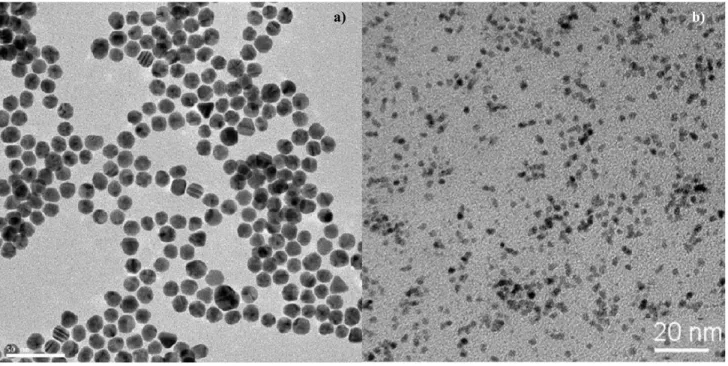
The citrate reduction of gold precursor in water provides a simple method to obtain quite monodisperse nanoparticles in a wide range of sizes by solely varying the ratio between HAuCl4 and sodium citrate [23]. The colloids synthesized for
this study have a mean diameter of 13 nm, with a standard deviation of 8%, as can be envisaged in Figure 1a. As far as Platinum is concerned, although the synthesis with thiols seems to be the most widely adopted to produce Pt NPs of a good morphological quality and stability, in the present study an alternative synthetic route is presented, which adopts PVP as stabilizing agent instead of thiols. This decision was made because PVP is highly soluble in sol-gel suitable
solvents, i.e. alcohols, granting immediate dispersion of Pt in these solvents, and because sulfur may poison Pt, as it is known for Pt-based industrial catalysts, thus reducing its reactivity toward gases.
Because Pt NPs SPR frequencies are in the deep UV region [24], a direct monitor of the SPR band was not possible in this case and it had to be done indirectly by observing the consumption of Pt ions in solution, which on the contrary exhibit strong optical signal arising from solvated PtCl62- ions [16]. The reduction of Pt4+ by LiBEt3H was confirmed by
the complete disappearance of such band [25]. A brief study was carried out to isolate the proper amount of PVP needed to avoid particle aggregation and to narrow the size distribution, giving the ratio gPVP:molPt = 500 as the best result. A TEM image of the Pt NPs used for this study is reported in Figure 1b.
Figure 1. Bright field TEM images of a) Au NPs (the scale bar is 50 nm); b) Pt NPs (the scale bar is 20 nm).
Regarding TiO2 synthesis, acetic acid was used as the complexing agent because acetate groups can replace isopropoxy
groups, thus creating a soluble species with much lower reactivity than the starting Ti-isopropoxide [26] according to:
Ti-OiPr + HOAc ↔ iPrOH + Ti-OAc (1)
showing that the liberated isopropoxy groups enter solution as iso-propanol. This reaction is rapid and quite exothermic in nature. Eventually, some type of trans-esterification reaction is likely to occur . In this case, titanium bonded isopropyl and acetate ligands can participate in a condensation reaction, also yielding isopropyl acetate as a byproduct:
Ti-OiPr + Ti-OAc ↔ iPrOAc + Ti-O-Ti (2)
Through this path a direct condensation of TiO2 is thus observed, but related reactions can occur between free acetic acid
and bound isopropyl groups or free alcohol and bound acetate:
Ti-OiPr + HOAc ↔ iPrOAc + Ti-OH (3)
Ti-OiPr + iPrOH ↔ iPrOAc + Ti-OH (4)
These related reactions yield highly reactive Ti-OH groups that will rapidly condense to form Ti-O-Ti bridges.
The two step synthesis was adopted to promote complete condensation of Ti-O-Ti groups: the first step induces substitution of propoxy groups with acetate terminations according to reaction (1), which is naturally followed by condensation of Ti-O-Ti through reaction (2), and the second step consists in a post addition of IPA to further promote Ti-O-Ti formation due to reactive Ti-OH groups produced in reaction (4).
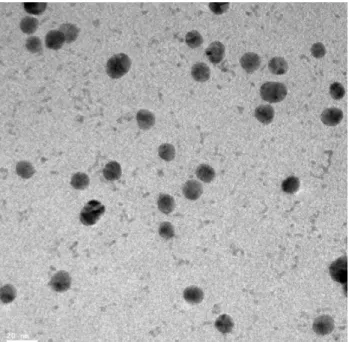
Noble metals nanoparticles are added just before deposition, so the chemistry of the sol-gel solution is not largely affected. TEM characterization has been useful to directly evaluate the NPs homogeneous distribution inside the hosting TiO2 film. A TiO2-Au-Pt film has been directly deposited on the back of a carbon coated TEM grid and annealed up to
200°C; then the grid was imaged by TEM and the results are presented in figure 2. Both Au and Pt NPs are clearly visible in the image, the NPs distribution inside the matrix appears to be homogeneous and both particles dimensions and shape are retained from the starting NPs solution. It is therefore clear that TEM confirms that NPs of the two metal
a) b)
species have been successfully embedded inside a common matrix, with absence of NPs aggregation or segregation of Au rich areas from mostly Pt populated ones. All the NPs of both species appear to be equally, homogeneously and statistically distributed inside the host matrix.
Figure 2. Bright field TEM image of TiO2-Au-Pt film annealed at 200°C. The scale bar is 20 nm.
The evolution of the optical properties of the nanocomposite film has been monitored through UV-visible absorption measurements. Figure 3 reports absorption spectra measured for undoped TiO2, TiO2-Pt and TiO2-Au films.
Absorbance spectra of undoped and Pt-doped films are mainly featureless in the visible region, while absorbance spectra of TiO2 films containing Au NPs present a clear optical feature due to the SPR band of embedded Au. The spectra depict
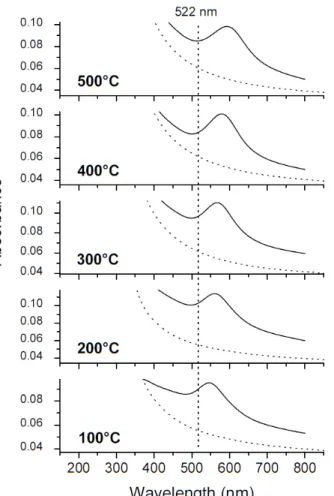
the progressive evolution of the SPR band according to an increase of the annealing temperature. A steady red-shift of its maximum together with an increase in its intensity are clearly evidenced. The dotted vertical line refers to the position of the SPR maximum recorded for Au NPs as synthesized in aqueous media (522 nm). The progressive evolution of the TiO2 structure at increasing annealing temperatures leads to an increase of its refractive index, which in turns provokes a
shift in the plasmonic frequencies of the surface conduction electrons of embedded Au NPs.
Figure 3. Absorbance spectra of a) TiO2; b) TiO2-Pt and c) TiO2-Au samples annealed the different temperatures
(a=100°C, b=200°C, c= 300°C, d=400°C, e=500°C).
All spectra show a definite band-gap in the UV range in the 360-370 nm region, corresponding to a bandgap value of 3.3-3.4 eV (in agreement with values reported elsewhere [27] for nanocrystalline TiO2 films). It is possible to recognize
a weak increase of such band-gap with increasing annealing temperature, to be related to the thermal evolution of the TiO2 structure.
a) b) c)
Figure 4. Absorbance spectra of TiO2-Au-Pt samples series (straight lines). Undoped TiO2 spectra as dotted lines
are also reported
Figure 4 refers to absorbance spectra of TiO2 films containing both Au and Pt NPs. As in the previous case, the optical
absorbance spectra of TiO2 containing both metallic NPs are dominated by the strong absorption band Au NPs and again
the SPR band red-shifts according to an increase in annealing temperature. If the SPR band maximum position measured for all the films is plotted versus the annealing temperature, it is possible to directly evaluate the combined effect of annealing process and of film composition on the overall optical properties of films. Figure 5a shows that the evolution of the SPR band maximum is perfectly linear with the increasing annealing temperatures of films in all cases. There is indeed a clear blue-shift of SPR band maximum position registered in films containing both Au and Pt NPs if compared to films containing only Au NPs. A constant gap is observed if band positions of Pt and non Pt containing films are compared at the same annealing temperature. It could be possible to conclude that the presence of Pt decreases the refractive index of the Au NPs hosting media increasing the overall film porosity due to introduction of extra PVP compared to films containing only Au NPs. In fact, knowing that the refractive index of Pt in the 480-680 nm spectral region is in the 1.91-2.5 range [28], it seems unreasonable to propose that Pt lowers the overall refractive index.
The refractive index of the Au NPs surrounding matrix has been estimated from the SPR band position by means of the Mie theory [29] and compared to the refractive indexes measured through ellipsometry. A comparative plot of the obtained values as a function of the annealing temperature of the films is presented in Figure 5b.
Calculated refractive indexes from SPR data are slightly lower if compared to those measured with the ellipsometer. This can be related to the fact that values calculated using SPR parameters refer to the dielectric nature of the immediate surrounding of the Au NPs, while those measured with ellipsometry are related to an average value mediated on the whole TiO2-NPs system. Furthermore, both measured and calculated refractive indexes of TiO2-Au are substantially
higher than those of TiO2-Au-Pt films, in all cases. This indicates that not only the immediate surroundings of Au NPs
are characterized by lower refractive index when Pt NPs are present, as previously commented, but that the whole matrix with embedded NPs presents a lower refractive index when Pt NPs are present, as ellipsometry measurements refer to
values mediated on the whole material. This in turn enforces the hypothesis that extra PVP introduced with Pt NPs leads to formation of a more developed film porosity.
Figure 5 a) SPR wavelength position versus annealing temperature for TiO2-Au and TiO2-Au-Pt. b) Values of
refractive indexes measured with the ellipsometer compared to those evaluated using the SPR band position from absorbance spectra for the two series of samples.
TiO2 layers containing Au-PVP and Pt-PVP NPs annealed at 400°C have been chosen to perform preliminary gas
sensing tests with CO and H2 as described in the experimental section. The sensing response has been weak, but
substantial if considered that the layers used had a thickness of 28 nm. Figure 6a reports the calculated Transmittance Change Ratio (TCR=(Tgas-Tair)/Tair) values for a TiO2-Au thin layer containing only Au-PVP NPs annealed at 400°C.
The transmittance variation is small in the low wavelength range, while it is more evident in the 550 - 650 nm SPR band region. The perturbation is similar after exposure to both gases, and in each case it is confined especially in the SPR region. When only Pt NPs are present in the film, the TCR trend is that of figure 6b. No perturbation is here obviously noticed in the 550 – 650 nm range, as no Au NPs are here present and Pt is known to have plasmonic resonance frequencies in the UV region [24]. No apparent features are noticeable in this plot. Figure 6c reports as a final comparison the TCR values calculated exposing a thin TiO2 film containing both Au-PVP and Pt-PVP NPs to 1000 ppm
of CO and H2. Effect of Pt could be observed in the higher TCR values observed in the 350-550 nm range, a region in
which sensitivity toward CO detection appears higher. Being the calculated values in such small range (optical transmittance variation in the -0.1 - 0.3% range) it would be premature to define an actual optical sensing effect of the Pt NPs.
a)
b)
Figure 6. Transmittance Change Ratio (TCR= TCR=(Tgas-Tair)/Tair) plots for TiO2-Au, b) TiO2-Pt, c) TiO2-Au-Pt
samples annealed at 400°C exposed to 1000ppm CO and H2 at 300°C operative temperature.
As far as the Au SPR spectral region, Pt NPs do not seem to give any improvement on the actual response, but again since the sample thickness so small , a definite assumption cannot be made. Sensor function tests performed on thicker samples would definitely give a more recognizable trend of values.
4. CONCLUSIONS
Au and Pt nanoparticles have been synthesized with colloidal techniques and used to dope TiO2 sol-gel solutions. Thin
films of pure TiO2 and TiO2 doped with Au and/or Pt have been prepared, and a study on the influence of annealing
temperature and dopant presence on the optical and structural properties of the films has been presented. Both noble metals colloids are stable in the sol-gel solution environment, and no aggregation or segregation phenomena can be envisaged during deposition and annealing processes. Preliminary results on gas sensing tests are presented as one of the possible applications, which lie in other several fields of science and technology.
AKNOWLEDGMENTS
This work has been supported trough the Progetto Strategico PLATFORMS (PLAsmonic nano-Textured materials and architectures FOR enhanced Molecular Sensing) of Padova University. This article is recorded as National Research Council of Canada; NRCC# 51993
REFERENCES
[1] Nosaka, Y., Norimatsu, K., Miyama, H., “The function of metals in metal-compounded semiconductor photocatalysts” Chem. Phys. Lett., 106, 128 (1984).
[2] Hoel, A., Reyes, L.F., Saukko, S., Heszler, P., Lantto, V., Granqvist, C.G., “Gas sensing with films of nanocrystalline WO3 and Pd made by advanced reactive gas deposition”, Sens. Actuators B, 105, 283-289 (2005)
[3] Qu, S., Song, Y., Du, C., Wang, Y., Gao, Y., Liu, S., Li, Y., Zhu, D., “Nonlinear optical properties in three novel nanocomposites with gold nanoparticles”, Optics Communications, 196, 317-323 (2001).
[4] Penza, M., Martucci, C., Cassano, G., “NOx gas sensing characteristics of WO3 thin films activated by noble metals (Pd, Pt, Au) layers” Sens Actuators B, 50, 52-59 (1998).
[5] Haider, P., Baiker, A., “Gold supported on Cu-Mg-Al mixed oxides: strong enhancement of activity in aerobic alcohol oxidation by concerted effect of copper and magnesium”, Journal of Catalysis, 248, 175-187 (2007).
[6] Walters, G., Parkins, I.P., “Aerosol assisted chemical vapour deposition of ZnO films on glass with noble metal and p-type dopants; use of dopants to influence preferred orientation” Appl. Surf. Sci., 255 6555-6560 (2009).
[7] Bharathi, S., Fishelson, N., Lev, O., “Direct Synthesis and Characterization of Gold and Other Noble Metal Nanodispersions in Sol-Gel-Derived Organically Modified Silicates”, Langmuir, 15, 1929-1937 (1999)
[8] Ando, M., Kobayashi, T., Haruta, M., “Combined effects of small gold particles on the optical gas sensing by transition metal oxide films”, Catalysis Today, 36, 135-141 (1997).
a) b) c)
[9] Mattei, G., Mazzoldi, P., Post M.L., Buso, D., Guglielmi, M., Martucci, A., “Cookie-like Au/NiO Nanoparticles with Optical Gas-Sensing Properties”, Advanced Materials, 19, 561-564 (2007).
[10] Dawson, A., Kamat, P.V., “Semiconductor-Metal Nanocomposites. Photoinduced Fusion and Photocatalysis of Gold-Capped TiO2 (TiO2/Gold) Nanoparticles”, J. Phys. Chem. B, 105, 960-966 (2001).
[11] Subramanian, V., Wolf, E.E., Kamat, P.V., “Catalysis with TiO2/Gold Nanocomposites. Effect of Metal Particle Size on the Fermi Level Equilibration”, J. Am. Chem. Soc., 126, 4943-4950 (2004).
[12] Jackson, J.B., Halas, N.J., “Surface-enhanced Raman scattering on tunable plasmonic nanoparticle substrates”, Proceedings of the National Academy of Science, 101(52), 17930-17935 (2004).
[13] Talley, C.E., Jackson, J.B., Oubre, C., Grady, N.K., Hollars, C.W., Lane, S.M., Huser, T.R., Nordlander, P., Halas, N.J., “Surface-Enhanced Raman Scattering from Individual Au Nanoparticles and Nanoparticle Dimer Substrates”, Nanoletters 5(8), 1569-1574 (2005).
[14] Zhao, M., Crooks, R.M., “Homogeneous Hydrogenation Catalysis with Monodisperse, Dendrimer-Encapsulated Pd and Pt Nanoparticles” Angewandte Chemie Int. Ed. 38(3), 364-366 (1999).
[15] Scott,R.W.J., Datye, A.K., Crooks, R.M., “Bimetallic Palladium−Platinum Dendrimer-Encapsulated Catalysts” Journal of the American Chemical Society, 125, 3708-3709 (2003).
[16] Einaga, H., Harada, M., “Photochemical Preparation of Poly(N-vinyl-2-pyrrolidone)-Stabilized Platinum Colloids and Their Deposition on Titanium Dioxide”, Langmuir, 21, 2578-2584 (2005).
[17] US Patent number 6,159,620 (2000).
[18] Herricks, T., Chen, J., Xia, Y., “Polyol Synthesis of Platinum nanoparticles: Control of morphology with sodium nitrate” Nanoletters, 4(12), 2367-2371 (2004).
[19] Hiramatsu, H., Osterloh, F.E., “A Simple Large-Scale Synthesis of Nearly Monodisperse Gold and Silver Nanoparticles with Adjustable Sizes and with Exchangeable Surfactants”, Chem. Mater., 16(13), 2509-2511 (2004). [20] Jana, N.R., Peng, X., “Single-Phase and Gram-Scale Routes toward Nearly Monodisperse Au and Other Noble Metal Nanocrystals”, J. Am. Chem. Soc., 125, 14280-14281 (2003).
[21] Enustun, B.V., Turkevich, J., “Coagulation of colloidal gold” J. Am. Chem. Soc., 85, 3317–3328 (1963).
[22] Martucci, A., Pasquale, M., Guglielmi, M., Post, M., Pivin, J.C., “Nanostructured Silicon Oxide–Nickel Oxide Sol– Gel Films with Enhanced Optical Carbon Monoxide Gas Sensitivity”, J. Am. Ceram. Soc., 86 (9), 1638 (2003).
[23] Kimling, J., Maier, M., Okenve, B., Kotaidis, V., Ballot, H., Plech, A., “Turkevich Method for Gold Nanoparticle Synthesis Revisited”, J. Phys. Chem. B, 110, 15700-15707 (2006).
[24] Creighton, J.A., Eadon, D.G., “Ultraviolet–visible absorption spectra of the colloidal metallic elements” Journal of the Chemical Society Faraday Transactions, 87(24), 3881-3891 (1991).
[25] Lin, C.S., Khan, M.R., Lin, S.D., “The preparation of Pt nanoparticles by methanol and citrate” Journal of Colloid and Interface Science, 299, 678-685 (2006).
[26] Pule, P.P., Khairulla, F., “Better Ceramics Through Chemistry IV”, ed. Zelinski, B.J.J., Brinker, C.J., Clark, D.E., Ulrich, D.R., MRS Symp. Proc. 180, 527-532 (1990).
[27] Radecka, M., Akrzewska, K.Z., Czternastek, H., Stapinski, T., Debrus, S., “The influence of thermal annealing on the structural, electrical and optical properties of TiO(2-x) thin films”, Applied Surface Science, 65/66, 227 (1993). [28] Lide, D.R., “Handbook of Chemistry and Physics”, CRC press, 72nd Edition, 12-108 (1991).
[29] Bohren, C.F., Huffman, D.R., “Absorption and Scattering of Light by Small Particles”, Wiley, New York (1998).