Publisher’s version / Version de l'éditeur:
Vous avez des questions? Nous pouvons vous aider. Pour communiquer directement avec un auteur, consultez la
première page de la revue dans laquelle son article a été publié afin de trouver ses coordonnées. Si vous n’arrivez pas à les repérer, communiquez avec nous à [email protected].
Questions? Contact the NRC Publications Archive team at
[email protected]. If you wish to email the authors directly, please see the first page of the publication for their contact information.
https://publications-cnrc.canada.ca/fra/droits
L’accès à ce site Web et l’utilisation de son contenu sont assujettis aux conditions présentées dans le site LISEZ CES CONDITIONS ATTENTIVEMENT AVANT D’UTILISER CE SITE WEB.
Research Report (National Research Council of Canada. Institute for Research in
Construction), 2010-03-01
READ THESE TERMS AND CONDITIONS CAREFULLY BEFORE USING THIS WEBSITE. https://nrc-publications.canada.ca/eng/copyright
NRC Publications Archive Record / Notice des Archives des publications du CNRC : https://nrc-publications.canada.ca/eng/view/object/?id=c9b87112-59c0-4bdc-80fe-29ca6db7a2db https://publications-cnrc.canada.ca/fra/voir/objet/?id=c9b87112-59c0-4bdc-80fe-29ca6db7a2db
NRC Publications Archive
Archives des publications du CNRC
For the publisher’s version, please access the DOI link below./ Pour consulter la version de l’éditeur, utilisez le lien DOI ci-dessous.
https://doi.org/10.4224/20374281
Access and use of this website and the material on it are subject to the Terms and Conditions set forth at
Guidelines for Effective Residential Solar Shading Devices
Canadian Centre
Centre canadien des
for Housing Technology
technologies résidentielles
Guidelines for Effective Residential Solar Shading Devices
Laouadi, A.
IRC-RR-300
A version of this document is published in / Une version de ce document se trouve dans:
Research Report, NRC Institute for Research in Construction, 300, pp. 117, March-01-10
The Canadian Centre for Housing Technology (CCHT)
Built in 1998, the Canadian Centre for Housing Technology (CCHT) is jointly operated by the National Research Council, Natural Resources Canada, and Canada Mortgage and Housing Corporation. CCHT's mission is to accelerate the development of new technologies and their acceptance in the marketplace.
The Canadian Centre for Housing Technology features twin research houses to evaluate the whole-house performance of new technologies in side-by-side testing. The twin houses offer an intensively monitored real-world environment with simulated occupancy to assess the performance of the residential energy technologies in secure premises. This facility was designed to provide a stepping-stone for manufacturers and developers to test innovative technologies prior to full field trials in occupied houses.
As well, CCHT has an information centre, the InfoCentre, which features a showroom, high-tech meeting room, and the CMHC award winning FlexHouse™ design, shown at CCHT as a demo home. The InfoCentre also features functioning state-of-the art equipment, and demo solar photovoltaic panels. There are over 50 meetings and tours at CCHT annually, with presentations and visits occurring with national and international visitors on a regular basis.
GUIDELINES FOR EFFECTIVE
RESIDENTIAL SOLAR SHADING DEVICES
A. Laouadi
Indoor Environment Research Program Institute for Research in Construction National Research Council Canada 1200 Montreal Road, Ottawa, Ontario, K1A 0R6, Canada
TABLE OF CONTENTS
LIST OF RELATED PUBLICATIONS ... 11
JOURNAL AND CONFERENCE PAPERS ... 11
TRADE MAGAZINES ... 11
EXECUTIVE SUMMARY ... 12
SOMMAIRE ... 15
INTRODUCTION ... 19
OBJECTIVES ... 20
PERFORMANCE METRICS OF WINDOW AND SHADING SYSTEMS ... 20
LIGHT DIFFUSION INDEX (HAZE) ... 20
VISIBLE TRANSMITTANCE (TVIS) ... 21
ULTRA-VIOLET TRANSMITTANCE (TUV) ... 21
FADING TRANSMITTANCE (TFD)... 21
SKIN DAMAGE TRANSMITTANCE (TSD) ... 21
SOLAR HEAT GAIN COEFFICIENT (SHGC) ... 21
THERMAL TRANSMITTANCE OF GLAZING ASSEMBLY (U-FACTOR) ... 21
THERMAL TRANSMITTANCE OF EDGE-OF-GLAZING (U-FACTOR -EDGE) ... 22
LUMINANCE INDEX (LI) ... 22
VIEW-OUT INDEX (VOI) ... 22
MOISTURE CONDENSATION INDICATOR ... 22
PERFORMANCE DATA OF WINDOW AND SHADING SYSTEMS ... 23
UN-SHADED WINDOWS ... 24
WINDOWS WITH TYPICAL INTERIOR BLINDS ... 26
WINDOWS WITH INTERIOR REFLECTIVE BLINDS ... 29
WINDOWS WITH INTERIOR REFLECTIVE SCREEN SHADINGS ... 30
WINDOWS WITH BETWEEN-PANE REFLECTIVE BLINDS ... 33
WINDOWS WITH EXTERIOR ROLLSHUTTERS ... 36
WINDOWS WITH EXTERIOR SCREEN SHADINGS ... 38
ANNUAL HEATING AND COOLING ENERGY USE AND COST ... 41
UN-SHADED WINDOWS ... 42
Results for Ottawa ... 42
Results for Montreal ... 44
Results for Winnipeg ... 45
Results for Halifax ... 47
WINDOWS WITH TYPICAL INTERIOR BLINDS ... 49
Results for Ottawa ... 49
Results for Montreal ... 51
Results for Winnipeg ... 52
WINDOWS WITH INTERIOR REFLECTIVE BLINDS ... 55
Results for Ottawa ... 55
Results for Montreal ... 57
Results for Winnipeg ... 58
Results for Halifax ... 60
WINDOWS WITH INTERIOR REFLECTIVE SCREENS ... 61
Results for Ottawa ... 61
Results for Montreal ... 63
Results for Winnipeg ... 64
Results for Halifax ... 66
WINDOWS WITH BETWEEN-PANE REFLECTIVE BLINDS ... 67
Results for Ottawa ... 67
Results for Montreal ... 69
Results for Winnipeg ... 70
Results for Halifax ... 72
WINDOWS WITH EXTERIOR ROLLSHUTTERS ... 73
Results for Ottawa ... 73
Results for Montreal ... 75
Results for Winnipeg ... 77
Results for Halifax ... 78
WINDOWS WITH EXTERIOR SCREENS ... 80
Results for Ottawa ... 80
Results for Montreal ... 81
Results for Winnipeg ... 83
Results for Halifax ... 84
PEAK COOLING POWER DEMAND ... 86
ON-PEAK COOLING POWER DEMAND ... 86
AIR-CONDITIONER PEAK POWER ... 88
Results For Ottawa ... 88
Results For Montreal ... 89
Results For Winnipeg ... 90
Results For Halifax ... 91
PAYBACK RETURN PERIODS ... 92
CONCLUSIONS ... 94
REFERENCES ... 99
ACKNOWLEDGMENT ... 101
APPENDIX A: METHODOLOGY FOR BUILDING-ENERGY COMPUTER SIMULATION ... 102
ESP-R COMPUTER PROGRAM ... 102
SKYVISION COMPUTER PROGRAM ... 102
HOUSE GEOMETRY MODEL ... 102
HOUSE CONSTRUCTION ... 103
WINDOW TYPES ... 106
OPERATIONAL SCHEDULE OF SHADING DEVICES ... 108
HOUSE INTERIOR HEAT GAINS ... 110
HEATING AND COOLING EQUIPMENT ... 111
CLIMATES AND REGIONS ... 112
EXPERIMENTAL VALIDATION OF THE SIMULATION MODEL ... 112
LIST OF FIGURES
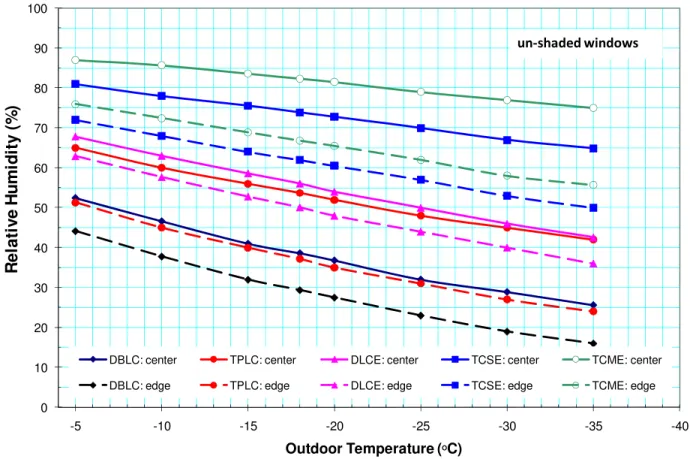
Figure 1 Moisture condensation on the interior surfaces of un-shaded windows at an indoor
temperature of 21oC. ... 26
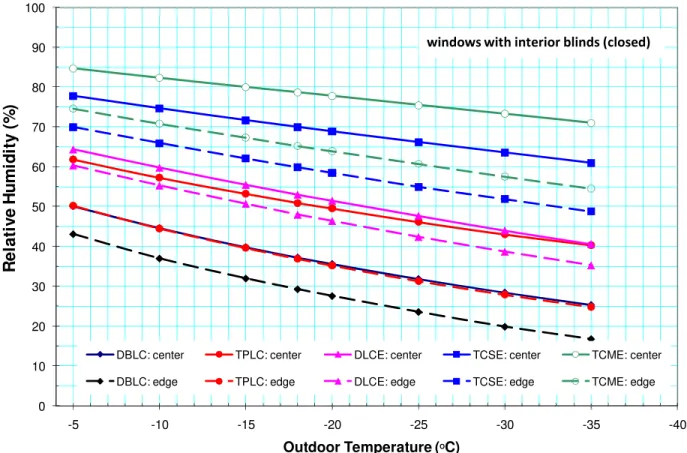
Figure 2 Moisture condensation on the interior surfaces of windows with interior typical blinds in an open position when the indoor temperature is set at 21oC. ... 28
Figure 3 Moisture condensation on the interior surfaces of windows with interior typical blinds in a closed position when the indoor temperature is set at 21oC. ... 29
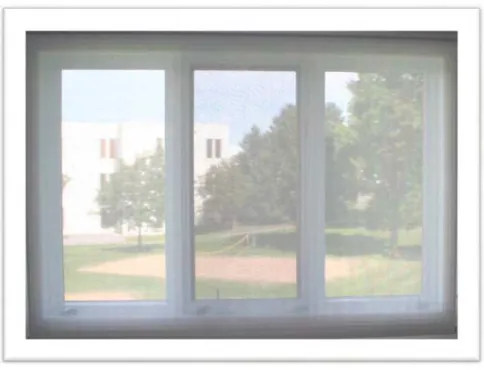
Figure 4 View-out through a double clear low-e window (DLCE) with an interior reflective roller screen shade. ... 31
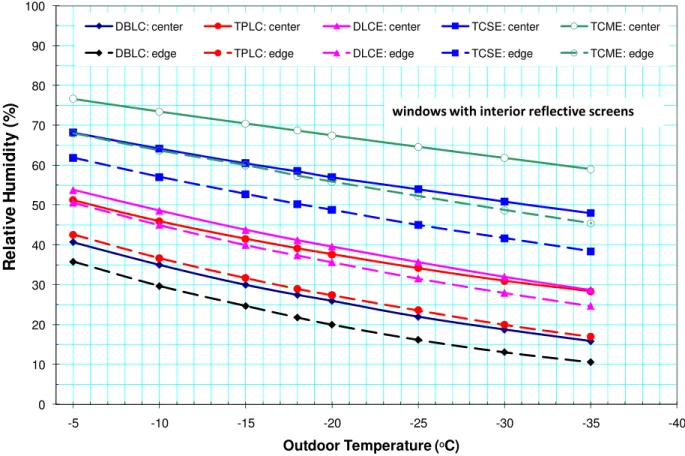
Figure 5 Condensation on the interior surfaces of windows with interior screen shadings. ... 33
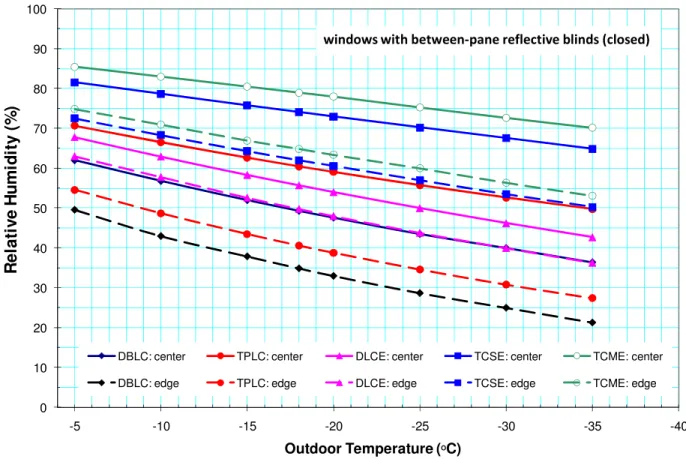
Figure 6 Moisture condensation on the interior surfaces of windows with between-pane metallic blinds in an open position when the indoor temperature is set at 21oC. ... 35
Figure 7 Moisture condensation on the interior surfaces of windows with between-pane metallic blinds in a closed position when the indoor temperature is set at 21oC. ... 36
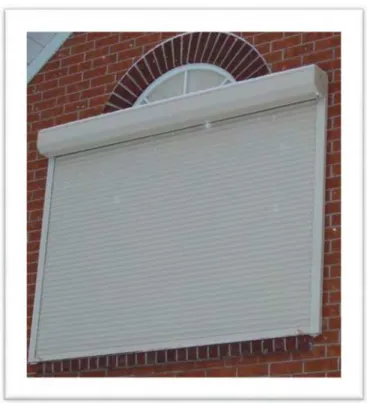
Figure 8 Exterior rollshutter in a closed position. ... 37
Figure 9 Moisture condensation on the interior surfaces of windows with exterior rollshutters when the indoor temperature is set at 21oC. ... 38
Figure 10 Exterior screen shadings in a closed position. ... 40
Figure 11 Moisture condensation on the interior surfaces of windows with exterior screen shadings when the indoor temperature is set at 21oC. ... 40
Figure 12 Annual heating and cooling energy use of old and R-2000 house models with un-shaded windows (Ottawa, ON). ... 43
Figure 13 Annual total and heating energy cost of old and R-2000 house models with un-shaded windows (Ottawa, ON). ... 43
Figure 14 Annual heating and cooling energy use of old and R-2000 house models with un-shaded windows (Montreal, QC). ... 44
Figure 15 Annual total and heating energy cost of old and R-2000 house models with un-shaded windows (Montreal, QC). ... 45
Figure 16 Annual heating and cooling energy use of old and R-2000 house models with un-shaded windows (Winnipeg, MB). ... 46
Figure 17 Annual total and heating energy cost of old and R-2000 house models with un-shaded
windows (Winnipeg, MB). ... 47
Figure 18 Annual heating and cooling energy use of old and R-2000 house models with un-shaded windows (Halifax, NS). ... 48
Figure 19 Annual total and heating energy cost of old and R-2000 house models with un-shaded
Figure 20 Annual heating and cooling energy use of old and R-2000 house models with typical interior window blinds (Ottawa, ON). ... 50
Figure 21 Annual total and heating energy cost of old and R-2000 house models with typical interior window blinds (Ottawa, ON). ... 50
Figure 22 Annual heating and cooling energy use of old and R-2000 house models with typical interior window blinds (Montreal, QC). ... 51
Figure 23 Annual total and heating energy cost of old and R-2000 house models with typical interior window blinds (Montreal, QC). ... 52
Figure 24 Annual heating and cooling energy use of old and R-2000 house models with typical interior window blinds (Winnipeg, MB). ... 53
Figure 25 Annual total and heating energy cost of old and R-2000 house models with typical interior window blinds (Winnipeg, MB). ... 53
Figure 26 Annual heating and cooling energy use of old and R-2000 house models with typical interior window blinds (Halifax, NS). ... 54
Figure 27 Annual total and heating energy cost of old and R-2000 house models with typical interior window blinds (Halifax, NS). ... 55
Figure 28 Annual heating and cooling energy use of old and R-2000 house models with interior reflective window blinds (Ottawa, ON). ... 56
Figure 29 Annual total and heating energy cost of old and R-2000 house models with interior reflective window blinds (Ottawa, ON). ... 56
Figure 30 Annual heating and cooling energy use of old and R-2000 house models with interior reflective window blinds (Montreal, QC). ... 57
Figure 31 Annual total and heating energy cost of old and R-2000 house models with interior reflective window blinds (Montreal, QC). ... 58
Figure 32 Annual heating and cooling energy use of old and R-2000 house models with interior reflective window blinds (Winnipeg, MB). ... 59
Figure 33 Annual total and heating energy cost of old and R-2000 house models with interior reflective window blinds (Winnipeg, MB). ... 59
Figure 34 Annual heating and cooling energy use of old and R-2000 house models with interior reflective window blinds (Halifax, NS). ... 60
Figure 35 Annual total and heating energy cost of old and R-2000 house models with interior reflective window blinds (Halifax, NS). ... 61
Figure 36 Annual heating and cooling energy use of old and R-2000 house models with interior reflective window screens (Ottawa, ON). ... 62
Figure 37 Annual total and heating energy cost of old and R-2000 house models with interior reflective window screens (Ottawa, ON). ... 62
Figure 38 Annual heating and cooling energy use of old and R-2000 house models with interior reflective window screens (Montreal, QC). ... 63
Figure 39 Annual total and heating energy cost of old and R-2000 house models with interior reflective window screens (Montreal, QC). ... 64
Figure 40 Annual heating and cooling energy use of old and R-2000 house models with interior reflective window screens (Winnipeg, MB). ... 65
Figure 41 Annual total and heating energy cost of old and R-2000 house models with interior reflective window screens (Winnipeg, MB). ... 65
Figure 42 Annual heating and cooling energy use of old and R-2000 house models with interior reflective window screens (Halifax, NS). ... 66
Figure 43 Annual total and heating energy cost of old and R-2000 house models with interior reflective window screens (Halifax, NS). ... 67
Figure 44 Annual heating and cooling energy use of old and R-2000 house models with between-pane reflective window blinds (Ottawa, ON). ... 68
Figure 45 Annual total and heating energy cost of old and R-2000 house models with between-pane reflective window blinds (Ottawa, ON). ... 68
Figure 46 Annual heating and cooling energy use of old and R-2000 house models with between-pane reflective window blinds (Montreal, QC). ... 69
Figure 47 Annual total and heating energy cost of old and R-2000 house models with between-pane reflective window blinds (Montreal, QC). ... 70
Figure 48 Annual heating and cooling energy use of old and R-2000 house models with between-pane reflective window blinds (Winnipeg, MB). ... 71
Figure 49 Annual total and heating energy cost of old and R-2000 house models with between-pane reflective window blinds (Winnipeg, MB). ... 71
Figure 50 Annual heating and cooling energy use of old and R-2000 house models with between-pane reflective window blinds (Halifax, NS). ... 72
Figure 51 Annual total and heating energy cost of old and R-2000 house models with between-pane reflective window blinds (Halifax, NS). ... 73
Figure 52 Annual heating and cooling energy use of old and R-2000 house models with exterior window rollshutters (Ottawa, ON). ... 74
Figure 53 Annual total and heating energy cost of old and R-2000 house models with exterior window rollshutters (Ottawa, ON). ... 75
Figure 54 Annual heating and cooling energy use of old and R-2000 house models with exterior window rollshutters (Montreal, QC). ... 76
Figure 55 Annual total and heating energy cost of old and R-2000 house models with exterior window rollshutters (Montreal, QC). ... 76
Figure 56 Annual heating and cooling energy use of old and R-2000 house models with exterior window rollshutters (Winnipeg, MB). ... 77
Figure 57 Annual total and heating energy cost of old and R-2000 house models with exterior window rollshutters (Winnipeg, MB). ... 78
Figure 58 Annual heating and cooling energy use of old and R-2000 house models with exterior window rollshutters (Halifax, NS). ... 79
Figure 59 Annual total and heating energy cost of old and R-2000 house models with exterior window rollshutters (Halifax, NS). ... 79
Figure 60 Annual heating and cooling energy use of old and R-2000 house models with exterior window screens (Ottawa, ON). ... 80
Figure 61 Annual total and heating energy cost of old and R-2000 house models with exterior window screens (Ottawa, ON). ... 81
Figure 62 Annual heating and cooling energy use of old and R-2000 house models with exterior window screens (Montreal, QC). ... 82
Figure 63 Annual total and heating energy cost of old and R-2000 house models with exterior window screens (Montreal, QC). ... 82
Figure 64 Annual heating and cooling energy use of old and R-2000 house models with exterior window screens (Winnipeg, MB). ... 83
Figure 65 Annual total and heating energy cost of old and R-2000 house models with exterior window screens (Winnipeg, MB). ... 84
Figure 66 Annual heating and cooling energy use of old and R-2000 house models with exterior window screens (Halifax, NS). ... 85
Figure 67 Annual total and heating energy cost of old and R-2000 house models with exterior window screens (Halifax, NS). ... 85
Figure 68 Peak cooling power demand during two sunny and hot summer days for old houses with conventional double clear windows in Ottawa (based on a 15-minute time step). ... 87
Figure 69 Peak cooling power demand during two sunny and hot summer days for R-2000 houses with double clear low-e windows in Ottawa (based on a 15-minute time step). ... 88
Figure 70 Effect of the shading devices on the peak power demand of an air-conditioner for an old versus an R-2000 house model (Ottawa, ON). ... 89
Figure 71 Effect of the shading devices on the peak power demand of an air-conditioner for an old versus an R-2000 house model (Montreal, QC). ... 90
Figure 72 Effect of the shading devices on the peak power demand of an air-conditioner for an old and versus an R-2000 house model (Winnipeg, MB). ... 91
Figure 73 Effect of the shading devices on the peak power demand of an air-conditioner for an old versus an R-2000 house model (Halifax, NS). ... 92
Figure 74 The CCHT house geometry model as simulated. Note that the window frames were treated as separate surfaces. The house is oriented north-south. ... 103
Figure 75 Hourly averaged measured and simulated heating energy demands of the CCHT house with interior blinds in an open position (slats horizontal day and night). ... 114
Figure 76 Hourly averaged measured and simulated ground floor temperatures of the CCHT house with interior blinds in an open position during a cold, sunny winter day. ... 114
LIST OF TABLES
Table 1 Performance metrics of un-shaded windows (for the combined centre and edge of glass sections). ... 25
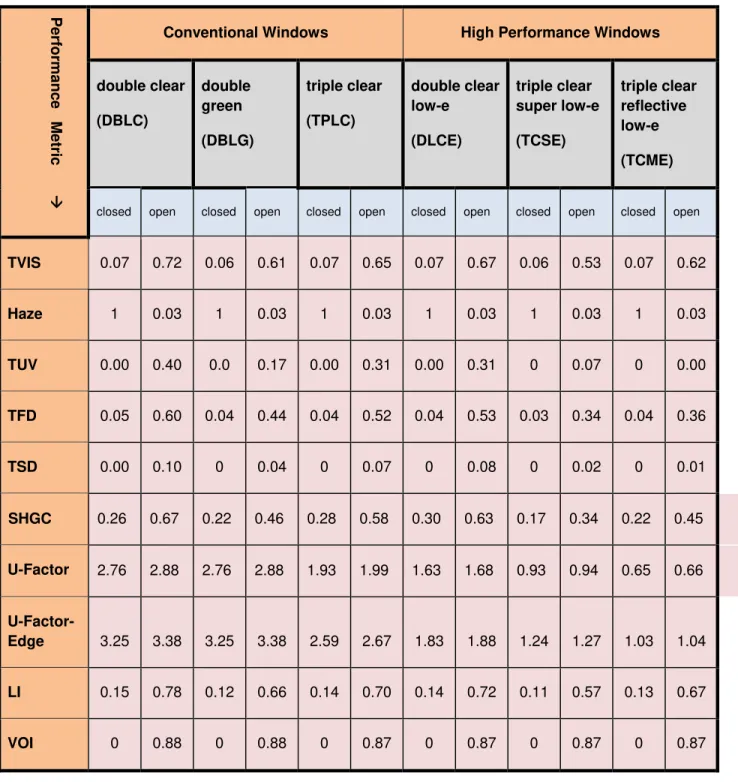
Table 2 Performance metrics of windows with interior typical blinds (for the combined centre and edge of glass sections). ... 27
Table 3 Performance metrics of windows with interior reflective metallic blinds (for the combined centre and edge of glass sections). ... 30
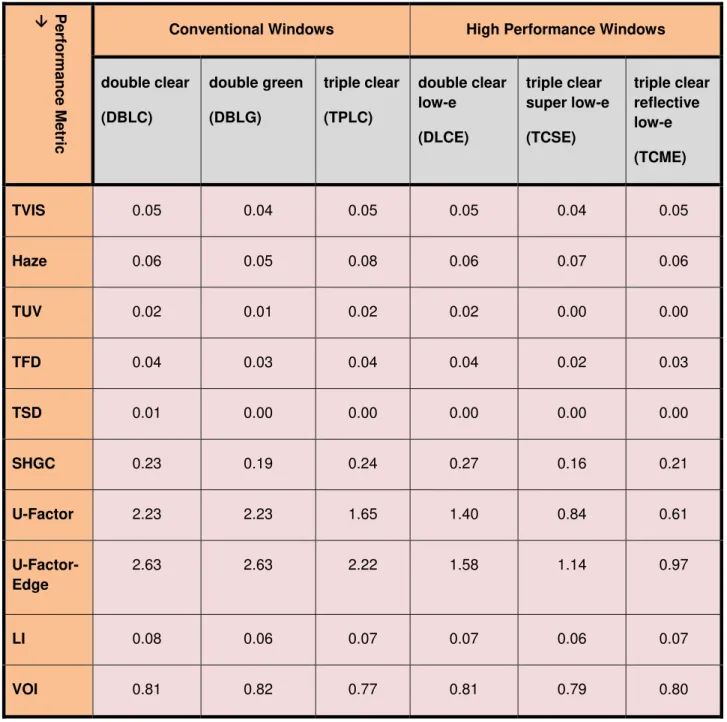
Table 4 Performance metrics of windows with interior reflective screen shadings (for the combined centre and edge of glass sections). ... 32
Table 5 Performance metrics of windows with between-pane reflective metallic blinds (for the
combined centre and edge of glass sections). ... 34
Table 6 Performance metrics of windows with exterior rollshutters (for the combined centre and edge of glass sections). ... 37
Table 7 Performance metrics of windows with exterior screen shadings (for the combined centre and edge of glass sections). ... 39
Table 8 Types and cost of fuels used for house heating and cooling. Data for heating fuel were taken from StatsCan (2008) and data for electricity cost were taken from Hydro Quebec (2008). .... 41
Table 9 Cost of shading devices to fit the house windows. ... 93
Table 10 Simple payback return periods (in years) of the studied shading devices for old houses with double clear windows, and R-2000 houses with double clear low-e windows. ... 94
Table 11 Annual total energy cost savings of shading devices for old houses with conventional double clear windows and R-2000 houses with double clear low-e windows in Ottawa, Ontario. ... 97
Table 12 Annual total energy cost savings of shading devices for old houses with conventional double clear windows and R-2000 houses with double clear low-e windows in Montreal, Quebec. .... 97
Table 13 Annual total energy cost savings of shading devices for old houses with conventional double clear windows and R-2000 houses with double clear low-e windows in Winnipeg, Manitoba. 98
Table 14 Annual total energy cost savings of shading devices for old houses with conventional double clear windows and R-2000 houses with double clear low-e windows in Halifax, Nova Scotia. 98
Table 15 Construction material details of current houses built according to the R-2000 standard. ... 104
Table 16 Construction material details for old houses built in 1980 in Ottawa, Ontario. ... 105
Table 17 Regional insulation R-values and air leakage characteristics of old house constructions built in 1980 (data taken from the 2006 database of NRCan’s Office of Energy Efficiency). ... 106
Table 18 Details of the simulated window types. Note that the performance metrics are calculated for a standard size window (0.6 m wide x 1.5 m tall). ... 107
Table 19 Detailed descriptions of the simulated shading devices. ... 109
LIST OF RELATED PUBLICATIONS JOURNAL AND CONFERENCE PAPERS
Laouadi A. 2009. Thermal performance modeling of complex fenestration systems. Journal of
Building Performance Simulation, 2(3): pp.189 — 207.
Laouadi A. 2009. Thermal modeling of shading devices of windows. ASHRAE Transactions, pp. 803 - 814, 2009.
Galasiu A.D., Laouadi A., Armstrong M., Swinton M.C., Szadkowski F. 2009. Field summer performance of interior reflective screen shades for residential windows. 11th
IBPSA’s building simulation conference; Glasgow, Scotland; July 27-30, 2009; pp. 1642-1649.
Laouadi A., Galasiu A.D., Swinton M.C., Armstrong M., Szadkowski F. 2009. Field performance of exterior solar shadings for residential windows: Summer results. 12th Canadian Conference on
Building Science and Technology; Montréal, Quebec, May 2009; pp. 197-210.
Laouadi A., Galasiu A.D., Swinton M.C., Manning M.M., Marchand R.G., Arsenault C.D.,
Szadkowski F. 2008. Field performance of exterior solar shadings for residential windows: Winter results.
IBPSA-Canada eSim Conference (Quebec City, May 20, 2008); pp. 1-8.
TRADE MAGAZINES
Laouadi A., Galasiu A.D. July 2009. Solar shading devices save energy in houses. Home Builder
Magazine 2(3), pp. 1-3. URL: http://www.nrc-cnrc.gc.ca/obj/irc/doc/pubs/nrcc51405.pdf
Laouadi A., Galasiu A.D. June 2009. Effective solar shading devices for residential windows save energy and improve thermal conditions. Lighting Design and Application (LD+A), June 2009, pp. 18-22.
Laouadi A., Galasiu A.D. Spring/Summer 2009. Exterior residential rollshutters reduce summer energy demand by 26 percent. The Innovator, 2(1); pp. 4.
Laouadi A., Galasiu A.D. 2009. Des pare-soleil pour réduire l’énergie de refroidissement de votre maison. Solplan Review, 144. pp. 18-19.
Laouadi A., Galasiu A.D. 2009. Window shadings reduce residential cooling energy. Solplan
Review; 144. pp. 18-19.
Laouadi A. December 2007. Guidelines for effective solar shading of residential windows to be developed. Construction Innovation; 12(4). pp. 9. URL:
http://irc.nrc-cnrc.gc.ca/pubs/ci/v12no4/v12no4_13_e.html
Laouadi A. Décembre 2007. De nouvelles lignes directrices pour les dispositifs pare-soleil des fenêtres résidentielles. Innovation en construction, 12(4): pp. 9. URL:
EXECUTIVE SUMMARY
This study presents guidelines for the effective use of solar shading devices installed on residential windows under typical Canadian cold climates. The study addresses: thermal peak loads and energy use of old, current and future low or net-zero energy Canadian houses; energy costs and payback periods; thermal and visual comfort conditions near windows; potential risk of moisture condensation on the interior surfaces of windows; and excessive thermal stresses of window glass panes.
Statistics published by Natural Resources Canada estimate that the energy use for heating and cooling accounts for about 63% of the total energy use of the average Canadian home (NRCan, 2006). Although the annual energy use for cooling is much lower than that for heating, many populated areas experience a peak electricity demand for air-conditioning on hot summer afternoons. Effective solar shading devices such as exterior shadings, highly-reflective between-pane or interior shadings are expected to reduce the heating and cooling energy use and the on-peak thermal loads, as well as to improve the thermal comfort conditions near windows. Exterior and between-pane shading devices are not common in Canada, but they may outperform the ubiquitous interior shading devices. There is little detailed information available on how different types of shading devices affect the residential energy use, peak cooling power demand, thermal and visual comfort of household occupants seated near windows, and the risk of moisture condensation on the interior surfaces of windows, when the shading devices are combined with conventional and high performance windows of old, current or future construction types of houses. Furthermore, the effect of the householders’ control of the shading devices and indoor climate on the house energy use is unknown.
The model house used in this study was a typical two-storey building with a basement space, oriented in the north-south direction (with extensive windows on the south and north facades, and minimum windows on the east and west facades). The R-2000 construction standard was used for the current and future house types. Various combinations of window and shading device types were considered. Window types included conventional windows for the old type of houses, and high performance windows for the current and future types of houses. Shading devices included: typical interior blinds (the most widely used type of shading devices in Canada); interior highly-reflective metallic blinds; interior highly-reflective closed-weave screen shades; between-pane highly-reflective metallic blinds; exterior insulating rollshutters; and exterior closed-weave screen shades. Four Canadian cities were selected to study the energy
performance of each selected window and shading device combination: Ottawa (Ontario), Montreal (Quebec), Winnipeg (Manitoba), and Halifax (Nova Scotia). The guidelines were developed using whole-building energy computer simulations with inputs from a survey on householders’ usage and control of shading devices (Veitch et al., 2009), and field energy performance data collected for the selected shading devices (Laouadi et al., 2008; Laouadi et al., 2009; Galasiu et al., 2009). The computer simulation model was successfully validated using experimental data from the field measurement.
These guidelines may assist homeowners and building developers in the selection of energy-efficient and cost-effective shading and window systems for renovations of old houses, or for building new low-energy houses. To this end, several performance metrics were developed, encompassing the performance of the shading and window system before and after its installation in houses, as well as its payback return period. Due to the various performance metrics, a proper selection of a shading and window system often requires a trade-off among the energy performance and the cost of the shading device, the visual and thermal comfort of the house occupants, and the aesthetic considerations. The following findings are highlighted:
As traditionally proclaimed, windows with high solar heat gains and low U-factors are the best candidates for all construction types of houses in cold climates, providing higher annual total energy savings. For both old and current construction types of houses, double green windows (glazing SHGC = 0.48; glazing U-Factor = 2.79 W/m2K) are not as suitable compared with double clear windows (despite their significant
potential to reduce the cooling energy by 22% to 33%, and summer peak cooling power demand by more than 11%) as they increase the house heating energy use and, hence, the annual total energy cost. Double clear windows with low-e coatings and argon gas (SHGC = 0.65; U-Factor = 1.67 W/m2K) are a more cost-effective option for the renovation of old houses, or for new houses when compared, for example, with triple clear super low-e windows (SHGC = 0.36; U-Factor = 0.94 W/m2K). Triple clear
reflective (with a sandwiched heat mirror polyester film HM88) low-e windows (SHGC = 0.47; U-Factor = 0.66 W/m2K) are another good, but expensive renovation option for old construction types of houses, or
for future low-energy or net-zero energy houses.
Note that windows with typical interior blinds (the most widely used type of shading devices in Canada) are not particularly energy-efficient nor cost–effective compared to un-shaded windows, but they may still reduce the house cooling energy use and the on-peak cooling power demand (by up to 12%). Of course, they are used for many other reasons, primarily for privacy, glare and solar heat control.
Exterior insulating rollshutters and close-weave screens are the most effective shading devices to reduce the house heating and cooling energy use, the on-peak cooling power demand, the risk of moisture condensation on the interior surfaces of windows, and the thermal discomfort conditions near windows (e.g., in winter, window interior surface temperatures are several degrees higher with rollshutters than with typical interior blinds). Rollshutters and screens are more effective when used with conventional windows (such as double clear windows) than when used with high performance windows. Their effect on the house total energy use is, however, not significant when they are used with super high
performance windows (with U-factors < 1 W/m2K). They are worthwhile to consider in renovations of vertical windows of old houses, particularly in regions where the risk of ice build-up on their surfaces is minimum and does not hinder their operation (rollshutters are not recommended for installation on roof windows). When compared with typical interior blinds of old houses with conventional double clear windows, rollshutters may reduce the annual heating energy use by 7%, the cooling energy use by more than 40%, and the on-peak cooling power demand by 18% to 42% (30% on average). For R-2000 houses with double clear low-e windows, rollshutters may reduce the annual heating energy use by 6%, the cooling energy use by more than 53%, and the on-peak cooling power demand by 29% to 48% (39% on average). The total annual energy cost savings depend on the house construction and the prevailing regional fuel cost, and may vary from $163 (Winnipeg, MB) to $385 (Halifax, NS) for old houses when compared with typical interior blinds. The cost savings for R-2000 houses are lower than those for old houses. Indoor relative humidity may be raised up to 40% during cold winter days (compared to 30% for un-shaded windows) without causing any significant moisture condensation on the interior window glass surfaces. However, for the time being, exterior rollshutters and screens are expensive shading devices and their payback return periods are long (more than 38 years), often exceeding their lifespan periods. When compared with typical interior blinds, between-pane reflective metallic blinds are not as energy efficient nor as cost-effective because they increase the house annual heating energy use and cost (by up to 16%), particularly when integrated in high performance windows. Despite their significant potential to reduce the house annual cooling energy use (by more than 40%), and the on-peak cooling power demand (by 30% to 40%; 35% on average), they are not recommended for use in Canadian residences for the purpose ofannual energy savings, although they may have other benefits. If such metallic blinds have to be integrated in windows for one reason or another, they should be incorporated in triple pane windows, and be completely retracted from the window area when open (as opposed to leaving their slats
horizontal along the window area), in order to reduce the effect of thermal bridges and increase the admission of solar heat gains indoors in the winter. Furthermore, to improve their energy performance, the use of alternative blind slat materials with low thermal conductivity (such as fibreglass, wooden or plastic) is recommended in their construction.
When compared with typical interior blinds, interior reflective, close-weave screens (having a low
emissivity coating on the reflective surface) are effective shading devices, particularly to reducethe house annual cooling energy use and cost (by up to 25%) and the on-peak cooling power demand (by 13% on average), without negatively affecting the heating energy use. The total annual energy cost savings may vary from $68 (Winnipeg, MB) to $132 (Halifax, NS) for old houses. The cost savings for R-2000 houses are lower than those for old houses. Furthermore, the reflective screens would not result in excessive risk of thermal glass breakage due to high glass temperatures if the air space between the shades and the window is well ventilated (naturally or mechanically). However, such screens may exacerbate the risk of moisture condensation on the interior surfaces of windows (indoor relative humidity should be lower than 15% to avoid moisture condensation during winter cold days). The cheapest brands of such screens could be cost-effective, particularly if they are installed in old houses in cities with high fuel costs such as Halifax. The payback return period for old houses may range from 16 years for Halifax (highest fuel cost) to 32 years for Winnipeg (cheapest fuel cost).
Interior reflective blinds are also effective shading devices, particularly to reduce the house cooling energy use and cost (by up to 15%), and the on-peak cooling power demand (7% on average), but they are not cost-effective when compared with typical interior blinds. Metallic blinds would not significantly increase the risk of moisture condensation on the interior window surface, and would not result in
excessive risk of high glass temperatures and thermal glass breakage if the air space between the blinds and the window is well ventilated (as is the case when the blinds are mounted on the window frames, not inside the frames). To reduce their effect on the heating energy use, the blinds should be operated in such a manner that they are completely retracted from the window area when open in the winter (instead of drawn down with slats horizontal) to increase the admission of solar heat gains indoors.
SOMMAIRE
Cette étude présente des lignes directrices en vue d’une utilisation efficace des dispositifs pare-soleil installés dans les fenêtres des habitations canadiennes sous des climats froids typiques. L’étude a adressé les charges thermiques de pointe et la consommation énergétique des maisons canadiennes existantes (modèle de 1980), neuves ou futures à consommation énergétique nette zéro ou faible, le coût de l’énergie et les périodes de recouvrement des coûts, le confort thermique et visuel près des fenêtres, le potentiel de condensation de l'humidité sur les surfaces intérieures des fenêtres et les contraintes thermiques excessives sur les vitrages.
Des statistiques de Ressources Naturelles Canada montrent que l’énergie servant au chauffage et à la climatisation représente environ 63 % de la consommation énergétique totale dans une maison canadienne moyenne (RNCan 2006). Bien que la quantité annuelle d’énergie servant à la climatisation soit encore très inférieure à la quantité d’énergie utilisée pour le chauffage, on observe dans de nombreuses régions habitées des pointes de consommation d'électricité durant les chauds après-midi d'été. Des dispositifs pare-soleil efficaces, comme des volets isolants extérieurs, des stores réfléchissants installés entre les vitrages et des stores réfléchissants intérieurs, devraient réduire la consommation énergétique de chauffage et de climatisation, ainsi que les charges thermiques de pointe, et améliorer le confort thermique près des fenêtres. Les dispositifs pare-soleil extérieurs et les dispositifs pare-soleil installés entre les vitrages, bien que peu répandus au Canada, pourraient offrir un rendement supérieur à celui des omniprésents dispositifs pare-soleil intérieurs. Nous disposons de peu de renseignements détaillés sur la façon dont les différents types de pare-soleil influent sur la consommation énergétique des habitations, la consommation énergétique de refroidissement de pointe, le confort thermique et visuel des occupants assis près des fenêtres, et le risque de condensation de l’humidité sur les surfaces intérieures des fenêtres lorsque les dispositifs pare-soleil sont combinés aux fenêtres classiques ou à haut
rendement des maisons des types de construction existants, nouveaux ou futurs. De plus, l’effet que peut avoir la commande des pare-soleil et du climat intérieur par les occupants sur la consommation
énergétique des maisons est inconnu.
La maison modèle utilisée dans cette étude était un bâtiment typique de deux étages avec un espace sous-sol, orienté vers la direction nord-sud (avec beaucoup de fenêtres sur les façades sud et nord et un minimum de fenêtres sur les façades est et ouest). La norme de construction R-2000 a été utilisée pour les types de maisons neuves et futurs. Différentes combinaisons de types de fenêtre et de dispositif pare-soleil ont été étudiées. Les types de fenêtres utilisés ont inclus les fenêtres classiques pour les maisons existantes, et les fenêtres à haut rendement pour les maisons neuves et futures. Les dispositifs pare-soleil utilisés ont inclus les stores intérieurs types (le type de dispositifs pare-pare-soleil le plus répandu au Canada), les stores intérieurs réfléchissants en métal, les toiles à armure serrée intérieures
réfléchissantes, les stores métalliques réfléchissants installés entre les vitrages, les volets isolants extérieurs et les toiles à armature serrée extérieures. Quatre villes canadiennes ont été choisies en vue de l’étude du rendement énergétique de chaque combinaison de fenêtres et de dispositifs pare-soleil : Ottawa (Ontario), Montréal (Québec), Winnipeg (Manitoba) et Halifax (Nouvelle-Écosse). Les lignes directrices ont été élaborées au moyen de simulations informatiques de la consommation énergétique des bâtiments réalisées à partir des résultats d’un sondage sur l’utilisation des dispositifs pare-soleil par les occupants (Veitch et coll., 2009) et des données sur le rendement énergétique sur le terrain
recueillies pour les dispositifs pare-soleil choisis (Laouadi et coll., 2008; Laouadi et coll., 2009; Galasiu et coll., 2009). Le modèle de simulation informatique utilisé dans l’étude a été validé au moyen de données expérimentales tirées des mesures sur le terrain.
Ces lignes directrices peuvent aider les propriétaires de maison et les promoteurs immobiliers à choisir des systèmes de dispositifs pare-soleil et de fenêtres éconergétiques et économiques en vue de la rénovation des maisons existantes ou de la construction de maisons neuves à faible consommation énergétique. À cette fin, plusieurs mesures du rendement ont été élaborées, y compris le rendement du système de dispositifs pare-soleil et de fenêtres avant et après son installation dans les maisons, ainsi que la période de recouvrement des coûts. En raison des différentes mesures du rendement, la sélection d’un système approprié de dispositifs pare-soleil et de fenêtres exige souvent un compromis entre la performance énergétique et coût du système d’une part, et le confort visuel et thermique des occupants et les considérations esthétiques d’autre part. Les constatations suivantes ont été tirées de l’étude. Comme on le proclame depuis longtemps, les fenêtres à gain solaire élevé et faible facteur U sont les fenêtres les mieux adaptées à tous les types de construction de maison dans les climats froids, et permettent des économies d’énergie annuelles plus élevées. Pour les maisons tant existantes que neuves, les vitrages doubles verts (SHGC des vitrages = 0,48; facteur U des vitrages = 2,79 W/m2K) sont moins bien adaptés que les vitrages doubles clairs (malgré leur potentiel important de réduction de l’énergie de refroidissement de 22 % à 33 % et de la consommation énergétique de refroidissement estival de pointe de plus de 11 %), car ils augmentent les besoins en chauffage de la maison et, de ce fait, le coût annuel total de la consommation énergétique. Les vitrages doubles clairs à enduit à faible émissivité remplis d’argon (SHGC = 0,65; facteur U = 1,67 W/m2K) sont une option plus économique pour la rénovation des maisons existantes ou la construction des maisons neuves que, par exemple, les vitrages triples clairs à super faible émissivité (SHGC = 0,36; facteur U = 0,94 W/m2K). Les vitrages triples clairs réfléchissants (à miroir thermique constitué d’une pellicule de polyester HM88) à faible émissivité (SHGC = 0,47; facteur U = 0,66 W/m2K) sont une autre bonne, mais dispendieuse, option pour
la rénovation des maisons existantes ou la construction des maisons futures à faible consommation énergétique ou consommation énergétique nette zéro.
Il est à noter que les fenêtres à store intérieur type (le type de dispositif pare-soleil le plus répandu au Canada) ne sont pas particulièrement éconergétiques ni économiques, comparativement aux fenêtres non protégées, mais les stores peuvent quand même réduire la consommation énergétique de refroidissement de la maison et la consommation énergétique de refroidissement de pointe (jusqu’à 12 %). Évidemment, ils sont utilisés pour de nombreuses autres raisons dont, notamment, la protection de l’intimité, la protection contre l’éblouissement et la réduction de la chaleur.
Les toiles à armature serrée et les volets isolants extérieurs sont les dispositifs pare-soleil qui réduisent le plus efficacement la consommation énergétique de chauffage et de refroidissement d’une maison, la consommation énergétique de refroidissement de pointe, le risque de condensation de l’humidité sur les surfaces intérieures des fenêtres et le confort thermique près des fenêtres (p. ex. les températures des surfaces intérieures des fenêtres sont de plusieurs degrés plus élevées lorsque des volets sont utilisés, par rapport aux stores intérieurs types). Les volets et les toiles sont plus efficaces lorsqu’ils sont utilisés avec des fenêtres classiques (comme les fenêtres claires à doubles vitrages) plutôt qu’avec des fenêtres à haut rendement. Leur effet sur la consommation énergétique totale de la maison n’est pas significatif lorsqu’ils sont utilisés avec des fenêtres à rendement super élevé (à facteur U < 1 W/m2K). Leur utilisation
mérite d’être considérée pour les rénovations de fenêtres verticales de maisons existantes, en particulier dans les régions où le risque d’accumulation de glace sur les surfaces des volets et toiles est minimal, et ne gêne pas le fonctionnement de ces derniers (l’installation de volets sur les tabatières n’est pas recommandée). Comparativement aux stores intérieurs types utilisés dans les maisons existantes à fenêtres à doubles vitrages classiques, les volets peuvent réduire la consommation énergétique de chauffage annuelle de 7 %, la consommation énergétique de refroidissement de plus de 40 % et la consommation énergétique de refroidissement de pointe de 18 % à 42 % (30 % en moyenne). Pour les
maisons R-2000 à fenêtres claires à doubles vitrages à faible émissivité, les volets peuvent réduire la consommation énergétique de chauffage annuelle de 6 %, la consommation énergétique de
refroidissement de plus de 53 % et la consommation énergétique de refroidissement de pointe de 29 % à 48 % (39 % en moyenne). Les économies annuelles totales des coûts en énergie dépendent de la construction de la maison et du coût du combustible qui prévaut dans la région, et peuvent aller de 163 $ (Winnipeg (Manitoba)) à 385 $ (Halifax (N.-É.)) pour les maisons existantes, comparativement aux stores intérieurs types. Les économies de coût pour les maisons R-2000 sont inférieures aux économies possibles pour les maisons existantes. L’humidité relative intérieure peut être élevée jusqu’à 40 % au cours des journées froides d’hiver (comparativement à 30 % pour les fenêtres non protégées) sans causer de condensation importante de l’humidité sur les surfaces vitrées intérieures des fenêtres. Pour le moment toutefois, les toiles et les volets extérieurs sont des dispositifs dispendieux et leur période de recouvrement des coûts est longue (plus de 38 ans), dépassant souvent leur durée de vie.
Comparativement aux stores intérieurs types, les stores métalliques réfléchissants entre les vitrages ne sont pas aussi éconergétiques ni aussi économiques parce qu’ils augmentent les coûts de chauffage annuels et la consommation énergétique de chauffage annuelle de la maison (de jusqu’à 16 %), en particulier lorsqu’ils sont intégrés à des fenêtres à haut rendement. Malgré leur potentiel important de réduction de la consommation énergétique de refroidissement annuelle des maisons (de plus de 40 %) et de la consommation énergétique de refroidissement de pointe (de 30 % à 40 %; 35 % en moyenne), leur utilisation n’est pas recommandée dans les maisons canadiennes pour réduire les coûts annuels de l’énergie, quoiqu’ils puissent présenter d’autres avantages. Si de tels stores métalliques doivent être intégrés à des fenêtres pour une raison ou une autre, ils devraient être incorporés à des fenêtres à triples vitrages et être complètement relevés lorsqu’ils sont ouverts (plutôt qu’être seulement en position
horizontale le long de la fenêtre), de manière à réduire l’effet des ponts thermiques et augmenter
l’admission des gains thermiques à l’intérieur en hiver. En outre, pour améliorer le rendement énergétique de ces stores, l’utilisation de matériaux à faible conduction thermique (comme la fibre de verre, le bois ou le plastique) est recommandée pour les lamelles.
Comparativement aux stores intérieurs types, les toiles intérieures réfléchissantes à armature serrée (dotées d’un enduit à faible émissivité sur leur surface réfléchissante) sont des dispositifs pare-soleil efficaces, en particulier pour réduire le coût de l’énergie de refroidissement et la consommation de refroidissement annuelle de la maison (de jusqu’à 25 %), ainsi que la consommation énergétique de refroidissement de pointe (de 13 % en moyenne), sans avoir un effet négatif sur la consommation énergétique de chauffage. Les économies annuelles totales du coût de l’énergie peuvent aller de 68 $ (Winnipeg (Manitoba)) à 132 $ (Halifax (N.-É.)) pour les maisons existantes. Les économies de coût sont plus faibles pour les maisons R-2000 que pour les maisons existantes. De plus, les toiles réfléchissantes ne mèneraient pas à un risque excessif de bris des vitrages en raison de la température élevée de ces derniers si l’espace entre la toile et la fenêtre est bien ventilé (naturellement ou mécaniquement). Ces toiles peuvent toutefois augmenter le risque de condensation de l’humidité sur les surfaces intérieures des fenêtres (l’humidité relative intérieure devrait être inférieure à 15 % pour éviter la condensation de l’humidité au cours des journées froides d’hiver). Les marques de toile les moins dispendieuses
pourraient être économiques, en particulier si elles sont installées dans des maisons existantes dans des villes où le coût du combustible est élevé, comme Halifax. La période de recouvrement des coûts pour les maisons existantes peut aller de 16 ans pour Halifax (coût du combustible le plus élevé) à 32 ans pour Winnipeg (coût du combustible le plus bas).
Les stores réfléchissants intérieurs sont également des dispositifs pare-soleil efficaces, en particulier pour réduire le coût de l’énergie de refroidissement et la consommation énergétique de refroidissement de la maison (de jusqu’à 15 %), ainsi que la consommation énergétique de refroidissement de pointe (7 % en
moyenne), mais ils ne sont pas économiques par rapport aux stores intérieurs types. Les stores métalliques n’augmenteraient pas de façon importante le risque de condensation de l’humidité sur la surface intérieure des fenêtres, et n’entraîneraient pas un risque excessif de températures élevées des vitrages et de bris d’origine thermique des vitrages si l’espace entre le store et la fenêtre est bien ventilé (comme cela est le cas lorsque les stores sont montés sur les cadres des fenêtres et non à l’intérieur des cadres). Pour réduire leur effet sur la consommation énergétique de chauffage, les stores doivent être complètement relevés lorsqu’ils sont ouverts en hiver (plutôt qu’être en position horizontale le long de la fenêtre), de manière à augmenter l’admission des gains thermiques à l’intérieur.
INTRODUCTION
Energy use for heating and cooling accounts for 63% of the total energy consumption of average Canadian homes (NRCan, 2006). Although the overall cooling energy demand is much lower than that for heating, many populated areas experience a peak demand for electricity on hot summer afternoons. Effective solar shadings of windows are expected to reduce the energy demand for heating and cooling and the peak thermal loads, and to improve the thermal comfort conditions near windows. They may include operable, exterior insulating rollshutters and screen shades, between-pane highly-reflective blinds, and interior highly-reflective blinds or screen shades. They potentially reduce solar overheating in summer and heat losses through windows in winter, and improve the thermal comfort of the house occupants seated near windows. However, if not properly designed and installed, shadings may increase the potential risk for moisture condensation on a window’s interior surface in winter (particularly when used with conventional windows in old house constructions), and generate excessive glass thermal stresses in summer (particularly when used with modern high performance windows). Moisture condensation on windows is not unusual in Canadian houses (NRCan, 2003) and is a major factor for mould and mildew growth, with their associated consequences for occupant health, and maintenance of and damage to building envelopes.
Interior shadings are common in Canadian residential buildings and houses. Homeowners use interior shadings for various purposes such as window decoration, control of privacy, glare and summer overheating, and furniture fading protection. Field observations show that the use of highly reflective solar shadings is very limited, likely due to a lack of occupant awareness towards their energy saving potential, or because of other reasons such as cost and aesthetics. Between-pane blinds have been available in the market for commercial buildings, but have very limited use in houses. They are
particularly used in clean rooms, hospitals and schools where the maintenance of interior shades is costly and problematic. Recently, between-pane blinds have received great market attention as affordable products to substitute the emerging smart windows, which have very limited market penetration due to high capital costs. Exterior shadings are common in Europe and some countries offer tax incentives for their installation in dwellings (e.g. France; MINEFI, 2005). In Canada, the use of exterior shadings is, however, very limited, but is expected to gain momentum in the future to combat the ever-increasing potential of overheating in summer due to the effects of climate change.
Despite the promising effects of window solar shadings, there is little detailed information available on how the different types of shadings, when combined with different types of windows of old, current or future house constructions, affect the thermal and visual comfort of the house occupants seated near windows, and the thermal peak loads and energy use of houses. Furthermore, the shading usage patterns and control by the house occupants complicates the evaluation of the true energy use of occupied houses. In many cases, the occupants may use the shadings in an energy-inefficient way to achieve other goals, such as to maintain a view-out or to provide a desired level of daylight. Knowing such shading effects and the implications resulting from the occupants’ behaviour is important for both a sustainable design of new or future houses (where high performance windows are becoming the
standard), and for the retrofitting of old buildings (which employ conventional windows). According to the IEA-Annex 50 (IEA, 2007), the future trend of energy conservation in buildings will focus on old building stocks, as the latter will consume about 80% of the total energy in industrialized countries. Recent surveys compiled by the Net Zero Energy Buildings Coalition (NZEB) showed that about 66% of house stocks in Canada will need retrofitting by 2030 to achieve the goals of the NZEB.
OBJECTIVES
The main goal of this study was to develop guidelines for the effective use of exterior, between-pane and interior solar shading devices of residential windows. The guidelines were developed based on whole-building energy computer simulations with inputs from field measurements of shading energy
performance and a survey on Canadian householders’ control of indoor climate. The specific objectives were:
• To develop performance metrics to compare various types of shading device and window combinations for Canadian residences;
• To assess the effects of selected shading devices and window type combinations on the thermal and visual comfort of occupants seated near windows; the risk of moisture condensation on the window interior surfaces; and the risk of excessive thermal stresses on the window glass panes.
• To assess the effects of selected shading device and window type combinations on the thermal peak loads and energy use for cooling and heating of old, current, and future low-energy (or net-zero energy) houses in selected Canadian cities.
• To evaluate the energy cost and payback periods resulting from the installation of various types of solar shading devices in retrofit or new homes.
PERFORMANCE METRICS OF WINDOW AND SHADING SYSTEMS
Performance metrics of fenestration systems (window and shading systems) are essential in comparing and properly selecting fenestration products before their installation in buildings, and in understanding their expected performance after they are installed in real buildings. These performance metrics are usually calculated or measured under specific operating conditions set by relevant fenestration standards. It is expected, however, that these performance metrics would indicate or correlate with the actual
performance of the fenestration system when installed in real buildings. For example, one would expect that the annual energy performance of a house would relate to the thermal and solar performance metrics of its windows. There are several performance metrics available for plain glass windows (without shading devices). These metrics include, for example, the visible transmittance, the solar heat gain coefficient and the thermal transmittance. However, there is a growing need to develop new metrics, particularly for complex windows with shading devices, in order to address the lighting performance and the visual and thermal comfort of the building occupants. Below, we list existing and new performance metrics of the window and shading device systems used in this study.
LIGHT DIFFUSION INDEX (HAZE)
Haze is defined as the fraction of the scattered (or diffuse) component of the visible radiation energy transmitted through the fenestration system at a normal angle of incidence. The haze indicates the scattering power of a glazing system, and thus correlates with the ability (visibility or privacy) to see through the glazing system. Windows with clear glazing have haze values close to zero, whereas windows with fully translucent glazing (no see-through) have haze values close to 1. High values of haze are required by some building energy codes, particularly for diffusing skylights used in commercial buildings (see for example: ASHRAE 90.1 and CEC Title 24).
VISIBLE TRANSMITTANCE (TVIS)
TVIS is the ratio of the visible radiation energy entering the indoor space through the fenestration system to the visible radiation energy incident on the fenestration system plane at a normal angle, weighted by the photopic response of the human eye in the spectrum range 380 nm to 780 nm (ISO, 2003b). TVIS is expressed in decimal units or percentage. High values of TVIS are desirable to maximize daylight and reduce electrical lighting energy. However, high values of TVIS are usually accompanied by high values of TFD (see definition below).
ULTRA-VIOLET TRANSMITTANCE (TUV)
TUV is the ratio of the ultra-violet radiation energy entering the indoor space through the fenestration system to the ultra-violet radiation energy incident on the fenestration system plane at a normal angle. TUV covers the radiation spectrum range from 300 nm to 380 nm (UV-A and UV-B) (ISO, 2003b). Low values of TUV are usually desirables to reduce the risk of fading of fabric materials.
FADING TRANSMITTANCE (TFD)
TFD is the ratio of the radiation energy entering the indoor space through the fenestration system to the radiation energy incident on the fenestration system plane at a normal angle, weighted by the CIE (Commission Internationale de l’Éclairage) damage factor in the radiation spectrum range 300 nm to 600 nm (ISO, 2003b). Low values of TFD are desirable to reduce the potential risk of fabric material fading.
SKIN DAMAGE TRANSMITTANCE (TSD)
TSD is the ratio of the radiation energy entering the indoor space through the fenestration system to the radiation energy incident on the fenestration system plane at a normal angle, weighted by the CIE erythemal effectiveness in the radiation spectrum range 300 nm to 400 nm (ISO, 2003b). Low values of TSD are desirable to reduce the risk of the radiation damage to people skin (or sunburns), particularly in summer where the concentration of the outdoor UV radiation is at its highest level.
SOLAR HEAT GAIN COEFFICIENT (SHGC)
The SHGC is the ratio of the total solar radiation energy entering the indoor space through the
fenestration system to the solar radiation energy incident on the fenestration system plane at a normal angle. The total radiation energy entering the indoor space includes the directly transmitted solar radiation energy and a fraction of the radiation energy absorbed by the fenestration glazing panes, which is
subsequently released indoors as heat. The SHGC covers the radiation spectrum range from 300 nm to 2500 nm (UV, Visible, and near infrared). Window systems with high values of SHGC are desirable in heating-dominated regions, and those with low values of SHGC are desirable in cooling-dominated regions. In North America, the NFRC-200 standard (NRFC, 2004b) is used to compute the SHGC of window systems at outdoor and indoor temperatures of 32oC and 24oC, respectively, and a solar radiation intensity of 783 W/m2.
THERMAL TRANSMITTANCE OF GLAZING ASSEMBLY (U-FACTOR)
The U-factor (W/m2K) of a glazing assembly (without the frame section) is the rate of the heat loss (or
inside and the outside air. The lower the U-factor, the better the insulating value of a fenestration system. The U-factor of a glazing assembly includes the heat loss through the centre and the edge sections of the glazing assembly. Windows with low U-factors are desirable in heating-dominated regions. The U-factor is calculated in the absence of solar radiation or any heat generation within the glazing panes. In North America, the NFRC-100 standard (NRFC, 2004a) is used to compute the U-factors of fenestration systems under night-time conditions when the outdoor and indoor temperatures are fixed at -18oC and 21oC, respectively, and the wind speed is 5.5 m/s.
THERMAL TRANSMITTANCE OF EDGE-OF-GLAZING (U- FACTOR -EDGE)
The U-Factor of the edge-of-glazing assembly is the rate of the heat loss (or gain) through the edge section (defined as a band with a width of 6 mm off from the frame line) of the glazing assembly per unit surface area, and unit temperature differential from the inside to outside air. The U-factor of the edge-of-glazing takes into account the spacer type between the edge-of-glazing panes. Insulating spacers of high performance windows have lower U-factors compared to metallic spacers, which are usually found in conventional windows.
LUMINANCE INDEX (LI)
LI is defined as the ratio of the luminance of the interior surface of a fenestration system to the luminance of the interior surface of a clear reference fenestration system with 100% transmittance when the
fenestration system sees the full sky vault (i.e., in a horizontal position) and the incident sunlight is normal to its plane (Laouadi and Parekh, 2007). To limit the potential glare from windows, LI should not exceed 0.29, 0.09, and 0.15 for overcast, partly cloudy and clear sky conditions, respectively. Values of LI greater than TVIS indicate that a light scattering fenestration system is seen brighter than a clear fenestration system with similar TVIS.
The above LI thresholds for visual discomfort glare are based on a threshold window luminance of 2500 cd/m2 (Fisekis et al., 2003). Recent research found that more than 50% of office occupants would perceive discomfort glare from windows if their luminance exceeded 2100 cd/m2 (Clear et al., 2006).
VIEW-OUT INDEX (VOI)
VOI is defined as the ability of a person situated indoors to see outdoor objects through the fenestration system under given indoor and outdoor lighting conditions during daytime. VOI is calculated for clear and sunny sky conditions when the fenestration system sees the full sky vault and the beam sunlight is almost normal to its plane. Under such clear sky conditions, indoor light levels would not affect the view-out through the fenestration system. VOI ≈ 1 applies to windows with clear glazing and VOI ≈ 0 applies to windows with fully translucent glazing. VOI values between 1 and 0 indicate that the view-out is partially impaired.
MOISTURE CONDENSATION INDICATOR
Moisture condensation on the interior surfaces of windows is indicated by the threshold relative humidity (RH) of the indoor air above which the moist air may condensate on the edge-of-glazing and/or the centre-of-glazing sections of windows. The threshold relative humidity is calculated based on the window surface temperatures under specific indoor and outdoor environmental conditions.
Moisture condensation on the interior window surfaces is a common problem in Canadian residences. More than 41% of old and new houses were reported to have condensation on windows (NRCan, 2003; Veitch et al., 2009). Moisture condensation problems due to excessive indoor humidity levels can lead to window frame material damage, mould, mildew, and health problems (allergies). Likewise, low levels of indoor humidity may lead to health problems, such as skin dryness, scratchy nose and throat, and breathing problems. For comfortable and healthy indoor environments, CHMC recommends indoor relative humidity levels lower than 45% at 21oC in winter. In very cold weather, the indoor relative humidity should not exceed 30% (CMHC, 2008).
PERFORMANCE DATA OF WINDOW AND SHADING SYSTEMS
Old and current Canadian residences use a variety of window types, ranging from conventional double glazed windows to high performance (with low-e coatings and gas fills) windows. While high performance windows have become the standard for new constructions, renovated old houses use a mixture of both window types. Recent trends in high performance buildings and net-zero-energy houses have more stringent requirements for windows with regard to the control of solar heat gains and heat losses. Super windows with triple or quadruple glazing and low-e coatings with U-Factors around 0.6 W/m2oC or lower
are required to realize net-zero-energy houses (Arasteh et al., 2006). In this study, several types of conventional, high performance and super windows were considered. Conventional windows include double and triple clear glass windows that maximize daylight and solar heat gains, and double green glass windows, which control solar heat gains in summer while providing adequate daylight in winter. High performance windows include double clear glass with low-e coating and argon gas. Super high performance windows include triple clear glass windows with two low-e coatings, and double clear low-e glass windows with a between-pane solar reflective polyester heat mirror. Table 18 in Appendix A provides a detailed description of the simulated windows.
Canadian residences typically use a variety of interior shading devices such as horizontal or vertical blinds, roller screens and draperies (Veitch et al., 2009). Although they are more effective than interior shading devices to control solar heat gains in summer and heat losses in winter, exterior or between-pane (between window glass between-panes) shading devices are not common in Canadian residences. Three types of shading devices with potential energy savings were considered in this study. The selected shading devices may be placed outside or inside the windows, or between the window glass panes. The exterior shading devices include insulating rollshutters and black close-weave roller screens. The interior shading devices include highly reflective (white) close-weave roller screens, and highly reflective (white) and typical (light grey) horizontal blinds. The between-pane shading devices include highly reflective (white) horizontal blinds. Table 19 in Appendix A provides a detailed description ofthe simulated shading devices.
The window and shading devices mentioned above were combined to study their overall effect on the energy performance of old and current construction types of houses. The performance metrics of standard-size window and shading device combinations (width = 0.6 m and height = 1.5 m) were calculated using a validated in-house version of SkyVision (NRC, 2006). Details on the SkyVision’s models for shading devices may be found in Laouadi (2009a,b). The NFRC standards 100 and 200 (NFRC, 2004a,b) and the ISO standards 15093 and 9050 (ISO, 2003a,b) were used to compute the performance metrics.
UN-SHADED WINDOWS
The use of un-shaded windows is not unusual in Canadian residences. In fact, a significant number of householders (8% to 15%) reported that they did not use any shading on windows, particularly in the living and dining rooms (Veitch et al., 2009). Table 1 shows the calculated performance metrics for various un-shaded windows. Both conventional and high performance windows have excellent potential for daylight admission and view-out, and very low potential risk for skin radiation damage. However, all windows have high radiation risk for fading of house furniture. Furthermore, the occupants may perceive discomfort glare from the windows during daytime due to high window luminances (LI > 0.09). The use of appropriate shading devices may reduce or eliminate such issues.
Both conventional and high performance windows may be used to control solar heat gain and heat losses. The proper selection of a window is dependent on the site location and the prevailing climate, whether it is heating or cooling dominated or both. For heating dominated climates such as in Canada, windows with high SHGC and low U-factors are appropriate choices. Details on the energy effect of such windows will follow in the next sections of this report.
Figure 1 shows the profile of the threshold indoor relative humidity for moisture condensation on the interior surfaces of windows (centre and edge of glazing sections) under various outdoor temperature conditions when the indoor air temperature is set to 21oC. As expected, indoor moist air starts to
condensate first on the edge of the glazing and then spreads to the centre area. To avoid potential moisture condensation on double glass conventional windows of old houses, the indoor relative humidity should be lower than 30% in moderately cold outdoor weather conditions (outdoor temperatures higher than -15oC), and lower than 20% in very cold outdoor weather conditions (outdoor temperatures higher
than -30oC). The use of any indoor moisture generation equipment (such as humidifiers, showers,
cooking) should, therefore, be carefully monitored according to the outdoor weather conditions to keep the indoor humidity below the threshold level.
High performance windows significantly reduce the risk of moisture condensation on windows. The popular double clear low-e windows (DLCE) of current construction type of houses may form
condensation when the indoor relative humidity at 21oC exceeds 40% under outdoor temperatures higher
than -30oC. It is, therefore, possible to use humidifiers to improve the indoor air quality and reduce
potential health problems. In extreme cold weather conditions (outdoor temperatures lower than -30oC),
super windows (such as TCSE and TCME) would be appropriate not only to reduce the risk of moisture condensation, but also to reduce the heating energy use.
It should be noted that the above results for moisture condensation on windows are valid when the indoor air temperature is set at the comfort value of 21oC. Higher set point temperatures would further reduce
the risk of moisture condensation on windows, and therefore higher indoor relative humidity levels may be used. However, night-time temperature setback, which is commonly used in Canadian residences (Veitch et al., 2009), would exacerbate the risk of moisture condensation on windows since the temperature setback will increase the indoor air relative humidity and reduce the window surface temperatures (Tariku et al., 2008; Manning et al., 2005).
Table 1 Performance metrics of un-shaded windows (for the combined centre and edge of glass sections). Perform a nce Metric Æ Conventional Windows (with metallic spacers)
High Performance Windows (with insulating spacers)
double clear (DBLC) double green (DBLG) triple clear (TPLC) double clear low-e (DLCE) triple clear super low-e (TCSE) triple clear reflective low-e (TCME) TVIS 0.78 0.67 0.70 0.73 0.57 0.68 Haze 0 0 0 0 0 0 TUV 0.44 0.19 0.34 0.35 0.08 0.00 TFD 0.66 0.49 0.57 0.58 0.38 0.40 TSD 0.11 0.05 0.08 0.09 0.03 0.01 SHGC 0.70 0.48 0.61 0.65 0.36 0.47 U-Factor 2.79 2.79 1.96 1.67 0.94 0.66 U-Factor-Edge 3.26 3.26 2.61 1.87 1.26 1.04 LI 0.78 0.67 0.70 0.73 0.57 0.68 VOI 1 1 1 1 1 1