• Aucun résultat trouvé

Title : Tuning particle–particle interactions to control Pickering emulsions constituents separation. Suppléments

N/A
N/A
Protected

Academic year: 2021

Partager "Title : Tuning particle–particle interactions to control Pickering emulsions constituents separation. Suppléments "

Copied!
10
0
0

Texte intégral

(1)

Titre:

Title : Tuning particle–particle interactions to control Pickering emulsions constituents separation. Suppléments

Auteurs:

Authors : Faezeh Sabri, Kevin Berthomier, Chang-Sheng Wang, Louis Fradette, Jason Robert Tavares et Nick Virgilio

Date: 2019

Type: Article de revue / Journal article

Référence:

Citation :

Sabri, F., Berthomier, K., Wang, C.-S., Fradette, L., Tavares, J. R. & Virgilio, N.

(2019). Tuning particle–particle interactions to control Pickering emulsions constituents separation. Suppléments. Green Chemistry, 21(5), p. 1065-1074.

doi:10.1039/c8gc03007c

Document en libre accès dans PolyPublie

Open Access document in PolyPublie

URL de PolyPublie:

PolyPublie URL:

https://publications.polymtl.ca/5335/

Version: Matériel supplémentaire / Supplementary material Révisé par les pairs / Refereed

Conditions d’utilisation:

Terms of Use

: Tous droits réservés / All rights reserved

Document publié chez l’éditeur officiel Document issued by the official publisher

Titre de la revue:

Journal Title:

Green Chemistry (vol. 21, no 5) Maison d’édition:

Publisher:

Royal Society of Chemistry URL officiel:

Official URL:

https://doi.org/10.1039/c8gc03007c Mention légale:

Legal notice:

Ce fichier a été téléchargé à partir de PolyPublie, le dépôt institutionnel de Polytechnique Montréal

This file has been downloaded from PolyPublie, the institutional repository of Polytechnique Montréal

http://publications.polymtl.ca

(2)

1

Supporting Information

Tuning Particle-Particle Interactions to Control Pickering Emulsions Constituents Separation

Faezeh Sabri, Kevin Berthomier, Chang-Sheng Wang, Louis Fradette, Jason R. Tavares and Nick Virgilio*

a
Research Center for High Performance Polymer and Composite Systems (CREPEC), Department of Chemical Engineering, Polytechnique Montréal, Montréal, Québec, H3C 3A7,

Canada Electronic Supplementary Material (ESI) for Green Chemistry.

This journal is © The Royal Society of Chemistry 2019

(3)

2

Before homogenizer processing After homogenizer processing

SP particles

SP-SA particles

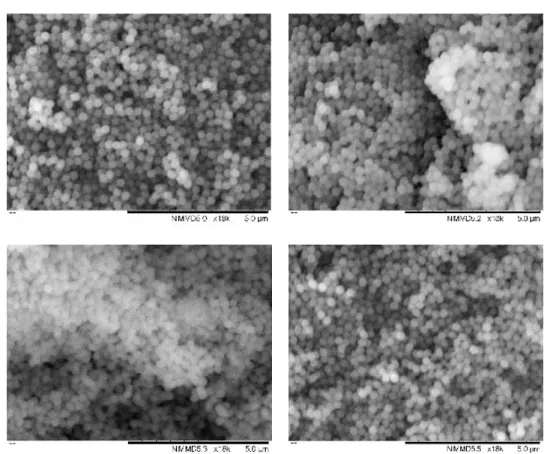
Figure S1. SEM micrographs of SP and SP-SA particles before and after homogenizer processing.

(4)

3

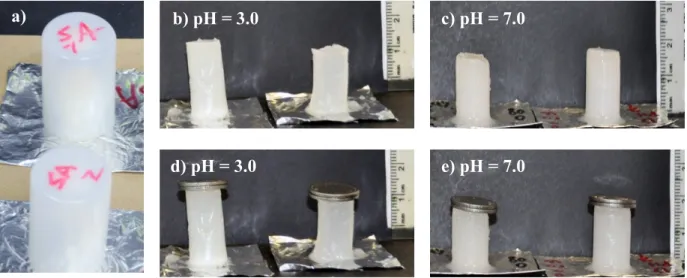
Figure S2. Pictures of concentrated oil-in-water Pickering emulsions comprising 4% SP-SA particles (ϕ

o

= 0.8) when contained into the plastic molds (a), removed from plastic molds (b, c), and under compressive stress (d, e).

a)

d) pH = 3.0

b) pH = 3.0 c) pH = 7.0

e) pH = 7.0

(5)

4

ϕ

o

(pH = 3.0) ϕ

o

(pH = 7.0)

0.1 0.3 0.5 0.7 0.9 0.1 0.3 0.5 0.7 0.9

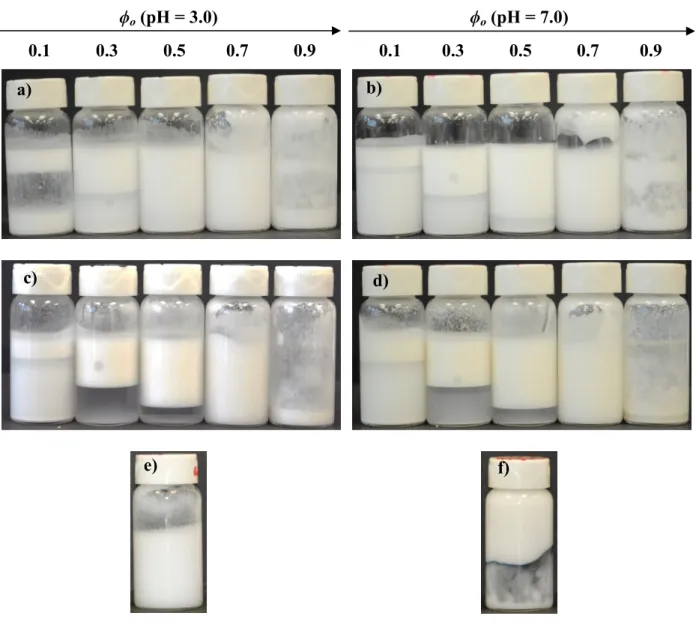
Figure S3. Effect of oil volume fraction ϕ

o

on emulsion aspect, with 4% (w/v) particles: a) and b), emulsions prepared with unmodified silica particles (SP) at pHs 3.0 and 7.0, respectively; c) and d), emulsions prepared with sodium alginate-modified particles (SP-SA), at pHs 3.0 and 7.0; e) emulsion composed of SP particles (4% w/v) at ϕ

o

= 0.8, compared to f) emulsion composed of SP-SA particles (4% w/v) at ϕ

o

= 0.8.

a) b)

c) d)

e) f)

(6)

5 ϕ

o

SP (pH=3.0) 0.1 0.3 0.5

ϕ

o

SP-SA (pH=3.0) 0.1 0.3 0.5

Fresh samples

1 week

2 weeks

3 weeks

4 weeks

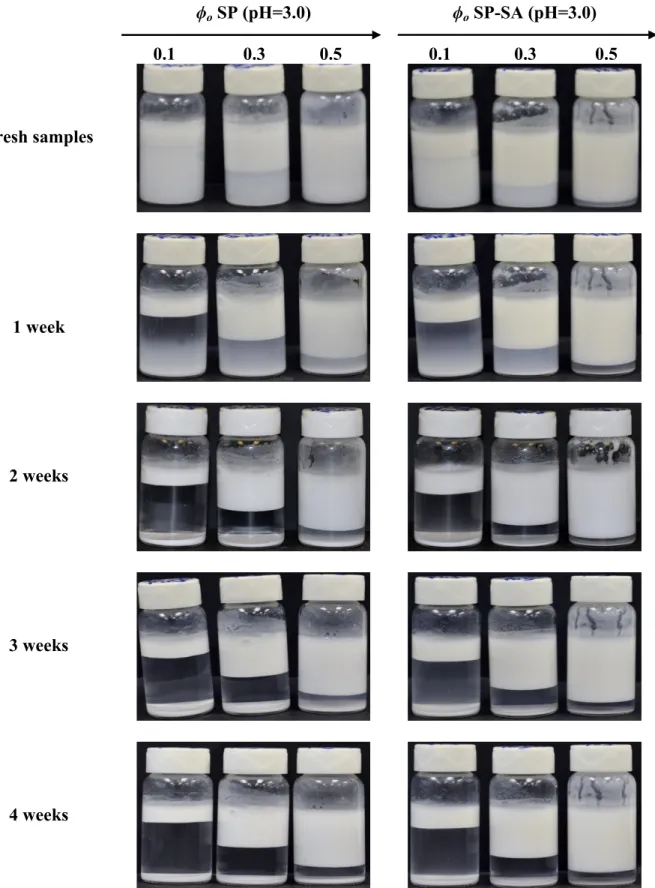
Figure S4. Emulsion stability in time at 3 different oil volume fractions ϕ

o

, and constant 4% (w/v)

particles.

(7)

6

10 20 30 40 50 60 70

0 10 20 30 40 50 60

O (%)

SP, pH = 3.0 SP, pH = 7.0 SP-SA, pH = 3.0 SP-SA, pH = 7.0

d ( μ m ) 

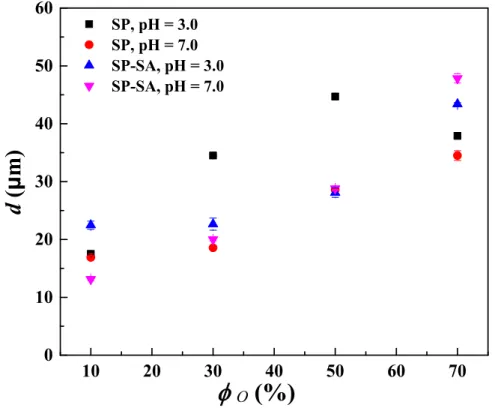
Figure S5. Number average diameter d of oil droplets as a function of oil volume fraction ϕ

o

, for

both SP and SP-SA particles, at pH 3.0 and 7.0, as obtained by laser diffraction (Mastersizer).

(8)

7

0 50 100 150 200 250

0.00 0.02 0.04 0.86 0.88 0.90 0.92 0.94 0.96 0.98 1.00

pH = 3.0, stress = 193 Pa pH = 3.0, stress = 290 Pa pH = 3.0, stress = 387 Pa pH = 7.0, stress = 193 Pa

h (t ) /h 0

t (min)

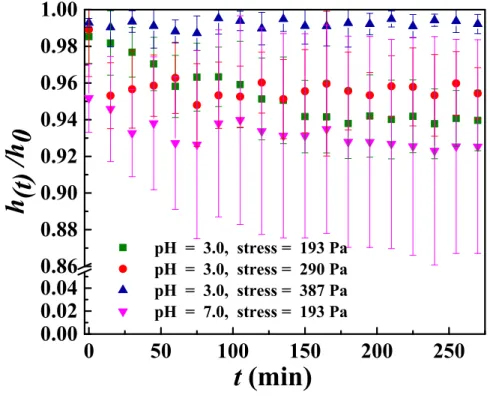
Figure S6. Normalized height (h(t)/h

0

) with the error bars as a function of time t and applied

stress on molded concentrated emulsions (ϕ

o

= 0.8) comprising 4% SP or SP-SA particles,

at pH 3.0 and 7.0.

(9)

8 pH=3.0

t(min)

pH=7.0 t(min) 0 3 6 9 12 15 60

0 3 6 9 12 15 60

Unmodified SP particles

Sodium alginate modified particles SP-SA

Figure S7. Pictures of the particle’s behavior during sedimentation in water (height of test tube = 15.3 cm) for SP (a, b) and SP-SA (c, d), over 60 min at pHs 3.0 and 7.0.

a)

c) d)

b)

(10)

9

Scheme S1 Reaction Schemes to modify SP particles with APTMS, TMPS and SA molecules

respectively

Figure

Figure S1. SEM micrographs of SP and SP-SA particles before and after homogenizer processing
Figure  S2.  Pictures  of  concentrated  oil-in-water  Pickering  emulsions  comprising  4%  SP-SA  particles (ϕ o  = 0.8) when contained into the plastic molds (a), removed from plastic molds (b, c),  and under compressive stress (d, e)
Figure S3. Effect of oil volume fraction ϕ o  on emulsion aspect, with 4% (w/v) particles: a) and b),  emulsions prepared with unmodified silica particles (SP) at pHs 3.0 and 7.0, respectively; c) and  d), emulsions prepared with sodium alginate-modified p
Figure S4. Emulsion stability in time at 3 different oil volume fractions ϕ o , and constant 4% (w/v)  particles.
+4

Références

Documents relatifs

We have compared the velocity spectra of light particles detected in coincidence with target like and projectile like fragments with the predictions of this

The calculation is based on particles randomly distributed on a face- centered cubic (fcc) lattice. The dotted curve in Fig. Compared with the MG-result, the

Electrons passing through the target are deflected back towards the target by the surrounding electric and magnetic fields, increasing the electron density and

Keywords: Model Predictive Control, parameters tuning problem, perturbed Particle Swarm Optimization, Genetic Algorithm, LabVIEW implementation, MAGLEV

input : patternsk−1 : L'ensemble des patterns fréquents de longueur k-1. frequentActivities : L'ensemble des activités fréquentes. Pour k = 2, les patterns fréquents de taille

L’objet de l’étude est l’évolution spatio-temporelle du film, et en particulier la progression et l’arrêt du décollement, suivant le critère de décollement considéré..

We will also show that cold gelation of excess protein aggregates in dispersed dextran droplets of dextran in PEO emulsions can be used to make micron size dense protein

Un des principaux objectifs de cette étude est de comprendre ce qui limite le phénomène de coalescence limitée dans les émulsions et quel lien existe entre la structure des