HAL Id: tel-01784959
https://tel.archives-ouvertes.fr/tel-01784959
Submitted on 4 May 2018HAL is a multi-disciplinary open access archive for the deposit and dissemination of sci-entific research documents, whether they are pub-lished or not. The documents may come from teaching and research institutions in France or abroad, or from public or private research centers.
L’archive ouverte pluridisciplinaire HAL, est destinée au dépôt et à la diffusion de documents scientifiques de niveau recherche, publiés ou non, émanant des établissements d’enseignement et de recherche français ou étrangers, des laboratoires publics ou privés.
subcritical water and fractionation by membrane
processes : Valorization of vine and wine by-products by
eco-innovative processes
Sami Yammine
To cite this version:
Sami Yammine. Extraction of high-value added compounds by subcritical water and fractionation by membrane processes : Valorization of vine and wine by-products by eco-innovative processes. Food engineering. Université de Bordeaux, 2016. English. �NNT : 2016BORD0056�. �tel-01784959�
THÈSE PRÉSENTÉE POUR OBTENIR LE GRADE DE
DOCTEUR DE
L’UNIVERSITÉ DE BORDEAUX
ÉCOLE DOCTORALE DES SCIENCES DE LA VIE ET DE LA SANTE SPÉCIALITÉ : ŒNOLOGIE
Par Sami YAMMINE
EXTRACTION DES MOLECULES A HAUTE VALEUR
AJOUTEE PAR EAU SOUS CRITIQUE ET
FRACTIONNEMENT PAR PROCEDES
MEMBRANAIRES
Valorisation des co-produits de la vigne et du vin par des procédés éco-innovants Sous la direction de : Martine MIETTON-PEUCHOT
Soutenue le 3 Mai 2016 Membres du jury :
Pr. VACA GARCIA, Carlos Université de Toulouse Président Pr. WISNIEWSKI, Christelle Université de Montpellier Rapporteur
Pr. BOUTIN, Olivier Université de Marseille Rapporteur
Pr. FERRARI, Giovanna Université de Salerne, ITALIE Examinateur
Dr. GHIDOSSI, Rémy Université de Bordeaux Examinateur
Pr. MIETTON-PEUCHOT, Martine Université de Bordeaux Directrice Dr. EL RAYES, Youssef Université de USEK, LIBAN Invité
À mes parents, et à Joëlle.
par qui nos âmes sont fleuries. Marcel Proust La plus grande difficulté avec les remerciements, c’est d’essayer de penser à tout le monde. Mais durant ces trois années, il y a tellement de personnes qui m’ont aidées à traverser cette épreuve, que je ne peux pas tous les citer. Et je m’excuse donc par avance pour les noms qui ne sont pas cités.
Pour commencer, je tiens à remercier ma directrice de thèse Martine Mietton-Peuchot, sans qui cette thèse n’aurait pas pu exister, progresser et aboutir. Je la remercie de m’avoir toujours laissé cette part d’autonomie sur les problèmes que je voulais traiter et ses nombreux conseils, sa profonde humanité, et ses encouragements qui m’ont permis d’avancer dans ce travail! Cette dernière n’aurait pas vu le jour sans la confiance, la patience, et la générosité qu’elle ma su m’accorder. Merci pour tout !
Je remercie également Remy Ghidossi pour la transmission de ses connaissances et de son enthousiasme, pour son encadrement au quotidien et son soutien permanent.
Je remercie Christelle Wisniewski et Olivier Boutin qui m’ont fait l’honneur d’être rapporteurs de cette thèse. Merci également à Giovanna Ferrari, Carlos Vaca Garcia, et Youssef el Rayes d’avoir accepté de faire partie de ce jury en tant qu’examinateur. Je désire remercier les membres de l’équipe Génie des Procédés et Environnement à l'ISVV, au sein de laquelle j’ai effectué cette thèse. Je ne pouvais y espérer un meilleur accueil que celui qui m’a été octroyé.
Je tiens à remercier tout particulièrement Caroline et Xavier Vitrac pour leur collaboration sur la partie extraction et analyses de ma thèse et leur aide en général durant ces trois années.
Il y a trop de gens à remercier à l'ISVV pour tous les citer, mais certains ont plus compté que d’autres. Je remercie mes maneyik prefés Arnaud et Fabrice de m’avoir souvent donné la possibilité de travailler seul et au calme.
À titre plus personnel je remercie toute ma famille à commencer par mes parents, pour avoir toujours été là, pour m’avoir donné la chance de faire de longues études, pour leur soutien sans limite durant toute ma scolarité et plus particulièrement ces trois dernières années. Merci à mon frère pour son encouragements et pour les bons moments passés ensemble quand on peut se retrouver, merci à Greg en particulier pour tous ses conseils en rapport à la thèse et la recherche en général. Si j’ai pu faire cette thèse, c’est avant tout grâce aux activités extérieures et aux amis qui sont toujours là.
Et enfin merci à Joelle, je ne saurai jamais assez la remercier de ce qu’elle a fait pour moi. Cette thèse n’aurait pas pu se finir dans les temps si elle n’avait pas été là. C’est amusant que ce soit la personne la plus loin géographiquement de moi qui est été la plus proche durant ces six derniers mois, merci à elle pour m’avoir encouragé, changé les idées, forcé à me bouger pour ne penser qu’à ma thèse. Merci pour tout.
using "green" processes such as extraction by subcritical water and purification by membrane processes. These processes are an alternative to solvent extraction traditionally used in the natural products industry. Main part of the work was done on different grape pomace, extraction was optimized and compared in terms of yield, chemical composition, and antioxidant activity of extracts. Dunkelfelder extracts exhibited the strongest antioxidant activity and comparison of chemical compositions of the different extracts indicated. Furthermore this Dunkelfelder grape pomace was used as model in order to optimize the different process parameters such as temperature, pressure and hydraulic retention time. After the subcritical water extraction, extracts produced were found to be rich in several families of molecules. An essential purification step of target compounds prior to industrial use was indispensable. Coupling the subcritical water with membrane processes offers an innovative solution for the purification of these extracts. Thereby, the extract was assayed in a cross-flow apparatus against eleven membranes of ultrafiltration (100 to 2 kDa) and nine membranes of nanofiltration (1000 to 150 Da). The monitoring of the process was carried out by determining performance parameters and retention coefficients of different families of macro and micromolecules. The results obtained have demonstrated that the use of membrane technologies could bring innovative changes in the recovery of bioactive compounds for future industries.
Keywords: Subcritical water extraction, membrane fractionation, phenolic compounds, grape pomace.
Ce travail a porté sur l'extraction de substances naturelles de sous-produits de la vigne en mettant en œuvre des procédés "verts" tels que l'extraction par eau sous-critique et la purification par filtration membranaire. Ces procédés représentent une alternative à l'extraction par solvant, traditionnellement utilisée dans la production de substances bio-sourcés.
La majeure partie de cette étude a été menée sur des marcs de raisin de cépages variés, l'extraction a été optimisée et comparée sur la base du rendement, de la composition chimique et de l'activité antioxydante des extraits obtenus. De tous les cépages testés, les extraits de Dunkelfelder ont présenté l'activité antioxydante la plus élevée et la concentration en familles de molécules polyphénoliques la plus importante. En outre, ce marc de raisin de Dunkelfelder a été utilisé comme modèle afin d'optimiser les différents paramètres du procédé tels que la température, la pression et le temps de séjour hydraulique.
Après la phase d'extraction par eau sous-critique, les extraits obtenus se sont révélés riches en de nombreuses familles de molécules. Ainsi, une étape de purification des composés cibles avant usage industriel s'est révélée indispensable. Le couplage de l'extraction par eau sous-critique avec des procédés membranaires représente une solution innovante pour la purification de ces extraits. Des essais de filtration tangentielle de l'extrait ont été menés avec onze membranes d'ultrafiltration (100 kDa à 2 kDa) et neuf membranes de nanofiltration (1000 Da à 150 Da).
Le suivi du procédé s’est appuyé sur une détermination des paramètres opératoires optimisés et sur la détermination des coefficients de rétention des différentes familles des macro et micromolécules.
Les résultats obtenus ont démontré que l'utilisation des technologies membranaires pourrait dans le futur, constituer une innovation technologique pour la purification des composes bioactifs.
Mots clés: Extraction par eau sous-critique, fractionnement par procédés membranaire, composés phénoliques, marc de raisin.
A biorefinery is an industrial complex, transforming agricultural biomass, forestry and algae into a variety of bio-based marketable products (ingredients and supplements for human and animal consumption, biomolecules, agro-materials) and/or bioenergy (biofuels, electricity, heat). The biorefinery aims at the complete valorisation of all plant components. In order to do this, biorefinery requires steps of pretreatment, fractionation / purification and conversion of the raw material for the optimized production of high value products. To be economically viable and fit a sustainable development perspective, biorefinery must satisfy a double imperative: the competitiveness of its production costs and use of products and environmentally friendly processes, without the generation of additional waste (minimum environmental impact).
One example of a biorefinery, is a distillery, that acts as a main pathway for the valorization of by-products recovered from the winemaking process.
Grapes (Vitis vinifera L.) are one of the most cultivated fruit crops in the world with an annual production of 58 million tons in 2012 (FAOSTAT 2012). Approximately 80% of crops are used for winemaking. Mainly winemaking generates solid residue after pressing: the grape pomace, rich in alcohol. According to European regulations (EC Regulation 555/2008 of the Commission of 27 June 2008), these "by-products" must be disposed of in an environmentally friendly manner. For the French winemakers, the state obliges in either:
- Composting, methanisation or spreading the by-products of all or part of their residues on their own lands
- Or by delivery of grape pomace generated to a methanisaton facility, composting, or a distillery (décret n° 2014-903 du 18 août 2014, Art. D. 665-34.-I).
In France, about 50 distilleries collect wine by-products, in an average of a 50 km radius around their site, and allow the recovery of about 850 000 tons of grape pomace each year (Institut français de la vigne et du vin, Novembre 2013).
Until now, the wine distilleries ensure the role of removing the entire load of polluting grape pomace, on national territory, for quality reasons (limitation of over-pressing of grapes, wine quality) and regulations (fight against fraud and guarantee Customs
material to distilleries. Competitiveness and profitability of the distillery industry is based, therefore, on improving and modernizing processes. The main pedal for improvement is the extraction and purification of high added value compounds from the byproducts. The sector has therefore every interest to move towards an approach of type "biorefinery" maximizing the ways of use of by-products.
At the distilleries, pomace is transformed into various by-products (Figure 1) of more or less high added value (alcohol, grape seed oil, fertilizer, lime tartrate, pulp, etc.). These by-products are utilized as raw materials in different sectors (agriculture, viticulture, chemical, cosmetic & food industries). This process allows a valorization of the material (compost, feed, chemical ...) and / or energy (bioethanol, biogas...) byproducts.
Due to present industrial equipment, distillation and tartaric acid extraction are currently selected as main method of valorization in the distillery. However, extraction of phenolic compounds can be integrated into the process of valorization. It would allow a diversification of the distillery activities through the integration of a further step, fractionation of the vegetable biomass to extract high added value compounds. The markets for such products are numerous: the wine, the food (Dyes, natural preservatives), health (food supplements, medicines), cosmetics (natural antioxidants) or the chemical industry (green glue adhesive).
However, to compete in the production of the plant extracts industry (i.e. Naturex, BERKEM, CHR Hansen, DIANA Ingredients, Oenofrance ...), the distillery has to propose extracts with a particular phenolic composition, thus opening up specific markets. Undeniably, the potential application of a plant extract is essentially determined by phytochemical composition, which are particularly dependent on the raw material used and the method of manufacture of the plant extract.
It is in this context overall recovery of bio-compounds and minimizing environmental impacts that is part of the research project VALUXTRACT. The overall objective of VALUXTRACT project is the recovery of high added value compounds from solid waste from winemaking industry with "green" methods. In order produce extracts for oenological applications mainly, but also for the food, cosmetics and pharmaceuticals industries.
transnational Call of ECO-INNOVERA (ERA-NET, ANR-12-INOV- 0001-04). It has been conducted at Unité de Recherche Œnologie located in the Institut de Science de la Vigne et du Vin, Villenave d’Ornon in France. It was conducted under the supervision of Professor Martine Mietton-Peuchot.
Part of this work was done in close collaboration with university of Changins Haute Ecole de viticulture et œnologie, university Hochschule GEISENHEIM - Institut für Oenologie, University of Compiègne - Laboratoire Transformations Intégrées de la Matière Renouvelable and Laboratoire Phenobio - Martillac partners of the project.
The manuscript consists of five publications organized into three chapters, (submitted by the time of writing) that reflect the fruit of the results obtained:
Chapter one presents an overview on extraction and purification of high added value compounds from by-products of the winemaking chain using alternative/non-conventional processes/technologies.
Chapter two is composed of two publications related to the optimization of the extraction of high added value compounds from grape pomace by utilizing subcritical water. The first publication presented the results of the comparative study of the yield of subcritical water extraction of phenolic compounds using multiple raw materials. The second publication describes the optimization of the extraction process grape pomace by subcritical water. The main results of the optimization and the selectivity of this process are described thoroughly.
Chapter three compiles two publications that deal with the fractionation and concentration of high added value compounds from extracts by membrane processes. The chapter will focus on the study of ultrafiltration for the fractionation of the extract obtained in order to separate macromolecules to obtain extract rich in phenolic compounds. The last publication will focus on the utilization of nanofiltration for the fractionation of different families of phenolic compounds.
Table of content
1. CHAPTER 1: STATE OF THE ART ALTERNATIVE PROCESS OF
EXTRACTION AND PURIFICATION OF HIGH ADDED VALUE COMPOUNDS
FROM GRAPE BYPRODUCTS ... 1
1.1. INTRODUCTION ... 1
1.2. EXTRACTION AND PURIFICATION OF HIGH ADDED VALUE COMPOUNDS FROM BY -PRODUCTS OF THE WINEMAKING CHAIN USING ALTERNATIVE/NON-CONVENTIONAL PROCESSES/TECHNOLOGIES ... 2
1.2.1. Introduction ... 3
1.2.2. Pre-treatment of grape by-products for the enhancement of mass transfer phenomena: conventional and alternative techniques ... 5
1.2.2.1. Grinding ... 5
1.2.2.2. Pulsed electrical field (PEF) assisted extraction ... 6
1.2.2.3. High voltage electrical discharges (HVED) assisted extraction ... 10
1.2.2.4. Ultrasound (US) assisted extraction ... 13
1.2.2.5. Comparison of pre-treatment processes ... 18
1.2.3. Solid-to-Liquid extraction (SLE) of high added value compounds ... 20
1.2.3.1. Conventional extraction technique: Low pressure extraction using organic solvents ... 20
1.2.3.2. High-pressure extraction ... 23
1.2.3.2.1. High temperature and high-pressure extraction/ Subcritical water extraction (SWE) .... 23
1.2.3.2.2. Supercritical fluid extraction (SFE) ... 26
1.2.3.3. Comparison of extraction processes ... 29
1.2.4. Purification and fractionation of the extract ... 30
1.2.4.1. Solid phase extraction ... 30
1.2.4.2. Resin adsorption ... 31
1.2.4.3. Membrane processes ... 31
1.2.5. Conclusion ... 32
References ... 34
CHAPTER CONCLUSION AND OBJECTIVES OF THE PROJECT ... 40
2. CHAPTER 2: SUBCRITICAL WATER EXTRACTION OF HIGH ADDED VALUE COMPOUNDS FROM FERMENTED GRAPE POMACE ... 42
2.1. INTRODUCTION ... 42
2.2. CHARACTERIZATION OF POLYPHENOLS AND ANTIOXIDANT POTENTIAL OF RED AND WHITE POMACE BY-PRODUCT EXTRACTS USING SUBCRITICAL WATER EXTRACTION ... 44
2.2.1. Introduction ... 46
2.2.2. Material and methods ... 49
2.2.2.1. Chemicals ... 49
2.2.2.2. Raw material ... 49
2.2.2.3. Process of extraction and parameters ... 50
2.2.2.4. Conventional extraction experiments ... 52
2.2.2.5. Analysis ... 52
2.2.2.5.1. Total polyphenols content ... 52
2.2.2.5.2. Antioxidant activity ... 52 2.2.2.5.2.1. ABTS Assay ... 53 2.2.2.5.2.2. CUPRAC Assay ... 54 2.2.2.5.2.3. FRAP Assay ... 54 2.2.2.5.2.4. ORAC Assay ... 54 2.2.2.5.3. Anthocyanins analyses ... 55
2.2.2.5.4. Flavan-3-ols and gallic acid analyses ... 55
2.2.2.6. Statistics ... 56
2.2.3. Results and discussion ... 56
2.2.3.1. Total Polyphenol Content. ... 56
2.2.3.2. Total Proanthocyanidins Content ... 59
2.2.3.3. HPLC Analysis of Monomeric and Oligomeric Flavan-3-ols ... 60
2.2.3.4. HPLC Analysis of Anthocyanins for red grape by-products ... 61
2.2.3.5. Antioxidant Capacity ... 64
2.2.4. Conclusion ... 69
2.3. SUBCRITICAL WATER EXTRACTION AND NEOFORMATION OF ANTIOXIDANT
COMPOUNDS FROM DUNKELFELDER GRAPE POMACE ... 74
2.3.1. Introduction ... 76
2.3.2. Material and methods ... 78
2.3.2.1. Raw material ... 78
2.3.2.2. Process of extraction and parameters ... 78
2.3.2.3. Conventional extraction experiments ... 80
2.3.2.4. Analysis ... 80
2.3.2.4.1. Total polyphenols content ... 80
2.3.2.4.2. Antioxidant activity ... 81
2.3.2.4.3. Anthocyanins analyses ... 81
2.3.2.4.4. Flavan-3-ols and gallic acid analyses ... 82
2.3.2.4.5. Analysis of Hydroxymethylfurfural (HMF) and Furfural ... 83
2.3.2.5. Statistics ... 83
2.3.3. Results and discussion ... 83
2.3.3.1. Influence of operating parameters ... 83
2.3.3.2. Temperature ... 84
2.3.3.3. Pressure ... 85
2.3.3.4. Flow rate/hydraulic retention time ... 85
2.3.3.5. Temperature influence on the extract composition ... 86
2.3.3.6. Antioxidant Capacity of the Extracts ... 89
2.3.3.7. Maillard and Caramelization Reactions ... 90
2.3.4. Conclusions ... 91
References ... 93
CHAPTER CONCLUSION ... 96
3. CHAPTER 3: FRACTIONATION OF DIFFERENT PHENOLIC CLASSES FROM GRAPE POMACE EXTRACTS BY MEMBRANE PROCESSES ... 97
3.1. INTRODUCTION ... 97
3.2. SELECTING ULTRAFILTRATION MEMBRANES TO FRACTIONING HIGH ADDED VALUE COMPOUNDS FROM GRAPE POMACE EXTRACTS ... 98
3.2.1. Introduction ... 100
3.2.2. Materials and methods ... 102
3.2.2.1. Subcritical water extraction ... 102
3.2.2.2. Experimental analysis and membranes ... 103
3.2.2.3. Membrane performance ... 103
3.2.2.4. Hydraulic resistance, using Darcy's law ... 105
3.2.2.5. Contact angle ... 106
3.2.2.6. Chemical analysis ... 106
3.2.2.6.1. pH, Total sugars, Polysaccharrides ... 106
3.2.2.6.2. Proteins ... 106
3.2.2.6.3. Total polyphenols content ... 107
3.2.2.6.4. Antioxidant activity – ORAC ... 107
3.2.2.6.5. Phenolic classes ... 107
3.2.3. Results and discussion ... 108
3.2.3.1. Grape subcritical extract composition ... 108
3.2.3.2. Membrane performance ... 109
3.2.3.2.1.1. Water permeability determination ... 109
3.2.3.2.1.2. Influence of operating conditions on the permeate flux ... 111
3.2.3.2.2. Retention of compounds ... 113
3.2.4. Discussion ... 116
3.2.4.1. Retention of macromolecules ... 116
3.2.4.1.1. Retention of polysaccharides ... 116
3.2.4.1.2. Retention of proteins ... 118
3.2.4.1.3. Retention and fractioning of polyphenols ... 119
3.2.5. Conclusion ... 122
References ... 123
3.3. THE USE OF NANOFILTRATION MEMBRANES FOR THE FRACTIONATION OF POLYPHENOLS FROM GRAPE POMACE EXTRACT ... 129
3.3.1. Introduction ... 131
3.3.2. Materials and methods ... 133
3.3.2.2. Subcritical water extraction ... 134
3.3.2.3. Filtration experiments ... 135
3.3.2.4. Analytical methods ... 136
3.3.2.4.1. Contact angle ... 136
3.3.2.4.2. pH and Total sugars ... 137
3.3.2.4.3. Total polyphenols content ... 137
3.3.2.4.4. Antioxidant activity – ORAC ... 137
3.3.2.4.5. Phenolic classes: ... 138
3.3.3. Results and discussion ... 139
3.3.3.1. Water permeability determination ... 139
3.3.3.2. Influence of operating conditions on the permeate flux ... 140
3.3.3.3. Fouling resistance ... 146
3.3.3.4. Phenolic compounds fractionation ... 148
3.3.4. Conclusion ... 153
References ... 154
CHAPTERCONCLUSION ... 157
GENERAL CONCLUSION ... 158
RESUME GENERAL ... 161
CHAPITRE 1:ETAT DE L’ART ... 165
ENJEUX ET CONSIDERATIONS ... 168
CHAPITRE 2 EXTRACTION PAR EAU SOUS-CRITIQUE DE COMPOSES A HAUTE VALEUR AJOUTEE A PARTIR DE MARC DE RAISIN ... 170
CHAPITRE 3:FRACTIONNEMENT DES DIFFERENTES FAMILLES DE MOLECULES PHENOLIQUES A PARTIR D'EXTRAITS DE MARC PAR DES PROCEDES MEMBRANAIRES. ... 174
List of Figures :
Chapter 1 :Extraction and purification of high added value compounds from by-products of the winemaking chain using alternative/non-conventional processes/technologies. Figure 1 Conventional extraction procedure for the recovery of high added value components from grape wastes ... 4 Figure 2 Comparison of specific energy consumption for the different pre-treatments of the raw material ... 18 Chapter 2
Characterization of polyphenols and antioxidant potential of red and white pomace by-product extracts using subcritical water extraction.
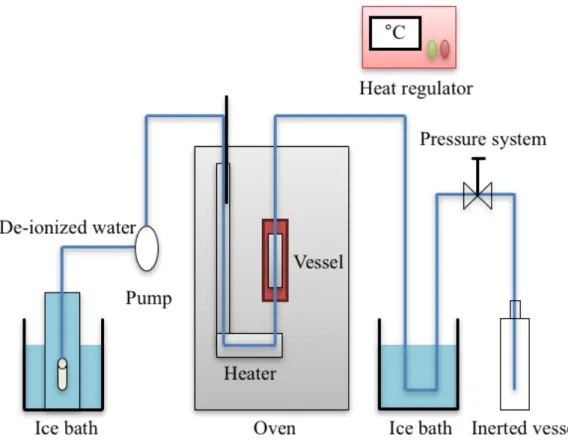
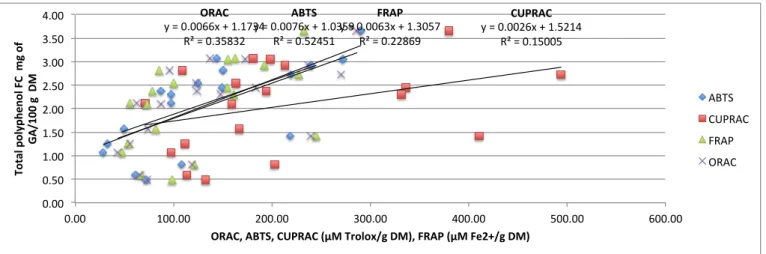
Figure 1 Schematic diagram of the Pressurized liquid extraction process ... 51 Figure 2 Correlations between radical scavenging capacity assays (ORAC, FRAP, ABTS and CUPRAC) and total flavan-3-ol in grape pomace extract by subcritical water extraction ... 67 Figure 3 Correlations between radical scavenging capacity assays (ORAC, FRAP, ABTS and CUPRAC) and total proanthocyanidins (Bate - smith) content in grape pomace extract by subcritical water extraction ... 68 Figure 4 Correlations between radical scavenging capacity assays (ORAC, FRAP, ABTS and CUPRAC) and total anthocyanins in grape pomace extract by subcritical water extraction. ... 68 Subcritical water extraction and neoformation of antioxidant compounds from Dunkelfelder grape pomace.
Figure 1 Schematic diagram of the Pressurized liquid extraction process ... 78 Figure 2 Influence of temperature on the polyphenol concentration for different pressures (25 to 100 bars) and compared with the hydro-alcoholic maceration technique ... 83 Figure 3 Influence of the hydraulic retention time on the polyphenol concentration for different extraction volumes at 150°C temperature, 50 bars hydraulic retention time calculation ... 85 Figure 4 Correlations between radical scavenging capacity assays (ORAC, FRAP, ABTS and CUPRAC) and total anthocyanins in grape pomace extract by subcritical water extraction. ... 86 Figure 5 Effect of temperature on the SWE of Flavonol in wet pomace; Procyanidin B1 (A); Catechin (B); Gallic acid (C); Procyanidin C1 (D); and Epicatechin (E). Experiments were conducted in triplicate. Data points shown as the mean value ± standard deviations ... 88 Figure 6 Antioxidant activity measured by the Oxygen Radical Absorbance Capacity (ORAC) essay as a function of SWE process temperature at 25 bars and compared with the hydro-alcoholic maceration technique ... 89 Figure 7 Furfural concentration as a function of SWE temperatures (µg/g of DM) with respect to the temperature at 25 bars ... 89 Chapter3
Selecting ultrafiltration membranes to fractioning high added value compounds from grape pomace extracts.
Figure 1 Flow sheet of the experimental apparatus: 1. thermal bath, 2. feed tank, 3. temperature probe, 4. high-pressure pump, 5. security valve, 6. valves, 8.
pressure probes, 9. membrane cell system, 11. pressure control valve, 12. Balance ... 101 Figure 2 Hydraulic permeability (Lm-2h-1. 10-5Pa) and membrane resistance (Rm) 10 m- 1 to water and contact angle for the ultrafiltration membranes (T = 20 °C).
... 108 Figure 3 Permeate flux during ultrafiltration of grape pomace extract with respect to transmembrane pressure for 11 different membranes; A (VRF=10); B (VRF=2). ... 111 Figure 4 Evolution of fouling resistance for ultrafiltration membranes tested: GE Osmonics and Alfa Laval membranes. ; A (VRF=10); B (VRF=2). ... 111 The use of nanofiltration membranes for the fractionation of polyphenols from grape pomace extract
Figure 1 Hydraulic permeability Lp for the nanofiltration membranes (T = 20 °C).
... 137 Figure 2 Evolution of the cumulative permeate volume with processing time for the grape pomace filtration experiments performed with the GE membrane at a tangential velocity v=2ms− 1. ... 140 Figure 3 Evolution of the permeate flux and volume retention factor with processing time for the grape pomace extract filtration experiments performed with the GE membrane at v=2 ms− 1 and T = 20 °C. ... 141 Figure 4 Evolution of the permeate flux with the volume reduction factor for the experiment GE at 20 105Pa. ... 142 Figure 5 Effect of the crossflow velocity on the permeate flux for VRF = 10 with the GE and DK membranes at 20 °C and 3 105Pa. ... 142 Figure 6 Effect of the transmembrane pressure and MWCO on the steady-state permeate flux for experiments performed at v=2 m s− 1 and T = 20 °C. e ... 143 Figure 7 Evolution of fouling resistance for nanofiltration membranes tested:. ; on the steady-state permeate flux for experiments performed at v=2 m s− 1 and T = 20 °C A (Low fouling); B (High fouling) ... 145
List of Tables :
Chapter 1 :Extraction and purification of high added value compounds from by-products of the winemaking chain using alternative/non-conventional processes/technologies. Table 1 Efficiency and operating conditions of PEF-assisted extraction used to extract bioactive compounds from grape by-products ... 9 Table 2 Efficiency and operating conditions of HVED-assisted extraction used to extract bioactive compounds from grape by-products ... 13 Table 3: Efficiency and operating conditions of US-assisted extraction used to extract bioactive compounds from grape by-products ... 17 Table 4 Advantages and drawbacks of traditional and alternative pre-treatment techniques ... 19 Table 5 Comparison of literature works on optimization of solvent extraction of phenolic constituents from grape by-products (adapted from Spigno et al. 75) ... 23 Table 6 Efficiency and operating conditions of SWE-assisted extraction used to extract bioactive compounds from grape by-products ... 24 Table 7 Efficiency and operating conditions of SFE-assisted extraction used to extract bioactive compounds from grape by-products ... 28 Chapter 2
Characterization of polyphenols and antioxidant potential of red and white pomace by-product extracts using subcritical water extraction.
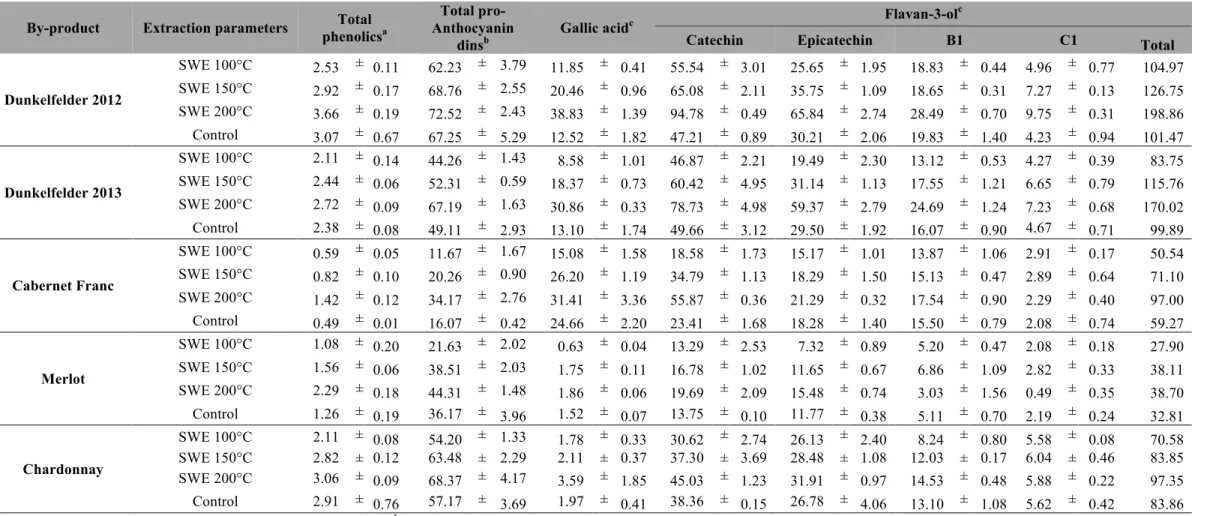
Table 1 Efficiency and operating conditions of SWE-assisted extraction used to extract bioactive compounds from grape by-products ... 47 Table 2 Total Phenolics, Total Proanthocyanidins, and Flavan-3-ol Content of the Grape Pomace Samples (SWE: 100% water, P= 25 bars; Control: 50% ethanol/water 20°C) ... 58 Table 3 Total Anthocyanin Content of the Grape Pomace Samples (SWE: 100% water, P= 25 bars; Control: 50% ethanol/water 20°C) ... 63 Table 4 Antioxidant Capacity Determined by ABTS, CUPRAC, FRAP, and ORAC Assays for the Grape Pomace Samples ... 66 Chapter3
Selecting ultrafiltration membranes to fractioning high added value compounds from grape pomace extracts.
Table 1: Characteristics of the tested ultrafiltration (UF) membranes (manufacturer data) ... 102 Table 2: Characteristics of the winery pomace extracts used as feed liquids. Values represent mean ± standard deviation (n = 6). ... 107 Table 3: Retention coefficients obtained for several parameters of subcritical grape pomace extracts as a function of different ultrafiltration membranes. ... 114 The use of nanofiltration membranes for the fractionation of polyphenols from grape pomace extract
Table 1 Characteristics of tested Nanofiltration (NF) membranes ... 132 Table 2 Contact angles of tested Nanofiltration (NF) membranes ... 134 Table 3 Experimental conditions applied in the NF experiments performed and results obtained at VRF=10. ... 141 Table 4 Characteristics of the grape pomace extracts used as feed liquids. Values represent mean ± standard deviation (n = 6). ... 146 Table 5 Retention coefficients obtained for several parameters of subcritical grape pomace extracts as a function of different nanofiltration membranes) ... 150
1. C
HAPTER1:
S
TATE OF THE ART ALTERNATIVE PROCESS OF EXTRACTION AND PURIFICATION OF HIGH ADDEDVALUE COMPOUNDS FROM GRAPE BYPRODUCTS
1.1. INTRODUCTION
Throughout the Valuxtract project a book chapter was written “Yammine, S., Ghidossi, R. & Mietton-Peuchot, M., 2014. Extraction and Purification of Phenolic Compounds from By-Products of the Winemaking Process. In Y. El Rayess, ed. Wine: Phenolic Composition, Classification and Health Benefits. NOVA science publishers, pp. 313– 330 ”. In addition with partners of the project a review, which will be presented below, was written to expose all of the publications surrounding this topic. The submitted review displays the main technologies applied or potentially utilizable for the extraction of high added value compounds from wine and vine byproducts on the industrial and laboratory scale. With the aim of giving a general introduction of each utilized technology, to all the process parameters and the limits of the technology. The main approaches such as pressurized liquid extraction, ultrasound-assisted extraction, microwaves assisted solvent extraction, supercritical or subcritical fluid extraction, pulsed-electric fields (PEF) and high voltage electrical discharges (HVED) are the main focus. These technologies are still under development, and so far little or no upscaling industrially has been noticed. Consequently, these technologies have been exploited and are one of the most noticed and published topics.
1.2.
EXTRACTION AND PURIFICATION OF HIGH ADDED VALUE COMPOUNDS FROM BY-PRODUCTS OF THE WINEMAKING CHAINUSING ALTERNATIVE/NON-CONVENTIONAL PROCESSES/TECHNOLOGIES
Yammine Sami a,b*, Brianceau Sylène c, Manteau Sébastien e, Turk Mohammad c,d, Ghidossi Rémy a,b, Vorobiev Eugène c, Mietton-Peuchot Martine a,b
a Université de Brdeaux, Institut des Sciences de la Vigne et du Vin, EA 4577, Unité
de recherche œnologie, Villenave d'Ornon, France.
b INRA, ISVV, USC 1366 Œnologie, 210 Chemin de Leysotte, CS 50008, F-33882
Villenave d'Ornon, France.
c Sorbonne Universités, Université de technologie de Compiègne, EA 4297 TIMR,
Centre de recherche Royallieu CS 60 319, 60 203 Compiègne cedex
d Ecole Supérieure de Chimie Organique et Minérale, EA 4297 TIMR, Allée du réseau
Jean-Marie Buckmaster, 60200 Compiègne, France
e SAS SOFRALAB, 79 av. A.A. Thévenet, BP1031-51319 EPERNAY Cedex, France
This review has been submitted for the journal of critical reviews in food science and nutrition – accepted in press
Abstract
Grape byproducts are today considered as a cheap source of valuable compounds since existent technologies allow the recovery of target compounds and their recycling. The goal of the current article is to explore the different recovery stages used by both conventional and alternative technologies. The intent is to describe the mechanisms involved by these alternative technologies and to summarize the work done on the improvement of the extraction process of phenolic compounds from winery by-products. With a focus on the developmental stage of each technology, highlighting the research need and challenges to be overcome for an industrial implementation of these unitary operations in the overall extraction process. A critical comparison of conventional and alternative techniques is reviewed for the pre-treatment of raw material, the diffusion of polyphenols and the purification of these high added value compounds. This review intends to give the reader some key answers (costs, advantages, drawbacks) to help in the choice of alternative technologies for extraction purposes.
Key words: Extraction, purification, grape by-products, high added value compounds, non-conventional technologies.
1.2.1. Introduction
The valorization of winery waste products is very promising, since grape is one of the largest produced fruit crops with an annual world production of 58 million tons in 2012.1 About 80 % is used for winemaking and it has been estimated that 13 to 20 % of by-products, which represents about 5-8 million tons of potentially exploitable matter, are generated after the winemaking process.2–4 Other estimations report higher values up to 14.5 million tons solely in Europe.5,6 This represents unquestionably an enormous amount of matter from which high added value components could be extracted. Solid grape wastes are particularly rich in polyphenols, whose use extends to applications in various fields, including cosmetic, nutraceutical, chemical and food industries. Over the last years, polyphenols have attracted a growing interest for their potential health benefits in preventing heart diseases and cancers.7–10 Their extraction from winery waste and their following purification are of special interest to produce extracts with high added value.
Phenolic compounds are usually extracted by classical extraction procedure (Figure 1). The natural variability of raw material and the pre-transformation processes (drying, grinding, etc.) could be determinant for the quantity and the composition of extract.11 For instance, high temperatures can lead to denaturation of targeted compounds and grinding leads to a significant increase of undesired components during extraction. Thus, conventional pre-transformation processes decrease the selectivity and/or the efficiency of the extraction process. The selectivity of the extraction processes also depends on the molecular affinity between solvent and solute during the solid-to-liquid diffusion step.12 However, toxicity, environmental safety, and financial feasibility should also be considered in the selection of a solvent for the extraction of high added value compound. Towards the end of the process, a purification step may be required to obtain extracts with high purity of phenolic compounds. Resin adsorption is commonly used at industrial scale.13,14 The major drawback of this technique is the use of a large amount of solvent noticeably during polyphenols desorption, which need to be further evaporated.
Figure 1: Conventional extraction procedure for the recovery of high added value components
from grape wastes
Losses of some compounds, low production efficiency, time- and energy-consuming procedures (prolonged heating and stirring, use of large volumes of solvent…) may be encountered using this conventional extraction procedure. Recent trends in extraction techniques have largely focused on finding solutions that minimize the use of solvent and energy. For these purposes, alternative techniques have been deeply studied to enhance the overall yields in phenolic compounds and to decrease the operational costs of the process. These techniques include:
- Alternative pre-treatments techniques: ultrasounds, pulsed electric fields and high voltage discharges,
- Non-conventional solvent extraction under high pressure: supercritical fluid extraction and subcritical water extraction and,
- Alternative purification technologies, such as membrane processing.
Although lots of experimental studies particularly focused on improving the overall extraction process from solid winery by-products, none of these alternative technologies are currently used at industrial scale for this application. This paper intends to describe the mechanisms involved by these alternative technologies and to summarize the work done on the improvement of the extraction process of phenolic compounds from winery by-products. In this review, the contribution focuses on the developmental stage of each technology, highlighting the research need and
challenges to be overcome for an industrial implementation of these unitary operations in the overall extraction process. A critical comparison of conventional and alternative techniques will be described for the pre-treatment of raw material, the diffusion of polyphenols and the purification of these high added value compounds. This review intends to give the reader some key answers (costs, advantages, drawbacks) to help him in the choice of alternative technologies for extraction purposes.
1.2.2. Pre-treatment of grape by-products for the enhancement of mass transfer phenomena: conventional and alternative techniques
Phenolic compounds exist in plants enclosed in particular structures such as the vacuoles of plant cells and lipoproteins bilayers.15 In intact cells, the membrane envelope restricts the exchange between the intracellular media and the surrounding solvent. Consequently, conventional solvent extraction techniques such as maceration or diffusion require long extraction time, due to the slow diffusion of solvent and solute through the solid.16 Thus, the degradation of cell-wall and of intracellular components is a fundamental step to improve the release of these compounds from the grape tissues. Extraction processes can be enhanced by several pre-treatments of the plant materials that are able to physically damage the cells, such as: grinding, pulsed electric field, high voltage electric discharges and ultrasound.
1.2.2.1. Grinding
Grinding is the most conventional pre-treatment technique and is currently used in the extraction industry to shorten the time of diffusion and enhance the yield of targeted bio-compounds. The mechanical action induced by grinding leads to an increase of the exchange surface. However, grinding also leads to the overheating of the plant matrix. Two phenomena are responsible of this released heat:
- Release of energy caused by the fracturing of the matrix, - Release of energy due to overgrinding of the matrix.17
Phenolic compounds, and noticeably anthocyanins, are particularly thermosensitive and can be degraded or lose their functionality.18
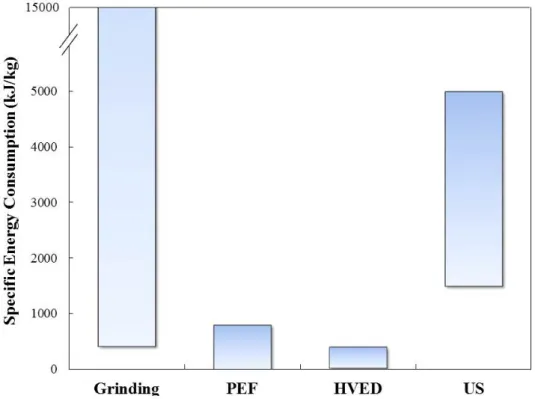
On the other hand, the type of plant matrix, and particularly its moisture content, affects the electrical energy requirement, the specific energy consumption and the equipment to be used.19 Two types of grinding processes can be used in the food industry: dry and wet grinding. A previous study demonstrated that specific energy consumption varied between 420 and 800 kJ/kg of raw rice using dry grinding, while about 14,000 kJ/kg were required in the case of wet grinding (water-to-rice ratio = 2).20 Consequently, a preliminary drying step, which is associated with matrix heating, is often required to facilitate the grinding and reduce its associated cost.20,21
Finally, increased difficulties during the filtration and purification steps due to small particles in suspension in the solvent are another limitation for the use of grinding in the extraction manufactories.
Emerging technologies for the physical alteration of raw material (i.e. pulsed electric fields, high voltage electric discharges and ultrasounds) are based on non-thermal concepts. These three technologies can physically affect the permeability of the cell by different mechanisms.22–25
1.2.2.2. Pulsed electrical field (PEF) assisted extraction
Electroporation phenomena: When subjected to an external electric field, the charge accumulation on the membrane surfaces induces the increase of transmembrane potential of the cell membrane, initiating pore formation.26 Typically, electroporation phenomena requires some threshold value of transmembrane potential around 0.5 - 1.5 V.27 Above the critical value of transmembrane potential, the expansion of pores present in weak areas of the membrane will induce drastic increase of permeability 28,29 and will facilitate the leakage of intracellular compounds.30,31 Thus, Pulsed Electric Field (PEF) treatment increases transmembrane transport of molecules.31,32 For cellular tissues of 60-120 µm in diameter, initiation of pore formation can be achieved using electric field strengths of 0.1 - 0.5 kV/cm and treatment times of very short duration (within 10-4 - 10-2 s)33 without any significant temperature increase.34,35
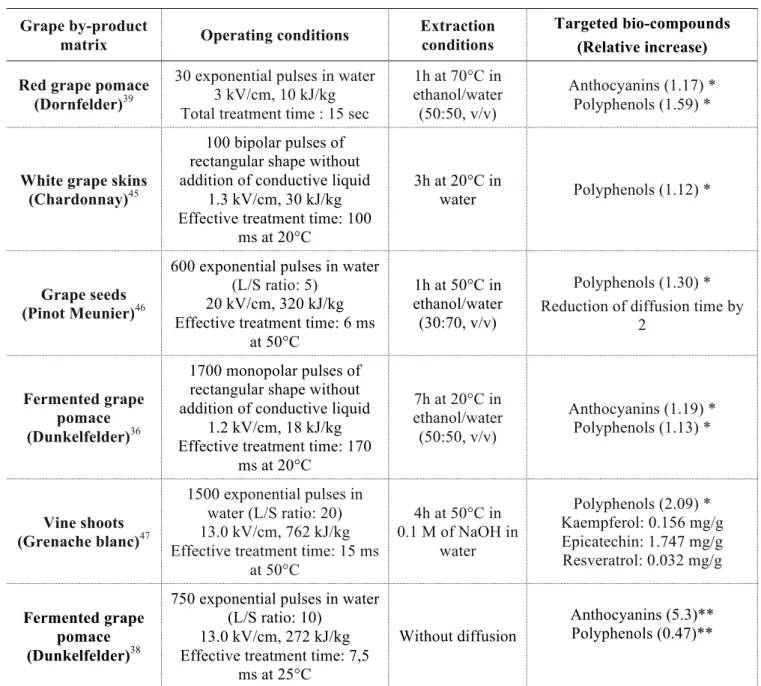
Pulsed electric field pre-treatment of winery by-products: PEF treatment prior to conventional extraction allowed a better recovery of phenolic compounds from different winery by-products (Table 1). In most of these studies, the raw materials were submerged into water in order to improve electrical contacts between electrodes.
Treatment with liquid-to-solid ratio above 5 required high electric field strength (i.e. E > 13 kV/cm) to be effective for the enhancement of polyphenols extraction. As a consequence, specific energy consumptions were relatively high (i.e. 272 < W < 762 kJ/kg of treated raw material). On the contrary, pre-treatment by PEF combined with an accurate densification of wet pomace or wet skins can be achieved at lower electric field strengths (i.e. E ≈ 1.2 kV/cm) and lower energy requirements (i.e. 18 < W < 30 kJ/kg of treated raw material). The treatment of compacted wet winery by-products requires less output current, which can be advantageous for the industrial implementation of PEF.36 Pulse forms used were of different shape (monopolar, bipolar or exponential). However, no comparison of the effect of pulse shape on the extractability of phenolic bio-components is available in the existing literature.
Interestingly, a previous study showed that PEF treatment causes irreversible perforations in the cell wall of the outer hypodermis and distention of the fiber cell wall polysaccharides at the inner hypodermis.37 This electroporation phenomenon may allow the specific recovery of anthocyanins that are particularly located in the upper cell layers of the hypodermis. For instance, High Intensity Pulsed Electrical Field (Hi-PEF) treatment of fermented grape pomace (13.3 kV/cm, W = 272 kJ/kg) allowed the selective recovery of anthocyanins and the production of extracts with a high ratio anthocyanins/Total Phenolic Compounds (TPC). This reflects an increase of 40 % that cannot be achieved by conventional extraction procedure, such as grinding combined to diffusion (ratio anthocyanins/TPC < 5 %).38 Moderate PEF treatments (E < 3.0 kV/cm, W < 20 kJ/kg) were also effective in enhancing anthocyanins extraction from grape skins (+ 17 %)39 and grape pomace (+ 19 %)36. Consequently, PEF can replace conventional pre-treatments of grape by-products (e.g. dehydration and grinding), which have impacts on product quality and are more energy consuming, with the combined objectives of cost reduction and selectivity of extraction.
Scale-up of the technology/Stage of development: Based on existing concepts, and noticeably on sucrose extraction from sugar beets at industrial scale 25,40,41, the pre-treatment of grape by-products by PEF should be feasible at larger scale (pilot and industrial scale). Progress in the development of continuous flow treatment chambers for PEF processing have allowed the treatment of material that cannot be pumped
(solid products) using belt or rotating systems.42 Moreover, some recent developments of pulsed power systems, which are usable for continuous delivery of high amounts of electrical energy and high electric field strengths and suitable for food industry applications, have allowed the scale-up of the technology.25
Research needs and challenges: While electroporation devices for minimally processed fruits and vegetables are already in operation43, the electroporation devices for extraction of valuable components from grape by-products still require some research and development prior to any reliable operation in an industrial environment. At the microscopic scale, questions still remain regarding the effect of electric pulses on the cell structure of the plant material and on the targeted bio-components. For instance, it was demonstrated that PEF treatment can modify molecular interactions between intracellular components37 and induce a rupture of polymer chains (decondensation of the tannins).44 Further studies might be of importance to evaluate the effect of PEF treatment on the properties of the targeted molecule (bioavailability, functionality, taste…) before using these extracts in food, oenological or nutraceutical applications.
In order to implement the PEF processing step into existing processes in a distillery, a winery or an extracts manufactory, a systemic/integrative approach will be required considering the diversity of raw material to be treated (i.e. pomace, skins, stems, seeds and vine shoots):
- Depending on the grape by-product to be treated, the peak voltage required, the peak current (which depends on product conductivity, on the minimum treatment chamber cross section and on the electrical resistance of the chamber), the average power (dependent on the processing capacity (kg or tons /hour…)) and on the pulse waveform (exponential decay or rectangular pulses) can vary substantially, which renders the design of a power supply for multiple applications challenging.
- The suitability of the treatment chamber may be affected by the raw materials to be treated, most noticeably the materials’ pumpability that is critical for a continuous treatment at an industrial scale.
Grape by-product
matrix Operating conditions
Extraction conditions
Targeted bio-compounds (Relative increase)
Red grape pomace
(Dornfelder)39
30 exponential pulses in water 3 kV/cm, 10 kJ/kg Total treatment time : 15 sec
1h at 70°C in ethanol/water (50:50, v/v)
Anthocyanins (1.17) * Polyphenols (1.59) *
White grape skins
(Chardonnay)45
100 bipolar pulses of rectangular shape without addition of conductive liquid
1.3 kV/cm, 30 kJ/kg Effective treatment time: 100
ms at 20°C
3h at 20°C in
water Polyphenols (1.12) *
Grape seeds
(Pinot Meunier)46
600 exponential pulses in water (L/S ratio: 5)
20 kV/cm, 320 kJ/kg Effective treatment time: 6 ms
at 50°C
1h at 50°C in ethanol/water (30:70, v/v)
Polyphenols (1.30) * Reduction of diffusion time by
2
Fermented grape pomace
(Dunkelfelder)36
1700 monopolar pulses of rectangular shape without addition of conductive liquid
1.2 kV/cm, 18 kJ/kg Effective treatment time: 170
ms at 20°C 7h at 20°C in ethanol/water (50:50, v/v) Anthocyanins (1.19) * Polyphenols (1.13) * Vine shoots (Grenache blanc)47 1500 exponential pulses in water (L/S ratio: 20) 13.0 kV/cm, 762 kJ/kg Effective treatment time: 15 ms
at 50°C 4h at 50°C in 0.1 M of NaOH in water Polyphenols (2.09) * Kaempferol: 0.156 mg/g Epicatechin: 1.747 mg/g Resveratrol: 0.032 mg/g Fermented grape pomace (Dunkelfelder)38
750 exponential pulses in water (L/S ratio: 10)
13.0 kV/cm, 272 kJ/kg Effective treatment time: 7,5
ms at 25°C
Without diffusion
Anthocyanins (5.3)** Polyphenols (0.47)**
Table 1: Efficiency and operating conditions of PEF-assisted extraction used to extract bioactive compounds from grape by-products
* In comparison with control extraction, performed in the same conditions but without PEF pre-treatment
** In comparison with control extraction of grinded pomace in water (2h – 20°C under stirring)
1.2.2.3. High voltage electrical discharges (HVED) assisted extraction
Principles and mechanisms: The first step of HVED is the formation and the propagation of a streamer, which is composed of thin ionized vapor channels, from a needle electrode (pre-breakdown phase). The second phase occurs when the streamer reaches the plate electrode (breakdown phase). These two phases are accompanied by different secondary phenomena such as propagation of pressure shock waves in the surrounding media, emission of UV light, gas bubbles cavitation and chemical reactions generating reactive species.22,48,49 At the macroscopic level, the application of electrical discharges on different wine by-products (grape seeds, grape pomace...) results on the fragmentation of the particles.50 Depending on the matrix and after effective discharge treatment, the size reduction of the particles treated by electrical discharge is rather similar to that obtained after grinding the product.51
HVED-assisted extraction of valuable bio-compounds from winery by-products: Electrical discharges have been successfully applied at both laboratory (1 L) and pilot (35 L) scales, in batch, for the enhancement of polyphenols extraction from winemaking products (Table 2). At the macroscopic level, the treated grape by-products were clearly fragmented after the application of electrical discharges. The increase of the exchange surface promotes the release of non-cell-wall phenolic components and enhances the ethanol transport into cells leading to an increase of phenolic compounds recovery.52,53 Moreover, the highly turbulent conditions induced by HVED accelerate the convection of these components from particles to the surrounding medium.
In general, specific energy consumption ranged from 32 kJ/kg and 254 kJ/kg of treated raw material to achieve interesting enhancement of phenolic compounds extraction. At laboratory scale, lignocellulosic biomass (i.e. grape stems, vine shoots) required the highest energy input (> 190 kJ/kg), probably because these biomasses are more resistant to electric discharges than grape skins or seeds.
However, the choice of effective HVED treatment time should be accurately evaluated, as excessively prolonged treatment may deteriorate phenolic compounds. This deterioration of phenolic compounds, and particularly of catechin, epicatechin, quercetin-3-O-glucoside and kaempferol-3-O-glucoside, has been observed above
80 kJ/kg of HVED treatment on grape pomace.54 Procyanidin B2 from grape stems showed similar behavior above 122 kJ/kg of energy input.53 Concomitant mechanical and chemical actions induced by the process may be responsible for these observations. Indeed, free radicals can be formed via the thermal dissociation of water during electrical discharge treatment. Under these extreme conditions, antioxidant capacity can be affected.48
Stage of development, research needs and challenges: Despite recent research of the effects of HVED for the enhancement of the extraction of phenolic compounds, particularly from winery by-products, this technology is still at its early stage of development. Further research is needed to make this technology feasible at the commercial level.
The detailed mechanism of the establishment of electric discharges in water is still not fully understood. There are two primary principal competing schools, namely, an electron multiplication theory and a phase change mechanism breakdown theory49 but until now, there is no consensus on the physical principles involved during this process. Moreover, the evaluation of bioavailability, functionality and/or the taste of the extracts obtained using this process might be of value before oenological or nutraceutical applications.
To intensify the mass transfer phenomena, electric discharges in water have been applied using electrodes with point-to-plane geometry. This geometry is not completely suitable for industrial applications because only restricted volumes can be treated due to low electrical discharges zone. Moreover, identification and application of electrode materials that can provide longer time of operation and lower metal migration would be of value as the lifetime of the needle is rather limited. Another key aspect for the successful application of HVED-assisted extraction is the design uniformity and the processing capacity of the treatment chamber. At this stage of development, HVED treatment would only be dedicated to small batch production of extract.
Grape by-product
matrix Operating conditions
Extraction conditions Targeted bio-compounds (Relative increase) Unfermented red grape pomace (Chardonnay)45 80 discharges in water (L/S ratio: 3) 40 kV – 0.5 Hz 32 kJ/kg
Effective treatment time: 0.8 ms at 60°C
Laboratory scale – in batch
1h at 60°C in
water Polyphenols (2.5) *
White grape skins
(Chardonnay)55 60 discharges in water L/S ratio: 6 40 kV – 0.5 Hz 120 kJ/kg 0.6 ms at 20°C Laboratory scale – in batch
3h at 20°C in water
Increase of initial soluble matter extraction by 7.5 Polyphenols (1.2) * Unfermented red grape pomace (Pinot meunier)54 150 discharges in water L/S ratio: 5 40 kV – 0.5 Hz 80 kJ/kg
Effective treatment time: 1.5 ms at 20°C
Laboratory scale – in batch
1h at 20°C in ethanol/water (30:70, w/w) Polyphenols (11.1) * Unfermented grape skins (Pinot Meunier and Chardonnay)56 750 discharges in water L/S ratio: 5 40 kV 400 kJ/kg Pilot scale – in batch
Without diffusion Polyphenols (14) **
Grape seeds (Pinot Meunier and Chardonnay)51 750 discharges in water L/S ratio: 5 40 kV 400 kJ/kg Pilot scale – in batch
Without diffusion Polyphenols (50) **
Grape stems (Pinot Meunier and Chardonnay)54 750 discharges in water L/S ratio: 5 40 kV 400 kJ/kg Pilot scale – in batch
Without diffusion Polyphenols (4) **
Grape seeds (Pinot meunier)56 100 discharges in water (L/S ratio: 5) 40 kV – 0.5 Hz 53 kJ/kg
effective treatment time: 1 ms at 50°C
Laboratory scale – in batch
1h at 50°C in ethanol/water (30:70, w/w)
Polyphenols (1.5) * Reduction of diffusion time
by 4.6 Vine shoots (Grenache blanc)57 500 discharges in water (L/S ratio: 20) 40 kV – 0.5 Hz 254 kJ/kg
effective treatment time: 5 ms at 50°C
Laboratory scale – in batch
4h at 50°C in 0.1 M of NaOH in
water
Polyphenols (3.1) * Kaempferol: 0.213 mg/g (not detected in untreated
sample)
Epicatechin: 2.459 mg/g (n.d. in untreated sample)
Resveratrol: 0.414 mg/g (n.d. in untreated sample) Fermented grape 120 discharges in water (L/S Without diffusion Anthocyanins (3.4) ***
pomace
(Dunkelfelder)38 40 kV – 0.5 Hz ratio: 10)
44 kJ/kg
Effective treatment time: 1.2 ms at 25°C
Laboratory scale – in batch
Polyphenols (0.88) *** Grape stems (Cabernet Franc)53 400 discharges in acidified water (pH 2.5, L/S ratio: 7.5) 40 kV – 0.5 Hz 190 kJ/kg
Effective treatment time: 4 ms at 20°C
Laboratory scale – in batch
2h at 20°C in ethanol/water (50:50, v/v) pH 2.5 Polyphenols (1.4) * Flavan-3-ols (1.4) * Flavonols (1.2) * Stilbenes (1.2) * Table 2: Efficiency and operating conditions of HVED-assisted extraction used to
extract bioactive compounds from grape by-products
* In comparison with control extraction, performed in the same extraction conditions but without HVED pre-treatment
** In comparison with 10 minutes of aqueous diffusion
*** In comparison with control extraction of grinded pomace in water (2h – 20°C under stirring)
1.2.2.4. Ultrasound (US) assisted extraction
Principles and mechanisms: The major effects of ultrasounds (from 20 kHz to 10 MHz) in a liquid medium are attributed to cavitation phenomena. Cavitation is the result of a physical process inducing the creation, the expansion and the implosion of microbubbles, which are formed from gases initially dissolved in the liquid. Held together by attractive forces, molecules are displaced as the ultrasound wave passes through the liquid medium. The sound wave acts as a piston on the surface of the medium, thus inducing cycles of compression phase followed by rarefaction phase. The distance will increase between the molecules of the medium during the rarefaction phase.58 If the power is sufficiently high, this distance will reach a critical value, the liquid would breakdown and voids, or cavitation bubbles, can be generated into the liquid.23 During a compression cycle, upon reaching critical point, bubbles created collapse with temperature and the pressure estimated to be up to 5000 K and 2000 bar. This released temperature and pressure creates microjets pointed towards the solid surface. This leads to destruction of the cell walls of the plant matrix allowing an increase in extraction yields.59
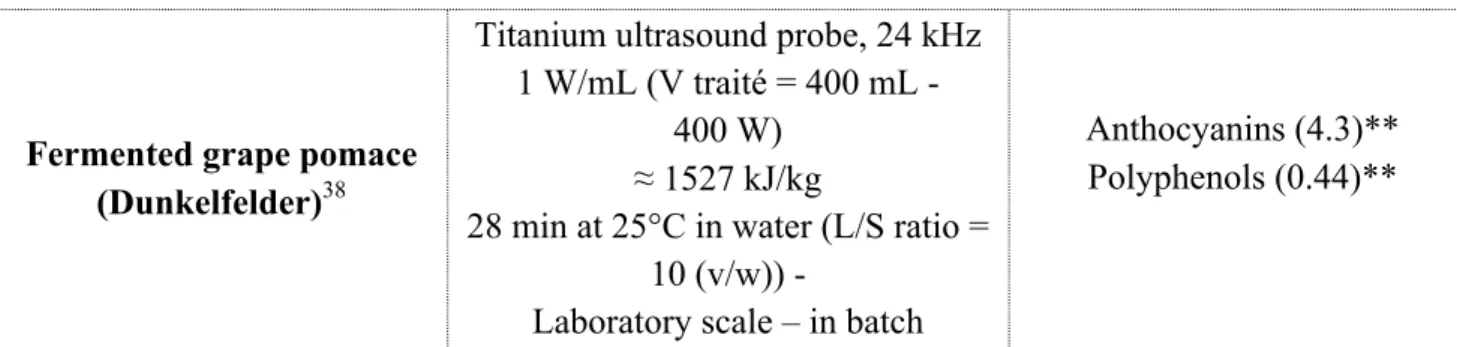
US-assisted extraction of valuable bio-compounds from winery by-products: Ultrasounds can be applied for extraction purposes in two ways: directly to extraction media via an ultrasonic probe, or indirectly through the walls of the extraction media container using a water bath. Both types of apparatus operating at frequencies between 25 and 55 kHz are used at laboratory scale for the enhancement of phenolic compounds extraction from winery by-products (Table 3). Optimal US treatment times varied between 25 min and 60 min for phenolic compounds extraction whatever the US device used. This corresponds to specific energy consumption ranging from 187.5 kJ/kg and 4,580 kJ/kg of treated grape by-products. For non-lignocellulosic material (i.e. grape pomace, skins and seeds), US bath is more energy consuming (W > 4,000 kJ/kg) than titanium US probe (W < 1,530 kJ/kg).
In both cases, ultrasonic systems are composed of a transducer, which converts electrical energy into sound energy by vibrating mechanically at ultrasonic frequencies, generating ultrasounds.60 The acoustic intensity (W/cm²), which is determined as the ratio between the ultrasonic power applied and the emitter surface of the probe system given by common ultrasonic bath at laboratory scale is generally low (1 – 5 W/cm²) in order to avoid cavitational damage to the tank wall. The acoustic intensity provided by a probe is at least up to 100 times greater than the one supplied by the bath, one of the major limitation being the cavitational erosion of the surface of the emitter.61 This major difference makes each system devoted for a different set of applications, depending noticeably on the operation cost and on the sensibility to degradation of the molecules to be extracted. Thus, US bath should be more adapted for laboratory extraction of phenolic compounds from grape by-products, while US probe can be used at larger scale.
It is generally agreed that ultrasound has weak effects on the stability of extracted compounds. Nevertheless, specific attention should be paid to the stability of extracted component after a long exposure to ultrasonic irradiation. However, long exposure to ultrasonic irradiation, in some cases, may degrade phenolic compounds particularly anthocyanins.62
Scale-up of the technology/Stage of development: Based on the analysis of different advancements in the large scale operation, the development of continuous reactors and use of multiple transducers63 with a possibility of multiple frequency operation64 is the key to effective large scale operation and could easily be used for
the treatment of different matrices, including grape by-products65. Moreover, some continuous flow systems have been developed for both laboratory and pilot plant scale. Continuous extractors consisting in belt or screw conveyors have been equipped with ultrasound.66 US technology for extraction purposes is already in use at industrial scale. The main matrices of ultrasound-assisted extraction are seeds and herbs for food and cosmetic additives application.23 The high polyvalence of the existing concepts in the ultrasound technologies should allow an easy scale up for the intensification of the extraction of biomolecules from the different matrices of grape by-products.
Research needs and challenges: One of the difficulties reported in the literature is the non-standardized methodologies and control parameters. Thereby, the current challenge is to establish conditions in terms of characterization of sound field, probe types and sample volumes aiming at the techno-economical optimization prior to industrial exploitation.67 Another problem hampering the effective operation at commercial scale is from the field of material science and deals with possible erosion of transducer material with continuous use, leading to a decreased transfer of energy and also need for frequent replacements.68 Thus, further research needs to be directed in terms of development of high power ultrasonic (HPU) transducers, with higher power capacity, efficiency, radiating surface area and more sophisticated control system.69 Theoretical work is indeed required for efficient optimization of the large scale design of the sonochemical reactor.
Grape by-product matrix Operating/extraction conditions Targeted bio-compounds (Relative increase*)
Red grape pomace (Dornfelder)39 Ultrasonic bath – 35 kHz V = 90 mL - 140 W 60 min at 70°C ≈ 4860 kJ/kg Ethanol/water (50:50, v/v) (L/S ratio = 4.5 (v/w))
Laboratory scale – in batch
Anthocyanins (0.98) * Polyphenols (1.68) * Antioxidant capacity (1.65) *
Grape seeds70 Ultrasonic bath – 40 kHz, V = 100mL - 250 W
Polyphenols: 5.44 mg/100 mL
29 min at 55-60°C ≈ 4580 kJ/kg
Ethanol/water (53:47, v/v) (L/S ratio = 50 (v/w))
Laboratory scale – in batch
Dried Grape skins (Campbell Early)71 Ultrasonic bath – 40 kHz V = 100mL - 250 W 25 min at 45°C ≈ 4032 kJ/kg Ethanol/water (52:48, v/v) (L/S ratio = 50 (v/w))
Laboratory scale – in batch
Anthocyanins: 6.26 mg/mL
Vine shoots (Pedro Ximenez)72
Titanium ultrasound probe 14W/mL, (V = 20mL - 280 W)
≈ 6930 kJ/kg 7.5 min extraction at room
temperature
80% (v/v) aqueous ethanol at pH 3 (L/S ratio = 20 (v/w))
Laboratory scale – in batch
Polyphenols: 546.4 µg/mL
Red grape pomace Syrah73
Titanium ultrasound probe, 55 kHz 0.44 W/mL (V = 200mL - 87 W)
60 min at 50°C ≈ 1490 kJ/kg
Water (L/S ratio = 20 (v/w)) Laboratory scale – in batch
Polyphenols: 770.9±77.5 mg /100 g dry weight (1.62)
Antioxidant capacity (ABTS): 705.9±41.7 mg
TE/100g
Red grape pomace Syrah74
Titanium ultrasound probe, 40 kHz, 0.15 W/mL (V traité = 1 L - 150 W)
≈ 187.5 kJ/kg Water (L/S ratio = 5 (v/w))
25 min at 17°C Laboratory scale – in batch
Polyphenols: 2.31 mg GA/100 g fresh weight (fw)
Flavonols: 2.04 mg quercetin/100 g fw
Vine shoots (Grenache blanc)57
Titanium ultrasound probe, 24 kHz 1.3 W/mL (V traité = 300 mL -
400 W) ≈ 3428 kJ/kg
45 min at 50°C in water - (L/S ratio = 20 (v/w))
+ Subsequent solid-to-liquid diffusion: 4h at 50°C in 0.1 M of
NaOH in water Laboratory scale – in batch
Polyphenols (1.45) Kaempferol: 0.097 mg/g Epicatechin: 0.671 mg/g Resveratrol: 0.024 mg/g
Fermented grape pomace (Dunkelfelder)38
Titanium ultrasound probe, 24 kHz 1 W/mL (V traité = 400 mL -
400 W) ≈ 1527 kJ/kg
28 min at 25°C in water (L/S ratio = 10 (v/w)) -
Laboratory scale – in batch
Anthocyanins (4.3)** Polyphenols (0.44)**
Table 3: Efficiency and operating conditions of US-assisted extraction used to extract bioactive compounds from grape by-products
* In comparison with control extraction, performed in the same extraction conditions but without US treatment
** In comparison with control extraction of grinded pomace in water (2h – 20°C under stirring)
1.2.2.5. Comparison of pre-treatment processes
Several studies performed at laboratory scale have aimed at comparing the pre-treatment techniques described above on the recovery of phenolic compounds from grape by-products. The results evidenced that HVED was the less energy consuming process, followed by PEF and US, and the most efficient for the recovery of total phenolic compounds.38,57 However, HVED and US were less selective than PEF regarding the specific recovery of anthocyanins.38,39
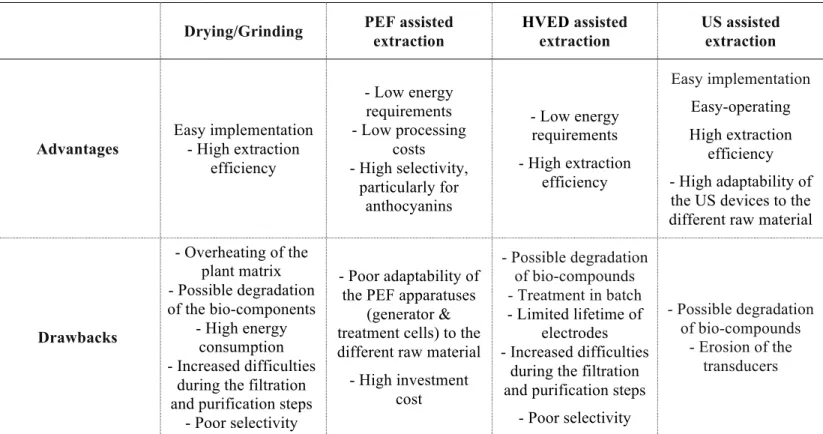
Figure 2 compares the specific energy required by each technology for the pre-treatment of the winery by-products. The use of alternative technologies would allow an interesting decrease of the energy consumption, compared to conventional pre-treatment by grinding. The location of targeted compounds with respect to tissue structures seems to be a key issue in the choice of the pre-treatment to be applied. Based on the previous observations, table 4 resumes the advantages and drawbacks of the different pre-treatments.
Figure 2: Comparison of specific energy consumption for the different pre-treatments of the