
Analyzing the United States Air Force Agile Transformation
Using a Systems Thinking Approach
by
Elizabeth A. Bieler
B.S. Electrical Engineering (2013) Miami University of Ohio
Submitted to the System Design and Management Program in Partial Fulfillment of the Requirements for the Degrees of
Master of Science in Engineering and Management
at the
Massachusetts Institute of Technology September 2018
C 2018 Elizabeth A. Bieler. All rights reserved.
The author herby grants to MIT permissions to reproduce and to distribute publicly paper and electronic copies of this thesis document in whole or in part in any medium now known or hereafter created.
Signature redacted
Signature of Author:Elizabeth Bieler System Design and Management Program Aug 10, 2018
Signature redacted
Certified by:Donna H. Rhodes Thesis Supervisor Principal Research Scientist, Sociotechnical Systems Research Center
Signature redacted
Accepted by:MASSAHUSE1S NITUTE Joan Rubin
~fI . Executive Director, System Design and Management Program
OCT
242018
Analyzing the United States Air Force Agile Transformation Using a Systems Thinking Approach
by
Elizabeth A. Bieler
Submitted to the Department of System Design and Management on Aug 10, 2018 in Partial Fulfillment of the
Requirements for the Degree of Master of Science in Engineering and Management
ABSTRACT
The United States Air Force (USAF), like many large enterprises, has struggled to keep up with industry in developing state of the art systems in a timely manner. Although many argue that the landscape for the Department of Defense (DoD) has complex and unique factors this does not make the needs of the warfighter to be less urgent. To improve its current state, the USAF has been trying to transform software acquisitions from a Waterfall to Agile approach. Progress towards an Agile transformation appears to be somewhat stagnant.
This thesis analyzes the status of the USAF Agile transformation; evaluates challenges for the
USAF in becoming truly Agile -and proposes recommendations to the USAF, DoD and
government leaders on how to make the USAF Agile transformation successful.
A main finding of this investigation is that the USAF Agile transformation is experiencing the
same challenges felt by many large corporations; however, they have a very unique set of stakeholders. The current approach needs modification to include these stakeholders' needs. There are actions that can be taken by personnel at very different levels to make the Agile transformation successful. Challenges such as regulations that reflect Waterfall methodologies are best address by high level leadership while others are best addressed by employees such as creating a grassroots movement.
Agile could be a major contributor for helping the USAF to succeed at becoming more effective at quickly deploying needed systems. By utilizing a holistic view, the USAF will be better able to address the current challenges of Agile transformation to deliver capability to the warfighter.
Thesis Advisor: Dr. Donna H. Rhodes
Acknowledgements
This thesis has been a great learning journey for me, guided and supported by my advisor: Dr. Donna Rhodes. She helped me work through the many challenges intellectual, bureaucratic and personal. Her enthusiasm, encouragement and optimism made completing this thesis possible. This thesis also would not have been possible without the financial funding for my school by the
USAF Science and Engineering PALACE Acquire Program.
Thank you to all of the engineers and program managers who work for the USAF and made time to discuss your experiences with me. Although I cannot list your names - I learned the most
from our time together and your candor.
Sincere appreciation goes to my family and friends who have been not only been understanding but have cheered me on with enthusiasm. To my mother, Deborah Ahles, for fostering a love of science at the youngest possible age and leading by example. She demonstrated that learning is a lifelong process. To my father, Mark Ahles, for helping me find a love for calculus and physics. Without your encouragement I may have never considered becoming an engineer. To my sisters and brother, Rachel Tritle, Sarah Ahles and Aaron Ahles, for exploring the world through science with me. To my mother-in-law, Kathryn Bieler, who has mentored me as one of her own offering great insights into technical leadership and business. To my father-in-law, Jeffery Bieler, for his unfailing emotional support. To my sister-in-law, Kimberly Cahill, for her heart-warming kindness.
Most importantly, I thank with love, my husband Gregory Bieler. He believed in me before I believed in myself. He has been understanding and supportive of this challenging time showing me unconditional love.
Dedication
To my family and friends, without your support, I would have none of my successes.
To all civil servants, the moment we stop pushing for better is the one in which bureaucracy wins.
Table of Contents
ABSTRA CT ... 3
A CK N O W LEDG EM ENTS ... 4
DEDICATIO N ... 5
TABLE O F CO N TENTS... 7
LIST O F FIG URES ... 10
LIST O F TABLES ... 11
1 INTRO DU CTIO N ... 13
1.1 M OTIVATION...13
1.1.1 Establishing a Need for a New Methodology in the USAF...14
1.1.2 Establishing a Need for a Systems View of USAF Acquisitions...15
1.2 THESIS OBJECTIVES... 16
1.3 RESEARCH M ETHODS ... 17
1.3.1 Expert Feedback... 18
1.4 THESIS STRUCTURE ... 19
2 DEFININ G A NEED FO R AG ILE...20
2.1 DEFINING AGILE...20
2.1.1 The Plan-D o-Check-Act Cycle ... 21
2.1.1.1 Agile DevOps ... 23
2.1.1.2 Other Types of Agile... 24
2.1.2 The Foundation of an Agile Project... 24
2.1.3 Agile Company Culture... 26
2.1.4 The Pros and Cons of an Agile Project... 27
2.1.4.1 The Advantages of an Agile Project ... 27
2.1.4.2 The Disadvantages of an A gile Project ... 28
2.1.5 D efining Large-Scale Agile... 29
2.1.6 Agile in Regulated and Safety Critical Environments ... 31
2.1.6.1 N ational Security Agency... 32
2.1.6.2 SpaceX ... 32
2.2 DEFINING AN AGILE TEAM... 32
2.2.1 Agile Team M akeup ... 33
2.2.2 Company Supportfor an Agile Team... 34
2.2.3 Agile Team M ember Training ... 35
2.2.4 Customer and Agile Team Relationship... 35
2.3 AGILE PRODUCT REQUIREMENTS, TESTING AND IMPLEMENTATION...36
2.3.1 H ow Requirements are Developed ... 36
2.3.2 W hen Requirements are Developed... 37
2.3.3 H ow are Products Tested ... 37
2.3.4 W hen are Products Implemented... 38
3 CURRENT DESCRIPTION OF THE USAF ACQUISITION PROCESS...40
3.1 MOTIVATION FOR INVESTIGATING THE ENTERPRISE LANDSCAPE ... 41
3.2 ECOSYSTEM ... 42
3.2.1 D efinition...42
3.2.2 United States Air Force Acquisition Ecosystem ... 43
3.2.2.1 Econom ic Factors... 43
3.2.2.2 Political Factors ... 44
3.2.2.3 Regulation... 44
3.2.2.4 Environm ental Factors ... 48
3.2.2.5 Resource Factors... 48
3.2.2.6 Technology Factors... 49
3.2.2.7 M arket-Related Factors... 49
3.3 STAKEHOLDERS... 50
3.3.1 Definition...50
3.3.2 USAF Acquisition Stakeholders... 50
3.4 CURRENT ARCHITECTURE...53 3 .4 .1 S tra teg y ... 5 3 3.4.2 Infrastructure... 54 3.4.3 Products/Services... 55 3.4.4 Processes...55 3.4.5 Organization... 56 3.4.6 Knowledge...57
3.5 SUMMARIZING THE ENTERPRISE LANDSCAPE... 58
4 UNITED STATES AIR FORCE TRANSFORMATION TO AGILE ... 59
4.1 CHALLENGES W ITH AGILE TRANSFORMATION ... 59
4.1.1 Laws, Regulations and Guidance ... 60
4.1.2 Contracting...61
4.1.3 Learning Curve... 62
4.1.4 Waterfall Remnants Still Perm eates ... 63
4.1.5 Change Resistance... 65
4.1.6 Non-Agile Functions ... 65
4.1.7 Large-Scale Agile ... 66
4 .1 .8 T e s tin g ... 6 6 4.1.9 Summary of Challenges... 67
4.2 POTENTIAL W AYS TO OVERCOME CHALLENGES...68
4.2.1 Laws, Regulations and Guidance ... 69
4.2.2 Contracting...70
4.2.3 Learning Curve... 71
4.2.4 W aterfall Remnants... 72
4.2.5 Change Resistance...73
4.2.6 Non-Agile Functions... 74
4.2.7 Large-Scale Agile Needs... 75
4 .2 .8 T e s tin g ... 7 6 4.2.9 Summary of Challenge M itigations ... 76
4 .3 .1 S tre n g th s ... 78 4.3.2 W eaknesses...78 4.3.3 Opportunities... 79 4 .3 .4 T h re a ts ... 7 9 4.3.5 SW O T Analysis Summary ... 80 5 CO N CLU SIO N S ... 81
5.1 INSIGHTS AND FINDINGS ... 81
5.2 FUTURE RESEARCH... 82
6 REFEREN CES...84
A CRO NYM S AND ABBREVIATIO NS ... 86
APPENDIX A: DEFENSE ACQUISITION LIFE CYCLE COMPLIANCE BASELINE (PRE-TAILO R IN G ) ... 87
List of Figures
F igure 1.1. R esearch App roach... 18
Figure 2.1 PD CA Cycle adapted
from
[15]... 21Figure 2.2 Waterfall PDCA Cycle adapted
from
[3], [12]...21Figure 2.3 Agile PDCA Cycle adapted from [3], [12], [13] ... 22
Figure 2.4 Agile vs. Agile DevOps Sourced [3]... 24
Figure 2.5 Deployment and Integration Team Makeup Sourced [12] ... 34
Figure 3.1 Lenses for Different Views of an Enterprise Sourced [8]...41
Figure 3.2 Model of Commercial Software Adaption Sourced [27] ... 45
Figure 3.3 Model of a Mainly Software Defense Program Sourced [27]...46
Figure 3.4 Stakeholder Map for Acquisition Program...52
List of Tables
Table 1-1. Thesis Structure...19
Table 2-1 Traditional Waterfall vs. Agile Source [20]... 39
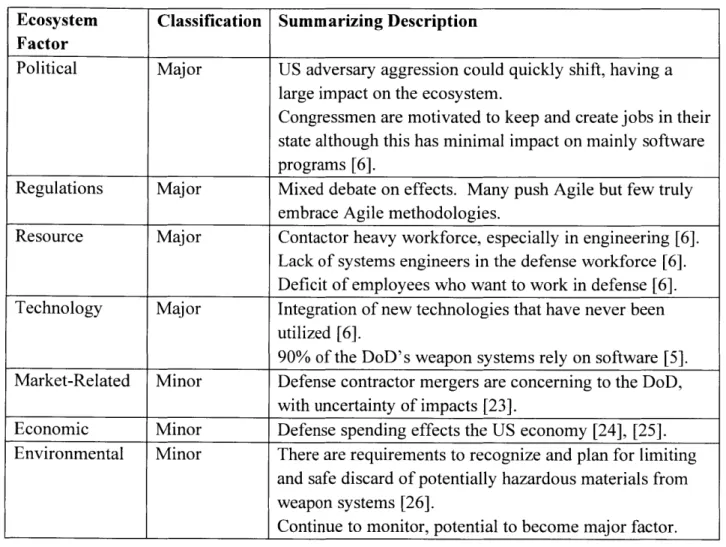
Table 3-1 Summary of Ecosystem Factor Analysis ... 43
Table 4-1 Summary of Challenges... 68
Table 4-2 Summary of Challenge M itigations... 77
1 Introduction
1.1 Motivation
To many in the defense community the book Augustine's Laws by Norman Augustine is infamous for its satirical commentary on the challenges of being a defense contractor. For example, he found that annual cost of the defense budget is not growing nearly as quickly as the cost to develop aircraft resulting in the following law [1].
"Law XVI: In the year 2054, the entire defense budget will purchase just one aircraft. This
aircraft will have to be shared by the Air Force and Navy 31 days each per week except for leap
year, when it will be made available to the marines for the extra day." [1]
Although this book was published in 1984, many of the problems mentioned are still relevant today[1]. Many of them seem to be addressed by agile methodologies with promises of either a shortened development, better products or less cost [2]-[5].
Agile principles are not new; they have been around for nearly 20 years. While DevOps is newer, many of the key principles and values are the same. These concepts were at first mainly embraced by small startups whose company cultures aligned well with agile principles. As the success stories of agile companies and products grew, so did interest from larger companies. Success stories of better products and shorter program lengths have led to commercial giants and even the Department of Defense (DoD) to become interested. It seemed this could not come at better time considering the mostly retracting defense budgets with lengthy, expensive development of weapon systems. Despite this the defense industry is struggling to figure out how to implement agile methodologies. The United States Air Force (USAF) is no exception to this struggle.
In some ways the United States Air Force is no different than many large established commercial companies. Although there are some well-known large companies, such as Netflix and Amazon, that utilize Agile or DevOps these companies are often software heavy. In contrast, other larger companies have struggled with how to implement Agile especially in an effective way. However, there are also many unique aspects to the DoD since it is not commercial but a
government entity. Being a government entity effects many areas of the development of weapon systems. One example is the involvement of Congress who has many roles, but one of the most noteworthy is in the oversight on acquisition programs. Considering the uniqueness of the DoD it is important to utilize a holistic view to understand all the challenges of implementation.
It is important to understand the challenges being tackled as the USAF, and the DoD, continue to integrate Agile. In order to have a successful implementation, the problems need to be well understood from a holistic perspective. This thesis identifies the challenges being experienced
by the USAF, and brings a system view to help our leaders address pressing issues so the USAF
is able to successfully implement Agile throughout the USAF. This hopefully saves tax dollars and time while delivering the best quality weapon systems to the field to protect not only the military members but the American people.
1.1.1 Establishing a Need for a New Methodology in the USAF
Adversaries to the United States (US) are obtaining capabilities at unprecedented speeds [3]. Weapon systems are growing increasingly complex [6]. Technical needs often shift over time requiring expensive changes leading to cost and schedule overruns [6]. At the same time the percentage of software of a weapon system is growing at an unparalleled pace and is 60% of the risk for the average program [3]. This leads to new challenges compared to mainly hardware systems. Compared to hardware, software leads to breakdowns and has unique requirements for security, testing and maintenance [3]. In further contrast with hardware, software never needs to be replaced from wear and tear, instead staying with the weapon system until death [3]. Exacerbating the problem is the use of unvetted technologies that are often a key component, greatly increasing technical risk [6]. Unfortunately, technical challenges are far from the only noted problem.
Within the DoD, cost estimates for a product are determined before even knowing if it's technically feasible, so estimates are always wrong and all stakeholders know it [6]. During an investigation by the Defense Science Board, DSB, they found that both cost and schedule overruns were likely due to software that could have been avoided by using Agile [3]. Both colossal cost and schedule overruns are common in acquisition programs [6]. The cost overruns are so persistent that the average program is 21 months behind schedule, with the worst programs
being almost ten years late [6]. Despite cost overruns, huge technical obstacles, amongst other problems over 95% of acquisition programs are never canceled [6]. Defense projects have continued to utilize securely controlled procedures even though cost and schedule are pointing to catastrophe [5]. Perhaps this is because success for an acquisition program is measured by getting funding, not for delivering a weapon system to the war fighter [6].
There is a growing clamoring for a need for change within acquisitions. Ret. Army Gen. Hirsch spoke about how the acquisition processes set people up to fail [6]. The current procedures seem to mitigate risk so that leaders who adhere to them are not responsible for failures [6]. Top military leaders are concerned about what appears to be exponentially growing costs [6].
Failing procedures, seemingly ever-growing cost and schedules along with complex technical challenges are all signs indicating that the current system is failing to deliver. The current path that USAF acquisitions is on is unsustainable. Better solutions are needed to meet the pressing needs so the US military can protect and defend for a lesser cost and more credible schedule.
1.1.2 Establishing a Need for a Systems View of USAF Acquisitions
The USAF is part of a complex and complicated environment with individuals, companies and even other countries that all have a stake in the results of USAF acquisition projects and programs. For example, stakeholders in USAF acquisitions include congressmen, contractors,
lobbyists, service members, congressional constituents to name a few [6]. All of these
stakeholders put immense pressure resulting in programs that rarely, if ever, are canceled [6]. Even within the DoD there are lots of rewards for low estimates for cost and extreme optimism for technical hurdles [6]. Because it is such a complicated and complex system it demands holistic analysis.
Holistic thinking involves thinking from different perspectives and examining anything that might interact with the system [7]. One way to approach holistic thinking is by looking at the
system through multiple views to avoid concentration on only one area [8].
"Holism insists on the intimate interconnection of things-on the idea of the whole-and to think
In order to solve today's business problems, we need to focus on more than the immediate task at hand [9]. For businesses systems thinking can be the difference between success and failure
[10]. Oversights and even disasters tend to happen when the focus is concentrated on one aspect [8]. Instead we should consider the context to come up with truly revolutionary solutions.
[9]
Holistic thinking helps identify as many as possible unknown unknowns, which can be the most detrimental to a system [7]. An unknown unknown is being on vacation at the beach completely unaware that a hurricane is heading towards you and will hit land soon [7]. A known unknown is knowing the hurricane is heading towards your beach vacation, but you do not know when it is going to hit or the category [7]. Although both are detrimental to your vacation, only the unknown unknown is also likely detrimental to your life. [7]
Holistic thinking is associated with systems thinking. Systems thinking is beneficial because of systems inherit qualities. There are very few things that cannot be categorized as a system [7].
A key attribute of a system is that when the individual components work together the result is a
new function different than the individual components - this is called emergence [7]. This emergence is a critical trait; it gives both the beauty (helpful emergence) and danger (undesired emergence) of a system [7].
Because of the immense values of analyzing problems using holistic systems thinking it is not only helpful but necessary to truly analyze the challenges with implementing Agile in the USAF. Failing to do so misses critical pieces of the puzzle ultimately leading to misleading conclusions.
1.2 Thesis Objectives
The aim of this thesis began with a research question: Is there a needfor the USAF to adapt
Agile methodologies? This first research question provided motivation to understand Agile and
its fundamental differences with Waterfall methodologies. Since there is an established need for a new methodology this provided motivation to determine if Agile would be able to address those problems.
This led to a second research question: What challenges will the USAF face as it transforms to
an extremely large organization tries to adapt the Agile principals that work well for small companies. In addition, it motivates an analysis of what unique challenges the USAF may face as both a government organization and a military one.
The third research question then is: In what ways can these challenges be mitigated? The goal of this question is to use the thorough analysis of both Agile methods and the holistic view of United States Air Force to find ways to address these challenges.
1.3 Research Methods
Figure 1.1 shows the continuous iterative process used to perform this research. This process always came back to and began with knowledge gathering, primarily through literature review. As knowledge was gathered, I formulated theories to be tested by further knowledge gathering through both literature and subject-matter experts. As theories matured it led to the simplified model to capture the key characteristics of the "system" of USAF Acquisitions. The term model is being used to mean a simplified representation of a real system. Simplified representations can add value by making a complex system easier for human comprehension to understand. This model went through further internal validation through literature review, with refinement of theories. An exploratory approach was taken to generate a holistic view. As new information was discovered, theories and the model were updated. Eventually, this led to a review by USAF Agile experts, with years of experience in the USAF and experience on an Agile program. Expert feedback, along with further research, theory and model refinement led to a finalized model.
Continuous Iterative Process: 1. Knowledge Gathering (literature review) 2. Formulation of theories 3. Generating of models 4. Review by experts 5. Finalized models
Figure 1.1. Research Approach
1.3.1 Expert Feedback
Expert feedback was gathered through interviews in which the models (Table 3-1, Figure 3.4,Table 4-1, Table 4-2, Table 4-3) presented in this thesis were reviewed and discussed. This discussion was utilized to determine if the models matched or differed from their experience with Agile in the Air Force. These interviews were kept anonymous to encourage honesty about their experience without fear of retribution, whether positive or negative. In total five individuals were interviewed from four different Agile programs at varying levels of experience and different level of roles. Expert interviewees had at least five years of experience in the USAF (most had more) and at least one year of USAF Agile experience with the exception of one interviewee who had three years of USAF time.
Using personal experience of five individuals to validate or invalidate is an imperfect approach. Data could be skewed with such a small sample size or geographic homogeneity since all were assigned to the same Air Force Base. Due to the small sample size outlier perspectives were excluded from the central analysis since they seemed related to personnel experience rather than reflective of the great picture. However, since each interview was conducted individually with no knowledge of who the other interviewees are, there is less chance for contamination between interviews. Also, some of the answers interviewees gave conflicted to some extent with each other. For example, one interviewee felt that the major command requesting the weapon system
was a large influence on the Agile process and should be included as a stakeholder separate from the warfighter. Another interviewee felt that for the level of the diagram that this was inappropriate and saw the major command and the warfighter as the same stakeholder. For this reason and others, it is important to note the limitations of interviewee sample size in this research. Certainly, further research would warrant further confidence with a more rigorous approach. Unfortunately, time limits prevented more extensive data collection for this thesis, and therefore findings should be considered as an initial exploration of the topic.
1.4 Thesis Structure
This thesis is arranged as follows, and is summarized in Table 1-1. Chapter 2 establishes the need for Agile methodologies in the USAF by investigating how the current problems in USAF acquisitions can be addressed by Agile but not Waterfall (the current) methodologies. Chapter 3 lays out the current state of the USAF Agile transformation that is in progress. Chapter 4 synthesizes the challenges of Agile transformation and presents the framework for modeling the system. Chapter 5 explores mitigation actions that could be taken to address the challenges. Chapter 6 summarizes the thesis findings and prospective future work.
Table 1-1. Thesis Structure
Chapter Content
Ch. 1 Introduction and Research Methods
Ch. 2 Defining a Need for Agile and DevOps
Ch. 3 Current Status of Agile in the USAF
Ch. 4 Synthesis of Challenges in the Model
Ch. 5 Mitigation Actions for Challenges
2 Defining a Need for Agile
If only looking at the headlines Agile appears to be the new miracle drug for projects - a long list of benefits with zero side effects. For example the Harvard Business Review states that Agile transformed software by increasing speed, quality and productivity [11]. With a little initial investigative research an Agile novice may become even more confused by a seemingly endless proliferation of jargon unique only to Agile. This makes it challenging to assess if Agile is a good solution for a project or company's needs. This chapter clarifies what Agile is, why it is a good fit for addressing the challenges in today's USAF, and explains how Agile can work for large scale enterprises.
2.1 Defining Agile
Our world has become digital [12]. For many companies software is not only the product but also what differentiates their company [12]. Nearly 80% of companies state that delivery within 2 months is too slow [12]. Because of this 75% of companies have moved to Agile or Agile variation to increase delivery rates [12]. In Dioquino's presentation he defines Agile as a way to increase delivery with better feedback from customers and a focus on ROI [12]. According to Serrador and Pinto, Agile is iterative and incremental with fluid requirements and scope, and high customer engagement [13]. In the Harvard Business Review article the authors chose to focus on Agile scrum defining it as empowering a cross-functional small team that manages itself and is responsible for all work [11]. Rico defines Agile as a method of software design that utilizes small teams to iteratively advance products through customer feedback [14]. With these definitions in mind, the following section reviews methodologies that pre-date Agile, working forward to modern methodology.
2.1.1 The Plan-Do-Check-Act Cycle
The Plan-Do-Check-Act (PDCA) cycle, shown below (Figure 2.1), was first created in the
1930's by Dr. Shewhart [15]. This was considered fundamental in determining when action was
required versus leaving it be [15].
(1) Plan (2) Do
(4) Act (3) Check
Figure 2.1 PDCA Cycle adapted from [15]
This simple, but elegant method is helpful in explaining some of the key differences between Agile and Waterfall philosophies. It can even clarify some of the challenges inherit in Waterfall for software projects. It is nearly impossible to discuss Agile without discussing Waterfall, whose short falls, particularly in the software realm are credited with creating the need for a new process [16]. Waterfall could be described as one long PDCA cycle. First all requirements for project our written, second it is designed, third code is written, then the software is tested and then finally fielded [3], [16].
Requirerfenl
Design
Coding
Test
I Fielded
In contrast Agile takes a small functional piece of a project and designs, writes, tests and sometimes fields the software - this is called an iteration [3], [16], [17]. These iterations are repeated until the entire project is completed [3], [16], [17].
Requirements
Test Design
Coding
Fielded
Figure 2.3 Agile PDCA Cycle adapted from [3], [12], [13]
Waterfall was and is embraced for seeming to organize programming by giving control and predictability [3], [5], [17]. The main value that Waterfall methods are found to deliver is
quality documentation and processes [14]. Processes that required change authorizations and gateways to proceed to the next step confirm feelings of control [2], [3], [17]. The DoD embraced these methods as risk reducing, up to the year 2000 it followed a modified Waterfall process [3]. DoD requirements were finalized, cost and schedule estimates were made (and approved) then contracting sent out a request for proposal [3]. Then the software was developed (the number of members is based on a number of lines of code estimate) and tested before being fielded [3]. Waterfall was seen as the best way to ensure maintainability, reliability and safety
[14]. Despite these processes Waterfall failed at reducing software risk [3], [13].
One of the key reasons why Waterfall tends to fail in comparison to Agile is in the delay of the
PDCA loop [2] - [3]. Errors are not found in requirements until (on a large project) years later
project are extremely expensive to make and will likely delay the project [2], [16], [17]. Choices are then made between adding value or meeting program management goals [2], [16],
[17]. This also results in inordinate amounts of rework, client disappointment, and the risk that
once the project is complete the current technology has superseded it [13]. Waterfall assumes that all requirements are fully understood at a detailed level [2], [16], [17]. When errors are found in a Waterfall project the plan often takes priority [5]. Not surprisingly change has been found to be inescapable during project planning [13]. Agile distinguishes itself from Waterfall
by avoiding these faulty assumptions.
Agile's use of "continuous iterative" development does not waste time on writing lengthy requirements documents [3], [16]. Writing unnecessary documentation adds to Waterfall projects rigidity [13], [5]. Instead Agile processes use broad desired functions to guide design along with frequent, often daily, interactions with the user [3]. This avoids the delays in information experienced in Waterfall. Agile is also more adept at handling the inevitable challenges of designing a new product [17]. These challenges are often most effectively mitigated by increasing feedback and often results in a hardy robust product [3], [17]. As Agile has gained notoriety, many different derivatives of Agile have been developed and implemented.
2.1.1.1 Agile DevOps
Agile and DevOps are two different methodologies that have come together to create Agile
DevOps. DevOps came from integrating team members from IT operations with the
development team [18]. DevOps integrates more of what happens after software is fielded as shown in the Figure 2.4 [18]. Agile DevOps then involves several Agile projects at the same time for each iteration [3]. This requires careful architectural decisions and interface management [3]. There are many reasons that this method is being deployed - it can lead to quicker, more secure solutions and has heavy emphasis on automation which increases efficiency
[18]. Agile DevOps is a continuous method of planning, testing, delivering and operating [12].
In order to make a method such as Agile DevOps work it requires greater automation but it integrates the whole team [12]. The increased automation also makes it easier to track key performance metrics such as quality through metrics such as number of incidents and defects or
deployment to product success rate [12]. Throughout the rest of this thesis, the term Agile is used for all Agile, Agile DevOps, DevOps and other Agile derivatives.
Req + Dev + Test
Quay Anw. .;*Oagng &
Iterations 1 12 3 4 5 Pm'duetieff
U
Req + Dev + Test + OpsFigure 2.4 Agile vs. Agile DevOps Source [3]
2.1.1.2 Other Types ofAgile
Unlike Agile DevOps which combined two different philosophies, there are different manifestations of Agile processes. There is a large variety of different types of Agile implementation but two of the most common are Scrum and XP, eXtreme Programming [2],
[19]. Scrum, or a variation of it, is utilized five times more often than any other Agile technique [11]. However, XP, is given credit as the first Agile method and was created by Kent Beck [14].
Scrum stresses the program management side of Agile while XP stresses the increments [2],
[19]. Although both emphasize the customer they do so in different ways. XP emphasizes
quick, active feedback during increments that result in fast releases while Scrum emphasizes code delivery based on customer prioritized requirements [19]. Scrum also focuses on complex problem solving [11]. In addition to Scrum and XP there is also lean development that removes all waste [11]. Or there is Kanban which minimizes lead times [11]. Actual implementation of Agile often is not a pure type of Agile but rather it is a mix [2].
2.1.2 The Foundation of an Agile Project
There is a lot more to Agile then variations on series of short iterations. The Agile process begins with a list of features called a backlog that come from the customer [3]. Code is
day [3]. Any errors found in the automatic testing are fixed before new coding is begun the next day [3]. Once an iteration's coding is complete it is peer reviewed, further tested, and is
completed and stored in a repository [3]. Iteration(s) become a build which is automatically documented and users are able to provide feedback [3]. The feedback adds to the backlog of features [3]. The average time it takes to finish one iteration is often used as a method to track progress of an Agile team [17]. It may take a few iterations to determine this - but then burn-down charts can be created to show development [17].
Agile, however, is not only a change in procedures but also a cultural shift. The Agile Manifesto, the semi-birth place of Agile lays out four core values [16].
"(1) Individuals and interactions over processes and tools
(2) Working software over comprehensive documentation
(3) Customer collaboration over contract negotiation
(4) Responding to change over following a plan" [16].
Agile focuses on some key principals that make it substantially different then Waterfall processes. The central theme to Agile is efficient delivery of worth to the client [20]. Considering what the customer wants is not a new concept but the methodology behind the principle is. It is notoriously difficult for customers to know, let alone articulate what they want
[5], [17]. Agile has a novel way to tackle this problem that is more effective [17]. The other key
principle for Agile is a novel concept - embracing change rather than resisting it [17]. In order to embrace change many of the "standard" processes no longer apply. These two key principles get the heart of Agile.
"Agile software development processes can be thought of as creating options that allow decisions to be delayed until the customer needs are more clearly understood and evolving
technologies have had time to mature." [17]
This is essential in environments in which requirements are instable and the problems are convoluted [4]. That is why Agile is known for handling change well [2],[16]-[17]. Agile can do all this by enabling designers to have several options for a module where the prosperous ones are integrated [3]. Sometimes there are fears that options will lead to a never ending or never
converging project [17]. Actually, options empower the selection of a good architecture and other good selections by deferring until the last possible moment when the best data is available
[3], [17]. For communication this means information is distributed as soon as it is realized even
if it is incomplete [17]. Whenever possible Agile dictates that communication should be in-person not through documentation [17]. To encourage delaying judgement it is useful to talk about constraints rather than options [3], [17]. Deferring prevents a potential catastrophic error of picking the wrong choice when inefficient information is available [3].
Agile also means a shift in culture for leadership - they must learn to identify waste [17]. For example, documentation is a common area that formerly Waterfall leadership struggles [17]. Documentation should add value to the customer, which is seldom the case [17]. If it is required, such as with safety software, documentation should not just be completed but be helpful [17]. The best way to know if it is helpful is by observing to see if it is regularly used and updated without prompting [17]. Another example of waste is waiting, which is often the case when authorizations or customer feedback is needed [17]. Defects are a critical area of waste, not only in the defected code but also the time that it took to find the defect [17]. Some waste is inherently eliminated in the Agile processes, other wastes may be more easily overlooked. To identify waste, a new company culture must be developed.
2.1.3 Agile Company Culture
Limited requirements and planning aligns well with Agile principles [19]. This leads to minimized controls for upper layers but is great for developer morale [4]. One of the biggest distinctions about an Agile culture is that it empowers people [17]. It empowers them to choose the best choice from the best options [17]. In a Waterfall culture employees are told to meet cost, schedule and scope - this means they have no options from which to pick [17]. This is reflected in Dikert et al. research that one of the important success factors for large scale Agile transformations is a focus on mentality alignment [2]. They also found that management support and employee education and guidance were critical to success [2]. One example of how empowering employees to make wise decisions is creating a simple model with basic fiscal data
[17]. This is giving the employees a holistic view of the problem space, rather than keeping
them in silos [17]. This contrasts with Waterfall which utilizes part optimization which rarely leads to an optimized system [17]. Rather the result is often that the system is not optimized at
all [17]. This is also true for employees. Employees will not prosper when companies favor plans, procedures and documentation over everything [17].
Although most large companies, including Netflix, are not Agile across all of their company functions there are some modifications that must be made in those non-Agile functions [4]. Agile causes roles for employees to change so the company value of Agile and the adoption of Agile principals throughout a company matters [4]. This means functions like HR and finance will accept Agile processes whether or not their team members are integrated into Agile teams [4]. These functions need to have less levels and these teams often create a boundary inside of which Agile teams can do whatever they wish [4]. At its heart, Agile culture is about collaboration and empowerment for all employees.
2.1.4 The Pros and Cons of an Agile Project
Agile is profoundly different from hierarchal Waterfall management [11]. Not only is Agile hastening growth and improving managers but also is integrating people from different functions onto one team [11]. Agile is being utilized in all areas from National Public Radio to fighter jets to human resources [11]. However, it is important to keep in mind that although there are many advantages to Agile there are also some disadvantages to keep in mind.
2.1.4.1 The Advantages of an Agile Project
As established in Chapter 1, the United States Air Force acquisition process has a multitude of problems that have been inefficiently addressed by current processes. Not only are many projects over cost and schedule but they struggle to deliver to technical expectations [3], [6]. Fortunately, these problems seem to be addressed by utilizing Agile methodologies. For example, a study found that 50% of design is done outside of the design phase [13]. Although there is a wide variety of reports it is difficult if not impossible to find a study where Agile performs worse than Waterfall [3]. Most reports show that Agile is better on cost, schedule and/or quality [3], [5]. In some cases Agile has been found to increase team efficiency [2], [17]. Agile has been confirmed to increase client and coder contentment [2], [4]. One study analyzed a multitude of projects to better compare Waterfall to Agile methodologies [13]. This study found statistically significant evidence that the more Agile methods used were the more successful the project was, the happier the stakeholders were and the more efficient it was [13].
There also is documentation that Agile minimizes waste and creates the best value for customers
[11]. It has even been shown to build respect between team members [11]. One review analyzed
over 300 studies and found that on average Agile was 30% better at cost, 90% better at schedule,
97% better quality and 400% better satisfaction [14]. These are truly the headliners for the many
advantages of Agile - but there are arguably many more important advantages below the surface.
Although Agile boasts many advantages beyond financial one of the most vital is managing change well [4]. As mentioned earlier, Agile encourages keeping the options open, especially for architecture, waiting until the most relevant information is available [3].
"That's the agile in practice: big ambitions and step-by-step progress. It shows the way to proceed even when, as is so often the case, the future is murky [4]."
This process not only allows critical faults to be discovered early on, makes quick change possible, and makes integrating user feedback easy and fast [3]. This is vital since approximately 80% of Waterfall projects have erroneous requirements [5]. "Change tolerance" is also essential for understanding the customer's perspective, since their perspective will change
[5]. Agile teams first prioritize on the customer's primary needs with a strong emphasis on
customer collaboration [19]. The iterations make it possible to have frequent feedback to integrate in those changes [5]. This creates the Agile benefit of being able to respond to constantly shifting client needs [20]. Agile also engages in the customer in a more intuitive way. Rather than documentation Agile uses things like models to get better insight from customers
[5]. The Agile Manifesto itself encourages empowered teams, effective communication, adaption to change and frequent iterations [19]. This creates deeper understanding and cooperation between all shareholders [20].
2.1.4.2 The Disadvantages of an Agile Project
Although there are many advantages to implementing Agile - it is not necessarily the best fit for every project. Rico actually found that when comparing the best Agile methods to the best Waterfall methods that in terms of return on investment (ROI) they are equal [14]. Safety requirements often require more up-front planning, more reflective of Waterfall then Agile methods [13]. For example, in a Nuclear Power Plant using Agile methods could result in
irreparable damage by challenging failure [16]. Applications that rarely, if ever, have changes in code would not benefit from Agile [3]. In the DoD, the DSB found that areas such as low-level mission critical flight control systems, digital engine control systems and legacy systems near termination were unlikely to benefit from a switching to Agile from Waterfall [3]. In addition, upper management loses some their control mechanism with less upward transparency [5]. In these situations a balance between Waterfall and Agile may be needed since too much planning for a project can be just as disastrous as too little planning [13]. Additional types of projects that do not warrant Agile are more routine operations [11]. It is important to determine if the benefits of Agile outweigh the cost of the training and organizational change which are very expensive
[11]. Since Agile focuses on empowering motivated people - teams must choose to adopt it
[11]. Trying to force Agile will result in failure [11].
One of the biggest challenges with Agile is that it was designed for small teams - the larger the project the bigger the challenge [2]. Sizeable projects need more coordination, have greater interdependencies which often means more documentation - which is not very Agile-like [2]. Failure to adapt Agile processes well often leads to abandoning Agile practices [2]. This often is a loss of benefit; even non-Agile projects can gain from adapting some Agile aspects [2], [3]. Large scale Agile execution is largely undocumented in literature - making the challenge great [2]. The transformation from Waterfall to Agile was rarely if ever documented in the few reports that did focus on large-scale Agile [2].
2.1.5 Defining Large-Scale Agile
Despite having an unclear path forward, large enterprises are not willing to step away from the potential advantages listed above and continue to pursue Agile practices. There are a multitude of ways to define what large-scale Agile is with the number of people being the most common, however research has not yet come to a consensus [2]. Some other ways include the number of team members, the number of teams, budget size, the number of lines of code or project schedule
[2], [3]. This does not add much clarity when 300 team members is defined as large and 50 team members is also identified as large in one report and small in another [2]. The DoD still uses number of lines of code even though this varies greatly between languages and is appearing to be exponential with time regardless of the project [3]. Despite the unclear definition of what exactly is large, there are similar challenges to adapting Agile to different large applications.
While many large businesses have succeeded in implementing Agile, many others have failed [4]. One of the keys to successful large scale implementation was found to be implementing a pilot program [2]. This is further collaborated by the fact that many enterprises found Agile more difficult to implement then expected [2]. Pilot programs helped persuade management and created company faith in Agile ways [2]. However, at other times Agile falls short of company hopes - this often means non-Agile company areas need to be adjusted [4]. During the transformation non-Agile business areas often delay Agile teams with bureaucratic processes [2]. Large-scale Agile implementation requires a careful balance of conformity and customization [2]. Conformity is needed for success however teams also need to be empowered to select the tools that add the most value for their project [2]. Research is ambiguous on timing and methods for eradicating old procedures [2]. However, it is important to find hold-ups to the Agile transformation and address the root cause [2]. Otherwise the Agile team does not find a realistic path forward, instead it has all obstacles magically removed [2]. Actual circumstances are important for companies to learn [2].
Another key in large-scale implementation is utilizing a team of teams [4]. With Saab's Gripen fighter jet the team morning standups escalate system of system issues [4]. This has proven to be fruitful and resulted in better collaboration between designers and test pilots with colocation [4]. However companies who do large-scale Agile find that choosing and customizing an Agile approach was often seen as essential to success [2].
There are a variety of frameworks to choose from for Large-scale Agile [21]. For example, scaled Agile has been successfully implemented by Lockheed Martin even for multi-year programs [21]. This has been very successful for them and their clients [21]. They noted having individuals experienced in the chosen Agile framework is necessary for true success [21]. Another common issue for large-scale products is that within the system of systems, not all systems are using Agile and some systems are potentially being developed by a direct competitor [21]. Multiple-horizons is key with the system of systems where everything is not using Agile methods [21]. The more often the systems of systems are integrated the better, but sometimes the best that can be accommodated is annually [21]. Lockheed Martin has successfully adapted this framework to integrate their customer needs for critical security products as well [21]. In
fact Agile has been used on complex projects such as NASA's Apollo and deep space probes [14].
2.1.6 Agile in Regulated and Safety Critical Environments
Agile methods can actually improve security [21]. Security critical product begins the same as any other Agile product development with a backlog of stories [21]. In this case security stories are part of the backlog [21]. There are also a series of steps that need to be taken in the PDCA Agile cycle such as threat modeling, utilizing defensive coding and secure design principles [21]. It is important to note that we still need high-level requirements and detailed design but the size of increments for the design, development and test are the same [21]. These items, much like Agile requirements are more "activities" that are likely to be redone and re-evaluated rather than done once as in Waterfall [21]. Security is included as a focus from the beginning and is part of every activity and usually a security specialist is included as a key team member [21]. Part of a secure design is finding areas such as those with a high number of interfaces making them more vulnerable [21]. Testing is critical, especially layered security test levels [21]. It is important to remember that there are risk based security tests, because testing all cases is impossible [21]. One example of testing is resiliency testing and using triage for the results [21]. Most government projects with critical security needs requires accreditation that needs to be done before deployment [21]. Often operations is a team member in secure deployments [21]. Secure deployments also often include secure infrastructure, only releasing one image in one container, or toggling a feature for a limited audience [21]. This enables getting back to a known state fast [21]. Operations result in feedback going into the product backlog [21]. When a defect is found there is complete traceability from requirements to the codebase and integration timelines [21]. This makes it simpler to handle defects found after a few releases [21]. These steps result in secure Agile systems [21].
"Embracing a culture of continuous improvement results in secure systems" [21].
This is how Lockheed Martin has successfully created secure, cyber security robust software for clients including the government [21]. The Intelligence community has even required Agile methods for development of their products [21]. This framework has enabled Lockheed Martin to utilize Agile on projects with hardware in parallel with software [21]. For example, it has
been utilized on the integrated fighter jet group such as the F- 16 and F-22 [21]. The team will build every two-weeks and get feedback at that cadence [21]. Of course the software is deployed at a less frequent basis [21].
Below are two more specific examples of different DoD related efforts that have successfully utilized Agile in systems that require high security, high safety or both.
2.1.6.1 National Security Agency
Agile is utilized at the National Security Agency (NSA) [3]. To ensure security needs are met the NSA maintains a software factory that is a hybrid of business tools and internal security processes [3]. Utilizing this software employees can securely collaborate from diverse locations
[3]. Since the NSA desires to own the intellectual property contractors are paid hourly with daily
participation from government employees [3]. Metrics and procedures are also controlled by the
NSA [3]. An undesired result is there is little investment by contractors since they do not own
any intellectual property [3].
2.1.6.2 SpaceX
DevOps and Agile are utilized at SpaceX for safety critical systems including the USAF Space Launch [3]. Although DevOps is mostly used Agile is used for critical internal systems [3]. The government provided specifications for the launch mission [3]. SpaceX wrote specifications on how it would meet those launch mission requirements [3]. As long as the product is launch certified SpaceX can freely develop since the contract is a launch as a service [3]. Continuous deployment and testing are utilized by SpaceX [3].
2.2 Defining an Agile Team
Although many projects can work in Agile, including those in safety critical environments - it is important to pick the right projects to start [12]. Likewise the first teams should include the right people, such as those already exploring Agile [12]. A champion is also likely needed because change is always a challenge and cultural change is the most difficult [12]. The Agile teams and those around them greatly influence an Agile projects success or failure.
2.2.1 Agile Team Makeup
Many corporate teams are siloed by roles or functions, however Agile teams of all different roles collaborate together [22]. The traditional setup leads to diverging priorities resulting in conflict [2], [22]. Traditional groups are also concentrated on documentation and planning [19]. New Agile teams are most successful when they are focused on the principles of Agile rather than the procedures and when everyone is aligned to the same goal [2]. Leadership should remove obstacles for Agile teams rather than creating an Agile directive [4]. This enables a grass root effort which was seen as another key factor of success [2].
Within the Agile team itself, the team works to create a plan for a project [11]. They break down the highest priority tasks, determine how much work to start and how to divvy it up [11]. The team also clearly defines what being done looks like [11]. Every day the Agile team meets to quickly work through conflicts and obstacles [11]. Conflicts are handled through experimentation rather than verbal arguments [11]. After a sprint the team brainstorms ways to make the next sprint better and tackles the next item [11].
As discussed in Chapter 2.1 team members are empowered and this is reflected in the team makeup. Teams should be independent, this means volunteering, organizing, self-motivating, and self-governing [2], [4]. Team members may be guided by an initiative owner who guarantees everyone is involved and coaches members [4]. An initiative owner is also responsible to the business and customers for the product delivery as well [11]. Because of this they often manage stakeholders and prioritize based on value delivery [11]. An experienced team member should coach development teams on critical subsystems [17]. A process facilitator often helps coach the team through the break-down of tasks and time estimates [11]. Teams should be responsible for their work, which means few, if any approvals should be needed including funding [4]. Program managers may feel left out as they are no longer the regulator and planner [2], [19]. If they become a Scrum master they may struggle to understand their new function is facilitator not regulator [2], [19]. A master developer is required when designing a
highly complex system to facilitate coordination across subsystem teams [17]. In addition to a
design team, having an Agile team specifically for deployment and integration can be beneficial [12]. This would involve having subject matter experts in testing, operations, amongst others to help ensure that deployment goes smoothly[12]. An example of a deployment and integration
team composition is shown in Figure 2.5. Agile teams also need space for daily stand-ups and should be seated with their project teams [2]. When a company is well architected their teams will align well with the client experience and the business model [4]. This is vital since otherwise it can make dependencies across teams challenging especially if they have different velocities [2].
Team Lead Operalions SME Dev CM SME
Development SME QA estSME QA Infra SME
Figure 2.5 Deployment and Integration Team Makeup Source [12]
The developer teams are not the only organizational teams which are different in an Agile organization. In order to enable development teams to work directly with customers senior managers should be selling longer term strategies [4]. Unfortunately middle management roles are unclear in Agile which can lead to inappropriate controlling actions [2]. Leadership handles Agile better when they embrace the Agile values [4]. For example rather than creating a steering committee a working group is more Agile-like creating a backlog of opportunities that can be broken into pieces [4]. Having a champion for Agile is also beneficial to help remove barriers and take on risk [12]. This enables a new Agile team to succeed and makes a difference in their likelihood of success [12]. Although roles and functions are often different at all levels for Agile teams compared to Waterfall, all can benefit by focusing on the Agile principles as guidance.
2.2.2 Company Support for an Agile Team
As mentioned above, one of the keys to Agile transformation is having the right kind of management support. This means having the resources to guide, educate, and remove hurdles [2]. Management should have Agile training and openly support the process [2]. If employees are transitioning to Agile processes their workload needs to be adjusted to be lighter to prevent slippage into old ways [2]. When starting a new product leadership needs to be prepared to re-organize teams as the project progresses [4]. Team members should be carefully selected and
those with some Agile experience, different dispositions and capabilities should be taken into consideration [2].
Leadership is not the only key component in the company support; human relations (HR) company support for Agile is unique and also important. The company should become very team centric in their HR practices - emphasizing the team over self [4]. The culture for the employees should support failure, avoid condemning and instead see it as innovation [22]. Employees that lead a team well should be rewarded publicly, not with money but with something visible like an important project [4]. Additionally, employees should no longer show growth through job titles [4]. Employees should have mini feedback sessions throughout the year instead of one annual one [4]. By a company modifying HR, it ensures that employees are encouraged to truly embrace Agile values at all levels.
2.2.3 Agile Team Member Training
Training is also critical to enable employees to embrace Agile at all levels. Training is a vital component for new Agile team member, this is even more true when a company is transforming from Waterfall practices to Agile ones. Training in Agile is not only needed for developers, it is needed for all stakeholders, especially for contractors [2]. Training was found to be essential to keep employees from returning to old ways in large enterprises [2]. After preliminary instruction it is essential to have coaching to help teams navigate their way to success [2], [4]. Since hands-on experience is the best way to learn guidance is needed to help steer the course, correct mistakes and prevent harm [2]. Large organizations often do not have enough coaches to meet needs which explains why in some cases pilot programs do well but further incentives fail [2]. Although often overlooked, coaching seems to be just as vital, if not more so, then training for Agile implementation.
2.2.4 Customer and Agile Team Relationship
Just as training is vital for employees to successfully implement Agile, fostering a strong customer relationship is vital for the project to successfully implement Agile. The consumer should be directly connected to all Agile work [17]. The consumer should also have a direct feedback loop to the work being accomplished [17]. In contrast in Waterfall documentation and procedures are used to communicate user needs to the developer [17]. Because clients perform


![Figure 2.2 Waterfall PDCA Cycle adapted from [3], [12]](https://thumb-eu.123doks.com/thumbv2/123doknet/13998924.455738/21.917.269.611.737.983/figure-waterfall-pdca-cycle-adapted.webp)
![Figure 2.3 Agile PDCA Cycle adapted from [3], [12], [13]](https://thumb-eu.123doks.com/thumbv2/123doknet/13998924.455738/22.917.297.585.298.557/figure-agile-pdca-cycle-adapted.webp)
![Figure 2.4 Agile vs. Agile DevOps Source [3]](https://thumb-eu.123doks.com/thumbv2/123doknet/13998924.455738/24.917.102.779.208.419/figure-agile-vs-agile-devops-source.webp)
![Figure 2.5 Deployment and Integration Team Makeup Source [12]](https://thumb-eu.123doks.com/thumbv2/123doknet/13998924.455738/34.917.212.667.297.435/figure-deployment-integration-team-makeup-source.webp)
![Table 2-1 Traditional Waterfall vs. Agile Source [20]](https://thumb-eu.123doks.com/thumbv2/123doknet/13998924.455738/39.918.70.796.299.697/table-traditional-waterfall-vs-agile-source.webp)
![Figure 3.1 Lenses for Different Views of an Enterprise Source [8]](https://thumb-eu.123doks.com/thumbv2/123doknet/13998924.455738/41.917.250.594.319.664/figure-lenses-different-views-enterprise-source.webp)
![Figure 3.2 Model of Commercial Software Adaption Source [27]](https://thumb-eu.123doks.com/thumbv2/123doknet/13998924.455738/45.917.95.783.429.725/figure-model-commercial-software-adaption-source.webp)
