1
The McGill Journal of Education promotes an international, multidisciplinary discussion of issues in the field of educational research, theory, and practice. We are committed to high quality scholarship in both English and French. As an open-access publication, freely available on the web (http://mje.mcgill.ca), the Journal reaches an international audience and encourages scholars and practitioners from around the world to submit manuscripts on relevant educational issues.
La Revue des sciences de l’éducation de McGill favorise les échanges internationaux et plu-ridisciplinaires sur les sujets relevant de la recherche, de la théorie et de la pratique de l’éducation. Nous demeurons engagés envers un savoir de haute qualité en français et en anglais. Publication libre, accessible sur le Web (à http://mje.mcgill.ca), la Revue joint un lectorat international et invite les chercheurs et les praticiens du monde entier à lui faire parvenir leurs manuscrits traitant d’un sujet relié à l’éducation.
International Standard Serial No./Numéro de série international: online ISSN 1916-0666
The McGill Journal of Education acknowledges the financial support of The Social Sciences and Humanities Research Council of Canada. La Revue des sciences de l’éducation de McGill remercie le Conseil de recherches en Sciences humaines du Canada de son soutien financier.
M E
McGill Journal of Education / Revue des sciences de l’éducation de McGill 4700 rue McTavish Street • Montréal (QC) • Canada H3G 1C6
•T: 514 398 4246 • F: 514 398 4529 • http://mje.mcgill.ca Republication Rights / dRoits de RepRoduction All rights reserved. No part of this publication may be republished in any form or by any means without permission in writing from Copibec.
Tous droits réservés. Aucune partie de la présente publication ne peut
être reproduite sous quelque forme et par quelque moyen que ce soit sans l’autorisation écrite de Copibec.
Copibec (reproduction papier) • 514 288 1664 • 1 800 717 2022 • • [email protected]
© Faculty of Education, McGill Universisty
M
CGILL JOURNAL OF EDUCATION
REVUE DES SCIENCES
DE L’ÉDUCATION DE M
CGILL
EDITORIAL COLLECTIVE / COLLECTIVE ÉDITORIAL :
Anila Asghar, Aziz Choudry, & Teresa Strong-Wilson
MANAGING EDITOR / DIRECTEUR DE RÉDACTION: Stephen Peters
MEMBERS / MEMBRES: Michael Hoechsmann, Bronwen Low, Mary H. Maguire, Joan Russell
MEMBER EX-OFFICIO / MEMBRE EX-OFFICIO: Hélène Perrault
SOFTWARE CONSULTANT / CONSEILLER EN LOGICIEL: Jim Harris
PUBLICATION DESIGN / MAQUETTE: McGill ICC
COVER DESIGN / CONCEPTION DE LA COUVERTURE: Deborah Metchette
McGill Journal of Education is a partner member of Érudit. La revue des sciences de l’éducation de McGill est une revue partenaire de Érudit. www.erudit.org
The views expressed by contributors to the MJE do not necessarily reflect those of the Editor, the Editorial and Review Boards, or McGill University. Authors are responsible for following normal standards of scholarship and for ensuring that whenever the research involves human subjects, the appropriate consents are obtained from such subjects and all approvals are obtained from the appropriate ethics review board.
Les opinions exprimées par les collaborateurs de la Revue des sciences de l’éducation de McGill ne reflètent pas forcément celles de la rédactrice en chef, des conseils de rédaction et de révision ou de l’Université McGill. Les auteurs sont tenus d’observer les règles normales de la recherche universitaire et, s’ils mènent des travaux sur des sujets humains, d’obtenir le consentement en bonne et due forme de chaque sujet ainsi que l’approbation du comité éthique compétent.
3
M
CGILL JOURNAL OF EDUCATION
REVUE DES SCIENCES
DE L’ÉDUCATION DE M
CGILL
EDITORIAL COLLECTIVE / COLLECTIVE ÉDITORIAL :
Anila Asghar, Aziz Choudry, & Teresa Strong-Wilson
MANAGING EDITOR / DIRECTEUR DE RÉDACTION: Stephen Peters
MEMBERS / MEMBRES: Michael Hoechsmann, Bronwen Low, Mary H. Maguire, Joan Russell
MEMBER EX-OFFICIO / MEMBRE EX-OFFICIO: Hélène Perrault
SOFTWARE CONSULTANT / CONSEILLER EN LOGICIEL: Jim Harris
PUBLICATION DESIGN / MAQUETTE: McGill ICC
COVER DESIGN / CONCEPTION DE LA COUVERTURE: Deborah Metchette
McGill Journal of Education is a partner member of Érudit. La revue des sciences de l’éducation de McGill est une revue partenaire de Érudit. www.erudit.org
TABLE OF CONTENTS / SOMMAIRE
WINTER 2012 VOL. 47 NO 1 / HIVER 2012 VOL. 47 NO 1
5 Éditorial / Editorial
• AnilA AsghAr, Aziz Choudry, stephen peters, & TERESA STRONG-WILSON
19 Technology and Curriculum: Shadows and machines
La technologie et les programmes: ombres et machines
• DAVID LEWKOWICH
37 Professional Knowledge “From the Field”: Enacting professional learning in the contexts of practice
Savoir professionnel “De terrain”: imposer la formation professionnelle dans un contexte pratique
• Augusto riVeros & Melody ViCzKo
53 Teacher Professional Learning in Pursuit of the Common Good: A discussion of the role of demonstration schools in teacher education
La formation professionnelle des enseignants comme recherche du bien commun : discussion du rôle des écoles de stages dans la formation des enseignants
• tony loughlAnd
69 international practica experiences as events of influence in a Teacher Candidates’ Development
L’expérience d’un stage international comme élément influent sur le développement de futurs enseignants
• nAnCy MAynes, John Allison & lynn Julien-sChultz 93 Listening to the Student Voice: Understanding the school-
related factors that limit student success
Écouter la voix de l’élève : comprendre les facteurs scolaires limitant le succès de l’élève
• LAUREN SEGEDIN
109 A Cultural Perspective of Conceptual Change: Re-examining the goal of science education
Une perspective culturelle des changements conceptuels: réexaminer le but de l’enseignement des sciences
• george zhou
Editorial
EDITORIAL / ÉDITORIAL
V
olume 47-1 of the McGill Journal of Education comes out at the height of the largest student movement in Canadian history. The Quebec student strike, which at its peak numbered over 300 000 and which at the time of publishing has lasted over four months, has vehemently opposed the Quebec government’s plan to increase tuition by 75% over five years, an increase that would raise the student bill by $1625 (since modified to 82% over seven years). Over the four months, the province of Quebec has seen hundreds of demonstra-tions – including over 50 consecutive night demonstrademonstra-tions and two days of action, which, on each occasion, drew in the environs of 250 000 (or more) into the streets of Montreal. There have been upwards of 3000 arrests amidst an at times violent state response to protesting students, their families, and their supporters, and very recently the symphony (or cacophony, depending on your perspective) of les casseroles, spontaneous evening gatherings from the very young to the very old banging pots and pans on street corners throughout Montreal and across Quebec. The cost of this movement has soared well into the millions, an amount that far surpasses the gains in revenue the govern-ment stands to achieve through the first five years of the tuition increases. Tens of thousands of Quebec university and college students will likely lose their 2012 winter semester, while the Quebec government has pushed through a loi spéciale, officially known as Bill 78, that imposes severe restrictions on protests and people’s ability to assemble. At its most draconian, it levies harsh financial penalties on student groups and individuals for contravening the narrowly-defined law. The law has already been condemned by a broad section of Quebec and Canadian society, as well as raised the concerns of United Nations human rights officials and international organizations, such as Amnesty International.The issue at the heart of this movement has, for the most part, been framed by the students as one of accessibility: if the proposed tuition increase goes through, and if this raise is allowed to set a precedent for future tuition increases, how can families send their children to university; more importantly, which families can? Moreover, it’s not just about students anymore. The Quebec student movement is resonating, tapping into a broader dissatisfaction in society. The
Éditorial
introduction of the new special law has seemed to galvanize a broader dissent, spurring forward social critiques that far exceed the boundaries of struggle over the costs of tuition or access to education. Alongside Canadian cities, recent solidarity marches have been staged as far as New York, Paris, Taipei, and Brussels. Ontario student associations have pledged to bring the fight to their province. Much like what was explored in a 2009 MJE special issue on social movement learning (vol. 44, no. 3), the student movement appears to be serving as a makeshift alternative classroom, rich with opportunities for learning about structures that organize, as well as rigidly constrain, the ways we all live together. Both informally, as participants meet and talk on protest marches, and non-formally, in the workshops, seminars and general assemblies that have been held over the course of the strike, discussions around user-fees for education have generated a broader oppositional discourse. This discourse is directed against not only the growing shift towards privatization and com-mercialization already underway in universities across Canada but the broader neoliberal dismantling of social security, its accompanying politics of economics of austerity, and its plying on fears around increasing debt. Calls for a grève
étudiant illimitée, or ongoing student strike, have increasingly become (if
hope-ful) calls for a grève générale (which has generated some anxiety about whether a resolution to the tuition question would alleviate the crisis).
While the student movement has ballooned outward in scope and support, it has also challenged those who work within academia to look inward at our practices and pursuits. Academic publishing, as the life-blood of scholarly ac-tivity, is one of the main terrains where battles around cultural and structural changes to the university are waged. Perhaps no university community is more vulnerable to these changes than graduate students who, as emerging scholars, straddle the divide between student life and the world of professional academia. In this way, graduate student writing for publication, as the work of a student but also the contribution of a scholar, provides a useful place to start when examining both how tuition increases are embedded within a larger restructur-ing of the academy and their implications for academic publishrestructur-ing.
The McGill Journal of Education has served graduate students well, as both a source of scholarship and in recent years, as a venue for their work. Over half of the contributors to the current issue are PhD students or candidates; this is not untypical. The MJE is committed to graduate student publishing. As new scholars, student contributions can be a rich source of knowledge, shaking up sedimented practices and stirring disciplinary pots. As the graduate student bill grows, becoming increasingly onerous; as student debt mounts; as our governments continue to divest in education, emerging scholars will become more and more beholden to external sources to cover their costs. Their abil-ity, as new scholars, to innovate may also be compromised as funding sources becoming increasingly fewer, narrower and more competitive, steering scholarly output in pre-set directions determined largely by the funder. These strictures
Editorial
are but symptomatic of a larger malaise brought on by academic restructuring. At the 2012 World Economic Forum in Davos Switzerland, Canadian Prime Minister Stephen Harper admonished businesses to make more use of the universities, pressuring universities to become a staging ground to advance the interests of the business community. The result will surely be the increas-ing commercialization of research. The Quebec student movement has drawn attention to the relationships between what a university does and how it is funded. Unless we, as students, scholars, and concerned citizens, all stand up, the ideals of the liberal university will surely be eroded.
What is at stake, then, is access: access to universities (i.e., through low tuition), access to publishing through the engaged scholarship of emerging scholars, and public access to scholarship. In 2007, under the editorship of Anthony Paré, the MJE made the political choice to join a dedicated group of journals in becoming online and open access. The fight for open access is an acknowledgement that the outcomes of university research should be open and accessible to all communities, not only those individuals and inter-ests that can afford to pay to publish, or to pay for published works. Open access scholarship, like academic freedom and the movement against tuition increases, is about protecting the integrity of research and scholarship for the public, broadly conceived.
As Volume 47, issue 1 of the McGill Journal of Education attests, the MJE remains committed to access to the university, while also promoting innova-tive research and writing on education and learning from graduate students, academics and practitioners. In this issue, Lewkowich, Riveros and Viczko as well as Zhou bring new or different conceptual lenses to prevailing issues or practices in education (viz., technology in the classroom, teacher professional development, especially the pervasive PLC, professional learning community, and science education). Loughland draws our attention to the traces of an old yet vital practice, the demonstration school, in new policy initiatives in Australia. Segedin listens to the student voices of at-risk students who have experienced streaming in schools, while Maynes, Allison, and Julien-Schultz listened to their teacher candidates’ accounts of “life-changing experiences” while on international practica in Kenya.
The MJE issue opens with a piece by David Lewkowich in which he states that technology (broadly understood) is not neutral. Nor is it simply a tool. Technological objects carry “shadows” of past situations; in particular, they carry “curricular shadows.” In “Technology and Curriculum: Shadows and Machines,” Lewkowich argues that the presence of technology in classrooms is fraught with ambiguity. The newest technologies are undoubtedly here to stay but need to be seen alongside a continuum of “technological objects” inhabiting the classroom, any one of which ought to be reframed in relation to “the problem of whether the actual structures of the pedagogical
relation-Éditorial
ship are themselves thrown into question” by their use. Students also bring their own dynamic, energies and motivations, which “insinuate traces” on classroom objects and spaces. While the tool can “motivate[s] certain deci-sions that might otherwise have remained unthought,” young people may also understand that “there is more than one way to skin the cat called school.” Lewkowich suggests that teachers and educational scholars both need to be more alert to the important possibilities that attention to curricular shadows might provoke in the classroom.
In their “Professional Knowledge ‘From the Field’: Enacting Professional Learn-ing in the Contexts of Practice,” Augusto Riveros and Melody Viczko examine the disjuncture between the “scenarios” created for professional practice in schools and those created for professional development. Using Actor-Network theory, they interrogate the PLC, or “professional learning community,” which has become the default structure in teacher professional development. Actor-Network theory, the authors suggest, can provide a frame through which to tailor professional development to specific contexts of practice. The theory would allow professional development initiatives to better take into account the “heterogeneous assemblage” of actors and networks inhabiting schools, including issues of struggle, where the reform itself comprises a part of the assemblage and its negotiation of interests. Riveros and Viczko then apply this framework to analysis of a case study of reform in an Alberta school. They conclude by suggesting that knowledge is generated as teachers, students and objects interact, and that further research should pay closer attention to these interactions and their traces in classrooms.
In “Teacher Professional Learning in Pursuit of the Common Good: A Discussion of the Role of demonstration schools in Teacher Education,” Tony Loughland traces the origins of recent Australian policy initiatives to the demonstration school. Writing primarily out of the Australian context, but encompassing the United Kingdom and the United States, Loughland proposes that policy changes like Australia’s new Centres for Excellence in Teacher Education echo the demonstration school model but without a full understanding of what that model means: “This ‘ahistoricism’ is accompanied by the penchant of contemporary neo-liberal governments to focus more on the setting of performative measures rather than taking responsibility for the proper execution of process, including the recognition of historical models.” Loughland traces the historical role of the demonstration school across continents. He then examines one Sydney school, using the case study to “counterpoint” the government’s top-down policy initiative. Genuine profes-sional learning initiatives, Loughland reminds us, require long-term support without short-term targets, which can threaten to undermine the kind of learning culture and support of teachers as professionals embodied in the demonstration school.
Editorial
In “International Practica Experiences as Events of Influence in a Teacher Candidates’ Development,” Nancy Maynes, John Allison, and Lynn Julien-Schultz take up questions around the impacts on Canadian pre-service teach-ers of international practica that the teachteach-ers described as “life-changing.” As supervisors in the field, the researchers accompanied seventeen male and female teacher candidates between 22 and 28 years of age in an international practicum. The teacher candidates taught for three weeks in elementary and secondary schools run by a non-governmental organization in rural Kenya. Nine months after the practicum, using electronic questionnaires with open-ended prompts, the researchers asked the teacher candidates about their experi-ences, to which eleven responded, all the while also reflecting on their own “life-changing” experience as supervisors. Their piece focuses on how teacher candidates perceived their personal beliefs as impacting on their personal and professional practices and how their worldviews and approaches to teaching were affected by their experience of teaching in the global South. The authors identify one direction for future research as collecting longitudinal data on the long-term effects of such experiences on teachers’ classroom pedagogy, particularly as they relate to social justice issues.
Lauren Segedin, in “Listening to the student voice: Understanding the school-related factors that limit student success,” elucidates the ignored voices and feelings of at-risk students about their experiences of streaming. Her work also reveals the complexities of ability grouping and its consequences on student success. Students’ stories of marginalization highlight some of the enduring problems with public education. Drawing on critical pedagogical perspectives, the study raises fundamental questions about the purposes and structure of public schooling as it asks, “Whose knowledge it is that students learn and why it is organized and taught in a particular way”? Through profoundly moving narratives, Segedin deftly exposes how streaming, curriculum, and teacher expectations act as barriers to student success. The majority of the high school students in this study pointed out the lack of relevance of a curriculum largely designed for university-bound students to their current or future lives. Being at-risk and in the applied stream felt like a stigma and a deficit, entailing a lesser status and lower academic expectations in the eyes of their teachers. The most distressing outcome of these systemic flaws was that students tended to blame themselves for their failings. Segedin’s work invites educators, academics, and school leaders to re-examine these issues from the perspectives of students and consider ways of making schooling a stimulating, rewarding, and meaningful experience for all students.
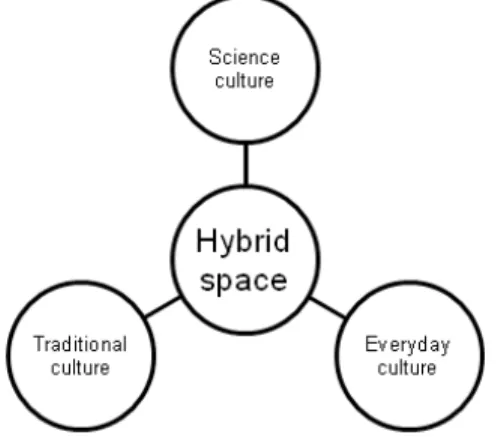
George Zhou, in “A Cultural Perspective of Conceptual Change: Re-examining the Goal of Science Education,” draws attention to the significance of students’ cultural experiences, notions, and values in relation to learning school science. Pulling on post-colonial theories and cultural studies of science education, he illuminates the dynamic nature of the “hybrid space” ofthe everyday, cultural,
Éditorial
and scientific cultures in which science learning takes place. Zhou argues that a clash between these cultures may inhibit students from developing a meaningful conceptual understanding in science. While pointing out the strengths and limitations of the conventional models of conceptual change, Zhou proposes an argument approach to advance students’ conceptuallearning as well as engage them more in a learning process involving different worldviews. Zhou believes that an argument approach would enable students to “appreciate” scientific views and motivate them to become more actively involved in constructing scientific knowledge.
Many thanks to Stephen Peters, MJE’s Managing Editor and working gradu-ate student/emerging scholar, for stepping up to be the lead author on this editorial. This MJE issue also features three book reviews written by doctoral students/emerging scholars. As of this issue, MJE’s Book Reviews are being coordinated by two doctoral students. Many thanks to for all for their focused work and contributions.
A.A., A.C., S.P., & T.S.W.
REFERENCES
Harper, S. (2012, January). Special Address by Stephen Harper. In K. Schwab (Chair) The great transformation: Shaping new models. Address at the meeting of The World Economic Forum, Davos-Klosters, Switzerland. Video retrieved from World Economic Forum website: http://www.weforum. org/videos/special-address-stephen-harper-annual-meeting-2012
Editorial
ÉDITORIAL
L
e volume 47-1 de la Revue des sciences de l’éducation de McGill (RSÉ) paraît à un point culminant du plus important mouvement étudiant de l’histoire canadienne. La grève étudiante québécoise a compté 300 000 grévistes-étudi-ants à son apogée et dure, au moment de cette publication, depuis plus de quatre mois. Les grévistes s’opposent avec véhémence au plan gouvernemental d’augmenter de 75% les frais de scolarité universitaire sur une période de cinq ans, augmentation représentant une majoration de la facture étudiante de 1 625$ (modifiée depuis à 82% sur une période de sept ans). Au cours de ces quatre mois, la province du Québec a connu des centaines de démonstrations – incluant plus de 50 jours consécutifs de “manifs de soir” et deux rassemble-ments ayant attiré respectivement près ou plus de 250 000 personnes dans les rues de Montréal. Plus de 3000 arrestations ont été effectuées dans un climat parfois agressif de répression policière face aux étudiants protestataires, leur famille et leurs supporters.Récemment, la symphonie (ou la cacophonie, selon la perspective) des casseroles est apparue dans les rues de Montréal et à travers le Québec. Ces regroupements nocturnes spontanés allient les très jeunes aux plus vieux, chacun frappant sur des plats et casseroles aux coins des rues. Le coût de ce conflit atteint désormais plusieurs millions, un montant qui dépasse largement les gains espérés par le gouvernement en augmentant les frais de scolarité au cours des premières cinq années. Des dizaines de milliers d’étudiants collégiaux et universitaires perdront probablement leur session d’hiver 2012. Quant au gouvernement québécois, celui-ci a promulgué la Loi 78, loi spéciale imposant des restrictions sévères sur les manifestations et possibilités des gens à se rassembler. Draconienne, cette loi permet d’imposer des amendes salées aux groupes étudiants et individus contrevenant à cette loi extrêmement restreignante. Déjà contestée par un large pan des sociétés québécoises et canadiennes, cette loi a également soulevé des inquiétudes chez des membres de l’ONU responsables des droits humains et au sein d’organisation internationales comme Amnistie Internationale. La problématique au cœur du mouvement étudiant, et telle que formulée par les étudiants, est l’accessibilité. Dans l’éventualité où l’augmentation proposée est imposée et que celle-ci est la première d’une série d’augmentations futures, comment les familles réussiront-elles à envoyer leurs enfants à l’université? Encore plus important, quelles familles pourront se le permettre? En fait, il ne s’agit plus uniquement des étudiants. Le mouvement étudiant a trouvé écho
Éditorial
dans l’ensemble de la société et témoigne d’une insatisfaction plus répandue. L’imposition de la nouvelle loi spéciale a galvanisé un mécontentement plus général, stimulant la critique sociale dans des domaines qui excèdent con-sidérablement les paramètres du conflit sur les frais de scolarité et l’accès à l’éducation. Comme dans certaines villes canadiennes, des marches de soli-darité ont récemment eu lieu dans des villes aussi lointaines que New York, Paris, Taipei et Bruxelles. Par ailleurs, les associations étudiantes de l’Ontario ont promis de mener une bataille similaire dans leur province. À l’instar des thèmes explorés dans l’édition spéciale de la Revue de 2009 sur l’apprentissage par l’action sociale (vol. 44, no. 1) le mouvement étudiant fait office de salle de classe improvisée, une alternative fertile en opportunités d’apprentissages sur les structures qui organisent mais également restreignent la vie en société. Que les participants se rencontrent et discutent de manière informelle au cours des marches de protestation ou qu’ils le fassent durant des ateliers, séminaires et assemblées générales organisés en marge de la grève, ces discus-sions concernant les payeurs-utilisateurs ont généré un discours d’opposition étendu. Ce débat est dirigé non seulement contre le mouvement grandissant de privatisation et de commercialisation des universités à travers le Canada, mais aussi contre le vaste démantèlement néolibéral de la sécurité sociale, les politiques d’austérité économique que celui-ci engendre et les peurs qu’il exerce sur l’accroissement de l’endettement. Les appels à une grève étudiante illimitée ou grève étudiante continue, sont graduellement devenus des exhortations invitant à la grève générale (situation qui génère une certaine anxiété quant à la possibilité de mettre un terme à la crise par la simple résolution de la question des frais de scolarité).
Alors que la portée et le soutien au mouvement étudiant ont considérable-ment augconsidérable-menté, celui-ci amène égaleconsidérable-ment les chercheurs universitaires à se questionner sur leurs pratiques et buts. La publication universitaire, moteur de l’activité académique, est un des principaux terrains autour duquel les trans-formations culturelles et structurelles sont orientées. Il n’existe probablement aucun groupe universitaire plus vulnérable face à ces changements que celle des étudiants des deuxième et troisième cycles, qui en tant que chercheurs émergents, sont à cheval entre la vie étudiante et la profession universitaire. En ce sens, les étudiants gradués rédigeant dans le but d’être publiés, œuvrant comme étudiant mais contribuant à titre de chercheur, constituent un point de départ tout indiqué pour examiner de quelle manière l’augmentation des frais de scolarité trouve un ancrage dans un vaste mouvement de restructuration du monde académique. Ces chercheurs-étudiants nous permettent aussi d’analyser l’implication d’une telle hausse sur les publications universitaires.
De tous temps, La Revue des sciences de l’éducation a pris sous son aile les étudi-ants aux cycles supérieurs à la fois comme source de financement et récem-ment, comme lieu accueillant pour leurs travaux. Ainsi, plus de la moitié des collaborateurs à la Revue sont étudiants au doctorat ou des doctorants et cette
Editorial
situation n’est pas inhabituelle. En fait, la RSÉ demeure engagée à encourager la publication des étudiants-chercheurs. En tant que nouveaux chercheurs, les étudiants constituent une abondante source de connaissances, secouant des pratiques bien ancrées et mélangeant les diverses disciplines. Plus les études supérieures deviennent onéreuses, plus les dettes étudiantes atteignent des sommets. Si le gouvernement persiste à réduire ses investissements en éduca-tion, les chercheurs émergents deviendront de plus en plus dépendants de sources externes de financement. Leur capacité à innover comme nouveaux chercheurs pourra être compromise par des sources de financement réduites, difficiles d’accès et compétitives, situation orientant leurs recherches vers des objectifs en grande partie formulés par les bailleurs de fonds. Ces restrictions sont seulement symptomatiques d’un malaise plus profond engendré par la restructuration académique. En 2012, durant le Forum économique mondial de Davos en Suisse, le premier ministre canadien Stephen Harper a enjoint les entreprises à utiliser davantage les universités, à faire appel à celles-ci comme tremplin pour l’avancement des intérêts de la communauté d’affaires. Le résultat de cette intervention sera fort probablement une commercialisation grandis-sante de la recherche. Le conflit étudiant québécois a sensibilisé les gens aux relations prévalant entre ce que les universités font et la manière dont elles sont financées. Si les étudiants, les chercheurs et les citoyens concernés ne prennent pas position fermement, le futur et les idéaux de l’université libérale seront certainement compromis.
Comme enjeu donc, l’accès : accès aux universités (par des frais de scolarité peu élevés), accès à la publication grâce à des bourses octroyées à des cher-cheurs émergents et accès de tous les citoyens aux bourses. En 2007, sous la gouverne d’Anthony Paré, la RSÉ a pris la décision politique de se joindre à un groupe de publications universitaires ayant choisi d’offrir leur produit en ligne et à tous. La lutte pour le libre accès constitue une preuve que les résultats des recherches universitaires doivent être disponibles à toutes les communautés, libres d’accès. Ces recherches ne doivent pas être accessibles uniquement à ceux pouvant les financer ou ceux pouvant payer pour les travaux publiés. Le savoir démocratiquement accessible tout comme la liberté académique et le mouvement contre la hausse des frais de scolarité sont des moyens de protéger l’intégrité de la recherche et le savoir pour le public, dans sa définition la plus large.
Comme en témoigne le présent volume, les artisans de la Revue des sciences de
l’éducation demeurent des défenseurs de l’accès à l’université. Ils font aussi la
promotion d’une recherche innovatrice et de publications sur l’éducation et l’apprentissage émanant des étudiants gradués, des chercheurs et des profes-sionnels du milieu. Dans cette édition, Lewkowich, Riveros et Viczko ainsi que Zhou proposent des points de vue conceptuels nouveaux ou différents sur les problématiques et pratiques prévalant dans le domaine de l’éducation (soit l’utilisation de la technologie en classe, le développement professionnel des
en-Éditorial
seignants, l’omniprésente CPA (communauté professionnelles d’apprentissage) et les sciences de l’éducation). Loughland nous invite à en apprendre davantage sur une pratique ancienne mais nécessaire, l’école de stages, implantée dans le cadre d’une nouvelle politique en Australie. Segedin tend l’oreille aux élèves à risque ayant vécu l’expérience de la répartition par niveaux. Quant à Maynes, Allison et Julien-Schultz, ceux-ci s’intéressent aux récits que font des enseignants en formation de leur stage international au Kenya, une expérience ayant « changé leur vie ».
Cette édition de la RSÉ débute par un article de David Lewkowich qui soutient que la technologie, considérée dans un sens large, n’est ni neutre, ni simple-ment un outil. En fait, les objets technologiques portent en eux les « ombres » du passé et particulièrement, les « ombres des anciens programmes ». L’article de Lewkowich, intitulé « La technologie et les programmes : ombres et ma-chines », avance comme thèse que la présence de la technologie dans les classes est chargée d’ambiguïté. Les technologies nouvelles sont, sans aucun doute, là pour rester. Cependant, il est nécessaire de les voir comme faisant partie d’un continuum « d’objets technologiques » occupant la classe, chacun d’eux devant être repositionné en relation à la « problématique cherchant à comprendre si les structures actuelles de la relation pédagogique sont elles-mêmes remises en question » par leur utilisation. Les élèves apportent aussi leurs propres dynamiques, énergies et motivations, lesquelles laissent des traces sur les objets et espaces de la classe. Alors que l’outil peut « encourager certaines décisions qui autrement auraient été impensables », les jeunes doivent également com-prendre qu’« il y a plus d’une manière d’arriver à ses fins à l’école ». Lewkowich proposent que les enseignants et les chercheurs du milieu de l’éducation soient plus alertes quant aux possibilités qu’une attention plus grande aux ombres du programme d’enseignement peuvent permettre en classe.
L’article « Savoir professionnel « de terrain »: imposer la formation professionnelle dans un contexte pratique » de Augusto Riveros et Melody Viczko explorent l’écart existant entre les « scénarios » créés pour la pratique professionnelle en milieu scolaire et ceux élaborés pour le développement professionnel. Utilisant la Théorie de l’Acteur-Réseau, ils se questionnent sur la CPA ou « communauté professionnelle d’apprentissage », concept devenu la structure de référence en développement professionnel des enseignants. Comme le suggèrent les auteurs, la Théorie de l’Acteur-Réseau peut fournir un cadre de référence pour adapter le développement professionnel à un contexte particulier. Cette théorie peut favoriser le déploiement d’initiatives de développement professionnel ten-ant compte davten-antage de « l’assortiment hétérogène » des acteurs et réseaux cohabitant dans les écoles. Ceci inclut les problématiques de conflits, où la réforme en elle-même comporte une partie de l’assortiment et la négociation de ses intérêts. Par la suite, Riveros et Viczko utilisent ce cadre pour analyser le cas d’une réforme effectuée dans une école albertaine. Ils concluent leur article en suggérant que les interactions entre les enseignants, les étudiants et
Editorial
les objets génèrent du savoir et que les futures recherches devraient porter une attention particulière à ces interactions et leurs traces dans les classes. L’article « La formation professionnelle des enseignants comme recherche du bien commun : discussion du rôle des écoles de stages (demonstration schools) dans la formation des enseignants » de Tony Loughland retrace les origines des initiatives récentes du gouvernement australien concernant les écoles de stages. Traitant en premier lieu du cas australien, mais abordant aussi les contextes anglais et américain, Loughland soutient que les changements de politiques comme les Centres d’excellence en formation des enseignants créés en Australie rappellent les écoles de stage. Cependant, ceux-ci ne présentent pas une compréhension entière de la signification du modèle : « Ce « a-historisme s’accompagne de la propension des gouvernements néolibéraux contemporains à se concentrer davantage sur la création de mesures de performance plutôt que sur l’exécution appropriée du processus, ceci incluant la reconnaissance des modèles historiques. » Loughland dresse un portrait historique du rôle des écoles de stages sur divers continents. Puis, il analyse le cas d’une école située à Sydney, utilisant ce cas comme contrepoids aux politiques gouverne-mentales descendantes. Comme Loughland le souligne, les initiatives authen-tiques d’apprentissage professionnel requièrent un support à long terme. Les cibles à court terme doivent être évitées puisqu’elles peuvent ébranler le type de culture d’apprentissage et l’appui des enseignants comme professionnels affiliés aux écoles de stages.
Dans leur texte « L’expérience d’un stage international comme élément influent sur le développement de futurs enseignants », Nancy Maynes, John Allison et Lynn Julien-Schultz abordent les questions relatives aux impacts d’un stage ef-fectué à l’international par des enseignants canadiens en cours de formation : l’expérience d’une vie. Supervisant ce stage international, les chercheurs ont accompagné dix-sept enseignants masculins et féminins âgés de 22 à 28 ans. Les futurs enseignants ont travaillé pendant trois semaines dans des écoles primaires et secondaires gérées par une organisation non gouvernementale au cœur de la campagne kenyane. Neuf mois après la fin de leur stage, les chercheurs ont soumis les stagiaires à un questionnaire électronique composé de questions ouvertes, dans le but d’en connaître davantage sur leur expérience. Onze en-seignants et les chercheurs ont répondu à ce questionnaire, réfléchissant sur cette expérience ayant changé leur vie. Cet article porte sur la façon dont les futurs enseignants perçoivent l’impact de leurs croyances personnelles sur leurs pratiques personnelles et professionnelles. Il traite également de la manière dont leurs visions du monde et leur approche pédagogique ont été influencées par leur expérience d’enseignement dans le sud. Les auteurs suggèrent une piste pour des recherches futures, soit recueillir des données longitudinales sur les impacts à long terme de telles expériences sur les méthodes pédagogiques utilisées en classe par les enseignants, particulièrement en ce qui a trait aux problématiques de la justice sociale.
Éditorial
Lauren Segedin, par son article « Écouter la voix de l’élève : comprendre les facteurs scolaires limitant le succès de l’élève », donne la parole aux élèves à risque, faisant connaître leurs points de vue et sentiments – habituellement ignorés – sur leur expérience de la répartition par niveaux. Ses travaux révèlent aussi les difficultés de grouper les élèves par habiletés et les conséquences sur la réussite scolaire. Les cas vécus de certains étudiants mettent en lumière quelques-uns des problèmes persistants du système d’éducation publique. Prenant appui sur le point de vue de la pédagogie critique, ses travaux posent des questions essentielles sur les buts et structures de l’école publique. Quelles connaissances les élèves acquièrent-ils? Pourquoi le système est-il organisé ainsi? Pourquoi l’enseignement est-il prodigué de cette manière? À travers des histoires profondément émouvantes, Segedin expose avec adresse de quelle façon la répartition des élèves par niveaux, les programmes et les attentes des enseignants dressent des barrières au succès scolaire. La majorité des étudiants au secondaire ont mentionné le peu de pertinence pour leur vie présente ou future d’un programme conçu pour répondre aux besoins futurs des élèves se destinant à l’université. Être « à risque » et dans le cheminement appliqué est vécu par ces élèves comme une honte et une tare. Cette impression entraîne un statut moins valorisé et des attentes académiques de leurs enseignants encore plus basses. L’impact le plus pénible de ces faiblesses du système est la tendance de ces élèves à se blâmer pour leurs échecs. À cet égard, les travaux de Segedin invitent les enseignants, les chercheurs et les gestionnaires scolaires à réexaminer les problématiques en adoptant la perspective des élèves. Ils exhortent également ceux-ci à considérer des manières de transformer l’école en expérience valorisante et porteuse de sens pour tous les élèves.
George Zhou, dans son texte « Une perspective culturelle des changements conceptuels : Réexaminer le but de l’enseignement des sciences », s’intéresse à la portée des expériences culturelles, notions et valeurs des élèves sur l’apprentissage des sciences à l’école. S’inspirant des théories postcoloniales et sur des recherches culturelles portant sur l’enseignement des sciences, il met en lumière l’espace hybride au sein duquel cohabitent les cultures du quotidien, de la Culture et de la Science et où l’apprentissage scientifique se réalise. Zhou avance comme argument qu’un conflit entre ces cultures peut empêcher les élèves de développer une compréhension conceptuelle signifiante de la science. Indiquant les forces et limites des modèles conventionnels de changement conceptuel, Zhou recommande une approche basée sur le débat pour mettre de l’avant l’apprentissage conceptuel des élèves. De plus, les débats pourraient impliquer davantage les élèves dans un processus d’apprentissage tenant compte d’une variété de points de vue sur le monde. Celui-ci est con-vaincu que cette approche argumentaire permettrait aux élèves « d’apprécier » les points de vue scientifiques et les motiverait à s’impliquer plus activement dans la construction de savoir scientifique.
Editorial
Nos sincères remerciements à Stephen Peters, le directeur de rédaction de la RSÉ et étudiant gradué salarié/chercheur émergent, pour s’être porté volontaire comme auteur principal de cet éditorial. Cette édition de la Revue offre aussi trois critiques de livres écrits par des doctorants/chercheurs émergents. En fait, à partir de ce volume, la section des critiques de livres sera coordonnée par deux étudiants au doctorat. Mille mercis à tous pour leur application au travail et leurs contributions.
A.A., A.C., S.P., & T.S.W.
RÉFÉRENCES
Harper, S. (janvier 2012). Allocution spéciale de Stephen Harper. Dans K. Schwab (Président) The great transformation: Shaping new models. Allocution prononcée à la rencontre du Forum économique mondial de Davos-Klosters en Suisse. Vidéo provenant du site internet du Forum économique mondial de Davos : http://www.weforum.org/videos/special-address-stephen-harper-annual-meeting-2012
Technology and Curriculum
TEchNOlOgy aNd cuRRIculuM: ShadOWS
aNd MachINES
DAVID LEWKOWICH McGill University
ABSTRACT. The influence of technology in today’s classroom is undeniably ubiquitous and scattered, and though the practice of conceptualizing tech-nological application emerges from within an already contested and highly politicized field of human relations, when approached in the context of cur-riculum, this contestation takes on new significance. In this paper, I construct a claim that, when introduced into the sphere of education, technology brings its own curricular shadows. I argue that while certain technologies seem to place restrictions on a learner’s capacity for expression and experimenta-tion, these restrictions are by no means absolute or immovable, and that to think through technology aesthetically is to posit the presence of alternative possibilities and meanings. The performative potential of technology is here considered as within a dialogue with the curriculum-as-lived-experience, where learning necessarily exclaims its ambiguity as a forever-fluctuating relationality.
la TEchNOlOgIE ET lES PROgRaMMES: OMBRES ET MachINES
RÉSUMÉ. De nos jours, l’influence de la technologie au sein des classes est indé-niablement perméable et répandue. L’utilisation d’applications technologiques conceptuelles émerge d’un domaine des relations humaines largement politisé et déjà contesté. Cependant, cette contestation, lorsqu’étudiée dans le contexte des programmes, prend un tout nouveau sens. Dans cet article, j’énonce que la technologie, une fois introduite dans la sphère éducationnelle, crée des zones ombres sur le programme. Je soutiens que, même si certaines technologies semblent restreindre la capacité de l’apprenant à s’exprimer et expérimenter, ces restrictions ne sont en aucun cas absolues et inébranlables. En fait, consi-dérer la technologie de manière esthétique équivaut à postuler l’existence de possibilités et sens alternatifs. Le potentiel performant de la technologie est considéré ici comme faisant partie d’un dialogue avec le programme comme expérience vécue, au cœur de laquelle l’apprentissage exprime son ambiguïté comme relation toujours fluctuante.
David Lewkowich
INTROducTION
What of curriculum as itself a search for meaning? (Greene, 1995, p. 89)
T
echnology, like the unspoken assumptions of educational practice, is often encountered as a type of indeterminate “black box.” Though we see its exter-nal effects and ostensibly witness its outward shell — at times with bursts of enthusiasm or shudders of trepidation — we hardly tread to the questions at the core: the psychic and corporeal inheritances enmeshed and glimpsed, yet generally taken for granted. Often seen as the governing scriptural arrangements of the educational domain, the meaning of that which we take as “curriculum” is also frequently contested; a term held by some to represent a dynamic and forever-fluctuating conversation, and by others as prescriptive policy. While the influence of technology and technological structures in today’s classrooms is undeniably widespread, when taken up in the context of curriculum and pedagogical practice, this strange and scattered presence sustains a new species of significance, hardly straightforward or secure.As educational historian Herbert Kliebard (1988) noted, “in any time and place, what we call the … curriculum is actually an assemblage of competing doctrines and practices” (p. 19); and for curriculum theorist Ted Aoki (2005), “the term curriculum is many things to many people” (p. 94). Kieran Egan (1978/2003) has summed up the field of curriculum study broadly as “the study of any and all educational phenomena” (p. 16). When conceptualized merely as the documents and theories that legislate the transmission of teaching and learning — what comes before and organizes empirically the spatial and temporal trajectories of classroom life — the curriculum is undoubtedly situated as a fixed entity, imagined as something effortlessly applied. This linear move-ment, however, which imagines that learning has a fixed beginning and end, ultimately kills the curriculum’s capacity for contemplating the complications of sociality, instability, and change, evading its vicissitudes as a “live tension” (Aoki, p. 362), whose pressure alerts us to the ways that experience should be viewed as a creative problematic and a complex endeavour, rather than simply as something that is given. This paper seeks to explore the influence that technol-ogy has on structures of classroom power, through which the curriculum itself becomes iterated and made manifest. In such moments, we can observe the ways that technology composes its claims on the bodies and minds of teachers and learners, effectively voicing its own curricular utterances in the interminable dialogue that is educational experience. I here draw attention not only to the manner in which technology functions in popular discourse — in reference to machines, computers, digital texts, etc. — but also to the idea of technologies of schooling taken more broadly; the ways in which objects and tendencies of the natural world (of which humans form a crucial part) are impressed upon by the epistemologies and assumptions of technological structure.
Technology and Curriculum
As a way of framing this discussion in a manner that allows the concept of curricular shadows to interact with the world of educational practice in a mate-rial fashion, I will begin by introducing an episode from my own educational past as a high school student, which despite — or perhaps because of — its quotidian and trivial nature, touches on some of the important dynamics in the relation of education and technology. As the past itself acts as a shadow on the present, influencing the shapes we see and the world we project, I move back and forth here in an act of creative remembering, and, as I remember my fractured nature in mid-adolescence, I also appreciate that such acts of remembering are themselves endeavours forever fractured and fracturing. In regards to the trope of the curricular shadow — and though I consider it significant that, in operating under cover of shadow, shapes are notoriously difficult to pin down and delineate — I recognize that such an idea only makes sense if some type of reference is made to the object (whether cultural, histori-cal, psychic, or otherwise) that is responsible for the shadow’s casting in the first place. While I dispute the notion that this casting of curricular shadows might derive from any one foundational location (whether education’s own past, a teacher’s hopes, or a student’s desires), my hope is that the incident I relate works to illustrate the play that is inherent between the relation of a shadow and its object, between the curriculum as an abstraction and as a lived reality. Throughout this paper, I thus make repeated reference to this initial encounter, in a manner that is intended to render intelligible the subsequent threading-through of my argument.
The particular episode that I wish to explore concerns a class that fell im-mediately after lunch, and as any teacher would agree, there are no infallible methods of making new meaning from the energies and antics of the lunch hour, itself an organizing technology. During this gap time of the school day, students invariably make certain decisions dictated by their needs and desires alone, rather than those of teachers and educational administrators. As there is a degree of student freedom in the lunch hour, the contradictions that arise from layering this space of fewer fetters onto that of the institutionalized classroom can often lead to jarring and strident events and invectives. In fact, this time of day forces the awkward question: “To whom does the classroom belong?” More often than not, it is seen as the teacher’s space par excellence, in which students are generally tolerated only so long as they are composed and respectful (though, having also worked as a high school teacher myself, I realize this is far from the whole story).
As I would enter this particular class, I would often stealthily sneak over to the classroom stereo system, which was located in an unlocked cabinet, and slip in some music undeniably at odds with the approaching lesson — Black Flag, The Geto Boys, Born Against, Napalm Death — cranking the volume knob all the way up, prompting a sound I considered indisputably repellent to the adult ear. I would then shut the cabinet doors, and move swiftly to
David Lewkowich
my desk. As the teacher went to turn the stereo off, she would be forced to open the cabinet, which had muffled much of the music, to a sound that was thunderous and almost material. Surprisingly, this teacher also repeatedly made the choice to forgo any kind of reprimand, directing us, instead, straightaway to the day’s lesson. Even though she ignored my provocation — a perversion of various classroom technologies — the balance of classroom power was nev-ertheless distinguished as a negotiable thing, where, through making use of the classroom space and its related technologies, a student might insert their own commentary on the often-incontrovertible fact of pedagogical authority. As I understand it, the teacher’s disregard was a silent announcement; a sort of unspoken acquiescence.
The technologies of schooling involved here are numerous, and the assump-tions they carry are many: the temporal and spatial splitting off of the school day, the placement of desks, the wooden cabinet and its unlocked doors, the stereo system, the rules and knowledge of discipline, the expected roles of student and teacher. In this configuration of folding and bisecting technolo-gies, commentary, no matter how absurd or seemingly innocuous, is often all that is needed to show a chink in the armour. This gap and crevice, a trace of curricular shadows, is an invisible commentary whose presence is often ambivalent and unspoken, yet also inevitably discloses potential.
***
When the materials of learning are neatly separated, in theory, from the moments of learning (in practice this is always an impossibility), something important is being lost in our imaginings of what learning is and what it could be — whether knowledge stands as complete and fixed, or as something accessible that we can touch and transform. The basic and quotidian material technologies of learning — whether pencil, textbook, desk, chair, cabinet, stereo, computer, soccer ball or hallway — which in themselves and their historicity are really not so basic, are here understood as neither dead nor inert. Like the learner’s own capacity for engagement with new and sometimes difficult knowledge, technological objects — and the spaces they occupy — carry traces of past situa-tions, whether from five years or five minutes ago, foisted on the conditions of present pedagogy, marking their trail in a forward futural motion. They bring their own curricular tones and shadows, whose substance is certainly far from neutral. In this manner, Aoki (2005) wrote of the “curriculum-as-plan [as] the work of curriculum planners,” and that “as a work of people, inevitably, it is imbued with the planners’ orientations to the world … their own interests and assumptions about ways of knowing and about how teachers and students are to be understood” (p. 202). Technology, as an instance of some such constructed material, when implied in the classroom — with both an identifiable and what we might call an unconscious history of use and design — is therefore not a dead or silent thing of exhausted possibility, or just a user-friendly tool absent
Technology and Curriculum
of any epistemological influence. The questions I am presently posing, then, concern the methods of organizing and understanding the world that tech-nologies carry and suggest, the types of conclusions and consciousnesses they cultivate and desire, how we position ourselves towards them in the networks of pedagogical practice, and as Bronwen Low (2008) put it, “the ways youth are reading and writing their worlds” (p. 145). Similar to the manner in which Wen-Song Hwu (2004) took up Jacques Daignault’s concept of composer to articulate relations of expressing as a “present, ongoing process” (p. 197), the student, in expressing their subjectivity, might also compose claims that play off and through the teacher’s composure, and off and through various folds of technological landscapes. For teacher and student — each of whom is forever vulnerable towards the other — such play is multiple, nomadic, interminable, and always unforeseen; the point, as Hwu noted, is “to multiply the definitions, to invite a plural spelling” (p. 183).
uNdERSTaNdINgS OF ThE TEchNOlOgIcal
There is no denying that the influence of technology in today’s classroom is ubiquitous and scattered; both in terms of how pedagogical material is composed, compiled, and presented, and also with regards to the devices and knowledges that students themselves bring to situations of schooling — a familiarity that often strips the veneer of learning as a route with only one path, as direct communication from teacher to student (indeed, when it comes to certain technologies, the student often knows more than the teacher). The period of questioning whether to allow technological objects such as computers into our schools has passed. The questions must now be posed differently. “The new technology is here,” Michael Apple (1988) noted, “it will not go away” (p. 307), and this statement is as true now as when he first composed it. Technology, however, is always “more than its tangible products” (Pearson & Young, 2002, p. 2), and should therefore not be defined simply by its physical manifestations in high-tech, machined, and industrial invention, categories of use that are themselves hardly secure. As we can see in such an infinitely emergent field as “new media,” with its continuous lack of a settled locus, there is a “termi-nological instability” (Zylinska, 2009, p. viii) to the very notion of technology. Understood broadly, the practice of technology, as I here define it, is that which sees humans modifying the products and contingencies of “nature,” or that which is taken as “natural” in any given context, to meet their needs, through the use of various artefacts, languages, tools and devices. In this, as Andrew Feenberg (2006) put it, “technology is concerned with usefulness rather than truth. Where science seeks to know, technology seeks to control,” to which he also adds the caveat that “this is by no means the whole story” (p. 5). In fact, our definition of technology also includes a wide range of knowledge and prospects for knowledge production, including the cognitive processes involved in the manufacture and operation of technological equipment, and
David Lewkowich
the mathematics, grammar, syntax, affective attachments, and aesthetics of design. For Judy Wajcman (2009), technology is “a seamless web or network combining artifacts, people, organizations, cultural meanings and knowledge” (p. 106). It includes, therefore, not only what we use in the classroom, but also the reasons why we use them, the histories of their use, and the explicit and implicit principles governing our relations with them.
But to broadly define technology is not enough, for we have still have not made any substantial claims about its consequences over and with everyday human interaction. The conceptual approach that I take toward the potential effects of technology is one of ambivalence, and which points both to its faults and, also, to its possibilities; as something that “frame[s] not just one way of life but many different possible ways of life, each of which determines a different choice of designs and a different range of technological mediation” (Feenberg, 2006, p. 13). As such, my views regarding technology are not unreflectively optimistic or pessimistic, but proceed with a sustained scepticism regarding its purported uses for seemingly democratic, or emancipatory, purposes; though we should also be careful not to exclude the possibility of such interventions from the outset, a qualification that becomes especially important when look-ing at the context of educational spaces.
In understanding the curricular influence that technology brings to education — the shadows it casts on the nature of learning — and given that technological outcomes are never known in advance, the presence of technology is best seen as something not immediately dismissed or automatically welcomed. Since, “in classrooms … curriculum becomes a social practice” (Pinar, Reynolds, Slattery & Taubman, 1996, p. 744), the encounters that teachers and students have with technology offer a unique vantage point from which to assess the sociality of learning as an endeavour influenced by multiple and fluctuating points of entry and engagement. If we think back to the story that frames this discus-sion, the meaning that is produced from the encounter of music and school, student and teacher, time and space is far from unambiguous, but what is clear is that the creation of meaning, in educational spaces, is necessarily an ambivalent process, forever renegotiable through various technologies, the values they bring, and the imprints that humans inscribe in their use.
Technology in the classroom, a description of the discussion
Inquiring ethnographically into the influence of technology in Los Angeles’ public schools, Torin Monahan (2005) described the persistent and powerful mythologies that have all but permeated the rhetorical field. Firstly, he wrote that the dominant view of technology that he has encountered in the course of his research is one that can be generally characterized in deterministic terms, “as advancing in unidirectional evolutionary fashion” (p. 183). From this point of view, to question the advance is to unwittingly situate oneself as questioning the inevitable and as resistant to the necessary nature of change
Technology and Curriculum
and technological evolution. Secondly, Monahan wrote that technological objects are usually positioned simply as tools, as instruments of use whose objective neutrality is simply beyond question. From this point of view, the sole purpose of a classroom’s stereo system is to further the ends of learning as outlined through official channels. Any other use would, therefore, simply be a perversion. Lastly, these objects are often construed as “universal cor-rectives to social inequalities” (Monahan, p. 183), whose social benefits for students and teachers — in regards to literacy, the job market, and keeping up with the competitive challenges of a changing and globalized world — far outweigh any possible negative consequences. This is similar to Herbert Marcuse’s (1964/1991) conception of the “Happy Consciousness,” which operates according to “the belief that the real is rational and that the system delivers the goods” (p. 84). Even though, as consumers and users, we may be aware of the harm that could eventually accrue from a purely rational vision of technological unfolding, it might nevertheless be psychically easier to focus only on the categorically advantageous.
For Monahan, the danger in the perpetuation of such myths lies not in their as-sumed veracity, or their claims as transcendental truth, but in their ideologically-inflected rhetorical thrust toward “a literal reign of silence” (Feenberg, 1999, p. 101); that by means of the assumed neutrality with which technologies are invested, “they deflect inquiry into emerging power differentials” (Monahan, p. 183). In other words, if we insist that the figure of the teacher is the only arbiter of whether or not a technological object, such as a stereo system, is used correctly, we mask the potential for technology to be taken up in ways unprescripted by the traditional balance of classroom power. Sometimes the unnecessary is simply the unintended, while the accidental might always have more value and use than the anticipated.
In positioning technologies as apolitical tools, they are construed as invariably flexible objects that can easily adapt themselves to individual needs, under-stood as conceptually distinct from the social matrix of human relations and systemic inequalities. Such a rhetorical move works to shut down alternative considerations by appealing to a common desire, which, as humans, we all possess, for some sense of control over our surroundings. By exclaiming that technology is only a tool, we distance ourselves from the technological choices we enact and their social consequences, while also seeking to confirm a guar-antee of human agency as something sustainable; “that we are in control, not our machines” (Robertson, 2001, p. 14, emphasis in original). Against this assurance and false pride, I agree with Langdon Winner (1986), in his clas-sic assessment, that tools are never neutral, but since they inevitably tolerate particular movements and disallow others, have a number of political qualities built in. For though the tool, seemingly immobile and passive without the endowment of human touch, may appear as naturally innocent as a rock or a blade of grass, it shapes and enacts a disciplinary pressure both on the tasks
David Lewkowich
at hand and on its users; in actuality, “the doer is transformed by its acts” (Feenberg, 1999, p. 206). The tool motivates certain decisions that might otherwise have remained unthought; for not only is it true that, “hammers don’t work well with screws,” but “when you are carrying around a hammer, everything starts to look like a nail” (Robertson, pp. 14-15).
To segue into a discussion concerning the ideological implications of technology and education, I will here turn briefly to Alfred Borgmann’s (1984) writing on the “concealments” embedded in technological devices. In his analysis of what he labeled “the device paradigm,” Borgmann argued that as machinery becomes understood in its nature as device and commodity, it necessarily masks its inner workings. As we come to expect technological devices to ap-pear to us in their capacity as function — ready-made and ready-to-use, “without the encumbrance of or the engagement with a context” (p. 47) — we lose a sense of the burden normally associated with the often-unpredictable nature of non-commodified relationships.
This idea resembles Martin Heidegger’s (1977) argument regarding the dangers of modern technology, through which humans are charged with positioning objects in the natural world, such as rivers, as a type of “standing reserve,” which implies that they are ready to be ordered about and called to deliver. For Heidegger, this danger is further complicated by the fact that humans don’t recognize the ways in which they themselves, in their ordering of what they consider to be a “standing reserve,” become simply another type, a dif-ferent category, of this same “standing reserve.” When things are ready and arranged, without us even having asked them to be, we generally don’t find the need to question why or how; we have other things on our minds. For Aoki (1987/1999), who adopted a Heidegerrian questioning in relation to computer application, in assuming his position as the “orderer of this ‘standing reserve’ … man tends to be forgetful of his own essence;” he thus endangers himself and his projections for the future, “no longer able to encounter himself au-thentically” (p. 170). If, as William Pinar (2012) noted, technology represents a potential “concealment of reality” (pp. 135-136), and if, “in bringing reality into conformity with our dreams, reality disappears” (p. 143), then we can also ask whether, through this dismantling of reality, we are not also disavowing our dreams as well. As the dream is only the fulfilment of a wish in relation to reality, without reality, the dream disappears: it has no subject.
On this point, Borgmann wrote how, “the concealment of the machinery and the disburdening character of the device go hand in hand,” since “a commod-ity is truly available when it can be enjoyed as a mere end, unencumbered by means” (p. 44). In this process of commodity production, through which the ends and the means that collectively form a context are severed and masked, one extolled and decreed as useful and the other as unnecessary and veiled, Borgmann illustrated his point through invoking the case of “technologically
Technology and Curriculum
transformed wine” (p. 49). In this example, the prestige conferred to particu-lar types of wine is directly related to their terroir, their provenance, and their embodied historicity. Tasting a wine distinguished with such qualities is thus to taste more than simply a liquid that makes you light-headed and giddy, it is to taste in the ends a sense of the means. For Borgmann, “the world that is opened up in wine as a thing is closed off when it becomes machinery and commodity” (p. 49). From this understanding, the significance of such an immediately consumable product as box-wine is purely function and value, and bears no traces of the soil from which it was birthed.
While I do not want to extend this metaphor onto precarious ground, I am here motivated by the perils involved in qualifying education as an activity obsessed with the ends, concerned solely with the acquisition of data, and as something “technologically transformed.” If the tool sculpts, even in some small way, the task at hand and its users, and “to consume is to use up an isolated entity without preparation, resonance, and consequence” (Borgmann, 1984, p. 51), then a curriculum that regards knowledge as—in its essence—something commodifiable, as linear data and textbook facts, also composes its claims on the learner as a specified type of inert body. For Heather-Jane Robertson (2001), something is skewed in this process that separates the learner from embodied histories of knowledge, and as she wrote, “skewing relationships means skewing the very guts of education” (p. 35). To put it simply, the meanings attributed to the action of a student or a teacher—opening or closing the cabinet doors, choosing to discipline or ignore—or to any activity whatsoever within the space of education, is determined by more than simply the end result. Meaning is as much a matter of perspective as it is a matter of history and of possible perspectives in history, many of which are drifting and vagrant, forgotten and left to the movements of time.
Curriculum conversations
But the question still persists: if the presence of technology in the classroom is not simply there as a tool, then in what capacity does it make its presence felt? As I have been arguing thus far, the import of any form of technology into the educational sphere is always the import of a curriculum, or what I refer to as a curriculum shadow, overlaid on, and bisected through, the one already present and lived into existence. Such a shadow impacts on the mean-ing/reading of space and time in the classroom, and brings the student and teacher into a dialogue with past, present, and projected pedagogical iterations, both from within the self and without. In this negotiation, the act of teaching, in its selection of curricular materials, and its inclination toward and through sets of pre-existing knowledge, is itself an inherently political act. For Apple (1990), in his desire to “see education relationally” (p. ix), dialogue about what
does, and what should, take place in classrooms ought to always proceed with