READ THESE TERMS AND CONDITIONS CAREFULLY BEFORE USING THIS WEBSITE. https://nrc-publications.canada.ca/eng/copyright
Vous avez des questions? Nous pouvons vous aider. Pour communiquer directement avec un auteur, consultez la première page de la revue dans laquelle son article a été publié afin de trouver ses coordonnées. Si vous n’arrivez pas à les repérer, communiquez avec nous à [email protected].
Questions? Contact the NRC Publications Archive team at
[email protected]. If you wish to email the authors directly, please see the first page of the publication for their contact information.
NRC Publications Archive
Archives des publications du CNRC
Access and use of this website and the material on it are subject to the Terms and Conditions set forth at
A Method for Systematic Artifact Selection Decision Making
Lumsden, Joanna
https://publications-cnrc.canada.ca/fra/droits
L’accès à ce site Web et l’utilisation de son contenu sont assujettis aux conditions présentées dans le site
LISEZ CES CONDITIONS ATTENTIVEMENT AVANT D’UTILISER CE SITE WEB.
NRC Publications Record / Notice d'Archives des publications de CNRC:
https://nrc-publications.canada.ca/eng/view/object/?id=2a0337bc-078c-4708-81b4-d4f3584d6141 https://publications-cnrc.canada.ca/fra/voir/objet/?id=2a0337bc-078c-4708-81b4-d4f3584d6141
A Method for Systematic Artifact Selection Decision Making
Joanna Lumsden
National Research Council of Canada Institute for Information Technology e-Business
46 Dineen Drive, Fredericton, New Brunswick Canada E3B 9W4
Abstract
Current DSS provision typically lacks practical relevance, and the majority of systems fail to appropriately recognize their clients and users. Furthermore, little DSS research is based on case study or action research. To adequately support artifact selection decisions – which typically involve choosing one from a number of possible options – it is crucial to identify, recognize, and incorporate into any support mechanism relevant key issues of problem solving and decision making. This chapter introduces a DSS approach that was conceived out of practical survey and case study work which facilitated accurate identification of clients, users, and their individual requirements, and which was designed and evaluated for high practical relevance.
Introduction
Decision Making
Artifact selection decisions typically involve the selection of one from a number of possible/candidate options (decision alternatives). In order to support such decisions, it is important to identify and recognize relevant key issues of problem solving and decision making (Albers, 1996; Harris, 1998a, 1998b; Jacobs & Holten, 1995; Loch & Conger, 1996; Rumble, 1991; Sauter, 1999; Simon, 1986).
Sauter classifies four problem solving/decision making styles: (1) left-brain style; (2) right-brain style; (3) accommodating; and (4) integrated (Sauter, 1999). The left-brain style employs analytical and quantitative techniques and relies on rational and logical reasoning. In an effort to achieve predictability and minimize uncertainty, problems are explicitly defined, solution methods are determined, orderly information searches are conducted, and analysis is increasingly refined. Left-brain style decision making works best when it is possible to predict/control, measure, and quantify all relevant variables, and when information is complete. In direct contrast, right-brain style decision making is based on intuitive techniques – it places more emphasis on feelings than facts. Accommodating decision makers use their non-dominant style when they realize that it will work best in a given situation. Lastly, integrated style decision makers are able to combine the left- and right-brain styles – they use analytical processes to filter information and intuition to contend with uncertainty and complexity.
When selecting one artifact from among many candidate artifacts (i.e., solving a selection problem), one must first identify assumptions that establish selection boundaries. Assumptions provide a framework that limits and simplifies a problem and reflect values that should be maintained in the solution (Harris, 1998b). Once delineated, a problem must be represented in a manner that facilities its solution (Albers, 1996; Jacobs & Holten, 1995; Simon, 1986). According to Simon (1986), the representation of a problem influences the quality of the solution found. Harris (1998b) and Sauter (1999) suggest that models are used to present problems in ways that allow people to understand and solve them: by seeing a problem from a different perspective it is often easier to gain the insight necessary to find a solution. Models can represent problems visually, physically, mathematically, or metaphorically (Harris, 1998b). A decision matrix (mathematical model), for example, enables a problem solver to “quantify subjectivity” (Harris, 1998b) and ensure that all criteria are taken into account to the desired degree. Once modeled, a problem is solved by deciding between different solutions. Making a decision implies that there are a
number of choices to be considered and the principal aim should be to choose the one that best fits with identified goals and values (Albers, 1996; Harris, 1998a; Jacobs & Holten, 1995).
Decisions are made within decision environments – that is, the collection of information, options, values, and preferences available at the time of the decision. Decision making is the process of sufficiently reducing (it would not be feasible to eliminate) uncertainty and doubt about the options to allow a reasonable choice to be made from among them. This stresses the importance of the information-gathering function of decision making (Harris, 1998a; Sauter, 1999) and of identifying different options. Decision makers typically tend to seek more information than is required to make a good decision (Harris, 1998a) which, in turn, often leads to: (a) delay in the decision given the time required to collect and process the extra information – the effectiveness of the decision is ultimately impaired; (b) information overload which leads to a decline in decision making ability; (c) selective use of information to support preconceived solutions; (d) mental fatigue which returns slower and poorer quality work; and (e) decision fatigue which typically results in careless decisions or even decision paralysis (Harris, 1998a). Decision options are typically rated according to the degree to which they meet identified criteria and, in essence, it is these criteria that determine the information that needs to be collected for each candidate option.
Several strategies for decision making have been documented – for example, optimizing and satisficing (Harris, 1998a; Simon, 1986). Optimizing involves identifying as many different options as possible and choosing the best. How thoroughly this can be performed depends on the importance of the problem, the time available for solving it, availability of resources and knowledge, and the value or desirability of each outcome. Satisficing, on the other hand, centers around a process of goal adjustment and trade-offs whereby lower-level goals are substituted for maximized goals such that the first satisfactory, rather than the best, option is selected. Although perhaps ideal, optimized decision making often proves to be impracticable and, in reality, satisficing is often used.
Decisions can be good or bad. A good decision is logical, based on available information, and reflects context-sensitive values set for the problem solution (Beynon et al., 2002; Harris, 1998a). A bad decision, on the other hand, is based on inadequate information and does not reflect intended values (Harris, 1998a). The quality of a decision is not necessarily reflected in its outcome – a good decision can have either a good or a bad outcome; a bad decision can still benefit from a good outcome. Decision quality is judged according to whether or not the decision (a) meets the objectives as thoroughly and completely as possible, (b) meets the objectives efficiently with concern for cost, energy, and side effects, and (c) takes into account valuable bi-products or indirect advantages (Harris, 1998a).
To achieve a good decision, it is essential that the context for which the decision is being made is considered during the decision making process. The choice that might perhaps be obvious to a decision maker might not function in the ultimate environmental context due to cost, time, and/or lack of acceptance. Problem solving and decision making changes when an individual is asked to assume an organizational role to make a decision not for himself, but for others. In these circumstances, decision makers are required to adapt their goals and values to their responsibility (Simon, 1986) – the decision context. Without an adequate model of the defining context, decision makers are prone to reverting to their individual preferences and goals (Lumsden, 2004). It is therefore important to identify and adequately model the context of use for the selected artifact so that it can be considered when rating candidate artifacts against selection criteria during the decision making process. Additionally, by identifying the context-sensitive criteria to be considered during the decision making process, it may be possible to focus information-gathering for artifact selection and thereby potentially prevent the hazards of excess information discussed previously.
When an artifact is being selected for use by people, a selection decision must always be made in light of the characteristics of the people who will be required to use the artifact (Harris, 1998a); those who must use the selected artifact must accept it if it is to be used effectively and efficiently. Acceptance is critically important in problem solving – an artifact that only reflects the preferences of the evaluator or decision maker may be “sociologically stupid” with respect to the anticipated artifact users and would, therefore, not represent a good decision (Simon, 1986). To increase acceptance of a selected artifact within a specific context of use, the people who will have to use the selected artifact should be considered when making
the decision. Acceptance is further increased if the drawbacks of the selected artifact are outlined in addition to the projected benefits – users are more likely to accept a decision if they understand the risks and believe that they have been given due consideration (Harris, 1998a; Rumble, 1991). A good quality artifact selection decision, based on identified criteria and context of use, should be adequately substantiated to make the presentation of these facts possible (Sauter, 1999). In relation to this, there needs to be a mechanism by which to record this context during the selection process, and to explicitly represent its influence over the suitability of any given artifact.
Decision Support Systems
Over the last forty years, computer-based systems known as Decision Support Systems (DSS) have increasingly been developed to support (typically managerial (Arnott & Pervan, 2005)) decision makers (Eom & Kim, 2006). Often using models, such systems typically focus on effectively facilitating the decision process (rather than its efficiency) and can be used to solve problems with varying levels of structure (Arnott & Pervan, 2005; Eom & Kim, 2006). A model-driven DSS is, by definition, functionally based on one or more quantitative models and is designed such that a user can manipulate model parameters in order to analyze decision alternatives (Power & Sharda, 2007). According to Power and Sharda (2007), to be classified as a model-driven DSS, the model must be accessible to a non-technical user via an easy-to-use user interface, the model should provide a simplified, easily understandable representation of the decision situation, and the intention should be that the DSS itself is to be used repeatedly in the same or similar decision situation.
A recent survey of DSS tools showed that, although management science/operational research models remain key components of many DSSs, other models and tools are emerging within DSS applications (Eom & Kim, 2006). Amongst these is visual interactive modeling (the second most widely used DSS tool) which supports the generation and modification of different visual representations of decision alternatives (Eom & Kim, 2006). Eom and Kim (2006) discovered that 51% of all DSS applications included in their survey were classified as optimization models because they generate the notion of an optimal solution based on a set of constraints; 23%, on the other hand, were known as suggestion models which, as their name implies, return a suggested decision relative to a structured task.
The ultimate goal of DSS research is to create DSS applications that “improve personal, departmental, organizational, and inter-organizational decision making” (Eom & Kim, 2006, pg. 1274). Beynon et al (2002) stress that experiential (rather than formal) representational models are needed to convince an audience of the correctness of a decision and that effective decision making requires informal methods of communication that resonate across a range of participants, cognizant of their different skills and knowledge levels, in order to provide the motivation necessary to engage in effective decision making processes and, thereafter, accept the outcome of such processes. Arnott and Pervan (2005) demonstrated that, despite these acknowledged requirements, less than 10% of DSS research is regarded as having high practical relevance. Furthermore, they observe that DSS research fails to adequately identify the clients and users of DSS applications – approximately 90% of existing DSS research has failed to identify the primary clients of applications, and 60% failed to identify the users – and that DSS research has typically exhibited little interest in case studies and action research (Arnott & Pervan, 2005). They go further to suggest that the field of DSS research needs to focus on case study work to ensure both relevance and importance (Arnott & Pervan, 2005).
Background
The remainder of this chapter introduces a model-based Personal DSS – that is, a small-scale system that is intended for use by an individual or small number of people for a specific decision task (Arnott & Pervan, 2005) – which goes some way towards addressing the shortcomings of existing DSS applications as noted above. In particular, it introduces a DSS approach that was conceived out of practical survey and case study work which facilitated accurate identification of clients, users, and their individual requirements, and which was designed and evaluated for high practical relevance in its target field. Furthermore, its design has been shown to reduce the occurrence of biased decision behavior (Power and Sharda (2007) recently stressed the need for further research looking at whether design alternatives and value elicitation methods in model-driven DSS user interfaces can effectively reduce the occurrence of
biased decision behavior) – specifically when one individual is required to make a selection decision on behalf of a group of people.
The DSS was originally designed to support selection of a specific type of software application, but in this chapter we generalize on the original concept to suggest a decision support method that can be adapted to any artifact selection decision where it is possible to develop a reference model of the artifact and its context of use. In the following discussion, we provide some context for the design of the original DSS and then focus on the approach in a generic sense. Where appropriate, we introduce concrete examples from (and make reference to) the original DSS to add an element of tangibility to the concepts being discussed.
Background to the Original DSS
Developers of the user interfaces to software applications are faced with the selection of one user interface development tool (UIDT) from amongst a plethora available on the market today. Given the costs, complexity, and competitive nature of these tools, this selection decision is becoming increasingly complex and information intensive (Lumsden & Gray, 2000). Developers do not, however, have access to appropriate decision support systems to help them in their decision making process with the result that decisions are typically ad hoc or right-brain driven (McKirdy, 1998), and fail to fully reflect the specific requirements of the context in which the chosen tool is ultimately to be used. Furthermore, selection decisions are often completed by people other that those who will ultimately be expected to use the software to accomplish a development goal. To address the need for decision support in this field, we parameterized the context of use of UIDTs and combined this with a categorization of UIDT functionality to produce an extensible and tailorable reference model or framework for UIDT evaluation and selection. This model was generated using spreadsheet technology. As noted by Beynon et al (2002, pg. 131), constructing a spreadsheet-like model to reflect understanding of a decision scenario is a “fundamental human-centred activity…there is a interconnection between the structure of such a model, the modeller’s understanding of the external situation, and the semantic relation between the model and the situation”. We developed an accompanying method – which, together with the framework is known as SUIT (Selection of User Interface Development Tools) – to guide the use of the framework such that project-specific context of use can be modeled and thereafter systematically considered during UIDT selection (Lumsden, 2002; Lumsden & Gray, 2000; McKirdy, 1999). To ease data management and analysis, we also developed a visualization environment which allows an evaluator to systematically compare (on the basis of pattern matching) the data collected for each candidate UIDT (Lumsden, 2002). SUIT acknowledges the place for intuition in the process of UIDT selection: it supports the adoption of an analytical perspective without suppressing intuition-based decision making in order that, when required, intuition can be used to handle areas of uncertainty such as trade-offs. Furthermore, by avoiding complete automation of the decision making process, SUIT acknowledges the importance of the human decision maker and supports comprehensive, systematic exploration of decision alternatives (artifacts) in which the decision maker deals with all potential alternatives in a more uniform manner (Beynon et al., 2002). Evaluation of the use of SUIT determined it to be useful and practicable (Lumsden, 2002, 2004).
Main Focus
A DSS for Systematic Artifact Comparison and Selection: A Generalization of SUIT
It seems reasonable to assume that, for most artifacts, it is possible to identify and model characteristics of the context in which the artifact will be used (e.g., the people who will use it and any organizational or sociological constraints imposed on its use) and correlate these characteristics with detailed aspects of the functionality or features that are being sought in the artifact. The remainder of this chapter assumes the potential to create an appropriate reference model that correlates context of use features with artifact features/functionality. In the following discussion, the term “needs case” is used to refer to a given usage scenario, typically characterized by a specific context of use and set of functional requirements which must be met by a selected artifact.
SUIT was designed to be used in one of three ways:
for a project that has no precedent within an organization, to select the “best-fit” tool for that development project based on the specific context and requirements of the project; and
to identify an appropriate UIDT for a specific project based on the project’s similarity to previous projects (i.e., the similarity of the environmental and functional criteria).
These three use cases can easily be generalized as follows for any given genre of artifact: to select an artifact based on a generic comparison of artifacts in its genre;
where no selection precedent has been established within a given (typically organizational) environment, to select the “best-fit” artifact (from a set of candidate artifacts) based on the specific context in which the artifact will be used and the features or functionality the artifact is needed to support; and
to identify an appropriate artifact for a given need based on similarities between the context of use and feature/functionality requirements of the new needs case and previous needs cases (and thereby to take advantage of previous decision making effort).
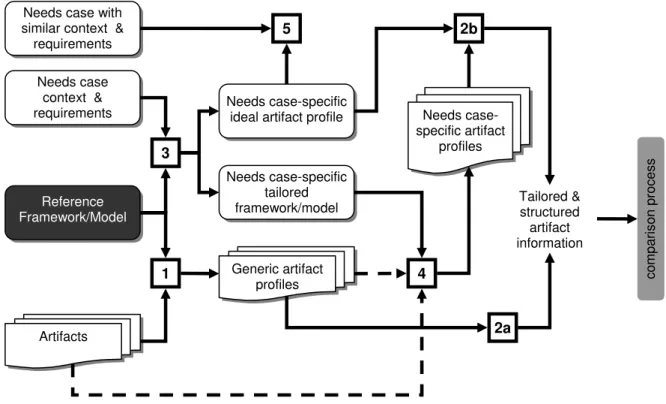
Figure 1: Artifact selection method route map showing all possible paths.
The applicability of each approach depends on the amount of information available to the decision maker, the precedence of the needs case relative to a decision maker and/or decision making organization, and the intended specificity of the outcome of using the method. Each approach dictates the appropriate path through the method shown in Figure 1 and the manner in which the reference framework/model is manipulated.
Guided by the appropriate methodological setting, the reference framework/model is tailored: that is, framework components are included or excluded from consideration during the selection decision process in order to provide a structure for data collection and thereafter a context for interpretation of that data. The extent to which the reference framework can be tailored is determined by the amount of information available to the decision maker at the time of using the above method; the degree to which it is tailored is also influenced by the intended use – generic artifact comparison, for example, may require no tailoring.
Needs case with similar context & requirements Needs case context & requirements Reference Framework/Model Artifacts 1 3 Generic artifact profiles Needs case-specific ideal artifact profile
Needs case-specific tailored framework/model Needs case- specific artifact profiles 4 2a 5 2b Tailored & structured artifact information comparis on pr ocess
Artifact Selection Based on a Generic Comparison of Artifacts
When comparing artifacts in a generic sense (that is, not for a specific needs case) no knowledge of a needs case or its context is required.
Figure 2 highlights the methodological steps that would be followed to generically compare artifacts. The reference model is used in its entirety such that each component is an active comparison criterion. At Step 1, each candidate artifact is examined to determine which of the framework components are/are not present. For each artifact, the information recorded during this process forms a generic profile of the artifact; these profiles are collated (Step 2a) for comparison. It is important to note that the method being described here does not dictate (for any use case) how to perform the final comparison (hence, the affordance of intuition in the process); in the case of UIDT evaluation (as already noted) a data visualization and analysis environment is available to ease the data comparison process but this has, to date, not yet been generalized for use with other frameworks.
Figure 2: Performing a generic comparison of artifacts
Artifact Selection Based on a Specific Needs Case
Generic comparisons highlight the differences between artifacts, but it is the context of a specific needs case that determines the significance of the differences. To select an artifact that is the “best fit” for a specific needs case, the context of use and functional requirements of the artifact need to be taken into consideration throughout the selection process. Figure 3 highlights the methodological steps that lead to the determination of the “best fit” artifact for an unprecedented needs case – that is, for a needs case for which there have been, within a given (typically organizational) environment, no similar preceding needs cases which have themselves used this method (and hence generated decision documentation) to select an artifact.
Given information about the needs case, the basic reference model or framework is modified to produce a needs case-specific tailored framework that considers only data relevant to the needs case. A copy of this customized framework is then augmented with details of the context of use of the needs case to create a profile of the ideal artifact for the needs case (Step 3). It is against this ideal artifact profile that the data about actual artifacts is compared in order to determine which artifact best matches the ideal.
A needs case-specific tailored framework is used to pilot collection of only relevant data for actual artifacts. This data can either be extracted or filtered from existing generic artifact profiles (if they exist from preceding use of the method) or it can be elicited from direct examination of the artifacts (Step 4); the result is a set of needs case-specific artifact profiles (i.e., artifact profiles focusing only on the features that are relevant to the given needs case) which can then be collated with the ideal artifact profile (Step 2b) for use in the final comparison process.
Reference Framework/Model Artifacts 1 Generic artifact profiles 2a Tailored & structured artifact information comparis on pr ocess
.
Figure 3: Performing a needs case-specific comparison of artifacts
Needs Case-Specific Artifact Selection Based on Comparison with Previous Needs Cases
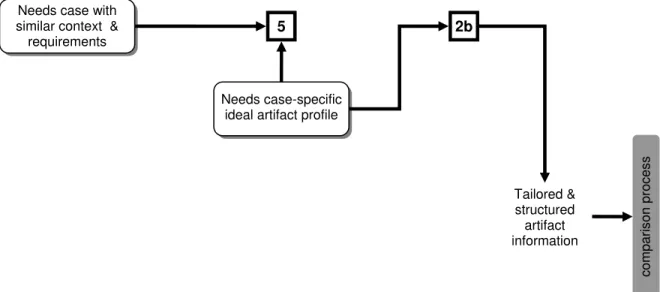
Figure 4: Performing a needs case-specific comparison of artifacts where selection information is available for similar
preceding needs cases. Needs case with
similar context & requirements
Needs case-specific ideal artifact profile
5 2b Tailored & structured artifact information comparis on pr ocess Needs case context & requirements Reference Framework/Model Artifacts 3 Generic artifact profiles Needs case-specific ideal artifact profile
Needs case-specific tailored framework/model Needs case- specific artifact profiles 4 2b Tailored & structured artifact information comparis on pr ocess
Needs case-specific ideal artifact profiles, tailored versions of frameworks, and associated artifact information collectively form (auditable) records of past artifact selections using this method. Where similarities exist between previous and current needs cases, an organization can exploit artifact selection effort and results from previous, closely matching needs cases. Figure 4 highlights the principal methodological steps that would be followed under such circumstances. The new needs case’s context and requirements are examined to determine whether they would generate a needs case-specific ideal artifact profile matching an existing one (Step 5). Where this is the case, the artifact recommendation as made for the preceding needs case would also be the “best fit” for the new needs case. If there are only slight differences between the new and existing needs cases’ ideal artifact profiles, the needs case-specific tailored framework and ideal artifact profile from the closest matching preceding needs case can be copied and tweaked (i.e., minor changes made) and the altered versions used to complete the selection process as described in the previous section, Steps 4 and 2b. Given either scenario, the time and effort expended on previous artifact evaluations reduces the cost of artifact selection for arising needs cases.
Worked Example
To ground the concepts discussed above, this section briefly reflects on how the method would be used as originally intended – that is, to support the selection of a user interface development tool. Imagine the following situation: a project manager is required to select a user interface development tool for use on a specific software development project by a specific team of developers. The project manager has his own set of expertise, but this does not match with the collective expertise of the developers who will be required to use the selected tool in their development activities and so it is important that he reflect the actual users in the decision process to ensure acceptance of the final selection decision (without this attention to detail, his personal bias will drive his selection decision). The development project is defined to the point that the functionality that will be required of the selected tool is known. This selection decision constitutes “artifact selection based on a specific needs case” as depicted in Figure 3 previously.
I N T E RACT I O N M E CH ANI S M FORMS Layout Formatted Fields i i UI FEATURE Non-Enumerated Input Instantiation Configuration Layout Enumerated Input Ot h er COGN D e fa ults U se of W izar d Con te x t S e ns itiv e H e lp O n -line T u tor ials I N T E RA CT I O N AS S I ST AN CE Pr og ra m m in g La n guage Sc ripting L a ngu ag e F o rm -f illing Ot h er G ra p hica l M an ipulation G ra p hica l Pr o g ra m m ing L a ngu ag e Instantiation Configuration
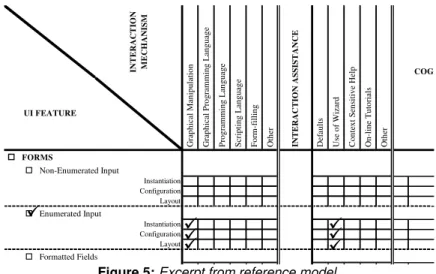
Figure 5: Excerpt from reference model.
The project manager would begin by manipulating the model/framework to reflect his identified functional needs. Figure 5 shows an excerpt from the original SUIT reference model. The rows reflect specific components that would be required within the software being developed – in this case, aspects pertaining to developing electronic forms (the precise meaning of the components shown in Figure 5 is not relevant). For each component, the way in which the component is initiated, configured, and laid out is considered independently for maximum attention to detail. The columns in Figure 5 reflect the different styles of interaction and sources of help available to the developer using the development tool in order to manipulate the functional components. For instance, the tool might support the use of graphical
9
9
9
9
9
9
9
manipulation of components and might provide a wizard to assist a developer during that manipulation process. Starting with the entire reference model, the project manager would identify the precise components that are necessary for the project, and would correlate these functional components with the most appropriate interaction style and help sources given the profile of the team who will ultimately use the selected tool. The tick marks in Figure 5 reflect this cross-referral.
Once the project manager has created the profile of the ideal tool for his specific context of use, he would create a tailored framework for data collection purposes. In essence, this constitutes the ideal tool profile without the columns ticked – i.e., the appropriate rows remain selected to reflect the functionality being sought, but the columns are left blank in order to facilitate collection of data about the decision alternatives (candidate tools). Having done this, the project manager would survey candidate tools and record their functional provision against the interaction styles and help sources they use. The outcome of this process would be a collection of profiles – one per candidate – where only relevant functional information has been considered, saving time and effort and reducing complexity. Finally, the project manager would compare the ideal tool profile with each of the candidate profiles (in the case of SUIT, using our data visualization environment – see (Lumsden, 2002)) to determine which, allowing for necessary trade-offs, best matches the ideal and from this comparison, select one tool for purchase/use. The project manager would then be able to revert to the project development team with a selection decision supported by evidence/rationale for his decision, thus enhancing the likelihood of acceptance of his decision.
Future Trends and Conclusions
As already mentioned, use of the SUIT framework, method, and data visualization environment has been evaluated relative to its intended target usage scenario – that is, software developers selecting a UIDT. This evaluation has shown SUIT to be useful and practicable. On this basis, together with the fact that we have ourselves subsequently successfully used alternate versions of the framework to conduct a number of environmental scans of other genres of software, in this chapter we have presented a generalization of the SUIT method such that the tried-and-tested principles of the method can be applied to any manner of artifact (not just UIDTs). Our hope is that this systematic procedure or method for artifact selection will prove useful to readers of this chapter.
The method for decision making presented in this chapter offers the basis to address the issue of trustworthiness of artifact selection data. Since it is a repeatable, documented method, it is possible to establish review procedures for artifact evaluations/selections, and the ultimate users of any selected artifact can be presented with justification for a given selection decision, increasing the likelihood of acceptance. Furthermore, the documentation generated when following the method has the potential to form the core components of evaluation/selection audit trails. Finally, the systematic data collection permits artifact profiles for the same artifact generated by different decision makers to be compared and graded for validation purposes, thus lending credibility to decisions based on this approach to artifact selection.
Close observational analysis of software developers using the SUIT data visualization environment has enabled us to develop a model of data comparison and analysis activities (Lumsden, 2004). In the interests of avoiding suppressing intuition, we do not propose this as a definitive method for comparing and analyzing the data, but the model can guide novice evaluators who might be overwhelmed with the data analysis task. We would propose to observe use of the generalized method to determine whether the model of data comparison and analysis holds sufficiently that it too can be generalized to provide additional support to decision makers using this method. Furthermore, we would propose to develop generic software versions of the framework structure as well as the visualization environment to support comparison and selection of other artifacts to the same level as is currently provided for UIDTs.
References
Albers, M. J. (1996). Decision making: A missing facet of effective documentation. In The 14th annual international conference on Marshalling new technological forces: building a corporate, academic, and user-oriented triangle (SIGDOC'96), (pp. 57 - 65).
Arnott, D., & Pervan, G. (2005). A critical analysis of decision support systems research. Journal of Information Technology, 20(2), 67 - 87.
Beynon, M., Rasmequan, R., & Russ, S. (2002). A new paradigm for computer-based decision support. Decision Support Systems, 33, 127 - 142.
Eom, S., & Kim, E. (2006). A survey of decision support system applications (1995-2001). Journal of the Operational Research Society, 57(11), 1264-1278.
Harris, R. (1998a). Introduction to decision making. Costa Mesa, California: Vanguard University of Southern California.
Harris, R. (1998b). Problem solving techniques. Costa Mesa, California: Vanguard University of Southern California.
Jacobs, S., & Holten, R. (1995). Goal driven business modelling - supporting decision making within information systems development. In Conference on Organizational computing systems (COCS), (pp. 96 - 105). Milpitas CA USA.
Loch, K. D., & Conger, S. (1996). Evaluating ethical decision making and computer use. Communications of the ACM, 39(7), 74 - 83.
Lumsden, J. (2002). Selecting the 'invisible' user interface development tool. In People and Computers XVI - Memorable Yet Invisible, Human Computer Interaction 2002 (HCI'2002), (pp. 365 - 380). London, UK. Sept. 2002.
Lumsden, J. (2004). Evaluating the evaluator: Modelling systematic data analysis strategies for software selection. In 2004 Information Resources Management Association Conference - IRMA'2004, (pp. New Orleans, USA. 23rd - 26th May.
Lumsden, J., & Gray, P. (2000). Suit - context sensitive evaluation of user interface development tools. In Lecture Notes in Computer Science (LNCS) Interactive Systems Design, Specification and Verification Revised Papers, 7th International Workshop, DSV-IS 2000, (pp. 91 - 108). Limerick, Ireland. June 5 - 6.
McKirdy, J. (1998). An empirical study of the relationships between user interface development tools & user interface development (No. TR-1998-06). Glasgow: University of Glasgow.
McKirdy, J. (1999). Choosing the ui tool which best suits your needs. In Human Computer Interaction INTERACT'99, (pp. 49 - 50). Edinburgh. 30th August - 3rd September.
Power, D. J., & Sharda, R. (2007). Model-driven decision support systems: Concepts and research directions. Decision Support Systems, 43, 1044-1061.
Rumble, C. D. (1991). The human element approach to decision making.Let's try reorganisation. In 19th ACM SIGUCCS conference on User services, (pp. 345 - 350).
Sauter, V. L. (1999). Intuitive decision-making. Communications of the ACM, 42(6), 109 - 115.
Simon, H. (1986). Research briefings 1986: Report of the research briefing panel on decision making and problem solving. Washington: National Academy of Sciences.
Key Terms
Accommodating style decision making: a style of decision making in which decision makers use their non-dominant style when they realize that it will work best in a given situation.
Artifact: an object shaped or produced by man.
Bad decision: a decision that is based on inadequate information and does not reflect intended values. Good decision: a decision that is logical, based on available information, and reflects context-sensitive
Integrated style decision making: a style of decision making in which decision makers are able to combine the left- and right-brain styles – they use analytical processes to filter information and intuition to contend with uncertainty and complexity.
Left-brain style decision making: a style of decision making which employs analytical and quantitative techniques and relies on rational and logical reasoning.
Model-driven DSS: functionally based on one or more quantitative models, these DSS tools are designed such that a user can manipulate model parameters in order to analyze decision alternatives. Optimization models: models that generate the notion of an optimal solution based on a set of constraints Optimizing decision making: a decision making process of identifying as many different options as
possible and choosing the best.
Right-brain style decision making: a style of decision making which is based on intuitive techniques, placing more emphasis on feelings than facts.
Satisficing decision making: a decision making process which centers around goal adjustment and trade-offs whereby lower-level goals are substituted for maximized goals such that the first satisfactory, rather than the best, option is selected.
Suggestion models: models which return a suggested decision relative to a structured task.
Visual interactive modeling DSS: DSS tools which support the generation and modification of different visual representations of decision alternatives.