HAL Id: lirmm-01089139
https://hal-lirmm.ccsd.cnrs.fr/lirmm-01089139
Submitted on 1 Dec 2014
HAL is a multi-disciplinary open access
archive for the deposit and dissemination of
sci-entific research documents, whether they are
pub-lished or not. The documents may come from
teaching and research institutions in France or
abroad, or from public or private research centers.
L’archive ouverte pluridisciplinaire HAL, est
destinée au dépôt et à la diffusion de documents
scientifiques de niveau recherche, publiés ou non,
émanant des établissements d’enseignement et de
recherche français ou étrangers, des laboratoires
publics ou privés.
Conflicting viewpoint relational database querying: an
argumentation approach
Nouredine Tamani, Madalina Croitoru, Patrice Buche
To cite this version:
Nouredine Tamani, Madalina Croitoru, Patrice Buche. Conflicting viewpoint relational database
querying: an argumentation approach. AAMAS: Autonomous Agents and Multiagent Systems,
IFAA-MAS/ACM, May 2014, Paris, France. pp.1553-1554. �lirmm-01089139�
Conflicting Viewpoint Relational Database Querying: an
Argumentation Approach
(Extended Abstract)
Nouredine Tamani
INRIA/LIRMM GraphiK 161 rue Ada Montpellier, France[email protected]
Madalina Croitoru
LIRMM Graphik UM2 161 rue Ada Montpellier, France
[email protected]
Patrice Buche
UMR IATE INRA 2 place Pierre Viala
Montpellier, France
[email protected]
ABSTRACT
Within the framework of the European project EcoBioCap, we model a real world use case aiming at conceiving the next generation of food packagings. The objective is to se-lect packaging materials according to possibly conflicting requirements expressed by the involved parties (food and packaging industries, health authorities, consumers, waste management authority, etc.). The requirements and user preferences are modeled by several ontological rules provided by the stakeholders expressing their viewpoints and exper-tise. Since several aspects need to be considered (CO2 and O2 permeance, interaction with the product, sanitary, cost, end of life, etc.) in order to select objects, an argumenta-tion process can be used to express/reason about different aspects or criteria describing the packagings. We define then in this paper an argumentation approach which combines a description logic (DLR-Lite) within ASPIC framework for relational database querying. The argumentation step is fi-nally used to express and/or enrich a bipolar query employed for packaging selection.
Categories and Subject Descriptors
D.2.11 [Software Engineering]: Software Architecture
Keywords
Argumentation; decision support system; description logics and DLR-Lite; application within the EcoBioCap project.
1.
INTRODUCTION
Within the framework of the European project EcoBio-Cap (www.ecobiocap.eu) about the design of next genera-tion packagings using advanced composite structures based on constituents derived from the food industry, we aim at developing a Decision Support System (DSS) for packaging material selection. The DSS will consist of two steps: (1) aggregating possibly conflicting needs expressed by several parties involved in the considered field and (2) querying a database of packagings with the resulting aggregation ob-tained at point (1). The problem at hand does not simply Appears in:Alessio Lomuscio, Paul Scerri, Ana Bazzan, and Michael Huhns (eds.), Proceedings of the 13th Inter-national Conference on Autonomous Agents and Multiagent Systems (AAMAS 2014), May 5-9, 2014, Paris, France.
Copyright c 2014, International Foundation for Autonomous Agents and Multiagent Systems (www.ifaamas.org). All rights reserved.
consist in addressing a multi-criteria optimization problem [4]: the domain experts would need to be able to justify why a certain packaging (or set of possible packagings) are cho-sen. Argumentation theory in general [8, 3, 11] is actively pursued in the literature, some approaches even combining argumentation and multi criteria decision making [2].
We rely in this work on a logical structured argumenta-tion system [1, 10, 9] since it (i) allows the expression of logical arguments as a combination of facts and inference rules, (ii) defines attacks and defeat relations between ar-guments based on a logical conflict notion. Stakeholder’s set of arguments i is then modeled as concepts, facts and rules to build a partial knowledge bases KIi. The union
of every stakeholder knowledge base K =Si=1,...,nKIi will
be used to instantiate the ASPIC [1] argumentation system. The solution developed in this paper is to instantiate for each criterion, called viewpoint or aspect, an argumentation system to reason about arguments solely expressed on it. This will then be used to generate the query on the pack-aging database. The main contribution of this paper is to demonstrate the use of argumentation in a real world indus-trial scenario within the EcoBioCap project. To this aim we show how to instantiate ASPIC with the DLR-Lite logic modeling expert ontologies in this real world scenario.
2.
CONTRIBUTIONS
The main contributions of the paper are the following: 1. A DLR-Lite [7, 5] ontology extended to a negation to
express stakeholders’ arguments about packaging char-acteristics as combination of concepts (defined as m-ary relations connected to a database) and inference rules (specified as subsumptions). The language is de-tailed in the technical report [12],
2. An instantiation of ASPIC argumentation system AS with the proposed DLR-Lite logical language. The in-stantiated ASPIC AS satisfies the rationality postu-lates [6], please see details in [12],
3. The study of the influence of the modeling rules on the argumentation results. We showed the limitation of the crisp split of the inference rules into defeasible and strict, and we propose to overcome this limitation a viewpoint approach in which arguments are gathered according to packaging aspects. Each viewpoint deliv-ers subsets of non-conflicting arguments supporting or
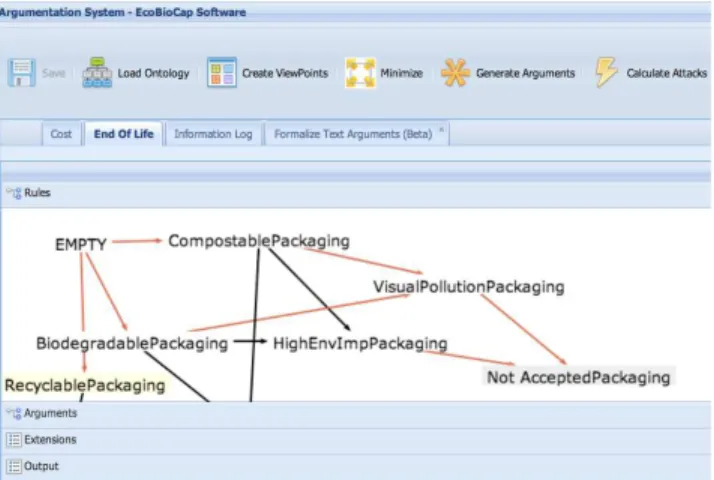
Figure 1: The user interface of the system.
opposing a kind of packaging according to a single as-pect (respiration parameters, cost, materials, sanitary, end elf life, etc.),
4. The use of the argumentation results for a bipolar querying of the packaging database. Indeed, we can gather the results onto positive and negative collec-tions. We can then deduce automatically such queries from the collections the users formed during the argu-mentation process. We can also carry out an analogical reasoning by generalizing results obtained from an ar-gumentation process applied upon instances, where an instance of the sought objects can help to better un-derstand the involved stakeholders’ needs and then to be able to express, based on arguments pros and cons, a query reflecting the way objects should be selected from a database,
5. Implementation of the approach within the EcoBio-Cap project (www.ecobiocap.eu). A java GXT/GWT web interface was developed and a open version is ac-cessible on pfl.grignon.inra.fr/EcoBioCapProduction/. The main difficulties encountered were the translation of text arguments into DLR-Lite formal representa-tion. In the freely available version, stakeholders’ argu-ments are provided as a manually built XML file speci-fying viewpoints and rules. The system generates then arguments and attacks and computes the extensions (stable, preferred, admissible, grounded, naive, etc. semantics) inside each view. Figure 1 shows the main interface of the application and a fragment of rules for-malizing an argumentation scenario about the aspect
end of life of packagings. Stakeholders argued about
biodegradability, recyclability and compostability (the test XML file is accessible on https://docs.google.com/
file/d/0B0DPgJDRNwbLR2RjWWhwMjgwVEU/edit? usp=sharing).
3.
CONCLUSION
We applied in this paper an argumentation approach on a real use case from the industry, based on a combination of ASPIC AS with a DLR-Lite specifications allowing stake-holders to express their preferences and providing the system with concepts and subsumptions in the packaging domain.
We have proposed an argumentation system in which each criterion is considered as a viewpoint in which stakeholders express their arguments in homogenous way. The set of non conflicting viewpoints are then gathered according goals, to form consistent collections which support/oppose them.
We plan to extend the proposed approach to fuzzy argu-mentation to make it possible to deal with vague and uncer-tain concepts and rules by exploiting the fuzzy interpretation of the fuzzy DLR-Lite. Another line to develop consists of studying the bipolarity in our context of argumentation.
4.
ACKNOWLEDGEMENTS
The research leading to these results has received funding from the European Community’s seventh Framework Pro-gram (FP7/ 2007-2013) under the grant agreement no
FP7-265669-EcoBioCAP project. The authors would like to thank Pr. Leila Amgoud (IRIT Toulouse, CNRS) for her valuable comments and feedback.
5.
REFERENCES
[1] L. Amgoud, L. Bodenstaff, M. Caminada,
P. McBurney, S. Parsons, H. Prakken, J. Veenen, and G. Vreeswijk. Final review and report on formal argumentation system.deliverable d2.6 aspic. Technical report, 2006.
[2] L. Amgoud and H. Prade. Using arguments for making and explaining decisions. Artificial
Intelligence, 173(3-4):413–436, 2009.
[3] P. Besnard and A. Hunter. Elements of
Argumentation. The MIT Press, 2008.
[4] D. Bouyssou, D. Dubois, M. Pirlot, and H. Prade.
Decision-making process – Concepts and Methods.
Wiley, 2009.
[5] D. Calvanese, G. D. Giacomo, D. Lembo,
M. Lenzerini, and R. Rosati. Data complexity of query answering in description logics. In KR, pages 260–270, 2006.
[6] M. Caminada and L. Amgoud. On the evaluation of argumentation formalisms. Artificial Intelligence, 171:286–310, 2007.
[7] S. Colucci, T. D. Noia, A. Ragone, M. Ruta,
U. Straccia, and E. Tinelli. Semantic Web Information
Management, chapter 19 : Informative Top-k retrieval
for advanced skill management, pages 449–476. Springer-Verlag Belin Heidelberg, 2010.
[8] P. M. Dung. On the acceptability of arguments and its fundamental role in nonmonotonic reasoning, logic programming and n-persons games. Artificial
Intelligence, 77(2):321–357, 1995.
[9] S. Modgil and H. Prakken. A general account of argumentation with preferences. Artificial Intelligence, 195:361–397, 2013.
[10] H. Prakken. An abstract framework for argumentation with structured arguments. Argument and
Computation, 1(2):93–124, 2011.
[11] I. Rahwan and G. Simari. Argumentation in Artificial
Intelligence. Springer, 2009.
[12] N. Tamani, M. Croitoru, and P. Buche. A viewpoint approach to structured argumentation.
https://docs.google.com/file/d/0B0DPgJDRNwbLRml qUVh4cGFrSVk/edit?usp=sharing. Technical report, INRA-SupAgro, 2013.