BUILDINGS AND BUILDING MATERIALS
Comparative LCA of recycled and conventional concrete
for structural applications
Christof Knoeri&Esther Sanyé-Mengual&Hans-Joerg Althaus
Received: 11 January 2012 / Accepted: 18 December 2012 / Published online: 23 January 2013 # Springer-Verlag Berlin Heidelberg 2013
Abstract
Purpose Construction and demolition (C&D) waste recy-cling has been considered to be a valuable option not only for minimising C&D waste streams to landfills but also for mitigating primary mineral resource depletion. However, the potentially higher cement demand due to the larger surface of the coarse recycled aggregates challenges the environmental benefits of recycling concrete. Furthermore, it is unclear how the environmental impacts depend on concrete mixture, cement type, aggregates composition and transport distances.
Methods We therefore analysed the life cycle impacts of 12 recycled concrete (RC) mixtures with two different cement types and compared it with corresponding conventional concretes (CC) for three structural applications. The RC mixtures were selected according to laws, standards and construction practice in Switzerland. We compared the en-vironmental impacts of ready-for-use concrete on the con-struction site, assuming equal lifetimes for recycled and conventional concrete in a full life cycle assessment.
System expansion and substitution are considered to achieve the same functionality for all systems.
Results and discussion The results show clear (∼30 %)
envi-ronmental benefits for all RC options at endpoint level (ecoin-dicator 99 and ecological scarcity). The difference is mainly due to the avoided burdens associated to reinforcing steel recycling and avoided disposal of C&D waste. Regarding global warming potential (GWP), the results are more balanced and primarily depend on the additional amount of cement needed for RC. Above 22 to 40 kg additional cement per cubic metre of concrete, RC exhibits a GWP comparable to CC. Additional transport distances above 15 km for the RC options do result in environmental impacts higher than those for CC. Conclusions In summary, the current market mixtures of recycled concrete in Switzerland show significant environ-mental benefits compared to conventional concrete and cause similar GWP, if additional cement and transport for RC are limited.
Keywords Cement . Construction and demolition waste . Life cycle assessment . Recycled concrete . Transport
1 Introduction
1.1 Background
Concrete is the most heavily consumed material in the construction sector and the second most heavily consumed
substance on Earth after water (ISO2005; Weil et al.2006).
The estimated worldwide concrete consumption was
be-tween 21 and 31 billion tonnes in 2006 (WBCDS 2009).
In addition, construction and demolition (C&D) waste has
become the largest (Schachermayer et al. 2000; FOEN
2010) and increasing (Muller 2006; Bergsdal et al. 2007;
Hashimoto et al. 2007; Hao et al.2007) waste fraction in
industrialised countries. Thus, C&D waste reuse as concrete aggregates has been considered as a valuable option to Responsible editor: Christopher J. Koroneos
Electronic supplementary material The online version of this article (doi:10.1007/s11367-012-0544-2) contains supplementary material, which is available to authorized users.
C. Knoeri
:
H.-J. AlthausLaboratory for Technology and Society, Empa, Swiss Federal Laboratories for Materials Science and Technology,
Ueberlandstrasse 129, 8600 Duebendorf, Switzerland E. Sanyé-Mengual
Sostenipra (ICTA-IRTA-Inèdit)–Institute of Environmental
Science and Technology, Universitat Autonoma de Barcelona (UAB), Campus de la UAB,
08193 Cerdanyola del Vallès, Spain
C. Knoeri (*)
Sustainability Research Institute, School of Earth & Environment, University of Leeds, LS2 9JT Leeds, UK
substitute the primary aggregates in concrete production
(Blum and Stutzriemer 2007; Weil et al. 2006; Rao et al.
2007) as well as reducing the C&D waste deposition
(Lawson et al. 2001; Hiete et al. 2011; Woodward and
Duffy2011), where space for landfills is increasingly scarce
(Duran et al.2006; WBCDS2009). In the European Union,
where the average C&D waste recycling rate is 33 % (Eurostat 2009), the most recent waste legislation estab-lished a material recovery rate target of 70 % for 2020 for this group of wastes (including reuse, recycling or other
material recovery) (EC2008). In the Netherlands, concrete
landfilling is banned and the recycling rate is 100 % (apart
from some residual process waste) (WBCDS2009).
In Switzerland, about 80 % of the C&D waste is recycled
(FSO2010). This comparably high recycling rate is mainly
due to high on-site recycling rates in civil engineering,1
where about 94 % of the C&D waste are reused (FOEN
2001, 2005). C&D waste from structural engineering2 is
usually downcycled (i.e. used in low-grade applications
such as lean concrete) or landfilled (Spoerri et al. 2009;
FOEN 2001; Knoeri et al. 2011). The technical potential
for use of recycled concrete (RC) in structural concrete applications has been demonstrated in various research
proj-ects (Hoffmann and Jacobs2007; Li2008; Poon et al.2009;
Rao et al.2007). In addition, these applications are already
defined in legislation and standards (KBOB 2007; SIA
2010; FOEN2006) and reference projects have
demonstrat-ed their practicability (Hofmann and Patt2006).
However, environmental benefits of high-grade RC
appli-cations have been in doubt (Holcim2010). Since cement is the
main contributor to many environmental impacts (e.g. global
warming potential (GWP), in kilogram CO2equivalent) of
concrete, additional cement use for RC due to the larger grain
surface area of recycled aggregates (Fonseca et al. 2011;
Cabral et al.2010; Limbachiya et al. 2007; Hoffmann and
Jacobs 2007) might outweigh potential benefits of natural
aggregate substitution (Weil et al.2006). In previous studies,
the RC aggregate percentages ranged from 25 % (Holcim
2010) to 100 % (Fonseca et al. 2011) and, consequently,
additional cement content ranged from 0 (Fonseca et al.
2011) to 30 kg (Weil et al.2006). Furthermore, the substitution
of C&D waste disposal and steel production through recycling of (reinforced) concrete is neglected in previous life cycle
assessment (LCA) studies (Weil et al. 2006; Marinkovic et
al.2010; Holcim2010). In addition, transport distances and
types (Marinkovic et al. 2010), and C&D waste treatment
(Mercante et al.2011) have been found to significantly affect
the balance of RC. This implies that environmental benefits of
different RC mixtures in comparison with conventional con-crete (CC) are still in doubt. Furthermore is the sensitivity of such comparison to additional cement for RC, C&D waste composition, and different transport distances yet unclear.
2 Materials and methods
2.1 Goal and scope
This project aims to establish a comparative LCA of CC and RC and to analyse the effect of cement content and transport distances. Allocation is avoided by system expansion and
substitution according to ISO 14044 (ISO2006). The results
will provide policy recommendations for construction waste management and support construction stakeholders’ decisions (i.e. awarding authorities, engineers, architects and contractors
(Knoeri et al.2011)). The system includes all processes from
aggregates’ extraction (CC) and building dismantling (RC) to
ready-for-use concrete on the construction site. The construc-tion process and the use phase of convenconstruc-tional and recycled concrete structures are assumed to be comparable and are therefore omitted from the analysis. Consequently, the
func-tional unit is 1 m3of concrete of a specific strength class at the
construction site.
The production of recycled aggregates for RC requires additional treatment (i.e. crushing and sorting) of the C&D waste in stationary or mobile recycling plants. During this process, additional iron scrap is recovered from C&D waste
compared to building dismantling (Eberhard 2011; Doka
2009; Hächler and Frei2005). Therefore, environmental
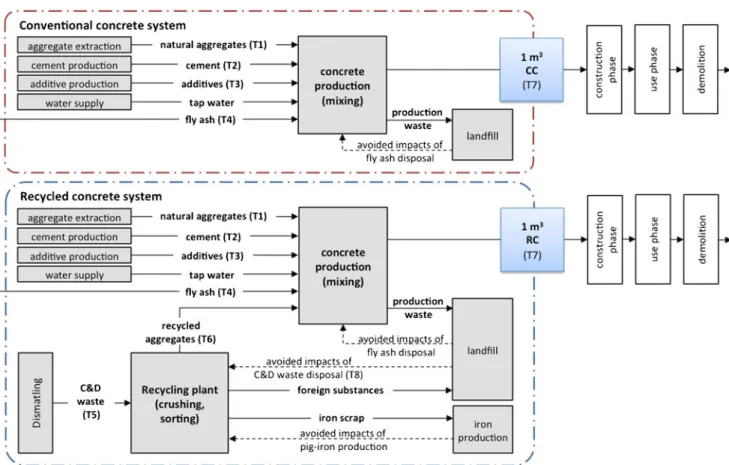
ben-efits from co-products of the recycling operation (i.e. the disposal service for C&D waste and the steel scrap recovered in the process) were considered as avoided impacts, to ensure the same functionality of the RC and CC product systems
(Fig. 1). The life cycle inventory (LCI) data for concrete
production and C&D waste recycling were compiled specifi-cally for this study, while the LCI data for materials and processes in the background system are taken from the ecoin-vent database version 2.2. The impact assessment was per-formed using two endpoint methods (Ecoindicator 99 and Ecological Scarcity 2006) and GWP and abiotic depletion potentials (ADP) as midpoint indicators.
2.2 System description
Figure1shows the conventional concrete and the recycled
concrete production systems considered. Both systems in-clude raw materials production (i.e. aggregate extraction, cement and additive production and water supply) and fly ash as inputs including their transport stages (i.e. T1–T4) and produce concrete as an output transported to the con-struction site (T7). The recycled concrete system further
1Civil engineering is defined as the design and construction of roads,
bridges, tunnels water and electricity supply and sewerage (i.e. mainly publicly contracted works).
2
Structural engineering is defined as the design and construction of buildings.
includes dismantling, C&D waste treatment (i.e. operation of the recycling plant) and the related transports (i.e. T5 and T6). Moreover, the recycling concrete system considers the avoided impacts related to the reuse of C&D waste. These are the avoided disposal of C&D waste and its transport (T8), as well as the avoided impacts related to the recovery
of iron scrap obtained from the recycling plant (see Fig.1).
Table1shows the applications, concrete types, aggregates
and cement content considered in the scenarios. Three differ-ent concrete qualities were investigated since differdiffer-ent
appli-cations require different technical standards (SIA2002) and
exhibit different acceptance of RC materials (Knoeri et al.
2011): lean concrete (150/200 kg cement/m3), indoor concrete
(IC) (C25/30,3NPK4A/B) and outdoor concrete (OC)(C30/
35, NPK C) (Supporting information (SI)Table1). The
stand-ardised recycling options, recycled concrete from concrete aggregates (RC-C) using concrete rubble and recycled con-crete from mixed aggregates (RC-M) using mixed rubble
(KBOB 2007; SIA 2010; FOEN 2006; SIA 2002), were
specified for each concrete quality analysed. Two scenarios were modelled for each recycled option: a reference scenario, considering the percentage (40 %) of recycled aggregates to obtain additional points for the Minergie-Eco label (Minergie
2007) and a minimum scenario (25 % recycled aggregates),
according to standards (SIA2010). Finally, different cement
types and content levels are considered. The scenario mixtures are denominated according to their application (e.g. OC), concrete type (e.g. RC-C), percentage of recycled aggregates substituted (e.g. ref), cement amount (e.g. CEM 310) and cement type (e.g. Portland calcareous).
2.3 Life cycle inventory
The model for the concrete components (i.e. cement, aggre-gates, additives, filler and water) for the C&D waste compo-sition and for transport distances is described below. Background data are taken from the ecoinvent database
ver-sion 2.2. Table1shows an overview of the mixtures analysed,
while complete mixture descriptions and LCIs are provided in theElectronic Supplementary Material, Tables5to7.
Cement A minimum cement content level is considered for each application in CC mixtures according to the quality
3Concrete strength class is the comprehensive strength of a cylinder/
cube after 28 days curing (in newton per square millimetre) (SIA2002)
4
N P K i s t h e S w i s s c o n s t r u c t i o n s e c t o r s t a n d a r d i s a t i o n
(Normpositionenkatalog) (CRB2011)
Fig. 1 System boundaries, processes and materials for the con-ventional concrete and the recycling concrete systems (The light blue box indicates the reference product, grey boxes the processes,
solid arrows the product flows and dashed arrow the avoided impacts considered. Transport is specified for each product
T able 1 Applications, concrete types, aggregates and cement amount considered and corresponding denominations Applic ation Concr ete type Aggr egates Ceme nt (C EM) [kg/ m 3 con crete] D enomina tion a Aggr egate scenarios [kg/ m 3 concre te] Natur al agg regates [M. , % ] Co ncrete rubb le [M. , % ] Mixed rubble [M., %] Recy cled aggreg ates source (% of recycled aggreg ates) Outdoo r con crete (OC ) Conve ntion al con crete (C C) 1,890 100 300 O C CC Recy cled concrete (RC) Concr ete rubble (C) Min (25 %) 1,784 72 28 300 O C RC-Cmin CEM 300 310 O C RC-Cmin CEM 310 320 O C RC-Cmin CEM 320 Ref (40 %) 1,624 55 45 300 O C RC-Cre f CEM 300 310 O C RC-Cre f CEM 310 320 O C RC-Cre f CEM 320 Mixed rubb le (M) Min (25 %) 1,526 70 30 300 O C RC-M min CEM 300 320 O C RC-M min CEM 320 340 O C RC-M min CEM 340 Ref (40 %) 1,374 50 50 300 O C RC-M ref CEM300 330 O C RC-M ref CEM330 360 O C RC-M ref CEM360 Indoor concrete (OC) Conve ntion al con crete (C C) 1,890 100 280 IC CC Recy cled concrete (RC) Concr ete rubble (C) Min (25 %) 1,784 72 28 280 IC RC -Cmin CEM280 290 IC RC -Cmin CEM290 300 IC RC -Cmin CEM300 Ref (40 %) 1,624 55 45 280 IC RC -Cref CEM 280 290 IC RC -Cref CEM 290 300 IC RC -Cref CEM 300 Mixed rubb le (M) Min (25 %) 1,526 70 30 280 IC RC -Mmin CEM 280 305 IC RC -Mmin CEM 305 330 IC RC -Mmin CEM 330 Ref (40 %) 1,374 50 50 280 IC RC -Mref CEM 280 310 IC RC -Mref CEM 310 340 IC RC -Mref CEM 340 Lean con crete (LC ) Conve ntion al con crete (C C) 1,890 100 150 LC CC CEM 150 200 LC CC CEM 200 Recy cled concrete (RC) Mixed rubb le (M) (100 %) 1,221 100 150 LC RC CEM 150 200 LC RC CEM 200 aSince two types of cement (i.e. Portland cement CEM I 42.5 and Portland calcareous CEM II) are investigated, the denominations are extended with the ce ment considered (e.g. IC-CC Portland 42.5 or IC-CC Portland calcareous)
requirements (SIA 2002). Three cement content scenarios were defined for the structural RC options in collaboration
with RC producers (Strauss2011; Eberhard2011) to assess
the sensitivity of environmental performance: no additional cement, a reference scenario and a maximal level of addi-tional cement for RC. For lean concrete, no addiaddi-tional cement is required. Finally, two types of cement (i.e. Portland cement CEM I 42.5 and Portland calcareous CEM II) were investigated for structural concrete, covering
98 % of the cement used in Switzerland (Cemsuisse2011),
while for lean concrete only Portland calcareous is used.
Aggregates Round gravel is considered as natural aggre-gate, since crushed gravel represents only 15 % of the gravel
used in Switzerland (Künniger et al.2001). For 1 m3of CC,
1,890 kg of round gravel were considered (Künniger et al.
2001). Since recycled aggregates have a lower density, the
total aggregates weight was reduced depending on the per-centage of recycled aggregates used. Based on Holcim
(2010), it is assumed that per 5 % recycled aggregates, a
1 % lower aggregate mass is needed in the mixture. Recycled aggregates were slightly (i.e. 28 or 50 %)
over-dosed to reach the required (SIA2010) minimum amount of
recycled grains (e.g. 25 or 40 %) in the aggregates mixture
since 10–20 % of natural grains are detected in the recycled
aggregates’ petrography (counting grains >8 mm) (Electronic Supplementary Material, Tables2and3).
Other components Filler and additive inputs increase with the cement content and the application (i.e. higher amount is needed in higher quality applications). RC mixtures require 0.2 % more additives than comparable CC mixtures. Fly ash is considered as filler and the substitution of its disposal is considered by avoiding the corresponding amount of fly ash
disposal according to ecoinvent v2.2 (Doka 2009). The
amount of fly ash used does not differ from CC to RC. Finally, a higher additional water demand is assumed for RC as recycled aggregates have a larger surface area and are
usually drier than natural aggregates (Eberhard 2011;
Strauss 2011) (Electronic Supplementary Material,
Tables5to7).
C&D waste composition A mixed rubble composition of 70 % waste concrete and 30 % waste brick, and a concrete rubble composition of 95 % waste concrete and less than 5 % waste brick have been assumed according to
practi-tioners (Eberhard2011), the shares specified by law (FOEN
2006), and aggregates petrographic profile (Rubli2011). A
distribution of 70 % reinforced concrete and 30 % non-reinforced concrete in the concrete waste fraction was used
based on (FOEN2001). Assuming 3 % (w/w) of steel in
reinforced concrete (Doka2009), iron scrap contents of 2 %
for concrete rubble and 1.5 % for mixed rubble were
obtained. This is in the same range as the empirical observed 1.2 % (w/w) for a mixture of concrete and mixed rubble in a
multipurpose recycling plant (Eberhard2011; Hächler and
Frei2005). Foreign substances (i.e. wood and plastics) for
disposal account for less than 1 % in the waste fractions, based on a recycling plant inventory (Hächler and Frei
2005). C&D waste disposal inventory data were obtained
from the ecoinvent database (Doka2009).
Transport distances Reference distances according to
aver-age data of Swiss concrete firms (Gschösser 2011) for the
transport of natural aggregates, cement, additives (plasticizer) and filler (fly ash) were considered. They correspond well to the transport distances modelled so far in the ecoinvent
data-base for concrete at plant (Kellenberger et al.2007). These
distances were held constant for natural aggregates, cement, additives and filler, while transport sensitivity analyses (refer-ence, best case and worst case) were performed for the C&D
waste, recycled aggregates and produced concrete (Electronic
Supplementary Material, Table4).
3 Results and discussion
In the following, we present and discuss the overall envi-ronmental impact assessment results for all three applica-tions (i.e. lean, indoor and outdoor structural concrete) and the sensitivities to a variation of cement types and contents, C&D waste compositions and transport distances for exem-plified applications and mixtures.
3.1 Overall environmental impact assessment
3.1.1 Structural concrete
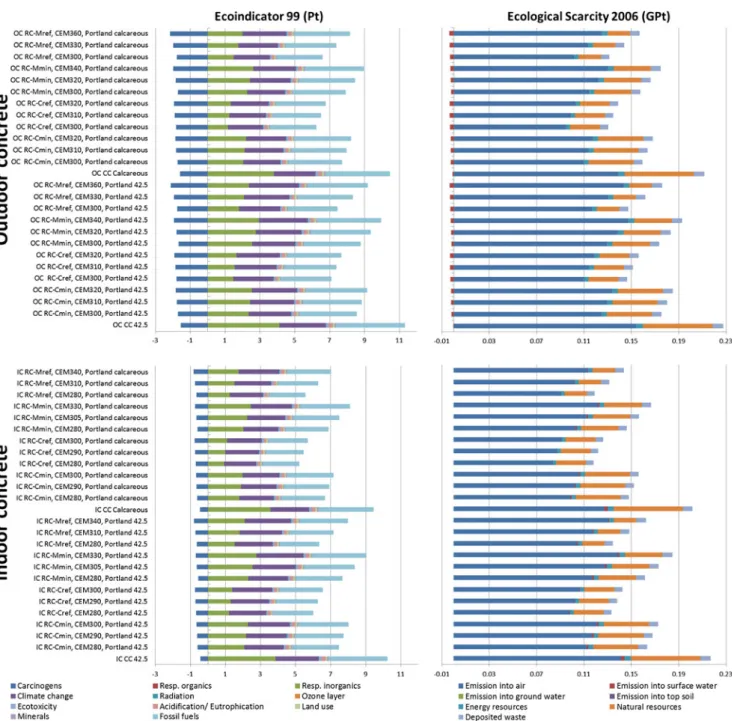
Figure 2 shows that RC mixtures for structural concrete
applications (OC and IC) have significant environmental benefits compared to CC with the same cement type (mean 31 %, SD 9 %) at endpoint level. The reduction depends on the concrete mixture and ranges from 15 % (IC RC-Mmin, CEM330, Portland 42.5) to 50 % (OC RC-Cref, CEM300,
Portland calcareous). Strongly reduced “respiratory
inor-ganics” effects and a slight reduction of fossil fuel consump-tion are the main contribuconsump-tions to the ecoindicator 99 reduction, while the ecological scarcity 2006 reduction is caused by natural resources preservation in addition to re-duced emissions to air. ADP shows a similar picture with a clear ADP reduction for all RC options (mean 34 %, SD 11 %). But RC and CC have similar GWP due to higher cement content when recycled aggregates are used (mean
reduction for RC 5 %, SD 7 %) (Electronic Supplementary
Material, Fig.1). All four assessment methods (ecoindicator 99, ecological scarcity 2006, ADP and GWP) show a clear
difference between cement types used and amount of aggre-gates substituted. Concrete mixtures with Portland cement calcareous have consistently less (i.e. about 10 %) environ-mental impacts than mixtures with cement 42.5. The more natural aggregates were substituted (e.g. 50 % instead of 30 %), the better the environmental assessment results, while the aggregate type (i.e. concrete rubble or mixed
rubble) has less impact on the results (see Fig. 1 and
Electronic Supplementary Material, Tables8and9). On average, RC mixtures show around 30 % reduction of environmental impacts for the ecoindicator 99, ecological
scarcity and ADP assessment compared to CC mixtures, while the two options are on the same level regarding GWP. This is contradictory to previous studies, which resulted in comparable or even higher environmental
impacts of RC (Holcim 2010; Marinkovic et al. 2010;
Weil et al.2006). The difference might partly occur due to
differences in construction practice among the countries (e.g. transport type and distances) but is more likely to be related to different system definitions, in particular to the fact that the demolition process, C&D waste transport and landfilling, was largely excluded so far.
Fig. 2 Structural concrete ecoindicator 99 (Pt/cubic metre concrete) and ecological scarcity 2006 (GPt/cubic metre concrete) endpoint results for recycling and conventional concrete mixtures (Midpoint impacts are colour indicated for each of the two impact assessment methods)
3.1.2 Lean concrete
The environmental benefits at endpoint level for recycled lean concrete mixtures were more pronounced (i.e. 88– 104 % for ecoindicator 99 and 80–92 % for ecological scarcity 2006). The reduction is mainly due to reduced emissions into air (i.e. respiratory inorganics, fossil fuels) and natural resource consumption compared to CC. In ad-dition, lean concrete RC options show a large potential for ADP reduction, due to 100 % aggregate substitution and less transport, for both recycling mixtures (e.g. 150 and 200 kg cement). Regarding GWP, the lean concrete mixtures are more balanced, although the RC options still avoid 30–
40 % of the CO2 equivalents emitted (Electronic
Supplementary Material, Figs.2and3).
With the exception of Holcim (2010), most previous
LCA studies concentrated on structural concrete
applica-tions (Weil et al.2006; Marinkovic et al. 2010). Although
not including infrastructure demolition and C&D waste
transport and disposal, Holcim (2010) showed a significant
environmental impact reduction for recycled lean concrete with 100 % mixed rubble aggregates, reconfirmed by our results. Thus, lean RC applications show a large potential for reducing environmental impacts from concrete produc-tion on the applicaproduc-tion level even though the environmental benefits on a system level might be limited since lean concrete contributes only about 4 % to building concrete
applications (Lichtensteiger2006).
3.2 Contribution of concretes’ life cycle stages to the environmental burden
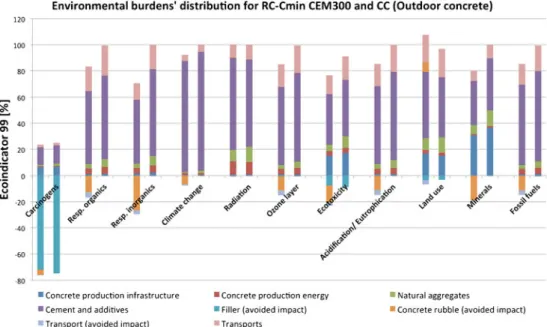
Figure3 compares the contributions to the ecoindicator 99
(EI) midpoints of different life cycle stages of one RC mixture
with the corresponding CC mixture (see Electronic
Supplementary Material, Fig.4 for ecological scarcity 2006 (EC)). Cement is the main contributor to both endpoint indi-cators (EI 99 30–91 %, EC 2006 18–84 %). The second largest impacts stem from transport (EI 99 5–22 %, EC 2006
7–58 %). The same is true for midpoint results with two
exceptions: (a) natural aggregates dominate EC 2006 natural resources and (b) large avoided impacts for IE 99 carcinogens and EC 2006 emissions into surface water are caused by the use of fly ash as filler instead of its disposal. The main difference between the two products stems from the avoided impacts of C&D waste landfilling and recovering of steel scrap for RC (i.e. concrete rubble (avoided impacts) EI 99 6–26 %, EC 2006 2–25 %). Except for EC 2006 emissions into topsoil (13 %), the avoided transport impacts for RC are rather small (i.e. EI 99 <4 %,
EC 2006 <3 %) (Fig.3).
Corresponding to previous studies (Marinkovic et al.
2010; Holcim2010; Weil et al.2006) cement and transport
were identified as the main contributor to environmental impacts of concrete. However, the difference between RC and CC impacts is mainly due to the avoided impacts from C&D waste transport and landfilling and those of steel scrap recovery. This confirms that the unfavourable results for RC in previous studies are due to excluding the benefits from co-products of the recycling process.
3.3 Sensitivity to cement type and content
We analysed the sensitivity of global warming potential (GWP 100y shows the most unfavourable results for RC) to different cement types and additional amounts of cement for the RC mixtures for outdoor concrete applications. As seen above, concrete mixtures with Portland 42.5 cement
Fig. 3 Comparison of the
environmental burdens’
distribution of one RC-C mix-ture (OC RC-Cmin, CEM300, Portland 42.5) with the corresponding CC mixture (OC CC, Portland 42.5), for Ecoin-dicator 99 midpoints (To elimi-nate the influence of the cement and transport, mixtures having the same amount and type of cement have been chosen and transport distances were kept to the reference scenario)
show higher (12–15 %) global warming potential than mix-tures with Portland calcareous cement. For RC-M mixmix-tures, the amount of additional cement, for which RC-M and CC have equal GWP, is in the range of the mixtures analysed (i.e. for RC-Mmin at 24 kg, for RC-Mref at 36 kg). For the C mixtures, these points are slightly higher (i.e. for RC-Cmin at 28 kg, for RC-Cref at 42 kg) but outside the range
of analysed market mixtures (Fig. 4 and Electronic
Supplementary Material, Fig.5).
The additional amount of cement needed for RC is key for its environmental performance. The impact com-parison with the rather unfavourable GWP shows that limiting the additional cement to about 10 % compared to the amount used in CC keeps the impacts comparable to CC. This is in line with the recommendation of
previous studies (Weil et al. 2006; Marinkovic et al.
2010; Holcim 2010) to limit the additional cement
con-tent for RC.
3.4 C&D waste composition sensitivity
Although the overall assessment is dominated by cement-related impacts, the main difference in the comparison be-tween RC and CC origins from the avoided burdens of C&D waste treatment.
A high share of the RC benefits is caused by the iron
scrap substitution (Electronic Supplementary Material,
Fig. 6). Thus, the sensitivity of the assumption of 70 %
reinforced concrete in the C&D waste concrete fraction needs to be assessed. Comparative results do not change drastically with lower reinforced concrete shares in the
C&D waste concrete fraction (Electronic Supplementary
Material, Fig.7). Except for GWP, all RC mixtures indica-tors show lower environmental impacts than CC, even with-out any avoided burdens considered for additional iron scrap recovery. Furthermore, the question as to whether it would be more beneficial to extract iron from C&D waste and dispose of the residual inert waste instead of reusing it as
aggregate was investigated. SI Fig.8shows that this is not
the case for any indicator.
3.5 The effect of additional transport distances
In the previous results, the comparisons have been made based on the reference transport distance scenario (Electronic Supplementary Material, Table 4), representing the mean distances for Switzerland. Although concrete pro-duction is a rather local business, transport distances vary from project to project. In the best case scenario for RC
mixtures, they might be 50 km (∼100 tkm/m3
) shorter, and
in the worst case scenario 50 km (∼100 tkm/m3) longer. Thus,
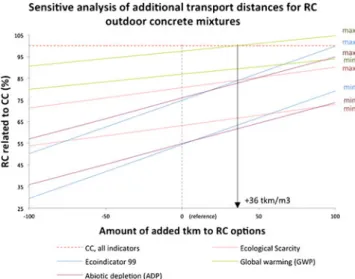
we analysed the effect of additional lorry transport distances (ton kilometre) for RC-C outdoor concrete applications in
comparison with CC (Portland 42.5 cement) (Fig.5).
For the reference transport distances, all RC-C mixtures have lower environmental impacts than CC for all indicators.
Fig. 4 Outdoor concretes’
GWP (in kilogram per CO2
equivalent per cubic metre of concrete) sensitivity to additional cement amount for recycling concrete (RC) (solid lines and rhomboid markers in-dicate concrete mixtures with Portland cement 42.5 and dashed lines and circled markers indicate concrete with calcareous cement)
Fig. 5 Sensitive analysis of additional transport distances in ton kilo-metre (tkm) for RC-C options in relation to CC for outdoor concrete (OC RC-Cmin CEM320 (max) and OC RC-Cref CEM300 (min) mixtures showed maximum and minimum values)
The worst RC-C mixture has equal GWP at 36 additional ton·kilometre transports for the recycling concrete. At 100 additional ton kilometre for recycling concrete, only two indicators (i.e. GWP and Ecoindicator 99) are above CC for the worst RC-C mixture. ADP and EI 99 impacts increase strongly with additional transport distances while GWP and ES 2006 results are less sensitive to additional transports. This is due to the relatively shares of transport for the particular
indicators (e.g. climate change and fossil fuels in Fig.3).
3.6 Potential of and limitation to the approach
The difference in the main result (i.e. environmental benefits
of RC) compared with previous studies (Weil et al. 2006;
Marinkovic et al.2010; Holcim2010) is explained mainly by
their exclusion of co-products of C&D waste treatment. This demonstrates the importance of the consideration of co-products in the recycling processes. However, caution is rec-ommended when generalising the results since the study is limited to the Swiss context. Construction is a rather local business and mixtures as well as transport distances might vary in other countries. Further, the sensitivity to additional cement content suggests that mixtures with higher aggregates substitution shares and consequently higher additional cement content might be less environmental friendly.
4 Conclusions
While previous studies showed equal or even higher envi-ronmental impacts of RC compared to CC, this study dem-onstrated that RC reduces the environmental impacts to about 70 % of the CC impacts if co-products from the recycling process are not excluded from the scope. Cement production is still the main contributor, but considering benefits from recovered steel scrap, avoided transport of C&D waste to the deposition site and avoided impacts of C&D waste disposal shifts the balance in favour of RC. Global warming potential shows the smallest differences between CC and RC. Nevertheless, limiting the additional amount of cement used for RC to about 10 % keeps the impact in a comparable range. While C&D waste composi-tion has little influence on the results, addicomposi-tional transport for RC above 15 km starts to shift the balance again for GWP. C&D waste reuse in high-grade structural concrete applications has not only the potential to conserve natural gravel resources and limit waste streams to landfills but also to mitigate wider environmental impacts.
Acknowledgments The authors thank H. Eberhard, F. Gschösser, S.
Rubli and M. Strauss for their support, time and knowledge; Ruairi Revell for editing the text; and FEDRO (Swiss Federal Roads Office), FOEN (Federal Office for the Environment), AWEL (Amt für Abfall, Wasser, Energie und Luft) environmental agency of canton Zurich,
AHB (Amt für Hochbauten) office for structural engineering of the city of Zurich and Eberhard Recycling AG for funding the study.
References
Bergsdal H, Brattebo H, Bohne RA, Mueller DB (2007) Dynamic material flow analysis for Norway's dwelling stock. Build Res
Informat 35(5):557–570
Blum A, Stutzriemer S (2007) Recycled construction minerals for urban infrastructure in Germany: non-technical issues. Miner Energ 3–4:148–158
Cabral A, Schalch V, Carpena D, Duarte J (2010) Mechanical proper-ties modeling of recycled aggregate concrete. Constr Build Mater
24:421–430
Cemsuisse (2011) Jahresbericht 2011; Kennzahlen [Annual report 2011; operation figures]. Cemsuisse, Verband der Schweizerischen Cementindiustrie [Swiss cement production association], Bern CRB (2011) Normpositionenkatalog (NPK). Standards für das
Bauwesen (CRB).http://www.crb.ch/crbOnline/CRB-Standards/
Normpositionen.html. Accessed 13 Dec 2011
Doka G (2009) Life cycle inventories of waste treatment services. Final report ecoinvent v2.1 No. 13. Swiss Centre for Life Cycle Inventories, Duebendorf, Switzerland
Duran X, Lenihan H, O’Regan B (2006) A model for assessing the
economic viability of construction and demolition waste recycling—
the case of Ireland. Resour Conserv Recycl 46(3):302–320
Eberhard H (2011) Phone interview to concrete composition and recycling concrete mixtures. Eberhard Recycling AG, Zurich EC (2008) Directive 2008/98/EC of the European Parliament and of the
Council of 19 November 2008 on waste Eurostat (2009) Generation of waste, total arising and by selected activities for 2008
FOEN (2001) Bauabfälle Schweiz - Mengen, Perspektiven und Entsorgungswege. Band 1: Kennwerte [Construction and demoli-tion waste in Switzerland - amounts, perspectives and disposal routes. Volume 1: Statistical values]. Umwelt-Materialien, vol 131. Federal Office for the Environment (FOEN), Berne FOEN (2005) An overview on waste amounts and recycling in 2004.
Federal Office for the Environment (FOEN), Berne
FOEN (2006) Richtlinie für die Verwertung mineralischer Bauabfälle (Ausbauasphalt, Strassenaufbruch, Betonabbruch, Mischabbruch) [Directive for the reuse of construction and demolition waste]. Umwelt-Vollzug, vol 0631. Federal Office for the Environment (FOEN), Berne
FOEN (2010) Total quantities of waste for 2009, including recycled waste. Federal Office for the Environment (FOEN), Berne Fonseca N, de Brito J, Evangelista L (2011) The influence of curing
conditions on the mechanical performance of concrete made with recycled concrete waste. Cement Concrete Comp 33:637–643
FSO (2010) Material flow accounts—growth in society's stock of
materials. Environmental accounts. Federal statistical Office (FSO), Neuchâtel
Gschösser F (2011) Phone interview to mean transport distances. Zurich, Switzerland
Hächler K, Frei P (2005) Herstellung von Recyclingbaustoffen - ein ökologische und ökonomische Bewertung. Semesterarbeit. ETH Zürich, Zurich
Hao JL, Hills MJ, Huang T (2007) A simulation model using system dynamic method for construction and demolition waste
manage-ment in Hong Kong. Constr Innov 7(1):7–21
Hashimoto S, Tanikawa H, Moriguchi Y (2007) Where will large
amounts of materials accumulated within the economy go?—a
material flow analysis of construction minerals for Japan. Waste
Hiete M, Stengel J, Ludwig J, Schultmann F (2011) Matching con-struction and demolition waste supply to recycling demand: a regional management chain mode. Build Res Informat 39
(4):333–351
Hoffmann C, Jacobs F (2007) Recyclingbeton aus Beton- und Mischabbruchgranulat [Recycling concrete with concrete waste and mixed rubble as aggregates]. Material Science and Technology (EMPA), Abteilung Beton/Bauchemie und TFB, Technische Forschung und Beratung für Zement und Beton, Wildegg, Duebendorf
Hofmann W, Patt B (2006) Konstruktionen aus Mischabbruch [Structural concrete with mixed rubble aggregates]. tec21. Die Fachzeitschrift
für Architektur Ingenieurwesen und Umwelt 10:8–10
Holcim (2010) Oekobilanzen rezyklierter Gesteinskörnung für Beton [LCA of recycled concrete aggregates]. Holcim, Zurich
ISO (2005) ISO/TC 71—Business plan. Concrete, reinforced concrete
and prestressed concrete. International Organization for Standarization (ISO), Geneva
ISO (2006) ISO 14044; Environmental management—life cycle
as-sessment—principals and framework. vol ISO 14044, 2 edn. ISO
KBOB (2007) Beton aus recyclierter Gesteinskörnung [Concrete with recycled aggregates]. Empfehlung für nachhaltiges Bauen vol 2. Koordination der Bau und Liegenschaftsorgane des Bundes (KBOB), Berne, Switzerland
Kellenberger D, Althaus H-J, Künniger T, Lehmann M, Jungbluth N, Thalmann P (2007) Life cycle inventories of building products. Final report ecoinvent v2.0 no. 7. Swiss Centre for Life Cycle Inventories, Duebendorf
Knoeri C, Binder CR, Althaus HJ (2011) Decisions on recycling:
construction stakeholders’ decisions regarding recycled mineral
construction materials. Resour Conserv Recy 55(11):1039–1050
Künniger T, Werner F, Richter K (2001) Ökologische Bewertung von Kies, Zement und Beton in der Schweiz (Kurzfassung) [Ecological assessment of gravel, cement and concrete made in Switzerland]. Research report 115/45. Material Science and Technology (EMPA), Duebendorf
Lawson N, Douglas I, Garvin S, McGrath C, Manning D, Jonathan V
(2001) Recycling construction and demolition wastes—a UK
perspective. Environ Manage Health 12(2):146–157
Li X (2008) Recycling and reuse of waste concrete in China: part I. Material behaviour of recycled aggregate concrete. Resour Conserv Recy 53(1–2):36–44
Lichtensteiger T (2006) Bauwerke als Ressourcennutzer und Ressourcenspender, in der langfristigen Entwicklung urbaner Systeme; Ein Beitrag zur Exploration urbaner Lagerstätten [Buildings as resource consumer and source in a long term per-spective of urban systems; a contribution to urban stock
exploration]. vdf Hochschulverlag AG an der ETH Zürich, Zurich, Switzerland
Limbachiya MC, Marrocchino E, Koulouris A (2007) Chemical
–min-eralogical characterisation of coarse recycled concrete aggregate. Waste Manage 27(2):201–208
Marinkovic S, Radonjanin V, Malesev M, Ignjatovic I (2010) Comparative environmental assessment of natural and recycled aggregate concrete. Waste Manage 30(11):2255–2264
Mercante I, Bovea M, Ibáñez-Forés V, Arena A (2011) Life cycle assess-ment of construction and demolition waste manageassess-ment systems: a
Spanish case study. Int J Life Cycle Assess 17(2):232–241
Minergie V (2007) Nutzungsreglement des Produkts Minergie-P
Muller DB (2006) Stock dynamics for forecasting material flows—case
study for housing in The Netherlands. Ecol Econ 59(1):142–156
Poon C-S, Kou S-c, Wan H-w, Etxeberria M (2009) Properties of concrete blocks prepared with low grade recycled aggregates.
Waste Manage 29(8):2369–2377
Rao A, Jha KN, Misra S (2007) Use of aggregates from recycled construction and demolition waste in concrete. Resour Conserv
Recy 50(1):71–81
Rubli S (2011) Phone interview to concrete and mixed rubble compo-sitions. Energie- und Ressourcen-Management GMBH, Zürich Schachermayer E, Lahner T, Brunner PH (2000) Assessment of two
different separation techniques for building wastes. Waste Manage Res 18(1):16–24
SIA (2002) Beton–Teil 1: Festlegung, Eigenschaften, Herstellung und
Konformität [Concrete—Part 1: Configurations, Properties,
Production and Conformity], vol EN 206–1:2000. Schweizerischer
Ingenieur- und Architektenverein (SIA), Zurich
SIA (2010) Recyclingbeton [Recycling concrete]. vol SIA 2030, 2 edn. Schweizerischer Ingenieur und Architekten Verein (SIA), Schweizer Norm (SN)
Spoerri A, Lang DJ, Binder CR, Scholz RW (2009) Expert-based scenarios for strategic waste and resource management planning —C&D waste recycling in the Canton of Zurich, Switzerland.
Resour Conserv Recy 53(10):592–600
Strauss M (2011) Phone interview to recycling concrete mixtures. Eberhard Recycling AG, Zurich
WBCDS (2009) The cement sustainability initiative—concrete recy-cling. World Business Council for Sustainable Development (WBCDS), Geneva
Weil M, Jeske U, Schebek L (2006) Closed-loop recycling of construc-tion and demoliconstruc-tion waste in Germany in view of stricter
envi-ronmental threshold values. Waste Manage Res 24(3):197–206
Woodward R, Duffy N (2011) Cement and concrete flow analysis in a rapidly expanding economy: Ireland as a case study. Resour