People’s Democratic Republic of Algeria Ministry of Higher Education and Scientific Research
University of Mentouri –Constantine Faculty of Letters and Languages Department of Foreign Languages
Title:
READING MOTIVATION IN STUDENTS OF ENGLISH AS A
FOREIGN LANGUAGE
Case of Second Year Students at the Teachers’ Training School of Constantine
Dissertation submitted in partial fulfilment of the requirement for a Magister Degree in READING AND WRITING CONVERGENCES
Candidate: Supervisor:
Mehdi GRIDI Prof. Hacène SAADI
Board of Examiners:
Chairman: Dr. Nacif LABED University of Mentouri –Constantine
Supervisor: Prof. Hacène SAADI University of Mentouri –Constantine Examiner: Dr. Abdelhak NEMOUCHI University of Mentouri –Constantine
ABSTRACT
The present dissertation aims at investigating reading motivation in second year students of English as a foreign language at the Teachers’ Training School of Constantine (ENS). We hypothesise that these students’ reading motivation would have the feature of multidimensionality. In order to investigate this feature, we first conduct a pilot study that consists of a questionnaire to determine the settings and conditions of reading as well as reading habits of a population similar to the participants in the main investigation. For the main study, we administer a questionnaire of 30 statements to a total number of seventy-one participants in second year students of English as a foreign language at the ENS of Constantine at the end of the academic year 2005-2006. The results from analysing the questionnaire reveal that the students participating to the study display eight dimensions of reading motivation, which means that motivation to read in English as a foreign language in students of English in the second year at the ENS of Constantine is a multifaceted construct.
To my Father and Mother
To my Brothers and Sister
To all my Friends
To Mrs. Mezdad, the teacher who has been my model all these years
To my teachers and colleagues at the University and at the Teachers’ Training School of Constantine
To all those who encouraged me, supported me, and prayed for me
ACKNO ACKNO ACKNO
ACKNOWWWLEDGEMENTWLEDGEMENTLEDGEMENT LEDGEMENT
I would like firstly to express my deep gratitude to Prof. Hacène SAADI for his support, guidance, and help in the realization of this dissertation. No words would be sufficient to say how much respect and thanks I owe him.
I am sincerely thankful to Dr. Nacif LABED for kindly accepting to read my dissertation and to be the chairman of the board of examiners.
To Dr. Abdelhak NEMOUCHI, who I owe deep respect to, I express my great consideration and sincere gratitude for his support when he was Head of Department, for his encouragement, and for accepting very kindly to be member in the board of examiners.
I address my sincere thanks to Dr. Samir LARABA, my teacher and Head of Department, and Ms Meriem BOUSSAFSAF for their help and for always joyfully welcoming me.
I would like also to thank my teacher, my colleague and Head of the Department of English at the ENS, Ms. Amina HADDAD, for her help, understanding and moral support.
My deepest thanks to Prof. Lamine KOULOUGHLI for everything he did. I will never thank him enough for his tremendous efforts.
I owe deep gratitude to Pr. ABDERRAHIM for trusting my abilities and for encouraging me directly and indirectly.
I thank all the students who collaborated by responding to the questionnaires, and a special expression of gratitude to all my students.
Also, my thanks are addressed to all my teachers without any exception both at the University of Constantine and at the ENS.
Special thanks to Dr. Valerie Anichshenkova who believed in me while I was working under her supervision at Tufts University in Medford, Massachusetts.
LIST OF ABBREVIATIONS
CET: Cognitive Evaluation Theory ENS: Ecole Normale Supérieure FL: Foreign Language
L1: First Language L2: Second Language
MRQ: Motivation for Reading Questionnaire N-Ach: Need for Achievement
NICHD: National Institute of Child Health and Human Development (USA) NIFL: National Institute for Literacy (USA)
OIT: Organismic Integration Theory SDT: Self-Determination Theory
LIST OF FIGURES
Figure 1: The Components of Reading Comprehension ... 16
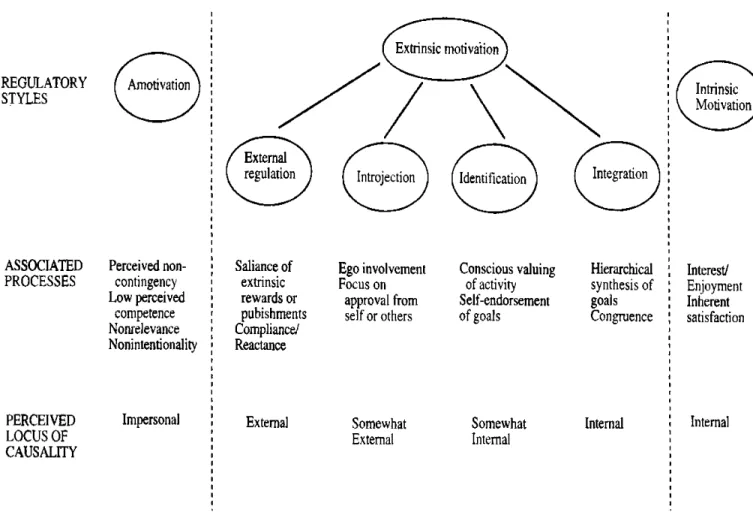
Figure 2: A taxonomy of human motivation ... 54
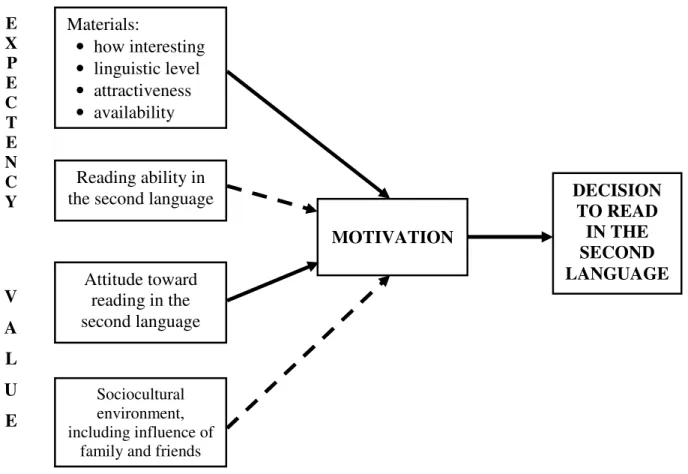
Figure 3: Model of the major variables motivating the decision to read in a second language ... 67
Figure 4: Motivational-cognitive model of reading ... 70
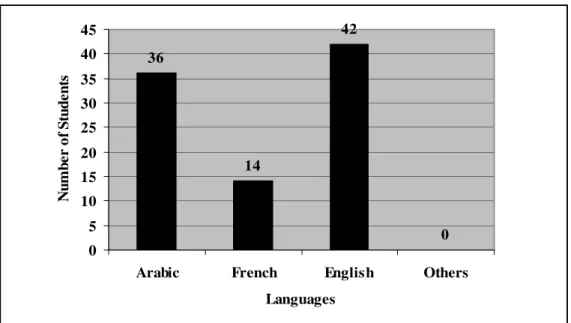
Figure 5: Students’ Language Reading Preferences ... 91
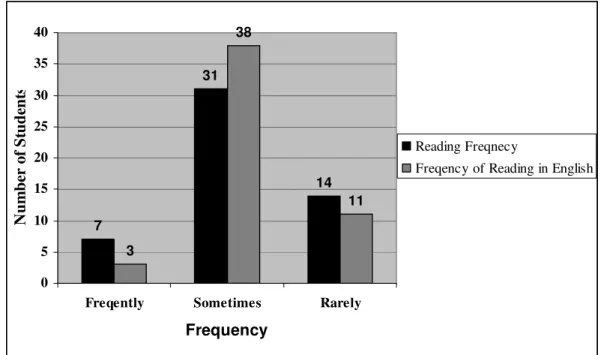
Figure 6: Reading Frequency and Reading Frequency in English ... 92
Figure 7: Sources of Encouragement for Reading ... 94
Figure 8: Respondents’ opinions about their reading efficacy ... 104
Figure 9: Statements pertaining to reading curiosity ... 107
Figure 10: Importance of reading for respondents ... 109
Figure 11: Responses of participants to statements related to grades ... 110
LIST OF TABLES
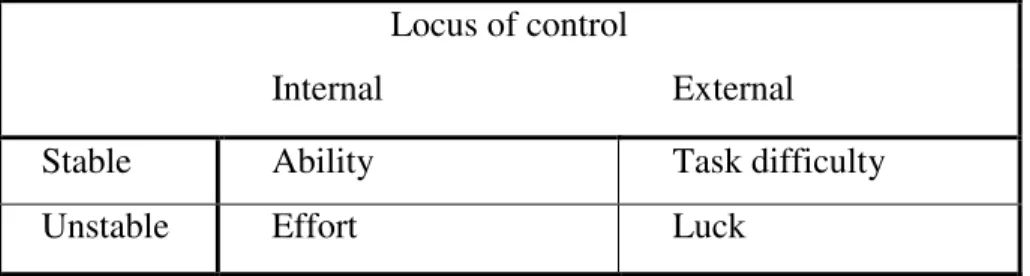
Table 1: An attributional analysis of causes ... 41 Table 2: Respondents’ order of reasons for reading outside the classroom ... 96
TABLE OF CONTENTS Abstract ... i Dedication ... ii Acknowledgement ... iii List of Abbreviations ... iv List of Figures ... v List of Tables ... vi
Table of Contents ... vii
INTRODUCTION 1. Background of the Study ... 1
2. Aim of the Study ... 2
3. Statement of Problem ... 3
4. Research Question and Hypothesis... 4
5. Definition of Terms ... 4
6. Research Tools and Target Population ... 6
7. Organisation of the Dissertation ... 7
CHAPTER ONE: WHAT IS READING? 1. Introduction ... 9
2. Definition of Reading ... 10
3. Reading Comprehension... 14
4.1. Bottom-up (Stimulus-driven) Model ... 18
4.2. Top-down (Context-driven) Model ... 19
4.3. Interactive Model ... 21
4.3.a. Schema Theory ... 22
4.3.b. Schema Theory and Reading Comprehension ... 23
4.4. An Affective Model of Reading ... 24
5. Reading in Second and Foreign Language ... 25
5.1. Differences between L1 and L2/FL Readers ... 26
6. Teaching Reading in Second/Foreign Language ... 29
6.1. Teaching Reading Comprehension Strategies in L2/FL ... 30
6.2. Language Teaching Approaches and Teaching Reading in L2/FL ... 31
6.2.a. Communicative Language Teaching and Reading ... 33
6.2.b. Communicative Reading ... 34
7. Conclusion ... 34
CHAPTER TWO: THEORIES OF MOTIVATION 1. Introduction ... 37
2. Review of Motivation Theories ... 38
2.1. Motivation as Reinforcement ... 38
2.2. Maslow’s Needs Hierarchy... 39
2.3. Need for Achievement ... 40
2.4. Attribution Theory ... 41
2.5. Expectancy Theory ... 42
2.7. Goal-Setting Theory ... 44
2.8. Self-Determination Theory ... 46
2.8.a. The Dichotomy of Intrinsic Motivation versus Extrinsic Motivation ... 47
2.8.a.1. Intrinsic Motivation ... 47
2.8.a.2. Extrinsic Motivation ... 50
2.8.b. The Psychological Needs in the Self-Determination Theory ... 55
2.8.b.1. Autonomy ... 55
2.8.b.2. Competence ... 56
2.8.b.3. Relatedness ... 59
3. Conclusion ... 61
CHAPTER THREE: READING MOTIVATION 1. Introduction ... 64
2. Reading Motivation ... 65
2.1. Defining Reading Motivation ... 65
2.2. Significance of Reading Motivation ... 69
2.3. Dimensions of Reading Motivation ... 73
2.3.a. Reading Competence and Self-Efficacy ... 74
2.3.b. Reading Achievement Values and Goals ... 75
2.3.c. Social Aspects of Reading ... 79
3. Reading Engagement and Engaged Readers ... 80
3.1. Features of Engagement in Reading ... 81
3.1.a. Social Interaction ... 81
3.1.c. Strategy Use ... 82
3.1.d. Reading Motivation ... 83
4. Conclusion ... 84
CHAPTER FOUR: INVESTIGATION READING MOTIVATION IN STUDENTS OF ENGLISH AS A FOREIGN LANGUAGE 1. Introduction ... 87
2. Population of the Study ... 87
3. Pilot Study ... 89
3.1. Design and Implementation ... 89
3.2. Results of the Pilot Study ... 90
4. The Main Investigation ... 100
4.1. The Questionnaire ... 100
4.2. Implementation ... 102
5. Results of the Main Investigation ... 102
5.1. Results in Reading Competence and Self-Efficacy ... 103
5.2. Results in Reading Achievement Values and Goals ... 106
5.3. Results in Social Aspects of Reading ... 111
6. Discussion ... 112
7. Limitation of the Study ... 115
8. Pedagogical Implications ... 116
GENERAL CONCLUSION ... 120 BIBLIOGRAPHY
APPENDICES
Appendix A: The Pilot Study
INTRODUCTION
1. Background of the Study
I had the chance to study at both the University of Constantine for my Bachelors of Arts in English, and at the Teachers’ Training School in Letters and Humanities of Constantine (ENS) for a degree for teaching English as a Foreign Language at Secondary School.
Studying at these two seemingly different academic institutions allowed me to have many experiences on the academic level. The difference in courses provided to students in both institutions could only help me develop my language skills and my thinking and critical abilities as well. The most enjoyable aspects of my studies at the University of Constantine were the new perspectives I had about English because the various courses helped deepen my knowledge of the language, and acquire basic skills in it. On the other hand, at the Teachers’ Training School of Constantine, I liked the courses that were given. These gave me another opportunity to perfect the language skills already gained at University.
One of the interesting courses once at the ENS of Constantine was Reading Techniques. When discovering that course, I immediately thought that it was something I did not have at the University, and that it would make me explore new aspects of the language. The idea I had about the course was that it would provide techniques and strategies to help learners become firstly good readers, and ultimately good teachers of English. However, the techniques and strategies were repeated over and over again to the extent of losing concentration during the course. Because of this, I spent the entire second year completely away from participating to the activities, I realised later that the lack of interest and participation resulted in losing skills to deal with reading passages and activities. After thinking for some time about the probable reasons behind such disinterest, and observing my
classmates’ behaviour during the course, I discovered that I was not motivated to read anymore. At that moment, I decided that if it happened to me to teach reading, I would try to establish a motivating environment for reading; then, the idea of including reading motivation in the reading techniques course came to me.
Back to the University of Constantine, the launching of a postgraduate study in Reading and Writing Convergences by the Department of English was the opportunity I waited for quite long to bring about some change in the teaching of reading. As I started teaching reading techniques at the ENS by the same time, and extending my knowledge about reading and psycho-pedagogy –which always attracted me- during the theoretical year, I thought it would be a great opportunity for me to address my research to the fields of reading and motivation, and I ended in writing this paper about Reading Motivation in Students of English as a Foreign Language at the Teachers’ Training School in Letters and Humanities of Constantine, concentrating on second year students.
2. Aim of the Study
Reading is very important in learning a foreign language as it is one of the basic language skills. This importance should be extremely highlighted in the case of students of English as a foreign language at the ENS. The reason is that these students are not only going to learn the language, but they are also going to teach it to younger learners who would need it to improve their language proficiency.
The basic aim in the present study is to provide sufficient scientific ground for improving the teaching of reading in English at the ENS of Constantine by investigating the area of reading motivation. The research will try to determine whether second year students of English as a foreign language at the Teachers’ Training School of Constantine are motivated
to read in English. In other words, this research is a descriptive study of students’ reading motivation in English as a foreign language. In addition to that, we will discuss the different aspects of reading motivation present in these learners. At the end of the study, we expect to reach a comprehensive view of the learners’ reading motivation in English as a foreign language.
3. Statement of the Problem
Teaching reading in any language has been dealt with from different perspectives. Most researchers believe that effective reading is synonymous of strategic reading; that is to say, in order to be effective readers, learners of a language should display a readiness to use adequate strategies to achieve successful comprehension as it is considered the final outcome of reading. Despite this focus on teaching readers strategies to deal with reading materials and the success they have realised, researchers admit that there still remain some weaknesses in reaching the effectiveness they seek.
Like any other human learning endeavour, reading has an affective dimension that has rarely been investigated until recently. Some studies have started to consider reading with the idea that the reading process and outcomes may be influenced by factors related to readers’ feelings, beliefs and other internal features. One of the domains investigated is motivation, which leads to the emergence of the reading motivation concept.
Some theorists have worked on the role of reading in learning a foreign language, while others have investigated the role of motivation in the same domain, but rarely has research been conducted on reading motivation in second/foreign language, especially in Algeria. Similarly, some studies have addressed reading motivation to improve readers’ achievement
(for example, Guthrie & Wigfield, 1997; Wigfield & Guthrie, 1997; Baker & Wigfield, 1999), but only in first language contexts.
This state of affairs pleaded for the need to study reading motivation in second/foreign language settings because reading in the target language is an integral part of learning the foreign language as it is in learning one’s first language. Another reason lies in the fact that reading motivation research would help in understanding and solving the problems that teachers and learners face in teaching and learning to read in a foreign language.
4. Research Question and Hypothesis
The purpose of the study subsumes basically one research question:
1. Is reading motivation in second year students of English as a foreign language at the ENS of Constantine as multifaceted as reading motivation in first language described by Wigfield and Guthrie (1997)?
It would appear that motivation for reading in second year students of English as a foreign language at the ENS of Constantine would show the same feature of multidimensionality as described by Wigfield and Guthrie (1997).
5. Definition of Terms
We are identifying in this part the key terms and concepts that would be recurrent throughout the dissertation in order to give a broad view of their meaning and use in the present research.
Reading
There are many definitions of reading depending on the stand point from which we look at it. However, the definition provided by Baudoin et al. (1994) gives, in our opinion, a more comprehensive description. They define reading as follows:
Reading is a complex activity that involves both word recognition, the process of perceiving how written symbols correspond to one's spoken language; and comprehension, the process of making sense of words, sentences and connected paragraphs (Baudoin et al., 1994, p.i).
Reading Comprehension
The definition of reading comprehension that seems more relevant to our concern about reading motivation is that of Snow (2002). She defines reading comprehension as “simultaneously extracting and constructing meaning through interaction and involvement with written language” (p.11).
The present definition of reading comprehension has been chosen as it relates to reading motivation through the expression “involvement with written language” (Guthrie & Wigfield, 2005).
Reading Motivation
Guthrie and Wigfield (2000) define it as “reading motivation is the individual's personal goals, values, and beliefs with regard to the topics, processes, and outcomes of reading” (p.405). This definition accounts for the intricacy of this construct as it reflects the complexity in precisely defining both terms composing it, namely reading and motivation.
Reading Engagement
“Engagement in reading is the extent to which an individual reads to the exclusion of other activities, particularly when faced with other choices” (Kamil, 2003, p.7). Guthrie, Wigfield and Perencevich (2004, p.58) explain that reading engagement refers to the connections that link up altogether different aspects of motivation, exchanges with text, social connections, abstract comprehension development, and strategy use.
6. Research Tools and Target Population
The main investigation is carried out through a questionnaire. This latter is adapted from the Wigfield and Guthrie (1997) Motivation for Reading Questionnaire (MRQ), and modified by Mori (2002).
The questionnaire consists of thirty statements divided into eight dimensions. Three dimensions have been dropped from the original questionnaire that contained eleven dimensions. These three dimensions are competition for reading, reading for recognition and social reasons for reading. One reason for these changes is that competition for reading and reading for recognition originally concern children, while our participants are higher education students. As for dropping social reasons for reading –having fun together through reading, exchanging ideas and interests about reading materials- this is due to the fact that we are investigating reading motivation for English as a foreign language, and not first language. Second year students of English as a foreign language at the Teachers’ Training School in Letters and Humanities of Constantine for the academic year 2005-2006 have been chosen to be the population of the study. We have selected two groups for the pilot study, and the three remaining groups have been left for the main investigation. In the pilot study, fifty-two
participants have taken a 28-question questionnaire designed to describe general contexts and settings for reading, in addition to the population’s beliefs, opinions and expectations about reading. The questionnaire for the main investigation was administered to seventy-one participants who accepted to answer the questionnaire. The pilot study took place after the winter holidays, before the exams of the first semester. The main investigation took place after the students had finished the exams of the second semester.
7. Organisation of the Dissertation
The dissertation is divided into four chapters. The dissertation will start with an introduction that deals with what motivated the present study, and the statement of the problem. It describes also the foundations and the outline of the dissertation.
The first, second and third chapters represent the literature review. In the first chapter, we define reading from different perspectives. Reading is further described as process by providing a view about the reading models. We explain also a crucial component in reading which is reading comprehension. In addition to that, we provide a view about reading in second/foreign language and its teaching.
The second chapter consists of a general outlook of motivational theories. Fundamental concepts are explained in relation to various theories. This chapter will be entirely restricted to theories and approaches to motivation. However, it may be helpful to understand concepts related to reading motivation theory.
Concerning the third chapter, it is exclusively dedicated to reading motivation literature. The chapter will start by defining the concept of reading motivation, then describing the aspects of reading motivation. Later in the chapter, closely related features will also be dealt with –reading engagement and engaged readers. Choosing to devote one chapter for reading
motivation results from the belief and evidence in the literature that reading motivation is different from other kinds of motivation, and it can in no way be assimilated to general motivation. This division has been operated for practical reason as we tried to avoid disturbing the overall balance of the dissertation.
The last chapter includes the investigation and results. First, we will deal with the pilot study and its results. After that, we will describe the questionnaire’s design and implementation, its results, and final discussion of the results. At the end of this chapter, we will provide some pedagogical implications as guidelines for enhancing students’ reading motivation.
CHAPTER ONE: WHAT IS READING?
1. Introduction
Because it gives access to knowledge, reading is an essential skill in learning any subject matter. Moreover, reading in a second/foreign language is equally important as it offers an opportunity to see how native speakers of the second/foreign language use it, and how they reflect aspects of their culture and express their feelings and thoughts in written form. Nonetheless, reading has always been far from the expectation of being used as a means of communication similar to speaking, listening and writing; reading was rather described as a passive receptive skill (Harmer, 1983; Adams, 1990).
Teaching reading to second/foreign language learners reflected the idea of reading as a passive skill. It focused on showing learners some ‘tricks’ to understand a text. In academic terms, those ‘tricks’ are called strategies, and many researchers have proved the effectiveness of teaching second/foreign language learners how to understand written materials by teaching them the use of those strategies.
This chapter will investigate the essence of reading from different points of view with reference to the specialists that looked at the reading process in the light of the discoveries made in their respective fields, and which have influenced both the theory and the practice of reading. Reading comprehension will also be defined as it pertains to the reading process. Aiming at explaining the cognitive processes underlying the reading process and explaining its mechanisms, we will describe the models of reading that have been advocated by prominent researchers in the field, and another model of reading that accounts for its
affective dimension will also be briefly examined. The chapter will give a brief review of reading in second/foreign language (L2/FL) and its teaching and characteristics that differentiate readers who read in their first or native language (L1) and those reading in second/foreign language (L2/FL). Later, we will look at the development of approaches to teaching second and foreign language and how they affected the teaching of reading in L2/FL. Finally, we will end up this chapter by looking at how reading in L2/FL is being taught under the Communicative Language Teaching approach.
2. Definition of Reading
Many theorists and researchers in the fields of Linguistics, Psychology and Language Teaching have attempted to define reading. The essence of reading has long been investigated, yet no single research could be exhaustive and comprehensive enough to include all the aspects of the actual reading activity. Definitions have tried to give a conceptual view about what reading is, how it takes place, and mechanisms that underlie it. Most of the definitions that have been elaborated to explain reading, however, agree on the fact that it includes underlying intricate procedures and mechanics.
Baudoin et al. (1994) clearly acknowledge the complexity of reading as they make the distinction between “word recognition” and “comprehension”. They define reading as follows:
Reading is a complex activity that involves both word recognition, the process of perceiving how written symbols correspond to one’s spoken language; and comprehension, the process of making sense of words, sentences and connected paragraphs. (p.i)
The reading process starts with a visual activity that the reader performs as soon as s/he has the text in front of him/her. When reading, one has to use eye movements to get input.
Readers move their eyes through the text to recognise the language they are reading in. Then, the brain takes information provided by the eyes and processes it, and gives it logical significance. Harmer (1983) asserts that “[r]eading is an exercise dominated by the eyes and the brain [...] The eyes receive messages and the brain has to work out the significance of these messages” (p.53).
Harmer’s (1983) definition concentrates on the reading skill as a receptive one because it regards how written texts -and other forms of written materials- are perceived as images by the eyes, and then, the transmission of these images as signals through optic nerves to the brain, which is the centre responsible of giving corresponding meanings to the messages. Moreover, some other approaches to reading have established that word recognition is a prerequisite condition for effective reading to take place. Adams (1990, p.1) asserts that decoding the words of the text separately is important to build an overall understanding of the text.
Nevertheless, other studies and researches disagree with this definition of reading because it exaggerates the importance of word recognition over comprehension. Goodman (1967), as cited in Carrell & Eisterhold (1983), contends that successful reading is not based on simple decoding of script symbols, but it is established on more solid grounds constituted of a number of reading comprehension strategies for extracting meaning from any type of text, including also context cues and linguistic forms.
In addition to that, Smith (1994) claims that reading is much more than simply recognising written symbols, and then, matching them to corresponding sounds; “reading is a matter of making sense of written language rather than decoding print to sound” (Smith, 1994, p.2). Besides emphasising the concept of meaning and its role in reading, Smith (1994)
furthermore describes understanding as a basis rather than an outcome of successful reading. He claims that readers will not be able to comprehend any passage if they do not bring to the activity their own understanding of the world, experience and prior knowledge.
Reading was also regarded from a psycholinguistic point of view. Goodman (1967) looks at reading as an activity in which the reader processes information and tries to make decisions that will be confirmed, disconfirmed or refined. Consequently, reading is regarded as an interactive process that takes place between the reader’s mind and the printed text. In the light of this approach to reading, Goodman (1967), as cited in Carrel & Eisterhold (1983, p.554), defines reading as a “psycholinguistic guessing game” in which the “reader reconstructs, as best as he can, a message which has been encoded by a writer.” Accordingly, after being considered a passive activity for a long time, reading has become a process of deliberate thinking during which meaning is constructed through interactions between text and reader.
To some extent, both Smith (1994) and Goodman (1996) agree in the sense that both place much emphasis upon text comprehension through using knowledge of the world during the process or reading. Thus, reading cannot be simply a word-by-word deciphering until meaning is reached. This makes comprehension crucial in the process of reading.
Goodman (1996) states that:
As readers use cues from the linguistic text, they bring their knowledge and beliefs about the world to bear on making sense. They guess what’s coming, making predictions and inferences; they are selective about use of text cues and they monitor their guesses for contradictory cues. Effective reading, then, is not accurate word recognition; it is getting to meaning. And efficient reading is using just enough of the available cues, given what a reader brings to the reading, to make sense of the text. (p.7)
There is a focus on the necessity of understanding a passage on the part of the reader because it results from using his/her understanding of the world in the reading activity. In other words, to reach an effective comprehension of the passage, which is the core of successful reading, a reader needs to use not only information from the passage in front of him/her, but s/he is also required to use his/her own knowledge about the world.
Though the previously stated definitions are apparently very different, they carry the essence of reading illustrated as follows:
(a) Reading is a process. This implies that in order to achieve a successful comprehension, which is the ultimate goal of the reading activity, the reader should go through a series of steps and levels that start as soon as the reader looks at the written material. The motor level is related to eye movements; the linguistic level deals with the recognition of the alphabet, the language and forms and structures; the cultural level gives some information about the culture hosting that script from; and the cognitive level is in charge of analysing information and building meaning.
(b) Reading deals with written material. We do not read only what is known to common people as letters and numbers put on a paper. In our daily life, we read different kinds of materials that range form letters, newspapers articles and books to menus, brochures, bus schedules and charts and tables, and goes even to road signs, posters and advertisements. These materials are available in different places and in different media such as boards in the streets, newspapers, TV programmes, and internet. All these are being processed in the same way and the aim is to draw meaning.
(c) Reading is for meaning. Reading is not merely deciphering the written symbols. Reading is the activity of decoding ideas and meanings that have been encoded by the
writer using a particular set of symbols s/he thought suitable for that. (Al-Mutawa & Kailani, 1989)
3. Reading Comprehension
There is an agreement among researchers and teachers in the field of reading that the principle aim of the reading process is to understand print materials. Reading is seen as a dynamic activity, which involves a number of perceptual, linguistic and cognitive processes linked to text and reader’s features. Successful processing of any written material is a complex cognitive activity that builds up meaning via interaction between the reader and the passage; precisely, between the reader’s prior knowledge and the information supplied by the text.
Comprehension is assumed to be the result of a balanced interplay between, on the one hand, the data brought in by the text in a script form and, on the other hand, data provided by the reader –his/her background knowledge- (Rumelhart, 1977; Stanovich, 1980). Smith (1985) explains reading comprehension in the light of his belief that reading is based on the reader’s background knowledge about what s/he is reading, as well as knowledge about the linguistic dimension of the text. Smith (1985) assumes that “meaning is not directly represented in the surface structure of language […] Readers must bring meaning –deep structure- to what they read, employing their prior knowledge of the topic and of the language of the text” (p.75).
Furthermore, Smith (1985) explains that comprehension should be regarded as basis for successful reading instead of being its logical outcome. He claims that comprehension “is not a quantity, it is a state – a state of not having any unanswered questions” (Smith, 1985, p.83),
which links comprehension to his principle of prediction as a prerequisite for successful reading comprehension.
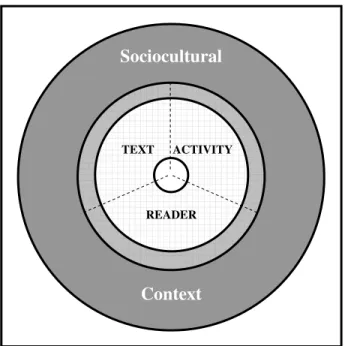
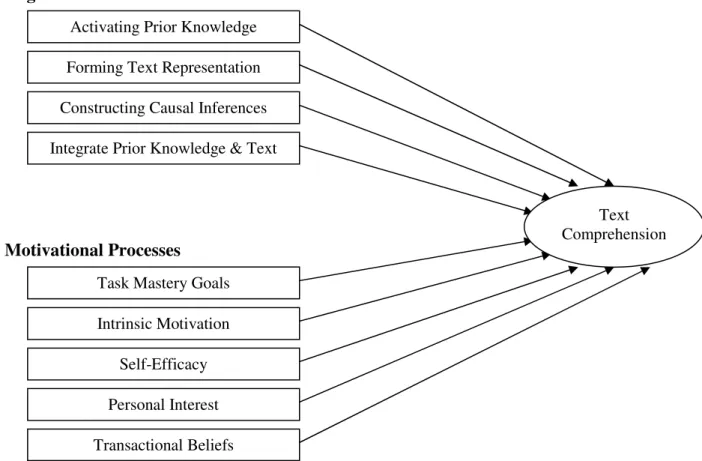
Snow (2002) describes reading comprehension as the process of “simultaneously extracting and constructing meaning through interaction and involvement with written language” (p.11). This definition expresses the value of the text and, at the same time, it draws attention to text’s deficiency to achieve comprehension on its own –meaning does not exist on the page. Likewise, three components for comprehension can be identified, “the reader, the text and the activity” (Snow, 2002, p.11). There is an active interrelationship between these three elements to achieve successful understanding.
The first element in the process of reading comprehension is the reader who uses his/her cognitive capacities, motivation, and different kinds of knowledge. The reader “constructs different representations of the text that are important for comprehension” (Snow, 2002, p.14).
The second component is text. It has a surface encoding, which refers to the words in the text; representations of meaning; and models of mental representations implanted in the passage. A passage may be easy or difficult. These two notions depend on the content of the text, the vocabulary used, linguistic and discourse structure, and genre (Snow, 2002).
The final component is the activity. The reading activity is performed to achieve a particular purpose, which is influenced by a number of motivational factors such as interest. While performing this activity, the reader uses some linguistic and semantic processes, besides decoding. According to Snow (2002), the result of reading is also a feature of the activity, and it depends on the reader’s purpose, and the changes that may happen to it during the activity.
Sociocultural
Context READER TEXT ACTIVITY
All three components are interacting in a socio-cultural context that is made up of external factors such as how society and culture consider readers and reading, social and cultural contexts, limitations and constraints to reading.
Figure 1: The Components of Reading Comprehension (Snow, 2002, p.12)
This view maintains that meaning exists in the thinking processes of the reader that arise during a transaction with a text. Comprehension is, thus, influenced by the text and by the reader’s prior knowledge that is brought to the process (Anderson & Pearson, 1984). According to National Institute of Child Health and Human Development (NICHD) (2000), reading comprehension is seen as the construction of the meaning of written text through shared interchange of ideas between the reader and ideas included in the text by its author.
Other attempts to defining reading comprehension have been made in relation to other components of reading that are the use of strategies and vocabulary knowledge. The NICHD (2000) clearly establishes the importance of strategies and vocabulary in reading. Reading comprehension is thus defined as follows:
[A] cognitive process that integrates complex skills and cannot be understood without examining the critical role of vocabulary learning and instruction and its development, and active interactive strategic processes are critically necessary to the development of reading comprehension (NICHD, 2000, p.4-1).
Comprehension reading strategies refer to those procedures and techniques that help in learning other strategies, transferring learning and improving remembering and comprehension of new texts (NICHD, 2000). Strategies are not merely devices that help readers get the intended meaning. In many case, the aim of reading is not only to understand, but also to solve problems, to make decisions, and to think deeply and critically. In addition to that, the array of strategies is quite large in order to enable readers to go beyond simply understanding what is written on the page. Inferring and drawing conclusions strategies are good examples of strategies that help readers think deeply and critically. Moreover, the choice of using a certain strategy over the others is primarily defined by the reader’s purpose. Readers should be encouraged to set goals for reading in order to be able to choose the appropriate strategy.
The other element that is said to be helpful in reading comprehension is vocabulary knowledge. The NICHD (2000) asserts that reading comprehension cannot be explained without emphasising the important role vocabulary plays in building this complex cognitive process. This is simply to comfort other researchers’ conclusions. Learning new vocabulary items, and novel concepts hidden within these items, is crucial for the development of comprehension.
All the definitions provided above are to give evidence for the importance of reading comprehension as the aim for reading. They show also the complex structure of comprehension by explaining its components, and they illustrate factors –strategies and vocabulary- that may help develop this construct.
4. Models of Reading
Some researchers have tried to explain reading mechanisms and, therefore, established certain processes through which reading happens; they called them models. The term model may be defined as “a systematic set of guesses or predictions about a hidden process” (Davies, 1995, p.57). It refers to what happens on the level of perception by the eyes and analysis by the brain during the process of reading, and also to certain policies and approaches to the teaching of reading.
Reading models are just frameworks about which aspects of the reading process are most important (Rayner & Pollatsek, 1989; Cornaire, 1991; Wolf & Vellutino, 1993); they differ simply in the emphasis each model makes on particular aspects and their role in the process of reading. From a cognitive point of view, reading models are Bottom-up (Stimulus-driven); Top-down (Context-driven); and Interactive models.
4.1. Bottom-up (Stimulus-driven) Model
This model appeared as a consequence of the development of Behaviourist Psychology in the 1950’s, and in this perspective, reading is seen as a response (recognising words) to stimuli (the printed words). In his studies, Gough (1972) established that reading starts at letter level since the reader is required to read letter by letter. Then, the reader moves to the next stage, which is recognising the sounds corresponding to those letters, and their syntactic characteristics. The final stage is getting meaning (Davies, 1995).
LaBerge and Samuels (1974) introduced the theory of automatic information processing in which they claim that the reader starts with smaller components of text that are letters, then proceeds from letters to clusters, and finally reaches words. This linear processing involves skills development that leads to comprehension if fluency (automaticity) is reached.
The ultimate goal is to give the reader more time to devote for comprehension and develop fluency. Through successful repetitions, reading and comprehension become automatic.
The Bottom-up model presents meaning as directly related to the text (or Text-driven); meaning exists in the text and the reader is supposed simply to get this meaning. Anderson (1994) explains that this model considers textual meaning as the sum total of the meanings of words that build up clauses. This also means that the reader is not supposed to play an active role in the understanding process, such as using his/her previous knowledge about the topic of the passage, and about the world (Gough, 1972; LaBerge & Samuels, 1974).
One of the drawbacks of this model is that it minimises the role of the reader; s/he is a passive decoder who identifies printed symbols and converts them into corresponding sounds. Besides, the Bottom-up model describes information flow as a series of stages that transforms the input and passes it to the next stage without any feedback, or possibility of later stages of the process to influence earlier stages (Stanovich, 1980). However, the main weakness of the Bottom-up model is that it concentrates on the recognition of letters, words, phrases and finally sentences as basis for reading to occur, and ignores understanding the written text. This atomistic approach is complex from learners’ point of view as it presents a large number of grapho-phonic rules to deal with letter-sound associations, in addition to the effort the reader has to make to memorise the stages of the process, which would rather hinder the learners’ performance.
4.2. Top-down (Context-driven) Model
Under the influence of Cognitive theories of the 1960’s, the Top-down model came to present the reading process just in a reverse sequence of processing presented in the Bottom-up model. The Top-down model proposes that reading begins with predictions about
meaning. It was first introduced by Kenneth S. Goodman and Frank Smith as an alternative to the Bottom-up model of reading. Goodman (1967), as cited in Carrell and Eisterhold (1983), and Smith (1994) define reading as the process of connecting information contained in the text with the amount of knowledge the reader brings to the act of reading.
According to Wolf and Vellutino (1993), the Top-down model is holistic and it gives primary importance to the linguistic context in the process of word-recognition. In the process of understanding written text, the reader continuously hypothesises about what s/he is reading and checks these expectations and predictions for confirmation using information from the text. The model offers another view of reading because it considers reading an active cognitive process in which the reader’s background knowledge plays a key role in the creation of meaning. For Smith (1994), reading is extracting meaning from script and not a passive mechanical activity in which the readers matches written symbols to sounds; reading is rather “purposeful and rational, dependent on the prior knowledge and expectations of the reader (or learner)” (Smith, 1994, p.2).
Cornaire (1991) assumes that when someone begins reading a passage, they uses their background knowledge of the topic to have a broad idea about what the passage is about, and thus, the reader aims at understanding the content. Moreover, the Top-down model presents four essential cycles in the reading process; “optical, perceptual, syntactic and meaning” (Davies, 1995, p.61).
In this model, meaning should be focused on during the process of reading because of its supreme importance. This reduces the importance of the activity of recognising the script symbols of the written language. Goodman (1967), as cited in Carrell and Eisterhold (1983), views reading as a “psycholinguistic guessing game” in which the reader attempts to rebuild
the message aimed at by the writer, while for Smith (1975) the reading process is purposeful, selective, anticipatory and based on comprehension. This gives the reader an active role in the process of reading. In the Top-down model, prediction is given much importance because it is seen as a basic activity in reading, be it with beginners or advanced readers.
Nevertheless, some research (Rayner & Pollatsek, 1989; Stanovich, 1992) maintains that there is an interaction between Bottom-up and Top-down models at different levels. The basic weakness of the model is that of minimising too much the role of decoding. Research on eye movement have shown that the majority of words are being interested in, which is the opposite of Smith’s (1975) view of reading as a selective process. In addition to that, information in the written material is visually processed very rapidly and prediction does not have that immense importance assumed by the Top-down model.
4.3. Interactive Model
Essentially, this model is built on the principle that reading comprehension is based on the interaction of the two previous models. The Interactive Model was proposed in an attempt to present a model that would explain how readers use information from various sources at the same time during the reading process (Rumelhart, 1977).
In this model, the reading process begins at the level of perceiving written symbols on the page, and goes through stages where information from all sources (orthographic, syntactic, lexical and semantic) at the same time till the most likely meaning is retrieved (Rumelhart, 1977). The Interactive model does not pre-select or expect any processing sequence, like in Bottom-up and Top-down models (Davies, 1995). Instead, reading is a process of simultaneously drawing upon sources of information, but still, selectively.
For Rumelhart (1977, p.573), reading should be regarded as a simultaneously “perceptual” and “cognitive” process, and insists on the fact that interaction between the diverse sources of information is needed for the reader to achieve successful comprehension. Rumelhart (1977) asserts that “a skilled reader must be able to make use of sensory, semantic and pragmatic information to accomplish his task. These various sources of information appear to interact in many complex ways during the process of reading” (pp.573-4).
Nonetheless, Rumelhart (1977) does not clearly identify how different types of information from different sources cooperate in the reader’s mind while reading.
4.3.a. Schema Theory
It was Bartlett (1932), as cited in Anderson and Pearson (1984, p.257), who first defined schema as “the active organisation of past reactions, or past experiences” that affects the perception of new information by the reader.
Nunan (1999) asserts that the Schema Theory is based on the principle that readers’ prior experience directs them to building mental constructions that facilitate getting meaning from new experiences. New information will be included into schemata that are “extensive representations of more general patterns or regularities that occur in our experience” (Smith, 1994, p.14). The concept of schema describes the interaction between the reader and information in the text (Carrell & Eisterhold, 1983; Anderson & Pearson, 1984).
Anderson and Pearson (1984, p.258) explain, however, that Bartlett (1932) did not give a clear description of the role of schemata. Other researchers define schemata as ‘containers’ of knowledge that include concepts linked to objects, actions, events and sequences of actions and events; in addition to data about how to use that knowledge. The Schema Theory is
usually defined as a model of human knowledge. In other words, the structure of knowledge as it is represented in memory (Rumelhart, 1980).
4.3.b. Schema Theory and Reading Comprehension
Within the Schema Theory, reading comprehension is seen as the process of discovering a disposition of schemata that fittingly reflect information presented in the text (Rumelhart, 1980). If the reader uses the proper schemata that correspond to those described by the writer, then, s/he is able to achieve successful comprehension. Anderson (1994) sees text comprehension as “activating or constructing a schema that provides a coherent explanation of objects and events mentioned in a discourse” (p.473).
Schemata are basic for perception, understanding and remembering of information. Rumelhart (1980) identifies two categories of schemata; Higher-level and Lower-level schemata, which are generally associated with Top-down processing. On one hand, High-level schemata include essentially textual data involving morphemes, words, phrases, sentences and so on, in addition to the reader’s knowledge of these components. On the other hand, High-level schemata comprise the reader’s prior knowledge, in addition to general knowledge of the world, knowledge about the topic s/he is reading and expectations (Zerhouni, 1996). Reading should coordinate these two processes at all levels of analysis when the reader is attempting to build the meaning intended by the writer, which makes reading simultaneously perceptual and conceptual (Rumelhart, 1977).
Rumelhart (1980) establishes that there are four basic functions of schemata. Schemata have a role in the perception of individual parts in the context of the whole. They play another role in the comprehension of the text when the reader finds the schemata that correspond to those in the text. The other role of schemata is in remembering because “we
remember our interpretation of an event or text rather than the text or the event itself” (Rumelhart, 1980, p.49). Finally, Schemata play a role in learning as they help learners develop new schemata.
Furthermore, Rumelhart (1980) identifies three ways to explain failure in comprehension on the part of the reader. Firstly, the reader does not have the suitable schemata. Secondly, the text does not offer a sufficient amount of clues to enable the reader to stimulate the appropriate schemata. Finally, the reader finds a logical interpretation of the text that is different from the one projected by the writer.
Consequently, reading is regarded as a meaning construction process in which there is an active interaction of the reader with the text. Anderson (1994) states that “a reader comprehends a message when he is able to bring to mind a schema that gives account of the objects and events described in the message” (p.469). In this respect, the reading process is based on the information supplied by the text, which is a Bottom-up processing, and the reader’s background knowledge, a Top-down processing.
4.4. An Affective Model of Reading
Despite the exhaustiveness and coherence of the models and theories of reading, a very large number of them are formulated by Cognitive psychologists. They regard reading as either a cognitive process or product, and disregard the affective dimension of the activity.
Researchers investigating affective factors in reading have shown that such factors as attitudes and motivation are of significant interest (Mathewson, 1994). The affective constituents of reading are readers’ attitude, interest and belief about reading, and motivation, and research needs to take them into consideration in order to achieve a complete view of the
reading process. Interest in these aspects of reading has given birth to two affective models (Mathewson, 1985, 1994; Ruddell & Speaker, 1985).
Mathewson (1985) introduced a model of reading that explains the crucial role performed by attitudes of readers. Mathewson contends that the reader’s attitude toward reading is made up of his/her prevailing feeling about the activity, his/her readiness to perform the reading activity, and beliefs s/he holds to evaluate reading. Other affective factors (which are said to be secondary) are incentives, purposes, norms and the settings, in addition to the internal emotional state of the reader before and during the reading activity.
The second affective model of reading was proposed by Ruddell and Speaker (1985). Their model comprises four components that interact with each other during reading. These components are reader environment, declarative and procedural knowledge, and knowledge utilisation and control. The reader’s environment refers to the text, task, source of authority, and socio-cultural meanings of the text and classroom. Declarative and procedural knowledge describe the reader’s knowledge of word analysis and strategies to deal with the text. Knowledge utilisation and control are linked to the process through which a reader builds meaning. This model is based on reader’s background knowledge and beliefs, and his/her socio-cultural values.
It is in the affective state that the reader establishes his/her goal, expectations about comprehension, and expectations for how long it takes to achieve comprehension (Ruddell & Speaker, 1985).
5. Reading in Second and Foreign Language
Researchers on reading and second/foreign language learning have all agreed on the importance of reading skills in achieving academic success and second/foreign language
acquisition (Carrell, 1988; Anderson, 1994). However, there is a disagreement that stems from questions concerning the process itself and opinions are largely controversial because of the educational trends underlying each of them.
The core of the debate is about which processing model should be adopted, whether to use Bottom-up processing or Top-down processing. However, the choice of either processing model depends on two factors. On the one hand, there are differences between reading in the native/first language (L1) and reading in a second/foreign language (L2/FL). On the other hand, there is the influence of the various approaches to foreign language teaching that have emerged since the beginning of the twentieth century.
5.1. Differences between L1 and L2/FL Readers
Many features make reading in a second/foreign language different from reading in a mother language. In fact, these differences are mainly related to the readers themselves rather than to the process, which makes the reading process in L2/FL more complex than it in L1.
Almost generally, readers who start reading in a second or a foreign language have already experienced reading in their native language. They have, thus, acquired cognitive skills higher than those of beginner readers who start reading in their first language, which enables them to make consistent deductions from the reading material based on their background knowledge. Besides, not only do L2/FL readers use their prior knowledge, but they also transfer learning and reading strategies they acquired in their mother language.
If readers have been instructed in their L1, then using their native language reading skills will be of crucial importance. L2 readers do not have to learn reading skills in the second language again because they have already acquired them in their mother language, but they simply transfer them (Alderson, 1984). In case they face difficulties in understanding a text
in the target language, readers will use advanced cognitive skills to achieve successful comprehension. On the other hand, Clarke (1980), as cited in Eskey (1988), asserts that L2/FL readers “no matter how proficient in their first language reading, cannot transfer their skills to their second language reading until they have mastered more of the language.”
Another feature of L2/FL readers that may influence reading in L2/FL is language proficiency. It plays a key role in helping readers read in another language other than their L1. Grabe (1991) asserts that there is a distinction between L2/FL readers’ linguistic understanding in their native language and their linguistic understanding in the target language. Readers who start reading in their L1 have an amount of linguistic knowledge in their L1 they have acquired spontaneously, whereas their counterpart readers starting to read in L2/FL do not acquire this linguistic knowledge until further experience with the L2/FL language (Singer, 1981).
Despite the presence of this L2/FL linguistic knowledge in L2/FL readers, they sometimes, do not achieve well in the target language reading comprehension. It is partly due to L2/FL readers’ lack of confidence in their abilities in the target language.
The reason behind this lack of confidence is that when readers read in L2/Fl, they believe that they need to know the meaning of every single word in the text. L2/FL readers tend to compare their reading in their L1, where they acquired a linguistic knowledge that enables them to understand what they read, to reading in the target language in which they lack such knowledge (Singer, 1981). Because L2/FL learners consider reading a tool to learn the target language, they think that text comprehension needs knowledge of every new vocabulary word. Consequently, reading slowly and using the dictionary to deal with new vocabulary is
another feature of readers in L2/FL. Moreover, lack of confidence is a hindrance to achieve successful comprehension.
The way L2/FL readers consider reading uses and their expectation may also have an impact on their performance in reading in L2/FL. Different beliefs about reading and the use of texts in different social context may result in problems in academic reading comprehension (Grabe, 1991). If L2/FL readers originate from social environments where they are supposed to learn facts from the text by heart, or where texts are said to hold the truth, for instance, then they will face problems of comprehension when they are asked to read a text critically.
There is also a difference between L1 readers and L2/FL readers in terms of reading purpose. Mainly in foreign language settings, reading is often used as a means to learn a language or to learn to read in that language, while reading in L1 is done to learn facts and get the idea of a text or as part of a class assignment. In the absence of other sufficient materials for learning a language, reading seems to be an excellent alternative as it provides learners with authentic materials and settings for learning a second/foreign language. Nuttall (1982) argues in favour of the vital role of reading in the acquisition of a foreign language as its supplies authentic language; “[t]he best way to improve your knowledge of a foreign language is to go and live among its speakers. The next best way is to read extensively in it.” (Nuttall, 1982, p.168)
Nuttall (1982) uses the terms ‘intensive’ and ‘extensive’ as labels for the types of reading. Intensive reading refers to the type of reading in which readers read short passages to get ideas and knowledge about vocabulary, syntax and/or grammar through activities in the classroom under the control of the teacher. Extensive reading, on the other hand, refers to
reading longer passages to get global understanding and to have pleasure and entertainment; it is done either inside or outside the classroom and independently from any control.
Pleasure and entertainment are aspects of the difference between L1 and L2/FL readers. Teachers usually use these two notions to motivate second/foreign language learners to read in the target language, which leads L2/FL readers to read not for the sake of learning a language, but understanding the author’s message in the text and get some pleasure (Nuttall, 1982).
6. Teaching Reading in Second/Foreign Language
Learners of any second/foreign language cannot simply wait till they learn the target language because, in most cases, they lack exposure to that language and they do not use it in their daily life to communicate.
Al-Mutawa and Kailani (1989) contend that in the Arab world, reading is taught to students at different stages to enable them to read and understand rapidly and with a maximum of efficiency. Al-Mutawa and Kailani (1989) further explain that when teaching English to Arab learners, “the reading skill is often more important than any language skills [...] because English is taught more for business or academic purposes than for daily communication” (p.115-6), depending on the status English holds in each country -second or foreign language.
In teaching reading in a second/foreign language, there are two types that should be taken into consideration; extensive and intensive reading. When reading extensively, learners read outside classroom to get pleasure or to learn general information. This kind of reading is done voluntarily and plays a very important role in improving second/foreign language learners’ abilities. Extensive reading offers L2/FL readers a chance to be exposed to an
authentic form of the target language, helps them acquire more knowledge about the target language’s native speakers and their culture, and provides them with pleasure and entertainment (Nuttall, 1982). The texts included in an extensive reading program are materials such as short stories, novels, poems, plays, texts, magazines and journals.
On the other hand, learners who are reading intensively deal with relatively short texts and activities about linguistic content -new vocabulary and expressions, pronunciation, functions, grammar and style- and cultural content as well, in order to achieve full understanding of the material (Al-Mutawa & Kailani, 1989). These drills aim at giving learners the opportunity to analyse how texts are built and how meaning is linguistically encoded.
6.1. Teaching Reading Comprehension Strategies in L2/FL
According to Ur (1996), there cannot be reading in a foreign language if understanding is not reached because it would be simply deciphering written symbols. Ur (1996) argues that:
[R]eading means ‘reading and understanding’. A foreign language learner who says, ‘I can read the words but I don’t know what they mean’ is not, therefore, reading. In this sense, he or she is merely decoding –translating written symbols into corresponding sounds (p.138).
Because of their importance in achieving successful comprehension, reading strategies in L2/FL need be taught to L2/FL readers so that they can use them to facilitate reading in order to achieve efficient and quick comprehension of a text. However, the use of these strategies depends on the readers’ goal(s) as L2/FL learners.
Learners generally do not know how to set goals for their learning, and it is the teacher’s task to help them set specific and short-term goals because they “can help the learner to structure the learning process” (Dörnyei, 2001, p.82) and to go through the learning process
to achieve those goals successfully. Moreover, most students wait for the teacher to show them how to deal with texts. The teacher is responsible for making readers independently decide what strategies to use as part of making them autonomous because of “the importance of self-starting and of self-taking responsibility for one’s own learning” (Brown, 2007, p.130).
Another factor that makes readers reluctant towards using reading strategies is the fact that they are afraid of failure, which creates frustration and anxiety. A good way to encourage students to engage in reading and use strategies would be to give them opportunities in which they can experience success (Dörnyei, 2001). Anxiety also can be reduced if the teacher avoids social comparisons (peer modelling), introducing competition settings where winners and losers would be treated the same and where importance is rather given to learning than to competitors (Dörnyei, 2001).
6.2. Language Teaching Approaches and Teaching Reading in L2/FL
The different educational trends underlying approaches to language teaching have affected the process of learning itself and on language units such as language skills. Recent studies have shown that a change in focus, from strictly Text-driven to Reader-driven processing, has gone hand in hand with the developments in L2/FL teaching approaches and methods from the traditional Grammar-translation approach to the Communicative approach. It resulted in a shift of emphasis from the text to the reader, or vice versa.
According to the traditional Grammar-translation approach, reading was considered a tool to enable learners to translate separate words, phrases and sentences from the target language into equivalent forms of their mother language (Brown, 2001). In the 1950’s, when this approach was still established, the role of the reader was passive and less emphasised than
the role of the text. There was little consideration for individual reader’s motivation, purpose, learning styles or cultural orientation. The basic task of the reader was to memorise their native language equivalents for L2/FL vocabulary items and grammar rules without any consideration for the context (Brown, 2001). The most important goal of reading was achieved once readers were able to apply their vocabulary and grammatical knowledge to translate from the second/foreign language into their first language, sentence by sentence. Brown (2001) explains that the possibilities of using this method in teaching reading were so limited that reading researchers did not attempt to support it.
Under the Audio-lingual approach to language teaching, and Behaviourism, reading was seen as a written mechanical decoding of speech. Therefore, emphasis in L2/FL reading was on the development of automatic reactions to text (Silberstein, 1994, as cited in Brown, 2001). No consideration was given to the contribution of the reader in the reading process and, consequently, reading was not dealt with as an active process, but rather a means to enrich cultural context for practice of spoken language and to strengthen its patterns. Some individual features, like readers’ aptitude, development and interest, were given great importance in choosing the reading materials as an excellent means to motivate learners.
The communicative approach to language teaching brought new influential types of proficiency, such as sociolinguistic and discourse proficiency. Language teaching proficiency was accordingly influenced and, by extension, the development of reading skills. According to this approach, comprehension requires more knowledge than vocabulary and grammatical knowledge; it needs also paying attention to the socio-cultural context of the reading material. The reader’s use of strategies was also emphasised as a factor that facilitates reading comprehension. Since it gives importance to text and reader features, this approach
arouse interest of researchers to explore the intricacies of the reading process in the light of its principles.
6.2.a. Communicative Language Teaching and Reading
Communicative Language Teaching (CLT) rests on the assumption that language teaching should promote the communicative aspect of language. Brown (2007) explains CLT as the focus on Communicative Competence (ability to communicate) more than on Linguistic Competence (ability to produce correct language forms) using authentic language to convey a meaning, and where learners use productive and receptive language skills, with more importance given to fluency over accuracy for the sake of keeping the flow of communication on going.
Within CLT, Task-based instruction has been the logical outcome of the shift from the teacher-centred instruction to learner-centred teaching and classroom interaction, authenticity and learners’ experience with the second/foreign language (Brown, 2007). A task is defined as “an activity which requires learners to use language, with emphasis on meaning, to attain an objective” (Skehan, 2003, p.3).
Task-based instruction provides good settings because it offers many opportunities to enhance motivation. When learners are doing tasks, they feel much more involved in the learning process. Increasing learners’ involvement can be achieved by asking them to participate in class discussions and activities that require both mental and bodily involvement so that all students can have the opportunity to act during the class.