UNIVERSITÉ DE MONTRÉAL
OPTIMISATION DE LA PRODUCTION DE PROTÉINES
RECOMBINANTES AVEC DES CELLULES DE TABAC EN SUSPENSION
ÉRIC BOIVIN
DÉPARTEMENT DE GÉNIE CHIMIQUE ÉCOLE POLYTECHNIQUE DE MONTRÉAL
THÈSE PRÉSENTÉE EN VUE DE L’OBTENTION DU DIPLÔME DE PHILISOPHIAE DOCTOR (Ph.D)
(GÉNIE CHIMIQUE) MARS 2010
UNIVERSITÉ DE MONTRÉAL
ÉCOLE POLYTECHNIQUE DE MONTRÉAL
Cette thèse intitulée:
OPTIMISATION DE LA PRODUCTION DE PROTÉINES RECOMBINANTES AVEC DES CELLULES DE TABAC EN SUSPENSION
présentée par : BOIVIN, Éric
en vue de l’obtention du diplôme de : Philosophiae Doctor a été dûment acceptée par le jury d’examen constitué de :
M. PERRIER Michel, Ph.D., président
M. JOLICOEUR Mario, Ph.D, membre et directeur de recherche
M. DE CRESCENZO Grégory, Ph.D, membre et codirecteur de recherche M. MATTON Daniel-Philippe, Ph.D, membre et codirecteur de recherche M. HENRY Olivier, Ph.D., membre
DÉDICACE
REMERCIEMENTS
J’aimerais remercier mes directeurs de recherche, les Pr. Mario Jolicoeur, Grégory De Crescenzo et Daniel P. Matton pour m’avoir accueilli dans leurs laboratoires, pour leur encadrement, leurs judicieux conseils et leurs encouragements. Je tiens également à les remercier pour m’avoir apporté une nouvelle vision de la recherche, plus appliquée que celle que mes études antérieures m’ont donnée.
Je souhaite également remercier tous mes collègues de travail pour leur aide, leurs conseils et pour la bonne ambiance qu’ils ont fait régner au laboratoire. J’aimerais particulièrement remercier Steve pour m’avoir transmis tout son savoir en ce qui concerne la culture de cellules de plantes, Mathieu pour les cultures en bioréacteur et le Virgo, Zeina pour les analyses de Differential display, et Martin, Hugo et Éric C. pour leur conseils concernant plusieurs méthodes de biologie moléculaire.
J’aimerais également souligner le précieux travail des techniciens, Martine, Gino, Lionel, Michelle, Carol, Jean, Robert qui m’ont aidé lors de la réalisation de ce projet. De même, j’aimerais remercier le personnel du secrétariat du département de génie chimique, en particulier Louise, Lyne, Chantal F., Chantal B et Brigitte pour leur aide avec les problèmes administratifs et les commandes.
Enfin, un gros merci à mes amis et collègues, en particulier Virginie, Marisha, Jingkui, Cyril, Aline, Antoine, Anne et Ines pour leurs oreilles attentives et leurs encouragements. Un gros merci également à Guillaume, pour le réconfort qu’il m’a apporté, la tranquillité de son condo et sa machine à café.
RÉSUMÉ
La demande croissante pour des protéines recombinantes à faible coût stimule l’industrie à développer de nouvelles plateformes de production. Parmi celles-ci, la plateforme végétale in vitro gagne en intérêt. Permettant l’utilisation d’un milieu de culture entièrement synthétique, exempt de protéines et qui ne favorise pas le développement de pathogènes humains, les cellules de plantes peuvent effectuer des modifications post-traductionnelles et mener à des molécules bioactives. Plusieurs protéines produites en plantes sont d’ailleurs en phase d'essais cliniques. Toutefois, les faibles rendements en protéines recombinantes obtenus avec les cellules de plantes limitent la compétitivité de cette plateforme novatrice.
Les travaux de recherche regroupés dans cette thèse visent l’amélioration des rendements en protéines recombinantes produites par des cellules de tabac en suspension. L'objectif principal a consisté en l’optimisation de la production de protéines recombinantes en cellules de tabac, dans le contexte d'un bioprocédé en bioréacteur. En objectifs spécifiques, la co-culture de cellules de plantes avec Agrobacterium permettant d'exprimer de façon transitoire un gène d’intérêt et un suppresseur viral, ainsi que l’identification et l’isolation de promoteurs forts inductibles au froid ont été étudiées.
De manière à présenter une vue globale de la situation actuelle du marché et de l’industrie, une revue détaillée a été réalisée et soumise au journal Plant Biotechnology Journal (février 2010). Dans la première partie de cet article, l'ensemble des plateformes de production de protéines recombinantes établies de même que celles en émergence sont décrites en détail et leurs niches spécifiques sont présentées. Par la suite, les innovations récentes rapportées dans la littérature pour la plateforme végétale in vitro, telles que l’optimisation des cassettes d’expression
et des paramètres de bioprocédés et l’utilisation de suppresseurs viraux de répression génique sont présentées et discutées.
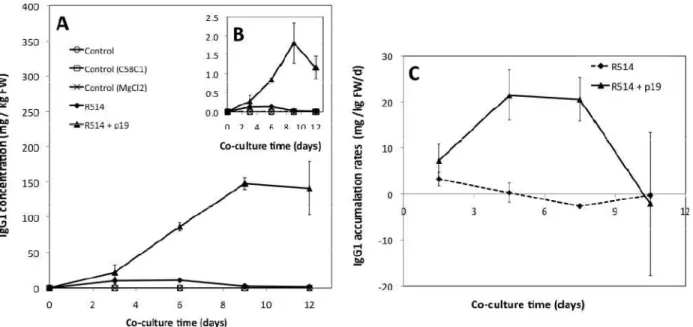
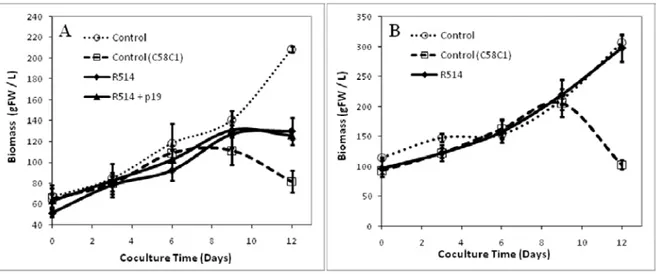
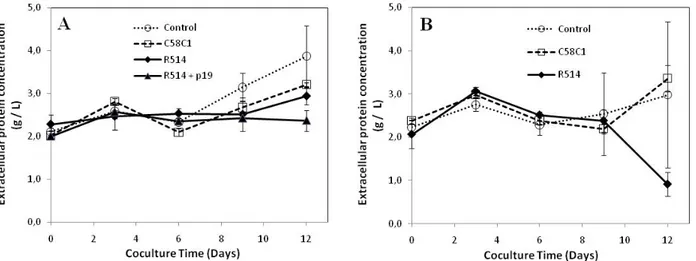
Dans un deuxième temps, un chapitre présente une étude démontrant la faisabilité de produire des protéines recombinantes de façon transitoire, dans des cellules de plantes en suspension, en les cocultivant avec des populations d'Agrobacterium compétentes à transférer des plasmides contenant divers gènes d'intérêt. Il a ainsi été démontré que l’expression transitoire d’un suppresseur viral de répression génique tel que p19, simultanément à l'expression également transitoire d'un gène d'intérêt, augmente de manière significative le rendement en protéines recombinantes. Ces travaux ont été consignés dans un second article soumis au journal Biotechnology Progress (février 2010). Plus précisément, des cellules de Nicotiana benthamiana ont été cocultivées avec deux souches d’Agrobacterium différentes, l’une ayant une construction pour l’expression d’un gène d’intérêt, un anticorps IgG1 de souris, l’autre codant pour le suppresseur viral p19. Ces travaux de coculture transitoire ont permis de démontrer, pour la première fois, que la co-transformation de cellules de plante en suspension avec deux vecteurs de transformation est possible, et que l’utilisation d’un suppresseur viral augmente significativement la production de protéines recombinantes, de manière similaire à ce qui est observé pour des feuilles de la même plante agroinfiltrées. Il a également été déterminé que l’utilisation d’une approche transitoire pour l’expression du suppresseur viral pourrait être préférable à l’établissement d’une lignée exprimant constitutivement le suppresseur. Selon les résultats présentés dans cette thèse, la suppression du mécanisme de répression génique causée par p19 et qui est reliée à son niveau d’expression, pourrait être plus élevée dans le cas transitoire à cause d'un phénomène de surexpression des transgènes (dont p19) en situation transitoire.
Dans un troisième temps, l’identification et l’isolation de promoteurs forts inductibles au froid dans N. tabacum ont été initiées. Tel qu’expliqué dans la revue de la littérature, des
systèmes de production inductibles au froid sont présentement en développement dans des cellules microbiennes et de mammifères; le froid étant identifié comme un paramètre pouvant permettre d’augmenter les rendements en protéines actives et correctement repliées, tout en diminuant les actions néfastes des protéases. À notre connaissance, il n’existe pas de système similaire en plante avec une perspective de production de protéines recombinantes. Les cellules de plantes sont normalement cultivées entre 23 et 27°C, et les effets d’un stress à 12°C ou 18°C pendant 6, 12, 24 et 48 heures sur la biomasse et la concentration en protéines ainsi que le pH extracellulaire ont été caractérisés. En utilisant une méthode d’expression différentielle (Differential Display), des fragments de la région 3’-non-traduite (UTR) de quelques gènes potentiellement induits au froid ont été isolés. La validation de ces candidats a été initiée en utilisant des analyses Northern et Northern inversé, mais n’a pas résulté, à ce jour, à l'identification claire de promoteurs candidats. Les bases de données existantes ont été criblées en utilisant une stratégie de BLAST; ce qui a permis de réduire le nombre de nos candidats potentiels. Une méthode d’amplification rapide du bout 5’ de l’ADN complémentaire (5’-RACE) a été réalisée sur les candidats ciblés afin d’augmenter la longueur de la séquence connue des gènes. Toutefois, aucun des fragments isolés avec cette méthode n’étaient reliés aux candidats retenus. Les travaux effectués sont donc présentés afin de guider d'éventuels travaux sur ce sujet.
Dans cette thèse, la faisabilité d’un système d’expression transitoire, combinant des cellules de plantes avec plusieurs lignées d’Agrobacterium a été démontrée de même que l’importance d’exprimer de manière transitoire un suppresseur viral pour augmenter les rendements en protéines recombinantes. Toutefois, beaucoup de travail demeure à faire en ce qui concerne l’identification et l’isolation de promoteurs inductibles au froid.
ABSTRACT
The continuously increasing demand for bioactive recombinant proteins at low cost stimulates the industry to develop new production platforms. Among them, in vitro plant biotechnology is gaining interest. Allowing the use of a fully synthetic protein-free medium that do not promote the development of human pathogens, plant cells can perform post-translational modifications and lead to bioactive therapeutics. Various human proteins produced in plant cell cultures are currently under clinical trials. However, low recombinant protein yields obtained with plant cells limit the competitiveness of this new platform.
The research in this thesis is aimed at raising recombinant protein yields from tobacco cells in suspensions. The main objective was to optimize recombinant protein production in tobacco cells in a bioreactor process. Secondary objectives were to study plant cell coculture with Agrobacterium to transiently express a gene of interest and a viral suppressor and to identify and isolate strong cold-inducible promoters.
In order to present an overview of the actual situation in the industry, an exhaustive literature review was produced and submitted to the Plant Biotechnology Journal (February 2010). In the first part of this review manuscript, all the established recombinant protein production platforms as well as the main emerging platforms are described in detail with their specific applications. Upcoming innovations for the in vitro plant biotechnology platform such as the optimization of expression cassettes, of bioprocess parameters and the use of viral suppressors are then presented and discussed.
In a second part, a chapter presents a study showing the feasibility of transiently producing recombinant proteins, in plant cells in suspension, by cocultivating them with
Agrobacterium populations capable of transfering plasmids containing various genes of interest. It was shown that transiently expressing a viral suppressor like p19 and a gene of interest simultaneously significantly raises recombinant protein yields. The second manuscript, submitted to Biotechnology Progress (February 2010), presents a study on these two complementary approaches. Nicotiana benthamiana cells were cocultivated with two different Agrobacterium strains, one bearing a construct for the expression of a gene of interest, a murine IgG1, and the other one bearing the viral suppressor p19. Using this coculture transient system, it was shown that co-transformation of plant cell suspension culture with two transformation vectors is feasible and that the use of a viral suppressor of silencing significantly raises the recombinant protein production similarly to what is observed in agroinfiltrated plant leaves. It was also showed that using a transient approach for the expression of the viral suppressor may be preferable to the establishment of a stably expressing cell line due to the fact that the silencing suppressor effect of p19 is related to its expression level and that this level was significantly lower in the stable cell line than in the transiently transformed one.
In parallel to transient cocultures, the identification and isolation of strong and inducible promoters in N. tabacum was attempted. As shown in the review manuscript, cold-induced production systems are being developed in microbial and mammalian cells; cold being identified as a parameter allowing a raise of active and correctly folded recombinant protein while reducing the work of proteases. No such system has, to our knowledge, been made for plant systems in a perspective of recombinant protein production. Plant cells are normally grown between 23-27 °C and the effects of a cold stress at 12°C or 18°C for 6, 12, 24 and 48 hours on plant biomass, total extracellular protein concentration and pH were characterized. Using a Differential Display approach, fragments of the 3’-untranslated region (UTR) of anumber of potential cold-inducible genes have been isolated. Validation of these candidates has been
attempted using Northern or Reverse Northern blots with no results. Databases were screened using a BLAST strategy, and allowed a reduction to a few potential candidates. A 5’-Rapid Amplification of cDNA ends (5’-RACE) method was performed on these candidates in order to get a longer gene sequence. However, none of the isolated fragments using this method were related to the candidates.
In this thesis, the feasibility of a transient expression system that combines plant cells with many Agrobacterium strains was demonstrated as well as the importance to transiently express a viral suppressor in order to raise recombinant protein yields. However, much work remains to be done in the identification and isolation of cold-inducible promoters.
TABLE DES MATIÈRES
DÉDICACE ... iii
REMERCIEMENTS ... iv
RÉSUMÉ ... v
ABSTRACT ... viii
TABLE DES MATIÈRES ... xi
LISTE DES TABLEAUX ... xv
LISTE DES FIGURES ... xvi
LISTE DES ANNEXES ... xviii
LISTE DES SYMBOLES ET ABRÉVIATIONS ... xix
CHAPITRE 1 : INTRODUCTION, PROBLÉMATIQUE ET ORGANISATION DE LA THÈSE ... 1
CHAPITRE 2 : NOUVELLES PERSPECTIVES POUR LA MOLÉCULTURE IN VITRO ... 7
2.1 Présentation de l’article ... 7
2.2 New perspectives for in vitro molecular farming ... 8
2.2.1 Abstract ... 8
2.2.2 Introduction ... 9
2.2.2.1 A continuously increasing demand for recombinant protein ... 9
2.2.2.2 Overview of the current production platforms and their specific niche ... 11
2.2.2.2.1 Bacterial platforms ... 13
2.2.2.2.2 Fungal platforms ... 19
2.2.2.2.2.2 Filamentous fungi ... 22 2.2.2.2.3 Animal platforms ... 25 2.2.2.2.3.1 Insect cells ... 26 2.2.2.2.3.2 Mammalian cells ... 29 2.2.2.2.4 Plant platforms ... 34 2.2.2.2.4.1 Hairy roots ... 37 2.2.2.2.4.2 Cells suspensions ... 38
2.2.3 The Challenges of in vitro molecular farming ... 42
2.2.3.1 Optimization of the expression cassette ... 43
2.2.3.2 Use of viral suppressors ... 48
2.2.3.3 Bioprocess optimization ... 49
2.2.3.3.1 Bioreactor configurations ... 52
2.2.3.3.2 Addition of compounds to prevent protein loss and proteolysis ... 57
2.2.4 Conclusion and future trends ... 61
2.2.5 Acknowledgements ... 61
2.2.6 References ... 62
CHAPITRE 3 : HYPOTHÈSES ET OBJECTIFS ... 88
3.1 Hypothèses ... 88
3.2 Objectifs ... 88
CHAPITRE 4: L’EXPRESSION D’ANTICORPS DE FAÇON TRANSITOIRE PAR DES CELLULES DE PLANTES EN SUSPENSION EST AMÉLIORÉE LORSQU’ELLES SONT COCULTIVÉES AVEC LE SUPPRESSEUR VIRAL P19 ... 92
4.2 Transient expression of antibodies in suspension plant cells culture is enhanced when
co-transformed with the viral suppressor of silencing p19 ... 93
4.2.1 Abstract ... 93
4.2.2 Introduction ... 94
4.2.3 Experimental procedures ... 97
4.2.3.1 Plant cell line development ... 97
4.2.3.2 General plant cell suspension culture ... 97
4.2.3.3 Development of a stable p19 expressing N. benthamiana cell line ... 98
4.2.3.4 PCR analyses ... 98
4.2.3.5 Agroinfiltration of plants ... 100
4.2.3.6 Co-culture of plant cells and Agrobacterium ... 101
4.2.3.7 Protein extraction for analysis ... 102
4.2.3.8 Measurement of IgG1 by ELISA ... 103
4.2.3.9 Glucose concentration determination ... 103
4.2.3.10 qPCR analysis ... 103
4.2.4 Results and discussion ... 105
4.2.4.1 Dual agroinfiltration of N. benthamiana plants with both p19- and IgG1-containing A. tumefaciens bacterial strains significantly enhances IgG1 production in leaves ... 105
4.2.4.2 Effects of co-cultivating N. benthamiana suspension cells with A. tumefaciens ... 107
4.2.4.3 IgG1 Accumulates in plant cells in culture ... 112
4.2.4.4 Approaches to improve co-culture productivity in recombinant protein ... 119
4.2.5 Conclusions ... 121
4.2.7 References ... 123
CHAPITRE 5: ISOLEMENT DE PROMOTEURS INDUCTIBLES AU FROID CHEZ N. TABACUM ... 128
5.1 Introduction ... 128
5.2 Matériel et méthode ... 131
5.2.1 Culture générale des cellules en suspension de Nicotiana tabacum (NT1) ... 131
5.2.2 Stress d'exposition des cellules au froid ... 132
5.2.3 Extraction d’ARNs totaux ... 133
5.2.4 Expression différentielle (Differential Display) ... 133
5.2.5 Analyse Northern et Northern inversé (Reverse Northern) ... 136
5.2.6 Analyse qPCR ... 138
5.2.7 5’-RACE (Rapid Amplification of cDNA Ends) ... 140
5.3. Résultats et discussion ... 142
5.3.1 Un stress au froid affecte peu la croissance et la viabilité des cellules de plante ... 142
5.3.2 Sélection de gènes candidats par analyses d’expression différentielle... 149
5.3.3 Analyse Northern et Northern inverse ... 149
5.3.4 Analyse qPCR ... 155
5.3.5 Analyses BLAST ... 158
5.3.6 5’-RACE ... 160
5.4. Conclusions et perspectives ... 167
CHAPITRE 6 : DISCUSSION GÉNÉRALE ... 170
CHAPITRE 7 : CONCLUSION ET RECOMMANDATIONS ... 175
BIBLIOGRAPHIE ... 178
LISTE DES TABLEAUX
Table 2.1 Number of biopharmaceuticals for human use produced in the different platforms ... 10
Table 2.2 Comparison of the major platforms used to produce recombinant proteins ... 12
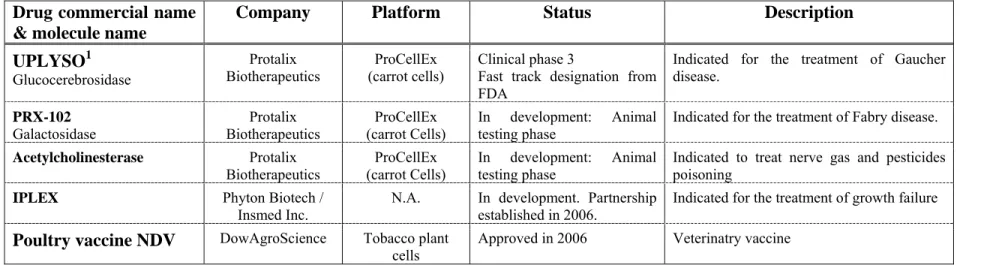
Table 2.3 Detailed list of recombinant proteins in development in plant cells ... 39
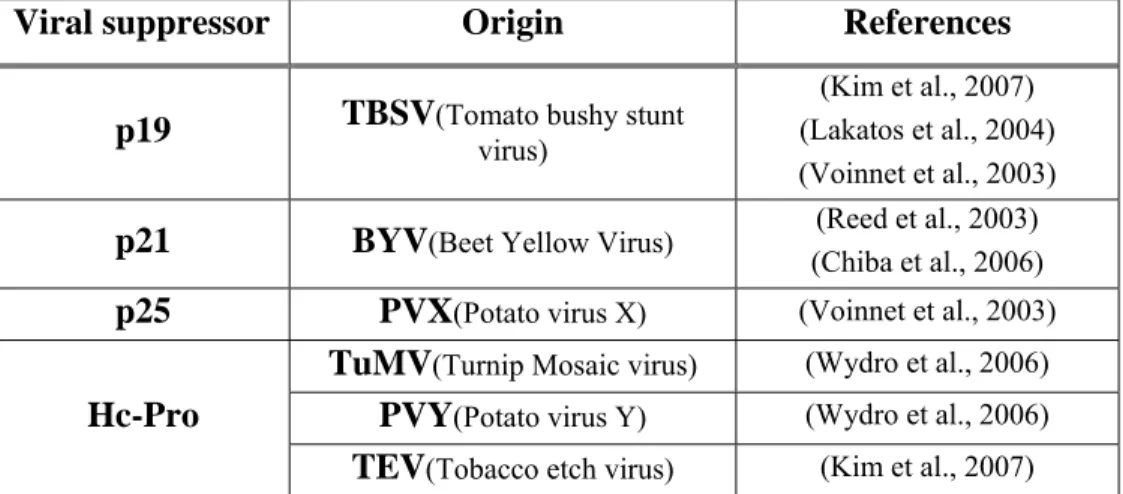
Table 2.4 Main viral suppressors used in research to increase protein production ... 50
Tableau 5.1 Résumé des tailles des fragments isolés lors des analyses d’expression différentielle ... 152
Tableau 5.2 Résumé des résultats obtenus avec les analyses BLAST des fragments obtenus par Differential Display ... 159
Tableau 5.3 Résumé des tailles des fragments isolés lors des analyses 5’-RACE ... 162
Tableau 5.4 Résumé des résultats obtenus avec les analyses BLAST des fragments obtenus par 5’-RACE ... 165
LISTE DES FIGURES
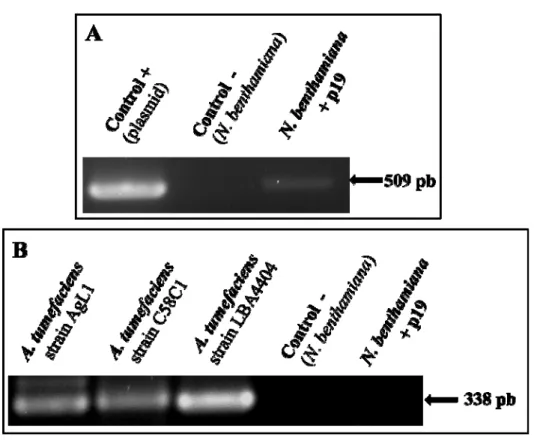
Figure 2.1 Recombinant protein products on the market per production platform ... 14 Figure 2.2 Description of the development and scale-up of the major in vitro platforms ... 15 Figure 4.1 Validation of the established N. benthamiana cell line expressing the viral suppressor p19 ... 99 Figure 4.2 Concentration and accumulation rate of cellular IgG1 in agroinfiltrated N. benthamiana leaves ... 106 Figure 4.3 Growth of N. benthamiana suspension cells co-cultured with Agrobacterium tumefaciens ... 108 Figure 4.4 Concentration of total extracellular protein in culture media for N. benthamiana suspension cells co-cultured with A. tumefaciens ... 111 Figure 4.5 Concentration and accumulation rate of cellular IgG1 for N. benthamiana suspension cells co-cultured with Agrobacterium tumefaciens ... 113 Figure 4.6 Concentration of extracellular IgG1 for Nicotiana benthamiana suspension cells co-cultured with Agrobacterium tumefaciens ... 115 Figure 4.7 N. benthamiana suspension cells co-cultured with A. tumefaciens ... 118 Figure 5.1. Suivi de l’impact sur la croissance des cellules de Nicotiana tabacum NT1 de l’exposition à une température de 12 °C ... 143 Figure 5.2. Suivi de l’impact sur la croissance des cellules de Nicotiana tabacum NT1 de l’exposition à une température de 18 °C ... 145 Figure 5.3. Suivi de l’impact d’une température inférieure à la température optimale sur la concentration protéique extracellulaire de cellules de Nicotiana tabacum NT1 ... 146
Figure 5.4. Suivi de l’impact d’une température inférieure à la température optimale sur le pH extracellulaire de cellules de Nicotiana tabacum NT1 ... 148 Figure 5.5. Patron de bandes obtenu lors de la première analyse d’expression différentielle (Differential Display) avec l’oligo-dT (A) ... 150 Figure 5.6. Patron d’expression des 24 candidats isolés lors des analyses d’expression différentielle avec les oligo-dT (A), (G) et (C) ... 151 Figure 5.7. Analyse Northern de huit candidats de gènes induits au froid ... 154 Figure 5.8. Analyse Northern inversée (Reverse Northern) de tous les candidats de gènes induits au froid ... 156 Figure 5.9. Analyse qPCR ... 157 Figure 5.10. Amplification PCR sur colonies des fragments insérés dans le vecteur TOPO avec les amorces T3/T7 ... 163 Figure 5.11. Résultats des premier et deuxième PCR du deuxième essai de RACE pour les quatre candidats ayant montré une similitude par analyse BLAST avec des gènes induits au froid ... 166
LISTE DES ANNEXES
Annexe 1. Detailed list of recombinant protein drugs on the market and discontinued per production platform ... 207 Annexe 2. Séquences complètes des fragments isolés lors des analyses de Differential Display ... 225 Annexe 3. Séquences complètes des fragments isolés lors du 5’-RACE ... 234 Annexe 4. Procédure d’opération normalisée pour la transformation de cellules de plantes ... 240
LISTE DES SIGLES ET ABRÉVIATIONS
ADCC : Antibody-Dependent Cellular Cytotoxicity AYVV : Ageratum Yellow Vein Virus
BeYDV : Bean Yellow Dwarf Virus BHK cells : Baby Hamster Kidney cells BSA: Bovine Serum Albumin
CaPi: Calcium-Phosphate
cGMP: current Good Manufacturing Practices CHO cells : Chinese Hamster Ovary cells CPMV: Cowpea Mosaic Virus
DEPC: Diethyl Pyrocarbonate DMSO: Dimethyl Sulfoxide DSP: Downstream Processing DW: Dry Weight
EDTA: Ethylene Diamine TetraAcetic Acid ELISA: Enzyme-Linked Immunosorbent Assay EMEA: European Medicines Agency
EPO: Erythropoietin
EST: Expressed Sequence Tag EtOH: Ethanol
FBS: Fetal Bovine Serum
FDA: Food and Drug Administration
FW: Fresh Weight
GAP: Good Agricultural Practices GFP: Green Fluorescent Protein GlcNAC: N-Acetyl glycosamine GRAS: Generally Recognized As Safe GSP: Gene Specific Primer
HEK: Human Embryonic Kidney cells
hGM-CSF: human Granulocyte-Macrophage Colony-Stimulating-Factor HSP: Heat Shock Protein
IgG: Immunoglobuline G
IPTG: Isopropyl-β-D-thiogalactoside KIN: Kinetin
mAb: Monoclonal Antibody
MMLV: Moloney Murine Leukemia Virus MS: Murashige-Skoog
NAA: α-Naphtalene Acetic Acid OUR: Oxygen Uptake Rate PBS: Phosphate Buffer Saline PCR: Polymerase Chain Reaction PCV: Packed Cell Volume PEG: Polyethylene Glycol PEI: Polyethylenimine
PTGS : Post-transcriptional Gene Silencing PVP: Polyvinylpyrrolidone
PVX: Potato Mosaic Virus
RACE: Rapid Amplification of cDNA Ends SCV: Sedimented Cell Volume
SDS: Sodium Dodecyl Sulfate
SeAP: Secreted Alkaline Phosphatase SPR: Surface Plasmon-Resonance SSC: Saline Sodium Citrate T-DNA: Tranfer DNA TE: Tris-EDTA Ti: Tumor inducing
TMB: Tetramethylbenzidine TMV: Tobacco Mosaic Virus ToMV: Tomato Mosaic Virus TSP: Total Soluble Protein UTR: Untranslated Region U.V.: Ultraviolet
CHAPITRE 1 : INTRODUCTION, PROBLÉMATIQUE ET
ORGANISATION DE LA THÈSE
Depuis le début des années 80, les composés thérapeutiques à base de protéines se sont distingués en tant que catégorie de molécules ayant la croissance la plus rapide dans l’industrie pharmaceutique (Walsh, 2003). On prévoit que d’ici la fin de l’année 2010, le marché des composés biopharmaceutiques, qui inclut les protéines recombinantes, les peptides et les produits à base d’acides nucléiques, devrait atteindre 70 milliards de dollars américains (Walsh, 2006). Les premières protéines recombinantes, l’insuline et l’hormone de croissance humaine, étaient à l’origine produites dans des plateformes microbiennes, principalement avec E. coli (Jana and Deb, 2005). Bien que ces plateformes se soient montrées adéquates pour la production de petites protéines, les défis associés aux protéines plus complexes et/ou glycosylées ont poussé l’industrie à développer des plateformes eucaryotes, telles que celle utilisant des cellules d’ovaire de hamster chinois (Chinese Hamster Ovary: CHO) (Walsh, 2005). Toutefois, les plateformes utilisant des cellules de mammifères ont d'importantes limitations, telles que le risque d’une présence de pathogènes pour les humains (prions et virus). Afin de diminuer ce risque, l'industrie a mise au point des milieux de culture définis sans sérum (constituant une source potentielle majeure de pathogènes) ce qui a entraîné une augmentation substantielle des coûts (pouvant atteindre 100$ le litre). Par conséquent, bien que la culture de cellules mammifère soit présentement bien établie en tant que plateforme principale de production industrielle pour les protéines recombinantes, d’autres plateformes utilisant des cellules eucaryotes offrent maintenant des alternatives intéressantes. Parmi celles-ci, la moléculture, utilisant des plantes entières ou des cellules en suspension gagne en intérêt. Avec ces plateformes végétales, deux approches de
production sont possibles; soit en utilisant des lignées transgéniques établies, ou en exprimant le transgène d’intérêt de façon transitoire pour une production ponctuelle. L’utilisation de plantes transgénique en champ est toutefois sujette aux conditions climatique (Miele, 1997) et à une contamination potentielle avec des herbicides et/ou fongicides ce qui, en plus de compliquer les étapes de purification, peut avoir un impact sur les rendements et leur reproductibilité (Fitzgerald, 2003). De plus, elle est généralement mal perçue par le public. L’alternative en mode transitoire est généralement réalisée par agroinfiltration, une technique où une suspension de bactéries Agrobacterium tumefaciens contenant un vecteur d’expression codant pour le gène d’intérêt est infiltrée dans les feuilles de la plante hôte (Horn et al., 2004). Les bactéries transfèrent ensuite le vecteur d’expression aux cellules de plante et la protéine d’intérêt est produite pour une période oscillant entre 6 et 14 jours (Huang and McDonald, 2009). Les rendements obtenus en mode transitoire sont généralement supérieurs à ceux obtenus avec des lignées stables en raison de la présence de plusieurs copies épisomales du transgène dans les cellules (Gleba et al., 2007). La plateforme végétale in vitro est, quant à elle, particulièrement intéressante en raison du faible coût du milieu de culture qui y est associé (≤10¢/L) et du fait que, en plus d’être exempte de prions et de virus pathogènes aux humains (Miele, 1997), tous les paramètres de culture peuvent être contrôlés ce qui permet une meilleure reproductibilité (Shih and Doran, 2009). Si la protéine d’intérêt est sécrétée par les cellules dans le milieu de culture, cette plateforme a un avantage économique en réduisant de façon considérable les coûts reliés à l’extraction et à la purification des protéines recombinantes (Doran, 2000). Jusqu'à très récemment, seules des lignées stables étaient cultivées en bioréacteur pour produire des protéines recombinantes, mais un groupe de recherche a démontré la possibilité de cocultiver des cellules de plante et d’Agrobacterium pour produire de façon transitoire une protéine d’intérêt in vitro (Andrews and Curtis, 2005; Collens et al., 2004). Il s’agit donc d’une nouvelle avenue intéressante pour cette plateforme. Toutefois,
bien qu’un vaccin à usage vétérinaire produit en cellule de tabac par la compagnie DowAgroScience ait été approuvé en 2006 et que plusieurs autres protéines recombinantes produites en plante soient en phase d'essais précliniques ou cliniques, l’utilisation de cette plateforme végétale in vitro demeure marginale (Griesbeck et al., 2006). Ceci peut être, en partie, expliqué par les faibles rendements généralement obtenus avec les cellules de plantes qui sont de l’ordre de 0.01 à 0.2 g/L, ce qui nuit à sa compétitivité par rapport aux autres plateformes. En effet, les plateformes microbiennes (bactéries et levures) et mammifère ont été continuellement améliorées pendant les trois dernières décennies. Par conséquent, les rendements moyens actuels pour E. coli se situent entre 0,5 et 5 g/L, entre 0,1 et 2 g/L pour les levures (S. cerevisiae) et entre 1 et 3 g/L pour les cellules mammifères (Huang and McDonald, 2009). Il y a donc un intérêt certain à poursuivre la recherche dans le domaine végétale afin d’augmenter la productivité des cellules de plante.
Plusieurs stratégies ont été développées pour tenter d’améliorer les rendements des plateformes végétales, tant en plantes entières qu'en culture in vitro. Parmi celles-ci, on retrouve l’amélioration des cassettes d’expression, le développement de vecteurs viraux, l’utilisation de suppresseurs viraux de répression génique, l’optimisation des bioprocédés de culture et de récupération de la protéine d’intérêt ainsi que la mise au point d’outils tels que des modèles mathématiques, des sondes et des bioréacteurs divers. Bien qu’une revue de littérature traitant de l'ensemble de ces sujets ait été réalisée et constitue le second chapitre de cette thèse, la suite des travaux a été concentrée sur l’utilisation de suppresseurs viraux et sur l’amélioration des cassettes d’expression.
Dans les premières années du développement de plantes transgéniques, un phénomène appelé cosupression a été découvert. Les plantes transgéniques affectées par la cosuppression perdent leur capacité à exprimer les transgènes. Ce mécanisme, présent chez tous les eucaryotes,
a par la suite été renommée répression génique post-transcriptionnelle (PTGS : Post-Translational Gene Silencing) (Voinnet, 2009). Il s’agirait en fait d’un système de défense contre les attaques des virus (Ratcliff et al., 1999). Dans une cellule de plante transformée génétiquement, le transgène produit de nombreuses copies de son ARN messager, ce qui s’apparente à une infection virale. Le système de répression génique des plantes entraîne la dégradation de ces ARNs messagers et empêche donc par la même occasion la synthèse de la protéine recombinante. Il s’agit d’une des raisons majeures des faibles rendements en protéines recombinantes observés chez les plantes. Certains virus ont toutefois développé des protéines capables d’interférer avec ce système et permettre la réplication non-limitée de virus, d’où leur appellation de suppresseurs viraux. p19, provenant du tomato bushy stunt virus, est le premier à avoir été identifié, isolé et exploité (Voinnet et al., 2003). Il a d’ailleurs été démontré que sa coexpression dans les feuilles de plantes pouvait augmenter significativement (jusqu’à 50 fois) la quantité de protéines recombinantes produites (Voinnet et al., 1999; Voinnet et al., 2003). L’utilisation de supresseurs viraux est maintenant une pratique commune lorsque des protéines recombinantes sont produites en plante.
Tel que mentionné précédemment, il a été démontré qu’il était possible de produire des protéines recombinantes de façon transitoire en cocultivant des cellules de plantes et de cellules d’Agrobacterium. Les travaux regroupés au chapitre 4 de cette thèse s’appuient sur cette approche d'expression transitoire, et propose d’utiliser en plus et de façon originale un suppresseur viral afin de vérifier si une hausse significative des rendements en protéines recombinantes similaire à ce qui est obtenu en feuilles est observable.
L’amélioration des cassettes d’expression est également une alternative intéressante pour augmenter la productivité des cellules de plante. Chacun des éléments constituant la cassette, les régions non-traduites 5’ et 3’, le promoteur et la séquence des codons du gène d’intérêt, a un
impact sur la production de la protéine recherchée. Les promoteurs sont les éléments responsables du contrôle de l’expression des gènes et un promoteur fort permet souvent de compenser si l’ARN messager produit est instable, faiblement traduit ou lorsque la protéine a un court temps de demi-vie (Mirksch et al., 2005). À l’inverse d’un promoteur inductible dont le contrôle peut être effectué à l’aide de stress divers, l’expression d’un promoteur constitutif est généralement reliée à la croissance des cellules (Corrado and Karali, 2009). Les promoteurs inductibles sont en général préférés puisqu’ils permettent de réduire la charge métabolique imposée aux cellules séparant les phases de croissance cellulaire et de production (Huang and McDonald, 2009). Ceci permet généralement d’obtenir une meilleure uniformité des protéines recombinantes formées en réduisant la quantité de protéines dégradées partiellement en raison d’un séjour écourté dans les cellules ou le milieu de culture. Sous ces promoteurs, l’expression du gène d’intérêt peut être contrôlée à l’aide de composés chimiques ou de stress métaboliques ou abiotiques tels que la lumière et la température. Parmi ces stress, l’exposition des cellules à une température plus froide que leur température optimale de croissance constitue une avenue très prometteuse. En effet, il a été démontré que, bien que le froid ralentisse l’ensemble des mécanismes cellulaires dont ceux impliqués dans la production de protéines recombinantes, les rendements finaux en protéines recombinantes correctement repliées et bioactives peuvent être supérieurs à ceux obtenus à la température optimale des cellules (Mujacic et al., 1999). Plusieurs vecteurs d’expression utilisant des promoteurs inductibles au froid ont d’ailleurs été développés ou le sont présentement pour les bactéries (Le and Schumann, 2007; Mujacic et al., 1999), les levures (Sahara et al., 2002) et les cellules mammifères (Al-Fageeh et al., 2005), mais aucun n’ont à ce jour été rapportés pour les plantes. L’utilisation d’un tel promoteur avec des cellules de plante cultivées en bioréacteur aurait un avantage particulier pour cette plateforme puisqu’une exposition au froid augmente la solubilité de l’oxygène dans le milieu; ce qui permet de réduire le
débit de bullage, et par conséquent, de minimiser la formation de mousse; un problème récurrent avec les cellules de plantes. La seconde partie expérimentale des travaux de recherche effectués dans cette thèse a donc été concentrée sur l’identification et l’isolation de promoteurs inductibles froid chez N. tabacum avec pour objectif de développer des vecteurs d’expression inductibles au froid.
Cette thèse est donc organisée en sept chapitres distincts. Après cette introduction générale, une présentation détaillée des plateformes actuelles et émergentes utilisées pour la production de protéines recombinantes ainsi qu’une description des innovations récentes permettant d’augmenter les rendements de la plateforme végétale in vitro en particulier, constituent le chapitre 2. Cette revue de littérature constitue un premier manuscrit qui a été soumis dans le cadre de cette thèse. Le chapitre 3 décrit ensuite les hypothèses et les objectifs qui ont guidé les travaux réalisés. Il est suivi des chapitres 4 et 5 qui présentent les résultats obtenus dans le cadre de cette thèse. Le chapitre 4, constituant le second manuscrit soumis, décrit les travaux portant sur l’étude d’une transformation transitoire des cellules de plante en suspension avec plusieurs souches d’agrobacterium en parallèle. Le chapitre 5 présente, quant à lui, les travaux réalisés visant l’identification et l’isolation de promoteurs de tabac inductibles au froid. Des alternatives aux problèmes rencontrés dans ces travaux sont également proposées. Finalement, les chapitres 6 et 7 présentent respectivement une discussion générale et une conclusion générale et les recommandations.
CHAPITRE 2
: NOUVELLES PERSPECTIVES POUR LA
MOLECULTURE IN VITRO
2.1 Présentation de l’article
Ce premier article, sous forme d'une revue, rassemble l'ensemble de la littérature pertinente aux sujets développés dans cette thèse, soit l'amélioration de la production de protéines recombinantes par la plateforme végétale in vitro. Il a été soumis pour publication au Plant Biotechnology Journal au mois de février 2010. Selon la littérature ainsi que les tendances observées dans le milieu industriel, la plateforme végétale in vitro semble très prometteuse pour la production de protéines recombinantes à des fins thérapeutiques. Afin de pouvoir bien évaluer les avantages de cette plateforme, une description détaillée des plateformes microbiennes et mammifères présentement utilisées par l’industrie est rapportée de même que certaines autres plateformes émergentes. Par la suite, l’article se concentre sur les innovations récentes développées pour augmenter les rendements de la plateforme végétale in vitro et les rendre compétitifs face aux rendements des plateformes industrielles actuelles. Parmi ces innovations, on retrouve l’amélioration des cassettes d’expression, l’utilisation de suppresseurs viraux de répression génique, l’optimisation des bioprocédés de culture et de récupération de la protéine d’intérêt ainsi que la mise au point d’outils divers reliés aux bioprocédés de production tels que des modèles mathématiques, les bioréacteurs et les sondes diverses.
2.2 New perspectives for in vitro molecular farming 2.2.1 Abstract
The continuously increasing demand for bioactive recombinant proteins at low cost has stimulated the development of new production platforms. Among them, in vitro plant biotechnology is gaining in interest for its various advantages over current production platforms such as microbial and mammalian cells. Plant cells can perform post-translational modifications and lead to bioactive therapeutics of human origin, and various human proteins produced in plant cell cultures are currently under clinical trials. With the use of a totally defined protein and amino acid-free medium that do not promote the development of human pathogens, in vitro plant molecular farming bioprocesses represent a low cost avenue to produce highly complex biomolecules such as recombinant proteins. This review thus aims at drawing the current state of developed technologies related to in vitro plant biotechnology platforms as well as forecasting upcoming innovations. Firstly, prokaryotic and mammalian cells platforms are presented and their specific niches are discussed. Then, the use of transgenic plants is described, followed by the presentation of current in vitro plant cell platforms in bioreactors. The various strategies developed to maximize protein production in plants and plant cells are also presented and described. A special attention has been placed on the development of efficient expression cassettes using Agrobacterium tumefaciens and viral vectors for the establishment of stable transformants as well as for transient expression strategies. The various cultivation methods in bioreactor are described as well as monitoring and mathematic modeling tools enabling to improve the productivity and the reproducibility of these bioprocesses.2.2.2 Introduction
2.2.2.1 A continuously increasing demand for recombinant proteins
Since the early eighties, protein-based therapeutics have emerged as the fastest growing class of compounds within the pharmaceutical industry (Walsh, 2003). The market for recombinant proteins such as antibodies and growth factors for research, diagnostic and therapeutic use has continuously increased and has reached 50 billion dollars (Kamarck, 2006). Biopharmaceuticals, which include recombinant proteins, peptides, and nucleic acid-based products, now account for more than 20 % of all newly released pharmaceuticals (Jungbauer, 2007b). Furthermore, with
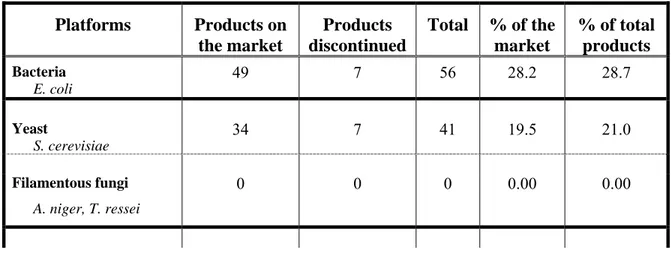
174 recombinant protein products actually on the market (Table 2.1), this specific market is expected to reach 70 billion dollars by the end of 2010 (Walsh, 2006).
The first commercialized recombinant proteins, insulin and human growth hormone (Annexe 1), were originally produced in microbial cell platforms, mainly based on E. coli (Jana and Deb, 2005). Whereas these platforms were demonstrated to be adequate for producing fully bioactive insulin and growth hormone (Group, 2003), challenges associated with more complex and/or highly glycosylated proteins have stimulated the industry to move to eukaryotic cells such as Chinese Hamster Ovary (CHO) cells (Walsh, 2005). Within the last decade, tremendous progress has allowed for production levels to exceed the gram-per-litre frontier (Kumar et al., 2006; Wurm, 2004). However, mammalian cell platforms still suffer from several limitations, such as the risk associated to the potential presence of human pathogens (prions and viruses), which has increased the cost of defined culture media (close to $100 per litre), without any sera. Therefore, while mammalian cell culture is currently well-established as an industrial production platform for recombinant proteins, other eukaryotic cell platforms now offer an interesting alternative to
Table 2.1. Number of biopharmaceuticals for human use produced in the different platforms 1
Platforms Products on the market Products discontinued Total % of the market % of total products Bacteria E. coli 49 7 56 28.2 28.7 Yeast S. cerevisiae 34 7 41 19.5 21.0 Filamentous fungi A. niger, T. ressei 0 0 0 0.00 0.00
Mammalian cell CHO, Hybridomas 89 7 96 51.1 49.2 Transgenic Animals Goat 1 0 1 0.6 0.5 Insect cells T. ni 1 0 1 0.6 0.5 Transgenic Plants N. benthamiana 0 - - - - Plant cells N. tabacum 0 - - - - Total: 174 21 195 100.00 100.00
1: Products with identical active ingredient (recombinant molecule) but with a different brand name were
counted separately since they were probably produced by different companies and their formulation may be different.
the animal cell platform. Among them, in vitro plant molecular farming is gaining interest as a low-cost (medium ≤10¢/L), prion- and human virus-free alternative (Ma et al., 2003; Miele, 1997). In that respect, it has been demonstrated that plants and plant cells can produce recombinant human proteins that are similar to those obtained in murine cell system (Ma et al., 2003). There are currently many proteins produced in plants and plant cells that are commercially available for diagnostics and analyses applications as well as for the veterinary markets, which have lower levels of regulatory constraints (Griesbeck et al., 2006), and that are under clinical trials as therapeutics. Although there are slight differences in the glycosylation profile of recombinant proteins produced in plants compared to that of the original human proteins (Gomord et al., 2004), these differences do not usually affect protein bioactivity (Walsh, 2005).
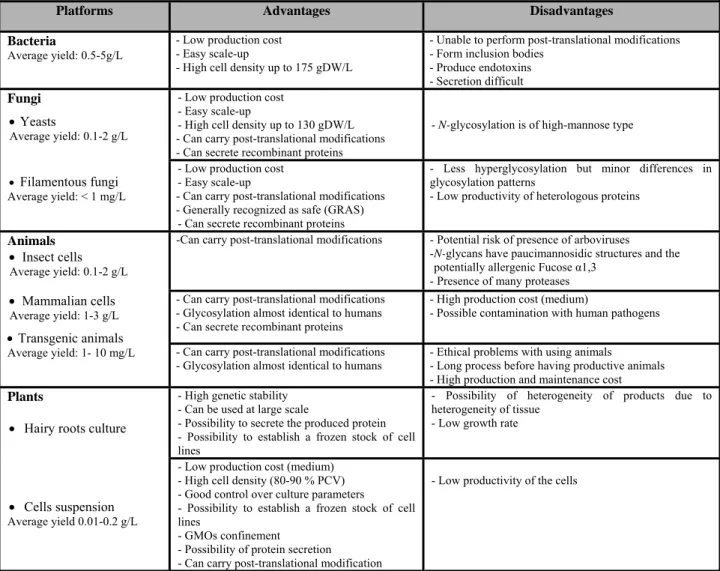
In this review, each production platform (microbial, animal and plant) is discussed by defining its specific niche (Maras et al., 1999) according to its capacity to lead to low-cost bioactive biopharmaceuticals in a highly competitive market (Ben-Maimon and Garnick, 2006; Jungbauer, 2007). The microbial and the animal cell platforms are presented first, followed by the in vitro plant cell platforms (Table 2.2).
2.2.2.2 Overview of the current platforms and their specific niches
The selection of a protein expression system has to be based on a series of constraints that are dictated from the ultimate use of the product, and this is not necessarily related to the ease of the production process (Gerngross, 2004). Criteria on the bioprocess side, such as cell growth rate, high expression level, intracellular and extracellular expression capacity, as well as on the cell side, such as post-translational modifications and glycosylation profile (i.e. biological activity) of
Table 2.2 Comparison of the major platforms used to produce recombinant proteins
Platforms Advantages Disadvantages
Bacteria
Average yield: 0.5-5g/L
- Low production cost - Easy scale-up
- High cell density up to 175 gDW/L
- Unable to perform post-translational modifications - Form inclusion bodies
- Produce endotoxins - Secretion difficult Fungi • Yeasts Average yield: 0.1-2 g/L • Filamentous fungi Average yield: < 1 mg/L
- Low production cost - Easy scale-up
- High cell density up to 130 gDW/L - Can carry post-translational modifications - Can secrete recombinant proteins
- N-glycosylation is of high-mannose type
- Low production cost - Easy scale-up
- Can carry post-translational modifications - Generally recognized as safe (GRAS)
- Can secrete recombinant proteins
- Less hyperglycosylation but minor differences in glycosylation patterns
- Low productivity of heterologous proteins
Animals • Insect cells
Average yield: 0.1-2 g/L
- Can carry post-translational modifications - Potential risk of presence of arboviruses - N-glycans have paucimannosidic structures and the
potentially allergenic Fucose α1,3 - Presence of many proteases
• Mammalian cells
Average yield: 1-3 g/L
• Transgenic animals
Average yield: 1- 10 mg/L
- Can carry post-translational modifications - Glycosylation almost identical to humans - Can secrete recombinant proteins
- High production cost (medium)
- Possible contamination with human pathogens - Can carry post-translational modifications
- Glycosylation almost identical to humans
- Ethical problems with using animals
- Long process before having productive animals - High production and maintenance cost
Plants
• Hairy roots culture
• Cells suspension
Average yield 0.01-0.2 g/L
- High genetic stability - Can be used at large scale
- Possibility to secrete the produced protein - Possibility to establish a frozen stock of cell lines
- Possibility of heterogeneity of products due to heterogeneity of tissue
- Low growth rate
- Low production cost (medium) - High cell density (80-90 % PCV) - Good control over culture parameters
- Possibility to establish a frozen stock of cell lines
- GMOs confinement
- Possibility of protein secretion - Can carry post-translational modification
the protein of interest, in addition to the regulatory issues, are to be considered (Baneyx, 1999b). Each production platform has its specific niche (Mayfield et al., 2007).
2.2.2.2.1 Bacterial platforms Actual market share
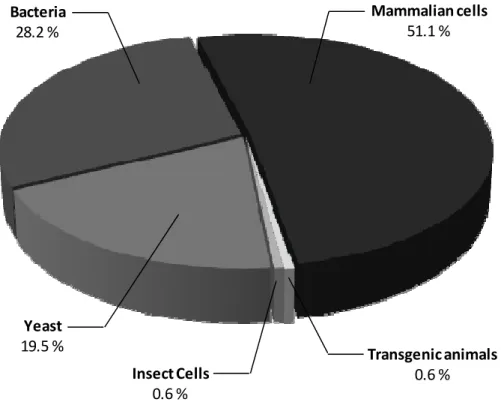
The first commercialized recombinant proteins were produced using an E. coli-based platform. They were human insulin in 1982 (Humulin®, Eli Lilly Inc.), human growth hormone somatropin (Protropin®, Genentech Inc.) in 1985 and interferons α 2a and 2b (Roferon®, Hoffman-La Roche, Intron A®, Schering-Plough) in 1986 (see Table S1 in Annexe 1 for a complete list). Nowadays, to the best of our knowledge, there are 49 products actually on the market that are produced by E. coli (Table 2.1). This represents 28.2 % of total bioproducts on the market (Figure 2.1).
Production and bioprocess development
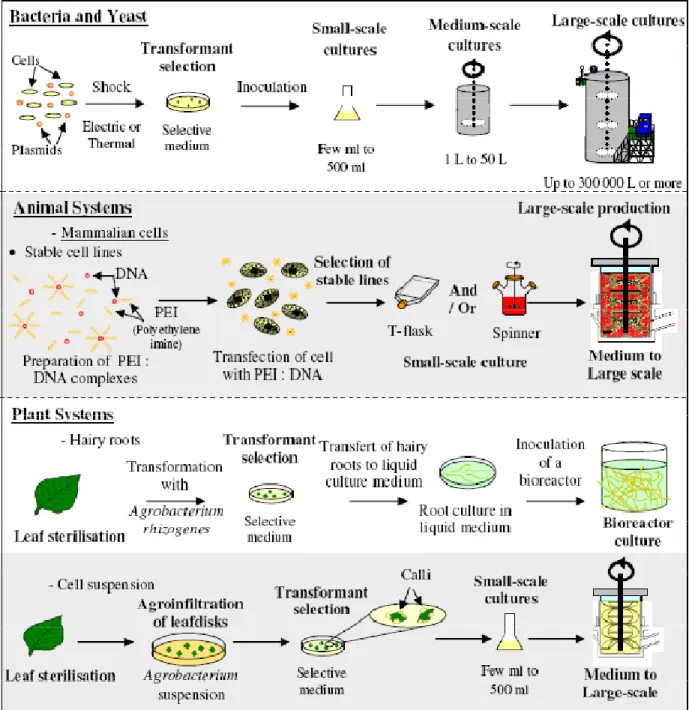
To develop an industrial bioprocess from the start, E. coli cells must be first transformed using either a thermal or an electric shock to incorporate the plasmid bearing the gene of interest (Yoshida and Sato, 2009) (Figure 2.2). Transformants will generally be selected using an antibiotic resistance gene, transferred together with the gene of interest within the same plasmid, and cultivated at small scale (mL level in Petri dish or test tube) before inoculating a large-scale bioreactor cascade. Large-scale production cultures can reach high cell density of 20 to 175 g/L cell dry weight (Lee, 1996) and involve low cost media compared to those used in animal cell cultures (Westers et al., 2004). Both Batch and Fed-Batch are the most common industrial
Mammalian cells 51.1 % Bacteria 28.2 % Yeast 19.5 % Transgenic animals 0.6 % Insect Cells 0.6 %
processes used (Chou, 2007). One of the drawbacks with E. coli high-density culture is acetate formation which negatively affects growth and protein production. However, control of dissolved oxygen level combined with an exponential glucose feeding strategy can minimize acetate formation (Eiteman and Altman, 2006).
Posttranslational modifications
E. coli’s ability to produce large quantities of a great variety of proteins has been demonstrated (Graumann and Premstaller, 2006). E. coli can accumulate recombinant proteins up to 80 % of its dry weight (Demain and Vaishnav, 2009). However, formation of stable intra- or intermolecular disulfides bonds is not possible in the cytoplasm of E. coli due to their rapid reduction by the combined action of thioredoxins and glutaredoxins (Ritz and Beckwith, 2001). When heterologous proteins fail to rapidly reach their native conformation, they either aggregate to form inclusion bodies or are degraded (Baneyx and Mujacic, 2004). Furthermore, proteins larger than 60 kD are inefficiently obtained in soluble forms in E. coli (Gräslund et al., 2008). Misfolding is even greater when concentrations of recombinant proteins are high (Baneyx and Mujacic, 2004). Inclusion bodies are not pure aggregates of recombinant proteins and they usually contain 15-20 % of contaminants, mainly outer membrane proteins, ribosomal components and few amounts of phospholipids and nucleic acids that probably absorb when cells are lysed (Valax and Georgiou, 1993). To obtain proteins with native structure, inclusion bodies must first be extracted, solubilized by denaturants to unfold proteins, and disulfides bonds must be eliminated with reducing agents. Proteins are then correctly refolded using air oxidation, glutathione reoxidation system and mixed disulfides of sulfonate and protein-S-gluthatione systems (Demain and Vaishnav, 2009).
Secretion capacity
Targeting proteins to the periplasmic space or to the culture medium could facilitate downstream processing, folding, and in vivo stability, enabling the production of soluble and biologically active proteins at a reduced process cost (Mergulhao et al., 2004). Since E. coli does not naturally secrete high amounts of proteins (Sandkvist and Bagdasarian, 1996), it could facilitate downstream processing. Periplasm has several advantages for expressing eukaryotic proteins because of its oxidative environment suitable for disulfide bond formation (Chou, 2007). It also contains fewer proteases than the cytoplasm (Baneyx and Mujacic, 2004) and enzymes such as disulfide-binding proteins and peptidy-propyl isomerases that promote the appropriate folding of thiol-containing proteins (Shokri et al., 2003). Among the five different types of secretion pathways of E. coli (I to V), type I and II are the most commonly used to direct protein inot the periplasmic space (Mergulhao et al., 2005). In Gram negative bacteria like E. coli, secreted proteins have to cross the two membranes of the cell envelope, which differ in both composition and function (Koebnik et al., 2000). Size is a factor that influences protein secretion efficiency; large proteins may be physically unable to translocate (Baneyx, 1999b). In order to improve leaking, different strategies to increase the permeability of the outer membrane have been tested such as mechanical (ultrasound), chemical (addition of magnesium, calcium, EDTA, glycine and Triton X-100) and enzymatic (lysozyme) treatments (Choi and Lee, 2004). However, recombinant proteins are mostly produced as inclusion bodies since E. coli is not able to efficiently secrete proteins (Mergulhao et al., 2005; Schmidt, 2004).
New trends
To date, E. coli and members of the Bacillus family are the most frequently used prokaryotes for industrial production of recombinant proteins (Westers et al., 2004). While E. coli is known to produce endotoxins that present a risk for human health (Kusnadi et al., 1997), Bacillus, like B. subtilis and licheniformis are Generally Recognized As Safe (GRAS) because they do not produce these harmful exo- or endotoxins (Westers et al., 2004). However, B. subtilis is mainly used for the production of homologous proteins such as proteases and amylases that are used as detergents or in baking industry that represents 60 % of the industrial enzymes of the market (Westers et al., 2004). One of the main problems with Bacillus is that they produce many proteases, which reduce the yields of recombinant proteins. In order to overcome this limitation, protease-deficient strains of B. subtilis have been developed (Murashima et al., 2002).
In conclusion, production platforms based on prokaryotes are useful for the production of proteins that are not naturally glycosylated (e.g. insulin, hirudins or somatotropins) or those that are normally glycosylated but that are pharmacologically active without glycans (e.g. cytokines, Tumor Necrosis Factor, interleukine or interferons) (Schmidt, 2004). Non-glycosylated produced proteins can also be further glycosylated by additional steps following protein purification, but it is often complicated and expensive.
2.2.2.2.2 Fungal platforms 2.2.2.2.2.1 Yeasts Actual market share
Almost one fifth of all the products on the market are produced in S. cerevisiae (Table 2.1). Many of these products are related to the control of diabetes (Novolin®, Glucagen®, Actrapid®, Levemir®, Novo Nordisk Inc.), or vaccines against Hepatitis B (Recombivax HB®, Twinrix®, Ambirix®, Fendrix®, GSK Biologicals) or against human papillomavirus (Gardasil®, Silgard®, Merck).
Production and bioprocess development
Yeasts represent a valuable alternative platform to bacteria, as yeasts possess similar culture needs (Kusnadi et al., 1997) while being able to perform posttranslational modifications (Lin Cereghino et al., 2002). In term of biosafety, yeasts are neither pyrogenic nor pathogenic (Schmidt, 2004). Similar to bacteria, yeasts can be transformed by thermal or electric shock and allow for a rapid turnaround from gene to protein (typically 4-6 months). An additional advantage of these eukaryotic organisms over bacteria is the possibility to integrate the transgene of interest into the yeast genome by homologous recombination, hence increasing expressing cell line stability (Orr-Weaver et al., 1981). Yeast can lead to high recombinant protein titers (> 1g/L) in bioreactor after few days, and bioprocesses have been scaled-up to 100 m3 (Gerngross, 2004), reaching high cell density of up to 130 g/L of dry cell weight (Schmidt, 2004).
Posttranslational modifications
Yeasts are able to perform many post-translational modifications like O-linked glycosylation, phosphorylation, acetylation and acylation, but they present salient differences with mammalian cells for the N-linked glycosylation (Ferrer-Miralles et al., 2009). N-glycosylation of S. cerevisiae is of high-mannose type containing up to 100 or more mannose sugars (hypermannosylation) (Gemmil and Trimble, 1999). This non-human nature of glycans negatively impacts the half-life of the recombinant protein because of the affinity of these glycans for high-mannose receptors found on macrophages and endothelial cells. This often leads to a rapid clearing from the patient system (Mistry et al., 1996). It has also been demonstrated that this high mannose content could negatively impact protein bioactivity. For example, in the case of antibody production, hyperglycosylation was shown to affect Fc domain dimerization due to steric hindrance (Bretthauer and Castellino, 1999). In S. cerevisiae, the O-linked glycosylation may be problematic since it contains only mannose compared to mammalian O-glycosylation that is sialytated (Demain and Vaishnav, 2009). Furthermore, recombinant proteins containing many disulfides bonds are often expressed at a lower yield in yeast (Porro et al., 2005)
Secretion capacity
Contrary to bacteria, yeasts can secrete heterologous proteins when linked to a signal peptide (Achstetter et al., 1992). This salient feature is an advantage since although cytoplasmic expression often leads to high expression levels, cell disruption is then required for product purification, which further complicate downstream processing (DSP) due to the release of many intracellular proteins. Also, since yeast cell walls are known to be very robust, high shear must be applied for cell lysis (Porro et al., 2005).
New trends
Alternative yeast species to S. cerevisiae are currently studied. The methylotrophic yeast Pichia pastoris is gaining in interest with the expression of recombinant protein under the control of a methanol-inducible promoter (Ecamilla-Trevino et al., 2000). This strain presents several advantages. Only a few gene copies are sufficient in P. pastoris to attain the same yield level as with 50 gene-copies in S. cerevisiae (Schmidt, 2004). Compared to S. cerevisiae, P. pastoris can grow in medium in which methanol is the unique carbon source, thus limiting culture contamination (Gellison et al., 1992). Interestingly, hyperglycosylation is limited in P. pastoris to 20 residues of N-linked high-mannose chains as opposed to 50-150 residue chains in S. cerevisiae (Dale et al., 1999). P. pastoris also lacks α-1,3-linked mannosyl transferase that is responsible for the terminal linkages in S. cerevisiae that causes highly antigenic responses. P. pastoris was even successfully modified to secrete proteins with a human type N-glycosylation pattern (Choi et al., 2003). While the specific productivity of mammalian cells for antibodies is significantly higher than that of fungal systems, these can compete by a high concentration of producing cells. The mammalian cell platform can achieve a volumetric productivity of approximately 1-3 mg L-1 h-1 while a yeast system like P. pastoris can reach 5-10 mg L-1 h-1 (Gasser and Mattanovich, 2007). P. pastoris seems promising but some proteins expressed in this system showed an absence of O-mannosylation (Mochizuki et al., 2001). It is also unable to produce chaperonins to help recombinant protein proper folding (Demain and Vaishnav, 2009). Hansenula polymorpha, another methylotrophic yeast, is also being studied because it is known to produce secreted proteins with molecular mass of up to 150 kDa with a high efficiency (proteins larger than 30 kDa are retained in the cytoplasm of S. cerevisiae) (Schmidt, 2004).
However, very little amount of literature is available on this yeast specie to date, to the best of our knowledge.
In conclusion, the yeast platform has many advantages over the bacterial platform but is still inadequate when glycosylation profile is a critical issue (Schmidt, 2004).
2.2.2.2.2.2 Filamentous fungi Actual market share
To the best of our knowledge, no recombinant protein has so far been commercialized using a filamentous fungal platform even though filamentous fungi have been used industrially for decades to produce various endogenous metabolites (Schmidt, 2004).
Production and bioprocess development
Filamentous fungi are theoretically attractive hosts because of their ability to naturally secrete large amounts of proteins, perform post-translational modifications (glycosylation and disulfidation), and grow on low-cost media (Wang et al., 2005). In suspension, fungi have different morphologies ranging from free filaments (dispersed hyphae) to clumps and pellets (Wang et al., 2005). Many factors influence the appearance of the suspension, like inoculum level, initial pH, agitation, medium composition and use of polymer additives or surface-active agents (Metz and Kossen, 1997). Similarly to bacteria or yeasts, they can achieve high cell density of up to 100 g/L of dry cell content (Maras et al., 1999). Among filamentous fungi, Aspergillus niger, Aspergillus awamori and Aspergillus oryzae have been classified as GRAS
and are extensively used in the food industry. Strain selection allowed for the development of very productive lines for specific homologous protein production (20 g/L glucoamylase by A. niger; 40 g/L cellobiohydrolase I by T. ressei) (Maras et al., 1999). For the production of heterologous proteins, stably transformed cell lines can be established by transforming filamentous fungi with plasmid bearing foreign genes which can be incorporated into to the fungal chromosome (Demain and Vaishnav, 2009). Electroporation is the state-of-the-art method for transforming filamentous fungi, but protoplast transformation with polyethylene glycol is also commonly reported (Ruiz-Diez, 2002)
Posttranslational modifications
Filamentous fungi are more complex organisms than yeasts and, consequently, have a more complete posttranslational modifications apparatus, more similar to that of mammals (Schmidt, 2004). Product hyperglycosylation has been observed, but with a less frequent occurrence than in yeast. It has been suggested that hyperglycosylation could be reduced by modulating culture conditions (Maras et al., 1999). Trichoderma reesei has even been shown to glycosylate its proteins similarly to mammalian cells (Salovouri et al., 1987).
Secretion capacity
Even though filamentous fungi can secrete large amount of homologous proteins, yields related to heterologous proteins were demonstrated to be significantly less, with only few milligrams per litre (Maras et al., 1999; Schmidt, 2004). Heterologous proteins are more prone to proteolysis than homologous ones and proteolytic degradation by fungal proteases is acknowledged as one of
the major problems interfering with efficient heterologous protein production in fungal culture (Wang et al., 2005). One reason for this might be the presence of many different proteases as reported for Aspergillus nidulans (about 80 different proteases) (Machida, 2002).
New trends
Different approaches are presently being developed in order to increase yields of secreted recombinant proteins by filamentous fungi platforms. A commonly-applied strategy relies on the introduction of multiple copies of the gene of interest that is expressed under a strong homologous gene promoter into a high-protein-secreting mutant strain (Nevalainen et al., 2005). The gene of interest may also be targeted to a particular gene locus such as the one of a major secreted endogenous protein. This “gene replacement” strategy will ensure that the gene of interest will be strongly expressed while reducing the burden on the secretion pathway due to the absence of the endogenous protein (Karhunen et al., 1993). A third strategy is to fuse the gene of interest to the 3’ end of a highly expressed gene such as the one coding for the glycoamylase from A. niger or A. awamori (Gouka et al., 1997)
In conclusion, filamentous fungi can not be presently regarded as a serious alternative for the production of pharmaceuticals since the yield of various human proteins was reported to be below 1 mg/L (Schmidt, 2004). Nonetheless, research on these species may eventually lead to a rise in their productivity, giving them a place in the recombinant protein market. For more information on this particular platform, the reader is referred to a recent review on antibody production by filamentous fungi (Gasser and Mattanovich, 2007).
2.2.2.2.3 Animal platforms
In vitro animal platforms mainly include insect and mammalian cells cultures. However, even if the use of transgenic animals is not an in vitro production system, it worths being described rapidly as there is now one recombinant protein produced in transgenic animals that is on the market. ATryn®, an Anti-thrombin III use against emboli and thromboses in patients with hereditary antithrombin, is produced in the milk of transgenic goats by GTC Biotherapeutics and was approved by the European Medicines Agency (EMEA) in 2006, and by the FDA in 2009 (Table S1). In the past few years, many other products have been developed by GTC Biotherapeutics, Avigenics, Nexia and Progenics; those are presently in preclinical phase of development. To get a detailed list of theses products, the reader is invited to consult an exhaustive review on the topic by Redwan and colleagues (Redwan, 2009). Milk (Soler et al., 2006), chicken egg white (Zhu et al., 2005), blood (Swanson et al., 1992), urine (Kim et al., 2006) and seminal plasma (Dyck et al., 1999) have all been studied as harvest systems, allowing a continuous production without sacrificing the animal (Houdebine, 2002). In term of glycosylation, small differences in protein glycosylation pattern between human and animal exist. However, the main disadvantages of this platform resides in the lag time required to assess production levels in animals (Chew, 1993) and the fact that animals must also be maintained under GAP (Good Agricultural Practices) environment for their entire life, including their initial non-producing time period, hence raising production costs. Furthermore, in the purification process, it may prov difficult to separate recombinant proteins from their host equivalent. Also, they could be deleterious for transgenic animals (Houdebine, 2009), which would limit the use of this production system to inactive or non-interfering proteins (Massoud et al., 1996). The potential for the purified products to contain prions is also a concern for human safety and their
presence would require the destruction of the livestock herds that take years to put in place (Larrick and Thomas, 2001). Finally, production in transgenic animals is also negatively perceived by the population (Houdebine, 2002).
2.2.2.2.3.1. Insect cells Actual market share
The first attempt to produce a human recombinant protein with insect cells was reported in 1983. In that study, an expression vector based on a Baculoviridae virus (Autographa californica) was used to infect cells derived from Spodoptera frugiperda, its natural host, to produce human β interferon (Smith et al., 1983). Nowadays, expression vectors issued from this nuclear polyhedrosis virus remain the most widely used vectors (Kost et al., 2005). However, use of the insect cell platform is still marginal. Only one recombinant protein, Cervarix® (commercialized by GlaxoSmithKline and approved by the EMEA in 2007 (Table 2.1)) is produced using this platform (“High-Five” cell line derived from Trichoplusia ni). This represents 0.6 % of the pharmaceutical product global market.
Production and bioprocess development
Insect cells were initially cultivated in medium supplemented with 5 % or 10 % serum (usually FBS) (Tomiya et al., 2003). Now, insect cells can be grown on various serum- and even protein-free media (Schlaeger, 1996). However, biosafety risks remain since pathogenic arboviruses responsible for yellow or Dengue fevers are able to replicate in insect cells (Stacey and Possee, 1996). Process-wise, large scale production of insect cells is challenging with a higher oxygen demand and higher shear sensitivity than for mammalian cells (Chalmers, 1996). The addition of
tensio-active agents like Pluronic F-68 was shown to protect cells from shear (Agathos, 1996). Insect cell lines have been selected for either suspension and adherent cultures (i.e. High-Five cell line) (Chung et al., 1993), and larval culture has also been developed (Kulakosky et al., 1998).
Posttranslational modifications
Being animal cells, this platform can lead to the proper folding of recombinant proteins with S-S bonds, N- and O-glycosylation and correct signal peptide cleavage. However, even if insect cell biology allows for the production of complex proteins, the resulting glycosylation profile may be problematic since the expressed proteins mostly contain truncated paucimannosidic N-glycans (Maras et al., 1999). These paucimannosidic structures were observed in insect cells from Spodoptera frugiperda, Mamestra brassicae, Bombyx mori, Trichoplusia ni and Estigmena acrea (Tomiya et al., 2003). The inability to produce authentic mammalian glycans has been one of the most significant limitation of the baculovirus-insect expression platform (Jarvis, 2003). Insect cells are unable to synthesize sialytated complex-type N-glycans and they even add potentially allergenic structures such as Fucα(1,3)GlcNAc-Asn that are not present on mammalian glycoproteins (Tomiya et al., 2003). Since unsialytated glycoproteins can be rapidly cleared from human sera (Sinclair and Elliott, 2005), many research groups have looked to humanize the N-glycans profile in insect cells. Interestingly, production of a sialytated recombinant protein in Trichoplusia ni, cultured in the presence of N-acetylmannosamine, a sialic acid precursor, has been reported (Joshi et al., 2001).