Université de Montréal
A Mono- and Multi-objective Approach for
Recommending Software Refactoring
par Ali Ouni
Département d’informatique et de recherche opérationnelle Faculté des arts et des sciences
Thèse présentée à la Faculté des arts et des sciences en vue de l’obtention du grade de Philosophiæ Doctor (Ph.D.)
en Informatique
Août, 2014
Résumé
Les systèmes logiciels sont devenus de plus en plus répondus et importants dans notre société. Ainsi, il y a un besoin constant de logiciels de haute qualité. Pour améliorer la qualité de logiciels, l’une des techniques les plus utilisées est le refactoring qui sert à améliorer la structure d'un programme tout en préservant son comportement externe. Le refactoring promet, s'il est appliqué convenablement, à améliorer la compréhensibilité, la maintenabilité et l'extensibilité du logiciel tout en améliorant la productivité des programmeurs. En général, le refactoring pourra s’appliquer au niveau de spécification, conception ou code. Cette thèse porte sur l'automatisation de processus de recommandation de refactoring, au niveau code, s’appliquant en deux étapes principales: 1) la détection des fragments de code qui devraient être améliorés (e.g., les défauts de conception), et 2) l'identification des solutions de refactoring à appliquer.
Pour la première étape, nous traduisons des régularités qui peuvent être trouvés dans des exemples de défauts de conception. Nous utilisons un algorithme génétique pour générer automatiquement des règles de détection à partir des exemples de défauts.
Pour la deuxième étape, nous introduisons une approche se basant sur une recherche heuristique. Le processus consiste à trouver la séquence optimale d'opérations de refactoring permettant d'améliorer la qualité du logiciel en minimisant le nombre de défauts tout en priorisant les instances les plus critiques. De plus, nous explorons d'autres objectifs à optimiser: le nombre de changements requis pour appliquer la solution de refactoring, la préservation de la sémantique, et la consistance avec l’historique de changements. Ainsi, réduire le nombre de changements permets de garder autant que possible avec la conception initiale. La préservation de la sémantique assure que le programme restructuré est sémantiquement cohérent. De plus, nous utilisons l'historique de changement pour suggérer de nouveaux refactorings dans des contextes similaires.
En outre, nous introduisons une approche multi-objective pour améliorer les attributs de qualité du logiciel (la flexibilité, la maintenabilité, etc.), fixer les « mauvaises » pratiques de conception (défauts de conception), tout en introduisant les « bonnes » pratiques de conception (patrons de conception).
Abstract
Software systems have become prevalent and important in our society. There is a constant need for high-quality software. Hence, to improve software quality, one of the most-used techniques is the refactoring which improves design structure while preserving the external behavior. Refactoring has promised, if applied well, to improve software readability, maintainability and extendibility while increasing the speed at which programmers can write and maintain their code. In general, refactoring can be performed in various levels such as the requirement, design, or code level. In this thesis, we mainly focus on the source code level where automated refactoring recommendation can be performed through two main steps: 1) detection of code fragments that need to be improved/fixed (e.g., code-smells), and 2) identification of refactoring solutions to achieve this goal.
For the code-smells identification step, we translate regularities that can be found in such code-smell examples into detection rules. To this end, we use genetic programming to automatically generate detection rules from examples of code-smells.
For the refactoring identification step, a search-based approach is used. The process aims at finding the optimal sequence of refactoring operations that improve software quality by minimizing the number of detected code-smells while prioritizing the most critical ones. In addition, we explore other objectives to optimize using a multi-objective approach: the code changes needed to apply refactorings, semantics preservation, and the consistency with development change history. Hence, reducing code changes allows us to keep as much as possible the initial design. On the other hand, semantics preservation insures that the refactored program is semantically coherent, and that it models correctly the domain-semantics. Indeed, we use knowledge from historical code change to suggest new refactorings in similar contexts.
Furthermore, we introduce a novel multi-objective approach to improve software quality attributes (i.e., flexibility, maintainability, etc.), fix “bad” design practices (i.e., code-smells) while promoting “good” design practices (i.e., design patterns).
Contents
Chapter 1 : Introduction ... 1
1.1 Research context ... 1
1.2 Problem statement ... 2
1.3 Research objectives and main contributions ... 6
1.3.1 Objectives ... 6
1.3.2 Contributions ... 7
1.4 Thesis organisation ... 10
Chapter 2 : State of the art ... 12
2.1 Introduction ... 12
2.2 Background ... 12
2.2.1 Code smells ... 13
2.2.2 Refactoring ... 14
2.2.3 Search-based software engineering ... 15
2.3 Metaheuristic search techniques ... 15
2.3.1 Genetic Algorithm ... 16
2.3.2 Genetic Programming ... 17
2.3.3 Chemical Reaction Optimization ... 17
2.3.4 Non-dominated Sorting Genetic Algorithm ... 22
2.4 Detection of code-smells ... 24
2.4.1 Manual approaches... 24
2.4.2 Symptom-based detection ... 25
2.4.3 Metric-based approaches ... 26
2.4.4 Probabilistic approaches... 28
2.4.5 Machine learning based approaches... 29
2.4.6 Visualization-based approaches ... 30
2.4.7 Code-smell detection tools ... 31
2.5 Management and prioritization of code-smells ... 34
2.6.1 Manual and semi-automated approaches ... 36
2.6.2 Semantics preservation for software refactoring... 39
2.6.3 Search-based refactoring approaches ... 41
2.6.4 Refactoring tools ... 44
2.7 Recommendation systems in software engineering ... 45
2.8 Mining software repositories and historical data ... 48
2.9 Summary ... 50
Part 1: Code-smells detection ... 52
Chapter 3 : Search-based code-smells detection ... 53
3.1 Introduction ... 53
3.2 Code-smells detection challenges ... 53
3.3 Approach ... 55 3.3.1 Approach overview ... 55 3.3.2 GP adaptation ... 57 3.4 Evaluation ... 65 3.4.1 Research questions ... 65 3.4.2 Systems studied ... 66 3.4.3 Analysis method ... 67 3.4.4 Results ... 68 3.5 Discussion ... 70 3.6 Threats to validity ... 72 3.7 Conclusion ... 73
Part 2: Mono-objective code-smells correction ... 75
Chapter 4 : Search-based code-smells correction... 76
4.1 Introduction ... 76
4.2 Code-smells correction and refactoring challenges ... 77
4.3 Approach ... 78
4.3.1 Approach overview ... 78
4.4 Evaluation ... 84 4.4.1 Research questions ... 85 4.4.2 Analysis method ... 85 4.4.3 Systems studied ... 86 4.4.4 Results ... 86 4.5 Discussions ... 88 4.6 Threats to validity ... 90 4.7 Conclusion ... 91
Chapter 5 : Prioritizing code-smells correction ... 93
5.1 Introduction ... 93 5.2 Code-smells prioritization ... 94 5.3 Approach ... 95 5.3.1 Approach overview ... 95 5.3.2 Problem formulation ... 96 5.3.3 CRO design ... 98 5.3.4 Implementation details ... 104 5.4 Evaluation ... 105
5.4.1 Research Questions and Objectives ... 105
5.4.2 Systems studied ... 106 5.4.3 Analysis method ... 107 5.4.4 Results ... 109 5.5 Discussions ... 117 5.6 Threats to validity ... 120 5.7 Conclusion ... 121
Part 3: Multi-objective software refactoring ... 123
Chapter 6 : A Multi-objective approach for recommending software refactoring ... 124
6.1 Introduction ... 124
6.2 Challenges in automated refactoring recommending ... 125
6.2.2 Motivating example ... 127
6.3 Approach ... 129
6.3.1 Approach overview ... 129
6.3.2 Modeling refactoring recommending as a multi-objective problem ... 131
6.3.3 Semantic measures ... 134
6.3.4 NSGA-II for refactoring recommending ... 140
6.4 Evaluation ... 143
6.4.1 Research questions ... 143
6.4.2 Experimental setting and instrumentation ... 146
6.4.3 Empirical study results ... 153
6.5 Discussions ... 162
6.5.1 Refactoring impact ... 162
6.5.2 Other observations ... 165
6.6 Threats to validity ... 168
6.7 Conclusion ... 170
Chapter 7 : A Multi-objective refactoring recommendation approach to introduce design patterns and fix anti-patterns ... 171
7.1 Introduction ... 171
7.2 Motivations ... 171
7.3 Approach: MORE ... 173
7.3.1 Approach overview ... 174
7.3.2 Semantic constraints ... 180
7.3.3 Multi-objective formulation of MORE ... 181
7.4 Design of the experimental study ... 183
7.4.1 Research questions ... 183
7.4.2 Systems studied ... 184
7.4.3 Analysis method and evaluation metrics... 185
7.4.4 Algorithms parameter tuning ... 187
7.6 Conclusion ... 196
Chapter 8 : Conclusion ... 197
8.1 Summary of contributions ... 197
8.2 Limitations and future research directions ... 199
Related publications ... 202
Bibliography ... 204
Appendix A: Definitions of the used quality attributes and metrics ... 222
Appendix B: Definitions of the used refactoring operations ... 225
List of tables
Table 2.1 - CRO analogy between chemical and metaheuristic meanings. The first column contains the properties of a molecule used in CRO. The second column shows the
corresponding meanings in the metaheuristic. ... 20
Table 3.1 - Code-smells example. ... 64
Table 3.2 - Detected classes. ... 65
Table 3.3 - Program statistics. ... 66
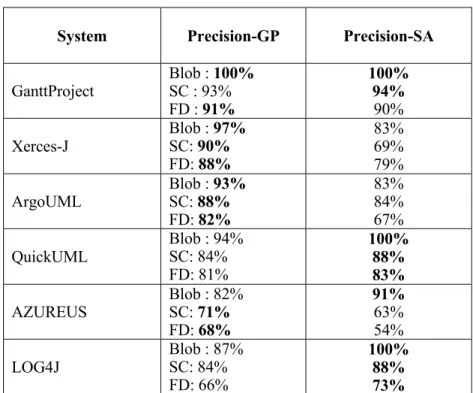
Table 3.4 - Code-smells detection results compared to DÉCOR ... 69
Table 3.5 – GP code-smells detection results compared to Simulated Annealing... 70
Table 4.1 - Refactorings and its controlling parameters. ... 81
Table 4.2 - Correction results: CCR median values of 31 independent runs of GA. ... 87
Table 5.1 - Parameter settings used for the different algorithms. ... 104
Table 5.2 - Systems statistics. ... 106
Table 5.3 - Refactoring results: code-smells correction score. ... 111
Table 5.4 - Refactoring results: importance, risk, severity and RP scores. ... 114
Table 5.5 - CCR, ICR, RCR, SCR and RP median values of CRO, GP, SA and PSO over 31 independent simulation runs. ... 116
Table 6.1 - Refactoring examples and their involved actors and roles. ... 134
Table 6.2 - Example of a cohesion matrix. ... 140
Table 6.3 - Refactoring operations and their semantic measures... 142
Table 6.4 - Programs statistics. ... 147
Table 6.5 - Analysed versions and refactorings collection. ... 148
Table 6.6 - Refactoring solutions for each studied system. ... 149
Table 6.8 - Empirical study results on 31 runs. The results were statistically significant on 31 independent runs using the Wilcoxon rank sum test with a 95% confidence level (α < 5%). ... 153
Table 6.9 - Average refactoring results of different objective combinations with NSGA-II (average of all systems) on 31 runs. The results were statistically significant on 31 independent runs using the Wilcoxon rank sum test with a 95% confidence level (α < 5%). ... 157
Table 7.1 - Studied Systems. ... 184
Table 7.2 - ACR, NP, and QG median values of 31 independent runs of MORE, Seng et al., Jensen et al., and GA-based approach. ... 189
Table 7.3 - Comparison of MORE with Jensen et al. in terms of Patterns usefulness (PU). ... 195
List of figures
Figure 1.1 - Thesis contributions ... 8
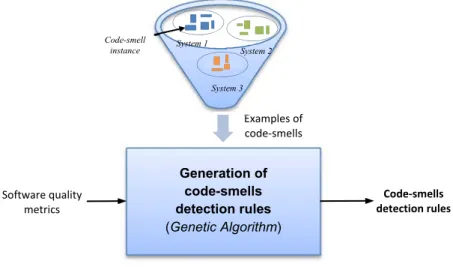
Figure 3.1 - Approach overview. ... 56
Figure 3.2 - Base of examples ... 57
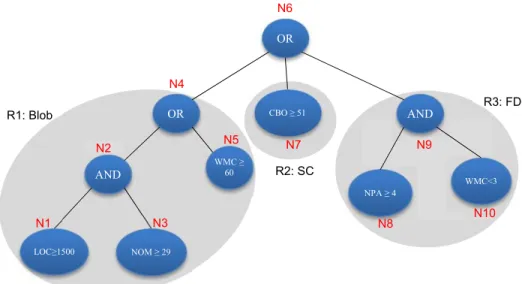
Figure 3.3 - A tree representation of an individual. ... 60
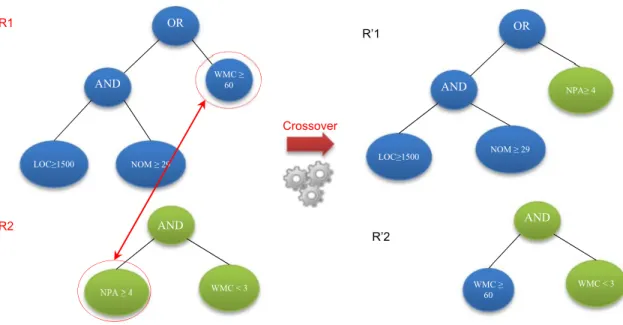
Figure 3.4 - Crossover operator. ... 62
Figure 3.5 - Mutation operator ... 63
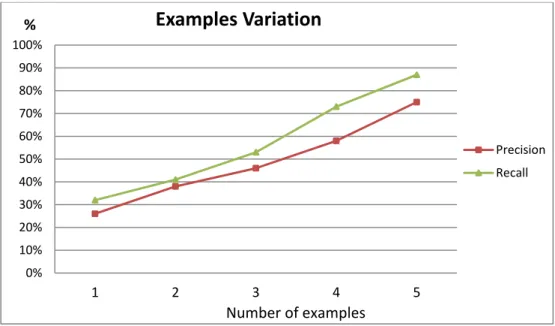
Figure 3.6 - Examples-size variation (example = system). ... 71
Figure 4.1 - Approach overview. ... 78
Figure 4.2 - Representation of a GA individual. ... 81
Figure 4.3 - Crossover operator. ... 84
Figure 4.4 - Mutation operator. ... 84
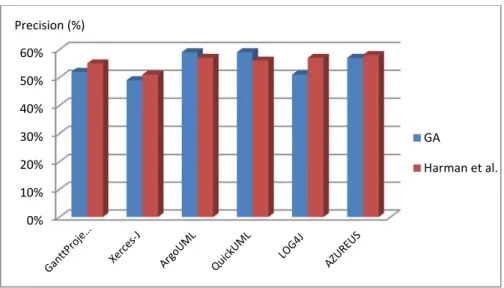
Figure 4.5 - GA precision comparison with Harman et al. ... 88
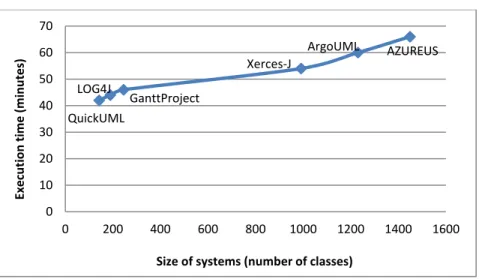
Figure 4.6 - Scalability of GA on different systems sizes... 89
Figure 5.1 - Approach overview. ... 96
Figure 5.2 - Example of on-wall ineffective collision operator. ... 100
Figure 5.3 - Example of decomposition operator... 101
Figure 5.4 - Example of inter-molecular ineffective collision operator. ... 102
Figure 5.5 - Example of synthesis operator. ... 103
Figure 5.6 - Code-smells correction results per code-smell type for each studied systems for (1) CRO (our approach), (2) CRO without prioritization, and (3) GA-based approach. ... 112
Figure 5.7 - Refactoring comparison results for the five systems for (1) CRO (our approach), (2) CRO without prioritization, and (3) GA-based approach in terms of ICR, RCR, SCR, and RP. ... 114
Figure 5.8 - CRO performance comparison with GA, SA and PSO. ... 117
Figure 5.10 - Suggested refactorings distribution for JFreeChart. ... 120
Figure 6.1 - Design fragment extracted from JFreeChart v1.0.9. ... 128
Figure 6.2 - Multi-Objective Search-based Refactoring. ... 130
Figure 6.3 - Semantics-based refactoring meta-model. ... 135
Figure 6.4 - Refactoring results of different objectives combination with NSGA-II in terms of (a) code changes reduction, (b) semantics preservation, (c) Code-smells correction ratio. ... 156
Figure 6.5 - Automatic refactoring precision comparison. ... 159
Figure 6.6 - Refactoring results of different algorithms in terms of (a) semantics preservation, (b) code-smells correction ratio, (c) code changes reduction. ... 160
Figure 6.7 - Comparison results of our approach with JDeodorant: average code-smells correction ratio (CCR), semantic coherence (RP) and code changes score (CC) on all the systems. ... 161
Figure 6.8 - Comparison of our refactoring results with manual refactorings in terms of precision. ... 162
Figure 6.9 - Impact of the suggested refactoring solution on QMOOD quality attributes. 164 Figure 6.10 - Impact of the number of refactorings on multiple executions on JFreeChart. ... 165
Figure 6.11 - Suggested refactorings distribution. ... 166
Figure 7.1 - Architecture of MORE. ... 174
Figure 7.2 - QMOOD quality factors gain obtained by MORE. ... 190
Figure 7.3 - Refactoring meaningfulness (RM) evaluation. ... 191
Figure 7.4 - Comparison of our approach with JDeodorant in terms of (a) CCR and (b) RM. ... 193
Figure 7.5 - Boxplots using the quality measures (a) HV, and (b) Spread applied to NSGA-II, MOGA, and Random Search through 31 independent run. ... 194
List of Acronyms
CCR Code-smell Correction Ratio
CD Cohesion-based dependency
CRO Chemical Reaction Optimization
DS Dependency-based Similarity
FIU Feature inheritance usefulness
GA Genetic Algorithm
GP Genetic Programming
ICR Importance Correction Ratio
IS Implementation-based similarity
MOGA Multi-Objective Genetic Algorithm NSGA-II Non-Dominated Sorting Genetic Algorithm PSO Particle Swarm Optimization RCR Risk Correction Ratio
RM Refactoring Meaningfulness
RO Refactoring Operation
RP Refactoring Precision
RS Random Search
SA Simulated Annealing
SCR Severity Correction Ratio
To my parents To my sisters To my friends
Acknowledgments
Feeling gratitude and not expressing it is like wrapping a present and not giving it.
(by William Arthur Ward, 1921–1994). I would like to thank the Tunisian Ministry of Higher Education and Scientific Research, and the University of Montreal for co-funding this research work through many excellence scholarships.
I would like to thank my PhD supervisor Prof. Houari Sahraoui for giving me the chance to do such a work within the GEODES Software Engineering Laboratory and for his valuable comments and critics which led to results of excellent quality. He taught me how to assess the research value of each proposal and how to be selective. He is a patient and thoughtful mentor; he listens to his students, not only what they are saying but also what they are not saying. I am proud to be one of his students.
I would like to express my infinite gratitude to my co-supervisor Prof. Marouane Kessentini for his unending encouragement and support, for showing me the joy of research, for shaping my path to research, for creating an enjoyable working environment, and for becoming a friend! His guidance was very constructive and rich so that they helped me to improve the quality of my work. Marouane was a great co-supervisor with kind personality attitudes. I consider him as more than a supervisor but even a member of my family.
I would like to thank Prof. Katsuro Inoue for accepting to be my external examiner and for furnishing efforts for reviewing my dissertation. I thank Prof. Olga Baysal for enthusiastically accepting to be on my PhD committee and for reviewing my dissertation.
Many thanks for Prof. Jean Meunier who was already on my pre-doctoral committee and who has enthusiastically accepted to chair my doctoral committee.
Thanks to all my friends in the Université de Montréal, Missouri University of Science and Technology, and University of Michigan. These years and the people I have met are now a part of me, and part of these pages. To them, and to those who were with me from the beginning, I owe this work.
Last but not least, I would like to express my special thanks to my parents Naceur and Kadija and my sisters who never stopped believing in me. I would have never managed any of this without their love and encouragement.
Chapter 1 : Introduction
1.1 Research context
Source code of large systems is iteratively refined, restructured and evolved due to many reasons such as correcting errors in design, modifying a design to accommodate changes in requirements, and modifying a design to enhance existing features. Many studies reported that these software maintenance activities consume more than 70% of the overall cost of a typical software project [3].
This high cost could potentially be greatly reduced by providing automatic or semi-automatic solutions to avoid bad-practices and increase in turn software understandability, adaptability and extensibility. As a result, there has been much research focusing on the study of bad design and programming practices, also called code-smells, design defects, anti-patterns or anomalies [1] [2] [10] [12] in the literature. Although code-smells are sometimes unavoidable, they should be in general prevented by the development teams and removed from their code base as early as possible for maintainability and evolution considerations. In fact, improving the quality of existing software will drastically improve productivity and competitiveness of our software industry.
Improving the quality of software induce the detection and correction of code-smells. Typically, code smells refer to bad programming practices that adversely affect the development of software. As stated by Fenton and Pfleeger [2], code-smells are unlikely to cause failures directly, but may do it indirectly. In general, they make a software system difficult to maintain, which may often introduce bugs. The most well-known example of code-smells is the Blob which is found in code fragments where one large class monopolizes the behavior of a system, and other classes primarily contain data. Removing these code-smells help developers to easily understand, maintain and evolve their source code [1].
One of the widely used techniques to fix code-smells is refactoring – the process of changing software structure while preserving its external behavior [62] – which has been practiced by programmers for many years. The idea is to reorganize variables, classes and
methods in order to facilitate future extensions. This reorganization is used to improve different aspects of software-quality such as reusability, maintainability, complexity, etc. In general, refactoring is performed through two main steps: 1) detection of code fragments that need to be improved (e.g., code-smells) and 2) identification of refactoring solutions to achieve this goal. In this thesis, we explore and address the automation of these two steps.
1.2 Problem statement
Detecting and fixing code-smells is still, to some extent, a difficult, time-consuming, manual and error-prone process [10]. As a consequence, automating code-smells detection and correction is considered as a challenging software engineering task [10] [12] [71]. In the next subsections, we highlight the different problems and challenges addressed in this thesis that are mainly related to the automation of code-smells detection and refactoring tasks.
1.2.1 Automating code-smells detection
The code-smells detection task consists of finding code fragments that violate common object-oriented principles (structure or semantic properties) on code elements such as the ones involving coupling and complexity. In fact, the common idea in existing contributions [33] [38] [43] consist of defining rules manually to identify key symptoms that characterize a code-smell using combinations of mainly quantitative and/or structural information. However, in an exhaustive scenario, the number of possible code-smells to manually characterize according to rules can be very large. On the other hand, Moha et al. [8] proposes to generate detection rules using formal definitions of code-smells. Although this partial automation of rule writing helps developers with symptom description, still, translating symptoms into rules is not obvious because there is no consensus of defining code-smells based on their symptoms [12]. Although there is a substantial amount of research work focusing on the detection of code-smells [1] [2] [8] [12] [14] [33] [38], there are many open issues that need to be addressed when defining a detection strategy. We highlight these open issues, as follows:
Problem #1.1. Most of the existing approaches are based on translating symptoms into rules. However, there is a difference between detecting symptoms and asserting that the detected situation is an actual code-smell.
Problem #1.2. There is no consensus on the definition of code-smells based on their symptoms. Although when consensus exists, the same symptom could be associated to many code-smell types, which may compromise the precise identification of smell types. Problem #1.3. The majority of existing detection methods does not provide an efficient manner to guide a manual inspection of code-smell candidates. Indeed, the process of manually defining detection rules, understanding the code-smell candidates, selecting the true positives, and correcting them is time-consuming, fastidious, and not always profitable. Problem #1.4. Existing approaches require an expert to manually write and validate detection rules.
1.2.2 Automating code-smells correction
Once code-smells are detected, they need to be fixed. One of the widely used techniques to fix code-smells and improve the quality of software systems is refactoring. Software refactoring improves design structure of the system while preserving its external behavior [1]. These two concerns drive the existing approaches to refactoring automation. To the best of our knowledge, most of the existing contributions [20] [21] [45] [49] suggest refactorings with the perspective of improving only some design/quality metrics while satisfying a set of pre- and post-conditions [17] to preserve the external behaviour. However, these concerns may not be enough to produce optimal and consistent refactoring solutions. In addition to quality improvement and behavior preservation, other aspects should be taken into consideration. Hence, to obtain good refactoring strategies, other considerations have to be targeted such as preserving the semantic coherence of the refactored program, reducing the amount of code changes required to apply refactoring, maintaining the consistency with prior code changes and reuse good refactorings applied/recorded in the past in similar contexts. In this setting, several open issues should
be addressed when searching for refactoring solutions to improve the quality of software systems (i.e., fix code-smells). Hence, we identify the following problems.
Problem #2.1. The majority of existing approaches [1] [40] [41] have manually defined "standard" refactorings for each code-smell type to remove its symptoms as described in Fowler’s book [1]. However, it is difficult to define “standard” refactoring solutions for each code-smell type and to generalize them because these solutions may vary depending on the programs and their context.
Problem #2.2. Removing code-smell symptoms does not mean that the actual code-smell is corrected, and, in the majority of cases, these “standard” solutions are unable to remove all symptoms for each code-smell.
Problem #2.3. Different possible refactoring strategies should be defined for the same type of code-smell. The problem is how to find the “best” refactoring solutions from a large list of candidate refactorings and how to combine them in an appropriate order? The list of all possible refactoring strategies, for each code-smell, can be very large [25]. Thus, the process of defining refactoring strategies manually, from an exhaustive list of refactorings, is fastidious, time-consuming, and error-prone.
Problem #2.4. In the majority of existing approaches [20] [21] [22] [49], code quality can be improved without fixing code-smells. In other terms, improving some quality metrics does not guarantee that the detected code-smells are fixed. Therefore, the link between code-smells detection (refactoring opportunities) and correction is not obvious. Thus, we need to ensure whether the refactoring concretely fixes the detected code-smells.
Problem #2.5. Existing approaches consider the refactoring (i.e., the correction process) as a local process by fixing code-smells (or improving quality) separately. That is, a refactoring solution should not be specific to only one code-smell type. Instead, the impact of refactoring should be considered on the whole system. For example, moving methods to reduce the size/complexity of a class may increase the global coupling, or fixing some code-smells may create other code-smells in other code fragments.
Problem #2.6. In practice, not all code-smells have equal effects and importance [63]. Each individual instance has its severity score that allows developers to immediately spot and fix the most critical instances of each code-smell. Concretely, the same code-smell type can occur in different code fragments but with different effect and risk [62] [64] [81]. In general, developers need to focus their effort on fixing code-smells of the higher risk and severity. Thus, the prioritization of the list of detected code-smells is required based on different criteria such as severity, risk, importance, development team preferences, etc. However, most of the existing refactoring approaches deal with code-smells to fix as if they are of same importance.
Problem #2.7. A refactoring solution that fixes all code-smells is not always the optimal one due to the high code adaptation/modification needed. When applying refactoring, different code changes are performed. The amount of code changes corresponds to the number of code elements (e.g., classes, methods, fields, relationships, field references, etc.) modified through adding, deleting, or moving operations. Minimizing code changes when recommending refactoring is very important to help developers understand the modified/improved design. Moreover, most developers want to keep as much as possible the original design structure when fixing code-smells [17]. Hence, improving software quality and reducing code changes are conflicting. In some cases, correcting some code-smells corresponds to performing substantial changes in the system or is, sometimes, equivalent to re-implementing a large part of the system.
Problem #2.8. In general, refactoring restructures a program to improve its structure without altering its external behavior. However, it is challenging to preserve the semantic coherence of a program when refactoring is decided/implemented automatically. Indeed, a program could be syntactically correct, and have the right behavior, but incorrectly model the domain semantics. We need to preserve the rationale behind why and how code elements are grouped and connected when applying refactoring operations to improve code quality.
Problem #2.9. The majority of the existing work did not consider the history of changes applied in the past when performing refactorings. However, the history of code changes can be helpful in increasing the correctness of new refactoring solutions. To better guide the search process, recorded code changes applied in the past can be reused in similar contexts. This knowledge can be combined with structural and semantic information to improve the automation of refactoring. Moreover, it is important to maintain the consistency with prior changes when recommending new changes, i.e., refactorings.
Problem #2.10. Most of the existing studies focus mainly on fixing code-smells and/or improving some software metrics. However, this may not be sufficient to make the source code easier to understand and to modify. Introducing design patterns that represent good design practices can greatly improve the quality of systems. Nevertheless, very few works exploit the richness of refactoring to introduce design patterns.
All of these observations are at the origin of the work conducted in this thesis. In the next section, we give an overview of our research directions to address the above-mentioned problems.
1.3 Research objectives and main contributions
1.3.1 ObjectivesThe main objectives of this thesis are the following:
1. By applying search-based software engineering (SBSE) techniques, we can automate the refactoring recommending task. SBSE has been shown to be a practical and efficient way in solving several software engineering problems [91]. Software refactoring problem is, by its nature, ideal for the application of SBSE techniques, in its two steps (1) identification code fragments that need to be refactored, and (2) identification of the suitable refactoring operations to apply.
2. Automating the code-smells’ detection task to support developers and relieve them from the burden of doing so manually. Developers no longer need to manually define
rules/constraints to automate code-smells' detection task. Instead, they simply provide a set of examples of code-smells that are already detected in different software systems.
3. Automating the refactoring recommending task. The aim of this thesis is to circumvent the problems mentioned in previous section. The majority of existing work deals with refactoring from a single perspective which is improving the quality. In this thesis, we formulate the refactoring recommending problem as a multi-objective optimization problem to find the best compromise between different objectives: improving the quality, preserving semantic coherence, reducing the number of changes, and maintaining the consistency with development/maintenance history.
4. Take advantage of the richness of refactoring through a multi-objective approach to introduce “good” design practices (i.e., design patterns), fix “bad” design practices (i.e., code-smells), while improving software quality attributes (i.e., flexibility, maintainability, etc.).
1.3.2
ContributionsTo overcome the previously identified problems, we propose the following contributions, organized into three major parts (cf. Figure 1.1):
Part 1: Code-smells detection
Contribution 1.1: Search-based code-smells detection
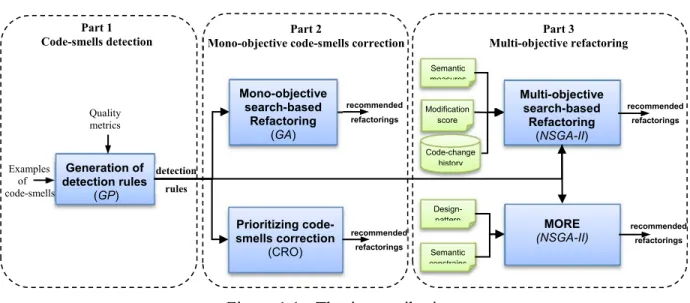
To automate the detection of code-smells we propose a search-based approach [28] using genetic algorithm to automatically generate detection rules. Our proposal consists of using knowledge from previously manually inspected projects (i.e., code-smell examples) in order to detect code-smells that will serve to generate new detection rules based on the combinations of quality metrics and threshold values. As illustrated in Figure 1.1, the detection process takes as inputs a base (i.e., a set) of code-smell examples and takes as controlling parameters a set of quality metrics (the usefulness of these metrics
recommended refactorings
Part 2
Mono-objective code-smells correction
Generation of detection rules (GP) Mono-objective search-based Refactoring (GA) detection rules Part 1 Code-smells detection Quality metrics Part 3 Multi-objective refactoring Examples of code-smells Prioritizing code-smells correction (CRO) recommended refactorings Multi-objective search-based Refactoring (NSGA-II) MORE (NSGA-II) Semantic measures Modification score Code-change history Design-pattern Semantic constrains recommended refactorings recommended refactorings
Figure 1.1 - Thesis contributions
was defined and discussed in the literature [30]). This step generates a set of code-smells detection rules. Consequently, a solution to the code-smell detection problem is represented as a set of rules that best detect the code-smells presented on the base of examples with high precision and recall.
Part 2: Mono-objective code-smells correction
Contribution 2.1: Mono-objective search-based code-smells correction
To fix the detected code-smells, we need to find the suitable refactoring solution. As a first contribution, we consider the process of generating correction solutions as a single-objective optimization problem. A correction solution is defined as a combination of refactoring operations that should minimize, as much as possible, the number of detected code-smells using the detection rules. To this end, we use genetic algorithm (GA) [52] to find and recommend the best combination of refactoring operations from a large list of available refactorings (i.e., the suitable metrics and their appropriate threshold values). Indeed, one of the advantages of our approach is that it does not correct code-smells separately since we consider the correction task as a global process instead of local one. In addition, we don't need to define an exhaustive list of code-smells and specify standard
refactoring for each code-smell type. We evaluate the efficiency of our approach in finding potential code-smells in five different open-source systems.
Contribution 2.2: Prioritizing code-smells correction
We extend our previous contribution to prioritize the correction of code-smells. We propose an approach that supports automated refactoring recommendation for correcting code-smells where riskiest code-smells are prioritized during the correction process. Hence, we formulated the refactoring recommending problem as an optimization problem to find the near-optimal sequence of refactorings from a huge number of possible refactorings according to a prioritization schema. To this end, we used a novel metaheuristic search by the means of Chemical Reaction Optimization (CRO) [163], a newly established metaheuristics, to find the suitable refactoring solutions (i.e., sequence of refactoring operations) that maximize the number of corrected code-smells while prioritizing the most important, e.g., riskiest, and severest code fragments according to the developer’s preferences.
Part 3: Multi-objective refactoring recommending
Contribution 3.1. A Multi-objective approach for recommending software refactoring
In this contribution, we deal with the refactoring recommending task as a multi-objective optimization problem. The process aims at finding the optimal sequence of refactoring operations that improve the software quality by minimizing the number of detected code-smells. In addition, we explore other objectives to optimize: reduce the number of modifications/adaptations needed to apply refactorings, preserve the semantic coherence of the refactored program, and maintaining the consistency with development/maintenance history. The idea is to find the best compromise between all of these objectives. Hence, by reducing the number of modifications, we reduce the complexity of the recommended refactorings and keep as much as possible the original design/code structure. Moreover, it is mandatory to preserve the semantic coherence and prevent arbitrary changes on code elements, especially when refactoring are decided
automatically. Furthermore, historical data in software engineering provide a lot of solid knowledge that can be used to make sound data-driven decisions for several software engineering problems [152] [153]. Reuse is a common practice for developers during software development to save time and efforts. We show in this contribution, how recorded/historical code changes could be an effective way to propose new refactoring solutions. We evaluate the efficiency of our approach using a benchmark of six different industrial size open-source systems, and six frequent code-smells types through an empirical study conducted with software engineers.
Contribution 3.2. A multi-objective refactoring approach to introduce design patterns and fix code-smells
From another perspective, we propose a multi-objective formulation of refactoring recommending task where we consider the introduction of design patterns. We propose, in this contribution, a recommending framework for automated multi-objective refactoring to (1) introduce design patterns, (2) fix code-smells, and (3) improve design quality (as defined by software quality metrics). To evaluate our approach, we conducted a quantitative and qualitative evaluation with software engineers using a benchmark composed of four open source systems. The obtained results confirm the efficiency of our proposal compared to the state-of-the-art of refactoring techniques.
1.4 Thesis organisation
This thesis is organized as follows. Chapter 2 provides a review of the literature on previous research that is relevant to the main themes of this dissertation: code-smells detection and correction, software refactoring, existing search-based techniques for software refactoring, and the use of historical data in software engineering. Chapter 3 reports our contribution for the detection of code-smells. We present the use of genetic programming (GP) [99] and its adaptation for generating code-smells detection rules. In Chapter 4, we present our mono-objective search-based approach for fixing code-smells. The proposed approach uses an adaptation of the GA to find the suitable refactoring
solutions that should be applied to fix code-smells. Chapter 5 presents an extension of the previous contribution to prioritize the correction code-smells using Chemical Reaction Optimization. In Chapter 6, we introduce our multi-objective approach using the Non-dominated Sorting Genetic Algorithm (NSGA-II) [24] to find the optimal refactoring solution to fix code-smells, preserve the semantic coherence, and maintain the consistency with the change history, while reducing as much as possible the amount of modifications needed to apply refactoring. In Chapter 7, we describe our multi-objective approach for introducing design patterns while fixing code-smells. Finally, Chapter 8 summarizes the contributions of the work presented in this thesis, underlines its main limitations, and describes our future research directions.
Chapter 2 : State of the art
2.1 Introduction
This chapter provides a literature review on research work related to this thesis. We first provide the background material that is required to understand this thesis. Then, we survey the related work that is relevant to the main themes of this research work. In particular, the related work can be divided broadly into five research areas: (1) detection of code-smells, (2) management and prioritization of code-smells, (3) refactoring and correction of code-smells, (4) recommendation systems in software engineering, and (5) the use of historical data in software engineering.
This chapter is structured as follows. Section 2.2 presents the background need for unfamiliar readers with code-smells, software refactoring, and search-based software engineering. We present in Section 2.3 different metaheursitcs. Section 2.4 summarises exiting works in code-smells detection. We classify existing detection strategies into mainly seven classes. Section 2.5 describes existing research work on prioritizing and managing smells. Section 2.6 discusses the state of the art of software refactoring and code-smells correction; Section 2.7 is devoted to describe recommendation systems in software engineering including software refactoring and their usefulness. In Section 2.8, we provide a description of research work on mining software repository and their role to improve software design/reuse and support the maintenance of software systems. In Section 2.9, we conclude this chapter with a discussion on the limitations of the presented work with regard to our thesis.
2.2 Background
In this section, we provide the necessary background for code-smells, software refactoring and search-based software engineering. This section is aimed at readers who are unfamiliar with these concepts.
2.2.1 Code smells
Code-smells, also called in the literature anti-patterns [1], anomalies [12], design flaws [10] or bad smells [2], are a metaphor to describe problems resulting from bad design and programming practices. Along of this dissertation, we will use the term code-smell. Originally, code-smells are used to find the places in software that could benefit from refactoring. According to Fowler [1], code-smells are unlikely to cause failures directly, but may do it indirectly. In general, they make a system difficult to change, which may in turn introduce bugs. Different types of code-smells, presenting a variety of symptoms, have been studied in the intent of facilitating their detection [8] and suggesting improvement solutions. Most of code-smells identify locations in the code that violate object-oriented design heuristics, such as the situations described by Riel [70] and by Coad et al. [73]. Code-smells are not limited to design flaws since most of them occur in code and are not related to the original design. Indeed, most of code-smells can emerge during the maintenance and evolution of a system.
In [1], Beck defines 22 sets of symptoms of code-smells and proposes the different possible refactoring solutions to improve the system design. These include God classes, feature envy, long parameter lists, and data classes. Each code-smell type is accompanied by refactoring suggestions to remove it. Van Emden and Moonen [71] developed, as far as we know, the first automated code-smell detection tools for Java programs. Mantyla studied the manner of how developers detect and analyse code smells [72]. Previous empirical studies have analysed the impact of code-smells on different software maintainability factors including defects [74] [75] [76] and effort [77] [78]. In fact, software metrics (quality indicators) are sometimes difficult to interpret and suggest some actions (refactoring) as noted by Anda et al. [79] and Marinescu et al. [10]. Code-smells are associated with a generic list of possible refactorings to improve the quality of software systems. In addition, Yamashita et al. [67] [68] show that the different types of code-smells can cover most of maintainability factors [69]. Thus, the detection of code-smells can be considered as a good alternative of the traditional use of quality metrics to evaluate the
quality of software products. Brown et al. define another category of code-smells that are documented in the literature, and named anti-patterns.
2.2.2 Refactoring
To fix code-smells, one of the most-used techniques is refactoring which improves design structure while preserving the external behavior [12]. Refactoring has been practiced by programmers for many years. Refactoring is widely recognized as a crucial technique applied when evolving object-oriented software systems. More recently, tools that (semi-) automate the process of refactoring has emerged in various programming environments such as Eclipse [53] and Netbeans [54]. These tools have promised, if applied well, to increase the speed at which programmers can write and maintain code while decreasing the likelihood that programmers will introduce new bugs [86] [87].
Opdyke and Johnson [1] defined refactoring as the process of improving a code after it has been written by changing its internal structure without changing the external behavior. The idea is to reorganize variables, classes and methods in order to facilitate future extensions. This reorganization is used to improve different aspects of software-quality such as reusability, maintainability, complexity, etc. [1] [18]. Later, it was popularized by Martin Fowler’s book [1], but refactoring has been practiced for as long as programmers have been writing programs. Fowler’s book is largely a catalog of refactorings [25]; each refactoring captures a specific structural change that has been observed frequently in different programming languages and application domains.
Roughly speaking, we can identify two distinct steps in the refactoring process: (1) detect when a program should be refactored and (2) identify which refactorings should be applied and where [18]. For example, after detecting a Blob code-smell, many refactoring operations can be used to reduce the number of functionalities in a specific class, such as move methods/fields and extract class. An exhaustive list of refactoring operations can be found in [25].
2.2.3 Search-based software engineering
The research topic of this Ph.D. thesis is about using search techniques in software engineering, called search-based software engineering (SBSE). The term SBSE was first used by Harman and Jones in 2001 and defined as the application of search-based approaches to solving optimization problems in software engineering [91]. Essentially, SBSE is based on the idea of reformulating software engineering problems as search problems by defining them in terms of solution representation, fitness function and solution change operators. Once a software engineering task is framed as a search problem, there are many metaheuristic techniques that can be applied to discover near optimal solutions to that problem.
In 2001, Harman and Jones [91] expected to see a dramatic development of the field of search based-software engineering. The authors have concluded that in the near future metaheuristic search will be applied to several areas of software engineering. As expected, SBSE has become a growing research and practice domain which is popularized in both academia and industry [90]. Indeed, in the last decade many SBSE approaches has been applied to a wide variety of software engineering problems, including software testing [94], requirements engineering [93], bug fixing [92], project management [95], refactoring [20], service-oriented software engineering [96], and model-driven software engineering [164]. The most studied and known models are based on classic evolutionary algorithms (EAs) such as simulated annealing (SA) [98], genetic algorithm (GA) [99], particle swarm optimization (PSO) [100], and tabu search (TS) [92].
We will investigate in this thesis the use of SBSE techniques for automating the detection and correction of code-smells as well as automatically recommending refactoring.
2.3 Metaheuristic search techniques
Different mono- and multi-objective metaheuristic techniques are used in this thesis. We provide in this section the necessary background for unfamiliar readers with
metaheursitics. More specifically, we used the following metaheuristics: Genetic Algorithm, Genetic Programming, Chemical Reaction Optimization, and Non-dominated Sorting Genetic Algorithm.
2.3.1 Genetic Algorithm
Genetic Algorithm (GA) [99] is a powerful heuristic search optimization method inspired by the Darwinian theory of evolution. The basic idea is to explore the search space by making a population of candidate solutions, also called individuals, evolve toward a “good” solution of a specific problem.
In GA, an individual is usually string/vector of numbers that represents a candidate solution. Every individual of the population is evaluated by a fitness function that determines a quantitative measure of its ability to solve the target problem. The exploration of the search space is achieved by the evolution of candidate solutions using selection and genetic operators such as crossover and mutation. The selection operator insures selection of individuals in the current population proportionally to their fitness values, so that the fitter an individual is, the higher the probability is that it be allowed to transmit its features to new individuals by undergoing crossover and/or mutation operators. The crossover operator insures the generation of new children, or offspring, based on parent individuals. The crossover operator allows transmission of the features of the best fitted parent individuals to new individuals. This is usually achieved by replacing a randomly selected sub tree of one-parent individual with a randomly chosen sub tree from another parent individual to obtain one child. A second child is obtained by inverting parents. Finally, the mutation operator is applied, with a probability which is usually inversely proportional to its fitness value, to modify some randomly selected nodes in a single individual. The mutation operator introduces diversity into the population and allows escaping from local solutions found during the search.
Once the selection, mutation and crossover operators have been applied with given probabilities, the individuals in the newly created generation are evaluated using the fitness
function. This process is repeated iteratively, until a stopping criterion is met. The criterion usually corresponds to a fixed number of generations, or when the fitness function reaches the desired fitness value. The result of GA (the best solution found) is the fittest individual produced along all generations.
2.3.2 Genetic Programming
Genetic Programming (GP) [171] is a branch of Genetic Algorithm. The main difference between genetic programming and genetic algorithm is the representation of the solution. Genetic algorithms create a string of numbers that represent the solution. Genetic programming creates (computer) programs as the solution which is usually represented as a tree, where the internal nodes are functions, and the leaf nodes are terminal symbols. Both the function set and the terminal set must contain elements that are appropriate for the target problem. For instance, the function set can contain arithmetic operators, logic operators, mathematical functions, etc., whereas the terminal set can contain the variables (attributes) of the target problem.
2.3.3 Chemical Reaction Optimization
Chemical reaction optimization (CRO) is a new recently proposed metaheuristics [176] inspired from chemical-reaction. It is not difficult to discover the correspondence between optimization and chemical reaction. Both of them aim to seek the global minimum (but with respect to different objectives) and the process evolves in a stepwise fashion. With this discovery, CRO was developed for solving optimization problems by mimicking what happens to molecules in chemical reactions. It is a multidisciplinary design which loosely couples computation with chemistry (see Table 2.1). The manipulated agents are molecules and each has a profile containing some properties. A molecule is composed of several atoms and characterized by the atom type, bond length, angle, and torsion. One molecule is distinct from another when they contain different atoms and/or different number of atoms. The term “molecular structure” is used to summarize all these characteristics and it corresponds to a solution in the matheuristic meaning. The
representation of a molecular structure depends on the problem we are solving, provided that it can express a feasible solution of the problem. A molecule possesses two kinds of energies, i.e., potential energy (PE) and kinetic energy (KE). The former quantifies the molecular structure in terms of energy and it is modeled as the objective function value when evaluating the corresponding solution. A change in molecular structure (chemical reaction) is tantamount to switching to another feasible solution. CRO evolves a population of molecules by means of four chemical reactions called: (1) On-wall ineffective collision, (2) Decomposition, (3) Inter-molecular ineffective collision and (4) Synthesis. Consequently, similarly to genetic algorithm (GA), the molecule corresponds to the population individual and chemical reactions correspond to the variation operators. However, CRO is distinguished by the fact that environmental selection is performed by the variation operator. Differently to GA which generates an offspring population then makes a competition between the latter and the parent population, in CRO once an offspring is generated, it competes for survival with its parent(s) within the realization of the corresponding chemical reaction. Algorithm 2.1 illustrates the pseudocode of the CRO where it begins by initializing the different parameters that are:
- PopSize: the molecule population size,
- KELossRate: the loss rate in terms of Kinetic Energy (KE) during the reaction,
- MoleColl: a parameter varying between 0 and 1 deciding whether the chemical reaction to be performed is uni-molecular (on wall ineffective collision or decomposition) or mutli-molecular (inter-molecular ineffective collision or synthesis),
- buffer: the initial energy in the buffer, - InitialKE: the initial KE energy,
- α, and β: two parameters controlling the intensification and diversification.
Once the initialization set is performed, the molecule population is created and the evolution process begins. The latter is based on the following four variation operators (elementary chemical reactions):
1) On-wall ineffective collision: This reaction corresponds to the situation when a
molecule collides with a wall of the container and then bounces away remaining in one single unit. In this collision, we only perturb the existing molecule structure (which captures the structure of the solution) ω to ω′. This could be done by any neighborhood operator N(·).
2) Decomposition: It corresponds to the situation when a molecule hits a wall and then
breaks into several parts (for simplicity, we consider two parts in this work). Any
mechanism that can produce ω′1 and ω′2 from ω is allowed. The goal of decomposition
CRO pseudocode 1. 2. 3. 4. 5. 6. 7. 8. 9. 10. 11. 12. 13. 14. 15. 16. 17. 18. 19. 20. 21. 22. 23. 24. 25.
Input: Parameter values
Output: Best solution found and its objective function value /*Initialization*/
Set PopSize, KELossRate, MoleColl, buffer, InitialKE, α, and β Create PopSize molecules
/*Iterations*/
While the stopping criteria not met do
Generate b ∈ [0, 1] If (b > MoleColl) Then
Randomly select one molecule Mω
If (Decomposition criterion met) Then Trigger Decomposition
Else
Trigger OnwallIneffectiveCollision End If
Else
Randomly select two molecules Mω1 and Mω2
If (Synthesis criterion met) Then Trigger Synthesis
Else
Trigger IntermolecularIneffectiveCollision End If
End If
Check for any new minimum solution End While
is to allow the algorithm to explore other regions of the search space after enough local search by the ineffective collisions.
3) Inter-molecular ineffective collision: This reaction takes place when multiple molecules
collide with each other and then bounce away. The molecules (assume two) remains unchanged before and after the process. This elementary reaction is very similar to the uni-molecular ineffective counterpart since we generate ω′1 and ω′2 from ω1 and ω2 such that ω′1 = N(ω1) and ω′2 = N(ω2). The goal of this reaction is to explore several neighborhoods simultaneously each corresponding to a molecule.
4) Synthesis: This reaction is the opposite of decomposition. A synthesis happens when
multiple (assume two) molecules hit against each other and fuse together. We obtain ω′ from the fusion of ω1 and ω2. Any mechanism allowing the combination of solutions is allowed, where the resultant molecule is in a region farther away from the existing ones in the solution space. The idea behind synthesis is diversification of solutions.
Chemical meaning Metaheuristic meaning
Molecular structure Solution
Potential energy Objective function value
Kinetic energy Measure of tolerance of having worse solutions
Number of Hits Current total number of moves
Minimum structure Current optimal solution
Minimum value Current optimal function value
Minimum hit number Number of moves when the current optimal
solution is found
Table 2.1 - CRO analogy between chemical and metaheuristic meanings. The first column contains the properties of a molecule used in CRO. The second column shows the corresponding meanings in the metaheuristic.
To sum up, on-wall and inter-molecular collisions (ineffective collisions) emphasize more on intensification while decomposition and synthesis (effective collisions) emphasize more on diversification. This allows making a good trade-off between exploitation and exploration as the case of GA. The algorithm undergoes these different reactions until the satisfaction of the stopping criteria. After that, it outputs the best solution found during the overall chemical process.
It is important to note that the molecule in CRO has several attributes,some of which are essential to the basic operations, i.e.: (a) the molecular structure ω expressing the solution encoding of the problem at hand; (b) the Potential Energy (PE) corresponding to the objective function value of the considered molecule and (c) the Kinetic Energy (KE) corresponding to non-negative number that quantifies the tolerance of the system accepting a worse solution than the existing one (similarly to simulated annealing). The optional attributes are:
i) Number of hits (NumHit): When a molecule undergoes a collision, one of the elementary reactions will be triggered and it may experience a change in its molecular structure. NumHit is a record of the total number of hits (i.e. collisions) a molecule has taken.
ii) Minimum Structure (MinStruct): It is the ω with the minimum corresponding PE which a molecule has attained so far. After a molecule experiences a certain number of collisions, it has undergone many transformations of its structure, with different corresponding PE. MinStruct is the one with the lowest PE in its own reaction history. iii) Minimum Potential Energy (MinPE): When a molecule attains its MinStruct, MinPE is
its corresponding PE.
iv) Minimum Hit Number (MinHit): It is the number of hits when a molecule realizes
MinStruct. It is an abstract notation of time when MinStruct is achieved.
For more details about the role of each of these attributes in CRO, the reader is invited to refer to [176].
The CRO has been recently applied successfully to different combinatorial and continuous optimization problems [179] [180] [181]. Several nice properties for the CRO have been detected. These properties are as follows:
- The CRO framework allows deploying different operators to suit different problems. - Its variable population size allows the system to adapt to the problems automatically;
- Energy conversion and energy transfer in different entities and in different forms make CRO unique among metaheursitics. CRO has the potential to tackle those problems which have not been successfully solved by other metaheuristics.
- Other attributes can easily be incorporated into the molecule. This gives flexibility to design different operators.
- CRO enjoys the advantages of both SA and GA.
- CRO can be easily programmed in object-oriented programming language, where a class defines a molecule and methods define the elementary reactions.
Based on all these observations, the CRO seems to be an interesting metaheuristic ready to use for tackling SE problems.
2.3.4
Non-dominated Sorting Genetic Algorithm
The basic idea of the Non-dominated Sorting Genetic Algorithm (NSGA-II) [24] is to make a population of candidate solutions evolve toward the near-optimal solution in order to solve a multi-objective optimization problem. NSGA-II is designed to find a set of near-optimal solutions, called dominated solutions or the Pareto front. A non-dominated solution is one that provides a suitable compromise between all objectives without degrading any of them. As described in Algorithm 2.2, the first step in NSGA-II is to create randomly a population P0 of individuals encoded using a specific representation
(line 1). Then, a child population Q0 is generated from the population of parents P0 using
genetic operators such as crossover and mutation (line 2). Both populations are merged into a new population R0 of size N (line 5).
Fast-non-dominated-sort is the algorithm used by NSGA-II to classify individual solutions into different dominance levels. Indeed, the concept of Pareto dominance consists of comparing each solution x with every other solution in the population until it is dominated by one of them. If no solution dominates it, the solution x will be considered non-dominated and will be selected by the NSGA-II to be a member of the Pareto front. If we consider a set of objectives fi , i,j 1…n, to maximize, a solution x dominates x′
iff i, fi (x′) ≤ fi (x) and j | fj (x′) fj (x).
The whole population that contains N individuals (solutions) is sorted using the dominance principle into several fronts (line 6). Solutions on the first Pareto-front F0 get
assigned dominance level of 0 Then, after taking these solutions out, fast-non-dominated-sort calculates the Pareto-front F1 of the remaining population; solutions on this second
front get assigned dominance level of 1, and so on. The dominance level becomes the basis of selection of individual solutions for the next generation. Fronts are added successively until the parent population Pt+1 is filled with N solutions (line 8). When NSGA-II has to cut
off a front Fi and select a subset of individual solutions with the same dominance level, it
relies on the crowding distance to make the selection (line 9). This parameter is used to promote diversity within the population. This front Fi to be split, is sorted in descending
order (line 13), and the first (N-|Pt+1|) elements of Fi are chosen (line 14). Then a new
population Qt+1 is created using selection, crossover and mutation (line 15). This process
will be repeated until reaching the last iteration according to the stop criteria (line 4).
1. 2. 3. 4. 5. 6. 7. 8. 9. 10. 11. 12. 13. 14. 15. 16. 17.
Create an initial population P0
Generate an offspring population Q0 t=0;
while stopping criteria not reached do
Rt = Pt ∪ Qt; F = fast-non-dominated-sort (Rt); Pt+1 = ∅ and i=1; while | Pt+1| +|Fi| ≤ N do Apply crowding-distance-assignment(Fi); Pt+1 = Pt+1 ∪ Fi ; i = i+1; end Sort(Fi, ≺ n); Pt+1 = Pt+1 ∪ Fi[1 : (N-| Pt+1 |)]; Qt+1 = create-new-pop(Pt+1); t = t+1; end
2.4 Detection of code-smells
There has been much research effort focusing on the study of code-smells. Existing approaches for code-smells detection can be classified into six broad categories: manual approaches, symptom-based approaches, rule-based approaches, probabilistic approaches, machine-learning based approaches, and visualization-based approaches.
2.4.1 Manual approaches
In the literature, the first book that has been specially written for design smells was by Brown et al. [12] which provide broad-spectrum and large views on design smells, and antipatterns that aimed at a wide audience for academic community, as well as in industry. Indeed, in [1]
,
Fowler and Beck have described a list of design smells which may possibly exist on a program. They suggested that software maintainers should manually inspect the program to detect existing design smells. In addition, they specify particular refactorings for each code-smells type. Travassos et al. [31] have also proposed a manual approach for detecting code-smells in object-oriented designs. The idea is to create a set of “reading techniques” which help a reviewer to “read” a design artifact for the purpose of finding relevant information. These reading techniques give specific and practical guidance for identifying code-smells in object-oriented designs. So that, each reading technique helps the maintainer focusing on some aspects of the design, in such way that an inspection team applying the entire family should achieve a high degree of coverage of the code-smells. In addition, in [32], another proposed approach is based on violations of design rules and guidelines. This approach consists of analyzing legacy code, specifying frequent design problems as queries and locating the occurrences of these problems in a model derived from the source code. However, the majority of the detected problems were simple ones, since it is based on simple conditions with particular threshold values. As a consequence, this approach did not address complex code-smells.The main limitation of exiting manual approaches is that they are ultimately a human-centric process that requires a great human effort and extensive analysis and interpretation effort from software maintainers to find design fragments that corresponds to code-smells. In addition, these techniques are time-consuming, error-prone and depend on programs in their contexts. Another important issue is that locating code-smells manually has been described as more a human intuition than an exact science. To circumvent the above mentioned problems, some semi-automated approaches have emerged using different techniques.
2.4.2 Symptom-based detection
Van Emden and Moonen [71] presented one of the first attempts to automate code-smell detection for Java programs. The authors exanimated a list of code code-smells and found that each of them is characterized by a number of “smell aspects” that are visible in source code entities such as packages, classes, methods, etc. A given code smell is detected when all its aspects are found in the code. The identified aspects are mainly related to non- conformance to coding standards. The authors distinguish two types of smell aspects: primitive smell aspects that can be observed directly in the code, and derived smell aspects that are inferred from other aspects. An example of a primitive aspect is “method m contains a switch statement”, an example of a derived aspect is “class C does not use any methods offered by its superclasses”. The developed Java code-smell detection tool allows also visualization of the code and the detected smells. However, conformance to coding standards is not always easy to achieve in practice. Moreover, using such visualization tools, it is still difficult for a programmer to identify potential code-smells, and his decision is most of the time subjective.
Later, Moha et al. [8] proposed a description of anti-pattern symptoms using a domain-specific-language (DSL) for their anti-patterns detection approach called DECOR. They proposed a consistent vocabulary and DSL to specify anti-patterns based on the review of existing work on code-smells found in the literature. To describe anti-pattern