Chapter
3
Realisation of Higher Value Added of Seng Cu Rice
Value Chain in Viet Nam
Lam Thi Bui, Cuong Huu Tran, Hop Thi Minh Ho, Eiichi Kusano, and Philippe Lebailly
August 2019
This chapter should be cited as
Lam, T.B., H.T. Cuong, T.M.H. Hop, E. Kusano and P. Lebailly (2019), ‘Realisation of Higher Value Added of Seng Cu Rice Value Chain in Viet nam’, in Kusano, E. (ed.), Food Value Chain in ASEAN: Case Studies Focusing on Local Producers. ERIA Research Project Report FY2018 no.5, Jakarta: ERIA, pp.52─86.
Chapter 3
Realisation of Higher Value Added of Seng Cu Rice Value Chain in
Viet Nam
Lam Thi Bui
*,Cuong Huu Tran, Hop Thi Minh Ho,
Eiichi Kusano, and Philippe Lebailly
1. Introduction
Lao Cai is a border province located in the Northern Midlands and Mountains (NMMs) of Viet Nam, containing the typical features of mountains such as high poverty rate (27.4% in 2017), the scarcity of arable land1, diversity of 25 ethnic minority groups and the widening gap among the different income group (Lao Cai SO, 2016; MOLISA, 2016; Nguyen Tran, 2017; WorldBank, 2017). Despite its being an agriculture-based province with nearly 80% of total rural population engaging in farming activities, the share of agricultural output in gross regional domestic product was only 14.24% in 2017 (Lao Cai SO, 2017). This indicates that agricultural activities in the province provide low value addition, leading to currently high poverty rate and other serious socio-economic issues. Several recent studies carried out in the NMMs indicated that although increasing the value added of farming activity always gets the attention of the local authorities, top–down policies and their implementation have created ineffective results in agricultural development and livelihood-improving roles for the local people (Bui et al., 2018; Castella et al., 2002; Yen et al., 2013). Moreover, farmers and other actors in the agricultural chain are faced with various challenges in production and marketing. In this study, the authors chose a potential agricultural product of Lao Cai, namely, Seng Cu rice, to identify the bottlenecks and, thus, suggest feasible solutions to generate more value addition and allocate more suitable benefit among actors in the chain.
Seng Cu is a special rice of the NMMs, with superior aroma, nutrition, and flavour compared to other rice varieties. Seng Cu cultivated in Lao Cai has the highest price in the domestic market2, therefore, providing high economic value to producers and other actors. It is also listed among the primary agricultural products of the province in terms of improving the economic state of poor farmers and ensuring food security, especially in upland areas. However, the share of production area devoted for Seng Cu rice still remains low; it slightly increased from 3.5% in 2012 to 6.1% in 2017 in total rice cultivated land of Lao Cai (Lao Cai DARD, 2012; 2017). Based on the value chain approach, the study aims to determine challenges in production, processing, and marketing and, therefore, suggests reasonable solutions to get higher value added of this special agricultural product and to distribute better benefits among those in the chain.
The chapter comprises six sections. After the introduction and methodology, the next section describes the main characteristics and cost–benefit analysis of primary actors in the chain as well as the role of secondary actors who provide support services affecting value addition of the chain. The fourth part presents an overview of product channels and calculates the contribution of value addition of each actor in four main channels. Based on this, the main advantages and disadvantages occurring in the chain, which are important evidence, are identified. Recommendations on production and marketing for sustainable development are presented in the last section.
2. Methodology
2.1. Research Site
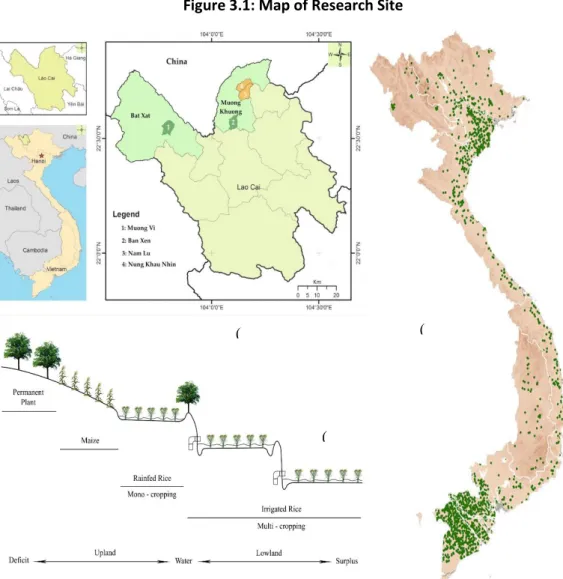
According to Bui et al. (2018), Lao Cai is the ideal site for researching on the montane rice sector because of the following reasons. Firstly, Lao Cai has typical socioeconomic and political characteristics representing the mountainous areas of Viet Nam. Secondly, the province produces about 5 tons/ha of rice, almost about the same as what farmers of the NMMs region produce. Moreover, Lao Cai has more potential in developing some special agricultural products that can provide high economic value for farmers and other relevant actors in the locality. Specifically, the province is endowed with various natural advantages for Seng Cu rice cultivation, such as a high difference between daytime and night-time temperatures with an average temperature at 20.45°C; low latitude at 21°30′ N and 22°51′ N; moderate sunshine duration at around 1,500 hours per year; high annual rainfall of more than 2,050 mm; and alluvial fertile soil and watershed (Lao Cai SO, 2016). According to GRiSP (Partnership), 2013), rice planted in low-latitude areas, with high solar radiation, and cool temperature tends to get higher productivity. Rice cultivators, therefore, should exploit these geographic features to obtain high quality and high yield to improve their economic situation. Regarding Sengcu rice production analysis, the study chose four largest production-area communes from two districts, existing in two different ecological zones (i.e. upland versus lowland and rain-fed versus irrigated). In 2017, rice growers in Muong Khuong spent 22.54%
of total cultivated rice land for Seng Cu rice (about 550 out of 2,218 hectares). In the same year, 16.74% of total rice land in Bat Xat district was devoted for Seng Cu rice growing (840 ha out of 5,016 ha). Figure 3.1(a) shows the selected research site, comprising (i) two lowland communes, namely, Muong Vi located in Bat Xat district (green 1) and Ban Xen located in Muong Khuong district (green 2); and (ii) Nam Lu and Lung Khau Nhin (orange 3 and 4) and two upland communes belonging to Muong Khuong district. The results of in-depth interviews of the agricultural officials indicated that majority of rice growers in those communes are planting Seng Cu rice, more or less, but the proportion of their cultivated land spent for Seng Cu rice fluctuated significantly, especially in the uplands. Arguably, the purpose of Seng Cu cultivation strongly influences this difference. While lowlanders aim to maximise profit, uplanders prioritise food security. This is why upland rice farmers tend to plant high-yielding hybrid varieties, not Seng Cu rice.
Figure 3.1: Map of Research Site
Note: In Figure 1 (c), one green dot represents 5,000 ha dedicated to rice growing.
Source: Figure 3.1 (a) and (b) are author's own elaboration; Figure 3.1 (c) is cited from GRiRS (2013).
( a ( b ( c
2.2. Sampling and Data Collection
The study collected both secondary and primary data to conduct the qualitative and quantitative analyses. Qualitative analysis was applied to explore the typical characteristics of each kind of chain actor under different prism observations, and interaction and relationships existing among participants in different product channels. Moreover, their attitude and feedback on the corresponding policy system were precisely recorded. The authors also applied purposive sampling, open data collection through individual in-depth interviews, case studies, and observations.
For the quantitative analysis, this study used the data collected from the household survey and in-depth interviews to identify the cost and return of each activity in the chain. Based on this, value-added analysis for each process and the whole value chain was calculated. The household survey with the stratified random sampling method was carried out in 2016. The structured questionnaire was used to collect primary data on (i) the specific characteristics of the household; (ii) Seng Cu rice-farming practices and input management; (iii) costs and income generated from Seng Cu rice production; and (iv) the households’ feedback on two important services, agricultural credit and extension. The sample size was calculated by the following formula used in the work of Cochran (1977):
n =
𝐙𝟐×𝒑×(𝟏−𝒑)𝐞𝟐Where, n is the sample size; Z is the statistical value containing the area under the normal curve (e.g. Z = 1.96 for 95% level of confidence); p is the estimated proportion of a feature that is present in the population (in general, the p value is equal to 0.5); and e is the desired level of precision (7.5%). Based on the above equation, the sample size of 170 households is identified. However, the authors removed 10 non-representative outliers and divided the 160 remaining observations into two ecological production zones, containing 80 rice-growing households (Table 3.1).
Table 3.1: Number of Farmers in the Household Survey in the Research Site Name of Communes Upland (Rain-fed) Lowland
(Irrigated)
Total
(1) Muong Vi 0 41 41
(2) Ban Xen 0 39 39
(3) Nung Khau Nhin 35 0 35
(4) Nam Lu 45 0 45
Total 80 80 160
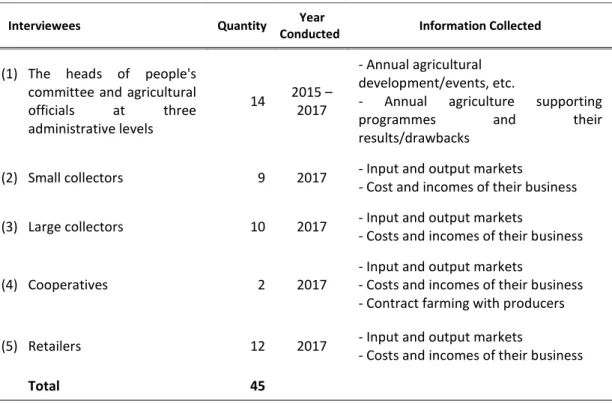
To analyse the costs and benefits of other actors in the Seng Cu rice chain, the authors conducted 31 individual interviews, including 9 small collectors in upland communes, 10 large collectors in Lao Cai city and districts, and 12 retailers in Lao Cai city. The interviewees were selected through convenience and judgment sampling methods (Table 3.2). The authors also interviewed the heads of the province, two districts, and four communes from 2015 to 2017 to have an overview of the agriculture sector in the locality. Furthermore, the subsidised programmes for Seng Cu rice development were also examined on how farmers and relevant business units benefited from such support.
Table 3.2: Number of Other Actors Selected for the In-depth Interviews
Interviewees Quantity Year
Conducted Information Collected
(1) The heads of people's committee and agricultural officials at three administrative levels
14 2015 – 2017
- Annual agricultural development/events, etc.
- Annual agriculture supporting programmes and their results/drawbacks
(2) Small collectors 9 2017 - Input and output markets - Cost and incomes of their business (3) Large collectors 10 2017 - Input and output markets - Costs and incomes of their business
(4) Cooperatives 2 2017 - Input and output markets - Costs and incomes of their business - Contract farming with producers (5) Retailers 12 2017 - Input and output markets - Costs and incomes of their business
Total 45
Source: Authors.
Data Analysis
Value chain analysis (VCA) was first introduced by Michael Porter (1985). Over the past 30 years, VCA has been developed in terms of theoretical, methodological, and practical fields, especially in agricultural studies (see Fitter et al. (2001); Kaplinsky (2004); Riisgaard et al. (2010); Macfadyen et al. (2012); Khai et al. (2013); and Ho et al. (2016)). A crucial element of the VCA is the content of distribution of benefits among actors in the whole chain to understand the financial performance of main stakeholders to upgrade the chain towards sustainability (Macfadyen et al., 2012; Riisgaard et al., 2010).The work of Springer-Heinze (2018) indicated that the distribution of value addition along the chain is mainly to show the sources of economic growth and determine the competitiveness of products as well as the role of each actor in the specific chain.
To pursue the precious analysis of the Seng Cu rice chain and suggest effective implementation to achieve higher value for participants, especially poor growers, the study applies the value added analysis in the model of value chain development named ValueLinks 2.0, which was proposed by GIZ (Springer-Heinze, 2018). This method comprises four elements – structural, economic, environmental, and social analyses. This study primarily focuses on the first two:
(1) Structural analysis is a visual representation identifying the product flow; chain participants, their functions, and their linkages; as well as the supporting factors. Value chain mapping plays a crucial role in value added analysis.
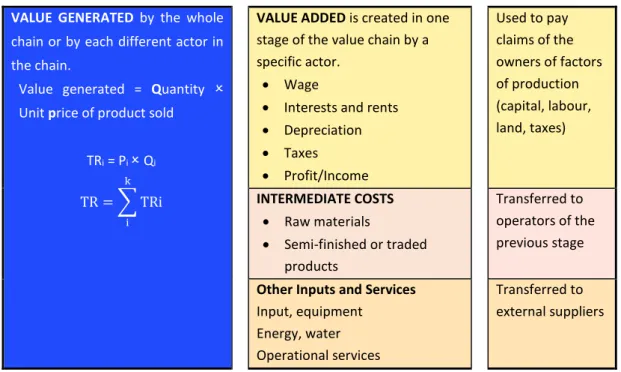
(2) Economic analysis is the core element of value-added analysis. It determines prices and volume of products sold at a particular stage in the chain. Consequently, the value added along the stages and its distribution among each actor is identified. As a result of the assessment of the production and marketing costs, the subsequent target of this method of analysis is to evaluate the chain competitiveness of products compared with the best practices of competing chains in other regions. Moreover, analysis of the distribution of benefits among actors can estimate whether the chain development is sustainable or not. According to Lebailly et al. (2000), (Baptist et al., 2013), and Springer-Heinze (2018), the sharing benefit analysis requires the main indicators presenting their operations and role in the chain, such as value generated (i.e. turnovers) of main products and by-products, total cost issued at each different stage (Figure 3.2).
Figure 3.2: Main Indicators Applied in the Value-added Analysis
VALUE GENERATED by the whole chain or by each different actor in the chain.
Value generated = Quantity Unit price of product sold
TRi = Pi Qi TR = ∑ TRi
k
i
VALUE ADDED is created in one
stage of the value chain by a specific actor.
• Wage
• Interests and rents • Depreciation • Taxes • Profit/Income Used to pay claims of the owners of factors of production (capital, labour, land, taxes) INTERMEDIATE COSTS • Raw materials • Semi-finished or traded products Transferred to operators of the previous stage
Other Inputs and Services
Input, equipment Energy, water Operational services
Transferred to external suppliers
3. An Overview of Rice Production in Viet Nam and Lao Cai Province
Rice Area, Yield, and Output in Viet Nam and Lao Cai
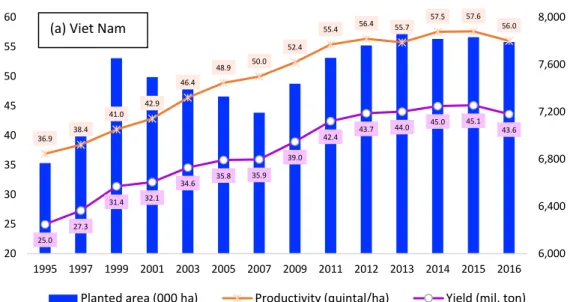
Viet Nam has a remarkable achievement in rice production in the past 40 years. From an importing crop country in 1988, Viet Nam has become one of the five biggest rice exporters in the world from 2002 to the present. In 2017 alone, Viet Nam provided the international market more than 5.8 million tons of rice, with an estimated value of US$2.6 billion (VietnamMARD, 2017). Figure 3.3 shows that (i) rice production continuously increased from 25 million tons in 1995 to almost 43.6 million tons in 2016 (GSO, 2016), of which the expansion of rice-harvested area and higher yield contributed 15.1% and 51.7%, respectively. In addition, rice also remains the staple food of most of the population, providing the highest source of calories (52% in 2011) and of protein (37% in 2010) per person per day (GRiSP, 2013). Therefore, rice has always played a vital role in socio-economic development and in food supply for the domestic and international markets.
Figure 3.3: Planted Area, Productivity, and Paddy Output
(a) 36.9 38.4 41.0 42.9 46.4 48.9 50.0 52.4 55.4 56.4 55.7 57.5 57.6 56.0 25.0 27.3 31.4 32.1 34.6 35.8 35.9 39.0 42.4 43.7 44.0 45.0 45.1 43.6 6,000 6,400 6,800 7,200 7,600 8,000 20 25 30 35 40 45 50 55 60 1995 1997 1999 2001 2003 2005 2007 2009 2011 2012 2013 2014 2015 2016 Planted area (000 ha) Productivity (quintal/ha) Yield (mil. ton)
Source: Vietnam General Statistic Office, 1995–2016 (GSO, 2016).
As mentioned, a typical characteristic of mountainous areas, including Lao Cai province, is the scarcity of agricultural land in general and land for cultivating rice. Figures 3.3(b) and (c) indicate rice production in NMMs and Lao Cai, respectively. While NMMs is the largest ecological region of the country (29%), its share of rice cropping land accounts for only 8.76% of the total national amount in 2016. The ecological area of Lao Cai accounts for 1.92% and the share of rice cropping land accounts for only 0.41% of the total national amounts in 2016 (GSO, 2016). The province devotes most arable land to rice – from the uplands with steep hillsides to create attractively terraced plots to the lowlands with flat fields. Rice is harvested twice a year. The remarkable difference between these two kinds of ecological rice-producing zones is water availability. While upland growers must store water as paddy output depends totally on rainfall (i.e. rain-fed rice), lowland farmers can take advantage of the well-constructed public irrigation system (Figure 1[b]). As a result, lowlanders often achieve much higher rice productivity and yield. In 2016, there were 1,735 mono-cropping rice hectares, accounting for 23.98% of total harvested rice area (Lao Cai DARD, 2016). 27.3 31.0 34.2 38.6 41.9 43.3 43.9 45.5 47.7 48.2 47.4 48.5 48.8 49.6 16.7 19.1 21.2 25.0 27.5 28.6 28.9 30.5 32.0 32.7 32.7 33.4 33.4 33.9 350 400 450 500 550 600 650 700 750 10 15 20 25 30 35 40 45 50 55 1995 1997 1999 2001 2003 2005 2007 2009 2011 2012 2013 2014 2015 2016 Planted area (000 ha) Productivity (quintal/ha) Yield (00 ton)
24.9 26.9 29.3 33.2 37.1 41.4 43.8 44.1 46.6 47.2 48.2 48.2 48.9 49.9 83 87 104 122 137 118 124 128 142 144 147 148 150 158 10 15 20 25 30 35 40 20 40 60 80 100 120 140 160 180 1995 1997 1999 2001 2003 2005 2007 2009 2011 2012 2013 2014 2015 2016 Planted area (000 ha) Productivity (quintal/ha) Yield (000 ton)
(b) NMMs
Seng Cu Rice Production in Lao Cai and the Main Markets
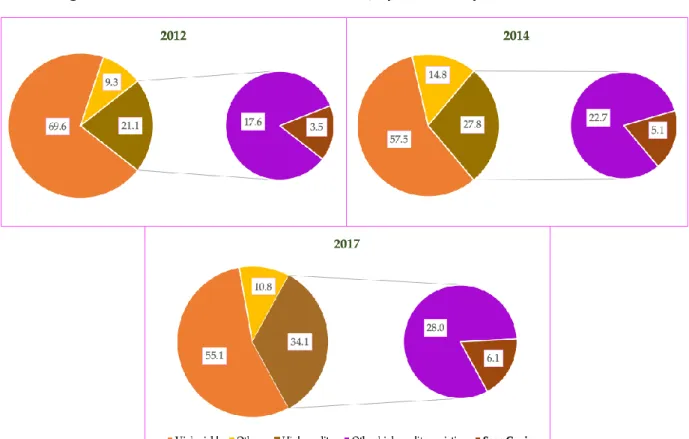
As mentioned, Seng Cu rice is cultivated once to twice a year, depending on water availability. Figure 3.4 represents the structure of rice production areas from 2012 to 2017, including those for Seng Cu rice. Remarkably, the share of cultivated land spent for high-yielding rice variety reduced rapidly from 69.6% in 2012 to 55.1% in 2017, while that for the high-quality rice variety increased significantly from 21.1% to 34.1% during the same period. According to local officials, this rise contributed significantly to the improvement of income and livelihoods of rice farmers.
Seng Cu rice grew slightly from 3.5% in 2012 to 6.1% in 2017, although this kind of rice is listed as a primary agricultural product of the province and Lao Cai authorities have issued many supporting regulations. The household survey revealed the reasons explaining why many ethnic minority respondents prefer to grow the high-yielding rice than the high cash crop due to their priority of food security. Besides this, it is easier for them to calculate the physical output (i.e. how many paddy packages they gained) than the financial value such as cost, revenue, and profit generated. In fact, many people living in the uplands have very low education. And last but not the least, their economic benefits are undermined in asymmetric transactions with buyers because of their weak marketing skills (low bargaining power; no information of price; selling paddy when they often lack of money and, so on). All these result in the impression that Seng Cu is not attractive enough for the ethnic minorities in the uplands to grow. Based on these findings, recommendations on the improvement of marketing skills and financial management of local producers as well as appropriate policies to boost the chain’s sustainable development are necessary.
Nearly 2,000 hectares was devoted to produce Seng Cu rice in 2017, generating about 10,000 tons of paddy output. The household survey and interviews of key persons carried out in 2016–2017 estimated the consumption structure of Seng Cu rice as follows: 1.8% of total paddy output was stored by Seng Cu rice growers to become seeds for the next season (i.e. self-production seed); 16.6% was used by households to create some traditional dishes for special events; 49.7% was consumed in the provincial market; and the remaining volume (31.9%) was delivered to high-end markets of the northern region, where Ha Noi is the dominant market.
Figure 3.4: Structure of Rice Production Areas, by Rice Variety in Lao Cai
Source: Lao Cai DARD (2012, 2014, 2017).
In the provincial market, white rice is processed simply without special packaging, trademark, certification, and traceability of original products. The end users buy Seng Cu rice very easily and conveniently through the retailers, followed by the processors/millers downtown. The consumer survey revealed that the quality of Seng Cu rice has been significantly reducing over the last decade. The main reason for this is that majority of collectors, pursuing to maximise profit, often mix ordinary rice varieties with Seng Cu rice. From the processing phase, the in-depth interviews showed that low technology and/or lack of processing machines for harvesting, threshing, drying, milling, and polishing causes the quality of milled rice to decrease remarkably.
In the national market, Seng Cu rice is mainly sold at big supermarkets or fresh and safe food stores in big cities like Ha Noi, Quang Ninh, Hai Phong, etc. To meet the high demand of customers, the packaging of this type of rice is well designed and associated with the geographical indication of terraced fields in Lao Cai. Currently, Seng Cu rice has two business units with registered trademarks ‘Séng Cù Lào Cai’ in 2008 by Tien Phong Cooperative (TPC) and ‘Gạo Séng Cù Mường Khương’ in 2012 by Muong Khuong Cooperative (MKC). The first unit is located in Muong Vi commune, Bat Xat district and belongs to the lowland zone, so it conveniently accesses the market. Meanwhile, the second unit in the upland is faced with various difficulties regarding poor infrastructure (i.e. the electricity and road system). It is nearly isolated, especially in the rainy season, when landslides and storms occur frequently.
In general, the marketing system remains chaotic and the price between buyer and sellers is inappropriate, especially in the uplands. This is a result of the isolation, high transaction costs, and poor marketing infrastructure, such as rural road system and scattered population. Therefore, improved infrastructure is a vital factor in enhancing a dynamic market and value addition for local farmers.
4. Seng Cu Rice Value Chain Map and Actors in Lao Cai Province
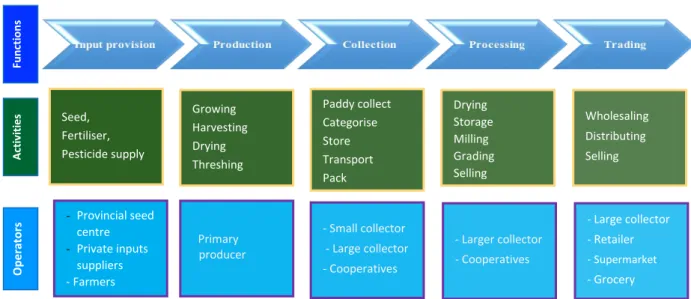
Overall, five main actors participate in the chain: (i) input suppliers, (ii) producers (upland and lowland), (iii) small collectors, (iv) large collectors, and (v) retailers. Figure 3.5 shows five key value-addition phases in the Seng Cu rice chain in Lao Cai, including input supply, production, collection, processing, and trading. Some actors are responsible for multiple functions: producer cum collector, processor cum wholesaler and retailer, etc. The study points out that the two most important actors in the chain are (i) producers, who directly determine the quality obtained and quantity generated of paddy in the production phase; and (ii) marketing actors, including the MKC, the TPC, and large collectors, that perform multiple functions in the post-harvesting phase (collecting, processing, trading, delivering). All the experienced millers reported that it is not easy to manage the quality of milled rice as it strongly depends on various factors – such as good humidity, temperature, wind, sunshine, and others – during storage. Moreover, understandably, there is rational equivalence between the high price of this special rice and high requirements of end users to enjoy it. The satisfaction, behaviour, and willingness to pay of final customers, like elsewhere, decide the benefits of all participants in the chain. This section analyses the activities of each actor to identify the value added generated by each stage.
Figure 3.5. Seng Cu Rice Value Chain
Source: Adapted from J. Nico et al. (2012).
Funct ions A ct iv it ie s Operat or s Seed, Fertiliser, Pesticide supply Growing Harvesting Drying Threshing Paddy collect Categorise Store Transport Pack Drying Storage Milling Grading Selling Wholesaling Distributing Selling - Provincial seed centre - Private inputs suppliers - Farmers Primary producer - Small collector - Large collector - Cooperatives - Larger collector - Cooperatives - Large collector - Retailer - Supermarket - Grocery
Seng Cu Rice Producers
⚫ Main characteristics of Seng Cu rice producers
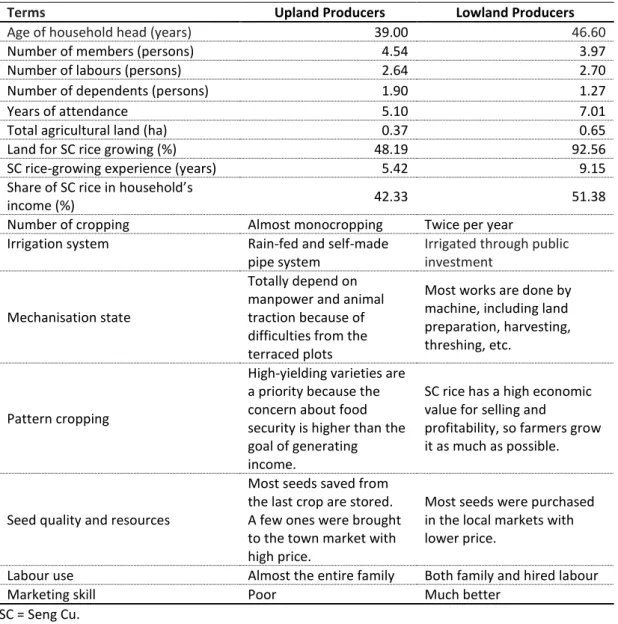
Rice is a semi-aquatic plant; water, therefore, is the most important factor influencing grain yield. Since the uplands are characterised by unpredictable rainfall, rice cultivators there are frequently vulnerable to drought in the first season (from February to later May) and flood in the second one (from June to October). Moreover, the household survey in 2016 revealed that only 16.1% of rice-cultivated land was irrigated in the uplands through public investment. The remaining area is rain-fed and can grow one crop during the summer season (from May to October). Although upland producers invested in the expensive pipe system to flow water from the mountains to the field, rice cultivation still depends heavily on natural conditions (i.e. rainfall). By contrast, the public irrigation system in the lowland areas meets most water requirements for agricultural production, and rice is planted twice a year.
Table 3.3: Main Characteristics of Rice Producers in Upland and Lowland of Lao Cai
Terms Upland Producers Lowland Producers
Age of household head (years) 39.00 46.60
Number of members (persons) 4.54 3.97
Number of labours (persons) 2.64 2.70
Number of dependents (persons) 1.90 1.27
Years of attendance 5.10 7.01
Total agricultural land (ha) 0.37 0.65 Land for SC rice growing (%) 48.19 92.56 SC rice-growing experience (years) 5.42 9.15 Share of SC rice in household’s
income (%) 42.33 51.38
Number of cropping Almost monocropping Twice per year Irrigation system Rain-fed and self-made
pipe system Irrigated through public investment
Mechanisation state
Totally depend on manpower and animal traction because of difficulties from the terraced plots
Most works are done by machine, including land preparation, harvesting, threshing, etc.
Pattern cropping
High-yielding varieties are a priority because the concern about food security is higher than the goal of generating income.
SC rice has a high economic value for selling and
profitability, so farmers grow it as much as possible.
Seed quality and resources
Most seeds saved from the last crop are stored. A few ones were brought to the town market with high price.
Most seeds were purchased in the local markets with lower price.
Labour use Almost the entire family Both family and hired labour Marketing skill Poor Much better
SC = Seng Cu.
Besides the advantage of irrigation, lowland Seng Cu rice producers have various socio-economic advantages compared to the remaining group of growers. Such advantages include more experience in Seng Cu rice planting, higher educational level, more labourers and less dependants, more favourable topography for cultivation (i.e. flatter and larger), easier access to input and output markets, better marketing skill, etc. (Table 3.3). It is important to note that all these differences are statistically significant in the independent samples’ t-test. Clearly, upland farmers not only have poor endogenous resources but also suffer from various exogenous difficulties in accessing external support. For these reasons, a huge income gap among different regions and ethnicities tend to remarkably widen over the last decades in the NMMs and Lao Cai (CEMA, 2015; Lao Cai SO, 2017; Nguyen Tran, 2017), leading to various latent consequences of social-economic-political instability.
⚫ Input and output of Seng Cu rice producers
The input and output markets of the two rice-ecological areas are remarkably different. In general, lowland producers can easily access the markets, while upland households face various difficulties regarding accessibility. This is due to the mountainous topography, extremely poor road system, dispersed population, and low financial capacity of customers, causing high operating costs in upland areas. Consequently, the price of inputs (seed, pesticide, fertiliser) in the uplands is always higher than that of the lowlands.
The most prominent feature in the input market is the seed used by producers. Most of the surveyed upland growers use ‘self-produced’ seeds (56.4%) and those exchanged with other local producers (21.6%). It means that only 22.0% of them purchase certified seeds compared to 84.6% of lowland producers. The key person interviewees, including experienced farmers and local extension staff, argued that seed is the most important rice-producing input and directly influences the quality, especially its aroma, and the productivity of paddy output. In reality, many upland growers are well aware of the role of seed; however, they do not buy it as expected because of their limited finance. The price of certified seed is very high at D80,000–D130,000/kg at the local markets. The Agricultural Seedling Centre of Lao Cai can meet only 20% of the demand of local customers, and their main market is lowland areas. Thus, Vietnamese and Lao Cai authorities must concentrate on the research on varieties, including on Seng Cu, to be independent in agricultural production. The reliance on farm-saved seed is partly due to lack of availability of high-quality seeds and provincial seed agencies.
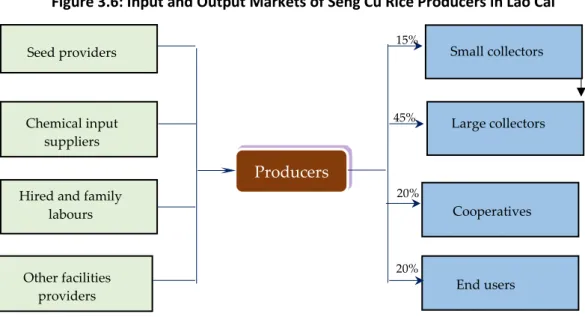
Figure 3.6: Input and Output Markets of Seng Cu Rice Producers in Lao Cai
Source: Author’s findings.
Figure 3.6 shows that the output marketing consists of four main buyers: (i) small collectors in the uplands, (ii) large collectors, (iii) two cooperatives, and (iv) final customers. Small collectors are often large-scale farmers. They have more available financing and better storing conditions, so they buy dried paddy from surrounding households and resell to large collectors when its price increases. They are considered the primary collectors of district and provincial collectors (i.e. wholesalers) to save on transaction costs.
Large collectors carry out most processing activities, including collecting dried paddy from upland collectors and lowland farmers, milling, sorting, and distributing. The actor has the largest paddy collected in the provincial Seng Cu rice market. Besides this, two cooperatives participate in the chain: TPC in the lowlands and MKC in the uplands. Both establish and develop their relationship with Seng Cu rice growers through several financing mechanisms. Farmers can receive advance rice-production inputs (seed, fertiliser, pesticide) and guidelines on how to use these correctly to obtain the highest quality and productivity. Obviously, those business units buy the whole product output after reducing the value of inputs that farmers received. Because of financing limitations, the proportion of the total Seng Cu rice output collected is still small at 20%, although they desire to increase the quantity.
⚫ Cost–benefit analysis of Seng Cu rice producers
Besides differences in main characteristics presented in Table 3.3, the study also points out the huge difference in terms of farming practices between the two rice-producing regions. Lowlanders tend to abuse chemical fertilisers and pesticides to maximise paddy yield. By contrast, upland producers apply toxic inputs lower than the recommended dosage due to several following reasons:
(1) The advantage of a lower temperature in uplands leads to fewer insects and pathogens. (2) Highlanders are also experienced in exploiting beneficial insects and natural agronomic
Chemical input suppliers Seed providers
Hired and family labours Other facilities providers Producers Large collectors Small collectors Cooperatives End users 45% 20% 20% 15%
practices. For example, they apply some species of natural enemies to fight harmful insects (e.g. spiders attack brown plant-hoppers, dangerous pathogens for rice). Thus, local farmers control the field ecosystem to protect their crops.
(3) The unavailability of the agricultural input market strongly affects the quantity of commercial inputs applied that is much lower than the dosage recommended by local extension. Upland rice growers use a large amount of organic fertiliser, manure from animal waste (Bui et al., 2018).
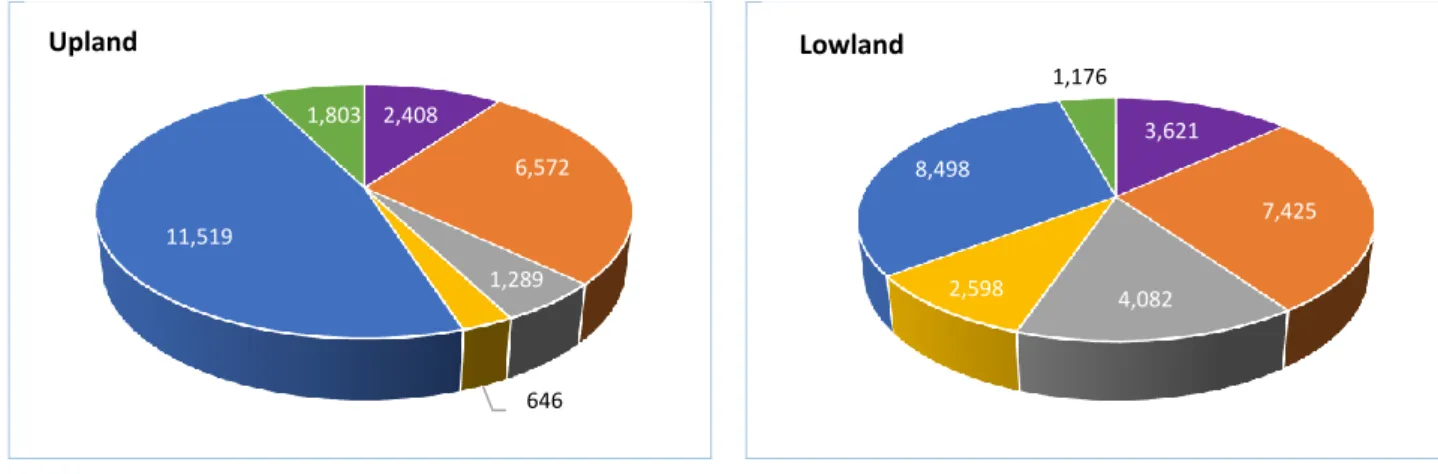
Under the input usage mentioned above, Seng Cu rice planted in upland areas by ethnic minorities seems the eco-friendly farming method like Sustainable Intensification (Elliott et al., 2013); Low Input Sustainable Agriculture (Tan, 2009); Good Agricultural Practice (FAO, 2007); and other similar concepts (Mishra et al., 2016; Murray, 2012). In essence, all farming practices have the same goal: optimal exploitation of natural and human resources, to maximise technical efficiency and improve the economic state of households without negative impacts on the ecosystem, (Bui et al., 2018). For this reason, the price of upland rice deserves to fetch a very high price because of its high quality without chemical residues, which are usually present in other commercial agricultural products, including Seng Cu rice grew in lowlands. Unfortunately, lack of marketing skills and socio-economic disadvantages do not enable them to obtain a reasonable price as expected. Notably, the total production cost for 1 hectare of Seng Cu rice–cultivated land in the lowland was higher at D27.4 million/ha than that of the highlands at D24.2 million/ha. However, the cost to produce 1 ton of Seng Cu rice in the uplands was higher at D5.5 million/ton than that in the lowlands at D5.1 million/ton. The main reason is that lowlanders are more productive (5.3 ton/ha) than highlanders (4.4 ton/ha).
Figure 3.7: Seng Cu Rice Production Cost and Its Components in Two Ecological Zones (D1,000/ha)
Source: Author’s calculation.
2,408 6,572 1,289 646 11,519 1,803 Upland 3,621 7,425 4,082 2,598 8,498 1,176 Lowland
Furthermore, the analysis of the structure of production costs presents a huge difference between the two ecological sites. In the uplands, farmers use little commercial inputs (seed, fertiliser, pesticide) because of financial shortage and apply a fairly basic input management. Moreover, they must complete all operational activities in the field using manual labour and animal power instead of agricultural machines. Labour cost12 therefore occupies the highest proportion in the total cost at 47.5%. This is followed by fertiliser which accounts for 27.2%, with manure being a major fertiliser.
In the lowlands, on the other hand, purchased inputs are captured significantly, representing improved access to the inputs market mentioned above and the plentiful financial capacity of the surveyed households. Labour cost continues to be the largest contributor in total cost at 31.0% and less than 26.2% compared to the time highlanders spend on farming. In all kinds of commercial inputs, fertilisers always captured the maximum investment of lowlanders at nearly 50%. Pesticide also accounts for a much higher amount of D4.1 million/ha than uplanders (D1.3 million/ha). The reason for this difference is that upland areas are cooler, so pests and insects are much lesser.
On pricing, 72% of surveyed households in the lowlands mentioned that pricing is the result of negotiation among farmer(s) and collector(s). Eighteen percent of the remaining respondents believe that farmers are price takers, and 10% think farmers are price makers. It seems that during high competition like in the Seng Cu rice sector, farmers economically benefit more than buyers. Their position in the market is improved and they have more power in price negotiation. This is a good sign, compared to previous cases when individual farmers were always losers in negotiations with collectors. This beneficial condition, however, does not exist in upland areas, where most ethnic minorities live. Due to weak marketing skill and language barrier, upland producers cannot achieve a high price that is proportional to the quality of rice (i.e. organic product) and their miserable plight in the terraced fields. On average, upland farm-gate prices are at D14,050/kg while lowlanders’ prices are slightly lower at D13,625/kg. It is understandable that lowlanders gain more produce and income than uplanders (Table 3.4).
2 In fact, upland producers totally relied on family workers, while lowlanders used much hired labour
Table 3.4: Cost–Benefit Analysis of Seng Cu Rice Producers in Lao Cai
Terms Unit Upland (n = 80) Lowland (n = 80)
Calculated for 1 average household
1. Harvested area ha 0.252 0.615
2. Yield ton/ha 4,378 5,318
3. Production (3) = (1)*(2) kg 1,102 3,270
4. Home consumption kg 125 599
5. Sold (5) = (3) – (4) kg 978 2,671 6. Rate of rice sold (%) (6) = (5)/(3) % 88.70 81.68 7. Unit price D1,000 /kg 14.05 13.63 8. Revenue (8) = (7)*(5) D1,000 13,745 36,388 9. Gross output (9) = (3)*(7) D1,000 15,497 44,549
Calculated for 1 average hectare cultivated
10. Gross output D1,000 61,511 72,458 11. Total cost D1,000 24,237 27,401 12. Gross income D1,000 37,274 45,057 Source: Author’s calculation.
Small Collectors
In the research site, small collectors exist mainly in upland communes. They have two kinds of purposes corresponding to their activities and their linkages with buyers and sellers. The first type of collectors are independent business units; they maintain fairly weak internal linkages in the chain. Normally, they buy Seng Cu dried paddy from poor producers at the lowest price at the beginning of harvest time. At that time, those farmers must pay their financial obligations to other input suppliers. After 1 to 2 months, they resell for a higher price to large collectors in districts and provinces to get profit. Sometimes, they also sell directly to end users. This task requires them to have (i) plenty financing capacity because they must risk pricing fluctuations, and (ii) well-designed storing conditions and warehouses enough to maintain the quality of Seng Cu rice, especially its aroma.
The second type of small collectors are the agents of large collectors and processors in the locality. They gather dried paddy based on the order of larger actors regarding quantity, quality, and fixed price. The small collectors’ profit is likely commission for agents, fluctuating from D1,000/kg to D1,500 /kg.
Large Collectors
In the research area, the study team interviewed eight large collectors in Bat Xat town, Muong Khuong town, and Lao Cai city. Figure 3.8 illustrates the input and output markets of large collectors in the Seng Cu rice chain. In the uplands, they collect dried paddy from small collectors to reduce transaction costs, as a result of poor infrastructure; meanwhile they buy directly from lowland producers. They can classify two kinds of customers corresponding to the two kinds of rice – ordinary and high quality – in the provincial and national markets.
Figure 3.8: Input and Output Marketing of Large Collectors in the Seng Cu Rice Chain
Source: In-depth interviews, 2017.
It is difficult to clearly distinguish millers, processors, collectors, transporters, traders, and retailers as other agricultural products such as dairy, fruit, fish, meat, and others. In this chain, large collectors operate most activities including collecting, processing, and trading. Their role in the chain is tailored because of their dominant power, large share, and diverse activities. The survey carried out in 2017 shows that these actors own old and outdated machinery (on average, milling machines used for more than 10 years). For this reason, losses in processing increase and the quality of rice sold in the market is lower, hence, affecting customers’ satisfaction. In some cases, large collectors must cope with risks from storing duration which requires strict conditions, such as good humidity, temperature, wind, sunshine, etc. They, therefore, need modern equipment like dryers, milling machines, large housing stores, and trucks to maintain the quality and quantity of Seng Cu rice. Moreover, some actors deliberately mix ordinary types of rice to maximise profit.
Lowland producers Small collectors in uplands Large collectors Provincial high-end customers Retailers Provincial ordinary customers National high-end customers Normal quality High quality High quality Normal quality
Table 3.5: Average Cost and Revenue of a Large Collector in Lao Cai, 2017
Quantity Unit Price (D1,000/kg)*
Value (million D) I. Cost of intermediate goods and services
1. Paddy purchase (ton) 800 13.68 10,944
2. Energy — — 271.2
3. Sacks and nylon bags 800 200 160.0
4. Others 800 253 200.0
Total — — 11,575
II. Total Revenue
5. White rice (ton) 520 25.6 13,312
6. By-product (6) = (1) – (5) — — 928
Total — — 14,240
III. Value added
7. Wage (working days) 1,440 200 288
8. Interest — — 53
9. Depreciation — — 70
10. Tax — — 80
11. Gross profit — — 2,174
Total — — 2,665
IV. Relevant indicators (converted per 1 kg of dried paddy
12. Unit selling price — 17.80 —
13. Intermediate costs — 14.47 —
14. Value added — 3.33 —
15. Gross profit — 2.72 —
* D1,000/number for ‘3. Sacks and nylon bags’ and ‘4. Others.’ D1,000/day for ‘7. Wage.’ Source: In-depth interviews, 2017.
Table 3.5 shows the costs and benefits of large collectors generated in the chain. On average, the amount of paddy they collected in 2017 was 800 tons per year at the farm-gate price of D13,680/kg, resulting in a gross profit of D2,174 million (i.e. D2,717/kg). Because their target market was provincial citizens, Seng Cu rice was simply packed with unregistered trademark. Consequently, total intermediate goods added at this stage were small, at D632.1 million (i.e. D789/kg). Both input and output prices of this product were lowest in the chain. It means that farmers, marketing actors, and customers gained lesser benefits than the potential. Clearly, they should improve the quality of white rice and by-product values, reduce some kind of cost related to losses, and replace workers with machines. Obviously, outdated technology results in paddy losses, increases operational costs, and exploits the potential of the product.
Tien Phong and Muong Khuong Cooperatives
Two cooperatives in the study site participated in the chain: the TPC and the MKC. The MKC is located in Muong Khuong district (upland zone) and the TPC belongs to Bat Xat district, a lowland area. These units are organised as economic units with profit as a purpose and have an independent financing report system. They registered two trademarks of Seng Cu rice. They have huge differences in terms of exploitation of the main product and by-products as well as controlling the quality of milled rice (Table 3.6).
The TPC has diverse commercial products, including white rice, brown rice, germ rice, and Seng Cu alcohol, while the MKC and other large collectors exploit only the unique core goods (i.e. white rice). Beside this, the TPC has been fully exploiting most potential by-products to become valuable goods, while other large collectors mainly throw away or sell these by-products for a lower price. For example, the TPC developed the Seng Cu bran into a skincare product because it contains vitamins B1, B3, B6, and E four times more than other rice varieties2
3. Another good example is hull exploited as fuel for cooking alcohol. However, other marketing actors consider it likely worthless. Briefly, these innovations provide not only benefits for the unit but also higher values for producers (upstream in production) as well as customers (downstream in marketing).
Nevertheless, the significant difference in managing rice quality is also clear. While the MKC concentrates only on collecting output, the TPC also focuses on the whole process of controlling rice quality through contract farming with Seng Cu rice producers. Regarding the production phase, the TPC, without profit as a purpose, provides to these farmers main important inputs, like certified seeds, organic pesticide, rice fertilisers. In addition, the TPC also hires one technical staff who is responsible for managing diseases and helping farmers deal with technical problems. On harvesting and collecting, the unit helps farmers to reap paddy, concurrently, to collect fresh paddy in the fields. This activity enhances their linkage, especially as hired labour is always expensive because of high demand. More importantly, the TPC is able to remarkably prevent some farmers mixing ordinary rice with Seng Cu, resulting in lower rice quality and dissatisfaction of high-end customers. Last but not least, at the processing stage, the TPC has been investing in the following modern machinery: dryer, miller, polisher, classifier (for removing black rice and others), wrapper, and vacuum-packed machine to obtain the best quality of this special rice. Furthermore, mechanisation also helps the TPC recover a higher rate (65.7%) of milled rice after processing, compared to 60.0% of the MKC and 65.0% of large collectors. Also, this cooperative continuously innovates to optimally exploit new features of Seng Cu rice, such as white rice, brown rice, germ rice, and alcohol, and invest in researching new products from by-products (broken rice and bran) to enhance the value addition (Table 3.6). TPC’s slogan is ‘Quality is the most important thing to sustainable development’.
3
Table 3.6: Comparison of the Level of Exploitation of Rice Products among Key Marketing Actors in the Chain
Products Tien Phong Cooperative
(TPC)
Large Collectors and the MKC
Paddy Structure
I. Selling price of main products
1. White rice D32,000/kg D26,000–33,000/kg 2. Brown rice D33,000/kg Not produced 3. Germ rice D80,000/kg Not produced 4. Seng Cu alcohol D50,000/litre Not produced
II. Other products
5. Lower class of Seng Cu rice paddy
Material of Seng Cu
alcohol Not much pay attention about the quality
6. Broken rice Grounded to become baby food, with its price at D25,000 /kg
Selling with much lower price at D6,000/kg for local people
7. Hull Energy (like fuel) for cooking Seng Cu alcohol.
Selling with much lower price or thrown away 8. Bran Become a skincare
product Selling with much lower price like animal feeding
III. Rate of milled rice recovery
65.7% 65.0% at large collectors 60.0% at the MKC Source of information: In-depth interviews, 2017.
Source of the image: https://www.thinkrice.com/on-the-farm/how-is-rice-grown/
The in-depth interview with the head of the TPC in 2017 sketched his challenging journey in conquering the Seng Cu rice. The business unit experienced bankrupt in 2006 after various unsuccessful experiments regarding unsuitable storing conditions and/or challenges in the output market. In 2008, he created a much better business plan and registered the trademark of Seng Cu rice nationwide. His valiant attempts have been rewarded by several promising results from the comprehensive investment and his special passion. Understandably, financial problems are the most difficult drawback hindering its development. As mentioned, the TPC prefers to buy fresh paddy; this often requires cash payment. This is the reason it can collect only 700 tons (Table 3.7). This paddy amount uses only one-third of the capacity of the modern machines, on which the TPC invested; yet those machines are highly depreciating.
Viet Nam Bank for Agriculture and Rural Development in Lao Cai compared to the value of its collateral, a land use certificate. As per the World Bank (2014), the collateral-to-loan ratio in Viet Nam at 218%, that is higher than most neighbouring ASEAN countries. From this view of point, it is necessary for policy-makers and local banks to suitably facilitate the start-up enterprises as the sustainable development of the provincial and national economy.
Table 3.7: Cost and Benefit of the Tien Phong Cooperative in 2017 (Lowland)
Quantity Unit Price (D1,000/kg)*
Value (D million) I. Cost of intermediate goods and services
1. Paddy purchase (ton) 700 13.75 9,625
2. Energy — — 169.61
3. Sacks and nylon bags — 656 459.2
4. Others 700 253 377.1
Total — — 10,631
II. Total Revenue
5. White rice (ton) 400 32 12,800
6. Brown rice (ton) 45 33 1,485
7. Germ rice (ton) 15 80 1,200
8. By-product (ton) — — 600
Total — — 16,085
III. Value added
9. Wage (working days) 3,810 200 762
10. Interest — — 357
11. Depreciation 700 200 140
12. Tax — — 358
13. Gross profit — — 3,837
Total — — 5,454
IV. Relevant indicators (converted per 1 kg of dried paddy)
14. Unit price — 22.98 —
15. Intermediate costs — 15.19 —
16. Value added — 7.79 —
17. Gross profit — 5.48 —
* D1,000/number for ‘3. Sacks and nylon bags’ and ‘4. Others.’ D1,000 /day for ‘9. Wage’. Source: In-depth interview, 2017.
Based on the activities mentioned, the cost and revenue of two cooperatives had a huge difference (Tables 3.7 and 3.8). It can be seen that, on average, the TPC collected 700 tons with the farm-gate price of D13,750/kg while the MKC bought 200 tons for D14,420/kg in 2017. As a result of innovation, the TPC has many better indicators compared to the MKC, such as more diverse portfolio of agricultural products to meet the increasing demand of customers, much lower paddy losses during processing, and increased value added for all participants in this channel and final customers. On the other hand, the TPC also creates many permanent and seasonal jobs for the local people.
Table 3.8: Cost and Benefit of Muong Khuong Cooperative in 2017 (Upland)
Quantity Unit Price (D1,000/kg)*
Value (D million) I. Cost of intermediate goods and services
1. Paddy purchase (ton) 200 14.42 2,884
2. Energy — — 51.98
3. Sacks and nylon bags 200 656 131.2
4. Others 200 253 50.6
Total — — 3,118
II. Total Revenue
5. White rice (ton) 120 33 3,960 6. By-product (6) = (1) – (5) — — 312
Total — — 4,272
III. Value added
7. Wage (working days) 1,080 120 130
8. Interest — — 88
9. Depreciation — — 55
10. Tax — — 50
11. Gross profit — — 832
Total — — 1,154
IV. Relevant indicators (converted per 1 kg of dried paddy)
12. Unit price — 21.36 —
13. Intermediate costs — 15.59 —
14. Value added — 5.77 —
15. Gross profit — 4.16 —
* D1,000/number for ‘3. Sacks and nylon bags’ and ‘4. Others.’ D1,000 /day for ‘7. Wage.’ Source: In-depth interview, 2017.
Concerning the performance of MKC, this business unit is one of the biggest enterprises in this upland district. It has been investing in various goods and services. Since Seng Cu rice is not the MKC’s key product, it does not pay attention to control the quality of Seng Cu rice. Luckily, most producers are ethnic minorities using traditional farming practices as described in the section on the cost–benefit analysis of producers.
To sum up, the TPC plays an important role in value chain development towards sustainability and enhancing the competitiveness of the product. To provide high value added and net profit to actors in the chain, the product must have high quality to satisfy the demand of high-end customers. Development of this special rice not only contributes to the economic benefits of all actors in the chain but also creates more skilled jobs in rural regions. Furthermore, the TPC is the pioneer in approaching and applying new processing technology for high value-added products and fully exploit the by-products of rice and maximum value added for farmers participating in this marketing channel. The authors suggest that this channel is the best model to develop sustainably and must receive full support from local public authorities on agricultural preferential credit to expand operating scale and increase profitable indicators.
Secondary Actors and their Role in the Seng Cu Rice Value Chain
The Seng Cu rice value chain plays an important role in reducing poverty, improving the livelihoods of local people, and contributing to multifaceted rural development. It is one of the three kinds of rice belonging to the primary agricultural products of the province.3
4 That is why this sector has received much support from the provincial government and non-government organisations (NGOs).
⚫ Department of Agriculture and Rural Development and Agricultural Service Extension This department has both governance and facilitating functions as follows:
1) Governance function. The department builds the development plan for the agriculture sector in general and Seng Cu rice in particular. More specifically, the department unit in performing this function, is responsible for the harvested area and the production zone (i.e. the suitable natural condition of Seng Cu rice) to maintain its high quality. Besides, it also manages the chemical inputs (fertilisers, pesticides, etc.) regulated by the Viet Nam Ministry of Agriculture and Rural Development that are allowed to circulate in the provincial market. This important mission protects customers’ right to use legitimate products (not fake and low-quality ones).
2) Facilitation function. To encourage local producers to increase their cultivated area for Seng Cu rice, the department manages supporting programmes, including two main 4 Regulated at Resolution No. 85/2016/NQ-HĐND dated 15 September 2016, encouraging policy on
the development of agriculture, forestry, and aquaculture production in Lao Cai province during 2017– 2020.
activities: provided certified seeds for ethnic minority groups in the uplands in 2015– 2016 and subsidised 50% of total cost of certified seeds and 8 kg of NPK fertiliser per sao (1 sao = 360 m2) in 2017. Such support was always based on the harvested area of beneficiaries, the Seng Cu rice growers. In addition, the department regularly transfers technical guides twice a year at new Seng Cu rice–production points and every 2 years, in experienced ones. However, the feedback of surveyed interviewees indicates that knowledge on pests, diseases, and techniques has not been updated. Sometimes the new transferred techniques are not suitable to the local climate, such as transplanting 18–25 days’ old seedlings when the temperature in February at Lao Cai and terraced fields (planting in rows) is 10°C–12°C. Finally, the differences in language are also a significant barrier for ethnic minority farmers to fully understand new techniques. ⚫ Department of Trade and Industry of Lao Cai Province
The Department of Trade and Industry (DTI) belongs to the Lao Cai People’s Committee. The DTI is responsible for trading and promoting agricultural goods, including Seng Cu rice. In 2016–2017, the Lao Cai People’s Committee and DTI approved many activities to support Seng Cu rice processing and trading. It (i) provided a non-refundable aid of 20% of the total value of modern agricultural machines to reduce paddy losses in quality and quantity4
5; (ii) organised regional festivals to introduce special agricultural products, obviously including Seng Cu rice; (iii) provided free land rights and built a showroom to display the primary agricultural products of Lao Cai city, including Seng Cu rice delivered by the TPC; and (iv) created several short trainings on business skills for local agricultural enterprises, including the TPC.
⚫ Viet Nam Bank for Agriculture and Rural Development (VBRAD) and Viet Nam Bank for Social Policy (VBSP) in Lao Cai
The results of the household survey revealed that 38.8% and 33.1% of total respondents have agricultural credits at the VBARD and VBSP, respectively. So, the suppliers of formal financing in Lao Cai play an important role in providing money for agricultural investment and other living expenditures. Regarding the demand side, most upland households are faced with financing shortage, leading to lower investment in Seng Cu rice production. However, they could not access banking credits due to complicated documents and collaterals required by banks. Without access to the formal sector, poor farmers go to the informal financing resources or moneylenders to fund their agricultural inputs and other consumption at higher interest rates. The imperfect credit market then seems to seriously contribute to poverty. The in-depth interviews revealed that business units in the Seng Cu value chain are also challenged in accessing banking credits. Consequently, they, especially the TPC, mainly depend on own capital and struggle to expand on an operational scale and focus onpay attention to innovation. Banks then must reduce the complexity of their procedures and
improve the quality of credit assessment to select and fund potential customers while ensuring minimum payment risk.
Briefly, Table 3.9 summarises some constraints in the Seng Cu rice value chain. This analysis is the important basis to issue the relevant recommendations to enhance the capacity of each actor in the chain, and to deal with challenging mandates of the government, like poverty alleviation, equality, and socioeconomic development.
Table 3.9: Constraints in the Seng Cu Rice Value Chain in Lao Cai
Value Chain Step Constraints Paddy production Upland zone:
⚫ Low usage of commercial inputs (certified seed, fertiliser, pesticide) because of limited financing availability
⚫ Sloped topography creating challenges in mechanisation and dispersed production area, taking time for growers to control the ecosystem ⚫ Weak marketing skill
⚫ Lack of access to extension and application for advanced technical training ⚫ Difficulties in accessing formal credit and irrigation facilities
Lowland zone:
⚫ Abusing chemical inputs, especially pesticide and nitrogen fertiliser, causing imbalanced nutrition for rice’s requirement, high cost of production, and low productivity
⚫ Weak application for extension
Collection
⚫ Deliberate mixing of different types of rice
⚫ Difficulties in paddy collection because of poor infrastructure, especially during the rainy season in uplands
⚫ Poor storage conditions, causing paddy losses ⚫ Lack of marketing information (e.g. price fluctuation) ⚫ Poor processing technology
⚫ Lack of capital
Retailing
⚫ Limited capital and storage conditions
⚫ Being sole operators, they cannot afford the time off to develop new sources of supply
⚫ Value addition at this stage is trivial
⚫ Do not pay attention to promotional activities and new markets Marketing
system
The marketing system, in general, remains chaotic and the price between buyers and sellers is inappropriate, especially among ethnic groups in the uplands. Marketing this agricultural product tends to be regionally captured, resulting in isolation, high transport costs, poor marketing infrastructure such as rural road system, and scattered population. Source: Author’s findings.
5. Sharing Benefits among Actors in the Value Chain
There are six underlying channels in Lao Cai to transform raw materials to produce Seng Cu rice for final customers.
Channel 1: Upland producers –> MKC –> Final customers Channel 2: Upland producers –> Final customers
Channel 3: Upland producers –> Small collectors –> Large collectors –> Final customers Channel 4: Lowland producers –> Large collectors –> Retailer –> Final customers Channel 5: Lowland producers –> TPC –> Final customers
Channel 6: Lowland producers –> Final customers
As mentioned in section 3.4, there are six channels in the Seng Cu rice chain. This section analyses the value-added assessment in four main flows, including channel numbers 1, 3, 4, and 5 in Figure 3.9.
Figure 3.9: Marketing Channels of Seng Cu Rice in Lao Cai
Source: In-depth interviews, 2017.
As described, provincial collectors account for the biggest share of purchased paddy output and sale of milled rice to the final consumers. In 2017, they purchased about 60% and 50% of total amount dried paddy in the uplands and the lowlands, respectively. The study found that these actors often deliberately mix ordinary rice with Seng Cu to maximise profit, resulting in dissatisfaction of many high-end customers with the quality of the milled rice. On the other hand, two enterprises are striving to develop the trademark and quality of Seng Cu rice, but their volume is very small because of financial challenges. Interventions from local
authorities must be created to resolve their difficulties and enhance the awareness of large collectors in protecting the trademark and quality of this special product.
Value Added and Distribution of Benefits among Actors in Different Channels
Overall, the main participants in the chain are producers and marketing actors, including large collectors and the cooperatives, especially the TPC. This section identifies and evaluates the advantages and disadvantages as well as compares the sharing benefits of each actor among the four different channels at the two zones of rice production, lowland versus upland areas. Two short chains consist of producers and the MKC in the uplands and the TPC in the lowlands, which are responsible for multiple functions in the chain, such as collecting, sorting, milling, packing, advertising, and delivering. Both cooperatives take advantage of the high quality of rice that allows them to reach high-end markets nationwide and achieve higher profits than large collectors. By contrast, the long chains include more middle actors, all of whom pursue maximum profit without sustainable development through rice quality management.
To start, the authors summarise the bargaining power of sellers and buyers that somehow influences the negotiated price and sharing benefits among them (please look at the section 3.4 regarding the cost-benefit analysis of SC rice producers). Upland producers are relatively homogeneous in terms of socio-economic characteristics. Firstly, nearly 90% of highlanders are ethnic minorities of different language than the ethnic majority (Vietnamese). Thus, they suffer from the language barrier when bargaining with marketing actors, especially collectors. Secondly, they are very poor. Among limited income sources, Seng Cu paddy from monocropping generates the most important income. The voice of farmer-sellers is also much lower than buyers. Thirdly, poor infrastructure results in their isolation in terms of market accessibility, market information, and others. For these reasons, many upland growers reported that they are price takers. In addition, geographic and natural conditions favour rice cultivation as an organic product. It is proper if the price of upland rice is much higher compared to that of the lowlands (Table 3.10). However, the increase is small due to the drawbacks mentioned above.
On the other hand, lowland growers not only take advantage of external public services (irrigation, extension, and production and marketing infrastructure); they are also more knowledgeable and skilled than their upland counterparts. Cultivation of Seng Cu rice in lowland households is one of the economic activities among widely diverse income sources, such as perennial plant, livestock, non-farm income, etc. Consequently, the household survey revealed that some lowland farmers are not interested much in joining the contract because they must spend too much time controlling pests and the ecosystem field rather than earning more money as hired workers in big cities. Thus, to enlarge the area cultivated to Seng Cu rice, this special rice should become attractive enough to farmers in terms of the income gained in the chain.
Tables 3.10, 3.11, and 3.12 analyse the distribution of cost and value addition among actors of the four main selected channels. All chain participants seem to have reasonable ratios
between cost contribution and acquisition of economic benefit. Producers gain high value added in all channels, around 70% of total value addition in the chain. It is then important to suggest to producers and provincial authorities to effectively support enlarging the cultivated areas devoted for Seng Cu rice, especially where favourable natural conditions exist. At the farm level, to produce 1 kg of dried paddy, lowlanders must invest more than the uplanders by 14.1% though they have lower value added (8.6%) than upland growers. This is because upland rice has outstanding quality and is considered organic because of the absence of pesticide and has lesser chemical fertilisers. Thus, both upland farmers and enterprises can increase the price because of its better quality compared Seng Cu rice cultivated in other ecological zones. In addition, farmers who sell their paddy to enterprises always receive a higher price than those paid by collectors. In fact, enterprises just collect paddy from producers through contract farming or through compliance to the integrated pests management farming method because they can control the quality of paddy.
Table 3.10: Value-added Analysis of Short Channels in Uplands and Lowlands
Producer Cooperative Total
Channel 1: Upland producer – MKC
Cost of intermediate product (IC, D/kg) 2,494 1,470 3,964 Value added (VA, D/kg) 11,926 5,470 17,396 Price (D/kg) 14,420 21,360 21,360 % IC in the channel 62.92 37.08 100.00 % VA in the channel 68.56 31.44 100.00
Channel 2: Lowland producer – TPC
Cost of intermediate product (IC, D/kg) 2,845 2,053 4,898 Value added (VA, D/kg) 10,905 7,176 18,081 Price (D/kg) 13,750 22,979 22,979 % IC in the channel 58.08 41.92 100.00 % VA in the channel 60.31 39.69 100.00 D = Vietnamese dong, IC = intermediate cost, MKC = Muong Khuong Cooperative, TPC = Tien Phong Cooperative, VA = value added.
Source: In-depth interview, 2017.
Regarding marketing actors, the TPC invested heavily in research and development to optimally exploit the potential value of the product, thus, enhancing the value of core products. Consequently, the cost of intermediate products generated by the TPC is higher by 39.7% than that of the MKC (D2,053/ kg compared to D1,470/kg, respectively) and nearly three times than that of large collectors (about over D700/kg). Concerning cost contributed, the MKC accounted for 37.1% of the total cost in channel 1 that is smaller than the contributed rate of the TPC (41.92%) in channel 2. However, the MKC received the share of the total value added of its channel (31.4%) which is higher than that of the TPC (31.4% and 39.7%, respectively).
In two long channels presented in Tables 3.11 and 3.12, the total value addition created by these participants and the price paid by the final customers are lower than both of the above short channels. As any agricultural product, quality is the most important factor affecting the willingness to pay of final customers who, in turn, decide how much welfare each actor receives in the chain. In these channels, Seng Cu rice maintains its core value; thus, it is sold for a lesser price in the provincial market. Producers play the most important role because they account for the biggest share of intermediate cost but the modest acquisition of economic benefits.
Table 3.11: Value Added Analysis of the Long Channel in Upland Areas
Channel 3: Upland – Long Upland
Growers
Small Collectors
Large
Collectors Total
Cost of intermediate product (IC, D/kg) 2,494 127 789 3,410 Value added (VA, D/kg) 11,186 943 3,961 16,090 Price (D/kg) 13,680 14,750 19,500 19,500 % IC in the channel 73.14 3.72 23.14 100.00 % VA in the channel 69.52 5.86 24.62 100.00 D = Vietnamese dong, IC = intermediate cost, VA = value added.
Source: In-depth interview, 2017.
Table 3.12: Value Added Analysis of the Long Channel in Lowland Areas
Channel 4: Lowland – Long Lowland
Producers
Large
Collectors Retailers Total
Cost of intermediate product (IC, D/kg) 2,845 631 186 3,662 Value added (VA, D/kg) 10,655 2,769 1,114 14,538 Price (D/kg) 13,500 16,900 18,200 18,200 % IC in the channel 77.69 17.24 5.08 100.00 % VA in the channel 73.29 19.05 7.66 100.00 D = Vietnamese dong, IC = intermediate cost, VA = value added.
Source: In-depth interview, 2017.
Figures 3.10, 3.11, and 3.12 visualise the structure of value added and the contribution of members in each channel as the product is transported from the producer to the end consumer. They also indicate paradoxes in terms of sharing benefits existing in the chain between lowland and upland producers as well as the TPC and other marketing actors. A large percentage of participants are pursuing the goal of optimal profit, even the greediness, causing a reduction in the value of the remaining actors. Furthermore, it also hinders the chain to develop towards sustainability and negatively affects the brand name of Seng Cu rice.