© 2015. This manuscript version is made available under the CC-BY-NC-ND 4.0 license 1 http://creativecommons.org/licenses/by-nc-nd/4.0/ 2 doi:10.1016/bs.aivir.2015.03.001 3
Running title: Cyprinid herpesvirus 3 4
Title: Cyprinid herpesvirus 3, an archetype of fish alloherpesviruses 5
Authors and Affiliations 6
Maxime Boutier1, Maygane Ronsmans1, Krzysztof Rakus1, Joanna Jazowiecka-Rakus1, 7
Catherine Vancsok1, Léa Morvan1, Ma. Michelle D. Peñaranda1, David M. Stone2, Keith 8
Way2, Steven J. van Beurden3, Andrew J. Davison4 and Alain Vanderplasschen1* 9
10
1
Immunology-Vaccinology (B43b), Department of Infectious and Parasitic Diseases, 11
Fundamental and Applied Research for Animals & Health (FARAH), Faculty of Veterinary 12
Medicine, University of Liège, B-4000 Liège, Belgium. 13
2
The Centre for Environment, Fisheries and Aquaculture Science, Weymouth Laboratory, 14
Barrack Road, The Nothe, Weymouth, Dorset DT4 8UB, United Kingdom. 15
3
Department of Pathobiology, Faculty of Veterinary Medicine, Utrecht University, Yalelaan 16
1, 3584CL Utrecht, The Netherlands. 17
4
MRC - University of Glasgow Centre for Virus Research, 8 Church Street, Glasgow G11 18 5JR, United Kingdom. 19 20 21 *
Corresponding author. Mailing address: Immunology-Vaccinology (B43b), Department of 22
Infectious and Parasitic Diseases, Faculty of Veterinary Medicine, University of Liège, 23
B-4000 Liège, Belgium. Phone: 32-4-366 42 64 - Fax: 32-4-366 42 61 24
E-mail: [email protected]
Author’s contacts (see affiliations above) 26
27
Maxime Boutier: [email protected] ; +32 4 366 42 66 28
Maygane Ronsmans: [email protected] ; +32 4 366 42 66 29
Krzysztof Rakus: [email protected] ; +32 4 366 42 66 30
Joanna Jazowiecka-Rakus: [email protected] ; +32 4 366 42 66 31
Catherine Vancsok: [email protected] ; +32 4 366 42 66 32
Léa Morvan: [email protected] ; +32 4 366 42 66 33
Ma. Michelle D. Peñaranda: [email protected] ; +32 4 366 42 66 34
David M. Stone: [email protected] ; +44 1305 20 66 42 35
Keith Way: [email protected] ; +44 1305 20 66 39 36
Steven J. van Beurden: [email protected] ; +31 30 253 42 96 37
Andrew J. Davison: [email protected] ; +44 1413 30 62 63 38
Alain Vanderplasschen (senior author): [email protected] ; +32 4 366 42 64 39
Cyprinid herpesvirus 3, an archetype of fish alloherpesviruses
411. Introduction
42
2. The order Herpesvirales
43
2.1. Phylogeny
44
2.1.1. Phylogeny of the order Herpesvirales
45
2.1.2. Phylogeny of the family Alloherpesviridae
46
2.2. Main biological properties
47
2.3. Herpesviruses infecting fish
48
3. Cyprinid herpesvirus 3
49
3.1. General description
50
3.1.1. Morphology and morphogenesis
51 3.1.2. Genome 52 3.1.3. Genotypes 53 3.1.4. Transcriptome 54
3.1.5. Structural proteome and secretome
55
3.1.6. Viral replication in cell culture
56
3.1.6.1. Cell lines permissive to CyHV-3
57 3.1.6.2. Temperature restriction 58 3.2. CyHV-3 disease 59 3.2.1. Epidemiology 60
3.2.1.1.Fish species susceptible to CyHV-3 infection
61
3.2.1.2.Geographical distribution and prevalence
62
3.2.1.3.Persistence of CyHV-3 in the natural environment
63
3.2.1.4.Use of CyHV-3 for biological control of common carp
64 3.2.2. Clinical aspects 65 3.2.2.1.Clinical signs 66 3.2.2.2.Anatomopathology 67 3.2.2.3.Histopathology 68 3.2.3. Pathogenesis 69 3.2.3.1.Productive infection 70 3.2.3.1.1. Portals of entry 71
3.2.3.1.2. Secondary sites of infection
72
3.2.3.1.3. Excretion and transmission
73
3.2.3.2.Latent infection
74
3.2.3.3.Effect of water temperature
75
3.2.4. Host-pathogen interactions
76
3.2.4.1.Susceptibility of common carp according to the developmental stage
77
3.2.4.2.Susceptibility of common carp according to host genetic background
78
3.2.4.3.Common carp innate immune response against CyHV-3
79
3.2.4.4.Common carp adaptive immune response against CyHV-3
80
3.2.4.5.CyHV-3 genes involved in immune evasion
81
3.2.5. Diagnosis
82
3.2.5.1.PCR-based methods
83
3.2.5.2.Virus isolation in cell culture
84
3.2.5.3.Immunodiagnostic methods
85
3.2.5.4.Other diagnostic assays
86
3.2.6. Vaccination
3.2.6.1.Natural immunization 88 3.2.6.2.Vaccine candidates 89 4. Conclusions 90 91
Abstract 92
The order Herpesvirales encompasses viruses that share structural, genetic and 93
biological properties. However, members of this order infect hosts ranging from molluscs to 94
humans. It is currently divided into three phylogenetically related families. The 95
Alloherpesviridae family contains viruses infecting fish and amphibians. There are 12 96
alloherpesviruses described to date, 10 of which infect fish. Over the last decade, Cyprinid 97
herpesvirus 3 (CyHV-3) infecting common and koi carp has emerged as the archetype of fish 98
alloherpesviruses. Since its first description in the late 1990s, this virus has induced important 99
economic losses in common and koi carp worldwide. It also has negative environmental 100
implications by affecting wild carp populations. These negative impacts and the importance of 101
the host species have stimulated studies aimed at developing diagnostic and prophylactic 102
tools. Unexpectedly, the data generated by these applied studies have stimulated interest in 103
CyHV-3 as a model for fundamental research. The present review intends to provide a 104
complete overview of the knowledge currently available on CyHV-3. 105
106
Keywords (5-10) 107
Cyprinid herpesvirus 3, CyHV-3, koi herpesvirus, KHV, common carp, fish 108
alloherpesviruses, Alloherpesviridae, Herpesvirales. 109
110
Acknowledgments 111
This work was supported by Belgian Science Policy grant R.SSTC.0454-BELVIR IAP7/45 to 112
Alain Vanderplasschen and by the Medical Research Council grant number MC_UU_12014/3 113
to Andrew Davison. 114
1. Introduction 115
The order Herpesvirales contains a large number of viruses that share structural, 116
genetic and biological properties. It is divided into three phylogenetically related families 117
infecting a wide range of hosts (Pellett et al., 2011c). The Herpesviridae family encompasses 118
viruses infecting mammals, birds or reptiles. It is by far the most important, in terms both of 119
the number of its members and the volume of studies that have been devoted to them. The 120
Malacoherpesviridae family comprises viruses infecting molluscs. Finally, the 121
Alloherpesviridae family encompasses viruses infecting fish and amphibians. Twelve 122
alloherpesviruses have been described to date, 10 of them infecting fish (Hanson, Dishon, & 123
Kotler, 2011; Waltzek et al., 2009). 124
Over the last decade, an increasing number of studies have been devoted to 125
alloherpesviruses that infect fish. Scientific interest in a specific virus tends to originate from 126
its impact on wildlife, the economic losses it causes to the aquaculture industry, or its 127
importance as a fundamental research object. On rare occasions, all three of these reasons 128
apply. This is the case for cyprinid herpesvirus 3 (CyHV-3), also known as koi herpesvirus 129
(KHV), which has emerged as the archetype of fish alloherpesviruses (Adamek, Steinhagen, 130
et al., 2014; Rakus et al., 2013). 131
Since its emergence in the late 1990s, CyHV-3 has caused ecological impact and 132
induced severe economic losses in the common and koi carp industries (Bondad-Reantaso et 133
al., 2005; Perelberg et al., 2003; Rakus et al., 2013). The common carp (Cyprinus carpio) is 134
one of the oldest cultivated freshwater fish species (Balon, 1995), and is now one of the most 135
economically valuable species in aquaculture. It is widely cultivated for human consumption, 136
with a worldwide production of 3.8 million tons in 2012 representing US$5.2 billion (FAO, 137
2012). Furthermore, its colorful ornamental varieties (koi carp), grown for personal pleasure 138
and competitive exhibitions, represent one the most expensive markets for individual 139
freshwater fish. The economic importance of CyHV-3 has rapidly stimulated research efforts 140
aimed at building essential knowledge for the development of diagnostic and prophylactic 141
tools (Ilouze, Dishon, & Kotler, 2006; Rakus et al., 2013). In addition, these studies have 142
stimulated interest in CyHV-3 as an object of fundamental research. As a result, CyHV-3 can 143
today be considered as the archetype of fish alloherpesviruses and is the subject of an 144
increasing number of studies. Most of the present review is devoted to this virus. 145
This review consists of two sections. In the first part, we describe an up-to-date 146
phylogenetic analysis of the family Alloherpesviridae as a component of the order 147
Herpesvirales. We also summarize the main properties of herpesviruses and the specific 148
properties of fish alloherpesviruses. In the second and main part, we provide a full overview 149
of the knowledge currently available on CyHV-3. 150
2. The order Herpesvirales
151
2.1. Phylogeny
152
2.1.1. Phylogeny of the order Herpesvirales
153
In historical terms, recognition of an agent as a herpesvirus has rested on morphology: a linear,
154
double-stranded DNA genome packed into a T=16 icosahedral capsid, embedded in a complex protein
155
layer known as the tegument, wrapped in a glycoprotein-containing lipid membrane, yielding a
156
spherical virion. However, extensive understanding of the genetic structure of herpesviruses,
157
especially in relation to conserved genes, now allows these features to be inferred rather than
158
demonstrated directly. As a result, classification of an entity as a herpesvirus and determination of its
159
detailed taxonomy depend principally on the interpretation of primary sequence data.
160
For many years, the International Committee on Taxonomy of Viruses (ICTV) counted several
161
fish pathogens as being likely members of the family Herpesviridae based on morphology. In 1998,
162
the first species of fish herpesvirus was founded in the family, namely Ictalurid herpesvirus 1
163
(ictalurid herpesvirus 1 [IcHV-1], also known as channel catfish virus). The genus in which this
164
species was placed adopted the name Ictalurivirus. However, it had been clear for some years that this
165
virus was only very distantly related to mammalian herpesviruses (Davison, 1992). In 2008, this, as
well as other considerations, led to the adoption of the order Herpesvirales (Davison et al., 2009;
167
Pellett et al., 2011c). This order was established to contain three families: the already existing family
168
Herpesviridae, which now contains herpesviruses of mammals, birds and reptiles (Pellett et al., 169
2011h), and the new families Alloherpesviridae, encompassing herpesviruses of amphibians and fish
170
(Pellett et al., 2011a), and Malacoherpesviridae, containing herpesviruses of invertebrates (Pellett et
171
al., 2011j). The assignment of herpesviruses of certain hosts to these families is descriptive rather than
172
prescriptive.
173
The ICTV (http://www.ictvonline.org) currently lists 87 species in the family Herpesviridae
174
distributed among the three subfamilies, Alphaherpesvirinae, Betaherpesvirinae and
175
Gammaherpesvirinae, plus one unassigned species. The subfamilies contain five, four and four genera, 176
respectively. Establishment of this taxonomical structure has been fostered by an extensively
177
researched phylogeny (McGeoch, Dolan, & Ralph, 2000; McGeoch & Gatherer, 2005; McGeoch,
178
Rixon, & Davison, 2006). A phylogenetic description of 65 viruses classified in this family, based on
179
the complete sequence of the highly conserved viral gene encoding DNA polymerase, is shown in Fig.
180
1a. The overall genetic coherence of the family is apparent from the fact that 43 genes are conserved
181
among members of the family. These genes are presumed to have been present in the last common
182
ancestor, which has been inferred to have existed 400 million years ago (McGeoch et al., 2006).
183
A description of the phylogeny of the family Alloherpesviridae, to which CyHV-3 belongs, is
184
given below (see section 2.1.2.). The third family, Malacoherpesviridae, consists of two genera,
185
Aurivirus, which contains the species Haliotid herpesvirus 1 (haliotid herpesvirus 1 or abalone 186
herpesvirus), and Ostreavirus, which includes the species Ostreid herpesvirus 1 (ostreid herpesvirus 1
187
or oyster herpesvirus).
188
Since herpesviruses continue to be identified, it seems likely that more members of the order
189
Herpesvirales remain to be discovered. Although the coherence of the order is apparent from structural 190
conservation of the virion, particularly the capsid, among the three families (Booy, Trus, Davison, &
191
Steven, 1996; Davison et al., 2005), detectable genetic similarities are very few. The most
192
convincingly conserved gene is that encoding DNA packaging terminase subunit 1, a subunit of an
193
enzyme complex responsible for incorporating genomes into pre-formed capsids. Conservation of the
predicted amino acid sequence of this protein in herpesviruses and tailed bacteriophages (Davison,
195
1992), as well as the existence of conserved structural elements in other proteins (Rixon & Schmid,
196
2014), point to an origin of all herpesviruses from ancient precursors having existed in bacteria.
197
2.1.2. Phylogeny of the family Alloherpesviridae
198
Shortly after the first formal reports of its discovery (Ariav, Tinman, Paperna, & Bejerano,
199
1999; Bretzinger, Fischer-Scherl, Oumouma, Hoffmann, & Truyen, 1999), CyHV-3 was characterized
200
as a herpesvirus based on virion morphology (Hedrick et al., 2000). Although there was some
201
suggestion, based on early DNA sequence data, that this assignment might not be correct (Hutoran et
202
al., 2005; Ronen et al., 2003), the initial characterization was soon shown to be sound (Waltzek et al.,
203
2005). The subsequent accumulation of extensive sequence data for a range of fish and amphibian
204
herpesviruses provided a solid understanding of the phylogeny and evolution of the family
205
Alloherpesviridae. 206
The ICTV currently lists 12 species in the family Alloherpesviridae, distributed among four
207
genera, of which three contain fish viruses (Cyprinivirus, Ictalurivirus and Salmonivirus, with
208
CyHV-3 in the genus Cyprinivirus) and one contains amphibian viruses (Batrachovirus) (Table 1).
209
Full genome sequences are available for seven of these viruses, representing all genera (Table 2).
210
Partial sequence data are available for the other five classified, and also several unclassified fish
211
herpesviruses. A phylogenetic tree of nine of the classified viruses, based on the complete sequence of
212
the viral DNA polymerase, is shown in Fig. 1b. A tree of all 12 viruses, plus three others not yet
213
classified (cyprinid herpesvirus 4 [CyHV-4, sichel herpesvirus], acipenserid herpesvirus 1 [AciHV-1,
214
white sturgeon herpesvirus 1] and gadid herpesvirus 1 [GadHV-1, Atlantic cod herpesvirus]), based on
215
a short segment of the same gene, is shown in Fig. 1c. As indicated by the bootstrap values, the
216
robustness of the former tree is greater than that of the latter. Nonetheless, the trees are similar in
217
overall shape, and they support the arrangement of the family into the four genera. The phylogeny of
218
two of the unclassified viruses (AciHV-1 and GadHV-1) is not clear from the limited data used in Fig.
219
1c. However, the positions of these viruses, and others not included in Fig. 1c, have been examined
220
with greater discrimination using sequences from other genes (Doszpoly, Benko, Bovo, Lapatra, &
Harrach, 2011; Doszpoly et al., 2008; Doszpoly et al., 2015; Doszpoly, Somogyi, LaPatra, & Benko,
222
2011; Kelley et al., 2005; Kurobe, Kelley, Waltzek, & Hedrick, 2008; Marcos-Lopez et al., 2012).
223
There has been some consideration of establishing subfamilies in the family Alloherpesviridae,
224
as has taken place in the family Herpesviridae. These could number two (genus Cyprinivirus in one
225
subfamily and the other three genera in another (Waltzek et al., 2009)) or three (genus Cyprinivirus in
226
one subfamily, genus Batrachovirus in another, and the other two genera in the third (Doszpoly,
227
Somogyi, et al., 2011)). For various reasons, this would seem premature at present.
228
The overall genetic coherence of the family Alloherpesviridae is evident from the presence of
229
12 convincingly conserved genes in fully sequenced members (Davison et al., 2013). This modest
230
number suggests a last common ancestor that is considerably older than that of the family
231
Herpesviridae. Patterns of coevolution between virus and host are apparent only towards the tips of 232
phylogenetic trees, and therefore are relevant to a more recent evolutionary period (Waltzek et al.,
233
2009). For example, in Fig. 1b-c, the cyprinid herpesviruses 1 and 2 (CyHV-1 and CyHV-2) cluster
234
with CyHV-3, and salmonid herpesviruses 1, 2 and 3 (SalHV-1, SalHV-2 and SalHV-3) cluster
235
together. However, one of the sturgeon herpesviruses (AciHV-1) is deeply separated from the other
236
viruses, whereas the other (AciHV-2) is most closely related to the ictalurid herpesviruses. Also, the
237
branchpoint of the frog viruses falls within the fish herpesviruses rather than outside. The apparently
238
smaller degree of coevolution of the family Alloherpesviridae compared with the family
239
Herpesviridae may be due to several factors, not least those relating to the respective environments 240
and the lengths of time the two families have been evolving.
241
2.2. Main biological properties
242
All members of the order Herpesvirales seem to share common biological properties
243
(Ackermann, 2004; Pellett et al., 2011c): (i) they produce virions with the structure described above
244
(Fig. 2a); (ii) they encode their own DNA synthesis machinery, with viral replication as well as
245
nucleocapsid assembly taking place in the nucleus (Fig. 2b); (iii) production of progeny virions is
246
usually associated with lysis of the host cell; (iv) they are able to establish lifelong latent infection,
247
which is characterized by the absence of regular viral transcription and replication and the lack of
production of infectious virus particles, but presence of intact viral genomic DNA and the
249
transcription of latency-associated genes. Latency can eventually be interrupted by reactivation that
250
leads to lytic replication and the excretion of infectious particles by infected subjects despite the
251
adaptive immune response developed against the virus; and (v) their ability to establish persistent
252
infection in immunocompetent hosts (Pellett et al., 2011c) is the consequence of immune evasion
253
mechanisms targeting major components of the immune system.
254
In addition to these properties which are considered to be common to all members of the order
255
Herpesvirales, fish alloherpesviruses seem to share several biological properties that differentiate them 256
from Herpesviridae (herpesviruses infecting mammals, birds and reptiles). Firstly, while herpesviruses
257
generally show only modest pathogenicity in their natural immunocompetent hosts, fish herpesviruses
258
can cause outbreaks associated with mortality reaching 100%. The markedly higher virulence of fish
259
herpesviruses could reveal a lower adaptation-level of these viruses to their hosts (see section 2.1.2.).
260
However, it could also be explained by other factors such as the high-density rearing conditions and
261
inbreeding promoted by intensive aquaculture. Secondly, the tropism of members of the family
262
Herpesviridae is generally restricted to their natural host species or closely related species. In contrast, 263
whereas some alloherpesviruses induce severe disease in only one or few closely related members of
264
the same genus, others are able to establish subclinical infections in a broader range of hosts. Thus,
265
although CyHV-3 causes a disease only in common and koi carp, its genome has been detected in a
266
wide range of fish species (see section 3.2.1.1.). Thirdly, an age-dependent pathogenesis has been
267
described for several fish herpesviruses, in that AciHV-1, AciHV-2, CyHV-1, CyHV-2, SalHV-2,
268
SalHV-3 and ictalurid herpesvirus 2 (IcHV-2) are particularly pathogenic for young fry (Hanson et al.,
269
2011; van Beurden & Engelsma, 2012). Fourthly, a marked difference in the outcome of herpesvirus
270
infection in poikilothermic hosts is related to their temperature dependency, both in vitro and in vivo.
271
For example, anguillid herpesvirus 1 (AngHV-1), infecting Japanese eel (Anguilla japonica) and
272
European eel (Anguilla anguilla), only propagates in eel kidney 1 (EK-1) cells between 15 and 30 °C,
273
with an optimum around 20-25 °C (M. Sano, Fukuda, & Sano, 1990; van Beurden, Engelsma, et al.,
274
2012). In vivo, replication of ranid herpesvirus 1 (RaHV-1) is promoted by low temperature, whereas
275
induction of tumor metastasis is promoted by high temperature (McKinnell & Tarin, 1984). In general,
fish herpesvirus-induced infection is less severe or even asymptomatic if the ambient water
277
temperature is suboptimal for virus replication, which explains the seasonal occurrence of certain fish
278
herpesviruses, including CyHV-3 (Gilad et al., 2003). In practice, these biological properties have
279
been utilized successfully to immunize naturally carp against CyHV-3 (Ronen et al., 2003), and to
280
reduce the clinical signs and mortality rates of AngHV-1 infections in eel culture systems (Haenen et
281
al., 2002). In addition, temperature plays a role in the induction of latency and reactivation of fish
282
herpesviruses (see sections 3.2.3.2. and 3.2.3.3.).
283
2.3. Herpesviruses infecting fish
284
The first description of lesions caused by a fish herpesvirus dates from the 16th century, when
285
the Swiss naturalist Conrad Gessner described a pox disease of carp. Four hundred years later, the
286
pox-like lesions were found to be associated with herpesvirus-like particles (Schubert, 1966), later
287
designated as CyHV-1 (T. Sano, Fukuda, & Furukawa, 1985). However, the alloherpesviruses that
288
were first studied in detail originated from the North American leopard frog (Rana pipiens). Lucké
289
tumor herpesvirus or RaHV-1 was identified as the etiological agent of renal adenocarcinoma or
290
Lucké tumor (Fawcett, 1956), and frog virus 4 or ranid herpesvirus 2 (RaHV-2) was isolated
291
subsequently from the pooled urine of tumor-bearing frogs (Gravell, Granoff, & Darlington, 1968).
292
Alloherpesviruses infect a wide range of fish species worldwide, including several of the most
293
important aquaculture species such as catfish, salmon, carp, sturgeon and eel. As a result of tight
294
host-specificity, the prevalence of specific fish herpesviruses may be restricted to certain parts of the
295
world. For example, pilchard herpesvirus 1 has been described only in wild Australasian pilchards
296
(Sardinops sagax neopilchardus) in Australia and New Zealand (Whittington, Crockford, Jordan, &
297
Jones, 2008), whereas CyHV-2 has a worldwide prevalence due to the international trade in goldfish
298
(Goodwin, Sadler, Merry, & Marecaux, 2009).
299
Currently, ten herpesviruses infecting fish are included in the family Alloherpesviridae (Table
300
1). At least a dozen other fish herpesviruses have been described, but many of these viruses have not
301
been isolated yet, and the availability of limited sequence data hampers their official classification
302
(Hanson et al., 2011; Waltzek et al., 2009). Interestingly, all but one of these viruses occur in bony
fish, the exception having been found in a shark. Based on the number of different herpesvirus species
304
recognized in humans (i.e. nine) and domestic animals, it is probable that each of the numerous fish
305
species hosts multiple herpesviruses. It is likely that the alloherpesvirus species currently known are
306
biased towards commercially relevant hosts, and the species that cause significant disease.
307
Channel catfish virus (IcHV-1) has been the prototypic fish herpesvirus for decades (Hanson et
308
al., 2011; Kucuktas & Brady, 1999). In the late 1960s, the extensive catfish (Ictalurus punctatus)
309
industry in the United States experienced high mortality rates among fry and fingerlings (Wolf, 1988).
310
The causative virus was isolated and shown by electron microscopy to possess the distinctive
311
morphological features of a herpesvirus (Wolf & Darlington, 1971). The genome sequence of IcHV-1
312
revealed that fish herpesviruses have evolved separately from herpesviruses infecting mammals, birds
313
and reptiles (Davison, 1992) (see section 2.1.2.).
314
In the late 1990s, mass mortalities associated with epidermal lesions, gill necrosis and nephritis
315
occurred worldwide in koi and common carp aquaculture (Haenen, Way, Bergmann, & Ariel, 2004).
316
This highly contagious and virulent disease was called koi herpesvirus disease (KHVD) and was
317
shown to be caused by a herpesvirus, which was later designated CyHV-3 (Bretzinger et al., 1999;
318
Hedrick et al., 2000; Waltzek et al., 2005). Due to its economic impact on carp culture and its rapid
319
spread across the world, CyHV-3 was listed as a notifiable disease by the World Organization for
320
Animal Health OIE (Michel, Fournier, Lieffrig, Costes, & Vanderplasschen, 2010). Although IcHV-1
321
had been the model of fish herpesviruses for more than three decades, the associated problems mainly
322
affected the catfish industry in the US and could be limited by management practices (Hanson et al.,
323
2011; Kucuktas & Brady, 1999). Meanwhile, the desire to protect common and koi carp from the
324
negative impact of CyHV-3 infection prompted an increased interest to study this virus. In addition,
325
the natural host of CyHV-3, the common carp, has been a traditional species for fundamental research
326
on fish immunology, making it a perfect model to study host-virus interactions (Adamek, Steinhagen,
327
et al., 2014; Rakus et al., 2013). As a consequence, advancement in our understanding of CyHV-3 now
328
far exceeds that of any other alloherpesvirus.
329
3. Cyprinid herpesvirus 3
3.1. General description
331
3.1.1. Morphology and morphogenesis
332
Like all members of the order Herpesvirales, CyHV-3 virions are composed of an icosahedral
333
capsid containing a single copy of a large, linear, double-stranded DNA genome, a host-derived lipid
334
envelope bearing viral glycoproteins and an amorphous proteinaceous layer termed the tegument,
335
which resides between the capsid and the envelope (Fig. 2a) (Mettenleiter, 2004; Mettenleiter, Klupp,
336
& Granzow, 2009). The diameter of CyHV-3 virions varies somewhat according to the infected cell
337
type both in vitro (180-230 nm in koi fin cells KF-1 (Hedrick et al., 2000) and 170-200 nm in koi fin
338
derived cells (KF-1, NGF-2 and NGF-3) (Miwa, Ito, & Sano, 2007)) and in vivo (167–200 nm in
339
various organs (Miyazaki, Kuzuya, Yasumoto, Yasuda, & Kobayashi, 2008)). Despite the very limited
340
sequence conservation in proteins involved in morphogenesis, members of the families Herpesviridae,
341
Alloherpesviridae and Malacoherpesviridae exhibit a common structure, suggesting that the 342
mechanisms used are similar (Mettenleiter et al., 2009). Indeed, the structure of the CyHV-3 virion
343
and its morphogenesis are entirely typical of herpesviruses (Fig. 2b and Fig. 3). Assembly of the
344
nucleocapsids (size 100 nm) takes place in the nucleus (Miwa et al., 2007; Miyazaki et al., 2008),
345
where marginalization of chromatin occurs at the inner nuclear membrane (Miwa et al., 2007;
346
Miyazaki et al., 2008). Mature nucleocapsids with an electron-dense core composed of the complete
347
viral genome bud at the inner nuclear membrane into the perinuclear space and are then released into
348
the cytoplasm according to the envelopment/de-envelopment model (Miwa et al., 2007; Miyazaki et
349
al., 2008). Viral nucleocapsids in the cytoplasm prior to envelopment are surrounded by a layer of
350
electron-dense material composed of tegument proteins (Fig. 3). A similar feature is found in members
351
of the subfamily Betaherpesvirinae but not in the subfamilies Alpha- and Gammaherpesvirinae, where
352
they appear to be naked (Mettenleiter et al., 2009). Finally, the lipid envelope bearing viral
353
glycoproteins is acquired by budding into vesicle membranes derived from the Golgi apparatus
354
(Mettenleiter et al., 2009; Miwa et al., 2007; Miyazaki et al., 2008).
355
3.1.2. Genome
The complete DNA sequences of four CyHV-3 strains derived from different geographical
357
locations have been determined (Aoki et al., 2007; Li, Lee, Weng, He, & Dong, 2015). CyHV-3 is
358
notable for having the largest known genome among the herpesviruses, at 295 kbp. It is followed by
359
its two closest relatives, CyHV-1 (291 kbp) and CyHV-2 (290 kbp) (Aoki et al., 2007; Davison et al.,
360
2013). Like all other fully sequenced alloherpesvirus genomes, the CyHV-3 genome contains two
361
copies of a terminal direct repeat (TR), which, in the case of CyHV-3, are 22 kbp in size. The
362
arrangement of open reading frames (ORFs) in the CyHV-3 genome that are predicted to encode
363
functional proteins was first described by Aoki et al. (2007), and later refined on the basis of a full
364
comparison with the genomes of other viruses in the genus Cyprinivirus, as well as members of the
365
other genera (Davison et al., 2013). A map of the predicted CyHV-3 genes is shown in Fig. 4; the
366
central part of the genome and the TR encode 148 (ORF9-ORF156) and eight (ORF1-ORF8) ORFs,
367
respectively. The latter are therefore duplicated in the copies of TR. One of the unusual features in the
368
sequenced CyHV-3 genomes is the presence of fragmented, and therefore probably non-functional,
369
ORFs. The precise set of such ORFs varies from strain to strain, and there is evidence that at least
370
some originated in vivo rather than during viral isolation in cell culture. It is possible that loss of gene
371
functions may have contributed to emergence of disease in carp populations.
372
Consistent with their close relationships, the three cyprinid herpesviruses share 120 conserved
373
genes, of which up to 55 have counterparts in the more distantly related AngHV-1, which is also a
374
member of the genus Cyprinivirus. However, as mentioned above, only 12 genes are conserved across
375
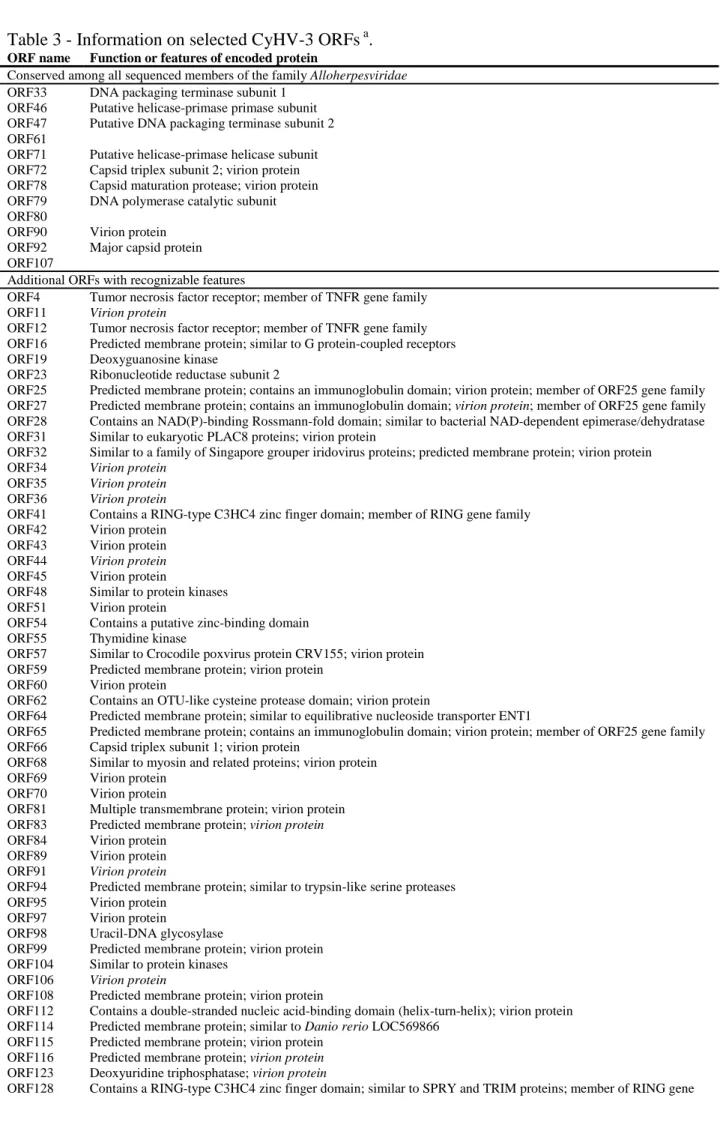
the family Alloherpesviridae (see section 2.1.2.). The relevant ORFs are marked in Fig. 4, and their
376
characteristics are listed in the upper part of Table 3. There are perhaps two additional genes in this
377
core class (ORF66 and ORF99; not listed in Table 3), but the evidence for their conservation is
378
minimal. Comments may be made on the features or functions of a sizeable number of the remaining
379
gene products, as shown in the lower part of Table 3. This list omits genes that are members of related
380
families and lack other clearly identifiable characteristics, such as incorporation into virions or
381
similarity to other genes. It also excludes genes encoding proteins of which the only identifiable
382
features are those indicating that they might be associated with membranes (e.g. the presence of
383
potential signal peptides or hydrophobic transmembrane regions), which are numerous in CyHV-3.
Also, the ancestors of CyHV-3 have evidently captured several genes from the host cell (e.g. the
385
deoxyuridine triphosphatase and interleukin-10 genes) or other viruses (e.g. genes of which the closest
386
relatives are found in iridoviruses or poxviruses) (Ilouze, Dishon, Kahan, & Kotler, 2006).
387
The CyHV-3 genome also contains five gene families that have presumably arisen by gene
388
duplication, a mechanism for generating diversity that has been used commonly by herpesviruses in all
389
three families. They are shaded in distinguishing colors in Fig. 4. These are the ORF2 family (ORF2,
390
ORF3, ORF9, ORF129, ORF130 and ORF135), the TNFR family (ORF4 and ORF12, encoding
391
proteins related to tumor necrosis factor receptor), the ORF22 family (ORF22, ORF24 and ORF137),
392
the ORF25 family (ORF25, ORF26, ORF27, ORF65, ORF148 and ORF149, encoding potential
393
membrane proteins containing an immunoglobulin domain) and the RING family (ORF41, ORF128,
394
ORF144 and ORF150). Some of the proteins encoded by these genes are virion components (ORF137,
395
ORF25, ORF27, ORF65, ORF148 and ORF149). Members of each of these gene families are also
396
present in CyHV-1 and CyHV-2, whereas AngHV-1 lacks all but the TNFR family, having instead
397
several other families that are absent from the cyprinid herpesviruses (Davison et al., 2013).
398
Herpesvirus genomes are described as infectious because their transfection into permissive cells
399
is sufficient to initiate replication and the production of progeny virions. This property has been
400
exploited to produce recombinant viruses by using bacterial artificial chromosome (BAC) cloning of
401
the entire viral genome and prokaryotic recombination technologies. Such an approach has been used
402
extensively for members of the Herpesviridae family (Tischer & Kaufer, 2012) and has been
403
demonstrated to be also applicable to CyHV-3 (Costes et al., 2008).
404
3.1.3. Genotypes
405
Early investigations on CyHV-3 genetic diversity comparing partial DNA polymerase gene and
406
partial major envelope protein gene sequences of CyHV-3 isolates from Japan, the United States and
407
Israel showed a high degree of nucleotide sequence identity (Ishioka et al., 2005). Similar sequence
408
identities were also found among isolates from Poland and Germany (Antychowicz, Reichert, Matras,
409
Bergmann, & Haenen, 2005; El-Matbouli, Saleh, & Soliman, 2007), suggesting that the virus causing
410
disease in carp worldwide represented a single virus entity. Comparison of the complete genome
sequences of three isolates from Japan (CyHV-3 J), the United States (CyHV-3 U) and Israel (CyHV-3
412
I) also revealed more than 99% identity (Aoki et al., 2007) which was consistent with this scenario.
413
Despite this close genetic relationship between isolates, the alignment of three complete
414
CyHV-3 sequences revealed numerous minor deletions/insertions and single nucleotide substitutions.
415
These variations enabled a distinction between the CyHV-3 J lineage and the lineage represented by
416
CyHV-3 U and I isolates (Aoki et al., 2007; Bercovier et al., 2005). Recently, the full length
417
sequencing of a fourth strain, CyHV-3 GZ11 (isolated from a mass mortality outbreak in adult koi in
418
China), revealed a closer relationship of this isolate with the CyHV-3 U/I lineage (Li et al., 2015). The
419
existence of two lineages was confirmed on a larger set of European and Asian isolates using a
PCR-420
based approach targeting two distinct regions of the genome (Bigarré et al., 2009). Marker I, located
421
between ORF29 and ORF31 of CyHV-3 (Aoki et al., 2007), was 168 bp in length (designated I++) for
422
CyHV-3 J and only 130 bp (I--) for the CyHV-3 U/I. Marker II, located upstream of ORF133, was 352
423
bp in length in the CyHV-3 J sequence (II+) compared to 278 bp (II-) in the other two sequences. These
424
studies also provided the first evidence of other potential genotypes; describing a unique genotype of
425
CyHV-3 in koi carp from Poland that was identical to the CyHV-3 U/I viruses in marker II (II-) but
426
shared features of both the CyHV-3 J and CyHV-3 U/I genotypes in marker I (I- +) (Bigarré et al.,
427
2009). A similar profile was observed for a CyHV-3 strain from Korea and the GZ11 strain from
428
China (Kim & Kwon, 2013; Li et al., 2015). The same markers were used to identify another novel
429
“intermediate” genotype of CyHV-3 in Indonesia that resembled the CyHV-3 J genotype in marker I
430
(I++) but was identical to the CyHV-3 U/I genotype in marker II (II-) (Sunarto et al., 2011). Sunarto et
431
al. (2011) speculated that genotype I--II- has evolved through genetic intermediates, I-+II- and I++II-, to
432
give rise to I++II+, and that the first genotype I--II- (corresponding to E1 genotype based on the
433
thymidine kinase (TK) gene sequence, see below) may be the origin of CyHV-3. Alternatively, it is
434
suggested that an ancestral form diverged to give rise to two lineages, CyHV-3 J and CyHV-3 U/I
435
(Aoki et al., 2007).
436
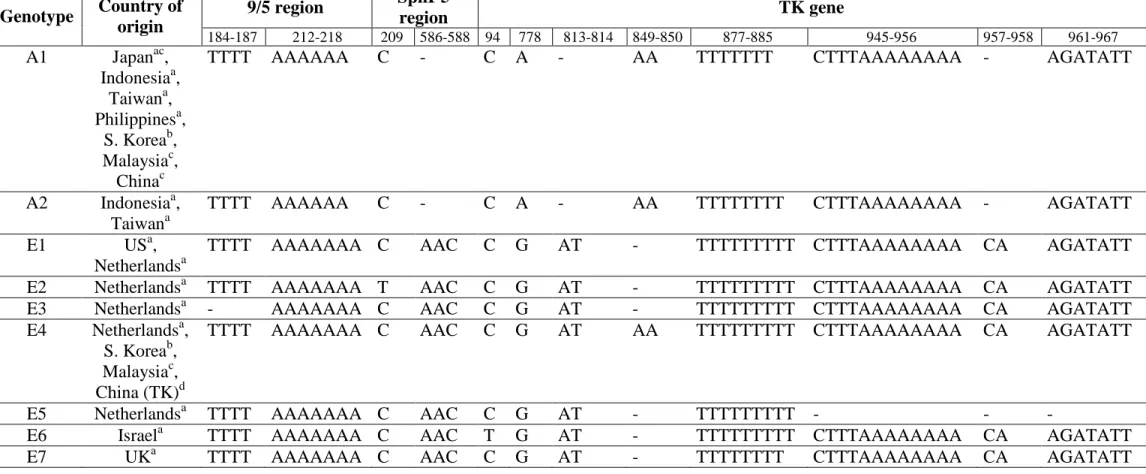
Analysis of the TK gene sequence (Bercovier et al., 2005), particularly the region immediately
437
downstream of the stop codon, provided significantly more resolution (Table 4). In combination with
sequence data for the Sph I-5 (coordinates 93604-93895, NCBI: DQ657948) and the 9-5 (coordinates
439
165399-165882, NCBI: DQ657948) regions (Gilad et al., 2002; Gray, Mullis, LaPatra, Groff, &
440
Goodwin, 2002), nine different genotypes were identified (Kurita et al., 2009). The CyHV-3 from
441
Asia showed a high degree of sequence homology, although two variants were differentiated based on
442
a single nucleotide polymorphism in the TK gene (A1 and A2). In contrast, seven genotypes were
443
identified in CyHV-3 from outside of Asia (E1-E7).
444
Interestingly, a study by Han et al. (2013) identified a sequence insertion in a glycoprotein gene
445
(ORF125) of a Korean isolate (CyHV-3 K) compared with the viruses from Japan (CyHV-3 J), the
446
United States (CyHV-3 U) and Israel (CyHV-3 I). This suggests that the CyHV-3 K is distinct from
447
the CyHV-3 A1 and A2 genotypes. However, in the absence of comparable data from the TK gene,
448
marker I or II regions, it is not possible to confirm this hypothesis (Han et al., 2013). In addition, some
449
recent CyHV-3 isolates from Korea, Malaysia and China were shown to belong to the E4 genotype
450
which suggests the emergence of European lineages in Asia (Chen et al., 2014; Dong, Li, Weng, Xie,
451
& He, 2013; Kim & Kwon, 2013; Li et al., 2015).
452
Besides the nucleotide mismatches, insertions or deletions, much of the sequence differences
453
between CyHV-3 isolates occurred at the level of variable number of tandem repeat (VNTR)
454
sequences (Avarre et al., 2011). In agreement with other genetic studies (Bigarré et al., 2009; Kim &
455
Kwon, 2013), analyses using multiple VNTR loci identified two lineages which were equivalent to the
456
Asian and European viruses, but, with the increased discriminatory power of VNTR analysis, allowed
457
the identification of up to 87 haplotypes (Avarre et al., 2011; Avarre et al., 2012). As expected, several
458
of the isolates from the Netherlands showed a close relationship to CyHV-3 J and were assigned to the
459
same lineage, but the isolates from France and the Netherlands generally showed a closer relationship
460
to CyHV-3 U/I and were assigned to the European lineage (Bigarré et al., 2009). Surprisingly, the
461
Indonesian isolates with I++II- haplotype (Sunarto et al., 2011) are closely related to CyHV-3 J and
462
were assigned to the same lineage. No VNTR data were available for CyHV-3 K and GZ11 strains.
463
VNTR polymorphism has shown great potential for differentiating isolates of large DNA
464
viruses such as human herpesvirus 1 (Deback et al., 2009). However, since the mechanism of VNTR
evolution in CyHV-3 is not fully understood, it remains possible for the different phylogeographic
466
types to share some VNTR features but have acquired them through separate evolutionary routes.
467
Therefore, future epidemiological studies on CyHV-3 may consider undertaking an initial
468
phylogeographic analysis using the non-VNTR polymorphisms (insertions, deletions and point
469
mutations) observed throughout the genome, and only after, exploit the power of the VNTR variability
470
to provide resolution to the isolate level.
471
3.1.4. Transcriptome
472
Herpesvirus gene expression follows a coordinated temporal pattern upon infection of
473
permissive cells as shown in Fig. 2b (Pellett et al., 2011c). Immediate-early (IE) genes are first
474
transcribed in the absence of de novo protein synthesis, and regulate the subsequent expression of
475
other genes. Expression of early (E) genes is dependent on IE-gene expression, and they encode
476
enzymes and proteins involved in the modification of host cell metabolism and the viral DNA
477
replication complex. The late (L) genes form the third and last set to be expressed, dependent on viral
478
DNA synthesis, and primarily encode the viral structural proteins. The first indication that fish
479
herpesvirus gene expression follows a similar temporal pattern came from in vitro studies on IcHV-1
480
transcription (Hanson et al., 2011).
481
More recently, two extensive genome-wide gene expression analyses of CyHV-3 (Ilouze,
482
Dishon, & Kotler, 2012a) and AngHV-1 (van Beurden, Peeters, Rottier, Davison, & Engelsma, 2013)
483
explored the kinetic class of each annotated ORF following two approaches. First, gene expression
484
was studied by RT-PCR or RT-qPCR during the first hours post-infection (hpi). Second,
485
cycloheximide (CHX) and cytosine-β-D-arabinofuranoside (Ara-C) or phosphonoacetic acid (PAA)
486
were used to block de novo protein synthesis and viral DNA replication, respectively. In the presence
487
of CHX, only IE genes are expressed whereas in the presence of Ara-C or PAA, the IE and E genes
488
but not the L genes are expressed. For CyHV-3, viral RNA synthesis was evident as early as 1 hpi, and
489
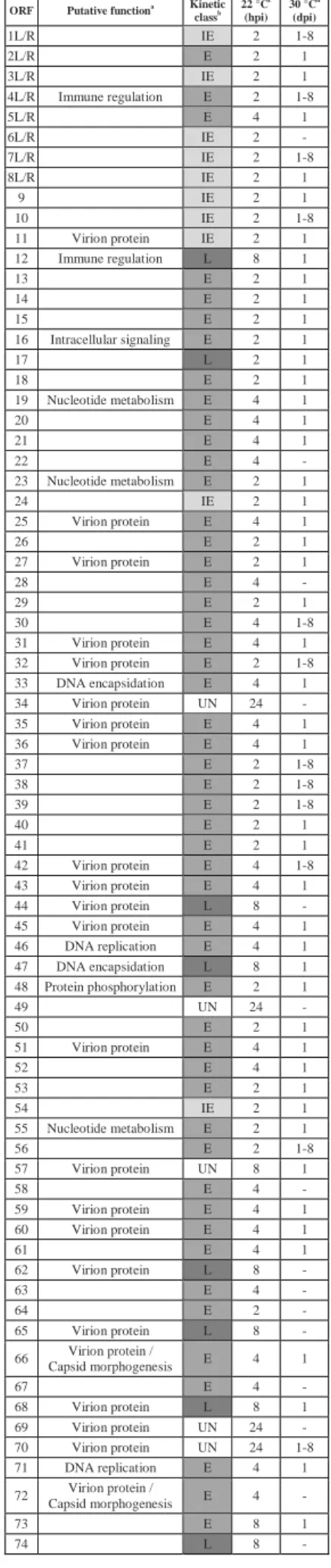
viral DNA synthesis initiated between 4 and 8 hpi (Ilouze et al., 2012a). Transcription of 59 ORFs was
490
detectable from 2 hpi, 63 ORFs from 4 hpi and 28 ORFs from 8 hpi. Transcription of 6 ORFs was only
491
evident at 24 hpi (Table 5). Expression kinetics for related AngHV-1 genes were analyzed differently,
thus hampering direct comparison, but in general followed the same pattern (van Beurden et al., 2013).
493
RNAs from all 156 predicted ORFs of CyHV-3 were detected (including ORF58 which was initially
494
predicted based on a marginal prediction but recently removed from the predicted genome map (Fig.
495
4) (Davison et al., 2013)), and based on the observation that antisense transcription for related
496
AngHV-1 was very low, it is expected that all annotated ORFs indeed code for viral RNAs (Aoki et
497
al., 2007; Ilouze et al., 2012a; van Beurden, Gatherer, et al., 2012).
498
By blocking protein synthesis or viral DNA replication, 15 IE, 112 E and 22 L genes were
499
identified for CyHV-3, whereas for 7 ORFs no classification was possible (Ilouze et al., 2012a) (Table
500
5). In general, this classification followed the expression kinetics determined for each ORF, with most
501
IE genes being expressed at 1 or 2 hpi, most E genes between 2 and 4 hpi and most late genes at 8 hpi.
502
For AngHV-1, 4 IE genes, 54 E or E-L genes and 68 L genes were found (van Beurden et al., 2013).
503
As there is no clear boundary between the E-L (or leaky-late) and L genes, these differences may be
504
explained by sensitivity of the method used to determine the onset of gene expression and data
505
analysis. Similar to mammalian herpesviruses, gene transcripts known to be involved in DNA
506
replication were expressed early, while proteases and enzymes involved in virion assembly and
507
maturation were expressed late (Ilouze et al., 2012a; van Beurden et al., 2013). Inhibition of some
508
early genes involved in DNA replication (e.g. TK and DNA polymerase) by specific siRNA decreased
509
viral release from infected cells (Gotesman, Soliman, Besch, & El-Matbouli, 2014).
510
Interestingly, in IcHV-1, CyHV-3 and AngHV-1, the IE genes show a clear clustering in or near
511
the terminal direct repeats, suggesting positional conservation of these regulatory genes (Ilouze et al.,
512
2012a; Stingley & Gray, 2000; van Beurden et al., 2013). The E and L genes are mainly located in the
513
unique long region of the genome, with almost half of the CyHV-3 E genes clustered and transcribed
514
simultaneously (Ilouze et al., 2012a). This observation may be biased, however, by 3’-coterminality of
515
transcripts, which was shown to be abundant in the AngHV-1 genome (van Beurden, Gatherer, et al.,
516
2012).
517
3.1.5. Structural proteome and secretome
Initial predictions of the structural proteome of CyHV-3 were based on comparison with
519
experimental findings obtained for IcHV-1 and bioinformatically predicted properties of the putative
520
CyHV-3 encoded proteins (Aoki et al., 2007; Davison & Davison, 1995). More recently, two
521
independent studies explored the structural proteome of one European and two Chinese CyHV-3
522
isolates by a combination of virus particle purification, gel electrophoresis and mass
spectrometry-523
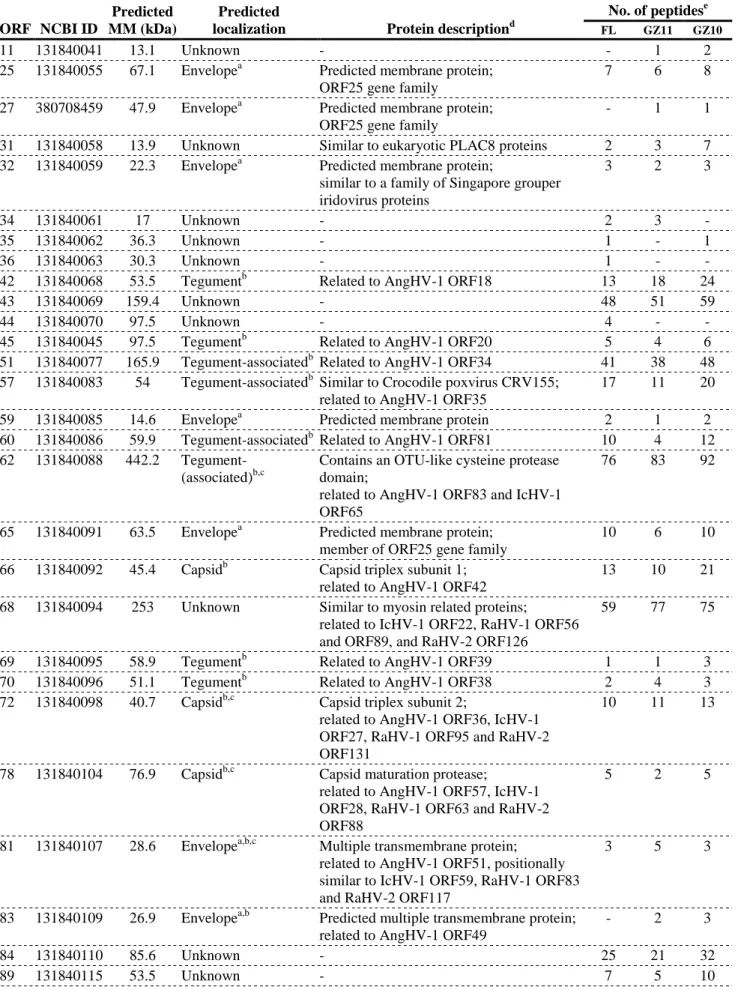
based proteomic approaches (Michel, Leroy, et al., 2010; Yi et al., 2014). A total of 34 structural
524
proteins were identified for all three CyHV-3 isolates, and another 12 proteins were found in only one
525
or two of the three studied isolates (Table 6 and Fig. 5). The latter were generally of low abundance,
526
suggesting that these small differences in protein constitution either indicate strain-specific variation
527
or inter-study variation. Overall, the total number of structural proteins of viral origin reported for
528
CyHV-3 (46) corresponds with the number reported for closely related AngHV-1 (40) and is in line
529
with numbers reported for members of the Herpesviridae family, e.g. 44 for herpes simplex virus 1
530
(Loret, Guay, & Lippe, 2008).
531
Comparisons of homologous genes with similar studies for related alloherpesviruses IcHV-1
532
and AngHV-1, as well as bioinformatical predictions of protein properties enabled putative
533
localization of the proteins within the virion (Table 6). Based on these predictions, five capsid proteins
534
were identified, including the highly conserved major capsid protein, capsid triplex subunit 1 and 2,
535
and the capsid maturation protease. Indeed, the capsid architecture and protein composition of fish
536
herpesvirus capsids generally mirror that of mammalian herpesviruses, with the exception of the small
537
protein which forms the hexon tips in mammalian herpesviruses (Booy et al., 1996; Davison &
538
Davison, 1995). Comparison with the closely related AngHV-1 resulted in the identification of 11
539
tegument or tegument-associated proteins, including the large tegument protein ORF62 (Michel,
540
Leroy, et al., 2010; van Beurden, Leroy, et al., 2011; Yi et al., 2014). Bioinformatical predictions for
541
signal peptides, transmembrane domains and glycosylation allowed the identification of a total of 16
542
putative membrane proteins (Aoki et al., 2007; Michel, Leroy, et al., 2010; Yi et al., 2014).
543
In addition, several studies dedicated to specific virion proteins have been carried out (Aoki et
544
al., 2011; Dong et al., 2011; Fuchs, Granzow, Dauber, Fichtner, & Mettenleiter, 2014; Rosenkranz et
al., 2008; Tu et al., 2014; Vrancken et al., 2013; Yi et al., 2014). Some of these proteins have been
546
studied in more detail, notably ORF81, which is a type 3 membrane protein and is thought to be one of
547
the most immunogenic (major) membrane proteins of CyHV-3 (Rosenkranz et al., 2008). Based on
548
their high abundance and unique locations upon SDS-PAGE of purified proteins, Yi et al. (2014)
549
marked ORF43, ORF51, ORF62, ORF68, ORF72, ORF84 and ORF92 as the major structural proteins
550
of CyHV-3 (Yi et al., 2014). Two of these proteins, namely the large tegument protein encoded by
551
ORF62, and ORF68 had previously been identified as major antigenic CyHV-3 proteins by
552
immunoscreening (Aoki et al., 2011). Moreover, sera from infected carp reacted also against cells
553
transfected with plasmid encoding for ORF25, ORF65, ORF148, ORF149 (4 members of the ORF25
554
family; Envelope proteins), ORF99 (envelope protein) and ORF92 (major capsid protein) (Fuchs et al.,
555
2014).
556
The degree of conservation of the tegument and envelope proteins among fish herpesviruses is
557
limited, with only one large tegument protein and potentially two envelope proteins being conserved
558
between CyHV-3, AngHV-1 and IcHV-1 (van Beurden, Leroy, et al., 2011). For AngHV-1, the
559
distribution of the structural proteins across the different viral compartments resembles that of other
560
herpesviruses, with decreasing numbers for the different proteins from tegument to envelope to capsid
561
(van Beurden, Leroy, et al., 2011). Although the localization of the CyHV-3 structural proteins
562
remains to be demonstrated experimentally, a similar ratio may be expected, implying that most of the
563
yet unclassified proteins are located in the tegument.
564
Both studies on the CyHV-3 structural proteome also identified 18 to 27 cellular proteins
565
associated with extracellular CyHV-3 virions (Michel, Leroy, et al., 2010; Yi et al., 2014). Similar to
566
mammalian herpesviruses, these include proteins involved in stress response, signal transduction,
567
vesicular trafficking, metabolism, cytoskeleton organization, translational control, immunosuppression
568
and cell-signaling regulation. Except for the so-called virus-induced stress protein identified by Yi et
569
al. (2014), host cellular proteins were generally low in abundance suggesting them as minor
570
components of the virions (Michel, Leroy, et al., 2010; Yi et al., 2014).
The viral secretome of CyHV-3 was examined by analyzing concentrated supernatants of
572
infected cell cultures by mass spectrometry (Ouyang et al., 2013). Five viral proteins were identified,
573
of which the two most abundant were ORF12 encoding a soluble TNF receptor homolog, and ORF134
574
encoding an IL-10 homolog. Three additional viral proteins (encoded by ORF52, ORF116 and
575
ORF119) had previously been predicted to be potential membrane proteins, but were not convincingly
576
identified as such. Overall, the identification of the viral and cellular protein composition of the
577
virions and viral secretome represent milestones in fundamental CyHV-3 research, and may facilitate
578
the development of diagnostic and prophylactic applications (see for example Fuchs et al. (2014);
579
Vrancken et al. (2013)).
580
3.1.6. Viral replication in cell culture
581
3.1.6.1. Cell lines permissive to CyHV-3
582
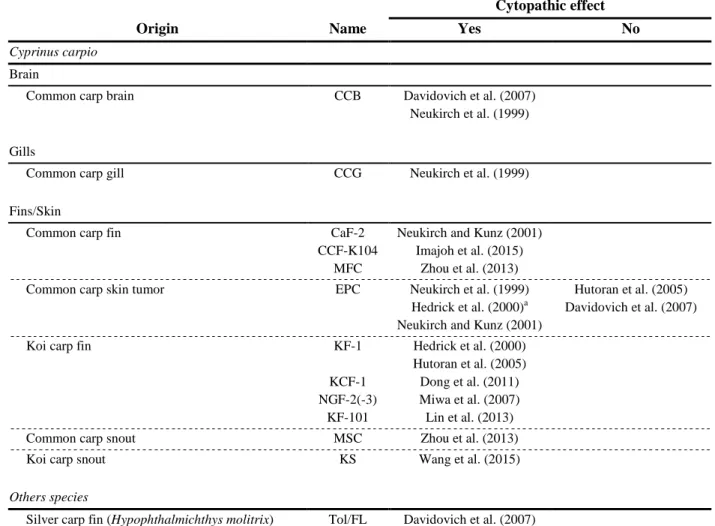
CyHV-3 can be cultivated in cell lines derived from common carp brain (CCB) (Davidovich,
583
Dishon, Ilouze, & Kotler, 2007; Neukirch, Böttcher, & Bunnajrakul, 1999), gills (CCG) (Neukirch et
584
al., 1999) and fin (CaF-2, CCF-K104, MFC) (Imajoh et al., 2015; Neukirch & Kunz, 2001; Zhou et al.,
585
2013). Permissive cell lines have also been derived from koi fin: KF-1 (Hedrick et al., 2000), KFC
586
(Ronen et al., 2003), KCF-1 (Dong et al., 2011), NGF-2 and NGF-3 (Miwa et al., 2007), KF-101 (Lin,
587
Cheng, Wen, & Chen, 2013) (Table 7). Other permissive cell lines were developed from snout tissues
588
(MSC, KS) (Wang et al., 2015; Zhou et al., 2013). Non-carp cell lines, such as silver carp fin (Tol/FL)
589
and goldfish fin (Au) were also described as permissive to CyHV-3 (Davidovich et al., 2007). One
590
report showed cytopathic effect (CPE) in a cell line from fathead minnow (FHM) after inoculation
591
with CyHV-3 (Grimmett, Warg, Getchell, Johnson, & Bowser, 2006), but this observation was not
592
confirmed by others (Davidovich et al., 2007; Hedrick et al., 2000; Neukirch et al., 1999). Similarly,
593
Neukirch et al. (1999) and Neukirch and Kunz (2001) reported CPE in EPC (epithelioma papulosum
594
cyprini) cells but this observation was also not confirmed (Davidovich et al., 2007; Hedrick et al., 595
2000; Hutoran et al., 2005). This discrepancy could be partially explained by the controversial origin
596
of the EPC cell line. This cell line was initially described as originating from common carp but was
597
recently found to derive from fathead minnow (Winton et al., 2010). Other commonly used cell lines
598
such as CHSE-214 (chinook salmon embryo) (Neukirch et al., 1999) and CCO (channel catfish ovary)
(Davidovich et al., 2007) are not permissive to CyHV-3 infection. Typical CPE induced by CyHV-3
600
includes vacuolization and increased cell volume. Infected cells form characteristic plaques that grow
601
according to time post-infection, frequently leading to the formation of syncytia (Ilouze, Dishon, &
602
Kotler, 2006). Finally, infected cells become rounded before they detach from the substrate. Infectious
603
virions are mostly retrieved from the infected cell supernatant (cell-free fraction) (Gilad et al., 2003).
604
Isolation and adaptability of CyHV-3 in vitro seems to vary according to the field strain and cell line
605
used. However, well adapted laboratory strains usually reach titres up to 106 to 107 pfu/ml (Ilouze,
606
Dishon, & Kotler, 2006).
607
3.1.6.2. Temperature restriction
608
CyHV-3 replication is restricted by temperature in vitro and in vivo. In vitro, optimal viral
609
growth was observed in KF-1 cell line at temperatures between 15 °C and 25 °C (Gilad et al., 2003);
610
however, within this range, temperature affected the time at which viral production peaked (e.g. peak
611
of viral titer observed at 7 days post-infection (dpi) and 13 dpi after incubation at 20-25 °C and 15 °C,
612
respectively) (Gilad et al., 2003).
613
Virus production, virus gene transcription and genome replication are gradually turned off when
614
cells are moved from permissive temperature to the non-permissive temperature of 30 °C (Dishon,
615
Davidovich, Ilouze, & Kotler, 2007; Ilouze, Dishon, & Kotler, 2012m; Imajoh et al., 2015). Although
616
most of the 110 ORFs, still transcribed 24 h after the temperature shift, are gradually shut off (Table
617
5), few ORFs such as ORF114 and 115 were still expressed 18 days after temperature shift. However,
618
infected cells maintained for 30 days at 30 °C preserve the potential to reinitiate a productive infection
619
when returned to permissive temperatures (Dishon et al., 2007). This state of abortive infection with
620
the potential to reactivate resembles latency as described for Herpesviridae. Putatively, the viral
621
membrane protein encoded by ORF115 may represent an Epstein-Barr virus-like membrane-bound
622
antigen associated with latency.
623
3.2. CyHV-3 disease
624
3.2.1. Epidemiology
3.2.1.1. Fish species susceptible to CyHV-3 infection
626
There is evidence that CyHV-3 can infect a wide range of species but that it only induces
627
disease in common and koi carp. Hybrids of koi × goldfish and koi × crucian carp can be infected by
628
CyHV-3, with mortality rates of 35% and 91%, respectively (Bergmann, Sadowski, et al., 2010).
629
Common carp × goldfish hybrids have also been reported to show some susceptibility to CyHV-3
630
infection; however, the mortality rate observed was rather limited (5%) (Hedrick, Waltzek, &
631
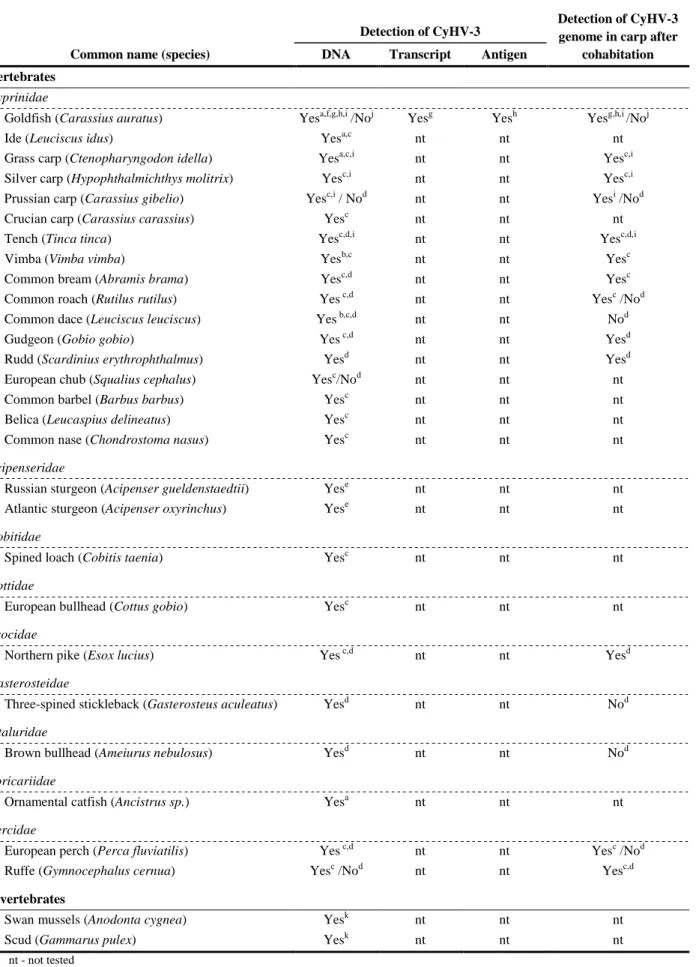
McDowell, 2006). PCR detection of CyHV-3 performed on cyprinid and non-cyprinid fish species, but
632
also on freshwater mussels and crustaceans, suggested that these species could act as reservoir of the
633
virus (Table 8) (El-Matbouli et al., 2007; El-Matbouli & Soliman, 2011; Fabian, Baumer, &
634
Steinhagen, 2013; Kempter & Bergmann, 2007; Kempter et al., 2012; Kempter et al., 2009; Kielpinski
635
et al., 2010; Radosavljevic et al., 2012). Cohabitation experiments suggest that some of these fish
636
species (goldfish, tench, vimba, common bream, common roach, European perch, ruffe, gudgeon,
637
rudd, northern pike, Prussian carp, silver carp and grass carp) can carry CyHV-3 asymptomatically and
638
transmit it to naïve carp (Bergmann, Lutze, et al., 2010; El-Matbouli & Soliman, 2011; Fabian et al.,
639
2013; Kempter et al., 2012; Radosavljevic et al., 2012). Recent studies provided increasing evidence
640
that CyHV-3 can infect goldfish asymptomatically (Bergmann, Lutze, et al., 2010; El-Matbouli &
641
Soliman, 2011; Sadler, Marecaux, & Goodwin, 2008), although some discrepancies exist in the
642
literature (Yuasa, Sano, & Oseko, 2013). Consistent with this observation, in vitro studies showed that
643
CyHV-3 can replicate and cause CPE in cell cultures derived not only from common and koi carp but
644
also from silver carp and goldfish (Davidovich et al., 2007). Finally, the World Organization for
645
Animal Health (OIE) lists one KHVD susceptible species (Cyprinus carpio and its hybrids) and
646
several suspected fish carrier species (goldfish, grass carp, ide, catfish, Russian sturgeon and Atlantic
647
sturgeon) (OIE, 2012).
648
3.2.1.2. Geographical distribution and prevalence
649
The geographical range of the disease caused by CyHV-3 has become extensive since the first
650
outbreaks in Germany in 1997 and in the USA and Israel in 1998 (Bretzinger et al., 1999; Hedrick et
651
al., 2000; Perelberg et al., 2003). Worldwide trade in common and koi carp is generally held
652
responsible for the spread of the virus before methods of detection were available and implemented
(OIE, 2012). The disease is now known to occur in, or has been reported in fish imported into, at least
654
28 different countries (OIE, 2012).
655
In Europe, reports of widespread mass mortality have been notified in carp farms and fisheries
656
in Germany, Poland and the UK (Bergmann, Kempter, Sadowski, & Fichtner, 2006; Gotesman,
657
Kattlun, Bergmann, & El-Matbouli, 2013; Taylor, Dixon, et al., 2010). The disease is also known to
658
occur in, or has been recorded in fish imported into, Austria, Belgium, Czech Republic, Denmark,
659
France, Hungary, Italy, Luxembourg, The Netherlands, Republic of Ireland and Switzerland (Haenen
660
et al., 2004; McCleary et al., 2011; Pokorova et al., 2010; Pretto et al., 2013). Most recently, KHVD
661
outbreaks have been reported to the OIE from Romania, Slovenia, Spain and Sweden (OIE, 2012).
662
Three novel CyHV-3-like viruses were also identified by PCR in The Netherlands, UK, Austria and
663
Italy, sharing only 95 to 98% nucleotide identity with the CyHV-3 J, CyHV-3 I and CyHV-3 U strains.
664
Carp carrying the CyHV-3 variants did not show clinical signs consistent with CyHV-3 infection and
665
originated from locations with no actual CyHV-3 outbreaks. These strains might represent low- or
666
non-pathogenic variants of CyHV-3 (Engelsma et al., 2013).
667
In Asia, in the Middle East, the first disease outbreaks with mass mortalities were seen in Israel
668
in 1998 and in the following 3 years, the virus had spread to 90% of all carp farms (Perelberg et al.,
669
2003). In south-eastern Asia, the first outbreaks of KHVD, with mass mortalities of cultured koi carp,
670
occurred in Indonesia in 2002 and were associated with an importation of koi from Hong Kong
671
(Haenen et al., 2004; Sunarto et al., 2011). Later in 2002, the first occurrence of CyHV-3 infection
672
was reported in koi carp in Taiwan (Tu, Weng, Shiau, & Lin, 2004). In 2003, detection of CyHV-3
673
was first reported in Japan following mass mortalities of cage-cultured common carp in the Ibaraki
674
prefecture (M. Sano et al., 2004). Since then, the virus has been confirmed in 90% of the 109 class A
675
natural rivers and in 45 of 47 prefectures (Lio-Po, 2011; Minamoto, Honjo, Yamanaka, Uchii, &
676
Kawabata, 2012). Similarly, CyHV-3 spread rapidly in Indonesia with disease outbreaks reported on
677
most of the major islands by 2006 (Lio-Po, 2011). CyHV-3 has also been detected in China (Dong et
678
al., 2011), South Korea (D. K. Gomez et al., 2011), Singapore (Lio-Po, 2011), Malaysia (Musa,
679
Leong, & Sunarto, 2005) and Thailand (Lio-Po, 2011; Pikulkaew, Meeyam, & Banlunara, 2009).
In North America, the first reports of CyHV-3 infection were from disease outbreaks at koi
681
dealers (Gray et al., 2002; Hedrick et al., 2000). Then, in 2004, CyHV-3 was confirmed from mass
682
mortalities of wild common carp in South Carolina and New York states (Grimmett et al., 2006;
683
Terhune et al., 2004). In Canada, CyHV-3 was first detected during disease outbreaks in wild common
684
carp in Ontario in 2007 and further outbreaks were reported in Ontario and Manitoba in 2008 (Garver
685
et al., 2010). More recently, mass mortalities of common carp have been reported along the
686
US/Canada border in Michigan and Wisconsin (Gotesman et al., 2013) (S. Marcquenski, personal
687
communication).
688
There are no reports of KHVD or CyHV-3 detections from South America or Australasia, and
689
the only reports from the African continent are from South Africa (OIE, 2012).
690
Horizontal transmission of the disease is very rapid (see section 3.2.3.1.3.). Several hypotheses
691
were suggested to explain the swift spread of the virus: (i) The practice of mixing koi carp in the same
692
tanks at koi shows has been held responsible for spreading the disease, particularly within a country
693
(Gilad et al., 2002). (ii) In Israel, piscivorous birds are suspected to be responsible for the rapid spread
694
of CyHV-3 from farm to farm (Ilouze, Davidovich, Diamant, Kotler, & Dishon, 2010). (iii) Disposal
695
of infected fish by selling them below the market price was one suspected route of dissemination of
696
the virus in Indonesia (Sunarto, Rukyani, & Itami, 2005). (iv) It was suggested that the outbreaks of
697
disease in public parks and ponds in Taiwan without recent introduction of fish were the result of
698
members of the public releasing infected fish into the ponds (Tu et al., 2004). (v) Additionally, the
699
virus has also been spread nationally and internationally before regulators were aware of the disease
700
and methods to detect CyHV-3 were available. This is evidenced by the detection of CyHV-3 DNA in
701
archive histological specimens collected during unexplained mass mortalities of koi and common carp
702
in the UK in 1996 and in cultured common carp in South Korea in 1998 (Haenen et al., 2004; Lee, 703
Jung, Park, & Do, 2012). 704
There are limited published observations of virus prevalence in wild or farmed populations of
705
carp. A PCR survey, performed two years after the KHVD outbreaks in Lake Biwa, Japan, found a
706
higher prevalence of CyHV-3 in larger common carp (> 3cm, 54% of seropositive fish) compared to
707
smaller ones (< 3cm, 0% seropositive fish) (Uchii, Matsui, Iida, & Kawabata, 2009). Again in Japan,