OATAO is an open access repository that collects the work of Toulouse
researchers and makes it freely available over the web where possible
Any correspondence concerning this service should be sent
to the repository administrator:
[email protected]
This is an author’s version published in: http://oatao.univ-toulouse.fr/21881
To cite this version:
Ricaurte, Marvin and Torré, Jean-Philippe
and Broseta, Daniel and Diaz, Joseph and
Dicharry, Christophe and Renaud, Xavier CO2 removal from a CO2-CH4 gas mixture by
hydrate formation: evaluation of additives and operating conditions. (2011) In: 7th
International Conference on Gas Hydrates (ICGH 7), 17 June 2011 - 21 June 2011
(Edinburgh, United Kingdom).
CO
2REMOVAL FROM A CO
2– CH
4GAS MIXTURE BY HYDRATE
FORMATION: EVALUATION OF ADDITIVES AND OPERATING
CONDITIONS
Marvin Ricaurte
, Jean-Philippe Torré, Daniel Broseta, Joseph Diaz, Christophe Dicharry
Laboratoire des Fluides Complexes et leurs Réservoirs (LFC-R), UMR5150 TOTAL CNRS
Université de Pau et des Pays de l’Adour, BP 1155, 64013 Pau Cedex
FRANCE
Xavier Renaud
Total - Centre Scientifique et Technique Jean-Féger (CSTJF)
Avenue Larribau, 64018 Pau Cedex
FRANCE
ABSTRACT
This paper presents an experimental study of CO2 capture by means of gas hydrate crystallization,
which seems to be a promising alternative to conventional processes for removal of CO2 from
natural gas streams, especially when the CO2 is to be reinjected in a geological formation. The
gas phase used here is a mixture of 25 mol% CH4 and 75 mol% CO2. Different mixtures of
kinetic and thermodynamic additives (sodium dodecyl sulfate, SDS, and tetrahydrofuran, THF)
dissolved in water are used with the aim to accelerate the hydrate formation and to enhance CO2
capture selectivity. The experiments are performed in a batch reactor under quiescent conditions. The composition of the gas phase is monitored by gas chromatography in the course of the experiments. The influence of THF concentration and operating conditions (particularly the load pressure) has been evaluated on the gas mixture solubility, the hydrate formation kinetics and the
CO2 capture selectivity. The results show that THF (used in combination with SDS) plays a key
role in the hydrate formation process and does not influence the CO2 capture selectivity, at least
in the range of concentrations studied. It is also shown that decreasing the gas loading pressure improves the selectivity of CO2 capture.
Keywords: gas hydrates, CO2 capture, gas separation, additives, THF, SDS, natural gas
Corresponding author: Phone: +33(0)5 59 40 76 86, Fax +33(0)5 79 40 77 25. E-mail :[email protected]
INTRODUCTION
In 2009, the consumption of natural gas in the world was close to three trillions cubic meters [1].
Carbon dioxide (CO2) is encountered in an
increasing number of natural gas fields and it must be removed to improve the heating value of the gas or meet pipeline specifications.
There are many ways to remove CO2 from natural
gas, such as absorption, adsorption, cryogenic fractionation and membrane separation. These processes have been proven successful for the
selective removal of CO2, but their major
drawback is their large energy costs [2]. Proceedings of the 7th International Conference on Gas Hydrates (ICGH 2011),
The capture of CO2 by means of gas hydrate
crystallization appears to be a cost-effective
technological alternative for CO2 removal from
natural gas streams, especially when the CO2 is to
be reinjected in a geological formation. In fact, the costs needed for the reinjection are considerably reduced, since the capture process is carried out at high pressure.
Clathrate hydrates are non-stoichiometric crystalline inclusion compounds consisting of a network of hydrogen – bonded water molecules, in which different types of low molecular weight compounds can be enclathrated when the appropriate conditions of moderately low temperature (a few degrees above 0 °C) and high pressure (in the range of a few MPa) are met [3,4]. When hydrate crystals are formed from a gas mixture, the composition of the hydrate is different from that of the original mixture, i.e., the hydrate phase is enriched with one of the gas components. For this reason, gas hydrate crystallization can
potentially be used as a separation process for CO2
capture [5].
In the case of CO2 – CH4 gas mixtures, the hydrate
phase boundaries for these pure components are relatively close which render difficult their separation by means of hydrate crystallization [6,7]. The slow kinetics of hydrate formation is another bottleneck. However, previous studies have reported that under appropriate pressure and temperature conditions hydrates formed from a
CO2-CH4 mixture contain more than 90 mol% CO2
when the equilibrium vapor phase composition is
in the range of 40 mol% CO2 [8,9]. On the other
hand, CO2 uptake by gas hydrate formation
proceeds more quickly than the methane uptake [6,10].
One of the possibilities to promote or enhance hydrate formation is the use of chemical additives. Conventionally, water-soluble additives are classified either as kinetic or as thermodynamic additives. The latter, which typically consist of organic compounds such as cyclic ether or quaternary ammonium salts, have the tendency to displace the equilibrium conditions towards higher temperatures or lower pressures [3,4]. Kinetic additives consist typically of surfactant molecules and have the effect to accelerate hydrate formation.
Sodium dodecyl sulfate (SDS) is an anionic surfactant which has been widely studied and used as a kinetic hydrate promoter. Gayet et al. (2005) [11] and Kalogerakis et al. (1993) [12] noted that a small concentration of SDS added to the aqueous phase drastically increases the kinetics of methane hydrate formation, without changing the hydrate equilibrium conditions.
Various studies [13,14] report a significant reduction of hydrate equilibrium pressures at a given temperature by adding small amounts of
tetrahydrofuran (THF) in the aqueous phase. For
instance, 1 mol% THF has been shown by Lee et
al. (2009) [5] to be the optimum concentration to
promote the CO2 separation from CO2 – H2 gas
mixture via hydrate crystallization. Recently, Liu
et al. (2008) [15] and Torré et al. (2011) [16]
showed that THF and SDS used in combination
are efficient additives for promoting CO2 hydrate
formation.
This paper presents a study of the influence of THF concentration and gas loading pressure on
CO2 capture by hydrate formation from a CO2-CH4
gas mixture. The range of THF concentrations and gas loading pressures investigated in this study were 0 – 4 wt% THF and 30.1 – 46.4 bar, respectively. In all experiments, SDS is used at the concentration of 3000 ppm and the target temperature is 2°C: these parameters are based on a previous study performed in this laboratory with pure CO2 as the gas phase [16].
EXPERIMENTAL SECTION
Materials
The gas mixture containing CO2 (75 mol%) and
CH4 (25 mol%) was supplied by Air Liquide,
France. Tetrahydrofuran (THF) (purity > 99.9%) and sodium dodecyl sulfate (SDS) were supplied by Sigma - Aldrich, France and Chem Lab, Belgium, respectively. The solutions were prepared with ultra-pure water (18.2 m*cm),
produced in this laboratory by a PureLab Classic®
from ELGA Labwater, France. An electronic balance with a readability of ± 0.001 mg is used to weigh the mass of water and additives required for preparing the solutions.
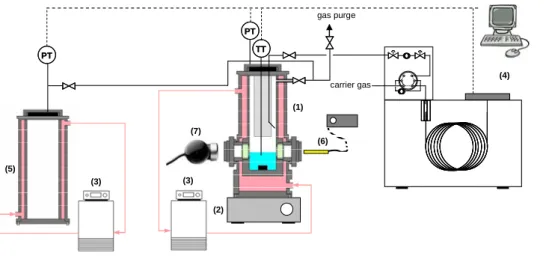
Figure 1. Schematic diagram of the experimental setup
Apparatus
The hydrate crystallizer cell consists of a titanium cylindrical vessel equipped with two see-through sapphire windows (20 mm in diameter) allowing the direct observation of hydrate formation inside the cell. The cell has a capacity of 176.1 ml and is designed to be operated at pressures up to 200 bar. The solution inside the cell is stirred by means of a magnetic agitator driven by a magnetic stirrer (Hei-Mix D model from Heidolph). The cell temperature is controlled by circulating through the cell jacket an aqueous solution of propylene glycol coming from a thermostatic bath (Polystat, Fischer Scientific) with a stability of ± 0.02 °C. The cell temperature is measured with two PT 100 probes immersed in the liquid phase and gas phase, respectively. The uncertainty of the temperature measurement is ± 0.1 °C.
The cell pressure is measured by a KELLER PA23SY pressure transducer (0 – 100 bar) with an accuracy of ± 0.1 bar. A high pressure storage tank is used to load the gas mixture into the hydrate crystallizer cell. The composition of the gas phase is determined by a gas chromatograph (Agilent GC6980) equipped with a thermal conductivity detector (TCD). A high pressure valve system directly connected to the cell hydrate crystallizer cell is used to sample gas for GC measurements. The pressure drop caused by each gas sampling is about 0.01 bar. The temperature and pressure are recorded every
second via a standard PC and a LabView®
interface. The hydrate formation process is
continuously recorded by means of a CCD camera all along the experiments.
Experimental procedure
The aqueous solutions are prepared by first dissolving SDS in 50 ml of ultra-pure water while stirring during 5 min. The desired mass of THF is then added to the SDS solution while stirring again for 5 min. Finally, the total mass of the solution is adjusted to 200 ± 0.001 g with ultra-pure water and stirred during 5 min.
The hydrate crystallizer cell is loaded with 65 ± 0.1 ml of the aqueous solution using glass pipettes. This volume ensures that the gas/liquid interface is located at the middle of the sapphire windows. The cell is closed and connected to the rest of the equipment. The temperature is fixed at
Tinit = 20.0 °C and the cell is purged two times
with the gas mixture before pressurization at the desired pressure (called gas loading pressure (Pload)). Then, stirring is started (rotation speed: 600 rpm) and maintained during 2 hours to enhance thermal and mass transfers and allow complete solubilization of the gas mixture in the aqueous solution.
The gas composition after solubilization is measured through a GC sampling at high pressure, and then the cell temperature is cooled down to 2.0 – 2.5 °C at a cooling rate of 0.9 °C/min in order to promote the hydrate formation. Due to the weak agitation torque, it was observed that the agitator stopped as soon as
the hydrate phase formed in the cell.Therefore, it
PT PT TT TT gas purge (1) (3) (3) (6) (2) PT PT (5) (7) carrier gas
(4) (1): hydrate crystallizer cell (2): magnetic stirrer (3): thermostatic baths (4): gas chromatograph (5): storage vessel (6): halogen lamp (7): camera
can be considered that the hydrate growth occurs under quiescent conditions. During the hydrate
formation, the gasphase composition is measured
several times all along the experiment until both the cell pressure and gas composition reach steady state or equilibrium conditions, which marks the end of the hydrate formation period. Finally, the temperature is raised to 20.0 °C to dissociate the hydrates formed.
Number of moles of gas removed from the gas phase and separation factor
The number of moles removed from the gas phase during the hydrate formation process is calculated using the following equation:
equil init equil init t i t i t i g t i g i g zRT PV y zRT PV y n n n (1)
where: superscript i refers to component of gas
mixture, yi is the mole composition of the
component i in the gas mixture, z is the compressibility factor calculated by the Peng Robinson equation of state [17], P and T are the experimental pressure and temperature,
respectively. V is the volume of gas phase, tinit
and tequil are the initial condition and equilibrium
condition, respectively. The volume change due to hydrate crystallization and the presence of water and THF in the gas phase are neglected. The relative fraction of gas removed from the gas
phase ( i
removed
n ) is expressed in percentage using
the following expression:
100 initial t i g i g i removed n n n (2)
The separation factor () is defined as:
4 2 CH removed CO removed
n
n
(3)This factor is used to estimate the selectivity of
the hydrate formation process with regard to CO2
capture: a higher value of means a more
efficient gas mixture decontamination from CO2
[2,18].
RESULTS AND DISCUSSION
Example of typical experimental curves
Figure 2 shows the variation with elapsed time of the cell temperature, pressure and gas phase composition in a typical experiment, together with selected images (snapshots) through the sapphire window. During the first 30 min, the
pressure and the CO2 content in the vapor phase
decrease quickly, due to the gas solubilization into the aqueous solution. Then a plateau is reached that corresponds to solubilization equilibrium between the aqueous phase and the gas phase at 20°C. At point A, the cell is cooled down to 2.0 °C. From A to B, the observed decrease in pressure results from both the gas phase contraction and the gas solubilization into the aqueous solution.
At point B, the observed increase in temperature corresponds to a first hydrate crystallization in the system, which is confirmed by the direct observation through the sapphire windows (snapshot B). When the heat released by hydrate crystallization is offset by the cell cooling, the temperature of the system decreases to point C, where a second hydrate crystallization takes place. These two steps are very similar to those observed with pure CO2 (see ref. [16]).
From C to E, the cell pressure and the CO2
content in the vapor phase decrease significantly, and changes in the physical aspect of the hydrates are observed (snapshots C, D and E). At F, the pressure, temperature and gas composition reach almost constant values, indicating that the enclathration reaction has finished and an equilibrium state is reached. In the presented example, the pressure and gas composition at F
are 19.3 bar and 60.4 mol% CO2, respectively.
The temperature of the system is then raised to its initial value (20.0 °C) to dissociate the hydrates formed. In this heating process, two endothermic perturbations are observed in the temperature profile corresponding to the decomposition of the hydrates. Meanwhile, the pressure increases in the cell. Finally, the pressure recovers its initial value when temperature reaches 20°C. The small pressure difference being due to the multiple GC samplings carried out during the experiment.
0 5 10 15 20 25 30 35 40 45 50 0 60 120 180 240 300 360 Time (min) P res sur e (bar ) o r Tempe ra tur e (°C) 25 30 35 40 45 50 55 60 65 70 75 Snapshots (-) V a por phas e compo s ition ( m ol% C O2 ) Pressure Temperature CO2 concentration A B C D E F
Figure 2. Variation of pressure, temperature, vapor phase composition as a function of time and snapshots made during a typical
experiment. Pload = 46.3 bar, [SDS] = 3000 ppm and [THF] = 4 wt% 15 20 25 30 35 40 0 2 4 6 8 10 12 14 16 18 20 Temperature (°C) Pressure (b ar ) Our experiment
Equilibrium data (Adisasmito et al., 1991) Equilibrium data (Seo et al., 2000)
A B E B' C' F G H H' I D C
Figure 3. Pressure versus temperature for a hydrate formation/dissociation cycle. Pload = 46.3 bar, [SDS] = 3000 ppm and
[THF] = 4 wt%. (The three phase equilibrium curve (full line) corresponds to the composition CH4 (40 mol%) and CO2 (60 mol%)
of the gas mixture)
P-T curve
In Figure 3 the variation of pressure is plotted versus temperature for the above formation/dissociation cycle, starting from (and ending with) the solubilization equilibrium between the aqueous phase and the gas phase at 20.0 °C.
As already observed in Figure 2, the largest drop of pressure occurs after the second hydrate crystallization (point C’). Interestingly, the values of pressure and temperature at equilibrium (point F) agree with the values predicted by using the equation proposed by Adisasmito et al. (1991)
[19] for a gas phase composition of 60 mol% CO2
(i.e., 40 mol% CH4), which is the composition
measured by GC at the end of the crystallization process. The experimental equilibrium P-T conditions measured by Seo et al. (2000) [9] for a
gas phase composition of 60.7 mol% CO2 (i.e.,
39.3 mol% CH4) are also reported in Figure 3:
they are consistent with the results presented here.
Therefore, the hydrate equilibrium conditions for
the CH4-CO2-water system do not depend on the
presence of THF and SDS, at least in the concentration range investigated in this study (3000 ppm SDS and 1-4 wt% THF). These results are similar with those obtained by Torré et al.
(2011) [16] on the CO2-water hydrate system in
the presence of the same additives and with those
obtained by Shin et al. (2009) [14] on the CO2
-water hydrate system in the presence of THF and 1,4-dioxane as additives.
Effect of THF concentration
The variation of cell pressure as a function of time for THF concentrations between 0 and 4 wt% THF is shown in Figure 4. For these experiments, the gas loading pressure is equal to 46.3 bar. In all experiments, the target temperature at the end of the hydrate formation cycle is 2.1 °C. As observed in the previous experiments, the pressure decreases quickly during the first 30 min, and then stabilizes. At the end of the solubilization stage, the equilibrium pressure is observed to be smaller when some THF is present in the aqueous phase. This behavior can be related to the chemical affinity
between the THF and CO2 molecules, which
promotes the solubilization of CO2 into the
aqueous phase [3,19]. 15 20 25 30 35 40 45 50 0 60 120 180 240 300 Time (min) Pres sure (bar) 0 %THF 1 %THF 2 %THF 4 %THF
Figure 4. Pressure evolution for various THF
concentrations. Pload = 46.3 bar, [SDS] = 3000 ppm and
[THF] = variable
As shown in Figure 4, hydrates are not formed in the absence of THF in the aqueous phase, even if the system is left for 24 hours at 2.1 °C. In the presence of THF hydrate formation is observed and the pressure drop decrease rate is observed to increase with THF concentration. However, at the end of the hydrate formation, the pressure reaches almost the same value (~19.5 bar) in all systems
containing THF. The amount of CO2 removed
from the gas phase is found on average to be equal to 68 % when some THF is present in the
aqueous phase (Figure 5). This CO2 removal of is
accompanied by a significant removal of CH4
(35 % on average) from the gas phase as well.
0 15 30 45 60 75 0 1 2 4 THF concentration (wt. %) CO 2 or CH 4 r e mov e d fr om ga s p h as e (%) CO2 CH4
Figure 5. Effect of THF concentration on CO2 and CH4
removed from the gas phase. Pload = 46.3 bar, [SDS] = 3000
One can note that in the absence of THF, 40% of
the CO2 and only 1% of the CH4 initially present
in the gas phase are removed from this phase. This is explained by the fact that, without hydrate formation, gas removal is totally controlled by the solubilization in the aqueous phase. As a
matter of fact, the solubility of CO2 in water is
approximately 30 times that of CH4 at 2.1°C [3].
Effect of gas loading pressure
Figure 6 shows the variation of cell pressure as a function of time in four different experiments in which the initial loading pressures has been varied in the range of 30.1 to 46.4 bar. In all experiments, the additives concentrations are equal to 4 wt% THF and 0.3 wt% SDS, respectively, and the target (or final) temperature is 2.1 °C. The decrease in pressure due to the hydrate formation corresponds to the times greater than 130 min.
One can observe that the pressure drop increases with the load pressure. However, the pressure at equilibrium conditions seems not to depend significantly on the gas loading pressure. This result suggests that the gas phase composition, and therefore, the selectivity of the capture will not drastically vary with the gas loading pressure.
15 20 25 30 35 40 45 50 0 60 120 180 240 300 Time (min) Pressure ( b ar) 30,1 bar 35,2 bar 40,4 bar 46,4 bar
Figure 6. Pressure versus time for different gas loading
pressures. [SDS] = 3000 ppm and [THF] = 4 wt%
The influence of the gas loading pressure on CO2
and CH4 removal from the gas phase at
equilibrium (calculated using equation (2)) is shown in Figure 7. 0 15 30 45 60 75 30.1 35.2 40.4 46.4
Gas loading pressure (bar)
CO 2 or CH 4 r e moved fr om ga s phase (%) CO2 CH4
Figure 7. Effect of gas loading pressure on CO2 and CH4
removed from the gas phase. [SDS] = 3000 ppm and [THF] = 4 wt%
Actually, it can be observed that the higher the gas loading pressure, the higher is the amount of
CO2 removed from the gas phase. Similarly, the
amount of CH4 removed from the gas phase
increases with the loading pressure, showing that
8 % and 37 % of CH4 are removed for initial
loading pressures of 30.1 bar and 46.4 bar, respectively..
The separation factor
The separation factor () has been defined as the
ratio between the number of moles of CO2 and
CH4 removed from the gas phase (see equation
(3)). A process to capture CO2 from CO2 – CH4
gas mixtures can be considered as a selective
process when >> 1, i.e., the amount of CO2
captured should be much greater than the amount of CH4 captured.
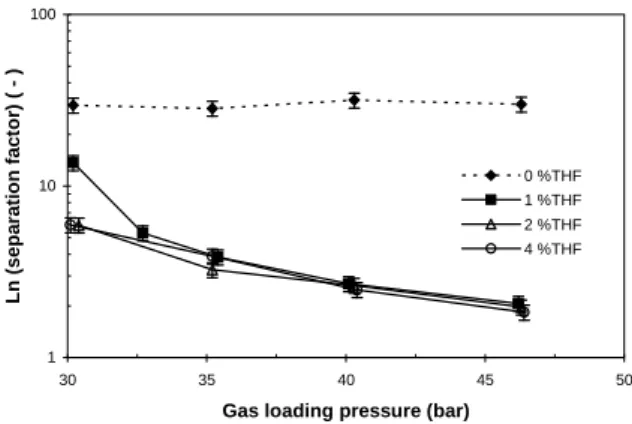
Figure 8 depicts the separation factor measured as a function of gas loading pressure for the different THF concentrations investigated.
In the absence of THF in the aqueous phase, hydrate formation does not take place, and the gas removal process is totally controlled by the
solubility of CO2 and CH4 into the aqueous
phase. The large separation factors ( > 28)
observed reflects the fact that CH4 solubility in
1 10 100
30 35 40 45 50
Gas loading pressure (bar)
Ln (separ atio n fac tor) ( - ) 0 %THF 1 %THF 2 %THF 4 %THF
Figure 8. Influence of gas loading pressure on separation
factor at different THF concentrations
In the presence of THF, the formation of hydrates, which are much less selective towards
CO2 than aqueous phase solubilization, results in
a lower selectivity in comparison to the situation where no hydrates are formed (absence of THF). The decrease of the separation factor with increasing gas loading pressure results from the
proportional increase of the amount of CH4
removed (Figure 5). This result is consistent with that obtained by van Denderen at al. [6] and by Li et al. (2009) [20], who provide evidence for a
higher CO2 capture selectivity at low pressure.
This effect is merely due to the fact that a lesser quantity of hydrates form and therefore more unconverted (or ‘free’) water remains in which a
much larger proportion of CO2 is dissolved.
Except for the lowest gas loading pressure
investigated in this work, CO2 capture selectivity
does not appear to depend on THF concentration. The experiment carried out with aqueous solutions containing 1 wt% THF and a gas loading pressure of 30.2 bar shows a higher separation factor compared to the experiments carried out with more concentrated solutions (and same loading pressure). As pointed out above, this large separation factor is likely to result from a lower conversion of water into hydrate or, equivalently, a larger quantity of ‘free’ water able
to dissolve much more CO2 than methane. In fact,
a direct visual observation through the sapphire windows reveals in this case the presence of a large amount of “free” water at the end of the hydrate formation.
We infer from these results that the CO2
selectivity of the hydrate phase at the equilibrium
does not depend on THF concentration, at least in the range of concentrations considered in this study (1 – 4 wt% THF).
CONCLUSION
In this work, a study of the influence of THF concentration in water and the gas loading
pressure on CO2 capture by hydrate formation
from a CO2-CH4 gas mixture has been presented.
The presence of THF in the aqueous phase is mandatory for hydrate formation to occur. The rate of hydrate formation is observed to increase with THF concentration.
The separation factor, i.e. the selectivity of CO2
removal by hydrate crystallization, is found to be constant in the range of THF concentrations studied (i.e., from 1 to 4 wt% THF), and to decrease when the gas loading pressure increases.
Further investigations with others CH4 – CO2 gas
mixtures and a relevant choice of different additives are needed to better characterize the separation process and its efficiency for capturing
CO2 from CH4 – CO2 streams. In complement,
experiments with pure fluids are also needed for a better understanding of the driving mechanisms.
An effort is done in this direction with pure CO2
and THF and SDS as additives in the companion paper by Torré and co-workers [21].
ACKNOWLEDGMENTS
The authors acknowledge the financial support from Total E&P Recherche Developpement (“Gas Solutions” Project). Marvin Ricaurte thanks to Fundayacucho from Venezuela for supported his doctoral program.
REFERENCES
[1] BP. Statistical Review of World Energy 2010. June 2010. United Kingdom. See also: www.bp.com/statisticalreview
[2] Kohl A, Nielsen R. Gas Purification. Houston: Gulf Publishing Company, 1997. [3] Sloan ED, Koh CA. Clathrate hydrates of
natural gases. New York: CRC Press, 2008.
[4] Sum AK, Koh CA, Sloan ED. Clathrate
hydrates: from laboratory science to engineering practice. Ind. Eng. Chem. Res.
2009;48:7457-7465.
[5] Lee HJ, Lee JD, Linga P, Englezos P, Kim YS, Lee MS, Kim YD. Gas hydrate formation
process for pre-combustion capture of carbon dioxide. Energy 2010;35:2729-2733.
[6] van Denderen M, Ineke E, Golombok M. CO2
removal from contaminated natural gas mixtures by hydrate formation. Ind. Eng. Chem. Res.
2009;48:5802-5807.
[7] Herri JM, Bouchemoua A, Kwaterski M, Fezoua A, Ouabbas Y, Cameirao A. Gas hydrate
equilibria for CO2-N2 and CO2-CH4 gas mixtures
– experimental studies and thermodynamic modelling. Fluid Phase Equilibria
2011;301:171-190.
[8] Seo YT, Lee H. Hydrate phase equilibria of
the carbon dioxide, methane and water system.
J.Chem. Eng. Data 2001;46:381-384.
[9] Seo YT, Kang SP, Lee H, Lee CS, Sung WM.
Hydrate phase equilibria for gas mixtures containing carbon dioxide: a proof-of-concept to carbon dioxide recovery from multicomponent gas stream. Korean J. Chem. Eng.
2000;17(6):659-667.
[10] Golombok M, Ineke E, Rojas JC, He YY,
Zitha P. Resolving CO2 and methane hydrate
formation kinetics. Environ. Chem. Lett.
2009;7:325-330.
[11] Gayet P, Dicharry C, Marion G, Graciaa A, Lachaise J, Nesterov A. Experimental
determination of methane hydrate dissociation curve up to 55 MPa by using a small amount of surfactant as hydrate promoter. Chemical
Engineering Science 2005;60:5751-5758.
[12] Kalogerakis N, Jamaluddin AKM, Dholabhai PD, Bishnoi PR. Effect of surfactants
on hydrate formation kinetics. (SPE 25188).
Proceedings of SPE International Symposium on Oilfield Chemistry, New Orleands, 1993.
[13] de Deugd RM, Jager MD, de Swaan J.
Mixed hydrates of methane and water – soluble hydrocarbons modeling of emprirical results.
AIChe Journal 2001;47(3):693-704.
[14] Shin HJ, Lee YJ, Im JH, Han KW, Lee JW, Lee Y, Lee JD, Jang WY, Yoon JH.
Thermodynamic stability, spectroscopic identification and cage occupation of binary CO2
clathrate hydrates. Chemical Engineering
Science 2009;64:5125-5130.
[15] Liu N, Gong G, Liu D, Xie Y. Effect of
additives on carbon dioxide hydrate formation.
Proceedings of the 6th International Conference on Gas Hydrates (ICGH 2008); Vancouver, 2008. [16] Torré JP, Dicharry C, Ricaurte M,
Daniel-David D, Broseta D. CO2 capture by hydrate
formation in quiescent conditions: in search of efficient kinetic additives. Energy Procedia
2011;4:621-628.
[17] Peng DY, Robinson DB. A New
Two-Constant Equation of State. Ind. Eng. Chem.
Fundamen. 1976;15(1):59-64.
[18] Campbell J. Technical assistance service for
the design, operation and maintenance of gas plants. Columbia: John Campbell Company,
2003.
[19] Adisasmito S, Frank RJ, Sloan ED Jr.
Hydrates of carbon dioxide and methane mixtures. J. Chem. Eng. Data. 1991;36:68-71.
[20] Li S, Fan S, Wang J, Lang X, Liang D. CO2
capture from binary mixture via forming hydrate with the help of tetra-n-butyl ammonium bromide.
Journal of Natural Gas Chemistry 2009;18:15-20. [21] Torré JP, Dicharry C, Ricaurte M, Broseta
D, Diaz J, Renaud X. CO2 enclathration in a
semi-continuous quiescent hydrate-forming reactor operated with pure CO2 and water
soluble additives. Proceedings of the 7th
International Conference on Gas Hydrates
![Figure 3. Pressure versus temperature for a hydrate formation/dissociation cycle. P load = 46.3 bar, [SDS] = 3000 ppm and [THF] = 4 wt%](https://thumb-eu.123doks.com/thumbv2/123doknet/3647396.107564/6.892.202.687.713.1052/figure-pressure-versus-temperature-hydrate-formation-dissociation-cycle.webp)
![Figure 4. Pressure evolution for various THF concentrations. P load = 46.3 bar, [SDS] = 3000 ppm and](https://thumb-eu.123doks.com/thumbv2/123doknet/3647396.107564/7.892.474.809.209.426/figure-pressure-evolution-various-thf-concentrations-load-sds.webp)
![Figure 6. Pressure versus time for different gas loading pressures. [SDS] = 3000 ppm and [THF] = 4 wt%](https://thumb-eu.123doks.com/thumbv2/123doknet/3647396.107564/8.892.95.429.718.930/figure-pressure-versus-time-different-loading-pressures-sds.webp)