ISBN: 978-85-89274-32-6
Editor: Incaper Format: digital/printed May 2019
INCAPER EDITORIAL BOARD - CEO
President: Nilson Araujo Barbosa
Technology and Knowledge Transfer Management: Sheila Cristina P. Posse Research, Development and Innovation Management: Luiz Carlos Prezotti Technical Assistance and Rural Extension Management: Celia J. Sanz Rodriguez Editorial Coordination: Aparecida de Lourdes do Nascimento
REPRESENTATIVE MEMBERS: Anderson Martins Pilon André Guarçoni M.
Cíntia Aparecida Bremenkamp Fabiana Gomes Ruas
Gustavo Soares de Souza José Aires Ventura
Marianna Abdalla Prata Guimarães Renan Batista Queiroz
GRAPHIC DESIGN, ELECTRONIC EDITING, FINAL ARTWORK AND COVER
Laudeci Maria Maia Bravin
ENGLISH TRANSLATION
Marcelle Gualda Pasolini
CATALOGING
Merielem Frasson da Silva
PHOTO CREDIT
Augusto Barraque, Incaper and authors’ collection © 2019 - Incaper
Capixaba Institute for Research, Technical Assistance and Rural Extension
Rua Afonso Sarlo, 160 - Bento Ferreira - CEP: 29052-010 - Vitória-ES - Brasil - Caixa Postal: 391
Telephone: 55 27 3636 9888; 55 27 3636 9846 - [email protected] | www.incaper.es.gov.br
All rights reserved under the Law No 9610, which protects the copyright. Any reproduction, in whole or in part, of this book
or of one or several of its components, by whatsoever process, is forbidden without the express authorization of Incaper or publishers.
GOVERNMENT OF THE STATE OF ESPÍRITO SANTO
Governor of the State of Espírito Santo
Renato Casagrande
DEPARTMENT OF AGRICULTURE, SUPPLY, AQUACULTURE AND FISHERIES - SEAG State Secretary for Agriculture, Fisheries,
Aquaculture and Fisheries
Paulo Roberto Foletto
CAPIXABA INSTITUTE FOR RESEARCH, TECHNICAL ASSISTANCE AND RURAL EXTENSION - INCAPER President director
Antonio Carlos Machado
Technical director
Nilson Araujo Barbosa
Administrative and financial director
Cleber Guerra
EDITORIAL COORDINATION AND PROOFREADING OF STANDARDIZATION
Liliâm Maria Ventorim Ferrão
Conilon Coffee / technical editors, Romário Gava Ferrão ... [et al.]; english translation Marcelle Gualda Pasolini. - 3edition updated and expanded. - Vitória, ES : Incaper, 2019.
974p.: il. color.
Translated from: Café Conilon, 2017 - Incaper. System Required: Adobe Reader
Access mode: https://bibliotecaruitendinha.incaper.es.gov.br/ ISBN: 978-85-89274-32-6
1. Brazil. 2. Espírito Santo (State). 3. Coffee Cultivation. 4. Conilon Coffee I. FERRÃO, Romário Gava (Ed.). II. FONSECA, Aymbiré Francisco Almeida da (Ed.). III. FERRÃO, Maria Amélia Gava (Ed.). IV. DE MUNER, Lúcio Herzog (Ed.). V. Capixaba Institute for Research, Technical Assistance and Rural Extension. VI. Title.
CDD: 633.73
Incaper - Rui Tendinha Library International Cataloging Data in Publication (ICP)
Elaborated by Merielem Frasson da Silva - CRB-6 ES/675 C129
4
Origin, Geographical Dispersion,
Taxonomy and Genetic Diversity of
Coffea canephora
Maria Amélia Gava Ferrão, Romário Gava Ferrão, Aymbiré Francisco Almeida da Fonseca, Abraão Carlos Verdin Filho and Paulo Sérgio Volpi
1 INTRODUCTION
The coffee tree is an Eudicotyledoneae plant, class of Angiosperms, Rubiaceae Family and belonging to the genus Coffea (CARVALHO, 1946; BRIDSON, 1987), which has 124 species cataloged in the literature (DAVIS et al., 2011). Of these, only Coffea arabica and Coffea canephora have significant economic importance. The other species, such as Coffea liberica, Coffea racemosa,
Coffea dewevrei, Coffea eugenoides, Coffea congensis, Coffea stenophylla, among others, have
fundamental importance in genetic breeding programs. They are used in hybridization and transfer of genes and alleles responsible for desirable agronomic characteristics (mainly related to the drought tolerance and resistance to pests and diseases) for the two species commercially produced (CARVALHO, 1946; KRUG; CARVALHO, 1951).
The coffee (Coffea sp.) is from the African continent, being C. arabica from the southwest of Ethiopia, Southeast of Sudan and northern of Kenya, and C. canephora from a wide area that extends from India to Congo, from the west coast to the central region of the continent, predominantly in regions of low altitude and higher temperatures (CONAGIN; MENDES, 1961). Currently, the arabica coffee is grown in many parts of the world: in Central and South America, Africa and East Asia; and the coffee worldwide known as robusta coffee, C. canephora, is grown in West and Central Africa, southeast Asia and in some regions of the Americas, with emphasis for Brazil (ECCARDI; SANDALJ, 2002). This latter species, widely geographic distributed, is adapted to the hot and humid regions, and in low areas of rainforest (CHARRIER; BERTHAUD, 1985). In Brazil, it is grown in regions with lower altitude and higher temperature, with an annual average between 22o to 26 oC.
C. canephora is the second most cultivated species of the genus in the world, representing
approximately 38% of production, and Espírito Santo stands as the greatest Brazilian producer of this species, designated in the State as conilon coffee.
In this chapter, it discourses on an updated review about the origin, geographical dispersion, taxonomy and genetic diversity of the species C. canephora.
2 ORIGIN AND GEOGRAPHICAL DISPERSION
A detailed study of taxonomy and coffee geographic distribution was conducted by a remarkable French botanist, Augusto Chevalier, who published several reviews of the genus Coffea species, with their respective groups in sections and subsections (CARVALHO, 1946). The highest concentration of species was found along the Congo River, in Africa; a large group was observed to be native to Madagascar, and only six species were found in Asia and Oceania. According to this author, more than 70 species originating from several tropical and subtropical regions of Africa, Madagascar and neighboring islands were described in the literature. From this description, new studies were gradually carried out, highlighting the ones conducted by Davis et al. (2006), who described 103 species in the genus Coffea, 41 located in Africa, 59 in Madagascar and three in the Mascarenhas Islands and, finally, the Davis et al. (2011) study, which included, by means of works involving morphological and molecular analyzes, over 21 species of the subgenus Psilanthopsis, totaling 124 species in the genus Coffea: 123 diploid (2n = 22 chromosomes) and one polyploid (2n = 44 chromosomes - C. arabica).
The word coffee is derived from the Arabic word quahweh, which means wine. Subsequently, the word kahvah or cahue started to be used, coffee in France, caffè in Italy, kaffee and koffie in Germany, coffee in England and café in Brazil (SMITH, 1985).
Figure 1 illustrates, in an Africa map, the areas of origin or high genetic diversity of the most known coffee species, consisting of information from collection missions and field collections. In these regions, the rainfall is, as a rule, higher than 2,000 mm per year, well distributed, with a dry season of two to three months; the relative humidity is high, and the annual average temperatures are around 26 oC, with average maximum temperature around 30 oC and minimum of 21oC (COSTE, 1992).
The arabica coffee comes from the African continent, predominantly from the highlands of Ethiopia, where it occurs spontaneously as understory plant. From Ethiopia, it was taken to Arabia in the 15th century, and from there to Asia, Europe and to almost the whole world (CHEVALIER, 1929, apud CARVALHO, 1946).
The commercial cultivation of coffee has begun in Yemen with the species C. arabica. It had a quick development, especially after its introduction in South America, around the year 1727. Between 1870 and 1900, it was observed a high incidence of leaf rust, caused by Hemileia vastatrix, in the south and east regions of Asia, which was probably the main stimulating reason to the use of the C. canephora species, since this one presented resistance to the disease (CHARRIER; BERTHAUD, 1988; VAN DER VOSSEN, 1985).
The first crops and improvement work with C. canephora were carried out in Java, around 1900, seeking to establish the fundamental biological bases to the improvement of the species. Its cultivation expanded later to other regions of Africa, America and Asia (CHARRIER; BERTHAUD, 1988), notably from the emergence of soluble coffee, in the 1950s, and its use in
blends of roasted and ground coffee (MALTA, 1986).
habitat , that are quite distinct among the different species, specially regarding altitude, rainfall
and soil types. C. canephora is practically distributed in the whole Africa, predominantly in the western, central-tropical and subtropical regions of the continent, including large areas in the Republic of Guinea, Ivory Coast, Liberia, Sudan, Uganda, Cameroon, Congo, Gabon, Central African Republic and the Democratic Republic of the Congo (CARVALHO, 1946; CHARRIER; BERTHAUD, 1985; COSTE, 1992; MONTAGNON et al., 1998b). A high concentration of plants was spontaneously found in a vast area, in the region of dense rainforest and in places where the altitude varies from sea level, in Gabon, to altitudes above 1,300 m in Angola, Cameroon and Ivory Coast.
Figure 1. Natural distribution of the most known species of the genus Coffea in Africa.
Source: Adapted from Carvalho (1946) and Charrier and Berthaud (1985).
The species C. canephora differs from C. arabica in several agronomic characteristics. The main ones are: 1) multi-stem shrubs; 2) larger and wavy leaves, with lighter green color; 3) Self-incompatible flowers; 4) a little more spherical, smaller fruit, with red, yellow and orange colors when ripe and thinner exocarp; 5) Seeds of variable size, with silver cling film, green endosperm and higher caffeine content (CARVALHO, 1946). In this context, Smith (1985) reports, with surprise, the analyzes results of robusta coffee samples, that identified a caffeine content higher than 2%, while the arabica was around 1%, in addition to high quantity of
soluble solids, which are important and demanded in the soluble coffee industry.
This species includes several varieties such as: Kouillou (Conilon), Robusta, Sankuru, Bukaba, Niaculi, Uganda, Maclaud, Laurentti, Petit, Indénié, Nana, Polusperma, Oka, among others (CHARRIER; BERTHAUD, 1988). The name “robusta” of the C. canephora species comes from this coffee rusticity and resistance to diseases, which is considered as a resistant plant to be grown in equatorial climate.
Historical records show that the first commercial cultivation of robusta started in Congo, in 1870, using seeds of wild plants collected on the banks of Lomani river (ECCARDI; SANDALJ, 2002). Close to the end of the 19th century, the French cultivated robusta around the Atlantic coast of Africa, from Gabon to Congo and particularly on the banks of the Kouillou river. Botanists also discovered the same species in 1861, in the region of Bukoba, Tanzania.
The Kouillou (Conilon) variety was observed in 1880, by the French, in the wild, between Gabon and on the mouth of the Congo River, mainly along the Kouilou River region, in Africa (CHEVALIER, 1929, apud CARVALHO, 1946). Subsequently, this material was found being cultivated on a large scale in Madagascar. In 1895, the botanist Louis Pierre described the material as C. canephora. In 1897, Froehner published a description of the species. According to the same author, in 1900 seeds of C. canephora from Congo were sent to the house of Horticulture of L. Linden (Brussels), which placed it on the market under the name Coffea robusta, which was sent to Java, where it achieved great success by being to be resistant to rust. This marked the beginning of the large scale cultivation of robusta coffee in Indonesia. This plant collection has been enriched, later, with material from Gabon and Uganda. Hence the generalization of the name “robusta”. The robusta plants brought to India came from collections and selections from Indonesia, Uganda, Ghana, Mali and Ivory Coast. Subsequently, robusta cultivation spread to other regions in Africa, Asia and South America (Brazil).
Conilon coffee has its name derived from the Kouillou River in the Congo, or the Kwilu River in the Democratic Republic of Congo (formerly Zaire) (BERTHAUD, 1985). In Brazil, the Conilon variety was introduced by the State of Espírito Santo, and the name “conilon” originated from the word Kouillou, with the letters K and U replaced by C and N, respectively (FERREIRA, 1986).
Montagnon, Leroy And Eskes (1998a) present, in an illustrative way, the main selection sites of C. canephora and the dispersion of genetic material (Figure 2).
The first report on the introduction of the C. canephora species in the State of Espírito Santo was gently found and provided by the renowned Journalist Ronald Mansur. Searching for documents about the conilon coffee origin, in the Governor of the State of Espírito Santo, Jeronimo Monteiro’s reports (1909-1912) about agriculture, exhibition in the year 1912, it is the following quote:
“[...] I’ve purchased, on several occasions, a large portion of several products seeds (SIC) of easy and advantageous culture and got them distributed for free. A few time ago, when I was in Rio de Janeiro, I purchased two thousand seedlings and fifty (SIC) liters of excellent quality coffee seeds, the “Conillon”, and all of them have already been distributed [...]” (MONTEIRO, 1913, p. 172, emphasis added).
Figure 2. Main centers of Coffea canephora selection and movement of genetic material.
Source: Adapted from Montagnon et al. (1998a).
In the publication of the Development Bank of Espírito Santo (Bandes - Banco de Desenvolvimento do Espírito Santo) (1987), it is noted that, in Brazil, the C. canephora species was introduced in Espírito Santo with its first seeds planted in the municipality of Cachoeiro de Itapemirim, and later taken to the northern region of the State.
The reports about the species introduction in Espírito Santo are not conclusive regarding date. The Instituto Brasileiro do Café - IBC (Brazilian Institute of Coffee), published in the year 1964, a document on the coffee plantations in the State of Espírito Santo, in which t describes that the Robusta variety was introduced around 1925 (IBC 1964). In this document, it is submitted that the distribution of existing robusta coffee in the year of 1961 was rather irregular, suggesting that this variety has been discontinuously cultivated in Espírito Santo. The number of coffee plants existing in 1961 (326,928) indicated that the Robusta variety covered only 2.4% of the total number of plantations (13.622 million coffee trees) and that the average age of this crops variety was nine years old. A detailed evaluation revealed that the Robusta variety would have been introduced in a very small scale and would have had a certain impetus of planting in the period during the Second World War and, subsequently, in the triennial 1949/1951. From that point, the new plantations of the species would have lost
much of its expression in the state coffee growing, resuming its growth from 1957. The number of coffee trees per age, shown by the IBC in the period of 1961, indicated a greater number of plants in the southern region in relation to the northern region of Espírito Santo and, in the latter, the plant population grew rapidly in the younger coffee trees, which characterized a progressive displacement of Espírito Santo coffee-growing towards the region located on the left bank of Doce River. It also stated that, in the State, the participation of conilon and recent cultivars of arabica (Caturra and New World) grew substantially in the new plantations, highlighting the case of conilon, which accounted for 7.2% of the coffee trees up to three years old and 1.8% of coffee trees above this age.
Later, it was found in papers presented by the IBC that the coffee area of this species in the State, in 1980, consisted of about 130 million plants (IBC, 1981), and in the harvest of 1982/83, 290 million coffee trees, were distributed as it follows: 205 million in the northern region, 60 million in the south region and 25 million in the central mountain region (PAULINO et al., 1984). These cyclical data demonstrates the great expansion of the cultivation in Espírito Santo, which rose from 13.5 million to 290 million plants in the period from 1961 to 1983, and from this number to approximately 706 million in the year 2015 (CONAB, 2015).
Fazuoli (1986) mentions that, the material of the C. canephora species from the Instituto Agronômico de Campinas - IAC (Agronomic Institute of Campinas) collection, the Kouillou seeds came from Espírito Santo and were also collected in Rio Claro, in the forest garden of Companhia Paulista de Estradas de Ferro (São Paulo Railway Company). In the forest garden, there was a collection of Coffea species, brought from Indonesia by Dr. Edmundo Navarro de Andrade (CARVALHO; FAZUOLI, 1993).
The production of the species was of minor importance until the frost occurred in 1975, in Paraná, which marked indelibly the history of conilon production in Brazil, when, for the first time, there were lines of funding for the planting of the species. With the government encouragement, Espírito Santo revitalized itself in agricultural terms, which enabled it to surpass more traditional producer states, standing out as the greater producer of robusta in Brazil.
Thus, in the last four decades, the planting of the species expanded fastly in the State of Espírito Santo, predominantly in the areas below 450 m altitude, and in Rondônia. There was also a significant expansion in the last decade, in neighboring areas to the State of Espírito Santo, as in the south of Bahia, and in the Doce River valley, in Minas Gerais (MATIELLO, 1998; FERRÃO et al. 2012; FONSECA et al., 2015).
According to Fonseca (1995), except for a few existing crops in the State of Rondônia, Brazil cultivates the Conilon variety, introduced from the selections of the Kouillou group. The expansion of its cultivation in Espírito Santo was initially by the sexual multiplication of parent plants selected by the farmers, over the years, which led to the establishment of populations with wide genetic variability, due to their natural reproduction characteristics.
Later, in the genetic breeding program of the Instituto Capixaba de Pesquisa, Assistência Técnica e Extensão Rural - Incaper (Capixaba Institute for Research, Technical Assistance and Rural Extension), such variability was explored through different strategies, discussed
in chapters 6 and 9, resulting in the development and availability of nine cultivars, which constitute the basis of the Capixaba Coffee Area. Currently, it is the species of greater relevance in the State and it constitutes in basic genetic material in Brazil to study the resistance to rust, nematodes, stem borer, citrus mealybug, drought, among others, as well as the quality of the product (FONSECA, 1996; FERRÃO, R.; FONSECA; FERRÃO, M., 1999; FERRÃO et al. 2007; FERRÃO et al. 2011, FONSECA et al., 2015).
3 BOTANICAL DESCRIPTION AND REPRODUCTIVE SYSTEM
With the expansion of the coffee cultivation in the world, it began to arise the botanical descriptions of several species within the genus Coffea, whose group was becoming complex. Linnaeus (1737), cited by Carvalho (1946), who described the first species of coffee, with the name of C. arabica L. Later, new species have been described by botanists gradually. In 1897, the German botanist Albrecht Froehner, reviewing the genus Coffea, described several other, among which the C. canephora species Pierre ex Froehner, wide geographic distribution in Africa (CHARRIER; BERTHAUD, 1980).
The coffee is an Eudicotyledons plant, class of Angiosperms, subclass of Sempetals, order Rubiales, family of Rubiaceas, tribe Coffeeae, genus Coffea (CARVALHO, 1946). The genus Coffea is composed of two subgenera, Coffea and Baracoffea (BRIDSON, 1987), and the subgenus Coffea covers 124 species (DAVIS et al., 2006, 2011).
Carvalho (1946), presented the division of the genus Coffea proposed by Chevalier (1942) based on the geographic distribution, which has divided this genus into five sections: Eucoffea, Mozambicoffea, Mascarocoffea, Paracoffea and Argocoffea (Table 1). In turn, the Eucoffea section is divided into four subsections: Erithrocoffea, Melanocoffea, Pachycoffea and Nanocoffea. The Eucoffea section brings together the most important species, such as
C. arabica and C. canephora, which have commercial expression, in addition to C. liberica, C. congensis, Coffea dewerei, among others. According to the same author, there are controversies
regarding to the taxonomy of the species of Coffea; many species from Asian regions and described, initially, as belonging to this genus are no longer considered as true species of
Coffea. However, he mentions that in Chevalier’s publications, it is reported that plants of
all species of section Eucoffea produce seeds which, when conveniently dried, roasted and ground, form by infusion, the beverage called coffee, more or less rich in caffeine and with pleasant aroma. Based on this information, there was a particular interest in knowing all species in this section, which led Chevalier to subdivide it into subsections.
Recent studies involving morphological and molecular markers, enabled the reformulation of the taxonomic framework of the coffee tree, which is classified in the family Rubiaceae, subfamily Ixoroideae, tribe Coffeeae DC., genus Coffea L., subgenus Coffea and Baracoffea. The subgenus Coffea presents wide occurrence, covering the entire area of the genus distribution, while the subgenus Baracoffea is restricted to the Madagascar island, northeastern Kenya and southeast of Somalia (DAVIS et al., 2005, 2006; MAURIN et al., 2007).
Table 1. Classification proposed by Chevalier (1942)
Genre Section Subsections Species
Coffea
Aracoffea Miquel
C. bengalensis (Roxb) Roem.et Sch. C. horsfieldiana Miq. C. fragrans Wall. C. whightiana Wall. C. travancorensis Wall. C. floresiana Boerlage C. florcifoliosa Chev. C. grevei Drake ex Chev. C. cochinchinensis Pierre ex Pitard C. dongnaiensis Pierre ex Pitard C. uniflora K. Schum.
Argocoffea Pierre
Eu-Argocoffea Chev.
C. jasminoides Welw. C. rupestris Hiern.
C. afzelii Hiern (= C. ligustrifolia Stapf) C. nudillora Stapf. C. melanocarpa Welw. Argocoffeopsis(Lebrun)Chev. C. scandens K. Schum. C. subcordata Hiern. C. claessensii Lebrun. C. pulchella K. Schum. Mascarocoffea Chev
Verae Chev. C. lancifolia Chev.
Mauritianae Chev. C. humblotiana Baill.C. mauritiana Lamk.
C. nossikumbaensis Chev.
Multiflorae Chev. C. gallienü DubardC. resinosa (Hock. f.) Radlk. Sclerpphyllae Chev. C. bertrandi Chev.
Terminalis Chev.
C. boiviniana (Baill.) Drake C. buxifolla Chev C. pervilleana (Baill.) Drake C. augagneuri Dubard C. bonnieri Dubard
Brachyaiphon Dubard ex Chev. C. alleizetti DubardC. commersoniana (Baill.) Chev. Macrocarpa Chev. C. macrocarpa A. Rich.
Garcinioides Chev. C. mogeneti Dubard C. tetragona Dubard C. dubardi Jumelle Eucoffea K. Schum. (emend.) non Benth. et Hook Erythrocoffea Chev. C. arabica L. C. moka Hort. C. congensis Froehner C. canephora Pierre Pachycoffea Chev. C. liberica Hiern C. klainii Pierre C. oyemensis Chev. C. dewevrei De Wild. et Dur.
Melanocoffea Chev. C. atenophylla G. Don. C. affinis De Wild. C. carrisoi Chev. Nanocoffea Chev. C. brevipes Hiern C. bumilis Chev. C. montana Schum. C. togoensis Chev. C. mayombensis Chev. C. kivuensis Lebrun. Mozambicoffea Chev.
C. racemosa Lour. (= C. Ibo Froehner, C. Swynnertonii Moore) C. zanguebarise Lour.
C. eugenioides Moore (= C. intermedia Chev.) C. ligustroides Moore
C. canephora comes from a large hot, humid and low altitude region, which extends from
Guinea to Congo, the west coast to the central region of the African continent, mainly in western and central tropical and subtropical regions of the continent, especially in the Republic of Guinea, Liberia, Ivory Coast, Cameroon, Congo, Gabon, Central African Republic, Democratic Republic of the Congo (mainly) and Uganda (CARVALHO et al., 1946; BERTHAUD, 1986).
It is a diploid (2n = 2x = 22 chromosomes), perennial, allogamous, easy to vegetative propagation species which presents genetically structured germplasm in polymorphic populations, composing well defined heterotic groups, with highly heterozygous individuals (CONAGIN; MENDES, 1961; BERTHAUD, 1980). The plants, in higher conditions of temperature and rainfall, can reach up to 5 meters in height. The leaves are larger and show less intense green color than the C. arabica ones, elliptical, lanceolate, with wavy edges and very prominent ribs. The flowers are hermaphroditic with stamens adhering to the corolla tube, white, in a large number per inflorescence and by leaf axil. The fruits have variable shape and number according to the genetic material, from 30 to 60 per leaf whorl, smooth surface, with slim exocarp, aqueous mesocarp and thin endocarp (RENA; MAESTRI, 1986; FAZUOLI, 1986).
This species and the other diploids studied of the genus, unlike C. arabica, are self incompatible (CONAGIN; MENDES, 1961; BERTHAUD, 1980). And, the cross-fertilization happens after the flowers opening with the pollination being performed with the help of wind and insects.
The term incompatibility is used to describe the phenomenon of the plant inability to produce seed when self pollinating or crossed with genetically related individuals, preventing inbreeding or fertilization and zygote formation. According to Mendes (1942), observations on the self-incompatibility in diploid species of coffee began in the Dutch Indies, mainly in Java, where some “batches” containing a large number of plants from same clone of C.
canephora led to a big failure regarding the production. Based on this fact, the same author
says that a series of studies have been conducted by other researchers, which showed the failure of artificial self pollinating in robusta coffee, highlighting the results of Devreux et al research. (1959), Conagin and Mendes (1961), Berthaud (1980) and Lashermes et al. (1996a), who demonstrated that the self-incompatibility in C. canephora is of Gametophytic type, controlled by the gene S with an allelic series (S1, S2, S3...). Details about the self-incompatibility is presented in Chapter 7.
Based on the natural variability found in the species, several studies were conducted to verify the genetic divergence and define improvement strategies and correlations with the geographical origin.
4 GEOGRAPHICAL DISTRIBUTION
With the objective of characterizing the different genotypes of the species based on geographic distribution and phenotypic, of adaptation and genotypic characteristics, many authors have studied distinct genetic materials using different methodologies.
Thus, initially working with the phenotypic characterization of distinct accesses from different regions of Africa, Berthaud (1986) subdivided the species into two groups, classified as Guinean and Congolese. In the Guinean group, the focus was on genetic materials originating from west Africa (Guinea, Liberia and Ivory Coast); and in the Congolese group, the accesses from the Central African Republic, Democratic Republic of the Congo, Cameroon, Uganda, Gabon and Congo. It was verified that the Guinean group focused the plants with shrubby growth habit, branched stems, branches with smaller internodes, elongated and narrow leaves, more precocious flowering, drought tolerance, greater susceptibility to diseases and higher caffeine content. On the other hand, the Congolese group gathers plants with bushy-erect growth habit, larger and less branched stems, larger leaves and fruits, later maturation, greater vigor and greater resistance to diseases.
Subsequently, Montagnon, Leroy and Yapo (1992), using analyzes with isoenzymes, subdivided the Congolese group into two subgroups: SG1 and SG2.
Dusset et al. (1999), working with isoenzymes, found the same result. However Using RFLP markers, they identified two other subgroups within the Congolese group, called B and C.
According to these authors, the subgroup SG1 gathers the populations form Gabon and south Congo. It is mostly formed by materials of the Kouillou type, some kinds of robusta hybrids or between the two groups. Its plants have branched stems, medium-sized and sharp leaves, fruit maturation ranging from early to late, moderate resistance to rust, higher caffeine content in grains (2.7%), moderate drought tolerance, and superior drink quality compared to the plants classified in the Guinean group.
The subgroup SG2 comprises the genotypes called “robusta”, cultivated in Central Africa (Democratic Republic of Congo, south Central African Republic and southwestern Cameroon). They are characterized as stem plants, less branched than the Guinean group, have larger leaves, internodes of the larger branches, lower caffeine contents (2.3%), greater resistance to rust, medium late maturation of fruits and greater susceptibility to drought.
The subgroups B AND C gather genotypes with similar characteristics to the SG2 and from the south and southeast Africa (subgroup B) and in the southeastern region of Central Africa,northeastern Democratic Republic of Congo and southeastern Cameroon (subgroup C).
More recent work, referring to the genetic diversity of C. canephora, performed with microsatellite markers in a population with 519 different accesses, showed five groups clearly separated (Figure 3). In this grouping, were included conilon accesses from Brazil, represented by the color violet in the diagram. It was verified that the conilon were grouped in group SG1, which corroborates the Montagnon’s (2000) statement, that the mentioned group comprises materials of kouillou (conilon), robusta and hybrid between the two materials types.
In the same investigation line, Alekcevetch et al. (2013) analyzed, through microsatellite markers, the genetic similarity between 48 parental clones of C. canephora Conilon variety and 266 plants and descendants of these parental from the genetic breeding program of Incaper and representative accesses of groups SG1, SG2 and Guinean (Figure 4). The results showed considerable genetic variability and formation of two distinct groups (triangle lower
vertex ), composed of parental (red) and individuals of the population (pink), being that many individuals dispersed placed themselves between the vertex of the intermediary population and dispersed of the base and intermediary region. It was observed a greater genetic proximity of SG1 group accesses (green dots), with parental and the studied conilon population.
According to Maurin et al. (2007), the population structure described is strongly related to the geographical isolation and the historical events that refer to the last glaciations occurred 18 thousand years ago. In nature, the Congolese and Guinean groups are separated by the Dahomey interval, which comprises a narrow strip of drylands (approximately 300 km wide), located between the forest blocks of central and west Africa.
The joint results of different studies related to the grouping of C. canephora genotypes and geographical origin are summarized in Table 2 and illustrated in Figure 5.
Table 2. Grouping structure of Coffea canephora species based on different genetic and molecular studies e moleculares 1Berthaud (1986) 2Montagnon et al. (1992) 2Dusset et al. (1999) 3Dusset et al. (1999) 4Cubry et al. (2008) Geographical Origin
Guinean Guinean 1 D Guinean Guinea and Ivory Coast
Congolese SG1 3 A SG1 Atlantic Side of Central Africa (Gabon and Congo)
SG2 2 E SG2
Congo River Basin (DRC), south Central Africa
B B
C C Southwest Central Africa, DRC and Cameroon
Ug Uganda
1= phenotypic markers; 2= isoenzymes; 3= RFLP; and 4= microsatellites; DRC = Democratic Republic of Congo.
Figure 4. Grouping of Coffea canephora genotypes: conilon accesses from Incaper (parental in red and descent in pink) and representatives of the groups SG1 (green), SG2 (blue) and Guinean (yellow).
Source: Alekcevetch (2003).
Population SG1
Parents from Incaper SG2
Guinean
Figure 3. Grouping of Coffea canephora based on microsatellite markers.
Source: Cubry et al. (2008), adapted by Montagnon
Figure 5. Genetic origin of the main subgroups of Coffea canephora (CUBRY et al.,2008 adapted by Montagnon, Cubry and Leroy, 2012).
In the collections, is not easy to differentiate the groups (Guinean and Congo) and the subgroups. Generally, varieties of both groups, as well as the coffees produced by them, are designated commercially in the world of “Robusta Coffee” and in Brazil, the majority of “Conilon” (FONSECA, 1995; 2014; FERRÃO, SAKAYAMA and FONSECA, SAKAYAMA; BOREM, 2015).
5 GENETIC DIVERSITY
In global terms, the biodiversity, can be defined as the variability that occurs among living organisms from all origins and ecological complexes, which include diversity within and among species and of ecosystems. Morales, Valois and Nass (1997) consider diversity and genetic variability alternative terms to represent the total genetic variation present in a population or species subjected to evolutionary processes.
With the objective of quantifying and characterizing the genetic diversity of cultivated species, the Russian geneticist Nicolai Ivanovich Vavilov began, in the 1920s, expeditions to survey and collection of germplasm around the world (ALLARD, 1971). Vavilov identified in some regions of the world, isolated by mountains, plains or deserts, great diversity of certain species, and these regions were called origin centers. From this study, Vavilov proposed eight origin centers of species, among them, the Central Ethiopia, in which he describes, among other species, the coffee. In addition to the origin centers, there are the diversity centers, which are the regions where the species was domesticated, that may or may not correspond to the origin centers. Central Africa and, especially, the Congo Basin are particularly rich centers of genetic diversity of C. canephora, as well as many other diploid species of the genus (CHARRIER; BERTHAUD,1985).
Proper maintenance of germplasm depends, mostly, on the evaluation and characterization of the genetic variability contained within it. This evaluation contributes to the prevention of possible genetic losses, such as those that may happen during the multiplications of collected accesses, and allow the establishment of collections sites or areas that contain greater variability, thus assisting in the planning of new collections.
The species of the genus Coffea compose a magnificent collection of genes and alleles useful to the genetic improvement of cultivated species. However, the risk of extinction of natural populations and vulnerability of ex situ germplasm collections are significant threats to the integrity of this heritage.
Concerned with the loss of coffee genetic variability, from 1960, the Food and Agriculture Organization of the United Nations (FAO) and French organizations intensified efforts of germplasm collection. At the time, emphasis was placed on the collection of C. arabica, due to its greater expression in the world.
For Dulloo and Walyaro (2000), the origin regions of C. canephora in Africa, the Madagascar forests and Mauritius Island and Réunion are places that still have traditional and old varieties that may be sources of genetic diversity, which, because of deforestation, may be threatened. Thus, expeditions to collect botanical materials in these regions should be prioritized and facilitated. However, permission to collect has not been easy to get and, in many cases, the country’s legislation does not allow the exchange of genetic material.
According to Souza (2011), in the Red List of the International Union for Conservation of Nature and Natural Resources (IUCN - Lista Vermelha da União Internacional para a Conservação da Natureza e dos Recursos Naturais), we observed that 72 of the 103 species of coffee cataloged at the time were under some level of threat of extinction (Table 3). C. arabica and C. canephora, found in Africa, were classified as vulnerable risk and little worrying risk, respectively.
In the literature, a small number of germplasm banks of the genus Coffea are registered, responsible for the maintenance, conservation and characterization of the different species, According to Dulloo and Walyaro (2000), the main collections in the African continent would be the Ivory Coast (more than 8,000 accesses), Ethiopia (1,806 accesses), Cameroon (1,552 accesses), Madagascar (1,282 accesses), Kenya (634 accesses) and Tanzania (110 accesses). Each one of these collections is unique, containing different materials adapted to their sub-region. In Asia, there is the collection of India, located in Central Coffee Institute, and in Europe, the collections of the Centro de Investigação das Ferrugens do Cafeeiro - CIFC (Center for Research of Coffee Rust), in Oeiras, Portugal, and the Instituto de Pesquisas para o Desenvolvimento - IRD (Institute of Research for Development), in Montpellier, France. The collections of the National Center of Coffee Research Pedro Uribe Mejia - Cenicafé (Centro Nacional de Investigaciones Café
Pedro Uribe Mejia), in Colombia, and the Tropical Agronomic Center for Research and Teaching
- CATIE (Centro Agronomico Tropical de Investigacion y Enseñanza) in Costa Rica, are the main sources of variability in our region (BETTENCOURT; KONOPKA, 1988; DULLOO et al.,1998). Other Central American countries also have small collections, as is the case of El Salvador and Guatemala. In Brazil, different institutions work with the characterization and maintenance of
Table 3. Coffea species listed in the red List Vermelha of the International Union for Conservation of
Nature (IUCN)
Critical danger of extinction Africa
C. anthonyi Stoff. &. F. Anthony, ined. C. charrieriana Stoff. &. F. Anthony, ined. C. fotsoana Stoff. & Sonké
C. heterocaiyx Stoff.
C. kihansiensis A. P. Davis & Mvungi C. kimbozensis Bridson
C. lulandoensis Bridson
Madagascar
C. andrambovatensis J.-F.Leroy C. boinensis A. P. Davis & Rakotonas., ined C. gallienii Dubard
C. littoralis A. P. Davis & Rakotonas. C. montis-sacri A. P. Davis
C. pterocarpa A. P. Davis & Rakotonas., ined. C. rakotonasoloi A. P. Davis
Threatened with Extinction Africa
C. bakossii Cheek & Bridson C. bridsoniae A. P. Davis & Mvungi C. carrissoi A. Chev.
C. leonimontana Stoff.
C. mapiana Sonké, Nguembou & A. P. Davis C. pocsii Bridson
Madagascar
C. abbayesii J.-F.Leroy C. alleizettii Dubard C. ambanjensis J.-F.Leroy
C. ambongensis J.-F.Leroy ex A. P. Davis &. Rakotonas., C. ankaranensis J.-F.Leroy ex A.P.Davis & Rakotonas. C. augagneurii Dubard
C. betamponensis Portères & J.-F.Leroy C. bonnieri Dubard
C. commersoniana (Baill.) A.Chev. C. decaryana J.-F.Leroy C. humbertii J.-F.Leroy
C. humblotiana Baill. C. jumellei J.-F.Leroy C. kianjavatensis J.-F.Leroy
C. labatii A.P.Davis. & Rakotonas., ined. C. liaudii J.-F.Leroy ex A.P.Davis C. manombensis A.P.Davis
C. mcphersonii A.P.Davis & Rakotonas. C. mogenetii Dubard
C. moratii J.-F.Leroy ex A.P.Davis & Rakotonas. C. ratsimamangae J.-F.Leroy ex A.P.Davis & Rakotonas. C. sahafaryensis J.-F.Leroy
C. sambavensis J.-F.Leroy ex A.P.Davis St Rakotonas. C. tsirananae J.-F.Leroy
C. vatovavyensis J.-F.Leroy C. vavateninensis J.-F.Leroy C. vianneyi J.-F.Leroy
C. vohemarensis A.P.Davis & Rakotonas.
Mascarenes
Coffea myrtifolia (A.Rich. ex DC.) J.-F.Leroy
Vulnerable Africa
C. arabica L. C. costatifructa Bridson C. dactylifera Robbr. & Stoff. C. fadenii Bridson
C. kapakata (A.Chev.) Bridson C. kivuensis Lebrun C ligustroides S.Moore C. mongensis Bridson C. montekupensis Stoff. C. pseudozanguebariae Bridson C. schliebenii Bridson C. logoensis A.Chev. C. zanguebariae Lout. Madagascar C. bertrandii A.Chev. C. coursiana J.-F.Leroy C. farafanganensis J.-F.Leroy C. heimii J.-F.Leroy C. mangoroensis Portères C. pervilleana (Baill.) Drake C. sakarahae J.-F.Leroy C. tetragona Jum. & H.Perrier
Mascarenes
C. macrocarpa A.Rich. C. mauritiana Lam
Low risk of threat Africa
C. humitis A.Chev.
C. magnistipula Stoff & Robbr. C. racemosa Lour.
C. rhamnifolia (Chiov.) Bridson C. salvatrix Swynn. &. Philipson C. sessiliflora Bridson
Madagascar
C. arenesiana J.-F.Leroy C. boiviniana (Baill.) Drake C. buxifolia A.Chev. C. lancifolia A.Chev. C. leroyi A.P.Davis C. resinosa (Hoolcf) Radlk C. richardii J.-F.Leroy
Little worrying Africa
C. brevipes Hiern
C. canephora Pierre ex A.Froehner C. congensis A.Froehner C. eugenioides S.Moore C. liberica Bull. ex Hiern C. mayombensis A.Chev. C. mufindiensis Hutch. ex Bridson C. stenophylla G.Don
Madagascar
C. dubardii Jum. C. grevei Drake ex A.Chev. C. homollei J.-F.Leroy C. millotii J.-F.Leroy
C. perrieri Drake ex Jum. & H.Perrier C. tricalysioides J.-F_Leroy
Insufficient data Madagascar
C. bissetiae A.P.Davis & Rakotonas., ined. C. minutiflora A.P.Davis & Rakotonas.
Not evaluated risk Africa
C. affinis De Wild. Madagascar C. fragilis J.-F.Leroy
Carvalho (1946) cites some varieties of the species C. canephora maintained in Brazil, in the collection of IAC coffee, as Polysperma, Nana, Laurenti, Bukoba and Conilon (Kouillou). According to the author, the collection of Conilon variety was obtained from Espírito Santo, and this variety of coffee tree presented variation in size, shape and coloring of the fruit, seed size and productivity, as well as uniform fruit ripening and high vigor. At that time, the possibility of the conilon being used as rootstock was already foreseen.
Currently, several Brazilian institutions have made efforts to conserve, characterize and amplify the genetic variability of C. canephora, highlighting here the Active Germplasm Bank of Incaper, composed in its majority of genetic material collected in the State and from hybridiztion and selections of its breeding program.
The collection of C. canephora introduced in Java, in 1901, derives from coffee plants already grown in Zaire, since 1895, originated in the region of Lomani River. This collection was later enriched with genetic material originated from Gabon (Kouillou) and Uganda (Coffea ugandae,
Coffea bukobensis). The collection of India has material originated from samples and selections
made originally in Indonesia, Uganda, Madagascar, Ghana, Ivory Coast, among others. The collection of Madagascar had materials introduced from three sources: Gabon, Java and Zaire. In Brazil, the cultivated genetic material comes from selection within the Kouillou (CHARRIER; BERTHAUD, 1988).
According to Charrier And Berthaud (1980), several African countries in the region of C.
canephora origin began the cultivation with the same robusta introductions from Java and
Zaire, Kouillou from Gabon, and, very rarely, Niaouli from Benin. One of the oldest varieties cultivated on a commercial scale is the Kouillou, currently found in the Ivory Coast, Congo, Gabon and Brazil.
The cultivars of C. canephora consist, basically, of clonal and synthetic varieties. The varieties of robusta group are identified in many regions with local names, often related to the origin country, which are: in Guinea, variety Maclaudi - cv. Gamé (Robusta) and cv. Gouecke (Kouillou); in the Ivory Coast, variety Maclaudi and variety Petit indiene - cv. Dianle, cv. Douekoue, cv. Touba, cv. Beoumi (Kouillou), cv. Robusta Ebobo, among others; in Togo and Benin, cv. Niaouli; in the Central African Republic, cv. Nana; in Uganda, cv. Kibale, cv. Itwara, cv. Kasai and cv. Budongo. The variety Niaouli produces few Cherry fruits, but keeps the production for almost the whole year. The variety Nana is well known for its great resistance to pests and diseases.
In Brazil, 16 cultivars registered in the Ministério da Agricultura, Pecuária e Abastecimento - Mapa (Ministry of Agriculture, Livestock and Supply) are referenced as conilon coffee cultivars, being nine of them developed by Incaper (Emcapa 8111, Emcapa 8121, Emcapa 8131, Emcapa 8141-Robustão Capixaba, Emcaper 8151-Robusta Tropical, Vitória Incaper 8142, Diamante ES8112, ES8122 - Jequetibá, Centenária ES8132 and Marilândia ES8143), one by Embrapa Rondônia (BRS Ouro Preto) and five private companies (Colatina PR6, Verdebrás G30/G35, SV2010 and Ipiranga 501). More information on these cultivars can be found in chapter 9 “Conilon coffee cultivars.”
According to Souza (2011), the competitive advantages of Conilon cultivars, in detriment of the Robusta cultivars in Brazil, are basically attributed to their drought tolerance and ease
of leading with it, allied to the historical-cultural context which was created by the absence of robusta type plants in the deployment phase of the first crops in the state of Espírito Santo.
It is worth to highlight that the majority of coffee plants cultivated in different countries have narrow genetic base. For this reason, researchers are investigating the genetic inheritance of wild plants to identify genotypes with characteristics of interest that may contribute to the increase of the genetic variability of cultivated material. The development and recombination of polyclonal hybrids and synthetic varieties represent great prospects in the improvement of the species with the use of heterotic crossings, that take advantage of the diversity among the (Congolese x Guinean) groups or subgroups (Kouillou x Robusta), in which the species is structured.
For that, the establishment and maintenance of BAGs of the species in question and other species of the genus Coffea are highly important, because among the wild forms, some have individuals with characteristics that are advantageous from the point of view of resistance to diseases, pests and tolerance to drought and other abiotic stress, biochemical composition of the grain, quality of beverage, as well as different agronomic characteristics of interest related to the root system, size and shape of leaves and fruits, plant architecture, among others.
Gene supply in collections of species can contribute positively to the development of new genotypes with specific characteristics obtained by intra and interspecific improvement, by presenting important alleles that can be transferred by means of controlled hybridization. In this context, there are, for example, some interspecific crossings between C. arabica x C. canephora, by which sources of resistance to pests, diseases and nematodes (OROZCO-CASTILLO; CHALMERES; POWELL, 1994) were transferred, as the Icatú, Hybrid Timor, Catimor, Arabusta and Apoatã (MONACO; CARVALHO; FAZUOLI, 1974; FAZUOLI, 1991). According to the authors, other important sources for the purpose of improvement are: resistance to leaf diseases (C.
canephora and C. congensis); resistance to nematodes (C. canephora and C. liberica); resistance
to the root mealybug (C. liberica); tolerance to drought and the leaf miner (C. canephora and C.
racemosa); and absence of caffeine in grains (Coffea pseudozonquebaries).
The germplasm of the major Active Banks of C. canephora of Ivory Coast, Cameroon, Uganda, India, Indonesia and Brazil are being evaluated for their genetic diversity using molecular techniques and multivariate statistical procedures using agro morphpligical characteristic (BERTHAUD, 1986; MONTAGNON et al., 1998a; DUSSET et al., 1999; FONSECA, 1999; FERRÃO et al., 2000; FERRÃO et al., 2005; CUBRY, 2009; FONSECA et al., 2007; FERRÃO et al., 2009; SOUZA, 2011, among others).
Lashermes et al. (1999) showed, through molecular analyzes, the genetic diversity of the African, important germplasm in breeding programs. Ruas et al. (1999) analyzed the genetic diversity of the germplasm collection of the Instituto Agronômico do Paraná - Iapar (Agronomic Institute of Paraná) by applying the Random Amplified Polymorphic DNA technique (RAPD). A coefficient of similarity among species was found, ranging from 0.58 (Coffea eugenioides and
C. racemosa) to 0.84 (C. arabica and C. eugenioides), revealing a considerable level of genetic
variability. The species C. arabica showed an association of 76% with C. canephora Robusta variety and 68% with C. canephora Kouillou variety, characterizing the possibility to succeed in
interspecific hybridization programs involving the most important species worldwide.
Fonseca (1999), Ferrão (2004) and Ferrão et al. (2007), studying the genetic divergence of elite genotypes of C. canephora of genetic breeding program from Incaper based on multivariate procedures, verified significant genetic variability among the genetic materials involved. The analysis with molecular markers, carried out in a group of genetic materials of the previously mentioned program, also showed a relatively wide genetic diversity (FERRÃO et al., 2005, 2009). In this study, it was observed that the component clones of each clonal variety of Incaper were distributed in several genetically dissimilar groups despite having phenotypic characteristics in common.
Souza et al. (2013) analyzed the genetic dissimilarity among 130 accesses of C. canephora from the Embrapa Rondônia collections, IAC, Incaper and UFV/Epamig. Using microsatellite markers and methods of multivariate analysis, identified high polymorphism and concentration of two large groups, formed by conilon genotypes of the Holy Spirit (Incaper) and genotypes collected in Rondônia (group 1) and by robusta genotypes of the IAC and UFV/Epamig (group 2). The accesses from Incaper showed higher genetic similarity (0.10 to 0.53) in relation to the others studied. According to the authors, despite the high polymorphism found in Brazilian crops, it is necessary to increase this diversity, because a new threshold of genetic gains is expected in breeding programs with the intensification of the use of the maintained germplasm.
Alekcevetch (2013) evaluated the genetic diversity through microsatellite markers, among 48 parental clones of C. canephora Conilon variety of Incaper BAG, as well as a population of 266 plants corresponding to a progeny generated by such parental and maintained in the experimental field of Embrapa Cerrados. The results showed genetic variability between the parental plants and those of the population descending, coancestry between parental and accesses genetically very similar. The paternity analysis showed the parental with higher allelic frequency and that have genetic participation in a quite differentiated quantity ranging from 0.38% to 24.44% of recurrence, indicating a greater genetic compatibility and/or flowering timing with a greater number of plants in the sample of 48 parental plants.
Vicentini (2013); Oliveira (2015) and Oliveira et al. (2016) studied the genetic divergence of 100 and 70 progenies, respectively, from two conilon coffee populations of Incaper breeding program, conducted by the strategy of recurrent selection. The estimates were performed based on multivariate procedures and different morphoagronomic characterization. It was verified reduced genetic variability among the selected progenies. These results, allied with the genetic self-incompatibility of species, emphasize the need for inclusion of new divergent genetic materials to ensure the recombination and obtaining continuous genetic gains.
The group of information relating to the genetic structure of the species breeding programs in Brazil show that the Brazilian germplasm of C. canephora presents important variability, but represents a small portion of the total species diversity. New collection efforts and introduction of accesses shall be performed aiming to broaden the genetic base of breeding programs and, consequently, of the national crops.
In Brazil, C. canephora germplasm of Active Banks or collections of different research institutions, as Incaper, Embrapa Rondônia, Embrapa Cerrados, IAC, Iapar and Epamig/UFV
(EIRA et al., 2007) are maintained and characterized. The Incaper BAG presents the greatest number of conilon accesses, and IAC’s of genetic material from other groups.
In recent years, it has been observed in the national coffee industry the presence of pests, diseases and nematodes, not considered important in the past and that currently have been priority problems, deserving attention in the research. In order to increase the diversity and select genetic materials as a source of desirable alleles for the problems in question, collection, installation, maintenance and characterization of germplasm strategies through BAG are alternatives that should be prioritized in policies relating to the coffee cultivation.
The methods used to preserve germplasm are basically two distinct strategies: in situ conservation, when the plants are kept in their natural habitat, and ex situ conservation , when the plants are kept out of their natural habitat. The use of only a single conservation technique may not be suitable for the maintenance of all the genetic diversity of a species (DULLOO et al., 1998). Traditionally, the species of Coffea have been conserved ex situ as plants kept in field conditions, in banks or germplasm collections, due to the loss of the power of seeds germination, in a short period of storage. However, the conservation of plants in the field constitutes an effective risk of genetic erosion due to environmental variations, the incidence of pests and diseases and other factors. In addition, there is a need for large experimental areas, high labor cost and high cost for deployment, management and maintenance of these fields.
With the advances in the biotechnology area, ex situ conservation is being studied, using procedures for tissue culture and cryopreservation. The term cryopreservation means the preservation of seeds and plant parts in the frozen state, in ultra-low temperatures, such as those studied for coffee in liquid nitrogen (-150 oC to -196 oC). To do this, several protocols have been worked out with the objective of studying the feasibility of storage and conservation of germplasm of coffee in the long term (MUNDIN et al., 2003; EIRA; REIS; RIBEIRO, 2005; DUSSET et al., 2012). According to the authors, the conservation of seeds in ultra-low temperature stops the cellular metabolism, reducing or completely eliminating the occurrence of metabolic reactions that can lead to cellular degeneration, being considered as a promising way of cells, tissues and organs of plants conservation, from which the plants can be regenerated.
All activities for the conservation of genetic resources require the diversity characterization present in gene sets and in germplasm banks (EIRA; REIS; RIBEIRO, 2005). The gene group of a cultivated species includes all cultivars, parental and related wild species, which contains genes with potential use for breeding. The characterization involves, primarily, the evaluation of morphological characters, based, a priori, on defined descriptors for the species and of direct interest of users. At the same time, it is important to complement the use of other techniques that do not suffer influence of environmental variations in the characterization of individuals, such as molecular ones, that analyze DNA polymorphism.
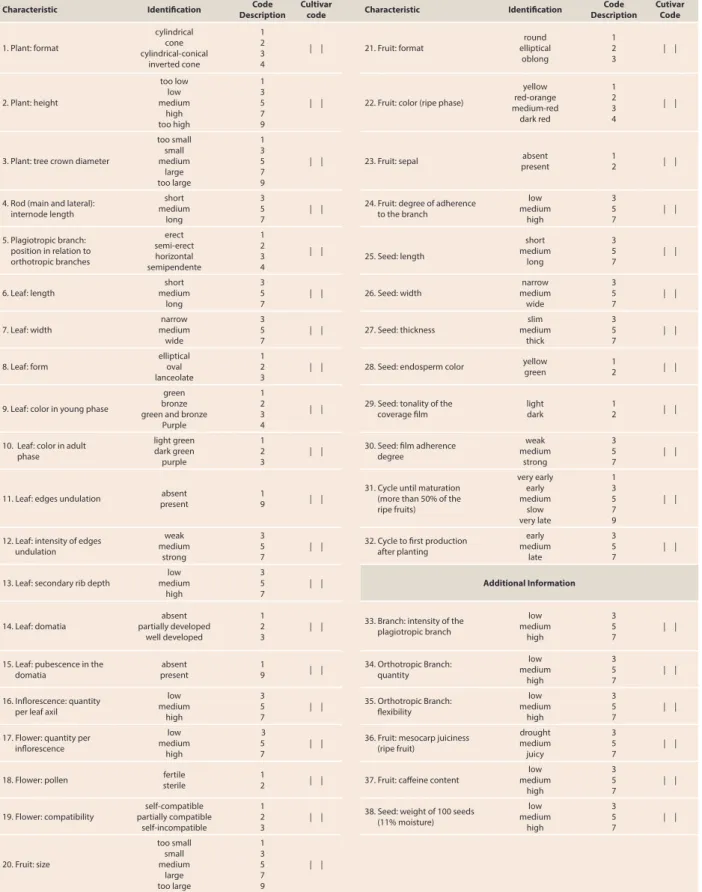
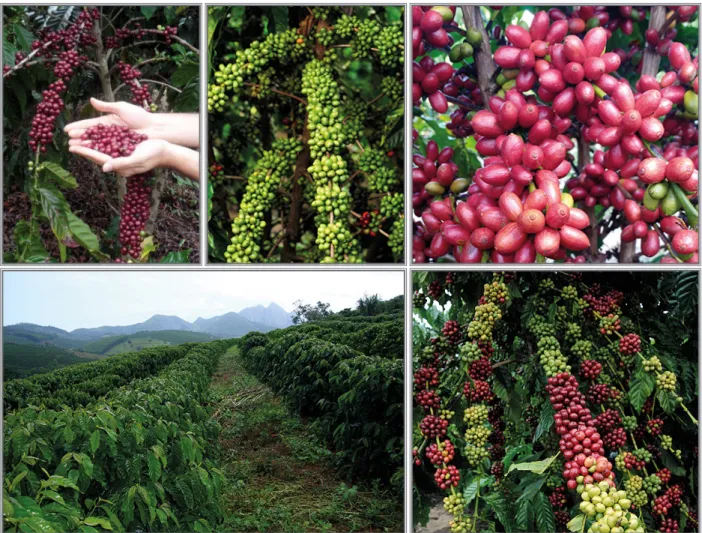
In Brazil, the main descriptors of coffee were elaborated and published by the Map (Table 4). The descriptors are basically associated with morphological and phenological characteristics. All accesses of Incaper BAG have been characterized by these descriptors and also based on molecular markers, and the data obtained are being cataloged and stored. Figure 6 illustrates
the variability found in the germplasm to different agronomic characteristics.
Table 4. Main descriptors of coffee - spp.(Coffea arabica, Coffea canephora and interspecific hybrids) published by Map
Characteristic Identification DescriptionCode Cultivar code Characteristic Identification DescriptionCode Cutivar Code
1. Plant: format cylindrical cone cylindrical-conical inverted cone 1 2 3 4
| | 21. Fruit: format ellipticalround oblong 1 2 3 | | 2. Plant: height too low low medium high too high 1 3 5 7 9
| | 22. Fruit: color (ripe phase)
yellow red-orange medium-red dark red 1 2 3 4 | |
3. Plant: tree crown diameter
too small small medium large too large 1 3 5 7 9
| | 23. Fruit: sepal presentabsent 12 | |
4. Rod (main and lateral): internode length short medium long 3 5 7 | |
24. Fruit: degree of adherence to the branch low medium high 3 5 7 | | 5. Plagiotropic branch: position in relation to orthotropic branches erect semi-erect horizontal semipendente 1 2 3 4
| | 25. Seed: length mediumshort long
3 5
7 | |
6. Leaf: length mediumshort long 3 5 7 | | 26. Seed: width narrow medium wide 3 5 7 | |
7. Leaf: width mediumnarrow wide 3 5 7 | | 27. Seed: thickness slim medium thick 3 5 7 | |
8. Leaf: form elliptical oval lanceolate
1 2
3 | | 28. Seed: endosperm color
yellow
green 12 | |
9. Leaf: color in young phase
green bronze green and bronze
Purple
1 2 3 4
| | 29. Seed: tonality of the coverage film lightdark 12 | |
10. Leaf: color in adult phase light green dark green purple 1 2 3 | |
30. Seed: film adherence degree weak medium strong 3 5 7 | |
11. Leaf: edges undulation presentabsent 19 | | 31. Cycle until maturation (more than 50% of the ripe fruits) very early early medium slow very late 1 3 5 7 9 | |
12. Leaf: intensity of edges undulation weak medium strong 3 5 7 | |
32. Cycle to first production after planting early medium late 3 5 7 | |
13. Leaf: secondary rib depth mediumlow high
3 5
7 | | Additional Information
14. Leaf: domatia partially developedabsent well developed
1 2
3 | |
33. Branch: intensity of the plagiotropic branch low medium high 3 5 7 | |
15. Leaf: pubescence in the
domatia presentabsent 19 | | 34. Orthotropic Branch: quantity
low medium high 3 5 7 | | 16. Inflorescence: quantity
per leaf axil
low medium high 3 5 7 | | 35. Orthotropic Branch: flexibility low medium high 3 5 7 | | 17. Flower: quantity per
inflorescence low medium high 3 5 7 | |
36. Fruit: mesocarp juiciness (ripe fruit) drought medium juicy 3 5 7 | |
18. Flower: pollen sterilefertile 12 | | 37. Fruit: caffeine content mediumlow high
3 5
7 | |
19. Flower: compatibility partially compatibleself-compatible self-incompatible
1 2
3 | |
38. Seed: weight of 100 seeds (11% moisture) low medium high 3 5 7 | | 20. Fruit: size too small small medium large too large 1 3 5 7 9 | |
The increase of the genetic variability of the conilon BAG is currently the main goal of the breeding program of Incaper, which has been making efforts to introduce new genotypes. To do so, special attention has been given by the team of researchers to the germplasm conservation issues, new introductions and use of recombination strategies and recommendation of cultivars that contribute to avoid the harmful process of genetic erosion.
Based on the integration between Incaper and other national institutions, in recent years, have been introduced, the IAC, Epamig/UFV and Embrapa, different genetic materials, in the state of Espírito Santo, for experimental work. At global level, the Brazilian institutions have also sought to enable the introduction of germplasm from other countries using international partnerships for projects development of mutual interest.
The introduction of germplasm must follow the legal requirements, and the introduced material must be accompanied by a Phytosanitary Certificate (GIACOMETTI, 1988). Considering the advances in the tissue culture area in recent years, the exchange of germplasm in vitro offers sanitary safety and enables the obtainment of basic healthy material.
Figure 6. Phenotypic variability found in the accesses of the Incaper Coffea canephora Active Bank of Germplasm (BAG), Marilândia/ES.
6 FINAL CONSIDERATIONS
Only the species C. arabica and C. canephora have economic importance on a global scale. However, the other species of the genus Coffea comprise a large collection of genes and alleles that are important for the improvement of cultivated species. The extinction risk of natural populations and the vulnerability of ex situ germplasm collections are considerable threats to the integrity of this heritage. The conservation, extension and the characterization of germplasm collections are actions that require continuity so that the species has the genetic potential exploited and the variability characterized to meet the constant demand for genetically improved cultivars and adapted to climate changes that happen. For that, it is necessary to introduce new genetic materials, mainly wild species collected in regions of origin and diversity of the genus Coffea.
7 REFERENCES
ALLARD, R. W. Princípios do melhoramento genético de plantas. São Paulo: Edgard Blucher, 1971. 381 p. ALEKCEVETCH, J. C. Estudo da diversidade genética, por meio de marcadores moleculares, de uma
população de Coffea canephora var. conilon. 2013. 92 f. Dissertação (Mestrado em Biotecnologia Vegetal). Universidade federal de Lavras, Lavras, MG. 2013
BANDES. Banco de Desenvolvimento do Estado do Espírito Santo. Diagnóstico da cafeicultura capixaba: o café robusta no Espírito Santo. Vitória, ES: Bandes 1987, 88 p.
BERTHAUD, J. L’Incompatibilitê chez Coffea canephora: Méthode de test et déterminisme gènétique. Cofé Cacao Thé. Nogest-sur-Marne, v. 24, n.1, p. 167-174. 1980.
BERTHAUD, J. Les ressources génétiques pour L’amériolations des caféiers africains diploïds. Evaluation de la richesse génétique des populations sylvestres et de ses mécanismes organisateures. Conséquences pour l’application. Paris: ORSTOM, 1986. 379 p. (Collection Trauvaux at Documents, 188).
BETTENCOURT, E.; KONOPKA, J. Directory of germplasm collections. 5.II. Industrial crops, beet, coffee, oil palm, cotton and ruber. Roma: IBPGR, 1988. 61p.
BRIDSON, D. M. Nomencltural notes on Psilantus. Including Coffea sect. Paracoffea (Rubiaceae tribe Coffeeae). Kew Bulletin 42: 453-460. 1987.
CARVALHO, A. Distribuição geográfica e classificação botânica do gênero Coffea com referência especial à espécie Arabica. Separata dos boletins da superintendência de serviços de café. Campinas, SP: IAC, dez. 1945 a abr. 1946.
CARVALHO, A.; FAZUOLI, L. C. Café. In: FURLANI, A. M. C.; VIEGAS, G. P. (Eds.). O melhoramento de plantas no Instituto Agronômico de Campinas. Campinas, SP: IAC. p. 29-76, 1993. Cap. 2.
CHARRIER, A.; BERTHAUD, J. Botanical classification of coffee. In: CLIFFORD, M. N.; WILLSON, K. C. (Eds.)
Coffee: botany, biochemistry and production of beans and beverage. London: Croom Herm, Westport, Conn, p. 13-47. 1985.
CHARRIER, A.; BERTHAUD, J. Principles and methods in coffee plant breeding: Coffea canephora Pierre. In: CLARKE, R. J.; MACRAE, R. (Eds.) Coffee: agronomy. London: Elsevier Applied Science, p. 167-195, 1988. CHEVALIER, A. Lés caféiers du globe. Iconographie des cafèiers sauvages et cultivés et des Rubiacées prises pour des caféiers. Encyclopedie biologique. Paris: Ed. Paul Lechevaller, Fascicule II, 1942. 36 p.
CHEVALIER, A. Lés caféiers du globe. Systhematique des caféiers etfaux-caféiers. Maladies et insects.
Encyclopedie Biologique, Paris: Ed. Paul Lechevaller n. 28, fascicule III, 1947. 257 p.
CONAB. Companhia Nacional de Abastecimento. Acompanhamento da safra brasileira de café, 2014. Cafés do Brasil. Brasília, DF: SPC/CONAB, 2014, 61 p.
CONAGIN, C. H. T. M.; MENDES, A. J. T. Pesquisas citológicas e genéticas em três espécies de Coffea: auto-incompatibilidade em Coffea canephora Pierre ex Froehner. Bragantia, v. 20, n. 34, p.787-804, 1961. COSTE, R. Coffeea: the plant and the product. London: Macmillan, 1992. 328 p.
CUBRY, P.; MUSOLI, C. P.; LEGNATÉ, H.; POT, D.; De BELLIS, F.; PONCET, V.; ANTHONY, F.; DUFOUR, M.; LEROY, T. Diversity in coffee assessed with SSR markers: Structure of the genus Coffea and perspectives for breeding.
Genome, 51: 50-63. 2008.
CUBRY, P. Structuration de la diversité génétique et analyse des patrons de déséquilibre de liaison de l’espèce Coffea canephora Pierre ex. Froehner. 2009. 249 p. Tese (Doutorado em Agronomia) - Université Montpellier II, Montpellier. 2009.
CUBRY, P.; De BELLIS, F.; POT, D.; MUSOLI, P.; LEROY, T. Global analysis of Coffea canephora Pierre ex Froehner (Rubiaceae) from the Guineo-Congolese region reveals impacts from climatic refuges and migration effects.
Genetic Resources and Crop Evolution, v.60, n.2, p.483-501, 2012.
DAVIS, A. P.; BRIDSON, D. M.; RAKOTONASOLO, F. A reexamination of Coffea subgenus Baracoffea and comments on the morphology and classification of Coffea and Psilanthus (Rubiaceae-Coffeeae). In: KEATING, R. C.; HOLLOWELL, V. C.; CROAT, T., (eds.). Festschrift for William G. D’Arcy: the legacy of a taxonomist (Monograph in Systematic Botany 104). Missouri: MBG Press, 398-420. 2005.
DAVIS, A. P.; GOVAERTS, R.; BRIDSON, D. M.; STOFFELEN, P. An annotated taxonomic conspectus of the genus
Coffea (Rubiaceae). Botanical Journal of the Linnean Society, London, v. 152, p. 465-512, July 2006. DAVIS, A. P.; TOSH, J.; RUCH, N.; FAY, M. F. Growing coffee: Psilanthus (Rubiaceae) subsumed on the basis of molecular and morphological data, implications for the size, morphology, distribution and evolutionary history of Coffea. Botanical Journal of the Linnean Society, London, v. 167, p. 1-21, Dec. 2011.
DEVREUX, M.; VALLAYES, G.; POCHET, P.; GILLES, A. Recherches sur I’autostérilité du caféier robusta (Coffea canephora Pierre). Publication I’ Institut National pour I’ Estude Agronomique du Congo belge. Série Scientifique (Bélgica), 1959. p. 78.
DULLOO, M. E.; GUARINO, L.; ENGELMANN, F.; NIGEL, M.; NEWBURG, J. H.; ATTERE, F.; FORD-LOYD, B. V. Complementary conservation strategias for genus Coffea: a case study of Mascarene Coffea species.
Genetic Resources and Crop Evolution. 45: 565-579. 1998.
DULLOO, E.; WALYARO, J. Germoplasm conservation of coffee-An African perspetive, IPGRI, Newsletter for sub-Saharan Africa, 13: 4-5. 2000.
DUSSET. S.; LASHARMES, P.; ANTHONY, F.; MONTAGNON, C.; TROUSLOT, P.; COMBES, M. C.; BERTHAUD, J.; NOIROT, M; HAMON, S. Le cafeir, Coffea canephora. In: HAMON, P.; SEGUIN, M.; PERRIER, X.; GLASZMANN, J. C. (Eds.). Diversité génetique des plantes tropicales cultivées. France, Montpellier: CIRAD, p. 175-194, 1999. ECCARDI, F.; SANDALJ, V. Coffee: A celebration of diversity. Sandalj Eccardi Company, Trieste, Italy, 2002. 228 p.
EIRA, M. T. S.; REIS, R.; RIBEIRO, F. N. S. Banco de sementes de café em criopreservação: experiência inédita no Brasil. In: SIMPÓSIO DE PESQUISA DOS CAFÉS DO BRASIL, 4, 2005, Londrina, PR. Anais... Londrina: Embrapa Café: Núcleo Genética e Melhoramento do Cafeeiro, p. 3, 2005 1CD ROM
EIRA, M. T. S.; FAZUOLI, L. C.; GUERREIRO FILHO, O.; SILVA ROLLA, M. B.; FERRÃO, M. A. G.; FONSECA, A. F. A. da; FERRÃO, R. G.; SERA, T.; PEREIRA, A. A.; SAKIYAMA, N. S.; ZAMBOLIM, L.; CARVALHO, C. H. S.; PADILHA, L.;