Critical Review of Platinum Group
Elements (Pd, Pt, Rh) in Aquatic
Ecosystems
Research Report No R-1269
April 2011
iii
Critical Review of Platinum Group Elements
(Pd, Pt, Rh) in Aquatic Ecosystems
Final Project Report
presented to
Inorganics Unit
Ecological Assessment Division
Science and Technology Branch
Environment Canada
Fontaine Building
200 Boulevard Sacré-Cœur
Gatineau QC K1A 0H3
EC Contribution Agreement with the CNTC for 2010/2011
Report prepared by
Claude Fortin
1*, Feiyue Wang
2and Danaé Pitre
11 Institut national de la recherche scientifique, Centre Eau Terre Environnement, 490 de la
Couronne, Québec, QC, G1K 9A9.
2 Center for Earth Observation Science (CEOS) Department of Environment and Geography &
Department of Chemistry, University of Manitoba, Winnipeg, MB, R3T 2N2
* Corresponding author: [email protected]
Research Report No R-1269
v
1. Summary: Why Be Concerned by Platinum Group Elements in the Aquatic Environment? .... 1
2. Sources of PGEs to Aquatic Ecosystems ... 2
2.1. Natural Abundance and Occurrence... 2
2.2. Production and Usages of PGEs ... 2
2.3. Automobile Industry... 2
2.3.1. Medical Industry ... 3
2.3.2. Other Applications ... 3
2.4. Pathways of PGEs to the Aquatic Ecosystems... 4
2.4.1. Natural Pathways ... 4
2.4.2. Anthropogenic Pathways... 4
3. Occurrence of PGEs in the Aquatic Environment ... 6
3.1. Background Concentrations of PGEs in the Aquatic Environment ... 6
3.2. Present-day Concentrations of PGEs in the Aquatic Environment... 6
4. Transport and Transformation of PGEs in the Aquatic Environment... 6
4.1. Oxidation and Reduction... 6
4.2. Complexation in Aqueous Solution ... 7
4.3. Adsorption onto Aquatic Particles ... 8
4.4. Methylation ... 8
4.5. Speciation Modeling... 8
5. PGE Accumulation by Aquatic Organisms... 9
5.1. Relative Uptake Among PGEs ... 9
5.2. Factors Influencing Uptake of PGEs ... 11
5.3. Aqueous and Dietary Sources of PGE to Invertebrates... 13
5.4. PGE Accumulation by Fish and Internal Distribution ... 13
5.5. Biomonitoring of PGE Contamination ... 13
5.6. Comparison with Other Traffic-related Contaminants... 14
6. Toxicity ... 14
6.1. Relative Toxicity Among PGEs ... 15
6.2. Toxicological Effects... 16
6.3. Relative toxicity with Other Traffic-related Contaminants ... 17
7. Knowledge gaps... 18
7.1. Analytical Techniques ... 18
7.2. Thermodynamic Data for PGEs ... 18
7.3. Bioaccumulation and Toxicity... 19
7.4. Ecological and Human Health Risk Assessment ... 19
8. Acknowledgements ... 19
vii
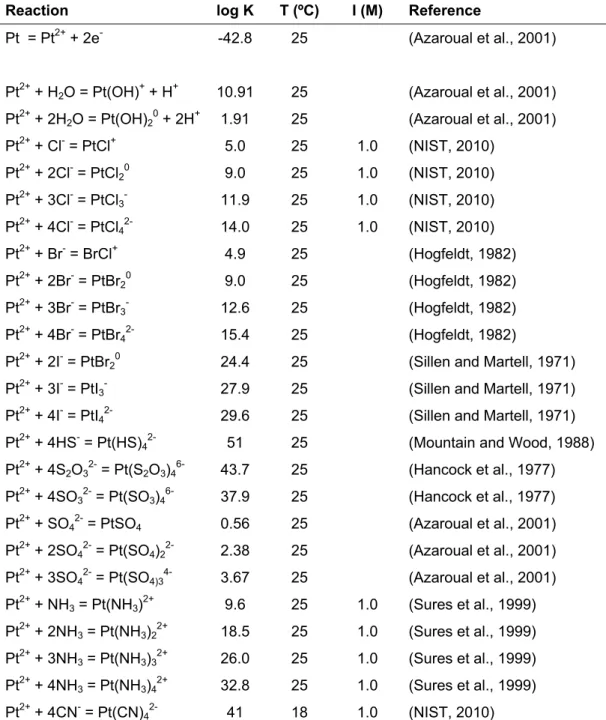
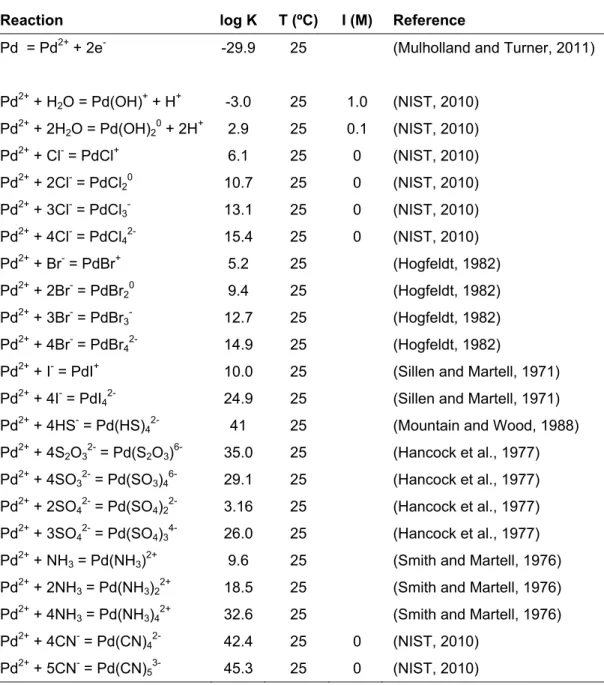
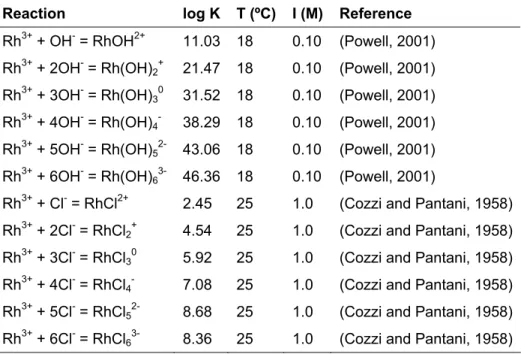
Table 1. Concentrations of PGEs in the aquatic environment ... 28
Table 2. Thermodynamic constants for Pt species in aqueous solution ... 30
Table 3. Thermodynamic constants for Pd species in aqueous solution ... 31
Table 4. Thermodynamic constants for Rh species in aqueous solution... 32
Table 5. Concentrations of PGEs measured in aquatic organisms in the field ... 33
Table 6. Concentrations of PGEs measured in aquatic organisms in the laboratory... 34
Table 7. PGE toxicity to aquatic organisms measured in the laboratory... 35
Figure 1. Industrial usages of PGEs in 2010 (Johnson Matthey, 2010)... 36
Figure 2. Global production of PGEs during the period 1975-2010 (Johnson Matthey, 2010) ... 37
Figure 3. Major reactions involved in three-way catalytic converters in alleviating automobile emissions of hydrocarbons (CxHy), NOx and CO... 38
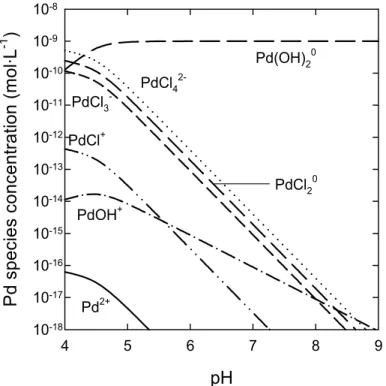
Figure 4. Pd speciation as a function of pH using a total Pd concentration of 1 nmol/L together with the major ion concentrations found in the Lorette River in Quebec City in March 2008 (e.g. [Cl-] = 8.5 mmol/L) ... 39
1
1. Summary: Why Be Concerned by Platinum Group
Elements in the Aquatic Environment?
Due mainly to their widespread use as automotive catalysts for emission controls since the 1970s, increasing concentrations of platinum group elements (PGEs; in this report they refer to Pt, Pd, and Rh) have been reported in many environmental media and biota which has raised potential ecological and human health concerns. Canada is among the largest countries in the world in the mining of PGEs, with an annual production of 6.4 tons for platinum and 13 tons of palladium in 2005. At the present, however, PGEs are not included in Environment Canada’s risk assessments due to the lack of data on their fate and effects in the environment.
A growing body of evidence shows that the emission of PGEs is increasing worldwide. Although long-distance transport of PGEs has been documented, rivers and lakes in the vicinity of roads and urban centers where heavy traffic occurs are the most impacted by these elements. The mobility and solubility of particulate PGEs emitted from automobiles remains poorly documented. Although they are generally thought to be sparingly soluble, their exposure tovarious biogeochemical conditions could result in partial dissolution. The rates and mechanisms of dissolution are unknown and yet would be necessary for ecological risk assessment.
Observed aqueous PGE concentrations are, however, very low (<<1 nmol/L) and remain well below those expected to induce toxic effects. Among all three metals, Pd can be singled out as the PGE present in the aquatic environment at concentrations close to those that can elicit negative effects in living organisms. Palladium is also generally more readily accumulated in tissues than other PGEs. To some aquatic species, Pt has been documented as the most toxic PGE but this element is less mobile and soluble than Pd. Finally Rh is usually considered less toxic and less prone to bioaccumulation than the other two PGEs.
The mere analysis of these elements in environmental matrices represents a major analytical challenge due to their low concentrations and ubiquitous spectral interferences. Such difficulties may explain the low quantity of data published in the literature. Most of these analytical interferences are, however, virtually absent in synthetic exposure media. Also the higher concentrations of PGEs used in these studies should be easily measurable. Nevertheless, the vast majority of laboratory studies are based on nominal concentrations which may result in an underestimation of toxicity.
The links between chemical speciation and bioavailability of PGEs in the aquatic environment remain to be elucidated due to the lack of reliable basic thermodynamic data. There is, however, some evidence that water hardness may play a role in mitigating PGE toxicity similar to what is usually observed with transition elements. Similarly, metal binding by natural organic matter is also observed to decrease PGE bioavailability but a few intriguing results where metal uptake was enhanced deserve to be investigated further.
2
2. Sources of PGEs to Aquatic Ecosystems
2.1. Natural Abundance and Occurrence
Platinum Group Elements (PGEs) in this report refer to platinum (Pt), palladium (Pd) and rhodium (Rh). These elements occur in low abundance in the Earth’s crust. The global-average concentrations of PGEs in the continental crust are 2.1 nmol/kg (0.4 μg/kg) for Pt, 3.8 nmol/kg (0.4 μg/kg) for Pd, and 1.0 nmol/kg (0.1 μg/kg) for Rh (Wedepohl, 1995). They typically occur in alluvial deposits as native elemental metals (Pt0, Pd0, and Rh0) or alloys with iridium (e.g., platiniridium), and in nickel or copper deposits as arsenides (e.g., sperrylite, PtAs2), sulfides (e.g., cooperate, (Pt, Pd, Ni)S), tellurides (e.g., PtBiTe) and antimonides (e.g., PdSb). PGEs in the Sudbury region, for instance, occur primarily as sperrylite in pentlandite (Mungall and Naldrett, 2008).
2.2. Production and Usages of PGEs
PGEs are known to have been mined from alluvial deposits by Pre-Columbian Americans to produce artifacts of a white gold-platinum alloy (Scott and Bray, 1980). Nowadays they are commercially mined primarily as a by-product from nickel and copper mining and processing, and used in a variety of applications due to their unique properties including: i) catalytic activity; ii) inertness and biocompatibility; iii) high mechanical strength; iv) electrical conductivity; and iv) radiopacity (opaque white appearance in X-ray images).
PGEs are catalysts for hydrogenation, dehydrogenation, oxidation and hydrogenolysis reactions. The catalytic activity of PGEs is used in the automobile industry, petroleum industry, for the synthesis of ammonia and other chemical products, and in anticancer drugs. Further use of PGEs is found in the jewelry industry, electrical industry, glass and textile industry, and in apparatus technology (Figure 1).
The global production of PGEs has been steadily increasing since the 1970s (Figure 2). In 2010, the world production was 170 t for Pt, 202 t for Pd, and 20 t for Rh (Johnson Matthey, 2010). Canada is the 4th largest producer (after South Africa, Russia and Zimbabwe) of PGEs in the world, accounting for about 5% of the global production. PGEs in Canada are primarily produced in the Sudbury area (Xstrata and Vale). New reserves have recently been discovered in southeastern Manitoba.
2.3. Automobile
Industry
The automobile industry is by far the largest user of PGEs. Mandated by legislations on automobile emission of hydrocarbons (HC), carbon monoxide (CO) and nitrogen oxides (NOx), PGEs have been the primary catalysts used in the automobile industry since the mid-1970s in USA, Canada, and Japan, since the mid-1980s in Europe, Australia, and parts of Asia, and since the 1990s in Mexico, Brazil and India.
3
The catalytic role of PGEs in the automobile industry (and in many other chemical applications) arises from two key properties (Brenan, 2008). First, elemental PGEs are resistant to oxidation in air even at relatively high temperature. Second, PGEs have the remarkable ability of adsorbing gaseous molecules such as O2, H2, and CO on the metal surface, but adherence is not strong enough to retard surface reaction rates. Therefore, the rates of certain chemical reactions involving these gases are greatly accelerated by the presence of the PGE metal surface, and reactions can be allowed to take place at higher temperatures without degradation of the metal surface.
While two-way catalytic converters can still be found on diesel engines, the most common ones in present-day automobiles are three-way catalytic converters (TWCs), which catalyze the transformation of HC, CO and NOx to H2O, CO2, and N2 in three stages (Figure 3): i) reduction of NOx to N2; ii) oxidation of unburnt HC to CO2 and H2O; and iii) oxidation of CO to CO2. About 90% of HC, CO and NOx are converted this way. Pt and Pd are effective catalysts for reactions (ii) and (iii), whereas Rh is an effective catalyst for reaction (i).
Modern TWCs typically contain 1.5-2.5 g of Pt (Rühle et al., 1997) and various amounts of Pd and Rh, usually deposited in the surface washcoat (typically γ-Al2O3) by impregnation. While all the three PGEs may be found in TWCs, Pt is increasingly replaced by the less costly Pd; other noble metals such as Ir may also be used.
2.3.1. Medical Industry
PGEs are increasingly used in the medical industry (Fuchs and Rose, 1974). One of Pt’s most remarkable properties is its ability to inhibit the division of living cells. The discovery of this property in the 1960s led to the development of Pt-based anti-cancer drugs, which first became available in the 1970s and are now used or subjected to clinical trials to treat a wide range of cancers. These include cisplatin (cis-diamminedichloroplatinum(II); cis-Pt(NH3)2Cl2), carboplatin (cis-diammine(cyclobutane-1,1-dicarboxylate-O,O')platinum(II)), oxaliplatin [(1R,2R)-cyclohexane-1,2-diamine] (ethanedioato-O,O')platinum(II)), picoplatin and satraplatin. Over 710 kg of Pt are now used annually in anti-cancer drugs (Johnson Matthey, 2010).
In addition, Pt is increasingly used in implanted biomedical devices such as pacemakers, catheters and defibrillators. Pd-based alloys are also frequently used in dental applications, such as crowns and bridgework, though they have been increasingly replaced by all-ceramic and base metal dental treatments (Johnson Matthey, 2010).
2.3.2. Other Applications
As catalysts, PGEs are commonly used in the manufacture of many chemicals, both in research laboratories and in large scale commercial plants. Some of the common chemicals that involve PGEs in production include nitric acid, sulfuric acid, methanol, oxo-alcohols, and many polymers (Johnson Matthey, 2010). Pt is also used in petroleum refining.
The electrical properties of PGEs give rise to their wide application in multi-layer ceramic capacitors, which are commonly used in computers and electronic devices, in thermocouple wires in auto spark plugs, and in LCD and fiber glass production (Johnson Matthey, 2010).
4
2.4. Pathways of PGEs to the Aquatic Ecosystems
2.4.1. Natural Pathways
PGEs in their natural deposits can be released to the aquatic environment by physical, chemical and biological weathering; such release is enhanced at high Eh, low pH, and high concentrations of Cl- (Bertine et al., 1996) and natural organic matter (Bowles and Gize, 2005; Dahlheimer et al., 2007; Hare, 1992). The mobility of PGEs from their natural deposits is further supported by the discovery of PGE-oxide minerals in the surface environment (e.g., Auge and Legendre (1995)), which leads to the transport of the PGE in solution and subsequent re-deposition as newly-formed PGEs. In most cases the PGE move differentially according to their relative solubilities, with Pd usually being considered more mobile than Pt (Bowles et al., 1994; Fuchs and Rose, 1974).
2.4.2. Anthropogenic Pathways
Anthropogenic PGE emissions to the aquatic environment can occur during mining and smelting of PGEs or other metals with which PGEs coexist, during manufacture of PGE-containing products, and during use and disposal of these products. At present, the only documented anthropogenic PGE sources are automobile exhaust catalysts, mining, and medical applications (Rauch and Morrison, 2008). Although additional sources of PGE to the aquatic environment may exist, they have not been characterized to date (Rauch and Morrison, 2008).
Emission from Automobile Catalysts
Emission from automobile catalysts is the dominant anthropogenic source of PGEs to the aquatic environment. Emissions of PGEs may be caused by: i) Sintering of the catalyst particles, which results in mechanical vibration and abrasion, releasing PGEs associated with Al2O3 carrier particles (typically with sizes > 1 µm) (Alt et al., 1993; Melber et al., 2002; Rauch and Morrison, 2000); ii) Coagulation or reaction with carbon particles, which releases PGEs associated with finer particles (<1 µm) (Alt et al., 1993; Melber et al., 2002; Rauch and Morrison, 2000); and, iii) Thermal volatilization due to high operating temperatures (400°C) which releases some volatile PGE oxides, especially under oxidizing conditions (Zereini et al., 1997).
The amount of PGEs emitted from automobile catalysts is known to vary depending on the type, age and condition of the engine and the catalyst, and the speed and conditions of driving (Rauch and Morrison, 2008). For instance, Pt emissions from gasoline catalysts are expected to be in the low ng/km range, whereas much higher Pt emissions have been measured for diesel catalysts (Moldovan et al., 2002). An emission rate of as high as 800 ng/km has been inferred from indirect measurements based on the analysis of environmental samples and traffic information (Helmers, 1997). Assuming that 500 million vehicles are equipped with PGE catalysts, that the average mileage is 15,000 km/yr per vehicle, and that the Pt emission
5
rate is in the range of 100-800 ng/km, a global emission of 800–6000 kg/yr can be estimated for Pt from automobile catalysts (Rauch et al., 2005). Similarly, applying an emission rate of 5-100 ng/km for Pd (Melber et al., 2002) and 1-10 ng/km for Rh (Rauch et al., 2002), the estimated global emission rate would be 40-800 kg/yr for Pd and 8-80 kg/yr for Rh.
The transport and impact of PGEs from automobile exhaust is largely controlled by the size distribution of PGE-containing particles. Studies with modern TWCs showed that 40-70% of particulate PGEs is associated with particles with a diameter > 10 µm, with 11-36% in smaller particles with a diameter < 3 μm (Gomez et al., 2002; Melber et al., 2002). The fraction of small particles appears to increase with increasing age of the converter.
Pt emitted from automobile exhausts is predominately in the elemental and particulate forms; the soluble Pt fraction is usually <10% (Moldovan et al., 2002; Rauch and Morrison, 2008), and can be as low as <1% (Melber et al., 2002). The soluble fraction of Pd and Rh can be, however, much higher (Jarvis et al., 2001; Moldovan et al., 2002), and in some cases may be >50% of the total emissions (Jarvis et al., 2001; Rauch and Morrison, 2008).
While PGEs emitted from automobile exhausts are primarily deposited locally and occur mainly in open water bodies, groundwater or soil adjacent to highways and industrial centers, long range atmospheric transport is possible (Barbante et al., 1999; Barbante et al., 2001; Moldovan et al., 2007; Rauch et al., 2005; Van De Velde et al., 2000). Analysis of PGEs in ice and snow samples from Greenland has shown that the PGE concentrations have increased several orders of magnitude from 7000 years ago to present: from 0.05 to 1.7 pmol/L (0.01 to 0.33 ng/L) for Pt, 0.09 to 7.1 pmol/L (0.01 ng/L to 0.76 ng/L) for Pd, and 0.007 to 0.5 pmol/L (0.0007 to 0.05 ng/L) for Rh (Barbante et al., 1999). Significant increase in PGEs is also found in snowpit samples collected from Alpine regions dated from the 18th century, showing anthropogenic atmospheric contamination by Pd and Rh in the recent decades (Barbante et al., 1999; Van De Velde et al., 2000).
Emission from Mining and Metal Production
Production of nickel and chromium has been reported to result in regional elevation of PGEs in environmental samples (Niskavaara et al., 2004; Rauch and Morrison, 2008; Rodushkin et al., 2007). However, emission rates of PGEs from metal mining and smelting activities have not been well determined (Rauch and Morrison, 2008).
Discharge from Medical Facilities
Discharge from medical facilities is an emerging anthropogenic pathway of Pt to the surface environment due to the increasing usage of Pt in anticancer drugs. Pt is found in hospital effluents at concentrations ranging from <0.05 to 17.9 nmol/L (<10 to 3500 ng/L) (Kümmerer et al., 1999); Pt concentrations up to 0.47 nmol/L (92 ng/L) and 3.1 µmol/kg (605 µg/kg) were found in the effluent and sediment at a wastewater treatment plant, respectively (Kümmerer et al., 1999; Laschka and Nachtwey, 1997). A recent study (Ravindra et al., 2004) has estimated Pt emission from hospitals to be 3% - 12% of the estimated amount of Pt emitted from automobile catalysts.
6
3. Occurrence of PGEs in the Aquatic Environment
3.1. Background
Concentrations of PGEs in the Aquatic
Environment
Due to the low crustal abundance of PGEs, their background or baseline concentrations in the aquatic environment are typically very low. Based on the data from the open oceans (Colodner et al., 1993; Hodge et al., 1986; Jacinto and van den Berg, 1989; Lee, 1983) and deep layers of lake or ocean sediments (Colodner et al., 1993; Hodge et al., 1986; Rauch et al., 2004a), baseline PGE concentrations are in the sub-pmol/L levels in the water column and low nmol/kg levels in the sediments (Table 1).
3.2. Present-day
Concentrations
of PGEs in the Aquatic
Environment
The widespread use of PGEs, particularly in the automobile industry, has resulted in elevated concentrations of PGEs in the aquatic environment, especially in urban rivers and lakes. As mentioned earlier, a significant fraction of PGEs emitted by automobile catalysts could also been dispersed over long distances at regional and global scales due to their association with fine particles and their relative long atmospheric residence time (Rauch et al., 2005).
Table 1 summarizes the concentrations of PGEs reported in the receiving aquatic environment (e.g., rivers, streams, lakes, and global oceans). It should be noted that roadside infiltration ponds, which typical contain much higher PGEs, are not included in this table. In general, PGE concentrations are in the low pmol/L range in water and sub µmol/kg range in sediments. Although generally low, the concentrations at localized sites could reach the level that approach their toxicity thresholds to most sensitively aquatic biota (see below).
4.
Transport and Transformation of PGEs in the Aquatic
Environment
Once in the aquatic environment, PGEs undergo a variety of complex biogeochemical processes, resulting in their transformation among various oxidation states and molecular forms, which play a major role in their mobility and bioavailability.
4.1. Oxidation and Reduction
Pt has three common oxidation states (0, +II and +IV), with Pt(II) and Pt(IV) being the dominant oxidations states in aqueous solution and in the aquatic environment. Pt(0) is sparingly soluble in aqueous solution. Its high redox potential also suggests that oxidation does not occur readily in the aquatic environment. However, its oxidation and thus solubility can be
7
significantly increased in the presence of natural organic matter (Lustig et al., 1998), sulfur (Lustig et al., 1996), and chloride (Mountain and Wood, 1988).
In most other natural waters, Pt(II) is the dominant Pt species (Gammons, 1996; Mountain and Wood, 1988). However, the stability of Pt(IV) increases and can be the dominant species in highly oxidized and highly saline waters under acidic to slightly alkaline pH (e.g., surface seawater) (Gammons, 1996).
The redox chemistry of Pd and Rh is less studied in the aquatic environment. Pd has four common oxidation states (0, +I, +II, +IV), with Pd(II) being the dominant oxidation state in the aquatic environment (Mountain and Wood, 1988). Rh has three common oxidation states (0, +I and +III), with Rh(III) being the dominant form in the aquatic environment.
4.2. Complexation in Aqueous Solution
Once oxidized from their elemental forms, PGEs are known to form complexes with various ligands that are present in natural waters (Tables 2-4). As soft metal ions, Pt2+, Pt4+, Pd2+ and Rh3+ form stronger complexes with soft ligands such as chloride, sulfides, polysulfides, cyanide, and natural organic acids (Dahlheimer et al., 2007; Mountain and Wood, 1988; Mulholland and Turner, 2011). The hard ligands such as CO32- and PO43- form only very weak PGE complexes, if at all (Mountain and Wood, 1988).
Numerous studies have been carried out to determine or estimate the thermodynamic constants for PGE complexes in aqueous solutions (Azaroual et al., 2001; Colombo et al., 2008b; Cosden and Byrne, 2003; Essumang, 2010; Essumang et al., 2010; Gammons, 1996; Marcheselli et al., 2010; Mountain and Wood, 1988; Mulholland and Turner, 2011; Osterauer et al., 2010; Van Middlesworth and Wood, 1999; Wood, 1991; Wood, 1996; Wood et al., 1989; Wood and Normand, 2008). The best available thermodynamic data are compiled in Tables 2-4. It should be noted that not all of these constants were determined under conditions that are relevant to natural waters (e.g., low temperature and low PGE concentrations), particularly to low-ionic strength freshwaters. In particular, although PGEs are known to complex with natural organic ligands, the stoichiometry and formation constants of these complexes have been poorly established (Colombo et al., 2008a; Lustig et al., 1998; Sures and Zimmermann, 2007; Van Middlesworth and Wood, 1999; Wood, 1996). Furthermore, few data are available for Rh species in the aqueous solution.
In general, strong complexation of Pd(II), Pt(II), and Pt(IV) by Cl- in seawater makes their solution complexation schemes relatively well defined: Pd(II) and Pt(II) are partitioned principally between MCl42- and MCl3OH2- (where M = Pd2+ or Pt2+), and Pt(IV) is partitioned principally between PtCl62- and PtCl5OH2-. As such, all complexes are anionic with a charge of -2 and speciation is a simple function of pH (Cosden et al., 2003).
Stability constants of Pd(II) complexes are strongly correlated with those of Pt(II) and Pt(IV) complexes, but are generally smaller than the Pt(II) and Pt(IV) complexes (Hancock et al., 1977). Although there is some similarities in the equilibrium chemistries of Pd(II) and Pt(II) in seawater, there kinetic behaviors have been shown to be very different: Pt(II) and Pt(IV) complexes are kinetically inert relative to Pd(II) complexes (Cotton et al., 1999), and thus the complexation and adsorption reactions involving Pt(II) and Pt(IV) occur at a much slower rate than those involving Pd(II), making Pt (II) and Pt(IV) appearing less reactive than Pd(II). This
8
may have a major implication in dispersion and biological uptake of PGEs in the aquatic environment (Cosden et al., 2003).
4.3. Adsorption
onto
Aquatic
Particles
The adsorption and desorption of PGEs in the aquatic environment remains poorly studied. While the affinities to aquatic particles generally follow the order of Rh > Pt > Pd (Turner, 2007; Turner et al., 2006; Turner and Wu, 2007), dissolved PGEs species are not regarded as highly particle-reactive (Turner and Wu, 2007). Their adsorption to aquatic particles also appears to be kinetically constrained in surface waters. By suspending estuarine sediments in filtered river water, Turner et al. (2006) showed that adsorption of Rh(III) and Pt(IV) to the sediments proceeded via a first-order reversible reaction; the forward rate constant was one order of magnitude greater than the reverse rate constant for Rh(III), but forward and reverse constants were comparable for Pt(IV). The adsorption of Pd(II) to the sediment was found to be more complex due to its rapid complexation with natural organic matter. Exchangeability of adsorbed PGE decreased in the order Pd > Pt > Rh. Given that Pd appears to exhibit the greatest mobility from secondary sources (e.g. road dust), the lowest particle affinity, and the greatest exchangeability once adsorbed to sediment, this metal has the greatest potential for both long-range transport and bioaccumulation in the aquatic environment (Turner et al., 2006).
4.4. Methylation
Agnes et al. (1971) was the first to report in vitro Pt methylation in the presence of methylcobalamine (CH3CoB12):
Pt(IV) + CH3CoB12 + H2O = CH3Pt(IV) + H2OCoB12
Although the methylation occurs only to Pt(IV), the presence of Pt(II) is necessary as the methylation seems to occur via a Pt(II) methylcobalamine intermediate (Fanchiang et al., 1979). Salts of Pd(II) and Pd(IV) were also observed to be able to demethylate methylcobalamin in vitro, but at much slower rates than Pt4+ (Taylor, 1976). It remains unknown, however, whether methylation of PGEs occurs in situ in the aquatic environment (Ek et al., 2004; Melber et al., 2002).
4.5. Speciation
Modeling
At present, speciation modeling of PGEs can only be reasonably done in seawater where PGE speciation is dominated by their chloride complexes whose thermodynamic constants are better studied (Tables 2-4). Since little is known about the interactions of PGEs with natural organic matter (NOM), greater uncertainties exist with the speciation modeling of PGEs in freshwaters where PGE-NOM complexes are potentially important.
Among the three PGEs, Pd is the element for which we have enough data to illustrate the sensitivity of the metal’s inorganic speciation to changes in pH and Cl- concentrations. To do so, we inserted an arbitrary total dissolved Pd concentration of 1 nmol/L into the MINEQL+
9
chemical equilibrium programme, together with the major ion concentrations found in the Lorette River in Quebec City in March 2008 e.g., [Cl-] = 8.5 mmol/L) (Roy, 2009; Schecher and McAvoy, 2007). As can be seen in Figure 5, the aqueous speciation of Pd is largely dominated by a single species at circumneutral pH: Pd(OH)20. Chloro-complexes can also form but in significant proportions only at acidic pHs. It should be noted here that, according to these calculations, free Pd2+ ion concentrations are well below the amol/L (10-18 mol/L) level and even below zmol/L (10-21 mol/L) at pH > 7. This calculation did not consider, however, the complexation by natural organic matter.
5. PGE Accumulation by Aquatic Organisms
Tables 5 and 6 compile the available information on PGE accumulation by aquatic organisms, such as algae, macrophytes, invertebrates and fish. The available data are limited to few species and mostly originate from laboratory experiments. In both marine and freshwater environments, organisms collected in the field show PGE concentrations that are usually in the picomoles to nanomoles per gram (dry weight) range. The sediment PGE concentrations are sometimes determined but none of the field studies examined had determined the dissolved PGE concentrations, probably due to the analytical difficulty. Accumulation values measured in the laboratory are usually much higher and span over a wider range depending on exposure concentrations. Concentrations used for laboratory exposures are often high and sometimes well outside of any environmental significance. In most studies, PGE concentrations are nominal and metal chemical speciation is rarely considered. All concentrations are given on a molar basis instead of mass concentrations; since Pt is about twice as heavy as the other two PGEs, use of mass concentrations would create a bias when comparing accumulation (and toxicity) values to those of Pd and Rh.
In the following paragraphs are presented different factors influencing the accumulation of PGEs by aquatic organisms such as the nature of the metal, the metal aqueous concentration, the pH, the chemical speciation of the metal and the presence of complexing ligands.
5.1. Relative Uptake Among PGEs
Most field studies suggest that Pd is bioaccumulated to a greater extent than Pt while Rh is the least prone to bioaccumulation. This has been confirmed with shrimps, crabs, mollusks and fish (Essumang et al., 2008); and with the isopod Asellus aquaticus (Moldovan et al., 2001). This trend in bioaccumulation (Pd > Pt > Rh) reflects the relative bioavailability of PGEs; however, the exposure concentrations are unknown in these particular studies. Such a sequence is nonetheless coherent with the recent work of Roy (2009) which shows a similar sequence in river waters in terms of dissolved concentrations ([Pd]>>[Pt] ~ [Rh]; with Pt and Rh concentrations being very often below the detection limit; Table 1). Field data thus suggest that Pd is more abundant in the aquatic environment and is consequently more bioaccumulated than Pt and Rh.
In order to recreate one of the potential sources of PGEs to the environment, several bioaccumulation studies were performed by exposing aquatic organisms directly to crushed
10
catalytic converters. In this context, the parasite Paratenuisentis ambiguus and its host the fish Anguilla anguilla were exposed to 20 g of ground catalytic converter material in 100 L tanks (Zimmermann et al., 2005a). Pd was the most abundant metal added followed by Rh and Pt. For both the parasite and its host, Pd accumulated was over 100 fold greater than Pt while Rh was below detection limits (Table 6). In a similar series of experiments, the parasite Pomphorhynchus laevis and its host the fish Barbus barbus were exposed to ground catalytic converter material (10 g / 100 L) (Sures et al., 2005). This particular material also had a higher proportion of Pd compared to other PGEs but Pt was more abundant than Rh. Again, for both the parasite and its host, Pd had the highest accumulated values followed by Pt while Rh was the least accumulated; values were, however, close among PGEs (Table 6). One other study used crushed catalytic converters as a source of PGEs for the exposure to an aquatic organism: the mussel Dreissena polymorpha (Zimmermann et al., 2005a). Two types of catalytic material were used: One was rich in Pd with traces of Pt and the other was rich in Pt with traces of Pd, while Rh was present at the same abundance in both. Accumulation was determined after 6, 9 and 18 weeks. Exposures in tap water resulted in relative accumulation patterns similar to those mentioned above with Pd being more concentrated in the soft tissues of the mussel, followed by Pt and then Rh (Table 6).
Considering that the nature of emitted particles may differ from the parent material in catalytic converters, Sures et al. (2002b) exposed the freshwater mussel Dreissena polymorpha to collected road dust (1 kg / 10 L). Pt was about ten times more abundant than the other two PGEs in the collected road dust. Accumulation in the mussel measured after 26 weeks of exposure to road dust gave the same sequence observed with crushed catalytic converters (Pd > Pt > Rh).
Another category of exposure experiments consist of using known dissolved concentrations of PGEs. These experiments in controlled conditions are useful to determine the actual uptake rates of PGEs. Such laboratory experiments were performed with the marine macroalgae Ulva lactuca at high concentrations ([Pd] = 1.0-5.0 µmol/L; [Pt] = 0.5-5.0 µmol/L) and found that dissolved Pd concentrations decreased more rapidly than Pt, suggesting a higher uptake (both adsorption and accumulation) rate for Pd (Cosden et al., 2003). Other experiments in the laboratory came to similar conclusions using controlled exposure media with known dissolved PGEs. These accumulation data were obtained with the mussel Dreissena polymorpha, the gastropod Littorina littorea and the fish Anguilla anguilla (Mulholland and Turner, 2011; Sures and Zimmermann, 2007; Zimmermann et al., 2004). However, in these laboratory studies, Pd is most often more concentrated than Pt and sometimes more concentrated than Rh. One study used the same concentration of Pd, Pt and Rh (albeit extremely high; 2 mmol/L) in order to compare the accumulation of all three metals by the bacteria Desulfovibrio desulfuricans (Yong et al., 2002). Results indicated that Pd still had greater affinity for the bacteria compared to Pt and Rh.
In contrary, a few other studies suggested that Pt could be bioaccumulated to a greater extent than Pd. Such an observation was made with the exposure of the polychaete Arenicola marina to 376 nmol/L Pd and 205 nmol/L Pt for 10 days in estuarine water (French and Turner, 2008). Even though the nominal molar concentration of Pd is greater than that of Pt, the uptake level was higher for Pt. Similar results were obtained by Singer et al. (2005) who exposed the mussel Dreissena polymorpha to 4.7 nmol/L Pd, 2.6 nmol/L Pt and 4.9 nmol/L Rh for a total of 10 weeks. Again, with a lower molar concentration, Pt uptake levels in the mussels were greater than Pd and Rh levels.
11
Occasionally, the uptake of Rh was reported to be more important than Pt uptake. This was observed with various organisms such as the macroalga Ulva lactuca (Turner et al., 2007), the macrophyte Elodea Canadensis (Diehl and Gagnon, 2007), the isopod Asellus aquaticus (Moldovan et al., 2001), the mussel Dreissena polymorpha (Sures et al., 2002b; Zimmermann et al., 2002) and the fish Anguilla anguilla (Zimmermann et al., 2005b).
Regarding Pt itself, bioaccumulation was found to vary according to the valence state, with the uptake rate of Pt(IV) being equal or higher than that of Pt(II). First, Rauch and Morrison (1999) used the freshwater isopod Asellus aquaticus and found that Pt(IV) was more likely to be taken up at higher rates than Pt(II). Then, Rauch et al. (2004b)used freshwater periphyton and showed that uptake rates were rather similar for Pt(II) and Pt(IV). In all cases, the oxidation state of Pt was not measured and the rate of reduction of Pt(IV) to Pt(II) is unknown.
Overall, we can conclude that Pd is generally the most bioavailable and bioaccumulated metal among the PGE in natural environments, perhaps reflecting ambient exposure concentrations and metal mobility and reactivity (see Section 4). However, many factors contribute to influence the behavior and uptake of these metals and additional research is warranted.
5.2. Factors Influencing Uptake of PGEs
As anticipated, the uptake of PGEs by aquatic organisms will increase linearly with the dissolved concentration of PGEs. Many studies have shown such linear relationships in the laboratory: with freshwater periphyton (Rauch et al., 2004b), the macroalga Ulva lactuca (Turner et al., 2008), the macrophyte Elodea Canadensis (Diehl and Gagnon, 2007), the oligochaete Lumbriculus variegates (Veltz et al., 1996), the mussel Dreissena polymorpha (Frank et al., 2008), the snail Marisa cornuarietis and the fish Danio rerio (Osterauer et al., 2009). However, in an attempt to better understand PGE uptake kinetics, Turner et al. (2007) exposed the macroalga Ulva lactuca to different concentrations of Pd (50-280 nmol/L), Pt (30-150 nmol/L) and Rh (50-300 nmol/L) and determined sorption isotherms for each of the metals. For Pt and Rh, they found a linear relationship between the dissolved concentration and the concentration of metal associated with the biotic ligand. This suggests that a single type of reaction is implied at the algal surface. As for Pd, the isotherm was more convex which may suggest that a series of independent or successive reactions is taking place at the algal surface.
Another important parameter affecting PGE uptake is pH. First, Yong et al. (2002) exposed the bacteria Desulfovibrio desulfuricans to Pd with pH conditions ranging from 1 to 7. They found that the uptake of Pd was enhanced in acidic conditions with a maximal uptake registered at pH 2. Although this type of bacteria is known to be tolerant to acidic conditions, such conditions are not environmentally significant. In a study with the macroalga Ulva lactuca exposed to 10 µg/L of Pd (94 nmol/L), Pt (51 nmol/L) or Rh (97 nmol/L) the uptake of Rh was found to increase considerably with pH (range of 7.9 to 8.4) while only a small increase was observed for Pt (Turner et al., 2007). As for Pd, uptake exhibited no clear dependence on pH. In their experiment, Turner et al. (2007) estimated uptake simply by following the evolution of dissolved metal concentration. Therefore, precipitation and/or adsorption could have been misinterpreted for an increase in metal removal.
We usually anticipate that the presence of humic substances decreases metal bioavailability. However, studies on PGEs do not seem to always clearly agree with this tenet. In
12
some cases, the presence of humic substances decreases the uptake of PGEs while in others, uptake is increased. Based on experiments conducted with the mussel Dreissena polymorpha, it was found that the accumulation of PGEs, added under a particulate form, was enhanced in natural humic water (Zimmermann et al., 2002; Zimmermann et al., 2005a). The authors did not measure dissolved concentrations but did expect the solubility of PGEs to be enhanced in the presence of humics and thus the exposure concentrations were different among experiments. Also, the tap water was much harder than the humic water and Ca may have offered some protection against uptake. However, when the same organism, D. polymorpha, was exposed to known concentrations of dissolved PGEs, Pd uptake and bioaccumulation was significantly reduced by the presence of humic substances, Pt accumulation was mainly unaffected while Rh uptake appeared to have significantly increased (Sures and Zimmermann, 2007).
The influence of natural organic matter was also tested with aquatic plants. For example, Rauch et al. (2004b) exposed freshwater periphyton to dissolved Pt and the uptake rate was lower in stream (humic) water compared with the exposure in non-humic water. They suggested that the relatively high dissolved organic matter and chloride concentrations of the stream water may have complexed Pt, thus making it less available for uptake. Another study exposed the marine macroalga, Ulva lactuca, to dissolved Pd and the addition of humic substances (3 mg/L) decreased Pd uptake (Turner et al., 2008). Finally, Dielh and Gagnon (2007) found more equivocal results. At 100 µg/L nominal concentrations of dissolved PGEs (i.e. equivalent to approximately 1 µmol Pd/L; 0.5 µmol Pt/L; 1 µmol Rh/L), they found that 5 mg/L humic acid significantly decreased the uptake of all the three PGEs in the macrophyte Elodea canadensis but had no significant effect on PGE uptake by P. virginia rizhomes. In experiments where the plants were exposed to Pt alone, the presence of humic acid resulted in an increased uptake in E. canadensis and a decreased uptake by P. virginia.
Higher in the trophic chain, Zimmermann et al.(2004) exposed the fish Anguilla anguilla to dissolved forms of Pt and Rh in tap or humic water and measured the metal content in the different organs. Pt concentrations were either lower in fish exposed to natural humic water than those exposed in tap water, or were not significantly different from each other. For Rh, however, measured levels in the kidney were actually higher in fish exposed in humic water than those kept in tap water, while no significant differences were observed in all other organs investigated.
In summary, differences observed in the influence of humic material on PGE uptake may be related to the addition of PGEs as salts or as solid catalytic dust. The former might be dissolved more easily and, in this case, the addition of humic substances, which complexes metals in solution, may reduce bioavailability of PGE. However, when PGEs are added under the form of catalytic dusts, many more metals are present in this dust and the resulting chemical speciation is much more complex. In such conditions, the addition of humic substances may lead to the formation of soluble humic complexes with PGEs, which would contribute to increase solubility and, consequently, the accumulation by aquatic organisms. As discussed in Section 4, the lack of quantitative understanding of the complexation between PGEs and humic substances and other natural organic matter further limits our capability of interpreting the bioavailability and bioaccumulation data.
Little was found on the influence of other ligands on the bioavailability of PGEs. The study of Yong et al. (2002) does, however, suggest that an excess of chloride inhibits the uptake of Pd. Considering the relatively high affinity of Pd for chloride ions, this could be interpreted as a decrease in bioavailability due to Pd complexation.
13
5.3. Aqueous and Dietary Sources of PGE to Invertebrates
It has been suggested that benthic organisms, such as Asellus aquaticus and Arenicola marina accumulate a large proportion of PGEs in their gut. For example, Rauch and Morrison (1999) collected A. aquaticus from natural environments and, following a depuration period, they were able to conclude that 50 to 85% of Pt was accumulated in the gut of the organism. Such results are not so surprising since the content of the gut was already known to represent a significant proportion of metals in macroinvertebrates (Hare, 1992). Since dissolved concentrations of Pt measured in selected rivers were very low compared to concentrations found in sediments, they also suggested that the accumulated Pt came mostly from the sediments (Rauch and Morrison, 1999). Similarly, based on laboratory experiments, French and Turner (2008) also suggested that the ingestion of contaminated sediments was an important source for the uptake of Pd by the polychaete A. marina.
The relative significance of water and food as a source for PGE uptake in the marine gastropod Littorina littorea exposed to PGE was explored by Mulholland and Turner (2011). In this study, results indicated that the aqueous phase was a more important source of PGEs for uptake compared with the dietary portion. The accumulation of PGEs from the aqueous phase was also suggested to initially happen via the gill epithelial cells by simple diffusion, followed by the transport of metallic ions via the hemolymph to other tissues with the kidney likely being the initial storage site.
5.4. PGE Accumulation by Fish and Internal Distribution
Limited studies are available on bioaccumulation of PGEs by fish. It was suggested that part of the PGEs adsorbed to fish gills could cross the membrane and then enter the bloodstream to be transported to internal organs (Sures et al., 2001). Also, most studies agree that the liver and the kidneys are the principal organs of accumulation, even though PGEs can also be found in the intestine and muscles of Anguilla anguilla (Sures et al., 2001; Zimmermann et al., 2004; Zimmermann et al., 2005b),Manta birostris (Essumang, 2010) and Barbus barbus (Sures et al., 2005).
5.5. Biomonitoring of PGE Contamination
Biomonitors can be useful when assessing the degree of environmental PGE contamination in aquatic ecosystems. Among many aquatic organisms studied, relatively few have been suggested as biomonitors for PGEs. The freshwater mussel D. polymorphahas been suggested to be a potential biomonitor since it has a high capacity to accumulate PGEs, is a relatively small organism, is widespread even in polluted environments, and it is easy to catch(Zimmermann et al., 2005a). The eel Anguilla anguilla, which is also widespread and present in polluted environments, represents another good candidate for the biomonitoring of PGEs(Zimmermann et al., 2004). However, acanthocephalans such as Paratenuisentis ambiguous and Pomphorhynchus laevis might be even better candidates since they have been shown to accumulate PGEs to a much greater extent than their fish hosts (Sures et al., 2005; Sures et al., 2003; Zimmermann et al., 2005b). Moreover, Paratenuisentis ambiguous can
14
parasitize a wide range of hosts throughout Europe such as chubs, barbels, trouts, eels and flounders, while the species Pomphorhynchus laevis occurs in other regions of the world (Sures et al., 2005).
In order to assess the level of PGE contamination in the environment, oligochaetes, such as Tubifex tubifex and Lumbriculus variegates, have been suggested as potential field indicators of Pd and Pt contamination (Khangarot, 1991; Veltz et al., 1996). In fact, these worms represent important species in aquatic environments, and they can tolerate high levels of PGEs.
5.6. Comparison
with
Other
Traffic-related Contaminants
PGEs are found in relatively high concentrations in urban areas or in ponds and streams in the vicinity of roads and highways where there is heavy traffic. In such systems, other traffic-related metals are also present. Bioaccumulation experiments were conducted in such mixtures and, when exposure concentrations were not equivalent, the ratio of metal accumulated over the metal concentration in solution (concentration factor) was used to compare the accumulation potential of the different traffic-related contaminants.
In general, it seems that Pd is more accumulated than Pb, Fe and Sb, but less accumulated than Cu, Zn, Cr, Ag and Hg (Masakorala et al., 2008; Singer et al., 2005; Sures et al., 2002a; Turner et al., 2008; Zimmermann et al., 2002). Laboratory experiments did not result in a specific trend for Pt among all tested metals (Mays, 2009; Singer et al., 2005; Zimmermann et al., 2002). Sampling achieved directly in the field, however, suggests that Pt is more accumulated than Pb and Sb, and less accumulated than Cu and Zn (Haus et al., 2007). Also, freshwater mussels seem to accumulate Cd to a greater extent than Pd and Pt (Mays, 2009; Singer et al., 2005; Zimmermann et al., 2002), while algae and crustaceans tend to accumulate Cd to a lesser extent than Pd and Pt (Haus et al., 2007; Masakorala et al., 2008; Turner et al., 2008). Finally, Rh is generally less accumulated than any other metal tested (Singer et al., 2005; Zimmermann et al., 2002).
6. Toxicity
Table 7 compiles available values of acute and sublethal toxicity of PGEs to different groups of aquatic organisms, such as yeasts, microalgae, crustaceans, annelids, gastropods and fish. Information is somewhat limited, but most values are in the nmol/L to µmol/L range.
In comparison with accumulation studies in which particulate forms of PGEs were sometimes used, the toxicological studies reported in the literature mainly used soluble salts of PGEs. Also, most toxicological values are based on nominal concentrations that are well above typical concentrations found under environmental conditions; few studies are conducted in conditions close to those observed in the field.
Toxicity is known to vary according to various factors such as exposure concentration, exposure time, temperature, and water hardness. The toxicity of PGEs increase with exposure time and concentration as observed with the aquatic plant Eichhornia crassipes (Farago and
15
Parsons, 1994), the annelid Lumbriculus variegates (Veltz et al., 1996), the annelid Tubifex tubifex (Khangarot, 1991), and the fish Brachydanio rerio (Jouhaud et al., 1999) and Oncorhynchus kisutch (Ferreira Jr and Wolke, 1979). The influence of temperature has been verified by Veltz et al. (1996) with the annelid Lumbriculus variegates. In this study, they exposed the annelid to Pt(IV) (from 0.26 to 260 µmol/L) and varied the temperature from 4 to 20°C. They observed that the toxicity of Pt was higher at 20°C (96 h LC50 of 2.0 µmol/L) than at 4°C (96 h LC50 of 4.6 µmol/L). However, they also suggested that the reduced toxicity at 4°C could have resulted from the overall slowing of the annelid's metabolism. In the same study, the influence of water hardness was also investigated. The authors observed that, while decreasing the water hardness from 300 to 0 mg/L CaCO3, the toxicity of Pt increased from an initial 96h LC50 of 150 µmol/L in hard water, to a 96h LC50 of 2.0 µmol/L in distilled water. Similarly, the influence of water hardness was also tested with the invertebrate Hyalella azteca (Borgmann et al., 2005). In this study, they exposed H. azteca to Pd, Pt and Rh for 7 days in either soft water (18 mg/L CaCO3) or hard water (124 mg/L CaCO3). For Pt and Rh, toxicity was mitigated in hard water. Surprisingly, for Pd, the opposite was observed with a greater toxicity in hard water.
6.1. Relative Toxicity Among PGEs
Most toxicity studies with invertebrates suggest that Pt is more toxic than Pd. Among others, this has been verified with the oligochaete Tubifex tubifex (Khangarot, 1991). In this study, exposures of 24, 48 and 96 hours resulted in respective EC50 values of 2.2, 1.3 and 0.9 μmol/L for Pd. EC50 values for Pt were lower with 0.5, 0.4 and 0.3 μmol/L, respectively, suggesting that Pt is indeed more toxic to T. tubifex than Pd. Similar results were obtained with the crustacean Hyalella azteca exposed to Pt and Pd for 7 days (Borgmann et al., 2005). In either soft or hard water, Pt showed LC50 values of 0.6 and 1.1 µmol/L, which are inferior to the lowest LC50 value obtained with Pd (5.4 µmol/L). Similarly, Khangarot and Das (2009) used the crustacean Cypris subglobosa and immobilization as an endpoint to evaluate the toxicity of various elements including Pt and Pd. In this study, Pt was found to be more toxic than Pd with respective 48h EC50 values of 0.49 and 1.8 µmol/L.
Recently, Roy (2009) exposed the microalga Chlamydomonas reinhardtii to PGEs and obtained contradictory results regarding the relative toxicity of Pd and Pt depending on the endpoint. Based on the cellular yield and nominal concentrations, a 96h EC50 of 158 nmol/L was measured for Pd (54 nmol/L based on the average measured exposure concentration) while Pt did not cause any decrease in the cellular yield even at the highest concentration tested (512 nmol/L). However, growth was slightly delayed in the presence of Pt such that, based on the relative cellular density after 48h, an EC50 of 23 nmol/L was calculated for Pt which is much lower than the 48h EC50 of 154 nmol/L calculated for Pd. Pt seems to affect the growth of this species by inducing a longer lag phase but without affecting the maximal growth rate and the cellular yield observed at 96h. A similar pattern was observed for Pd concentrations very close to the computed EC50 where growth was delayed but eventually picked up at a rate equivalent to control cells. At concentrations slightly higher than the EC50, no growth was observed, resulting in a very narrow concentration range where cells either appear healthy or unresponsive.
Regarding Rh, even though toxicological studies are more limited in number, most seem to agree that Rh is the least toxic of the three PGEs. This has been verified in the past with the aquatic plant Eichhornia crassipes (Farago and Parsons, 1994). In this study, based on visual evaluation, the first signs of toxicity were observed at 23 µmol Pd/L and 13 µmol Pt/L while Rh
16
did not show any toxic effects at the highest concentration tested (100 µmol/L). More recently, results obtained with Chlamydomonas reinhardtii showed that, based on both growth and yield, Rh was not toxic at any of the concentrations tested with exposures up to 96h. The highest nominal concentration tested was 1 µmol/L (Roy, 2009).
The opposite was obtained by Frazzoli et al. (2007) with the yeast Saccharomyces cerevisiae. In a first series of experiments, they used aerobic respiration as an endpoint and toxicological values (EC10 and EC50) obtained after a 2h exposure revealed that Rh(III) was the most toxic of the three metals. However, when tolerance was tested over 12h exposures, it was found that yeast cells could tolerate Rh(III) more easily than Pd(II) and Pt(II), perhaps indicating that Rh exerts a toxic response within a narrow range of concentrations while Pd and Pt affect cells more gradually with concentration. Alternatively, the authors speculated that a protective mechanism was efficiently preventing from Rh toxicity up to a threshold value close to the EC50 values.
Finally, Fujiwara et al. (2008) also obtained contradictory results with Rh being more or less toxic than other PGEs, depending on the selected endpoint. Based on growth inhibition, they found that the toxicity of Rh(III) to the microalgae Chlorella kessleri (96h EC50 of 8.6 µmol/L) was similar to the toxicity of Pd(II) and Pt(IV) (96h EC50s of 13.3 and 9.7 µmol/L, respectively). However, based on 24h LC50 values, the toxicity of Rh(III) (12.5 µmol/L) was slightly superior to the toxicity of Pd (39 µmol/L) and Pt (54.5 µmol/L).
6.2. Toxicological
Effects
Studies determining the acute toxicity of PGEs are limited in number, but studies determining sublethal effects of PGEs on organisms are even more limited. Published data expose various types of toxicological effects, which will vary according to the type of organism, the concentration of PGE in solution and the exposure time.
Toxicological studies conducted on bacteria concluded that Pt may inhibit DNA synthesis in E. coli, which may ultimately lead to mortality (Alazard et al., 1982). Also, the aerobic respiration of the yeast Saccharomyces cerevisiae was said to be possibly affected when exposed to Pt, Pd, and Rh (Frazzoli et al., 2007).
Some toxicological effects of PGEs to aquatic plants were also investigated. Among these, decreasing plant length and biomass was observed for Sphagnum exposed to PGEs (Gagnon et al., 2006). Experiments performed with the floating macrophyte Eichhornia crassipes suggested that Pd and Pt were mostly accumulated in the roots and, when translocated to the upper part, it was generally associated with observed symptoms (Farago and Parsons, 1994). Specifically, an exposure of 2 weeks to 23 µmol/L Pd or 13 µmol/L Pt caused chlorosis and a drop in yield. At 94 µmol/L Pd and 51 µmol/L Pt, symptoms became more marked and necrosis and stunted dark roots were detected. Inversely, no toxic effect was observed in E. crassipes when exposed to 97 µmol/L of Rh.
Biesinger and Christensen (1972) studied the influence of Pt(IV) on Daphnia magna and they monitored the effects on growth, reproduction and metabolism. Precisely, the concentrations leading to either 50% or 16% reproductive impairment (over 3 weeks) were 0.42 and 0.07 µmol/L, respectively. Then, a dose of 0.32 μmol/L caused a 12% reduction in weight, a 13% reduction in total protein content, and a 20% decrease in glutamic-oxalacetic transaminase
17
activity. The authors concluded that biochemical measurements and reproduction were much more sensitive parameters compared to growth.
Biochemical variations have also been measured in the freshwater mussel Elliptio complanata exposed to Pd and Pt (Mays, 2009). At the highest exposure concentration (4.7 µmol/L Pd and 2.6 µmol/L Pt), significant changes in Na+/K+-ATPase activity and in ion concentrations (Ca2+, Na+, Cl-, K+) were observed. The decrease in hemolymph Na+ levels was however the most consistent parameter evaluated. In another experiment, metallothionein induction was observed following the accumulation of PGEs by Dreissena polymorpha (Frank et al., 2008). Using the same organism, Singer et al. (2005) observed the induction of heat shock protein 70 following an exposure to Pt, Pd and Rh. Among these, Pd and Rh seemed to have the highest potential as an inducer for hsp70 production due to their low threshold levels in combination with the strongest effects.
Osterauer et al. (2009; 2010) studied a wide variety of sublethal symptoms on the freshwater snail Marisa cornuarietis exposed to Pt. Some of the impaired endpoints included heart rate, hatching rate, weight and eye development. Histopathological investigations were also undertaken and effects on epidermis, hepatopancreas and gills of M. cornuarietis were revealed. More precisely, at the epidermis level, observed effects included hypertrophy of cells and nuclei, irregular apical surfaces, and rarely, desquamation of parts of the epidermis. At the hepatopancreas level, changes were characterized by large hemolymph spaces between the tubules, enlarged tubule lumen, flattened epithelia, irregular shape of cells, cytoplasmatic protuberances of digestive cells, increased amount of vacuoles in digestive cells, and rarely, necrosis of digestive and basophilic cells. The gill lamellae and the shape of their cells appeared to be very irregular, interlamellar spaces were extensively enlarged, hypertrophy of nuclei occurred, pycnotic nuclei were present, and an increase in mucocyte number was observed.
Toxicological effects on fish were also studied. Ferreira Jr and Wolke (1979) described the sublethal effects of a short-term exposure to Pt(IV) on Oncorhynchus kisutch. While concentrations from 0.15 to 0.51 µmol/L had no effect on the fish, an increase in the rate of opercular movement was observed with concentrations up to 5 µmol/L. Hypoactivity of the fish was then observed when exposed to more than 1.5 µmol/L and, beyond this concentration of Pt(IV), toxicological effects included branchial epithelial hypertrophy and hyperplasia as well as necrosis of olfactory epithelial cells. At last, sublethal toxicity of Pt was also investigated on Brachydanio rerio (Jouhaud et al., 1999). Based on intestinal response, an exposure to 0.08 μmol/L Pt resulted in degenerative (lysis and necrosis of mucosal cells, changes in submucosa structure) and adaptative (fusion between villi) effects.
6.3. Relative toxicity with Other Traffic-related Contaminants
In an attempt to relate PGE toxicity to the toxicity of other traffic-related contaminants present in the environment, some studies exposed aquatic organisms to various elements under similar conditions. For example, Khangarot (1991) compared the toxicity of 32 metals using the annelid Tubifex tubifex and toxicity was suggested to follow this order: Os > Ag > Pt> Hg > Pd = Pb > Cr > Cu. Borgmann et al. (2005) then evaluated the toxicity of 63 metals based on a 7 days survival test with Hyalella azteca. Under similar conditions, Cd and Ag were the most toxic metals followed by Cr, Pb, Hg, Tl, Co, Se, U, Cu, Zn, Ni, Sc, Be, Lu and Pt. Having displayed a significantly lower toxicity, Pd was far behind along with Rh. Fujiwara et al. (2008) studied the toxicity of 33 metals on the microalga Chlorella kessleri. They used growth inhibition after 96h
18
as an endpoint and results suggested that Tl was the only metal for which toxicity exceeded the one of Pd, Pt and Rh. The three PGEs were thus more toxic than Ru, Cu, Ga and Cd. Finally, Khangarot and Das (2009) compared the toxicity of various elements using an immobilization test with the ostracod Cypris subglobosa. Among the 36 metals and metalloids tested, Pt was suggested to be the fourth most toxic element after Os, Ag and Cu with a 48h EC50 value of 0.49 µmol/L and Pd ranked sixth behind Pt and Hg with a 48h EC50 of 1.8 µmol/L.
In summary, even though results are not always coherent regarding the relative toxicity of PGEs with regards to other metals (e.g., Cu, Cr, Cd and Pb), they seem to agree on the fact that Pd and Pt are generally less toxic than Ag, Tl and Os.
7. Knowledge gaps
7.1. Analytical
Techniques
The different analytical approaches available to determine PGE concentrations have been extensively reviewed in the past (Barefoot, 1999; Bencs et al., 2003; Dubiella-Jackowska et al., 2007). Although inductively coupled plasma – mass spectrometry (ICP-MS) has become the technique of choice due to its high sensitivity (with detection limits down below ~ 1 pmol/L) and multiple element capability, its application for analyzing PGEs in environmental samples suffers from spectral interferences from other elements co-occurring in the environment (Moldovan, 2007). It is thus difficult to evaluate the quality of some of the published data but these could be overestimated. Numerous techniques have since been developed to remove the interfering elements by chemical separation, but most of the separation techniques are done off-line which are time consuming and could introduce cross-contamination. New generations of highly-sensitive and high-throughput analytically techniques for determining low concentrations of PGEs in environmental and biological samples are thus critically needed.
Routine methods to distinguish different redox states would be desirable, especially to discriminate between Pt(II) and Pt(IV). Furthermore, there are currently no methods available to determine the concentrations of individual chemical species (e.g. free metal-ion) of PGEs.
7.2. Thermodynamic Data for PGEs
The current lack of reliable thermodynamic data applicable to dilute systems is a major issue. These are essential to investigate the mobility of PGEs as well as the links between metal speciation and their bioavailability and toxicity (see below). For most transition elements these data were produced in the middle of the 20th century. There is an obvious need for critical basic data such as equilibrium constants for inorganic ligands of environmental pertinence but also for simple monomeric organic ligands commonly used in ecotoxicological studies (e.g. EDTA, citrate). Finally, there is currently no data available on the extent of PGE binding to natural organic matter (i.e. fulvic and humic acids).
19
7.3. Bioaccumulation and Toxicity
Despite the recent spur in uptake/toxicity studies (very little pertinent references found before the 90s), the links between PGE dissolved speciation and bioavailability remains to be elucidated. Very few studies where PGE exposure concentrations are measured were found. Most authors rely on nominal concentrations which may underestimate uptake rates and toxicity. Although Pt was often documented as the most toxic PGE, Pd may pose a greater ecological risk as this metal seems to be more soluble and found at higher concentrations in the environment. More dissolved concentration data on PGEs are necessary to validate previous observations.
7.4. Ecological and Human Health Risk Assessment
There are recent reviews focusing on emissions, exposure and fate of PGEs (Dubiella-Jackowska et al., 2009a; Dubiella-(Dubiella-Jackowska et al., 2009b; Ek et al., 2004; Kalavrouziotis and Koukoulakis, 2009; Pyrzyñska, 2000) but none have focused specifically on aquatic organisms. Although some reviews addressed the issue of the risk of PGEs to human health (Dubiella-Jackowska et al., 2009a; Dubiella-(Dubiella-Jackowska et al., 2009b; Ravindra et al., 2004), none were found on the ecological risk of PGEs. The limited number of data available renders such exercise futile and pleas for the production of quality data on the uptake and toxicity to aquatic species representative of the Canadian flora and fauna.
8. Acknowledgements
The authors would like to acknowledge the technical assistance provided by Gabrielle Roy at the early stages of this work. Funding of this work was provided by Environment Canada through the Canadian Network of Toxicology Centers.
9. References
Agnes, G., Bendle, S., Hill, H. A. O., Williams, F. R., Williams, R. J. P., 1971. Methylation by methyl vitamin B12. Journal of the Chemical Society D: Chemical Communications. 1971, 850-851.
Alazard, R., Germanier, M., Johnson, N. P., 1982. Mechanism of toxicity of platinum(II) compounds in repair-deficient strains of Escherichia coli. Mutation Research. 93, 327-337.
Alt, F., Bambauer, A., Hoppstock, H., Mergler, B., Tölg, G., 1993. Platinum traces in airborne particulate matter. Determination of whole content, particle size distribution and soluble platinum. Fresenius' Journal of Analytical Chemistry. 346, 693-696.
Auge, T., Legendre, O., 1995. Platinum-group element oxides from the Pirogues ophiolitic mineralization, New Caledonia: origin and significance. Economic Geology. 89, 1454-1468.
20
Azaroual, M., Romand, B., Freyssinet, P., Disnar, J. R., 2001. Solubility of platinum in aqueous solutions at 25 oC and pHs 4 to 10 under oxidizing conditions. Geochimica et Cosmochimica Acta. 65, 4453-4466.
Barbante, C., Cozzi, G., Capodaglio, G., Van de Velde, K., Ferrari, C., Veysseyre, A., Boutron, C., Scarponi, G., Cescon, P., 1999. Determination of Rh, Pd, and Pt in polar and alpine snow and ice by double focusing ICP-MS with microconcentric nebulization. Analytical Chemistry. 71, 4125-4133.
Barbante, C., Veysseyre, A., Ferrari, C., Van De Velde, K., Morel, C., Capodaglio, G., Cescon, P., Scarponi, G., Boutron, C., 2001. Greenland snow evidence of large scale atmospheric contamination for platinum, palladium, and rhodium. Environmental Science and Technology. 35, 835-839.
Barefoot, R. R., 1999. Distribution and speciation of platinum group elements in environmental matrices. Trac-Trends in Analytical Chemistry. 18, 702-707.
Bencs, L., Ravindra, K., Van Grieken, R., 2003. Methods for the determination of platinum group elements originating from the abrasion of automotive catalytic converters. Spectrochimica Acta Part B-Atomic Spectroscopy. 58, 1723-1755.
Bertine, K. K., Koide, M., Goldberg, E. D., 1996. Comparative marine chemistries of some trivalent metals—bismuth, rhodium and rare earth elements. Marine Chemistry. 53, 89-100.
Bérubé, L., 2005. Mobilité et géochronologie du Pt et du Pd dans les sédiments de deux lacs du Québec. Institut national de la recherche scientifique. Centre Eau Terre Environnement. M.Sc. Thesis, 102 p.
Biesinger, K. E., Christensen, G. M., 1972. Effects of various metals on survival, growth, reproduction, and metabolism of Daphnia magna. Journal of the Fisheries Research Board of Canada. 29, 1691-1700.
Borgmann, U., Couillard, Y., Doyle, P., Dixon, D. G., 2005. Toxicity of sixty-three metals and metalloids to Hyalella azteca at two levels of water hardness. Environmental Toxicology and Chemistry. 24, 641-652.
Bowles, J. F. W., Gize, A. P., 2005. A preliminary study of the release of platinum and palladium from metallic particles in the surface environment by organic acids: relevance to weathering of particles from vehicle exhaust catalysts. Mineralogical Magazine. 69, 687-693.
Bowles, J. F. W., Gize, A. P., Cowden, A., 1994. The mobility of the platinum-group elements in the soils of the Freetown Peninsula, Sierra Leone. Canadian Mineralogist. 32, 957-967. Brenan, J. M., 2008. The Platinum-Group Elements: “Admirably adapted” for science and
industry. Elements. 4, 227-232.
Colodner, D. C., Boyle, E. A., Edmond, J. M., 1993. Determination of rhenium and platinum in natural-waters and sediments, and iridium in sediments by flow-injection isotope-dilution inductively coupled plasma-mass spectrometry. Analytical Chemistry. 65, 1419-1425. Colombo, C., Oates, C. J., Monhemius, A. J., Plant, J. A., 2008a. Complexation of platinum,
palladium and rhodium with inorganic ligands in environment. Geochemistry: Exploration, Environement, Analysis. 8, 91-101.
Colombo, C., Oates, C. J., Monhemius, A. J., Plant, J. A., 2008b. Complexation of platinum, palladium and rhodium with inorganic ligands in the environment. Geochemistry: Exploration Environment Analysis. 8, 91-101.
Cosden, J. M., Byrne, R. H., 2003. Comparative geochemistries of Pd-II and Pt-II: formation of mixed hydroxychloro and chlorocarbonato-complexes in seawater. Geochimica et Cosmochimica Acta. 67, 1331-1338.
Cosden, J. M., Schijf, J., Byrne, R. H., 2003. Fractionation of platinum group elements in aqueous systems: comparative kinetics of palladium and platinum removal from seawater by Ulva Lactuca L. Environmental Science and Technology. 37, 555-560.