Collaborative planning with encoding
of users' high-level strategies
The MIT Faculty has made this article openly available.
Please share
how this access benefits you. Your story matters.
Citation
Kim, Joseph, Christopher J. Banks and Julie A. Shah. "Collaborative
planning with encoding of users' high-level strategies." In
Proceedings of the Thirty-First AAAI Conference on Artificial
Intelligence (AAAI-17), San Francisco, California, 4-9 February.
Palo Alto, California, Association for the Advancement of Artificial
Intelligence 2017, pp. 955-961.
As Published
https://aaai.org/ocs/index.php/AAAI/AAAI17/paper/
view/14840/13867
Publisher
Association for the Advancement of Artificial Intelligence
Version
Author's final manuscript
Citable link
http://hdl.handle.net/1721.1/116022
Terms of Use
Creative Commons Attribution-Noncommercial-Share Alike
Preprint accepted at the Thirty-First AAAI Conference on Artificial Intelligence (AAAI-17)
Collaborative Planning with Encoding of Users’ High-level Strategies
Joseph Kim
Massachusetts Institute of Technology 77 Massachusetts Avenue
Cambridge, MA 02139 joseph [email protected]
Christopher J. Banks
Norfolk State University700 Park Ave Norfolk, VA 23504
Julie A. Shah
Massachusetts Institute of Technology 77 Massachusetts Avenue
Cambridge, MA 02139 julie a [email protected]
Abstract
The generation of near-optimal plans for multi-agent systems with numerical states and temporal actions is computationally challenging. Current off-the-shelf planners can take a very long time before generating a near-optimal solution. In an ef-fort to reduce plan computation time, increase the quality of the resulting plans, and make them more interpretable by hu-mans, we explore collaborative planning techniques that ac-tively involve human users in plan generation. Specifically, we explore a framework in which users provide high-level strategies encoded as soft preferences to guide the low-level search of the planner. Through human subject experimenta-tion, we empirically demonstrate that this approach results in statistically significant improvements to plan quality, with-out substantially increasing computation time. We also show that the resulting plans achieve greater similarity to those gen-erated by humans with regard to the produced sequences of actions, as compared to plans that do not incorporate user-provided strategies.
Introduction
Automated planning is an important field of AI research that addresses many real-world optimization problems, includ-ing vehicle routinclud-ing, job-shop schedulinclud-ing, and mission plan-ning for military engagements and disaster response. Sub-stantial research efforts have focused on improving the per-formance of domain-independent generative planners. These planners automatically produce plans, or sequences of ac-tions that transform the initial state into a state that satisfies the goal specification.
Even in its simplest form, automated planning is compu-tationally hard — to be precise, it is PSPACE-complete (By-lander 1991). With the inclusion of numerical variables and temporal actions, the computational complexity increases further to EXPSPACE-complete (Rintanen 2007). Currently, there are only a small number of planners available that can handle numerical and temporal problems, and design-ing planners that generate high-quality plans and perform efficiently across various domains remains an open chal-lenge (Chrpa, Vallati, and McCluskey 2014). Greedy search heuristics often yield low-quality plans that can result in wasted resources; also, even in the event that an adequate
Copyright c 2017, Association for the Advancement of Artificial Intelligence (www.aaai.org). All rights reserved.
plan is generated, users may have difficulty interpreting the reason why the plan performs well and trusting it.
Such challenges motivate the development of a form of collaborative planning, where instead of treating the plan-ner as a “black box,” users are actively involved in the plan generation process. Results from prior research have indi-cated that human experts can positively aid machine learn-ing classifiers by providlearn-ing feedback about feature selec-tion (Cheng, Wei, and Tseng 2006; Raghavan, Madani, and Jones 2006), scheduling algorithms (by dynamically mod-ifying weights of objective functions) (Clare et al. 2012) and search algorithms (by highlighting local search regions) (Anderson et al. 2000). Similarly, we expect that users can augment automated planners — for example, by providing insights gained from spatial reasoning or by communicat-ing strategies that generalize across problems — in order to produce higher-quality plans than those generated by an au-tomated planner alone.
In this work, we explore a type of interaction through which users provide high-level strategies to a planner. Hu-mans can readily describe their dominant strategies dur-ing problem-solvdur-ing scenarios (Hayes-Roth 1980; Nielsen 1994), and such communication at a strategic level is more succinct than explicitly enumerating the steps of a plan. This method of communication is similar to the way in which a supervisor would instruct his or her subordinates about a new problem (Du Boulay and Luckin 2001). The strategies derived for a specific problem could also generalize across other problem instances, potentially improving learner’s per-formance in different circumstances.
We encoded users’ strategies using preferences, which are composed of soft goals and soft trajectory constraints, us-ing the Plannus-ing Domain Descriptional Language (PDDL) 3.0 (Gerevini and Long 2006). Trajectory constraints incor-porate linear temporal logic to constrain the plan structure. We used soft constraints, as opposed to hard constraints, be-cause the latter could over-constrain the problem and poten-tially render it unsolvable — circumstances we would want to avoid when users’ elicited strategies are infeasible or poor. Preferences also allow for the association of a reward for preserving user’s strategies, or a penalty for breaking them. The quality of the resulting plan is then assessed quantita-tively in terms of its net benefit — minimizing the original problem cost while maximizing reward associated with the
preservation of users’ strategies.
We evaluated our collaborative model on a human plan-ning dataset involving 36 participants, each of whom solved two benchmark problems from the International Planning Competition (IPC). Along with the generated plans, par-ticipants also provided their own high-level strategies; we manually encoded these strategies as preferences and pro-vided them as input to a state-of-the-art PDDL 3.0 planner. We found that the quality of the resulting plans improved by a statistically significant 12.6% on average, without sub-stantially increasing plan computation time. These plans also achieved greater action similarity to users’ manually-generated plans, as compared to plans that were manually-generated without the use of user-provided strategies. To the best of our knowledge, this is the first work to propose and empirically demonstrate the potential benefits of a collaborative plan-ning framework in which users’ suggested problem-solving strategies are incorporated into a domain-independent plan-ner.
Related Work
Early works in collaborative or mixed-initiative planning date back to the mid-1990’s, when the authors of the TRAINS (Ferguson et al. 1996) and TRIPS (Ferguson and Allen 1998) projects sought to provide users with the means to interactively guide plan construction. In these projects, users interacted with a planning assistant via a combination of natural language and graphical displays. While TRAINS and TRIPS introduced early prototypes of interactive plan-ners, their focus was on HCI functionalities (e.g., language processing, dialogue management and multi-media). Simi-larly, PASSAT (Myers et al. 2002) is a plan-authoring sys-tem that features interactive tools such as the ability to mod-ify problem files and access to a pre-existing library of plan templates. These systems provide authoring environments for user-driven planning, while our work considers user par-ticipation in automated planning, where the user provides input at a higher level of abstraction.
Other systems have led to support for certain low-level in-teractions with automated planners, such as ordering goals for expansion, selecting which actions to apply and choos-ing instantiations for plannchoos-ing variables (Tate 1994; Wilkins 1999). Systems such as AI-MIX (Manikonda et al. 2014) and RADAR (Vadlamudi et al. 2016) help users compose plans while the system performs constraint checking and of-fers constructive critiques (e.g., suggested actions that users can either accept or reject). AI-MIX also introduced a plan-ning system that steers users’ planplan-ning process to better mimic a database of plans collected from a crowd. The aforementioned systems provide decision support for the user, who acts as the primary planning agent — in short, the planner assists the human user. Conversely, our work aims to facilitate human support of an automated planning process.
The idea of users providing high-level strategies to the planner was first introduced by Myers (Myers 1996); how-ever, no empirical evaluations analyzing the benefits of such a model were conducted at the time. We consider the pro-posed domain-independent collaborative planning
frame-work and its empirical evaluation to be the primary contri-bution of our work.
The concept of incorporating user knowledge to aug-ment automated planning has also been explored by the knowledge-based planning community.1 Knowledge-based planners rely upon experts to hand-code domaspecific in-formation. The form of these user inputs is quite different from standard planner inputs, and crafting them typically re-quires expert knowledge about the domain and/or the search algorithm used by the automated planner. The “knowledge” provided by the user has typically been encoded as task de-composition schemas via hierarchical task network (HTN) planning (Nau et al. 2003). In contrast, our work incorpo-rates user input via a standard planning domain description language — specifically, PDDL 3.0. We encode strategies as preferences that are specified using linear temporal logic (LTL).
We used PDDL 3.0 primarily because it is domain- and planner-independent, as well as a standardized language used in all IPCs. This enables seamless implementations of various models of collaborative interaction using state-of-the-art planners. We manually encoded natural language de-scriptions of users’ strategies into preferences, and leave au-tomatic translation for future work. (We also leave for fu-ture work investigation into the potential benefit of using languages other than PDDL 3.0.)
Related works in the field of scheduling have demon-strated the benefits of collaborative systems: situational awareness and user satisfaction improved when users were able to set priorities for different objective functions (Clare et al. 2012), and task performance improved when users were able to accept or reject generated schedules and se-lect from a library of heuristics (Cummings and Bruni 2010). Another recent work proposed a method to automati-cally learn scheduling heuristics from expert demonstrations (Gombolay et al. 2016). However, the encoding of user-provided high-level strategies for scheduling problems is an underexplored area. Since scheduling and automated plan-ning communities often consider the same real-world prob-lems, findings related to the type of interaction explored in this work may generalize across the two.
Preliminaries and System Architecture
In this section, we describe the planning problem and pref-erences, as well as our system architecture for collaborative planning.Planning Problem
A planning problem is a tuple, hF, I, G, Ai, where F is a set of fluents (state variables), I ⊆ F and G ⊆ F are ini-tial state and goal states and A is a set of actions with pre-condition, add and delete lists P re(a), Add(a) and Del(a), respectively, all of which are subsets of F . An action se-quence π = (ao, ...an) is identified as a valid plan when
the resulting state achieves each goal g in G. In proposi-tional planning, the cost of the plan is represented by its
1
Knowledge-based planners were prevalent until the third IPC in 2002; the track was removed from subsequent competitions.
number of actions, |π|. In numerical planning, action costs c : A 7→ R+and numeric fluents are introduced. In temporal
planning, actions can temporally overlap with durations and objective functions include makespan. Formally, these plan-ning aspects are well-defined in PDDL 2.1 (Fox and Long 2003).
Preferences
PDDL 3.0 introduces soft goals and soft trajectory con-straints, which together denote preferences. Preferences, P , are subsets of fluents that a valid plan need not necessarily achieve, but penalty functions, λ, are assigned for their vi-olation (which we denote as π 2 p). The planning problem then seeks to minimize the following total cost as follows:
min |π| X i=1 c(ai) + X p:π2p λ(p) (1)
This enforces planners to minimize action costs while satis-fying preferences as much as possible. Notice that priorities can be set to favor individual preferences by varying λ.
While soft goals are defined at the final state, soft trajectory constraints assert the conditions that must be met by the entire sequence of states visited during plan execution. These constraints are expressed using tempo-ral modal operators over first-order logic involving state variables. Basic operators include always, sometime, at-most-once and at-end. Precedence relationships are set using sometime-after, sometime-before and imply. Operators such as within, hold-after and hold-during represent deadlines with lower and upper bounds. For example, a preference indicating that the fuel level of all vehicles should never drop below a threshold of 5 units can be represented by the fol-lowing: (always (forall (?v - vehicle) (>= (fuel ?v) 5)). Operators can be nested to form more complex expressions. For the full list of operators and their LTL specifications, we refer readers to work by Gerevini and Long (Gerevini and Long 2006).
Unlike hard constraints, preferences cannot be directly used to prune the search space; however, they can serve as forward search heuristics wherein several techniques use re-laxed planning graphs and sum the layers containing prefer-ence facts (Baier, Bacchus, and McIlraith 2009). These are then used to estimate goal distances and preference satis-faction potential. Other approaches represent preferences as automata, with the position of each preference (satisfied, vi-olated or eternally-vivi-olated) stored in a state alongside other fluents (Coles and Coles 2011; Benton, Coles, and Coles 2012). Updates to these are synchronized with the appli-cation of actions to states, and mixed-integer programs are utilized for cost minimization. Prior results have indicated that preferences can be tested for satisfiability in polynomial time, and that their integration does not necessarily increase computational complexity (Domshlak et al. 2003).
System Architecture
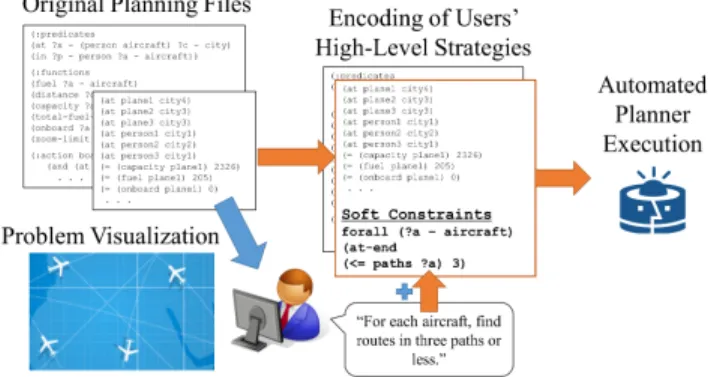
Figure 1 depicts an overview of our collaboration model. First, the original domain and problem files are graphically
Figure 1:Collaborative planning with users’ high-level strategies encoded as preferences.
visualized for the human user. Information visualization is important to amplify users’ comprehension and organization of the problem (Lino, Tate, and Chen-Burger 2005) and vi-sual representations (as opposed to pure text) allow users to better see the “big picture,” providing semantic support for deriving high-level strategies.
Users’ problem-solving strategies are elicited as free-form text responses and encoded as preferences. The prefer-ences are then appended to the problem file given as input to the automated planner. For this work, preference encoding was performed manually by two experimenters (inter-rater agreement = 90%). Although automatic translation of users’ natural language into machine-understandable form (Nikora and Balcom 2009; Dzifcak et al. 2009) is an important re-search area, we view this as a separate problem and did not focus on it in this work.
Human Planning Dataset
In this section, we demonstrate our collaboration model us-ing benchmark problems from the International Plannus-ing Competitions (IPCs). We selected problems from two do-mains: “Zenotravel” and “Satellite,” both presented during the third IPC. “Zenotravel” models a multi-vehicle routing problem requiring the transportation of passengers to their destinations. Relevant actions involve embarking and dis-embarking passengers onto aircraft that can fly at two alter-native speeds between multiple cities. The planes consume fuel at different rates according to speed, and the distances between the cities vary. “Satellite” models a task-allocation problem involving the use of multiple satellites to observe space phenomena. The satellites are equipped with instru-ments that vary according to their calibration targets, image types, data storage and fuel usage. Problem instances in both domains seek to minimize linear combinations of fuel use and makespan.
We tested the problems using three different plan-ning complexities: propositional, numerical and tempo-ral. For each domain-complexity combination, we selected moderate-sized problem files2— problems that human users
2
We used the following benchmark problems for Zenotravel: pfile15 (propositional), pfile13 (numerical) and pfile14 (temporal).
Figure 2: An example of a visualization file used for the Zenotravel–Numerical problem. The map shows the initial state and the arcs represent goal conditions. Other planning information was presented through tables.
could reasonably solve within 30 minutes of planning time (as determined through results obtained from six subjects during our pilot study).
For problem visualization, we used 2D maps to repre-sent initial and goal states where co-located objects signified their pairwise relationship (e.g., a person situated in a city or a satellite pointing at a star), and used tables to organize information about agent capabilities, action costs and con-straints on state variables. Figure 2 depicts a visualization file used for the Zenotravel–Numerical problem.
Study Protocol
We employed a 2x3 mixed study with domain as the within-subject variable and complexity as the between-within-subject vari-able. Each complexity block consisted of 12 participants, for a total of 36 participants.
At the start of each planning problem, participants read introductory paragraphs (taken directly from the IPC domain description) describing the context and goal of the planning problem. Participants were then presented with visualization files and allowed to ask the experimenters general questions about the problem. This briefing period took no more than 5 minutes across all participants.
Participants then received 30 minutes to derive high-level strategies and produce a plan implementing those strategies. Their strategies, along with the plan, were recorded as free-form text responses. We asked participants to estimate and report the times they spent on assessing the problem, de-riving strategies, and producing a plan. Participants then re-peated the same process for the second domain. (The order-ing of domains was randomized across participants.)
Participants spent about 5 minutes on average assessing the problem, 6 minutes on strategy development and 12 min-utes on plan production. The remaining time was used to manually record their plans. These average times did not dif-fer significantly across domain-complexity conditions.
The participants were between 19 and 48 years of age (M =24.1, SD=6.7) and were mostly students from the local campus. The entire study took approximately 75 minutes to
For Satellite, we used pfile12 (p), pfile5 (n), and pfile9 (t).
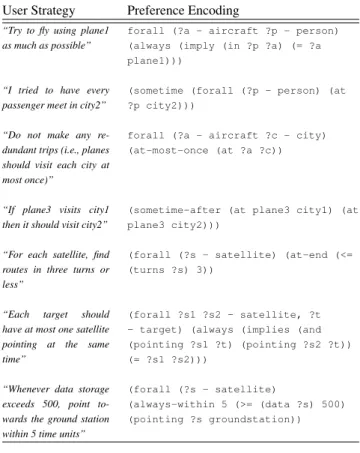
Table 1:Examples of strategies and their preference encodings.
User Strategy Preference Encoding
“Try to fly using plane1 as much as possible”
forall (?a - aircraft ?p - person) (always (imply (in ?p ?a) (= ?a plane1)))
“I tried to have every passenger meet in city2”
(sometime (forall (?p - person) (at ?p city2)))
“Do not make any re-dundant trips (i.e., planes should visit each city at most once)”
forall (?a - aircraft ?c - city) (at-most-once (at ?a ?c))
“If plane3 visits city1 then it should visit city2”
(sometime-after (at plane3 city1) (at plane3 city2)))
“For each satellite, find routes in three turns or less”
(forall (?s - satellite) (at-end (<= (turns ?s) 3))
“Each target should have at most one satellite pointing at the same time”
(forall ?s1 ?s2 - satellite, ?t - target) (always (implies (and (pointing ?s1 ?t) (pointing ?s2 ?t)) (= ?s1 ?s2)))
“Whenever data storage exceeds 500, point to-wards the ground station within 5 time units”
(forall (?s - satellite)
(always-within 5 (>= (data ?s) 500) (pointing ?s groundstation))
complete, and each participant was compensated $15, with a bonus +$5 if their plans were valid and a +$25 prize if their plans resulted in the lowest costs compared with the plans generated by other participants.
Preference Encodings
The user-provided strategies were manually encoded as pref-erences by two experimenters. The translation took 3 min-utes on average (SD=1.3) strategy.3Table 1 depicts a subset
of our collected strategies and their corresponding prefer-ence encodings. From the full set of 72 user-generated strate-gies, 53 were successfully encoded in PDDL 3.0 in the form of preferences. The remaining strategies could not be en-coded due to the users’ generic responses, such as “try to make all trips continuous”and “pass by any bottlenecks”.
In the above examples, the meanings of “continuous” and “bottlenecks” are ambiguous and difficult for translators to map to features in the original problem specification. We could have employed a template from which participants could select pre-populated parameters and thereby compose their strategies, but we chose not to restrict participants’ choice of expression.
Thirteen out of 53 user strategies involved modification of the objective functions to include certain state variables.
Re-3
Note that the experimenters were previously familiar with PDDL and LTL languages and had practiced translations on the pilot study data.
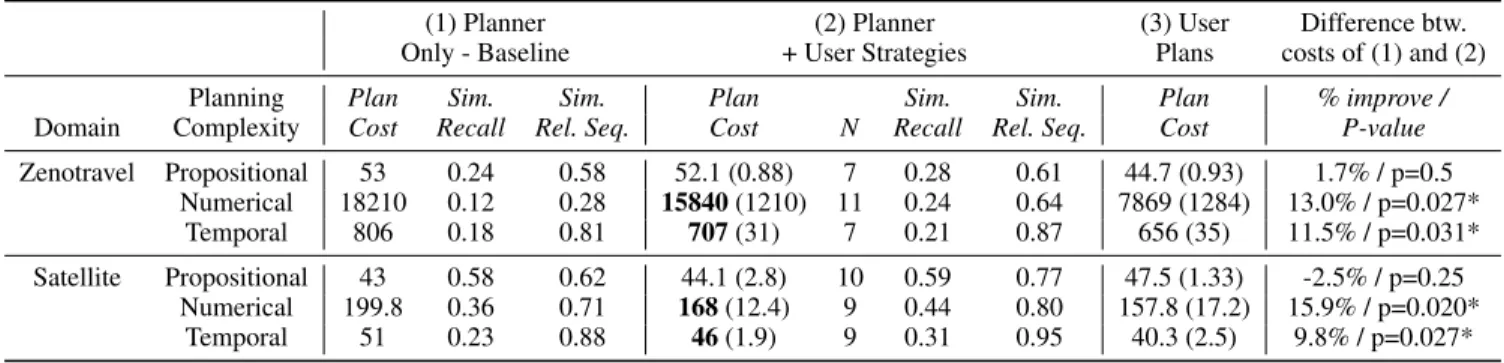
Table 2: Summary of planning results.
(1) Planner (2) Planner (3) User Difference btw. Only - Baseline + User Strategies Plans costs of (1) and (2) Planning Plan Sim. Sim. Plan Sim. Sim. Plan % improve / Domain Complexity Cost Recall Rel. Seq. Cost N Recall Rel. Seq. Cost P-value Zenotravel Propositional 53 0.24 0.58 52.1 (0.88) 7 0.28 0.61 44.7 (0.93) 1.7% / p=0.5 Numerical 18210 0.12 0.28 15840 (1210) 11 0.24 0.64 7869 (1284) 13.0% / p=0.027* Temporal 806 0.18 0.81 707 (31) 7 0.21 0.87 656 (35) 11.5% / p=0.031* Satellite Propositional 43 0.58 0.62 44.1 (2.8) 10 0.59 0.77 47.5 (1.33) -2.5% / p=0.25 Numerical 199.8 0.36 0.71 168 (12.4) 9 0.44 0.80 157.8 (17.2) 15.9% / p=0.020* Temporal 51 0.23 0.88 46 (1.9) 9 0.31 0.95 40.3 (2.5) 9.8% / p=0.027*
Parentheses denote standard errors of the mean. N refers to the number of strategies for each domain-complexity condition. * represents statistical significance.
sponses such as “reduce the number of refuels” and “mini-mize the number of total flights”required state variables to be added to the optimization metric (e.g., cost metric: 1*makespan + 3*fuel + flights). Weights of ap-pended state variables were set to 1.
Fifteen of the 53 strategies required the creation of new state variables for successful encodings. For example, the re-sponse “the total number of calibrations should be less than 5”required the planner to keep track of calibration counts, which was a variable not originally defined in the Satellite domain. The inclusion of new state variables required ad-justments to the domain description file.
Penalty weights (λ) on encoded preferences were set to equal 20% of the estimated problem cost. If a strategy in-volved several preferences (which occurred 17 times out of 53), the weight was evenly distributed. The new problem file was then sent as input, along with the domain descrip-tion file, to the automated planner. We employed the fol-lowing state-of-the-art planners able to incorporate prefer-ences: LPRPG-P (Coles and Coles 2011), for propositional and numerical planning; and OPTIC (Benton, Coles, and Coles 2012), for temporal planning. The costs of the gener-ated plans were then assessed based on the original problem file without the preferences and penalty weights. We used VAL4 tool (Howey, Long, and Fox 2004) for plan validation and evaluation.
Results and Discussion
In this section, we empirically validate that collaborative planning with user-provided strategies yields higher-quality plans than those produced by an automated planner alone. We ran the automated planners (anytime planners) and re-port the best-quality plans generated within 30 min of CPU-time. We selected a fixed budget of 30 min because this is the standard employed in the IPC and to draw fair compar-ison to the human planning session, which took 30 min.4
Table 2 summarizes our results when comparing plans gen-erated by (1) the automated planner only, which represents
4
We also ran the planners for 60 and 120 min and found consis-tent results. All tests were performed using an Intel Xeon Processor (2.27 GHz, 12MB Cache, 16 cores) with 16GB of RAM.
our baseline; (2) the automated planner incorporating users’ strategies; and (3) the users only.
Plan Costs
Within the Zenotravel domain, we found that collaborative planning (2) improved cost minimization on average across all three planning complexities. The cost of generated plans improved by 1.7%, 13.0% and 11.5% for propositional, numerical and temporal problems, respectively. Wilcoxon signed-rank tests with a significance level at 0.05 indi-cated statistically significant improvements for numerical and temporal problems (p-values are shown in the last col-umn of Table 2). Similar results were observed within the Satellite domain: plan costs significantly improved by 15.9% and 9.8% for numerical and temporal problems.
Note that only the collaborative plans for the Satellite– Propositional problem performed worse than the baseline; in this case, the plan generated by the baseline was actually op-timal.5This was the only problem for which the users
them-selves produced poorer plans on average than the baseline. Since there was no effective room for improvement, users’ strategies perturbed generated plans away from the optimal baseline. However, the difference in cost was not statisti-cally significant, and four of the 10 user strategies yielded plans that maintained the optimal cost of 43. Such behavior exemplifies the benefit of employing preferences, indicating robustness for situations in which users’ strategies may be deemed poor or unnecessary.
Our findings suggest that human users can outperform state-of-the-art planners on a subset of IPC benchmark prob-lems (the differences between plan costs in (1) and (3) were all statistically significant, with p<0.01). Note, however, that we selected moderate-sized problems, and whether sim-ilar patterns would result for smaller- or larger-sized prob-lems remains to be investigated. We hypothesize that users could suffer from information overload if problem instances
5
This was the only problem out of the six for which the baseline produced an optimal plan. The true optimal cost for the Zenotravel– Propositional problem was 41. Optimal costs for numerical and temporal problems could not be determined even after a week of computation (the programs eventually crashed due to memory limit).
become too large, potentially hindering users’ ability to pro-vide useful strategies; meanwhile, smaller problems could be solved effectively with automated planners alone. Nev-ertheless, our results demonstrate that users need not be domain experts in order to assist automated planners — novices can provide useful strategies quickly (in approxi-mately 6 min) and positively influence plan generation even when they are being introduced to the given problem for the first time.
Six out of 72 user-generated plans were found to be in-valid due to violated constraints on state variables (likely due to arithmetic errors) and/or unsatisfied goal conditions. However, users’ high-level strategies still proved to be bene-ficial, producing lower-cost plans compared to the baseline. This shows that even in cases where humans are holistically worse at the planning task than automated planners, they can still potentially provide input that complements the au-tomated planner and improves performance.
We also found that collaborative planning did not signifi-cantly influence propositional planning. We suspect this may be due to the fact that propositional planning is a much easier problem to solve than numerical/temporal planning, and that state-of-the-art planners generate satisficing solutions rea-sonably well within a short amount of time. The search space for numerical/temporal planning (or other complex fields, such as probabilistic planning) is exponentially greater; we show that our collaborative framework, utilizing users’ high-level strategies, could be a promising avenue for improving low-level search and producing higher-quality plans.
Varying Preference Weights
We ran a sensitivity analysis varying λ from 1–50% and found that the produced plans were robust to the variation. This is likely due to the fact that almost all user-provided strategies elicited in our study were helpful in solving the planning problems and the planners readily incorporated the strategies even with λ set to 1%. We also synthetically gen-erated infeasible strategies and confirmed that the planners correctly rejected the strategies across the tested range for λ. We would like to further explore the relationship between the utility of a strategy and the setting of λ in future work.
Plan Similarity
Next, we evaluated our framework’s ability to better mimic (or reproduce) human plans. Machine-generated plans that better match the expected plan-making process of a user would naturally translate to increased plan interpretability and comprehension. We explored how well adding in the preferences (2) makes the generated plan more like the user’s plan (3) vs. not having any input from the human (1). Therefore we directly compared measures of plan similarity between the pairs (2)–(3) and (1)–(3).
We used the following measures to compute plan simi-larity: Recall represents the percentage of the user’s plan recovered in the machine-generated plan. This percentage is calculated by comparing the set of grounded actions. If even a single parameter for an action differs between the two actions, a mismatch is recorded. Meanwhile, the per-cent accuracy of plan sequencing is computed by the ratio
# of correctly ordered pairs of grounded actions
total # of pairs of grounded actions . We used this relative
se-quencingmeasure on bigrams of actions because it does not compound sequence errors (e.g., scenarios in which an error in the ordering of a single action early in the plan shifts the position of all subsequent actions).
Recall and relative sequencing measures for pairs (1)–(3) and (2)–(3) are shown in Table 2. We found that both recall and relative sequencing increased with collaborative plan-ning (2) over the baseline of automated planplan-ning (1). This behavior was consistent across all domain-complexity con-ditions. These results provide a promising initial indication that produced plans may better match the human planner’s mental model and benefit users’ comprehension of machine-generated plans.
Limitations and Future Work
Our collaboration architecture relies upon a visualization en-vironment in order to show the “big picture” of the prob-lem to the user. We believe that if our participants were in-stead presented with original PDDL problems through raw text (the input language for the planner), their planning per-formance and the efficacy of their strategies would have suffered. In order to reduce the translation burden, future work exploring domain-independent approaches to auto-matic generation of visualization environments for planning problems would be paramount. Additionally, we would like to integrate automatic techniques to encode users’ strategies as preferences. Such tools would be useful for future IPCs to introduce a track on human-machine collaborative plan-ning; this would allow for a more seamless comparison of planning performance against fully automated planners.
Our model assumes that users are capable planning agents and their provided strategies are sound. Although prefer-ences allow a form of robustness, weights on the preferprefer-ences are set a priori. Work focused on dynamically assessing the utility of user-provided strategies and appropriately auto-adjusting the weights would be beneficial. We could also estimate a scoring function from features of users’ written text or conduct a study eliciting the weight directly from the users themselves.
Conclusion
In this paper, we explored a collaborative planning frame-work incorporating human users’ high-level strategies as preferences to guide the low-level search of automated plan-ners. We collected a human planning dataset and found that useful strategies can be readily provided by non-experts within a short amount of time and successfully encoded as preferences using the PDDL 3.0 language. With the use of benchmark problems from the International Plan-ning Competition, we empirically validated that users’ high-level strategies aided automated planners in the generation of better-quality plans within a fixed amount of computa-tion time. Plan improvements generalized across two plan-ning domains: multi-vehicle routing and task allocation. We showed that our approach yields plans that better mimic those that users themselves would generate, signifying
po-tential improvements to plan interpretability and compre-hension among users.
References
Anderson, D.; Anderson, E.; Lesh, N.; Marks, J.; Mirtich, B.; Ratajczak, D.; and Ryall, K. 2000. Human-guided sim-ple search. In Proc. AAAI.
Baier, J. A.; Bacchus, F.; and McIlraith, S. A. 2009. A heuristic search approach to planning with temporally ex-tended preferences. Artificial Intelligence 173(5):593–618. Benton, J.; Coles, A. J.; and Coles, A. 2012. Temporal planning with preferences and time-dependent continuous costs. In Proc. ICAPS.
Bylander, T. 1991. Complexity results for planning. In Proc. IJCAI, 274–279.
Cheng, T.-H.; Wei, C.-P.; and Tseng, V. S. 2006. Feature se-lection for medical data mining: comparisons of expert judg-ment and automatic approaches. In Proc. CBMS, 165–170. Chrpa, L.; Vallati, M.; and McCluskey, T. L. 2014. Eight In-ternational Planning Competition: Deterministic Part. Post-competition report.
Clare, A. S.; Cummings, M. L.; How, J. P.; Whitten, A. K.; and Toupet, O. 2012. Operator object function guidance for a real-time unmanned vehicle scheduling algorithm. Journal of Aerospace Computing, Information, and Communication 9(4):161–173.
Coles, A. J., and Coles, A. 2011. LPRPG-P: Relaxed plan heuristics for planning with preferences. In Proc. ICAPS, 37–45.
Cummings, M. L., and Bruni, S. 2010. Human-automated planner collaboration in complex resource allocation deci-sion support systems. Intelligent Decision Technologies 4(2):101–114.
Domshlak, C.; Rossi, F.; Venable, K. B.; and Walsh, T. 2003. Reasoning about soft constraints and conditional pref-erences: complexity results and approximation techniques. In Proc. IJCAI, 215–220.
Du Boulay, B., and Luckin, R. 2001. Modelling human teaching tactics and strategies for tutoring systems. In-ternational Journal of Artificial Intelligence in Education 12(3):235–256.
Dzifcak, J.; Scheutz, M.; Baral, C.; and Schermerhorn, P. 2009. What to do and how to do it: Translating natural lan-guage directives into temporal and dynamic logic represen-tation for goal management and action execution. In Proc. ICRA, 4163–4168.
Ferguson, G., and Allen, J. F. 1998. TRIPS: An integrated intelligent problem-solving assistant. In Proc. AAAI/IAAI, 567–572.
Ferguson, G.; Allen, J. F.; Miller, B. W.; et al. 1996. TRAINS-95: Towards a mixed-initiative planning assistant. In Proc. AIPS, 70–77.
Fox, M., and Long, D. 2003. PDDL2.1: An extension to PDDL for expressing temporal planning domains. Journal of Artificial Intelligence Research20:61–124.
Gerevini, A., and Long, D. 2006. Preferences and soft con-straints in PDDL3. In ICAPS Workshop on Planning with Preferences and Soft Constraints, 46–53.
Gombolay, M.; Jensen, R.; Stigile, J.; and Shah, J. 2016. Ap-prenticeship scheduling: Learning to schedule from human experts. In Proc. IJCAI.
Hayes-Roth, B. 1980. Human planning processes. Technical report, No R-2670-ONR.
Howey, R.; Long, D.; and Fox, M. 2004. VAL: Automatic plan validation, continuous effects and mixed initiative plan-ning using PDDL. In IEEE International Conference on Tools with Artificial Intelligence, 294–301.
Lino, N.; Tate, A.; and Chen-Burger, Y. 2005. Semantic support for visualisation in collaborative AI planning. In ICAPS Workshop on the Role of Ontologies in AI Planning and Scheduling.
Manikonda, L.; Chakraborti, T.; De, S.; Talamadupula, K.; and Kambhampati, S. 2014. AI-MIX: using automated plan-ning to steer human workers towards better crowdsourced plans. In Second AAAI Conference on Human Computation and Crowdsourcing.
Myers, K. L.; Tyson, W. M.; Wolverton, M. J.; Jarvis, P. A.; Lee, T. J.; and desJardins, M. 2002. PASSAT: A user-centric planning framework. In Proc. 3rd International NASA Work-shop on Planning and Scheduling for Space, 1–10.
Myers, K. L. 1996. Advisable planning systems. Advanced Planning Technology206–209.
Nau, D. S.; Au, T.-C.; Ilghami, O.; Kuter, U.; Murdock, J. W.; Wu, D.; and Yaman, F. 2003. SHOP2: An HTN planning system. Journal of Artificial Intelligence Research 20:379–404.
Nielsen, J. 1994. Enhancing the explanatory power of us-ability heuristics. In SIGCHI Conference on Human Factors in Computing Systems, 152–158.
Nikora, A. P., and Balcom, G. 2009. Automated identifi-cation of LTL patterns in natural language requirements. In International Symposium on Software Reliability Engineer-ing, 185–194.
Raghavan, H.; Madani, O.; and Jones, R. 2006. Active learn-ing with feedback on features and instances. Journal of Ma-chine Learning Research7(Aug):1655–1686.
Rintanen, J. 2007. Complexity of concurrent temporal plan-ning. In Proc. ICAPS, 280–287.
Tate, A. 1994. Mixed initiative planning in O-Plan2. In Proc. ARPA/Rome Laboratory Planning Initiative Work-shop.
Vadlamudi, S. G.; Chakraborti, T.; Zhang, Y.; and Kamb-hampati, S. 2016. Proactive decision support using auto-mated planning. arXiv preprint:1606.07841.
Wilkins, D. E. 1999. Using the SIPE-2 planning system. Artificial Intelligence Center, SRI International, Menlo Park, CA.