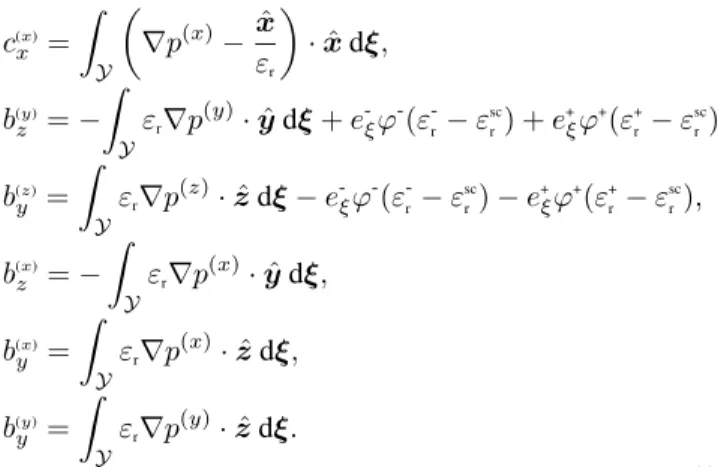
conclusion is in close relation with the present study since we
shall see that devices as simple as dielectric homogeneous and
structured films may lead to negative constant susceptibilities
when expressed in zero-thickness GSTCs; in contrast we shall
prove that constant negative susceptibilities are not possible
when using enlarged GSTC formulation in which at least the
film thickness has been restored.
The paper is organized as follow. The main results of the
analysis are presented in §II for an all-dielectric metafilm
composed of scattering particles embedded at the interface
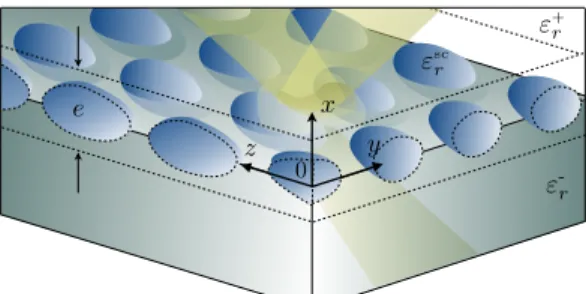
between two different substrates (figure 1). The form of the
effective susceptibility tensors entering in the GSTCs and
the resulting balance of energy are given when considering
enlarged transition conditions across an excluded region that
contains the particles. Explicit positive bounds for the effective
susceptibilities entering the energy balance are provided. The
derivation of the model is detailed in §III. To derive the
effective susceptibilities we use a matched asymptotic analysis
combined with two-scale homogenization. As a warm-up and
to set the main ingredients of the asymptotic procedure, we
first envision a homogeneous thin film sandwiched between
the two substrates. Next we incorporate the two-scale
homog-enization tools to deal with a film composed by scattering
particles. This procedure allows us to recover the expected
symmetry of the susceptibility tensors and to establish the
bounds thanks to minimization principles. We provide in §IV
validations of the effective problem by means of comparisons
with direct numerical calculations of the Maxwell equations in
two- and three-dimensions (the details of the numerical
imple-mentations of the direct and effective problems are freely
avail-able https://www.comsol.fr/community/exchange/841/). Some
technical calculations are collected in the appendices.
II. S
UMMARY OF THE MAIN RESULTS
A. The actual problem
We consider the Maxwell’s equations in three-dimensions
x = (x, y, z)
for dielectric materials with permittivities
de-noted "
0
"
±
r
in the two substrates, "
0
"
sc
r
in the scattering particles
and a uniform permeability µ = µ
0
("
0
and µ
0
are the free
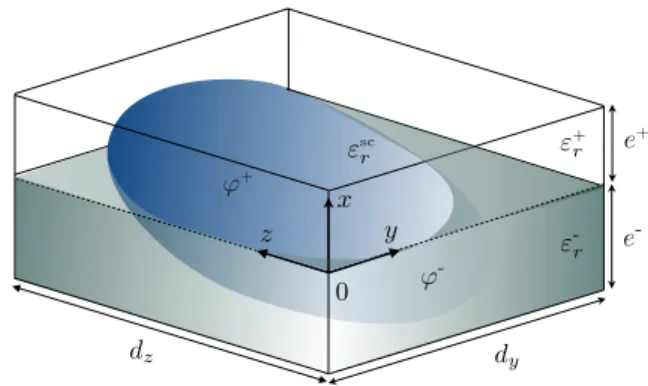
space parameters). The particles are evenly distributed at the
interface x = 0 between the two substrates, with spacing
d
y
along y and d
z
along z. We define S = d
y
d
z
the area
of the periodic cell and d =
p
S. In the time domain, the
electric E, displacement D and magnetizing H fields satisfy
the Maxwell’s equations in the actual problem (figure 1),
namely
rotH =
@D
@t
,
D = "
0
"
r
(x)E,
rotE = µ
0
@H
@t
,
divH = 0,
H
and E ⇥ n, continuous at the interfaces.
(1)
e
<latexit sha1_base64="JL1VE6kGaUVKylubvAyJEZXwXqA=">AAACxHicjVHLSsNAFD2Nr1pfVZdugkVwVZJa0GVBEJct2AfUIsl0WofmxWQilKI/4Fa/TfwD/QvvjCmoRXRCkjPn3nNm7r1+EohUOc5rwVpaXlldK66XNja3tnfKu3udNM4k420WB7Hs+V7KAxHxthIq4L1Eci/0A971J+c63r3jMhVxdKWmCR+E3jgSI8E8RVSL35QrTtUxy14Ebg4qyFczLr/gGkPEYMgQgiOCIhzAQ0pPHy4cJMQNMCNOEhImznGPEmkzyuKU4RE7oe+Ydv2cjWivPVOjZnRKQK8kpY0j0sSUJwnr02wTz4yzZn/znhlPfbcp/f3cKyRW4ZbYv3TzzP/qdC0KI5yZGgTVlBhGV8dyl8x0Rd/c/lKVIoeEOI2HFJeEmVHO+2wbTWpq1731TPzNZGpW71mem+Fd35IG7P4c5yLo1KruSbXWqlca9XzURRzgEMc0z1M0cIkm2sb7EU94ti6swEqt7DPVKuSafXxb1sMHOxSPYA==</latexit>
"
-
r
<latexit sha1_base64="9C0JZ1kyXAd7EnWuvQ0OBssmTxE=">AAAC23icjVHLSsNAFD3GV62vqODGTbAIbixpFXRZcOOygn2ArSVJp3VomoTJRCy1K3fi1h9wq/8j/oH+hXfGFNQiOiHJuefec2buXDfyeSxt+3XKmJ6ZnZvPLGQXl5ZXVs219WocJsJjFS/0Q1F3nZj5PGAVyaXP6pFgTt/1Wc3tHat87YqJmIfBmRxErNl3ugHvcM+RRLXMzcaVI1gUc58icdGQ7FoO90YtM2fnbb2sSVBIQQ7pKofmCxpoI4SHBH0wBJCEfTiI6TlHATYi4poYEicIcZ1nGCFL2oSqGFU4xPbo26XoPGUDipVnrNUe7eLTK0hpYYc0IdUJwmo3S+cT7azY37yH2lOdbUB/N/XqEytxSexfunHlf3WqF4kOjnQPnHqKNKO681KXRN+KOrn1pStJDhFxCrcpLwh7Wjm+Z0trYt27ultH5990pWJV7KW1Cd7VKWnAhZ/jnATVYr6wny+eHuRKB+moM9jCNnZpnoco4QRlVMj7Bo94wrPRNG6NO+P+s9SYSjUb+LaMhw/pg5kS</latexit>
"
+
r
<latexit sha1_base64="bNBmNuyb81jqkteDson7iWq1lDA=">AAAC4XicjVHLSsNAFD2Nr1pfUZe6CBZBEEpaC7oU3LisYLXQakmmUx1MkzCZFEtx486duPUH3OrPiH+gf+GdMQUfiE5Icu6595yZO9ePA5Eo133JWWPjE5NT+enCzOzc/IK9uHSURKlkvM6iIJIN30t4IEJeV0IFvBFL7vX8gB/7F3s6f9znMhFReKgGMT/peWeh6ArmKaLa9mqr70keJyKgSJ62FL9Uw5YS4cDZvGrbRbfkmuX8BOUMFJGtWmQ/o4UOIjCk6IEjhCIcwENCTxNluIiJO8GQOElImDzHFQqkTamKU4VH7AV9zyhqZmxIsfZMjJrRLgG9kpQO1kkTUZ0krHdzTD41zpr9zXtoPPXZBvT3M68esQrnxP6lG1X+V6d7Uehix/QgqKfYMLo7lrmk5lb0yZ1PXSlyiInTuEN5SZgZ5eieHaNJTO/6bj2TfzWVmtUxy2pTvOlT0oDL38f5ExxVSuWtUuWgWtytZqPOYwVr2KB5bmMX+6ihTt7XeMAjnixm3Vi31t1HqZXLNMv4sqz7d16mm4w=</latexit>
"
sc
r
<latexit sha1_base64="asU8jsrnVs8srlc/3tpbwhZMqEg=">AAAC4nicjVHLSsNAFD3GV31XXYoQLIKrkmpBlwU3LhWsCraWZDqtQ9MkzEyKpXTlzp249Qfc6seIf6B/4Z0xglpEJyQ599x7zsydGyShUNrzXsac8YnJqenczOzc/MLiUn555UTFqWS8yuIwlmeBr3goIl7VQof8LJHc7wYhPw06+yZ/2uNSiTg61v2E17t+OxItwXxNVCO/Xuv5kidKhBTJi5rmV3pQ0yLqu4oNG/mCV/TsckdBKQMFZOswzj+jhiZiMKTogiOCJhzCh6LnHCV4SIirY0CcJCRsnmOIWdKmVMWpwie2Q982RecZG1FsPJVVM9olpFeS0sUmaWKqk4TNbq7Np9bZsL95D6ynOVuf/kHm1SVW45LYv3Sflf/VmV40WtizPQjqKbGM6Y5lLqm9FXNy90tXmhwS4gxuUl4SZlb5ec+u1Sjbu7lb3+ZfbaVhTcyy2hRv5pQ04NLPcY6Ck+1iaae4fVQuVMrZqHNYwwa2aJ67qOAAh6iS9zUe8Ignp+ncOLfO3UepM5ZpVvFtOffvJsGcQQ==</latexit>
e
<latexit sha1_base64="JL1VE6kGaUVKylubvAyJEZXwXqA=">AAACxHicjVHLSsNAFD2Nr1pfVZdugkVwVZJa0GVBEJct2AfUIsl0WofmxWQilKI/4Fa/TfwD/QvvjCmoRXRCkjPn3nNm7r1+EohUOc5rwVpaXlldK66XNja3tnfKu3udNM4k420WB7Hs+V7KAxHxthIq4L1Eci/0A971J+c63r3jMhVxdKWmCR+E3jgSI8E8RVSL35QrTtUxy14Ebg4qyFczLr/gGkPEYMgQgiOCIhzAQ0pPHy4cJMQNMCNOEhImznGPEmkzyuKU4RE7oe+Ydv2cjWivPVOjZnRKQK8kpY0j0sSUJwnr02wTz4yzZn/znhlPfbcp/f3cKyRW4ZbYv3TzzP/qdC0KI5yZGgTVlBhGV8dyl8x0Rd/c/lKVIoeEOI2HFJeEmVHO+2wbTWpq1731TPzNZGpW71mem+Fd35IG7P4c5yLo1KruSbXWqlca9XzURRzgEMc0z1M0cIkm2sb7EU94ti6swEqt7DPVKuSafXxb1sMHOxSPYA==</latexit>
0
<latexit sha1_base64="8+uwRsGeRpgxOJ0vD6TjxdG7abs=">AAACxHicjVHLSsNAFD2Nr1pfVZdugkVwVZIq6LIgiMsWbC3UIsl0WodOk5BMhFL0B9zqt4l/oH/hnXEKahGdkOTMufecmXtvmEiRKc97LTgLi0vLK8XV0tr6xuZWeXunncV5yniLxTJOO2GQcSki3lJCSd5JUh6MQ8mvwtGZjl/d8TQTcXSpJgnvjYNhJAaCBYqopndTrnhVzyx3HvgWVGBXIy6/4Bp9xGDIMQZHBEVYIkBGTxc+PCTE9TAlLiUkTJzjHiXS5pTFKSMgdkTfIe26lo1orz0zo2Z0iqQ3JaWLA9LElJcS1qe5Jp4bZ83+5j01nvpuE/qH1mtMrMItsX/pZpn/1elaFAY4NTUIqikxjK6OWZfcdEXf3P1SlSKHhDiN+xRPCTOjnPXZNZrM1K57G5j4m8nUrN4zm5vjXd+SBuz/HOc8aNeq/lG11jyu1Gt21EXsYR+HNM8T1HGBBlrG+xFPeHbOHelkTv6Z6hSsZhfflvPwAbyLjyk=</latexit>
x
<latexit sha1_base64="ujWcmwCXK80mrPsr4yEaleaV6WQ=">AAACxHicjVHLSsNAFD3GV62vqks3wSK4Kkkt6LIgiMsW7ANqkWQ6raF5kZmIpegPuNVvE/9A/8I74xTUIjohyZlz7zkz914/DQMhHed1wVpcWl5ZLawV1zc2t7ZLO7ttkeQZ4y2WhEnW9T3BwyDmLRnIkHfTjHuRH/KOPz5T8c4tz0SQxJdykvJ+5I3iYBgwTxLVvLsulZ2Ko5c9D1wDyjCrkZRecIUBEjDkiMARQxIO4UHQ04MLBylxfUyJywgFOs5xjyJpc8rilOERO6bviHY9w8a0V55CqxmdEtKbkdLGIWkSyssIq9NsHc+1s2J/855qT3W3Cf194xURK3FD7F+6WeZ/daoWiSFOdQ0B1ZRqRlXHjEuuu6Jubn+pSpJDSpzCA4pnhJlWzvpsa43Qtaveejr+pjMVq/bM5OZ4V7ekAbs/xzkP2tWKe1ypNmvles2MuoB9HOCI5nmCOi7QQEt7P+IJz9a5FVrCyj9TrQWj2cO3ZT18AGg0j3M=</latexit>
y
<latexit sha1_base64="9zoJ+yZixem4Je+puZznH31iCYk=">AAACxHicjVHLSsNAFD2Nr1pfVZdugkVwVZJa0GVBEJct2AfUIsl0WofmRWYilKI/4Fa/TfwD/QvvjCmoRXRCkjPn3nNm7r1+EgipHOe1YC0tr6yuFddLG5tb2zvl3b2OjLOU8TaLgzjt+Z7kgYh4WwkV8F6Sci/0A971J+c63r3jqRRxdKWmCR+E3jgSI8E8RVRrelOuOFXHLHsRuDmoIF/NuPyCawwRgyFDCI4IinAAD5KePlw4SIgbYEZcSkiYOMc9SqTNKItThkfshL5j2vVzNqK99pRGzeiUgN6UlDaOSBNTXkpYn2abeGacNfub98x46rtN6e/nXiGxCrfE/qWbZ/5Xp2tRGOHM1CCopsQwujqWu2SmK/rm9peqFDkkxGk8pHhKmBnlvM+20UhTu+6tZ+JvJlOzes/y3Azv+pY0YPfnOBdBp1Z1T6q1Vr3SqOejLuIAhzimeZ6igUs00Tbej3jCs3VhBZa0ss9Uq5Br9vFtWQ8fapSPdA==</latexit>
z
<latexit sha1_base64="SCAG39+GdDGoruf7sFr73NKPOBQ=">AAACxHicjVHLSsNAFD3GV62vqks3wSK4Kkkt6LIgiMsW7ANqkWQ6raF5kZkItegPuNVvE/9A/8I74xTUIjohyZlz7zkz914/DQMhHed1wVpcWl5ZLawV1zc2t7ZLO7ttkeQZ4y2WhEnW9T3BwyDmLRnIkHfTjHuRH/KOPz5T8c4tz0SQxJdykvJ+5I3iYBgwTxLVvLsulZ2Ko5c9D1wDyjCrkZRecIUBEjDkiMARQxIO4UHQ04MLBylxfUyJywgFOs5xjyJpc8rilOERO6bviHY9w8a0V55CqxmdEtKbkdLGIWkSyssIq9NsHc+1s2J/855qT3W3Cf194xURK3FD7F+6WeZ/daoWiSFOdQ0B1ZRqRlXHjEuuu6Jubn+pSpJDSpzCA4pnhJlWzvpsa43Qtaveejr+pjMVq/bM5OZ4V7ekAbs/xzkP2tWKe1ypNmvles2MuoB9HOCI5nmCOi7QQEt7P+IJz9a5FVrCyj9TrQWj2cO3ZT18AGz0j3U=</latexit>
Fig. 1: Actual problem of a metafilm composed by dielectric
scattering particles evenly distributed at the interface between
two dielectric substrates.
We recall that the above equations imply an
energy-conservation law expressed in a bounded domain ⌦ as
dE
dt
+
Z
⌃
S
· n dS = 0,
with E =
1
2
Z
⌦
"
0
"
r
|E|
2
+ µ
0
|H|
2
dx, S = E ⇥ H,
(2)
where E is the electromagnetic energy and S is the Poynting
vector (n is the unit vector normal to ⌃ = @⌦). In the absence
of energy flux through ⌃ that is to say if ⌃ is associated
with boundary conditions E ⇥ n = 0 or H ⇥ n = 0, the
electromagnetic energy is conserved in ⌦.
B. The effective problem
The asymptotic analysis combined with homogenization
tools provides an effective model in which the array is replaced
by transition conditions of the GSTC type (this will be detailed
in the forthcoming §III). The effective problem applies outside
the thin layer of thickness e bounded by
-
and
+
, which
has been excluded from the physical space (figure 2). As
previously said, the excluded region contains entirely the
array of particles which means that e is equal or larger than
the extend of the particles along x. Outside this region, for
x <
e
-
and x > e
+
, the Maxwell equations apply
rotH = "
0
"
±
r
@E
@t
,
rotE = µ
0
@H
@t
,
divH = 0.
(3)
"
-r
<latexit sha1_base64="9C0JZ1kyXAd7EnWuvQ0OBssmTxE=">AAAC23icjVHLSsNAFD3GV62vqODGTbAIbixpFXRZcOOygn2ArSVJp3VomoTJRCy1K3fi1h9wq/8j/oH+hXfGFNQiOiHJuefec2buXDfyeSxt+3XKmJ6ZnZvPLGQXl5ZXVs219WocJsJjFS/0Q1F3nZj5PGAVyaXP6pFgTt/1Wc3tHat87YqJmIfBmRxErNl3ugHvcM+RRLXMzcaVI1gUc58icdGQ7FoO90YtM2fnbb2sSVBIQQ7pKofmCxpoI4SHBH0wBJCEfTiI6TlHATYi4poYEicIcZ1nGCFL2oSqGFU4xPbo26XoPGUDipVnrNUe7eLTK0hpYYc0IdUJwmo3S+cT7azY37yH2lOdbUB/N/XqEytxSexfunHlf3WqF4kOjnQPnHqKNKO681KXRN+KOrn1pStJDhFxCrcpLwh7Wjm+Z0trYt27ultH5990pWJV7KW1Cd7VKWnAhZ/jnATVYr6wny+eHuRKB+moM9jCNnZpnoco4QRlVMj7Bo94wrPRNG6NO+P+s9SYSjUb+LaMhw/pg5kS</latexit>
"
+
r
<latexit sha1_base64="bNBmNuyb81jqkteDson7iWq1lDA=">AAAC4XicjVHLSsNAFD2Nr1pfUZe6CBZBEEpaC7oU3LisYLXQakmmUx1MkzCZFEtx486duPUH3OrPiH+gf+GdMQUfiE5Icu6595yZO9ePA5Eo133JWWPjE5NT+enCzOzc/IK9uHSURKlkvM6iIJIN30t4IEJeV0IFvBFL7vX8gB/7F3s6f9znMhFReKgGMT/peWeh6ArmKaLa9mqr70keJyKgSJ62FL9Uw5YS4cDZvGrbRbfkmuX8BOUMFJGtWmQ/o4UOIjCk6IEjhCIcwENCTxNluIiJO8GQOElImDzHFQqkTamKU4VH7AV9zyhqZmxIsfZMjJrRLgG9kpQO1kkTUZ0krHdzTD41zpr9zXtoPPXZBvT3M68esQrnxP6lG1X+V6d7Uehix/QgqKfYMLo7lrmk5lb0yZ1PXSlyiInTuEN5SZgZ5eieHaNJTO/6bj2TfzWVmtUxy2pTvOlT0oDL38f5ExxVSuWtUuWgWtytZqPOYwVr2KB5bmMX+6ihTt7XeMAjnixm3Vi31t1HqZXLNMv4sqz7d16mm4w=</latexit>
y
<latexit sha1_base64="9zoJ+yZixem4Je+puZznH31iCYk=">AAACxHicjVHLSsNAFD2Nr1pfVZdugkVwVZJa0GVBEJct2AfUIsl0WofmRWYilKI/4Fa/TfwD/QvvjCmoRXRCkjPn3nNm7r1+EgipHOe1YC0tr6yuFddLG5tb2zvl3b2OjLOU8TaLgzjt+Z7kgYh4WwkV8F6Sci/0A971J+c63r3jqRRxdKWmCR+E3jgSI8E8RVRrelOuOFXHLHsRuDmoIF/NuPyCawwRgyFDCI4IinAAD5KePlw4SIgbYEZcSkiYOMc9SqTNKItThkfshL5j2vVzNqK99pRGzeiUgN6UlDaOSBNTXkpYn2abeGacNfub98x46rtN6e/nXiGxCrfE/qWbZ/5Xp2tRGOHM1CCopsQwujqWu2SmK/rm9peqFDkkxGk8pHhKmBnlvM+20UhTu+6tZ+JvJlOzes/y3Azv+pY0YPfnOBdBp1Z1T6q1Vr3SqOejLuIAhzimeZ6igUs00Tbej3jCs3VhBZa0ss9Uq5Br9vFtWQ8fapSPdA==</latexit>
z
<latexit sha1_base64="SCAG39+GdDGoruf7sFr73NKPOBQ=">AAACxHicjVHLSsNAFD3GV62vqks3wSK4Kkkt6LIgiMsW7ANqkWQ6raF5kZkItegPuNVvE/9A/8I74xTUIjohyZlz7zkz914/DQMhHed1wVpcWl5ZLawV1zc2t7ZLO7ttkeQZ4y2WhEnW9T3BwyDmLRnIkHfTjHuRH/KOPz5T8c4tz0SQxJdykvJ+5I3iYBgwTxLVvLsulZ2Ko5c9D1wDyjCrkZRecIUBEjDkiMARQxIO4UHQ04MLBylxfUyJywgFOs5xjyJpc8rilOERO6bviHY9w8a0V55CqxmdEtKbkdLGIWkSyssIq9NsHc+1s2J/855qT3W3Cf194xURK3FD7F+6WeZ/daoWiSFOdQ0B1ZRqRlXHjEuuu6Jubn+pSpJDSpzCA4pnhJlWzvpsa43Qtaveejr+pjMVq/bM5OZ4V7ekAbs/xzkP2tWKe1ypNmvles2MuoB9HOCI5nmCOi7QQEt7P+IJz9a5FVrCyj9TrQWj2cO3ZT18AGz0j3U=</latexit>
0
<latexit sha1_base64="8+uwRsGeRpgxOJ0vD6TjxdG7abs=">AAACxHicjVHLSsNAFD2Nr1pfVZdugkVwVZIq6LIgiMsWbC3UIsl0WodOk5BMhFL0B9zqt4l/oH/hnXEKahGdkOTMufecmXtvmEiRKc97LTgLi0vLK8XV0tr6xuZWeXunncV5yniLxTJOO2GQcSki3lJCSd5JUh6MQ8mvwtGZjl/d8TQTcXSpJgnvjYNhJAaCBYqopndTrnhVzyx3HvgWVGBXIy6/4Bp9xGDIMQZHBEVYIkBGTxc+PCTE9TAlLiUkTJzjHiXS5pTFKSMgdkTfIe26lo1orz0zo2Z0iqQ3JaWLA9LElJcS1qe5Jp4bZ83+5j01nvpuE/qH1mtMrMItsX/pZpn/1elaFAY4NTUIqikxjK6OWZfcdEXf3P1SlSKHhDiN+xRPCTOjnPXZNZrM1K57G5j4m8nUrN4zm5vjXd+SBuz/HOc8aNeq/lG11jyu1Gt21EXsYR+HNM8T1HGBBlrG+xFPeHbOHelkTv6Z6hSsZhfflvPwAbyLjyk=</latexit>
x
<latexit sha1_base64="ujWcmwCXK80mrPsr4yEaleaV6WQ=">AAACxHicjVHLSsNAFD3GV62vqks3wSK4Kkkt6LIgiMsW7ANqkWQ6raF5kZmIpegPuNVvE/9A/8I74xTUIjohyZlz7zkz914/DQMhHed1wVpcWl5ZLawV1zc2t7ZLO7ttkeQZ4y2WhEnW9T3BwyDmLRnIkHfTjHuRH/KOPz5T8c4tz0SQxJdykvJ+5I3iYBgwTxLVvLsulZ2Ko5c9D1wDyjCrkZRecIUBEjDkiMARQxIO4UHQ04MLBylxfUyJywgFOs5xjyJpc8rilOERO6bviHY9w8a0V55CqxmdEtKbkdLGIWkSyssIq9NsHc+1s2J/855qT3W3Cf194xURK3FD7F+6WeZ/daoWiSFOdQ0B1ZRqRlXHjEuuu6Jubn+pSpJDSpzCA4pnhJlWzvpsa43Qtaveejr+pjMVq/bM5OZ4V7ekAbs/xzkP2tWKe1ypNmvles2MuoB9HOCI5nmCOi7QQEt7P+IJz9a5FVrCyj9TrQWj2cO3ZT18AGg0j3M=</latexit>
e
<latexit sha1_base64="JL1VE6kGaUVKylubvAyJEZXwXqA=">AAACxHicjVHLSsNAFD2Nr1pfVZdugkVwVZJa0GVBEJct2AfUIsl0WofmxWQilKI/4Fa/TfwD/QvvjCmoRXRCkjPn3nNm7r1+EohUOc5rwVpaXlldK66XNja3tnfKu3udNM4k420WB7Hs+V7KAxHxthIq4L1Eci/0A971J+c63r3jMhVxdKWmCR+E3jgSI8E8RVSL35QrTtUxy14Ebg4qyFczLr/gGkPEYMgQgiOCIhzAQ0pPHy4cJMQNMCNOEhImznGPEmkzyuKU4RE7oe+Ydv2cjWivPVOjZnRKQK8kpY0j0sSUJwnr02wTz4yzZn/znhlPfbcp/f3cKyRW4ZbYv3TzzP/qdC0KI5yZGgTVlBhGV8dyl8x0Rd/c/lKVIoeEOI2HFJeEmVHO+2wbTWpq1731TPzNZGpW71mem+Fd35IG7P4c5yLo1KruSbXWqlca9XzURRzgEMc0z1M0cIkm2sb7EU94ti6swEqt7DPVKuSafXxb1sMHOxSPYA==</latexit>
n = ˆ
x
<latexit sha1_base64="DKV3oLHGXlYvRlo0XM9zuGB+oX4=">AAAC2HicjVHLSsNAFD3GV62vapdugkVwFSYx1XYhFNy4rGCraEWSOG2DaRKSiVhKwZ249Qfc6heJf6B/4Z0xBV2ITkhy5tx7zsy9140DPxWMvU1p0zOzc/OFheLi0vLKamltvZ1GWeLxlhcFUXLqOikP/JC3hC8Cfhon3Bm4AT9xrw9k/OSGJ6kfhcdiGPOLgdML/a7vOYKoy1J51HG7ejje7/QdofDt+LJUYQazalXb0plhVVndrBOoMrO+a+umwdSqIF/NqPSKDq4QwUOGAThCCMIBHKT0nMMEQ0zcBUbEJYR8FecYo0jajLI4ZTjEXtO3R7vznA1pLz1TpfbolIDehJQ6tkgTUV5CWJ6mq3imnCX7m/dIecq7Denv5l4DYgX6xP6lm2T+VydrEeiipmrwqaZYMbI6L3fJVFfkzfVvVQlyiImT+IriCWFPKSd91pUmVbXL3joq/q4yJSv3Xp6b4UPekgY8maL+O2hbhrljWEd2pWHnoy5gA5vYpnnuoYFDNNEi7yGe8IwX7Uy70+61h69UbSrXlPFjaY+fiXeXXA==</latexit>
+
<latexit sha1_base64="V3ViADNc1x5SOo9t284SiV7bz38=">AAAC3HicjVHLTttAFD2YFigUGmDRBZsREVKlStbYTYDskFiUJUgNRCIPjZ1JGOGX7DEiith1V3XbH2BLvwf1D9q/6J2pI9FFBGPZvnPuOWfunRtkkSo0578WnMVXr5eWV96srr1d33hX29w6L9IyD2U7TKM07wSikJFKZFsrHclOlksRB5G8CK6PTf7iRuaFSpMvepLJXizGiRqpUGiCBrX33c8ijkW/q+Wtnna1Sibs4x1jg1qdu9w/bDZ8xl2/yVtei4Im91r7Dea53K46qnWa1h7RxRApQpSIIZFAUxxBoKDnEh44MsJ6mBKWU6RsXuIOq6QtiSWJIQi9pu+YdpcVmtDeeBZWHdIpEb05KRn2SJMSL6fYnMZsvrTOBp3nPbWeprYJ/YPKKyZU44rQ53Qz5kt1pheNEQ5tD4p6yixiugsrl9LeiqmcPelKk0NGmImHlM8pDq1yds/Magrbu7lbYfO/LdOgZh9W3BJ/TJU04NkU2fzg3He9T65/1qgfNapRr2AHu/hA8zzAEU5wirat/x4P+On0na/ON+f7P6qzUGm28d9yfvwFDtmYsQ==</latexit>
-<latexit sha1_base64="c0/58poj08RJVMECJeZS1u1nTwM=">AAAC1nicjVHLLgRBFD3a+z1Y2lRMJDY61W0Gs5NYsCQxTGKQ6lboTL/SXe2RCTux9QO2fJL4A/7CrdKTsBCq0923zj3nVN17vTQMcsX5W5/VPzA4NDwyOjY+MTk1XZmZ3c+TIvNl00/CJGt5IpdhEMumClQoW2kmReSF8sDrbOr8waXM8iCJ99RNKo8icR4HZ4EvFEEnlZn2logicdxW8lp1l28ZO6lUuc3d9XrNZdx267zhNCioc6exWmOOzc2qolw7SeUVbZwigY8CESRiKIpDCOT0HMIBR0rYEbqEZRQFJi9xizHSFsSSxBCEduh7TrvDEo1prz1zo/bplJDejJQMi6RJiJdRrE9jJl8YZ43+5t01nvpuN/T3Sq+IUIULQv/S9Zj/1elaFM6wbmoIqKbUILo6v3QpTFf0zdm3qhQ5pITp+JTyGcW+Ufb6zIwmN7Xr3gqTfzdMjeq9X3ILfOhb0oB7U2S/B/uu7azY7m6tulErRz2CeSxgiea5hg1sYwdN8r7CE57xYrWsO+veeviiWn2lZg4/lvX4Caicljc=</latexit>
Fig. 2: Effective problem in which the GSTCs (5) apply across
Next, across the excluded region, transition conditions have
to be specified, hence we define for any field A = D, E, H,
JAK = A|
e
+
A
|
-e
-
,
A
av
=
1
2
( A
|
e
+
+ A
|
-e
-
) ,
(4)
and with the above definitions we obtain conditions of the
GSTC type, namely
JH ⇥ ˆ
x
K = "
0
@P
k
@t
r
k
M
x
⇥ ˆ
x,
JE ⇥ ˆ
x
K = µ
0
@M
k
@t
r
k
P
x
⇥ ˆ
x,
(5)
where ˆ
x
is the unit vector along Ox, P = P
x
x + P
ˆ
k
, M =
M
x
x + M
ˆ
k
(with P
k
· ˆ
x = M
k
· ˆ
x = 0), and the operator
r
k
M
x
⇥ ˆ
x = @
z
M
x
y
ˆ
@
y
M
x
z
ˆ
1
. The vectors P and M refer
to the electric and magnetic polarization densities, respectively.
Expectedly, we obtain zero cross-susceptibility tensors hence
we have
P =
ee
E
˜
av
,
M =
mm
H
av
,
(6)
where the subscript “av” refers to the average values of the
fields at both sides of the interface, and where
ee
, and
mm
are the electric-to-electric and magnetic-to-magnetic surface
susceptibility tensors whose forms are
ee
=
0
B
B
B
@
xx
ee
xy
ee
xz
ee
xy
ee
yy
ee
yz
ee
xz
ee
yz
ee
zz
ee
1
C
C
C
A
,
mm
= e
0
B
B
B
@
1 0 0
0
1 0
0
0 1
1
C
C
C
A
,
(7)
and where the 6 effective susceptibilities are defined in terms
of the solutions of so-called elementary problems; they are
specified in the forthcoming Eqs. (47)-(48). Next, if the
mi-crostructure is invariant when z ! z we have
xz
ee
=
yz
ee
=
0
, if it is invariant when y ! y then
xy
ee
=
yz
ee
= 0
(this is
shown in appendix C). We recover that for both symmetries
are realized, the susceptibility tensor is diagonal. Eventually,
the average electric field has to be understood as
˜
E
av
=
1
"
0
D
x,
av
x + E
ˆ
k,
av
,
(8)
as in [19], since it involves the fields being continuous at the
dominant order corresponding to vanishing effect of the thin
metafilm.
As previously commented, the excluded domain must
satis-fy two conditions. On the one hand it has to be thin which
means of the same order of magnitude than e. On the other
hand it has to be large enough in order to contain entirely the
particules. Doing so, x 2 ( 1, e
-
)
and x 2 (e
+
, +
1) are
composed of the substrates only both in the actual and in the
effective problems.
Two explicit parameters will be used in the following which
are the volume averages of the permittivity and of the inverse
of the permittivity within the excluded region. Denoting the
1
It is worth noticing that (5) along with (3) and D
x
= "
0
"
r
E
x
provide
JD
x
K = "
0
divP
k
,
JH
x
K = divM
k
.
"
sc
r
<latexit sha1_base64="asU8jsrnVs8srlc/3tpbwhZMqEg=">AAAC4nicjVHLSsNAFD3GV31XXYoQLIKrkmpBlwU3LhWsCraWZDqtQ9MkzEyKpXTlzp249Qfc6seIf6B/4Z0xglpEJyQ599x7zsydGyShUNrzXsac8YnJqenczOzc/MLiUn555UTFqWS8yuIwlmeBr3goIl7VQof8LJHc7wYhPw06+yZ/2uNSiTg61v2E17t+OxItwXxNVCO/Xuv5kidKhBTJi5rmV3pQ0yLqu4oNG/mCV/TsckdBKQMFZOswzj+jhiZiMKTogiOCJhzCh6LnHCV4SIirY0CcJCRsnmOIWdKmVMWpwie2Q982RecZG1FsPJVVM9olpFeS0sUmaWKqk4TNbq7Np9bZsL95D6ynOVuf/kHm1SVW45LYv3Sflf/VmV40WtizPQjqKbGM6Y5lLqm9FXNy90tXmhwS4gxuUl4SZlb5ec+u1Sjbu7lb3+ZfbaVhTcyy2hRv5pQ04NLPcY6Ck+1iaae4fVQuVMrZqHNYwwa2aJ67qOAAh6iS9zUe8Ignp+ncOLfO3UepM5ZpVvFtOffvJsGcQQ==</latexit>
e
+
<latexit sha1_base64="Wl0KZLY1XR8zIpvywSDMkAZ7154=">AAAC1XicjVHLSsNAFD2Nr1pfUZdugkUQhJI+wHZXcOOygn1AW0uSTuvQNAnJpFhKd+LWH3CrvyT+gf6Fd8YUFCk6Icmdc885M/deO3B5JEzzLaWtrK6tb6Q3M1vbO7t7+v5BI/Lj0GF1x3f9sGVbEXO5x+qCC5e1gpBZY9tlTXt0IfPNCQsj7nvXYhqw7tgaenzAHUsQ1NN1dtMR7E7MOoJ7U+Ns3tOzZs6slM1ixfgd5HOmWlkkq+brr+igDx8OYozB4EFQ7MJCRE8beZgICOtiRlhIEVd5hjkypI2JxYhhETqi75B27QT1aC89I6V26BSX3pCUBk5I4xMvpFieZqh8rJwlusx7pjzl3ab0txOvMaECt4T+pVsw/6uTtQgMUFY1cKopUIiszklcYtUVeXPjW1WCHALCZNynfEixo5SLPhtKE6naZW8tlX9XTInKvZNwY3zIW9KAF1M0lgeNQi5fzBWuStlqKRl1Gkc4xinN8xxVXKKGOnlP8IRnvGhNba7daw9fVC2VaA7xY2mPn/fjlmA=</latexit>
e
-<latexit sha1_base64="mBzntxN8XHkzLXcVP68VCZNa5dg=">AAACzXicjVHLTsJAFD3UF+ILdemmkZi4kZRHIuxI3LgTE3lEQNMOAzb0lXZqJIhbf8Ct/pbxD/QvvDOWRGOITtP2zrnnnJl7rxU4diQM4y2lLSwuLa+kVzNr6xubW9ntnWbkxyHjDeY7fti2zIg7tscbwhYObwchN13L4S1rdCLzrVseRrbvXYhxwHuuOfTsgc1MQdAlv+oKficmR9PrbM7IG9WKUarqv4NC3lArh2TV/ewruujDB0MMFxweBMUOTET0dFCAgYCwHiaEhRTZKs8xRYa0MbE4MUxCR/Qd0q6ToB7tpWek1IxOcegNSanjgDQ+8UKK5Wm6ysfKWaLzvCfKU95tTH8r8XIJFbgh9C/djPlfnaxFYICKqsGmmgKFyOpY4hKrrsib69+qEuQQECbjPuVDiplSzvqsK02kape9NVX+XTElKvcs4cb4kLekAc+mqM8PmsV8oZQvnpdztXIy6jT2sI9DmucxajhFHQ3y9vCEZ7xoZ1qs3WsPX1QtlWh28WNpj58P45O1</latexit>
"
-r
<latexit sha1_base64="9C0JZ1kyXAd7EnWuvQ0OBssmTxE=">AAAC23icjVHLSsNAFD3GV62vqODGTbAIbixpFXRZcOOygn2ArSVJp3VomoTJRCy1K3fi1h9wq/8j/oH+hXfGFNQiOiHJuefec2buXDfyeSxt+3XKmJ6ZnZvPLGQXl5ZXVs219WocJsJjFS/0Q1F3nZj5PGAVyaXP6pFgTt/1Wc3tHat87YqJmIfBmRxErNl3ugHvcM+RRLXMzcaVI1gUc58icdGQ7FoO90YtM2fnbb2sSVBIQQ7pKofmCxpoI4SHBH0wBJCEfTiI6TlHATYi4poYEicIcZ1nGCFL2oSqGFU4xPbo26XoPGUDipVnrNUe7eLTK0hpYYc0IdUJwmo3S+cT7azY37yH2lOdbUB/N/XqEytxSexfunHlf3WqF4kOjnQPnHqKNKO681KXRN+KOrn1pStJDhFxCrcpLwh7Wjm+Z0trYt27ultH5990pWJV7KW1Cd7VKWnAhZ/jnATVYr6wny+eHuRKB+moM9jCNnZpnoco4QRlVMj7Bo94wrPRNG6NO+P+s9SYSjUb+LaMhw/pg5kS</latexit>
"
+
r
<latexit sha1_base64="bNBmNuyb81jqkteDson7iWq1lDA=">AAAC4XicjVHLSsNAFD2Nr1pfUZe6CBZBEEpaC7oU3LisYLXQakmmUx1MkzCZFEtx486duPUH3OrPiH+gf+GdMQUfiE5Icu6595yZO9ePA5Eo133JWWPjE5NT+enCzOzc/IK9uHSURKlkvM6iIJIN30t4IEJeV0IFvBFL7vX8gB/7F3s6f9znMhFReKgGMT/peWeh6ArmKaLa9mqr70keJyKgSJ62FL9Uw5YS4cDZvGrbRbfkmuX8BOUMFJGtWmQ/o4UOIjCk6IEjhCIcwENCTxNluIiJO8GQOElImDzHFQqkTamKU4VH7AV9zyhqZmxIsfZMjJrRLgG9kpQO1kkTUZ0krHdzTD41zpr9zXtoPPXZBvT3M68esQrnxP6lG1X+V6d7Uehix/QgqKfYMLo7lrmk5lb0yZ1PXSlyiInTuEN5SZgZ5eieHaNJTO/6bj2TfzWVmtUxy2pTvOlT0oDL38f5ExxVSuWtUuWgWtytZqPOYwVr2KB5bmMX+6ihTt7XeMAjnixm3Vi31t1HqZXLNMv4sqz7d16mm4w=</latexit>
0
<latexit sha1_base64="5mYUOUymVgUg3BFR6u8Av/Go1nA=">AAACxHicjVHLSsNAFD2Nr1pfVZdugkVwVZJa0GVBEJct2AfUIsl0WofmxWQilKI/4Fa/TfwD/QvvjCmoRXRCkjPn3nNm7r1+EohUOc5rwVpaXlldK66XNja3tnfKu3udNM4k420WB7Hs+V7KAxHxthIq4L1Eci/0A971J+c63r3jMhVxdKWmCR+E3jgSI8E8RVTLuSlXnKpjlr0I3BxUkK9mXH7BNYaIwZAhBEcERTiAh5SePlw4SIgbYEacJCRMnOMeJdJmlMUpwyN2Qt8x7fo5G9Fee6ZGzeiUgF5JShtHpIkpTxLWp9kmnhlnzf7mPTOe+m5T+vu5V0iswi2xf+nmmf/V6VoURjgzNQiqKTGMro7lLpnpir65/aUqRQ4JcRoPKS4JM6Oc99k2mtTUrnvrmfibydSs3rM8N8O7viUN2P05zkXQqVXdk2qtVa806vmoizjAIY5pnqdo4BJNtI33I57wbF1YgZVa2WeqVcg1+/i2rIcPvSWPKw==</latexit>
x
<latexit sha1_base64="ujWcmwCXK80mrPsr4yEaleaV6WQ=">AAACxHicjVHLSsNAFD3GV62vqks3wSK4Kkkt6LIgiMsW7ANqkWQ6raF5kZmIpegPuNVvE/9A/8I74xTUIjohyZlz7zkz914/DQMhHed1wVpcWl5ZLawV1zc2t7ZLO7ttkeQZ4y2WhEnW9T3BwyDmLRnIkHfTjHuRH/KOPz5T8c4tz0SQxJdykvJ+5I3iYBgwTxLVvLsulZ2Ko5c9D1wDyjCrkZRecIUBEjDkiMARQxIO4UHQ04MLBylxfUyJywgFOs5xjyJpc8rilOERO6bviHY9w8a0V55CqxmdEtKbkdLGIWkSyssIq9NsHc+1s2J/855qT3W3Cf194xURK3FD7F+6WeZ/daoWiSFOdQ0B1ZRqRlXHjEuuu6Jubn+pSpJDSpzCA4pnhJlWzvpsa43Qtaveejr+pjMVq/bM5OZ4V7ekAbs/xzkP2tWKe1ypNmvles2MuoB9HOCI5nmCOi7QQEt7P+IJz9a5FVrCyj9TrQWj2cO3ZT18AGg0j3M=</latexit>
y
<latexit sha1_base64="9zoJ+yZixem4Je+puZznH31iCYk=">AAACxHicjVHLSsNAFD2Nr1pfVZdugkVwVZJa0GVBEJct2AfUIsl0WofmRWYilKI/4Fa/TfwD/QvvjCmoRXRCkjPn3nNm7r1+EgipHOe1YC0tr6yuFddLG5tb2zvl3b2OjLOU8TaLgzjt+Z7kgYh4WwkV8F6Sci/0A971J+c63r3jqRRxdKWmCR+E3jgSI8E8RVRrelOuOFXHLHsRuDmoIF/NuPyCawwRgyFDCI4IinAAD5KePlw4SIgbYEZcSkiYOMc9SqTNKItThkfshL5j2vVzNqK99pRGzeiUgN6UlDaOSBNTXkpYn2abeGacNfub98x46rtN6e/nXiGxCrfE/qWbZ/5Xp2tRGOHM1CCopsQwujqWu2SmK/rm9peqFDkkxGk8pHhKmBnlvM+20UhTu+6tZ+JvJlOzes/y3Azv+pY0YPfnOBdBp1Z1T6q1Vr3SqOejLuIAhzimeZ6igUs00Tbej3jCs3VhBZa0ss9Uq5Br9vFtWQ8fapSPdA==</latexit>
z
<latexit sha1_base64="SCAG39+GdDGoruf7sFr73NKPOBQ=">AAACxHicjVHLSsNAFD3GV62vqks3wSK4Kkkt6LIgiMsW7ANqkWQ6raF5kZkItegPuNVvE/9A/8I74xTUIjohyZlz7zkz914/DQMhHed1wVpcWl5ZLawV1zc2t7ZLO7ttkeQZ4y2WhEnW9T3BwyDmLRnIkHfTjHuRH/KOPz5T8c4tz0SQxJdykvJ+5I3iYBgwTxLVvLsulZ2Ko5c9D1wDyjCrkZRecIUBEjDkiMARQxIO4UHQ04MLBylxfUyJywgFOs5xjyJpc8rilOERO6bviHY9w8a0V55CqxmdEtKbkdLGIWkSyssIq9NsHc+1s2J/855qT3W3Cf194xURK3FD7F+6WeZ/daoWiSFOdQ0B1ZRqRlXHjEuuu6Jubn+pSpJDSpzCA4pnhJlWzvpsa43Qtaveejr+pjMVq/bM5OZ4V7ekAbs/xzkP2tWKe1ypNmvles2MuoB9HOCI5nmCOi7QQEt7P+IJz9a5FVrCyj9TrQWj2cO3ZT18AGz0j3U=</latexit>
d
z
<latexit sha1_base64="QTVSK3EkGVhK3X5aZf602/rGWik=">AAACxnicjVHLSsNAFD2Nr/quunQTLIKrktSCLgtuuqxoH1BLSabTGpomYTJRahH8Abf6aeIf6F94Z5yCWkQnJDlz7j1n5t7rJ2GQSsd5zVkLi0vLK/nVtfWNza3tws5uM40zwXiDxWEs2r6X8jCIeEMGMuTtRHBv7Ie85Y/OVLx1w0UaxNGlnCS8O/aGUTAImCeJuuj37nqFolNy9LLngWtAEWbV48ILrtBHDIYMY3BEkIRDeEjp6cCFg4S4LqbECUKBjnPcY420GWVxyvCIHdF3SLuOYSPaK89UqxmdEtIrSGnjkDQx5QnC6jRbxzPtrNjfvKfaU91tQn/feI2Jlbgm9i/dLPO/OlWLxACnuoaAako0o6pjxiXTXVE3t79UJckhIU7hPsUFYaaVsz7bWpPq2lVvPR1/05mKVXtmcjO8q1vSgN2f45wHzXLJPS6VzyvFasWMOo99HOCI5nmCKmqoo0HeQzziCc9WzYqszLr9TLVyRrOHb8t6+ACI25BM</latexit>
d
y
<latexit sha1_base64="NgKzRz0n7yvZnrLSE2J29MDQ+e8=">AAACxnicjVHLSsNAFD2Nr1pfVZdugkVwVZJa0GXBTZcV7QNqKcl0WoemSZhMlFIEf8Ctfpr4B/oX3hlTUIvohCRnzr3nzNx7/TgQiXKc15y1tLyyupZfL2xsbm3vFHf3WkmUSsabLAoi2fG9hAci5E0lVMA7seTexA942x+f63j7lstEROGVmsa8N/FGoRgK5imiLgf9ab9YcsqOWfYicDNQQrYaUfEF1xggAkOKCThCKMIBPCT0dOHCQUxcDzPiJCFh4hz3KJA2pSxOGR6xY/qOaNfN2JD22jMxakanBPRKUto4Ik1EeZKwPs028dQ4a/Y375nx1Heb0t/PvCbEKtwQ+5dunvlfna5FYYgzU4OgmmLD6OpY5pKaruib21+qUuQQE6fxgOKSMDPKeZ9to0lM7bq3nom/mUzN6j3LclO861vSgN2f41wErUrZPSlXLqqlWjUbdR4HOMQxzfMUNdTRQJO8R3jEE56tuhVaqXX3mWrlMs0+vi3r4QOGe5BL</latexit>
'
+
<latexit sha1_base64="O0tYTm+ZPUxkxfDgfkHbhK+6VVg=">AAAC23icjVHLSsNAFD3G9zsquHETLIIglPQB6q7gxqWCVaGpZZKOOpgmYTIRS+3Knbj1B9zq/4h/oH/hnTEFRYpOSHLn3HPOzL3XT0KRKtd9G7FGx8YnJqemZ2bn5hcW7aXl4zTOZMDrQRzG8tRnKQ9FxOtKqJCfJpKzjh/yE/9qT+dPrrlMRRwdqW7Cmx12EYlzETBFUMte9a6ZTC7Fmaf4jep5SkRdZ6vfsgtu0d3dcSu7zu+gVHTNKiBfB7H9Cg9txAiQoQOOCIriEAwpPQ2U4CIhrIkeYZIiYfIcfcyQNiMWJwYj9Iq+F7Rr5GhEe+2ZGnVAp4T0SlI62CBNTDxJsT7NMfnMOGt0mHfPeOq7denv514dQhUuCf1LN2D+V6drUTjHjqlBUE2JQXR1Qe6Sma7omzvfqlLkkBCm4zblJcWBUQ767BhNamrXvWUm/26YGtX7IOdm+NC3pAEPpugMD47LxVKlWD6sFmrVfNRTWMM6Nmme26hhHweok/ctnvCMF6tp3Vn31sMX1RrJNSv4sazHT/zfmR0=</latexit>
'
<latexit sha1_base64="q3Kp8ra8yS7x2ZzY9AtTNEGWPtg=">AAAC1XicjVHLSsNAFD3GV62vqEs3wSK4MaStoN0V3LhUsFawtSRxbIfmxWRSLKU7cesPuNVfEv9A/8I7YwqKFJ2Q5M6555yZe6+XBDyVjvM2Y8zOzS8sFpaKyyura+vmxuZFGmfCZw0/DmJx6bkpC3jEGpLLgF0mgrmhF7Cm1z9W+eaAiZTH0bkcJqwdut2I33LflQR1TLM1cEXS49ctye7kaH/cMUuO7dSOnGrN+h2UbUevEvJ1GpuvaOEGMXxkCMEQQVIcwEVKzxXKcJAQ1saIMEER13mGMYqkzYjFiOES2qdvl3ZXORrRXnmmWu3TKQG9gpQWdkkTE09QrE6zdD7Tzgqd5j3SnupuQ/p7uVdIqESP0L90E+Z/daoWiVsc6Ro41ZRoRFXn5y6Z7oq6ufWtKkkOCWEqvqG8oNjXykmfLa1Jde2qt67Ov2umQtXez7kZPtQtacCTKVrTg4uKXa7albODUv0gH3UB29jBHs3zEHWc4BQN8h7gCc94MZrG2Lg3Hr6oxkyu2cKPZTx+ApdPlqM=</latexit>
-Fig. 3: Volume x 2 ( e
-
, e
+
)
⇥ (0, d
y
)
⇥ (0, d
z
)
comprising
a single scattering particle, in which '
-
and '
+
are the filling
fraction of the particle for x < 0 and x > 0.
volume fractions '
-
and '
+
of the particles for x < 0 and
x > 0
respectively (figure 3), these averages read
h"
r
i
±
= 1
'
±
"
±
r
+ '
±
"
sc
r
,
h"
r
1
i
±
=
(1
'
±
)
"
±
r
+
'
±
"
sc
r
,
(9)
and the averages over the whole excluded layer are given by
h"
r
i =
e
-
h"
r
i
-
+ e
+
h"
r
i
+
e
,
h"
1
r
i =
e
-
h"
1
r
i
-
+ e
+
h"
r
1
i
+
e
.
(10)
We now move on to the balance of energy in the effective
problem, that must be the counterpart of (2). Denoting ⌦
e
the
domain ⌦ punctured by the excluded domain x 2 ( e
-
, e
+
),
the boundary of ⌦
e
is @⌦
e
= ⌃
e
[
+
[
-
. Next, the fluxes
of the Poynting vector through
+
and
-
make the GSTCs to
appear. Specifically, we have
d
dt
(
E + E ) +
Z
⌃
e
S
· n dS = 0,
E =
1
2
Z
⌦
e
"
0
"
r
|E|
2
+ µ
0
|H|
2
dx,
E =
1
2
Z ⇣
µ
0
e H
av
2
xx
ee
D
2
x,
av
"
0
+"
0
yy
ee
E
y,
2
av
+
zz
ee
E
z,
2
av
+ 2
yz
ee
E
y,
av
E
z,
av
⌘
dx
k
,
(11)
where x
k
= (y, z). In the absence of fluxes through ⌃
e
, the
total energy (E + E ) is conserved. This is why, when the
effective problem is implemented numerically, the interfacial
energy E has to be positive. Indeed, a negative E fosters
nu-merical instability as E diverging to 1 can be compensated
by E diverging to +1 (an exemple of such behaviour is given
in [35]). It is worth noticing that the above balance of energy
holds for constant effective susceptibilities. When resonances
are involved resulting in frequency dependent susceptibilities
in the harmonic regime, E (being the opposite of the energy
delivered by the metasurface) can be negative as reported
in [10] (figure 6 in this reference). It is worth noticing
that for resonant metasurfaces the derivation of the
energy-conservation law has to be conducted differently (this has been
done in [36], [37] for acoustic resonances).
Coming back to (11), we shall prove that with
M
k
=
e
-h"
r
i
-+
e
+
h"
r
i
+
,
m
k
= e
h"
1
r
i,
m
?
=
e
-h"
1
r
i
-+
e
+
h"
1
r
i
+
,
M
?
= e
h"
r
i
(12)
(and h"
r
i and h"
r
1
i defined in (10)), the diagonal term of the
susceptibility tensor has the following bounds
(
0 <
M
k
xx
ee
m
k
,
0 <
m
?
↵↵
ee
?
M
,
↵ = y, z
(13)
and for non-zero off-diagonal term
yz
ee
, we also have
yz
ee
<
min
⇣p
(
yy
ee
?
m
)(
zz
ee
?
m
),
p
(
yy
ee
?
M
)(
zz
ee
?
M
)
⌘
.
(14)
It is worth noticing that (13) provides absolute bounds for
the diagonal terms of the susceptibility tensor. In contrast,
(14) does not provide absolute bounds for
yz
ee
. Rather, the
inequalities tell us that once (
yy
ee
,
zz
ee
)
are known, then
yz
ee
is bounded
2
III. D
ERIVATION OF THE EFFECTIVE PROBLEM
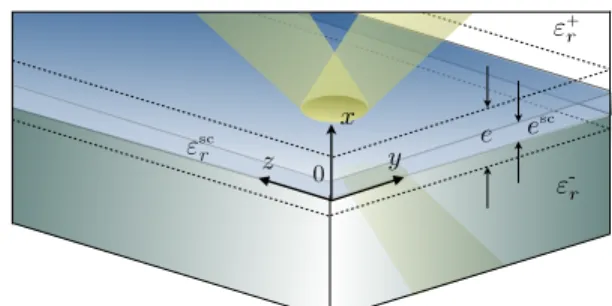
A. A warm-up: asymptotic analysis for a homogeneous film
The case of a homogeneous film with permittivity "
sc
r
and
thickness e
sc
(figure 4) is interesting because it allows us to
introduce the tools of the asymptotic analysis that will be
used for a structured metafilm. Besides, it provides explicit
expressions of the susceptibilities. The asymptotic analysis is
conducted owing to the small parameter = e much smaller
than
the minimum wavelength imposed by the source. Note
that often, non-dimensional form of the equations are used
with x ! x/ and setting
= e/
⌧ 1; without loss of
generality, we set = 1 to avoid multiple coordinate notations.
Far from the film, the fields have macroscopic variations
(at the wavelength-scale), and we define expansions for the
macroscopic fields A = H, D, E as
A =
1
X
i=0
i
A
i
(x, t),
(15)
In contrast, within the film, rapid variations occur which are
accounted for by introducing the microscopic coordinate ⇠
x
=
x
e
. Accordingly, we define the expansions for the microscopic
fields
A =
1
X
i=0
i
a
i
(⇠
x
, x
k
, t),
(16)
where x
k
= (y, z)
is kept to account for slow variations along
the film. The equations satisfied by the macroscopic fields
(H
i
, E
i
, D
i
)
are determined by inserting (15) in (1) and by
2
Equivalently, we shall establish that for any (E
y
, E
z
), denoting the
quadratic form Q.F. =
yy
ee
E
y,
2
av
+
zz
ee
E
2
z,
av
+ 2
yz
ee
E
y,
av
E
z,
av
, we have
e
h"
r
i|E
k,
av
|
2
Q.F.
e
-h"
r
1
i
-+
e
+
h"
r
1
i
+
!
|E
k,
av
|
2
> 0.
with |E
k,
av
|
2
= (E
y,
2
av
+ E
z,
2
av
).
e
<latexit sha1_base64="JL1VE6kGaUVKylubvAyJEZXwXqA=">AAACxHicjVHLSsNAFD2Nr1pfVZdugkVwVZJa0GVBEJct2AfUIsl0WofmxWQilKI/4Fa/TfwD/QvvjCmoRXRCkjPn3nNm7r1+EohUOc5rwVpaXlldK66XNja3tnfKu3udNM4k420WB7Hs+V7KAxHxthIq4L1Eci/0A971J+c63r3jMhVxdKWmCR+E3jgSI8E8RVSL35QrTtUxy14Ebg4qyFczLr/gGkPEYMgQgiOCIhzAQ0pPHy4cJMQNMCNOEhImznGPEmkzyuKU4RE7oe+Ydv2cjWivPVOjZnRKQK8kpY0j0sSUJwnr02wTz4yzZn/znhlPfbcp/f3cKyRW4ZbYv3TzzP/qdC0KI5yZGgTVlBhGV8dyl8x0Rd/c/lKVIoeEOI2HFJeEmVHO+2wbTWpq1731TPzNZGpW71mem+Fd35IG7P4c5yLo1KruSbXWqlca9XzURRzgEMc0z1M0cIkm2sb7EU94ti6swEqt7DPVKuSafXxb1sMHOxSPYA==</latexit>
"
-
r
<latexit sha1_base64="9C0JZ1kyXAd7EnWuvQ0OBssmTxE=">AAAC23icjVHLSsNAFD3GV62vqODGTbAIbixpFXRZcOOygn2ArSVJp3VomoTJRCy1K3fi1h9wq/8j/oH+hXfGFNQiOiHJuefec2buXDfyeSxt+3XKmJ6ZnZvPLGQXl5ZXVs219WocJsJjFS/0Q1F3nZj5PGAVyaXP6pFgTt/1Wc3tHat87YqJmIfBmRxErNl3ugHvcM+RRLXMzcaVI1gUc58icdGQ7FoO90YtM2fnbb2sSVBIQQ7pKofmCxpoI4SHBH0wBJCEfTiI6TlHATYi4poYEicIcZ1nGCFL2oSqGFU4xPbo26XoPGUDipVnrNUe7eLTK0hpYYc0IdUJwmo3S+cT7azY37yH2lOdbUB/N/XqEytxSexfunHlf3WqF4kOjnQPnHqKNKO681KXRN+KOrn1pStJDhFxCrcpLwh7Wjm+Z0trYt27ultH5990pWJV7KW1Cd7VKWnAhZ/jnATVYr6wny+eHuRKB+moM9jCNnZpnoco4QRlVMj7Bo94wrPRNG6NO+P+s9SYSjUb+LaMhw/pg5kS</latexit>
"
+
r
<latexit sha1_base64="bNBmNuyb81jqkteDson7iWq1lDA=">AAAC4XicjVHLSsNAFD2Nr1pfUZe6CBZBEEpaC7oU3LisYLXQakmmUx1MkzCZFEtx486duPUH3OrPiH+gf+GdMQUfiE5Icu6595yZO9ePA5Eo133JWWPjE5NT+enCzOzc/IK9uHSURKlkvM6iIJIN30t4IEJeV0IFvBFL7vX8gB/7F3s6f9znMhFReKgGMT/peWeh6ArmKaLa9mqr70keJyKgSJ62FL9Uw5YS4cDZvGrbRbfkmuX8BOUMFJGtWmQ/o4UOIjCk6IEjhCIcwENCTxNluIiJO8GQOElImDzHFQqkTamKU4VH7AV9zyhqZmxIsfZMjJrRLgG9kpQO1kkTUZ0krHdzTD41zpr9zXtoPPXZBvT3M68esQrnxP6lG1X+V6d7Uehix/QgqKfYMLo7lrmk5lb0yZ1PXSlyiInTuEN5SZgZ5eieHaNJTO/6bj2TfzWVmtUxy2pTvOlT0oDL38f5ExxVSuWtUuWgWtytZqPOYwVr2KB5bmMX+6ihTt7XeMAjnixm3Vi31t1HqZXLNMv4sqz7d16mm4w=</latexit>
0
<latexit sha1_base64="8+uwRsGeRpgxOJ0vD6TjxdG7abs=">AAACxHicjVHLSsNAFD2Nr1pfVZdugkVwVZIq6LIgiMsWbC3UIsl0WodOk5BMhFL0B9zqt4l/oH/hnXEKahGdkOTMufecmXtvmEiRKc97LTgLi0vLK8XV0tr6xuZWeXunncV5yniLxTJOO2GQcSki3lJCSd5JUh6MQ8mvwtGZjl/d8TQTcXSpJgnvjYNhJAaCBYqopndTrnhVzyx3HvgWVGBXIy6/4Bp9xGDIMQZHBEVYIkBGTxc+PCTE9TAlLiUkTJzjHiXS5pTFKSMgdkTfIe26lo1orz0zo2Z0iqQ3JaWLA9LElJcS1qe5Jp4bZ83+5j01nvpuE/qH1mtMrMItsX/pZpn/1elaFAY4NTUIqikxjK6OWZfcdEXf3P1SlSKHhDiN+xRPCTOjnPXZNZrM1K57G5j4m8nUrN4zm5vjXd+SBuz/HOc8aNeq/lG11jyu1Gt21EXsYR+HNM8T1HGBBlrG+xFPeHbOHelkTv6Z6hSsZhfflvPwAbyLjyk=</latexit>
"
sc
r
<latexit sha1_base64="asU8jsrnVs8srlc/3tpbwhZMqEg=">AAAC4nicjVHLSsNAFD3GV31XXYoQLIKrkmpBlwU3LhWsCraWZDqtQ9MkzEyKpXTlzp249Qfc6seIf6B/4Z0xglpEJyQ599x7zsydGyShUNrzXsac8YnJqenczOzc/MLiUn555UTFqWS8yuIwlmeBr3goIl7VQof8LJHc7wYhPw06+yZ/2uNSiTg61v2E17t+OxItwXxNVCO/Xuv5kidKhBTJi5rmV3pQ0yLqu4oNG/mCV/TsckdBKQMFZOswzj+jhiZiMKTogiOCJhzCh6LnHCV4SIirY0CcJCRsnmOIWdKmVMWpwie2Q982RecZG1FsPJVVM9olpFeS0sUmaWKqk4TNbq7Np9bZsL95D6ynOVuf/kHm1SVW45LYv3Sflf/VmV40WtizPQjqKbGM6Y5lLqm9FXNy90tXmhwS4gxuUl4SZlb5ec+u1Sjbu7lb3+ZfbaVhTcyy2hRv5pQ04NLPcY6Ck+1iaae4fVQuVMrZqHNYwwa2aJ67qOAAh6iS9zUe8Ignp+ncOLfO3UepM5ZpVvFtOffvJsGcQQ==</latexit>
x
<latexit sha1_base64="ujWcmwCXK80mrPsr4yEaleaV6WQ=">AAACxHicjVHLSsNAFD3GV62vqks3wSK4Kkkt6LIgiMsW7ANqkWQ6raF5kZmIpegPuNVvE/9A/8I74xTUIjohyZlz7zkz914/DQMhHed1wVpcWl5ZLawV1zc2t7ZLO7ttkeQZ4y2WhEnW9T3BwyDmLRnIkHfTjHuRH/KOPz5T8c4tz0SQxJdykvJ+5I3iYBgwTxLVvLsulZ2Ko5c9D1wDyjCrkZRecIUBEjDkiMARQxIO4UHQ04MLBylxfUyJywgFOs5xjyJpc8rilOERO6bviHY9w8a0V55CqxmdEtKbkdLGIWkSyssIq9NsHc+1s2J/855qT3W3Cf194xURK3FD7F+6WeZ/daoWiSFOdQ0B1ZRqRlXHjEuuu6Jubn+pSpJDSpzCA4pnhJlWzvpsa43Qtaveejr+pjMVq/bM5OZ4V7ekAbs/xzkP2tWKe1ypNmvles2MuoB9HOCI5nmCOi7QQEt7P+IJz9a5FVrCyj9TrQWj2cO3ZT18AGg0j3M=</latexit>
y
<latexit sha1_base64="9zoJ+yZixem4Je+puZznH31iCYk=">AAACxHicjVHLSsNAFD2Nr1pfVZdugkVwVZJa0GVBEJct2AfUIsl0WofmRWYilKI/4Fa/TfwD/QvvjCmoRXRCkjPn3nNm7r1+EgipHOe1YC0tr6yuFddLG5tb2zvl3b2OjLOU8TaLgzjt+Z7kgYh4WwkV8F6Sci/0A971J+c63r3jqRRxdKWmCR+E3jgSI8E8RVRrelOuOFXHLHsRuDmoIF/NuPyCawwRgyFDCI4IinAAD5KePlw4SIgbYEZcSkiYOMc9SqTNKItThkfshL5j2vVzNqK99pRGzeiUgN6UlDaOSBNTXkpYn2abeGacNfub98x46rtN6e/nXiGxCrfE/qWbZ/5Xp2tRGOHM1CCopsQwujqWu2SmK/rm9peqFDkkxGk8pHhKmBnlvM+20UhTu+6tZ+JvJlOzes/y3Azv+pY0YPfnOBdBp1Z1T6q1Vr3SqOejLuIAhzimeZ6igUs00Tbej3jCs3VhBZa0ss9Uq5Br9vFtWQ8fapSPdA==</latexit>
z
<latexit sha1_base64="SCAG39+GdDGoruf7sFr73NKPOBQ=">AAACxHicjVHLSsNAFD3GV62vqks3wSK4Kkkt6LIgiMsW7ANqkWQ6raF5kZkItegPuNVvE/9A/8I74xTUIjohyZlz7zkz914/DQMhHed1wVpcWl5ZLawV1zc2t7ZLO7ttkeQZ4y2WhEnW9T3BwyDmLRnIkHfTjHuRH/KOPz5T8c4tz0SQxJdykvJ+5I3iYBgwTxLVvLsulZ2Ko5c9D1wDyjCrkZRecIUBEjDkiMARQxIO4UHQ04MLBylxfUyJywgFOs5xjyJpc8rilOERO6bviHY9w8a0V55CqxmdEtKbkdLGIWkSyssIq9NsHc+1s2J/855qT3W3Cf194xURK3FD7F+6WeZ/daoWiSFOdQ0B1ZRqRlXHjEuuu6Jubn+pSpJDSpzCA4pnhJlWzvpsa43Qtaveejr+pjMVq/bM5OZ4V7ekAbs/xzkP2tWKe1ypNmvles2MuoB9HOCI5nmCOi7QQEt7P+IJz9a5FVrCyj9TrQWj2cO3ZT18AGz0j3U=</latexit>
e
sc
<latexit sha1_base64="BzD5KvbCeU0dGMN57UZYLqGxacA=">AAAC1nicjVHLTsJAFD3UF+ILdOmmkZi4IgVJdEnixiUm8kgASTsMOKG0TTtVCcGdcesPuNVPMv6B/oV3xpKoxOg0bc+ce8+Zufc6gSsiaVmvKWNhcWl5Jb2aWVvf2NzK5rbrkR+HjNeY7/ph07Ej7gqP16SQLm8GIbdHjssbzvBExRtXPIyE753LccA7I3vgib5gtiSqm83xi7bkN3LSlsIbmxGbdrN5q2DpZc6DYgLySFbVz76gjR58MMQYgcODJOzCRkRPC0VYCIjrYEJcSEjoOMcUGdLGlMUpwyZ2SN8B7VoJ69FeeUZazegUl96QlCb2SeNTXkhYnWbqeKydFfub90R7qruN6e8kXiNiJS6J/Us3y/yvTtUi0cexrkFQTYFmVHUscYl1V9TNzS9VSXIIiFO4R/GQMNPKWZ9NrYl07aq3to6/6UzFqj1LcmO8q1vSgIs/xzkP6qVC8bBQOivnK+Vk1GnsYg8HNM8jVHCKKmrkfY1HPOHZaBq3xp1x/5lqpBLNDr4t4+ED8juWvg==</latexit>
Fig. 4: A thin film with thickness e
sc
and permittivity "
sc
r
at the
interface between two different substrate is the simplest case
of layer.
identifying the terms with same powers in . As "
r
(x) = "
±
r
outside the film, (H
i
, E
i
)
simply satisfy
rot
x
H
i
= "
0
"
±
r
@
t
E
i
,
in X
±
,
rot
x
E
i
=
µ
0
@
t
H
i
,
div
x
H
i
= 0,
(17)
and there are missing boundary conditions when x !
0
±
. Alike, the equations satisfied by the microscopic fields
(h
i
, e
i
, d
i
)
are determined by inserting (16) in (1) with the
differential operator
r !
1 @
@⇠
x
ˆ
x +
r
k
,
(18)
and identifying the terms with same powers in . The resulting
problems have to be complemented with boundary conditions
when ⇠
x
! ±1. The missing conditions on the macroscopic
and microscopic problems are provided simultaneously by
so-called matching conditions which tell us that the two
expansions have to match in some intermediate regions when
x
! 0
±
and ⇠
x
! ±1, specifically up to terms O(
2
)
A
0
(x, t) + A
1
(x, t)
⇠
⇠
x
!±1
a
0
(⇠
x
, x
k
, t) + a
1
(⇠
x
, x
k
, t).
To deduce the resulting conditions at each order in , we use
Taylor expansions A
0
(x, t) = A
0
(x, t) + ⇠
x
@
x
A
0
(0
±
, t) +
. . .
. It follows that the matching conditions read
lim
⇠
x
!±1
a
0
= A
0
0
±
,
(19)
at the zero-order (with A|
0
±
= A(x = 0
±
, x
k
, t)) and at the
first-order
lim
⇠
x
!±1
✓
a
1
⇠
x
@A
0
@x
0
±
◆
= A
1
0
±
.
(20)
1) Zero-order problem: Let us start the asymptotic
anal-ysis for the homogeneous film. Because of the form of the
differential operator in (18), inserting (16) in (1) provides
equations at the dominant order O(
1
). Specifically, we have
@
⇠
x
h
0
= @
⇠
x
e
0
k
= 0
and @
⇠
x
d
0
x
= 0. In virtue of the matching
conditions (19), we thus have
h
0
= H
0
0
,
d
x
0
= D
0
x 0
,
e
0
k
= E
0
k
0
.
(21)
Because of its thinness in O( ), the film is not seen at
the dominant order O(1). Hence we have to go to the next