REVIEW PAPER
Variations on a theme: Polycomb group proteins in plants
Maria Derkacheva1,2 and Lars Hennig1,2,3,*1 Department of Plant Biology and Forest Genetics, Uppsala BioCenter, Swedish University of Agricultural Sciences and Linnean Center for Plant Biology, SE-75007 Uppsala, Sweden
2 Department of Biology and Zurich-Basel Plant Science Center, ETH Zurich, CH-8092, Zurich, Switzerland 3 Science for Life Laboratory, SE-75007 Uppsala, Sweden
*To whom correspondence should be addressed. E-mail: [email protected]
Received 17 September 2013; Revised 7 November 2013; Accepted 7 November 2013
Abstract
Polycomb group (PcG) proteins evolved early in evolution, probably in the common ancestor of animals and plants. In some unicellular organisms, such as Chlamydomonas and Tetrahymena, PcG proteins silence genes in heterochro-matin, suggesting an ancestral function in genome defence. In angiosperms, the PcG system controls many develop-mental transitions. A PcG function in the vernalization response evolved especially in Brassicaceaea. Thus, the role of PcG proteins has changed during evolution to match novel needs. Recent studies identified many proteins asso-ciated with plant PcG protein complexes. Possible functions of these interactions are discussed here. We highlight recent findings about recruitment of PcG proteins in plants in comparison with animal system. Through the new data, a picture emerges in which PcG protein complexes do not function in sequential linear pathways but as dynamically interacting networks allowing stabilizing feedback loops. We discuss how the interplay between different PcG protein complexes can enable establishment, maintenance, and epigenetic inheritance of H3K27me3.
Key words: Chromatin, epigenetics, gene silencing, plants, Polycomb group proteins.
Introduction
Polycomb group (PcG) proteins control gene expression and enable developmental programmes in plants and animals. PcG proteins establish a silenced state of genes that is maintained through multiple mitotic divisions. However, PcG gene silenc-ing can be modulated by developmental signals and there-fore represents a dynamic and rapidly responding system of gene silencing. In animals, PcG proteins are involved in both cell differentiation and maintenance of stem cells (for review, see Sawarkar and Paro, 2010; Aloia et al., 2013). Moreover, PcG proteins are needed for the self-renewal of cancer stem cells, and overexpression of PcG proteins is often associated with cancer, metastasis, and therapy resistance (Crea et al., 2012). In mammals, PcG proteins play also a key role in X chromosome inactivation (for review, see Brockdorff, 2011). In plants, loss of PcG proteins leads to cell dedifferentiation and formation of callus-like structures, demonstrating a key role of PcG proteins in plant development and maintenance
of cellular identity (Chanvivattana et al., 2004). However, in contrast to animals, plant PcG proteins are not required for embryo body formation (Bouyer et al., 2011). In Arabidopsis, PcG proteins can directly repress target genes or indirectly promote gene expression through repression of microRNA genes (Lafos et al., 2011). Furthermore, PcG proteins func-tion in regulafunc-tion of genomic imprinting and the vernaliza-tion response (for reviews, see Jiang and Köhler, 2012; Song
et al., 2012).
First identified in Drosophila as regulators of Hox gene expression (Lewis, 1978), PcG proteins are found in many organisms and represent a conserved system of long-term gene inactivation. They are accompanied by a group of antagonists, the TRITHORAX GROUP (Trx) proteins, which are involved in gene activation (for review, see Schuettengruber and Cavalli, 2009). PcG proteins form large complexes, several of which are conserved in evolution. One of the key complexes acting in © The Author 2013. Published by Oxford University Press on behalf of the Society for Experimental Biology. All rights reserved.
gene inactivation is POLYCOMB REPRESSIVE COMPLEX 2 (PRC2), which in Drosophila is composed of the four subu-nits Enhancer of Zeste [E(z)], Suppressor of Zeste [Su(z)12], Extra sex combs (Esc), and p55 (Czermin et al., 2002; Müller
et al., 2002). In animals, PRC2 catalyses trimethylation of his-tone H3 on lysine 27 (H3K27me3). H3K27me3 may assist to recruit POLYCOMB REPRESSIVE COMPLEX 1 (PRC1) to target chromatin, which is then mono-ubiquitylated on lysine 119 of histone H2A (H2AK119ub) in mammals (lysine 118 in
Drosophila) (for review, see Simon and Kingston, 2013). While PRC1 was initially considered to act strictly downstream of PRC2, recent data challenge this classical view of hierarchical recruitment of PcG complexes. PRC1 can be recruited to some targets in the absence of H3K27me3 (Tavares et al., 2012), and presence of PRC2 and H3K27me3 at some genes is not fol-lowed by the recruitment of PRC1 (for reviews, see Lanzuolo and Orlando, 2012; Simon and Kingston, 2013). In Drosophila, H2AK118ub is required for the repression of only a subset of PcG protein targets (Gutierrez et al., 2012). Furthermore, a com-plex involved in H2AK118 deubiquitylation is required for the repression of some PcG protein targets, suggesting that a bal-ance between ubiquitylation and deubiquitylation of H2AK118 is needed for stable gene silencing (Scheuermann et al., 2010).
The mechanism of transcriptional repression by PcG proteins is still enigmatic and is under active investigation. The H3K27me3 and H2AK118ub marks are thought not to change chromatin structure substantially on their own but to facilitate recruitment of other complexes, which might mod-ulate chromatin structure or interfere with the transcription machinery. However, in Drosophila, the PRC1 complex does condense chromatin (Francis et al., 2004), and chromatin at silent PcG target genes is more compact and less accessible than at active genes in animals and plants (Bell et al., 2010;
Grau et al., 2011; Shu et al., 2012). Moreover, compacted chromatin was shown to promote PRC2 activity, creating a positive feedback loop in the mechanism of PcG gene silenc-ing (Yuan et al., 2012). Thus, reducing DNA accessibility could be one of the mechanisms involved in gene silencing by PcG proteins. On the other hand, PcG proteins were suggested to block initiation and/or elongation of transcription (King
et al., 2002; Dellino et al., 2004; Stock et al., 2007; Chopra
et al., 2011; Enderle et al., 2011; Chen et al., 2012; Lehmann
et al., 2012). PcG proteins do not prevent binding of basic transcription factors (TBPs) to target genes (Lehmann et al., 2012), potentially allowing rapid reactivation of PcG protein targets in particular developmental conditions, thus ensuring a dynamic and tight regulation of the PcG system.
Another challenge in understanding PcG protein function is the identification of mechanisms that recruit PcG proteins to the target genes. In Drosophila, PcG proteins are recruited to POLYCOMB RESPONSE ELEMENTs (PREs), which are characterized by a pattern of different sequence motifs recognized by various sequence-specific DNA-binding pro-teins (for review, see Beisel and Paro, 2011). For instance, the Pleiohomeotic Repressive complex (PhoRc), containing the sequence-specific DNA-binding protein PLEIOHOMEOTIC (PHO), plays a key role in PRC2 and PRC1 recruitment in
Drosophila (for review, see Lanzuolo and Orlando, 2012). In
mammals, the situation seems to be more complex and recruit-ment can be by several mechanisms. Computational analy-ses of sequences of PcG recruitment sites failed to identify any common DNA sequence motifs involved in PcG target-ing. However, recently, several gene-specific PREs have been identified (for review, see Beisel and Paro, 2011). Another mechanism of PcG recruitment in mammals involves long non-coding RNAs (ncRNAs), acting in cis. The best-known example is X chromosome inactivation. Moreover, PcG pro-teins can be recruited by short ncRNAs acting in cis or by long intergenic ncRNAs acting in trans (for review, see Beisel and Paro, 2011). In mammals, sequences enriched in CpG nucleo-tides (CpG islands) overlap genome wide with H3K27me3. Nonmethylated CpG islands devoid of activators are sug-gested to recruit PcG proteins (for review, see Simon and Kingston, 2013). Similar to the situation in animals, diverse mechanisms may recruit PcG proteins in plants.
This review discusses the current understanding of gene silencing by PcG proteins in plants. We contrast the conserved and plant-specific features of the PcG system to discuss position, function, and evolution of PRC1 and PRC2 com-plexes in plants and the mechanism of epigenetic inheritance in plant PcG protein function.
Evolutionary origins of the PcG system
The PcG system is an ancient gene-silencing machinery that exists not only in multicellular plants and animals but also in unicellular organisms such as Tetrahymena thermofila. This suggests that the PcG system of gene silencing evolved early in evolution, probably in the common ancestor of all eukary-otes (Liu et al., 2007; Shaver et al., 2010). Consequently, the absence of the PcG system from budding and fission yeast is most likely due to secondary gene loss (Liu et al., 2007). Because the unicellular green algae Chlamydomonas
rein-hardtii lacks homologues of Su(z)12 and Tetrahymena lacks
homologues of Esc and Su(z)12, the simplest PRC2 com-plex in unicellular organisms may contain only homologues of E(z) and p55 (Shaver et al., 2010). Notably, Su(z)12 homologues, which are essential for fly, mammalian and
Arabidopsis PRC2 function, are absent from nematodes
(Ketel et al., 2005). During evolution of the plant lineage, homologues for subunits of Drosophila PRC2 underwent multiple duplications, forming small gene families (Table 1).
Arabidopsis has a single Esc homologue [FERTILIZATION
INDEPENDENT ENDOSPERM (FIE)], three E(z) homo-logues [CURLY LEAF (CLF), SWINGER (SWN), and MEDEA (MEA)], three Su(z)12 homologues [EMBRYONIC FLOWER2 (EMF2), VERNALIZATION2 (VRN2), and FERTILIZATION INDEPENDENT SEED2 (FIS2)], and five p55 homologues [MULTICOPY SUPRESSOR OF IRA 1–5 (MSI1–5)] (Goodrich et al., 1997; Grossniklaus et al., 1998; Kiyosue et al., 1999; Chanvivattana et al., 2004; Hennig
et al., 2005). As evident from the variable copy number of homologues, diversification of PRC2 subunits occurred only recently in evolution, mostly even after the split of monocoty-ledonous and dicotymonocoty-ledonous plants. PRC1 subunits are much less conserved (Calonje and Sung, 2006; Sanchez-Pulido
et al., 2008), suggesting that PRC2 was coupled indepen-dently to additional chromatin modifiers.
Genetic data suggest that not only PRC2 gene number but also biological function changed during development. The Tetrahymena E(z) homologue establishes H3K27me3 in heterochromatin in an RNA-interference-dependent man-ner, and H3K27me3 is needed for subsequent establish-ment of H3K9me3 at the same loci (Liu et al., 2007). The
Chlamydomonas E(z) homologue silences retrotransposons
and transgenes (Shaver et al., 2010). Thus, we hypothesize that the ancestral function of the PcG system was in defence responses against genomic parasites such as transposable ele-ments. Only later, the PcG system may have been coopted for lineage specific functions such as developmental regulation in multicellular eukaryotes. This view is supported by findings in Arabidopsis that in the endosperm, a tissue with reduced DNA methylation, or in mutants for the DNA methyltrans-ferase MET1, H3K27me3 is redistributed to heterochromatic sequences possibly resembling a reversion to a more ancient state (Weinhofer et al., 2010; Deleris et al., 2012).
In multicellular plants, PcG protein functions are mainly documented in developmental control. In the moss
Physcomytrella patens, homologues of CLF or FIE repress
heterochronic activation of sporophytic developmental pro-grammes in gametophytes (Mosquna et al., 2009; Okano
et al., 2009). In Arabidopsis, FIS2, MEA, FIE, and MSI1 repress heterochronic activation of sporophytic programmes in the female gametophyte (for review, see Köhler et al., 2012). The function of PcG proteins in gene inactivation is not needed in developing Arabidopsis embryos but is indis-pensable during the embryo to seedling developmental transition (Bouyer et al., 2011). Another well-documented phase change under PcG protein control is the transition to flowering, which is controlled by CLF, EMF2, and VRN2 in Arabidopsis and by an EMF2 homologue in rice (Yang
et al. 1995; Chandler et al. 1996; Goodrich et al. 1997; Luo
et al., 2009). Vernalization in Arabidopsis is another well-characterized developmental process under control by PcG proteins (Zografos and Sung, 2012), but the PcG function in regulation of vernalization response evolved especially in Brassicaceaea, consistent with the absence of VRN2 genes in other species (Luo et al., 2009).
Similar to metazoan PRC2, plant PRC2 trimethylates H3K27 at target genes (Makarevich et al., 2006; Schubert et al., 2006;
Jiang et al., 2008; Bouyer et al., 2011; Lafos et al., 2011; Schmitges
et al., 2011; Derkacheva et al., 2013). Unlike the situation in mouse and flies, however, H3K27me3 domains in plants are short and usually do not extend beyond single genes (for review, see Hennig and Derkacheva, 2009). Notably, lack of PcG pro-teins or H3K27me3 is not sufficient for upregulation of all genes that carry H3K27me3, suggesting that the presence of tissue-specific activators is necessary to trigger transcription (Takada and Goto, 2003; Farrona et al., 2011; Derkacheva et al., 2013). Thus, only genes with the potential to be expressed in a given tis-sue will be upregulated in plant PcG mutants. Genomic profiling has also revealed that about a quarter of all Arabidopsis genes is marked by H3K27me3, suggesting that PRC2 controls not only master regulators of development (Zhang et al., 2007a; Oh et al., 2008; Lafos et al., 2011). More work is needed to uncover poten-tial roles of PcG proteins in other physiological processes. To summarize, PcG gene silencing represents a conservative mecha-nism of gene inactivation, which is present already in unicellular organisms. In multicellular organisms, PcG proteins evolved as repressors of key developmental transitions.
Diversity of plant PRC2-like complexes
In contrast to Drosophila, which has one core PRC2 complex, at least three different PRC2 complexes are known to func-tion at various developmental stages in Arabidopsis. The EMF complex regulates vegetative plant development and transition to flowering (Yoshida et al., 2001; Schonrock et al., 2006; Jiang
et al., 2008; Derkacheva et al., 2013). The VRN complex regu-lates the vernalization response: i.e. the increased competence to flower after prolonged cold (Gendall et al., 2001; Wood et al., 2006; De Lucia et al., 2008; Derkacheva et al., 2013). The FIS complex regulates female gametophyte and seed development, preventing initiation of endosperm and seed development in the absence of fertilization (Spillane et al., 2000; Yadegari
et al., 2000; Köhler et al., 2003a; Wang et al., 2006).
CLF and SWN are known to function in both the EMF and the VRN complex (Fig. 1). CLF and SWN are partially redundant but the strong developmental phenotype of clf and Table 1. Homologues of Drosophila PRC2 subunits in plants
Values are the number of homologues. E(z), Enhancer of Zeste; Su(z)12, Suppressor of Zeste; Esc, Extra sex combs.
Species Drosophila PRC2 subunits References
E(z) Esc Su(z)12 p55
Arabidopsis 3 1 3 5 Ach et al., 1997; Goodrich et al., 1997; Grossniklaus et al., 1998; Kiyosue et al., 1999;
Chanvivattana et al., 2004; Katz et al., 2004; Hennig et al., 2005
Rice 2 2 2 3 Springer et al., 2002; Hennig et al., 2005; Luo et al., 2009; Nallamilli et al., 2013
Maize 3 2 2 3 Danilevskaya et al., 2003; Hennig et al., 2005; Haun et al., 2007; Spillane et al., 2007; Luo et al., 2009
Moss
(Physcomytrella patens)
1 1 3 2 Hennig and Derkacheva, 2009; Mosquna et al., 2009; Okano et al., 2009
Green alga (Chlamydomonas
reinhardtii)
the absence of any obvious defects in swn has led to the idea that CLF is the most important E(z) homologue in the spo-rophyte (Chanvivattana et al., 2004; Jiang et al., 2008). SWN and MEA fail to complement clf mutants, suggesting unique molecular functions of CLF (Chanvivattana et al., 2004). Notably, transcriptome and proteome data reveal that SWN is more abundant than CLF (Hruz et al., 2008; Baerenfaller
et al., 2011) and is the main E(z) homologue purifying with the EMF and VRN complexes (De Lucia et al., 2008; Derkacheva
et al., 2013). Currently, the reason for the discrepancy between genetic and biochemical data is not known. It is possible that CLF but not SWN is easily lost during PRC2 purification. CLF has been shown to be regulated at the protein level (Jeong
et al., 2011), so it might associate only with the active PRC2 complex and be unstable when PRC2 activity is low, while SWN is always stably bound. Alternatively, higher histone methyltransferase activity of CLF could compensate its lower abundance. Finally, it is possible that CLF has also PRC2-independent functions. Clearly, more work on the molecular functions of CLF and SWN is needed. MEA is the main his-tone methyltransferase functioning in the FIS complex in vivo (Köhler et al., 2003b; Makarevich et al., 2006). SWN interacts with FIS2 in vitro and in yeast two-hybrid assays. The mea mutant phenotype is strongly enhanced by swn, suggesting that SWN can partly compensate the lack of MEA in the FIS complex (Wang et al., 2006).
Fig. 1. Arabidopsis homologues of Drosophila POLYCOMB REPRESSIVE COMPLEX2 (PRC2) subunits form three PRC2-like
complexes: EMBRYONIC FLOWER (EMF), VERNALIZATION (VRN), and FERTILIZATION INDEPENDENT SEED (FIS). These complexes have acquired specialized functions in plant development. Various PRC2-like complexes can regulate the same subset of Polycomb group targets at different developmental stages.
The three homologues of Su(z)12—EMF2, VRN2, and FIS2—are most divergent and bestow partially specialized functions on the corresponding PRC2 complexes. Loss of EMF2 causes plants to skip the vegetative phase of develop-ment and flower directly from the germinated embryo stage (Yang et al., 1995). Thus, EMF2 is an indispensable subunit of the EMF complex, and VRN2 fails to complement loss of EMF2. In turn, VRN2 is essential for the function of the VRN complex in the vernalization response (Gendall et al., 2001; De Lucia et al., 2008). Nevertheless, EMF and VRN complexes are both involved in FLC repression (Gendall
et al., 2001; Jiang et al., 2008), and EMF2 and VRN2 both repress seed coat formation in unfertilized ovules (Roszak and Köhler, 2011) (Fig. 1). FIS2 is an imprinted gene that is maternally expressed in the central cell of the female game-tophyte and in the endosperm (Luo et al., 2000; Wang et al., 2006). FIS2 is an indispensable subunit of the FIS complex, and EMF2 and VRN2 cannot substitute it (Chanvivattana
et al., 2004; Roszak and Köhler, 2011). Nevertheless, the FIS and the EMF complex share target genes, which they repress during gametogenesis and early seed development and dur-ing sporophytic development, respectively (Makarevich et al., 2006) (Fig. 1).
FIE and MSI1 are both essential subunits of all three PRC2 complexes in Arabidopsis (Hennig et al., 2003; Köhler et al., 2003a; De Lucia et al., 2008; Derkacheva et al., 2013) (Fig. 1). In contrast to Drosophila p55, which is not essential for in
vitro enzymatic activity of PRC2, and Neurospora crassa p55,
which is dispensable for most H3K27me3 in vivo, Arabidopsis MSI1 is needed for wild-type levels of H3K27me3 at EMF target genes and is essential for the repression of PcG targets (Schmitges et al., 2011; Derkacheva et al., 2013; Jamieson
et al., 2013). Moreover, MSI2–5 do not act redundantly with MSI1 in gene silencing by PcG proteins.
Taken together, the homologues of PRC2 subunits in
Arabidopsis acquired some functional specialization;
how-ever, different PRC2 complexes often share subsets of target genes, regulating them at different developmental stages. All PRC2 complexes share the FIE and MSI1 subunits. EMF2, VRN2, and FIS2 are functionally most divergent (Chen
et al., 2009) and are possibly involved in specific interactions with other proteins and targeting of PRC2. Similarly, CLF, SWN, and MEA are not fully redundant, suggesting specific molecular interactions of these proteins.
Modifying PRC2 function: PRC2-associated
proteins
In Drosophila, the Polycomb-like protein associates with the core PRC2 complex forming Pcl–PRC2. Lack of Pcl–PRC2 does not affect H3K27 mono- and dimethylation, but dra-matically reduces trimethylation levels, leading to dere-pression of PcG targets (Nekrasov et al., 2007). Similar, a mammalian Pcl–PRC2 complex is responsible for trimeth-ylation of H3K27 and contains a homologue of Pcl, the PHD finger protein PHF1 (Cao et al., 2008; Sarma et al., 2008). PRC2 complexes in Arabidopsis can also associate
with PHD finger proteins. The VRN complex together with VERNALIZATION INSENSITIVE 3 (VIN3), VRN5, and VIN3-like1 (VEL1) forms the VRN–PHD complex (De Lucia et al., 2008) (Fig. 2). VRN–PHD is required for high H3K27me3 levels at FLC chromatin, spreading of H3K27me3 over the FLC locus and for the vernalization response (Fig. 1). Recent data suggest that VRN5 and VEL1 function mainly with the VRN and not with the EMF complex (Derkacheva
et al., 2013). Although purification of the EMF complex did not reveal any associated PHD-finger proteins (Derkacheva
et al., 2013), it is possible that these proteins escaped detec-tion by mass spectrometry (Lubec and Afjehi-Sadat, 2007). Notably, the rice PHD finger protein VIN3-like2 (OsVIL2) interacts with one of the EMF2 homologues, EMF2b (Yang
et al., 2013). OsVIL2 is required for the repression and wild-type levels of H3K27me3 at FUSCA3-LIKE 1 (OsLFL1) (Fig. 2). Thus, the association of PHD-finger proteins with PRC2 complexes seems to be conserved in evolution but may be required for the trimethylation catalytic activity of PRC2 only at certain loci or for particular combinations of PRC2 subunit.
Recently, several proteins have been identified that inter-act with CLF. The plant-specific protein BLISTER (BLI) is required for the repression of a subset of PcG targets (Schatlowski et al., 2010) (Fig. 2). BLI is not needed for the establishment of wild-type H3K27me3 levels at PcG targets demonstrating that it does not affect the catalytic activity of PRC2. Double mutants of bli with clf or lhp1 show some syn-ergistic effects, suggesting that these proteins function in the same pathway. However, bli mutant plants exhibit develop-mental phenotypes not associated with known PcG functions, and bli clf and bli lhp1 double mutants show additive effects, demonstrating that BLI also acts independently of PRC2 (Schatlowski et al., 2010). Thus, the mechanism of BLI func-tion in transcripfunc-tional repression by PcG proteins still has to be uncovered. TBP-Associated Factor TAF13 was reported to interact with SWN and MEA, and the taf13 mutation caused seed defects, including embryo arrest and overpro-liferation of the chalazal endosperm similar to fis mutants (Lindner et al., 2013). Another protein found to bind CLF is the F-box protein UPWARD CURLY LEAF1 (UCL1) (Jeong et al., 2011). UCL1 overexpression reduces CLF lev-els and H3K27me3 at PcG target genes, demonstrating that UCL1 negatively regulates CLF. Moreover, UCL1 interacts
in vivo with components of an E3 ligase complex,
suggest-ing that it promotes CLF degradation through the ubiquitin-26S proteasome pathway (Jeong et al., 2011). Another study demonstrated that CLF associates with the cullin ring ubiq-uitin ligase CUL4–DDB1 and MSI4 in the same complex (Pazhouhandeh et al., 2011). Lack of MSI4 or CUL4–DDB1 complex increases FLC expression and decreases H3K27me3 levels at FLC and FT chromatin (Fig. 2). Moreover, CUL4 and MSI4 are recruited to the FLC locus. Because MSI1 is an indispensable subunit of the EMF, VRN, and FIS com-plexes (Derkacheva et al., 2013) and because the MSI4 sequence is greatly diverged from other p55 homologues in plants and animals (Hennig et al., 2005), we propose that MSI1 functions as a core subunit of the EMF complex and
that MSI4 associates with this complex to repress specific target genes either as part of a histone deacetylase complex or a CUL4–DDB1 complex (Ausin et al., 2004; Gu et al., 2011; Pazhouhandeh et al., 2011). The molecular function of CUL4–DDB1 in transcriptional repression by PcG proteins is not clear. Interestingly, in human cells, CUL4–DDB1DDB2
monoubiquitylates histone H2A when DNA is damaged (Kapetanaki et al., 2006). Considering that CUL4 is recruited to FLC chromatin, it could therefore be required for ubiquity-lation of histones or chromatin-associated proteins. In addi-tion to binding MSI4, CUL4–DDB1 associates with MSI1 and is required for wild-type H3K27me3 levels at the FIS Fig. 2. Proteins interacting with POLYCOMB REPRESSIVE COMPLEX2 subunits in Arabidopsis and rice. Named proteins in the
complex target genes MEA and PHERES1 (Dumbliauskas
et al., 2011). Moreover, cul4 mutants exhibit autonomous endosperm development in the absence of fertilization resem-bling fis class mutants (Dumbliauskas et al., 2011). Thus, CUL4–DDB1 is involved in the regulation of subset of PcG protein target genes. Future experiments need to identify PcG protein target genes that are bound by CUL4–DDB1 and how CUL4–DDB1 affects gene silencing by PcG proteins.
EMBRYONIC FLOWER1 (EMF1), a plant-specific pro-tein with no homology to known PcG propro-teins, regulates vegetative plant development in a manner similar to PcG proteins (Aubert et al., 2001). The emf1 mutant phenotype resembles that of emf2 (Sung et al., 1992; Yang et al., 1995). EMF1 interacts with MSI1 in vitro (Calonje et al., 2008), sug-gesting that it could be associated with PRC2 or one of the other complexes that contain MSI1 (for review, see Hennig
et al., 2005) (Fig. 1). Thus, EMF1 association with PRC2 still awaits confirmation in vivo. Recently, EMF1 was shown to be recruited to genes with high levels of H3K27me3 and to be required for normal H3K27me3 levels at a subset of such genes (Kim et al., 2012). However, EMF1 is also present at a subset of genes that are not PcG protein targets, revealing a function independentlt of the PcG system.
Recently, LIKE HETEROCHROMATIN PROTEIN1 (LHP1) was found to interact directly with MSI1 and to associate into the same complex with MSI1 and EMF2 in
vivo (Derkacheva et al., 2013). The consequences of LHP1 interaction with the EMF complex will be discussed later. Additional proteins have been reported to affect PcG func-tion but are not known to interact with PcG proteins and because of space constraints are not discussed here. To sum-marize, recent studies found many PcG-associated proteins that affect to a different extend function of PcG system. These proteins might represent a system of regulation of PcG function, modifying recruitment, stability or activity of PcG proteins. Future studies will reveal in more detail the mecha-nism of function of PcG-associated proteins and the output of these interactions.
PRC1 in Arabidopsis: a matter of definition
Originally, PRC1 was identified in Drosophila as a core com-plex containing four main subunits: POLYCOMB (PC), POLYHOMEOTIC (PH), POSTERIOR SEX COMBS (PSC), and RING (Francis et al., 2001; Mohd-Sarip et al., 2002). PC binds to H3K27me3 (Fischle et al., 2003) and RING catalyses H2AK118ub (de Napoles et al., 2004; Wanget al., 2004). PRC1 is known to compact chromatin, inhibit chromatin remodelling, and repress transcription in vitro (King et al., 2002; Francis et al., 2004). A C-terminal region of PSC is required for these effects (Francis et al., 2001, 2004;
King et al., 2005; Beh et al., 2012). Later, another complex called RING ASSOCIATED FACTORS (dRAF) was also shown to catalyse H2AK118ub in Drosophila (Lagarou
et al., 2008). This complex shares the RING and PSC subu-nits with PRC1 and in addition includes histone lysine dem-ethylase dKDM2. Thus, this complex couples H3K36me2
demethylation—i.e. the removal of an active mark from chro-matin—and H2A118 ubiquitylation. In mammals, homo-logues of Drosophila PRC1 subunits are encoded by small gene families (for review, see Lanzuolo and Orlando, 2012). Specific combinations of these subunits give rise to various PRC1 complexes with distinct localization and function (for review, see Luis et al., 2012). Recently, a new PRC1 complex was discovered that contains KDM2B and binds to unmeth-ylated CpG islands (Farcas et al., 2012; Wu et al., 2013). This complex promotes H2A119 ubiquitylation and lacks any homologues of PC. Thus, targeting of this complex seems to be entirely independent of H3K27me3.
In plants, the absence of clear homologues of the ani-mal main PRC1 subunits made it difficult to identify a PRC1-like plant complex. LHP1, a homologue of metazoan HETEROCHROMATIN PROTEIN1 (HP1) that is also known as TERMINAL FLOWER 2, binds to H3K27me3
in vitro and colocalizes with H3K27me3 genome-wide in vivo
(Gaudin et al., 2001; Turck et al., 2007; Zhang et al., 2007b). Interestingly, in Drosophila, PC binding is restricted to PREs but H3K27me3 spreads over large domains including tran-scribed and regulatory regions, suggesting that H3K27me3 is not sufficient to recruit PC in vivo (Schwartz et al., 2006). In plants, H3K27me3 domains are restricted to transcribed regions of the genes and do not occupy large genome regions. In contrast to PC, LHP1-binding sites largely coincide with H3K27me3 domains (Turck et al., 2007; Zhang et al., 2007b). Furthermore, LHP1 is needed for the repression of PcG tar-get genes, and recent analyses have shown that the same subset of genes is regulated by LHP1 and CLF (Kotake et al., 2003;
Libault et al., 2005; Exner et al., 2009; Derkacheva et al., 2013). The specific recognition of H3K27me3 is required for LHP1 function (Exner et al., 2009). Together, LHP1 was sug-gested to fulfil in plants a role similar to animal PC.
Two homologues of mammalian RING1A/B— AtRING1A and AtRING1B—and three homologues of BMI1—AtBMI1A, AtBMI1B, and AtBMI1C—were identi-fied in Arabidopsis based on sequence similarity and organi-zation of protein domains (Sanchez-Pulido et al., 2008). The AtRING1A/B and AtBMI1A/B proteins mediate H2A monoubiquitylation (H2AK121ub) in vitro, and AtBMI1A/B are mainly responsible for H2AK121ub in seedlings in vivo (Bratzel et al., 2010). In yeast two-hybrid assays, RING1A binds to RING1B, and both proteins have a redundant function in the repression of class I KNOX genes (Xu and Shen, 2008). RING1A also interacts with CLF in the yeast two-hybrid assay and in vitro (Xu and Shen, 2008). Similar, AtBMI1A and AtBMI1B function redundantly in repression of embryonic and stem cell regulators (Bratzel et al., 2010;
Yang et al., 2013). Interestingly, AtBMI1A/B ubiquitylate the DREB2A protein in response to water stress and thus pro-mote its degradation by the 26S proteasome (Qin et al., 2008), suggesting that AtBMI1A/B could also regulate certain PcG proteins by targeting them for degradation. AtBMI1C is expressed in the endosperm, root, and stamen, and it acts redundantly with AtBMI1A/B when it is coexpressed in the same tissue (Li et al., 2011; Bratzel et al., 2012). AtBMI1C interacts with AtRING1A/B and is involved in regulation of
flowering time (Bratzel et al., 2010; Li et al., 2011; Yang et al., 2013). AtRING1A/B and AtBMI1A/B interact in vitro with both LHP1 and EMF1 (Xu and Shen, 2008; Bratzel et al., 2010). In the emf1 mutant, H2Aub is strongly decreased, supporting the view that EMF1 could function together with RING proteins in vivo (Bratzel et al., 2010). Similar to
Drosophila, where H2AK118ub is required for the repression
of only a subset of PcG targets, RING proteins and H2Aub in Arabidopsis are also needed for the repression of only a subset of PcG targets (Xu and Shen, 2008; Bratzel et al., 2010; Gutierrez et al., 2012; Yang et al., 2013). It is therefore of great interest to establish genome-wide profiles of H2Aub to test the overlap with H3K27me3. In Drosophila, most of PcG targets lack H2A118ub, suggesting that other mecha-nisms are involved in repression of these genes (Gutierrez
et al., 2012). In animals, PRC1 has the ability to compact chromatin. In Drosophila, PSC is responsible for chromatin compaction, while in mammals the homologues of PC have this function (for review, see Simon and Kingston, 2013). Compacted chromatin can stimulate PRC2 H3K27 trimeth-ylation activity, creating a positive feedback and stimulating recruitment of PC containing PRC1, which can in turn pro-mote chromatin compaction (Yuan et al., 2012). Chromatin compaction at PcG targets does neither require H2Aub nor the function of RING proteins, suggesting that independent mechanisms are involved in gene silencing by PcG proteins. In Arabidopsis, EMF1 was suggested to fulfil the function of the C-terminal PSC domain, promoting chromatin compac-tion and inhibiting chromatin remodelling (Beh et al., 2012).
What, then, is a PRC1-like complex in plants: a com-plex that binds H3K27me3, a comcom-plex that promotes H2A ubiquitylation, or a complex that is involved in chromatin compaction? In Drosophila, only the complex that binds to H3K27me3 and catalyses H2AK118 ubiquitylation is called PRC1. In mammals, the PRC1 definition embraces also the complex that does not have H3K27me3-binding activity. Because metazoan RAWUL domains appear to be restricted to proteins in PRC1 complexes, we propose to consider only complexes with RAWUL-domain proteins as PRC1 related in plants. We argue that the substantial differences in subu-nit conservation of plant PcG protein complexes should be reflected in terminology, and we propose the terms PRC2-like and PRC1-related complexes. It will be important to estab-lish the in vivo subunit composition of the RING1A/B and AtBMI1A/B PRC1-like complexes and their functions. It will also be important to purify EMF1 and LHP1 complexes and establish their relation to the PRC1-related and PRC2-like complexes.
Mechanisms of PcG protein recruitment
Similar to Drosophila PREs, several DNA sequences were found in Arabidopsis that are able to recruit PRC2. Plant PcG-recruiting sequences are in the proximity or even inside the gene body (Sieburth and Meyerowitz, 1997; Schubert et al., 2006; Berger et al., 2011; Helliwell et al., 2011). Such posi-tion of plant PREs reflects in general the organizaposi-tion of
the Arabidopsis genome, which lacks long intergenic regions. A PRE-like sequence from AGAMOUS (AG) fused to the
β-GLUCURONIDASE (GUS) sequence is sufficient for
estab-lishing and spreading of H3K27me3 into the GUS sequence in a CLF-dependent manner (Schubert et al., 2006). Similarly, a PRE-like element in the promoter of LEAFY COTELYDON2 (LEC2) is required for LEC2 inactivation and promotes deposition of H3K27me3 and repression of transcription at reporter genes (Berger et al., 2011). Dissection of the FLC sequence to identify elements involved in regulation of silenc-ing revealed distinct sequences that are needed for initial FLC repression and for the maintenance of silencing after vernali-zation (Sheldon et al., 2002; Buzas et al., 2011; Helliwell et al., 2011). When inserted into the genome, PRE-like sequences that are needed for maintenance of FLC repression trigger H3K27me3 deposition at neighboring loci and silence a fused transgene during the vernalization response (Finnegan et al., 2004; Sheldon et al., 2009; Buzas et al., 2011).
In Drosophila, PcG proteins are recruited to PREs by different transcription factors (for review, see Beisel and Paro, 2011). In Arabidopsis, the EMF complex is recruited to BREVIPEDICELLUS (BP) and KNAT2 chromatin by interaction with the MYB-type transcription factors ASYMMETRIC LEAVES1 (AS1) and AS2 (Lodha et al., 2013). Moreover, a promoter region containing AS1/AS2-binding sites fused to 35S:GFP-GUS triggers H3K27me3 modification in GFP-GUS chromatin. This is the first exam-ple of PRC2 recruitment by transcription factors to a PRE-like element in plants. In Drosophila, GAGA factors (GAF), which bind (GA)n sites, are among the transcription
fac-tors implicated in PcG recruitment (Ringrose et al., 2003). Recently, genome-wide profiling of FIE-binding sites in
Arabidopsis showed strong enrichment for GAGA-binding
sites, suggesting that (GA)n-binding proteins can play a role
in recruitment of PcG proteins in plants as well (Deng et al., 2013). Plants do not have homologues of Drosophila GAF but a group of BASIC PENTACYSTEINE (BPC) transcrip-tion factors that bind (GA)n sites evolved independently in
plants (Meister et al., 2002; Sangwan et al., 2002). This is similar to mammals, where (GA)n sites are bound by proteins
that are distinct from the insect GAF proteins (Ringrose and Paro, 2007). Thus, it is possible that GA-repeat sequences were independently targeted by newly evolving transcrip-tion factors during the evolutranscrip-tion of mammals, plants and insects. Intriguingly, BPCs bind to some PcG target genes such as SEEDSTICK, SEP3, and AG and are required for their repression (Kooiker et al., 2005; Simonini et al., 2012). It remains to be tested whether BPC binding contributes to PcG protein recruitment. In contrast to Drosophila, where PcG proteins bind mainly in the promoter regions, which are depleted of H3K27me3, FIE-binding sites localize inside the coding sequences and overlap with H3K27me3. These data correlate with the localization of some plant PREs inside the coding sequences of the genes. Together, plant gene-specific PREs are consistent with the canonical function of
Drosophila PREs (Table 2).
Recruitment via interaction with transcription factors has also been proposed for LHP1: this protein interacts with the
transcription factor SCARECROW (SCR) and is recruited to the SCR target gene MAGPIE (Cui and Benfey, 2009). LHP1 also interacts with CYCLOPHILIN AtCYP71, and AtCYP71 is required for LHP1 targeting (Li et al., 2011). In cyp71 mutant plants, H3K27me3 levels are reduced at a subset of PcG targets, suggesting that AtCYP71 also affects PRC2 function. It is not clear why LHP1 targeting is affected in cyp71 plants: it could be because of reduced H3K27me3 levels or because of the disrupted LHP1–AtCYP71 interac-tion. Furthermore, LHP1 interacts with transcription fac-tor SHORT VEGETATIVE PHASE (SVP), and LHP1 recruitment to SEPALATA3 (SEP3) largely depends on this interaction (Liu et al., 2009). Recently, LHP1 was shown to interact with the MSI1 and EMF2 subunits of the EMF com-plex, revealing an LHP1–PRC2 interplay at the protein level (Derkacheva et al., 2013). Thus, LHP1 could be first recruited to some target genes via interaction with transcription fac-tors and afterwards recruit PRC2 (Fig. 3A). In accordance with this hypothesis, the level of H3K27me3 is highly reduced at the SEP3 locus in lhp1 plants, suggesting that LHP1 is required for the PRC2 recruitment to SEP3 (Liu et al., 2009).
Another mechanism of PcG recruitment to plant target genes involves long ncRNAs (lncRNAs). CLF can be recruited to FLC by COLDASSISTED INTRONIC NONCODING RNA (COLDAIR), which results from sense transcription within the large second intron of the FLC locus (Heo and Sung, 2011). This lncRNA associates with CLF and SWN
in vitro and with CLF in vivo. Similarly, in mammals,
homo-logues of E(z) bind lncRNA in vitro (for review, see Simon and Kingston, 2013). Lack of COLDAIR reduces the enrich-ment of CLF at FLC chromatin. Thus, PcG recruitenrich-ment by lncRNAs to target genes emerges as an evolutionary con-served mechanism (Table 2). Interestingly, LHP1 also inter-acts with the RNA-binding protein LHP1 INTERACTING FACTOR2 (LIF2) (Latrasse et al., 2011). However, the consequences of this interaction are not clear, as LIF2 may antagonize or assist LHP1 function. LHP1 targeting to FLC does not require LIF2. However, it is still tempting to specu-late that PRC2 and LHP1 targeting to some other PcG tar-gets could depend on LIF2 bound to specific RNAs. Future
studies will have to reveal the functional details of the LHP1– LIF2 interaction.
Does PRC1 take the lead?
In animals, PRC1 can be recruited to the target genes via interaction with transcription factors (for review, see Simon and Kingston, 2013). AtBMI1A/B/C interact with the VAL (VP1/ABI3-LIKE) 1 transcription factor and act in the same pathway to repress the seed maturation programme after germination (Yang et al., 2013). Surprisingly, H2Aub levels at seed maturation genes are not affected in clf swn double mutant, suggesting that PRC2 function is not required for the recruitment and function of AtBMI1A/B/C proteins. Deposition of H3K27me3 at a subset of seed maturation genes depends on AtBMI1A/B/C and VAL1/2 function (Yang
et al., 2013). These data challenge the classical view of hier-archical recruitment of PcG protein complexes. For the seed maturation genes, PRC1-related AtBMI1A/B/C is considered to be recruited before PRC2 (Fig. 3B). In val1/2 mutants, the level of H2Aub is strongly reduced, suggesting that either VAL1/2 proteins function together with AtBMI1A/B/C in a PRC1-related complex or they are required for the recruit-ment of AtBMI1A/B/C. Taken into account that LHP1 interacts with the EMF complex, it will be of high interest to check whether recruitment of PRC2-like complexes to these genes depends on LHP1. Interestingly, only a subset of LHP1 targets is marked by H2Aub, demonstrating that targeting of LHP1 and AtBMI1 complexes is distinct and that recruit-ment of LHP1 is not sufficient to promote deposition of H2Aub. Thus, LHP1 can function together or independently of RING proteins, supporting the hypothesis that diverse complexes with PRC1-like functions exist in plants.
To conclude, plant PRC2-dependent H3K27me3 can serve as landing pad for other PcG protein complexes but plant PRC1-related complexes can also be recruited independently of PRC2. In addition, H2Aub, a hallmark of metazoan PRC1 activity, may even serve to recruit plant PRC2-like complexes. Thus, instead of sequentially recruited protein complexes acting in a linear pathway, the plant PcG system should be viewed as a network of dynamically interacting and cofunc-tioning protein complexes.
Maintaining H3K27me3: new rules, old
players
During interphase, H3K27me3 could be diluted due to his-tone turnover or active hishis-tone demethylation. In Arabidopsis, RELATIVE OF EARLY FLOWERING6 (REF6, also called Jumonji-domain-containing protein 12) demethyl-ates H3K27me2/3 (Lu et al., 2011). REF6 mutations lead to increased H3K27me3 levels and decreased expression of many genes, demonstrating that active demethylation is required for wild-type gene expression levels (Lu et al., 2011). Overexpression of REF6 produces similar phenotypes to PcG mutants, suggesting that a balance between methylation and demethylation is important.
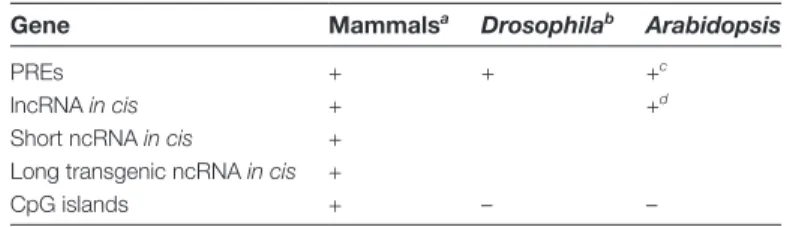
Table 2. PRC2 recruitment to the target genes in animals and plants
Gene Mammalsa Drosophilab Arabidopsis
PREs + + +c
lncRNA in cis + +d
Short ncRNA in cis + Long transgenic ncRNA in cis +
CpG islands + – –
aFor a review, see Simon and Kingston, 2013; Lanzuolo and Orlando, 2012.
bFor a review, see Schuettengruber and Cavalli, 2009; Ringrose and Paro, 2007.
cBerger et al., 2011; Buzas et al., 2011; Helliwell et al., 2011; Sheldon et al., 2009; Schubert et al., 2006; Finnegan et al., 2004; Sieburth and Meyerowitz, 1997.
Another critical step in PcG silencing is an epigenetic inher-itance during DNA replication. In mammals, an ESC homo-logue can bind to H3K27me3, suggesting a positive feedback
loop and self-recruitment mechanism for PRC2 (Margueron
et al., 2009). In Drosophila, in vitro studies showed that PRC1 associates with chromatin during DNA replication (Francis
Fig. 3. Models of functional interactions of Arabidopsis Polycomb group proteins at different target genes. (A) Recruitment of LHP1 by transcription factors could direct PRC2 to target genes to promote H3K27me3, which assist to retain LHP1 in place. (B) AtBMI1 proteins could be recruited to target genes by transcription factors and then, via LHP1-dependent or -independent ways, recruit PRC2. AtBMI1 proteins catalyse H2Aub at the target locus and PRC2 catalyses H3K27me3; it is not clear whether H2Aub or H3K27me3 precede the other mark, or whether both are inserted simultaneously. (C) During DNA replication, newly synthesized nucleosomes are incorporated into chromatin leading to the dilution of epigenetic marks; LHP1 can bind H3K27me3 at the pre-existing nucleosomes (grey) and recruit PRC2 to catalyse H3K27me3 at newly incorporated nucleosomes (blue) ensuring epigenetic inheritance during mitosis; stop-signal symbols represent H3K27me3; red hexagons represent H2Aub.
et al., 2009; Lo et al., 2012). In Arabidopsis, recent evidence of LHP1 association with the EMF complex suggested that LHP1 could rerecruit PRC2 to target genes to reestablish prereplication H3K27me3 levels after mitosis (Derkacheva
et al., 2013) (Fig. 3C). In accordance with this hypothesis, LHP1 is highly expressed in dividing cells and interacts with the catalytic subunit of DNA polymerase epsilon, EARLY IN SHORT DAYS7 (ESD7) (Kotake et al., 2003; del Olmo et al., 2010; Baerenfaller et al., 2011). Controversial data exist about LHP1 interaction with the catalytic subunit of DNA polymer-ase α, INCURVATA2 (ICU2) (Barrero et al., 2007; Hyun et al., 2013). Previously, in vitro GST-pulldown experiments showed a direct LHP1–ICU2 binding but subsequently this could not be confirmed by yeast two-hybrid or bimolecular fluorescence complementation assays. Nevertheless, lack of ICU2 leads to defects in mitotic maintenance of vernalization memory while initial CLF recruitment and deposition of H3K27me3 at FLC during vernalization are not changed (Hyun et al., 2013). In
icu2 mutants, maintenance of CLF and H3K27me3 at FLC
chromatin is affected, leading to mosaic FLC derepression after vernalization (Hyun et al., 2013). Importantly, LHP1 recruitment to FT and AG is severely affected in icu2 plants, suggesting that LHP1 recruitment to FLC could be affected as well. Moreover, FLC is initially silenced during vernalization in lhp1 plants but derepressed upon return to warm conditions, demonstrating that LHP1 is required for the maintenance of
FLC repression through mitotic divisions (Mylne et al., 2006;
Sung et al., 2006). Thus, lack of LHP1 at FLC could affect PRC2 rerecruitment and lead to failure in H3K27me3 mainte-nance. Strikingly, H3K27me3 levels were strongly reduced in highly dividing cells of lhp1 mutant, supporting the idea that LHP1 is required for the inheritance of wild-type H3K27me3 levels (Derkacheva et al., 2013). Taken together, these data suggest that the LHP1–PRC2 interaction plays a key role in inheritance of H3K27me3 during mitotic divisions. It remains to be tested whether direct binding of PRC2-like complexes to H3K27me3 via ESC homologues is conserved in plants. It is possible that multiple recruitment and self-recruitment mechanisms establish robustness for gene repression by PcG proteins.
It seems that propagation of H3K27me3 marks dif-fers between species. In Drosophila, PHO, E(z), and PC are recruited to their target genes in early S-phase, transiently increasing H3K27me3 levels, which are probably diluted via incorporation of newly synthesized nucleosomes during rep-lication in the later S-phase (Lanzuolo et al., 2011). In human HeLa cells, methylation levels of histone H3 drop significantly during S phase and only later recover to the initial levels (Xu
et al., 2012). Association of Arabidopsis LHP1 with ICU2 and ESD7 suggests that LHP1 may be present at chromatin during replication. It will be exciting to test the dynamics of the LHP1–PRC2 interaction in relation to the cell cycle.
Conclusion
Recent data has improved the understanding of composition and function of PcG complexes in plants. In Arabidopsis,
three PRC2-like complexes have been described with well-defined functions that reveal specialization and cooperation in targeting overlapping sets of genes at different developmen-tal stages. The PcG system function may have evolved from defence against genomic parasites in unicellular organisms to stable maintenance of gene inactivation during development. Many plant proteins that associate with PcG proteins have recently been identified, indicating an extensive network of crosstalk with other cellular processes.
Several key mechanisms of PcG protein recruitment have been demonstrated to function in parallel in Arabidopsis. The interaction between LHP1 and PRC2 provides means for the maintenance and inheritance of H3K27me3. It becomes also clear that PcG protein complexes do not act sequentially in a linear pathway but form a network of dynamic interactions. Importantly, such networks seem to contain multiple feed-back loops that can add stability and switch-like behaviour to the PcG system.
Many questions still await answers. What are the non-shared functions of CLF and SWN? Do PhD–PRC2 com-plexes have functions outside of vernalization? How much does H2Aub overlap with H3K27me3? How many PRC1-related complexes exist, and what composition and which function do they have? Future studies are needed to test whether PcG recruitment via short ncRNAs exists in plants and to reveal more transcription factors, DNA sequences, and lncRNAs involved in PcG recruitment. Finally, more details are needed to understand how silencing by plant PcG proteins can be inherited through mitosis to become epige-netic sensu stricto.
Acknowledgements
The authors thank Dr Iva Mozgova for critical reading of the manuscript. Research in the Hennig laboratory is sup-ported by grants from the Swedish Research Councils VR and FORMAS and from the Knut-and-Alice-Wallenberg Foundation.
References
Ach RA, Taranto P, Gruissem W. 1997. A conserved family of
WD-40 proteins binds to the retinoblastoma protein in both plants and animals. The Plant Cell 9, 1595–1606.
Aloia L, Di Stefano B, Di Croce L. 2013. Polycomb complexes
in stem cells and embryonic development. Development 140,
2525–2534.
Aubert D, Chen L, Moon YH, Martin D, Castle LA, Yang CH, Sung ZR. 2001. EMF1, a novel protein involved in the control of
shoot architecture and flowering in Arabidopsis. The Plant Cell 13,
1865–1875.
Ausin I, Alonso-Blanco C, Jarillo JA, Ruiz-Garcia L, Martinez-Zapater JM. 2004. Regulation of flowering time by FVE, a
Retinoblastoma-associated protein. Nature Genetics 36, 162–166. Baerenfaller K, Hirsch-Hoffmann M, Svozil J, Hull R, Russenberger D, Bischof S, Lu Q, Gruissem W, Baginsky S.
2011. pep2pro: a new tool for comprehensive proteome data analysis to reveal information about organ-specific proteomes in Arabidopsis
thaliana. Integrated Biology 3, 225–237.
Barrero JM, Gonzalez-Bayon R, Del Pozo JC, Ponce MR, Micol JL. 2007. INCURVATA2 encodes the catalytic subunit of DNA
polymerase α and interacts with genes involved in chromatin-mediated cellular memory in Arabidopsis thaliana. The Plant Cell 19, 2822–2338. Beh LY, Colwell LJ, Francis NJ. 2012. A core subunit of Polycomb
repressive complex 1 is broadly conserved in function but not primary sequence. Proceedings of the National Academy of Sciences, USA
109, 1063–1071.
Beisel C, Paro R. 2011. Silencing chromatin: comparing modes and
mechanisms. Nature Review Genetics 12, 123–135.
Bell O, Schwaiger M, Oakeley EJ, Lienert F, Beisel C, Stadler MB, Schubeler D. 2010. Accessibility of the Drosophila genome
discriminates PcG repression, H4K16 acetylation and replication timing. Nature Structural and Molecular Biology 17, 894–900. Berger N, Dubreucq B, Roudier F, Dubos C, Lepiniec L. 2011.
Transcriptional regulation of Arabidopsis LEAFY COTYLEDON2 involves RLE, a cis-element that regulates trimethylation of histone H3 at lysine-27. The Plant Cell 23, 4065–4078.
Bouyer D, Roudier F, Heese M, et al. 2011. Polycomb repressive
complex 2 controls the embryo-to-seedling phase transition. PLoS
Genetics 7, e1002014.
Bratzel F, Lopez-Torrejon G, Koch M, Del Pozo JC, Calonje M.
2010. Keeping cell identity in Arabidopsis requires PRC1 RING-finger homologs that catalyze H2A monoubiquitination. Current Biology 20,
1853–1859.
Bratzel F, Yang C, Angelova A, Lopez-Torrejon G, Koch M, del Pozo JC, Calonje M. 2012. Regulation of the new Arabidopsis
imprinted gene AtBMI1C requires the interplay of different epigenetic mechanisms. Molecular Plant 5, 260–269.
Brockdorff N. 2011. Chromosome silencing mechanisms in
X-chromosome inactivation: unknown unknowns. Development 138,
5057–5065.
Buzas DM, Robertson M, Finnegan EJ, Helliwell CA. 2011.
Transcription-dependence of histone H3 lysine 27 trimethylation at the
Arabidopsis polycomb target gene FLC. The Plant Journal 65, 872–881. Cao R, Wang H, He J, Erdjument-Bromage H, Tempst P, Zhang Y. 2008. Role of hPHF1 in H3K27 methylation and Hox gene silencing. Molecular Cell Biology 28, 1862–1872.
Calonje M, Sanchez R, Chen L, Sung ZR. 2008. EMBRYONIC
FLOWER1 participates in Polycomb group-mediated AG gene silencing in Arabidopsis. The Plant Cell 20, 277–291.
Calonje M, Sung ZR. 2006. Complexity beneath the silence. Current Opinion in Plant Biology 9, 530–537.
Chandler J, Wilson A, Dean C. 1996. Arabidopsis mutants showing
an altered response to vernalization. The Plant Journal 10, 637–644. Chanvivattana Y, Bishopp A, Schubert D, Stock C, Moon YH, Sung ZR, Goodrich J. 2004. Interaction of Polycomb-group proteins
controlling flowering in Arabidopsis. Development 131, 5263–5276. Chen LJ, Diao ZY, Specht C, Sung ZR. 2009. Molecular evolution
of VEF-domain-containing PcG genes in plants. Molecular Plant 2,
738–754.
Chen S, Ma J, Wu F, et al. 2012. The histone H3 Lys 27
demethylase JMJD3 regulates gene expression by impacting transcriptional elongation. Genes and Development 26, 1364–1375. Chopra VS, Hendrix DA, Core LJ, Tsui C, Lis JT, Levine M. 2011.
The polycomb group mutant esc leads to augmented levels of paused Pol II in the Drosophila embryo. Molecular Cell 42, 837–844.
Crea F, Paolicchi E, Marquez VE, Danesi R. 2012. Polycomb
genes and cancer: time for clinical application? Critical Reviews in
Oncology and Hematology 83, 184–193.
Cui H, Benfey PN. 2009. Interplay between SCARECROW, GA and
LIKE HETEROCHROMATIN PROTEIN 1 in ground tissue patterning in the Arabidopsis root. The Plant Journal 58, 1016–1027.
Czermin B, Melfi R, McCabe D, Seitz V, Imhof A, Pirrotta V.
2002. Drosophila enhancer of Zeste/ESC complexes have a histone H3 methyltransferase activity that marks chromosomal Polycomb sites. Cell 111, 185–196.
Danilevskaya ON, Hermon P, Hantke S, Muszynski MG, Kollipara K, Ananiev EV. 2003. Duplicated fie genes in maize:
expression pattern and imprinting suggest distinct functions. The Plant
Cell 15, 425–438.
De Lucia F, Crevillen P, Jones AM, Greb T, Dean C. 2008. A
PHD-polycomb repressive complex 2 triggers the epigenetic silencing of FLC during vernalization. Proceedings of the National Academy of
Sciences, USA 105, 16831–16836.
del Olmo I, Lopez-Gonzalez L, Martin-Trillo MM, Martinez-Zapater JM, Pineiro M, Jarillo JA. 2010. EARLY IN SHORT DAYS 7 (ESD7) encodes the catalytic subunit of DNA polymerase epsilon
and is required for flowering repression through a mechanism involving epigenetic gene silencing. The Plant Journal 61, 623–636.
de Napoles M, Mermoud JE, Wakao R, et al. 2004. Polycomb
group proteins Ring1A/B link ubiquitylation of histone H2A to heritable gene silencing and X inactivation. Developmental Cell 7, 663–676. Deleris A, Stroud H, Bernatavichute Y, Johnson E, Klein G, Schubert D, Jacobsen SE. 2012. Loss of the DNA
methyltransferase MET1 Induces H3K9 hypermethylation at PcG target genes and redistribution of H3K27 trimethylation to transposons in Arabidopsis thaliana. PLoS Genetics 8, e1003062.
Dellino GI, Schwartz YB, Farkas G, McCabe D, Elgin SC, Pirrotta V. 2004. Polycomb silencing blocks transcription initiation. Molecular Cell 13, 887–893.
Deng W, Buzas DM, Ying H, Robertson M, Taylor J, Peacock WJ, Dennis ES, Helliwell C. 2013. Arabidopsis Polycomb Repressive
Complex 2 binding sites contain putative GAGA factor binding motifs within coding regions of genes. BMC Genomics 14, 593.
Derkacheva M, Steinbach Y, Wildhaber T, Mozgova I, Mahrez W, Nanni P, Bischof S, Gruissem W, Hennig L. 2013. Arabidopsis
MSI1 connects LHP1 to PRC2 complexes. EMBO Journal 32,
2073–2085.
Dumbliauskas E, Lechner E, Jaciubek M, et al. 2011. The Arabidopsis CUL4–DDB1 complex interacts with MSI1 and is required
to maintain MEDEA parental imprinting. EMBO Journal 30, 731–743. Enderle D, Beisel C, Stadler MB, Gerstung M, Athri P, Paro R.
2011. Polycomb preferentially targets stalled promoters of coding and noncoding transcripts. Genome Research 21, 216–226.
Exner V, Aichinger E, Shu H, Wildhaber T, Alfarano P, Caflisch A, Gruissem W, Köhler C, Hennig L. 2009. The chromodomain of
LIKE HETEROCHROMATIN PROTEIN 1 is essential for H3K27me3 binding and function during Arabidopsis development. PLoS One 4,
e5335.
Farcas AM, Blackledge NP, Sudbery I, et al. 2012. KDM2B links
the Polycomb Repressive Complex 1 (PRC1) to recognition of CpG islands. eLife 1, e00205.
Farrona S, Thorpe FL, Engelhorn J, Adrian J, Dong X, Sarid-Krebs L, Goodrich J, Turck F. 2011. Tissue-specific expression of
FLOWERING LOCUS T in Arabidopsis is maintained independently of polycomb group protein repression. The Plant Cell 23, 3204–3214. Finnegan EJ, Sheldon CC, Jardinaud F, Peacock WJ, Dennis ES. 2004. A cluster of Arabidopsis genes with a coordinate response
to an environmental stimulus. Current Biology 14, 911–916.
Fischle W, Wang Y, Jacobs SA, Kim Y, Allis CD, Khorasanizadeh S. 2003. Molecular basis for the discrimination of repressive
methyl-lysine marks in histone H3 by Polycomb and HP1 chromodomains.
Genes and Development 17, 1870–1881.
Francis NJ, Follmer NE, Simon MD, Aghia G, Butler JD. 2009.
Polycomb proteins remain bound to chromatin and DNA during DNA replication in vitro. Cell 137, 110–122.
Francis NJ, Kingston RE, Woodcock CL. 2004. Chromatin
compaction by a polycomb group protein complex. Science 306,
1574–1577.
Francis NJ, Saurin AJ, Shao Z, Kingston RE. 2001. Reconstitution
of a functional core polycomb repressive complex. Molecular Cell 8,
545–556.
Gaudin V, Libault M, Pouteau S, Juul T, Zhao G, Lefebvre D, Grandjean O. 2001. Mutations in LIKE HETEROCHROMATIN
PROTEIN 1 affect flowering time and plant architecture in Arabidopsis.
Development 128, 4847–4858.
Gendall AR, Levy YY, Wilson A, Dean C. 2001. The VERNALIZATION 2 gene mediates the epigenetic regulation of
vernalization in Arabidopsis. Cell 107, 525–535.
Goodrich J, Puangsomlee P, Martin M, Long D, Meyerowitz EM, Coupland G. 1997. A Polycomb-group gene regulates homeotic
gene expression in Arabidopsis. Nature 386, 44–51.
Grau DJ, Chapman BA, Garlick JD, Borowsky M, Francis NJ, Kingston RE. 2011. Compaction of chromatin by diverse Polycomb
group proteins requires localized regions of high charge. Genes and
Development 25, 2210–2221.
Grossniklaus U, Vielle-Calzada JP, Hoeppner MA, Gagliano WB.
1998. Maternal control of embryogenesis by MEDEA, a polycomb group gene in Arabidopsis. Science 280, 446–450.
Gu X, Jiang D, Yang W, Jacob Y, Michaels SD, He Y. 2011. Arabidopsis homologs of retinoblastoma-associated protein 46/48
associate with a histone deacetylase to act redundantly in chromatin silencing. PLoS Genetics 7, e1002366.
Gutierrez L, Oktaba K, Scheuermann JC, Gambetta MC, Ly-Hartig N, Müller J. 2012. The role of the histone H2A ubiquitinase
Sce in Polycomb repression. Development 139, 117–127. Haun WJ, Laoueille-Duprat S, O’Connell MJ, Spillane C, Grossniklaus U, Phillips AR, Kaeppler SM, Springer NM. 2007.
Genomic imprinting, methylation and molecular evolution of maize Enhancer of zeste (Mez) homologs. The Plant Journal 49, 325–337. Helliwell CA, Robertson M, Finnegan EJ, Buzas DM, Dennis ES.
2011. Vernalization-repression of Arabidopsis FLC requires promoter sequences but not antisense transcripts. PLoS One 6, e21513. Hennig L, Bouveret R, Gruissem W. 2005. MSI1-like proteins: an
escort service for chromatin assembly and remodeling complexes.
Trends in Cell Biology 15, 295–302.
Hennig L, Derkacheva M. 2009. Diversity of Polycomb group
complexes in plants: same rules, different players? Trends in Genetics
25, 414–423.
Hennig L, Taranto P, Walser M, Schonrock N, Gruissem W.
2003. Arabidopsis MSI1 is required for epigenetic maintenance of reproductive development. Development 130, 2555–2565.
Heo JB, Sung S. 2011. Vernalization-mediated epigenetic silencing
by a long intronic noncoding RNA. Science 331, 76–79.
Hruz T, Laule O, Szabo G, Wessendorp F, Bleuler S, Oertle L, Widmayer P, Gruissem W, Zimmermann P. 2008. Genevestigator
v3: a reference expression database for the meta-analysis of transcriptomes. Advances in Bioinformatics 2008, 420747.
Hyun Y, Yun H, Park K, Ohr H, Lee O, Kim DH, Sung S, Choi Y.
2013. The catalytic subunit of Arabidopsis DNA polymerase α ensures stable maintenance of histone modification. Development 140,
156–166.
Jamieson K, Rountree MR, Lewis ZA, Stajich JE, Selker EU. 2013. Regional control of histone H3 lysine 27 methylation in Neurospora. Proceedings of the National Academy of Sciences, USA 110, 6027–6032.
Jeong CW, Roh H, Dang TV, Choi YD, Fischer RL, Lee JS, Choi Y. 2011. An E3 ligase complex regulates SET-domain polycomb group
protein activity in Arabidopsis thaliana. Proceedings of the National
Academy of Sciences, USA 108, 8036–8041.
Jiang H, Köhler C. 2012. Evolution, function, and regulation
of genomic imprinting in plant seed development. Journal of
Experimental Botany 63, 4713–4722.
Jiang D, Wang Y, He Y. 2008. Repression of FLOWERING LOCUS C
and FLOWERING LOCUS T by the Arabidopsis Polycomb repressive complex 2 components. PLoS One 3, e3404.
Kapetanaki MG, Guerrero-Santoro J, Bisi DC, Hsieh CL, Rapic-Otrin V, Levine AS. 2006. The DDB1-CUL4ADDB2 ubiquitin ligase is
deficient in xeroderma pigmentosum group E and targets histone H2A at UV-damaged DNA sites. Proceedings of the National Academy of
Sciences, USA 103, 2588–2593.
Katz A, Oliva M, Mosquna A, Hakim O, Ohad N. 2004. FIE
and CURLY LEAF polycomb proteins interact in the regulation of homeobox gene expression during sporophyte development. The
Plant Journal 37, 707–719.
Ketel CS, Andersen EF, Vargas ML, Suh J, Strome S, Simon JA.
2005. Subunit contributions to histone methyltransferase activities of fly and worm polycomb group complexes. Molecular Cell Biology 25,
6857–6868.
Kim SY, Lee J, Eshed-Williams L, Zilberman D, Sung ZR. 2012.
EMF1 and PRC2 cooperate to repress key regulators of Arabidopsis development. PLoS Genetics 8, e1002512.