Publisher’s version / Version de l'éditeur:
Vous avez des questions? Nous pouvons vous aider. Pour communiquer directement avec un auteur, consultez la première page de la revue dans laquelle son article a été publié afin de trouver ses coordonnées. Si vous n’arrivez pas à les repérer, communiquez avec nous à [email protected].
Questions? Contact the NRC Publications Archive team at
[email protected]. If you wish to email the authors directly, please see the first page of the publication for their contact information.
https://publications-cnrc.canada.ca/fra/droits
L’accès à ce site Web et l’utilisation de son contenu sont assujettis aux conditions présentées dans le site LISEZ CES CONDITIONS ATTENTIVEMENT AVANT D’UTILISER CE SITE WEB.
Neuropsychopharmacology: the Fifth Generation of Progress, pp. 1327-1338,
2002
READ THESE TERMS AND CONDITIONS CAREFULLY BEFORE USING THIS WEBSITE. https://nrc-publications.canada.ca/eng/copyright
NRC Publications Archive Record / Notice des Archives des publications du CNRC : https://nrc-publications.canada.ca/eng/view/object/?id=bf4a003f-c431-4b3c-b3f2-27caed01b65b https://publications-cnrc.canada.ca/fra/voir/objet/?id=bf4a003f-c431-4b3c-b3f2-27caed01b65b
Archives des publications du CNRC
Access and use of this website and the material on it are subject to the Terms and Conditions set forth at
Current and experimental treatment of stroke
C U R R E N T A N D E X P E R I M E N T A L
T R E A T M E N T O F S T R O K E
D A N I E L L . S M A L L P A U L M O R L E Y A L A S T A I R M . B U C H A N
Stroke is the third leading cause of death in the United States; approximately 730,000 Americans have a new or recurrent stroke each year. That’s one every minute and it costs the health care system $30 billion annually. The incidence of stroke is expected to rise dramatically as the population ages because stroke risk increases with age. The risk of stroke doubles for each decade after age 55. Stroke is a major factor in the late-life dementia that affects more than 40% of Americans over the age of 80. One in four men will have had a disabling stroke by the age of 80 and one in five women by the age of 85.
Currently Alteplase (recombinant tissue plasminogen ac-tivator [rtPA]) is the only treatment for acute stroke ap-proved in the United States. Alteplase is a thrombolytic agent that restores cerebral blood flow by removing the vas-cular occlusion. Alteplase is only an appropriate therapy for a small proportion of stroke patients (⬃2%) because it must be given early to achieve efficacy and functional recovery following delayed reperfusion. Less than 15% of patients, however, are admitted to the hospital within the 3-hour safety window (1). Several other new treatments are being tested in the clinic and even more are in preclinical develop-ment. Antiplatelet therapy and thrombolytics are aimed at improving cerebral blood flow but there are other therapeu-tic strategies such as neuroprotectants, antiinflammatory agents, free radical scavengers, and neurotrophic agents. In this chapter we survey the current status of clinical trials for stroke and review these therapeutic strategies.
PATHOPHYSIOLOGY AND PRECLINICAL MODELS OF STROKE
Stroke in the clinic is represented predominantly by is-chemic stroke (80%), in which there is a loss of cerebral
Daniel L. Small and Paul Morley: Institute for Biological Sciences, National Research Council of Canada, Ottawa, Ontario, Canada.
Alastair M. Buchan: Department of Clinical Neuroscience, Foothills Hospital, Calgary, Alberta, Canada.
blood flow owing to vascular occlusion. The remaining 20% of strokes result from cerebral hemorrhage. Experimentally, there are two main types of in vivo stroke models, global and focal ischemia. In global models, the entire forebrain is made ischemic for a brief period (5 to 20 minutes) and then reperfused. After a significant delay (⬎3 days), selective neuronal death evolves in layers III, V, and VI of the cortex, the CA1 region of the hippocampus, and the striatum (2–4). These models are representative of cardiac arrest and coronary artery bypass surgery rather than clinical stroke. In focal models, the middle cerebral artery is occluded for a more prolonged period (60 to 120 minutes in temporary models and permanently in permanent occlusion models). Focal models are representative of clinical stroke and pro-duce histologic damage similar to ischemic stroke in hu-mans. The focal model produces a pannecrotic core sur-rounded by a narrow penumbral border. The penumbra is at risk of becoming necrotic but is potentially salvageable given the appropriate therapeutic intervention (3,4). The evolution of delayed neuronal death in global and focal is-chemia occurs by a cascade of events that unfold temporally and spatially (5). Blocking biochemical processes in the exci-totoxic cascade is the rationale behind the various therapeu-tic strategies for treating stroke and will be the framework for this chapter as we describe therapeutics that have been tested, or are currently being tested, in the clinic.
THERAPEUTIC STRATEGIES FOR TREATING STROKE
Neuronal damage and death do not occur immediately after ischemia, which suggests temporal thresholds for reperfu-sion as with tPA and possibly therapeutic thresholds for neuroprotection. Thrombolytic therapy attempts to reestab-lish blood flow in ischemic regions with the aim of prevent-ing or minimizprevent-ing cell damage (6,7). Various agents have been used in clinical trials to restore cerebral blood flow
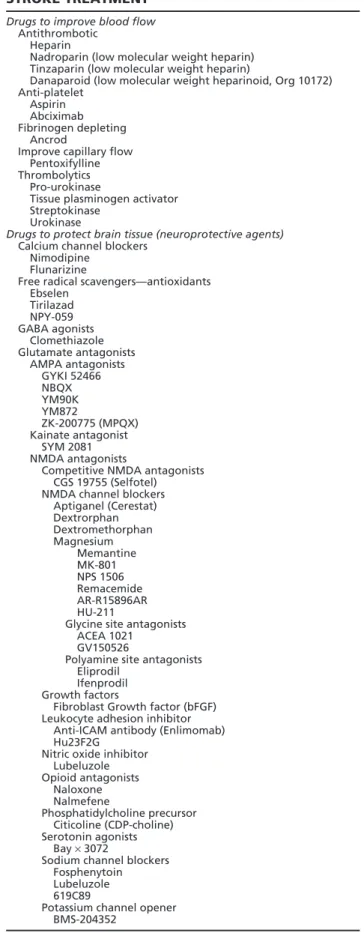
(Table 93.1). All of the agents designed to restore blood flow are inappropriate for treating hemorrhagic stroke because of the danger of exacerbation of cerebral bleeding (8). In fact, most of the drugs that restore blood flow are associated with an increased risk of hemorrhage particularly when adminis-tered late (⬎6 hours). The drugs used to restore blood flow can generally be grouped into antithrombotics, antiplatelet agents, fibrinogen depleting agents, or thrombolytics (Table 93.1).
Antithrombotics such as heparin and warfarin have been tested in numerous trials. There is no evidence to date to support the use of warfarin in the treatment of acute stroke (9). Heparin, followed by coumadin, is an extremely impor-tant modality to prevent secondary strokes, particularly cardioembolic stroke, in certain circumstances arterial oc-clusion following dissection, and nearly always following venous infarction. In a large-scale randomized trial compar-ing heparin with the antiplatelet aspirin, heparin was associ-ated with only three fewer deaths per 1,000 at 14 days and no difference at 6 months (10). Although there were fewer recurrent strokes within 14 days, more of them were hemor-rhagic. Moreover, 12,500 IU heparin was associated with significantly more transfused or fatal extracranial bleeds, hemorrhagic strokes, and deaths than 5,000 IU (10). Low molecular weight heparinoids have been developed that have greater bioavailability and less effect on platelet func-tion than heparin, thus reducing complicafunc-tions such as hemorrhage and thrombocytopenia (11). Results from the trials of two of the low molecular weight heparinoids have been reported. ORG 10172 (Danaparoid) was tested in the Trial of ORG 10172 in Acute Stroke (TOAST) (12). De-spite an apparent positive response at 7 days, there was no significant improvement in favorable outcome at 3 months (12). In contrast, Nadroparin (Fraxiparine) was effective in improving outcomes at 6 months when treatment was initiated within 48 hours of symptom onset for a period of 10 days (13). Unfortunately, this study has not been replicated. The results of a 1,500-patient phase III trial (Tinzaparin in Acute Ischemic Stroke Trial [TAIST]) for a third low molecular weight heparinoid, tinzaparin (Inno-hep), are completed and are currently being analyzed (14). Antiplatelet agents such as aspirin have also been tested in numerous trials (Table 93.2). Two large-scale phase III trials (Chinese Acute Stroke Trial [CAST] and International Stroke Trial [IST]), in which there were 20,000 patients in each, found that there was a small but worthwhile improve-ment in the main outcome measures (absolute risk reduc-tion of ⬍1% [need to treat 111 to benefit one]) at 6 months and that aspirin should be started as soon as possible after the onset of symptoms (10,15). In the ISTtrial, there were fewer deaths and recurrent ischemic strokes with no signifi-cant excess of hemorrhagic strokes among the aspirin-allo-cated patients (10). Recently, the Abciximab in Ischemic Stroke Investigators (16) reported that Abciximab (ReoPro), a potent parenterally administered platelet glycoprotein IIb/
TABLE 93.1. CLINICAL TRIALS FOR ACUTE STROKE TREATMENTa
Drugs to improve blood flow
Antithrombotic Heparin
Nadroparin (low molecular weight heparin) Tinzaparin (low molecular weight heparin)
Danaparoid (low molecular weight heparinoid, Org 10172) Anti-platelet
Aspirin Abciximab Fibrinogen depleting
Ancrod
Improve capillary flow Pentoxifylline Thrombolytics
Pro-urokinase
Tissue plasminogen activator Streptokinase
Urokinase
Drugs to protect brain tissue (neuroprotective agents)
Calcium channel blockers Nimodipine
Flunarizine
Free radical scavengers—antioxidants Ebselen Tirilazad NPY-059 GABA agonists Clomethiazole Glutamate antagonists AMPA antagonists GYKI 52466 NBQX YM90K YM872 ZK-200775 (MPQX) Kainate antagonist SYM 2081 NMDA antagonists
Competitive NMDA antagonists CGS 19755 (Selfotel) NMDA channel blockers
Aptiganel (Cerestat) Dextrorphan Dextromethorphan Magnesium Memantine MK-801 NPS 1506 Remacemide AR-R15896AR HU-211
Glycine site antagonists ACEA 1021
GV150526
Polyamine site antagonists Eliprodil
Ifenprodil Growth factors
Fibroblast Growth factor (bFGF) Leukocyte adhesion inhibitor
Anti-ICAM antibody (Enlimomab) Hu23F2G
Nitric oxide inhibitor Lubeluzole Opioid antagonists Naloxone Nalmefene Phosphatidylcholine precursor Citicoline (CDP-choline) Serotonin agonists Bay × 3072
Sodium channel blockers Fosphenytoin Lubeluzole 619C89
Potassium channel opener BMS-204352
aFrom: http://www.neuro.wustl.edu/stroke/stroke-drug-categories.htm#ACUTE STROKE THERAPY.
TABLE 93.2. CLINICAL TRIALS INVOLVING ASPIRIN AS A THERAPEUTIC FOR STROKEa
Multicentre Acute Stroke Trial-Italy (MAST-I) Stroke Prevention in Atrial Fibrillation II (SPAF II) International Stroke Trial (IST)
Acute Ischemic Stroke Trial—Oral Aspirin versus Intravenous Heparin on Stroke
Progression (AIST-ASH)
Chinese Acute Stroke Trial (CAST)
Carotid Artery Stenosis with Asymptomatic Narrowing: Operation Versus
Aspirin (CASANOVA)
aFrom: http://www.neuro.wustl.edu/stroke/therapy/Therapy_1Page5. html
IIIa antagonist, when administered up to 24 hours after stroke onset, resulted in an improved functional outcome. At 3 months, there was a trend toward a higher rate of minimal residual disability (Barthel Index ⱖ95 or modified Rankin scale ⱕ1) among Abciximab patients compared with those who received placebo. Antiplatelets may prove a viable therapy for both prevention and intervention.
Ancrod (Viprinex/Arvin) is a fibrinogenolytic agent that comes from the venom of the Malaysian pit viper (17). Ancrod has recently completed a North American phase III trial (Stroke Treatment with Ancrod Trial [STAT]). Treat-ment was a 5-day paradigm initiated within 3 hours of onset (18). There was an increase in symptomatic intracranial hemorrhage (5.2% versus 2% for placebo), and there was no difference in mortality at 3 months (18). There is a European trial (ESTAT) for Ancrod that has yet to be com-pleted but BASF, who was jointly conducting the phase III trials, has decided not to continue the trials after an independent group looked at the interim results and failed to see any evidence of efficacy (19).
Thrombolysis has been performed with a variety of com-pounds administered by various routes. From numerous trials, one thing is clear of all agents in this category: They must be given early or serious hemorrhagic complications are likely (7). Urokinase (uPA) is an endogenous proteolytic enzyme, secreted as a proenzyme, which converts circulating plasminogen to plasmin, producing a systemic lytic state. Intraarterial administration of pro-urokinase (the single chain precursor of urokinase) was evaluated in the Prolyse in Acute Cerebral Thromboembolism Trial (PROACT) with high- or low-dose heparin (20) and in the PROACTII trial with low-dose heparin (21). Although prourokinase and in-travenous high-dose heparin resulted in an increased rate of hemorrhage, intraarterial pro-urokinase with low-dose heparin significantly improved the proportion of good out-comes from 25% to 40% and hemorrhage was seen in 10% of patients, consistent with other thrombolytic trials.
Streptokinase is derived from 〉-hemolytic streptococci and it converts plasminogen to plasmin following the
for-mation of a complex with plasminogen. Metaanalysis of the three major trials of streptokinase, Multicentre Acute Stroke Trial–Europe (MAST-E), the Australian Streptokinase (ASK) trial and the Multicentre Acute Stroke Trial–Italy (MAST-I), showed an increased risk of hemorrhage and death (22,23). The trials were all terminated prematurely. Intravenous administration of tissue plasminogen activa-tor (tPA) within 3 hours of symptom onset has been ap-proved for the treatment of acute ischemic stroke in the United States for 4 years and it remains the only approved treatment for acute ischemic stroke. There have been four large trials of Alteplase, the European Cooperative Acute Stroke Studies (ECASS I and II), the National Institutes of Neurologic Disorders and Stroke (NINDS) trial, and the Alteplase Thrombolysis for Acute Noninterventional Ther-apy in Ischaemic Stroke (ATLANTIS). The metaanalysis of these trials shows a significant reduction in death and disability (160/1,000 or a number needed to treat of 6 versus 9/1,000 with a number needed to treat of 111 for aspirin). More trials are needed to gain a better understanding of the timing, safety, and efficacy of Alteplase in different patient populations. However, a recent study has demonstrated the efficacy of tPA for acute stroke in a community setting (24). It remains unclear whether intravenous (IV) or intraarterial (IA) tPA delivery is superior in acute ischemic stroke treat-ment (7,25–30). IV therapy is faster and more convenient, whereas IA therapy allows for mechanical disruption and higher drug concentration at the clot site (7). A protocol was recently tested in which severe stroke patients with little or no CTchanges were given IA tPA following IV tPA if there was no clinical improvement and a persistent occlu-sion was identified on transcranial Doppler (30). Combined therapy was performed on nine patients and no intracerebral hemorrhages or significant systemic bleeding complications occurred. Marked clinical improvement was noted in four patients, suggesting that combined IA and IV tPA therapy is feasible and safe and that future studies should consider combining rather than comparing these two delivery strate-gies (30). There is an NIH-approved trial (Interventional Management Study, IMS trial) comparing IV versus com-bined IV and IA tPA therapy that will be underway by the time this is published.
NEUROPROTECTIVE AGENTS
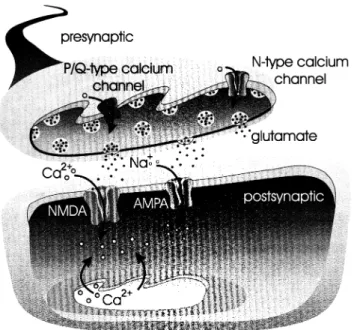
Once the excitotoxic cascade has begun, the first therapeutic strategy, and the one that has raised the most hope in the last decade, utilizes neuroprotective agents targeting media-tors in the excitotoxic cascade (Fig. 93.1). The cascade can be separated spatially and temporally. The cascade begins with an increase in presynaptic calcium influx, followed by glutamate release, postsynaptic glutamate receptor activa-tion resulting in sodium and calcium influx, which results in postsynaptic depolarization and further calcium influx.
FIGURE 93.1. Thereapy utilizing neuroprotective agents target-ing mediators in the excitotoxic cascade.
Voltage-gated sodium and potassium channels are targets that affect depolarization, whereas calcium channels me-diate calcium influx and affect depolarization. Most of the neuroprotective agents tested in the clinic have targeted either voltage-gated calcium channels or glutamate recep-tors, particularly the NMDA receptor subtype. In addition, GABA receptor agonists attenuate excitotoxicity (31) and free radical scavengers are neuroprotectants aimed at the later stages of the excitotoxic cascade (32). After the excito-toxic cascade has progressed, an inflammatory response oc-curs in which there is infiltration of leukocytes and mono-cytes (33). Microglia and astrocytic glial cells are activated and macrophages begin responding to chemoattractants. Still other therapeutic strategies have targeted leukocyte ad-hesion (34,35) and nitric oxide production (36,37). Once much of the damage has occurred and neuroprotection is no longer a viable strategy, neural regeneration and trophism becomes an option. This approach has been mounted with infusion of growth factors but trials to date have been unsuc-cessful (38). We now look at trials of compounds targeted to these various processes in the excitotoxic cascade.
CALCIUM CHANNEL ANTAGONISTS
Clinically, L-type calcium channel antagonists have been used extensively for the treatment of cardiovascular disor-ders such as hypertension; however, very few have been tested in the arena of stroke therapy. Although the meta-analysis of oral nimodipine (Nimotop) trials demonstrated no significant effects on neurologic or functional outcome,
the drug was administered within a very large therapeutic window (i.e., 24 to 48 hours) following symptom onset (39). More recently, a more aggressive trial (Very Early Ni-modipine Use in Stroke, VENUS) designed to treat with nimodipine within 6 hours of symptom onset was termi-nated before completion because the results indicated that there was no beneficial role of early administration of oral nimodipine at 3 months (40). Although nimodipine failed to demonstrate efficacy in treating acute stroke, it was ap-proved for the treatment of subarachnoid hemorrhage more than a decade ago. The results of a phase III trial of flunari-zine (Sibelium) for acute stroke suggested that it also did not improve neurologic or functional outcome at 3 months when administered early (⬍6 hours) (41).
The N-type calcium channel antagonist, SNX-111 (Zi-conotide), preferentially blocks presynaptic calcium chan-nels and inhibits neurotransmitter release. In both focal and global animal models of cerebral ischemia SNX-111 is highly neuroprotective, even when administered after a delay of 24 hours following reperfusion (42). SNX-111 has also been tested in clinical trials for acute stroke. Although the stroke trials of SNX-111 were discontinued because of severe hypotension that exacerbated the ischemic damage (43), SNX-111 has progressed to phase III trials for head trauma (44,45) and has just been approved by the FDA for the treatment of pain (46). Spider toxin antagonists of the P/Q-type neuronal calcium channels are neuroprotective in
vitro but their in vivo toxicity in animals, primarily
respira-tory depression causing death, has limited their clinical de-velopment. However, efforts to generate small peptide ana-logues of these spider toxins, which exhibit efficacy in vitro, are ongoing.
GLUTAMATE RECEPTOR ANTAGONISTS Numerous clinical trials have been carried out for NMDA receptor antagonists based on preclinical testing in animal models of cerebral ischemia (47). All the phase III trials to date have failed. Optimism for the use of NMDA receptor antagonists in the treatment of acute ischemia has waned and has even prompted some pharmaceutical companies to abandon efforts to develop therapeutics for acute stroke. The experience with NMDA receptor antagonists in the clinic has been that most NMDA receptor antagonists result in psychosis as a common adverse effect (48). NMDA recep-tor antagonists with greater specificity for various binding sites on the receptor, or selectivity for a given receptor sub-unit, are being developed which demonstrate greater safety and fewer adverse effects (49–52).
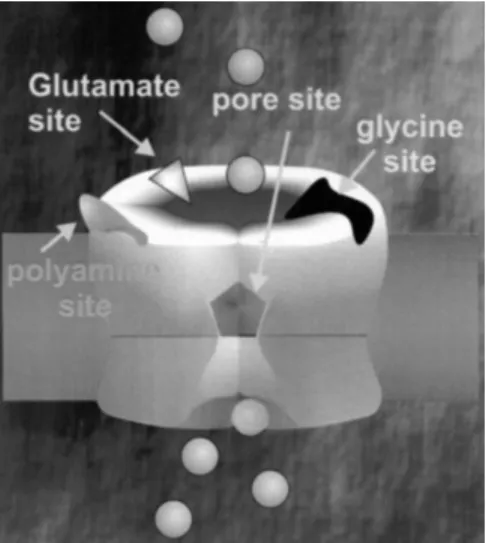
NMDA receptors are heteromeric pentamers composed of at least one NR1 subunit and one or more of the four different NR2 subunits, NR2A, NR2B, NR2C, or NR2D. There are a number of sites on the NMDA receptor at
FIGURE 93.2. Sites on the NMDA receptor at which antagonists can bind.
which antagonists can bind (Fig. 93.2). Competitive antag-onists bind to the same site as NMDA or glutamate. Glycine and polyamines each bind as activators of the NMDA recep-tor and there are antagonists of these two sites, respectively. There are also noncompetitive antagonists that bind to the inside of the pore of the channel and sterically inhibit the influx of ions (53–55). These compounds are called use-dependent. Competitive NMDA receptor antagonists block channel activity best when glutamate levels are low. These antagonists would be expected to be less efficacious during ischemia compared to a normally functioning brain because glutamate levels rise during ischemia (56); therefore, the therapeutic index of these agents would be expected to be low.
Not surprisingly, two phase III trials (Acute Stroke Trials Involving Selfotel Treatment [ASSIST] and a head injury trial) of the competitive NMDA receptor antagonist CGS 19755 (Selfotel) were suspended given that they were not effective and caused neurotoxic side effects (57–59). The principal side effects were agitation, hallucinations, and psy-chotomimetic effects similar to those seen with phencycli-dine (PCP) (60,61). Furthermore, among the patients with severe stroke, there was a trend toward a significant differ-ence in the number of deaths between those treated with Selfotel (33%) and those in the placebo group (22%) (58).
Two years later, phase III trials for the noncompetitive NMDA receptor antagonist Aptiganel (Cerestat/CNS-1102) were discontinued (62). In a subsequent analysis of the phase III trial, some potential therapeutic benefit was identified in a subset of the stroke population. Cambridge Neuroscience plans to further investigate these beneficial effects in partnership with Boehringer Ingelheim (63). The most common side effects with this high-affinity channel blocker were motor retardation, elevated blood pressure,
perceptual disturbances, and hallucinations, similar to those seen with Selfotel (60). The rest of the noncompetitive NMDA receptor antagonists exhibit much lower affinity for the ion channel pore than Cerestat. Although meman-tine has been shown to be neuroprotective in both in vitro and in vivo models (64) and memantine is progressing for the treatment of dementia (65), it is not currently being developed for the treatment of acute stroke to our knowl-edge. Remacemide and its active desglycinyl metabolite are well-tolerated at relatively high doses in humans, have dem-onstrated significant neuroprotective efficacy in animal models of cerebral ischemia, and were doing well in phase II trials for acute stroke (66); however, there is some ques-tion as to whether optimal neuroprotective doses would be achieved within the early hours of treatment in humans (51). Thus, the low-affinity compound ARR-15896 was developed as a backup to remacemide and is currently in early Phase II trials (66). Hu-211 (dexanabinol, Cypros) is a nonpsychogenic cannabinoid with both low affinity use dependent block of NMDA receptors, as well as inhibition of tumor necrosis factor-␣ and antioxidant properties. It exhibits widespread neuroprotective actions in several ani-mal models of stroke and head trauma (67) and has just recently completed a small phase II trial for head trauma clearing the way for a large multinational clinical trial of several hundred severe head trauma patients to commence later this year (68). Magnesium, also a low-affinity noncom-petitive NMDA receptor antagonist, is currently in phase III clinical trials for the treatment of acute stroke (Intravenous Magnesium Efficacy in Stroke [IMAGES]). Patients are ran-domized to receive placebo or intravenous magnesium (16 mmol over 15 minutes followed by 65 mmol over 24 hours) within 12 hours of symptom onset (69). Recruitment of the 2,700 patients is ongoing and should be completed by 2002. Magnesium infusions are well tolerated in humans and have been demonstrated to be neuroprotective in ani-mal models of cerebral ischemia (49,69,70). In a sani-maller trial, magnesium-treated patients improved neurologically and the need for institutional care 6 months after the stroke was reduced (49,71).
NPS-1506 is another open channel blocker being devel-oped for the treatment of acute stroke. NPS-1506 acts at a novel site within the pore and is an orally active small molecule developed by drawing on the knowledge of spider toxins with pore-blocking abilities (72). NPS-1506 is cur-rently in phase Ib and to date is devoid of the side effects normally attributed to noncompetitive antagonists. In ani-mal models of cerebral ischemia, significant protection is achieved even when NPS-1506 is administered up to 2 hours after onset of stroke. At neuroprotective doses there were no PCP-like behavioral effects, no learning or memory impairment, no neuronal vacuolization, and no significant sedation or cardiovascular side effects (72,73).
Polyamine site NMDA receptor antagonists like eliprodil (SL 82-0715) and ifenprodil have also not done well in
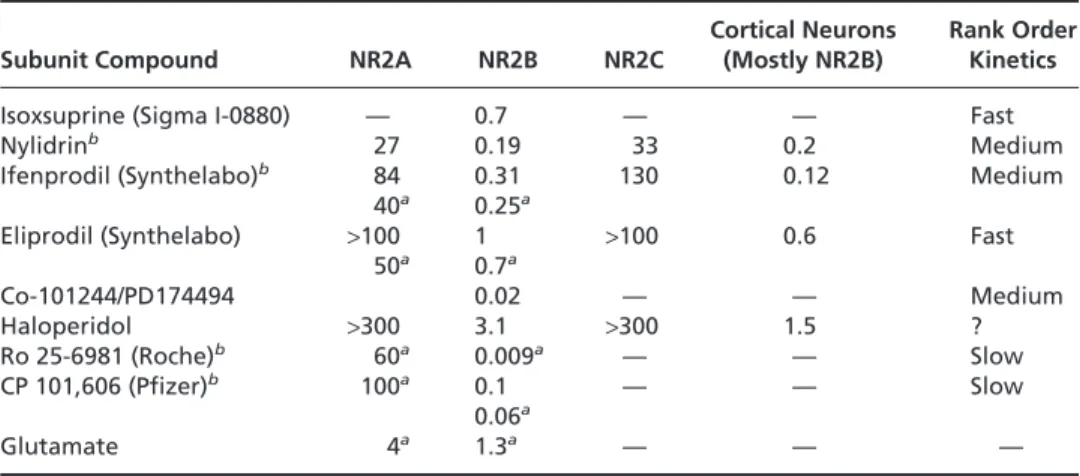
clinical trials (54). Their failure has been attributed to the cardiovascular side effects they possess by virtue of their affinity for sodium and calcium channels in addition to NMDA receptors (74,75). Eliprodil had electrocardio-graphic effects that limited dosing such that efficacy was not obtained and phase III trials were abandoned in 1997 (74). Another feature of the polyamine site antagonists is that they are relatively specific for NR2B receptor subunits (76). The affinity of eliprodil for NR2B subunits is more than 100-fold greater than that for NR2A or NR2C recep-tor subunits. A number of other NR2B subunit selective antagonists are currently under development for the treat-ment of stroke (Table 93.3). Ro 25-6981 and CP-101,606 are both high-affinity NR2B-selective antagonists with very slow kinetics (76–78). CP-101,606 is neuroprotective in animal models of cerebral ischemia but the slow kinetics may limit the rate at which neuroprotective doses may be achieved in human stroke. The fact that there were no psy-chotomimetic effects of CP-101,606 in phase II trials for moderate head injury and hemorrhagic stroke and that the drug was well tolerated suggest that CP-101,606 might be well tolerated in occlusive stroke (79). Compounds such as Co 101244/PD 174494 are being developed with high-affinity antagonists such as CP-101,606 but more rapid ki-netics like isoxsuprine in anticipation of the slower kiki-netics of CP-101, 606 presenting problems in efficacy in treating stroke (80). Something else which may increase the chances of success of Co-101244/PD174494 is that it also had much less affinity for ␣1-adrenergic receptors and displayed a re-duction in inhibition of potassium channels, something that most other high-affinity compounds possess (80).
TABLE 93.3. NR2B SUBUNIT-SPECIFIC NMDA RECEPTOR ANTAGONISTSa
Cortical Neurons Rank Order
Subunit Compound NR2A NR2B NR2C (Mostly NR2B) Kinetics
Isoxsuprine (Sigma I-0880) — 0.7 — — Fast Nylidrinb 27 0.19 33 0.2 Medium
Ifenprodil (Synthelabo)b 84 0.31 130 0.12Medium
40a 0.25a
Eliprodil (Synthelabo) >100 1 >100 0.6 Fast 50a 0.7a Co-101244/PD174494 0.02 — — Medium Haloperidol >300 3.1 >300 1.5 ? Ro 25-6981 (Roche)b 60a 0.009a — — Slow CP 101,606 (Pfizer)b 100a 0.1 — — Slow 0.06a Glutamate 4a 1.3a — — — aAll numbers are IC50s in µM and are from Whittemore et al., 1996 unless indicated bya, in which case
they are from Trube et al., 1996. The more potent, the slower the kinetics but also the more protective. From Whittemore ER, Ilyin VT, Woodward RM, Subtype-selective antagonism of NIMDA receptors by Nylidrin. Soc Neurosci Abat 1996;22:506–507 and Trube G, Elrhard P, Huber G. The selectivity of RO 25-6981 for NMDA receptor subtypes expressed in Xenopus oocytes. Soc Neurosci
Abat 1996;22:691–693.
bGlutamate dependence: lower affinity with lower glutamate, than with higher glutamate
concentrations. All IC50s are done with high glutamate.
Glycine site antagonists exhibit better safety profiles than NMDA receptor antagonists that bind to other sites (48). Most of the clinical attention on glycine site antagonists has been focused on two therapeutic candidates, ACEA 1021 (Licostinel) and GV150526. ACEA 1021 (5-nitro-6,7-dichloro-2,3-quinoxalinedione) is a member of a family of compounds called kappagems. ACEA-1021 has demon-strated neuroprotective efficacy in animal models of focal and global ischemia (81) and it exhibits minimal adverse CNS or cardiovascular side effects (50,82). The compound, originated by ACEA, was being developed by CoCensys for Novartis, but Novartis stopped participating in its develop-ment after crystals of ACEA-1021 were found in the urine of some participants in a phase I study (83). CoCensys retains the rights to the drug and is continuing to evaluate it in phase II trials. One approach to dealing with the prob-lems of ACEA-1021 excretion has been to treat in combina-tion with probenecid, which nonselectively inhibits secre-tion of anionic compounds (84). The combinasecre-tion of ACEA-1021 and probenecid resulted in significantly larger infarct reductions in animal models of cerebral ischemia suggesting that the limiting factor in ACEA-1021 efficacy is related to the steady-state levels that can be elevated by combination therapy with probenecid (84).
GV150526 is significantly neuroprotective in animal models of cerebral ischemia and like ACEA-1021, has shown good tolerability with minimal CNS side effects in the Glycine Antagonist in Neuroprotection (GAIN) phase I and II trials (The GAIN Investigators) (52). Minor abnor-malities in liver function were noted with higher mainte-nance doses, but these changes were asymptomatic and
re-solved within 10 days (52). The results of the dose-escalation phase II clinical trial for GV150526 (85) were reported last year and were followed with the GAIN Ameri-cas and the GAIN International phase III trials. Approxi-mately 1,600 patients were recruited into randomized dou-ble-blinded placebo controlled trials. Two substudies in each trial were planned, to measure lesion volume by MRI-DWI (Magnetic Resonance Imaging-Diffusion Weighted Imaging) and to measure health-related quality of life out-comes. The results of the GAIN International were pre-sented at the 25th International American Heart Associa-tion meeting and were less than anticipated and completely neutral. Unlike most trials with NMDA receptor antago-nists, the problem with GV150526 was not safety but rather efficacy (85). The results from the GAIN American study are not yet available.
In contrast to NMDA receptor antagonists, there is little experience using AMPA and KA receptor antagonists to treat acute stroke. Fewer binding sites have been character-ized on the AMPA receptor compared to the NMDA recep-tor. Competitive quinoxalinedione antagonists bind to the AMPA binding site and there are also noncompetitive GYKI [GYKI 52466,1-(4-aminophenyl)-4-methyl-7,8-methylen-edioxy-5H-2,3-benzodiazepine HCl] site-binding antago-nists, benzodiazepine binding-site antagoantago-nists, and pore-blocking antagonists (86). The pore-pore-blocking antagonists are mostly from spider toxins and are not appropriate for clinical development. There is one noncompetitive AMPA/ KA receptor antagonist, EGIS-9637, which demonstrates neuroprotective efficacy in both focal and global animal ischemia models, but the clinical development has not begun and little is known of the tolerability (87). One of the more common CNS effects of AMPA receptor antagonists is sedation. All of the AMPA receptor antagonists in clinical trials for the treatment of acute stroke are competitive antag-onists based on the quinoxalinediones such as NBQX. NBQX and other quinoxalinediones are neuroprotective in animal models of ischemia, even when administered up to 12 hours following reperfusion (88). The main problem with quinoxalinediones has been nephrotoxicity owing to the poor solubility of these compounds (89). One AMPA receptor antagonist, ZK-200775, progressed to phase IIa but these trials were discontinued in 1998 owing to excessive sedation (90). Yamanouchi Pharmaceuticals have developed a series of competitive AMPA receptor antagonists that are neuroprotective in animal models and exhibit improved sol-ubility (91–93). In phase I trials YM90K was well tolerated and in spite of a high rate of urinary excretion there were only mild changes in kidney function markers with a single intravenous dose of 36 mg and repeated doses of 24 mg over 3 hours (94). These phase I trials were followed by phase II trials using the AMPA receptor antagonist, YM872, which has a solubility 800-fold greater than NBQX or YM90K at pH 7 (95). Phase IIa trials are ongoing. The only adverse effect reported in the YM872 phase I study
was euphoria in some patients at the higher dose levels (96). The challenge with YM872 will be overcoming the short half-life of the drug to maintain the elevated plasma levels necessary to effect neuroprotection.
GABA RECEPTOR AGONISTS
Clomethiazole (Zendra), a GABA receptor agonist, has just completed large-scale phase III clinical trials for the treat-ment of acute stroke, Clomethiazole Acute Stroke Study (CLASS and CLASS-I, H and T) (97). Clomethiazole was well tolerated and appeared safe. Sedation was the most common adverse event that led to treatment withdrawal in almost 16% of treated, compared to only 4% in the placebo group. In the main efficacy analysis 56.1% of patients taking clomethiazole and 54.8% of placebo patients reached rela-tive functional independence (97). The difference was not significantly different but in a subgroup analysis of 545 patients who had total anterior circulation syndrome (TACS), the percentage of those reaching relative functional independence was 40.8% on clomethiazole and 29.8% in the placebo group (98). This subgroup efficacy has prompted the testing of clomethiazole in large ischemic ce-rebral infarctions (CLASS-I), ischemic infarctions in those who receive tPA (CLASS-T), and intracerebral hemorrhage (CLASS-H). Previous failed clinical trials for stroke may have shown efficacy had there been subgroup targeting like that being carried out in the CLASS-I study. However, it is difficult to categorize subgroups of strokes while operating under the extreme time constraints stroke treatment re-quires. A recent protocol for grading strokes has been devel-oped (ASPECTS, which addresses the need for rapid diag-nosis and assessment of infarct (99).
OTHER THERAPEUTIC TARGETS Voltage-Gated Channels
Potassium channel openers may rescue injured penumbral neurons, thus reducing the size of the infarct and improving neurologic outcome. The novel potassium channel opener, BMS-204352, is being assessed in the Potassium-channel Opening Stroke Trials (POST) in which medication is ad-ministered within 6 hours of onset of symptoms. The pri-mary endpoint is change in lesion volume at 12 weeks deter-mined by diffusion/perfusion MRI.
Opioid Receptor Antagonists
The competitive -selective opioid receptor antagonist Cer-vene (Nalmefene) is neuroprotective in animal models of
ischemia and clinically safe (100). In a phase II trial in patients with acute ischemic stroke treated with 6, 20, or 60 mg Cervene there was no significant functional improve-ment compared to placebo after 3 months (100). A second-ary analysis showed an improved 3-month outcome in pa-tients less than 70 years of age.
Free Radicals, Nitric Oxide, and Inflammation
During reperfusion, oxygen-free radicals contribute to dam-age neurons when antioxidant defense mechanisms are not optimal. Superoxide, hydrogen peroxide, and hydroxyl radi-cals are responsible for damaging membranes and degrading DNA. In experimental models, agents such as vitamin E, glutathione, superoxide dismutase, iron chelators, lazaroids, NPY-059, and catalase have been tested as free radical scav-engers. One of the most tested agents, Triliazad mesylate (Freedox), an inhibitor of lipid peroxidation, is neuropro-tective in stroke models (37). In a phase II study of over 400 patients treated with 6 mg/kg per day tirilazad for 3 days within 6 hours of onset, no significant outcome relative to placebo control was observed (101). The Randomized Trial of High Dose Tirilazad in Acute Stroke (RANTTAS II) phase III trials of a higher dose was stopped because of a lack of efficacy (102). Similarly, the antioxidant Ebselen, which has glutathione peroxidase-like activity, showed no efficacy (103). NPY-059 is currently in early phase II trials by Centaur.
Lubeluzole (Prosynap) is a benzothiazole that blocks glu-tamate-induced nitric oxide-mediated neurotoxicity in rats. In a phase II trial patients presenting within 6 hours were randomized to a placebo group or to receive iv Lubeluzole at 7.5 or 15 mg over 1 hour as a loading dose, followed by a continuous infusion of 10 or 20 mg per day for 5 days, respectively. This trial was terminated early owing to high mortality in the high-dose group (36). Clinical development was subsequently stopped after a large phase III trial (Lub-Int-13) failed to show efficacy.
Citicoline provides cytidine and choline as precursors in the synthesis of the integral membrane component phos-phatidylcholine. During ischemia phosphatidylcholine is broken down into free fatty acids, which in turn generate free radicals. Citicoline has been studied as a neuropro-tectant as well as a promoter of neural plasticity and repair after stroke through its actions to promote membrane syn-thesis, to decrease the levels of free fatty acids and to pro-mote the regrowth of axons and nerve terminals. In a phase II study, oral citicoline (CerAxon; 500, 1,000, and 2,000 mg per day) was administered within 24 hours for a 6-week period (104). A dramatic improvement in functional independence outcome (61% versus 39% in the placebo group) was seen in the 500 mg and 2,000 mg (but not the 1,000 mg) dose groups. A second study of 500 mg per day citicoline versus placebo failed to demonstrate significant
differences in outcome or mortality. The results from the 899 patient phase III trial comparing 2,000 mg citicoline to placebo (105) failed to meet the primary endpoint, an improvement in neurologic function. However, citicoline was shown to be safe and there was a higher percentage of citicoline-treated patients with reduced infarct volumes compared to the placebo group.
Treatment with a monoclonal anti-ICAM-1 antibody inhibits leukocyte adhesion by blocking leukocyte attach-ment and migration through cerebral endothelial cells and reduces neurologic deficits in rodent ischemia models (34). The Enlimomab Acute Stroke Trial (EAST) completed in 1996 showed that the anti–ICAM-1 antibody treated pa-tients had a worse outcome than placebo-treated papa-tients (35). LeukArrest (Hu23F2G) is another human antibody that inhibits neutrophil movement from the blood into the brain by specifically targeting CD11/CD18 molecules on the surface of neutrophils. A recently completed phase II trial showed LeukArrest to be safe and suggested an im-proved neurologic outcome. The Hu23F2G Phase III Stroke Trial (HALT) with 310 patients was begun in early 1999.
CONCLUSION AND FUTURE DIRECTIONS: THE ARSENAL OF A UTOPIAN STROKE CARE CENTER
Given the worldwide efforts focusing on cloning the human genome and the parallel efforts to identify disease specific genes and proteins through genomics and proteomics, we have no way of knowing how many stroke specific genes and proteins will be identified. Estimates of the total number of disease genes are between 10,000 and 30,000. Because there are currently only 450 clinical targets of therapeutic inter-vention worldwide, there are at least 9,000 new genes for which we have no idea of function and no pharmacologic tools with which to study them. One thing is certain; we will be faced with an explosion of information in 2001, the expected completion date of the human genome project.
In terms of the strategies described in the preceding, efforts to increase blood flow may include angiogenesis using a recombinant adenovirus expressing vascular endo-thelial growth factor (VEGF) or perhaps other gene therapy delivered vascularly. Still more effort is being focused on NMDA receptors, but in developing safer compounds such as ARL 15896 and GV150526 with a better therapeutic ratio than agents that previously failed in trials. Trials are well underway for some AMPA receptor antagonists like YM872 and the results of these will reveal whether this strategy is a viable one worthy of further attention.
Growth factor therapies are targeted to improve neuronal survival, repair, and plasticity following acute ischemic stroke. A phase III trial of fibroblast growth factor (Biblast, bFGF, Trafermin) was discontinued because of no efficacy
relative to the placebo group. The glial derived growth fac-tor, GFG2, is being developed by Cambridge NeuroScience (CNSI) for treating neurodegenerative disorders and may perhaps treat stroke (106). Another avenue of therapy is to promote the growth of new vessels through angiogenesis, but this too has yet to be realized in trials for stroke. Neuro-genesis is an area that is generating attention in animal models but the growth of new neurons occurs very late and experimentally only in the dentate; therefore, the relevance to the clinical situation is somewhat obscure (107). A viable alternative to promoting the growth of the brain’s own cells is to treat with stem cells that have the potential of generat-ing new neurons. Recently this was successfully attempted
in vivo (108).
Although the recent Heart Outcomes Prevention Evalua-tion (HOPE) trial, which looked at ramipril versus vitamin E, failed to demonstrate effects of vitamin E on any of the cardiovascular outcome measures, including myocardial infarction, unstable angina, congestive heart failure, stroke, and death from cardiovascular causes (109), two new trials, Vitamin Intervention for Stroke Prevention or VISP (110) and Vitamins to Prevent Stroke or VITATOPS (111) have recently begun to determine whether daily B12, B6, and
folate, which reduce homocysteine levels, are better than the best medical practice and surgical management alone to reduce the recurrence of vascular events in stroke patients.
The Women’s Estrogen for Stroke Trial (WEST) will assess whether postmenopausal estrogen therapy (1 mg es-tradiol per day) in women with recent transient ischemic attacks or nondisabling stroke can reduce the risk of death or recurrent stroke (112).
Inasmuch as we have laid out spatially distinct strategies, there is an overlapping temporal association of these strate-gies. This temporal aspect can be exploited in the form of co-therapies. Because ischemic death occurs via a cascade involving several processes, it is likely that targeting one single process will prove inadequate and instead, targeting several of the processes with a cocktail of therapeutic agents given in a specific temporal sequence will prove efficacious. The development of safe therapeutics for the intervention of stroke should provide a brighter future for stroke survi-vors with the increase in stroke awareness and the number of centers with dedicated stroke care units.
ACKNOWLEDGMENTS
The authors wish to thank Eugene Palmer for his helpful suggestions and critical reading of the manuscript.
REFERENCES
1. Jorgensen HS, Nakayama H, Kammersgaard LP, et al. Predicted impact of intravenous thrombolysis on prognosis of general
pop-ulation of stroke patients: simpop-ulation model. Br Med J 1999; 319:288–289.
2. Pulsinelli WA, Brierley JB, Plum F. Temporal profile of neu-ronal damage in a model of transient forebrain ischemia. Ann Neurol 1982;5:491–498.
3. Small DL, Buchan AM. Animal models. Br Med Bull 2000;56: 307–317.
4. Tamura A, Kawai K, Takagi K. Animal models used in cerebral ischemia and stroke research. In: Ter Horst GJ, Korf J, eds. Clinical pharmacology of cerebral ischemia. Totowa, NJ: Humana Press, 1997:265–294.
5. Small DL, Morley P, Buchan AM. Biology of ischemic cerebral cell death. Progr Cardiovasc Dis 1999a;42:185–207.
6. Lyden PD. Thrombolysis for acute stroke. Progr Cardiovasc Dis 1999;42:175–183.
7. Muir KW, Roberts M. Thrombolytic therapy for stroke. A re-view with particular reference to elderly patients. Drugs Aging 2000;16:41–54.
8. Zivin JA. Thrombolytic stroke therapy. Past, present and future. Neurology 1999;53:14–19.
9. Rha J-H. Acute ischemic stroke trial: oral aspirin vs intravenous heparin on stroke progression (AIST-ASH). Stroke 2000;31: 259.
10. International Stroke Trial Collaborative Group. The Interna-tional Stroke Trial (IST): a randomised trial of aspirin, subcuta-neous heparin, both, or neither among 19435 patients with acute ischaemic stroke. Lancet 1997;349:1569–1581. 11. Meuleman DG. Orgaran (Org 10172): its pharmacological
pro-file in experimental models. Haemostasis 1992;22:58–65. 12. Publications Committee for the Trial of ORG 10172 in Acute
Stroke Treatment (TOAST) Investigators. Low molecular weight heparinoid, ORG 10172 (danaparoid), and outcome after acute ischemic stroke: a randomized controlled trial. JAMA 1998;279:1265–1272.
13. Kay R, Wong KS, Yu XL, et al. Low-molecular-weight heparin for the treatment of acute ischemic stroke. N Engl J Med 1995; 333:1588–1593.
14. Bath PM. Tinzaparin in Acute Ischemic Stroke Trial (TAIST) Stroke 2000;31:255.
15. CAST(Chinese Acute Stroke Trial) Collaborative Group CAST: randomised placebo-controlled trial of early aspirin use in 20,000 patients with acute ischaemic stroke. Lancet 1997; 349:1641–1649.
16. Abciximab in Ischemic Stroke Investigators. Abciximab in acute ischemic stroke: a randomized, double-blind, placebo-con-trolled, dose-escalation study. Stroke 2000;31:601–609. 17. Pollak VE, Glas-Greenewalt P, Olinger CP, et al. Ancrod causes
rapid thrombolysis in patients with acute stroke. Am J Med Sci 1990;299:319–325.
18. Levy DE. Stroke Treatment with Ancrod Trial (STAT). Stroke 1999;30:234.
19. Scrip database, BASF halts Phase III stroke trial. World Pharma-ceutical News, PJB Publications Ltd, April 3, 2000.
20. Del Zoppo GJ, Higashida RT, Furlan AJ, et al. The Prolyse in Acute Cerebral Thromboembolism Trials (PROACT): results of 6 mg dose tier. Stroke 1996;27:164.
21. Del Zoppo G, Higashida RT, Furlan AJ, et al. A phase II ran-domized trial of recombinant pro-urokinase by direct arterial delivery in acute middle cerebral artery stroke. Stroke 1998;29: 4–11.
22. Hommel M, Boissel JP, Cornu C, et al. Termination of trial of streptokinase in severe acute ischaemic stroke. Lancet 1995; 345:57.
23. Wardlaw JM, Warlow CP, Counsell CE. Systematic review of evidence of thrombolytic therapy for acute ischaemic stroke. Lancet 1997;350:607–614.
24. Buchan AM, Barber PA, Newcommon N, et al. Effectiveness of t-PA in acute ischemic stroke. Outcome relates to appropri-ateness. Neurology 2000;54:679–684.
25. Mohr JP. Thrombolytic therapy for ischemic stroke. From clini-cal trials to cliniclini-cal practice. JAMA 2000;283:1189–1191. 26. Katzan IL, Furlan AJ, Lloyd LE, et al. Use of tissue-type
plas-minogen activator for acute ischemic stroke. The Cleveland area experience. JAMA 2000;283:1151–1158.
27. Albers GW, Bates VE, Clark WM, et al. Intravenous tissue-type plasminogen activator for treatment of acute stroke. The standard treatment with alteplase to reverse stroke (STARS) study. JAMA 2000;283:1145–1150.
28. Naff NJ, Turim S, Williams M, et al. Intraventricular thrombol-ysis trial. Stroke 2000;31:257.
29. Adams HP, Brott TG, Furlan AJ, et al. Guidelines for thrombo-lytic therapy for acute stroke: a supplement to the guidelines for the management of patients with acute ischemic stroke. Circulation 1996;94:1167–1174.
30. Demchuk AM, Felberg RA, Christou I, et al. Combined intrave-nous and intraarterial thrombolytic therapy for severe stroke. Stroke 2000;31:283.
31. Lyden PD. GABA and neuroprotection. Intl Rev Neurobiol 1997;40:233–258.
32. Hall ED. Free radicals in stroke In: Miller LP, ed. Stroke therapy: basic, preclinical and clinical directions. New York: Wiley-Liss, 1999:245–270.
33. Garcia JH, Pantoni L. Cellular inflammation in experimental ischemic stroke. In: Miller LP, ed. Stroke therapy: basic, preclini-cal and clinipreclini-cal directions. New York: Wiley-Liss, 1999: 271–298.
34. Zhang RL, Chopp M, Jiang N, et al. Anti-intercellular adhesion molecule-1 antibody reduces ischemic cell damage after tran-sient but not permanent middle cerebral artery occlusion in the Wistar rat. Stroke 1995;26:1438–1443.
35. Enlimomab Acute Stroke Trial: Final Results. Neurology 1997; 4:A270.
36. Diener HC, Hacke W, Hennerici M, et al. Lubeluzole in acute ischemic stroke. A double-blind placebo-controlled phase II trial. Stroke 1996;27:76–81.
37. Xue D, Sivka A, Buchan AM. Tirilizad reduces cortical infarc-tion after temporary but not permanent focal cerebral ischemia in rats. Stroke 1992;23:894–899.
38. Cramer SC, Finklestein SP. Reparative approaches: growth fac-tors and other pharmacological treatments. In: Miller LP, ed. Stroke therapy: basic, preclinical and clinical directions. New York: Wiley-Liss, 1999:321–336.
39. Mohr JP, Orgogozo JM, Harrison MJG, et al. Metaanalysis of oral nimodipine trials in acute ischemic stroke. Cerebrovasc Dis 1994;4:197–203.
40. Kaste M, Fogelholm R, Erila T, et al. A randomized, double-blind, placebo-controlled trial of nimodipine in acute ischemic hemispheric stroke. Stroke 1994;25:1348–1353.
41. Horn J, Limburg M, Vermeulen M. Very Early Nimodipine Use in Stroke (VENUS). Stroke 1999;30:243.
42. Buchan AM, Gertler SZ, Li H, et al. A selective N-type Ca(2Ⳮ)-channel blocker prevents CA1 injury 24 h following severe fore-brain ischemia and reduces infarction following focal ischemia. J Cereb Blood Flow Metab 1994;14:903–910.
43. Spedding M. Sodium and calcium channel modulators in stroke therapy In: Miller LP, ed. Stroke therapy: basic, preclinical and clinical directions. New York: Wiley-Liss, 1999:157–193. 44. http://www.recap.com/alliance
45. http://grimwade.biochem.unimelb.edu.au/~bgl/snx-euro.htm 46. Investigational Drugs weekly highlights Elan progresses with
Ziconotide. NDA 2000;10:6.
47. Small DL, Morley P, Buchan AM. Preclinical studies of
gluta-mate receptor antagonists for the treatment of cerebral ischemia. In: Miller LP, ed. Stroke therapy: basic, preclinical and clinical directions. New York: Wiley-Liss, 199b:65–99.
48. Muir KW, Lees KR. Clinical experience with excitatory amino acid antagonist drugs. Stroke 1995;26:503–513.
49. Muir KW. New experimental and clinical data on the efficacy of pharmacological magnesium infusions in cerebral infarcts. Magnes Res 1998;11:43–56.
50. Kretschmer BD, Kratzer U, Breithecker K, et al. ACEA 1021, a glycine site antagonist with minor psychotomimetic and amnestic effects in rats. Eur J Pharmacol 1997;331:109– 116.
51. Dyker AG, Lees KR. Remacemide hydrochloride: a double-blind, placebo-controlled, safety and tolerability study in pa-tients with acute ischemic stroke. Stroke 1999a;30:1796– 1801.
52. Dyker AG, Lees KR. Safety and tolerability of GV150526 (a glycine site antagonist at the N-methyl-D-aspartate receptor) in patients with acute stroke. Stroke 1999b;30:986–992. 53. Harris EW. Subtypes of glutamate receptors: pharmacological
classification. In: Stone TW, ed. CNS neurotransmitters and neuromodulators: glutamate. New York: CRC Press, 1995:95– 125.
54. Small DL, Buchan AM. NMDA antagonists: their role in neuro-protection. Int Rev Neurobiol 1997;40:137–172.
55. Ingledine R, Borges K, Bowie D, et al. The glutamate receptor ion channels. Pharmacol Rev 1999;51:1–61.
56. Rogawski MA. Therapeutic potential of excitatory amino acid antagonists: channel blockers and 2,3-benzodiazepines. Trends Pharmacol Sci 1993;14:325–331.
57. Davis SM, Albers GW, Diener HC, et al. Termination of acute studies involving selfotel treatment. ASSISTSteering Commit-tee. Lancet 1997;349:32.
58. Davis SM, Lees KR, Albers GW, et al. Selfotel in acute ischemic stroke. Possible neurotoxic effects of an NMDA antagonist. Stroke 2000;31:347–354.
59. Morris GF, Bullock R, Marshall SB, et al. Failure of the compet-itive N-methyl-D-aspartate antagonist Selfotel (CGS 19755) in the treatment of severe head injury: results of two phase III clinical trials. The Selfotel Investigators. J Neurosurg 1999;91: 737–743.
60. Lees KR. Cerestat and other NMDA antagonists in ischemic stroke. Neurology 1997;49:S66–69.
61. Ryan M, Rhoney DH, Luer MS, et al. New and investigational treatment options for ischemic stroke. Pharmacotherapy 1997; 17:959–969.
62. http://www.fkpi.com/Release —Comp/Releases/CamNeuro/12-16-97.html
63. http://www.fkpi.com/Release —Comp/Releases/CamNeuro/3-9-98.html
64. Seif el Nasr M, Peruche B, Rossberg C, et al. Neuroprotective effect of memantine demonstrated in vivo and in vitro. Eur J Pharmacol 1990;185:19–24.
65. Investigational Drugs Weekly highlights Phase IIB memantine data released by NTI 4:9, 2000.
66. Palmer GC, Cregan EF, Bialobok P, et al.The low-affinity, use-dependent NMDA receptor antagonist AR-R 15896AR. An update of progress in stroke. Ann NY Acad Sci 1999;890: 406–420.
67. Biegon A, Joseph AB. Development of HU-211 as a neuropro-tectant for ischemic stroke damage. Neurol Res 1995;17: 275–280.
68. http://www.pharmoscorp.com/pr030700.htm Pharmos an-nounces successful completion of phase II head trauma clinical studies.
69. Bradford AP. IMAGES—Intravenous Magnesium Efficacy in Stroke Trial IMAGES Study Group. Stroke 2000;31:248. 70. Muir KW, Lees KR. Dose optimization of intravenous
magne-sium sulfate after acute stroke. Stroke 1998;29:918–923. 71. Strand T, Wester PO. A double blind randomized pilot trial
of magnesium therapy in acute cerebral infarction. 7th Nord Meet Cerebrovasc Dis 1993;37.
72. http://www.npsp.com/LeadProdTech.html噛Stroke NPS 1506: a
novel neuroprotectant.
73. Mueller AL, Artman LD, Balandrin MF, et al. NPS 1506, a novel NMDA receptor antagonist and neuroprotectant. Review of preclinical and clinical studies. Ann NY Acad Sci 1999;890: 450–457.
74. Synthelabo Reserche. Press Release, Paris, Paris February 6, 1996.
75. Fisher M. Potentially effective therapies for acute ischemic stroke. Eur Neurol 1995;35:3–7.
76. Chenard BL, Menniti FS. Antagonists selective for NMDA re-ceptors containing the NR2B subunit. Curr Pharmacol Des 1999;5:381–404.
77. Fischer G, Mutel V, Trube G, et al. Ro 25-6981, a highly potent and selective blocker of N-methyl-D-aspartate receptors containing the NR2B subunit. Characterization in vitro. J Phar-macol Exp Ther 1997;283:1285–1292.
78. Trube G, Ehrhard P, Malherbe P, et al. The selectivity of Ro 25-6981 for NMDA receptor subtypes expressed in Xenopus oocytes. Soc Neurosci Abst 1996;22:693–694.
79. Merchant RE, Bullock MR, Carmack CA, et al. A double-blind, placebo-controlled study of the safety, tolerability and pharmacokinetics of CP-101,606 in patients with a mild or moderate traumatic brain injury. Ann NY Acad Sci 1999;890: 42–50.
80. Zhou ZZL, Cai SX, Whittemore ER, et al. 4-Hydroxy-1-[2-(4-hydroxyphenoxy)ethyl]-4-(4-methylbenzyl)pip. A novel, po-tent, and selective NR1/2B NMDA receptor antagonist. J Med Chem 1999;42:2993–3000.
81. Warner D, Martin D, Ludwig P, et al. In vivo models of cerebral ischemia: effects of parenterally administered NDMA receptor glycine site antagonists. J Cereb Blood Flow Metab 1995;15: 188–196.
82. Albers GW, Clark WM, Atkinson RP, et al. Dose escalation study of the NMDA glycine-site antagonist licostinel in acute ischemic stroke. Stroke 1999;30:508–513.
83. Drugs R D 1:27-8, 1999. Licostinel. ACEA 1021.
84. Xue D, Miyazaki BK, Daniell G, et al. Co-administration of probenecid with licostinel increases the steady state plasma level and reduces the minimum effective dose of neuroprotection in a rat model of transient focal ischemia. Soc Neurosci Abst 1999; 25:234.6.
85. North American Glycine Antagonist in Neuroprotection (GAIN) Investigators. Phase II studies of the glycine antagonist GV150526 in acute stroke. The North American experience. Stroke 2000;31:358–365.
86. Gill R, Lodge D. Pharmacology of AMPA antagonists. Int Rev Neurobiol 1997;40:197–232.
87. Levay G, Simo A, Barkoczy J, et al. EGIS-9637, a novel anti-ischemic drug exerts complex neuroprotective properties. Soc Neurosci Abst 1999;25:234.11.
88. Li H, Buchan AM. Treatment with an AMPA antagonist 12 hours following severe normothermic forebrain ischemia pre-vents CA1 neuronal injury. J Cereb Blood Flow Metab 1993;13: 933–939.
89. Xue D, Huang ZG, Barnes K, et al. Delayed treatment with AMPA, but not NMDA, antagonists reduces neocortical infarc-tion. J Cereb Blood Flow Metab 1994;14:251–261.
90. http://www.neuro.wustl.edu/stroke/therapy/Therapy—1Page44.html 91. Kawasaki-Yatsugi S, Ichiki C, Yatsugi S, et al. Neuroprotective
effects of an AMPA receptor antagonist YM872 in a rat transient middle cerebral artery occlusion model. Neuropharmacology 2000;39:211–217.
92. Takahashi M, Ni JW, Kawasaki-Yatsugi S, et al. Neuroprotec-tive efficacy of YM872, an alpha-amino-3-hydroxy-5-methyli-soxazole-4-propionic acid receptor antagonist, after permanent middle cerebral artery occlusion in rats. J Pharmacol Exp Ther 1998;287:559–566.
93. Kawasaki-Yatsugi S, Yatsugi S, Takahashi M, et al. A novel AMPA receptor antagonist, YM872, reduces infarct size after middle cerebral artery occlusion in rats. Brain Res 1998;793: 39–46.
94. Umemura K, Kondo K, Ikeda Y, et al. Pharmacokinetics and safety of the novel amino-3-hydroxy-5methylisoxazole-4-pro-pionate receptor antagonist YM90K ion healthy men. J Clin Pharmacol 1997;37:719–727.
95. Kohara A, Okada M, Ohno K, et al. In vitro characterization of YM872: A selective, potent and highly water soluble AMPA receptor antagonist. Soc Neurosci Abst 1996;22:1528. 96. http://www.neuro.wustl.edu/stroke/therapy/Therapy—1Page56.html 97. Wahlgren NG, Ranasinha KW, Rosolacci T, et al.
Clomethia-zole Acute Stroke Study (CLASS): results of a randomised con-trolled trial of clomethiazole versus placebo in 1360 acute stroke patients. Stroke 1999a;30:21–28.
98. Wahlgren NG, Bornhov S, Sharma A, et al. The Clomethizaole Acute Stroke Study (CLASS): efficacy results in 545 patients classified as total anterior circulation syndrome (TACS). J Stroke Cerebravasc Dis 1999b;8:1–10.
99. Barber PA, Demchuk AM, Zhang J, et al. Hyperacute stroke: the validity and reliability of a novel quantitative CTscore in predicting outcome prior to thrombolytic therapy. ASPECTS Study Group. Alberta Stroke Programme Early CTScore. Lan-cet 2000;355:1670–1674.
100. Clark W, Ertag W, Orecchio E, et al. Cervene in acute ischemic stroke: results of a double-blind, placebo-controlled, dose-com-parison study. J Stroke Cerebrovasc Dis 1999;8:224–230. 101. Haley EC Jr, Kassell NF, Alves WM, et al. Phase II trial of
tirilazad in aneurysmal subarchnoid hemorrhage. A report of the Cooperative Aneurysm Study. J Neurosurg 1995;82:786– 790.
102. Johnston KC, Li JY, Lyden PD, et al. Medical and neuro-logic complications of ischemic stroke: Experience from the RANTTAS trial. RANTTAS Investigators. Stroke 1998;29: 1256–1257.
103. Yamaguchi T, Sano K, Takakura K, et al. Ebselen in acute ischemic stroke: a placebo-controlled, double-blind clinical trial. Ebselen Study Group. Stroke 1998;29:12–17.
104. Clark WM, Warach SJ, Pettigrew LC, et al. A randomized dose-response trial of citicoline in acute ischemic stroke patients. Citicoline Stroke Study Group. Neurology 1997;49:671–768. 105. Gammans RE. ECCO 2000: study of citicoline for treatment
of acute ischemic stroke: Final results. Stroke 2000;31:278. 106. http://www.cambneuro.com/tech/tech.htm Bayer and CNSI
col-laborating on GGF2 protein growth factors: a pivotal role glial growth factor 2: numerous applications.
107. Liu J, Solway K, Messing RO, et al. Increased neurogenesis in the dentate gyrus after transient global ischemia in gerbils. J Neurosci 1998;18:7768–7778.
108. Chen J, Li Y, Chopp M. Intracerebral transplantation of bone marrow with BDNF after MCAO in rat. Neuropharmacology 2000;39:711–716.
and cardiovascular events in high-risk patients. The Heart Out-comes Prevention Evaluation Study Investigators. N Engl J Med 2000;342:154–160.
110. Toole JF. Vitamin intervention for stroke prevention (VISP). The VISP Investigators. Stroke 2000;31:249.
111. Hankey G, Hickling S, Baker R, et al. VITATOPS a study of
Neuropsychopharmacology: The Fifth Generation of Progress. Edited by Kenneth L. Davis, Dennis Charney, Joseph T. Coyle, and
Charles Nemeroff. American College of Neuropsychopharmacology 䉷 2002.
vitamins to prevent stroke. The VITATOPS study group. Stroke 2000;31:267.
112. Kernan WN, Brass LM, Viscoli CM, et al. Estrogen after is-chemic stroke: clinical basis and design of the Women’s Es-trogen for Stroke Trial. J Stroke Cerebrovasc Dis 1998;7:63– 69.