RESEARCH OUTPUTS / RÉSULTATS DE RECHERCHE
Author(s) - Auteur(s) :
Publication date - Date de publication :
Permanent link - Permalien :
Rights / License - Licence de droit d’auteur :
Dépôt Institutionnel - Portail de la Recherche
researchportal.unamur.be
University of Namur
Innate immune recognition of flagellin limits systemic persistence of Brucella
Terwagne, Matthieu; Ferooz, Jonathan; Rolán, Hortensia G.; Sun, Yao Hui; Atluri, Vidya;
Xavier, Mariana N.; Franchi, Luigi; Núñez, Gabriel; Legrand, Thomas; Flavell, Richard A.; De
Bolle, Xavier; Letesson, Jean-Jacques; Tsolis, Renée M.
Published in: Cellular microbiology DOI: 10.1111/cmi.12088 Publication date: 2013 Document Version
Peer reviewed version
Link to publication
Citation for pulished version (HARVARD):
Terwagne, M, Ferooz, J, Rolán, HG, Sun, YH, Atluri, V, Xavier, MN, Franchi, L, Núñez, G, Legrand, T, Flavell, RA, De Bolle, X, Letesson, J-J & Tsolis, RM 2013, 'Innate immune recognition of flagellin limits systemic persistence of Brucella', Cellular microbiology, vol. 15, no. 6, pp. 942-960. https://doi.org/10.1111/cmi.12088
General rights
Copyright and moral rights for the publications made accessible in the public portal are retained by the authors and/or other copyright owners and it is a condition of accessing publications that users recognise and abide by the legal requirements associated with these rights. • Users may download and print one copy of any publication from the public portal for the purpose of private study or research. • You may not further distribute the material or use it for any profit-making activity or commercial gain
• You may freely distribute the URL identifying the publication in the public portal ? Take down policy
If you believe that this document breaches copyright please contact us providing details, and we will remove access to the work immediately and investigate your claim.
For Peer Review
Innate immune recognition of flagellin limits systemic persistence of Brucella
Journal: Cellular Microbiology Manuscript ID: Draft
Manuscript Type: Research article Date Submitted by the Author: n/a
Complete List of Authors: TERWAGNE, MATTHIEU; University of Namur, Research Unit in Microorganisms Biology
FEROOZ, JONATHAN; University of Namur, Research Unit in Microorganisms Biology
Rolan, Hortensia; University of California, Department of Medical Microbiology & Immunology
Sun, Yao-Hui; University of California at Davis, Medical Microbiology & Immunology
Atluri, Vidya; University of California, Department of Medical Microbiology & Immunology
Xavier, Mariana; University of California, Department of Medical Microbiology & Immunology
FRANCHI, LUIGI; University of Michigan Medical School, Department of Pathology,
Nunez, Gabriel; University of Michigan, Pathology and Comprehensive Cancer Center
LEGRAND, THOMAS; University of Namur (FUNDP), Research Unit in Microorganisms Biology; University of Namur, Research Unit in Microorganisms Biology
Flavell, Richard; Yale University School of Medicine, Calendar Contact Us Maps & Directions Yale Phonebook YS Department of Immunobiology
De Bolle, Xavier; University of Namur (FUNDP), Research Unit in Microorganisms Biology
Letesson, Jean-Jacques; University of Namur (FUNDP), Research Unit in Microorganisms Biology
Tsolis, Renee; University of California, Medical Microbiology & Immunology Key Words: flagellin, Brucella, innate immunity, NLRC4, ASC
For Peer Review
Innate immune recognition of flagellin limits systemic persistence of Brucella
1
Matthieu Terwagne1, Jonathan Ferooz1, Hortensia G. Rolán2, Yao-Hui Sun2, Vidya Atluri2, 2
Mariana N. Xavier2, Luigi Franchi3, Gabriel Núñez3, Thomas Legrand1, Richard A. 3
Flavell4, Xavier De Bolle1, Jean-Jacques Letesson1*, Renée M. Tsolis2*
4
1
URBM, University of Namur (FUNDP), Belgium 5
2
Department of Medical Microbiology & Immunology, University of California, Davis 6
3
Department of Pathology, University of Michigan Medical School, Ann Arbor 7
4
Department of Immunobiology, Yale University School of Medicine, New Haven, CT 8
06520, USA 9
* Both authors contributes equally to this work 10
Corresponding authors :
11
Jean-jacques Letesson. 12
Mailing address : URBM, Université de Namur (FUNDP). Rue de Bruxelles 61, 5000 Namur, 13 Belgique. 14 E-mail : [email protected]. 15 Tel : (+32) 81 72 44 02. 16 Fax : (+32) 81 72 44 20. 17 Renée M. Tsolis. 18
Mailing address : Medical Microbiology & Immunology, UC Davis, One Shields Avenue, 19 Davis, CA 95616, USA 20 E-mail : [email protected] 21 Tel : (+1) 530 754 8497 22 Fax : (+1) 530 752 7240 23
Running title: Brucella flagellin as innate immune signal
24 25 2 3 4 5 6 7 8 9 10 11 12 13 14 15 16 17 18 19 20 21 22 23 24 25 26 27 28 29 30 31 32 33 34 35 36 37 38 39 40 41 42 43 44 45 46 47 48 49 50 51 52 53 54 55 56 57
For Peer Review
Abstract
26
Brucella are facultative intracellular bacteria that cause chronic infections by limiting innate 27
immune recognition. It is currently unknown whether Brucella FliC flagellin, the monomeric 28
subunit of flagellar filament, is sensed by the host during infection. Here, we used two 29
mutants of Brucella melitensis, either lacking or overexpressing flagellin to show that FliC 30
hinders bacterial replication in vivo. The use of cells and mice genetically deficient for 31
different components of inflammasomes suggested that FliC was a target of the cytosolic 32
innate immune receptor NLRC4, and that the cytosolic adaptor ASC was involved in its 33
recognition. Accordingly, we showed that FliC was translocated into the cytosol of infected 34
cells. However, our work also suggested that the lack of TLR5 activity of Brucella flagellin 35
and the tight regulation of its synthesis and/or delivery into host cells are both part of the 36
stealthy strategy of Brucella towards the innate immune system. Nevertheless, since a 37
flagellin-deficient mutant of B. melitensis was found to cause histologically demonstrable 38
injuries in the spleen of infected mice, we suggested that recognition of FliC during infection 39
plays a crucial role in the immunologic standoff between Brucella and its host, which is 40
characterized by a persistent infection with limited inflammatory pathology. 41 42 2 3 4 5 6 7 8 9 10 11 12 13 14 15 16 17 18 19 20 21 22 23 24 25 26 27 28 29 30 31 32 33 34 35 36 37 38 39 40 41 42 43 44 45 46 47 48 49 50 51 52 53 54 55 56 57
For Peer Review
Introduction
43
The mammalian innate immune system relies on a limited number of pattern recognition 44
receptors (PRRs) to detect microbial-derived molecules during infection and subsequently 45
trigger an appropriate immune response to the invading pathogen. These microbial features 46
are often referred to as PAMPs for pathogen-associated molecular patterns. The PRRs include 47
toll-like receptors (TLRs), which sense PAMPs on the cell surface or in endosomes (Kawai et 48
al., 2011), and Nod-like receptors (NLRs), which are cytosolic receptors responding to 49
PAMPs and endogenous danger signals (Lamkanfi et al., 2009, Brodsky et al., 2009a). After 50
stimulus recognition, TLRs initiate multiple signalling pathways involved in the innate 51
inflammatory and antimicrobial responses, as well as in the initiation and control of adaptive 52
immune responses (Kawai et al., 2011). In contrast, upon stimulation, several NLRs, 53
including NLRP1 (also known as NALP1), NLRP3 (NALP3 or cryopyrin), and NLRC4 (Ipaf) 54
assemble inflammasomes, which are multiprotein complexes responsible for activation of the 55
inflammatory cysteine protease caspase-1 (Schroder et al., 2010). 56
Bacterial flagellin, the monomeric subunit of flagellar filament, is a PAMP for both systems. 57
Extracellular flagellin is detected by TLR5 (Hayashi et al., 2001) that activates the MyD88-58
dependent signalling pathway, leading to the nuclear translocation of NF-κB, and the 59
activation of mitogen activated protein kinases (MAPK), ultimately inducing the secretion of 60
proinflammatory cytokines and chemokines, such as IL-8 (Gewirtz et al., 2001, Eaves-Pyles 61
et al., 2001, Yu et al., 2003). On the other hand, flagellin injected into the cytoplasm of 62
macrophages through bacterial virulence-associated secretion systems is sensed by NLRC4 in 63
association with NAIP5, another member of the NLR family (Kofoed et al., 2011, Zhao et al., 64
2011). Activation of caspase-1 within the NLRC4 inflammasome leads to the maturation and 65
release of biologically active proinflammatory cytokines IL-1ß and IL-18 (van de Veerdonk et 66
al., 2011). Moreover, this inflammasome can trigger a proinflammatory form of cell death 67 2 3 4 5 6 7 8 9 10 11 12 13 14 15 16 17 18 19 20 21 22 23 24 25 26 27 28 29 30 31 32 33 34 35 36 37 38 39 40 41 42 43 44 45 46 47 48 49 50 51 52 53 54 55 56 57
For Peer Review
known as pyroptosis, (Bergsbaken et al., 2009). Finally, it has been shown that NLRC4 plays 68
a role in maintaining a normal endosome-lysosome trafficking of phagocytized bacteria 69
within macrophages (Amer et al., 2006, Akhter et al., 2009). There is evidence that both 70
TLR5 and NLRC4 play a role in controlling in vivo infections caused by pathogenic bacteria 71
including Salmonella enterica serotype Typhimurium (Feuillet et al., 2006), Legionella 72
pneumophila (Hawn et al., 2003) and Pseudomonas aeruginosa (Feuillet et al., 2006, Franchi 73
et al., 2012). However, bacterial countermeasures to avoid flagellin recognition by the innate 74
immune system have also been described. Helicobacter pylori and Campylobacter jejuni 75
escape TLR5 recognition as a result of changes in the amino acid sequence of flagellin 76
(Andersen-Nissen et al., 2005), and it has been suggested that S. Typhimurium downregulates 77
fliC expression during macrophage infection to avoid a deleterious strong activation of 78
NLRC4 inflammasome (Cummings et al., 2006, Miao et al., 2010a). 79
Brucella spp. are Gram-negative bacteria that cause brucellosis, a zoonosis of worldwide 80
importance. In the natural reservoir hosts, including wild and domestic animals, these 81
intracellular pathogens cause abortion and infertility. Humans are accidental hosts and 82
Brucella melitensis and B. abortus are the most frequent cause of human infection (Corbel, 83
1997). A key characteristic of Brucella infection is its chronic nature. Indeed, animals can 84
remain infected for years, and Brucella causes a protracted debilitating disease in untreated 85
humans that can result in serious clinical complications (Young, 1995). As a result, 86
brucellosis has an important economic impact on livestock and remains a major public health 87
concern in endemic countries (Pappas et al., 2006). 88
An important aspect of Brucella virulence is its capacity to survive, replicate and persist 89
within infected cells (Atluri et al., 2011). Persistence of Brucella within cells relies at least in 90
part on its ability to control the intracellular trafficking of its vacuole in order to avoid 91
lysosomal degradation and to gain access to its replicative niche derived from the 92 2 3 4 5 6 7 8 9 10 11 12 13 14 15 16 17 18 19 20 21 22 23 24 25 26 27 28 29 30 31 32 33 34 35 36 37 38 39 40 41 42 43 44 45 46 47 48 49 50 51 52 53 54 55 56 57
For Peer Review
endoplasmic reticulum (Anderson et al., 1986). Moreover, the success of Brucella lies in its 93
stealthy strategy to cope with the innate immune system. First, the structural features of the 94
Brucella envelope allow it to avoid sustained recognition by PRRs and subsequent strong 95
inflammatory responses at the onset of infection (Barquero-Calvo et al., 2007). For example, 96
Brucella produces a lipopolysaccharide that signals poorly through TLR4, compared to other 97
bacteria (Lapaque et al., 2006, Barquero-Calvo et al., 2007). In addition, Brucella can 98
actively control the inflammatory response by producing a protein that interferes with TLR-99
dependent signalling pathways (Salcedo et al., 2008, Radhakrishnan et al., 2009, Sengupta et 100
al., 2009). Along with the lack of cytotoxicity of Brucella for highly parasitized host cells, all 101
the above-mentioned features could render it less noticeable by the host innate immune 102
system than other pathogens (Gross et al., 2000, Barquero-Calvo et al., 2007, Salcedo et al., 103
2008). Nonetheless Brucella spp. have virulence factors such as a VirB type IV secretion 104
system (T4SS) (O'Callaghan et al., 1999), cyclic ß-1,2-glucan (Briones et al., 2001, Arellano-105
Reynoso et al., 2005) and flagellar genes (Fretin et al., 2005) that are required for Brucella to 106
persist within its host. Although our previous studies focused on the flagellum and its role in 107
persistent infection, it is unknown whether Brucella flagellin, FliC, is sensed by the host 108
during infection. Here, we combined host and pathogen genetic approaches to assess the 109
potential of Brucella flagellin to stimulate innate immune responses. 110 111 2 3 4 5 6 7 8 9 10 11 12 13 14 15 16 17 18 19 20 21 22 23 24 25 26 27 28 29 30 31 32 33 34 35 36 37 38 39 40 41 42 43 44 45 46 47 48 49 50 51 52 53 54 55 56 57
For Peer Review
Results
112
Mice fail to control infection by flagellin-deficient B. melitensis mutants.
113
In a previous study, insertional inactivation of genes located in the three flagellar loci of B. 114
melitensis was reported to result in a marked attenuation of its virulence in mice (Fretin et al., 115
2005). At that time, it was assumed that, as described in enterobacteriaceae, the fliC gene was 116
not expressed in mutants of genes encoding basal flagellar structures. However, we recently 117
demonstrated that the flagellar expression hierarchy of Brucella is not conventional, since the 118
flagellin subunit is still produced in mutants deficient in the hook or basal body (Ferooz et al., 119
2011). To evaluate the specific impact of the absence of FliC flagellin on the virulence of B. 120
melitensis, non-polar mutants of fliC (∆fliC) and flbT (∆flbT) (Ferooz et al., 2011) were used 121
to infect murine macrophages and BALB/c mice. The FlbT regulator of B. melitensis is 122
specifically required for the production of FliC, most likely by allowing translation of the fliC 123
mRNA (Ferooz et al., 2011). Accordingly, flagellin was detected neither in the ∆fliC nor in 124
the ∆flbT strain harvested at the early exponential phase of growth, whereas the protein is 125
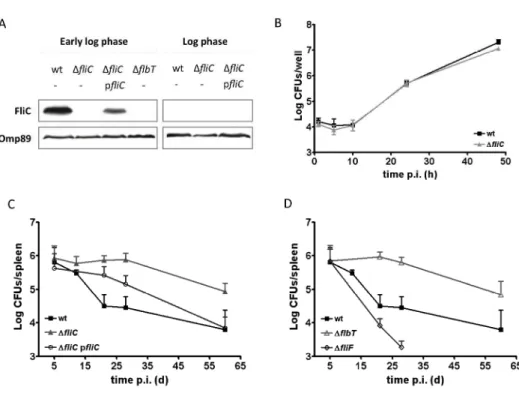
produced by the isogenic wt strain (Fig. 1A). 126
We first compared the intracellular growth of B. melitensis ∆fliC and ∆flbT to that of wt 127
bacteria in RAW264.7 murine macrophages. No difference in colony forming units (CFUs) 128
was detected over a 48-h time course (Fig. 1B). Similar results were obtained in HeLa cells 129
(data not shown). Consistent with a normal multiplication in endoplasmic reticulum-derived 130
vacuoles, both ∆fliC mutant and its isogenic parental strain were found to replicate within 131
calnexin-positive compartments of HeLa cells at 24h p.i (data not shown). 132
Despite the absence of an obvious role for Brucella flagellar genes in cellular models of 133
infection, several reports have shown that they are required for the establishment of a 134
persistent infection in vivo (Fretin et al., 2005, Zygmunt et al., 2006). To re-evaluate the role 135
of flagellar proteins in vivo, BALB/c mice were infected via the intraperitoneal route with B. 136 2 3 4 5 6 7 8 9 10 11 12 13 14 15 16 17 18 19 20 21 22 23 24 25 26 27 28 29 30 31 32 33 34 35 36 37 38 39 40 41 42 43 44 45 46 47 48 49 50 51 52 53 54 55 56 57
For Peer Review
melitensis 16M ∆fliC, ∆flbT and ∆fliF non-polar mutants. None of the mutants was 137
significantly attenuated 5 days p.i., as compared with the parental strain (Fig. 1C). Moreover, 138
we could confirm that the basal body protein FliF is required for full virulence. Indeed, the 139
∆fliF mutant was attenuated at 3 and 4 weeks p.i. (Fig. 1C). In contrast, the virulence of the 140
∆fliC strain was exacerbated when compared to its isogenic parental strain, as ∆fliC-infected 141
mice presented a higher bacterial load in the spleen from 12 days until 60 days p.i. (Fig. 1C). 142
A higher bacterial count was also observed at the same times in the livers of mice infected 143
with the ∆fliC mutant (data not shown). Similarly, an enhanced persistence of the ∆fliC strain 144
in the spleens of the resistant C57BL/6 mice has also been observed (data not shown). The 145
use of a low-copy plasmid carrying fliC gene along with its predicted flanking regulatory 146
sequences, which restores regulated production of flagellin in the ∆fliC strain (Fig. 1A), 147
allowed partial complementation of the phenotype of the newly constructed ∆fliC mutant at 148
28 days p.i. and full complementation at 60 days p.i. (Fig. 1C). Moreover, we could show that 149
the ∆flbT mutant had similar infection kinetics than the ∆fliC strain in the spleen of BALB/c 150
mice (Fig. 1C). This further supports the fact that the apparent inability of the host to control 151
bacterial infection is specifically due to the lack of flagellin production by Brucella. 152
153
Mice infected with B. melitensis ∆fliC mutant exhibit severe splenic pathology.
154
Brucella is known to induce splenomegaly in infected hosts. During the course of a B. 155
melitensis 16M infection in BALB/c mice, the spleen weight increases and peaks around 0.4 156
gr (4-fold the spleen weight of an uninfected mice) at 12 days p.i. Afterwards, the spleen 157
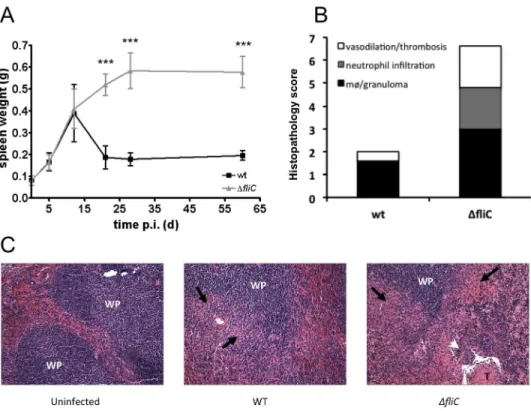
weight decreases but remains twice the normal value until the end of the experiment (Fig.
158
2A). In contrast, we found that the splenomegaly of mice infected with flagellin-deficient 159
mutants, while displaying kinetics similar to those of the wt infection during the first 12 days, 160
continued to increase until 28 days p.i. and reached a plateau of almost 5 or 6 times the 161 2 3 4 5 6 7 8 9 10 11 12 13 14 15 16 17 18 19 20 21 22 23 24 25 26 27 28 29 30 31 32 33 34 35 36 37 38 39 40 41 42 43 44 45 46 47 48 49 50 51 52 53 54 55 56 57
For Peer Review
normal spleen weight by the end of the experiment (Fig. 2A for ∆fliC, data not shown for 162
∆flbT). A similar exacerbation of splenomegaly was also observed in C57BL/6 mice at 21 163
days p.i with the ∆fliC mutant (data not shown). This was in accordance with the enhanced 164
persistence of the flagellin-deficient mutants in mice (Fig. 1C). 165
We further examined the splenic histopathology of BALB/c mice infected for 28 days with wt 166
or ∆fliC B. melitensis strain. At this time, mice infected with the ∆fliC strain showed a 167
markedly exacerbated splenic inflammation characterized by increased vasodilation, 168
thrombosis, neutrophil infiltration and granuloma formation (Fig 2B and 2C). In contrast, 169
mice infected for 28 days with wt B. melitensis had nearly normal splenic morphology, as 170
compared with non-infected mice. 171
172
Ectopic production of flagellin attenuates the virulence of B. melitensis in vivo.
173
Mice apparently fail to control infection caused by B. melitensis 16M ∆fliC or ∆flbT at late 174
time points. This observation suggests that production of flagellin by Brucella somehow 175
influences the course of infection. To further test this hypothesis, we engineered a B. 176
melitensis 16M strain, designated BruFliCON, that constitutively expresses a plasmid-encoded 177
copy of fliC from Escherichia coli Plac. Western blot analysis confirmed that, while 178
production of flagellin by wt bacteria is only detectable at the early exponential phase of 179
growth, BruFliCON produced higher levels of flagellin throughout in vitro growth (Fig. 3A). 180
Ectopic production of flagellin did not impair the invasion and replication abilities of Brucella 181
in macrophages in vitro (Fig. 3B). However, we found that the BruFliCON strain was 182
attenuated in vivo compared with wt B. melitensis 16M. While no difference in splenic 183
bacterial load was observed between the two strains at 5 days post infection of BALB/c mice, 184
0.5 to 1 log fewer CFU of BruFliCON bacteria were recovered at 12, 21 and 28 days p.i. (Fig.
185 2 3 4 5 6 7 8 9 10 11 12 13 14 15 16 17 18 19 20 21 22 23 24 25 26 27 28 29 30 31 32 33 34 35 36 37 38 39 40 41 42 43 44 45 46 47 48 49 50 51 52 53 54 55 56 57
For Peer Review
3C). Reduced colonization of BruFliCON was also observed in the liver of infected BALB/c, 186
and similar results were also obtained with C57BL/6 mice (data not shown). 187
188
Brucella flagellin lacks TLR5 agonist activity
189
The altered virulence of the ∆fliC and BruFliCON mutants led us to hypothesize that Brucella 190
flagellin is detected by the host in order to mount a protective immune response. To ascertain 191
whether innate immune sensing of flagellin contributes to enhanced control of systemic 192
Brucella infection, we first determined whether Brucella flagellin possesses agonist activity 193
for TLR5. To this end, epitope-tagged FliC flagellins from Brucella (BruFliC-FLAG) or S. 194
enterica serotype Typhimurium (S. Typhimurium; StFliC-FLAG) were expressed in an S. 195
Typhimurium fliCfljB mutant (EHW26) lacking endogenous flagellin expression. 196
Immunoblotting with the anti-FLAG antibody demonstrated that both BruFliC-FLAG and 197
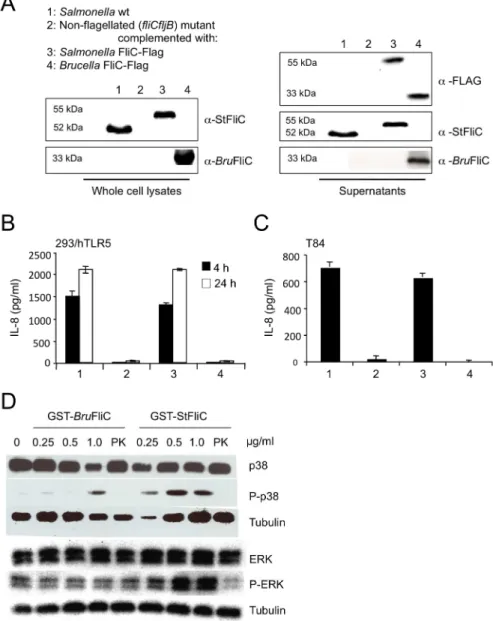
StFliC-FLAG were secreted to the supernatant in similar amounts (Fig. 4A). Addition of the 198
C-terminal FLAG tag to StFliC prevents its assembly into flagellar filaments, thereby 199
allowing for a direct comparison of effects of flagellin monomers in the absence of a 200
confounding effect on motility, since strains expressing either StFliC-FLAG or BruFliC-201
FLAG were aflagellate and non-motile (data not shown). 202
Culture supernatants of S. Typhimurium fliCfljB expressing recombinant flagellins were used 203
to treat two TLR5-expressing cell lines: the colonic epithelial cell line T84 and 204
HEK293/hTLR5 (Fig. 4B and 4C). Both cell lines secreted interleukin 8 (IL-8) on infection 205
with strains expressing native or FLAG-tagged StFliC, demonstrating that addition of the 206
epitope tag to the C terminus of flagellin did not affect its TLR5 agonist activity. Stimulation 207
of IL-8 secretion was dependent on flagellin in both cell lines, since culture supernatants from 208
the fliCfljB mutant elicited little (Fig. 4C) or no (Fig. 4B) IL-8. In contrast to StFliC-FLAG, 209
expression of BruFliC-FLAG did not elicit IL-8 secretion above the level of the fliCfljB 210 2 3 4 5 6 7 8 9 10 11 12 13 14 15 16 17 18 19 20 21 22 23 24 25 26 27 28 29 30 31 32 33 34 35 36 37 38 39 40 41 42 43 44 45 46 47 48 49 50 51 52 53 54 55 56 57
For Peer Review
mutant. Similar results were obtained when T84 or HEK-293/hTLR5 cells were infected with 211
S. Typhimurium strains expressing recombinant flagellins (data not shown). The response to 212
BruFliC did not appear to be delayed, since extending the time of the assay to 24h did not 213
allow detection of a response comparable to that elicited by StFliC-FLAG. As a second 214
readout for TLR5 signaling, we assayed activation of mitogen-activated protein kinases 215
(MAPK) p38 and ERK by treatment with purified, GST-tagged flagellins. Phosphorylation of 216
both p38 and ERK was induced to a greater extent by GST-StFliC than by GST-BruFliC, and 217
notably no increase in phosphorylation of ERK could be detected after treatment with GST-218
BruFliC (Fig. 4D). Taken together, these results demonstrate that compared to S. 219
Typhimurium flagellin, the ability of Brucella flagellin to stimulate TLR5 signaling is greatly 220
reduced. 221
222
Cytosolic sensing pathways detect Brucella flagellin during infection of macrophages
223
In addition to TLR5, flagellin that enters the cytosol of host macrophages can be sensed by 224
the NLRC4/NAIP5 pathway (Kofoed et al., 2011, Zhao et al., 2011). To determine whether 225
cytosolic pathways could detect flagellin during Brucella infection, we first used the TEM-1 226
β-lactamase assay to detect translocation of flagellin into the cytosol of B. abortus-infected 227
J774 macrophage-like cells. For these experiments, J774 cells were infected with B. abortus 228
2308 expressing either a C-terminally tagged copy of Brucella flagellin or an irrelevant 229
protein (GST), from a multi-copy plasmid (pFLAG-TEM1; Sun et al, 2007). While cells 230
infected with B. abortus expressing GST::Flag-TEM-1 showed no cytosolic β-lactamase 231
activity (no β-lactamase-positive cells in 4 experiments), 0.94% (range: 0.3-2.1%) of cells 232
infected with B. abortus expressing the flagellin fusion protein were β-lactamase positive, 233
suggesting potential access of low amounts of flagellin to the cytosol of Brucella-infected 234
cells. Next, we determined whether, in primary macrophages, cytosolic flagellin could 235 2 3 4 5 6 7 8 9 10 11 12 13 14 15 16 17 18 19 20 21 22 23 24 25 26 27 28 29 30 31 32 33 34 35 36 37 38 39 40 41 42 43 44 45 46 47 48 49 50 51 52 53 54 55 56 57
For Peer Review
stimulate innate immune responses. To this end, we compared the ability of B. melitensis and 236
its isogenic ∆fliC mutant to elicit IL-1β secretion from primary bone marrow-derived 237
macrophages (BMDM). Compared to B. melitensis wt, the ∆fliC mutant elicited significantly 238
reduced IL-1β secretion (Fig. 5A). This reduction was not the result of differing numbers of 239
intracellular bacteria of the ∆fliC mutant, since both the ∆fliC mutant and wt B. melitensis 240
were present in the same numbers (data not shown). This partial reduction in IL-1β secretion 241
suggests that recognition of flagellin contributes to activation of the caspase-1 inflammasome. 242
The mechanism of cytosolic flagellin sensing in the context of intracellular infection was 243
further investigated using the B. melitensis FliCON strain, which expresses flagellin 244
constitutively. This strain, as well as a control carrying the empty plasmid pBBR1MCS, was 245
used to infect immortalized BMDM from mice deficient in NLRC4 (Fig. 5B). Constitutive 246
expression of FliC did not affect the ability of B. melitensis to survive intracellularly (Fig. 3B
247
and data not shown). The BruFliCON strain elicited significantly more IL-1β secretion than the 248
control strain, confirming data shown in Fig 5A. While these results suggested that under 249
conditions of flagellin expression, flagellin can be sensed by cytosolic PRRs that lead to 250
activation of caspase-1 and secretion of IL-1β, NLRC4 was not required for flagellin-251
dependent stimulation of IL-1β secretion by BMDM in vitro. 252
253
Brucella flagellin elicits IL-1β secretion by a mechanism that is distinct from the
254
NLRC4/NAIP5 pathway
255
Since B. melitensis is known to inhibit innate immune signalling (Salcedo et al., 2008, 256
Radhakrishnan et al., 2009, Sengupta et al., 2009) we determined whether purified flagellin, 257
in the absence of other Brucella factors, would signal similarly to flagellin expressed during 258
cellular infection. For this purpose, purified GST-BruFliC and GST-StFliC were introduced 259
into the cytosol of BMDM using the cationic lipid DOTAP (Franchi et al., 2006). Both 260 2 3 4 5 6 7 8 9 10 11 12 13 14 15 16 17 18 19 20 21 22 23 24 25 26 27 28 29 30 31 32 33 34 35 36 37 38 39 40 41 42 43 44 45 46 47 48 49 50 51 52 53 54 55 56 57
For Peer Review
BruFliC and StFliC elicited dose-dependent secretion of IL-1β from BMDM from C57BL/6 261
mice when introduced into the cytosol using DOTAP (Fig. 6A). Neither GST, DOTAP alone, 262
nor recombinant flagellins in the absence of DOTAP elicited any secretion of IL-1β (Fig. 6A
263
and data not shown). Comparison of IL-1β secreted in response to equal amounts of StFliC or 264
BruFliC suggested that the proinflammatory activity of StFliC was slightly higher than that of 265
BruFliC (Fig. 6A). Secretion of IL-1β in response to S. Typhimurium FliC was dependent on 266
NLRC4 and only partially dependent on the adaptor protein ASC (apoptosis-associated speck-267
like protein), as reported previously (Broz et al., 2010). In contrast, BruFliC elicited IL-1β 268
secretion that required ASC, but was independent of NLRC4, at least in cultured BMDM 269
(Fig. 6B and Fig. 6C). These results suggested that in BMDM, Brucella flagellin was sensed 270
by a cytosolic mechanism that differs from the NLRC4/NAIP5-dependent response to S. 271
Typhimurium FliC (Kofoed et al., 2011, Zhao et al., 2011). 272
273
The cytosolic flagellin-detection pathway is implicated in the control of B. melitensis
274
infection in vivo.
275
To evaluate the potential impact of caspase-1 inflammasomes on the control of Brucella 276
infection in vivo, we infected Nlrc4-/- and Casp1-/- C57BL/6 mice with B. melitensis 16M. 277
Splenic bacterial count was examined 21 days p.i., a time at which wt mice manage to 278
effectively control infection caused by flagellin-producing Brucella strains (Fig. 1C and 3C). 279
At this time, we observed that NLRC4 (Fig. 7A) and caspase-1 (Fig. 7B) deficiency 280
moderately but significantly affected the resistance of mice to infection. This suggests that the 281
NLRC4-caspase-1 axis is required for the host to control B. melitensis 16M infection, 282
possibly through recognition of cytosolic flagellin. To further test this hypothesis, the 283
BruFliCON strain was used to infect Nlrc4-/- and Casp1-/- mice. As shown previously, virulence 284
of this strain is attenuated compared to wt B. melitensis 16M, as the spleen of BruFliCON -285 2 3 4 5 6 7 8 9 10 11 12 13 14 15 16 17 18 19 20 21 22 23 24 25 26 27 28 29 30 31 32 33 34 35 36 37 38 39 40 41 42 43 44 45 46 47 48 49 50 51 52 53 54 55 56 57
For Peer Review
infected C57BL/6 mice contained less CFUs than these infected by the wt strain (Fig. 7). 286
Interestingly, this virulence defect was rescued in mice deficient for the cytosolic flagellin 287
sensor NLRC4 (Fig. 7A) or the downstream caspase-1 (Fig. 7B). These data indicate that, in 288
contrast to what has been observed in vitro (Fig. 6), Brucella flagellin can activate the 289
NLRC4 inflammasome in vivo. Nevertheless, although Nlrc4-/- and Casp1-/- mice infected 290
with wt B. melitensis 16M had significantly higher splenic bacterial counts than those of wt 291
mice, it remained significantly lower than those of mice infected with the ∆fliC mutant (Fig.
292
7). This suggests that both inflammasome-dependent and inflammasome-independent control 293
of infection operates downstream detection of Brucella flagellin in vivo. 294
295
B. melitensis ∆fliC mutant fails to elicit early granuloma formation in the spleen of
296
infected mice.
297
Chronic granulomatous inflammation in the spleen of natural hosts, humans and mice is the 298
hallmark of Brucella infection (Spink et al., 1949, Enright et al., 1990). Recently, we revealed 299
the pivotal role of early splenic granuloma formation in the ability of mice to control bacterial 300
dissemination (Copin et al., 2012). Here, we used a rabbit polyclonal serum raised against B. 301
melitensis (anti-Bru) with the aim to compare the distribution of putative infected cells in the 302
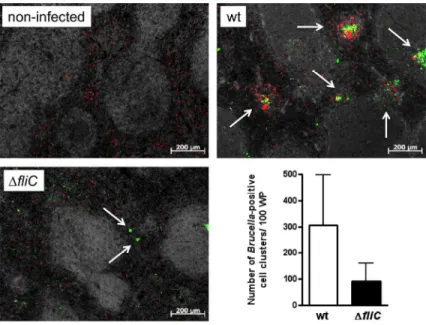
spleen of BALB/c mice inoculated with B. melitensis 16M wt or ∆fliC strain. 5 days after 303
infection with B. melitensis 16M wt, clusters of cells stained with anti-Bru (Bru-positive cells) 304
were found equally in white pulp and red pulp area of the spleen (Fig. 8). These clusters 305
consisted primarily of CD11b+ cells, suggesting that they corresponded to the granuloma 306
previously described (Copin et al., 2012). Strikingly, at the same time, the number of Bru-307
positive cells clusters counted in splenic sections of ∆fliC-infected mice was reduced (Fig. 8). 308
This apparent defect in early splenic granuloma formation suggests the importance of flagellin 309
sensing by the host for the orchestration of this typical tissue response to Brucella infection. 310 2 3 4 5 6 7 8 9 10 11 12 13 14 15 16 17 18 19 20 21 22 23 24 25 26 27 28 29 30 31 32 33 34 35 36 37 38 39 40 41 42 43 44 45 46 47 48 49 50 51 52 53 54 55 56 57
For Peer Review
311
Discussion
312
Intracellular survival and immune evasion both contribute to persistence of Brucella in the
313
host (Atluri et al., 2011). Recent studies have shown that Brucella uses passive as well as
314
active mechanisms to evade detection by TLRs of the innate immune system (Lapaque et al.,
315
2006, Barquero-Calvo et al., 2007, Salcedo et al., 2008, Radhakrishnan et al., 2009, Sengupta
316
et al., 2009). Accordingly, the inflammatory response induced at the onset of Brucella
317
infection is lower than observed with pyogenic infections such as salmonellosis
(Barquero-318
Calvo et al., 2007).Actually, brucellae are not entirely invisible to the immune system, which
319
can still detect them and shape a Th1 response to control infection (Murphy et al., 2001,
320
Copin et al., 2007). However, the host immune response is not sufficient to eliminate bacteria, 321
resulting in achronic state of infection characterized by a balance between pathogen virulence 322
and host resistance. The impact of Brucella flagellin on infection had not been reported yet. 323
The data presented here suggest that flagellin plays a crucial role in the interplay between 324
Brucella and its host, as its detection by the innate immune system is required for the control 325
of infection in vivo, although some characteristics of Brucella flagellin would contribute to 326
the stealthy strategy of this pathogen. 327
328
The use of two mutants of B. melitensis 16M that either overproduce or lack the FliC flagellin 329
has shown that this protein hinders bacterial replication in vivo. Indeed, a strain engineered to 330
ectopically produce flagellin (BruFliCON) was attenuated in mice, whereas deletion of fliC 331
(∆fliC) enhanced persistence of B. melitensis 16M in these conditions. Our in vivo data are 332
consistent with studies reporting exacerbated infections caused by a flagellin deficient mutant 333
of Salmonella enterica serovar Typhimurium (Vijay-Kumar et al., 2006), Legionella 334
pneumophila (Molofsky et al., 2006) or Pseudomonas syringae pv. Tabaci (Li et al., 2005), 335 2 3 4 5 6 7 8 9 10 11 12 13 14 15 16 17 18 19 20 21 22 23 24 25 26 27 28 29 30 31 32 33 34 35 36 37 38 39 40 41 42 43 44 45 46 47 48 49 50 51 52 53 54 55 56 57
For Peer Review
as well as virulence attenuation due to flagellin overproduction by S. Typhimurium (Salazar-336
Gonzalez et al., 2007, Miao et al., 2010a) and Listeria monocytogenes (Grundling et al., 337
2004). These findings also suggest that Brucella flagellin is an important immune target 338
during infection, and our work provides first insights into the mechanisms involved. 339
340
TLR5 and the NLRC4/NAIP5 complex are the only proteins currently known as innate 341
immune sensors of extracellular and cytoplasmic bacterial flagellin, respectively (Miao et al., 342
2007). 343
In agreement with a recent paper quoting that purified Brucella flagellin does not induce 344
expression of interferon-inducible resistance proteins (IRGs) in murine macrophages 345
(Lapaque et al., 2009), the data reported in this paper allow us to conclude that Brucella 346
flagellin is not a TLR5 agonist. This is consistent with its atypical sequence as it lacks the 347
amino acid residues required to stimulate this PRR (Andersen-Nissen et al., 2005). Thus, we 348
propose that Brucella evades TLR5-mediated detection, and that it could be part of its stealthy 349
strategy to avoid activation of the innate immune system during the onset of infection. 350
Cytosolic flagellin activates a complex comprising the NLR family proteins NLRC4 and 351
NAIP5 (Franchi et al., 2006, Miao et al., 2006, Kofoed et al., 2011, Zhao et al., 2011). This 352
complex senses a highly conserved region of the C terminal part of the flagellin critical for 353
flagellum filament assembly (Yonekura et al., 2003), but that is required neither for flagellin 354
translocation into the host cell cytosol nor for TLR5 activation (Lightfield et al., 2008). The 355
C-terminal 35 amino acid residues are conserved in Brucella FliC flagellin, as they share 356
respectively 46% and 40% identity with L. pneumophila FlaA and S. Typhimurium FliC, both 357
known to activate NLRC4 (Franchi et al., 2006, Zamboni et al., 2006) and sharing themselves 358
60% identity. Recently, it has been proposed that the minimal motif of flagellin sensed by 359
NLRC4 comprises the highly conserved last C-terminal residues VLSLL found in L. 360 2 3 4 5 6 7 8 9 10 11 12 13 14 15 16 17 18 19 20 21 22 23 24 25 26 27 28 29 30 31 32 33 34 35 36 37 38 39 40 41 42 43 44 45 46 47 48 49 50 51 52 53 54 55 56 57
For Peer Review
pneumophila FlaA and S. Typhimurium FliC (Lightfield et al., 2008, Miao et al., 2010b). 361
This motif is semi-conserved in Brucella flagellin that bears an ILSFR motif. 362
Our results suggest that, similar to what is seen with L. pneumophila infection (Amer et al., 363
2006, Case et al., 2009) the NLRC4-caspase-1 axis is involved in the control of B. melitensis 364
16M in vivo (Fig. 7). However, the absence of NLRC4 or caspase-1 stimulation in mice 365
infected with the flagellin-deficient B. melitensis 16M ∆fliC or ∆flbT mutants cannot by itself 366
account for the inability of the host to control infection. Indeed, the relative difference of 367
virulence between B. melitensis 16M wt and ∆fliC strains were only partially reduced in 368
Nlrc4-/- and Casp1-/- mice (Fig. 7), indicating involvement of both NLRC4/caspase-1-369
dependent and independent mechanisms in the control of Brucella downstream flagellin 370
recognition. This contrasts with what is observed after intratracheal infection of mice with L. 371
pneumophila. Indeed, in this case, the number of flaA mutants and wt bacteria in the lungs of 372
Nlrc4-/- and Casp1-/- is similar (Amer et al., 2006, Case et al., 2009). Therefore, it suggests 373
that Brucella flagellin is an immune target not only for the cytosolic sensor NLRC4 in vivo. 374
Actually, the observation that the BruFliCON strain is still attenuated (a reproducible 0.5 log 375
decreased CFUs in the spleen) compared to B. melitensis 16M wt in Nlrc4-/-and Casp1-/- mice 376
21 days p.i. is consistent with the hypothesis that Brucella flagellin stimulates another 377
immune pathway in addition to the NLRC4/caspase-1 axis. The ASC-dependent signalling 378
suggested by our ex-vivo data (Fig. 6) could be this additional pathway. This would be similar 379
to what has been described for L. pneumophila that triggers an ASC-dependent activation of 380
caspase-1 in macrophages, in addition to the NLRC4-dependent activation triggered by 381
cytosolic flagellin (Case et al., 2009). Activation of these innate immune pathways by 382
flagellin would play a role in limiting replication of Brucella in vivo. However, the immune 383
effector mechanisms involved remain to be uncovered. Processing of the proinflammatory 384
cytokines pro-IL-1ß and pro-IL-18 (Raupach et al., 2006, Dinarello, 2009), pyroptosis 385 2 3 4 5 6 7 8 9 10 11 12 13 14 15 16 17 18 19 20 21 22 23 24 25 26 27 28 29 30 31 32 33 34 35 36 37 38 39 40 41 42 43 44 45 46 47 48 49 50 51 52 53 54 55 56 57
For Peer Review
(Bergsbaken et al., 2009, Miao et al., 2010a) and control of phagosome maturation (Amer et 386
al., 2006, Akhter et al., 2009) that can all result from caspase-1 activation are important 387
processes for innate immunity against bacterial pathogens (Brodsky et al., 2009b). 388
Besides its impact on the innate immune system, it is known that bacterial flagellin is also a 389
target of the adaptive immune response (Salazar-Gonzalez et al., 2005). However, whether 390
the adaptive immune system responds to MHC class II-presented flagellin peptides during 391
infection by Brucella is currently not known. 392
393
While searching for immune effector mechanisms triggered by flagellin detection and 394
involved in the control of Brucella replication in mice, we found that the ∆fliC mutant fails to 395
elicit early granulomatous response in the spleen of mice infected for 5 days, a time at which 396
the mutant is found at a similar level as the wt strain (Fig. 8). Thus, we suggest that detection 397
of flagellin by the host would play a role in early granuloma development during brucellosis. 398
Although the granulomatous response was stronger at 28 days p.i. (Fig. 2B), when the ∆fliC 399
strain colonized spleens at higher extent than wt, an early alteration in this response could 400
contribute to the apparent failure of mice to control infections caused by the flagellin-401
deficient mutants of B. melitensis 16M. Indeed, granulomatous inflammation is the typical 402
tissue response to Brucella infection in both mice and humans (Spink et al., 1949, Hunt et al., 403
1967, Enright et al., 1990), and a recent study has demonstrated the crucial role of early 404
formation of splenic granuloma in the control of B. melitensis 16M (Copin et al., 2012). 405
Whether granuloma formation during infection by Brucella depends on ASC, NLRC4 and/or 406
caspase-1 is currently unknown. Up to now, a role for the NLRC4 inflammasome in such a 407
response has never been reported. However, it was recently shown that granuloma formation 408
in chronic M. tuberculosis infection is dependent on ASC, whereas it does not require 409
caspase-1 (McElvania Tekippe et al., 2010). 410 2 3 4 5 6 7 8 9 10 11 12 13 14 15 16 17 18 19 20 21 22 23 24 25 26 27 28 29 30 31 32 33 34 35 36 37 38 39 40 41 42 43 44 45 46 47 48 49 50 51 52 53 54 55 56 57
For Peer Review
411
S. Typhimurium translocates flagellin from its containing-vacuole into the cytosol of infected 412
cells by a SPI1-T3SS-dependent but flagellar secretory apparatus-independent process (Sun et 413
al., 2007). Similarly, a Dot/Icm T4SS-mediated flagellin translocation has been suggested in 414
the case of L. pneumophila (Ren et al., 2006, Molofsky et al., 2006). Here, we show that 415
Brucella flagellin is also translocated into the host cell cytosol. Interestingly, flagellin 416
translocation was not seen when a virB2 mutant was used to infect macrophages (data not
417
shown), suggesting that VirB T4SS may play a role in flagellin translocation. Interestingly, a 418
requirement for the T4SS to elicit splenic microgranuloma formation has been proposed 419
(Rolan et al., 2009). According to our results, it could be envisioned that the VirB T4SS of 420
Brucella elicits a granulomatous response by translocating flagellin. However, since the T4SS 421
is also essential for Brucella to reach its replicative niche (Celli et al., 2003), additional 422
studies would be necessary to determine whether the role of the T4SS in release of flagellin to 423
the host cytosol is direct or indirect. The TEM1 β-lactamase reporter assay has been 424
previously used to demonstrate translocation of S. Typhimurium flagellin into the cytosol of 425
infected macrophages (Sun et al., 2007). We observed that the amount of flagellin 426
translocated into cells by Brucella is far less than by Salmonella. While flagellin could be 427
detected in the cytosol of 77.5% of macrophages infected for 4h with S. Typhimurium (Sun et 428
al., 2007), less than 1% of cells were positive 16h after infection with B. abortus. Therefore, 429
although the intrinsic ability of Brucella and Salmonella flagellin to induce IL-1ß secretion 430
from BMDM appeared to be similar (Fig. 6), Brucella might evade activation of a robust 431
innate immune response from cytosolic PRRs by controlling the production and/or delivery of 432
flagellin into the host cell. Accordingly, we could show that the attenuation of the BruFliCON 433
strain that ectopically produces flagellin is due to a strong NLRC4 inflammasome activation 434
in vivo (Fig. 7). Thus, we propose that the tight regulation of flagellin synthesis and/or 435 2 3 4 5 6 7 8 9 10 11 12 13 14 15 16 17 18 19 20 21 22 23 24 25 26 27 28 29 30 31 32 33 34 35 36 37 38 39 40 41 42 43 44 45 46 47 48 49 50 51 52 53 54 55 56 57
For Peer Review
delivery during infection is part of its stealthy strategy. This has also been suggested for S. 436
Typhimurium, which downregulates the expression of fliC during macrophage infection 437
(Cummings et al., 2006). 438
439
In conclusion, we propose that flagellin is an important molecular actor of the interplay 440
between Brucella and its host. Although flagellin escapes detection by TLR5 and Brucella 441
controls its production and/or delivery to the infected host cell cytosol, its detection by 442
cytosolic PRRs initiates a response that results in an immunologic standoff between Brucella 443
and its host, leading to a persistent infection with limited inflammatory pathology. The 444
increased bacterial tissue loads and destructive pathology, seen with the flagellin-deficient 445
mutant demonstrates that innate and possibly also adaptive, recognition of flagellin is a 446
process that is important to the chronic and stealthy nature of Brucella infection. As such, 447
flagellin could be considered as a “host protective factor” (Shames et al., 2010) in the context 448 of brucellosis. 449 450 451 Experimental procedures 452 453
Bacteria and growth conditions
454
Bacterial strains and plasmids are listed in Table 1. Cultures of Brucella strains were freshly 455
inoculated from frozen stock onto 2YT medium (10% yeast extract, 10 g liter-1 tryptone, 5 g 456
liter-1 NaCl) plates before subculturing aerobically at 37°C in 2YT broth supplemented with 457
appropriate antibiotics. LB broth was used for Escherichia coli and Salmonella enterica 458
serotype Typhimurium (S. Typhimurium) cultures. Antibiotics were used at the following 459 2 3 4 5 6 7 8 9 10 11 12 13 14 15 16 17 18 19 20 21 22 23 24 25 26 27 28 29 30 31 32 33 34 35 36 37 38 39 40 41 42 43 44 45 46 47 48 49 50 51 52 53 54 55 56 57
For Peer Review
concentrations: carbenicillin, 100 mg/liter; chloramphenicol, 30 mg/liter; kanamycin, 60 460
mg/liter;or nalidixic acid, 50 mg/liter. 461
462
Molecular techniques
463
DNA manipulations were performed according to standard techniques (Ausubel et al., 1991). 464
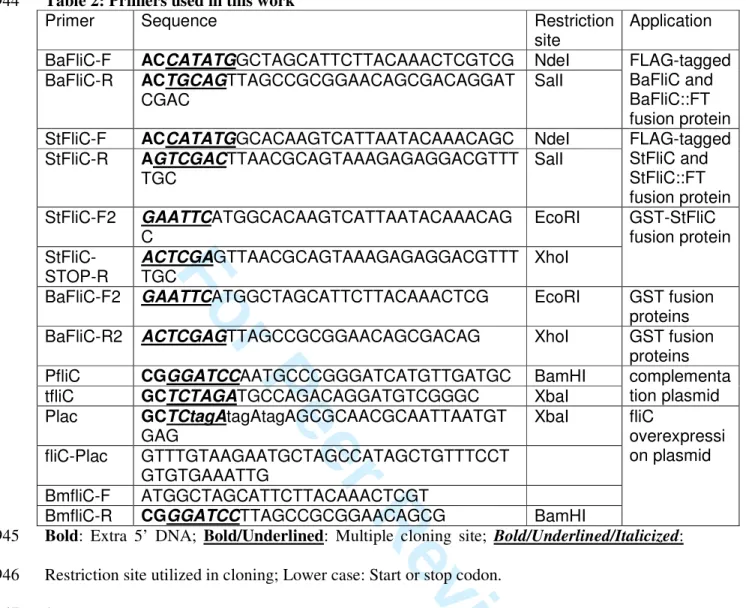
Primers used are listed in Table 2. 465
Generation of the complementation vector pRH001-fliC: fliC coding sequence (cds) and its 466
predicted upstream and downstream regulatory sequences were amplified by PCR using the 467
PfliC and tfliC primers pair. The PCR product (PfliC-fliC-tfliC) was then cloned into the 468
EcorRV site of pGEM. In a second step, this fragment was excised using BamHI and XbaI, 469
and inserted into the corresponding sites of pMR10cat (R. Roberts, unpublished) in the 470
opposite orientation to the Plac. 471
Generation of the B. melitensis 16M FliCON strain: The fliC overexpression vector pBBR1-472
fliC was obtained as follows: first, the constitutive promoter of the lac operon Plac was 473
amplified by PCR using the Plac and fliC-Plac primers pair. In the resulting PCR product, 474
Plac is flanked by translation stop codons in all three reading frame in 5’ and by the 21st fliC 475
coding sequence (cds) base pairs in 3’. fliC cds was amplified by PCR using the BmfliC-F and 476
BmfliC-R primers. A third PCR using the Plac and BmfliC-R primers was used to ligate the 477
two PCR products by cohesive ends. Stop codons and close fusion of fliC cds to Plac without 478
any linker ensure the production of FliC flagellin that does not bear additional N-terminal 479
amino acid residues. The PCR product (XbaI-Plac-fliC-BamHI) was then cloned into the 480
EcorRV site of pGEM. In a last step, this fragment was excised using XbaI and BamHI, and 481
inserted into the corresponding sites of pBBR1 MCS-I (Kovach et al., 1994) in the opposite 482
orientation to the endogenous Plac. This gave rise to pBBR1-Plac-fliC. This final 483 2 3 4 5 6 7 8 9 10 11 12 13 14 15 16 17 18 19 20 21 22 23 24 25 26 27 28 29 30 31 32 33 34 35 36 37 38 39 40 41 42 43 44 45 46 47 48 49 50 51 52 53 54 55 56 57
For Peer Review
construction was transformed into E. coli strain S17-1 (Simon et al., 1983), and introduced 484
into B. melitensis 16M by conjugation. 485
Generation of C-terminally FLAG-tagged flagellins: A derivative of the broad host range 486
plasmid pBBR1MCS (pBBR1-FLAG) was first generated by ligating a fragment containing 487
“SphI-promoter-NdeI-SalI-3x-Flag-STOP-PstI-SacI” into pBBR1MCS4 treated with SphI and 488
SacI. The S. Typhimurium fliC gene was amplified using primers StFliC-F and StFliC-R, and 489
the resulting amplicon was ligated into NdeI and SalI-digested pBBR1-FLAG to yield 490
plasmid pYHS1116, encoding StFliC-FLAG. The B. abortus fliC gene was amplified using 491
primers BaFliC-F and BaFliC-R and cloned in the same way to generate pYHS1073, 492
encoding BaFliC-FLAG. In both constructs, expression of the recombinant proteins was 493
controlled by a previously described constitutive Brucella promoter, BMEII0193 (Eskra et 494
al., 2001). The constructs were confirmed by DNA sequencing across the junction fragments. 495
Plasmids pYHS1116 (StFliC-FLAG) and pYHS1073 (BaFliC-FLAG) were introduced into a 496
Salmonella fliC fljB mutant (EHW26, (Raffatellu et al., 2005)) by electroporation. The B. 497
abortus and B. melitensis FliC proteins are identical except for a substitution of Ala156 to Thr 498
in B. abortus. 499
Generation of fusions to TEM-1 ß-lactamase: To express BaFliC fused with TEM1, B. 500
abortus fliC was amplified by using the primer pair BaFliC-F and BaFliC-R. The amplicon 501
was cloned into pCR2.1, then subsequently digested with NdeI and PstI, and ligated 502
pFlagTEM1 (Raffatellu et al., 2005) digested with the same enzymes to yield pBaFliCTEM1. 503
The expression of BaFliC::TEM1 in pBaFliCTEM1 is under the control of inducible Trc 504
promoter. Constructs expressing StFliC::TEM1 were described previously (Sun et al., 2007). 505
Generation of GST-flagellin fusion proteins: For construction of plasmids expressing GST 506
fused at the terminus of flagellins, flagellin genes were amplified to delete predicted N-507
terminal secretion domains. The fliC gene from S. Typhimurium was amplified without its 508 2 3 4 5 6 7 8 9 10 11 12 13 14 15 16 17 18 19 20 21 22 23 24 25 26 27 28 29 30 31 32 33 34 35 36 37 38 39 40 41 42 43 44 45 46 47 48 49 50 51 52 53 54 55 56 57
For Peer Review
first 332 nucleotides using primer pair of StFliC-F2 and StFliC-STOP-R. Similarly B. abortus 509
fliC lacking its first 87 nucleotides was amplified using primer pair of F2 and BaFliC-510
R2. Both amplicons were cloned in pCR2.1, excised as BamHI/SalI fragments, and ligated to 511
BamHI/SalI –digested pGEX-4T-1. The cloning junctions were confirmed by DNA sequence 512
analysis, and the resulting constructs, pGEX-StFliC and pGEX-BaFliC, were transformed into 513
E. coli BL-21. Expression of GST::StFliC and GST::BaFliC was induced by IPTG, and the 514
recombinant flagellins were purified using Glutathione-Sepharose 4B (GE Healthcare). 515
Protein concentration was measured with DC protein assay (BioRad). 516
Construction of plasmids expressing native S. Typhimurium and B. abortus flagellins: The 517
pSC101 ori-based low copy number plasmid pWSK29 (Genbank AF016889) was digested 518
with PvuII and BsaAI to remove the lac promoter, lacZ fragment, and most of the f1 ori, as 519
represented by a 4.7kb fragment product (Figure 2a). The 4.7kb plasmid fragment was gel 520
purified then treated with Antarctic phosphatase (New England Biolabs, NEB). Primers 102 521
and 103 were used to PCR amplify the -134 to -6 region of S. Typhimurium LT2, with primer 522
103 adding an XbaI site which serves to replace the -5 to -1 region of fliC and overlaps the 523
translation start site. Primer 103 also contains a multiple cloning site (MCS), adding unique 524
restriction sites (in the context of PvuII/BsaAI-digested pWSK29) downstream of the XbaI 525
site. Both primer 102 and 103 contain PvuII sites at their 5’ ends, so the resulting PCR 526
product was cleaved with PvuII, gel purified, and blunt ligated to the pWSK29 PvuII/BsaAI 527
fragment with Quick T4 DNA Ligase (NEB) and heat shocked into E. coli DH5α. Clones 528
were screened for the loss of an EcoRV site (proper PvuII site ligated), gain of a single BstBI 529
site (one promoter region insertion) and the orientation with the fliC promoter facing away 530
from the pSC101 ori (the same directionality as the lac promoter in pWSK29) was screened 531
for by BglII/PstI double digestion. Clones fitting this description were sequenced using 532 2 3 4 5 6 7 8 9 10 11 12 13 14 15 16 17 18 19 20 21 22 23 24 25 26 27 28 29 30 31 32 33 34 35 36 37 38 39 40 41 42 43 44 45 46 47 48 49 50 51 52 53 54 55 56 57
For Peer Review
primers 108 and 109, which flank the insertion site in pWSK29, by SeqWright (Houston, TX, 533
USA). An accurate clone was designated pSPN30. 534
535
Preparation of concentrated S. Typhimurium culture supernatant containing
536
recombinant flagellins
537
S. Typhimurium strains were grown for 4 to 5 hours at 37°C with vigorous shaking by 538
diluting an overnight culture 1 to 100 in 20 ml LB broth plus 1 mM IPTG. Once the OD600
539
reached 0.8 to 1.2 bacteria were removed by centrifugation at 4000 rpm for 15 min and 12 ml 540
of the resulting supernatant was passed through a 0.45 µm filter and subject to concentration 541
by using an Amicon Ultra-15 with cutoff of 5K (Millipore) followed by a wash with 10 ml 542
PBS. Protein concentration was determined by DC protein assay (BioRad) and SDS-PAGE 543
followed by Coomassie blue stain. The final protein concentration was adjusted to 1g/ul. 544
545
Generation of rabbit anti-BaFliC serum and Western blot
546
B. abortus fliC (BaFliC) was amplified using primers BaFliC-F and BaFliC-R and cloned into 547
pET103 in frame with a 6xHis tag. The resulting BaFliC::6xHis fusion protein was produced 548
and purified by using Ni-NTA kit (Qiagen). Rabbit serum against BaFliC was generated by 549
Antagene (Antagene Inc., Calif.). For detection of secreted BaFliC the supernatant from 1 ml 550
culture was precipitated using trichloroacetic acid (TCA) and separated on a 12% SDS-PAGE 551
gel. Proteins were electrotransferred to a polyvinylidene difluoride (PVDF) membrane. 552
BaFliC was detected by using rabbit anti-BaFliC as primary antibody and as goat anti-rabbit 553
IgG conjugated to horseradish peroxidase (HRP) as secondary antibody. S. Typhimurium 554
Phase I flagellin (FliC) was detected using Salmonella Hi antiserum (Difco). C-terminal 555
FLAG-tagged S. Typhimurium and B. abortus flagellins were detected using anti-FLAG 556
monoclonal antibody (1:5000, Sigma) and a goat anti-mouse IgG antibody conjugated to 557 2 3 4 5 6 7 8 9 10 11 12 13 14 15 16 17 18 19 20 21 22 23 24 25 26 27 28 29 30 31 32 33 34 35 36 37 38 39 40 41 42 43 44 45 46 47 48 49 50 51 52 53 54 55 56 57
For Peer Review
HRP. HRP activity was detected with a chemiluminescent substrate (PerkinElmer Life 558
Sciences). Flagellin produced by B. melitensis 16M was detected as described previously 559
(Fretin et al., 2005). 560
561
Measurement of TLR5 agonist activity of flagellins
562
The human colonic epithelial cell line T-84 was cultured in were maintained in Dulbecco's 563
modified Eagle medium (DMEM)-F12 medium (Gibco), containing 1.2 g/liter sodium 564
bicarbonate, 2.5mM L-glutamine, 15 mM HEPES, and 0.5 mM sodium pyruvate (Gibco), 565
supplemented with 10% fetal calf serum (FCS). The day before assay cells from 1/3 of a 80 to 566
90% confluent T75 flask were seeded per each 24-wellplate containing DMEM-F12 and 2% 567
FCS. HEK293 cells were cultured as previously described (Keestra et al., 2010). 568
T84 cells in 24-well plates were either infected with 10 µl of bacteria grown as above or 569
treated by adding 30 µl of concentrated bacterial culture supernatant and incubated for 4 570
hours at 37°C under5% CO2. For the HEK293 stably transfected with human TLR5, cells
571
were grown in 48-well tissue culture plates and infected for 4-48 h with 10 µl of bacteria 572
grown as described above or treated by adding 10 µl of concentrated bacteria culture 573
supernatant and incubated for 8 hours at 37°C under5% CO2. Supernatants were aspirated
574
andcentrifuged for 10 min at 6,000 rpm to remove residual bacteria and cell debris before 575
measurement of IL-8 concentration by ELISA. 576
577
Mitogen-activated protein kinase (MAPK) phosphorylation assay
578
T84 cells were seeded in six well plates at a density of 4 × 10⁸ cells per well and incubated for 579
24h in DMEM/F12 + 10% FBS. The following day, cells were rinsed with PBS and the 580
medium replaced with serum-free medium. For analysis of MAP kinase phosphorylation, 581
cells were treated with concentrations of GST-BaFliC or GST-StFliC ranging from 250ng/ml 582 2 3 4 5 6 7 8 9 10 11 12 13 14 15 16 17 18 19 20 21 22 23 24 25 26 27 28 29 30 31 32 33 34 35 36 37 38 39 40 41 42 43 44 45 46 47 48 49 50 51 52 53 54 55 56 57
For Peer Review
to 1 µg/ml. As a negative control, cells were treated with the highest concentration of flagellin 583
(1µg/ml) that had previously been treated with proteinase K (20mg/ml proteinase K for 1h at 584
37°C, then for 10 min at 75°C to inactivate the protease). After 30 and 90 min, cells were 585
lysed 0.1 ml in phosphosafe extraction reagent (Novagen) containing 2.5% protease inhibitor 586
(Sigma) according to the instructions of the manufacturer. The protein concentration was 587
determined using the Micro BCA kit (Pierce). Total protein (0.01 mg) was resolved by SDS-588
PAGE and transferred to a polyvinylidene fluoride membrane. Primary antibodies were 589
purchased from Cell Signalling Technology, including the following phosphorylation-specific 590
antibodies: p-ERK and p-p38 (Thr180/Tyr182). Secondary antibodies (goat anti rabbit 591
conjugated to horseradish peroxidase) were purchased from Jackson Immunoresearch and 592
used according to the recommendations of the manufacturer. Peroxidase activity was 593
visualized using Immobilon Western Chemiluminescent HRP Substrate (Millipore). For each 594
primary antibody, a separate membrane was used. 595
596
Detection of flagellin in the cytosol of infected macrophages
597
The β-lactamase translocation assay was performed as previously described (Sun et al., 2007). 598
Briefly J774A.1 mouse macrophages were seeded in 96-well coverglass bottom plates and 599
infected with B. abortus 2308 expressing either a BaFliC::Flag-TEM-1 fusion proteins, or an 600
irrelevant control (Glutathione-S-transferase::Flag-TEM-1) at a multiplicity of infection of 601
500. Plates were centrifuged at 250 g for 5 min at room temperature to synchronize infection. 602
After incubation for 1 hour at 37 °C in 5% CO2, free bacteria were removed from the cells by 603
three washes with PBS. A volume of 0.2 ml of Dulbecco’s modified Eagle’s medium 604
supplemented with 10% heat-inactivated fetal bovine serum, 1% non-essential amino acids, 1 605
mM glutamine containing 1 mM IPTG and 100 ug/ml gentamicin was added to each well, and 606
plates were incubated at 37 °C in 5% CO2. After 16 h, cells were washed once with Hank’s 607 2 3 4 5 6 7 8 9 10 11 12 13 14 15 16 17 18 19 20 21 22 23 24 25 26 27 28 29 30 31 32 33 34 35 36 37 38 39 40 41 42 43 44 45 46 47 48 49 50 51 52 53 54 55 56 57
For Peer Review
balanced salt solution (Invitrogen) and loaded with the fluorescent substrate CCF2/AM 608
(1mM, Invitrogen) for 1.5 h at room temperature using the standard loading protocol 609
recommended by the manufacturer. Fluorescence microscopy analysis was performed using 610
an Axiovert M200 (Carl Zeiss), equipped with a CCF2 filter set (Chroma Technology). 611
Fluorescence micrographs were captured using a Zeiss Axiocam MRC5 and Zeiss AxioVision 612
4.5 software. Images were imported into Adobe PhotoShop for color adjustment. The number 613
of blue cells containing cleaved CCF2/AM was counted visually and expressed as the 614
percentage of total cells in the well. The experiment was performed four times and the result 615
expressed as geometric mean and range of the four experiments. 616
617
Bone-marrow derived Macrophages
618
Bone marrow-derived macrophages were isolated from C57BL/6, or congenic mutant mice 619
following standard protocols as described previously (Sun et al., 2007). 620
621
Macrophage infection
622
For assaying inflammasome activation, 24-well microtiter plates were seeded with bone 623
marrow-derived macrophages at a concentration of 2 x10⁵ cells/well in 0.5 ml of RPMIsup 624
and incubated over night at 37°C in 5% CO2. For priming of macrophages, cells were treated
625
for 4h before infection with LPS (100 ng/ml), as previously described (Franchi et al., 2006). 626
Inocula of B. melitensis 16M were prepared by growing with shaking in TSB for 24h. 627
Bacteria were treated with a non-agglutinating (1:4,000) dilution of anti-Brucella rabbit serum 628
(Difco) for 1h at 37 oC, as described (Rolan et al., 2007) then diluted in RPMIsup to a 629
concentration of 4 x 10⁷ CFU/ml. Approximately 2 x 10⁷ bacteria in 0.5 ml of RPMIsup, 630
containing B. melitensis 16M wt or its isogenic fliC mutant, were added to each well of 631
macrophages. Three independent assays were performed with triplicate samples, and each 632 2 3 4 5 6 7 8 9 10 11 12 13 14 15 16 17 18 19 20 21 22 23 24 25 26 27 28 29 30 31 32 33 34 35 36 37 38 39 40 41 42 43 44 45 46 47 48 49 50 51 52 53 54 55 56 57