The McGill Journal of Education promotes an international, multidisciplinary discussion of issues in the field of educational research, theory, and practice. We are committed to high quality scholarship in both English and French. As an open-access publication, freely available on the web (http://mje.mcgill.ca), the Journal reaches an international audience and encourages scholars and practitioners from around the world to submit manuscripts on relevant educational issues.
La Revue des sciences de l’éducation de McGill favorise les échanges internationaux et plu-ridisciplinaires sur les sujets relevant de la recherche, de la théorie et de la pratique de l’éducation. Nous demeurons engagés envers un savoir de haute qualité en français et en anglais. Publication libre, accessible sur le Web (à http://mje.mcgill.ca), la Revue joint un lectorat international et invite les chercheurs et les praticiens du monde entier à lui faire parvenir leurs manuscrits traitant d’un sujet relié à l’éducation.
International Standard Serial No./Numéro de série international: online ISSN 1916-0666
The McGill Journal of Education acknowledges the financial support of The Social Sciences and Humanities Research Council of Canada. La Revue des sciences de l’éducation de McGill remercie le Conseil de recherches en Sciences humaines du Canada de son soutien financier.
M E
McGill Journal of Education / Revue des sciences de l’éducation de McGill 4700 rue McTavish Street • Montréal (QC) • Canada H3G 1C6
•T: 514 398 4246 • F: 514 398 4529 • http://mje.mcgill.ca Republication Rights / dRoits de RepRoduction All rights reserved. No part of this publication may be republished in any form or by any means without permission in writing from Copibec.
Tous droits réservés. Aucune partie de la présente publication ne peut
être reproduite sous quelque forme et par quelque moyen que ce soit sans l’autorisation écrite de Copibec.
Copibec (reproduction papier) • 514 288 1664 • 1 800 717 2022 • • [email protected]
© Faculty of Education, McGill Universisty
J
REVUE DES SCIENCES
DE L’ÉDUCATION DE M
CGILL
EDITORIAL COLLECTIVE / COLLECTIVE ÉDITORIAL : Anila Asghar, Aziz Choudry, & Teresa Strong-Wilson
MANAGING EDITOR / DIRECTEUR DE RÉDACTION: Stephen Peters BOOK REVIEW EDITORS / RÉDACTEURS DES CRITIQUES DES LIVRES: Rima Athar et Mariusz Galczynski
MJE INTERNS / STAGIAIRES RSÉM: Alison Crump, Alex Lent, et Amarou Yoder MEMBERS / MEMBRES: Michael Hoechsmann, Bronwen Low, Mary H. Maguire, Joan Russell
MEMBER EX-OFFICIO / MEMBRE EX-OFFICIO: Hélène Perrault
SOFTWARE CONSULTANT / CONSEILLER EN LOGICIEL: Jim Harris PUBLICATION DESIGN / MAQUETTE: McGill ICC
COVER DESIGN / CONCEPTION DE LA COUVERTURE: Deborah Metchette
McGill Journal of Education is a partner member of Érudit. La revue des sciences de l’éducation de McGill est une revue partenaire de Érudit. www.erudit.org
The views expressed by contributors to the MJE do not necessarily reflect those of the Editor, the Editorial and Review Boards, or McGill University. Authors are responsible for following normal standards of scholarship and for ensuring that whenever the research involves human subjects, the appropriate consents are obtained from such subjects and all approvals are obtained from the appropriate ethics review board.
Les opinions exprimées par les collaborateurs de la Revue des sciences de l’éducation de McGill ne reflètent pas forcément celles de la rédactrice en chef, des conseils de rédaction et de révision ou de l’Université McGill. Les auteurs sont tenus d’observer les règles normales de la recherche universitaire et, s’ils mènent des travaux sur des sujets humains, d’obtenir le consentement en bonne et due forme de chaque sujet ainsi que l’approbation du comité éthique compétent. 18-2120 TCX
M
CGILL JOURNAL OF EDUCATION
REVUE DES SCIENCES
DE L’ÉDUCATION DE M
CGILL
EDITORIAL COLLECTIVE / COLLECTIVE ÉDITORIAL : Anila Asghar, Aziz Choudry, & Teresa Strong-Wilson
MANAGING EDITOR / DIRECTEUR DE RÉDACTION: Stephen Peters BOOK REVIEW EDITORS / RÉDACTEURS DES CRITIQUES DES LIVRES: Rima Athar et Mariusz Galczynski
MJE INTERNS / STAGIAIRES RSÉM: Alison Crump, Alex Lent, et Amarou Yoder MEMBERS / MEMBRES: Michael Hoechsmann, Bronwen Low, Mary H. Maguire, Joan Russell
MEMBER EX-OFFICIO / MEMBRE EX-OFFICIO: Hélène Perrault
SOFTWARE CONSULTANT / CONSEILLER EN LOGICIEL: Jim Harris PUBLICATION DESIGN / MAQUETTE: McGill ICC
COVER DESIGN / CONCEPTION DE LA COUVERTURE: Deborah Metchette
McGill Journal of Education is a partner member of Érudit. La revue des sciences de l’éducation de McGill est une revue partenaire de Érudit. www.erudit.org
TABLE OF CONTENTS / SOMMAIRE
FALL 2012 VOL. 47 NO 3 / AUTOMNE 2012 VOL. 47 NO 3
271 Éditorial / Editorial
• ANILA ASGHAR, AZIZ CHOUDRY, & TERESA STRONG-WILSON 285 Curriculum Change in Nunavut: Towards Inuit
Qaujimajatuqangit
Changement des Programmes au Nunavut: ers l’Inuit Qaujimajatuqangit
• HEATHER E. MCGREGOR
303 Comparison of the Effects of Reflection and Contemplation Activities on Service-Learners’ Cognitive & Affective
Mindfulness
Comparaison des effets d’activités de réflexion et de contemplation sur la conscience cognitive et affective des apprenants par le service communautaire
• TRAE STEWART & MEGAN ALRUTZ
323 Moving From the Margins: Culturally safe teacher education in remote northwestern British Columbia
Sortir de la marge: une formation culturellement sécuritaire des enseignants dans le lointain nord de la Colombie-Britannique • EDWARD B. HARRISON, ALEXANDER K. LAUTENSACH & VERNA L. MCDONALD
345 Action Research Built on Uncertain Foundations: The internship and action-research in a graduate teaching degree Recherche-action élaborée sur des bases incertaines: le stage et la recherche-action dans les programmes de maîtrise en enseignement
• TONY LOUGHLAND & MARGO BOWEN
359 Developing Communities of Praxis: Bridging the theory practice divide in teacher education
Développer des communautés de pratique: combler le fossé entre la théorie et la pratique au sein de la formation des enseignants
Négocier les mondes, les mots et les identités: soutien à l’apprentissage des littératies pour les futurs enseignants et les enfants
• WENDY MARIE CUMMING-POTVIN
403 What Are Schools Looking for in New, Inclusive Teachers Que recherchent les écoles chez les nouveaux enseignants dans un contexte d’inclusion
• LAURA SOKAL
421 An Empirical Study of the Career Paths of Senior Educational
Administrators in Manitoba, Canada: Implications for career development
Étude empirique du parcours professionnel des cadres supérieurs au Manitoba, Canada: implications pour le développement professionnel
• DAWN C. WALLIN
EditOriAL
W
e would like to open this issue, which marks nearly the end of the sec-ond year of our tenure as MJE co-editors, and of the secsec-ond complete MJE volume that we’ve shepherded through the publication process, by thanking our reviewers. Over the journal’s almost fifty years, our reviewers have come to number almost two thousand (as we learned through a recent count). It is not the faceless two thousand that we wish to acknowledge here, but the individuals behind that daunting number: the ones who, over the course of the last two years, we, as ‘green’ editors, have relied upon to give of their time in providing appraisals of pieces in various states of being ready (or not yet) for publication. These individuals are academics (established and emerging) who work or conduct research at various universities, English and French, across North America and around the world. As newcomers to journal editing, we hadn’t given a great deal of thought to reviewing; it was something that we understood was important to do as academics but that we very much took for granted. In two years, we have learned a great deal from our reviewers, lessons that have no doubt informed our own practices as reviewers for other journals, including “being good” by respecting deadlines: a small but crucial part of the review / publication process. As Anthony Paré, previous editor of the MJE, has remarked (45, 1), the amount of time most reviewers give to thoughtful and often long and detailed reviews is chastening, especially when we consider that reviewers perform this service for a given piece not once but frequently twice, and when we also consider that the value ascribed to academic reviewing (a cornerstone of the publication process, on which we all rely) is rapidly being eroded in favour of other so-called priorities; where even reviewing has become the focus of “cherry-picking:” of being implicitly or explicitly encouraged to undertake only those guaranteed to stand out on a CV or for the purposes of securing merit. And yet we would not be able to exist as a peer-reviewed, open access journal—a common space for scholarly dialogue and exchange on issues important to education locally, nationally and internationally—without that “essential service.” All the more reason to take the time to heartfully say: thank you, reviewers! We at the MJE appreciate the work that you have done for all of us, and hope to be able to call on you again in the future. All the best for the new year!This edition of MJE features eight articles and three book reviews that con-tribute diverse and enlightening perspectives on a wide spectrum of issues in education. Continuing MJE’s tradition of sparking lively debates on various facets of education, these contributions advance our thinking, research, and praxis in relation to supporting teacher development and induction, the creative nexus between community, education, and learning, and prevailing gender discrepancies in educational leadership in the 21st century. At the same time, we draw attention to the diverse theoretical and empirical approaches and tools that these articles contribute to the field of educational research. The research paradigms and methodologies span: qualitative, action research, mixed-methods design, and quantitative research; critical analysis, extended reflective conversations, and focus group dialogues. Three of the articles are situated in Australia but, as with the other articles, with implications worldwide for other communities or jurisdictions.
A number of contributions underscore the importance of cultivating effective values in the context of curriculum and program change. While McGregor argues for creating curricula that are situated in their respective communities reflecting community knowledge and values, Stewart and Altruz illuminate the value of combining community service with reflective activities to foster students’ cognitive and emotional mindfulness. Extending this notion to teacher education, Harrison, Lautensach and McDonald elucidate how values inspire attempts to create culturally safe teaching and learning experiences in teacher education. In this context, they point to the importance of employ-ing action research to engage teachers in investigatemploy-ing and reflectemploy-ing on their experiences of cultural safety. Action research also features as an effective tool to achieve authentic praxis in teacher education in Loughland and Bowen’s article. In a similar vein, Anderson and Freebody maintain that a community of praxis approach is vital to merge theory and practice in professional devel-opment programs for prospective and beginning teachers. Cummings-Potvin and Sokal also share their perspectives on supporting teacher development through creating meaningful communities of practice. Scaffolding teacher learn-ing and identity through literacy interactions with their children, peers, and experts and collaborative reflections helps to nurture communities of practice. Likewise, Sokal’s work illustrates that working in interdependent collaborative teams is a critical factor in supporting beginning inclusive educators’ learning and growth. Wallin takes a different tack, drawing back the curtain to point to grave gender disparities in senior leadership positions in education, of the kind that can inhibit the kinds of praxis and community attained or aspired to in the other articles in this issue. Wallin specifically raises concerns about the unduly low representation of women in senior leadership positions. Brief abstracts of each of the articles follow.
Heather McGregor in “Curriculum Change in Nunavut: Towards Inuit Qauji-matatuqangit” opens a window into curriculum change in Canada’s North
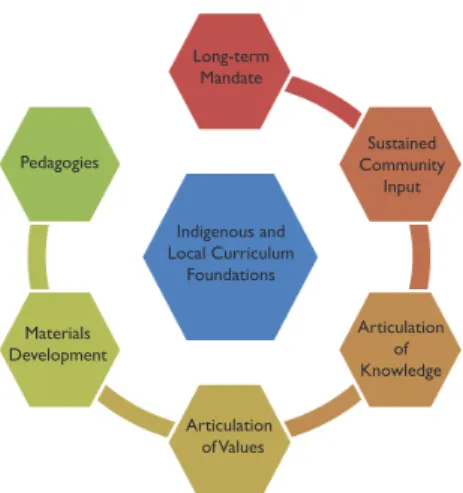
in the critical period of 1985 to 2007, during which time Nunavut separated from the Northwest Territories and created its own self-government. McGregor, who is white but grew up in the North and calls it home, shows how with each successive change, curriculum content has moved towards a deeper ap-propriation of Inuit knowledge. The 2007 curriculum is most explicit about how elders will help young people not only understand the past but navigate the present. McGregor emphasizes the importance of entrenching Inuit beliefs and values in the curriculum, articulation of values being one of a six-pronged approach to actualizing and sustaining an Inuit vision of curriculum; the other five are: long-term mandate, sustained community involvement, articulation of knowledge, material development, and attention to pedagogies.
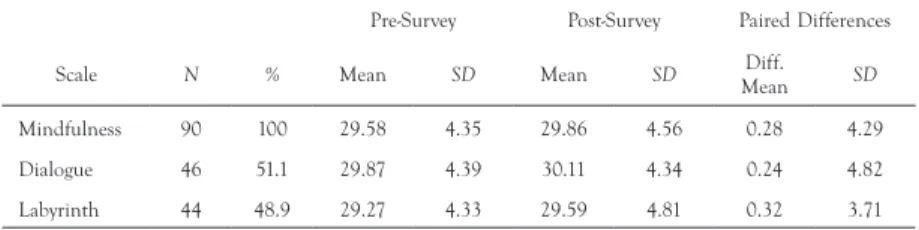
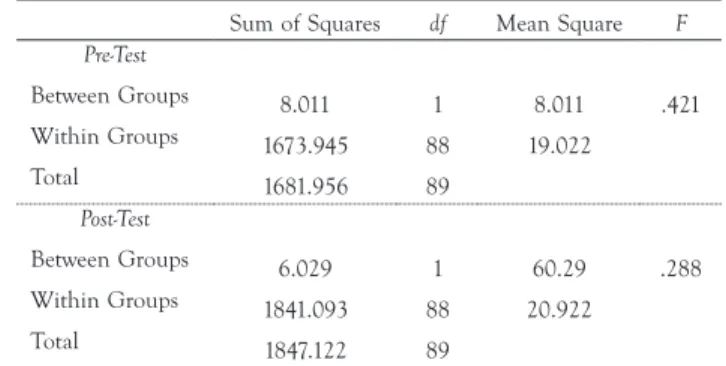
Stewart and Altruz draw our attention to the importance of creating holistic learning experiences aimed at cultivating meaningful connections between action and reflection in their article, “Comparison of the Effects of Reflec-tion and ContemplaReflec-tion Activities on Service-Learners’ Cognitive & Affective Mindfulness.” This research looks at the effects of individually directed con-templation and reflective dialogue activities on elementary students’ conceptual and affective mindfulness. Study participants were 5th-grade students who had completed an environmental science, service-learning program as part of their science curriculum. Stewart and Altruz were particularly interested in investigating the extent to which service-learners’ mindfulness is affected by engagement in reflective dialogues with their peers and individual contempla-tion activities (e.g., labyrinth tracing). Although they did not find any statisti-cally significant differences between the two treatment groups, the authors report that each group’s mindfulness score increased on the post-test. Given the current emphasis on high-stakes testing and accountability, these kinds of holistic learning experiences are important to support children’s affective and social development. Stewart and Altruz suggest that infusing contemplative and reflective practices into the curriculum would promote students’ reflective thinking and mindfulness.
Harrison, Lautensach and McDonald’s “Moving from the Margins: Culturally Safe Teacher Education in Remote Northwestern BC” uses three different per-spectives from which to contribute to culturally safe places in a Northwestern British Columbia teacher education program, in which 55% of the school population is Indigenous and 7 of the 29 student teachers in the cohort under consideration were Indigenous. By culturally safe, the authors mean “grow-ing beyond reflect“grow-ing on one’s own cultural identity and the impact of that identity on one’s practice, into acknowledging the dynamics in cross-cultural identities over time, and appreciating the diversity of the lived experiences in Northwest BC.” They arrive at this definition through reflection on three ‘program interventions’: one involving space (re-conceiving the territory on which course content is taught; re-conceiving the occupation of space in the university classroom), one involving discussion of how values influence
teach-ing and learnteach-ing through the hidden curriculum, and a third involvteach-ing the use of action research projects to help teachers address issues and questions arising from their own experiences of cultural safety within the teacher educa-tion program. The article addresses various “on the ground” ways in which programs can become more accountable to the populations they serve while also deepening and extending the learning process for all.
Loughland and Bowen reflect upon the deployment of action research in pre-service teacher education at the University of Sydney, Australia, where student teachers completed an action research subject simultaneously with their 9-week internship. Their article, “Action Research Built on Uncertain Foundations: The Internship and Action-Research in a Graduate Teaching Degree” results from a teacher-student / colleague conversation sustained over two years. The authors, from their respective perspectives as a graduate of the Master of Teaching program (Bowen) and the program coordinator (Loughland), analyze structural factors that constitute what they view as “uncertain foundations” of the action research capstone. In doing so, they also interrogate the sus-tainability of action research as a method, goal or underpinning foundation for teacher education in an age of increased compliance enforced through the audit culture of the graduate teacher standards in Australia. In reflecting on the implications for the use of action research as a pedagogy of teacher education, Loughland and Bowen argue that action research would be more authentic if a phronetic model of teacher education underpinned the entire program rather than just the final internship.
In their article, “Developing Communities of Praxis: Bridging the Theory Practice Divide in Teacher Education,” Anderson and Freebody outline the development and evaluation of a professional experience program run in the Drama Curriculum units, also at the University of Sydney. They contend that teacher education, like all professional disciplines, is in a constant struggle to remain relevant to the profession it prepares students for. The program dis-cussed here was developed to respond to the concern that there is a dichotomy between educational theory and practice in supporting the development of beginning teachers. The program, known as the community of praxis approach, is informed by the community of practice model (Lave and Wenger, 1991) and understandings of praxis (Freire, 1972). The authors explore the evaluation data to make comments about the ability of the approach to: reconcile theory and research in education with the everyday practice of teaching, help pre-service teachers develop their identity as drama teachers, and build understanding of the importance of reflective practice in Drama education.
In “Negotiating Worlds, Words and Identities: Scaffolded Literacies for Pre-service Teachers and Children,” Cumming-Potvin critiques current “back to basics” literacy policy and curriculum changes, also in Australia, and advocates for deeper and more complex conceptualizations of pre-service teacher identity
in light of the multiple contexts in which they encounter literacy. In particular, she identifies the importance of scaffolding to identity construction: scaffolding of pre-service teachers by one another as well as by teacher educators; pre-service teachers’ scaffolding of their learning through literacy interactions with their children (by extension, their students). Cumming-Potvin uses Gee’s theory of multiple selves to show how teachers negotiated their identities across three situations created by the study: scaffolded face-to-face learning, on-line learning, and interactions of the teachers (as parents) in shared-book reading experiences with their respective children. While all three situations yielded interesting results, Cumming-Potvin identifies asynchronous online discussion as most conducive to reflection over time as the teachers constructed a community of practice.
The current emphasis on inclusive and equal learning opportunities for all students in Canada inspired Sokal to investigate the attributes of inclusive educators in her contribution, “What are Schools Looking for in New, Inclu-sive teachers?” Through focused conversations with school administrators and inclusive educators from various school divisions (inner-city, suburban, and rural) in Manitoba, Sokal hoped to illuminate the essential knowledge base, skills, and dispositions that are deemed desirable in novice inclusive teachers. Strikingly, study participants did not identify any essential knowledge-base for inclusive educators. Rather, they emphasized the development of particular skills and attitudes, such as flexibility -- the ability to develop strategies that are effective within specific contexts in response to student needs; working as members of inter-dependent teams; and effective communication with colleagues and parents. Finally, the participants highlighted the importance of fostering a life-long learning and growth-seeking attitude in teachers. Sokal contends that a “specific knowledge base exclusive to inclusive teaching is non-existent” (p. 416) as “good inclusive teaching is simply good teaching intensified” (p. 416). Therefore, these skills and attitudes constitute vital elements of teacher education programs for inclusive educators.
In her article entitled, “An Empirical Study of the Career Paths of Senior Edu-cational Administrators in Manitoba, Canada: Implications for Career Develop-ment,” Wallin looks at the career paths of senior educational administrators in Manitoba. In exploring the various factors that shape senior administrators’ career trajectories, Wallin highlights the disproportionately low representation of women in senior administrative positions (i.e., superintendency). In her complex portrayal of this issue, Wallin reveals the intricate manner in which context, sex, and position interact to create career disparities between male and female administrators. Notably, these factors work together to “form queues based on leaves from service, and create discrepancies on the experiences of career supports and work challenges” (p. 421) The gendered norms and their implications are exemplified by various trends illuminated by this study. For instance, men avoided taking parenting leaves and were more likely to make
career decisions independently. Women administrators, on the contrary, were more likely to utilize “maternity leave clauses” and also tended to “follow their husband’s careers.” Further, women constantly struggle to find ways to balance family and career demands, while their male counterparts can focus more exclusively on their professional careers.
We hope that you will enjoy these scholarly perspectives on educational research and praxis and will consider contributing to these discussions either through your own submissions to the MJE, or by participating in the MJE Forum.
REFERENCES
Freire, P (1972) The pedagogy of the oppressed. Harmondsworth, UK: Penguin.
Lave, J., & Wenger, E. (1991). Situated learning: Legitimate peripheral participation. Cambridge, UK: Cambridge University Press.
ÉDITORIAL
N
ous désirons débuter cette édition, dont la publication coïncide presque avec la fin de notre deuxième année de mandat comme corédacteurs de la Revue des sciences de l’éducation (RSÉ) – ainsi qu’avec le second volume de la RSÉ dont nous pilotons le processus de publication – en remerciant nos réviseurs. Au cours de la cinquantaine d’années d’existence de la Revue, près de 2 000 réviseurs ont collaboré à la RSÉ (c’est ce que nous avons appris via un récent décompte). Or, ce n’est pas cet anonyme « 2 000 » dont nous désirons souligner la contribution aujourd’hui, mais bien chacun des invididus compo-sant ce nombre impressionnant. Ces collaborateurs à qui nous avons pu faire confiance, nous, les rédacteurs « inexpérimentés » durant les deux dernières années pour consacrer une partie de leur temps à fournir leurs commentaires sur des articles plus ou moins prêts pour publication. Ces chercheurs univer-sitaires (reconnus ou émergents), anglophones ou francophones, travaillent ou poursuivent des travaux de recherche au sein de diverses universités en Amérique du Nord ou autour du monde. Nouveaux venus dans le domaine de la rédaction journalistique, nous avons consacré bien peu de temps à réfléchir au processus de révision. Pour nous, il s’agissait d’un processus important du domaine universitaire, mais que nous tenions comme acquis. En deux ans, nous avons énormément appris grâce à nos réviseurs, acquis des connaissan-ces qui ont sans nul doute orienté nos pratiques comme réviseurs au sein de d’autres publications, incluant « être gentil », en respectant les délais, une petite mais fondamentale dimension du processus de révision/publication. Comme Anthony Paré, un ancien rédacteur de la RSÉ, le soulignait (45, 1), « la majeure partie des réviseurs consacrent un temps impressionnant à produire une révision réfléchie, souvent longue et détaillée, particulièrement dans un contexte où les réviseurs effectuent ce travail pour un même article non pas une, mais souvent deux fois. Un contexte où la valeur accordée à la révision académique (un fondement du processus de publication et duquel nous dépendons tous) perd rapidement son importance au profit de d’autres « priorités ». Un contexte où les réviseurs ont avantage à être sélectifs, dans lequel ils sont encouragés implicitement ou explicitement à choisir uniquement les mandats qui pourront avantageusement apparaître dans leur curriculum vitæ ou leur donner de la visibilité. Or, nous ne pourrions exister commerevue accessible à tous, révisée par les pairs – un espace commun invitant au dialogue académique et aux échanges sur des problématiques importantes en éducation au plan local, national et international – sans ce « service essentiel ». D’où l’importance de prendre le temps pour dire du fond du cœur : merci, réviseurs! Nous, à la RSÉ, apprécions tout le travail que vous faites pour nous et espérons pouvoir faire appel à vous dans le futur. Nos meilleurs vœux pour la prochaine année!
Cette édition de la Revue des sciences de l’éducation de McGill (RSÉ) comporte huit articles et troiscritiques de livres offrant des perspectives diverses et éclai-rées sur un éventail de problématiques en éducation. Fidèle à la tradition de la RSÉ de susciter des débats animés sur de multiples aspects de l’éducation, ces articles font évoluer notre pensée, nos recherches et nos pratiques. Ils permet-tent donc de mieux supporter la formation et l’intégration des enseignants et le lien créatif entre la communauté, l’éducation et l’apprentissage ainsi que de mieux comprendre les disparités existantes entre les sexes lorsqu’il est question du leadership dans le domaine de l’éducation au 21e siècle.
Par ailleurs, nous attirons votre attention sur la variété d’approches théoriques et empiriques et d’outils présentés par ces articles, tous des contributions au milieu de la recherche en éducation. Les paradigmes et les méthodologies de recherche couvrent la recherche qualitative, la recherche-action, les mé-thodologies diverses, la recherche quantitative, l’analyse critique, les longues conversations réflexives et les groupes de discussion. Bien que provenant d’Australie, trois des articles présentent – comme tous les autres articles – des données ayant des implications au niveau international ou encore, pour d’autres communautés ou juridictions.
Plusieurs articles soulignent l’importance de cultiver des valeurs d’efficacité lorsqu’il s’agit de modifier les programmes d’enseignement. Alors que McGre-gor recommande de créer des programmes ancrés dans leurs communautés respectives et en reflétant les connaissances et les valeurs, Stewart et Altruz mettent en lumière la pertinence de combiner les services communautaires à des activités de réflexion encourageant la conscience cognitive et affective des apprenants. Appliquant cette notion à la formation des enseignants, Harrison, Lautensach et McDonald précisent de quelle manière les valeurs inspirent l’éla-boration d’initiatives visant à mettre en place des expériences d’enseignement et d’apprentissage culturellement sécuritaires en contexte de formation des enseignants. En fait, ils soulignent l’importance d’utiliser la recherche-action pour impliquer les enseignants dans un processus d’analyse et de réflexion concernant leurs expériences de sécurité culturelle. La recherche-action consti-tue également un outil efficace dans l’atteinte d’une pratique authentique en formation des enseignants, comme l’expriment Loughland et Bowen dans leur article. De façon similaire, Anderson et Freebody affirment qu’une approche de communauté de praxis est fondamentale pour allier la théorie et la pratique
au sein des programmes de formation professionnelle destinés aux futurs et aux nouveaux enseignants. Cummings-Potvin et Sokal partagent aussi leurs points de vue sur la manière de soutenir le développement des enseignants en créant des communautés de pratique significatives. Ainsi, soutenir l’apprentissage et la formation de l’identité des enseignants à l’aide d’interactions en littératie avec leurs enfants, leurs collègues et des experts et de collaborations facilitant la réflexion favorise, selon les auteurs, le développement des communautés de pratique. De même, les travaux de Sokal montrent que la possibilité de travailler au sein d’équipes interdépendantes et collaboratives constitue un facteur critique au soutien de l’apprentissage et de la croissance des nouveaux enseignants en milieu inclusif. Wallin adopte un angle différent, levant le voile sur les graves disparités prévalant entre les sexes lorsqu’il s’agit des postes de direction en éducation, disparités de nature à entraver le type de praxis ou de communauté mis en place ou recherché et décrit dans les autres articles de cette édition. Wallin exprime des inquiétudes particulières en ce qui a trait à la representation excessivement faible des femmes dans les postes de direction senior. De courts résumés de chacun des articles suivent.
Heather McGregor, dans son article, « Changement des programmes au Nunavut : vers l’Inuit Qaujimajatuqangit », nous introduit aux changements de programme initiés de 1985 à 2007, une période critique dans le nord canadien, période durant laquelle le Nunavut s’est séparé des Territoires du Nord-Ouest et a créé son propre gouvernement. McGregor, une Blanche ayant grandi dans le Nord et s’y sentant chez elle, démontre comment les change-ments successifs ont insufflé aux programmes une compréhension de plus en plus approfondie du savoir inuit. Ainsi, le programme de 2007 explique de manière plus explicite de quelle facon les aînés peuvent aider les jeunes non seulement à comprendre le passé mais aussi à mieux vivre dans le présent. McGregor souligne l’importance de refléter les croyances et les valeurs inuit dans le programme, ce qui constitue un des six axes d’une approche visant à actualiser et maintenir une vision inuit des programmes. Les cinq autres dimensions sont un mandat à long terme, une implication communautaire soutenue, l’articulation des connaissances, le développement matériel et une attention particulière aux méthodes pédagogiques.
Quant à Stewart et Altruz, ils attirent notre attention sur l’importance d’initier des expériences d’apprentissage holistiques cherchant à entretenir des liens significatifs entre l’action et la réflexion avec leur article « Comparaison des effets des activités de réflexion et de contemplation sur la conscience cognitive et affective des apprenants par le service communautaire » Cette recherche examine les effets de la contemplation dirigée individuellement et des activités de réflexion par le dialogue sur le niveau de conscience conceptuelle et affective d’élèves du primaire. Les participants à l’étude étaient des élèves de 5e année ayant complété une expérience de service communautaire en science envi-ronnementale dans le cadre de leur programme de sciences. Stewart et Altruz
étaient particulièrement intéressés à étudier jusqu’à quel point la conscience des apprenants est influencée par l’obligation de prendre part à des dialogues axés sur la réflexion avec leurs pairs et à des activités individuelles de contemplation (c.à.d. création de labyrinthes). Même s’ils n’ont pas découvert de différences statistiquement significatives entre les deux groupes expérimentaux, les auteurs signalent que le résultat relatif au niveau de conscience de chaque groupe a augmenté lors du post-test. Considérant l’accent actuellement mis sur les tests standardisés et la reddition de comptes, ce type d’expériences holistiques de-vient important pour soutenir le développement affectif et social des enfants. Stewart et Altruz recommandent d’intégrer des pratiques de contemplation et de réflexion au sein des programmes, afin d’encourager la pensée réflexive et la conscience chez les élèves.
Harrison, Lautensach et McDonald, dans leur article « Sortir de la marge: une formation culturellement sécuritaire des enseignants dans le lointain nord de la Colombie-Britannique » présentent trois perspectives différentes pouvant contribuer à créer des lieux culturellement sécuritaires au sein d’un programme de formation des enseignants offert dans le Nord-ouest de la Colombie-Britannique. Dans ce programme, 55% des étudiants et 7 des 29 enseignants de la cohorte à l’étude sont autochtones. Les auteurs définissent le concept de « culturellement sécuritaire » comme « aller au-delà de l’image renvoyée par leur propre identité culturelle et de l’effet de cette identité sur leurs pratiques pour reconnaître les forces des identités interculturelles au fil du temps et apprécier la diversité des expériences vécues dans le Nord-ouest de la Colombie-Britannique. » Ils formulent cette définition en analysant « trois initiatives du programme ». Une implique l’espace (repenser le territoire sur lequel le contenu du cours est enseigné; repenser l’utilisation de l’espace dans la salle de cours), une autre fait référence à une discussion de la manière dont les valeurs influencent l’enseignement et l’apprentissage via le programme informel et une dernière concerne l’utilisation de projets de recherche-action pour aider les enseignants à faire face aux problématiques et questions relatives à leurs propres expériences de sécurité culturelle au sein du programme de formation des enseignants. Cet article aborde différentes manières provenant « du terrain » pouvant être déployées dans les programmes pour rendre des comptes aux populations desservies tout en approfondissant et en élargissant le processus d’apprentissage de tous.
Loughland et Bowen effectuent une réflexion sur le déploiement de la recherche-action, telle qu’utilisée dans la formation des futurs enseignants à l’Université de Sydney, en Australie, où les étudiants en enseignement effectuent un projet de recherche-action au cours d’un stage de 9 semaines. Leur article, «Recherche-action élaborée sur des bases incertaines: le stage et la recherche-action dans les programmes de maîtrise en enseignement » est le résultat de conversations fréquentes entre un étudiant en enseignement et un collègue pendant deux ans. À partir de leurs perspectives d’étudiant gradué
du programme de maîtrise en enseignement (Bowen) et de coordonnateur de programme (Loughland), les auteurs ont analysé les facteurs structurels qui constituent ce qu’ils considèrent les « bases incertaines » des fondements de la recherche-action. Ce faisant, ils questionnent aussi la viabilité de la recher-che-action comme moyen, but ou fondement sous-jacent à la formation des enseignants, à une époque où la culture de vérification amène les enseignants à la maîtrise en Australie à préconiser une conformité accrue aux standards. Réfléchissant aux implications de l’utilisation de la recherche-action comme méthode pédagogique en formation des enseignants, Loughland et Bowen avancent que la recherche-action serait plus authentique si un modèle phro-nétique de la formation des enseignants soutenait le programme dans son ensemble plutôt que seulement le dernier stage.
Dans l’article « Développer des communautés de pratique: combler le fossé entre la théorie et la pratique au sein de la formation des enseignants », An-derson et Freebody passent en revue le développement et l’évaluation d’un programme d’expérience professionnelle proposé à l’Université de Sydney, dans le cadre des unités de son programme d’art dramatique. Ils soutiennent que la formation des enseignants, comme c’est le cas dans toutes les professions, vit un combat constant pour demeurer pertinente en regard du domaine pour lequel elle prépare ses élèves. Le programme dont il est question dans ce texte a été développé pour répondre à l’existence problématique d’une dichotomie entre la théorie et la pratique éducationnelles pour soutenir le développement des nouveaux enseignants. Ce programme, nommé commu-nauté de pratique, s’inspire du modèle de la commucommu-nauté de pratique (Lave et Wenger, 1991) ainsi que des concepts de praxis (Freire, 1972). Les auteurs explorent les données d’évaluation pour formuler des commentaires sur l’ap-titude à: réconcilier la théorie et la recherche en éducation avec les besoins de la pratique quotidienne de l’enseignement, soutenir les futurs enseignants dans le développement de leur identité comme enseignants en art dramatique et à élaborer une compréhension de l’importance de la pratique réflexive en enseignement de l’art dramatique.
Dans « Négocier les mondes, les mots et les identités: soutien à l’apprentissage des littératies pour les futurs enseignants et les enfants » Cumming-Potvin remet en question la tendance actuelle de « retour aux sources » prônée dans les politiques de littératies et les changements de programmes et ce, même en Australie. Elle milite également pour des conceptualisations plus approfon-dies et complexes de l’identité des futurs enseignants, en tenant compte des contextes divers dans lesquels ils sont en contact avec la littératie. De façon particulière, elle identifie l’importance du soutien à l’apprentissage dans la mise en place de l’identité: le soutien des futurs enseignants apporté les uns aux autres ou offert par leurs enseignants; le soutien des futurs enseignants à leur apprentissage via des interactions littéraires avec leurs enfants (et leurs élèves). Cumming-Potvin s’inspire de la théorie des multiples identités de Gee
pour montrer de quelle manière les enseignants négocient leurs identités à travers les trois situations présentées dans le cadre de l’étude: soutien à l’ap-prentissage face-à-face, apl’ap-prentissage en ligne et interactions des enseignants (comme parents) dans des expériences de lecture partagée avec leurs enfants. Même si les trois situations démontrent des résultats intéressants, Cumming-Potvin identifie les discussions asynchrones en ligne comme plus propices à la réflexion. En effet, au fil du temps celles-ci permettent aux enseignants d’établir une communauté de pratique.
À l’heure actuelle, l’accent est mis sur l’offre d’opportunités d’apprentissage égales et dans un contexte d’inclusion et ce, à tous les élèves du Canada. Cette tendance a incité Sokal à étudier les caractéristiques des enseignants favorisant l’inclusion dans son article « Que recherchent les écoles chez les nouveaux en-seignants dans un contexte d’inclusion? » Se basant sur des discussions ciblées réalisées avec des administrateurs et des enseignants œuvrant dans un contexte d’inclusion et issus de diverses divisions scolaires (urbaines, de banlieue, rurales) au Manitoba, Sokal espère mettre en lumière les connaissances fondamentales, habiletés et attitudes considérées comme des atouts chez des enseignants recrues dans un milieu scolaire inclusif. Étonnamment, les participants à l’étude n’ont pas identifié de connaissances de base fondamentales pour les enseignants dans un contexte d’inclusion. Ils ont plutôt mis l’emphase sur le développement de compétences et d’attitudes particulières telles que la flexibilité – l’habileté à développer des stratégies efficaces dans certains contextes et selon les besoins des élèves – la collaboration en tant que membre d’équipes interdépendantes et la communication efficace avec les collègues et les parents. Finalement, les participants ont souligné l’importance de valoriser la formation continue et une attitude positive à l’égard du développement professionnel chez les ensei-gnants. Sokal soutient qu’une « bassin spécifique de connaissances propres à l’enseignement en milieu inclusif n’existe pas » (p. xx) puisque l’enseignement en contexte d’inclusion est simplement de l’enseignement où l’on redouble d’efforts » (p. xx). Conséquemment, ces compétences et attitudes sont des éléments fondamentaux des programmes de formation des enseignants pour ceux qui œuvrent dans un milieu d’apprentissage inclusif.
Dans son article intitulé, « Étude empirique du parcours professionnel des cadres supérieurs au Manitoba, Canada: Implications pour le développement professionnel » Wallin analyse le parcours professionnel d’administrateurs scolaires senior au Manitoba. Explorant les divers facteurs qui façonnent la trajectoire professionnelle des cadres supérieurs, l’auteure met en lumière la très faible représentation des femmes au sein des positions administratives supérieures (c.à.d. direction). Dressant un portrait complet de cette problémati-que, Wallin révèle la manière complexe dont le contexte, le sexe et la position hiérarchique entrent en relation pour créer des écarts professionnels entre les administrateurs masculins et féminins. Notamment, ces facteurs interagissent, « formant des files d’attente alimentées par les départs et créant des divergences
entre les outils de développement de carrière et les défis de l’emploi » (p. xx) Les règles liées au sexe de l’employé et leurs implications sont illustrées par des exemples de diverses tendances mises en lumière par cette étude. Par exem-ple, les hommes évitaient de profiter des congés parentaux et prenaient plus fréquemment leurs décisions professionnelles de manière indépendante. Au contraire, les administrateurs de sexe féminin étaient plus enclines à utiliser les « clauses reliées aux congés de maternité » et avaient aussi tendance à « suivre la carrière de leur mari » Par ailleurs, les femmes recherchent constamment comment équilibrer les exigences familiales et professionnelles, alors que leurs confrères masculins se concentrent plus exclusivement sur leur carrière. Nous espérons que vous apprécierez les points de vue apportés par nos auteurs sur la recherche et la pratique éducationnelles et que vous contribuiez aux discussions, en soumettant vos écrits à la RSÉ ou encore en participant au forum de discussion de la Revue.
RÉFÉRENCES
Freire, P (1972) The pedagogy of the oppressed. Harmondsworth, UK: Penguin.
Lave, J., & Wenger, E. (1991). Situated learning: Legitimate peripheral participation. Cambridge, UK: Cambridge University Press.
CURRICULUM CHANGE IN NUNAVUT: TOWARDS
INUIT QAUJIMAJATUQANGIT
HEATHER E. McGREGOR University of British Columbia
ABSTRACT. Between 1985 and the present, curriculum developers, educators and Elders in Nunavut have been working towards reconceptualization of cur-riculum to better meet the strengths and needs of Inuit students and to reflect, preserve, and revitalize Inuit worldview, language, and culture. This article out-lines the development of the 1989 curriculum framework Piniaqtavut, the 1996 framework Inuuqatigiit: The Curriculum from the Inuit Perspective, and the 2007 foundation document Inuit Qaujimajatuqangit: Education Framework for Nunavut Curriculum. It goes on to describe the cross-curricular principles and philosophies of education in Nunavut, and identify the most important contributing factors in this system-wide curriculum change process. The intent is both to describe the approach taken in Nunavut, as well as to inform comparable work in other Indigenous contexts.
CHANGEMENT DES PROGRAMMES AU NUNAVUT: VERS L’INUIT QAUJIMAJATUQANGIT
RÉSUMÉ. Depuis 1985, des développeurs, des éducateurs et des aînés du Nunavut travaillent à la refonte des concepts des programmes et ce, afin de mieux répondre aux forces et besoins des élèves inuit. Ils veulent également refléter, préserver et redonner vie à la vision du monde, à la langue et à la culture inuit. Cet article explique le développement du programme d’études Piniaqtavut (1989), du programme Inuuqatigiit: Un programme d’études à partir d’une perspec-tive inuit (1996) et du document fondateur Inuit Qaujimajatuqangit: le cadre d’éducation pour le curriculum du Nunavut (2007). Par la suite, l’auteur décrit les principes des compétences transversales et les philosophies de l’éducation au Nunavut. Elle identifie les facteurs ayant le plus contribué à ce processus de transformation des programmes dans l’ensemble du système. L’objectif est d’à la fois décrire l’approche préconisée au Nunavut et de présenter des travaux comparables, réalisés dans d’autres contextes autochtones.
Schooling in Nunavut should provide support to students in all areas of their develop-ment so that they can achieve personal goals, become well-equipped to contribute and serve their families and communities, demonstrate leadership and healthy attitudes, and be able to actively participate and contribute as Nunavut takes on new roles in the global community. (Nunavut Department of Education, 2007, p. 17)
T
he rich history of curriculum change in Nunavut, oriented towards de-livery of education based on Inuit ways of knowing, being, doing and sense of place, is relatively unknown to educational scholars. While the call, and need, for quality curriculum and learning materials continues (Inuit Tapiriit Kanatami [ITK], 2011), there is much good work to be considered, and many foundational steps have been taken to guide the emergence of new ways of teaching and learning within the school system. Using documentary sources and historical analysis, the question I explore here is: how have Inuit and Northerners in Nunavut gone about creating a curriculum based on local perspectives and Inuit Qaujimajatuqangit (IQ), which “encompasses all aspects of traditional Inuit culture, including values, world-view, language, social organization, knowledge, life skills, perceptions and expectations” (Nunavut Social Development Council, 1998, p. 1)?Inuit are an Indigenous people, distinct from First Nations or Metis peoples, who for the most part live across the Canadian Arctic. The Inuit homeland of Nunavut was recognized by Canada in 1999 as a separate territory, in conjunction with the settlement of a land claims agreement specifying rights and benefits for Inuit residing in the region. The mechanisms of the public territorial government have been leveraged to set mandates for services, includ-ing education, that privilege Inuit language1 and culture. Self-determination is now in the implementation phase, unlike many Indigenous peoples in North America whose position in relation to their respective states remains less clear. It is within this distinctive context that I will outline the develop-It is within this distinctive context that I will outline the develop-ment of the 1989 curriculum framework Piniaqtavut (Baffin Divisional Board of Education, 1989), the 1996 framework Inuuqatigiit (Department of Educa-tion, Culture and Employment, 1996), and the 2007 foundation document Inuit Qaujimajatuqangit: Education Framework for Nunavut Curriculum (Nunavut Department of Education, 2007). I will conclude by identifying some of the most important contributing factors to this deep and system-wide curriculum change process, which help to describe the approach taken in Nunavut, as well as inform comparable work in other Indigenous contexts.
LOCATING MYSELF
I am a white Northerner who attended school in Nunavut, my parents are long-term northern educators, and I have worked for the Department of Education coordinating various system-wide change implementation projects associated with the 2008 Nunavut Education Act. Having grown up in a region of Canada
where an Indigenous population forms the majority, I have experienced many moments of questioning my role in shifting power dynamics between Inuit and non-Inuit in the Arctic.2
For example, I recently participated in writing a social studies module for grade 10 students in the Northwest Territories and Nunavut on the history of northern residential schools (Nunavut Department of Education & Northwest Territories Department of Education, Culture and Employment, 2012). I also contributed to in-servicing teachers on facilitating learning through this difficult topic. Residential school histories bring to the surface the role schooling played in colonization and settlement, and illustrate the intergenerational impacts in northern communities. Current school staff members are being asked to teach northern youth about how government representatives and settlers had a role in disrupting traditional forms of Indigenous education, attempting to assimilate students, and a great deal more. Doing this work raises many questions about identities and legacies, such as: what brought newcomers to the North, what keeps them there, and what effect has that had on northern Indigenous peoples? Particularly on the part of non-Indigenous teachers and education staff such as myself, this work calls for a careful balance of respect and sensitivity in listening, as well as willingness to actively engage in discus-sions about responsibility, compensation and reconciliation. I have seen and experienced hurt and disagreements in these conversations. Nevertheless, I view the role of schools in supporting this learning as integral to the possibility of nurturing different relationships between Indigenous and non-Indigenous people in the present and future.
I believe educational scholarship with Nunavut communities will be strengthened as more Inuit and long-term northern educators take up research questions directly relevant, or vital, to the school system, through respectful cross-cultural dialogue. Educational histories related to residential schools, curriculum re-form, or other topics may then become resources useful to historicizing and contextualizing such research. I continue to call Nunavut my home, and I feel a deep responsibility and commitment to the people and place. I would like to recognize all those whose work and knowledge is reflected in telling this story of curriculum change in Nunavut, and from whom I have had the opportunity to learn – including, most importantly, my parents.
SITUATING NUNAVUT EDUCATIONAL HISTORY WITHIN INDIGENOUS EDUCATION IN CANADA
The emphasis here on place is intended to distinguish Inuit education in Nunavut from generalizations often made about Indigenous education across Canada. Colonization began later in the Arctic and manifested in different ways. The four Inuit regions are governed under land claims with the federal government, and most persons living in the Inuit homelands experience life
significantly shaped by Arctic conditions. The majority Inuit population in Nunavut maintains relative cultural and linguistic identification and solidar-ity despite vast geographic dispersal. Inuit educational history in Nunavut is distinct because of: the heritage of regional school board engagement in edu-cational change prior to the creation of the Nunavut government, the political accomplishment of the land claim, and the current territorial mandate for Inuit education within a public system. Fewer compromises or conflicts have resulted from adversarial relationships between Indigenous and non-Indigenous parents, communities, and expectations as in other Canadian regions. Nunavut history has been marked by huge change, in speed and degree, in terms of education as well as across other realms of society (Simon, 2011; Tester & Irniq, 2008). Inuit have endured this “totalizing” change (Tester & Imiq, 2008), and are now taking significant steps such as passing made-in-Nunavut education legislation privileging Inuit interests (McGregor, 2012).
While I think it is important to engage in theoretical and practical conversa-tions that draw comparisons between Indigenous communities, and between Indigenous and non-Indigenous peoples, I will not emphasize that here. Nunavut deserves recognition for the significant educational change efforts that have been a feature of administration, policy-making, and curriculum development since the dream of Nunavut was born. This overview is intended to support more informed discussion and comparison between places and peoples in the future. Lastly, while I focus on curriculum framework documents, there are innumerable other aspects of the education system that warrant further study. Indeed, analysis of northern curriculum development processes with more detailed commentary from those who participated in the work, would add a great deal to this conversation.
Briefly, then, there is considerable resonance between the curriculum develop-ment initiatives featured here and the approaches to culturally responsive education advocated by Ray Barnhardt and Oscar Kawagley in the context of Alaska (Barnhardt & Kawagley, 2005; Kawagley & Barnhardt, 1998). This resonance is in terms of the relationship between Indigenous education and place, the balancing act of engaging with both Indigenous and Western systems of knowledge in a “two-way transaction” (Barnhardt & Kawagley, 2005, p. 9), the importance of beginning instruction with concepts and activities familiar to the students, and the insistence that students not be required (actively or passively) to give up or leave behind their rights, language, identities, histor-ies and worldviews in order to participate in schools and universithistor-ies. Marie Battiste and James Henderson have theorized such comprehensive efforts at rethinking, decolonizing and infusing the education system with Indigenous knowledge as “naturalizing” (Battiste & Henderson, 2009, p. 14-16). These educational paradigm shifts gain momentum and solidarity from national and international Indigenous education initiatives, but they are fundamentally lo-cal changes that must be conceived and implemented in relationship to place
(Battiste & Henderson, 2009; Marker, 2011). The insights offered in Jo-Ann Archibald’s (2008) description of a First Nations story-based curriculum de-velopment process in British Columbia share a great deal in common with the work being undertaken to create teaching and learning units in Nunavut. However, the scope of curriculum change in Nunavut is different, involving all public school programs from kindergarten to grade 12, in all subject areas, and with the requirement to teach and learn in two languages.
The curriculum development initiatives led by Inuit in the eastern Arctic have received little attention from scholars, and are rarely framed by Northern-ers in the language or theory of a greater Indigenous education movement. Nonetheless, I would argue that such work exemplifies the kind of place-based, culturally-responsive, and Indigenous-knowledge based educational change called for by Indigenous education advocates elsewhere in North America (Battiste, 2010; Battiste & Henderson, 2009; Castagno & Brayboy, 2008).
Having survived – and still surviving – colonization, engaged in the struggle towards decolonization, named and begun the deconstruction of cognitive imperialism (Battiste, 2000) in educational institutions, and pursued Indigen-ous educational decision-making in policy and practice, IndigenIndigen-ous peoples are now documenting and deepening understandings of their knowledge systems. This work serves to enliven and activate Indigenous knowledges in education – contexts where it is necessary to continuously withstand and resist the hegemony of Western knowledge systems (Marker, 2004). Frank Tester and Peter Irniq3 (2008) have referred to this process as a rejuvenating social history exploration:
Rediscovering and rearticulating [the Inuit] worldview is a task best under-taken by Inuit, and it contains the possibility of rejuvenating and invigorat-ing Inuit culture and relations between youth and elders. Such an exercise involves an important exploration of Inuit social history, which includes a history of resistance to, as well as compliance with, the edicts of a coloniz-ing culture. (p. 58)
Indigenous curriculum frameworks, the metaphors that often accompany them, and the values-based, holistically-oriented student competencies that emerge from such work may still be questioned and criticized as simplistic, irrelevant or quaint when viewed through often hegemonic Western and Eurocentric lenses. Rather, such frameworks and conceptual tools are fundamental in the hard work of envisioning and continuing to imagine, deliver, and assess education from different ways of knowing, being, and doing. Nunavut has many stories to contribute to this movement across the North and across Canada.
HISTORICAL CONTEXT
Elsewhere I have described the history of education in Nunavut in more detail (McGregor, 2010). What is important to note here is the condensed
nature of this educational and colonial history. In the early decades of the 20th century, traditional Inuit education was occurring much as it had within hunter-gatherer societies in the North for centuries. Education was integrated into the daily lives, daily responsibilities and daily relationships within families. This approach to education resulted in a set of competencies, worldview and knowledge base now distinguished as Inuit Qaujimajatuqangit (IQ) and will be discussed in more detail below. In simplified terms, the most critical aspects of Inuit education were environmental knowledge, experiential learning, caring between teacher and learner, and family control over childrearing.
In terms of Inuit history in general, Tester and Irniq (2008) have asserted:
There is likely no other group of indigenous people in the world that has made such a transition – from scattered hunting camps to settlements steeped in the organizational logic and material realities of high modernism – in such a short time (from ca. 1955 to 1965). (p. 57)
The comparatively short colonial period, fast pace of change, and the era in which this change was experienced by Inuit sets their history apart from most Indigenous peoples elsewhere in North America (Simon, 2011).
While the timing and pace of change in the Arctic left Inuit extremely vulner-able, it also offered opportunity. Only approximately twenty years – fewer for some – passed between the time of their permanent settlement, engagement with schooling and the beginning of their political mobilization toward self-determination. The transfer of administrative responsibility for education from the federal government to the Northwest Territories (NWT) occurred in 1969-70. Without a substantial non-Inuit student population or substantial public expectation that schooling be “multicultural” or “culture neutral,” public schools in the Arctic could move in the direction of respecting and recognizing Indigenous language and culture with fewer constraints.4
Education underwent significant transition after the 1982 report Learning: Trad-ition and Change (LTC), produced by the Special Committee on Education for the Northwest Territories Legislative Assembly. The landmark report involved extensive public consultations conducted in 34 communities; it was the first time parents were formally and systematically consulted on their children’s education. What they asked for was more local control. Territorial legislation followed, giving education authorities more flexibility to recognize the vastly different views of education existing between Inuit and other Indigenous peoples within the NWT. By 1985 local authorities with greater responsibilities were organized to form regional boards of education. This combination – of parental and community control over local schools and representation at the regional level to participate in policy decisions and input into curriculum and programs – offered Inuit the opportunity to envision their own system of education. In doing so, they largely chose to identify and integrate the
import-ant aspects of Inuit education, such as traditional environmental knowledge, experiential learning opportunities, and Elders as teachers.
Historically, Canada’s northern territories have relied on borrowing curriculum from other jurisdictions (depending on the subject and grade level), with some adaptations and additions, due to their lower administrative and development capacity, and the need to uphold standards recognized by post-secondary insti-tutions across Canada. However, when educational administration underwent the transition to regional decision-making curriculum, developers and com-munity members in Nunavut began to reconceptualize curriculum to better meet the strengths and needs of Inuit and Northern students, as well as to reflect, preserve and revitalize Inuit worldview, language and culture. These long-term political commitments and administrative mechanisms, oriented to reconceptualizing curriculum from local and Inuit perspectives, are crucial to mobilizing the necessary opportunities to facilitate educational change; a process that is extremely time and resource intensive, particularly when using holistic, bilingual, and community-based approaches.
Following creation of the Nunavut government, educational decision-making policy and administration changed again with the closure of school boards and the transfer of responsibilities to district (community) education authorities or regional and territorial Department of Education offices. This division of responsibilities was in flux during the development of new education legislation passed in 2008, which is still in the process of being implemented. During this time local control, or more specifically the ability of parents to have a say in education, has been the subject of some debate (McGregor, 2010; 2012). In the meantime, curriculum development has proceeded with notable participation of educators and Elders from around Nunavut.
The documents chosen for analysis form the major milestones in work com-pleted in the eastern Arctic region of Baffin (now called Qikiqtani) and later Nunavut. I examined them for articulation of knowledge, values and pedagogy, considering to what extent the contents reflected or diverted from ideas about knowing, being and doing informed by Inuit Qaujimajatuqangit. Each, in its own time, was ground-breaking and contributed to subsequent work, but I do draw conclusions about their strengths and limitations in terms of a con-temporary view. Each document lists a large development team – dozens of authors and collaborators, most of whom are Inuit – without distinguishing between individual contributions and thereby presenting collective authorship. The names of individual educators and Elders involved therefore do not ap-pear here, because I intend to honour the spirit of collective authorship as I understand it to be practiced by the people involved.
CURRICULUM DEVELOPMENT BEFORE NUNAVUT
Piniaqtavut
In 1989, the Baffin Divisional Board of Education (BDBE) published Pin-iaqtavut, a framework document for grades K-9 designed to give shape to a number of northern teaching units. The BDBE was the first Inuit board of education in the NWT. It took a leadership role in establishing policy and programs in support of Inuit education and it served the biggest (population and geographic) region of what is now Nunavut. Piniaqtavut was developed in response to what was considered to be “clear direction” from parents in the region that education should centre on topics related to the North, respect for Elders, and maintenance of traditional skills (BDBE, 1989, p. i). The Pin-iaqtavut development committee involved a large number of Inuit educators working bilingually. This group articulated teachers’ growing concerns about the southern perspective embedded in most curricula, the large volume and fast pace of mandatory content, and the lack of resource materials for teaching in the Inuit language. To determine what knowledge and skills schools should be teaching according to Inuit, most households in every Baffin community were surveyed and a draft of the resulting document was circulated to each community’s district education council. Through carrying out such consultation, and referencing it in their publications, BDBE demonstrated its commitment to cooperatively developing a paradigm for Inuit knowledge to be used in schools, as well as local involvement in educational decision-making.
Piniaqtavut was intended to provide “learning experiences which reflect the cultural and linguistic strength of the Inuit” (BDBE, 1989, p. i). The major goals of education to be realized are listed as: bilingual communication skills, pride in cultural identity, responsibility, and independence. All topics or cat-egories of content that are viewed as important to Inuit are organized under four headings: Community; Land; Sea; and Sky. The narrative around future development of Piniaqtavut resources reinforces the importance of Inuit values to program development:
Whenever possible, units and supporting resource material will be developed from an Inuit perspective, that is, by Inuit in Inuktitut, and translated into English so that teachers who do not speak Inuktitut will be able to use the material. Inuit beliefs will permeate every unit so that the values of Inuit culture will be reinforced. (p. ii).
Unfortunately, the values or beliefs of Inuit culture referred to in the preced-ing quotation are not listed in the Piniaqtavut document. Therefore, while this suggested process of program development sounds ideal in terms of grounding curriculum in Inuit ways of knowing, being, and doing, the implications of this process and the entire program itself, particularly in a context where a majority of teachers are non-Inuit, remained somewhat unclear when Inuit values were not identified or described fully. This lack of specificity about the
Inuit values being promoted by the BDBE was a limitation, particularly with regard to expectations for classroom practice.
Nonetheless, Piniaqtavut demonstrated a commitment to the development of programs which are not only northern-oriented, but also locally and Inuit oriented in content. Piniaqtavut identified many of the ingredients which must go into a system of schooling in order to achieve culturally responsive ways of knowing, being and doing. These include the development of programs by Inuit in Inuit language, employing teaching methods like hands-on learning, and encouraging a student-centered rather than standard-centered approach to achievement. The intention to build a program around a core of Inuit-specific values, rather than assimilative, multicultural, or universal ways of engaging with the world, indicates the vast difference between the approach of the BDBE to formal schooling and that which students would have been exposed to previously or in other jurisdictions. As well, the stated intention to involve parents, Elders, and community members in development and delivery of culturally-relevant learning experiences reinforces the opportunity for local control.
Inuuqatigiit
Inuuqatigiit: The Curriculum from the Inuit Perspective5 is a curriculum issued by the Northwest Territory’s Department of Education, Culture and Employment in 1996 and involved collaboration with Inuit groups across the Northwest Territories, though the project was initially spearheaded by staff of the BDBE. The document lays out the framework outlining the objectives, knowledge, and experiences that have been deemed essential to each set of grades (K-3, 4-6, 7-9, 10-12) in fulfilling a curriculum reflective of Inuit ways of knowing, being, and doing.
The introductory section of the document provides a great deal of context to the vision of schooling articulated through Inuuqatigiit. The vision of education, and by extension the purpose of the document, was to reinforce Inuit identity in future generations and address the loss of Inuit language and culture. “Traditional beliefs and values are still felt to be important to the communities and the elders would like to see them revived through the schools” (NWT Dept of Education, 1996, p. 2). At least 55 elders and many more Inuit are named in the credits for this document, and it is filled with direct quotations from those participants.
The document includes a discussion of the goals of education, an orientation to the values and beliefs of Inuit, a description of traditional Inuit educa-tion, a vision of learning and child development, a justification for bilingual education, an approach to pedagogy and evaluation, and the philosophical foundation of the curriculum. The introductory portion of the document is laid out according to topics such as language or evaluation, and each includes