HAL Id: hal-02903419
https://hal.archives-ouvertes.fr/hal-02903419
Submitted on 16 Sep 2020
HAL is a multi-disciplinary open access
archive for the deposit and dissemination of
sci-entific research documents, whether they are
pub-lished or not. The documents may come from
teaching and research institutions in France or
abroad, or from public or private research centers.
L’archive ouverte pluridisciplinaire HAL, est
destinée au dépôt et à la diffusion de documents
scientifiques de niveau recherche, publiés ou non,
émanant des établissements d’enseignement et de
recherche français ou étrangers, des laboratoires
publics ou privés.
Distributed under a Creative Commons Attribution| 4.0 International License
Missing pieces to modeling the Arctic-Boreal puzzle
Joshua Fisher, Daniel Hayes, Christopher Schwalm, Deborah Huntzinger, Eric
Stofferahn, Kevin Schaefer, Yiqi Luo, Stan Wullschleger, Scott Goetz, Charles
Miller, et al.
To cite this version:
Joshua Fisher, Daniel Hayes, Christopher Schwalm, Deborah Huntzinger, Eric Stofferahn, et al..
Missing pieces to modeling the Arctic-Boreal puzzle. Environmental Research Letters, IOP Publishing,
2018, 13 (2), pp.020202. �10.1088/1748-9326/aa9d9a�. �hal-02903419�
Environmental Research Letters
EDITORIAL •
OPEN ACCESS
Missing pieces to modeling the Arctic-Boreal
puzzle
To cite this article: Joshua B Fisher et al 2018 Environ. Res. Lett. 13 020202
View the article online for updates and enhancements.
Related content
Satellite observations of high northern latitude vegetation productivity changes between1982 and 2008: ecological variability and regional differences
Pieter S A Beck and Scott J Goetz
-The impacts of recent permafrost thaw on land–atmosphere greenhouse gas exchange
Daniel J Hayes, David W Kicklighter, A David McGuire et al.
-Review and synthesis: changing permafrost in a warming world and feedbacks to the Earth system
Guido Grosse, Scott Goetz, A Dave McGuire et al.
-Recent citations
Evaluation of simulated soil carbon dynamics in Arctic-Boreal ecosystems
D N Huntzinger et al
-An overview of ABoVE airborne campaign data acquisitions and science
opportunities
C E Miller et al
-The Arctic-Boreal vulnerability experiment model benchmarking system
Eric Stofferahn et al
Environ. Res. Lett. 13 (2018) 020202 https://doi.org/10.1088/1748-9326/aa9d9a
EDITORIAL
Missing pieces to modeling the Arctic-Boreal puzzle
Joshua B Fisher
1,24, Daniel J Hayes
2, Christopher R Schwalm
3, Deborah N Huntzinger
4, Eric Stofferahn
1,
Kevin Schaefer
5, Yiqi Luo
6, Stan D Wullschleger
7, Scott Goetz
8, Charles E Miller
1, Peter Griffith
9, Sarah
Chadburn
10, Abhishek Chatterjee
9,11, Philippe Ciais
12, Thomas A Douglas
13, H´el`ene Genet
14, Akihiko
Ito
15, Christopher S R Neigh
9, Benjamin Poulter
9, Brendan M Rogers
3, Oliver Sonnentag
16, Hanqin Tian
17,
Weile Wang
18,19, Yongkang Xue
20, Zong-Liang Yang
21, Ning Zeng
22and Zhen Zhang
231 Jet Propulsion Laboratory, California Institute of Technology, 4800 Oak Grove Drive, Pasadena, CA, 91109, United States of America 2 School of Forest Resources, University of Maine, 233 Nutting Hall, Orono, ME, 4469–5755, United States of America
3 Woods Hole Research Center, 149 Woods Hole Road, Falmouth, MA, 02540-1644, United States of America
4 School of Earth Sciences and Environmental Sustainability, Northern Arizona University, PO Box 5694, Flagstaff, AZ, 86011-5697,
United States of America
5 National Snow and Ice Data Center, Cooperative Institute for Research in Environmental Sciences, University of Colorado at Boulder,
1540 30th Street #376, Boulder, CO, 80303, United States of America
6 Department of Microbiology and Plant Biology, University of Oklahoma, Norman, OK, 73019, United States of America 7 Environmental Sciences Division, Oak Ridge National Laboratory, Oak Ridge, TN, 37831-6301, United States of America
8 School of Informatics, Computing and Cyber Systems, Northern Arizona University, PO Box 5693, Flagstaff, AZ, 86011-5693, United
States of America
9 NASA Goddard Space Flight Center, Greenbelt, MD, 20771, United States of America 10 University of Leeds, School of Earth and Environment, Leeds, LS2 9JT, United Kingdom
11 Universities Space Research Association, 7178 Columbia Gateway Drive, Columbia, MD, 21046, United States of America
12 Laboratoire des Sciences du Climat et l’Environnement, Orme des Merisiers, bat. 701—Point courier 129, 91191 Gif Sur Yvette, France 13 US Army Cold Regions Research and Engineering Laboratory, Fort Wainwright, AK, 99703, United States of America
14 Institute of Arctic Biology, University of Alaska Fairbanks, Fairbanks, AK, 99775, United States of America 15 National Institute for Environmental Studies, Tsukuba, 3058506, Japan
16 Universit´e de Montr´eal, D´epartement de g´eographie and Centre d’´etudes nordiques, 520 Chemin de la C ˆote Sainte-Catherine,
Montr´eal, QC, H2V 2B8, Canada
17 International Center for Climate and Global Change Research, School of Forestry and Wildlife Sciences, Auburn University, 602
Duncan Drive, Auburn, AL, 36849, United States of America
18 NASA Ames Research Center, Moffett Field, CA, 94035, United States of America 19 California State University Monterey Bay, Seaside, CA, 93955, United States of America
20 Department of Geography, University of California, Los Angeles, CA, 900945, United States of America
21 Department of Geological Sciences, Jackson School of Geosciences, 1 University Station #C1100, University of Texas at Austin, Austin,
TX, 78712-0254, United States of America
22 Department of Atmospheric and Oceanic Science, University of Maryland, 2417 Computer and Space Sciences Building, College Park,
MD, 20742-2425, United States of America
23 Department of Geographical Sciences, University of Maryland, College Park, MD 20740, United States of America 24 Author to whom any correspondence should be addressed.
OPEN ACCESS
RECEIVED
15 September 2017
ACCEPTED FOR PUBLICATION
28 November 2017
PUBLISHED
13 February 2018
Original content from this work may be used under the terms of the
Creative Commons Attribution 3.0 licence. Any further distribution of this work must maintain attribution to the author(s) and the title of the work, journal citation and DOI.
E-mail:[email protected]
Keywords: ABoVE, arctic, arctic boreal vulnerability experiment, boreal, model, requirements, uncertainty
Abstract
NASA has launched the decade-long Arctic-Boreal Vulnerability Experiment (ABoVE). While the
initial phases focus on field and airborne data collection, early integration with modeling activities is
important to benefit future modeling syntheses. We compiled feedback from ecosystem modeling
teams on key data needs, which encompass carbon biogeochemistry, vegetation, permafrost,
hydrology, and disturbance dynamics. A suite of variables was identified as part of this activity with a
critical requirement that they are collected concurrently and representatively over space and time.
Individual projects in ABoVE may not capture all these needs, and thus there is both demand and
opportunity for the augmentation of field observations, and synthesis of the observations that are
collected, to ensure that science questions and integrated modeling activities are successfully
implemented.
Environ. Res. Lett. 13 (2018) 020202 J B Fisher et al
Climate is changing worldwide, but temperatures are
rising disproportionately in the high northern latitudes,
i.e. the Arctic-Boreal Region—home to the largest
biome in the world (Chapman and Walsh
2007
,
Hinz-man et al
2005
, IPCC
2007
,
2014
, McGuire et al
2006
,
Overpeck et al
1997
, Screen and Simmonds
2010
,
Serreze and Barry
2011
, Winton
2006
). Warming
tem-peratures in such cold environments may benefit plants,
improve productivity, enable a green-up of new areas,
accelerate nutrient cycling, and increase CO
2uptake
from the atmosphere (Euskirchen et al
2009
, Forkel
et al
2016
, Jia et al
2003
, Mack et al
2004
, Myneni et al
1997
, Natali et al
2012
, Qian et al
2010
). However,
ris-ing temperatures are also thawris-ing permafrost, alterris-ing
hydrology and ecology, changing albedo, browning and
decreasing productivity in some areas, increasing fire
frequency/severity and disease infestations, and
expos-ing enormous amounts of previously preserved soil
organic carbon to the atmosphere (Beck and Goetz
2011
, Goetz et al
2005
, Koven et al
2011
, Lloyd and
Bunn
2007
, McGuire et al
2009
, Olefeldt et al
2013
,
Sch¨adel et al
2016
, Schaefer et al
2011
, Schuur et al
2009
,
Zimov et al
2006
). This stored soil carbon has
accumu-lated over millennia, and its exposure and mobilization
is tipping the historical carbon sink of the Arctic-Boreal
Region into a volatile source of increasing carbon to
the atmosphere (Belshe et al
2013
, Hayes et al
2011
,
Oechel et al
1993
, Schaefer et al
2014
, Schuur et al
2013
, Turetsky et al
2011
, Zona et al
2016
).
Our predictive ecosystem modeling capabilities for
the region have substantial uncertainties due to the
complexity of these interacting ecosystem components,
tipping carbon sink/source dynamics, large and remote
area, extreme environment, and consequent dearth of
measurements. As a result, carbon cycle dynamics in
the Arctic-Boreal Region are among the largest sources
of identified uncertainties to global climate projections
(Chapin et al
2000
, IPCC
2014
, Ito et al
2016
, Koven
et al
2011
, McGuire et al
2006
, Parmentier et al
2015
,
Schaefer et al
2014
, Snyder and Liess
2014
, Zhang et al
2017
). These uncertainties can be conceptually
consid-ered as missing pieces to a modeling ‘puzzle’ that can
inform ecosystem function and dynamics with
chang-ing climate. Models are challenged in how to initialize
current conditions and carbon pools, determine the
precise sensitivities of soil and vegetation responses to
changing temperature and hydrological regimes, and
scale highly heterogeneous processes to large grid sizes
(Fisher et al
2014a
, Fisher et al
2014b
, Hayes et al
2014
, Loranty et al
2014
, McGuire et al
2012
, Melton
et al
2013
, Rogers et al
2017
, Schuur et al
2015
, Sitch
et al
2007
). The lack of observational data has limited
model improvements, testing, and evaluation for the
Arctic-Boreal Region: evidence of this is seen in the fact
that models have exhibited nearly every possible
com-bination of carbon sink/source dynamics with orders
of magnitude differences in carbon stocks (Fisher et al
2014b
, McGuire et al
2006
, McGuire et al
2012
, Melton
et al
2013
, Schuur et al
2015
, Sitch et al
2007
).
In 2015, NASA launched the decade-long
Arctic-Boreal Vulnerability Experiment (ABoVE) focused in
Alaska and Western Canada to study the ecosystems in
response to a changing environment (
above.nasa.gov
).
NASA is able to leverage its remote sensing strengths
to combine airborne and satellite observations with
in situ measurements to capture ecosystem
dynam-ics across large scales (Goetz et al
2011
, Griffith et al
2012
, Kasischke et al
2013
). ABoVE is partitioned into
three phases, with the first two phases focused
pre-dominantly on science-driven intensive data collection
from field studies and airborne campaigns; the last
phase is focused on analysis and synthesis of these
data, including integration with modeling. Although
the last phase is reserved for model integration, with
foresight NASA included a model–data integration
framework in Phase I (Stofferahn et al
2016
). This
framework lays the foundation for the modeling
activ-ities, connects modeling efforts to the field activities
early on, and aims to ensure that the data collected
meet the needs of the modeling community. This
is a lesson learned from previous large-scale NASA
campaigns. For example, in the Large-Scale
Biosphere-Atmosphere Experiment in Amazonia an extensive
network of flux towers was installed throughout
Ama-zonia, but did not include sensors for downwelling
longwave radiation, a crucial input for modelers (de
Gonc¸alves et al
2013
). Including the instruments
dur-ing installation would have been relatively cheap and
easy, but doing so after the fact proved very difficult
and time-consuming. Although many ABoVE projects
are primarily field- and remote sensing-based
stud-ies targeting individual science questions with specific
data collection requirements, opportunities exist for
ABoVE-sponsored projects and/or ABoVE-affiliated
projects to include additional data needed by the
modeling community. However, the modeling
com-munity must define their data requirements now so
that NASA and the ABoVE project teams can augment
their implementation plans in time to collect the critical
observations.
We surveyed 18 modeling teams from around the
world on data needs for modeling terrestrial
ecosys-tem dynamics in the Arctic-Boreal Region. Our focus
was on global terrestrial biosphere models used within
global climate projections, and whose inter-model
vari-abilities define global uncertainties (Friedlingstein et al
2006
, Friedlingstein et al
2014
, IPCC
2007
,
2014
). The
18 models included: CABLE (Wang et al
2010
),
Biome-BGC (Thornton et al
2002
), CLM (Koven et al
2015
),
CLM4 V IC (Lei et al
2014
), DLEM (Tian et al
2014
),
ECOSYS (Grant et al
2009
), ISAM (Jain and Yang
2005
), JeDI (Pavlick et al
2013
), JULES (Clark et al
2011
), LPJ (Zhang et al
2016
), MC2 (Bachelet et al
2015
), Noah-MP (Niu et al
2011
), ORCHIDEE
(Krinner et al
2005
), SiB4 (Baker et al
2008
), SSiB
(Xue et al
1991
), TEM (Hayes et al
2011
), VEGAS
(Zeng et al
2005
), and VISIT (Ito
2010
). Some
mod-els represent more processes than others with respect
2
Environ. Res. Lett. 13 (2018) 020202 J B Fisher et al
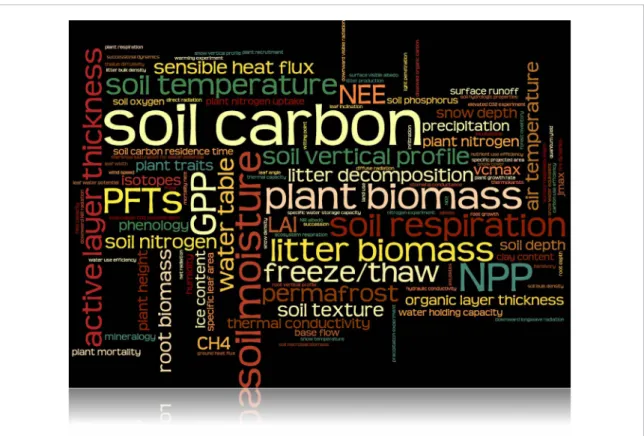
Figure 1. Terrestrial biosphere modeling needs for the Arctic-Boreal Region highlight soil and vegetation dynamics, as illustrated by
font size proportional to frequency of response from 18 modeling groups.
to Arctic-Boreal ecosystem dynamics, but all show
divergent results in terms of carbon pools and fluxes
(Fisher et al
2014b
). Our survey centered on
ecosys-tem dynamics, building on previous similar inquiries
focused specifically on soil carbon dynamics (Luo et al
2016
, Tian et al
2015
). Further, we used a set of
20 models featured in a previous analysis of Alaskan
carbon dynamics (Fisher et al
2014b
) to calculate the
inter-model variability for the ABoVE domain (western
North America) as an indicator of modeling
commu-nity disagreement, or uncertainty; these models were
also included in the TRENDY (Sitch et al
2015
) and
North American Carbon Program (NACP) regional
synthesis (Huntzinger et al
2012
).
The modeling teams provided a wide range of
responses, which we grouped into common categorical
phrases for analysis. There was a total of 115 unique
phrases, which, for illustration we plotted as a ‘Wordle’
(
wordle.net
), where the font size of the word is
propor-tional to the frequency of the response (figure
1
). By far
the most common response was soil carbon, followed
by net primary productivity (NPP), plant biomass,
soil moisture, plant functional types, and gross
pri-mary productivity (GPP). The next tier of modeling
needs included soil respiration, litter biomass, active
layer thickness, freeze/thaw dynamics, net ecosystem
exchange (NEE), soil temperature, evapotranspiration,
water table, permafrost, soil vertical profile, and leaf
area index. We note that other types of data, such
as meteorology, are critical model inputs, but are
more commonly available so are less in demand. We
also note that some of these variables are somewhat
ambiguously defined or not directly aligned with exact
measurements. Some key variables to modelers may be
overlooked due to inherent biases or lack of
knowl-edge of arctic-boreal processes. Still, the diversity of
responses contributed by modelers points to the overall
lack of observational data, which must be addressed, but
also highlights that the very fundamental processes
gov-erning terrestrial carbon cycling are poorly understood
and constrained in Arctic-Boreal ecosystems. Indeed,
this list would likely mirror modeling needs for most
global biomes (Fisher et al
2014a
)—but, with
addi-tional key requirements related to permafrost, active
layer thickness, and freeze/thaw dynamics, reinforcing
the top priority of understanding the magnitude and
fate of soil carbon, particular to northern high latitude
terrestrial ecosystems (Koven et al
2017
).
It is important to emphasize that many of these
variables are needed concurrently, and such that they
sufficiently represent variability over space and time.
Concurrency forms the basis of the response functions
that structures models (e.g. temperature versus
respiration)—variables collected in isolation may lack
the spatiotemporal robustness needed to inform and
improve the model as a whole. These concurrency
requirements enable modelers to extrapolate spatially
beyond existing intensive but sparse study sites, as well
as refine sensitivities and tipping points/thresholds
temporally. This is particularly acute for residence time
and turnover of soil and plant carbon stocks; implicit
here is turnover related to disturbance with respect to
3
Environ. Res. Lett. 13 (2018) 020202 J B Fisher et al
0 20
Uncertainty in Total Soil Carbon ( kg C m2)
0 0.005
Uncertainty in Net Ecosystem Exchange ( kg C m2month1)
0 0.05
Uncertainty in Gross Primary Production ( kg C m2month1)
0 0.025
Uncertainty in Autotrophic Respiration ( kg C m2month1)
0 0.025
Uncertainty in Net Primary Production ( kg C m2month1)
0 0.025
Uncertainty in Heterotrophic Respiration ( kg C m2month1)
Figure 2. Uncertainty in ecosystem carbon stocks and fluxes across NASA’s ABoVE domain. Maps are calculated from multi-model
(n = 20) disagreement, i.e. standard deviation, from the TRENDY (Piao et al2013) and the NACP regional synthesis (Huntzinger et
al2012) averaged to annual means (reference year 2003). Variables included: total soil carbon, net ecosystem exchange, gross primary production, autotrophic respiration, net primary production, and heterotrophic respiration. Flux units are in kg C m−2month−1; stock units are in kg C m−2.
accurate quantification of fuels, fates, and frequencies.
A particular strength of ABoVE for modeling is
that there is a concerted effort to scale up site level
data through airborne and satellite observations (see:
above.nasa.gov/images/Scaling%20Diagram_169.jpg
).
This allows an improved direct comparison between
the coarse model pixels and the ground data. Spatially,
we identify where these variables should be collected
based on uncertainty in modeled soil carbon, NEE,
NPP, GPP, heterotrophic respiration, and autotrophic
respiration (figure
2
). We show absolute uncertainty
for transparency and direct connection to
mea-surements, though other statistical metrics, such as
interannual variability, can readily be derived. Low
uncertainty regions may be classed as such due to our
uncertainty definition, but models may have converged
due to equifinality or other shared assumptions, while
uncertainty by other definitions may be large. Much
of the carbon flux uncertainty is co-located in the
southwest areas of Alaska and the Canadian part of
the ABoVE domain (roughly congruent with boreal
biome extent), while the soil carbon uncertainty is
located throughout tundra regions of northern Canada
and Alaska, and the Yukon area (areas with high soil
carbon concentration).
Generally, the survey results align with five of
ABoVE’s overarching science themes—carbon
bio-geochemistry, vegetation, permafrost, hydrology, and
disturbance. ABoVE’s field and airborne campaigns
have targeted known geographic areas of interest and
uncertainty, though our uncertainty maps in figure
2
provide direct and quantitative guidance to these
campaigns specifically where models most need
data. For instance, it may be that the feedbacks
between ecosystem dynamics and atmospheric
condi-tions unique to particular locacondi-tions expose particular
model sensitivities, thereby causing large divergence;
data specifically from these areas may help both to
constrain these sensitivities as well as to provide
benchmark data to assess the accuracy of models.
Mul-tiple field-based projects are funded by or affiliated
with ABoVE within each of these categories, so this
alignment may bode well for data capture for
mod-eling requirements. A live list of measurements being
4
Environ. Res. Lett. 13 (2018) 020202 J B Fisher et al
collected in ABoVE as of this writing can be found
online (
above.nasa.gov/cgi-bin/above_meas.pl
).
Syn-thesis activities across projects, especially, can help
integrate datasets within modeling frameworks.
How-ever, many of the variables required by models may be
absent, non-concurrent with other variables, or lacking
the spatial or temporal resolutions and domains from
the field campaigns needed to sufficiently refine model
performance. For instance, soil carbon dynamics, such
as stocks and change trajectories/sensitivities to various
forcing variables, were clearly the highest demand by
the modelers. At the time of this writing there were 20
projects listed under the Carbon Dynamics category
within ABoVE. Nonetheless, most of these projects
were not focused on soil carbon (due in part, for
example, to available proposals, solicitation wording,
and technical difficulty). Rather, they focus
predomi-nantly on carbon fluxes between the land surface and
the atmosphere, which while critically important to
the modeling community, may overlook some of the
key data needs for modelers, presenting a potentially
worrisome gap for model–data integration.
There is an enormous wealth of
complemen-tary data and information existing or in development
by programs outside of ABoVE that are relevant to
modelers. These include, for example: DOE’s NGEE
Arctic (Wullschleger et al
2011
), ESA’s GlobPermafrost
(Bartsch et al
2017
), the Permafrost Carbon
Net-work (Schuur and Abbott
2011
), the International Soil
Carbon Network (Jandl et al
2014
), the Northern
Cir-cumpolar Soil Carbon Database (Hugelius et al
2013
),
the Study of Environmental Arctic Change (Bromwich
et al
2010
), the Arctic System Reanalysis (Bromwich
et al
2016
), the Polar Geospatial Center (Noh and
Howat
2015
), the National Ecological Observatory
Net-work (Keller et al
2008
), the Long-Term Ecological
Research network (Hobbie et al
2003
), and individual
AmeriFlux/FLUXNET sites (Oechel et al
2014
). Other
agencies such as the Interagency Arctic Research
Pol-icy Committee (IARPC) coordinates among some of
these networks (Arctic Research and Policy Act
1984
);
but, a stronger international cooperative effort is still
greatly needed, especially in the face of international
politics that may present barriers to scientific
collab-oration. ABoVE has been coordinating with each of
these programs and it may be that some potential gaps
in ABoVE’s data collection will be filled by these other
efforts. However, while such datasets will be useful for
model initialization, benchmarking, and evaluation,
they may not meet the equally critical demand for
vari-ables to be collected concurrently, which is essential
for advancing model development and performance.
Moreover, these data are primarily focused in N.
Amer-ica, whereas there is an even greater data dearth in the
larger pan-Arctic and Boreal region across the globe.
The modeling community additionally needs
infrastructure to allow repeatable evaluation of model
performance compared to benchmark datasets. The
benchmark datasets, constructed from a suite of
observations, must thoroughly confront and challenge
models against the processes and response
func-tions important to Arctic-Boreal ecosystem dynamics
for models to improve. The ABoVE model–data
integration framework facilitates the construction,
integration, connection, and flow of the valuable
data collected by the ABoVE science teams and
other data networks to the modeling community
(Stofferahn et al
2016
). Through the ABoVE
Sci-ence Cloud central data repository (
daac.ornl.gov/cgi-bin/dataset_lister.pl?p=34
), the framework provides a
back-end database link to a front-end web user interface
to access the ABoVE data. These data can and should
be used by the modeling community to update and
refine model parameterization and structural process
representation, especially where data highlight key gaps
in process representation in models (e.g. Li et al
2010
).
In turn, as model versions advance, the framework can
be used as a benchmarking system to test improvement
in model performance against key ABoVE indicators
and science questions related specifically to important
Arctic-Boreal Region ecosystem dynamics. Moreover,
the integrated framework readily identifies key missing
datasets or uncertainties required to test and advance
models across the ABoVE indicators—highly useful
for feedback to ground campaigns. The
benchmark-ing system is based on the International Land Model
Benchmarking project (Collier et al
2016
, Hoffman et al
2016
, Luo et al
2012
), and affiliated with the Permafrost
Benchmarking System (Schaefer et al
2016
) (i.e. some
shared datasets and statistical metrics). Additionally,
the model–data integration framework provides
rela-tively high-quality and high-resolution model driver
data for regional-scale runs, critical for modeling high
latitudes (Guimberteau et al
2017
). In sum, this
frame-work helps ease the frame-workload of connecting to all of
these disparate but related databases for the modeling
community.
There is tremendous and well-justified interest,
effort, and activity in understanding the Arctic-Boreal
Region. Much of the current focus is on identifying
what is happening now under a changing climate, but
there is particular interest in and concern for what
changes may occur in the future. Mathematical and
computational models of the terrestrial biosphere are
essential for understanding potential future changes,
and are ultimately the great integrators of our
informa-tion now. With large and long-term investments such as
NASA’s ABoVE currently underway, it is critical that a
community-wide modeling framework is incorporated
into data collection early so that we can add
substan-tially to the value of assimilating currently available data
assets. The challenge is in connecting the wide array
of datasets and focused science interests to a cohesive
and coherent integrated larger picture. A coordinated
and supported effort across these field and modeling
components will help complete the missing pieces to
modeling the complex dynamics and feedbacks of the
Arctic-Boreal puzzle.
Environ. Res. Lett. 13 (2018) 020202 J B Fisher et al
Acknowledgments
We thank D Bachelet, N French, R Grant, A Harper, K
Haynes, M Huang, A Jain, C Koven, J Metsaranta, M
Sikka, R Pavlick, and S Veraverbeke for survey inputs
and/or paper comments. This work was supported
by NASA’s Arctic Boreal Vulnerability Experiment
(ABoVE); NNN13D504T (JBF), NNX17AE44G (SJG).
TAD was supported by the US Army Engineer Research
and Development Center Basic Research (6.1)
Pro-gram. Computing resources supporting this work were
provided by the NASA High-End Computing (HEC)
Program through the NASA Center for Climate
Simu-lation (NCCS) at Goddard Space Flight Center. The
paper was led from the Jet Propulsion Laboratory,
California Institute of Technology, under a contract
with the National Aeronautics and Space
Administra-tion. California Institute of Technology. Government
sponsorship acknowledged. Copyright 2017. All rights
reserved.
ORCID iDs
Joshua B Fisher
https://orcid.org/0000-0003-4734-9085
Abhishek Chatterjee
https://orcid.org/0000-0002-3680-0160
References
Arctic Research and Policy Act 1984 Arctic research and policy act of 1984 (amended 1990) Public Law 98 373
Bachelet D, Ferschweiler K, Sheehan T J, Sleeter B M and Zhu Z 2015 Projected carbon stocks in the conterminous USA with land use and variable fire regimes Glob. Change Biol.21 4548–60
Baker I T, Prihodko L, Denning A S, Goulden M, Miller S and da Rocha H R 2008 Seasonal drought stress in the Amazon: reconciling models and observations J. Geophys. Res.113 G00B01
Bartsch A, Grosse G, K¨a¨ab A, Westermann S, Strozzi T, Wiesmann A, Duguay C, Seifert F M, Obu J and Nitze I 2017 Examining environmental gradients with remotely sensed data-the ESA globpermafrost project Paper presented at EGU General
Assembly Conference Abstracts
Beck P S and Goetz S J 2011 Satellite observations of high northern latitude vegetation productivity changes between 1982 and 2008: ecological variability and regional differences Environ.
Res. Lett.6 045501
Belshe E F, Schuur E A G and Bolker B M 2013 Tundra ecosystems observed to be CO2sources due to differential amplification of the carbon cycle Ecol. Lett.16 1307–15
Bromwich D H, Kuo Y H, Serreze M, Walsh J, Bai L S, Barlage M, Hines K and Slater A 2010 Arctic system reanalysis: call for community involvement Eos, Trans. Am. Geophys. Union91 13–4
Bromwich D H, Wilson A B, Bai L-S, Moore G W and Bauer P 2016 A comparison of the regional arctic system reanalysis and the global ERA-interim reanalysis for the arctic Q. J. R.
Meteorol. Soc.142 644–58
Chapin F, McGuire A, Randerson J, Pielke R, Baldocchi D, Hobbie S, Roulet N, Eugster W, Kasischke E and Rastetter E 2000 Arctic and boreal ecosystems of western north America as components of the climate system Glob. Change Biol.6 211–23
Chapman W L and Walsh J E 2007 Simulations of Arctic temperature and pressure by global coupled models J. Clim.
20 609–32
Clark D B et al 2011 The joint UK land environment simulator (JULES), model description—part 2: carbon fluxes and vegetation dynamics Geosci. Model. Dev.4 701–22
Collier N, Hoffman F M, Mu M, Randerson J T and Riley W J 2016 International land Model Benchmarking (ILAMB)
BGCF-DATA (Biogeochemistry (BGC) Feedbacks) de Gonc¸alves L G G et al 2013 Overview of the large-scale
biosphere–atmosphere experiment in Amazonia data model intercomparison project (LBA-DMIP) Agric. Forest Meteorol.
182–183 111–27
Euskirchen E S, McGuire A D, Chapin F S, Yi S and Thompson C C 2009 Changes in vegetation in northern Alaska under scenarios of climate change, 2003−2100: implications for climate feedbacks Ecol. Appl.19 1022–43
Fisher J B, Huntzinger D N, Schwalm C R and Sitch S 2014a Modeling the terrestrial biosphere Annu. Rev. Environ.
Resour.39 91–123
Fisher J B et al 2014b Carbon cycle uncertainty in the Alaskan Arctic Biogeosciences11 4271–88
Forkel M, Carvalhais N, R¨odenbeck C, Keeling R, Heimann M, Thonicke K, Zaehle S and Reichstein M 2016 Enhanced seasonal CO2exchange caused by amplified plant productivity in northern ecosystems Science351 696–9
Friedlingstein P et al 2006 Climate-carbon cycle feedback analysis: results from the C4MIP model intercomparison J. Clim.19 3337–53
Friedlingstein P, Meinshausen M, Arora V K, Jones C D, Anav A, Liddicoat S K and Knutti R 2014 Uncertainties in CMIP5 climate projections due to carbon cycle feedbacks J. Clim.27 511–26
Goetz S J, Bunn A G, Fiske G J and Houghton R 2005
Satellite-observed photosynthetic trends across boreal north America associated with climate and fire disturbance Proc.
Natl Acad. Sci. USA102 13521–5
Goetz S J, Kimball J, Mack M and Kasischke E 2011 Scoping completed for an experiment to assess vulnerability of Arctic and boreal ecosystems Eos Trans. AGU92 150–1
Grant R F, Barr A G, Black T A, Margolis H A, Dunn A L, Metsaranta J, Wang S, McCaughey J H and Bourque C A 2009 Interannual variation in net ecosystem productivity of Canadian forests as affected by regional weather patterns—a Fluxnet-Canada synthesis Agric. Forest Meteorol.149 2022–39
Griffith P, Goetz S, Kasischke E, Mack M and Wickland D 2012 The arctic-boreal vulnerability experiment: a NASA terrestrial ecology field Campaign Paper presented at AGU Fall Meeting
Abstracts
Guimberteau M et al 2017 ORCHIDEE-MICT (revision 4126), a land surface model for the high-latitudes: model description and validation Geosci. Model Dev. Discuss.2017 1–65
Hayes D J, Kicklighter D W, McGuire A D, Chen M, Zhuang Q, Yuan F, Melillo J M and Wullschleger S D 2014 The impacts of recent permafrost thaw on land–atmosphere greenhouse gas exchange Environ. Res. Lett.9 045005
Hayes D J, McGuire A D, Kicklighter D W, Gurney K R, Burnside T J and Melillo J M 2011 Is the northern high-latitude land-based CO2sink weakening? Glob. Biogeochem. Cycles25 GB3018
Hinzman L D, Bettez N D, Bolton W R, Chapin F S, Dyurgerov M B, Fastie C L, Griffith B, Hollister R D, Hope A and Huntington H P 2005 Evidence and implications of recent climate change in northern Alaska and other arctic regions
Clim. Change 72 251–98
Hobbie J E, Carpenter S R, Grimm N B, Gosz J R and Seastedt T R 2003 The US long term ecological research program
BioScience53 21–32
Hoffman F M, Riley W J, Randerson J T, Keppel-Aleks G, Lawrence D M and Koven C D 2016 2016 International Land Model
Benchmarking (ILAMB) Workshop ReportRep. (Washington,
DC: USDOE Office of Science)
Environ. Res. Lett. 13 (2018) 020202 J B Fisher et al
Hugelius G, Tarnocai C, Broll G, Canadell J, Kuhry P and Swanson D 2013 The northern circumpolar soil carbon database: spatially distributed datasets of soil coverage and soil carbon storage in the northern permafrost regions Earth Syst.Sci.
Data 5 3
Huntzinger D N et al 2012 North American carbon program (NACP) regional interim synthesis: terrestrial biospheric model intercomparison Ecol. Model.232 144–57
IPCC 2007 Contribution of Working Group I to the Fourth
Assessment Report of the Intergovernmental Panel on Climate Change Climate Change 2007: The Physical Science Basis
ed S Solomon, D Qin, M Manning, Z Chen, M Marquis, K B Averyt, M Tignor and H L Miller (Cambridge: Cambridge University Press) p 996
IPCC 2014 Climate Change 2014: Impacts, Adaptation, and
Vulnerability Part A Global Sectoral Aspects Contribution of Working Group II to the Fifth Assessment Report of the Intergovernmental Panel on Climate Change (Cambridge:
Cambridge University Press) p 1132
Ito A 2010 Changing ecophysiological processes and carbon budget in East Asian ecosystems under near-future changes in climate: implications for long-term monitoring from a process-based model J. Plant Res.123 577–88
Ito A, Nishina K and Noda H M 2016 Impacts of future climate change on the carbon budget of northern high-latitude terrestrial ecosystems: an analysis using ISI-MIP data Polar
Sci.10 346–55
Jain A K and Yang X 2005 Modeling the effects of two different land cover change data sets on the carbon stocks of plants and soils in concert with CO2and climate change Glob. Biogeochem.
Cycles 19 GB2015
Jandl R, Rodeghiero M, Martinez C, Cotrufo M F, Bampa F, van Wesemael B, Harrison R B, Guerrini I A, deB Richter D and Rustad L 2014 Current status, uncertainty and future needs in soil organic carbon monitoring Sci. Total Environ. 468 376–83
Jia G J, Epstein H E and Walker D A 2003 Greening of Arctic Alaska, 1981−2001 Geophys. Res. Lett.30 1–4
Kasischke E, Hayes D, Griffith P, Larson E and Wickland D 2013 NASA’s Arctic-Boreal vulnerability experiment: a large-scale study of environmental change in western North America and its implications for ecological systems and society Paper
presented at AGU Fall Meeting Abstracts
Keller M, Schimel D S, Hargrove W W and Hoffman F M 2008 A continental strategy for the national ecological observatory network Front. Ecol. Environ.6 282–4
Koven C D, Hugelius G, Lawrence D M and Wieder W R 2017 Higher climatological temperature sensitivity of soil carbon in cold than warm climates Nat. Clim.7 817
Koven C D, Lawrence D M and Riley W J 2015 Permafrost carbon–climate feedback is sensitive to deep soil carbon decomposability but not deep soil nitrogen dynamics Proc.
Natl Acad. Sci. 112 3752–57
Koven C D, Ringeval B, Friedlingstein P, Ciais P, Cadule P, Khvorostyanov D, Krinner G and Tarnocai C 2011 Permafrost carbon-climate feedbacks accelerate global warming Proc. Natl Acad. Sci.108 14769–74
Krinner G, Viovy N, de Noblet-Ducoudré N, Ogée J, Polcher J, Friedlingstein P, Ciais P, Sitch S and Prentice I C 2005 A dynamic global vegetation model for studies of the coupled atmosphere-biosphere system Glob. Biogeochem. Cycles19 GB1015
Lei H, Huang M, Leung L R, Yang D, Shi X, Mao J, Hayes D J, Schwalm C R, Wei Y and Liu S 2014 Sensitivity of global terrestrial gross primary production to hydrologic states simulated by the community land model using two runoff parameterizations J. Adv. Model. Earth Syst.6 658–79
Li Q, Sun S and Xue Y 2010 Analyses and development of a hierarchy of frozen soil models for cold region study
J. Geophys. Res.: Atmos.115 1–18
Lloyd A H and Bunn A G 2007 Responses of the circumpolar boreal forest to 20th century climate variability Environ. Res.
Lett.2 045013
Loranty M M, Berner L T, Goetz S J, Jin Y and Randerson J T 2014 Vegetation controls on northern high latitude snow-albedo feedback: observations and CMIP5 model simulations Glob.
Change Biol.20 594–606
Luo Y, Ahlstr¨om A, Allison S D, Batjes N H, Brovkin V, Carvalhais N, Chappell A, Ciais P, Davidson E A and Finzi A 2016 Toward more realistic projections of soil carbon dynamics by Earth system models Glob. Biogeochem. Cycles 30 40–56 Luo Y et al 2012 A framework for benchmarking land models
Biogeosci. 9 3857–74
Mack M C, Schuur E A G, Bret-Harte M S, Shaver G R and Chapin F S 2004 Ecosystem carbon storage in arctic tundra reduced by long-term nutrient fertilization Nature431 440–3
McGuire A, Anderson L G, Christensen T R, Dallimore S, Guo L, Hayes D J, Heimann M, Lorenson T D, Macdonald R W and Roulet N 2009 Sensitivity of the carbon cycle in the Arctic to climate change Ecol. Monogr.79 523–55
McGuire A, Chapin F S, Walsh J E and Wirth C 2006 Integrated regional changes in Arctic climate feedbacks: implications for the global climate system Annu. Rev. Environ. Resour.31 61–91
McGuire A et al 2012 An assessment of the carbon balance of Arctic tundra: comparisons among observations, process models, and atmospheric inversions Biogeosci.9 3185–204
Melton J R et al 2013 Present state of global wetland extent and wetland methane modelling: conclusions from a model inter-comparison project (WETCHIMP) Biogeosci.10 753–88
Myneni R B, Keeling C D, Tucker C J, Asrar G and Nemani R R 1997 Increased plant growth in the northern high latitudes between 1981−1991 Nature 386 1380–93
Natali S M, Schuur E A G and Rubin R L 2012 Increased plant productivity in Alaskan tundra as a result of experimental warming of soil and permafrost J. Ecol.100 488–98
Niu G Y, Yang Z L, Mitchell K E, Chen F, Ek M B, Barlage M, Kumar A, Manning K, Niyogi D and Rosero E 2011 The community Noah land surface model with multiparameterization options (Noah-MP): 1. Model description and evaluation with local-scale measurements J. Geophys. Res.: Atmos.116 1–19
Noh M-J and Howat I M 2015 Automated stereo-photogrammetric DEM generation at high latitudes: surface Extraction with TIN-based search-space minimization (SETSM) validation and demonstration over glaciated regions GISci. Remote Sens.
52 198–217
Oechel W C, Hastings S J, Vourlrtis G, Jenkins M, Riechers G and Grulke N 1993 Recent change of Arctic tundra ecosystems from a net carbon dioxide sink to a source Nature361 520–3
Oechel W C, Laskowski C A, Burba G, Gioli B and Kalhori A A 2014 Annual patterns and budget of CO2flux in an Arctic tussock tundra ecosystem J. Geophys. Res.: Biogeosci.119 323–39
Olefeldt D, Turetsky M R, Crill P M and McGuire A D 2013 Environmental and physical controls on northern terrestrial methane emissions across permafrost zones Glob. Change
Biol.19 589–603
Overpeck J et al 1997 Arctic environmental change of the last four centuries Science278 1251–6
Parmentier F J W, Zhang W, Mi Y, Zhu X, Huissteden J, Hayes D J, Zhuang Q, Christensen T R and McGuire A D 2015 Rising methane emissions from northern wetlands associated with sea ice decline Geophys. Res. Lett.42 7214–22
Pavlick R, Drewry D T, Bohn K, Reu B and Kleidon A 2013 The Jena diversity-dynamic global vegetation model
(JeDi-DGVM): a diverse approach to representing terrestrial biogeography and biogeochemistry based on plant functional trade-offs Biogeosciences10 4137–77
Piao S et al 2013 Evaluation of terrestrial carbon cycle models for their response to climate variability and to CO2trends Glob.
Change Biol.19 2117–32
Qian H, Joseph R and Zeng N 2010 Enhanced terrestrial carbon uptake in the northern high latitudes in the 21st century from the coupled carbon cycle climate model intercomparison project model projections Glob. Change Biol.16 641–56
Environ. Res. Lett. 13 (2018) 020202 J B Fisher et al
Rogers A, Serbin S P, Ely K S, Sloan V L and Wullschleger S D 2017 Terrestrial biosphere models underestimate photosynthetic capacity and CO2assimilation in the Arctic New Phytol. 216 1090–1103
Sch¨adel C, Bader M K-F, Schuur E A, Biasi C, Bracho R, ˇCapek P, De Baets S, Di´akov´a K, Ernakovich J and Estop-Aragones C 2016 Potential carbon emissions dominated by carbon dioxide from thawed permafrost soils Nat. Clim. Change6 950–3
Schaefer K, Jafarov E, Piper M and Schwalm C 2016 A permafrost benchmark system to evaluate permafrost models ILaMB (Washington, DC)
Schaefer K, Lantuit H, Romanovsky V E, Schuur E A and Witt R 2014 The impact of the permafrost carbon feedback on global climate Environ. Res. Lett.9 085003
Schaefer K, Zhang T, Bruhwiler L and Barrett A P 2011 Amount and timing of permafrost carbon release in response to climate warming Tellus B63 165–80
Schuur E and Abbott B 2011 Climate change: high risk of permafrost thaw Nature480 32–3
Schuur E et al 2013 Expert assessment of vulnerability of permafrost carbon to climate change Clim. Change 119 359–74 Schuur E, McGuire A, Sch¨adel C, Grosse G, Harden J, Hayes D,
Hugelius G, Koven C, Kuhry P and Lawrence D 2015 Climate change and the permafrost carbon feedback Nature 520 171 Schuur E, Vogel J G, Crummer K G, Lee H, Sickman J O and
Osterkamp T E 2009 The effect of permafrost thaw on old carbon release and net carbon exchange from tundra Nature
459 556–9
Screen J A and Simmonds I 2010 The central role of diminishing sea ice in recent Arctic temperature amplification Nature464 1334
Serreze M C and Barry R G 2011 Processes and impacts of Arctic amplification: a research synthesis Glob. Planet. Change77 85–96
Sitch S, Friedlingstein P, Gruber N, Jones S, Murray-Tortarolo G, Ahlstr¨om A, Doney S C, Graven H, Heinze C and Huntingford C 2015 Recent trends and drivers of regional sources and sinks of carbon dioxide Biogeosciences12 653–79
Sitch S, McGuire A D, Kimball J, Gedney N, Gamon J, Engstrom R, Wolf A, Zhuang Q, Clein J and McDonald K C 2007 Assessing the carbon balance of circumpolar Arctic tundra using remote sensing and process modeling Ecol. Appl.17 213–34
Snyder P K and Liess S 2014 The simulated atmospheric response to expansion of the Arctic boreal forest biome Clim. Dyn.42 487–503
Stofferahn E, Fisher J B, Hayes D J, Huntzinger D N and Schwalm C 2016 How well does your model capture the terrestrial ecosystem dynamics of the Arctic-boreal region American
Geophysical Union Fall Meeting (San Francisco)
Thornton P E et al 2002 Modeling and measuring the effects of disturbance history and climate on carbon and water budgets in evergreen needleleaf forests Agric. Forest Meteorol.113 185–222
Tian H, Chen G, Lu C, Xu X, Hayes D J, Ren W, Pan S, Huntzinger D N and Wofsy S C 2014 North American terrestrial CO2 uptake largely offset by CH4and N2O emissions: toward a full accounting of the greenhouse gas budget Clim. Change129 413–26
Tian H, Lu C, Yang J, Banger K, Huntzinger D N, Schwalm C R, Michalak A M, Cook R, Ciais P and Hayes D 2015 Global patterns and controls of soil organic carbon dynamics as simulated by multiple terrestrial biosphere models: current status and future directions Glob. Biogeochem. Cycles 29 775–92
Turetsky M R, Kane E S, Harden J W, Ottmar R D, Manies K L, Hoy E and Kasischke E S 2011 Recent acceleration of biomass burning and carbon losses in Alaskan forests and peatlands
Nat. Geosci.4 27
Wang Y P, Law R M and Pak B 2010 A global model of carbon, nitrogen and phosphorus cycles for the terrestrial biosphere
Biogeosciences7 2261–82
Winton M 2006 Amplified Arctic climate change: what does surface albedo feedback have to do with it? Geophys. Res. Lett.33 1–4
Wullschleger S D, Hinzman L D and Wilson C J 2011 Planning the next generation of Arctic ecosystem experiments Eos Trans.
AGU92 145
Xue Y, Sellers P J, Kinter J L and Shukla J 1991 A simplified biosphere model for global climate studies J. Clim.4 345–64
Zeng N, Qian H, Roedenbeck C and Heimann M 2005 Impact of 1998−2002 midlatitude drought and warming on terrestrial ecosystem and the global carbon cycle Geophys. Res. Lett.32 L22709
Zhang Z, Zimmermann N E, Kaplan J O and Poulter B 2016 Modeling spatiotemporal dynamics of global wetlands: comprehensive evaluation of a new sub-grid TOPMODEL parameterization and uncertainties Biogeosciences13 1387–408
Zhang Z, Zimmermann N E, Stenke A, Li X, Hodson E L, Zhu G, Huang C and Poulter B 2017 Emerging role of wetland methane emissions in driving 21st century climate change
Proc. Natl Acad. Sci.114 9647–52
Zimov S A, Schuur E A G and Chapin F S 2006 Permafrost and the global carbon budget Science312 1612–3
Zona D, Gioli B, Commane R, Lindaas J, Wofsy S C, Miller C E, Dinardo S J, Dengel S, Sweeney C and Karion A 2016 Cold season emissions dominate the Arctic tundra methane budget
Proc. Natl Acad. Sci.113 40–5