HAL Id: hal-03007243
https://hal.univ-cotedazur.fr/hal-03007243
Submitted on 27 Jan 2021HAL is a multi-disciplinary open access
archive for the deposit and dissemination of sci-entific research documents, whether they are pub-lished or not. The documents may come from teaching and research institutions in France or abroad, or from public or private research centers.
L’archive ouverte pluridisciplinaire HAL, est destinée au dépôt et à la diffusion de documents scientifiques de niveau recherche, publiés ou non, émanant des établissements d’enseignement et de recherche français ou étrangers, des laboratoires publics ou privés.
Materials with Shape Memory Properties from
Bio-Based Epoxidized Vegetable Oils
Chiara Di Mauro, Samuel Malburet, Alain Graillot, Alice Mija
To cite this version:
Chiara Di Mauro, Samuel Malburet, Alain Graillot, Alice Mija. Recyclable, Repairable, and Re-shapable (3R) Thermoset Materials with Shape Memory Properties from Bio-Based Epoxidized Veg-etable Oils. ACS Applied Bio Materials, ACS Publications, 2020, 3 (11), pp.8094-8104. �10.1021/ac-sabm.0c01199�. �hal-03007243�
Recyclable, Repairable, and Reshapable (3R) Thermoset Materials
with Shape Memory Properties from Bio-Based Epoxidized
Vegetable Oils
Chiara Di Mauro, Samuel Malburet, Alain Graillot, and Alice Mija*
Cite This:https://dx.doi.org/10.1021/acsabm.0c01199 Read Online
ACCESS
Metrics & More Article Recommendations*
sı Supporting InformationABSTRACT: The preparation of thermosets based on epoxidized vegetable oils (EVOs) involved a peculiar attention in recent years; however, most of them cannot be recycled once cross-linked. In the present work, epoxy thermosetting resins like-vitrimers with dynamic disulfide covalent bonds were prepared by copolymerizing twelve EVOs with 2,2′-dithiodibenzoic acid, as hardener. Here, we show for the first time the reprocessability, repairability, and recyclability properties of EVOs thermosets. The 3R abilities were evaluated in correlation with the EVO epoxy contents, which influence the final thermo-mechanical properties of the recycled material. The virgin versus recycled materials’ comparison was studied by FT-IR, DSC, TGA, and DMA, also comparing their swelling ability and high gel content. The study investigates, in
addition, the excellent shape memory properties of the reprocessed EVOs/disulfide materials.
KEYWORDS: epoxidized vegetable oils, dynamic hardener, epoxy content, recyclability, reshapability, repairability, shape memory
■
INTRODUCTIONGlobal plastics production was around 335 million tons in 2016 producing 8.4 million tons of plastic waste. Only 2% from the total plastic waste worldwide was recycled, whereas in Europe the recycling was around 31%.1,2Among the European Union countries, the waste management strategies vary significantly,3 unfortunately conducting to large landfill accumulations with harmful effects on water, land, and all living species. To deal with these problems, in 2018, the European Commission promoted the design and production of plastic materials with repairability and recycling capacity and also the circular economy strategy.4
A new class of thermoset networks including dynamic covalent bonds has attracted special attention in recent years. These thermoset materials renamed covalent adaptive network (CAN) polymers by Bowman’s group5,6 demonstrated recycling capabilities as well as unchanged properties after reprocessing. This type of bond undergoes splitting/reforming exchanges under external stimuli such as temperature, light, pH, or pressure. There are a variety of dynamic covalent reactions allowing the CANs: transesterification,7−10 Michael reactions,11 disulfides exchange,12,13 Diels−Alder reactions,14 or even physical bond exchange as the hydrogen-bonds exchange.15,16 Based on transesterification reactions, Leibler et al.8 defined ″vitrimers″ as materials remaining cross-linked at high temperatures, showing a gradual change in viscosity17,18 but concomitantly demonstratingfluidity.17,19These materials,
like the common thermosets, have shown high resistance but also with recycling ability. Thefirst vitrimers were synthesized through the reaction between diglycidyl ether of bisphenol A (DGEBA) and Pripol 1040, a mixture of C18 fatty acids
derivatives, containing dimers and trimers, in the presence of transesterification catalysts.19
Following this idea, several researches introduced a series of vitrimer systems formed by the incorporation of different exchangeable bonds, such as disulfide linkage.13,20,21 Odriozola et al.22 synthesized a reinforced polymeric composite made with an epoxy resin based on DGEBA and 4-AFD (4-aminophenyl disulfide). The obtained material showed excellent mechanical properties and also 3R functionality, i.e. recyclability, repairability, and reshapability. The relentless need for the use of sustainable materials has led to the growth of bio-based vitrimers consisting of isosorbide-derived epoxy (IS-EPO) cured with aromatic diamines containing disulfide bonds 4-AFD (4-aminophenyl disulfide). This resin, devised by Ma et al.,23 showed shape memory properties and high degradability in
Received: September 18, 2020 Accepted: October 22, 2020
© XXXX American Chemical Society
A
https://dx.doi.org/10.1021/acsabm.0c01199 ACS Appl. Bio Mater. XXXX, XXX, XXX−XXX
Downloaded via UNIV NICE SOPHIA ANTIPOLIS on November 3, 2020 at 09:22:19 (UTC).
alkaline solutions. Zhang et al.24 reacted a multifunctional epoxy monomer, based on bis(4-glycidyloxyphenyl) disulfide with 4-AFD, without a catalyst, producing a thermoset with short relaxation times (9 s) and a Tg above 130 °C. The obtained thermosets were reprocessed, and the authors showed that the chemical and thermo-mechanical properties did not drop after three recycling cycles. Furthermore, the develop-ment of vitrimers focused on creating networks based on a double recycling synergy: the disulfides metathesis and the carboxylate transesterifications. Imbernon et al.25cross-linked the ENR (epoxidized natural rubber) with an aliphatic dicarboxylic acid containing disulfides (dithiodibutyric acid), showing how the resin is able to reorganize at temperatures above 150 °C, recovering most of its mechanical properties after reprocessing. Similarly, Chen et al.26 prepared an epoxy vitrimer by curing DGEBA with dithiodibutyric acid.
Our team reported the cross-linking study of two reference epoxidized vegetable oils, linseed oil (ELO) and soybean oil (ESO), with an aromatic carboxylic acid with disulfide bonds, by a highly selective copolymerization reaction.27,28 The 10 times reprocessed thermosets maintained almost unchanged their thermo-mechanical properties and retained a Tg value
around 80 °C.29 In another study, 12 cross-linked bio-based networks were prepared by reacting 12 EVOs with 2,2 ′-dithiodibenzoic acid (DTBA).30 In this work, we investigate their 3R ability (recyclability, repairability and reshapability) and shape memory behavior. Even if several studies have been conducted on polymers with 3R ability,22,31,32 to our knowledge, this is the first work on a large series of vegetable oil-based materials. FTIR, DSC, TGA, and DMA were used as techniques for the comparison between virgin EVO-based thermosets and recycled ones. A correlation was done between the swelling ability, the gel content, and the epoxy content of the EVOs monomers. Furthermore, the properties of the recycled thermosets and also the shape memory properties were explored.
■
MATERIALS AND METHODSMaterials. The epoxidized linseed and soybean oils, ELO (A) and ESO (B), were provided by Valtris Chemicals (England). The 10 new EVOs (epoxidized karanja oil, EKRNO; epoxidized castor oil, ECO; epoxidized St John’s Wort oil, EJSWO; epoxidized peanut oil, EPO; epoxidized rapeseed oil, ERPO; epoxidized rose hip seed oil, ERHO; epoxidized safflower oil, ESFO; epoxidized grapeseed oil, EGRO; epoxidized camelina oil, ECMO; epoxidized hemp oil, EHO; and epoxidized perilla oil, EPLO) were provided by SPECIFIC POLYMERS (France) as references SP-3S-30-006.
These EVOs can be classified in three categories, in function of their nature and content in unsaturated fatty acids: i/category 1: EVOs from VO containing mainly mono-unsaturated fatty acids: EKRNO, ECO, ESJWO, EPO, and ERPO; ii/category 2: EVOs from VO containing mainly di-unsaturated fatty acids: ESO, ERHO, ESFO, EGRO, and EHO; and iii/category 3: EVOs from VO containing mainly tri-unsaturated fatty acids ECMO, ELO, and EPLO. The 2,2′-dithiodibenzoic acid (DTBA) 95% hardener (E) and the imidazole (IM) initiator (99%) (F) were purchased from Sigma-Aldrich and were used as received. The chemical structures, reaction mechanism,
and physico-chemical characteristics of the reagents are given inTable
S1andFigures S1 and S2.
Samples Preparation. The epoxy/hardener ratio wasfixed at 1:1
according to Dusek et al.33The epoxy monomer was heated at 80°C,
and consequently, the initiator was added at 1 wt %. Subsequently, the hardener was added and stirred at the same temperature for 10 min, placed into a silicone mold, and cured in oven. From the DSC study
of reactivity presented in Table S2, the curing and post-curing
protocols for the EVO thermosets were determined.30
Recycling, Repairing, and Reshaping Procedures. The recycling was made by grinding the cross-linked thermoset. The
obtained powder was pressed and heated between two Kaptonfilms
using a CARVER manual press. Temperature, pressure, and duration of the recycling were optimized and adapted to each resin: starting
from 120 °C and 0.3 tons until 170 °C and 2 tons for high epoxy
content (Table 1). Recycled specimens with rectangular dimensions
of 30 × 7 × 2mm3 were prepared for the thermo-mechanical
characterizations. For the repairing and reshaping tests, the recycled
EVO specimens obtained using the parameters given inTable 1were
prepared with dimensions 50× 10 × 1 mm3.
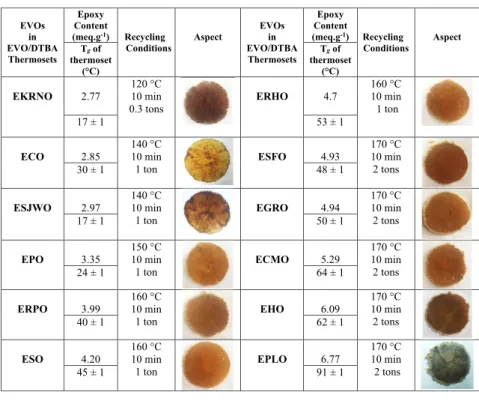
Table 1. Reprocessing Conditions and Visual Aspect of EVOs/DTBA Thermosets
https://dx.doi.org/10.1021/acsabm.0c01199 ACS Appl. Bio Mater. XXXX, XXX, XXX−XXX
To demonstrate the repairing ability of thermosets, scratches have been produced on the reprocessed thermoset surface. The so-injured
specimens were heated according to the recycling protocol (Table 1)
for 5 min between the plates of the CARVER manual press, without applying any pressure.
The reshaping process was performed in a zigzag-shaped mold following the same conditions as for the repairing.
Analytical Methods. Differential Scanning Calorimetry (DSC).
The thermosets glass transitions were evaluated with a Mettler-Toledo DSC 3 instrument equipped with STAR software. The DSC
studies were performed in the temperature range of 80 to 180°C, at a
10°C/min heating rate. The samples (around 5−7 mg) were placed
into 40μL aluminum crucibles.
Fourier-Transform Infrared Spectroscopy (FT-IR). FT-IR analyses
were done using a Thermo Scientific Nicolet iS50 FT-IR
spectrometer with a deuterated L-aniline-doped triglycine sulfate
(DLaTGS) detector in attenuated total reflectance (ATR) mode at 32
scans and 4 cm−1resolution. The data were analyzed using OMNIC
software, and the conversion percentage of the functional group was
determined byeq 1:% =
(
)
(
)
(
)
100 A A A A A A 823 1586 0 823 1586 t 823 1586 0 − × (1)where (A0) and (At) are the area of absorbance peaks calculated at the
initial time at the end of the curing protocol. The peak at 823 cm−1
was assigned to the oxirane C−O groups, while that at 1586 cm−1is
the reference band which belongs to theδC−Cof the aromatic signal
from the DTBA hardener.
Thermogravimetric Analyses (TGA). TGA measurements were performed with the help of a Mettler-Toledo TGA 2. To characterize
the thermal stability, the samples were heated under airflow, 50 mL·
min−1at 10°C·min−1from 25 to 1000°C.
The statistic heat-resistant index temperature (Ts), a characteristic
of thermal stability, was calculated witheq 2:
Ts=0.49·[T5%+0.6 (· T30%−T5%)] (2)
where T5%and T30%are the temperatures at 5 and 30% weight loss,
respectively.
Dynamic Mechanical Analyses (DMA). DMA were carried out on a Mettler-Toledo DMA 1 instrument, equipped with STAR software,
operated using the tension method. Elastic modulus values (E′) and
damping factors (tan δ) were measured at a heating rate of 3 °C·
min−1from −80 to 170 °C and 1.0 Hz frequency. The relaxation,
associated to the glass transition, was assigned at the maximum of the
damping factor (tanδ = E″/E′).
Cross-linking Density. Cross-linking density of virgin and recycled thermosets was calculated from the elastic modulus value in the
rubbery state byeq 3, according to Flory’s theory:34
E RT
3
ν = ′
(3) where E′ is the storage modulus of the thermoset in the rubbery
plateau region at Tg+ 50 °C, R is the gas constant, and T is the
absolute temperature in Kelvin.
Shape Memory. Shape memory properties were analyzed using
rectangular specimens of recycled resin (10 × 5 × 1 mm3). The
specimen was heated at 90 °C for about 10 s, and then twisted
manually to fix the temporary shape until room temperature is
reached. Then, the helical sample was immersed in hot water (∼90 °C) to observe the shape recovery. A second permanent shape was
tested: the sample was heated to 150°C for 20 min, and by the help
of a clamp, a helix shape was formed (second permanent shape). At
the end the protocol, the twisted conformation was fixed at room
temperature. Consequently, the specimen was heated at 90°C for 10
s and deformed to a“C” shape and the temporary shape was fixed by
cooling the sample at room temperature. Finally, the specimen was immersed in hot water to recover the second permanent shape.
Solvent Stability and Swelling Ratio (Q). The tests were studied in
toluene for 48 h at room temperature in order to confirm the
resistance of the reprocessed samples in the solvent. Specimens of
dimensions 10× 10 × 2 mm3 were used to perform the test. The
swelling ratio (Qm) was calculated followingeq 4:
Q w w w m s d s = − (4)
where wsand wdare the swelled mass and the swelled dry mass at
equilibrium.
Gel Content (GC %). Gel content % values were determined by
immersing the samples (10× 10 × 2 mm3) in toluene. After 48 h, the
insoluble fraction was removed and dried under vacuum at 50 °C.
The GC % was calculated as follows:
w w GC% 0 = (5)
where w0and w are the initial mass and that after drying.
■
RESULTS AND DISCUSSIONSThe thermoset resins once cross-linked cannot be recycled. Vitrimers, due to their nature, can undergo reversible cross-links through bond cleavage and reformation/exchange, guaranteeing a future benefit from economic and environ-mental point of view. Leibler et al.35displayed this behavior in the case of DGEBA/acid or DGEBA/anhydride networks using transesterification catalysts (zinc acetate (Zn(OAc)2),
triazabicyclodecene (TBD), or triphenylphosphine (PPh3)). Other authors, as Odriozola et al.13,22,31revealed the possibility to obtain reprocessed thermoset and elastomer materials made with disulfide cross-linkers. Apart from their work, a few studies were dedicated on the properties of the recycled materials, especially those of EVO thermosets.
As previously shown,27,28the bio-based thermosets prepared with ELO or ESO and dicarboxylic acid as a dynamic disulfide cross-linker, can be used to produce innovative networks with recycling abilities due to the synergy of two recycling mechanisms: disulfide exchange and transesterification reac-tions (Figure 1). Several authors17,19,22 proved that the recyclability requires temperatures above Tg, usually higher
Figure 1.Network rearrangement mechanisms obtained by dual exchange reactions: disulfide exchange and transesterification reactions.
https://dx.doi.org/10.1021/acsabm.0c01199 ACS Appl. Bio Mater. XXXX, XXX, XXX−XXX
than the topology freezing transition temperature (Tv), to
allow the network to flow and to guarantee a successful recycling.
The processing conditions for the synthesis of thermosetting resins are in strong relationship with their epoxy content as shown inTable 1and schematized inFigure 2for the series of 12 EVOs resins. As presented in Table 1, thermosets from category 1 need milder recycling conditions due to a lower number of cross-linking nodes that are spaced, correlated to lower Tg, and so favoring an easier rearrangement during the reprocessing protocol. In contrast, in the EVOs with higher epoxy content, as for the thermosets derived from category 3, the high cross-link density required stronger conditions to recombine the network.
The temperature, pressure and time necessary to obtain recycled thermosets were compared with those applied for DGEBA dynamic networks. Odriozola et al.22 used a reprocessing at 200°C, 100 bars for 5 min for the DGEBA/ 4-AFD vitrimer. The same cross-linker, 4-AFD, was used by Ma et al.23 to test the recyclability of IS-EPO (isosorbide-derived epoxy) by heating the samples at 100 °C for 1 h (no pressure specification). Zhang et al.24 reprocessed the bis(4-glycidyloxyphenyl) disulfide/4-AFD thermoset at 180 °C for 20 min and 200 bars. Chen et al.26 showed that the system DGEBA/DTDA (4,4′-dithiodibutyric acid) catalyzed by 1,5,7-triazabicyclo[4.4.0]dec-5-ene (TBD) produced a vitrimer that can be recycled at 100°C for 1 h with recovering of thermo-mechanical properties at the end of the four cycles. The
aliphatic chains of DTDA and the presence of DGEBA were reported as responsible for the milder recycling conditions compared to those used by Leibler et al.25for the recycling of ENR (epoxidized natural rubber)/DTDA vitrimer at 180 °C for 40 min and 8 tons of pressure.
■
MECHANICAL RECYCLINGInvestigation of the Recycled Thermosets. To investigate how the recycling affected the structure of the thermoset network, FTIR comparative studies were performed on uncured thermosetting resins, on the virgin thermoset materials and the recycled one. Starting with the FTIR results, the copolymerization conversions were calculated according to
eq 1. Figure S3 and Table S3 present and summarize the
comparison for all the studied materials.
The results presented in Figure S3 highlight that the absorption of epoxy functions located at 823 and 847 cm−1 disappeared in both virgin and recycled thermosets. The FTIR spectra do not show sensible difference between the virgin and recycled thermosets.
Moreover, as shown in Figure 3, ELO thermosets display high copolymerization conversion for both the virgin and the recycled materials (with 99 and 98% of conversion). Thereafter, the virgin and recycled EKRNO and EPLO thermosets show a constant conversion (before and after the reprocessing), while the EHO thermosets present the lowest copolymerization percentage, decreasing after the recycling
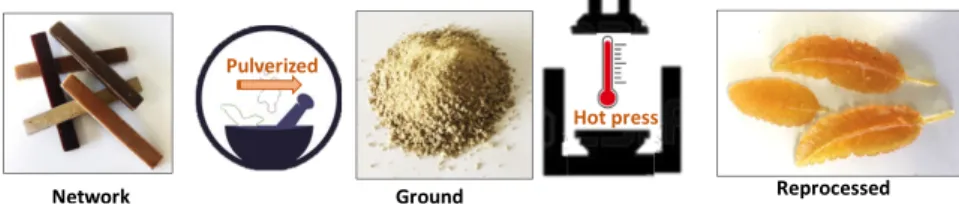
Figure 2.Mechanical reprocessing of ESFO/DTBA thermoset by hot pressing.
Figure 3.Epoxy conversion % for the virgin and recycled materials, determined by FTIR, in function of EVO epoxy content.
https://dx.doi.org/10.1021/acsabm.0c01199 ACS Appl. Bio Mater. XXXX, XXX, XXX−XXX
from 78 to 75%. The other reprocessed thermosets show conversions superior to 90%, with a small drop after recycling: EJSWO (from 97 to 96%), ERPO (from 94 to 92%), and EGRO (from 92 to 91%).Figure 3summarizes the results of calculated epoxy conversions in function of the kind of EVOs and their epoxy content.
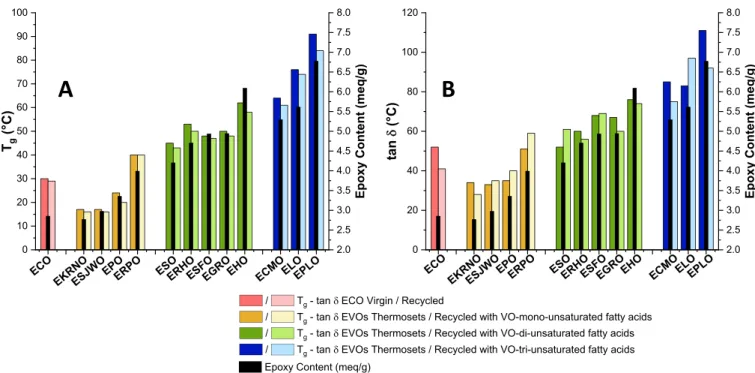
The reprocessed thermosets were analyzed also by dynamic DSC studies to determine the glass transition before and after recycling to evaluate how the recycling affected the materials properties.Figure 4A andTable S4display the obtained and compared results. We can notice a small decrease of Tgvalues after the recycling process in the majority of EVO thermosets, except the ERPO/DTBA system that kept the same glass transition value after the reprocessing. The most affected is the system with perilla oil, EPLO/DTBA resin, and the thermosets of category 3, showing a decreasing of Tgfrom 91 to 84°C. Hu
et al.23 reported also a decrease of the Tgfor the
isosorbide-derived epoxy systems cured with 4,4′-disulfanediyldianiline
attributed to some loss in disulfide linkages. In our case, the decrease of Tgcan be associated to a higher amount of DTBA
(so in disulfide linkages and ester linkages) in the formulation with EPLO that has the higher epoxy content. In consequence, it is possible that not all the dynamic bonds were reformed during the reprocessing due to the high cross-link density of this category of EVOs. The other reprocessed resins present a reduction with only 1−2 °C, as EKRNO and ESJWO (from 17 to 16 °C), ESO (from 45 to 43 °C), EGRO (from 50 to 48 °C), or ECO (from 30 to 29 °C). This result can be attributed to the lower network reticulation facilitating the bond reorganization and therefore the maintenance of mechanical properties after recycling. Similar results were obtained by Chen et al.36 for castor oil/4-aminophenyl disulfide polyur-ethane networks.
The analysis of thermo-mechanical behavior, performed by DMA, shows that each recycled sample (Figure S5) displays a unique and clearα transition. InFigure S4, the comparison of
Figure 4.Tgvalues determined by (A) dynamic DSC and (b) tanδ obtained by DMA for the virgin and the reprocessed thermosets. Correlation
with the EVOs epoxy content.
Table 2. DMA Results Obtained for Virgin (V) and Reprocessed Materials (R)
tanδ(°C) E′G(MPa)a E′R(MPa)b ν(mmol·cm−3)c
EVO/DTBA V R V R V R V R EKRNO 34± 1 28± 1 630 1950 0.21 0.14 0.025 0.017 ECO 52± 1 41± 1 850 1500 0.14 0.05 0.02 0.05 ESJWO 34± 1 35± 1 1145 1700 0.48 0.27 0.072 0.094 EPO 35± 1 40± 1 1900 1080 0.59 0.55 0.07 0.158 ERPO 51± 1 59± 1 1400 1080 0.82 1.24 0.09 0.35 ESO 52± 1 61± 1 900 2100 0.82 4.34 0.08 0.41 ERHO 60± 1 56± 1 1430 2100 0.92 2.71 0.11 0.26 ESFO 68± 1 69± 1 780 1920 3.13 0.32 0.31 0.27 EGRO 67± 1 60± 1 1090 1550 5.84 2.46 0.58 0.21 ECMO 85± 1 75± 1 400 2290 2.78 0.83 0.71 0.24 ELO 83± 1 97± 1 2550 2660 9.0 8.0 1.25 0.81 EHO 76± 1 74± 1 1200 2370 3.03 2.15 0.75 0.39 EPLO 111± 1 92± 1 630 2400 5.95 9.15 3.0 0.82 aE′
G- Storage modulus in glassy state.bE′R-Storage modulus in rubbery state.cCross-link density.
https://dx.doi.org/10.1021/acsabm.0c01199 ACS Appl. Bio Mater. XXXX, XXX, XXX−XXX
the tanδ and storage moduli, E′, for virgin and recycled resins are illustrated and the results are displayed inTable 2.Figure 4B confronts the values of tan δ corroborated also with the epoxy content. From thisfigure, we can notice that the tan δ values of recycled samples do not follow the same trend with the corresponding Tg results presented in Figure 4A. As an example, the tanδ of reprocessed ESJWO, EPO, ERPO, ESO, and ESFO increase after the recycling procedure, consistent with the results obtained for the ELO reference system.29 In contrast, surprisingly, the other reprocessed resins exhibit a drop of tan δ values; the more evident decrease being measured in the case of EPLO recycled resin versus virgin resin. Moreover, the amplitudes of the damping factor show a sensible increase after the recycling, especially for reprocessed resins with higher epoxy content. Also, all the reprocessed resins exhibited higher E′ in the glassy state than the virgin thermosets. Higher moduli in both the glassy state and at room temperature were observed by Memon et al.37for the recycled vitrimers obtained by bio-based vanillin diglycidyl ether and petroleum-based counterpart (DGEBA) cross-linked with isophorone diamine (IPDA) in the presence of ethylene glycol diglycidyl ether as reactive diluent. The authors explained that the degree of hardening of the two epoxy networks would increase slightly after heat press treatment. Recycled EVO thermosets of category 3 exhibited, in general, higher moduli than the virgin resins. The analysis of the cross-linking density applied using Flory’s theory34shows that after the reprocessing procedure, the cross-link densities of EVOs with higher epoxy content suffer a reduction, in contrast with EVOs with low epoxy content that have a constant or even increased linking. As example, EPLO virgin resin has the higher cross-linking and performance properties, showing after recycling a loss of properties and a decrease in cross-linking from 3.0 to 0.82 mmol·cm−3, according to the previous considerations regarding the difficulty of recycling high reticulated thermosets. In contrast, some recycled EVO thermosets, such as ECO,
ESJWO, EPO, ESO, and ERHO, exhibited higher values compared with the virgin materials. This result can be explained probably by the fact that under reprocessing conditions (temperature and pressure) an easier rearrangement of the network’s structure occurred favoring the increasing in cross-links density.
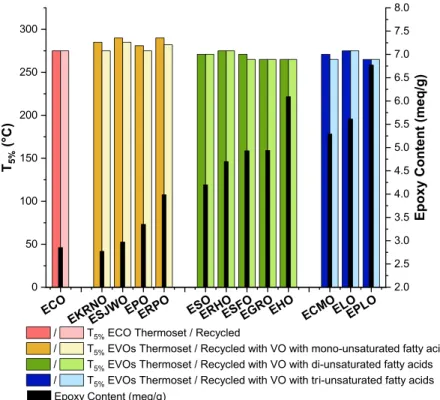
The thermal stabilities were investigated by thermogravi-metric analysis under an air atmosphere by comparing virgin and recycled EVOs resins. The obtained results with the temperature at 5% weight loss (T5%) are displayed inFigure 5
and summarized in Table 3 and Table S4. These results
indicate that the recycling does not affect the thermal stabilities of the thermosets, as also presented in Figure S5 where the thermograms of virgin and recycled resins are almost similar.
For the ELO reference, no degradation was observed after the recycling protocol; a T5%= 275°C being measured for the virgin and reprocessed thermosets.29 Similar results were obtained for other EVOs30 after reprocessing: ECO and ERHO (275°C); ESO (271 °C); and EGRO, ECMO, EHO, and EPLO (265°C).
The thermal properties reported by Ma et al.23 for the isosorbide-derived epoxy/4-AFD thermoset showed a decrease
Figure 5.TGA analysis: comparison of thermal stabilities, T5%, of virgin EVO thermosets and reprocessed ones versus epoxy content.
Table 3. T5%by TGA Analysis for Virgin Thermosets (V)
and Reprocessed (R) Materials
T5%,°C T5%,°C EVOs/ DTBA V R EVOs/ DTBA V R EKRNO 285± 1 275± 1 ERHO 275± 1 275± 1 ECO 275± 1 275± 1 ESFO 271± 1 265± 1 ESJWO 290± 1 285± 1 EGRO 265± 1 265± 1 EPO 285± 1 275± 1 ECMO 265± 1 265± 1 ERPO 285± 1 282± 1 EHO 265± 1 265± 1 ESO 271± 1 271± 1 EPLO 265± 1 265± 1 https://dx.doi.org/10.1021/acsabm.0c01199 ACS Appl. Bio Mater. XXXX, XXX, XXX−XXX
of the T5%from 269°C for the virgin thermoset to 263 °C for
the 1st recycling until reaching 250°C at the end of the third recycling. The authors explained that the obtained T5%
decreases due to the increasing of dangling chains induced by the loss of S−S or C−C bonds.
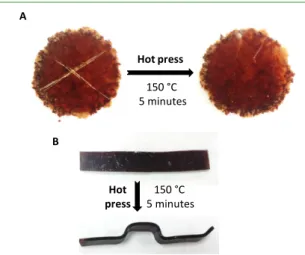
Repairability and Reshapability.Figure 6A displays the aspect of damage in the surface of the recycled EKRNO/
DTBA/IM resin and that it is possible to repair the scratch caused in the material by applying the temperature used for the recycling, for 5 min, to obtain a fully recovered surface. Odriozola et al.22repaired completely the scratch performed in a specimen based on DGEBA/4-AFD, applying 200°C heating
and pressure and demonstrating that the DGEBA network prepared using a diamine cross-linker without disulfide bonds (diethyltoluenediamine) was unsuccessful to be repaired. The dynamic disulfide networks allow the reprocessing, giving to the chains the ability to relax at elevated temperature and moreover to modify their shape.
The reshaping of some thermosets was reported for disulfide-based materials22,24,31as for transesterification mech-anisms8,35or for imine38networks. The results of thermoform-ing applied for the recycled ESJWO/DTBA is shown inFigure 6B. A CARVER manual press using a zigzag-shaped mold was used, applying heating to 150 °C that was kept for 5 min. Reshapability appears occur easier in recycled thermosets of the categories 1 and 2, while the repairability gave excellent results for all recycled EVOs.
Shape Memory. Finally, the shape memory abilities were tested for prepared recycled thermosets. InFigure 7, the results obtained with the EPO recycled thermoset are presented. To test the material shape memory, the sample was twisted to a temporary shape and recovered to their original shape.Figure 7a shows the initial, permanent strip shape n° 1. This specimen was twisted manually after heating at 90 °C for 10 s and immediately giving the helix shape (Figure 7b), and then the twisted strip reached the temporary shape at room temper-ature. Afterward, immersing the strip in hot water (∼90 °C), the original flat permanent shape n° 1 was recovered (Figure 7c). Consequently, to reach the permanent shape n° 2, the
strip was twisted and maintained with a clamp to keep constant the shape and located in oven at 150 °C for 20 min (Figure 7d) and then was cooled to room temperature. After heating at 90 °C for 10 s, a new temporary “C” shape was given to the
Figure 6.(A) Repairability experiments of the EKRNO/DTBA and
(B) reshapability of ESJWO/DTBA recycled thermosets.
Figure 7.Shape memory and permanent shape for the EPO/DTBA recycled thermosetting resin: (a) permanent shape n° 1, (b) temporary shape
after heating and twisting, (c) permanent shape n° 1 after recovering, (d) permanent shape n° 2, (e) temporary shape after heating, and (f)
recovered permanent shape n° 2.
https://dx.doi.org/10.1021/acsabm.0c01199 ACS Appl. Bio Mater. XXXX, XXX, XXX−XXX
specimen (Figure 7e). At the end, a new immersion in hot water led to reach the helix permanent shape n° 2 again (Figure 7f).
However, all the recycled thermoset materials exhibited shape memory ability. Due to the high Tgof the recycled EVO
resins from category 3, higher temperatures are necessary to reach the temporary and consequently the permanent shape n° 1. It was found that there are required temperatures with∼30 °C above the Tg of the material to obtain satisfactory shape
memory results.
Some thermosetting polymers exhibited shape memory properties comparable with EVOs/DTBA reprocessed resins. Williams et al.39reported shape memory properties of DGEBA cross-linked with citric acid/sebacic acid thermosets, demon-strating that when T > Tg, the sample went back to the
permanent shape. Zhang et al.40made an epoxy vitrimer based on eugenol epoxide cross-linked with succinic anhydride, explaining that the shape changing is reversible and can be repeated several times due to dynamic exchange reactions. As for EVOs/DTBA systems, Fang et al.41showed the synergy of two nets based on dynamic bonds (urethane and hindered urea) incorporated into a poly(urea urethane) network using hexamethylene diisocyanate (HMDI) and a mixture of a diol and a triol cross-linker. The authors reported multiple shape memory effects and recovery at a temperature of 50 °C.
The use of materials with these characteristics is growing exponentially in various fields of application, especially in the biomedical field as internal medical devices in contact with tissue and bodyfluids as reported by El Feninat et al.42
Chemical Stability. Our team30
demonstrated that the EVO-based thermosets can be chemically recycled selecting
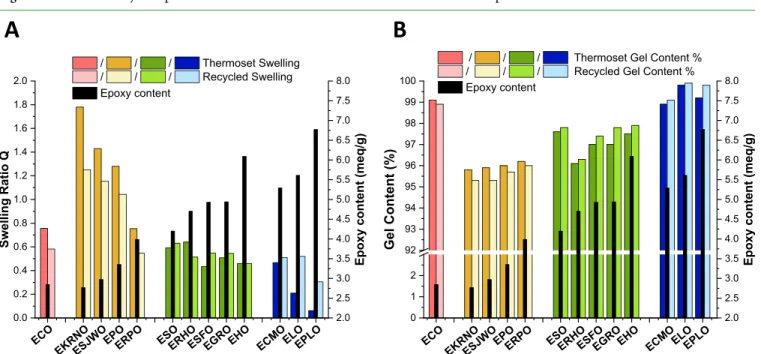
appropriate solvents and conditions. However, both virgin and reprocessed EVO-thermosets exhibited excellent solvent resistance. Toluene was selected as solvent to study the solvent stability of the recycled EVOs materials. The experiment was performed immersing the specimens for 48 h at room temperature, and the results are displayed inFigure 8. At the end of the test, the recycled thermosets were weighted and, in accordance with eq 4, the determined swelling ratio, Q, did not show a mass loss. The results are plotted inFigure 9A, displaying that the recycled thermosets provided by EVOs with low epoxy content have a lower swelling ratio compared to the virgin ones; while moving from category 1 to 3 and increasing the epoxy content, the reprocessed specimens showed an increased swelling ratio compared with the virgin resins. The recycled ERHO resin is the single case of category 2, which shows a decrease in swelling ability. These results can be explained by evolution of cross-linking decreases after recycling. As previously shown, the EVOs with low epoxy content had increased values of cross-linking density after recycling. Therefore, in this case, the swelling ratio is lower in the recycled resins. For EVOs with high epoxy content, the network density decreases after recycling, so the ratio Q is increased.
The gel content (GC) is a fundamental parameter closely interconnected with the cross-link density: a high gel content indicates a high density of cross-links.43
Figure 9B displays the GC % of the thermosets and recycled
materials, analyzed at the end of 48 h in toluene. All the EVO thermosets have a high gel content % from 95.8 to 99.8% for the virgin ones and from 95.3 to 99.9% for the reprocessed ones, which indicates that EVOs are well cured by DTBA, even
Figure 8.Solvent stability of reprocessed EVOs thermosets in toluene after 48 h at room temperature.
Figure 9.(A) Swelling ratio Q and (B) gel content % at the end of the 48 h of immersion in toluene in function of the epoxy content for the virgin
and recycled materials.
https://dx.doi.org/10.1021/acsabm.0c01199 ACS Appl. Bio Mater. XXXX, XXX, XXX−XXX
after reprocessing. Higher GC % values were observed for the thermosets from category 3: the results are in good agreement with fully bio-based thermosets based on epoxidized sucrose soyate (ESS) and citric or malic acids in different solvents (ethanol, 2-propanol, 1-propanol and 1,4-dioxane).44 The authors showed a gel content range from 97.3 to 99.6% using acetone and performing the experiment at room temperature for 24 h. The same authors reported a GC between 94.4 and 99.7% for ESS cross-linked with several natural acids in the presence of water to assist the reaction and to solubilize the acids (citric, DL-malic,L-tartaric, malonic, oxalic, and glutaric
acid) using an extra catalyst or toxic compounds.45
GC % higher than 99% were obtained applying the same conditions by Ozawa and Shibata46 for the reprocessable disulfide-containing bismaleimide-amine thermosets prepared by Michael addition reaction of 4,4 ′-bismaleimidodiphenyl-methane, 4-aminophenyl disulfide (APDS), and Jeffamine ED-600. Yu et al.47 reported vanillin-based epoxy vitrimers prepared by reacting the mono-glycidyl structure of vanillin with an isophorone diamine hardener. The authors found GC ratios up to 91.3%, and after the first reprocessing, the GC increased to 94.5% to reach 96.2% for the third time reprocessed vitrimers. Tan et al.48,49 reported ESO/methyl-hexahydrophthalic anhydride vitrimer obtained using 2-ethyl-4-methylimidazole as catalyst GC values between 87 and 95.9%, in function of the catalyst percentage, and the authors compared the values with ESO/DGEBA blends obtaining 98% for 50:50 mixture.
As shown inFigure 9, for the virgin EVO thermosets from category 1, lower GC % values were obtained. After reprocessing, these values decreased, in accordance with the cross-linking density decreasing. The low swelling ratio value and high gel content % obtained for ECO-virgin thermoset were confirmed even after recycling.30
■
CONCLUSIONSIn this work, 12 thermosets based on EVOs cured with a disulfide containing diacid hardener have been recycled and the properties have been compared with those of virgin resins. The synergy of the mechanisms, disulfide exchange and transesterification reaction, guaranteed complete mechanical recycling for all materials. Thermosets from category 1, with low epoxy content, have shown greater facility of reprocessing. Also, these materials showed a lower decreasing of cross-linking, mechanical properties, and a better solvent resistance compared with the thermosets from the third category, made using VOs with tri-unsaturated fatty acids. The 3R skills have been confirmed following repairability and reshapability tests. Finally, excellent shape memory properties have been observed for the recycled materials, as vitrimers, opening to a category of renewable and sustainable materials.
■
ASSOCIATED CONTENT*
sı Supporting InformationThe Supporting Information is available free of charge at
https://pubs.acs.org/doi/10.1021/acsabm.0c01199.
Chemical reagents; curing and post-curing conditions for the selected EVOs; and FT-IR, Tg, TGA, DMA analysis, and gel content % comparison between virgin and reprocessed thermosets (PDF)
■
AUTHOR INFORMATIONCorresponding Author
Alice Mija − Université Côte d’Azur, Institut de Chimie de Nice, UMR CNRS 7272, Nice Cedex 2 06108, France; orcid.org/
0000-0001-5208-5956; Email:[email protected]
Authors
Chiara Di Mauro − Université Côte d’Azur, Institut de Chimie de Nice, UMR CNRS 7272, Nice Cedex 2 06108, France Samuel Malburet − SPECIFIC POLYMERS, Castries 34160,
France; orcid.org/0000-0002-4224-9520
Alain Graillot − SPECIFIC POLYMERS, Castries 34160, France
Complete contact information is available at:
https://pubs.acs.org/10.1021/acsabm.0c01199 Notes
The authors declare no competingfinancial interest.
■
ACKNOWLEDGMENTSThis work was supported by the ECOXY project funded by the Bio-Based Industries Joint Undertaking under European Union Horizon 2020 research and innovation program (grant agreement no. 744311).
■
ABBREVIATIONSEVO epoxidized vegetable oil; ELO epoxidized linseed oil; EKRNO epoxidized karanja oil; ECRO epoxidized cardanol oil; ECO epoxidized castor oil; EPO epoxidized peanut oil; ERPO epoxidized rapeseed oil; ESO epoxidized soybean oil; ERHO epoxidized rose hip seed oil; ESFO epoxidized safflower oil; EGRO epoxidized grapeseed oil; ECMO epoxidized camelina oil; EHO epoxidized hemp oil; EPLO epoxidized perilla oil; IM imidazole; DTBA 2,2 ′-dithiodiben-zoic acid; 4-AFD 4,4′-aminophenyl disulfide; DTDA 4,4′-dithiodibutyric acid; DGEBA diglycidyl ether of bisphenol A; FT-IR Fourier transform infrared spectroscopy; DSC di ffer-ential scanning calorimetry; DMA dynamic mechanical analysis; TGA thermogravimetric analysis; DTG derivative thermogravimetric analysis; Tg glass transition temperature; GC % gel content %
■
REFERENCES(1) AISBL PlasticsEurope, Plastics−the Facts 2018;
http://www.-plasticseurope.org/application, 2019.
(2) Rahimi, A.; García, J. M. Chemical recycling of waste plastics for
new materials production. Nat. Rev. Chem. 2017, 1, 1−11.
(3) Okan, M.; Aydin, H. M.; Barsbay, M. Current approaches to waste polymer utilization and minimization: a review. J. Chem.
Technol. Biotechnol. 2019, 94, 8−21.
(4) Strategy, P. A European strategy for plastics in a circular economy. Communication from the Commission to the European Parliament, the Council, the European Economic and Social Committee and the Committee of the Regions; European Commission: Brussels 2018.
(5) Bowman, C. N.; Kloxin, C. J. Covalent Adaptable Networks: Reversible Bond Structures Incorporated in Polymer Networks.
Angew. Chem. Int. Ed. 2012, 51, 4272−4274.
(6) Kloxin, C. J.; Scott, T. F.; Adzima, B. J.; Bowman, C. N. Covalent Adaptable Networks (CANs): A Unique Paradigm in Crosslinked
Polymers. Macromolecules 2010, 43, 2643−2653.
(7) Rowan, S. J.; Cantrill, S. J.; Cousins, G. R. L.; Sanders, J. K. M.; Stoddart, J. F. Dynamic Covalent Chemistry. Angew. Chem., Int. Ed.
2002, 41, 898−952.
https://dx.doi.org/10.1021/acsabm.0c01199 ACS Appl. Bio Mater. XXXX, XXX, XXX−XXX
(8) Montarnal, D.; Capelot, M.; Tournilhac, F.; Leibler, L. Silica-like malleable materials from permanent organic networks. Science 2011,
334, 965−968.
(9) Corbett, P. T.; Leclaire, J.; Vial, L.; West, K. R.; Wietor, J.-L.; Sanders, J. K. M.; Otto, S. Dynamic Combinatorial Chemistry. Chem.
Rev. 2006, 106, 3652−3711.
(10) Altuna, F. I.; Hoppe, C. E.; Williams, R. J. J. Epoxy Vitrimers: The Effect of Transesterification Reactions on the Network Structure. Polymer 2018, 10, 43.
(11) Shi, B.; Greaney, M. F. Reversible Michael addition of thiols as a new tool for dynamic combinatorial chemistry. Chem. Commun.
2005, 7, 886−888.
(12) Jin, Y.; Yu, C.; Denman, R. J.; Zhang, W. Recent advances in dynamic covalent chemistry. Chem. Soc. Rev. 2013, 42, 6634−6654.
(13) Rekondo, A.; Martin, R.; Ruiz de Luzuriaga, A.; Cabañero, G.; Grande, H. J.; Odriozola, I. Catalyst-free room-temperature self-healing elastomers based on aromatic disulfide metathesis. Mater.
Horiz. 2014, 1, 237−240.
(14) Sanyal, A. Diels−Alder Cycloaddition-Cycloreversion: A
Powerful Combo in Materials Design. Macromol. Chem. Phys. 2010,
211, 1417−1425.
(15) Kolomiets, E.; Lehn, J.-M. Double dynamers: molecular and supramolecular double dynamic polymers. Chem. Commun. 2005,
211, 1519−1425.
(16) Calama, M. C.; Timmerman, P.; Hulst, R.; Fokkens, R.; Nibbering, N. M. M.; Timmerman, P. Libraries of non-covalent hydrogen-bonded assemblies; combinatorial synthesis of supra-molecular systems. Chem. Commun. 1998, 1021−1022.
(17) Denissen, W.; Winne, J. M.; Du Prez, F. E. Vitrimers: permanent organic networks with glass-like fluidity. Chem. Sci. 2016, 7, 30−38.
(18) Jurowska, A.; Jurowski, K. Vitrimers-the miracle polymer materials combining the properties of glass and plastic? Chemik 2015, 69, 392−394.
(19) Capelot, M.; Unterlass, M. M.; Tournilhac, F.; Leibler, L. Catalytic Control of the Vitrimer Glass Transition. ACS Macro Lett. 2012, 1, 789−792.
(20) Lei, Z. Q.; Xiang, H. P.; Yuan, Y. J.; Rong, M. Z.; Zhang, M. Q. Room-Temperature Self-Healable and Remoldable Cross-linked Polymer Based on the Dynamic Exchange of Disulfide Bonds.
Chem. Mater. 2014, 26, 2038−2046.
(21) Tsuruoka, A.; Takahashi, A.; Aoki, D.; Otsuka, H. Fusion of Different Crosslinked Polymers Based on Dynamic Disulfide
Exchange. Angew. Chem., Int. Ed. 2020, 59, 4294−4298.
(22) de Luzuriaga, A. R.; Martin, R.; Markaide, N.; Rekondo, A.; Cabañero, G.; Rodríguez, J.; Odriozola, I. Epoxy resin with exchangeable disulfide crosslinks to obtain reprocessable, repairayble and recyclable fiber-reinforced thermoset composites. Mater. Horiz.
2016, 3, 241−247.
(23) Ma, Z.; Wang, Y.; Zhu, J.; Yu, J.; Hu, Z. Bio-based epoxy vitrimers: Reprocessibility, controllable shape memory, and degrad-ability. Journal of Polymer Science Part A: Polym. Chem 2017, 55, 1790−1799.
(24) Zhou, F.; Guo, Z.; Wang, W.; Lei, X.; Zhang, B.; Zhang, H.; Zhang, Q. Preparation of self-healing, recyclable epoxy resins and low-electrical resistance composites based on double-disulfide bond
exchange. Compos. Sci. Technol. 2018, 167, 79−85.
(25) Imbernon, L.; Oikonomou, E. K.; Norvez, S.; Leibler, L. Chemically crosslinked yet reprocessable epoxidized natural rubber via thermo-activated disulfide rearrangements. Polym. Chem. 2015, 6, 4271−4278.
(26) Chen, M.; Zhou, L.; Wu, Y.; Zhao, X.; Zhang, Y. Rapid Stress Relaxation and Moderate Temperature of Malleability Enabled by the Synergy of Disulfide Metathesis and Carboxylate Transesterification
in Epoxy Vitrimers. ACS Macro Lett. 2019, 8, 255−260.
(27) Tran, T.-N.; Mauro, C. D.; Graillot, A.; Mija, A. Chemical Reactivity and the Influence of Initiators on the Epoxidized Vegetable
Oil/Dicarboxylic Acid System. Macromolecules 2020, 53, 2526−2538.
(28) Mauro, C. D.; Genua, A.; Mija, A. Building thermally and chemically reversible covalent bonds in vegetable oils based epoxy thermosets. Influence of epoxy-hardener ratio to promote recycla-bility. Mater. Adv. 2020, 1, 1788−1798.
(29) Di Mauro, C.; Tran, T.-N.; Graillot, A.; Mija, A. Enhancing the Recyclability of a Vegetable Oil-Based Epoxy Thermoset through
Initiator Influence. ACS Sustainable Chem. Eng. 2020, 8, 7690−7700.
(30) Di Mauro, C.; Malburet, S.; Genua, A.; Graillot, A.; Mija, A. Sustainable series of new epoxidized vegetable oils-based thermosets with chemical recycling properties. Biomacromolecules 2020, 21, 3923−3935.
(31) Azcune, I.; Odriozola, I. Aromatic disulfide crosslinks in polymer systems: Self-healing, reprocessability, recyclability and more.
Eur. Polym. J. 2016, 84, 147−160.
(32) Casatorre, E.; Luzuriaga, A. R. D.; Rekondo, A.; Genua, A.; Azcune, I.; Grande, H.-J.; Martinx, M. F. S.; Aparicio, X. Reworkable crosslinked polythiourethanes with intrinsic injectability, repairability and recyclability., Patent No. WO 2019/0e63787, 2019.
(33) Matějka, L.; Pokorný, S.; Dušek, K. Acid curing of epoxy resins. A comparison between the polymerization of diepoxide-diacid and monoepoxide-cyclic anhydride systems. Die Makromol. Chem 1985,
186, 2025−2036.
(34) Flory, P. J. Principles of polymer chemistry; Cornell University Press: 1953.
(35) Capelot, M.; Montarnal, D.; Tournilhac, F.; Leibler, L. Metal-Catalyzed Transesterification for Healing and Assembling of Thermosets. J. Am. Chem. Soc. 2012, 134, 7664−7667.
(36) Chen, J.-H.; Hu, D.-D.; Li, Y.-D.; Meng, F.; Zhu, J.; Zeng, J.-B. Castor oil derived poly(urethane urea) networks with reprocessibility
and enhanced mechanical properties. Polymer 2018, 143, 79−86.
(37) Memon, H.; Liu, H.; Rashid, M. A.; Chen, L.; Jiang, Q.; Zhang, L.; Wei, Y.; Liu, W.; Qiu, Y. Vanillin-Based Epoxy Vitrimer with High Performance and Closed-Loop Recyclability. Macromolecules 2020, 53, 621−630.
(38) Zhao, S.; Abu-Omar, M. M. Recyclable and Malleable Epoxy Thermoset Bearing Aromatic Imine Bonds. Macromolecules 2018, 51,
9816−9824.
(39) Altuna, F. I.; Hoppe, C. E.; Williams, R. J. J. Shape memory epoxy vitrimers based on DGEBA crosslinked with dicarboxylic acids and their blends with citric acid. RSC Adv. 2016, 6, 88647−88655.
(40) Liu, T.; Hao, C.; Wang, L.; Li, Y.; Liu, W.; Xin, J.; Zhang, J. Eugenol-Derived Biobased Epoxy: Shape Memory, Repairing, and Recyclability. Macromolecules 2017, 50, 8588−8597.
(41) Fang, Z.; Zheng, N.; Zhao, Q.; Xie, T. Healable, Reconfigurable, Reprocessable Thermoset Shape Memory Polymer with Highly Tunable Topological Rearrangement Kinetics. ACS Appl. Mater. Interfaces 2017, 9, 22077−22082.
(42) El Feninat, F.; Laroche, G.; Fiset, M.; Mantovani, D. Shape Memory Materials for Biomedical Applications. Adv. Eng. Mater. 2002, 4, 91−104.
(43) Saithai, P.; Lecomte, J.; Dubreucq, E.; Tanrattanakul, V. Effects of different epoxidation methods of soybean oil on the characteristics of acrylated epoxidized soybean oil-co-poly(methyl methacrylate) copolymer. Express Polym. Lett. 2013, 7, 910−924.
(44) Ma, S.; Kovash, C. S., Jr.; Webster, D. C. Effect of solvents on the curing and properties of fully bio-based thermosets for coatings. J. Coat. Technol. Res. 2017, 14, 367−375.
(45) Ma, S.; Webster, D. C. Naturally Occurring Acids as Cross-Linkers To Yield VOC-Free, High-Performance, Fully Bio-Based,
Degradable Thermosets. Macromol.ecules 2015, 48, 7127−7137.
(46) Ozawa, M.; Shibata, M. Reprocessable bismaleimide-diamine thermosets based on disulfide bonds. React. Fun. Polym. 2020, 146, 104404.
(47) Yu, Q.; Peng, X.; Wang, Y.; Geng, H.; Xu, A.; Zhang, X.; Xu, W.; Ye, D. Vanillin-based degradable epoxy vitrimers: Reprocessability and mechanical properties study. Eur. Polym. J. 2019, 117, 55−63.
(48) Tan, S. G.; Ahmad, Z.; Chow, W. S. Interpenetrating polymer network structured thermosets prepared from epoxidized soybean oil/
diglycidyl ether of bisphenol A. Polym. Int. 2014, 63, 273−279.
https://dx.doi.org/10.1021/acsabm.0c01199 ACS Appl. Bio Mater. XXXX, XXX, XXX−XXX
(49) Tan, S. G.; Chow, W. S. Curing Characteristics and Thermal Properties of Epoxidized Soybean Oil Based Thermosetting Resin. J.
Am. Oil Chem. Soc. 2011, 88, 915−923.
https://dx.doi.org/10.1021/acsabm.0c01199 ACS Appl. Bio Mater. XXXX, XXX, XXX−XXX