Ministry of Higher Education and Scientific Research
Abdel Hamid Ibn Badis University
Faculty of
A dissertation submitted in partial fulfillment for the requirement of
Didactics and Applied Language
Presented by
BELKHIR Sorya
President:
Mrs. OULD SI BOUZIANE SabrinaSupervisor:
Dr. BENSTAALI LeilaExaminer:
Ms. BAHRAOUI SofiaAcademic Year: 2019
The Impact of
Training on Learners’ Achievement
Case of EFL secondary schoolof Higher Education and Scientific Research
Abdel Hamid Ibn Badis University – Mostaganem
Faculty of Foreign Languages
Department of English
A dissertation submitted in partial fulfillment for the requirement of
Master Degree in
Didactics and Applied Language
Supervised by
Dr. BENSTAALI
Members of the board
Mrs. OULD SI BOUZIANE Sabrina UNIVERSITY OF MOSTAGANEM Dr. BENSTAALI Leila UNIVERSITY OF MOSTAGANEM
BAHRAOUI Sofia UNIVERSITY OF MOSTAGANEM
Academic Year: 2019 – 2020
The Impact of Teacher’s Pre-Service
Training on Learners’ Achievement
econdary schools’ trained teachers in Mostaganem and 5 High School (ENS) in Oran
of Higher Education and Scientific Research
Mostaganem –
A dissertation submitted in partial fulfillment for the requirement of
upervised by
BENSTAALI Leila UNIVERSITY OF MOSTAGANEM UNIVERSITY OF MOSTAGANEM UNIVERSITY OF MOSTAGANEMService
Training on Learners’ Achievements
and 5th year students ofDedication
I dedicate this work to “my queen”, my dear mother for her love, sacrifice and
support. She is my source of inspiration and encouragement
It is dedicated to my beloved father “the greatest father on the world”. I am
always grateful for his support and confidence in me.
Special dedication is addressed to my grand-mother “God rest her and put her in
paradise” and I hope she is now proud of me and happy for my
accomplishments. I would like to thank her for everything.
Also, it is dedicated to all my family particularly my sister: Iness Noor El Imene
and my aunts: Amel and Naima.
Thank You
Acknowledgements
Firstly, I would like to express my sincere gratitude to my teacher and
supervisor Mrs. Benstaali Leila, for her continuous support, motivation and
valuable advices which helped me in all the time of my research.
I want to thank the jury members who accepted to evaluate this work.
Also, I would never forget to address my most sincere
thanks to the inspector Mr. Baghoussi Khalid for his guidance and help.
My profound thanks go to the secondary schools’ teachers of Mostaganem for
being completely collaborative within the observation and the interview without
forgetting 5
thyear students of High School (ENS) of Oran for their cooperation
by answering the questionnaire.
Abstract
In spite of the development of the teaching process, the teacher nowadays still faces difficulties in transmitting the message to his/her students. Among those difficulties is the lack of teacher training before entering the profession or what is called pre-service training. This study aims at examining the effectiveness of pre-service training on the EFL teachers’ performance and the learners’ achievement in the Algerian context. It also seeks to explore knowledge that pre-service training programme should provide for EFL teachers. A set of hypotheses was suggested. First, pre-service training contributes effectively to the EFL learners’ progress. Second, knowledge about language has to be mastered by EFL student teachers and how to be transmitted correctly to learners with different styles, needs and interests. To test those hypotheses; a questionnaire, an interview and classroom observation were utilized. The research findings reveal that pre-service training equips student teachers with the necessary practice and knowledge before being embarking on the job to enhance their productivity. Then, the enhancement of teachers’ productivity leads to develop the learners’ performance. Hence, pre-service training must be integrated at the level of universities (within the LMD system) to ensure high learning quality.
Key words: pre-service training, student teachers, learners’ achievement, EFL teachers’ performance.
Table of content
Dedication ... I Acknowledgements ... II Abstract ... III Table of content ... IV List of abbreviations ... VIII List of tables ... IX List of figures ... IX
General introduction ... 1
Chapter One: Learning to Teach in a New Era
1.1. Introduction ... 31.2. Teaching in 21st Century ... 3
1.3. Pedagogy ... 4
1.4. Pre-service training: Learning to teach ... 5
1.4.1. Definition of pre-service training ... 5
1.5. Professional knowledge ... 5
1.5.1. Content knowledge ... 6
1.5.2. Pedagogical content knowledge (PCK) ... 7
1.5.3. Knowledge of learners ... 8
1.6. Professional practice ... 8
1.6.1. From the learner’s identity into a teacher’s identity ... 8
1.6.2. Professional relationships ... 10
1.6.2.1. Teacher attitudes towards learners ... 10
1.6.2.2. Teacher collaborative work ... 11
1.6.3. Self-confidence ... 11
1.6.4. Classroom management ... 12
1.6.5. Time management ... 12
1.6.6. Content delivery ... 13
1.6.7. Assessment and monitoring ... 13
1.6.8. Ethical practice ... 14
1.7. Where and when does pre-service training occur? ... 14
1.7.1. Campus-based contexts ... 14
1.7.2. School-based experiences ... 15
1.8. The effect of pre-service training ... 18
1.8.1. Teacher’s performance ... 18
1.8.2. Students’ academic achievement ... 19
1.9. Conclusion ... 19
Chapter Two: Research Methodology
2.1. Introduction ... 20 2.2. Research methodology ... 20 2.3. Research instruments ... 21 2.3.1. The questionnaire ... 22 2.3.2. Classroom observation ... 25 2.3.3. The interview ... 32 2.4. Conclusion ... 34Chapter Three: Data Findings and Recommendations
3.1. Introduction ... 36 3.2. Data analysis ... 36 3.2.1. The questionnaire ... 36 3.2.2. The interview ... 53 3.2.3. Classroom observation ... 56 3.3. Data discussion ... 58 3.3.1. The questionnaire ... 58 3.3.2. The interview ... 58 3.3.3. Classroom observation ... 593.4. General discussion of the results ... 59
3.5. Limitation of the study ... 60
3.6. Recommendations ... 60
3.6.1. Devoting more time for practice ... 60
3.6.2. Providing diverse practical experiences ... 60
3.6.3. Qualified educators ... 61
3.6.4. Generalizing the pre-service training in all universities ... 61
General conclusion ... 62 Bibliography ... 64 Appendices ... 72
List of abbreviations
EFL: English as Foreign Language
ENS: High School (pre-service training institution)
ELLs: English Language Learners
PCK: Pedagogical Content Knowledge
HEI: Higher Education Institution
NQTs: New Qualified Teachers
ICT: Information and Communications Technologies
IQ: Intelligent Quotient
List of tables
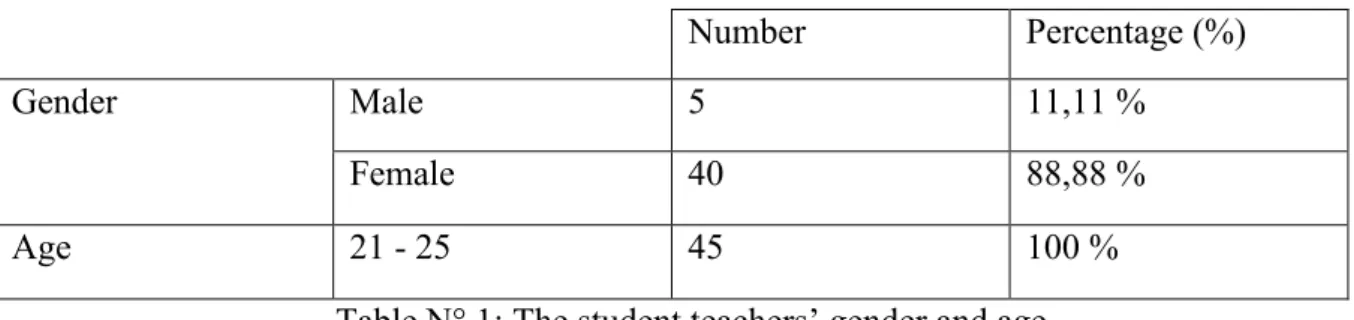
Table N° 1: The student teachers’ gender and age………36
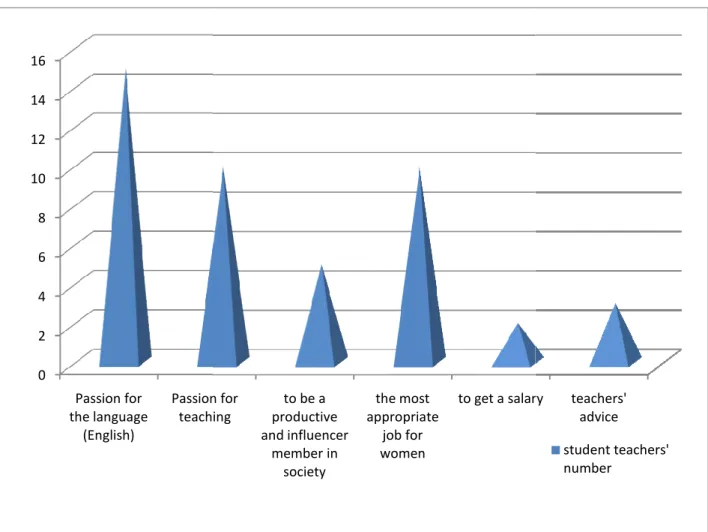
Table N° 2: The student teachers’ reasons behind choosing the profession (teaching EFL)…37 Table N° 3: The kinds of practical experiences………39
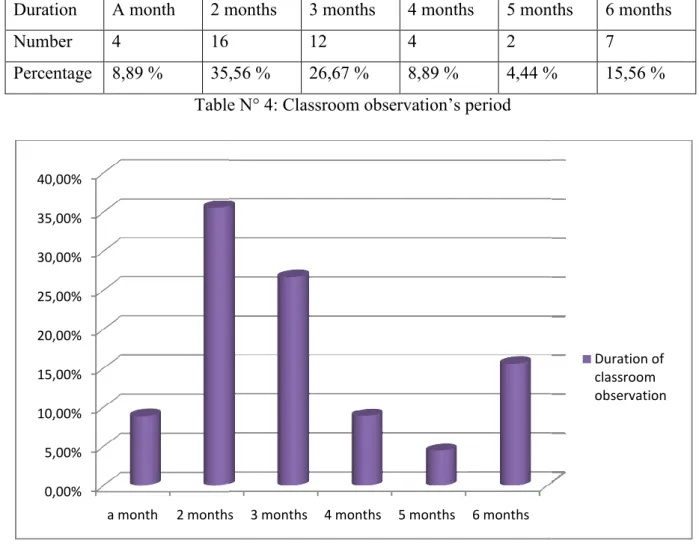
Table N° 4: Classroom observation’s period………40
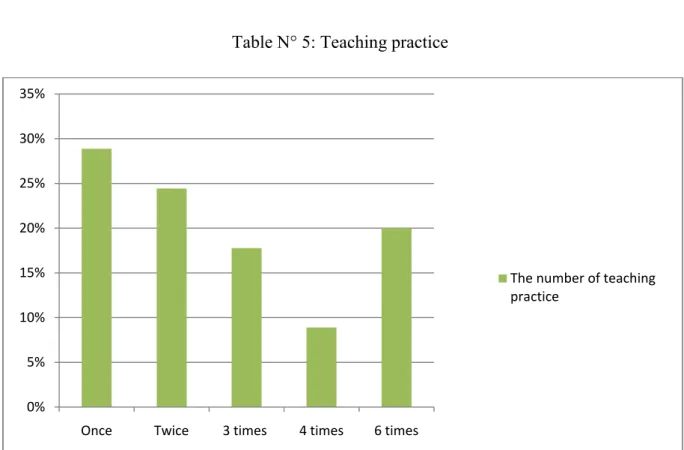
Table N° 5: Teaching practice………..41
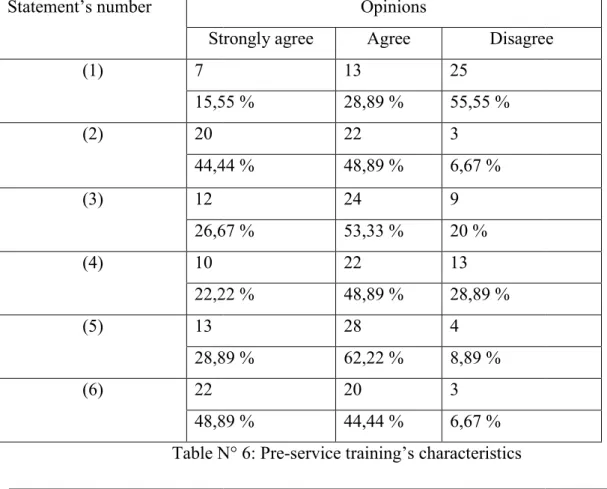
Table N° 6: Pre-service training characteristics………...……….43
Table N° 7: Student teachers’ feelings after working collaboratively………..47
List of figures
Figure 1: Shulman’s Major Categories of Teacher Knowledge……….6
Figure 2: Venn diagram about Pedagogical content knowledge (PCK)……….7
Figure 3: The factors influencing the development of teachers’ beliefs...9
Figure 4: The student teachers’ reasons behind choosing the profession (teaching EFL)……37
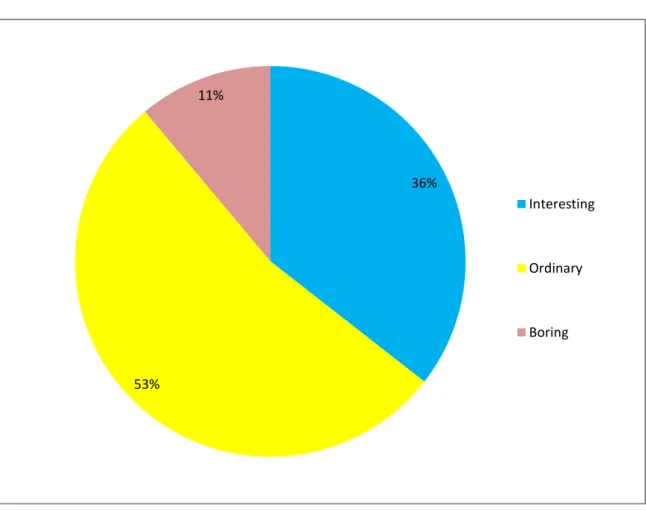
Figure 5: The student’s teacher’s opinion about the High School’s (ENS) lectures…………38
Figure 6: The practical experiences………..39
Figure 7: Classroom observation’s period………40
Figure 8: Teaching practice………...………41
Figure 9: Pre-service training characteristics…...……….43
Figure 10: Student teachers’ engagement in project……….45
Figure 11: Student teachers’ engagement in collaborative projects……….46
Figure 12: Student teachers’ feelings after working collaboratively………47
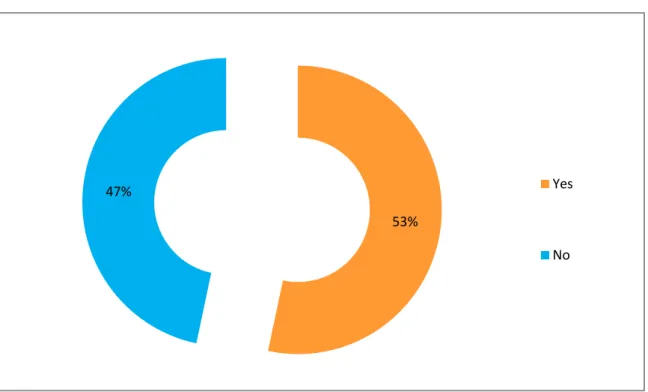
Figure 13: The effect of ENS on the student teachers’ readiness……….48
Figure 14:Their opinions about the similarity of previous and nowadays' way of teaching…50 Figure 15: Their opinions about the courses' content………...51
General introduction
General
“We learn to do something by doing it, there is no other way”
John Holt
The teaching and learning processes have been influenced by many recent discussions and debates that have one main objective which is ‘promoting high quality of EFL teachers to ensure high quality of learning. Teaching EFL is considered as a challenging task especially for novice teachers. It requires particular knowledge, skills and competencies to reach the expected learning results. As a result, most researchers and educators try to bring change and innovation to cope with the new demands of the educational system. Likewise, solving learners’ difficulties has also attracted a great deal of Algerian educators. However, little if no attention has been given to the teachers’ needs, which can be summarized in one main problem: the lack of teachers’ training at the level of Algerian universities.
The present study aims at confirming the effectiveness of the pre-service training on the EFL teachers’ and learners’ progress as well in the Algerian context. The study’s objectives are twofold: first, it is intended to prove the importance and the necessity of the pre-service training for the EFL prospective teachers, specially the novice EFL secondary schools’ teachers. Accordingly, the essential objective is to make this kind of training as an obligatory stage for EFL student teachers in all institutions to be qualified as professional teachers. Second, the investigation attempts to explore the difficulties that the novel EFL teachers may face, then how does the pre-service training help them to behave in particular situations where those difficulties exist. Thus, to reach the investigation’s purpose, some research questions have been raised.
1) To what extent does pre-service training contribute to improve EFL learners’ performance?
2) What kind of knowledge do EFL student teachers need to acquire to be effective teachers?
In line with these questions, some hypotheses are put forward:
1) Pre-service training contributes to improving EFL learners’ performance.
2) Knowledge about language has undoubtedly to be mastered, but the most important issue is to know how to transmit this knowledge to different learners.
With the intention to realize the research credibility and proving the suggested hypotheses, both quantitative and qualitative approaches were employed. An interview was conducted with EFL Secondary Schools’ teachers of Mostaganem, who were qualified from High School (ENS), to identify the effects of knowledge acquired during pre-service training. A questionnaire was also handed to 5th year students of high school in Oran (ENS), who are still in the training stage. Moreover, a classroom observation was held to analyse EFL trained teachers’ and their learners’ behaviours and attitudes in the classroom.
The current research work is divided into three main chapters. The first chapter is a theoretical overview of the topic which begins with definitions of the key terms. Then, it includes the effect of pre-service training on the prospective EFL teachers’ identities in terms of their professional knowledge and practical skills. Also, it identifies pre-service training contexts where the student teachers were provided with professional preparation. In the end of this chapter, it is attempted to present the influence of pre-service training programme on the EFL teachers’ performance and learners’ academic achievement.
The second chapter is centred on the practical aspect of the study. It focuses on exploring both teacher’s and learners’ attitudes towards each other through observing them. Moreover, a questionnaire was given to 5th year student teachers of High School (ENS) in Oran. Besides, EFL Secondary Schools’ trained teachers of Mostaganem were interviewed. The three data collection instruments are described with the justification behind using them.
The third chapter includes the data analysis of data collection tools: the questionnaire, classroom observation and the interview. Their results are presented in tables, diagrams and figures. After the findings’ discussion, some recommendations are put forward basing on what is found. This chapter suggests some practical solutions to improve pre-service training programmes and the Algerian educational system by treating the existed deficiencies.
Chapter One
Learning to Teach in
a New Era
1.1. Introduction
The first part of this study involves the understanding of the teaching process, pedagogy and the relationship between the two concepts. It includes pre-service training definition from different perspectives. It identifies the three important aspects in teaching process. These aspects are defined as professional knowledge, professional practice and the impact of pre-service training. In the first aspect, it is mentioned the knowledge the teacher needs to have to enter the profession. Secondly, the effect of this preparative education on the teacher professional relationships -with learners and colleagues-, classroom and time management, and content delivery are discussed. Besides the transition from student-teachers’ beliefs into teachers’ beliefs is clarified.
Moreover, it attempts to shed the light on where and when pre-service teacher development takes place. As a conclusion, the study includes the effect of this kind of initial preparation on teacher’s performance and students’ academic achievement. The objective of this chapter is to present an overall introduction about teaching process and to clarify and give the necessary background about pre-service teacher training in order to examine the rational in an efficient way.
1.2. Teaching in 21
stCentury
The teaching process has been defined differently by many scholars. Recently, it is defined as “ the art of designing and re-designing learning experiences to guide students through there learning process, enhance their meaningful learning and learning in upper levels in cognitive, affective and psychomotor domains” (Ç. S.Belikuşakh-Çardak, 2016, p. 6). On the other hand, C. Akdeniz (2016) summarizes the term ‘Teaching’ in the following key principles:
An interactive process between learner and material. The way of affecting the learning process.
Learner’s opportunity to engage to a particular activity in certain circumstances. The selection of the adequate teaching style and approaches to achieve the expected
objectives. (p. 59)
In short, teaching is a continuously interactive process that is realized through guiding and assisting the student’s learning process. (Ibid, p. 58)
In the literature, it has been argued that teaching may be considered as a simple process, in other words, it is just the act of standing in front of students and talking then they learn. However, it is discovered that the reality is totally different (Leask & Moorhouse, 2005, p. 9). That is because « teaching is a personal activity and while certain teaching styles and strategies might suit one teacher, they might not be appropriate for another » (Ibid, p. 8). Accordingly, the teaching process becomes, in the 21st century, a set of complex activities and strategies used to satisfy learners’ emotional and academic needs. The learner becomes the central interest which determines the teaching process’ dimensions’.
1.3. Pedagogy
Pedagogy is a contested key term in teaching learning process in terms of its definition and its relationship with the EFL classroom setting. It is considered as any intentional task or an action that seeks to improve other’s abilities to learn (Watkins & Mortimore, 1999, p. 3) . According to Bernstein (2000), pedagogy “is a sustained process whereby somebody(s) acquires new forms or develops existing forms of conduct, knowledge, practice and criteria from somebody(s) or something deemed to be an appropriate provider and evaluator” (p. 78). That is to say, it is the process in which the teacher is aware of how he uses knowledge, skills and strategies in order to achieve the learning objectives.
Several studies emphasize the relationship between teaching and pedagogy by outlining the difference between them. As Alexander (2008, p. 6) argues, teaching is “an act” while pedagogy is “both act and discourse”. That means teaching is a part of pedagogy. Pedagogy is not, therefore, simply describing the activity of teaching but reflects the production of broader social and cultural values within the learning relationship. Pedagogy comprises teachers’ ideas, beliefs, attitudes, knowledge and understanding about the curriculum, the teaching and learning process and their students, and which impact on their ‘teaching practices’, that is, what teachers actually think, do and say in the classroom.
To develop a wider definition of pedagogy, Tochon and Munby (1993) suggest a distinction between didactics and pedagogy:
Pedagogy is concerned with our immediate image of the teaching situation. It is live processing developed in a practical and idiosyncratic situation. Didactics goals can be written down, but pedagogical experience cannot be easily theorized, owing to its unique interactive
aspects. Through action research and reflection reveals the existence of basic principles underlying practical classroom experience, no matter what rules might be inferred, pedagogy still remains an adventure.
From this conceptualization, the shift from pedagogy as a science of teaching that includes authentic experiences into pedagogy as knowledge of practice can difficultly occur. In here, the notion of praxis – it is a description of the argumentative relationship between theory and practice - has emerged.
1.4. Pre-service training: Learning to teach
1.4.1. Definition of pre-service training
To define pre-service training, the term “Training” needs to be defined first. Training is a preparatory stage that aims to reach a set of determined achievements (Widdowson, 1990, p. 62). According to Collins English Dictionary (1994), teacher training is “training that a student must undergo in order to qualify as a teacher”. In other words, being a teacher must be achieved only through qualification that requires a specific preparation and self professional development. Therefore, pre-service training has been defined as a kind of immediate contribution to realize professional teacher performance in classroom through enriching prospective teachers with the necessary needed knowledge and skills that must be mastered as requirement of teacher qualification (Freeman, 1989, p. 39) . Widdowson (1990, p. 64) agrees when he writes:
Pre-service preparation initiates the prospective teacher into the basics of professional activity. These are, in general, of two kinds. There are those which relate to the craft of classroom management and the use of routine procedures for organizing class activity, the tricks of the pedagogic trade.
1.5. Professional knowledge
The central question that is discussed in many researches is ‘What knowledge is essential for teaching?’. The teaching process requires specific kinds of knowledge. However, the prospective teacher cannot enter the profession with only the content mastery. The other types of knowledge are required too. A central contribution to the study of the teacher‘s knowledge has been undertaken by the scholar Lee Shulman. He categorizes all kinds of
knowledge needed in the teaching context (Figure 1). These categories can be classified into three main types of knowledge which are: content knowledge, Pedagogical content knowledge (PCK) and knowledge of learners. So, which knowledge can determine what the teachers are able to do in the classroom?
Figure 1: Shulman’s Major Categories of Teacher Knowledge
1.5.1. Content knowledge
Content knowledge is crucially essential in teaching EFL students, so that the teacher has to understand the subject he is going to teach. In teaching EFL, the content knowledge, which is known also as subject matter knowledge, includes knowledge of language (proficiency) and about language (culture, literature, and any related sub-fields). “The content turn seems to come naturally, because preparing and presenting familiar materials to those who find it unfamiliar seems to lead most people to ‘fill in the gaps’ in their own understanding of a topic” (Russell, 1997, p. 44). In other words, teacher mastery of content lead to filling the knowledge gaps of learners. Additionally, he believes that content knowledge required in teaching can be developed extensively through the use of several
General pedagogical knowledge, with special reference to those broad principles and strategies of classroom management and organization that appear to transcend subject matter
Knowledge of learners and their characteristics
Knowledge of educational contexts, ranging from workings of the group or classroom, the governance and financing of school districts, to the character of communities and cultures
Knowledge of educational ends, purposes, and values, and their philosophical and historical grounds
Content knowledge
Curriculum knowledge, with particular grasp of the materials and programs that serve as “tools of the trade” for teachers
Pedagogical content knowledge, that special amalgam of content and pedagogy that is uniquely the province of teachers, their own special form of professional understanding
sources in school context (Ibid, p. 45). This context is provided by pre-service teacher education. Therefore, Bullock (2016) reports the established view that the teacher does not need any other specific knowledge beyond a particular content knowledge. However, it is a common misconception about teaching; in fact, content mastery does not necessarily results well performed teaching (Leask & Moorhouse, 2005, p. 10).
1.5.2. Pedagogical content knowledge (PCK)
The term pedagogical content knowledge (known as PCK), which was introduced first by the American educational psychologist Lee Shulman in 1986, has been examined in several studies to identify its nature and what does it include. PCK has been defined as:
The intersection of content and pedagogy, including knowing which aspects of the content students can learn at a particular developmental stage, how to present it to them, and how to lead them into different conceptual understandings.
(Park & Chen, 2012, p. 924)
PCK is considered as the link between the input and the pedagogical skills to deliver it, including the way of presenting it using different materials to reach different comprehensions (Figure 2). Similarly, Shulman (1986, p. 8) represents PCK as the skills used to organize, represent particular issues, rationales and themes to students, and to assimilate them to their cognitive capacities and interests. He also interprets it as “that special amalgam of content and pedagogy that is uniquely the province of teachers” (Shulman, 1987, p. 8), which is required for teaching particular subject. Therefore, researchers have utilized the term PCK to refer to the overlap between the content and pedagogy that bridges the theoretical and the practical aspect in the teaching process.
Figure 2: Venn diagram about Pedagogical content knowledge (PCK)
Pedagogical content knowledge (PCK) Content Knowledge Pedagogical knowledge ( Pedagogy)
Pre-service teacher training contributes effectively to the acquirement of PCK. As Northfield and Gunstone (1997, p. 48) claim, initial teacher education has two main goals; it enriches the prospective teachers with the necessary knowledge about teaching and learning process, and provide them with opportunities to apply it. It also has to realize a kind of balance between three important aspects: the available setting, the role of teaching and the possibilities to enhance teaching and learning process (Ibid). Takimoto Amos and Kukai (2017, p. 49) agree when they write: “… all teachers candidates should be prepared to effectively work with ELLs by acquiring appropriate knowledge, skills, and dispositions for the ELL population during teacher preparation”. Accordingly, pre-service teacher professional development provides student teachers with the skills and knowledge that enables them to teach effectively, these skills and knowledge are conceptualized in pedagogical content knowledge.
1.5.3. Knowledge of learners
Knowledge of learners refers to the psychological, social/emotional and cognitive background related to students. Student teachers’ awareness of the child and adolescent developmental psychology and cognition contributes effectively in shaping their professional identities and attitudes. In this situation, knowledge of learners is essential in pre-service teacher professional development. This notion is supported by many researches. Student teachers’ improvement of the teaching skills requires knowledge of and about the learners they are going to teach (Fuller, 1969; Tochterman, 2001). Moreover, the prospective teachers’ focus shift from teacher centered approach into student centered; then, to classroom context’s beliefs and the impact on learners’ progress (Ward & McCotter, 2004). Consequently, student teachers have to pay attention to learners’ development, learners’ affective state – such as confidence – and learners’ behaviours (Naylor D. A., 2015, p. 62). These three factors mainly influence their decisions regarding the teaching process (Ibid).
1.6. Professional practice
1.6.1. From the learner’s identity into a teacher’s identity
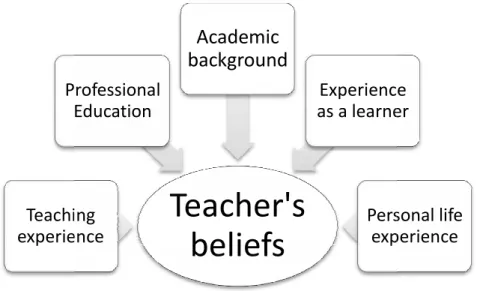
Teachers’ beliefs are constructed and developed by many factors. Tsui (2003) mentions five factors that affect the teacher beliefs’ development (figure 3). One of these factors is professional development, which is known as pre-service teacher professional
development. Another factor is experience as a learner in which the prospective teacher conceptualizes teaching according
Figure 3: The factors Several studies indicate
teaching beliefs. Robert V. Bullough
programmes “did little to influence the beliefs and expectations about teaching that beginn teachers brought with them”. In like manner, the teacher’s identity would be constructed through developing the prospective teacher’s awareness and self concept as a teacher in service teacher training (Johnson, et al., 2015)
Moorhouse (2005, p. 22) considers that who has a passive role, into the teacher’s pre-service teacher preparation program
powerless and short duration (Goodlad, 1990, p. 149)
Furthermore, the prospective teachers’ experiences during their learning career cannot be neglected in constructing their professional identities.
believes that student teachers’ learning experiences influence their pre-service training. That is to say, the student
constructing their identities as
and Drossou (2010, p. 262) agree on
teachers’ beliefs. The past learning experiences and beliefs of prospective teachers influences their perception and construction of teacher’s identity through pre
Teaching experience
Professional Education
Another factor is experience as a learner in which the prospective teacher according to his past learning experience.
factors influencing the development of teachers’ beliefs. studies indicate that pre-service training programs construct student
Robert V. Bullough (1997, p. 17) reports that this kind of training little to influence the beliefs and expectations about teaching that beginn teachers brought with them”. In like manner, the teacher’s identity would be constructed
prospective teacher’s awareness and self concept as a teacher in (Johnson, et al., 2015). However, Marilyn Leask and Catherine
considers that changing a student-teacher’s self
who has a passive role, into the teacher’s active autonomous image is rather difficult
service teacher preparation programme cannot make this radical convert by reason of its (Goodlad, 1990, p. 149).
Furthermore, the prospective teachers’ experiences during their learning career cannot be neglected in constructing their professional identities. Feiman-Nemser
teachers’ learning experiences influence their learning abilities ng. That is to say, the student teachers’ identities as learner
ties as teachers through pre-service courses and experiences.
agree on Pajares’ conclusion about the importance of student learning experiences and beliefs of prospective teachers influences their perception and construction of teacher’s identity through pre-service courses
Teacher's
beliefs
Teaching experience Professional EducationAcademic
background
Experience as a learner Personal life experienceAnother factor is experience as a learner in which the prospective teacher
the development of teachers’ beliefs.
service training programs construct student-teachers reports that this kind of training little to influence the beliefs and expectations about teaching that beginning teachers brought with them”. In like manner, the teacher’s identity would be constructed prospective teacher’s awareness and self concept as a teacher in
pre-Marilyn Leask and Catherine teacher’s self-image as a learner active autonomous image is rather difficult. Hence cannot make this radical convert by reason of its
Furthermore, the prospective teachers’ experiences during their learning career cannot
Nemser (2001, p. 1016)
learning abilities within learners contribute in service courses and experiences. Karavas about the importance of student learning experiences and beliefs of prospective teachers influences
service courses:
Experience as a learner
Personal life experience
Recent findings also suggest that educational beliefs of preservice teachers play a pivotal role in their acquisition and interpretation of knowledge and subsequent teaching behavior and that unexplored entering beliefs may be responsible for the perpetuation of antiquated and ineffectual teaching practices. (Pajares, 1992, p. 328)
Therefore, pre-service students’ beliefs are considered as selective filters which pick out the provided knowledge. The student teachers relate this filtered knowledge to their pre-existing conceptions rather than making comparison and creating conflicts.
In contrast, teachers’ professional identities are constructed and developed by particular cultural and institutional teaching settings (Robert V. Bullough, 2005, p. 240). In other words, there are specific educational institutions, like schools, where the student teacher forms and develops his / her professional identity through school experiences provided by pre-service education programmes. Building a professional teacher identity, therefore, requires the ability to ‘build bridges’ between the several different sets of ideas, assumptions or discourses that provide an explanation about the nature of the profession of teaching (Alsup, 2006, p. 55).
1.6.2. Professional relationships
1.6.2.1. Teacher attitudes towards learners
The most common concern of novice teachers is how to have safe positive professional relationships with their pupils. The teacher’s focus is how to behave with his / her pupils to improve the classroom climate in which the sense of belonging is promoted (Maloney & Barblett, 2003). As the British linguist Widdowson (1990, p. 64) states:
In their initiation into both the craft and culture of pedagogy, it is in interests of novice teachers to conform in order to place their relations with pupils and fellow teachers on secure base and so to get established in their roles.
Making these kinds of relationships helps the teacher to execute his / her roles. A research has been conducted in Pakistan shows that learners’ attitudes may be converted positively through the more possible teachers’ training programmes. In like manner, teacher’s training improves his / her abilities to be better interactive with learners in order to develop their positive
attitudes towards the teacher, thus towards the learning process (as cited in Ali & Hamza, 2018, p. 241). Conversely, Davison and Dowson indicate through their research that:
Development as a student teacher may therefore be seen to be the product of, among other things, the complex interactions between the individual, the higher education institution (HEI) programme and the school context.
(Davison & Dowson, 2009, p. 312)
Pre-service professional teacher development is mainly measured by the teacher’s relationships with their learners.
1.6.2.2. Teacher collaborative work
The teaching challenges sometimes cannot be treated individually, especially for novice teachers. Developing the personal and social aspects of teachers requires their success in working with colleagues. This provides teachers with opportunities to construct and establish their ideas and knowledge which may immediately lead to handle teaching and learning challenges (Northfield & Gunstone, 1997, p. 51). Accordingly, they believe that presenting the teaching process as a collaborative activity is extremely crucial at pre-service initial level (ibid).
Moreover, Davison and Dowson (2009, p. 319) claims that “collaborative teaching with your mentor will help you to develop your classroom teaching skills progressively and it will also enable you to gain access to those choices in relation to all aspects of teaching”. That is to say, teaching collaboratively within pre-service courses enhances teaching practices and encourage student teachers to gain practical experiences that may help them within the classroom. Teaching collaboratively is not necessary with a student teacher’s mentor, but also it can be carried out with another teacher or fellow student teacher (Ibid).
1.6.3. Self-confidence
Confidence is definitely a crucial emotional condition for the prospective teachers to form their professional personalities. According to Davison and Dowson (2009, p. 314), “Obviously, your overriding aim for the period of your initial teacher education is to develop from a person who is interested in teaching into a confident, qualified subject teacher”. Pre-service teacher programmes aim at increasing student teachers’ self-confidence to shape their EFL professional qualified self-concept as teachers which influences teachers’ language
proficiency then his / her performance. Likewise, in his book ‘Aspects of Language Teaching’, Widdowson (1990, p. 64) believes that the most crucial issue in pre-service training is to increase the novice teacher’s self-confidence by providing them with skills that develop their critical thinking competencies in making decisions and practicing them in order to get that feeling of security while teaching , especially when facing a new and challenging educational situation that may threat teacher ‘s emotions and identity; that mainly leads to destroy his /her authority before it has been actually acquired. Accordingly, “Pre-service teacher training enables student-teachers to lessen the level of anxiety” (Yusuf, 2010)in authentic contexts.
1.6.4. Classroom management
Most of EFL novice teachers face many difficulties within classroom which are related to different aspects like classroom management. Since it is a crucial condition to achieve effective teaching and learning, as expressed by Leask and Moorhouse, “Initially, most student teachers are concerned with classroom management issues, how they come across as teachers (self-images), how they are going to control the pupils …” (2005, p. 22). Unquestionably, pre-service training programmes include theoretical considerations concerning teaching and learning process that encompass many angles: curriculum, instruction, assessment and classroom management (Kadri & Benmouhoub, ND). Pre-service teacher training provides the prospective teacher with the needed skills to well-manage pupils within classroom. Furthermore, several studies identify the key factors of poor classroom management which are: teacher attitudes towards learners (White, Sherman, & Jones, 1996, p. 55) and poor time management (Bainer, 1993, p. 1; As cited in Weeks, 2000, p. 233). Those two factors are the main concerns in pre-service teacher training programmes.
1.6.5. Time management
Time management is one of the crucial factors that contribute to the success of teaching and learning process. Through an effective managing of time, the student would comprehend and grasp the provided input appropriately (National Commission on Teaching and America’s Future, 1998). In this situation, pre-service teacher training programmes influence the teacher’s capacities in using the lecture’s time adequately within teaching learning context (Darling-Hammound & McLaughlin, 2011). That is to say, the teacher professional development enhances the teacher ability to manage the available time to reach the course objectives through going over the lesson stages in coherent way. Within
pre-service training, student teachers are provided by opportunities to be trained on how to manage the lesson’s time within the classroom.
1.6.6. Content delivery
Several studies have shown that pre-service teacher training has a direct effect on his / her content delivery within classroom. Pre-service teacher professional development improves the way the teacher delivers the content of the lessons (Gamoran, 2006), and teaching skills and knowledge (Jackson & Davis, 2000). Another investigation by National Staff Development Council (2003) supports the effectiveness of teacher initial education on the teaching instructional techniques and ideologies which improves content delivery. Similarly, Morgan (2010) indicates that effective content delivery requires acquirement of huge amount of knowledge by teachers. Additionally, the teacher professionalism related to his mastery of the content knowledge – subject matter knowledge – (Nyangarora, 1996), which can be developed only by pre-service training courses (Rowan, Correnti, & Miller, 2002).
1.6.7. Assessment and monitoring
Assessment is one of the teachers’ responsibilities, and so the question that must be raised is: Does pre-service training programme develop the student teachers’ competencies to practice various forms of assessment? Assessment and monitoring require specific knowledge of various evaluation tasks and tools, and how to use them to interpret students’ performance. Nowadays, the teacher is not responsible only for understanding and interpreting his/her learners’ achievement, but also she / he has to be able to “make that evidence visible to students, parents and administrators” (Graham, 2005, p. 619).
In Graham’s (2005) study, thirty-eight (38) student teachers were asked about their initial background about assessment. It was found that their conceptualizations of the term assessment were inappropriate. They were restricted to exams, tests and marks. However, Graham changed their beliefs about assessment through teaching them explicitly; he provided them with opportunities to experience new types of assessment through being engaged in debates with their mentors. Pre-service training programmes enrich the prospective teachers with the plans or types of assessment, the methods of assessment, the learning goals and the link between those goals and the type of assessment selected.
1.6.8. Ethical practice
Ethical practice has been described as the moral issues of the teachers’ work, and the ethical choices and activities they are engaged in throughout their professional careers (Campbell, 1997). According to Boon (2011), since ‘education aims to change people in particular ways and uses methods which involve close, personal, hierarchical relationships, teaching is an occupation where ethical issues are central’ (p 79). Hence, ethical morals and practices are required to be taught to student teachers in pre-service training institutions (ACARA, 2013) in order to prepare them to act professionally through respecting the ethical values and dimensions while teaching (Joseph, 2010). Another study by Kildan et al (2013) reaffirms that ethical practices were considered as personal and professional values which are part of teachers’ professional development. This mainly constructs the prospective teachers’ abilities to analyze logically the problems, reflect and defend themselves and their learners.
1.6.9. The use of digital technologies
In the 21st century, the traditional approaches of teaching are reviewed according to the learners’ requirement. Teachers’ flexibility becomes a part of their professionalism to satisfy their students’ needs. The use of technology becomes necessary nowadays. Accordingly, as Bennett and Leask (2005, p. 45) report “Teachers are expected to use ICT for teaching and learning as well as for professional development”. Unquestionably, student teachers must have basic knowledge that enables them to teach their subject content using ICT resources and technological techniques in order to reinforce their professional performances, and to improve their pupils’ technological skills (Ibid). Pre-service training programmes develop the prospective teachers’ skills in “finding, accessing, cataloguing and presenting information in a range of formats” (Ibid, p. 52). Furthermore, pre-service teacher development enriches student teachers with strategies and skills to manage their students while using ICT resources. Therefore, it influences immediately student teachers’ competencies to select, use and manage up-to-date materials in the classroom to create a motivating interactive environment.
1.7. Where and when does pre-service training occur?
1.7.1. Campus-based contexts
The first context to learn how to teach is the university or the institution which called campus-based context. Pre-service teacher training courses began in middle of the 20th century. Their inexplicit objective was to present the theoretical aspect, skills and information
(Allen, 2009). Examinations and assignments were the main instruments that are used to assess pre-service teachers’ knowledge and comprehension (Naylor D. , 2015). On the contrary, there is a debate on the effectiveness of these kinds of contexts on the teacher productivity. Universities and pre-service schools transmit a completely theoretical teaching sample which does not focus on the deep comprehension of teaching itself (Tardif, 2001), because of the insufficiency of training for authentic teaching (Allen, 2009; Ministerial Advisory Council on the Quality of Teaching, 1998; Ramsey, 2000; Wilson, Floden, & Ferrini-Mundy, 2001).
There is an agreement on the notion that there is not a complete novice teacher, he / she enters the profession with certain background about skills, knowledge and beliefs brought from several settings (Furlong & Maynard, 1995, p. 182). Loughran (1997, p. 65) argues that the prospective teachers need to comprehend the teaching aspects through being continuously reinforced by the learning experiences within pre-service courses. Likewise, he goes on: “if they are to understand how a teaching strategy influences learning, they need to experience the teaching strategy as a learner” (Ibid). Hence, the learning experiences derived from pre-service institutions and universities encourages student teachers to be professionally ready to teach. However, are campus-based contexts the only contexts where the prospective teacher learns about teaching?
1.7.2. School-based experiences
Several studies have identified another context for student teachers to get professionally prepared. Pre-service educators consider that learning to teach is based on time spent in schools (Robert V. Bullough, 1997, p. 20). Similarly, Davison and Dowson (2009, p. 312) agree when they write: “Development as a student teacher may therefore be seen to be the product of, among other things, the complex interactions between the individual, the Higher Education Institution (HEI) program and the school context”. That is to say, student teachers development requires the involvement of different contexts which are: the campus-based context and the school–campus-based experiences. Takimoto Amos & Kukai (2017, p. 50) reaffirm Hollins’ and Guzman’s belief (2005) when they state that providing student teachers with authentic and immediate experiences will certainly enrich them with the adequate and needed knowledge and skills in order to be able to treat and teach effectively ELLs (English Language Learners).
School-based experiences, within pre-service teacher preparation, involve classroom observation which has a great positive effect on NQTs – Newly Qualified Teachers – (Bubb, Bailey, Heilbronn, Jones, & Totterdell, 2002, p. 130). It is the primary step to practice EFL teaching in which “the trainee has mainly observational and analytic role” (Wallace, 1991, p. 89). Immediate communication and observation of EFL learners, with different linguistic and cultural competencies, will be as a challenge to student teachers’ beliefs and values about the teaching learning process (Coffey, 2010) by providing them with the ability to understand and develop self-confidence in teaching ELLs, and to stimulate their creativity in using instructional practices within classroom (McGraner & Saenz, 2009). Therefore, as Takimoto Amos & Kukai (2017, p. 50) claim, “ Field experiences will increase teacher candidates’ opportunities to directly engage with ELLs”. Namely, school-based experiences through classroom observation encourage the prospective teacher to be familiar with ELLs. Increasing this familiarity facilitates the teacher roles by interacting and communicating with ELLs within classroom.
There is no criticism about the effectiveness of school-based experiences on student teacher attittudes towards ELLs. “Experiences with ELLs directly correlate to positive attittudes towards them” (Takimoto Amos & Kukai, 2017, p. 50). Nevertheless, Lee and Oxelson (2006) believe that teachers who had not been professionally trained produce deconstructive and inflexible attittudes towards ELLs. Simply stated, pre-service training provides the prospective teachers with personalized experiences with ELLs through classroom observation. Hence, student teachers develop positive attittudes toward EFL learners, that enhances their emotional and academic achievement as a result of improved teacher’s performance.
The effectiveness of school-based experiences has been critisized and debated. There are some experiences which are educcative and effective, others are miseducative, they prevent teacher professional development (Dewey, 1938, p. 13). For this reason, constructing educational value of an experience requires identifying and clarifying its sense through reflection (Dewey, 1916, p. 7). This reflection upon experiences is known as ‘critical practice’. This term has been defined and explained by many didacticiens and scholars. According to Davison and Dowson (2009, p. 311), critical practice can be explained through identifying its effect on teacher education and development:
The term ‘critical practice’ in the subtitle of this chapter indicates the two factors central to successful development as a teacher: the crucial role of school experience and the ability to reflect on that experience.
Davison and Dowson explain what ‘critical practice’ does indicate by identifying the two essential reasons behind the idealistic model of teacher professional development. First, school experience is a key factor to reach professionalism. Besides, the second factor is building professional principles by reflecting on that experience.
Developing critical practice, within pre-service training programmes, affects positively the teacher professional development which mainly enhances the teacher’s performance. Classroom observation is the effective tool to develop critical practice. Davison and Dowson (2009, p. 313) confirm when they write: “… NQTs believed that observation of, and being observed by, experienced teachers to be ‘the most useful activity’ for developing reflective practice during school experience”. Observing or being observed by experienced teachers or mentors or educators improves critical thinking through being critically involved in school expreiences within pre-service training programmes. The student teacher has to be active in those experiences, as cited by Davison and Dowson (2009, p. 316):
It is most important that you clarify the terms of your relationship with your colleagues very early on in your school experience and while your mentor will be a knowledgeable experienced english teacher, who is a good source of ideas and who will engage in discussion of key issues related to the teaching of English, you should not act simply as a ‘sponge’ soaking up what is offered. You are expected to be proactive; to take responsibility for your own development; to set agendas; to identify targets.
More simply, during pre-service training development, student teachers have to identify several issues; like the relationships with colleagues, mentor and experienced EFL teachers who are expected to provide them with huge amount of information about the teaching process. This requires their awareness, productive creativity and reflection. Consequently, they will be able to identify the beneficial and educative experiences which help them to professionally develop.
School-based experiences help the prospective teachers to acquire the skills of how to act in any classroom situation rather than acting spontaneously (knowing-in-action). Goodlad
(1990, p. 215) believe that within pre-service teacher training the “socialization process appeared to nurture the ability to acquire teaching skills through experience rather than the ability to think through unpredictable circumstances”. That is to say, pre-service teacher education enables the student teachers to be able to acquire the needed skills that help them to know how to act in a particular situation rather than making spontaneous decisions within unexpected situations. Similarly, Munby and Russell (1994, p. 93) argue that “the authority of experience gets transformed into the authority that says, I know because I have been there, and so you should listen”. School experiences are powerful argument that is translated to the logical proof which is one’s knowledge is a result of his / her presence in the contextual environment, thus it is certainly true.
1.8. The effect of pre-service training
1.8.1. Teacher’s performance
Pre-service teacher training affects certainly the prospective teacher’s performance in educational setting. Initial teacher education includes: personal, social, emotional and professional development as well (Northfield & Gunstone, 1997, p. 49). Freeman (1989, p. 37) agrees when he writes: “Preservice education, therefore, can contribute significantly in terms of improving teacher effectiveness in all the areas of work expected of them”. More specifically, Loughran (1997, pp. 68 - 69) clarifies the effectiveness of pre-service training programme:
Pre-service teacher education programs are the first place of contact between beginning teachers and their prospective profession. If they are to value the pedagogical knowledge that is continually being developed, refined and articulated within their profession, if they are to understand the complex nature of teaching and learning, and if they are to be ‘teachers’ not ‘tellers’, ‘trainers’ or ‘programmers’, then this first contact through pre-service programs is crucial.
That is to say, pre-service education is the first crucial station to determine the student teacher’s role through providing understanding of the teaching learning process, the actual teaching environment and the knowledge needed to achieve professionalism. This mainly realizes the idealistic performance of the teachers within the classroom. Furthermore, (Darling-Hammond, 1999, p. 14) concludes the contribution of pre-service teacher training in
this manner: “Teachers who havehad formal preparation have been found to be better able to use teaching strategies”. In other words, pre-service teacher education improves student teacher’s capacities to utilize teaching strategies. Therefore, pre-service training enhances adequate competencies and attitudes in prospective teachers in order to be able to establish their roles and meet the responsibilities of all areas of their work (Freeman, 1989, p. 37).
1.8.2. Students’ academic achievement
Several studies have examined the relationship between pre-service teacher training and students’ academic achievement. It was found that there is a correlation between them. According to Killion (1999), teachers, who have exposed to the adequate professional development and training, have an effective performance in transmitting the lesson content in classroom, thus, they have a positive effect on learners’ achievement. Unquestionably, pre-service teacher education does not improve only the teacher’s performance but also influences positively the students’ learning outcomes (Ali & Hamza, 2018, p. 239). However, it was observed that “deficiency among teachers’ skill leads towards the deficiency among students learning behavior and outcomes” (Ibid). In like manner, Atsenga (2002) reports that teacher training affects the learning process by developing the teaching methods and approaches.
1.9. Conclusion
To conclude this chapter, it is worth noting that pre-service teacher training has a great positive impact on the teaching learning process. Most importantly, EFL teachers should be well trained and equipped by the necessary skills and knowledge to be qualified and enter the teaching world. Pre-service training programmes are the best instrument to bridge the gap between theory provided in university and practice in real classroom contexts. So that it enhances teachers’ performance through decreasing anxiety and stress and providing them with the needed knowledge. Consequently, it improved the learners’ achievement in
Chapter Two
2.1. Introduction
This chapter outlines the research methodology employed to examine the questions posed in this study. This section deals with the empirical study that aims at exploring the impact of pre-service teacher training on EFL learners’ achievement. It focuses on both EFL trained teachers of secondary schools in Mostaganem and 5th year student teachers of High School of Oran in order to examine the effect of pre-service training programmes on their performance in the classroom. The current chapter includes the methodological approach, the contextual circumstances and the data collection instruments used which are: a questionnaire to 5th year student teachers, interviews to trained teachers and classroom observation.
2.2. Research methodology
The experimental study was carried out in two different contexts. Fifty five (55) students in their 5th year (the last year) from high preparative school (ENS) of Oran were chosen to conduct the study. The aim behind choosing 5th year students of ENS is that they can evaluate and comment about the formation they were engaged in, in terms of the period, the quality and the quantity of knowledge they got. Besides, they supported the research work with more reliability and credibility. Also, five (5) trained teachers, who were qualified from ENS school of Oran, in five (5) secondary schools in Mostaganem were participated in the research construction. They were selected in order to get in-depth assessment of pre-service training programmes; and how the affected their professional personalities as well as their teaching.
The main purpose of the current research project is to explore the degree of pre-service training effectiveness in the Algerian context. In line with this aim, this study is guided by a mixed research approach that judiciously combines both research methods: quantitative and qualitative approach. Integrated approaches seek for possible answers to the research questions raised in the study which are:
1) To what extent does pre-service training contribute to the improvement of EFL learners’ outcomes?
2) What kind of knowledge do EFL student teachers need to acquire to be professional teachers?
With the intention of achieving systematicness and coherence in the research, a set of hypotheses was suggested:
1) Pre-service training contributes to development of EFL learners’ achievement. 2) Knowledge about language has to be mastered, but the most important issue is to
know how to deliver this knowledge to ELLs.
Combining quantitative and qualitative approach "is not only feasible but also quite beneficial in many diverse research settings" (Tashakkori & Teddlie, 1998, p. 167). In other words, in this empirical study, mixed approach had positive impact on the research credibility. The necessity of using each method is based on the reason behind using it which is known as “methodological appropriateness” (Patton, 1986, p. 39). The quantitative approach emphasizes on statistics, numbers and figures in the collection and analysis of data (Bryman, 2001, p. 20), to generalize certain knowledge (Daniel, 2016, p. 94). Thence it has been utilized in order to produce generalizable knowledge about the 5th year student teachers’ opinions toward their pre-service initial formation in terms of quality and quantity (period).
While the qualitative approach, it aims to “describe and interpret issues or phenomena
systematically from the point of view of the individual or population being studied” (Mohajan, 2018, p. 24). In short, it provides a “deep understanding of the particular” (Domholdt, 1993). In line with this, it was used to confirm the effectiveness of the formation by assessing both of the teacher’s and the pupils’ attitudes toward each other, and the teacher’s performance in the classroom through contextual observation. Moreover, teachers, who were provided with pre-service training, were interviewed in order to get in-depth opinions about the degree of pre-service training contribution in the classroom. The teachers are supposed to produce comments, judgments and even critiques about pre-service programmes they were taught.
2.3. Research instruments
To gather data, three diverse instruments were chosen: questionnaire, interview and observation; for the sake of confirming the degree of the research validity. In here, the questionnaire was utilized to get quantitative data in order to generalize the opinion of student teachers about pre-service training programmes. Whereas interviewing trained teachers and observing their attitudes was aiming to explore the effectiveness of pre-service training and its assistance, especially to novice teachers.
2.3.1. The questionnaire
The questionnaire is a technical means of gathering data that has been widely utilized by researchers and scholars. It is an effective technique of measuring attitudes, behaviours, preferences, opinions, and intentions more cheaply, easily and quickly than other research methods; as Anderson and Arsenaul (1998, p. 179) report:
The questionnaire has become one of the most used and abused means of collecting information. If well constructed, a questionnaire permits the collection of reliable and reasonably valid data in a simple, cheap and timely manner.
The questionnaire is a research instrument; it is considered as the most efficient way of obtaining a large amount of information from a large sample of people through series of questions. It is typically a mix of close-ended questions, open-ended questions, yes or no questions and multiple choice questions. It enables the respondents (student teachers) to elaborate their thoughts. The main purpose of the questionnaire in this study is to obtain student teachers’ opinions about pre-service training and to explore to what extent it contributes to their psychological and professional identities as teachers.
In this study, the questionnaire was handed to forty five (45) students in their last (fifth) year in high school (ENS) in Oran – who are supposed to be secondary school teachers- on Monday 2nd of December 2019. After taking their teacher’s permission, the handouts were distributed at 10 a.m. Then, they were provided with thirty (30) minutes to answer. During this period, the student teachers were asking some clarifications about some questions. They got more explanation of those questions. Thereafter, they gave back the handouts in an organized way.
The questionnaire is composed of fifteen (15) questions and a table; seven (7) questions are two-part questions (see appendix 1). Those questions were classified into three categories. The first part, which consists of three (3) questions, defines the personal background of the student teacher. Whereas the second part was a brief description of pre-service programme they were provided with; it includes five (4) questions. As for the third part, it was about the student teachers’ opinions and judgments of pre-service training programmes along the five years. This part contained a table and seven (8) questions. Question 01/02: gender and age
The two questions are in the shape of statement, they are multiple choice questions. They were included for the sake of classification.
Question 03: why did you decide to become an EFL teacher?
This question was structured to know whether they are passionate to the profession and the language as well or it is just a way to get a job.
Question 04: how did you find the lectures of High School (ENS)?
This question aimed at exploring the quality of pre-service training courses for the student teachers. In other words, it examined their interest on the lectures’ content.
Question 05: Have you got any kind of practical experiences? / If yes, what are those experiences?
The aim behind raising these questions is to know if pre-service training programme includes practical activities, then to identify which kind of practice the student teachers were provided with.
Question 06:Have you had classroom observation in schools? / Duration: …. Months
This question tends to know how much time was provided to the student teachers to observe experienced teachers during pre-service training.
Question 07: How often have you taught in schools?
This question was designed to know how many opportunities were available during pre-service training to teach (practice teaching).
Question 08: How well does pre-service training provide you with time and quality of teaching practice?
The purpose behind this question is to know if pre-service training provides the student teachers with the needed time and quality to practice teaching. More precisely, it aims at knowing if the practical aspect in this formation is enough in terms of period and quality. Table:
There is a disconnection between High School courses and the requirement of teaching EFL (the realities of the classroom).
In here, the above statement aims to know the student teachers’ opinions about pre-service training authenticity.
The provided training helps you know how to behave in certain situations.
This statement tends to recognize the inclusion of educational psychology within pre-service training programme.
High School provides you with the practical knowledge needed in teaching EFL. The aim behind this statement is to know if pre-service training programme deals with the pedagogical knowledge needed in teaching process.
High School enhances your language proficiency.
This statement was proposed to verify if the practice provided during pre-service training have an impact on the improvement of language proficiency of the student teachers.
Training provides you with knowledge about skills in teaching EFL.
The above statement was designed to know if the student teachers were provided with the pedagogical content knowledge (PCK).
Training increases your self-confidence and self-esteem.
This statement tends to check pre-service training contribution on the psychological status of the student teachers. It means it aims at demonstrating the positive effect of practice of their self-confidence.
Question 09: Have you ever been engaged personally in a project which aimed at preparing you to respond to your learners’ needs? / If yes, give examples.
The above question was included to verify the existence of collaborative activities that seek at meeting the learners’ needs.
Question 10: Have you been engaged in collaborative projects?
This question was raised to know if the training provides practical experiences regarding working in group.
This question aimed at knowing the effect of practice working in group on the student teachers’ psychological status.
Question 12: High School enables you to start your career successfully. (Yes / no) / Comment.
This question was designed to explore if pre-service training is sufficient enough to prepare the student teachers psychologically to start teaching.
Question 13: Do you think that English is still taught in the same way as it was previously done? / Explain.
This question tends to know if pre-service training changes the student teachers’ beliefs about the teaching profession (from beliefs as learners into beliefs as teachers).
Question 14: Do you feel satisfied with the content of your training courses? / Comment. The reason behind this question is to know if the content of pre-service training programme was valuable for them.
Question 15: What advice would you give to stakeholders to improve the training of EFL teachers?
This question seeks to know the deficiencies of pre-service training programme that are needed to be treated then improved.
2.3.2. Classroom observation
Classroom observation is a formative and continuous process of gathering data to provide feedback on a particular phenomenon. It is a qualitative research method where the participants' ongoing behaviours are supposed to be observed in a natural context. In his book, A Dictionary of psychology, Cardwell claims:
Observation is a general term used to describe any situation in which an observer records behaviour that is exhibited by a participant. The term ‘‘observation’’ may be used as a technique of gathering information.