Resistance elements of small grain cereals against
Fusarium head blight and contribution of Health
Promoting Compounds
A dissertation submitted to theUNIVERSITY OF NEUCHÂTEL Faculty of Science
For the degree of Doctor in Plant Biology Presented by
Charlotte Martin Thesis co-directors Prof. Brigitte Mauch-Mani
Fusarium head blight FHB is one of the main cereal disease. FHB is caused by the complex of Fusarium pathogens and results in significant yield losses and contamination of grain with mycotoxins. These toxins constitute a substantial risk to human health and a threat for food safety. The most dominant toxin is deoxynivalenol (DON), produced by F.gramineraum. The use of resistant varieties is the most sustainable way to control disease outbreaks and damages. In all cereals, resistance is a complex character, based on cumulative effects of many elements and so, difficult to select. An accurate assessment of all the impacts of Fusarium infection on plants and a perfect knowledge of resistance mechanisms are both necessary to breed resistant varieties. Yet, previous resistance studies of FHB and of resistance elements were mainly focused on wheat. For oats in particular, FHB is an emerging issue, and efficient resistance is now required to face the increasing occurrence of F.poae and F.langsethiae and their highly noxious toxins. Besides FHB resistance, breeding programs are now focusing more and more on nutritional values and the increase of Health Promoting Compounds HPC in cereal grains. Indeed, wheat grains can contain high amounts of antioxidants including anthocyanin compounds, barley and oat grains are sources of -glucan. Interestingly, several cereal endogenous HPCs shown inhibitive effects on Fusarium growth and toxin synthesis in vitro conditions, hence suggesting they could contribute to FHB resistance in planta.
The aim of this thesis is to understand how the wheat, barley and oat grains protect themselves against Fusarium pathogens. The role of several HPC in resistance was investigated. A first preliminary study allowed us to understand the variability of the aggressiveness of Fusarium strains. We demonstrated that strain aggressiveness is related to the chemotype. Aggressiveness is mainly conditioned by the environment and not impacted by the resistance of the host. These observations have been necessary for both optimizing artificial inoculations in our field tests and interpreting the results of subsequent experiments. In a second study, we confirmed that CBS can contribute to FHB resistance in vivo. Indeed, we observed that, within a large panel of wheat genotypes, the most resistant varieties contained the highest contents of ferulic acid in the flower tissues. Following these results, the impact of FHB, the resistance elements and the contribution of different HPC in resistance have been successively studied in grains of wheat, barley and oat. For these studies, panels of wheat,
resistance to protect itself against FHB damages DON accumulation and grain deformation. We have detected a novel resistance type that preserves the constituents and the baking quality of the grain. In barley grains, besides significant DON contamination, infections of F.graminearum caused damages on grain structure and composition. In particular, infection reduced the concentration of -glucan in the grain. We demonstrated that the barley grain has distinct resistance elements to protect itself against fungal infection and toxin accumulation. In oat, we observed that both F.poae and F.langsethiae infections result in severe toxin contaminations, without any other symptoms or visual damages on the plant or the grain. Among the tested varieties, none was able to avoid contaminations. Our results suggest the presence of distinct resistance elements operating against the different Fusarium toxins.
The role of HPC in resistance depends on the compound. Our results show, that -glucans reduce the mycotoxin charge in barley grains, while anthocyanins do not influence the resistance of wheat grains. In oat grain, accumulation of toxin was not modulated by -glucans, yet increases of -glucan contents were observed in grains resistant to nivalenol contamination.
To conclude, wheat, barley and oat protect themselves against Fusarium pathogens deploying different resistance mechanism. The stability and elevated heritability of resistance highlights the highest genetic gain that can be expected when selecting wheat for FHB resistance than in barley or oat. We demonstrated that if some HPC partially enhance grain resistance, enhancing HPC contents in grains will not drastically limit the threat associated with mycotoxins. However, it allows to develop new varieties that combine elevated HPC content and resistance to toxins.
Key words
Fusarium head blight, cereal grains, resistance types, resilience, anthocyanin compounds, -glucan
Résumé
La fusariose de l’épi est une des principales maladies des céréales, causée par les pathogènes du genre Fusarium. Elle engendre des pertes de rendement conséquentes ainsi que la contamination des grains en mycotoxines. Nocives pour la santé humaine et animale, ces toxines représentent une menace reconnue pour la sécurité alimentaire. L’utilisation de variétés résistantes permet de réduire considérablement les épidémies de fusariose. Dans toutes les céréales, cette résistance est cependant un caractère complexe et difficile à sélectionner. Il faut pour cela disposer à la fois d’une évaluation détaillée de l’impact de l’infection sur la plante, et d’une connaissance parfaite des mécanismes de résistance. Or, l’étude de la fusariose et de la résistance s’est principalement concentrée sur le blé, au détriment des autres céréales. Pour l’avoine particulièrement, la fusariose a été négligée longtemps et l’amélioration de la résistance est devenue une priorité pour lutter contre le nouveau risque sanitaire lié aux toxines de F.poae et F.langsethiae. Les travaux de sélection s’intéressent également de près aux composés bénéfiques pour la santé (CBS) présent dans les grains. En effet, les grains de blé contiennent des antioxydants dont les anthocyanes et les grains d’orge et d’avoine sont des sources reconnues de -glucanes. Or, plusieurs CBS ont montré qu’ils pouvaient inhiber la croissance et la production de toxines des Fusarium en conditions in vitro, laissant ainsi suggérer qu’ils pourraient contribuer à la résistance contre la fusariose in planta.
L’objectif de cette thèse est de comprendre comment les grains de blé, d’orge et d’avoine se protègent contre les Fusarium. Le rôle des CBS dans la résistance des grains est étudié. Une première étude préliminaire nous a permis de comprendre les variations d’agressivité des pathogènes Fusarium au sein d’une population. Nous avons démontré que l’agressivité est liée au chémotype de la souche, est surtout conditionnée par l’environnement, mais n’est pas impactée par la résistance de l’hôte. Ces observations ont été essentielles pour la mise en place des infections artificielles au champ, ainsi qu’à l’aide à l’interprétation des résultats dans les essais suivants. Une deuxième étude nous a confirmé que les CBS peuvent contribuer in vivo à la résistance in vivo contre la fusariose. Nous avons en effet observé qu’au sein d’un large panel de variétés de blé, les plus résistantes contenaient, dans leurs épillets, les teneurs les plus élevées en acide férulique, principal antioxydant des céréales. Suite à ces résultats, les impacts de la fusariose, les éléments de résistance et la contribution de différents CBS ont été successivement étudiés dans les grains de blé, d’orge et d’avoine. Nous avons
observé que le grain de blé possédait la résistance la plus complète pour lutter contre tous les dégâts que la fusariose peut causer, de la malformation des grains à l’accumulation de toxine deoxynivalénol (DON) produit par F.graminearum. Nous avons démontré qu’il peut également se prémunir contre la dégradation de ses composants, de sa qualité et de ses activités de synthèse. Les infections de F.graminearum dans le grain d’orge provoquent en plus d’une contamination en DON, des dégradations de la structure et de la composition du grain, notées entres autres par des réductions des teneurs en -glucanes. Le grain d’orge possède des éléments de résistance distincts pour lutter indépendamment contre l’infection et contre l’accumulation en toxines. L’infection du grain d’avoine par F.poae et F.langsethiae a conduit à des contaminations en toxines, parfois sévères, sans causer aucun autre dégât ou symptôme. En comparaison avec le blé et l’orge, l’avoine possède un faible niveau de résistance contre ces contaminations. De plus, nos résultats suggèrent que la résistance d’une variété d’avoine dépend de la toxine en présence.
Le rôle des CBS dans la résistance des grains dépend du composé. Nos résultats montrent que les teneurs élevées en -glucanes réduisent l’accumulation de toxines dans les grains d’orge, alors que les anthocyanes du grain de blé n’influencent pas la résistance. Dans le grain d’avoine, les contaminations en toxines ne sont pas modulée par les teneurs en -glucanes, des augmentations de ces teneurs ont cependant été observées dans les grains les moins contaminés en toxine nivalénol.
En conclusion, les grains de blé, d’orge et d’avoine se protègent différemment contre la fusariose. La stabilité et l’héritabilité de la résistance est la plus élevée dans le blé, ce qui laisse présager d’un plus fort gain génétique dans la sélection de la résistance dans cette céréale que dans l’orge ou l’avoine. Par ailleurs nous avons démontré que si certains CBS intervenaient dans la résistance, augmenter leurs teneurs dans les grains ne permettra pas de limiter de façon significative les dégâts causés par la fusariose. Cela permettrait cependant le développement nouvelles variétés à la fois plus bénéfiques pour la santé et résistantes aux toxines.
Mots clés
Acknowledgments
The completion of my PhD was a highly rewarding and challenging experience. It would not have been possible without the support, guidance and encouragement of the following people.
First of all, I would like to thank my thesis directors Dr. Fabio Mascher from Agroscope and Prof. Brigitte Mauch-Mani from UNINE. Your thesis director is one of the most important people in the success of your PhD. I have to say that I have been extremely lucky to have two co directors. I mainly worked in Fabio Mascher team in Agroscope and I really thank him for his supervision, patience and investment in me over the past years. I am extremely grateful for his scientific insight, our passionate conversations about scientific topics and politic debates, his sense of humor, and to support me in moments of doubt. I am so very grateful for being given the opportunity to work on such interesting topic and being part of his team. I also kindly thank Brigitte for her guidance, support, kindness, invaluable advice and flawless availability during these last 4 years.
My field tests and lab experiments ran efficiently and it was the results of the invaluable advice and help of Stefan Kellenberger, the field and the wonderful work of master or bachelor students, lab apprentices and civi. I kindly thank Florian Combremont, Julie Lintz, Jeremy Vincenti, Julien Dougoud, Kilian Biondo, Susana Feirera, Gabriel Cretier, Caroline Litzistorf among others. I could not have completed my PhD without their help, their enthusiasm and their smile in field and lab. During these last 4 years, I had the opportunities to work in other research groups in Agroscope. It was very enriching and complementary experiences. I would like to thank Stephanie Schürch, Sylvain Schnee, Agnes Dienes-Nagy, and Eveline Jenny.
I thank the NRP69 team Dr Susanne Vogelgsang for her expertise, kindness, help and advice, our productive collaboration within NRP69 and the good times we had, the EFS13 will remain a great memory. I also thank Romina Morisoli and Mario Bertossa from Agroscope Cadenazzo for the amazing support for field work in Ticino. I was extremely lucky to share this PhD experience with Torsten Schöneberg, my co-PhD working in Agroscope in Reckenholz. Beside our fruitful collaboration, he becomes my “21”, a very good friend, always available for
me, field emergencies or to share a veggie pizza. I have discovered a very talented and passionate person, with an indescribable- may be a little bit weird- sense of humor.
I finally thank Arnold Schori for his guidance, his help for dealing with breeding issues and above all for allowing me to be part of his team. With such colleagues, waking up the morning to go to work even in difficult moments is easy and I would like to thank all of them for that. For me, the three days spent together in Lisbon will remain indelible memories. The two wheat breeders of the team, Dario Fossati and Cecile Brabant were always enthusiastic for my projects and I thank them for all their invaluable advice. Besides our collaboration for the oat studies, I spent unforgettable moments with Beate Schierscher-Viret in Saint-Petersburg during the International Oat Seminar. I really enjoyed every single lunch with Jean-Charles de Groote, Claude-Alain Betrix and Cyril Schewlin and I thank them for all the little confidences and uncountable laughter we shared. I thank Yves Grosjean for his numerous jokes attesting of his great kindness. Finally, I would like to thank my officemate, Marie Fesselet for her friendship, her kindness and to support me in moments of doubt professional or more personal.
J’adresse maintenant un énorme merci à ma famille : ma mère, ma sœur Ana, et ma petite grand-mère qui m’ont toujours encouragées, et qui ont toujours été à mes côtés ; mon père qui m’a toujours servi de guide et qui m’a sans aucun doute transmis sa curiosité, le goût des sciences et surtout caractère nécessaire pour arriver au bout d’un doctorat ! Je remercie également mes super amis, ceux d’ici d’abord, qui de simples collègues me sont maintenant devenus essentiels : Charline, avec qui j’ai partagé tellement de bons moments, jusqu’à Saint-Pétersbourg ! mais aussi, Mout, Gaétan et Selma. Les amis sans votre soutien sans faille, votre bonne humeur, nos très nombreux barbecues, randonnées dans les bois en plein hiver et de nuit, nos bien plus nombreuses excursions dans les pubs de la région, ou simplement nos soirées en roulotte, je ne serais surement pas arrivée au bout du doctorat ! Merci pour ces incroyables moments de bonheur ! De plus j’ai rencontré des personnes magnifiques grâce à ce projet en quatre ans, de Suisse, de France et même d’Iran ! Étienne, Pauline, Elham, Saiedeh, Joachim, Nadège, Julie merci à vous ! Un grand merci également à mes vieux copains pour leurs encouragements malgré la distance, Ben, Rémy et Louis (je note que j’ai fini le doctorat avant toi !). Pour finir, je tiens à remercier la plus importante des personnes, qui, malgré les drôles de routes qu’on a pu prendre, a toujours été là pour moi, et qui a été un infaillible soutien ces 4 dernières années. Je ne réalise pas toujours la chance que j’ai de t’avoir à mes côtés. Alors tout simplement merci Marco d’être une si merveilleuse personne.
Table of content
SUMMARY 5 RÉSUMÉ 7 ACKNOWLEDGMENTS 9 GENERAL INTRODUCTION 13 1. FUSARIUM INFECTIONS 152. RESISTANCE OF SMALL GRAIN CEREALS AGAINST FHB 20
3. HEALTH PROMOTING COMPOUNDS IN SMALL GRAIN CEREALS 30
REFERENCES 35
OBJECTIVES OF THE PROJECT 43
CHAPTER I. CHEMOTYPE AND ENVIRONMENT CONDITION THE AGGRESSIVENESS OF FUSARIUM
GRAMINEARUM AND F. CULMORUM ON WHEAT AND MAIZE 45-70
SUMMARY 46
1. INTRODUCTION 47
2. MATERIALS AND METHODS 49
3. RESULTS 54
4. DISCUSSION 63
ACKNOWLEDGMENTS 66
REFERENCES 66
SUPPLEMENTARY MATERIALS 70
CHAPTER II. FERULIC ACID CONTRIBUTES TO THE RESISTANCE OF WHEAT FLOWERS AND
DEVELOPING GRAINS AGAINST FUSARIUM GRAMINEARUM 71-92
SUMMARY 72
1. INTRODUCTION 73
2. MATERIALS AND METHODS 75
3. RESULTS 81
4. DISCUSSION 88
ACKNOWLEDGMENTS 90
CHAPTER III. FACTORS OF WHEAT GRAIN RESISTANCE TO FUSARIUM HEAD BLIGHT 93-116
SUMMARY 94
1. INTRODUCTION 95
2. MATERIALS AND METHODS 97
3. RESULTS 102
4. DISCUSSION 111
ACKNOWLEDGMENTS 114
REFERENCES 114
CHAPTER IV. RESISTANCE AGAINST FUSARIUM GRAMINEARUM AND THE RELATIONSHIP TO
-GLUCAN IN BARLEY GRAINS 117-142
SUMMARY 118
1. INTRODUCTION 119
2. MATERIALS AND METHODS 121
3. RESULTS 126
4. DISCUSSION 136
ACKNOWLEDGMENTS 139
REFERENCES 139
SUPPLEMENTARY MATERIALS 142
CHAPTER V. OAT GRAIN RESPONSES TO F. POAE AND F.LANGSETHIAE INFECTIONS AND
RELATED RESISTANCE ELEMENTS 143-170
SUMMARY 144
1. INTRODUCTION 145
2. MATERIALS AND METHODS 147
3. RESULTS 152
4. DISCUSSION 161
ACKNOWLEDGMENTS 164
REFERENCES 165
SUPPLEMENTARY MATERIALS 169
CONCLUSION AND OUTLOOKS 171
LIST OF PRESENTATIONS AND POSTERS 179
General introduction
Fusarium head blight FHB is a destructive disease of wheat, barley and oat worldwide. FHB is caused by pathogens of the genus Fusarium and Microdochium spp. First described in wheat in 1884, this disease has become a major threat for wheat and barley crops (Stack 2003). The threat is multifaceted: FHB causes yield losses and contamination of grains with noxious mycotoxins, rendering the production unsuitable for human food or feed (Bai and Shaner 2004; Parry et al. 1995). These mycotoxins jeopardize food safety. For example, ingestion of deoxynivalenol, the prevalent mycotoxin in small grain cereals, can provoke intestinal irritations, nausea, feed refusal in livestock, whereas exposure to other Fusarium toxins can lead to fertility issues, immune suppression or carcinoma of internal organs (Eriksen and Pettersson 2004). Moreover, toxins still remain in food and feed after basic treatments, such as milling and baking (Dexter et al. 1996). Many examples of damages caused by Fusarium toxins emerge from history. Outbreaks of alimentary toxic aleukia (ATA), a potentially fatal condition caused by long-term exposure to Fusarium toxins and characterized by vomiting, hemorrhaging and skin inflammation, have been reported as far back as the 18th century. The most devastating epidemic occurred in Russia between 1942 and 1948 causing the death of an estimated 100,000 people (Mayer 1953; Stack 2003). Severe contaminations of grains with T-2/HT-2 toxins produced by F. poae was likely the cause of the epidemic (Yagen and Joffe 1976). As cereal grains constitute a staple food of our diet, it is pertinent that regulations are put into place to minimise the amount of Fusarium toxins entering the food chain. The European commission set maximum limits for Fusarium toxins in unprocessed cereals for human consumption and established guidance values for feedstuffs, which were adopted in the Swiss legislation. In addition to being a threat for food safety, FHB causes reductions of both yield and grain quality resulting in drastic economic losses (Windels 2000). The most notorious epidemic occurred during the 1990s in North America and the estimated losses reached 3 billion USD (McMullen et al. 1997; Nganje et al. 2002). FHB caused substantial problems for wheat and barley in China between 1950 and 1990, with severe epidemics exceeding 40% of yield losses (Bai et al. 2003).
Worldwide, the introduction of wheat and barley varieties selected for FHB resistance has allowed to significantly reduce severe epidemics. FHB is, however, a new problematic for oat, the disease having been identified on oat panicles and grains less than 20 years ago (McCallum
et al. 1999). As a consequence, study of oat resistance towards FHB causing species is only in its early stages. Despite recent significant progress in assessments of FHB symptoms and impacts on oat, no resistance is yet available to face increasing FHB epidemics caused by F. poae and F. langesthiae (Bjørnstad and Skinnes, 2008; Tekle et al. 2012).
Besides FHB resistance, cereal breeders are now taking into account the nutritional interest of grains. Cereal grains contain a wide range of bioactive compounds providing benefits for human health. Consumption of these “Health Promoting Compounds” (HPCs) has been shown to prevent various human diseases such as cancer, cardiovascular diseases, type II diabetes, Parkinson disease, while reducing the risk of obesity (Gani et al. 2012; Topping 2007; Ward et al. 2008). Among these HPCs, wheat grains contain numerous antioxidant compounds contributing to the enhancement of the immune system. (Blandino et al. 2013; Nishino et al. 2011). Oat and barley grains are sources of -glucan, a soluble fiber shown to control glycemic index and to regulate satiety feeling and cholesterol levels (Battilana et al. 2001; Wood 2007). Thus, in order to improve the nutritional balance of consumers, value added cereals with such health-promoting properties are now receiving an increasing interest from customers, food manufacturers and distributors. To date, wheat, barley and oat varieties producing grains with enhanced HPCs contents are already available for the development of health-promoting foods (Cervantes-Martinez et al. 2001; Varga et al. 2013). Interestingly, Fusarium growth and toxin synthesis activity can be inhibited by several cereal endogenous HPCs (Bakan et al. 2003; Skadhauge et al. 1997). This statement is, however, limited to in vitro conditions. As of yet, it is unclear if the HPC in cereal grains contribute to enhancing resistance against Fusarium pathogens in planta under field conditions.
This work is a part of the “ Healthy and Safe” project ( Swiss national research program NRP69) aiming to reduce the risk of contamination by mycotoxins in wheat, barley and oat grains while developing varieties with benefits for health. This thesis examine resistance of the varieties with enhanced HPCs contents and the role of these HPCs in grain resistance. Moreover, the “ Healthy and Safe” project will deliver an inventory on the occurrence and the underlying environmental and agronomic factors of Fusarium species, and epidemiological investigations on the most prevalent species in oat and barley. This project will result in the development of strategies to reduce the risk of contaminations using combination of suitable cropping factors and resistance improved varieties, while promoting the production of healthy cereals.
This introduction will present the different aspects of Fusarium infections, beginning with the typical symptoms of FHB and the impacts on grains, the infection processes and conditions propitious for FHB outbreaks. The current knowledge of resistance elements will then be presented for wheat, barley and oat. Finally, HPCs found in small grain cereals will be described, and our research hypothesis suggesting a contribution of HPCs in resistance against Fusarium pathogens will be explained.
1. Fusarium infections
1.1. Symptoms and consequences of FHB on wheat, barley and oats
1.1.1. Visual symptoms of FHB
FHB infections cause typical symptoms on wheat and barley spikes. The most easily recognizable symptom is a progressive blighting of the spike after flowering (figure 1.a-b). In wheat spikes, this blighting may be preceded by the apparition of brown, purple to black necrotic lesions on the exterior surface of the florets and glumes. The awns, if present, become deformed and curved downward (figure 1.a). In barley, the infected spikelets show generally a water-soaked or browning appearance before blighting (figure 2a). In both wheat and barley spikes, the presence of pink mycelium, or orange spore masses can be noticed in case of severe infections. Wheat and barley grains heavily infected by Fusarium pathogens are easily recognizable by their pinkish discoloration attributed to fungal mycelium or spore masses (figure 1c—2c). Moreover, infected wheat grains are often shrunken or even aborted, and can be identified by their shriveled appearance (figure 1c) (Goswami and Kistler 2004; Jones and Mirocha 1999; Parry et al. 1995). Depending on the severity of the infection and the
environmental conditions, black perithecia can be observed on infected barley grains (figure 2b) (McMullen et al. 1997; Berger et al. 2014).
Figure 1. a. Early symptoms on wheat spike of Fusarium infection of the spikelets; b. Progressive blighting of the spike typical of FHB due to the propagation of the pathogen within the spike. c. Wheat grains infected by Fusarium pathogens, recognizable by shriveled aspect and in this case presence of pink mycelium typical of severe infections. (Source: MARTIN Agroscope)
Figure 2. a. Early symptoms of FHB on 2 rows barley spikes, recognizable by brown spots on spikelets (Source: SCHONEBERG, Agroscope). b. Fusarium infected barley grains, recognizable by brown discoloration and presence of black perithecia (Source: Barley Alberta). c. Pink discoloration of barley grains due to presence of Fusarium spores and mycelium, associated with grain deformation, typical of severe infection (Source: laborundmore.com)
In oat, a lack of typical FHB symptoms on panicles and on grains has been reported by numerous epidemiolocal studies (Bjørnstad and Skinnes 2008; Tekauz et al. 2004; Yan et al. 2011). In certain cases, infected spikelets can be recognized by blighting and orange to brown discoloration, but such symptoms are often restricted to one heavily infected spikelet on the top
of the panicle (figure 3a) (Bjørnstad and Skinnes 2008). Generally, highly infected grains are aborted, and no sign of Fusarium infection can be observed in contaminated harvested oats (figure 3b).
Figure 3 a. FHB symptomatic oat spikelet resulting from natural infection. b. Lack of visual symptoms of oat grains artificially infected with F. graminearum. (Source: MARTIN
Agroscope).
1.1.2. Mycotoxins of Fusarium pathogens
Fusarium infected grains can contain a wide range of mycotoxins. The most frequently encountered Fusarium mycotoxins in FHB in Europe has proved to be deoxynivalenol (DON) produced by F. graminearum and F. culmorum, while zearalenone is more common in colder conditions in northern European countries (Bottalico and Perrone 2002). Nivalenol was usually found associated with deoxynivalenol and its derivatives (mono-acetyldeoxynivalenols) (Bottalico and Perrone 2002; Quarta et al. 2005). In Switzerland also, deoxynivalenol is the prevalent mycotoxin in wheat and barley grains (Vogelgsang et al. 2011; Schöneberg et al. 2016). The type B trichothecenes affect human health through acute temporary nausea, vomiting, diarrhea, abdominal pain, headaches, dizziness, and fever (da Rocha et al. 2014). They also lead to feed refusal, and animal health issues, leading to fertility losses. These toxins are produced by the most common pathogens causing FHB on cereals in temperate climate: F. graminearum Schwabe (telemorph = Gibberella zeae (Schwein)Petch) and F. culmorum (W.G Schmidt) (Bottalico and Perrone, 2002; Pasquali et al. 2016). Contaminations with fusarenone-X have been associated with infections with F. graminearum and F. culmorum. The other widespread Fusarium species on small grain cereals are F. avenaceum, producing moniliformin and also beauvericin, F. crookwellensee,DON producer and F.poae mainly causing grain contamination with nivalenol (Bottalico and Peronne 2002) . Furthermore, Microdochium
nivale and M. majus can lead to FHB symptoms and yield reductions, however, these pathogens do not produce toxins (Glynn et al. 2005; Osborne and Stein 2007; Xu et al. 2005).
Recently, a considerable increase of nivalenol (NIV) and T-2/HT-2 toxin contamination has been observed in oat crops across Europe, especially in Nordic countries (Bernhoft et al. 2012; Edwards et al. 2009; Scudamore et al. 2007; Van der Fels-Klerx and Stratakou 2010). These metabolites are highly toxic (Imathiu et al. 2016). For example, NIV frequently produced by F. poae (no teleomorph known), is a vomitoxin ten times more toxic for human health than DON (EFSA 2013; Pitt 2013),. T-2 and HT-2 toxins are produced by F. langsethiae (Torp and Nirenberg no teleomorph known) and F. sporotrichioides (Nathanail et al. 2015) Toxic effects of T-2/HT-2 include growth retardation, myelotoxicity, hematotoxicity and necrotic lesions on contact sites (Rocha et al. 2005).
Regulations are needed to limit the amount of Fusarium toxins entering the food chain and ensuring safety of cereal products. The European Commission Regulation (EC) No 1881/2006 has set 1250g/kg of DON as the maximum limit in unprocessed wheat and barley grains, and 1750g/kg in unprocessed oat grains. The maximum indicative levels of DON content decrease in cereal products for food down to 750g/kg. Furthermore, the European Commission Recommendation 2013/165/EU provides indicative levels for the sum of T-2/HT-2 toxins in cereals and cereal products ranging from 15 μg/kg for cereal-based foods for infants and young children up to 2000 μg/kg for oat milling products.
1.1.3. Impact of Fusarium Infection on grain properties
Besides contamination with noxious mycotoxins, infection of grains with Fusarium pathogens impair grain properties. Reductions of grain weight have been noticed in wheat, barley and oats (Chełkowski et al. 2000; Jones and Mirocha 1999; Martinelli et al. 2014). This finding is due to the reduction of grain filling provoked by the infection. Reduction of seed germination capacity is also a sign of FHB infection (Browne and Cooke 2005; Tekle et al. 2013).
In addition, Fusarium infections can alter grain quality. For example, a reduced bread-making quality of wheat has been noticed when using Fusarium infected grains (Boyacioğlu and Hettiarachchy 1995; Häller-Gärtner et al. 2008), and beers brewed with Fusarium infected
barley grains are prone to gushing (Oliveira et al. 2013). Moreover, reductions of protein and starch contents have been reported in infected wheat and barley grains (Häller Gärtner et al. 2008; Oliveira et al. 2013).
1.2. Infection processes in wheat, barley and oats
1.2.1. Infection routes of Fusarium pathogens in wheat, barley and oats
The disease cycle of Fusarium spp. on small grain cereals has been extensively studied and is reviewed by Parry et al. (1995). Central to the infection process is the initial source of inoculum from Fusarium spp. surviving in the soil, either as mycelium on crop debris or as resting spores (chlamydospores), depending on the Fusarium species. It has been recently demonstrated that panicle is also the most propitious access for F.poae and F.langsethiae in oat (Divon et al. 2012). For all cereal species, flowering is the most favourable time for infection (Xue et al. 2015; Divon et al. 2012). With high relative humidity or rainfalls, conidia or ascospores penetrate the floret via the anthers, and germinate on the ovary (Miller et al. 2004). More specifically, in wheat, the hyphae penetrate the rachis and propagate throughout the spike via the vessels (Bushnell et al. 2003). In six-row barley, hyphae often propagate externally from one floret to another close one, hence bypassing the rachis (Jansen et al. 2005). In wheat and barley, infection of developing kernel proceeds through the epicarp, destroying the fruit coat, to finally reach the endosperm (Jansen et al. 2005, Miller et al. 2004). The inflorescence form of oat, with long pedicels between spikelets, limits the spread of the pathogen (Bjørnstad and Skinnes 2008). Yet the pathogen colonise the palea, the lemma and finally the developing kernel (Divon et al. 2012; Tekle et al. 2012).
1.2.2. Ability of Fusarium pathogens to infect small grain cereals
From the pathogen side, the infection is a highly complex process, involving a myriad of aggressiveness factors including effectors, cell wall degrading enzymes, such as lipases , proteases, pectinases, cellulases and xylanases, as well as a broad spectrum of proteins involving in plant-pathogen interactions (Kikot et al. 2009; Brown et al. 2010; Yang et al. 2013). All these factors allow the pathogen to face various immune surveillance system and defense mechanisms of the plant.
Fusarium species and strains differ in their ability to infect small grain cereals and to cause FHB (Ward et al. 2002). The toxigenic potential of a strain is considered to be the main
determinant of its aggressiveness. It is, however, unclear if the chemotype of the toxin produced influences the infection and the severity of FHB. To date, higher aggressivess of strains producing 3ADON has been reported in several epidemiological studies (Mesterházy et al. 1999; Carter et al. 2002; Goswami and Kistler 2005). Furthermore, genetic studies have revealed genes associated with aggressiveness. Most of them are included in the Tri gene cluster which are associated with mycotoxin synthesis (Menke et al. 2012; Proctor et al. 1995; Cumagun et al. 2004), others appear to be related to the geographical origin of the strain or to the preferred host (Carter et al. 2002; Carter et al. 2000; Harris et al. 2015).
1.2.3. Factors favouring Fusarium infection and toxin contamination
Environmental conditions mainly determine FHB outbreaks (Doohan et al. 2003). Generally, moderate temperatures and elevated relative humidity are necessary for pathogen growth and mycotoxin synthesis. Differences in environmental requirements have been noticed between species. For example, F. graminearum caused greater FHB symptoms on spikes at 16 °C than at 20 °C, whereas F. culmorum is more pathogenic at 20 °C (Brennan et al. 2005). Under in vitro conditions, warm and humid conditions (25–28°C, aw=0.97) are required for
growth and toxin synthesis of both F. graminearum and F .culmorum, whereas F. poae appears to prefer lower temperatures with humid condition (20–25°C, aw=0.99) (Hope et al. 2005;
Kokkonen et al. 2010). Generally, growth of F. langsethiae is slow, even at its optimal temperature (25°C) (Torp and Nirenberg, 2004).
FHB outbreaks and mycotoxin contaminations are also heavily influenced by agricultural practices. Using Fusarium hosts as the previous crop, a fortiori susceptible genotypes, as well as practice of no-tillage increase the risk of FHB caused by F. graminearum (Dill-Macky and Jones 1993; Dorn et al. 2009; Schöneberg et al. 2016; Vogelgsang et al. 2011). Moreover, lower occurrence of toxins produced by F. graminearum was observed in organically cultivated cereals, and was attributed to cropping techniques such as wider crop rotations, use of plough and lower nitrogen fertilization (Edwards 2004; Schöneberg et al. 2016).
2. Resistance of small grain cereals against FHB
Worldwide, introduction of less susceptible varieties and adaption of agronomic practices have allowed to reduce outbreaks of FHB epidemics and thus to ensure the production of safer
grains. Nowadays, resistance against FHB and trichothecenes is one of the key characteristics when breeding for new varieties of wheat and barley, and resistance against toxin contamination is currently desired in oat breeding programs (Bjørnstad and Skinnes 2008; Gagkaeva et al. 2011; Yan et al. 2010).
Resistance to FHB is a highly complex character: quantitative in nature, horizontal, and based on cumulative effects of many genes. Furthermore, most breeding studies concentrate on resistance towards F. graminearum or F. culmorum, while only little is known about the resistance mechanisms against other FHB causing species. To date, total immunity to the disease has not been observed. For a long time, the poor understanding of the genetic and molecular basis of resistance as well as the lack of precise phenotyping has hindered the development of FHB resistant varieties. Gene discoveries and identification of resistance mechanisms in wheat has allowed the distinction of different resistance types and the development of marker assisted selection (Bai and Shaner 2004). Yet, knowledge and resistance materials are broadly inadequate to improve FHB resistance of oat and barley.
Generally, the development of FHB resistant genotypes has proven to be a difficult task. The challenges breeders are confronted with are:
(1) the effects of environmental conditions on resistance elements that reduce the stability of resistance in genotypes.
(2) the complexity of the resistance character that include resistance elements of head and grains, against both fungal colonization and toxin accumulation.
(3) the poor agronomic traits of resistant germ-plasms used as a source of resistance in breeding programs. For example, the wheat genotypes Sumaï 3 (exotic germ-plasm from China), Alsen (USA) and Frontana (Brazil) are sources of resistance in numerous wheat breeding programs but all are characterized by poor agronomic traits and yield potential. The Swiss variety Arina is used as a source of resistance in the European winter wheat gene pool, but it is susceptible to brown rust and to lodging. (Ruckenbauer et al. 2001; Fossati, personal communication)
2.1. Resistance types of wheat
Numerous studies of FHB resistance on wheat have allowed to identify different types of resistance (table 1). These different resistance types can interact with each other to improve the overall resistance.
Table 1. Resistance types of wheat against Fusarium head blight.
Resistance
Description
Type I Resistance to primary infection (Schroeder & Christensen, 1963)
Type II Resistance to disease spread (Schroeder & Christensen, 1963) Type III Resistance to kernel infection (Mesterházy, 1995)
Type IV Tolerance against FHB and trichothecenes (Mesterházy, 1995) Type V Resistance to trichothecene accumulation (Miller et al. 1985) - Type V class 1 - by chemical modification of trichothecene (Boutigny et al.
2008)
- Type V class 2 - by inhibition of trichothecenes biosynthesis (Boutigny et al. 2008)
The type I and type II resistance assemble resistance mechanisms of the spike aiming to limit primary infection of flower tissues and then the propagation of F. graminearum/F. culmorum throughout the spike. The type III resistance encompasses all resistance mechanisms avoiding the colonisation of developing kernel by hyphae of F. graninearum/F. culmorum hyphae. The type IV resistance characterises the stability of production, meaning that yield and quality in terms of low toxin contamination is maintained despite Fusarium infection. Finally, the type V resistance is subdivided in two classes. Type V-1 results in plants able to chemically modify trichothecenes, and type V-2 refers to genotypes with the ability to inhibit the trichothecene biosynthesis from F. graminearum/F. culmorum pathogens.
2.2. Phenotyping resistance types
Basically, the aim when selecting for resistance in plant breeding programs is to assemble all types of resistance in new germ-plasms. For that, accurate evaluations of all resistance types are required.
2.2.1. Tests for resistance evaluation
Field tests remain the most reliable way to assess the multiple elements of resistance while evaluating agronomic traits of genotypes (Mesterházy 1978). In the field tests devoted to FHB resistance, plants are routinely artificially inoculated by spraying solutions containing F. graminearum/F. culmorum conidia on flowering heads. This method has the advantage to control the disease pressure applied in the field. In this way, a higher chance of successful infection on wheat, barley and oat in field resistance tests is obtained (Geddes et al. 2008; McCallum and Tekauz, 2002; Xue et al. 2015).
Additional tests are available for rapid screens of the resistance level in cereal genotypes. For example, inoculations in greenhouses offer the possibility of running phenotypic evaluations throughout the year, but cannot afford reliable screening of grain resistance components across variable conditions. Furthermore, detached leaf assays and germination tests of infected grains allow early screening of the general susceptibility level of genotypes (Browne and Cooke 2005; Diamond and Cooke 1999).
2.2.2. Indicators of resistance
Indicators of resistance are available to characterize the different resistance types of wheat genotypes growing in field tests (table 1). Type I and type II resistances are jointly assessed by comparison of FHB symptoms on spikes (Foroud and Eudes 2009). Distinct evaluations of type I and type II resistance separately is impeded by field conditions, the differentiation of symptomatic spikelets caused by primary infection or by propagation of the pathogen within the plant being impossible. Practically, type I resistance can be approximate by measuring the incidence of symptomatic spikes and type II resistance by observation of FHB severity (Dill-Macky et al. 2003). Evaluation of oat head resistance is hampered by the lack of visual symptoms. Concerning wheat grain resistance, the frequency of symptomatic FHB grains, so-called Fusarium damaged kernels,(FDK) is used to measure type III resistance of wheat (Jones and Mirocha 1999). Other methods, such as Seed Health Tests (Vogelgsang et al. 2009). allow to screen type III resistance and the fungal colonisation in wheat grains and can be used for barley and oat studies (Schöneberg et al. 2016; Gagkaeva et al. 2011). Reduction of grain weight caused by FHB can be evaluated by comparing thousand kernels weight (TKW) between infected and non-infected cereal grains (Jones and Mirocha 1999). This allows to estimate the
yield stability despite infection, related to type IV resistance. Finally, the quantification of toxins in grains obviously attests of type V resistance.
2.3. Mechanisms of resistance
Wheat, barley and oat differ in their resistance mechanisms. Wheat is the most FHB susceptible cereal, whereas oat has been considered to be generally less suceptible to Fusarium infections (Foroud and Eudes 2009). Indeed, the panicle shape of oat, with long pedicels separating the spikelets and the rachis hinders to a certain extent the propagation of the pathogen in plant tissue, while the presence of several layers of glumes act as a barrier limiting the primary infection and fungal colonisation of grains (Bily et al. 2003; Langevin et al. 2004; Tekle et al. 2012). Concerning barley, the spacing between spikelets confers to two-row varieties a higher FHB resistance compared with six-row varieties (Mesfin et al. 2003).
Cereals possess both constitutive and induced resistance mechanisms against FHB. Together, these resistance mechanisms span all the facets of Fusarium infections and operate in the five resistance types of cereals (table 1)
2.3.1. Constitutive resistance of wheat, barley and oat
The constitutive resistance mechanisms encompass all structural and physiological traits non-activated in case of infection. In brief, a short anthesis period, closed spikelets at the same stage, reduced number of flowers with weak anther extrusion, long stems and a thick cuticule are constitutive elements of spike resistance that hamper the pathogen accession to the florets (Mascher et al. 2005; Serrano et al. 2014). These resistance mechanisms, based on visible morphological and physiological traits, can be easily evaluated and selected for breeding purposes. Other constitutive elements of resistance act as barriers limiting the propagation of Fusarium pathogens at the scale of the grain, such as the presence of specific compounds in the pericarp, and at the scale of the cell, such as thick cell walls (Bily et al. 2003; Skadhauge et al. 1997). In addition, cereals also express non specific chemical defence that can delay Fusarium infection. For example, wheat spikes contain cell-walls polymers affecting the efficiency of the ecll-wall degrading enzymes produced by the pathogen (pectinmethylesterase) (Lionetti et al. 2015). Moreover, a recent study pinpointed a large diversity of plant constitutive resistance-related metabolites including several classes of antioxidant compounds (Gauthier et al. 2015).
2.3.2. Inductible resistance mechanisms
These mechanisms of resistance are activated by the plant upon infections by the pathogen. The plant detects the infection by recognition of Fusarium effectors (such as specific fungal peptides), or by the damages caused by the pathogen (oxidative burst, degradations caused by fungal peptidases or other cell-wall degrading enzymes, etc.). In response, the plant activates the expression of resistance genes related to detoxification, antifungal compound production, defense of photosynthesis and of metabolites transport. these changes impair the spread of the pathogen and the accumulation of toxins (Montesano et al. 2003; Ravensdale et al. 2014). Even if the underlying mechanisms are not fully understood, it is known that several proteins play an essential role in induced resistance mechanisms (Zhang et al. 2013). Moreover, a wide range of plant metabolites including phenolic compounds are suggested to contribute to induced chemical resistance of cereals against Fusarium pathogens (Gauthier et al. 2015). Finally, the induction of a primed state in which the plant can more rapidly and efficiently activate its immune defense system could contribute to enhancing induced FHB resistance (Ravensdale et al. 2014).
2.3.3. Resistance genes of wheat, barley and oats
The need for FHB resistant germ-plasms motivated the mapping efforts for resistance gene discovery. These QTL represent a pool of genetic sources of resistance that can be used for marker-assisted-selection.
In wheat, numerous QTLs associated with low FHB severity and toxin accumulation were identified on different chromosomes (Shen et al. 2003; Zhou et al. 2002; Paillard et al. 2004; Jayatilake et al. 2011). For example, the Swiss variety Arina owes its spike resistance to eight QTL mapped on the chromosomes 6D, 5B and 4A (Paillard et al. 2004). The best characterized and thus the most widely used source of resistance in wheat is the locus Fhb1 on chromosome 3BS. Fhb1 has been detected in the resistant Chinese variety Sumai 3 and can explain alone up to 60% of the phenotypic variation in DON accumulation and symptoms on spikes (Zhou et al. 2002; Rudd et al. 2001). This locus is associated with induction and regulation of the expression of several proteins, acting in detoxification, defense of photosynthesis processes and against fungal penetration in wheat tissues (Zhang et al. 2013).
In barley, several QTLs associated with resistance of spike and against toxin accumulation were identified on several chromosomes (De la Pena et al. 1999). However, most
of these QTL are associated with morphological traits such as plant height, two-row spike morphology, and so, are not useful for marker-assisted-selection (Choo et al. 2004; Ma et al. 2000). Yet the two major QTL for FHB resistance have been mapped in the chromosome 2Hb8 and 6Hb7, and respectively associated with heading date and activation of defense response (Huang et al. 2016). In barley, the genetic effect of the QTLs associated with resistance is weaker than in wheat, never explaining alone more than 10% of phenotypic variation of FHB severity or toxin accumulation (Capettini et al. 2003).
Mapping of resistance source in oat has lagged far behind, as the plant has long been thought to be free of FHB problem. Only very recently studies revealed presence of several minor QTLs associated with resistance to DON (Bjørnstad et al. 2017).
2.4. Stability of resistance
When measuring symptoms on plants and toxin contents in grains, breeders not only observe resistance per se, but also the results of the complex interactions between plant resistance mechanisms, pathogen aggressiveness and environmental conditions. To be considered as efficient, a resistance trait has to be stable across a wide range of environmental conditions and common to various Fusarium species and strains.
2.4.1. Common resistance to various Fusarium species
When selecting for resistance it first has to be clear if the resistance observed applies only for a given Fusarium species or for all Fusarium species infecting cereals. In wheat and barley, it was suggested that resistance traits are common for all FHB causing species (Mesterházy et al. 2005; Mesterházy et al. 1999). However, the situation for oat is still unclear. To date, responses of oat genotypes in terms of yield reduction and toxin contamination against numerous Fusarium pathogens have been observed, but were never compared (Bjørnstad and Skinnes 2008; Mielniczuk et al. 2004; Tekle et al. 2012). More particularly, it has to be further investigated if the resistance to toxin accumulation is common for all toxigenic Fusarium species infecting oats.
Secondly, it has to be evaluated whether resistance observed provides an efficient resistance even in with the presence of highly aggressive strains. To date, the mechanisms of interactions between strain aggressiveness and plant resistance are not fully understood. Only a stable
resistance under various disease pressure levels can result in cereal production free of FHB and toxins. For example, the strong resistance of Sumai 3 was repeatedly observed against a worldwide collection of F. graminearum isolates with varying levels of aggressiveness (Bai and Shaner 2004).
2.4.2. Impact of the environment on FHB resistance
In all small grain cereals, the expression of resistance elements are modulated by environmental conditions. Practically, it means that a variety can appear resistant to Fusarium infection and toxin accumulation in one location, while being susceptible in other environmental conditions (Miedaner et al 2001; Gagkaeva et al. 2011). Hence, to evaluate the stability of resistance, field tests are routinely implemented in multiple locations. The phenotypic variations of disease symptoms are a result of the expression of resistance traits of the host, environmental conditions and the interaction between the two factors (called Genotype x Environment GxE interactions). For the breeder, it is necessary to determine the heritability of the resistance within its screened population, defined as the share of the phenotypic variability in FHB symptoms. It represents the flexibility of resistance in selection and the gain that can be expected when selecting for FHB resistance in the considered population. Indeed, if the genotypic effect explains the largest part of the phenotypic variation, it reveals the presence of resistance traits highly inheritable that can be selected. On the contrary, if the phenotypic variability observed in FHB symptoms is mainly explained by the environment, it shows that resistance elements cannot control FHB outbreaks. In this case, selecting for FHB resistance in the considered population is useless, since the expected genetic gain in FHB resistance is not sufficient to face the strongest environmental effects. Finally, the presence of GxE interactions are a key element when breeding for FHB resistance. Ideally, these GxE interactions should be weak. Indeed, significant GxE interactions indicate a weak stability of the resistance across different environmental conditions and a moderate heritability of the resistance. These interactions reduce the share of resistance that can be controlled by selection (Capettini et al. 2003; Choo et al. 2004; Massman et al. 2011).
2.5. Need for an improved characterization of FHB resistance in small
grain cereals
The impacts of FHB on barley and oat grains were considerably less investigated than on wheat grains. Moreover, for all cereal species, little is known about the consequences of infections by different Fusarium species on grain properties and functionalities. The state of knowledge of the impacts of Fusarium species infection on wheat, barley and oat are summarized in the figure 4. In particular, it is necessary to obtain knowledge about all potential impacts of Fusarium species infection on oat grains, before looking for resistance elements.
Figure 4. Comparisons of the knowledge about the impacts of Fusarium infections on wheat, barley ant oat head (1-2) and grains (3-8). The impacts listed 1 to 5 are considered by the resistance types I to V described in wheat. The presence of resistance traits in cereals against the impacts listed 6-8 have not been investigated yet.
2.5.1. Need for better characterization of resistance types in barley and oat grains
The resistance types I-V, even if they have been described on wheat, are now used to screen resistance of barley and oat genotypes (Bai et al. 2003 ; Gagkaeva et al. 2013; Yan et al. 2010). Yet, wheat, barley and oat differ in their resistance elements and in the infection processes.
Cereal species differ first in their morphological properties and constitutive resistance mechanisms. The panicle shape confers to oat an inherent and strong type II resistance (Bjørnstad and Skinnes 2008; Tekle et al. 2012). Type II resistance is not useful for six-row barley as the fungus does not penetrate the rachis during propagation (Jansen et al. 2005; Maier et al. 2006). The role of trichothecenes during the infection process also differs between the cereal species. In wheat, trichothecenes were suggested to help the fungus entry into the rachis
(Bai et al. 2002). Due to the external propogation in six-row barley, the presence of trichothecenes appears to be redundant. The shape of the oat panicle sems to limit the propagation of the pathogen independently of the presence of trichothecenes (Langevin et al. 2004). In wheat, the severity of symptoms on spike is often correlated with the mycotoxin accumulation in grains (Mesterházy 2002; Schnerr et al. 2002; Snijders and Perkowski. 1990). It is, however, not possible to predict toxin contamination of oat and barley grains by observation of FHB symptoms on the spikes. This example illustrates the need for appropriate resistance indicators and for adapted resistance types specific to oat and barley. Hence, the resistance types previously defined on wheat (table 1) cannot accurately reflect the resistance elements operating in barley and oat.
As of yet, resistance studies in barley and oat aim to evaluate the toxin contamination. DON accumulation seems to be the only criteria available to evaluate resistance of oat genotypes, and absence of hulls was suggested to be the only factor of resistance identified (Yan et al. 2010; Tekauz et al. 2008). Oat resistance against other toxins should be considered and hence, varieties able to avoid NIV and T-2/HT-2 toxin contamination are required.
Besides toxin contamination, potential other impacts of FHB on oat and barley grains received limited interest (Gagkaeva et al. 2011; Nielsen et al. 2014). To date, it is well recognized that FHB in barley results in yield reduction (Chełkowski et al. 2000). Concerning oats, some studies related reduction of grain weight with FHB (Šliková et al. 2010) while others affirmed that Fusarium infection does not impair the grain formation and filling (Tekauz et al. 2008)
2.5.2. Impact of Fusarium infection on biochemical properties of grains
Previously, reduction of wheat bread making properties and of barley malting and brewing qualities have been reported for grains infected by F. graminearum and F. culmorum (Häller-Gärtner et al. 2008; Nielsen et al. 2014; Oliveira et al. 2012). These degradations are evident consequences of the alterations caused by the pathogen on grain structure and constituents, including starch and proteins (Bechtel et 1985; Dexter et al. 1996; Oliveira et al. 2013). These changes can be attributed to the action of fungal enzymes such as protease, - amylase or other destructive enzymes accompanying the propagation Fusarium species in grain tissues (Nightingale et al. 1999; Schwarz et al. 2002; Wang et al. 2005). On the other hand, Fusarium infections also reduce the grain filling and transport of metabolites. This could directly impair
grain biochemical processes responsible for the storage of sugars as starch as well as the synthesis of protein and gluten formation (Feillet 2000). Häller Gärtner et al. (2008) observed differences in the reduction of grain bread making quality and protein contents caused by F. graminearum between wheat genotypes, but to date, the presence of resistance mechanisms preventing degradation of grain components and structure has not been investigated.
3. Health Promoting Compounds in small grain cereals
Cereal grains contain a wide range of bioactive compounds including several HPCa (Grausgruber et al. 2004; Ward et al. 2008). HPCs have recently received increased attention both in nutrition and agronomic research fields. As a resault, the HPCs present in cereal grains are now identified and the majority of them can be easily quantified. In parallel, in vitro studies proved that several HPCs can have an inhibitory effect on Fusarium growth and toxin accumulation.
3.1. Health Promoting Compounds in small grain cereals
It is now widely recognized that a regular consumption of wholegrain products provide health benefits, such as prevention of cardiovascular and chronic diseases, obesity, type 2 diabetes and even some forms of cancer (Nishino et al. 2011; Shuren et al. 2008; Tapola et al. 2005). These benefits can be attributed to the presence of high HPC contents in the outer layer of grains (Gani et al. 2012) These health benefits are achieved through multifactorial mechanisms including antioxidant activity and the resulting ability to scavenge free radicals, an enhanced immune system, and the stabilization of glucose and cholesterol levels (Halliwell et al. 2005; Pojer et al. 2013). During the past 10 years, HPCs have been the focus of significant scientific and commercial interests (Delcour et al. 2012; Gani et al. 2012). Consequently, enhanced HPC contents in grains became a new desired character in plant breeding programs (Fossati and Schori, Institute for Plant Breeding Agroscope personal communication). The HPCs considered in the present study are ferulic acid, anthocyanin compounds in wheat grains as well as -glucan in barley and oat grains.
3.1.1. Antioxidant compounds in wheat
Phenolic compounds are the main antioxidant compounds in cereal tissues and grains. This chemical class encompasses phenolic acid, flavonoids, avenathamides, lignans and
alkylresorcinols. Ferulic acid (FA) (4-hydroxy-3-methoxycinnamic acid) is the dominant phenolic compound and the major contributor to the antioxidant capacity of wheat tissues (Adom and Liu, 2002; Anson et al. 2008; Mpofu et al. 2006) (figure 5). FA is present mainly in cell walls bound with carbohydrates, but also in free form (Klepacka and Fornal 2006). In cereals, FA is concentrated in grains, but also present in other tissues, such as flowers and hulls (McKeehen et al. 1999).
Figure 5. Structure of ferulic acid.
The anthocyanin compounds belong to the flavonoids group of polyphenols, and are responsible for the pigmentation in many plant organs. In wheat, these compounds are mainly concentrated in the aleurone layer and pericarp, bound in cell walls, and provide a blue, purple to dark coloration to the grain (Abdel-Aal et al. 2006; Knievel et al. 2009) (figure 6). These compounds substantially contribute to the significant higher antioxidant activity of colored grains compared with white grains (Hu et al. 2007; Li et al. 2005), and provide recognized benefits for human health (Pojer et al. 2013). Pigmented grains rich in anthocyanins are now desired to produce food associated with a health diet.
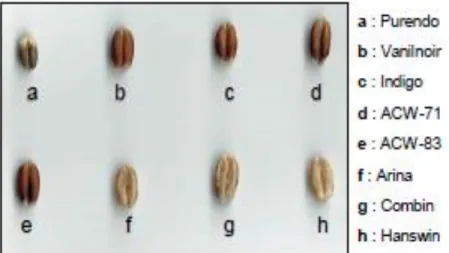
Figure 6. Comparison of grain coloration in eight wheat genotypes due to varied contents in anthocyanin compounds. a. blue endosperm. b-e. dark coloration. f. yellow coloration (high content in lutein). g-h. white grain. (Source: MARTIN Agroscope)
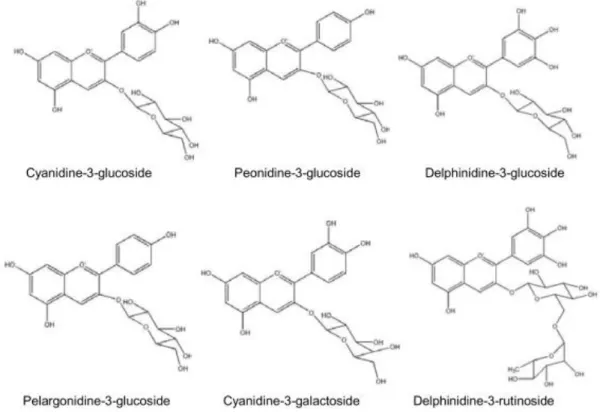
The anthocyanin compounds naturally occur in plants as glycosides, and are composed of an anthocyanidin molecule bound to a sugar group. Chemically, anthocyanidins molecules are polyhydroxy-2-phenylbenzopyrylium of flavylium salts. Few major anthocyanin compounds are responsible of grain coloration, including glycosylated cyanidins, malvinidins and peonidins (Abdel-Aal et al., 2003; Hu et al. 2007) (figure 7). Blue wheat genotypes accumulate delphinidin compounds in endosperm (i.e the wheat variety Purendo) (figure 6). Anthocyanin compounds in wheat grains are synthesised in developing and maturing grains, and synthesis activity grain is directly correlated with the quantity of assimilates in grain tissues (Bustos et al. 2012; Piliarová, 2012). Synthesis activity is also influenced by environmental conditions. (Chalker-Scott 1999; Gordeeva et al. 2013). The impact of biotic stresses such as FHB disease on anthocyanin contents in grains has never been investigated.
Figure 7. Main anthocyanins of coloured wheat grains (Source: Havrlentová et al. 2014)
The anthocyanin compounds are extractable in ethanol or methanol, and their total concentrations can be measured by analyses of anthocyanins pigmented absorbance extracts, or by chromatographic methods (Abdel-Aal and Hucl 1999) (figure 8). The total amounts of anthocyanins in pigmented wheat grains can reach 160 mg kg-1 and up to 460 mg kg-1 in flour and bran of blue coloured wheat, respectively (Abdel-Aal and Hucl 1999; Havrlentová et al. 2014).
.
Figure 8. Extraction of anthocyanin compounds in acidified methanol, from whole meal flour of the wheat varieties Vanilnoir, Indigo and Purendo (producing coloured grains), and Hanswin (white grains) (Source: MARTINI Agroscope).
3.1.2. -glucan in barley and oat grains
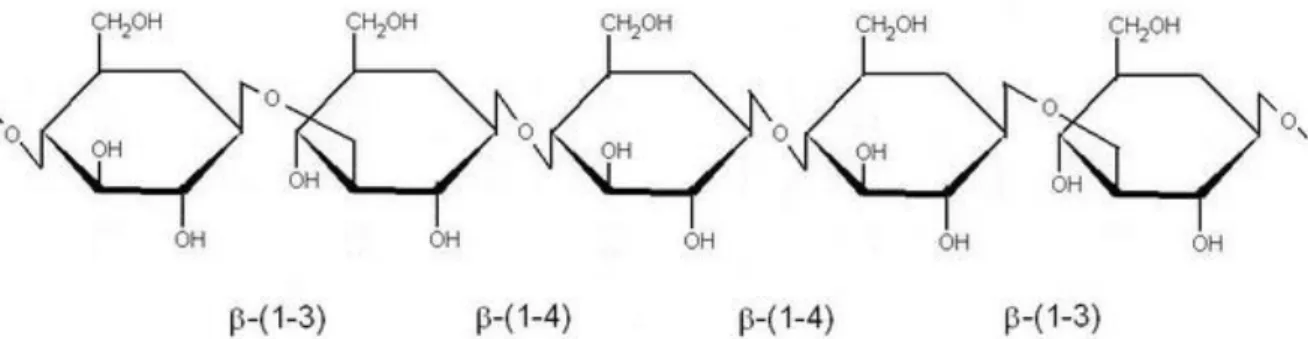
Oat and barley grains contain high contents of -glucan, a dietary fiber recognized for its interest in heathy diet by EFSA (European Food Safety Authority, 2011) and FDA (FDA 1997, FDA 2005). To date, more than numerous scientific studies demonstrated the role of -glucan in stabilization of serum prosprandial glycemic index, reduction of blood LDL cholesterol, increase of satiety filling and in optimization of digestion processes (Wood 2007). Health benefits of -glucan can be attributed to its high viscosity and antoxidant properties (Anttila et al. 2004; Kofuji et al. 2012). Chemically, -glucans are mixed-linked (1–3) (1–4)--D-glucan (figure 9), organised in ahelical chain.
Figure 9. Structure of (1–3) (1–4)-- D-glucan present in barley and oat grains.
-glucans are accumulated in the subaleurone layers of oat grains, and are constitutive elements in the endosperm cell walls of barley grains. B-glucan contents range in both species between 2% and 10% of grain dry mass, depending on the variety. The standard concentration is between 4.5 and 5% of -glucan (Peterson 1991; Zhang et al. 2002). -glucan are constituted
of glucose molecules and are synthesised during grain maturation. (Becker et al. 1995; Burton et al. 2016; Bustos et al. 2012). The synthesis activity depends on the availability of glucose in the grains and on the cell conditions required for enzymatic synthesis activity. B-glucan content in barley and oat is a polygenic trait influenced by environmental conditions, agronomical practice as well as abiotic stresses (Güler 2011; Redaelli et al. 2013; Saastamoinen et al. 2004).
The suitability of -glucan in grains depends on their end use: high contents are desired when producing healthy food products, whereas higher contents can impair fermentation and malting processes (Fincher 1975; Le Guennec and Martin, personnal communication). -glucan contents in flour of cereals and in transformed products can be measured with enzymatic methods or by viscosity analysis (Anttila et al. 2004; Cho and White 1993).
3.2. Health Promoting Compounds in wheat, barley and oat as factors of
resistance
Our research hypothesis is that HPCs can contribute to FHB resistance of grains. Several elements support this assumption.
Antixoxidant compounds are already recognized as factors of chemical defense system of plants against various pests and diseases (Hucl et al. 2001; Lattanzio et al. 2006; Treutter 2006) and are involved in both constitutive resistance mechanisms and in induced resistance. Indeed, the presence of antioxidant compounds in plant tissues were suggested to act as a physical barrier against pathogens, while moderating the oxidative stress in plant cells caused by fungal infection and pest injuries (Lattanzio et al. 2006). Moreover, it is well acknowledged that in response to pathogen infection, phenolic acids are released from the cell wall or massively synthesized by the plant to accumulate rapidly at the site of infection (Gauthier et al. 2015).
The ability of HPCs to interact with various Fusarium pathogens has been demonstrated under in vitro conditions. In artificial media, several natural phenolic compounds proved their inhibitive potential on Fusarium growth and mycotoxin production (Boutigny et al. 2010; Ferruz et al. 2016). It has been demonstrated that phenolics can directly interact with Fusarium pathogens by repressing the expression of fungal Tri genes involved in trichothecene synthesis (Boutigny et al. 2010). Moreover, besides antioxidant properties, β-glucan has the ability to bind a wide range of molecules, including most of the trichothecenes produced by Fusarium