HAL Id: halshs-00268990
https://halshs.archives-ouvertes.fr/halshs-00268990v2
Submitted on 19 Apr 2020HAL is a multi-disciplinary open access archive for the deposit and dissemination of sci-entific research documents, whether they are pub-lished or not. The documents may come from teaching and research institutions in France or abroad, or from public or private research centers.
L’archive ouverte pluridisciplinaire HAL, est destinée au dépôt et à la diffusion de documents scientifiques de niveau recherche, publiés ou non, émanant des établissements d’enseignement et de recherche français ou étrangers, des laboratoires publics ou privés.
Biobanking and Data Sharing: a Plurality of Exchange
Regimes
Fabien Milanovic, Anne Cambon-Thomsen, David Pontille
To cite this version:
Fabien Milanovic, Anne Cambon-Thomsen, David Pontille. Biobanking and Data Sharing: a Plurality of Exchange Regimes. Genomics, society, and policy / ESRC Genomics Network, ESRC Genomic Network, 2007, 23 (1), pp.17-30. �10.1186/1746-5354-3-1-17�. �halshs-00268990v2�
Biobanking and Data Sharing:
A Plurality of Exchange Regimes
Fabien Milanovic
chercheur à l’INSERM [email protected]David Pontille
1 chargé de recherche CNRS [email protected]Anne Cambon-Thomsen
directrice de recherche INSERM [email protected]Genomics, Society and Policy
2007, vol.3(1), p. 17-30
Corresponding author.
Abstract
Key activities in biomedicine and related research rely on collections of biological samples and related files. Access to such resources in industry and in academic contexts has
become strategic and represents a central issue in the general framework of rising patenting practices and in debates about the knowledge economy. It raises important issues
concerning the organisation of scientific and medical work, the outline of data-sharing guidelines, and science policy’s contribution to the elaboration of an adapted framework. This paper presents an ethnographic study of three French human biobanks. Building on field work (participant observation and in-depth interviews), the study focuses on data access in the concrete practices in biobanks. The paper develops a perspective based on an analysis of different exchange regimes. We argue that access practices are submitted to the different regimes that can coexist and be articulated within the daily activities of each biobank. We also discuss how this perspective can further our understanding of biomedical research, and how it might inform data access policy.
Introduction
As industry funding for biomedical research increases and scientists become further involved in the capitalisation of knowledge, access to scientific data has became a central 2
issue. Accessibility is a salient concern in debates about the objectives of scientific activities and the boundaries between academic research, the industry and the market. Positions are 3
polarised between advocates of ‘open science’ and those who look for innovation royalties resulting from industrial appropriation. This raises issues for scientific priority claims, civil 4
litigation and commercial interests, as well as national security.
Biobanks are collections of biological samples and associated databases. Their evaluation 5
and use is a major issue for biomedical research. There is no consensus on terminology in regard to these resources, which are designated by diverse terms: collections, biological resource centres, biological databases, biorepositories, biobanks, to name only a few. 6
‘Biobank’ will be the term used throughout this paper for such organised collections. They are an ideal arena for the study of access practices, for at least three reasons. First,
biobanks emerge in very different contexts (academic, industrial, medical, juridical), resulting in a plurality of data access policies. Second, practices are many and various, despite the 7
implementation of a juridical framework. Third, in a context of changing relations between 8
universities, health public sector and industry, biobanks are ambiguous entities: they might be presented as places for archival storage of a cultural patrimony freely accessible for relevant activities, or as commercial enterprises with lucrative potential. The terms
themselves, used to designate such resources illustrate this ambiguity, at least in French (cf. ‘biothèque,’ ‘biobanque’).
M. Gibbons, C. Limoges, H. Nowotny, S. Schwartzman, P. Scott and M. Trow. 1994. The New
2
Production of Knowledge. The Dynamics of Science and Research in Contemporary Societies.
London, Sage Publications; H. Etzkowitz, A. Webster and P. Healey, eds. 1998. Capitalizing
Knowledge: New Intersections of Industry and Academia. New York. State University of New York
Press.
P. Dasgupta and P.A. David. Toward a New Economics of Science. Research Policy. 1994; 23:
3
487-521.
D. Nelkin. 1984. Science as Intellectual Property. New York, Macmillan; C. McSherry. 2001. Who
4
Owns Academic Work? Battling for Control of Intellectual Property. Cambridge, Mass. Harvard
University Press.
A biobank can be generically defined as a group of biological samples that may consist of any
5
tissue or fluid containing nucleated cells (solid tissues, blood, saliva, etc) that are associated with computerized files generally including the origin of the donors, clinical data and biological data.
On these questions of definition, see: B.M. Knoppers, and M. Saginur. The babel of genetic data
6
terminology, Nat. Biotechnol. 2005, 23(8): 925-7.; J. Kaye. Do we need a uniform regulatory system for biobanks across Europe? Eur. J. Hum. Genet. 14(2): 245-8.
A Cambon-Thomsen, C. Dubreuil, N. Preaubert, J. Duchier, B. Jansen, J. Simon, P. Lobato De Faria,
7
A. Perez-Lezaun, B. Visser, G.D. Williams, J.C. Galloux. An empirical survey on biobanking of human genetic material and data in six EU countries. In Populations and Genetics. Legal and socio-ethical
perspectives. B. Knoppers, ed. Leiden, Martinus Nijhoff: 141-167.
A. Cambon-Thomsen, C. Sallée, E. Rial-Sebbag and B.M. Knoppers. Les bases de données
8
génétiques populationnelles : un encadrement éthique et juridique spécifique nécessaire ?, GenEdit. 2005; 3(1): 1-13 (http://www.humgen.umontreal.ca/int/GE/fr/2005-1.pdf); S. de Montgolfier, G. Moutel, N. Duchange, I. Callies, L. Sharara, C. Beaumont, J. Feingold and C. Herve. Evaluation of Biobank Constitution and Use: Multicentre Analysis in France and Propositions for Formalising the Activities of Research Ethics Committees. European Journal of Medical Genetics 2006; 49: 159–167.
Thus, biobanks are relevant for the analysis of access practices. However, different kinds of biobanks raise specific issues. For example, large-scale population-based biobanks
generate new specific questions about principles engaged in their constitution as well as the status of the population. In this paper, we focus on biobanks involved both in medical and 9
scientific activities but which are not at the large-scale population level. We consider data access practices relating only to research-oriented use of these biobanks.
Our objective is to study the economy of exchanges that organise the circulation of the data (including biological samples) produced in biobanks. What kind of data is exchanged? In what forms? Under what conditions? What terms are used by scientists to describe their access practices and for justifying their actions? Are they involved in the control of data and how? Understanding this economy is critical both at a theoretical level and for policy
making.
Data access and exchange regimes
Among the numerous works that have questioned access practices, two main areas might be identified. On the one hand, various studies address data sharing questions from an ethical standpoint. Major issues include informed consent, secondary uses of biological samples, and benefit-sharing. These studies generally provide normative advice, which 10
can be used to regulate practices more adequately. On the other hand, there are 11
sociological and anthropological studies that address data access questions by investigating concrete scientific and day-to-day medical activities. But these works 12
address less the accessibility than the appropriation of knowledge. The binary model “source/requester” often underlies such analyses: first, a scientist produces data that are considered as the output of his work; he/she then makes them accessible through
publication or informal communication; finally, the freely-available data can be obtained by other scientists, who can assess, certify and work on them. The data serve as an input to their own research.
We argue that this model oversimplifies the real course of scientific activities. A scientist is linked simultaneously to several organisations and involved in many networks.
Consequently, he can conjointly develop different access practices. Furthermore, most
J. Kaye. Genetic Research on the U.K. Population: Do New Principles Need to Be Developed?
9
Trends in Molecular Medicine. 2001; 7(11): 528-530; A. Cambon-Thomsen, P. Ducournau, P.A.
Gourraud, and D. Pontille. Biobanks for Genomics and Genomics for Biobanks. Comparative and
Functional Genomics. 2003; 4: 628-634.
V. Weil and J.W. Snapper, eds. 1989. Owning scientific and technical information: value and ethical
10
issues. N.J. New Brunswick; A. Cambon-Thomsen. The Social and Ethical Issues of Post-Genomic
Human Biobanks. Nature Reviews Genetics. 2004; 5(11): 866-873; J.A. Bovenberg. Blood, Sweat and Grants -'Honest Jim' and the European database-right. Genomics, Society and Policy. 2005; 1(2): 1-28; K. Simm. Benefit-Sharing: an Inquiry Regarding the Meaning and Limits of the Concept in Human Genetic Research. Genomics, Society and Policy. 2005; 1(2): 29-40.
For example, William W. Lowrance. Access to collections of data and materials for health research.
11
A report to the Medical Research Council and the Wellcome Trust. March 2006.
S.J. Ceci. Scientists’ attitudes toward data sharing. Science Technology & Human Values. 1988;
12
13: 45-52; K. Packer and A. Webster. Patenting culture in science: reinventing the scientific wheel of credibility. Science Technology & Human Values. 1996; 21: 427-453; M. Cassier and J.P. Gaudillière. Droit et appropriation dans le domaine des biotechnologies. Quelques remarques sur l’évolution récente des pratiques. Réseaux. 1998; 88/89: 107-121.
studies consider data as well established entities. Nevertheless data can be described more accurately as highly contingent: they constitute extremely heterogeneous entities such as written materials, statistical samples, biological material, software, laboratories techniques, etc. Far from standing in a definitive way, as neatly packaged and bounded objects, data are combined in a “data stream” in which they can be combined and recombined to serve different purposes. Such a view, as was proposed by Hilgartner and Brandt-Rauf, 13
highlights the fluidity of both information and sources that may alter the stream’s content and direction. It requires an examination both of the ways in which the entities circulate, and also of their status, by studying the ways scientists themselves define them, link them to each other, and shape them in several forms. This approach allows an analysis focused on the dynamics of an underground economy that permeates scientific and medical research. Our aim is to understand how people involved in biobank activity (scientists, doctors, administrators, technicians – referred to, generically, from now on as biobankers) share and manage their data stream, and how they divide it into autonomous segments. In what manner and under which forms do they break up their data stream? What are the
conventions - formal and informal - that underlie access practices? When is it considered opportune to make their data accessible? What portion(s) of the data stream they produce do they consider necessary or/and sufficient to make accessible?
In an area as competitive as biomedical research, which is characterised by a division of labour between teams from different institutions, scientific collaboration is an organisational necessity. In the course of their collaborations, biobankers develop ways for evaluating their biological resources: they publish, patent, and develop niches by elaborating specific conventions according to the circulation of data. Moreover, the domain of genomics has been differently settled, right from the first sequencings and the constitution of large
biobanks of biological samples. Scientists have good reason to regulate their data sharing 14
practices, and to follow ethical and policy guidelines so as to make their work possible in each case.
Thus, collaboration describes a variety of relations between the parties involved and what those parties jointly produce. Also, participants are not involved in the same regime. It is precisely this point that we want to address by focusing on exchange regimes developed in the daily activities of biobanks. Our study of biobankers provides an opportunity for
questioning this plurality of possible regimes. Three principal exchange regimes have been identified: cooperation, gifting and sub-contraction. As we shall see, each regime qualifies the link between the stakeholders and defines the forms (material, relational, juridical) of the exchange in a particular way.
Here, we will emphasise the fundamental characteristics of each of theses regimes. Although they are specific and largely incommensurable, we will see that they can coexist within a single biobank. But before we develop that analysis, we will set out the methods of our inquiry.
S. Hilgartner and S.I. Brandt-Rauf. Data Access, Ownership, and Control. Toward Empirical Studies
13
of Access Practices. Knowledge. 1994; 15: 355-372.
M. Cassier. Le partage des connaissances dans les réseaux scientifiques: l’invention des règles de
14
‘bonne conduite’ par les chercheurs. Revue Française de Sociologie. 1998; 39: 701-720; S.
Hilgartner. 1998. Data Access Policy in Genome Research, in Private Science: Biotechnology and the
Materials and methodologies
We have carried out ethnographic field work in several French biobanks. Three of them are reported here. These biobanks were selected in order to include a range of sizes,
institutional contexts and developmental stages. Here, they are treated anonymously using a constructed name that captures their main characteristics:
1. The standardised biobank was created around 1990 by an association of patients. It includes collections for more than three hundred genetic diseases (DNA samples from all over the world). Its fundamental research activities are oriented towards patients’ benefit. As an established biobank involved in many national and international networks, its activities are standardised in conformity with several norms.
2. The clinical biobank was created in a hospital centre in 1992 in connection with the constitution of a longitudinal study organised on a prospective cohort of patients, suffering from a chronic joint disease. The collection of DNA samples (from 850 patients) is related to clinical, biological and radiographic data. The related research activities are principally clinically oriented (eg, improving diagnostic and prognostic techniques); nevertheless this biobank is also networked with scientists and other collections involved in the understanding of fundamental mechanisms in the genesis of joint diseases.
3. The certified biobank was created in the 1980s as a tool for biomedical research based on sample collections. Nowadays, it is a certified Biological Resource Center 15
that contains around 60,000 samples stored in a specific building on a hospital
campus. Its activities include dealing with storage of biological samples (DNA, tissues, serums), technical and juridical expertise, and scientific studies with both public and private partners.
Our methods are inspired by the “constant comparative method of qualitative analysis” promoted by Glaser and Strauss. We conducted our investigations on several biobanks at 16
the same time to emphasize the differences and the similarities. By studying the three biobanks simultaneously, we were able to look beyond local contingencies in order to shed light on more meaningful patterns. These investigations were used to explore the
organisational level of biobanks.
Thus several methods were combined. First, we performed situated observations in order to follow the actors, to depict their concrete activities and to identify the devices they use. Our investigations consisted in following different peoples (scientists, doctors, technicians) during a defined period (a day or a whole week) to understand their different activities, which are often distributed between several people, and involve a variety of tools and locations. The objective was to reconstitute the spectrum of the activities and constraints that they have to deal with daily and to identify key situations in the functioning of the biobanks.
Next, we conducted thorough interviews with different personnel from each biobank, including multiple interviews with certain individuals in order to follow the evolution of situations. The interviews were designed to meet a triple objective: 1) to generate
discourses about the concrete activities of biobanking; 2) to accumulate accounts relating
For the OECD’s definition of BRC, see: http://www.oecd.org/findDocument/ 15
0,2350,en_2649_34537_1_119820_1_1_1,00.html
B.G. Glaser and A. Strauss. 1967. The Discovery of Grounded Theory. Chicago. Aldine.
to the organisation of the work; 3) to gather discourses dealing with the running of each biobank. Our aim was to identify how the biobankers differently justify their work.
Finally, during the period that we conducted the situated observations and interviews, we made a systematic collection of written documents that shed light on the organisation of the biobanks’ work. They also helped us to reconstruct each biobank’s life-history (institutional, juridical, scientific and medical) and to identify the devices involved in the regulation of data exchanges.
These investigations were oriented towards the constitution of a coherent set of empirical data that would be sufficiently varied to identify the diversity of situations. However, our analysis here concerns only a portion of these data – that relating to access practices. The empirical investigations conducted on these infrastructures have permitted us to document several access practices and to specify different exchange regimes.
The cooperation regime
Cooperative work can take various forms. The tasks can be accomplished by different persons either simultaneously or successively. They can also be realised in egalitarian or hierarchical relationships with or without functional specialisation. Some of these forms are distinguishable in the biobanking activities.
In the case of the clinical biobank, a cooperative regime has been in place since the first steps in its constitution. This collection, which is situated in a hospital service dealing with health care activities, includes biological samples related to clinical, radiological and
biological data. For each sample, three tubes are used to collect serum and cells as sources of DNA. When the blood sample is taken, it is subject to several treatments (centrifugation, aliquoting, etc.) and is stored in a freezer at -176°F. On the other hand, the cells from which DNA is extracted require a sequence of work for which cooperation with another team is required, not because of a lack of skills or relevant equipments, but for safety reasons. The centrifuging and storing of some serum or some caps is certainly possible. But,
‘If we want to extract DNA using phenol-chlorophorm near a clinical service, it poses many problems…What is problematic is the manipulation of specific, potentially toxic chemical products…There is too much danger of contamination and things like that. So we just store natural human products, while all laboratory techniques, such as DNA extraction, are done in an Inserm’ research laboratory’ (the clinical biobank’s manager)
Cooperation with a laboratory specialising in molecular biology allows the extraction of DNA without taking risks within the clinical service. By joining with a laboratory exclusively
involved in research, that component can be accomplished without imperilling the hospital service’s persons, patients or medical staff. We note that the tubes prepared and labelled in the hospital laboratory are the only element sent to the Inserm’s team that performs the DNA extraction. No other information is made available at this stage about patient
characteristics or any other aspects. This kind of cooperation does not cover the totality of the activities of the project, but is limited to a single step in the constitution of the collection; it anticipates possible sanitary problems.
The relationship between the two teams’ members is grounded on trust. The samples freely circulate without a particular contractual mediation. The exchange relies on an interpersonal
knowledge that is largely sufficient in order to cooperate without compromising the quality of the work, nor generating doubt regarding the potential uses of the exchanged data.
‘No contract is signed. It’s something freely done by the teams to which we send samples. In theory, they are not supposed to use the sent samples. These samples are anonymous, they are not related to data files. There is just the sex and the age of the patients. Thus, in theory, they don’t have to use them for anything else. That is to say I know to whom I send the samples, I know what one will exactly do with them’ (the clinical biobank’s manager)
Sharing the samples engages the moral responsibility of those involved. They accomplish work based on their deep mutual knowledge: the cooperation, rooted in the past, largely extends beyond this project of collection. Doctors and scientists go to the same places, regularly see each other at meetings or congresses. They circulate in interconnected networks and participate in the same group, which makes the project less likely to fail as a result of uncooperative behaviour by the partners involved.
This perspective is also shared by other biobankers. For example, similar privileged relations underlie exchanges involving all clinicians at the university hospital centre (UHC) where the certified biobank is situated. A template agreement specifies the rules agreed on for
confidentiality, scientific management and technical organisation. This template agreement is not redefined for each new collection; it concerns all the UHCs’ departmental heads. Only one section differs in all cases: the technical annex established with each scientific manager in order to specify what he/she aims to store, how it is to be stored, and within which time limits.
‘And here we play an important role because most clinicians don’t know what they want to do or what one has to do. Then we work together with the clinicians; we have a consulting role that is essential for the quality of the samples’ (the certified biobank’s manager)
The biobank persons’ skills directly contribute to the elaboration of the technical annex. The biobankers make available the clinician’s research project by building up a large part of the collection, indeed several biological analyses.
‘Something is allowed to be a part of the ‘storage/research’ if there is a consent form and if the scientific manager agrees to authorise the access of a part of the tubes, should requests occur. A time limit of three or five years could be allowed for his project to succeed. But he agrees the principle of data access’ (the certified biobank’s manager)
During cooperative work in which the biobank is involved actively in a scientific project, the samples are relevant for the category ‘storage/research’. They are not only submitted to the cooperation regime, but they are also destined to be made available to others for future projects. At that point they become part of another regime, that of the gift.
Thus the basis of the cooperation regime is that each participant occupies a territory of recognised competences and contributes to perform a project on the basis of
complementarity and subsidiarity (eg, extracting DNA for the elaboration of a collection, realising the storage of the biological samples). In this regime, the interpersonal recognition and the moral responsibility are prevalent in the exchanges. They are judged sufficient to 17
found relationships between scientists, to permit their agreement and to ensure their
R.K. Merton. 1973. The Normative Structure of Science, in The Sociology of Science: Theoretical
17
involvement in cooperative work, although other elements are sometimes implemented to shape collective activities (eg, the technical annex of the certified biobank).
The gift regime
The second exchange regime elaborates the relations between persons and data on another basis. Instead of bringing the persons together in order to reach a shared objective that goes beyond the capacity of each, the collaboration is here founded on a reciprocity process: each person commits herself in exchange and expects something back.
Let us pursue the analysis of the clinical biobank. In parallel with its collaboration with an Inserm team to extract DNA, this biobank has established other links for technological reasons. Several treatments of the data are performed by the hospital service’s doctors. Studies of samples and related data, from all or some of the 850 patients affected by a chronic joint disease, have been published in medical journals or were performed as part of several PhDs. However certain analyses have been conducted on a restricted number of patients on which deeper analyses have been performed with the help of another team.
‘There are many samples that have been sent, coming from the 180 patients affected by this disease, to an Evry Genopole laboratory, a laboratory with which we have so far studied two genetics markers…We decided [to work with them] after talking with the scientists at this laboratory. They told us: “we have identified a marker that appears interesting in term of susceptibility”. We answered: “it should be interesting to test it in terms of severity, so we send the samples to you.”’ (a hospital doctor involved in biobank activities)
Here again, the data relating to the samples are not communicated; the samples alone are sent to the team for studying the agreed genetics markers. But, in contrast to the previous scenario where cooperation was an integral part of the elaboration of the collection (cf. DNA extraction), here it is not the entire volume of the available 180 patients’ samples that is sent, only an aliquot. For each sample, only a part was given out. Such a policy also protects the biobank as a long term resource. By handing over an aliquot of DNA to the team specialising in genetic analysis, the exchange does not result in the depletion of the biobank’s collection. On the contrary, the biobankers pay attention to their goods in order to conserve them as long as possible, and are able to provide more samples for further
analyses. On their side, the laboratory’s members perform the genetics tests: some employees are principally appointed to the markers analysis. This work deserves a fair retribution.
‘In principle, the samples must be used for a precise work…to study well defined markers. It is a collaboration with Francis’s team, and we try to validate the markers they identified as being involved in the susceptibility to the pathology, and particularly to its severity. So we enrolled Francis, who was responsible for the project in this laboratory, and the person who was involved in the analysis of the genetics tests, we got them involved with the publication’ (a hospital doctor involved in biobank activities)
Returning to the work performed on the samples sent by the hospital team, Francis and his colleagues take part in authorship. Such an exchange allows the persons to agree in their respective commitment to the collaborative work. Authorship of scientific papers plays the
role of a counter-gift in a relationship of reciprocity. It is a sign by which the social relations between scientists are exhibited and challenged .18
Such an issue of reciprocity is also present in the standardised biobank. During its first years of existence, most projects of collection were welcome. The biobank was constituted by progressively enriching itself with numerous collections.
‘In the beginning, the first five years, we did a lot of free services. We didn’t invoice for it, all was free of charge: “come on, send it to us and we do it for you, but it is essential for you to work, too”’ (the standardised biobank’s manager)
Presently, no scientist can query this biobank in order to obtain help in the collection of samples. He/she has first to describe the aim of his/her study and the project has to be accepted by the biobank’s scientific committee. The activities of the biobank have been codified in the course of its development. The establishment of a convention has been necessary. This convention specifies the characteristics of different research teams, the objective of the project, the type of samples (human or animal, blood or tissue), the number of samples and the desired type of packaging, etc. Moreover, scientists date and sign such a convention of collaboration. In this way,
‘They take advantage of all the biobank’s network, of the communication service in order to organise a campaign of collect, to obtain contacts with the doctors, the hospital centres…And in this case, the biobank is a partner’ (the standardised biobank’s manager)
Scientists or doctors are thus paired with an experienced partner to constitute their own samples: they interact with many collaborators whose technical and juridical know-how largely facilitates the management of their collection. On its side, the biobank raises its capacities of expertise and increases the volume of samples that are stored. As with the clinical biobank, the gift regime regulates a part of the activities of the standardised
biobanks. On the other hand, the relation of reciprocity is based on a written agreement that clarifies the terms of the exchange. 19
The gift regime is here strongly rooted. As Mauss explained in 1950, the gift regime inextricably links the persons to the things: “the gift is not an inert thing. Animate, often individualised, it tends…to produce, for the clan and the space where it originates, an equivalent that substitutes to itself”. By attributing a social significance to the objects that 20
circulate (eg, exchanging data analysis for authorship), scientists carefully manage their mutual web of obligations. They adhere to the conditions of exchange to make possible the work and its long term sustainability. 21
D. Pontille. 2004. La Signature scientifique. Une sociologie pragmatique de l'attribution. Paris.
18
CNRS Editions.
The elaboration of specific written rules to frame data access is regular in genomics, as shown by
19
the European program Bridge where the circulation of data was ordered differently according to time and space. See M. Cassier, op. cit. note 7, pp.701-720.
M. Mauss. 1950. Essai sur le don – Forme et raison de l’échange dans les sociétés archaïques.
20
Sociologie et anthropologie. Paris. PUF: 143-279.
W.O. Hagstrom. 1965. The Scientific Community. New York. Basic-Books.
The subcontracting regime
The two preceding exchange regimes do not cover the full variety of possible situations. The relations between participants can be organised differently. That is notably the case for certain transactions engaged by the standardised biobank.
‘The external scientists call me, we establish a convention, they send me their specimens, I work on them, I invoice for them and I send them back… And after that, if he manipulates it, if he doesn’t manipulate it, if the specimens are still in the bank, if he has never published, we do not mind’ (the standardised biobank’s manager)
In such an arrangement, the biobank is not upgraded to the rank of partner, nor to be under an obligation to somebody. It participates neither in the formulation nor to the conception of a scientific project. On the contrary, scientists or doctors seek the biobank’s service for different objectives: either for elaborating a collection, for performing sample analysis, or for obtaining juridical expertise on their practices regarding biological samples. From this point of view, scientists, doctors and industrialists consider the competences held by the biobank as potential resources for their own work. Henceforth they are considered as users, and the biobank invoices them for the tasks it completes.
‘We have worked with the Curie Institute for a very long time. We have provided services for them and we have regularly work together since 1991. They are very satisfied, and we are, too. They send to us all their specimens and we organise it for them, we generate some cell lines for them, we send them back. But it’s not a privileged collaboration; they are really one of our best customers’ (the standardised biobank’s manager)
The activities of the biobank are considered as provision of services. To provide this kind of service, tasks must be carefully calibrated, their durations precisely counted, and their costs meticulously calculated. The biobank elaborates a particular mission statement where the different planned tasks (sample taking, DNA extraction, samples packaging, their securing and their quality) are invoiced to the users, who are considered as real customers.
The certified biobank’s actors share this point of view. They have conceived several
possibilities to regulate their transactions. As we have seen, when the biobank is involved in a research project at the UHC, it corresponds to the “storage/research” category. On the other hand, when the biobank is a partner strictly involved in the storage of the samples that come from the UHC without a related scientific project, it refers to the “storage/deposit” category. The samples are not intended to be circulated:
‘he [the doctor] deposits, we do not touch it, that’s his own, it’s in a vault and we don’t care more than that’ (the certified biobank’s manager)
Thus, data access depends, in several ways, on the nature of the biobank’s involvement with the UHC.
However, for an ‘external’ customer approaching the biobank - whether an academic, or a private laboratory’s member - the exchange is regulated with a contract that clarifies different aspects of storage. Then, whoever is responsible for the biobank and the potential user must agree regarding the precise terms of the contract. Several articles concern storage conditions and sample quality; others concern exclusivity of the samples accessed by the depositary; some define the subject for the storage.
‘Because of that, we can’t just deposit anything. For example, one can’t deposit the Ebola virus - things that can be used to achieve bio-terrorist ends. Biological and viral risk is important in all contracts’ (the certified biobank’s manager)
The contract aims to frame the modalities of exchange in a different way to the framework agreement, which is potentially valid for all the UHC departmental heads. Exchange is not based on personal ties. Here, it is submitted to a market regime where the customers pay the fees to the biobank for the storage of their samples. That is why it the contract is strictly defined, case by case. Nevertheless, it does not exclude the trust between the
stakeholders. Trust is an essential component for each exchange regimes but is expressed differently: constituted as a functional condition of the interpersonal relations in the
cooperation regime, trust is at the heart of the reciprocity in the gift regime, and it constitutes a non-contractual condition of the contract in the subcontracting regime.
Indeed, the signature of the contract presupposes a prediction of the quality of the expertise and on the mobilisation of the persons in their future activities for performing the specified mission. 22
In this regime, exchange is not based on reciprocity between each stakeholder, who expects something back according to their involvement. It is the mission, specifying the tasks with a precise deadline, given to a subcontractor that counts first. Thus, exchange is neither triggered by performing a shared project, nor founded in a web of reciprocal obligations. The market is here fundamental: users exchange the technological and the juridical abilities of the biobank for a financial reward. And frequently, exchange takes the material form of a written document (eg, convention, contract) in which the stakeholders commit themselves to respect the objective in the permitted period.
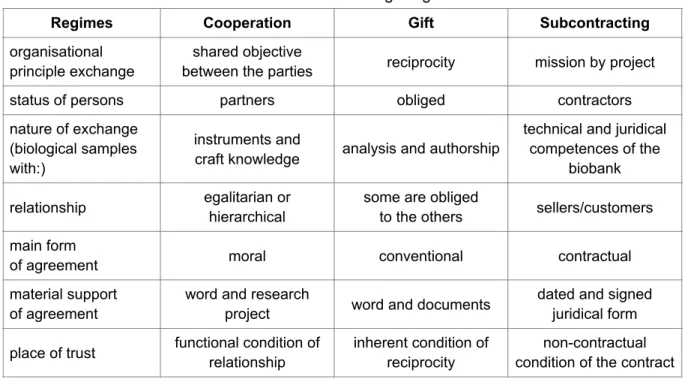
Table 1 summarises the preceding analysis with a synthesis of the main aspects of exchange regimes:
On the trust in the necessary non-fulfilment of the contracts, see among others L. Karpik.
22
L’économie de la qualité. Revue Francaise de Sociologie. 1989; 30: 187-210; C. Paradeise and P. Porcher. Le contrat ou la confiance dans la relation salariale. Travail et Emploi. 1990; 46: 5-14; and the special issue of Sociologie du Travail “Contracts and contractual practices. Pluridisciplinaries approaches” 1996; 38 (4).
Table 1. Three exchange regimes
Conclusion
A perspective that aims to identify different exchange regimes opens several possibilities. First, it allows an understanding of how biobanks are able to concretely articulate these regimes, simultaneously or sequentially. A single biobank can be mobilised in several collaborations that do not relate to a unique regime of exchange: in practice, biobankers regularly cooperate with a team by investing in a relation based on the gift/counter gift with one another, while at the same time accomplishing a provision of service with a third party constituted as a customer. Some biobanks were codified in order to articulate these
different exchange regimes. Thus to seize data access in its concrete dynamic expressions requires a move away from the simplistic, binary “source/requester”model. To insist upon the simultaneity of different access practices permits an understanding of their
characteristics as distributed over several individuals, institutions and locations.
This perspective is the means of escape from a conception that each regime should be obligatorily confined to discrete locations (eg, academic research, industry, market).
Considering of the communication between different places as a continuum, it is necessary to improve the terms of the exchange usually assigned to these places: a collaboration that is performed within academic research can entirely be submitted to the subcontracting regime, just as a collaboration that involves an industrial laboratory can be yielded to the gift regime for a part of shared activities. The three exchange regimes are suitable for regulating not only university-industry relationships but also exchanges within academic research. Depending upon the type of collaboration, one task (eg, sample taking, sample
conditioning, DNA extraction) can be variously conceived as a particular activity from a project shared by several teams (cooperation regime), as the counterpart of work involving a reciprocity process (gift regime), or as a provision of service submitted for financial reward (subcontracting regime). Therefore, the meaning that biobankers attribute to their activities should be taken seriously. Such a standpoint allows us to understand how they articulate several conceptions of exchange for permitting the access to only a fragment of the data stream they produce.
Regimes Cooperation Gift Subcontracting
organisational principle exchange
shared objective
between the parties reciprocity mission by project
status of persons partners obliged contractors
nature of exchange (biological samples with:)
instruments and
craft knowledge analysis and authorship
technical and juridical competences of the
biobank relationship egalitarian or hierarchical some are obliged to the others sellers/customers main form
of agreement moral conventional contractual
material support of agreement
word and research
project word and documents
dated and signed juridical form place of trust functional condition of relationship inherent condition of reciprocity condition of the contractnon-contractual
Finally, this perspective is an opportunity to understand the different ways in which biobankers conceive their biological resources and circulate them in various networks. Depending upon situations, opportunities and organisational configurations, they
simultaneously present their resources in different ways - as a private resource, as a war chest which preserves threatened richness, as a useful collection relating to a large population, etc. Therefore, the uses of collections of biological samples blur boundaries between two forms of values: they can serve as a location for an archive for cultural patrimony (a library) or as a place for financial business (a bank). These two places play similar roles: storing and archiving any precious goods whose value is guaranteed by inscriptions and writing activities. Nevertheless, to reduce the practices of a library to 23
those of a bank is to neglect that, in their concrete practices, people attribute different functionalities to them. Thus to focus on exchange regimes allows the study of the concrete articulation between several value’s conceptions without neglecting their differences, or overwhelming them with a general equivalent (eg, ‘open science,’ ‘private science’). Since the ‘90s, the rising number of collections of biological samples has been a salient concern of biomedical research as well as juridical and political concerns. The use of database information raise important and complex new questions. Speculations about the emergence of ‘information’ as the dominant commodity of the late twentieth century focus on the ‘knowledge economy’ and the radical changes that scientific and medical activities must make. However, this exclusive vision does not fit with the reality of concrete practices: if biobanks introduce some transformations to the organisation of scientific work, a large part of the activities still remain the same. We have tried to show this issue here by 24
dwelling on the plurality of exchange regimes and of value’s conceptions. One can disregard this plurality in the name of a more unified conception. The practice of modern biomedicine related to biobanks is however realisable thanks to the concrete articulation of different exchange regimes. By neglecting the plurality of concrete practices and, more generally, the contribution of all actors involved in the shaping of biomedical regulations (lawyers,
politicians, but also donors, patients, physicians, and, as emphasised here, scientists), there is the potential for any data access policy to fail.
Acknowledgements
The authors gratefully acknowledge the cooperation of the personnel at the biobanks studied for their willingness to provide information, for their openness and for the time they devoted to the study. We also acknowledge Catherine Heeney for providing very helpful suggestions in the translation of this article. This work was supported by DRESS (Direction de la Recherche, des Études, de l’Évaluation et des Statistiques – Mission de Recherche du Ministère de l’Emploi, du Travail et de la Cohésion Sociale et du Ministère de la Santé et de la protection sociale) in connection with the 2004 program “Biomedical sciences, health and society” of the Centre National de la Recherche Scientifique (CNRS, France).
Besides, B. Latour advances that a “library considered as a laboratory can’t stand isolated, as if it
23
cumulated in a maniacal, erudite and cultivated fashion, any signs by millions. It is rather used as a marshalling yard, a bank, playing for the centers and the networks’ universe the role of Wall Street or of the City for capitalism”. B. Latour. 1996. Ces réseaux que la raison ignore: laboratoires,
bibliothèques, collections. In Le Pouvoir des bibliothèques – la mémoire des livres en Occident. M. Baratin and C. Jacob, eds. Paris. Albin Michel: 23-46.
C. Hine. Databases as Scientific Instruments and their Role in the Ordering of Scientific Work.
24