HAL Id: hal-01746090
https://hal.archives-ouvertes.fr/hal-01746090
Submitted on 29 Mar 2018HAL is a multi-disciplinary open access
archive for the deposit and dissemination of sci-entific research documents, whether they are pub-lished or not. The documents may come from teaching and research institutions in France or abroad, or from public or private research centers.
L’archive ouverte pluridisciplinaire HAL, est destinée au dépôt et à la diffusion de documents scientifiques de niveau recherche, publiés ou non, émanant des établissements d’enseignement et de recherche français ou étrangers, des laboratoires publics ou privés.
Conformation Manipulation and Motion of a Double
Paddle Molecule on an Au(111) Surface
We -Hyo Soe, Yasuhiro Shirai, Corentin Durand, Yusuke Yonamine, Kosuke
Minami, Xavier Bouju, Marek Kolmer, Katsuhiko Ariga, Christian Joachim,
Waka Nakanishi
To cite this version:
We -Hyo Soe, Yasuhiro Shirai, Corentin Durand, Yusuke Yonamine, Kosuke Minami, et al.. Con-formation Manipulation and Motion of a Double Paddle Molecule on an Au(111) Surface. ACS Nano, American Chemical Society, 2017, 11 (10), pp.10357-10365. �10.1021/acsnano.7b05314�. �hal-01746090�
Conformation Manipulation and Motion of a Double Paddle Molecule on an
Au(111) Surface
We-Hyo Soe,1, ∗ Yasuhiro Shirai,2Corentin Durand,1Yusuke Yonamine,3, † Kosuke Minami,3
Xavier Bouju,1Marek Kolmer,4Katsuhiko Ariga,3, 5Christian Joachim,1, 3and Waka Nakanishi3, ‡
1GNS and MANA Satellite, CEMES-CNRS,
29 Rue J. Marvig, BP 4347, 31055 Cedex Toulouse, France.
2GREEN, National Institute for Materials Science,
1-1 Namiki, Tsukuba, Ibaraki 305-0044, Japan.
3WPI-MANA, National Institute for Materials Science,
1-1 Namiki, Tsukuba, Ibaraki 305-0044, Japan.
4Centre for Nanometer-Scale Science and Advanced Materials,
NANOSAM, Faculty of Physics, Astronomy, and Applied Computer Science, Jagiellonian University,
Łojasiewicza 11, PL 30-348 Krakow, Poland.
5Graduate School of Frontier Sciences,
Abstract
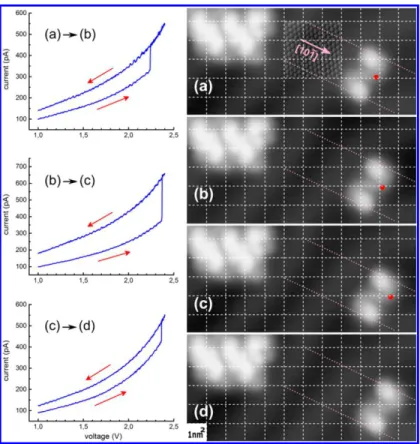
The molecular conformation of a bisbinaphthyldurene (BBD) molecule is manipulated using a low-temperature ultrahigh-vacuum scanning tunneling microscope (LT-UHV STM) on an Au(111) surface. BBD has two binaphthyl groups at both ends connected to a central durene leading to anti/syn/flat conform-ers. In solution, dynamic nuclear magnetic resonance indicated the fast interexchange between the anti and synconformers as confirmed by density functional theory calculations. After deposition in a submonolayer on an Au(111) surface, only the syn conformers were observed forming small islands of self-assembled syn dimers. The syn dimers can be separated into syn monomers by STM molecular manipulations. A flat conformer can also be prepared by using a peculiar mechanical unfolding of a syn monomer by STM manipulations. The experimental STM dI/dV and theoretical elastic scattering quantum chemistry maps of the low-lying tunneling resonances confirmed the flat conformer BBD molecule STM production. The key BBD electronic states for a step-by-step STM inelastic excitation lateral motion on the Au(111) are pre-sented requiring no mechanical interactions between the STM tip apex and the BBD. On the BBD molecular board, selected STM tip apex positions for this inelastic tunneling excitation enable the flat BBD to move controllably on Au(111) by a step of 0.29 nm per bias voltage ramp.
With the tip of a scanning tunneling microscope (STM), atomic-scale manipulation protocols are well-known since the pioneering work of D. Eigler,1 and precise studies have described the
various mechanisms of single atom (a small molecule) mechanical manipulations.2,3 Pushing a single large molecule on a surface with the tip of the STM4,5 is now a standard procedure to
position precisely functioning molecules on a surface for single molecule mechanics experiments6
and also for single molecule electronic measurements.7
To perform an atomically precise lateral manipulation of a molecule on a metallic surface with no mechanical interactions between the STM tip apex and the molecule, the bias tip must be able to feed up energy to the molecule with a few picometer lateral precision.8 This excitation can be either inelastic from the tunneling current itself or originate from the enhanced electric field lo-cated in the biased tip/surface junction when the molecule carries a local dipolar moment.9 For
inelastic tunneling excitations, the energy entry port is generally the low-lying reduced electronic states of the molecule.7,10 Here, a precise design of the molecule is required to avoid the energy
provided by the tunneling current passing through the molecule from being equally distributed among the many mechanical degrees of freedom of this molecule. If not, a conformation change of the molecule may happen but with no lateral displacements. The molecule can also be broken in small chemical groups by the applied bias voltage pulse11 instead of moving step-by-step on the supporting surface by steps, generally the commensurable surface atomic lattice constant. To also avoid energy redistribution toward the supporting surface, different leg and wheel molecular groups have been early identified. They can efficiently maintain a space (van der Waals distances) between the planar molecular chassis and the supporting surface.12–14 Due, for example, to steric
crowding, lateral chemical groups not having the shape of a leg or a wheel, mounted on the chassis in a symmetric way and holding it at van der Waals distances from the surface, are also interest-ing for molecular design as presented in this paper.15 The light-driven molecular motor of the
Feringa group the first switchable chemical group to be mounted by the Tour group on a chassis equipped with four wheels16 in an attempt to leave space for this molecular group to change its
conformation/configuration using an optical excitation.17A similar molecular switch was used by the Feringa group to obtain a molecule with four of those, used as switchable legs under a tun-neling inelastic excitation.18Other switchable chemical groups are also available for equipping a
molecular chassis. For example, molecules carrying a photoisomerizable double bond, such as stilbene, azobenzene, or diarylethene, have been used as molecular switches.19 Their
triggered by tunneling electrons has also been observed in STM single molecule experiments, like with azobenzene.20–22 Other molecules are also available which can twist around a single bond by
photoirradiation. Twisted intramolecular charge transfer (TICT) molecules provide a nice example of such a light-activated conformation change.23
Binaphthyl molecules or their derivatives (Scheme ) belong to another group of photosensi-tive compounds which are also known to change conformation under UV irradiation.24,25 In this
paper, we present the design and synthesis of a bisbinaphthyldurene (BBD) molecule (Scheme ) for STM imaging, single molecule manipulation, and step-by-step lateral motions. This molecule is equipped with two binaphthyl paddles mounted laterally on a very simple central phenyl chas-sis. On a planar BBD, we demonstrate here how to use the low amplitude vibration modes of its 1,1’-binaphthyl lateral paddles26,27 for manipulating the BBD along a Au(111) surface using
STM inelastic tunneling effects. Not existing in solution, this planar conformation is stabilized by the Au(111) surface. On Au(111), it enters in competition with its native in solution nonplanar conformation which can also be reached by the same excitation on a metallic surface as presented below.
In the initial subsections of the Results and Discussion, the design, the synthesis, and the struc-tural analysis of the BBD molecules in solution are provided together with a detailed DFT theoreti-cal study of the different possible conformations of a BBD molecule. In the following subsections, STM images of the BBD molecules on the Au(111) surface acquired at low-temperature (LT) and in ultrahigh-vacuum environment (UHV) are provided. We demonstrate how to prepare the BBD molecule in a planar conformation on the Au(111) surface using a very specific STM tip lateral molecular manipulation protocol. In this planar conformation, the BBD electronic probability den-sity map of its electronic states around the Au(111) surface Fermi level can be recorded to prepare the BBD inelastic manipulation. In the final subsection, the entry ports for tunneling electron en-ergy transfer to the BBD molecule are identified. It is shown how to STM manipulate step-by-step the BBD molecule by step of 0.29 nm on the Au(111) surface.
early identified. They can efficiently maintain a space (van der
Waals distances) between the planar molecular chassis and the
supporting surface.
12−14Due, for example, to steric crowding,
lateral chemical groups not having the shape of a leg or a wheel,
mounted on the chassis in a symmetric way and holding it at
van der Waals distances from the surface, are also interesting
for molecular design as presented in this paper.
The light-driven molecular motor of the Feringa group
15was
the first switchable chemical group to be mounted by the Tour
group on a chassis equipped with four wheels
16in an attempt to
leave space for this molecular group to change its
conformation/configuration using an optical excitation.
17A
similar molecular switch was used by the Feringa group to
obtain a molecule with four of those, used as switchable legs
under a tunneling inelastic excitation.
18Other switchable
chemical groups are also available for equipping a molecular
chassis. For example, molecules carrying a photoisomerizable
double bond, such as stilbene, azobenzene, or diarylethene,
have been used as molecular switches.
19Their
photoisomeriza-tion is usually studied in the gas phase or in soluphotoisomeriza-tion.
Conformation/configuration change triggered by tunneling
electrons has also been observed in STM single molecule
experiments, like with azobenzene.
20−22Other molecules are
also available which can twist around a single bond by
photoirradiation. Twisted intramolecular charge transfer
(TICT) molecules provide a nice example of such a
light-activated conformation change.
23Binaphthyl molecules or their derivatives (
Scheme 1
) belong
to another group of photosensitive compounds which are also
known to change conformation under UV irradiation.
24,25In
this paper, we present the design and synthesis of a
bisbinaphthyldurene (BBD) molecule (
Scheme 1
) for STM
imaging, single molecule manipulation, and step-by-step lateral
motions. This molecule is equipped with two binaphthyl
paddles mounted laterally on a very simple central phenyl
chassis. On a planar BBD, we demonstrate here how to use the
low amplitude vibration modes of its 1,1′-binaphthyl lateral
paddles
26,27for manipulating the BBD along a Au(111) surface
using STM inelastic tunneling effects. Not existing in solution,
this planar conformation is stabilized by the Au(111) surface.
On Au(111), it enters in competition with its native in solution
nonplanar conformation which can also be reached by the same
excitation on a metallic surface as presented below.
In the initial subsections of the
Results and Discussion
, the
design, the synthesis, and the structural analysis of the BBD
molecules in solution are provided together with a detailed
DFT theoretical study of the different possible conformations
of a BBD molecule. In the following subsections, STM images
of the BBD molecules on the Au(111) surface acquired at
low-temperature (LT) and in ultrahigh-vacuum environment
(UHV) are provided. We demonstrate how to prepare the
BBD molecule in a planar conformation on the Au(111)
surface using a very specific STM tip lateral molecular
manipulation protocol. In this planar conformation, the BBD
electronic probability density map of its electronic states
around the Au(111) surface Fermi level can be recorded to
prepare the BBD inelastic manipulation. In the final subsection,
the entry ports for tunneling electron energy transfer to the
BBD molecule are identified. It is shown how to STM
manipulate step-by-step the BBD molecule by step of 0.29 nm
on the Au(111) surface.
RESULTS AND DISCUSSION
Design and Chemical Synthesis. A 1,1′-binaphthyl
molecule consists of two naphthalene moieties with one single
phenyl per moiety connected via a C−C single bond. The
distinct characteristics of a 1,1′-binaphthyl are (1) its flexibility
around this C−C bond
24,25,28−30and (2) the axial chirality
originating from the inhibition by steric crowding of a complete
360° naphthyl−naphthyl rotation around its joint C−C
bond.
24,25,28−30The enantiomers of axially chiral compounds
are classified using the stereochemical labels R and S based on
their absolute configuration around a stereocenter. Chiral
1,1′-binaphthyls and derivatives having a naphthyl torsion angle
between
−180° < θ < 0° correspond to the R configurations
and those between 0° < θ < 180° correspond to the S
configurations, respectively. In its S
0electronic ground state
and as a function of the torsion angle |θ|, the 1,1′-binaphthyl
conformation angle can vary from 60° to 120° within <1 kcal/
mol of energy. The potential energy curve along this
conformation change is a flat-bottomed well where the |θ|
∼
90° saddle point separates two shallow wells whose minima are
at |θ|
∼ 70° and |θ| ∼ 110°.
24,25,28−30Since the conformation of
chiral binaphthyls can be monitored by circular dichroism
(CD) spectra, conformation controllability in this ground state
was demonstrated at the air−water interface by applying a small
mechanical force.
31,32The difference between the S
01,1′-binaphthyl relaxed conformations and the S
1lowest excited
singlet state conformations
26,27is at the origin of our BBD
internal mechanical vibrations because of the reversal in θ of
the S
1(θ) relative to the S
0(θ) double well potential energy
curve minima.
26,27Although for cisoid (|θ| < 90°) and transoid
(|θ| > 90°), the S
1and S
0relaxed conformations are still under
discussion, and this difference was important to preserve in the
BBD design. For example, time-dependent density functional
theory (TD-DFT) calculations show that the
(R)-1,1′-bi(2-naphthol) molecule (the starting compound for the BBD
synthesis;
Scheme 1
) still preserves a different relaxed
conformation between S
0(θ =
−91°) and S
1(θ =
−119°)
that triggers an almost 30° paddle effect going back and forth
optically from S
0to S
1(Figure S16 in the
Supporting
Information
).
Entering now in the design of our molecule, two binaphthyl
molecules are used in the BBD as lateral paddles because of this
reversal of the relative minimum energy |θ| value between S
1and S
0and because of the low 1 kcal/mol energy barrier
Scheme 1. Synthetic Route of BBD
ACS Nano
ArticleDOI:10.1021/acsnano.7b05314
ACS Nano 2017, 11, 10357−10365
10358
Scheme 1. Synthetic Route of BBD.
RESULTS AND DISCUSSIONS
A. Design and Chemical Synthesis
A 1,1’-binaphthyl molecule consists of two naphthalene moieties with one single phenyl per moiety connected via a C–C single bond. The distinct characteristics of a 1,1’-binaphthyl are (1) its flexibility around this C–C bond24,25,28–30 and (2) the axial chirality originating from the in-hibition by steric crowding of a complete 360◦ naphthyl–naphthyl rotation around its joint C–C
bond.24,25,28–30The enantiomers of axially chiral compounds are classified using the stereochemical labels R and S based on their absolute configuration around a stereocenter. Chiral 1,1’- binaph-thyls and derivatives having a naphthyl torsion angle between −180◦ < θ < 0◦correspond to the R
configurations and those between 0◦ < θ < 180◦ correspond to the S configurations, respectively. In its S0electronic ground state and as a function of the torsion angle |θ|, the 1,1’-binaphthyl
curve along this conformation change is a flat-bottomed well where the |θ| ∼ 90◦ saddle point separates two shallow wells whose minima are at |θ| ∼ 70◦ and |θ| ∼ 110◦.24,25,28–30 Since the
conformation of chiral binaphthyls can be monitored by circular dichroism (CD) spectra, confor-mation controllability in this ground state was demonstrated at the air-water interface by applying a small mechanical force.31,32 The difference between the S
0 1,1’- binaphthyl relaxed
conforma-tions and the S1lowest excited singlet state conformations26,27is at the origin of our BBD internal
mechanical vibrations because of the reversal in θ of the S1 (θ) relative to the S0 (θ) double well
potential energy curve minima.26,27 Although for cisoid (|θ| < 90◦) and transoid (|θ| > 90◦), the S1 and S0 relaxed conformations are still under discussion, and this difference was important to
preserve in the BBD design. For example, time-dependent density functional theory (TD-DFT) calculations show that the (R)-1,1’-bi(2-naphthol) molecule (the starting compound for the BBD synthesis; Scheme ) still preserves a different relaxed conformation between S0 (θ= −91◦) and S1
(θ= −119◦) that triggers an almost 30◦ paddle effect going back and forth optically from S 0to S1
(Figure S16 in the Supporting Information).
Entering now in the design of our molecule, two binaphthyl molecules are used in the BBD as lateral paddles because of this reversal of the relative minimum energy |θ| value between S1 and
S0 and because of the low 1 kcal/mol energy barrier between the two minima in the S0 ground
state. The two binaphthyls are connected laterally to a very small chassis made simply of a central phenyl (BBD in Scheme 1). This covalent binding of each binaphthyl via the methylene oxy bridges modifies the paddle switch ability with, for example, the suppression of the S1(θ= −119◦
) torsion angle energy minimum. What is important here is that S0 keeps its awaited mechanical
characteristics, that is, the possibility of its vibrational oscillations around its new (θ = −61◦ )
ground-state minimum (TD-DFT calculated) reachable, for example, by optical excitation and relaxation via its new S1(θ = −58◦) relaxed conformation for the (R,R) isomer (Figure S17 in the
Supporting Information).
On a metallic surface and in a planar conformation, the two BBD binaphthyl groups permit to space the BBD chassis away from this surface at a distance compatible with a physisorption state. To drive the BBD molecule step-by-step along an fcc track of the Au(111) surface using the inelastic effect of the STM tunneling current, one has to first virtually prepare this molecule in its instantaneous virtual reduced electronic state well described for its mechanics by considering in first approximation the BBD S1 excited state. Afterward, relaxation to the S0ground state will
result in a small amplitude and noncoherent binaphthyl oscillations. As a function on the tip apex 6
location on BBD, this will generate a surface lateral motion over the lateral diffusion barrier of the Au(111) fcc portion of the herringbone surface reconstruction.
The BBD molecule was synthesized by a one-pot reaction from commercially available (R)-1,1’-bi(2-naphthol) and α,α0,α00,α000-tetrabromodurene (Scheme 1). Before its evaporation in the
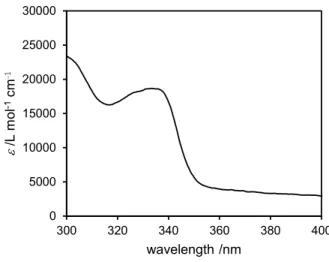
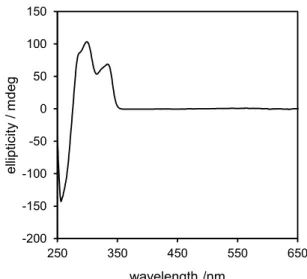
STM preparation chamber, it was further ultrapurified by sublimation to produce a colorless pow-der with no crystallinity. BBD UV-vis absorption spectrum is similar to the one of binaphthyl molecules33 and shows an absorption peak maximum at 334 nm (Figure S1 in the Supporting Information), demonstrating a good electronic separation between the two BBD lateral paddles. Recorded conventional CD spectra of chiral binaphthyls (Figure S2 in the Supporting Information) confirmed that the chirality of the binaphthyl groups remained after purification.
B. The Native BBD Molecule Conformation in Solution.
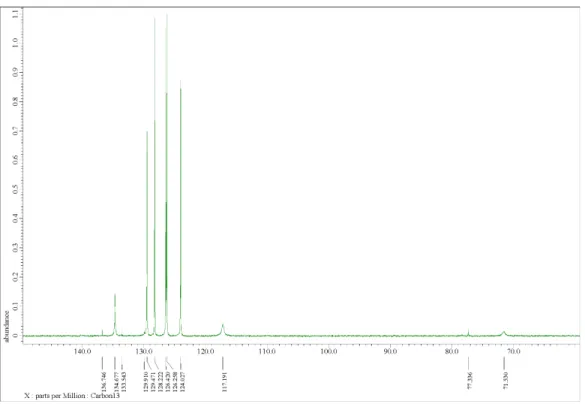
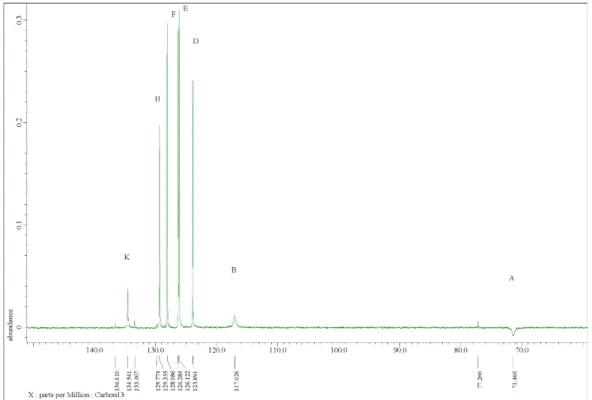
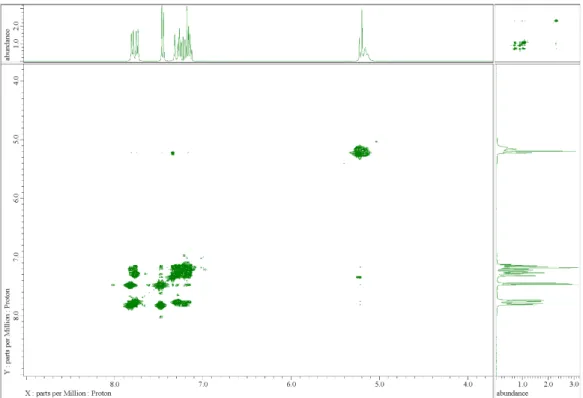
Variable-temperature (VT) analysis with NMR spectroscopy (Figure S13 in the Supporting Information) revealed the dynamic fluctuations between two BBD conformers with the same equi-librium population in solution. The two sets of1H NMR peaks that originate from those two con-formers were also observed at low temperature from 218 to 223 K showing no sign of a favored conformer (Figure S13 in the Supporting Information). The analysis of those VT NMR spectra by a line- shape-fitting provides the experimental energetics for the interexchange processes between the two BBD conformers. Using an Eyring plot, the parameters of this interexchange were esti-mated to be∆H = 9.8 kcal/mol and ∆S = −17 cal/(mol K) (Figures S14 and S15 in the Supporting Information), supporting the possibility of a fast interconversion of the two conformers at ambient temperature and in solution.
As presented in Figure 1, three BBD conformers were identified using DFT calculations (B3LYP/6-31G(d,p)) depending on the location of the two binaphthyl paddles relative to the central phenyl. They correspond to the flat, syn, and anti conformations of a BBD molecule. The syn and anti conformers are expected to be the principal BBD isomers in solution since after molecular structure optimization, the flat, syn, and anti relative conformation energies are 20, 0.4, and 0.0 kcal/mol, respectively. Experimental ROESY peaks in NMR spectroscopy are also consistent with the existence of the anti-syn conformer in solution since a weak correlation was observed between the central aromatic CH and the side binaphthyl aromatic CH proton (Figures S10-S12 in the Supporting Information).
between the two minima in the S0 ground state. The two binaphthyls are connected laterally to a very small chassis made simply of a central phenyl (BBD inScheme 1). This covalent binding of each binaphthyl via the methylene oxy bridges modifies the paddle switch ability with, for example, the suppression of the S1 (θ = −119°) torsion angle energy minimum. What is important here is that S0 keeps its awaited mechanical characteristics, that is, the possibility of its vibrational oscillations around its new (θ = −61°) ground-state minimum (TD-DFT calculated) reachable, for example, by optical excitation and relaxation via its new S1 (θ = −58°) relaxed conformation for the (R,R) isomer (Figure S17 in the
Supporting Information).
On a metallic surface and in a planar conformation, the two BBD binaphthyl groups permit to space the BBD chassis away from this surface at a distance compatible with a physisorption state. To drive the BBD molecule step-by-step along an fcc track of the Au(111) surface using the inelastic effect of the STM tunneling current, one has to first virtually prepare this molecule in its instantaneous virtual reduced electronic state well described for its mechanics by considering in first approximation the BBD S1 excited state. Afterward, relaxation to the S0 ground state will result in a small amplitude and noncoherent binaphthyl oscillations. As a function on the tip apex location on BBD, this will generate a surface lateral motion over the lateral diffusion barrier of the Au(111) fcc portion of the herringbone surface reconstruction.
The BBD molecule was synthesized by a one-pot reaction from commercially available (R)-1,1′-bi(2-naphthol) and α,α′,α″,α‴-tetrabromodurene (Scheme 1). Before its evapo-ration in the STM prepaevapo-ration chamber, it was further ultrapurified by sublimation to produce a colorless powder with no crystallinity. BBD UV−vis absorption spectrum is similar to the one of binaphthyl molecules33 and shows an absorption peak maximum at 334 nm (Figure S1 in the
Supporting Information), demonstrating a good electronic separation between the two BBD lateral paddles. Recorded conventional CD spectra of chiral binaphthyls (Figure S2 in the
Supporting Information) confirmed that the chirality of the binaphthyl groups remained after purification.
The Native BBD Molecule Conformation in Solution. Variable-temperature (VT) analysis with NMR spectroscopy (Figure S13 in the Supporting Information) revealed the dynamic fluctuations between two BBD conformers with the same equilibrium population in solution. The two sets of 1H NMR peaks that originate from those two conformers were also observed at low temperature from 218 to 223 K showing no sign of a favored conformer (Figure S13 in the Supporting Information). The analysis of those VT NMR spectra by a line-shape-fitting provides the experimental energetics for the interexchange processes between the two BBD conformers. Using an Eyring plot, the parameters of this interexchange were estimated to beΔH = 9.8 kcal/mol and ΔS = −17 cal/(mol K) (Figures S14 and S15 in the Supporting Information), supporting the possibility of a fast interconversion of the two conformers at ambient temperature and in solution.
As presented in Figure 1, three BBD conformers were identified using DFT calculations (B3LYP/6-31G(d,p)) depending on the location of the two binaphthyl paddles relative to the central phenyl. They correspond to the flat, syn, and anti conformations of a BBD molecule. The syn and anti conformers are expected to be the principal BBD isomers in solution since after molecular structure optimization, the flat,
syn, and anti relative conformation energies are 20, 0.4, and 0.0 kcal/mol, respectively. Experimental ROESY peaks in NMR spectroscopy are also consistent with the existence of the anti− syn conformer in solution since a weak correlation was observed between the central aromatic CH and the side binaphthyl aromatic CH proton (Figures S10−S12 in the Supporting Information).
A flat BBD conformer is supposed by design to render accessible the different entry ports on its board for local STM excitations. In the following section, we will demonstrate how this flat conformer can be produced molecule per molecule by STM single molecule mechanical manipulations. When obtained, this flat conformer turns out to be quite stable on the Au(111) surface.
Native BBD Conformation and 2D Organization on the Au(111) Surface. Two typical constant current STM images obtained after BBD molecules deposition on the Au(111) reconstructed surface are presented in Figure 2. They were mainly found self-assembled in small 2D islands (Figure 2a). In some place, single BBD molecule lines can also be observed. This pseudo-1D growth along the Au(111) herringbone track is usually stopped at both ends of the line by a different surface BBD molecular ordering (Figure 2b). In all those observed pseudo-1D and 2D surface molecular orderings, the BBD molecules appear having the shape of a curve letter “f ”. Those “f ” BBD molecules have three possible adsorption directions on the Au(111) surface (see theFigure 2a insert). As presented in Figure 2b, the observed single “f ” BBD lines confirm that the BBD molecules are sensitive to the lateral ridges of the herringbone reconstruction (in average 0.03 nm in height).6
As certified experimentally by STM single molecule manipulations in the next subsection, each “f ” STM molecular feature is a BBD dimer consisting of two syn conformers Figure 1. Various possible conformers of BBD molecule. (a) Flat, (b) syn, and (c) anti conformers obtained from DFT calculations (B3LYP/6-31G(d,p)) with relative energies of +20, +0.4, and 0.0 kcal/mol, respectively. Each structure was optimized with its D2, C2, and C2symmetry, respectively. The calculated torsion angles of the binaphthyl are θ = −61°, − 64° and −64°, respectively. In solution, only the anti and syn conformers have been identified. Physisorbed on an Au(111) surface, STM molecular manipulations of BBD lead to the production of the flat conformer.
ACS Nano Article
DOI:10.1021/acsnano.7b05314 ACS Nano 2017, 11, 10357−10365
10359
Figure 1. Various possible conformers of BBD molecule. (a) Flat, (b) syn, and (c) anti conformers obtained from DFT calculations (B3LYP/6-31G(d,p)) with relative energies of +20,
+0.4, and 0.0 kcal/mol, respectively. Each structure was optimized with its D2, C2, and C2
symmetry, respectively. The calculated torsion angles of the binaphthyl areθ = −61◦, −64◦and −64◦, respectively. In solution, only the anti and syn conformers have been identified.
Physisorbed on an Au(111) surface, STM molecular manipulations of BBD lead to the production of the flat conformer.
A flat BBD conformer is supposed by design to render accessible the different entry ports on its board for local STM excitations. In the following section, we will demonstrate how this flat conformer can be produced molecule per molecule by STM single molecule mechanical manip-ulations. When obtained, this flat conformer turns out to be quite stable on the Au(111) surface.
C. Native BBD Conformation and 2D Organization on the Au(111) Surface.
Two typical constant current STM images obtained after BBD molecules deposition on the Au(111) reconstructed surface are presented in Figure 2. They were mainly found self-assembled in small 2D islands (Figure 2a). In some place, single BBD molecule lines can also be observed. This pseudo-1D growth along the Au(111) herringbone track is usually stopped at both ends of the line by a different surface BBD molecular ordering (Figure 2b). In all those observed pseudo-1D and 2D surface molecular orderings, the BBD molecules appear having the shape of a curve letter ”>”. Those ”>” BBD molecules have three possible adsorption directions on the Au(111) surface (see the Figure 2a insert). As presented in Figure 2b, the observed single ”>” BBD lines confirm that the BBD molecules are sensitive to the lateral ridges of the herringbone reconstruction (in average 0.03 nm in height).6
As certified experimentally by STM single molecule manipulations in the next subsection, each ”>” STM molecular feature is a BBD dimer consisting of two syn conformers oriented perpendic-ular to the surface plane. They are coupled by a pair along one of the three [211] crystallographic orientations of the Au(111) fcc portion of this surface (see the Figure 2a insert). A first experimen-tal indication of this pairing is evidenced in Figure 2a by analyzing the only molecular alignment defect at the top of the last left BBDs molecular row.
As discussed in the previous subsection, the BBD molecules are found equally in the syn and anticonformations in solution. Molecular dynamics (MD) simulations were performed to simulate a hot adsorption process of the BBD molecules on a Au(111) surface (see Supporting Information). When the BBD molecules are annealed on the surface up to 500 K, the syn and anti conformers are deformed but remain on the surface with no transformation in the flat conformer. At this temperature and during their 2D diffusion around the Au(111) surface, the BBD molecules have enough kinetic energy to mutually transform between the syn and anti as they certainly performed in solution and at room temperature. Upon cooling down the surface to room temperature, the BBD molecules thermalize toward the syn conformers since syn is 9.0 kcal/mol lower in energy as compared to anti on the Au(111) surface. Furthermore, the syn thermalize with still their cen-tral phenyl perpendicular to the Au(111) surface because laterally stabilized by their two paddles. During a slow thermalization process, the syn will also continue to diffuse on the surface. While in this perpendicular adsorption conformation, they can pair via a central phenyl π-stacking inter-actions as also confirmed by MD calculation (see Supporting Information). It results in the ”>”
oriented perpendicular to the surface plane. They are coupled by a pair along one of the three [211] crystallographic orientations of the Au(111) fcc portion of this surface (see the
Figure 2a insert). A first experimental indication of this pairing is evidenced in Figure 2a by analyzing the only molecular alignment defect at the top of the last left BBDs molecular row. As discussed in the previous subsection, the BBD molecules are found equally in the syn and anti conformations in solution. Molecular dynamics (MD) simulations were performed to simulate a hot adsorption process of the BBD molecules on a Au(111) surface (seeSupporting Information). When the BBD molecules are annealed on the surface up to 500 K, the syn and anti conformers are deformed but remain on the surface with no transformation in the flat conformer. At this temperature and during their 2D diffusion around the Au(111) surface, the BBD molecules have enough kinetic energy to mutually transform between the syn and anti as they certainly performed in solution and at room temperature. Upon cooling down the surface to room temperature, the BBD molecules thermalize toward the syn conformers since syn is 9.0 kcal/mol lower in energy as compared to anti on the Au(111) surface. Furthermore, the syn thermalize with still their central phenyl perpendicular to the Au(111) surface because laterally stabilized by their two paddles. During a slow thermalization process, the syn will also continue to diffuse on the surface. While in this perpendicular adsorption conformation, they can pair via a central phenyl π-stacking interactions as also
confirmed by MD calculation (see Supporting Information). It results in the “f ” STM image like shape dimers observed in
Figure 2 assembled in the various pseudo-1D line and 2D islands.
According to MD calculations and if accessible, the flat BBD conformers would be more stable than the orthogonal to the surface syn and anti conformers. However, getting directly a flat conformer from the native syn and anti conformers on the Au(111) surface would require an annealing temperature of about 1500 K. Therefore, during deposition or by heating up the surface directly afterward, it will be difficult to produce flat conformers. At such a high temperature, most of the BBD molecules will break and/or desorb from the surface. Anyhow, the gold melting point is lower than 1500 K. As demonstrated below, flat conformers can be produced molecule per molecule on the Au(111) surface starting from the orthogonal to the surface syn conformers using a very specific STM single molecule mechanical manipulation protocol.
STM Single Molecule Mechanical Manipulation for Preparing flat BBD Conformers. To produce a flat BBD conformer, a selected syn conformer dimer adsorbed perpendicular to the Au(111) surface (one of the “f ” molecular
units imaged in Figure 2) must be first separated into
independent syn monomers. For this purpose and starting from a 2D island of the sort imaged in Figure 2a, STM lateral BBD molecule mechanical manipulation has been first performed as presented in Figure 3. Here, the threshold
STM tunneling resistance for molecule manipulation is around RT = 270 MΩ. In most cases, a “f ” dimer can readily be
separated out of the 2D island but only as a single “f ” dimer entity with no monomer separation as presented in the Figure 3a,b. Then, a “f ” dimer can be step-by-step displaced over quite long distances over the surface in such STM manipulation conditions. When they are sometimes disassembled into two syn monomers during this process, one syn of the “f ” pair is generally transferred to the STM tip, and the other one remains in the island as shown in the sequence Figure 3b,c.
Notice also that after the breaking of a “f ” pair at the 2D island border and in its orthogonal to the surface adsorption configuration, the syn monomer left in the island (as obtained in Figure 3c) can be further extracted from this island by a further lateral STM manipulation. In this case, it has also a high probability to be captured by the tip apex, confirming how this syn monomer orthogonal configuration is not very stable on an
Figure 2. (a) A typical STM topographic image of BBD molecules forming a small 2D island on the Au(111) reconstructed surface. Each building block of the imaged island is a dimer of syn−syn conformers having the shape of a curved “f ” letter. Insert a: the three possible adsorption orientations of the syn dimers. The atomic resolved image was also recorded using a molecule terminated STM tip to confirm the molecular orientation. (b) A good example of supramolecular assembly with a line of 10 BBD molecular dimers formed along an Au(111) herringbone whose growth was stopped at both ends of the BBD line by 2 “f ” dimers of a different surface orientation. (All LT-UHV STM constant current image images were generally recorded at I = 20 pA, V = 0.5 V.)
Figure 3. An example of the molecule manipulation experiments using the tunneling condition near the threshold RT= 270 MΩ. (a)
2D island of self-assembled syn−syn dimers on the Au(111) surface observed just after Au(111) sample preparation. (b) A “f ” BBD molecule was step-by-step manipulated and extracted from its island while maintaining its dimer structure. (c) A monomer was detached from a down right corner “f ” of the island and adsorbed to the tip apex and remains of the second syn of this dimer initially perpendicular to the surface conformation (same STM image conditions as in Figure 2. Image size: 15 nm × 15 nm).
ACS Nano Article
DOI:10.1021/acsnano.7b05314
ACS Nano 2017, 11, 10357−10365
10360
Figure 2. (a) A typical STM topographic image of BBD molecules forming a small 2D island on the Au(111) reconstructed surface. Each building block of the imaged island is a dimer of syn-syn
conformers having the shape of a curved ”>” letter. Insert a: the three possible adsorption orientations of the syn dimers. The atomic resolved image was also recorded using a molecule terminated STM tip to confirm the molecular orientation. (b) A good example of supramolecular
assembly with a line of 10 BBD molecular dimers formed along an Au(111) herringbone whose growth was stopped at both ends of the BBD line by 2 ”>” dimers of a different surface orientation. (All LT-UHV STM constant current image images were generally recorded at
I = 20 pA, V = 0.5 V.)
STM image like shape dimers observed in Figure 2 assembled in the various pseudo-1D line and 2D islands.
According to MD calculations and if accessible, the flat BBD conformers would be more sta-ble than the orthogonal to the surface syn and anti conformers. However, getting directly a flat conformer from the native syn and anti conformers on the Au(111) surface would require an an-nealing temperature of about 1500 K. Therefore, during deposition or by heating up the surface directly afterward, it will be difficult to produce flat conformers. At such a high temperature, most of the BBD molecules will break and/or desorb from the surface. Anyhow, the gold melting point is lower than 1500 K. As demonstrated below, flat conformers can be produced molecule per molecule on the Au(111) surface starting from the orthogonal to the surface syn conformers using a very specific STM single molecule mechanical manipulation protocol.
D. STM Single Molecule Mechanical Manipulation for Preparing flat BBD Conformers.
To produce a flat BBD conformer, a selected syn conformer dimer adsorbed perpendicular to the Au(111) surface (one of the ”>” molecular units imaged in Figure 2) must be first separated into independent syn monomers. For this purpose and starting from a 2D island of the sort imaged in Figure 2a, STM lateral BBD molecule mechanical manipulation has been first performed as presented in Figure 3. Here, the threshold STM tunneling resistance for molecule manipulation is around RT = 270 MΩ. In most cases, a ”
>
” dimer can readily be separated out of the 2D island but only as a single ”>” dimer entity with no monomer separation as presented in the Figure 3a,b. Then, a ”>” dimer can be step-by-step displaced over quite long distances over the surface in such STM manipulation conditions. When they are sometimes disassembled into two syn monomers during this process, one syn of the ”>” pair is generally transferred to the STM tip, and the other one remains in the island as shown in the sequence Figure 3b,c.
Notice also that after the breaking of a ”>” pair at the 2D island border and in its orthogonal to the surface adsorption configuration, the syn monomer left in the island (as obtained in Figure 3c) can be further extracted from this island byr a further lateral STM manipulation. In this case, it has also a high probability to be captured by the tip apex, confirming how this syn monomer orthogonal configuration is not very stable on an Au(111) surface. We have succeeded to manipulate a few of those syn monomers toward specific Au(111) surface areas like the herringbone kinks where generally the surface atomic order is not regular and can stabilize them. They can also be dragged
oriented perpendicular to the surface plane. They are coupled
by a pair along one of the three [211] crystallographic
orientations of the Au(111) fcc portion of this surface (see the
Figure 2
a insert). A first experimental indication of this pairing
is evidenced in
Figure 2
a by analyzing the only molecular
alignment defect at the top of the last left BBDs molecular row.
As discussed in the previous subsection, the BBD molecules
are found equally in the syn and anti conformations in solution.
Molecular dynamics (MD) simulations were performed to
simulate a hot adsorption process of the BBD molecules on a
Au(111) surface (see
Supporting Information
). When the BBD
molecules are annealed on the surface up to 500 K, the syn and
anti conformers are deformed but remain on the surface with
no transformation in the flat conformer. At this temperature
and during their 2D diffusion around the Au(111) surface, the
BBD molecules have enough kinetic energy to mutually
transform between the syn and anti as they certainly performed
in solution and at room temperature. Upon cooling down the
surface to room temperature, the BBD molecules thermalize
toward the syn conformers since syn is 9.0 kcal/mol lower in
energy as compared to anti on the Au(111) surface.
Furthermore, the syn thermalize with still their central phenyl
perpendicular to the Au(111) surface because laterally
stabilized by their two paddles. During a slow thermalization
process, the syn will also continue to diffuse on the surface.
While in this perpendicular adsorption conformation, they can
pair via a central phenyl π-stacking interactions as also
confirmed by MD calculation (see
Supporting Information
).
It results in the “f ” STM image like shape dimers observed in
Figure 2
assembled in the various pseudo-1D line and 2D
islands.
According to MD calculations and if accessible, the flat BBD
conformers would be more stable than the orthogonal to the
surface syn and anti conformers. However, getting directly a flat
conformer from the native syn and anti conformers on the
Au(111) surface would require an annealing temperature of
about 1500 K. Therefore, during deposition or by heating up
the surface directly afterward, it will be difficult to produce flat
conformers. At such a high temperature, most of the BBD
molecules will break and/or desorb from the surface. Anyhow,
the gold melting point is lower than 1500 K. As demonstrated
below, flat conformers can be produced molecule per molecule
on the Au(111) surface starting from the orthogonal to the
surface syn conformers using a very specific STM single
molecule mechanical manipulation protocol.
STM Single Molecule Mechanical Manipulation for
Preparing flat BBD Conformers. To produce a flat BBD
conformer, a selected syn conformer dimer adsorbed
perpendicular to the Au(111) surface (one of the “f ” molecular
units imaged in
Figure 2
) must be first separated into
independent syn monomers. For this purpose and starting
from a 2D island of the sort imaged in
Figure 2
a, STM lateral
BBD molecule mechanical manipulation has been first
performed as presented in
Figure 3
. Here, the threshold
STM tunneling resistance for molecule manipulation is around
R
T= 270 MΩ. In most cases, a “f ” dimer can readily be
separated out of the 2D island but only as a single “f ” dimer
entity with no monomer separation as presented in the
Figure
3
a,b. Then, a “f ” dimer can be step-by-step displaced over quite
long distances over the surface in such STM manipulation
conditions. When they are sometimes disassembled into two
syn monomers during this process, one syn of the “f ” pair is
generally transferred to the STM tip, and the other one remains
in the island as shown in the sequence
Figure 3
b,c.
Notice also that after the breaking of a “f ” pair at the 2D
island border and in its orthogonal to the surface adsorption
configuration, the syn monomer left in the island (as obtained
in
Figure 3
c) can be further extracted from this island by a
further lateral STM manipulation. In this case, it has also a high
probability to be captured by the tip apex, confirming how this
syn monomer orthogonal configuration is not very stable on an
Figure 2. (a) A typical STM topographic image of BBD moleculesforming a small 2D island on the Au(111) reconstructed surface. Each building block of the imaged island is a dimer of syn−syn conformers having the shape of a curved “f ” letter. Insert a: the three possible adsorption orientations of the syn dimers. The atomic resolved image was also recorded using a molecule terminated STM tip to confirm the molecular orientation. (b) A good example of supramolecular assembly with a line of 10 BBD molecular dimers formed along an Au(111) herringbone whose growth was stopped at both ends of the BBD line by 2 “f ” dimers of a different surface orientation. (All LT-UHV STM constant current image images were generally recorded at I = 20 pA, V = 0.5 V.)
Figure 3. An example of the molecule manipulation experiments using the tunneling condition near the threshold RT= 270 MΩ. (a)
2D island of self-assembled syn−syn dimers on the Au(111) surface observed just after Au(111) sample preparation. (b) A “f ” BBD molecule was step-by-step manipulated and extracted from its island while maintaining its dimer structure. (c) A monomer was detached from a down right corner “f ” of the island and adsorbed to the tip apex and remains of the second syn of this dimer initially perpendicular to the surface conformation (same STM image conditions as in Figure 2. Image size: 15 nm × 15 nm).
ACS Nano
ArticleDOI:10.1021/acsnano.7b05314
ACS Nano 2017, 11, 10357−10365
10360
Figure 3. An example of the molecule manipulation experiments using the tunneling condition near the threshold RT = 270 MΩ. (a) 2D island of self-assembled syn-syn dimers on the Au(111)
surface observed just after Au(111) sample preparation. (b) A ”>” BBD molecule was step-by-step manipulated and extracted from its island while maintaining its dimer structure. (c)
A monomer was detached from a down right corner ”>” of the island and adsorbed to the tip apex and remains of the second syn of this dimer initially perpendicular to the surface conformation (same STM image conditions as in Figure 2. Image size: 15 nm × 15 nm).
along the surface during standard imaging conditions, that is, for STM RT around 10 GΩ and a
tunneling current below 10 pA.
At the border of a 2D-island and using RT ∼ 120 MΩ, a new specific BBD dimer molecule
manipulation protocol can bring a different manipulation outcome. When in a ”>” pair located at the border of a 2D island, a syn BBD molecule is manipulated without trying to extract it directly from this island border; however, following the appropriate manipulation tip trajectory presented in Figure 4, a flat monomer can be produced with its two-fold paddles now fully open. Figure 4 presents an example of such an outcome with a reasonable 10% probability of success.
There are two essential conditions for this specific protocol to produce successfully a flat con-former and to open the BBD two paddles. First, the syn targeted BBD molecule must be paired with a syn BBD anchored at the edge of a 2D island but not at a corner. This anchoring will serve as a pivot for the opening following a classical molecular mechanical motion of the molecule, as if it was a solid and rigid body pivoting around a fix point. Second, the targeted syn BBD must be ”rubbed” laterally on another ”>” dimer of the island during the manipulation, that is, the manipulation trajectory must maintain a lateral interaction with the other ”>” dimer for the flat flipping of the manipulated BBD molecule to be complete. As a consequence, the manipulated BBD molecule performs a 90◦ flip down to the surface to reach a planar central phenyl
config-uration with the two paddles opened flat on the Au(111) surfacem as illustrated in Figure 4a,b (more examples in Supporting Information section 9). In this case, the lateral required interactions between the manipulated BBD and the border 2D island BBDs seem to be attractive according to the recorded manipulation signal, but this requires a more detailed interpretation in the future.
When produced, a flat conformer is very stable on the Au(111) surface as theoretically pre-dicted by MD calculations. After its production, this is confirmed by the experimental RT thresh-old value for a flat conformer STM molecular manipulation in a pushing mode along the Au(111) surface, the lowest (∼ 66 MΩ) of all the RT values used for the different BBD molecule
configura-tions met on this surface. A flat BBD monomer can be truly and reproducibly STM manipulated mechanically over long distances as presented in Figure 4b,c.
E. Tunneling Spectroscopy and States Mapping of the Flat BBD Conformer.
A flat BBD conformer on the Au(111) surface opens access to the detail STM dI/dV mapping of its low-lying molecular electronic states around the Au(111) surface Fermi energy. Such a
Au(111) surface. We have succeeded to manipulate a few of
those syn monomers toward specific Au(111) surface areas like
the herringbone kinks where generally the surface atomic order
is not regular and can stabilize them. They can also be dragged
along the surface during standard imaging conditions, that is,
for STM R
Taround 10 GΩ and a tunneling current below 10
pA.
At the border of a 2D-island and using R
T∼ 120 MΩ, a new
specific BBD dimer molecule manipulation protocol can bring a
different manipulation outcome. When in a “f ” pair located at
the border of a 2D island, a syn BBD molecule is manipulated
without trying to extract it directly from this island border;
however, following the appropriate manipulation tip trajectory
presented in
Figure 4
, a flat monomer can be produced with its
two-fold paddles now fully open.
Figure 4
presents an example
of such an outcome with a reasonable 10% probability of
success.
There are two essential conditions for this specific protocol
to produce successfully a flat conformer and to open the BBD
two paddles. First, the syn targeted BBD molecule must be
paired with a syn BBD anchored at the edge of a 2D island but
not at a corner. This anchoring will serve as a pivot for the
opening following a classical molecular mechanical motion of
the molecule, as if it was a solid and rigid body pivoting around
a fix point. Second, the targeted syn BBD must be “rubbed”
laterally on another “f ” dimer of the island during the
manipulation, that is, the manipulation trajectory must maintain
a lateral interaction with the other “f ” dimer for the flat flipping
of the manipulated BBD molecule to be complete. As a
consequence, the manipulated BBD molecule performs a 90°
fl
ip down to the surface to reach a planar central phenyl
configuration with the two paddles opened flat on the Au(111)
surfacem as illustrated in
Figure 4
a,b (more examples in
Supporting Information
section 9). In this case, the lateral
required interactions between the manipulated BBD and the
border 2D island BBDs seem to be attractive according to the
recorded manipulation signal, but this requires a more detailed
interpretation in the future.
When produced, a flat conformer is very stable on the
Au(111) surface as theoretically predicted by MD calculations.
After its production, this is confirmed by the experimental R
Tthreshold value for a f lat conformer STM molecular
manipulation in a pushing mode along the Au(111) surface,
the lowest (∼66 MΩ) of all the R
Tvalues used for the different
BBD molecule configurations met on this surface. A flat BBD
monomer can be truly and reproducibly STM manipulated
mechanically over long distances as presented in
Figure 4
b,c.
Tunneling Spectroscopy and States Mapping of the
Flat BBD Conformer. A flat BBD conformer on the Au(111)
surface opens access to the detail STM dI/dV mapping of its
low-lying molecular electronic states around the Au(111)
surface Fermi energy. Such a mapping is of importance to
confirm the flat conformation interpretation after the
Figure 4
specific manipulation protocol. It is also very appropriate for
determining the location of the maximum molecular orbital
weight of its reduced and oxidized electronic states along the
BBD molecular structure. Those maxima are known to be the
principal port for intramolecular inelastic excitations induced by
tunneling electrons in a way to bring energy to the molecular
structure to move on a metallic surface with no mechanical
push.
Figure 5
a presents a typical dI/dV spectrum recorded on a
flat BBD molecule adsorbed on the Au(111) surface. Here, the
STM tip apex was positioned at the center of one of the two
lobes identified on the topographic image (see
Figure 4
c). After
identifying the Au(111) surface states energy location (∼ −0.5
V) in this spectrum, two differential conductance peaks are
observed, one at
−1.6 V and a small bump centered around
+2.7 V. This gives an apparent electronic gap of about 4.3 eV
for a flat BBD molecule on the Au(111) surface to be
compared to the 3.7 eV (334 nm) UV optical gap observed for
the syn and anti conformers in solution.
Performed exactly at these resonances, the
Figure 5
very
precise dI/dV STM mapping permits to determine the spatial
molecular orbital electronic distribution of the flat BBD
reduced and oxidized electronic states at the origin of those
two tunneling resonances. Monoelectronic constant current dI/
dV elastic scattering quantum chemistry (ESQC)
34image
calculations were performed to compare with those
exper-imental dI/dV maps. The ESQC calculation is particularly
well-adapted to provide accurate STM images for large adsorbed
molecules.
35,36These calculations confirm that the main
contributor to the
−1.6 V resonance is the BBD highest
occupied molecular orbital (HOMO) and the BBD lowest
unoccupied molecular orbital (LUMO) to the +2.7 V
resonance. Those images were calculated starting from an
optimized flat BBD conformation on the Au(111) surface. This
confirms how the BBD molecule can be prepared in a flat
conformation by STM single molecule manipulation. According
to
Figure 5
images, the central phenyl chassis is relatively
electronically decoupled for the Au(111) surface.
Step-by-Step Manipulation for Moving a flat BBD
Conformer on the Au(111) Surface. To manipulate a BBD
molecule by inelastic electron tunneling effects along a fcc
portion of the Au(111) surface, the single molecule must
capture enough energy from the tunneling current to pass over
the fcc surface lateral diffusion barrier. One way to trigger the
inelastic energy release on the BBD vibronic mode is to
increase the tunneling current intensity through the molecule
reaching its first low-lying reduced states. According to the dI/
dV spectrum in
Figure 5
a, this can be achieved with a bias
Figure 4. An example of the forcible molecule manipulation experiments using tunneling conditions less than 1/2 RTin Figure 3. Topographic images (a) before and (b) after RT = 120 MΩ
manipulation. Using this condition, a structural transformation from syn to flat conformer occurs. (c) The so-produced flat conformer was manipulated with the STM tip away from its original four “f ” dimer line with RT= 66 MΩ in order to isolate it
to prevent the influence from other molecules during dI/dV STM spectroscopic measurements. The specific tip trajectories during the manipulation to produce a flat conformer are indicated by the arrows in (a) and (b). The tip location selected during theFigure 5
spectrum recording on this flat conformer is indicated by a dot in (c). Same STM image conditions as inFigure 2. Image size: 12 nm × 15 nm.
ACS Nano
ArticleDOI:10.1021/acsnano.7b05314
ACS Nano 2017, 11, 10357−10365
10361
Figure 4. An example of the forcible molecule manipulation experiments using tunneling conditions less than 1/2 RT in Figure 3. Topographic images (a) before and (b) after
RT = 120 MΩ manipulation. Using this condition, a structural transformation from syn to flat
conformer occurs. (c) The so-produced flat conformer was manipulated with the STM tip away from its original four ”>” dimer line with RT = 66 MÎl’ in order to isolate it to prevent the
influence from other molecules during dI/dV STM spectroscopic mΩ. The specific tip trajectories during the manipulation to produce a flat conformer are indicated by the arrows in (a) and (b).
The tip location selected during the Figure 5 spectrum recording on this flat conformer is indicated by a dot in (c). Same STM image conditions as in Figure 2. Image size: 12 nm × 15 nm.
mapping is of importance to confirm the flat conformation interpretation after the Figure 4 specific manipulation protocol. It is also very appropriate for determining the location of the maximum molecular orbital weight of its reduced and oxidized electronic states along the BBD molecular structure. Those maxima are known to be the principal port for intramolecular inelastic excitations induced by tunneling electrons in a way to bring energy to the molecular structure to move on a metallic surface with no mechanical push.
Figure 5a presents a typical dI/dV spectrum recorded on a flat BBD molecule adsorbed on the Au(111) surface. Here, the STM tip apex was positioned at the center of one of the two lobes identified on the topographic image (see Figure 4c). After identifying the Au(111) surface states energy location (∼ −0.5 V) in this spectrum, two differential conductance peaks are observed, one at −1.6 V and a small bump centered around+2.7 V. This gives an apparent electronic gap of about 4.3 eV for a flat BBD molecule on the Au(111) surface to be compared to the 3.7 eV (334 nm) UV optical gap observed for the syn and anti conformers in solution.
Performed exactly at these resonances, the Figure 5 very precise dI/dV STM mapping permits to determine the spatial molecular orbital electronic distribution of the flat BBD reduced and ox-idized electronic states at the origin of those two tunneling resonances. Monoelectronic constant current dI/dV elastic scattering quantum chemistry (ESQC)34image calculations were performed to compare with those experimental dI/dV maps. The ESQC calculation is particularly well-adapted to provide accurate STM images for large adsorbed molecules.35,36 These calculations confirm that the main contributor to the −1.6 V resonance is the BBD highest occupied molecular orbital (HOMO) and the BBD lowest unoccupied molecular orbital (LUMO) to the+2.7 V res-onance. Those images were calculated starting from an optimized flat BBD conformation on the Au(111) surface. This confirms how the BBD molecule can be prepared in a flat conformation by STM single molecule manipulation. According to Figure 5 images, the central phenyl chassis is relatively electronically decoupled for the Au(111) surface.
F. Step-by-Step Manipulation for Moving a flat BBD Conformer on the Au(111) Surface.
To manipulate a BBD molecule by inelastic electron tunneling effects along a fcc portion of the Au(111) surface, the single molecule must capture enough energy from the tunneling current to pass over the fcc surface lateral diffusion barrier. One way to trigger the inelastic energy release on the BBD vibronic mode is to increase the tunneling current intensity through the molecule
voltage applied to the tunnel junction greater than about 2 V to
reach at least the tail of the +2.7 V BBD tunneling electronic
resonance. Notice here that the energy captured by the vibronic
modes of the BBD molecule will be a small fraction of the 2
eV.
38To maximize the tunneling inelastic excitations, it is also
usually taken for granted to position the STM tip apex at the
locations at the highest electron density of the targeted in
energy molecular electronic states. This strategy also helps to
minimize the STM bias voltage range in a way not to destroy
the molecule.
11The BBD dI/dV images presented in
Figure 5
are mapping those maxima and minima in its flat surface
conformation. This mapping results from the electronic
coupling between the tip apex and the molecular orbitals
entering in the composition of resonating BBD electronic states
when considering that those electronic states can be well
described by a superposition of Slater determinants constructed
using a molecular orbital basis set.
37,39The pixel-by-pixel construction of the
Figure 5
b,c maps
results from the local measurement of the conductance of the
BBD molecule at each pixel. In effect, this measurement
projects the total BBD electronic probability density on a 2D
plane. This is a very convenient way to identify where to
position the tip for triggering a tunneling inelastic effect. For
BBD, the highest electronic probability density (the highest dI/
dV) sites are located on the BBD binaphthyl paddles as
observed in
Figure 5
c.
As indicated in
Figure 5
c, when positioning the tip apex at
location 1 on the BBD molecule and then ramping up the bias
voltage further than +2.3 V (but without reaching +2.7 V), the
BBD changes its conformation with one naphthyl paddle going
up the surface in a conformation similar to syn (syn/flat-like
conformation, see Figure S21 in the
Supporting Information
).
This conformational change occurs systematically opposite to
the paddle been excited. On the corresponding reduced state
potential energy surface, this indicates that the energy captured
by the BBD molecule from the tunneling current is initiating a
conformation change trajectory at the onset of the +2.7 V
resonance. Starting from the flat ground-state conformation,
this trajectory certainly reaches a minimum on this reduced
state potential energy manifold corresponding to the rotating
up of a paddle to form a “syn/flat-like” conformation. Then, the
BBD molecule relaxes in its ground state in this new stable
“syn/flat” conformation not observable natively event after an
STM mechanical lateral manipulation procedure. Notice that in
the first approximation, the reduced state potential energy
manifold can be explored using the potential energy surface of
the BBD S
1vertically accessible excited electronic state.
After having tried to induce the paddle vibrations directly, we
have selected the electronic probability density maximum 2 as
indicated in
Figure 5
c. For this new excitation location and as
presented in left column of
Figure 6
, when the bias voltage
reaches about +2.3 V and the tunneling current several hundred
pico-amperes, the current intensity through the BBD suddenly
jumps up due to the molecule one step lateral translation. This
very reproducible behavior shows how a BBD molecule can be
step-by-step driven by steps of 0.29 nm on an fcc flat area on
the Au(111) surface. To be more precise on the inelastic
manipulation direction, an atomic resolved image of the
Au(111) surface recorded using molecule terminated tip is
inserted in
Figure 6
a to certify the accurate moving direction:
exactly one of <11
̅0> orientations of the Au(111) surface in its
fcc portion. The interatomic gold atom distance along those
orientations is 0.288 nm, in complete agreement with the
experimentally observed 0.29 nm long step motion per voltage
ramp. As presented in
Figure 6
, a controllable inelastic motion
is only possible when the molecule lies parallel to and in
between two herringbones of the reconstruction. When the
molecule sits on a herringbone (even when only one paddle
end is laying on it), it is stuck and difficult to manipulate
inelastically, as also recently observed with a windmill
molecule.
40For a BBD molecule laying parallel to the herringbones and
located at the fcc portion of the Au(111) surface, the
probability of a controllable stepwise motion is about 50%
after a single shot bias voltage ramp. Incidentally, the
probability of molecule motion regardless the adsorption site
is around 5% and the probability of a breaking or a
conformation changes is around 3%. As a consequence and
after a three consecutive lateral step-by-step motions, the BBD
molecule is stopped because of herringbone lateral diffusion
barrier and must be reprepared for a new run like with the
windmill molecule.
40Here, the BBD molecule must be
manipulated with care not to open a conformation change
path on its reduced state potential energy surface nor a
chemical reaction path breaking some of its chemical bonds
leading to the final destruction of the molecule since a molecule
Figure 5. (a) The dI/dV spectrum and (b and c) dI/dV maps
recorded on flat BBD produced in
Figure 4
. The first tunneling
resonances appear at
−1.6 V and +2.7 V bias voltage (sample
grounded on the LT-UHV 4-STM). A dI/dV map captures the
spatial distribution of the electron density of the corresponding
molecular electronic states contributing to the resonance.
37(d and
e) At energies corresponding to HOMO and LUMO of the flat
BBD monomer, monoelectronic ESQC STM calculated images are
also presented for comparison. Resonance at
−1.6 V appears to be
mainly coming from the HOMO component of the imaged ground
state and at +2.7 V from the LUMO contribution of BBD reduced
(image size: 3.6 nm × 2.4 nm).
ACS Nano
Article
DOI:10.1021/acsnano.7b05314
ACS Nano 2017, 11, 10357−10365
10362
Figure 5. (a) The dI/dV spectrum and (b and c) dI/dV maps recorded on flat BBD produced in Figure 4. The first tunneling resonances appear at −1.6 V and+2.7 V bias voltage (sample grounded on the LT-UHV 4-STM). A dI/dV map captures the spatial distribution of the electron density of the corresponding molecular electronic states contributing to the resonance.37(d and e) At energies corresponding to HOMO and LUMO of the flat BBD monomer, monoelectronic ESQC STM calculated images are also presented for comparison. Resonance at −1.6 V appears to be mainly coming from the HOMO component of the imaged ground state and at+2.7 V from
the LUMO contribution of BBD reduced (image size: 3.6 nm × 2.4 nm). 16
reaching its first low-lying reduced states. According to the dI/dV spectrum in Figure 5a, this can be achieved with a bias voltage applied to the tunnel junction greater than about 2 V to reach at least the tail of the+2.7 V BBD tunneling electronic resonance. Notice here that the energy captured by the vibronic modes of the BBD molecule will be a small fraction of the 2 eV.38 To maximize
the tunneling inelastic excitations, it is also usually taken for granted to position the STM tip apex at the locations at the highest electron density of the targeted in energy molecular electronic states. This strategy also helps to minimize the STM bias voltage range in a way not to destroy the molecule.11The BBD dI/dV images presented in Figure 5 are mapping those maxima and minima in its flat surface conformation. This mapping results from the electronic coupling between the tip apex and the molecular orbitals entering in the composition of resonating BBD electronic states when considering that those electronic states can be well described by a superposition of Slater determinants constructed using a molecular orbital basis set.37,39
The pixel-by-pixel construction of the Figure 5b,c maps results from the local measurement of the conductance of the BBD molecule at each pixel. In effect, this measurement projects the total BBD electronic probability density on a 2D plane. This is a very convenient way to identify where to position the tip for triggering a tunneling inelastic effect. For BBD, the highest electronic prob-ability density (the highest dI/dV) sites are located on the BBD binaphthyl paddles as observed in Figure 5c.
As indicated in Figure 5c, when positioning the tip apex at location 1 on the BBD molecule and then ramping up the bias voltage further than+2.3 V (but without reaching +2.7 V), the BBD changes its conformation with one naphthyl paddle going up the surface in a conformation similar to syn (syn/flat-like conformation, see Figure S21 in the Supporting Information). This confor-mational change occurs systematically opposite to the paddle been excited. On the corresponding reduced state potential energy surface, this indicates that the energy captured by the BBD molecule from the tunneling current is initiating a conformation change trajectory at the onset of the+2.7 V resonance. Starting from the flat ground-state conformation, this trajectory certainly reaches a minimum on this reduced state potential energy manifold corresponding to the rotating up of a paddle to form a ”syn/flat-like” conformation. Then, the BBD molecule relaxes in its ground state in this new stable ”syn/flat-like” conformation not observable natively event after an STM mechanical lateral manipulation procedure. Notice that in the first approximation, the reduced state potential energy manifold can be explored using the potential energy surface of the BBD S1