
Amaranthin-Like Proteins with Aerolysin Domains in Plants
Texte intégral
Figure



Documents relatifs
We use a standard approach of analysis that consists in (1) find a formal limit of the eigenvalue problem when the small parameter tends to 0, here the formal limit is an
Intraprotein interactions and many-body dispersion effects We start out by investigating the Fip35-WW trajectory by artificially removing the surrounding solvent from a
Considered other 5 RxLx motif containing proteins with definite descriptions in PEDANT database are all enzymes involved in the cell metabolism and the categorization
brassicicola [17], and due to the potential molecular chaperone function of intrinsically unstruc- tured proteins (IUPs), expression of the three dehydrin-like genes was
PURE Server examines unassigned regions for the pres- ence of disordered regions, coiled coils, transmembrane helices, appropriate extent of predicted secondary struc- tural content
The flexibility and the cross-correlation coeffi- cient of the functional residues were compared between single-domain proteins, multi-domain proteins and the chimeras for
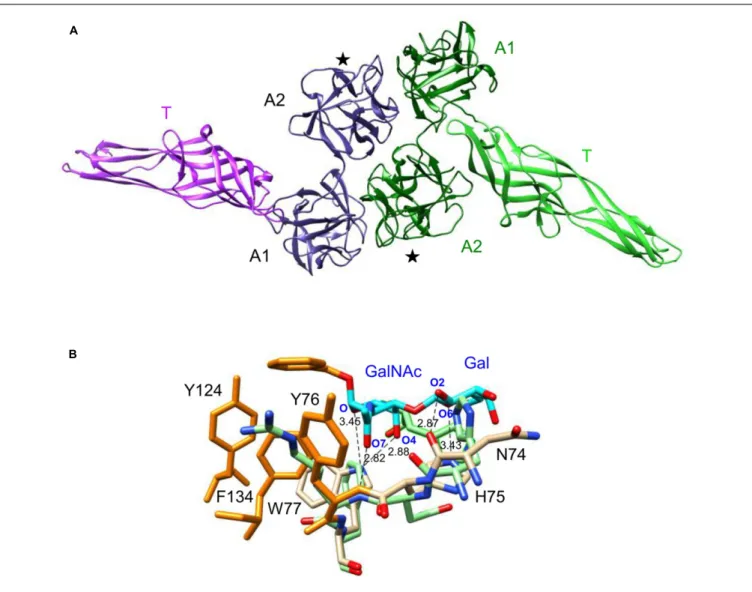
In addition, sequences of toxins from Bacillus thuringiensis, notably 2D42 used for tertiary structure prediction of Glabralysins, were included together with aerolysin-like proteins
In some cases, exact transparent boundary conditions can be defined [26, 29] leading to a formulation of our estimation problem in the unbounded domain case (Section 2).. However,
