HAL Id: hal-01948441
https://hal.archives-ouvertes.fr/hal-01948441
Submitted on 8 Jul 2019HAL is a multi-disciplinary open access archive for the deposit and dissemination of sci-entific research documents, whether they are pub-lished or not. The documents may come from teaching and research institutions in France or abroad, or from public or private research centers.
L’archive ouverte pluridisciplinaire HAL, est destinée au dépôt et à la diffusion de documents scientifiques de niveau recherche, publiés ou non, émanant des établissements d’enseignement et de recherche français ou étrangers, des laboratoires publics ou privés.
Synthetic-b-Recombinant Block Copolypeptides
Gaëlle Le Fer, Anne-Laure Wirotius, Annie Brûlet, Elisabeth Garanger,
Sébastien Lecommandoux
To cite this version:
Gaëlle Le Fer, Anne-Laure Wirotius, Annie Brûlet, Elisabeth Garanger, Sébastien Lecom-mandoux. Self-Assembly of Stimuli-Responsive Biohybrid Synthetic-b-Recombinant Block Copolypeptides. Biomacromolecules, American Chemical Society, 2019, 20 (1), pp.254-272. �10.1021/acs.biomac.8b01390�. �hal-01948441�
1
Self-assembly of stimuli-responsive biohybrid
synthetic-b-recombinant block copolypeptides
Gaëlle Le Fer§†, Anne-Laure Wirotius§†, Annie Brûlet‡, Elisabeth Garanger§†, Sébastien Lecommandoux*§†
§ Université de Bordeaux, Bordeaux INP, ENSCBP, 16 avenue Pey-Berland, 33607 Pessac Cedex, France, † CNRS, Laboratoire de Chimie des Polymères Organiques (UMR5629), Pessac, France, ‡ Laboratoire Léon Brillouin, UMR 12 CEA−CNRS, CEA Saclay, 91191 Gif-sur-Yvette Cedex, France.
KEYWORDS: elastin-like polypeptides, poly(L-glutamic acid), thermoresponsive diblock copolypeptides, self-assembly, nanoparticles.
ABSTRACT. The synthesis and original thermoresponsive behavior of hybrid diblock copolypeptides composed of synthetic and recombinant polypeptides are herein reported. A thermoresponsive recombinant elastin-like polypeptide was used as macroinitiator to synthesize a range of poly(L-glutamic acid)-block-elastin-like polypeptide (PGlu-b-ELP) diblock copolypeptides with variable PGlu block lengths. Their temperature-triggered self-assembly in water and in phosphate-buffered saline (PBS) was investigated at the macroscopic scale using complementary techniques such as turbidimetry, dynamic and static light scattering, small-angle
2
neutron scattering, and at the molecular scale by 1H NMR and circular dichroism (CD). In
deionized water, PGlu-b-ELP copolypeptides showed one transition from free soluble chains below the transition temperature (Tt) of the ELP block to macroscopic aggregates above the Tt. In
contrast, in PBS, four successive regimes were observed upon increasing temperature: below the Tt, copolypeptides were soluble, above the Tt, large aggregates appeared and fell apart into
discrete and defined spherical nanoparticles at a temperature named critical micellization temperature (CMT), before finally reaching an equilibrium. During the last regime, neutron scattering experiments revealed that the micelle-like structures underwent a densification step and expelled water from their core. In addition, 1H NMR and CD experiments revealed, in
deionized water, the formation of type II β-turns into the ELP block upon temperature increase. These β-turns are known to participate in the intrinsic thermoresponsive behavior of the ELPs. In contrast, in PBS, circular dichroism measurements showed an attenuation of folded structure during the self-assembly phase, leading to less cohesive aggregates able to reorganize into nanoparticles at the CMT.
Introduction
Interest in thermoresponsive polymers has steadily grown over the past decades, and numerous studies have been dedicated to the design of smart temperature-sensitive macromolecules for a large variety of applications.1-4 Within this family, are the polymers that exhibit inverse
temperature or lower critical solution temperature (LCST) phase behavior in aqueous solutions. These undergo a first-order phase transition from a soluble state into polymer-rich and water-rich phases upon heating above the cloud point (i.e., transition temperature, Tt). That is, a polymer
solution below the LCST is a clear and homogeneous solution, while cloudy due to polymer chains aggregation above the LCST. The understanding and the use of stimuli-responsive, in
3
particular temperature-sensitive, polymer materials have opened new potential applications, especially in the biomedical field, for therapeutic or diagnostic purposes via the elaboration of nanocarriers,5-7 or for the design of hydrogels for tissue engineering.8, 9 Indeed, these can respond
to subtle temperature differences, for example between cancerous and healthy cells,10, 11 and can
also be used for hyperthermia-induced drug delivery purposes.12-15
Poly(N-isopropylacrylamide) (PNIPAm)16, 17 and poly(N-vinylcaprolactam) (PNVCL)18, 19 have
been well studied and are probably the most popular thermoresponsive polymers,20 partly because they both exhibit a LCST close to body temperature. However, a wide range of other thermoresponsive polymers have recently shown interesting properties. Among them, poly(2-oxazoline)s constitute an other synthetic class of polyamides for which small hydrophobic side-chains can lead to LCST behavior.21, 22 For example,
poly(2-isopropyl-2-oxazoline)-block-poly(2-methyl-2-oxazoline) (PiPrOx-b-PMeOx) copolymers are able to form temporary or permanent micelles above the cloud point of the PiPrOx block based on its crystallization properties.23 Amino-terminated random copolymer poly(ethylene glycol)-co-poly(propylene
oxide) commercially known as Jeffamine and triblock poly(ethylene glycol)-b-poly(propylene oxide)-b-poly(ethylene glycol) (PEG-b-PPO-b-PEG) copolymers, named Poloxamer and commercially known as Pluronic were thoroughly investigated over the past several decades because of their thermoresponsive self-assembly properties in aqueous media.5, 24, 25 Moreover,
poly(acrylate) and poly(methacrylate) bearing PEG chains also display a LCST depending on structural parameters (i.e., nature of the polymerizable moiety, length of the PEG side chain or end-group of the PEG chain).26-30 Furthermore, grafting of hydrophilic side chains, usually
tertiary amine,31 oligo(ethylene glycol),32-34 or poly[oligo(ethylene glycol) methacrylate],35 on a synthetic hydrophobic polypeptide backbone, such as poly(γ-substituted L-glutamate),
poly(L-4
cysteine), or poly(L-lysine) allowed the design of biomimetic thermoresponsive materials.
A major limitation in the elaboration of this class of polymers is the need for extremely reproducible synthesis to preserve the precise temperature-triggered properties. To circumvent this drawback, another class of thermoresponsive polymers based on protein engineering has been developed, which demonstrates great promises for the preparation of adaptive and smart biomaterials.36-38 Indeed, in the past decade, recombinant protein-engineering techniques have allowed the development of precise recombinant polymers with exquisite control over their primary structure and their molecular weight.39, 40 Among them, elastin-like polypeptides (ELPs)
are the most studied family of polypeptides that exhibit LCST in aqueous solution. ELPs share structural characteristics with intrinsically disordered proteins naturally found in the body, such as (tropo)elastin, at the origin of their name.41, 42 They are composed of repeating sequences of
[-Val-Pro-Gly-Xaa-Gly-] pentapeptides, the guest residue Xaa being any amino acid except proline. The nature of the guest residue as well as the chain length encode for a precise transition temperature (Tt) at a given concentration.43-45 Recent contributions by our team have also
demonstrated the possibility to easily tune the thermoresponsive properties of ELPs by chemoselective modifications at the guest residue position. In particular chemoselective alkylation46, 47 or oxidation48 of methionine residues at the Xaa position have been used as an
easy mean to modify the hydrophilicity and therefore LCST of specific ELP sequences. Regarding their distinctive properties, biocompatibility and biodegradability, these recombinant polypeptides have various applications, including the delivery of anticancer therapeutics to solid tumors49 using self-assembled ELP-drug conjugates.50, 51
In this context, a thorough understanding of the temperature-triggered self-assembly of ELPs is essential to take advantage of their unique properties. The thermoresponsiveness of ELPs has
5
been explained as the addition of two phenomena. The first one is a phase transition into polypeptide-rich and water-rich phases, as water becomes a poor solvent for the polypeptide chains upon heating above the Tt.52 Indeed, the transition is characterized by the loss of hydration
of the polypeptide chains resulting in their aggregation.53 The second one, also called folding
process, is the formation of secondary structures, such as β-turns, due to the presence of regular prolyl-glycyl dipeptide sequence.52, 54
The study of this thermoresponsive behavior in buffered or saline solutions mimicking physiological media is of major importance since such systems are intended to be used for biomedical purposes. It is well reported that salts cause generally significant, concentration-dependent, modification in Tt.55, 56 Amino acid side chains within ELP sequences being
essentially uncharged and mainly apolar, this phenomenon cannot be attributed to direct ion binding to specific groups on the peptide chains nor a nonspecific electrostatic interaction. Rodríguez-Cabello and co-workers57 assumed NaCl causes an increase in the solvent polarity,
and that greater difference in polarity with respect to the hydrophobic moieties of the ELP causes more and more ordered structures of water surrounding the polymer chains leading to the folding process.
It was also demonstrated that, by increasing temperature above the critical micellar temperature (CMT), diblock ELPs of specific sizes gain enough amphiphilicity to organize into monodisperse micellar strctures.58-61 Due to the complex nature of ELPs, composed of both polar and nonpolar amino acids, these micelles have low surface tension at the core-corona interface and are considerate as weak.62 To investigate the self-assembly phase of diblock ELPs, Garanger et al.61
studied a series of recombinant diblock ELPs with different hydrophobic block sizes ((VPGVG)40-200-(VPGA G� G)60) and determined the structural characteristics of the nanoparticles
6
obtained. In this study, micelles were found to be initially strongly hydrated and to continue to evolve upon heating above the CMT by compacting their core and gradually expelling water.
In the present work, we focus on the design and the temperature-triggered self-assembly of hybrid diblock copolypeptides. Only a few examples of self-assemblies based on polymer-ELP conjugates containing a thermoresponsive ELP block and a synthetic block have been reported in the literature. For example, van Hest and co-workers recently designed micellar nano-carriers of poly(ethylene glycol)-b-ELP conjugates.63 Herein, we performed the synthesis of hybrid
bioconjugates poly(L-glutamic acid)-block-elastin-like polypeptide (PGlu-b-ELP) by ring-opening polymerization of γ-benzyl-L-glutamate N-carboxyanhydride (γ-BLG NCA) and subsequent deprotection of the PBLG block. We investigated the self-assembly behavior of these thermoresponsive diblock copolypeptides in water and in phosphate-buffered saline (PBS) at the macroscopic and at the molecular scales by a large range of techniques, such as turbidimetry, dynamic and static light scattering, small-angle neutron scattering, 1H NMR and circular
dichroism.
Experimental section
Materials
All chemicals were purchased from Sigma-Aldrich and were used as received. γ-benzyl-L-glutamate N-carboxyanhydride (γ-BLG NCA) was purchased from Isochem and used without any purification. PBS corresponds to a phosphate-buffered saline (PBS) prepared in deionized water while PBS-D2O was prepared in heavy water. In both cases, the composition is: NaCl 137
7
phosphate buffer used is the following: (Na2HPO4 8 mM, KH2PO4 2 mM in H2O, pH = 7.2).
Design of encoding gene, bioproduction, purification and isolation of recombinant ELP-M-40
The ELP-M-40 was recombinantly produced in Escherichia Coli bacteria as reported previously.48 Its primary sequence is: MW[VPGVGVPGMG(VPGVG)
2]10 and exact molar mass
17,035 g.mol-1. The 1H NMR spectrum of ELP was recorded in CDCl
3 (+ 15 % TFA) and
carefully assigned (Figure S1).
Characterization techniques
1H NMR
1H NMR experiments were performed in CDCl
3 or DMSO-d6 (with 15 % trifluoroacetic acid
TFA) at 25 °C on a Bruker Avance I NMR spectrometer operating at 400 MHz and equipped with a Bruker multinuclear z-gradient direct probe head capable of producing gradients in the z direction with 53.5 G.cm-1 strength. 1H NMR spectra were recorded with an acquisition time of 4
sec, a relaxation delay of 2 sec and 64 scans. Thermoresponsive behavior was investigated by 1H
NMR in D2O and D2O-PBS at various temperatures.
Size exclusion chromatography (SEC)
The apparent molar masses and the dispersities of poly(γ-benzyl-L-glutamate)-block-ELP and ELP were determined by size exclusion chromatography (SEC) on a PL GPC50 integrated system from Agilent equipped with two KD-804 Shodex gel columns (300 × 8 mm) (exclusion limits from 4000 Da to 200 000 Da). The detector used in this determination is a refractive index detector (Jasco 1530-RI). Dimethylformamide (DMF) was used as eluent (0.8 mL.min-1) at 50
8
UV-Visible spectrometry
Transition temperatures (Tt) were determined by turbidimetry at 350 nm from 10 to 80 °C (then
cooling from 80 to 10 °C) at 1 °C.min-1 scan rate for various concentrations in deionized H 2O,
PBS-H2O, heavy water D2O, PBS-D2O and in phosphate buffer with various concentrations of
NaCl (from 0 to 137 mM). The measurements were performed on two cycles (heating 1, cooling 1, heating 2, cooling 2) to verify the reversibility of the phenomenon. Data were collected on a Cary 100 UV-Visible spectrophotometer equipped with a multi-cell thermoelectric temperature controller from Agilent Technologies (Les Ulis, FR) and the solutions placed in 1 cm quartz cells. The Tt is defined as the temperature corresponding to the maximum of the derivative curve
of the absorbance versus temperature, often also named inflection point.
Light scattering measurements
Mono-angle Dynamic Light Scattering (DLS) measurements were performed on a Malvern Instruments Zetasizer Nano ZS operating with a He-Ne laser source at the wavelength of 633 nm and a scattering angle of 90° at a constant position in the cuvette (constant scattering volume). The autocorrelation functions (g1(t)) were analyzed in terms of relaxation time distribution (τ)
(Equation 1) and using the cumulants method.
g1(t) = ∫ 𝐴𝐴(𝜏𝜏)exp (−𝑡𝑡𝜏𝜏)𝑑𝑑𝑑𝑑 Equation 1
Hydrodynamic radius (Rh) was determined from the Stokes-Einstein relation (Equation 2).
Rh = 6𝜋𝜋𝜂𝜂𝑘𝑘𝐵𝐵𝑇𝑇
𝑠𝑠𝐷𝐷0 Equation 2
where D0 is the diffusion coefficient, ηs is the viscosity of the solvent, T is the absolute
temperature and kB the Boltzmann constant.
9
measurements of fifteen 10 sec-runs were recorded and averaged. Temperature was raised from 20 to 80 °C and measurements were performed at each degree after a 2 min temperature equilibration time. The derived count rate (DCR) was defined as the mean scattered intensity normalized by the attenuation factor and used as arbitrary unit on the graph. This scattered intensity was plotted against temperature and the Tt is defined as the temperature corresponding
to the point where the DCR starts to increase on this plot. The critical micellization temperature (CMT) is defined as the temperature corresponding to the point where the DCR starts to decrease.
Multi-angle Light Scattering measurements were performed using an ALV/CG6-8F goniometer, with a 35 mW red helium-neon linearly polarized laser (λ = 632.8 nm), an ALV/LSE-5004 multiple tau digital correlator and using a thermostated bath controller. The data were acquired with the ALV correlator software, the counting time was typically 15 sec for each scattering angle. Angles are ranging from 30° to 150° corresponding to scattering vectors q from 6.85 × 10 -3 nm-1 to 2.55 × 10⁻² nm-1. The autocorrelation functions (g1(t)) were analyzed in terms of
relaxation time distribution (τ) (Equation 1) and the hydrodynamic radius (Rh) was determined
from the Stokes-Einstein relation (Equation 2). Light-scattering data were reduced using standard procedures. The solvent intensity was subtracted from that of the sample. Absolute calibration was performed against toluene.
The static light scattering allowed to calculate the radius of gyration (Rg) determined from a
Zimm plot according to Equation 3:
1 I = 1 I0 × (1 + 𝑞𝑞2𝑅𝑅𝑔𝑔2 3 ) Equation 3
10
SANS experiments were performed at the Laboratoire Léon Brillouin (« ORPHÉE » reactor, CEA-CNRS Saclay, France) on the « PACE » spectrometer. The experimental scattering vector q (q = (4 π/ λ) sin(θ/2)) range was 0.0025 < q (Å−1) < 0.35 and was covered by three
configurations:(1) sample to detector distance D = 4.7 m and neutron wavelength λ = 17 Å, (2) D = 3 m and λ = 6 Å, and (3) D = 1 m λ = 6 Å. The samples were loaded into Hellma quartz cells with a 2 mm optical path length at a concentration of 1 g.L-1 in D
2O or D2O-PBS or in D2O +
NaOD (pD = 9). The cells were placed in a sample changer, and the scattering for each sample was measured for about 2 hrs at various temperatures. The averaged spectra were corrected for empty cell, background noise, as well as for incoherent scattering. I(q) is in absolute scale (cm−1).
Modelling of SANS data
Analysis of the scattering intensity aims at obtaining the characteristic sizes, the shape and the interactions, represented by the form factor P(q) and the structure factor S(q). Classical expression of the scattering intensity per unit volume of particles is (Equation 4):
I(q) = nΔρ2V
part2P(q)S(q) Equation 4
where n is the number density of particles, Δρ is the difference in the scattering length density between the scattering species and the solvent, and Vpart. is the volume of scattering particles. The
form factor describes the structure of particles and fulfills P(q → 0) = 1 while the structure factor describes the interaction between particles. In dilute solution and consequently in the absence of interactions, S(q) = 1. Introducing the volume fraction Φ = nVpart, Equation 4 becomes the
Equation 5:
11
The data were fitted using the models available in the SaSview software (http://www.sasview.org).
Circular dichroism (CD)
Solutions of ELP and copolypeptide PGlu23-b-ELP were characterized by UV CD analyzes at
different temperatures below and above the Tt. CD spectra were recorded on a Jasco J-815
spectropolarimeter equipped with a FDP-425S Peltier temperature control unit in 1 mm quartz cells. Solutions in pure water and in PBS were prepared at 9 µM of ELP block or at 14 µM, for comparison with DLS data. Temperature-dependent CD scans were performed after a 2 min equilibration time at each temperature and at 1 °C.min-1 scan rate. Spectra were recorded at a
scanning speed of 20 nm.min-1 from 260 nm to 180 nm with 0.1 nm resolution, 1 sec DIT and
high sensitivity. CD spectra represent the average of two measurements. CD data are reported as mean residue ellipticity [θ] (deg.cm2.dmol-1) taking into account all the chromophores (peptides
bonds) of diblock polypeptides.
Synthesis of poly(γ-benzyl-L-glutamate)-block-ELP diblock copolypeptides
Diblock copolypeptides poly(γ-benzyl-L-glutamate)-block-ELP were synthesized by ring opening polymerization (ROP) of γ-BLG NCA using ELP as macroinitiator. Various [monomers]/[macroinitiator] molar ratios were used to obtain copolypeptides with different PBLG block lengths. For instance, PBLG23-b-ELP was prepared as follows: γ-BLG NCA (94.2
mg, 3.58×10⁻¹ mmol) was weighed in a glovebox under pure argon, introduced in a flame-dried schlenk, and dissolved in 2 mL of anhydrous DMF. The solution was stirred for 10 min, and the ELP-M-40 (244.0 g, 1.43×10⁻² mmol) was added with a nitrogen purged syringe from a solution
12
week at 5 °C and precipitated in diethyl ether. Then the copolypeptide was isolated by successive centrifugations and dried under vacuum to afford a white powder. Yield: 285.0 mg (88 %). A copolypeptide with a total molecular weight of 22.0×10³ g.mol-1 corresponding to a degree of
polymerization of 23 for the PBLG block was obtained.
Synthesis of poly(L-glutamic acid)-block-ELP diblock copolypeptides by acid deprotection of poly(γ-benzyl-L-glutamate)-block-ELP
The benzyl groups of the PBLG block were removed under mild acidic conditions as previously reported by Bonduelle and co-workers.64 For instance, PBLG
23-b-ELP (160 mg, 1.65 mmol of
BLG units) was dissolved in TFA (1.6 mL) and the reaction mixture was stirred at 0 °C (by using an ice bath). Then, anisole (0.32 mL) and methane sulfonic acid (MSA) (1.6 mL) were added to the solution and the reaction mixture was stirred for 20 min at 0 °C, and then 50 min at room temperature. The copolypeptide was finally precipitated twice in diethyl ether and collected by centrifugation. The precipitate was dissolved in DMSO and the resulting mixture was dialyzed against milliQwater (MWCO 15 kDa) for 4 days and freeze-dried to afford a white powder. Yield: 130 mg (90 %).
Results and discussion
Synthesis and characterization of hybrid PGlu-b-ELP diblock copolypeptides
The most convenient polymerization process to prepare synthetic poly(amino acid)s with high degrees of polymerization and excellent control over the dispersity is the ring-opening polymerization (ROP) of heterocycle α-amino acid N-carboxyanhydrides (NCAs) initiated by primary amine groups.65-67 As described in a previous work,68 the primary amine group at the
N-13
terminal end of the ELP was advantageously used to initiate the polymerization of the γ-BLG NCA monomers. The ELP block contains a total of forty pentapeptide repeats according to the protein sequence MW[VPGVGVPGMG(VPGVG)2]10 corresponding to a molecular weight of
17,035 Da.47 The 1H NMR spectrum in CDCl
3 with 15 % trifluoroacetic acid (TFA, to compare
with the spectra after polymerization)of the ELP was recorded and fully assigned (FigureS1 of the Supporting Informations) for subsequent comparison with PBLG-b-ELP and PGlu-b-ELP 1H
NMR spectra. The peak at 0.94 ppm attributed to the resonance of the methyl groups of the side chain of the 70 valine residues (420 1H total) was used for calibration.
The two-step method to synthesize poly(L-glutamic acid)-b-ELP (PGlu-b-ELP) diblock copolypeptides from poly(γ-benzyl-L-glutamate)-block-ELP (PBLG-b-ELP) used the initiation of the ROP of γ-BLG NCA by the N-terminal primary amine end group from the ELP, as represented in Scheme 1.
14
15
In a first step, a series of hybrid copolypeptides with different PBLG block lengths was synthesized as previously reported.68 Three PBLG-b-ELP diblock copolypeptides with degrees
of polymerization (DPs) 23, 45 and 61 were obtained after complete conversions, according to the excellent agreement between the targeted and experimental DPs assessed by 1H NMR
(Figure S2, panel A). Analysis by size exclusion chromotography (SEC) in DMF (1 g.L-1 LiBr at
50 °C with PS calibration and RI detector) (Figure S3) revealed apparent molar masses between 26,500 and 32,500 g.mol-1, in agreement with those expected for the DPs obtained (between
22,000 and 30,400 g.mol-1) and narrow dispersities (Ð = 1.02 - 1.06) that consequently
confirmed the well-controlled behavior of the polymerization process.
The deprotection of the different PBLG-b-ELP diblock copolypeptides, in the second step, was achieved under acidic conditions, in TFA and in presence of methane sulfonic acid (MSA) and anisole. It has been established that this procedure did not alter the structure of the block copolymers.64 The success of the reaction was confirmed by 1H NMR analysis with the
disappearance of the signal corresponding to the methylene group of the BLG units in α of the removed benzyl ring (Figure S2, panel B).
Three well-defined diblock copolypeptides poly(L-glutamic acid)-b-ELP (PGlu-b-ELP) with various lengths of PGlu block were therefore synthesized: PGlu23-b-ELP, PGlu45-b-ELP and
PGlu61-b-ELP. The molar masses of the PGlu blocks determined by 1H NMR ranged from 3,000
to 7,900 g.mol-1 corresponding to total molar masses between 20,000 and 24,900 g.mol-1, as
summarized in Table 1. The weight ratios of poly(L-glutamic acid) in the copolypeptides are 15, 25 and 32 % respectively, these values allowing to scan a range of ratios driving the self-assembly.
16
Table 1. Molecular characteristics of the copolypeptides poly(L-glutamic acid)-block-ELP
* SEC in DMF (0.8 mL.min-1) at 50 °C in the presence of LiBr (1 g.L-1) with RI detector,
performed before the deprotection (i.e. for PBLG-b-ELP)
** f = mass fraction of poly(L-glutamic acid) in the copolypeptides.
Study of temperature responsiveness of PGlu-b-ELP diblock copolypeptides in pure water
The cumulative effects of chain length of the poly(L-glutamic acid) block and of the total molar mass increase on the thermoresponsive properties of the ELP block were evaluated by carrying out turbidimetry measurements at 350 nm in pure water at different concentrations of diblock copolypeptide (Figure 1, panel A for PGlu23-b-ELP as example). The pH of the solutions was
measured to be at 6.8, well above the pKa of glutamic acid units, that is about 5.5. For all the samples, a typical transition was observed. The reversible character of this phenomenon was verified by two cycles, with a hysteresis of -5 °C between the heating and cooling ramps under
Diblock copolypeptides Expected DP (PGlu) DP (PGlu) (1H NMR) 𝑴𝑴𝒏𝒏 ���� PGlu 1H NMR (g.mol-1) 𝑴𝑴𝒏𝒏 ���� total 1H NMR (g.mol-1) 𝑴𝑴𝒏𝒏 ���� total SEC* (g.mol-1) Ð SEC* Total yield (%) f (%)** PGlu23-b-ELP 25 23 3,000 20,000 26,500 1.02 79 15 PGlu45-b-ELP 45 45 5,800 22,800 29,600 1.02 82 25 PGlu61-b-ELP 65 61 7,900 24,900 32,500 1.06 76 32
17
our experimental conditions (Figure S4). Usually, a sharp increase in turbidity is reported to be an indicator of a phase transition from a soluble state to micron-sized aggregates.
Depending on sample concentration (25 µM to 1,250 µM corresponding to 0.43 g.L-1 to 21.3 g.L -1), the cloud point also called transition temperature (T
t,the temperature corresponding to the
maximum of the derivative curve of the absorbance versus temperature) of the native ELP ranged from 26 to 32 °C, in agreement with previous reports.48 For PGlu-b-ELP diblock copolypeptides, Tts were shifted to higher values as compared with the native ELP (Figure 1,
panel B). Moreover, the longer the poly(L-glutamic acid) block, the higher the Tt. For instance, at
1 g.L-1, T
t obtained are 31 °C for the ELP, and 50 °C, 58 °C and 64 °C for DPs of PGlu
corresponding to 23, 45 and 61, respectively. The increase of the Tt with the PGlu block length
was directly attributed to the increase of the overall hydrophilicity of the diblock copolypeptides in agreement with literature. Indeed, such an influence of overall hydrophilicity in thermoresponsive copolymers was previously demonstrated for ELP-based systems69 as well as
for synthetic copolymers such as PNIPAm70 or poly[2-(dimethylamino)ethyl methacrylate].71 Moreover, a recent investigation on the thermoresponsiveness of series of resilin-like polypeptide-block-elastin-like polypeptide (RLP-b-ELP) showed the hydrophobic RLP block plays a role in modulating the Tt of the ELP block, longer RLP blocks lowering the Tt, thus
18
Figure 1. Turbidity assay in pure water. (A) Evolution of normalized absorbance (%) with
temperature of solutions of PGlu23-b-ELP at various concentrations. (B) Evolution of absolute
absorbance at 350 nm with temperature of solutions of native ELP, PGlu23-b-ELP, PGlu45-b-ELP
and PGlu61-b-ELP at 1 g.L-1. (C) Tt values of ELP, PGlu23-b-ELP, PGlu45-b-ELP and PGlu61
19
Figure 1, panel C shows that the presence of the poly(L-glutamic acid) block results in a significant increase of the concentration dependence as compared to the native ELP. The ELP sequence, chain length and concentration are primary parameters that modulate the Tt of ELPs.
The effects of molecular weight and concentration are represented in the phase diagram described by Urry et al.41 However, in this diagram, the molecular weight effect was studied for
a single concentration and for a precise pentapeptide sequence, resulting in an incomplete description of all the parameters influencing the thermoresponsive behavior. Because the ELP sequence is a key parameter that can be modified to modulate the Tt by introducing a particular
guest residue,73 Chilkoti and co-workers39 elaborated an empirical model capable to predict the
Tt of any new ELP construct designed for a specific application. They indeed established that the
Tt is correlated to the molar concentration C with a logarithmic function (equation 6):
Tt = a ln(C) + b Equation 6
Their study revealed that the slope a is not only a function of ELP chain length, but also of peptide sequence. They deduced the following equality: a = -k / L and established an empirical equation of three parameters that quantitatively predicts the Tt as a function of length and
concentration for an ELP of a fixed composition. (Equation 7)
Tt = Tt,c + 𝑘𝑘𝐿𝐿 ln(CCC) Equation 7
Tt,c is the baseline Tt that is approached for a given sequence upon saturation of the concentration
and chain length effects. The Cc represents a concentration at which the concentration effect is
eliminated, and C is the concentration of ELP in solution. Tt,c and Cc actually represent the
critical values in the phase diagram, corresponding to the LCST. L is the number of pentapeptide units and can be correlated to the chain length. Mathematically, the constant k is defined as an interaction term acting as a modulator of the combined effects of chain length, concentration and
20 sequence.
In this work, we used the model from Chilkoti for our hybrid constructs PGlu-b-ELP to investigate the influence of the PGlu block length on the a parameter linking Tt and C.
We determined the a value (with a = -k/L with L = 40, as 40 is the number of pentapeptide units both for the native ELP and the diblock copolypeptides PGlu-b-ELP) and consequently the constant k to study the different behaviors of the three diblock PGlu-b-ELP as compared to the native ELP.
The Tt values of the ELP and the three PGlu-b-ELP diblock copolypeptides were plotted versus
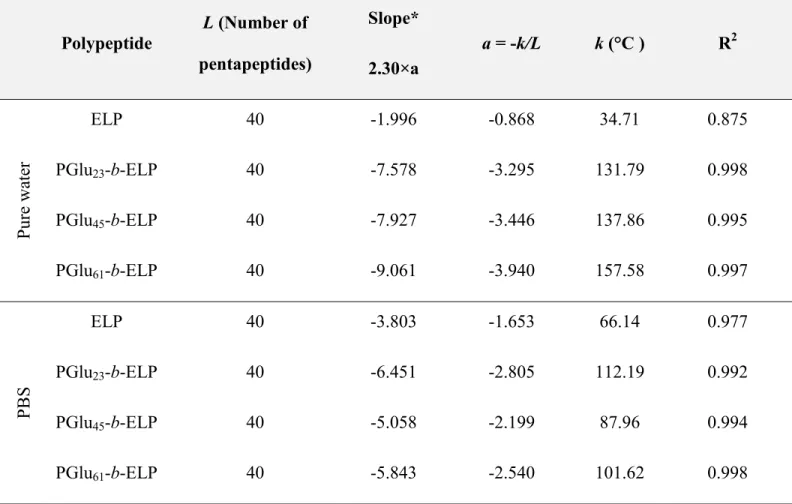
log10(concentration) (Figure 1, panel C) and data were fitted using Equation 7. The values (slope,
a and k) estimated from the linear fits are reported in Table 2. Obviously, in each sample, the result of the molar concentration calculation was the same considering only the ELP block or the diblock copolypeptides.
21
Table 2. Parameters describing the thermoresponsive behavior of native ELP and PGlu-b-ELP
*taking account the following equality: a×ln(C) = 2.30×a×log10(C)
All the data were properly fitted using this equation, allowing accurate estimations of the Tt of
ELP as well as of the Tt of the diblock copolypeptides at specific concentrations (Figure 1, panel
C). Importantly, we observed a steeper slope of the fits for the PGlu-b-ELP diblock copolypeptides than for the ELP. Indeed, the slope and k values for the ELP were -1.996 and 34.71 °C respectively, while the slope and k values, for the diblock copolypeptides, are ranged from -7.578 to -9.061 and from 131.79 °C to 157.58 °C, respectively, in an increased order of DPs (from 23 to 61). These results confirmed that the presence of the hydrophilic
poly(L-Polypeptide L (Number of pentapeptides) Slope* 2.30×a a = -k/L k (°C ) R2 Pu re w at er ELP 40 -1.996 -0.868 34.71 0.875 PGlu23-b-ELP 40 -7.578 -3.295 131.79 0.998 PGlu45-b-ELP 40 -7.927 -3.446 137.86 0.995 PGlu61-b-ELP 40 -9.061 -3.940 157.58 0.997 PBS ELP 40 -3.803 -1.653 66.14 0.977 PGlu23-b-ELP 40 -6.451 -2.805 112.19 0.992 PGlu45-b-ELP 40 -5.058 -2.199 87.96 0.994 PGlu61-b-ELP 40 -5.843 -2.540 101.62 0.998
22
glutamic acid) block conferred a higher concentration dependence to Tt as compared to the native
ELP. This result is comparable with observations by Meyer et al.39 regarding the increase of the
slope with decreasing ELP chain length, and by Petitdemange et al.48 that chemically oxidized
the methionine residues, which in both cases correlates with increased hydrophilicity. The strengthening of the concentration dependence can be directly attributed to the increase of overall hydrophilicity as demonstrated previously with different ELPs with changes in the peptide sequence.39,48,74
The thermoresponsive behavior of the PGlu23-b-ELP diblock copolypeptide at 1 g.L-1 in pure
water was also studied by dynamic light scattering (DLS). The scattered light intensity in arbitrary units (a.u.) was plotted versus temperature, where an increase of scattered light identified the onset of aggregation (Figure S5). The plot revealed a typical one-step transition and the appearance of the aggregation phenomenon at 47 °C, similarly to our turbidity measurements. The continuous increase of the scattered light intensity with the temperature from the Tt value indicates that this phenomenon did not reach a steady state. The continuous increase
of the scattered light intensity can be interpreted as a continuous dehydration of the ELP segment with temperature that increases the refractive index of the micro-aggregates and its scattering intensity, in agreement with previously reported data on Jeffamine-b-PGA systems.5
Small-angle neutron scattering (SANS) measurements was finally used for a fine characterization of the samples at the nanometric scale at various temperatures. Indeed, the configurations used allowed to probe a size range from 18 Å to 630 Å, while mono-angle DLS measurement at 90˚ provided a more global overview of the sample up to the micrometric scale and is very sensitive to the dispersity due to the presence of several size populations in the sample.
23
The native ELP and the three diblock copolypeptides, PGlu23-b-ELP, PGlu45-b-ELP and PGlu61
-b-ELP were therefore analyzed by SANS in D2O. The shift on Tt values observed in H2O and
D2O was previously quantified by UV-Visible spectrometry. Tts in D2O were found 5 °C below
Tts in H2O (data shown for PGlu23-b-ELP diblock copolypeptide only, Figure S6). This shift is
easily explained by the lower bridge-bonding affinity of D2O compared to H2O.74 Figure S7
shows SANS measurements on the PGlu23-b-ELP in D2O at 25 °C and at 65 °C. At 25 °C, below
the Tt, the signal revealed a low scattered intensity with a slight upturn in the intermediate q
range characteristic of chains in solution with few attractive interactions between individual diblock polypeptide chains. At 65 °C, well above the Tt, the scattered intensity was as low and
did not show significant differences, excluding the presence of nanometric-sized self-assemblies, despite the macroscopic aggregation.
To conclude on this part, the three PGlu-b-ELP diblock copolypeptides underwent a sharp solubility transition in water from soluble chains to macroscopic aggregates. Despite the presence of the hydrophilic PGlu block and irrespective of its length (in the molar mass range investigated, corresponding to mass fractions of PGlu between 15 and 32 %), our observations confirmed the absence of stable nanoparticles. Nevertheless, it would be interesting to study the influence of a longer PGlu block on the organization of chains over the Tt. The fine-tuning of the
thermoresponsive behavior of the ELP was however achieved by a convenient polymerization step, to introduce a controlled number of glutamic acid units at the ELP chain end.
Study of temperature responsiveness of PGlun-b-ELP diblock copolypeptides in
phosphate-buffered saline (PBS)
24
copolypeptides in pure water, we next investigated the thermoresponsive properties in a medium more compatible with biological studies. The thermoresponsive properties of the ELP and the different PGlu-b-ELP bioconjugates were therefore studied in phosphate-buffered saline (PBS) (NaCl 137 mM, KCl 2.7 mM, Na2HPO4 8 mM, KH2PO4 2 mM, pH = 7.2), as previously, by
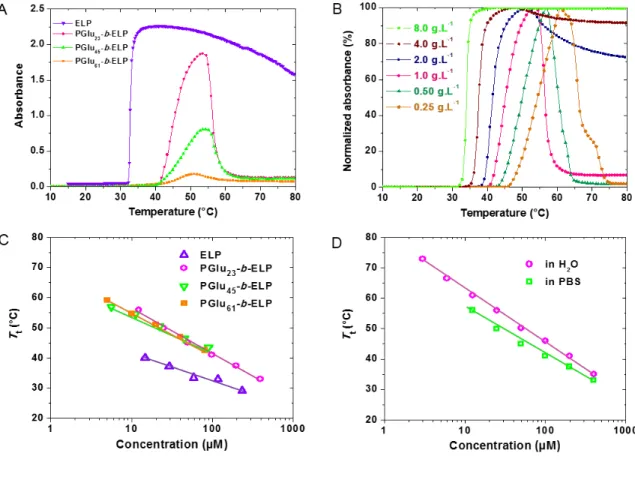
turbidity measurements at 350 nm (Figure 2).
Figure 2. Turbidity assay in PBS. (A) Evolution of absolute absorbance with temperature of
solution of native ELP, PGlu23-b-ELP, PGlu45-b-ELP, and PGlu61-b-ELP at 1.g.L-1. (B)
Evolution of normalized absorbance (%) with temperature of solutions of PGlu23-b-ELP at
various concentrations. (C) Tt values of ELP, PGlu23-b-ELP, PGlu45-b-ELP and PGlu61-b-ELP
plotted versus log10(concentration) in PBS; data fitted using Equation 7. (D) Tt values of PGlu23
25
In PBS, the native ELP showed the classical one-step transition with an almost twice-higher concentration dependence than in pure water. Indeed, in PBS, the slope and k values were -3.803 and 66.14 °C respectively; while they were -1.996 and 34.71 °C in pure water (Table 2 and Figure 3; panel A). Contrarily to our expectations, the presence of salts did not result in lower Tts
over the entire concentration range. That may be due to relatively low NaCl concentration in PBS compare to saline solutions used in the literature.57
Figure 3. (A) Tt values of ELP versus log10(concentration) in pure water and in PBS. (B) Tt
values of PGlu45-b-ELP versus log10(concentration) in pure water and in PBS. (C) Tt values of
PGlu61-b-ELP versus log10(concentration) in pure water and in PBS.
More surprisingly the three PGlu-b-ELP copolypeptides showed a completely different behavior and exhibited four successive different regimes. Absorbance increased at a temperature corresponding to the Tt, and reached a maximum, almost at the same temperature for the three
diblock copolypeptides (between 51 °C and 53 °C at 1 g.L-1) and decreased to finally return to
almost zero value (Figure 2, panel A).
26
salts on the Tt values, then explored the phenomenon leading to the turbidity drop. The Tt values
of the PGlu23-b-ELP copolypeptide ranged from 33 to 56 °C depending on sample concentration
(12.5 µM to 400 µM corresponding to 0.25 g.L-1 to 8 g.L-1) (Figure 2, panels B and C), while
ranging from 36 to 61 °C in pure water at the same concentrations. The turbidity assay of the three PGlu-b-ELP diblock copolypeptides at 1 g.L-1 in PBS (Figure 4, panel A) and the plot of T
t
values versus log10(concentration) (Figure 2, panel C) highlighted that the Tt of the diblock
copolypeptides were very close from one another. The plot of Tt versus log10(concentration) for
PGlu23-b-ELP in pure water and in PBS (Figure 2, panel D) showed that Tt in PBS was lower
than in water for each concentration studied. This phenomemon was consistently observed for PGlu45-b-ELP and PGlu61-b-ELP diblock copolypeptides but with a larger gap between the Tt
values determined in PBS and in pure water as the PGlu block length increased (Figure 3 panels B and C). The slopes and k values in PBS obtained from the Equation 7 are reported in Table 2. Altogether, one can conclude from these measurements that the length of the PGlu block has limited influence on the Tt values in PBS in contrast to what is observed in pure water. This can
be due to the screening of the negative charges of Glu units due to the increased salt concentration, which decreases its repulsion and hydrophilicity. For the three PGlu-b-ELP diblock copolypeptides in PBS, when the temperature kept rising, the absorbance, after reaching a maximum around 52 ˚C ± 1 ˚C, decreased drastically (Figure 2, panels A and B) and reached a plateau. It has been optically verified that this phenomenon was not due to sedimentation in the bottom of the cell.
To investigate more thoroughly the effect of salts (NaCl, KCl), the turbidity assay was carried out for solutions of the PGlu23-b-ELP diblock copolypeptide at 1 g.L-1 in phosphate buffer
27
the profile as well as the Tt value were similar to those in water (~ 51 °C). The presence of
additional NaCl led to a decrease of Tt, from 50 °C at 1.37 mM to 45 °C at 137 mM
(corresponding to NaCl concentration in PBS). The plot of the absorbance with increasing temperature showed that the four-phase behavior did not occur in phosphate buffer (without NaCl and KCl). The pH 7.2 was therefore not solely responsible for this phenomenon. In contrast, additional experiments showed that the decrease of absorbance became steeper with increasing NaCl concentration (Figure S8). We hypothesized a reorganization of the coacervates into a less absorbing suspension in the presence of salts due to screening effect between negatively charged Glu units.
The colloidal behavior of each PGlu-b-ELP diblock copolypeptide was further studied by dynamic light scattering (DLS) for solutions at 1 g.L-1 in PBS over a temperature range from 20
°C to 80 °C. The scattered light intensity in arbitrary unit (a.u.), the average hydrodynamic diameter (nm) and the polydispersity index (PDI) were plotted versus temperature, as shown in Figure 4 for PGlu23-b-ELP and in Figure S9 for PGlu45-b-ELP and PGlu61-b-ELP. For PGlu23
-b-ELP diblock copolypeptide, four successive regimes were clearly observed. The first regime, below the Tt, was characterized by a low scattered light intensity signal and high PDI values,
reflecting the presence of faintly scattering single polypeptide chains and a few undefined aggregates that increased the average hydrodynamic radius observed. Above the Tt (39 °C) in the
second regime, the scattered light intensity increased, highlighting the formation of sub-micrometric objects (with relatively low polydispersity, PDI < 0.2) with average hydrodynamic radii from 250 nm at 42 °C to 780 nm at 53 °C. The third regime, above 53 °C, showed a drastic decrease of both the scattered intensity and the hydrodynamic radius which dropped to 40 nm at 57 °C, highlighting a micellization phenomenon occurring at a critical micellization temperature
28
(CMT) of 53 °C. Both the size of the nanoparticles formed, and the scattered intensity are then stable above the CMT, suggesting that the system has reached a certain equilibrium. DLS measurements revealed clearly a similar four-phase thermoresponsive behavior for PGlu45
-b-ELP diblock copolypeptide (Figure S9, panels A, B and C), with CMT at 57 °C and a hydrodynamic radius of 60 nm at the equilibrium. For the last diblock copolypeptide, namely PGlu61-b-ELP (Figure S9, panels D, E and F), DLS measurements did not allow to distinguish a
clear behavior, even if the overall trend seems similar. It is reasonable to think that the longer the PGlu block, the less defined the transition due to the increase of copolymer hydrophilic fraction, and the lack of hydrophobicity to properly stabilize the micelles.
29
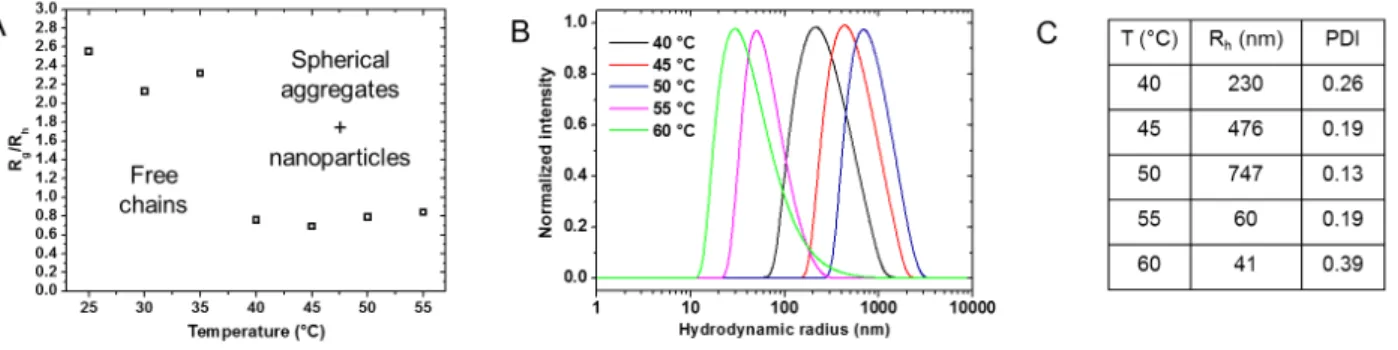
Figure 4. (A) Scattered light intensity, (B) average hydrodynamic radius and (C) polydispersity
index versus temperature of a solution of PGlu23-b-ELP diblock copolypeptide at 1 g.L-1 in PBS
(values obtained by DLS measurements at 90°).
Multi-angle dynamic and static light scattering measurements were subsequently used to determine with more accuracy the radius of gyration (Rg), the hydrodynamic radius (Rh) and the
radius of gyration/hydrodynamic radius (Rg/Rh) ratio at various temperatures of PGlu23-b-ELP in
30
light scattered by polymer chains internal motions75 and R
g/Rh ratios obtained ranged between
2.13 and 2.56 (Figure 5, panel A). At 40 °C and above this temperature, this ratio decreased drastically to reach values between 0.70 and 0.81, a typical signature of spherical compact form. Altogether turbidimetry, mono-angle and multi-angle DLS measurements showed an onset of self-assembly for PGlu23-b-ELP at 40 °C. Above this temperature, DLS measurements showed
monomodal hydrodynamic radius distributions (Figure 5, panel B). Corresponding Rh and PDI at
each measured temperature are provided in the table of Figure 5, panel C. At 40 °C corresponding to the Tt, aggregates with an average Rh of 230 nm and 0.26 PDI are present. At
45 and 50 °C, Rh were 476 nm (PDI = 0.19) and 747 nm (PDI = 0.13) respectively and
correspond to a transition phase during which large well-defined sub-micrometric particles were formed. At 55°C, the Rh decreased drastically down to 60 nm (PDI = 0.19), evidencing the
micellization phenomenon. Finally, at 60 °C and above, micelles presented a monomodal hydrodynamic radius distribution centered on a Rh value of 40 nm with a PDI of 0.39. All these
values were in good agreement to those obtained previously but did not allow to determine the nature of the sub-micrometric aggregates.
Figure 5. Light scattering results at various temperatures for PGlu23-b-ELP in PBS at 1 g.L-1. (A)
Rg/Rh ratios obtained from multi-angle static and dynamic light scattering measurements, (B)
31
Higashi and co-workers76 observed similar apparent transitions from free chains to aggregates to
nanoparticles amino acid-based from block copolymers composed of N-acryloyl-Ala-methylester (NAAMe) and N-acryloyl-β-Ala-methylester (Na-β-AMe) in water. In their study, turbidimetry and 1H NMR spectroscopy revealed formation of relatively loose-molecular packing at 17 °C,
due to partial dehydration of polymer chains, and the formation of stable micellar structures between 30 and 39 °C. This phenomenon remained however unclear since no characterization technique invalidated or confirmed that the formation of micelles followed the disappearance of aggregates. Hoogenboom et al.77 also reported comparable observations with diblock copolymers
based on a poly(2-ethyl-2-oxazoline) and a thermoresponsive block consisting of a random copolymer of 2-ethyl-2-oxazoline and 2-n-propyl-2-oxazoline (PEtOx-block-P(EtOx-stat-PropOx)) in pure water. Even at temperatures significantly below the lower critical solution temperature (LCST) of the P(EtOx-stat-PropOx) block, copolymer unimers were found to coexist with a few aggregates. Upon heating, the systems exhibited a drastic increase of absorbance corresponding to the formation of large aggregates. When the temperature was further increased, solutions became visually clear again because of restructuration into smaller micelle-like structures. The authors assumed the first self-assembly behavior into large aggregates was due to the presence of a few swollen aggregates with unimers. In our case, due to the full reversibility of the phenomenon (free chains, aggregates, nanoparticles upon heating and nanoparticles, aggregates, free chains transitions upon cooling) (Figure S10), this hypothesis does not seem appropriate. Indeed, each regime appeared independently from the previous one, which evidence the intrinsic behavior of the system at a given temperature. In the same study, Hoogenboom and co-workers77 supposed the formation of smaller micellar-like structures from
32
aggregates by contraction due to dehydration, and possibly also fragmentation which are hypotheses to consider in our case.
SANS measurements were therefore performed to gain better insight on the micellization phenomenon and to probe more precisely and quantitatively the structure of the nano-objects through appropriate models. The native ELP and the three diblock copolypeptides (PGlu23
-b-ELP, PGlu45-b-ELP and PGlu61-b-ELP) were studied in D2O-PBS and also in D2O + NaOD (to
observe the effect of the pH/pD without salt) at a concentration of 1 g.L-1 at increasing
temperatures. The Tt in D2O was beforehand determined by turbidimetry measurement in D2
O-PBS for each diblock copolypeptide (data shown for PGlu23-b-ELP only, Figure S6). For the
three diblock copolypeptides, a decrease by almost 9 °C was observed between the Tt value in
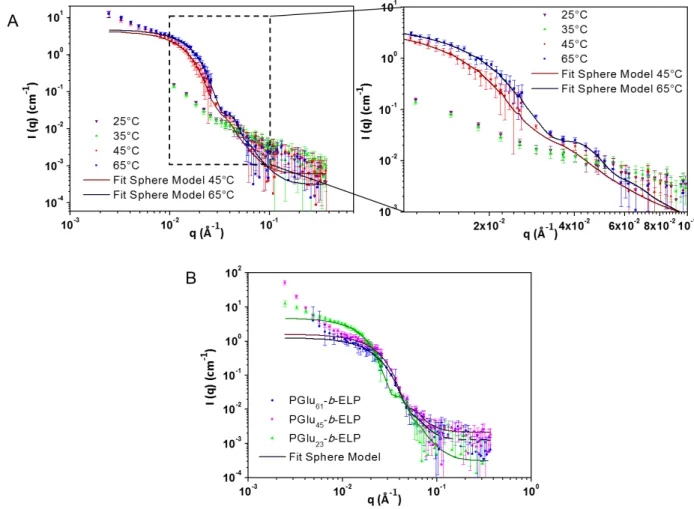
PBS and the Tt value in D2O-PBS. Figure 6, panel A shows the scattered intensity as a function
33
Figure 6. Small-angle neutron scattering of solutions of PGlu-b-ELP diblock copolypeptides
prepared at 1 mg.mL-1 in D
2O-PBS. (A) Scattering intensity as a function of q for PGlu23-b-ELP
at various temperatures; the solid line are the fitting curves obtained by using a polydisperse sphere model. (B) Scattering intensity as a function of q for PGlu23-b-ELP, PGlu45-b-ELP and
PGlu61-b-ELP at 65 °C (> Tt); the solid line are the fitting curves obtained by using a
polydisperse sphere model.
Below the Tt (Tt = 36 °C in D2O-PBS as shown in Figure S6), namely at 25 °C and at 35 °C, the
low signal intensity evidenced the absence of nanometric aggregates. This absence of signal at 35 °C, just at the aggregation onset, proved that the first macroscopic aggregates in formation
34
were not composed of nano-assemblies, but can be considered as large and undefined coacervates. Moreover, the absence of signal at this temperature, despite a 2 hour-acquisition time, showed that the system did not evolve with time and depended solely on the temperature.
On the contrary, at 45 °C, well above the Tt, the drastic increase of the scattered intensity, by
more than 1 order of magnitude and the appearance of a small oscillation at 0.03-0.05 Å-1, is the
hallmark of spherical nanoparticles. At 65 °C, the more pronounced oscillation clearly evidences that the nanoparticles are progressively better structured when temperature increases above the Tt. Based on the chemical structures of diblock copolypeptides, one can suggest that the
nanoparticles are formed by an ELP core (more or less hydrated) surrounded by a corona of negatively charged PGlu chains. However, the contrast between the heavy water and the PGlu chains swollen in heavy water was too low to allow the monitoring of PGlu chains, the scattered signal being thus mainly due to the ELP core. Scattered intensity curves obtained at 45 °C and 65 °C (as well as at 55 °C and 70°C, data not shown) were fitted by a polydisperse sphere model using the SasView program. This Guinier model78 describes a sphere of scattering length density (SLD) ρsphere and radius rsphere (with a gaussian distribution on the radius) in a solvent of SLD ρsolvent. In this case, there is only one contrast comparatively to the solvent, so, the mathematic expression is composed of 2 terms (Equation 8).
I(q) =𝚽𝚽𝑉𝑉 [[𝑉𝑉�ρ𝑠𝑠𝑠𝑠𝑠𝑠𝑠𝑠𝑠𝑠𝑠𝑠𝑡𝑡− ρ𝑠𝑠𝑠𝑠ℎ𝑠𝑠𝑒𝑒𝑠𝑠�]2𝑃𝑃𝑠𝑠𝑠𝑠ℎ𝑠𝑠𝑒𝑒𝑠𝑠(𝑞𝑞) Equation 8
where V is the sphere volume and ρ𝑠𝑠𝑠𝑠𝑠𝑠𝑠𝑠𝑠𝑠𝑠𝑠𝑡𝑡 the SLD of D2O fixed at 6.4×10⁻⁶ Å-2. This model
provides the form factor, 𝑃𝑃𝑠𝑠𝑠𝑠ℎ𝑠𝑠𝑒𝑒𝑠𝑠(𝑞𝑞), for a monodisperse spherical particle with uniform SLD
35
𝑃𝑃𝑠𝑠𝑠𝑠ℎ𝑠𝑠𝑒𝑒𝑠𝑠(𝑞𝑞) = �3[sin�𝑞𝑞𝑒𝑒𝑠𝑠𝑠𝑠ℎ𝑒𝑒𝑒𝑒𝑒𝑒�−𝑞𝑞𝑒𝑒(𝑞𝑞𝑒𝑒𝑠𝑠𝑠𝑠ℎ𝑒𝑒𝑒𝑒𝑒𝑒𝑠𝑠𝑠𝑠ℎ𝑒𝑒𝑒𝑒𝑒𝑒)3cos�𝑞𝑞𝑒𝑒𝑠𝑠𝑠𝑠ℎ𝑒𝑒𝑒𝑒𝑒𝑒�]�
2
Equation 9
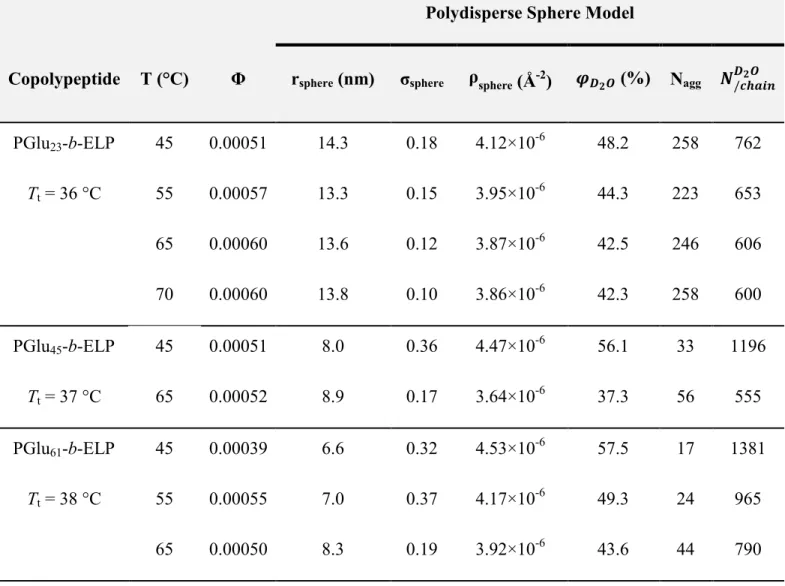
The best fits using the polydisperse sphere model provided information about the structure of nanoparticles, such as the radius of their core (and the gaussian distribution of this radius σsphere),
as well as their SLD (ρsphere) which is correlated to the degree of hydration. The values obtained for the three polypeptides at various temperatures above the Tt are summarized in Table 3. The
fits are characterized by the ratio khi2/NPts, the values obtained were low and comprised in a 0.74 - 2.02 range; indicating a good adequacy between the experimental curves and the fits. For the copolypeptide with the longer PGlu block, PGlu61-b-ELP, the curve obtained at 45 °C was
not fitted using a polydisperse sphere model due to the presence of free chains with the nanoparticles but using a sum of polydisperse sphere and the Debye form factors. Indeed, the Debye model is used to describe polymer chains in solution (as explained in Supporting Informations, Figure S11).
36
Table 3. Characteristics of the thermoresponsive nanoparticles of PGlu-b-ELP copolypeptides
determined by SANS in D2O-PBS.
Polydisperse Sphere Model
Copolypeptide T (°C) Φ rsphere (nm) σsphere ρsphere (Å-2) 𝝋𝝋𝑫𝑫𝟐𝟐𝑶𝑶 (%) Nagg 𝑵𝑵/𝒄𝒄𝒄𝒄𝒄𝒄𝒄𝒄𝒏𝒏𝑫𝑫𝟐𝟐𝑶𝑶
PGlu23-b-ELP 45 0.00051 14.3 0.18 4.12×10⁻⁶ 48.2 258 762 Tt = 36 °C 55 0.00057 13.3 0.15 3.95×10⁻⁶ 44.3 223 653 65 0.00060 13.6 0.12 3.87×10⁻⁶ 42.5 246 606 70 0.00060 13.8 0.10 3.86×10⁻⁶ 42.3 258 600 PGlu45-b-ELP 45 0.00051 8.0 0.36 4.47×10⁻⁶ 56.1 33 1196 Tt = 37 °C 65 0.00052 8.9 0.17 3.64×10⁻⁶ 37.3 56 555 PGlu61-b-ELP 45 0.00039 6.6 0.32 4.53×10⁻⁶ 57.5 17 1381 Tt = 38 °C 55 0.00055 7.0 0.37 4.17×10⁻⁶ 49.3 24 965 65 0.00050 8.3 0.19 3.92×10⁻⁶ 43.6 44 790
The sphere fraction Φ was fitted and the values obtained are consistent with the fraction of ELP in the solution considering the presence of micrometric aggregates (as shown by DLS measurements). The scattered length density ρsphere was also fitted and evidenced the presence of
D2O molecules entrapped in the core, reducing the contrast with the solvent. Indeed, the
37
determined here are in a 3.64×10⁻⁶ - 4.53×10⁻⁶ Å-2 range. The fitting method therefore allowed us
to calculate the volume fraction of D2O molecules (𝜑𝜑𝐷𝐷2𝑂𝑂) in the core of spherical nanoaggregates
by the following equation:
φD2O = (ρsphere - ρELPtheo)/(ρD2O - ρELPtheo) Equation 10
The aggregation number Nagg, defined as the number of chains per sphere, was then estimated
using Equation 11:
Nagg = N𝑀𝑀�����A𝑛𝑛d(1 - φD2O)�4𝜋𝜋𝑒𝑒𝑠𝑠𝑠𝑠ℎ𝑒𝑒𝑒𝑒𝑒𝑒 3
3 � Equation 11
where d = 1.35 g.cm-3 is the mass density as reported for proteins in the crystalline state,79 𝑀𝑀 𝑠𝑠
���� the molar mass of the diblock copolypeptides determined by 1H NMR, r
sphere the radius of the
core of the nanoparticles from the fits and NA the Avogadro number. The 𝜑𝜑𝐷𝐷2𝑂𝑂 and Nagg values
are summarized in Table 3. To determine the degree of hydration of the polypeptide chains within the nanoparticles, we estimated the number of D2O molecules per chain from this volume
fraction φD2O, the aggregation number Nagg and the molecular volume, ν = 30 Å3 corresponding
to one D2O molecule:
𝑁𝑁/𝑐𝑐ℎ𝑎𝑎𝑎𝑎𝑠𝑠𝐷𝐷2𝑂𝑂 = 𝜑𝜑𝐷𝐷2𝑂𝑂
Nagg.𝜈𝜈𝐷𝐷2𝑂𝑂�
4𝜋𝜋𝑒𝑒𝑠𝑠𝑠𝑠ℎ𝑒𝑒𝑒𝑒𝑒𝑒3
3 � Equation 12
rsphere and aggregation numbers Nagg values for the three copolypeptides deduced from the fits
were compared depending on the DP of PGlu chains at each temperature studied (Table 3). The values obtained for PGlu23-b-ELP, the copolypeptide with the shortest PGlu block length,
suggested that the radius and Nagg were almost constant from the formation of micelles and when
38
D2O molecules per chain at 45 °C. At 65 °C and 70 °C, the degree of hydration decreased to
𝑁𝑁/𝑐𝑐ℎ𝑎𝑎𝑎𝑎𝑠𝑠𝐷𝐷2𝑂𝑂 ~ 600 D2O molecules, indicating a denser state of aggregation. Altogether, these results revealed that once the CMT was reached, no additional copolypeptides chains were incorporated (Nagg constant over the temperature range studied), but nanoparticles continued to evolve, in a
“densification” phase by expelling water until they reach an equilibrium (at 65 °C). These observations are in agreement with previous findings about the temperature-triggered self-assembly behavior of diblock ELPs with different hydrophobic block sizes.61 However, for the diblock copolypeptides with the highest PGlu block lengths, the radius and Nagg continued to
increase with temperature from rsphere = 8.0 nm and Nagg = 33 at 45 °C to rsphere = 8.9 nm and Nagg
= 56 at 65 °C for PGlu45-b-ELP and from rsphere = 6.6 nm and Nagg = 17 at 45 °C to rsphere = 8.3
nm and Nagg = 44 at 65 °C for PGlu61-b-ELP. In the same time, the temperature increase led to a
dehydration of the core (Table 3) highlighted by the decrease of the hydration level and the decrease of D2O molecules number. This observation demonstrated that the “self-assembly”
phase and the “densification” phase have occurred simultaneously when the PGlu block was longer. Finally, Figure S12 shows the scattered intensity of the PGlu23-b-ELP as a function of q
in D2O and in D2O with 1 eq of NaOD / Glu unit (allowing to reach a pD = 9) at 65 °C (> Tt). In
each case, the signal revealed low scattered intensity. This confirmed that an increase of pH is not solely responsible for the formation of nano-objects.
Proposed self-assembly scenario for PGlu-b-ELP diblock copolypeptides
To summarize, DLS, SLS, and SANS measurements revealed the particular self-assembly behavior of PGlu-b-ELP diblock copolypeptides in PBS. Below the Tt, diblock copolypeptides
39
spontaneously evolved into nano-objects at the CMT. CMT seemed dependent on the ELP thermoresponsive block driving the self-assembly, as previously demonstrated by MacKay and co-workers for diblock ELPs.80 When increasing the temperature above the CMT, small-angle
neutron scattering measurements evidenced a slight increase of the aggregation number of polypeptide chains (except for PGlu23-b-ELP) and a clear dehydration of the core. These
phenomena compensated each other, allowing the core radii to remain constant. These experiments confirmed that even well above the CMT, ELP-based diblocks need to gain sufficient amphiphilicity to undergo stable self-assembly into spherical micelles.59, 81 A
comparison of the Rh obtained by DLS measurements with the core radii rsphere deduced from the
SANS curves highlighted a gap corresponding to the PGlu hydrophilic corona of thickness δcorona. For each diblock copolypeptides, we deduced δcorona >> rsphere, corresponding to the
formation a star-like micellar structure.82 Our investigations revealed the formation of stable
micelles for low hydrophilic weight fractions of 15 % while the screening experiments performed by Chilkoti and co-workers on 10 non-charged diblock ELPs revealed that only hydrophilic weight ratios between 33 % and 66 % allowed the micelle formation.59 This
observation showed that the non-charged and charged systems behave very differently and do not follow the same general rules. Indeed, the association equilibrium and the structure of “polyelectrolyte micelles” formed by block copolymers with charged soluble block are governed by the competition between hydrophobic attraction of insoluble blocks to form the core and the Coulomb repulsion between charged repetitive units in the corona. The latter interaction is strongly mediated by counterions, which are always present but in larger amount in saline solutions. Borisov and Zhulina applied a scaling model to describe a micellization of charged-neutral diblock copolymers in salt-free medium. The Generally, the Nagg appears to be a strongly
40
decreasing function of the degree of polymerization of charged block. As a result, polyelectrolyte star-like micelles are expected to be marginally stable in salt-free solutions that corresponds to the classical two-phase behavior observed in pure water for our system. Dan and Tirrell83
investigated the micellization of charged-neutral diblock copolymers in dilute salt solution. Micellar phase properties were predicted to be quasi-similar to those of neutral amphiphilic copolymers as salts ensure screening effect between charged moieties, thus the behavior of the corona is dominated by steric repulsions between the chains.
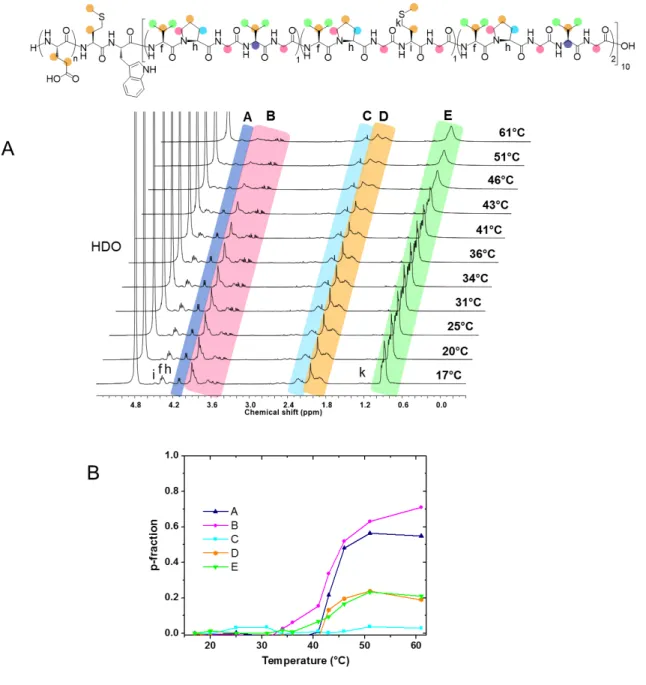
To complete these observations, the mobility of the native ELP chains (data not shown) and of PGlu23-b-ELP diblock copolypeptide chains at the molecular scale was studied by 1H NMR at
various temperatures in D2O and in D2O-PBS at 1 g.L-1 (Figure S13, panel A and Figure 7, panel
A respectively). The modification in the chemical shift signal corresponding to the proton from non-completely deutered water (named HDO) with the increase of temperature is well known and described in the literature.84 Regarding the native ELP, 1H NMR spectra showed the
quasi-total disappearance of the signals from 30 °C in D2O and in D2O-PBS, highlighting a significant
loss of mobility of the chains, due to their confinement into compact aggregates. On the contrary, PGlu23-b-ELP diblock copolypeptide showed a slightly different behavior. In D2O and in D2
O-PBS, below the Tt value, the entire copolypeptide chains were found fully hydrated and flexible,
evidenced by well-resolved and sharp 1H resonance peaks of the copolypeptides. Above the T t, in
D2O and in D2O-PBS, the intensity of resonance peaks decreased gradually, became weak and
poorly resolved as a consequence of a decrease of the mobility of the chains indicating their confinement within the aggregates but demonstrated an incomplete dehydration even at the highest temperature studied (61 °C).
41
Figure 7. (A) 1H NMR spectra of PGlu
23-b-ELP in D2O-PBS (1 g.L-1) at various temperatures.
(B) Phase separation fraction p from 1H NMR signals A, B, C, D and E plotted as a function of
the temperature.
Similar phenomena have been described in detail for aqueous solutions of PNIPAm.85 Moreover,
the residual signals observed at 61 °C were found more intense in D2O-PBS than in D2O. This
42 PBS beyond their Tt.
To characterize more quantitatively the changes occurring during the heating process, the p values, defined as the fraction of phase-separated units in globular structures were calculated from the integrated intensity of the resonance peaks A, B, C, D and E in 1H NMR spectra (Figure
7, panel A) using Equation 1386, 87:
p = 1 - I(T)/I(T0) Equation 13
where I(T) is the integrated intensity of a given signal in the spectrum at the temperature T and I(T0) is the integrated intensity of the same signal below the Tt (at 17 °C). In the Figure S13,
panel B and Figure 7, panel B for PGlu23-b-ELP in D2O and D2O-PBS respectively, the
p-fractions were plotted as a function of temperature. In D2O (Figure S13, panel B), the
temperature dependences of the p-fraction of protons A (Hα of Val as guest residue) and B (Hα Gly and Hδ Pro) showed an important increase starting at 29 °C to reach values around 0.70. In the same way, the p-fractions for the signals D (Hβ and Hε Met, Hβ Val, Hγ Pro and Hβ and Hγ Glu) and E (Hγ Val) increased to 0.40 and 0.30 respectively. Moreover, the p-value attributed to the signal C, the only one corresponding to proline units solely (Hβ Pro) increased radically from 29 °C to reach 0.80 at 40 °C. In D2O-PBS (Figure 7, panel B), the temperature dependences of
the p-fraction of protons A and B showed an increase starting at higher temperature (at 41 °C and 31 °C respectively) as compared in D2O alone, to reach p-values of 0.55 and 0.70 respectively.
Moreover, the traces for the signals D and E increased only to 0.20. Interestingly and contrary to the observations in D2O, the signal C did not increase at all despite the increase in temperature.
Surprisingly, in D2O, p-value increase was observed at lower temperature than in D2O-PBS
43
phenomena are different, and both participate in the global thermoresponsiveness. The various p values showed, in D2O as well as in D2O-PBS, a similar confinement of Val as guest residue and
of Gly, and a slightly better mobility of the Met and the Val units in D2O-PBS. Moreover, a
sharp and important increase of p-value corresponding to the dehydration of proline units was observed in D2O, confirming the important role of this amino acid residue in the folding process.
On the contrary, in PBS, the p-value corresponding to the proline residues remained almost at zero, indicator of a lack of ordered structures involving particularly this residue, in the aggregation phase. Recently, Yingling and co-workers88 showed the role of proline units by
investigating the effect of temperature on the structure, dynamics and association of (VPGVG)18
in aqueous solution using atomistic molecular dynamics simulations. Their results concluded that the thermoresponsive behavior of this ELP is a collective phenomenon between the abrupt modifications of hydration properties around the polypeptide chain (competition between peptide-peptide and peptide-water interactions) and the gradual changes in single polypeptide structure. More precisely, increasing the temperature leads to a change in the hydrophobicity of the ELP by exposing the hydrophobic valine-side chains to the solvent and by hiding the proline residues, which may explain such a difference between the p-values obtained for the proline units. Our observations coupled with the results obtained by Yingling showed that PGlu23-b-ELP
has a tendency to undergo a folding process more in salt-free medium than in PBS.
For a better understanding of the self-assembly process at the molecular level, solutions of native ELP and PGlu23-b-ELP in deionized water and PBS were characterized by UV circular
dichroism (CD) at different temperatures (Figure 8). CD is a characterization technique involving circularly polarized light, that is, the differential absorption of left- and right-handed light, allowing the investigation of secondary structures of proteins. pH of solutions in water (pH