HAL Id: hal-01602661
https://hal.archives-ouvertes.fr/hal-01602661
Submitted on 26 May 2020HAL is a multi-disciplinary open access
archive for the deposit and dissemination of sci-entific research documents, whether they are pub-lished or not. The documents may come from teaching and research institutions in France or abroad, or from public or private research centers.
L’archive ouverte pluridisciplinaire HAL, est destinée au dépôt et à la diffusion de documents scientifiques de niveau recherche, publiés ou non, émanant des établissements d’enseignement et de recherche français ou étrangers, des laboratoires publics ou privés.
diseases
María del Socorro Santos Diaz, Ana-Paulina Barba de la Rosa, Cécile
Héliès-Toussaint, Françoise Guéraud, Anne Negre-Salvayre
To cite this version:
María del Socorro Santos Diaz, Ana-Paulina Barba de la Rosa, Cécile Héliès-Toussaint, Françoise Guéraud, Anne Negre-Salvayre. Opuntia spp.: Characterization and benefits in chronic diseases. Oxidative Medicine and Cellular Longevity, Hindawi, 2017, pp.1-17. �10.1155/2017/8634249�. �hal-01602661�
Review Article
Opuntia spp.: Characterization and Benefits in Chronic Diseases
María del Socorro Santos Díaz,
1Ana-Paulina Barba de la Rosa,
2Cécile Héliès-Toussaint,
3,4Françoise Guéraud,
3,4and Anne Nègre-Salvayre
4,51Facultad de Ciencias Químicas, Universidad Autonoma de San Luis Potosí, San Luis Potosí, SLP, Mexico 2Instituto Potosino de Investigación Científica y Tecnológica (IPICyT), San Luis Potosi, SLP, Mexico 3Toxalim (Research Center in Food Toxicology), INRA, ENVT, INP-Purpan, UPS, Toulouse, France 4University of Toulouse, Toulouse, France
5INSERM U 1048, Toulouse, France
Correspondence should be addressed to Anne Nègre-Salvayre; [email protected] Received 2 January 2017; Accepted 14 March 2017; Published 9 April 2017
Academic Editor: Liudmila Korkina
Copyright © 2017 María del Socorro Santos Díaz et al. This is an open access article distributed under the Creative Commons Attribution License, which permits unrestricted use, distribution, and reproduction in any medium, provided the original work is properly cited.
Opuntia species have been used for centuries as food resources and in traditional folk medicine for their nutritional properties and their benefit in chronic diseases, particularly diabetes, obesity, cardiovascular diseases, and cancer. These plants are largely distributed in America, Africa, and the Mediterranean basin. Opuntia spp. have great economic potential because they grow in arid and desert areas, and O. ficus-indica, the domesticated O. species, is used as a nutritional and pharmaceutical agent in various dietary and value-added products. Though differences in the phytochemical composition exist between wild and domesticated (O. ficus-indica) Opuntia spp., all Opuntia vegetatives (pear, roots, cladodes, seeds, and juice) exhibit beneficial properties mainly resulting from their high content in antioxidants (flavonoids, ascorbate), pigments (carotenoids, betalains), and phenolic acids. Other phytochemical components (biopeptides, solublefibers) have been characterized and contribute to the medicinal properties of Opuntia spp. The biological properties of Opuntia spp. have been investigated on cellular and animal models and in clinical trials in humans, allowing characterization and clarification of the protective effect of Opuntia-enriched diets in chronic diseases. This review is an update on the phytochemical composition and biological properties of Opuntia spp. and their potential interest in medicine.
1. Introduction
Long historical and worldwide use of medicinal plants and phytochemicals has demonstrated the efficacy of tra-ditional medicine to prevent the onset and progression of chronic diseases. In Mexico, among the number of plants identified and used in folk medicine, Opuntia species (spp.) exhibit a lot of beneficial properties and high biotechno-logical potential. They grow in dry desert area where hard environmental conditions prevail, and they have been used for centuries as food resources and in folk medicine for the treatment of chronic diseases (obesity, cardiovascular and inflammatory diseases, diabetes, and gastric ulcer) and many other illnesses [1]. Some species such as O. ficus-indica are cultivated for economical and medicinal purposes in
Mexico area. Though differences in the phytochemical composition exist between domesticated and wild Opuntia spp., the presence of antioxidants (flavonoids, ascorbate), pigments (carotenoids, betalains such as indicaxanthin), or phenolic acids has been reported in all Opuntia products, including seeds, roots, pears, cladodes, or juice. Antioxidants could be responsible for the nutritional and protective benefit of Opuntia-enriched diets in chronic diseases, in which inflammation and oxidative stress play a major involvement. Other plant materials such as biopeptides or soluble fibers have been characterized and contribute to the medicinal properties of Opuntia spp. This review is an update on the active compounds and the biological and medical benefit of wild and domesticated Opuntia spp. in chronic diseases.
Volume 2017, Article ID 8634249, 17 pages https://doi.org/10.1155/2017/8634249
2.
Opuntia History and Production
2.1. Opuntia History. Plants are classified as succulent when they exhibit pronounced water storage in one or more organs. The Opuntioid cacti represent the most spectacular species of succulent plants, which are characterized by a shallow root system that permits rapid water uptake; a thick, waxy cuticle that prevents excessive water loss; and crassula-cean acid metabolism (CAM), an alternative photosynthetic pathway, that allows plants to uptake atmospheric CO2 at
night when water loss is minimized [2]. Opuntioid cacti are recognized as ideal crops for arid regimes because they are extremely efficient at generating biomass under water-deficient conditions [3].
Opuntia spp. is one of the most diverse and widely dis-tributed genus in America [4], but the highest richness of wild species are found in Mexico, as at least 126 species with different degrees of domestication have been observed [5]. There are evidences that during the process of Opuntia domestication, the continuous and systematic gather of cladodes and fruit favored the development of exceptional features, with the purpose to adapt plants to successfully live in human-made environment and maximize yield or any given selected feature [6, 7].
Wild species of the Opuntia genus have been grouped in one line of domestication processes where the wildest species are O. streptacantha and O. hyptiacantha. Others species are semidomesticated like O. megacantha and O. albicarpa [5]. As a result of domestication, the Opuntia fruit has been enhanced inflavor, size, shape, pulp texture, and decreased seed hardness and quantity. Regarding cladodes, changes occurred in shape, color, earliness, flavor, texture, and mucilage quantity and quality [5]. O.ficus-indica is a long-domesticated cactus crop that is important in agricultural economies throughout arid and semiarid parts of the world. It has been proposed that O.ficus-indica is a spineless cultivar derived from O. megacantha, a native species from central Mexico [8, 9]. Bayesian phylogenetic analysis of nrITS DNA sequences indicates that the center of domestication for this species is located in central Mexico [10].
The easy of clonal Opuntia propagation probably explains why it is easily distributed worldwide. Evidence exists for the use of Opuntia as human food since at least 9000 years ago [11] or even as early as 12,000 years ago [8, 12].
In the recorded history of the Old World, O. ficus-indica was certainly known at the beginning of the 16th century [6, 7] and it is believed that this species accompanied Columbus in hisfirst return to Lisbon in 1493 [4], placing O. ficus-indica in the Caribbean by at least the late 1400s. The plants are also recorded in cultivation in Tlaxcala, Mexico, in 1519. O. ficus-indica fruits and shoots were also reportedly consumed by the Maya of southeastern Mexico [8]. There is also some evidence for the use of O. ficus-indica by the Nazca of Peru [13]. The succulent, ever-fresh cladodes were certainly a novelty to late 15th century and later Europeans [14].
Actually, O. ficus-indica is as important as corn and tequila agave in the agricultural economy of modern Mexico [15] and represents important food and feed
resources. Its economic importance has gradually increased around the world as a health-promoting food [16]. O. ficus-indica is grown for the large, sweet fruits (often called “tunas”), which are available in local and commercial mar-kets worldwide [17]. In addition, the young cladodes (stem segments) of O.ficus-indica are harvested as a vegetable crop (often called nopalitos). Other uses have been reported, including as a binding and waterproofing agent in adobe and its medicinal properties [18, 19]. O. ficus-indica, along with other Opuntia and Nopalea species, has been grown from pre-Columbian times as a host plant for cochineal insects (Dactylopiuscoccus) for the production of valuable, vivid red and purple dyes [4, 20].
Interest in health care among consumers is increasing steadily and has expanded to dietary intake, and as a result, the food industry has started to produce new food types based on“nopalitos” to reflect this change in consumerism [18]. 2.2. Opuntia Production. Opuntia plants produce edible stems known as pads, vegetable, cladodes, nopales, or pencas. The tender young part of the cactus stem, young cladode or “nopalitos”, is frequently consumed as vegetable in salads, while the cactus pear fruit is consumed as a fresh fruit. Mexico and Italy are the main producer countries and consumers, from the approximately 590,000 ha cultivated worldwide, México accounts for 70% and Italy for 3.3%. Under optimal conditions, the annual production in Mexico can reach 350,000 tons [5].
Nowadays, Opuntia plants are grown in more than 30 countries; Chile and South Africa are producers with 1500 ha and 1000 ha, respectively. Israel and Colombia account for with 300 ha cultivated. In the US, California is the leading state with 200 ha cultivated producing 4000 tons of dry matter.
3. Cladodes Chemical Composition
Opuntia spp. have a high nutritional value, mainly due to their mineral, protein, dietary fiber, and phytochemical contents [21]. Table 1 indicates the chemical composition of some wild and domesticated species (O. ficus-indica). The main constituent of O. ficus-indica cladodes is water (80–95%), followed by carbohydrates (3–7%), fibers (1-2%), and proteins (0.5–1%). However, the chemical composition of cladodes is modified by maturity stage, harvest season, environmental conditions, postharvest treatment, and type of species [22–24]. In some wild species such as O. robusta (Tapon) and Blanco, 17.4 to 19% proteins can be reached [22]. O. leucotricha (Duraznillo) yield high-quality cladodes, since the pericarp can be easily removed and will neither fall apart during boiling nor release mucilage [21].
It is well known that Opuntia cladodes are a good source of dietary fibers [25], which may help in reducing body weight by binding to dietary fat and increasing its excretion [26]. This may explain why cladodes are consid-ered as hypolipidemic.
Opuntia cladodes contain higher calcium (Ca) contents relative to vegetables, fruits, and nuts [24, 27, 28]. Table 2
shows the mineral composition of wild and domesticated Opuntia spp.
Calcium content seems higher in Opuntia spp. than in other plants such as spinach (1151 mg/100 g), lettuce (703 mg/100 g), cabbage (511 mg/100 g), and broccoli (43 mg/ 100 g). Aguilera-Barreiro et al. [29] reported that consump-tion of cactus improves the bone mineral density in women with low bone mass.
The Opuntia spp. cladodes are also widely known for their strong viscous materials and hydrophilic polysac-charides of large molecular weight due to their great capacity to absorb and retain water [21]. The soluble dietaryfiber and calcium contents of Opuntia spp. cladodes are considered to be very important elements for their physical properties because the main cell wall polysaccharide consists of low methoxyl pectin [19].
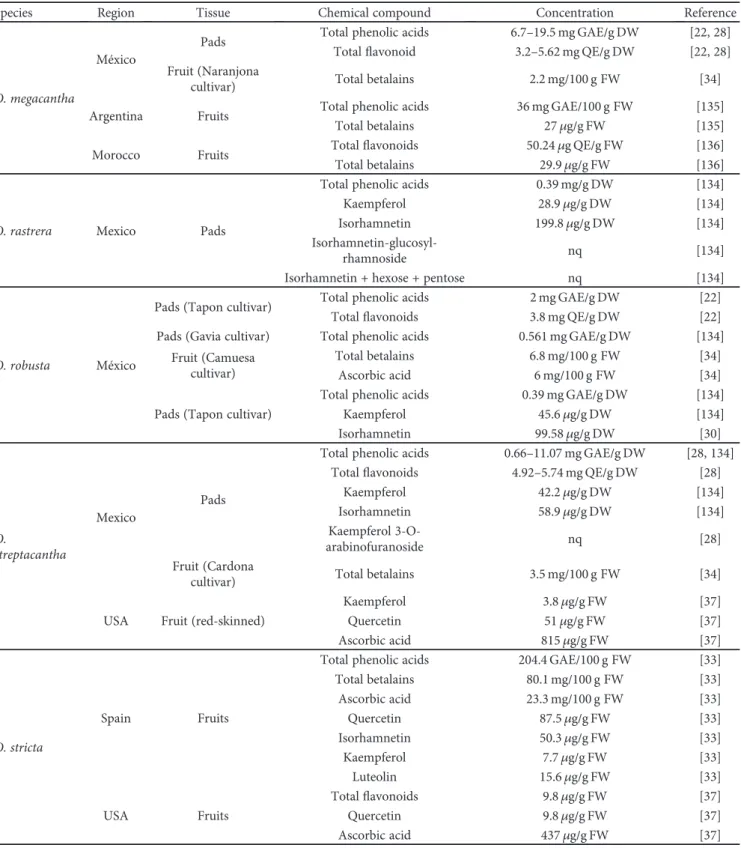
3.1. Total Phenolic and Flavonoid Content in Opuntia spp. It is well known that the secondary metabolite accumula-tion depends on biotic and abiotic factors. Since Opuntia spp. used in this study were cultivated under the same environmental conditions, then the differences in the amount of metabolites should be related to each species biochemi-cal characteristics. Table 3 shows the content of phenolic acids and flavonoids present in wild and domesticated Opuntia spp.
The beneficial properties of Opuntia spp. are related to their content in chemical compounds as minerals, polyphe-nols, vitamins, polyunsaturated fatty acids, and amino acids, as recently reviewed by El-Mostafa et al. [30]. O.ficus-indica is the most domesticated and studied species, and several
reports describe the main compounds found in cladodes, flowers, and fruits [21, 30, 31]. However, other Opuntia spp. used in folk medicine are important sources of bioactive compounds. In this chapter, we report the antioxidant com-position (phenolic acids,flavonoids, betalains, and vitamins) of wild Opuntia spp. and the most recent information related to O.ficus-indica.
3.1.1. Phenolic Compounds. The phenolic compounds are important antioxidants since phenoxy radical intermediates (PO) are relatively stable due to resonance and act as terminators of propagation route by reacting with other free radicals. On the other hand, the phenolic hydroxyl groups can donate a hydrogen atom or an electron to a free radical conferring radical scavenging activities. They also extended conjugated aromatic system to delocalize an unpaired elec-tron. Some phenolic compounds with dihydroxy groups can conjugate transition metals, preventing metal-induced free radical formation [32].
The total phenolic compound content in Opuntia spp. is quite variable and is affected by the maturity stage, harvest season, environmental conditions, postharvest treatment, and species (Table 3). It has been reported that O.ficus-indica fruits contain 218 mg GAE/100 g FW [30], but the wild species O. stricta also exhibited high concentrations of these metabolites (204 mg GAE/100 g FW), followed by O. undu-lata, O. megacantha, O. streptacantha, and O. dinellii (164.6, 130, 120, and 117 mg/100 g FW pear, respectively) [33–36]. Important differences in the content of flavonoids among species are described, ranging between 9.8 (in O. stricta) and 50.24 (in O. megacantha) mg QE/100 g FW [33, 34].
In relation to the color of fruits, variations on metab-olite contents can be observed. Purple fruits of O. ficus-indica cultivated in Italy, Spain, USA, Tunisia, and Saudi Arabia contain higher levels of phenolics (89–218.8 mg GAE/ 100 g FW) than the orange fruits (69.8 mg GAE/100 g FW) [33, 37–40]. However, the Mexican cultivars, O. megacantha (orange fruits), O. streptacantha, and O. robusta (purple fruits), exhibited a similar phenolic compound concentration (120–140 mg GAE/100 g FW) [34].
Pads are also source of polyphenols. It has been reported that O. violacea, O. megacantha, O. atropes, and O. albicarpa contain high concentration of phenolic acids (17.8–20 mg GAE/g DW), while O. rastrera and O. undulata present the lowest values (0.39–0.95 mg GAE/g DW) [22]. A recent comparative analysis realized with 15 Opuntia
Table 1: Chemical composition of wild and domesticated species in Mexico and other countries.
Species Composition (%) Phenolic acidsc Flavonoidsd
Protein Fat CF Ash
O. streptacanthaa 11.2 0.73 7.3 12.6 56.8 18.0 O. hyptiacanthaa 11.0 0.80 6.5 15.1 33.4 17.1 O. megacanthaa 10.7 0.69 6.5 13.6 44.7 16.8 O. albicarpaa 11.6 0.75 6.5 13.2 40.8 17.2 O.ficus-indicaa 11.2 0.69 5.9 14.4 40.1 19.4 O. humifusab 4.7 1.25 50.3 2.0 — —
aAstello-Garcia et al. [28];bJun et al. [131];cas mmol of gallic acid/g sample;das mmol of quercetin/g sample; CF: crudefiber.
Table 2: Mineral composition of wild and domesticated species in Mexico and other countries.
Species Mineral (mg/100 g sample) K Ca Na P Fe Mn O. streptacanthaa 2213 667 70 0.09 2.9 16.5 O. hyptiacanthaa 2690 740 87 0.09 3.9 9.8 O. megacanthaa 1960 683 137 0.08 5.1 13.3 O. albicarpaa 1956 647 77 0.09 0.7 24.1 O.ficus-indicaa 2403 627 63 0.09 8.6 13.8 O. humifusab 1269 1968 nd 1110 nd 1411
Table 3: Content of antioxidants compounds present in Opuntia species.
Species Region Tissue Chemical compound Concentration Reference
O. albicapa México
Pads (Cristalino cultivar)
Total phenolic acids 5.83–18 mg GAE/g DW [22, 28] Totalflavonoids 2.5–5.62 mg QE/g DW [22, 28] Fruits (Reyna cultivar) Total betalains 1 mg/100 g FW [34]
Ascorbic acid 1.8 mg/100 FW [34] O. atropes México Pads (Blanco cultivar) Total phenolic acids 5.2 mg GAE/g DW [22] Totalflavonoids 9.7 mg QE/g DW [22]
O. dinellii
Spain
Pads Total phenolic acids 16.1 mg GAE/100 g FW [52] Fruits Total phenolic acids 117 mg QE/100 g FW [35] Ascorbic acid 29.7 mg/100 g FW [35]
Taiwan Fruits
Total phenolic acids 91 (juice) and 133 (peel)
mg GAE/100 g FW [132] Totalflavonoids acids 32.5 (juice), 29.2 (peel)
mg GAE/100 g FW [132] Catechin 22.7 (juice), 18 (peel) mg/100 g FW [132] Epicatechin 10.9 (juice), 17.1 (peel) mg/100 g FW [132] p-Coumaric acid 0.6 (peel) mg/100 g FW [132] Ferulic acid 4 mg/100 g FW (peel) [132] Quercetin 4.6 mg/100 g FW (peel) [132] Egypt Fruit Betacyanins 0.54 mg/100 mg DW [36]
Isorhamnetin-3-O-rutinoside 56μg/100 mg DW [36]
O.ficus-indica
México Pads
Total phenolic acids 6.8–18 mg GAE/g DW [22, 28] Totalflavonoids 5.3–6.1 mg QE/g DW [28] Quercetin
3-O-rhamnosyl- (1-2)-[rhamnosyl-(1-6)]-glucoside
nq [28]
Spain Pads Total phenolic acids 128.8 mg GAE/100 g FW [133] Italy Fruits Total phenolic acids 89.2 mg GAE/100 g FW [40]
Total betacyanins 39.3 mg/100 g FW [40]
Portugal Fruit
Ferulic acid glucoside, piscidic acid, rutinoside, glucoside, isorhamnetinpentosyl-rhamnoside nq [42]
O. hyptiacantha México Pads Total phenolic acids 5.39–6.14 mg GAE/g DW [28] Totalflavonoids 4.86–5.62 mg QE/g DW [28] O. leucotricha Mexico Pads (Duraznillo
cultivar)
Total phenolic acids 3 mg GAE/g DW [22] Totalflavonoids 1.8 mg QE/g DW [22]
O. lindheimeri
Mexico Pads Total phenolic acids 0.75 mg GAE/g DW [134] Kaempferol 1.8μg/g DW [134] USA Fruits Kaempferol 1.1μg/g FW [37] Quercetin 90.5μg/g FW [37] Isorhamnetin 1.9μg/g FW [37] Ascorbic acid 121μg/g FW [37]
Table 3: Continued.
Species Region Tissue Chemical compound Concentration Reference
O. megacantha
México
Pads Total phenolic acids 6.7–19.5 mg GAE/g DW [22, 28] Totalflavonoid 3.2–5.62 mg QE/g DW [22, 28] Fruit (Naranjona
cultivar) Total betalains 2.2 mg/100 g FW [34] Argentina Fruits Total phenolic acids 36 mg GAE/100 g FW [135]
Total betalains 27μg/g FW [135] Morocco Fruits Totalflavonoids 50.24μg QE/g FW [136] Total betalains 29.9μg/g FW [136]
O. rastrera Mexico Pads
Total phenolic acids 0.39 mg/g DW [134] Kaempferol 28.9μg/g DW [134] Isorhamnetin 199.8μg/g DW [134]
Isorhamnetin-glucosyl-rhamnoside nq [134]
Isorhamnetin + hexose + pentose nq [134]
O. robusta México
Pads (Tapon cultivar) Total phenolic acids 2 mg GAE/g DW [22] Totalflavonoids 3.8 mg QE/g DW [22] Pads (Gavia cultivar) Total phenolic acids 0.561 mg GAE/g DW [134]
Fruit (Camuesa cultivar)
Total betalains 6.8 mg/100 g FW [34] Ascorbic acid 6 mg/100 g FW [34]
Pads (Tapon cultivar)
Total phenolic acids 0.39 mg GAE/g DW [134] Kaempferol 45.6μg/g DW [134] Isorhamnetin 99.58μg/g DW [30] O. streptacantha Mexico Pads
Total phenolic acids 0.66–11.07 mg GAE/g DW [28, 134] Totalflavonoids 4.92–5.74 mg QE/g DW [28]
Kaempferol 42.2μg/g DW [134] Isorhamnetin 58.9μg/g DW [134] Kaempferol
3-O-arabinofuranoside nq [28]
Fruit (Cardona
cultivar) Total betalains 3.5 mg/100 g FW [34]
USA Fruit (red-skinned)
Kaempferol 3.8μg/g FW [37] Quercetin 51μg/g FW [37] Ascorbic acid 815μg/g FW [37]
O. stricta
Spain Fruits
Total phenolic acids 204.4 GAE/100 g FW [33] Total betalains 80.1 mg/100 g FW [33] Ascorbic acid 23.3 mg/100 g FW [33] Quercetin 87.5μg/g FW [33] Isorhamnetin 50.3μg/g FW [33] Kaempferol 7.7μg/g FW [33] Luteolin 15.6μg/g FW [33] USA Fruits Totalflavonoids 9.8μg/g FW [37] Quercetin 9.8μg/g FW [37] Ascorbic acid 437μg/g FW [37]
cultivars from O. streptacantha, O. hyptiacantha, O. mega-cantha, O. albicarpa, and O. ficus-indica, cultivated under the same environmental conditions and at the same deve-lopmental stage, showed that metabolite content in cladodes was independent of domestication grade. Thus, differences depend basically on the biochemical characteristics of each species [28].
Flowers and peels could exhibit a higher phenolic content than fruits and pads with about 45.7 g/100 g FW, so it is recommended to exploit these materials to obtain biocom-pounds with antioxidant characteristics [30, 36].
The phenolic profile in Opuntia is complex with more than 30 compounds identified in cladodes of different species [21, 22, 28, 31], more than 20 in seeds, and 44 com-pounds in juices [41, 42]. The most common comcom-pounds present in Opuntia tissues from wild and cultivated species include kaempferol, quercetin, isorhamnetin, and isorhamne-tin glucosides (Table 3). Kaempferol 3-O-arabinofuranoside was detected only in O. streptacantha, quercetin 3-O-rhamno-syl-(1-2)-[rhamnosyl-(1-6)]-glucoside was detected only in O.ficus-indica cladodes [28], and isorhamnetin-3-O-rutino-side was present in the juice and peel from O. dilleni [36]. The rare piscidic acid and derivatives, restricted to plants exhibiting crassulacean acid metabolism and succulence, were detected in juices from O. ficus-indica [42]. In seeds, sinapoyl-glucose, sinapoyl-diglucoside, three isomers of feruloyl-sucrose, catechin, rutin, and quercetin derivatives were detected [43]. Taurine, an unusual sulfonic acid, was identified in Sicilian and African cultivars [31].
3.1.2. Betalains. Betalains are water-soluble molecules with two or three nitrogen atoms and about 55 structures known, including the red-violet betacyanins and the yellow-orange
betaxanthins. Their characteristic is the N-heterocyclic nature with betalamic acid being their common biosynthetic precursor. Aldimine formation with cyclo-Dopa yields the betanidin aglycone that is usually conjugated with glucose and sometimes with glucuronic acid. On the other hand, betaxanthins are conjugates of betalamic acid with amino acids or amines [44].
Betalains are excellent radical scavengers with an antiox-idant activity 3-4 times higher than ascorbic acid, rutin, and catechin [45], twice higher than that measured for pear, apple, tomato, banana, and white grape, and from the same order as pink grapefruit, red grape, and orange [46]. The monophenol nature of betanin and reducing intermediates during the oxidation process may confer to the molecule a higher H-atom or electron donation potential. In the case of betaxanthins, the antioxidant power has been linked to the presence of one or two phenolic hydroxy groups in their structure. Betacyanins also have a potential to inhibit NO or nitrogen radical species due to the presence of a catechol group in betanidin structure [47, 48].
In the literature, it is reported that fruits of cactus pear contain different betalains whose concentration depends on species, cultivar, and geographic region. The betacyanins identified in Opuntia fruits include betanidin, betanin, iso-betanin, isobetanidin, neoiso-betanin, phyllocactin, and gom-phrenin I [3, 4, 24–26]. O. streptacantha (Cardona cultivar), (Rojalisa cultivar), and O. megacantha (Naranjona cultivar) contain traces of betanidin 5-O-β-sophoroside [34].
The presence of conjugates of betalamic acid with several amino acids is reported in pears, corresponding to mirax-anthine II (aspartic acid), indicaxanthin (proline), vulgaxantin I (glutamine), vulgaxantin II (glutamic acid), vulgaxantin III (asparagin), vulgaxantin IV (leucine), portulacaxanthin I
Table 3: Continued.
Species Region Tissue Chemical compound Concentration Reference
O. undulata
Mexico Pads
Total phenolic acids 0.95 mg GAE/g DW [134] Kaempferol 12.9μg/g DW [134] Isorhamnetin 326.9μg/g DW [134] Isorhamnetin-glucosyl-rhamnosyl-rhamnoside nq [134] Isorhamnetin + 1 hexose + 1 methylpentose + pentose nq [134] Kaempferol-glucosylrhamnoside nq [134] Spain Fruits
Total phenolic acids 164.6 mg GAE/g FW [33] Total betalains 42.4 mg/100 g FW [33] Totalflavonoids 51.1μg/g FW [33] Quercetin 30μg/g FW [33] Isorhamnetin 9.6μg/g FW [33] Kaempferol 5.6 g/g FW [33] Luteolin 5.9μg/g FW [33] O. violacea México Pads (Morado
cultivar)
Total phenolic acids 20 mg GAE/g DW [22] Totalflavonoids 3.5 mg QE/g DW [22]
(tyrosine), portulacaxanthin III (lysine), ɣ-aminobutyric acid-betaxanthin, serine-betaxanthin, valine-betaxanthin, isoleucine-betaxanthin, isoproline-betaxanthin, phenylala-nine-betaxanthin, histidine-betaxanthin, phenethylamine-betaxanthin, and muscaaurin [42, 46–52]. Using cactus pears as a betalain source is of great interest because they are highly flavored, with better nutritional properties than red beetroot. 3.2. Vitamins. The main vitamins present in Opuntia spp. include vitamin E, vitamin C, vitamin K, and tocoph-erols [30]. The vitamin levels depend on the cultivar type. In O.ficus-indica, Italian varieties exhibit values rang-ing 30–36 mg Vit C/100 g FW in fruits [40, 49, 52]; in O. ficus-indica and O. streptacantha (red-skinned), O. stricta (yellow-skinned), O. undulata, O. dinellii, and O. lindheimeri (purple-skinned) cultivated in Texas, the values range from 12.1 to 81.5 mg Vit C/100 g, while in O. dillenii and O. ficus-indica cultivars from Tenerife, the concentration ranged from 17 to 29.7 mg/100 g, respectively [35, 37]. Usually, the highest ascorbic acid content is present in red-skinned fruits (815 mg/g FW) and the highest carotenoid content in yellow-skinned fruits (23.7 mg/g FW) [35].
Although other compounds present in the various Opuntia parts may exhibit antioxidant properties, most reports suggest that polyphenols, betalains, and vitamins are the main compounds involved in their biological prop-erties. Beside the use of pads or fruits, the seeds and peels have a high promising potential for the development of new nutraceutic products.
4. Biological and Medical Properties of
Opuntia
spp. in Chronic Diseases
Opuntia extracts have been used since centuries for nutri-tional and medical purposes, and their therapeutical interest has recently been made clear by in vitro and in vivo scientific studies [30]. We report here the protective properties of various Opuntia spp. in the development of atherosclerosis and cardiovascular diseases, diabetes, obesity, and cancer. 4.1. Opuntia spp. in Cardiovascular Diseases. Atherosclerosis and its related cardiovascular complications are the leading worldwide cause of death related to chronic diseases [53]. Since the beginning of the last decade, even if the cardio-vascular mortality rates tend to slightly decline in western countries, they are fastly increasing in the developing world. In Mexico, the mortality due to coronary artery diseases (CAD) strongly increased in the last 30 years, representing more than 11% of deaths in the country by 2006 [54]. The lifelong risk factors for CAD in Mexico have been studied and are similar to those reported in Western countries, that is, hypertension, high cholesterol levels, smoking, diabetes, and obesity [55, 56]. Interestingly, CAD and risk factors such as diabetes were rare in Mexico before the second half of the twentieth century, suggesting that lifestyle changes including nutritional habits have contributed to the increased car-diovascular risk in this country [56]. Strategies focusing on changing lifestyles are thus becoming a priority, with partic-ular focus on smoking and dietary habits. In this context,
there is an increasing interest for the nutritional benefit of Opuntia spp. to prevent the development of CAD. The anti-atherogenic properties of Opuntia spp. result from their high antioxidant (polyphenols) content which could decrease lipid peroxidation, an important risk factor in atherosclerosis [57], and also from dietaryfibers and proteins, which exhibit lipid-lowering properties, in humans and in animals.
4.1.1. Cholesterol-Lowering properties of Opuntia. Several reports point out the antioxidant and antiatherogenic prop-erties of Opuntia spp. [57]. First, the consumption of Opuntia juice and fruits naturally prevents oxidative stress and improves the redox status in healthy humans [58]. Budinski et al. [59] reported that the regular consumption of prickly pears from O. robusta, by patients affected with familial heterozygous hypercholesterolemia, significantly lowered the plasma levels of LDL cholesterol and the plasma and urine content of 8-epi-prostaglandin F2α, a F2 isoprostane produced through the peroxidation of arachidonic acid. No modifications were observed on HDL and triglycerides [59]. Likewise, the consumption by women affected with meta-bolic syndrome, of dried leaves from O.ficus-indica as dietary supplement, showed a rapid increase in circulating HDL cholesterol level concomitantly with a decrease in LDL cho-lesterol and (slightly) in triglycerides, indicating that the plant exerts an hypocholesterolemic effect [60]. These lipid-lowering properties were confirmed by studies on mice fed with a hypercholesterolemic diet. When the animals were supplemented with a methanolic extract from O. joconostle (polyphenol enriched) seeds, they exhibited a marked reduc-tion in circulating LDL cholesterol and triglyceride levels, by comparison with animals fed with a placebo [61].
The lipid-lowering properties of Opuntia spp. are not well clarified. Antioxidants block lipid peroxidation, but have usually no effect on plasma lipid profiles, except grape polyphenols (such as resveratrol), which decrease plasma triglyceride levels and alter the metabolism of VLDL [62]. In Opuntia, the lipid-lowering properties may rather result from their content in dietary fibers, as supported by data from Wolfram et al. [63]. These authors reported that prickly pears from O. robusta lower the cholesterol levels in hyperli-pemic nondiabetic human patients. They concluded that the protective effect of Opuntia prickly pear may result from pectin, a solublefiber [63]. The mechanism elicited by pectin could evoke an alteration of hepatic cholesterol metabolism without affecting cholesterol absorption [64, 65]. Like-wise, glycoprotein isolated from O.ficus-indica var. saboten MAKINO (an Opuntia variety used in folk medicine in Korea) exerts potent antioxidant and hypolipidemic pro-perties evidenced by a protective effect on mice treated with triton WR-1339, an inhibitor of lipoprotein lipase [66]. It is to note that the ingestion of Opuntia prickly pears also improves the platelet function and haemostatic balance, thus contributing to prevent the atherosclerotic risk [63]. 4.1.2. Antiatherogenic Properties of Opuntia spp. The early stages of atherosclerosis development are characterized by the retention in the intima of LDL, which undergo oxidation upon the attack of their polyunsaturated fatty acid content by
environmentally produced reactive oxygen species (ROS), [67–70]. Several ROS-producing systems are involved in the LDL oxidation process, among them the activation of NADPH oxidase NOX2 [71], through a mechanism impli-cating the scavenger receptor LOX-1 [72]. Oxidized LDL ini-tiate inflammatory processes in the vascular wall, leading to the recruitment of monocytes/macrophages and the accumu-lation of foam cells, andfinally to the formation of the fatty streaks which are the early atherosclerotic lesions [69, 70]. Beside their role in fatty streak formation, oxidized LDL behave as strong cytotoxines for vascular cells [70, 73]. Lipid oxidation products (LPO) formed during the onset of LDL oxidation are detected responsible for the proapoptotic and proinflammatory properties of oxidized LDL [70, 74]. Furthermore, aldehydic LPO such as hydroxynonenal (HNE), malondialdehyde (MDA), or acrolein form adducts on pro-teins generating their progressive dysfunction and contribut-ing to inflammation and apoptosis [74].
Most antioxidants are antiatherogenic as they neutralize the formation of ROS by vascular cells and exhibit anti-inflammatory and antiapoptotic properties against the effects of oxidized LDL on vascular cells [70]. Our group recently compared the antiatherogenic properties of Opuntia powders obtained from the cladodes of five different wild spp. (O. streptacantha var. cardona, tuna loca, O. hyptiacantha, and O. megacantha), medium (O. albicarpa), and domesticated (O. ficus-indica) [75]. Precisely, the effect of cladodes was tested on oxidation of LDL evoked by murine endothelial cells (an in vitro model mimicking the mechanism of LDL oxidation occurring in vivo in the vascular wall). Cladode powdered and solubilized in the culture medium dose-dependently inhibited LDL oxidation and the subsequent formation of foam cells by macrophages, which suggests that Opuntia spp. could inhibit the early steps of athero-genesis [75]. This inhibitory effect of Opuntia spp. involves an inhibition of NADPH oxidase (NOX2) resulting in a decreased generation of intracellular and extracellular super-oxide anion (O2°-), a main ROS involved in the LDL oxidation process [75, 76]. No major difference of protection was observed between wild and domesticated Opuntia spp. Like-wise, Opuntia spp. inhibit the nuclear translocation of the redox-sensitive transcription factor NFκB and the subsequent expression of ICAM-1 and VCAM-1 adhesion molecules [76, 77] and thus exhibit anti-inflammatory properties re-sulting from their inhibitory effect on cellular ROS produc-tion. Additionally, wild O. streptacantha and domesticated O.ficus-indica inhibit the toxicity of cell-oxidized LDL [75, 76] and oxidized lipids such as 7-ketocholesterol [78] through mechanisms implicating an inhibition of intracellular oxida-tive stress and subsequent cytosolic calcium deregulation [78]. In vivo studies on apoE-KO mice, which spontaneously develop atherosclerotic lesions in basal diet conditions, indi-cated that the supplementation of the diet in O. streptacantha or O. ficus-indica powdered cladodes (10 mg/kg during 15 weeks) significantly reduced the development of athe-rosclerotic lesions [76]. In addition, the lowering effect of Opuntia spp. on LDL oxidation was supported by a decrease in HNE-adduct accumulation in the intima [76]. In contrast to the data reported by Osorio-Esquivel et al. [61], the intake
of O. streptacantha or O.ficus-indica cladodes did not reduce the plasma cholesterol level [56]. This discrepancy may result from the diet (basal or cholesterol-enriched) or from the Opuntia components (cladodes versus seeds). Nevertheless, both lipid-lowering and antioxidant properties of the differ-ent wild and domesticated Opuntia spp. may support their efficacy to prevent or slow down atherosclerotic lesion devel-opment and subsequent cardiovascular diseases.
4.2. Opuntia spp. in Diabetes. Type 2 diabetes mellitus (T2DM) is a multifactorial disease including genetic determi-nants of individual susceptibility and environmental lifestyle factors. It is considered as a major health problem worldwide, with an increasing incidence and invalidating long-term complications, affecting macro- and microvasculature, kid-ney, heart, nerves, or eyes [79].
Several reports in diabetic patients and animals point out the antihyperglycemic and antihyperinsulinemic properties of Opuntia spp. The dietary intake of nopal (O.ficus-indica) improves the postprandial response of glucose, insulin, glucose-dependent insulinotropic peptide (GIP) index, and the glucagon-like peptide 1 (GLP-1) index on T2DM patients after consumption of a high-carbohydrate or high-soy-protein breakfast [80]. The hypoglycemic efficacy could be higher after heating Opuntia extracts, as reported by Frati-Munari et al. [81], in patients consuming broiled O. strepta-cantha extracts. Likewise, glycemia and glycated hemoglobin are lowered to normal values in rats rendered diabetic after treatment by streptozotocin (STZ) and supplemented with an extract of O. fuliginosa prickly pear [82]. Likewise, O. humifusa stems promote a blood glucose and cholesterol decrease in STZ-treated rats [83].
In a recent study, Andrade-Cetto et al. [84] indicated that O. streptacantha extracts do not reduce glycemia in STZ-treated rats when compared to the control but exhibit an antihyperglycemic effect when administered before an oral glucose tolerance test (OGTT). A similar result was observed in obese prediabetic patients (men and women) treated for 16 weeks with OpunDia™ (a mixture of O. ficus-indica cladode and fruit extracts), that is, a net blood glucose decrease when the mixture was given before OGTT, suggesting that Opuntia spp. intake may reduce blood glucose in post-prandial conditions [85].
The hypoglycemic mechanism evoked by Opuntia spp. ingestion could be due to dietary fibers such as pectin and mucilage [81], which may slow down the absorption of glu-cose by increasing the viscosity of food in the gut [86, 87]. Likewise, polysaccharides isolated from O.ficus-indica or O. streptacantha could exert a hypoglycemic effect in diabetic mice [88]. The hydrolysis of disaccharide has been proposed to explain the hypoglycemic effect of O. streptacantha, via an inhibition of α-glucosidase inhibitors (AGIs) or through a barrier function. However, this hypothesis was not verified [89]. Another hypothesis is that Opuntia spp. stimulate insu-lin secretion via a direct action on pancreatic beta cells [90], a mechanism also observed after exercise in healthy subjects and involved in fast glycogen resynthesis [91]. In addition, the antioxidant properties of Opuntia spp. could play a role in the prevention of cardiovascular complications due to
T2DM. Indeed, oxidative stress plays a pivotal role in the pathophysiology of T2DM, particularly in the development of accelerated atherosclerosis lesions and cardiovascular dis-eases which represent a main complication in diabetes [92]. Opuntia spp. may exert an inhibitory effect on the oxidative environment generated by hyperglycemia, via their antioxi-dant components, and as suggested by a recent report by Berraaouan et al. [93] who showed that cactus pear seed oil from O. ficus-indica L. Mill. prevents the development of alloxan-induced diabetes in mice by quenching the genera-tion of ROS. Though the protective mechanisms are not yet clarified, all these reports confirm that Opuntia spp. extracts exhibit antihyperglycemic and antidiabetic properties. 4.3. Opuntia spp. in Obesity. Obesity is becoming a major public health concern all over the world. Worldwide obesity has more than doubled since 1980 with approximately 66 million obese individuals in the world [94]. The obesity prevalence has increased significantly as a result of rapid urbanization and improvement in socioeconomic conditions. In Mexico, the prevalence of obesity in adults is 32% (with a higher prevalence in females) and is about 15% in children. Mexico faces a challenging situation with one of the highest and most rapidly increasing prevalence of obesity. Thus, researchers, clinicians, and people looking to reduce body weight are always in search of solutions.
The complex pathogenesis of obesity indicates the need of different intervention strategies to confront this problem with a simple drug therapy that is more acceptable to patients. It is difficult for patients to follow diets and exercises that would improve their symptoms. Therefore, investigation of new efficient agents is an important medical field for research. Herbal supplements and diet-based therapies for weight loss are among the most common, complementary, and alternative medicine modalities. The demand for weight-loss products based on plants has increased during the last decade. This demand clearly indicates that medicinal plants for the treatment of obesity represent a current topic of interest. O.ficus-indica fruits, stems, seeds, and cladodes have been traditionally used in folk medicine to prevent and cure chronic diseases. Therefore, clinical pharmacologic interest in the efficacy and safety of the phytochemicals present in the genus Opuntia has grown during recent years due to the realization that many people self-medicate using this plant [30, 95, 96]. Different approaches can be used, includ-ing in vitro on cellular models, in vivo by the use of animal models such as mice or rats fed diets enriched with Opuntia extracts, and human clinical trials.
4.3.1. Cellular Models for In Vitro Analysis of Opuntia Effects. Adipogenesis is a complex process that includes coordinated changes in adipocytes morphology, hormone sensitivity, and gene expression. Adipocytes play a central role in the main-tenance of lipid homeostasis and energy balance by storing triglycerides or releasing free fatty acids in response to changes in energy demand. Obesity is not only caused by adipose tissue hypertrophy but also by adipose tissue hyper-plasia, which triggers the transformation of preadipocytes into adipocytes. Adipocyte dysfunction is strongly associated
with the development of obesity. Many studies have shown that Opuntia extracts such as theflavonoid kaempferol or isorhamnetin can suppress lipid accumulation or inhibit adipogenesis through adipogenic-responsible genes down-regulation [97, 98]. The use of cellular models allows a better knowledge of the gene regulations and the metabolic path-ways in which plant extracts could interfere.
4.3.2. Animal Models. The use of animal models with diet-induced obesity helped to evaluate the nutritional values and some biological parameters of cactus seed supplements [99, 100], dehydrated O.ficus-indica cladodes [101, 102], or a combination of pre-Hispanic Mexican diet including nopal and nopal seeds [103] on rat models. These studies have shown that supplementation of diet with O.ficus-indica seed powder may have a favorable effect on the serum lipid profile and glucose, linked with beneficial effects on atherosclerosis, diabetes, and obesity [99, 100]. It exerts a favorable impact on insulin sensitivity through the regulation of genes involved in adipocyte differentiation [102], it attenuates hepatic steatosis in obese Zucker (fa/fa) rats [101], and it decreases metabolic and cognitive abnormalities and gut microbiota dysbiosis caused by a high-fat diet in rats [103]. To determine the metabolic effect of an O. ficus-indica extract on a mouse model of diet-induced obesity [104], the extract was added to a high-fat diet and administered to mice for 12 weeks. Mice fed with the high-fat diet supplemented with O. ficus-indica extract gained less body weight and exhibited signi fi-cantly lower circulating cholesterol, LDL cholesterol, and HDL cholesterol, when compared to mice fed with the high-fat diet alone. In this study, the O.ficus-indica extract prevented the development of metabolic abnormalities asso-ciated with diet-induced obesity [104]. Thus, the use of dif-ferent animal models provided many clues to the potential effects of Opuntia extracts in terms of energy metabolism, gene regulation, and insulin and glucose pathways regula-tion, suggesting that cactus pears, given in different ways in the diet, could be efficient in human treatment of obesity. 4.3.3. Clinical Trials. Antiobesity agents obtained from natural products are gaining more and more interest in the scientific community, and some of their active compounds have reached clinical trials.
In their double-blind, randomized, placebo-controlled clinical investigation, Grube et al. [105] used Litramine, a naturalfiber complex derived from O. ficus-indica, associated with a hypocaloric diet, plus moderate physical activity (30 minutes walking or cycling). In a 12-week treatment on a panel of 125 overweight and obese volunteers, they were able to show a weight loss of at least 5% of the volunteers’ initial body weight compared to placebo. They showed sig-nificantly greater reduction in BMI (body mass index), body fat composition, and waist circumference. Importantly, they noticed that Litraminefibers complement was well tolerated and that no adverse reactions were reported. These results suggest that the naturalfiber complex Litramine can be effec-tive in promoting weight loss. To go further, Uebelhack et al. [26] and Chong et al. [106] determined that Opuntia-derived fibers bind to dietary fat and increase its excretion and thus
reduce its absorption; this leads to a lower energy intake and weight loss. The safety assessment also revealed minimal concerns as Litramine is well tolerated, unlike lipase inhibi-tors usually used as weight loss complements acting on the inhibition of enzymes responsible for the digestion of long-chain triglycerides that present gastrointestinal negative side effects up to possible liver damages. Another point to notice is that acute and chronic effects of OpunDia induced a significant decrease in blood glucose concentrations after acute administration of 400 mg OpunDia 30 minutes before a 75 g glucose load. In the chronic phase of the study, supple-mentation of OpunDia for 16 weeks significantly lowered glucose concentrations (as described above), supporting the use of O.ficus-indica for blood glucose management [85].
The meta-analysis from Onakpoya et al. [107] reveals that even if many works report positive effects concerning Opuntia, whatever the mode of administration, randomized clinical trials do not indicate that supplementation with O. ficus-indica generates statistically significant effects on body weight and waist circumference. These conclusions may be due to the inconsistent quality of recording and high het-erogeneity observed in some analyses, which makes the meta-analysis difficult to interpret. However, the results also suggest that O.ficus-indica ingestion results in significant reduction in body mass index, body fat percentage, and circu-lating triglycerides. Thus, larger well-controlled randomized clinical trials examining the effects of O. ficus-indica on body composition and metabolic parameters are required to conclude on the effects on body parameters. However, consumption of fruits is widely recommended for healthy lifestyle, and intake of cactus pears takes part in a well-balanced diet. This type of dietary recommendations could be adapted to different ethnic groups by incorporation of native food, known for a long time to have beneficial medical properties. Indeed, individuals at risk for diabetes, obesity, or cardiovascular diseases will prefer to include local, beneficial food in their diet as a way to improve the biochemical and clinical abnormalities associated with metabolic syndrome [108]. To achieve the potential benefits associated with the concept of local beneficial food, it should include an approach taking into account the genetic variation of the population as nutrigenetics [108].
Finally, in many countries, these“antiobesity agents” are marked as food supplements, which are exempted of strict licensing regulations routinely imposed on synthetic drugs or medicinal products before releasing them onto the market. Then, the abuse and overdose of these products are common practices, as consumers believe that increasing consumption of these products will increase weight loss and treatment efficacy [96].
Thus, even if the meta-analysis of Onakpoya et al. [107] reveals a need for more studies to be conclusive, it seems that the genus Opuntia is rich in healing properties and could be of beneficial interest in weight loss and possibly in dealing with chronic diseases such as metabolic syndrome.
4.4. Opuntia spp. in Cancer. Numerous studies have demon-strated the cytotoxic effects of various parts of Opuntia, namely the prickly pears (fruits), with or without peels and
seeds, the cladodes or stems, and even the roots, on cancerous cell lines.
Antunes-Ricardo et al. [109] evaluated the cytotoxic effects of O. ficus-indica cladode flour extracts (var. Jalpa) or of purified isorhamnetin glycosides on two models of human colon cancer cell lines, namely, HT-29 and Caco2, representing apoptosis-resistant and apoptosis-susceptible cell lines, respectively, while normal fibroblasts (NIH 3T3) were used as controls. These authors reported that cladode flour extract and purified isorhamnetin glycosides were more cytotoxic to HT-29 cells than to Caco2 or to controls, with an effect of the glycosylation pattern. These effects were related to apoptosis induction through caspase cascade, which plays a central role in apoptosis pathways. Naselli et al. [110] studied the effect of O. ficus-indica fruit aqueous extract and its betalain pigment indicaxanthin on the proliferation of the human colon cancer cell line Caco2. These authors showed a dose-dependent apoptotic effect on proliferating cells, while no effect was reported on differentiated cells. In this study, indicaxanthin presented an epigenomic effect on the tumor suppressor gene p16INK4a, through de-methylation of its promoter and activation of its expression. Sreekanth et al. [111] reported that betanin, extracted from O.ficus-indica fruits, was able to inhibit the growth of the human chronic myeloid leukemia cell line K562, through apoptotic intrinsic pathway.
Chavez-Santoscoy et al. [112] tested the cytotoxic effect of filtered juices from prickly pears of various species of Opuntia on several cancer lines. The PC3 prostate and the Caco2 colon cell lines were the most affected, while the growth of the mammary MCF-7 and the hepatic HepG2 cell lines was diminished at a lesser extent. Normalfibroblasts were used as controls. The most cytotoxic species on cancer cells was O. rastrera rastrero that presented at the same time the best antioxidant content and capacity among the various species tested. In contrast, Kim et al. [113] showed that extracts from O. humifusa cladodes were able to induce apo-ptosis in MCF-7 cells and human colon SW-480 cells. Water-partitioned fractions of fruits and stems of O. humifusa were reported to suppress the growth of U87MG glioblastoma cells, in association to an increase in ROS production in the cells [114]. The same team reported a similar effect on HeLa cervical carcinoma cells, while normalfibroblasts were unaf-fected [115]. Serra et al. [116] showed that polyphenol-rich juice concentrates of various Opuntia were cytotoxic to HT-29 colon cancer cell lines, but not to Caco2, while natural extracts from juice residues (peels and seeds) were reported to be more effective than juice concentrates to induce a cell-cycle arrest in the same cells. Interestingly, this effect paralleled an increase of ROS in the cells, which suggests a ROS-induced cell death probably due to the pro-oxidant effects of the extracts. This pro-oxidant effect has been also reported for ovarian cancer cells by Feugang et al. [117], when compared to normal or immortalized cells. The use of pertinent controls, that is, cells of the same type with the same genetic background, is essential to conclude about the potentially beneficial effect of compounds. To be qualified as protective towards cancer, (phyto)-compounds need to be more cytotoxic to cancer cells than to their normal
counterparts. In addition, Keller et al. [75] reported a protec-tive effect of various Opuntia cladode flour towards the cyto-toxic effect of 4-hydroxynonenal, a dietary lipid oxidation product possibly involved in the promoting effect of red meat on colon cancer. This protective effect was observed only on normal epithelial mouse colon cells, but not on the same cells bearing the Apc mutation, which is a frequent and early event in human colorectal carcinogenesis. Both normal and pre-neoplastic cells were immortalized cells obtained by crossing of normal or Min mice that carry the Apc mutation, with Immortomouse® mice.
However, in vivo studies are important to confirm those effects evidenced in vitro. Zou et al. [118] showed that Opuntia pear aqueous extracts suppressed tumor growth in nude mice, in an extent similar to the one these authors observed with the synthetic retinoid N-(4-hydroxyphernyl) retina-mide (4-HPR) used as a chemopreventive model compound. A protective effect of O. humifusa was also reported by Hahm et al. on HeLa cells xenografts [115]. Some authors reported an effect of O. ficus-indica cladode extracts on oxidative stress and genotoxicity induced in vivo by the mycotoxins zearalenone and aflatoxin B1 [119–121]. Most of the time, Opuntia extracts were given intraperitoneally. More studies are needed to confirm the protective effects of Opuntia spp., testing those compounds in a more physiological way or for instance by oral route that will take into account the digestibility and bioavailability of such compounds. In this spirit, O. humifusa fruit lyophilized powder given in the pel-leted diet was reported to be protective in two different animal models of skin carcinogenesis, together with a reduction of skin lipid peroxidation and skin inflammation [122, 123].
Taken together, all these studies show that Opuntia spp., as fruits, fruit juice, or nopal (Opuntia cladodes or stems), could provide an interesting anticancer strategy.
4.5. Opuntia spp. in Skin Wound Healing. As the largest organ of the human body and its location at the interface of the organism and the external environment, the skin has major protective properties, including a permeability barrier function, the maintenance of body temperature, and a role as a defense system against physical aggressions, ultraviolet (UV) radiations, microorganisms, and xenobiotics. The skin has also antioxidant and repair functions allowing removal of the damaged biomolecules, thereby preventing their accumu-lation and promoting wound healing.
The wound healing process is complex and fragile. It can be altered in various pathological situations (diabetes and arterial and metabolic diseases and infections and aging) and by multiple local and systemic factors among them (hypoxia and oxidative stress, decreased immune responses, infectious agents, inflammatory cytokines, metalloprotease activation, etc.); this leads to nonhealing chronic wounds [124]. Nopal and other Opuntia spp. extracts have long been used in traditional medicine for the treatment of burns, skin disorders, and wound healing, and the recent demonstration of their efficacy at the molecular and cellular levels justifies their use in nowadays dermatologic preparations [125].
Several recent studies point out the wound healing prop-erties of O.ficus-indica cladode extracts. Using keratinocytes
stimulated by benzopyrene or TNF-α, Nakahara et al. showed that O. ficus-indica cladode extracts may protect the epidermal barrier and the keratinocyte function by upregulating the expression offilaggrin and loricrin, two pro-teins present in differentiated keratinocytes and corneocytes. The protective effect of the extract is characterized by an inhibition of ROS production evoked by the inflammatory agents. This could result from the activation of the aryl hydrocarbon receptor, which in turn activates the transcrip-tion factor Nrf2 and subsequently the antioxidant NAD(P)H: quinone oxidoreductase 1 [126]. The cicatrizing properties of O. ficus-indica cladodes may involve both high molecular weight polysaccharide components such as a linear galactan polymer and a highly branched xyloarabinan, as well as low molecular weight components such as lactic acid, D-manni-tol, piscidic, eucomic, and 2-hydroxy-4-(4′-hydroxyphenyl)-butanoic acids. These extracts could fasten cell regeneration on a scratched keratinocytes monolayer, suggesting that O. ficus-indica components exhibit high anti-inflammatory and high wound healing properties [127]. Likewise, poly-saccharides extracted from cactus pear of O. ficus-indica stimulate the proliferation of fibroblasts and keratinocytes [128]. Among the protective agents present in the extracts, isorhamnetin glycoside components, such as diglycoside isorhamnetin-glucosyl-rhamnoside (IGR), could inhibit COX-2 and the production of TNF-α and IL-6 as well as the generation of nitric oxide (NO) evoked by lipolysaccharide (LPS) [129]. Moreover, cladode extracts from O. humifusa (Raf.) may regulate the production of hyaluronic acid (HA) by increasing the expression of HA synthase in keratinocytes exposed to UV-B treatment. Conversely, treatment using cladode extracts from O. humifusa could decrease the UV-B increased expression of hyaluronidase. Interestingly, the same protective effect on HA was observed in SKH-1 hairless mice exposed to UV-B, indicating that cladode extracts from O. humifusa have strong skin care capacities [130]. Alto-gether, these reports point out the ability of Opuntia spp. to accelerate wound healing and their potential interest as cotreatment of skin complications in diabetes and other pathologies characterized by a defective wound healing.
5. Conclusion and Future Directions
The vegetative parts of wild and domesticated Opuntia spp. have been used for centuries for nutritional and medicine purposes and are traditionally considered healthy nutritional sources for preventing chronic diseases such as diabetes, car-diovascular diseases, metabolic syndrome, obesity, or aging, as well as infectious or neurodegenerative diseases. Since several years, scientific research has been interested in deep-ening the knowledge on these plants, in order to better understand their nutritional and therapeutic properties. Moreover, there is also an interest in their development for economical purposes, as they easily grow in arid desert area. As reviewed in this article, a number of scientific studies have analyzed the Opuntia properties, particularly their phyto-chemical composition in fibers, antioxidants, vitamins, and protective peptides. Some of the biological processes evoked by the different Opuntia parts have been identified through
in vitro studies and in vivo approaches, based on animal models and clinical trials. These studies emphasize their lipid-lowering, antidiabetic, and antiatherogenic properties, as well as their ability to slow down tumoral cell proliferation. Additional studies could be required to standardize the prop-erties and the safety of Opuntia spp., knowing that their properties may differ as function of the different wild or domesticated species and the vegetative parts may exhibit variations in their phytochemical composition and pro-perties. Nonetheless, it is likely that Opuntia spp. can be considered efficient functional food or nutraceuticals, able to prevent or slow down chronic disease development and promote a better health, quality of life, and longevity.
Abbreviations
4-HPR: N-(4-Hydroxyphernyl) retinamide AGIs: α-Glucosidase inhibitors
BMI: Body mass index
CAD: Cardioartery diseases
CAM: Crassulacean acid metabolism
FW: Fresh weight
GAE: Gallic acid equivalents
GIP: Glucose-dependent insulinotropic peptide GLP-1: Glucagon-like peptide 1
HDL: High-density lipoprotein
HNE: 4-Hydroxy-2-nonenal
ICAM-1: Intercellular adhesion molecule LDL: Low-density lipoprotein
LOX-1: Lectin-like oxidized low-density lipoprotein receptor-1
LPO: Lipid oxidation products
MDA: Malondialdehyde
NO: Nitric oxide
NOX2: NADPH oxidase 2
O.: Opuntia
OGTT: Oral glucose tolerance test Opuntia spp.: Opuntia species
QE: Quercetin equivalent ROS: Reactive oxygen species STZ: Streptozotocin
T2DM: Type 2 diabetes mellitus VCAM-1: Vascular cell adhesion protein 1 VLDL: Very low-density lipoprotein.
Conflicts of Interest
The authors declare that there is no conflict of interest regarding the publication of this paper.
Acknowledgments
This work was funded by the INSERM, INRA, University of Toulouse and by the bilateral French/Mexican ANR (French National Research Agency)/CONACYT (National Council of Science and Technology of Mexico) project BIOPUNTIA (ANR-2010-INTB-1702).
References
[1] J. E. Young, X. Zhao, E. E. Carey, R. Welti, S.-S. Yang, and W. Wang, “Phytochemical phenolics in organically grown vegetables,” Molecular Nutrition & Food Research, vol. 49, no. 12, pp. 1136–1142, 2005.
[2] R. M. Ogburn and E. J. Edwards,“The ecological water-use of succulent plants,” Advances in Botanical Research, vol. 55, pp. 179–255, 2010, Academic Press.
[3] C. Hecht-Buchholz, M. Kluge, and I. P. Ting,“Crassulacean Acid Metabolism. Analysis of an Ecological Adaptation,” in Ecological Studies, W. D. Billings, F. Golley, O. L. Lage and J. S. Olson Hrsg, Eds., vol. 30 of Analysis and Synthe-sis, pp. 609‐610, Springer-Verlag, Berlin-Heidelberg-New York, 1980.
[4] E. F. Anderson, The Cactus Family, Timber Press, Portland, Or, 2001.
[5] J. A. Reyes-Agüero and J. R. Aguirre Rivera, “Agrobiodiver-sity of cactus pear (Opuntia, Cactaceae) in the meridional highlands plateau of Mexico,” Journal of Natural Resources and Development, vol. 1, pp. 1–8, 2011.
[6] A. Casas and G. Barrera, “Mesoamerican domestication and diffusion,” in Cacti: Biology Uses, P. S. Nobel, Ed., pp. 143–162, University of California Press, Berkeley, 2002. [7] A. Casas, B. Pickersgill, J. Caballero, and A. ValienteBanuet, “Ethnobotany and domestication in xoconochtli, Stenocereus stellatus (Cactaceae), in the Tehuacan Valley and La Mixteca Baja, Mexico,” Economic Botany, vol. 51, no. 3, pp. 279–292, 1997.
[8] M. P. Griffith, “The origins of an important cactus crop, Opuntiaficus-indica (Cactaceae): new molecular evidence,” American Journal of Botany, vol. 91, no. 11, pp. 1915–1921, 2004.
[9] M. Labra, F. Grassi, M. Bardini et al., “Genetic relation-ships in Opuntia Mill. genus (Cactaceae) detected by molecular marker,” Plant Science, vol. 165, no. 5, pp. 1129– 1136, 2003.
[10] M. Arakaki, P.-A. Christin, R. Nyffeler et al., “Contempora-neous and recent radiations of the world’s major succulent plant lineages,” Proceedings of the National Academy of Sciences, vol. 108, no. 20, pp. 8379–8384, 2011.
[11] R. Kiesling, “Origin, domestication and distribution of Opuntiaficus-indica,” Journal of the Professional Association for Cactus Development, vol. 3, pp. 50–59, 1998.
[12] E. O. Callen, “Analysis of the Tehuacan coprolites,” in Prehistory Tehuacan Val., D. S. Byers, Ed., pp. 261–289, University of Texas Press, Austin, Texas, USA, 1967. [13] O. Sejuro, Plantas medicinales utilizadas por los curanderos
de Nasca: registro gráfico botánico, CONCYTEC, Mexico, 1990.
[14] R. Donkin, “Spanish red-ethnogeographical study of cochineal and Opuntia cactus,” Transactions of the American Philosophical Society, vol. 67, pp. 5–84, 1977.
[15] P. F. Barrientos, El nopal y su utilizacion en Mexico, La Sociedad Mexicana de Historia Natural, Mexico City, Mexico, 1966.
[16] M. A. Anaya-Perez,“History of the use of opuntia as forage in Mexico,” in Cactus Opuntia Spp Forage, C. Mondragon-Jacobo, S. Perez-Gonzalez, E. R. Arias and S. G. Sanchez, Eds., pp. 5–12, FAO, Rome, Italy, 2001.
[17] P. Inglese, F. Basile, and M. Schirra, “Cactus pear fruit production,” in Cacti: Biology Uses, P. S. Nobel, Ed., pp. 163–183, University of California Press, Berkeley, 2002. [18] C. Saenz-Hernandez, J. Corrales-Garcia, and G.
Aquino-Perez, “Nopalitos, mucilage, fiber and cochineal,” in Cacti: Biology Uses, P. S. Nobel, Ed., pp. 311–234, University of California Press, Berkeley, 2002.
[19] A. Cardenas, W. M. Arguelles, and F. M. Goycoolea,“On the possible role of Opuntiaficus-indica mucilage in lime mortar performance in the protection of historical buildings,” Jour-nal of the ProfessioJour-nal Association for Cactus Development, vol. 3, pp. 64–71, 1998.
[20] P. S. Nobel, E. De la Barrera, D. W. Beilman, J. H. Doherty, and B. R. Zutta, “Temperature limitations for cultivation of edible cacti in California,” Madrono, vol. 49, no. 4, pp. 228–236, 2002.
[21] F. C. Stintzing and R. Carle, “Cactus stems (Opuntia spp.): a review on their chemistry, technology, and uses,” Molecular Nutrition & Food Research, vol. 49, no. 2, pp. 175–194, 2005.
[22] T. Guevara-Figueroa, H. Jimenez-Islas, M. L. Reyes-Escogido et al.,“Proximate composition, phenolic acids, and flavonoids characterization of commercial and wild nopal (Opuntia spp.),” Journal of Food Composition and Analysis, vol. 23, no. 6, pp. 525–532, 2010.
[23] M. Contreras-Padilla, E. Perez-Torrero, M. I. Hernandez-Urbiola et al.,“Evaluation of oxalates and calcium in nopal pads (Opuntiaficus-indica var. redonda) at different maturity stages,” Journal of Food Composition and Analysis, vol. 24, no. 1, pp. 38–43, 2011.
[24] M. I. Hernandez-Urbiola, E. Perez-Torrero, and M. E. Rodriguez-Garcia,“Chemical analysis of nutritional content of prickly pads (Opuntiaficus indica) at varied ages in an organic harvest,” International Journal of Environmental Research and Public Health, vol. 8, no. 5, pp. 1287–1295, 2011.
[25] C. Beatriz Pena-Valdivia, C. Trejo, V. B. Arroyo-Pena, A. B. Sanchez Urdaneta, and R. Balois Morales, “Diversity of unavailable polysaccharides and dietaryfiber in domesticated nopalito and cactus pear fruit (Opuntia spp.),” Chemistry & Biodiversity, vol. 9, no. 8, pp. 1599–1610, 2012.
[26] R. Uebelhack, R. Busch, F. Alt, Z.-M. Beah, and P.-W. Chong, “Effects of cactus fiber on the excretion of dietary fat in healthy subjects: a double blind, randomized, placebo-con-trolled, crossover clinical investigation,” Current Therapeutic Research, Clinical and Experimental, vol. 76, no. C, pp. 39–44, 2014.
[27] E. Ramirez-Moreno, C. Diez Marques, M. C. Sanchez-Mata, and I. Goni, “In vitro calcium bioaccessibility in raw and cooked cladodes of prickly pear cactus (Opuntia ficus-indica L. Miller),” LWT- Food Science and Technology, vol. 44, no. 7, pp. 1611–1615, 2011.
[28] M. G. Astello-Garcia, I. Cervantes, V. Nair et al.,“Chemical composition and phenolic compounds profile of cladodes from Opuntia spp. cultivars with different domestication gradient,” Journal of Food Composition and Analysis, vol. 43, pp. 119–130, 2015.
[29] M. de los Angeles Aguilera-Barreiro, J. Alberto Rivera-Marquez, H. Miguel Trujillo-Arriaga, J. Alfredo Tamayo y Orozco, E. Barreira-Mercado, and M. E. Rodriguez-Garcia, “Intake of dehydrated nopal (Opuntia ficus indica) improves bone mineral density and calciuria in adult
Mexican women,” Food & Nutrition Research, vol. 57, no. 1, p. 19106, 2013.
[30] K. El-Mostafa, Y. El Kharrassi, A. Badreddine et al.,“Nopal cactus (Opuntiaficus-indica) as a source of bioactive com-pounds for nutrition, health and disease,” Molecules, vol. 19, no. 9, pp. 14879–14901, 2014.
[31] F. C. Stintzing, K. M. Herbach, M. R. Mosshammer et al., “Color, betalain pattern, and antioxidant properties of cactus pear (Opuntia spp.) clones,” Journal of Agricultural and Food Chemistry, vol. 53, no. 2, pp. 442–451, 2005.
[32] J. Dai and R. J. Mumper,“Plant phenolics: extraction, analysis and their antioxidant and anticancer properties,” Molecules, vol. 15, no. 10, pp. 7313–7352, 2010.
[33] J. A. Fernández-López, L. Almela, J. M. Obón, and R. Castellar, “Determination of antioxidant constituents in cactus pear fruits,” Plant Foods for Human Nutrition, vol. 65, no. 3, pp. 253–259, 2010.
[34] E. Castellanos-Santiago and E. M. Yahia,“Identification and quantification of betalains from the fruits of 10 mexican prickly pear cultivars by high-performance liquid chroma-tography and electrospray ionization mass spectrometry,” Journal of Agricultural and Food Chemistry, vol. 56, no. 14, pp. 5758–5764, 2008.
[35] E. M. Diaz Medina, E. M. Rodriguez Rodriguez, and C. D. Romero,“Chemical characterization of Opuntia dillenii and Opuntiaficus indica fruits,” Food Chemistry, vol. 103, no. 1, pp. 38–45, 2007.
[36] T. E. Moussa-Ayoub, E.-S. A. Abd El-Hady, H. T. Omran, S. K. El-Samahy, L. W. Kroh, and S. Rohn, “Influence of cultivar and origin on the flavonol profile of fruits and cladodes from cactus Opuntia ficus-indica,” Food Research International, vol. 64, pp. 864–872, 2014.
[37] J. O. Kuti, “Antioxidant compounds from four Opuntia cactus pear fruit varieties,” Food Chemistry, vol. 85, no. 4, pp. 527–533, 2004.
[38] N. Yeddes, J. Chérif, S. Guyot, H. Sotin, and M. Ayadi, “Com-parative study of antioxidant power, polyphenols,flavonoids and betacyanins of the peel and pulp of three Tunisian Opun-tia forms,” Antioxidants, vol. 2, no. 2, pp. 37–51, 2013. [39] E.-S. S. Abdel-Hameed, M. A. Nagaty, M. S. Salman, and
S. A. Bazaid,“Phytochemicals, nutritionals and antioxidant properties of two prickly pear cactus cultivars (Opuntia ficus indica Mill.) growing in Taif, KSA,” Food Chemistry, vol. 160, pp. 31–38, 2014.
[40] C. Albano, C. Negro, N. Tommasi et al.,“Betalains, phenols and antioxidant capacity in cactus pear [Opuntia ficus-indica (L.) Mill.] fruits from Apulia (South Italy) genotypes,” Antioxidants, vol. 4, no. 2, pp. 269–280, 2015.
[41] N. Chougui, A. Tamendjari, W. Hamidj et al.,“Oil composi-tion and characterisacomposi-tion of phenolic compounds of Opuntia ficus-indica seeds,” Food Chemistry, vol. 139, no. 1–4, pp. 796–803, 2013.
[42] A. Mata, J. P. Ferreira, C. Semedo, T. Serra, C. M. M. Duarte, and M. R. Bronze,“Contribution to the characterization of Opuntia spp. juices by LC-DAD-ESI-MS/MS,” Food Chemis-try, vol. 210, pp. 558–565, 2016.
[43] M. S. Tounsi, I. Ouerghemmi, R. Ksouri, W. A. Wannes, I. Hammrouni, and B. Marzouik, “HPLC-determination of phenolic composition and antioxidant capacity of cactus prickly pears seeds,” Asian Journal of Chemistry, vol. 23, no. 3, pp. 1006–1010, 2011.