Publisher’s version / Version de l'éditeur:
Vous avez des questions? Nous pouvons vous aider. Pour communiquer directement avec un auteur, consultez la première page de la revue dans laquelle son article a été publié afin de trouver ses coordonnées. Si vous n’arrivez pas à les repérer, communiquez avec nous à [email protected]. Questions? Contact the NRC Publications Archive team at
[email protected]. If you wish to email the authors directly, please see the first page of the publication for their contact information.
https://publications-cnrc.canada.ca/fra/droits
L’accès à ce site Web et l’utilisation de son contenu sont assujettis aux conditions présentées dans le site LISEZ CES CONDITIONS ATTENTIVEMENT AVANT D’UTILISER CE SITE WEB.
Proceedings of the Second International Conference on Cooperative Design,
Visuallization and Engineering (CDVE 2005), 2005
READ THESE TERMS AND CONDITIONS CAREFULLY BEFORE USING THIS WEBSITE. https://nrc-publications.canada.ca/eng/copyright
NRC Publications Archive Record / Notice des Archives des publications du CNRC :
https://nrc-publications.canada.ca/eng/view/object/?id=3d72ad3c-aa1b-4ca8-9053-82d4ed9c3084
https://publications-cnrc.canada.ca/fra/voir/objet/?id=3d72ad3c-aa1b-4ca8-9053-82d4ed9c3084
NRC Publications Archive
Archives des publications du CNRC
This publication could be one of several versions: author’s original, accepted manuscript or the publisher’s version. / La version de cette publication peut être l’une des suivantes : la version prépublication de l’auteur, la version acceptée du manuscrit ou la version de l’éditeur.
Access and use of this website and the material on it are subject to the Terms and Conditions set forth at
Environment-Aware Security Enforcement (EASE) for Cooperative
Design and Engineering
National Research Council Canada Institute for Information Technology Conseil national de recherches Canada Institut de technologie de l'information
Environment-Aware Security Enforcement
(EASE) for Cooperative Design and
Engineering*
Korba, L., Xu, Y., Song, R., and Yee, G.
September 2005
* published in Proceedings of the Second International Conference on Cooperative Design, Visuallization and Engineering (CDVE 2005). Palma de Mallorca, Spain. September 17-20, 2005. pp. 140-148. NRC 48225.
Copyright 2005 by
National Research Council of Canada
Permission is granted to quote short excerpts and to reproduce figures and tables from this report, provided that the source of such material is fully acknowledged.
Y. Luo (Ed.): CDVE 2005, LNCS 3675, pp. 140–148, 2005. © Springer-Verlag Berlin Heidelberg 2005
Environmentally-Aware Security Enforcement (EASE)
for Cooperative Design and Engineering
*
Larry Korba, Yuefei Xu, Ronggong Song, and George Yee
Institute for Information Technology, National Research Council of Canada, Building M-50, Montreal Road, Ottawa, Ontario
{Larry.Korba, Yuefei.Xu, Ronggong.Song, George.Yee}@nrc-cnrc.gc.ca
http://www.iit-iti.nrc-cnrc.gc.ca
Abstract. In cooperative design and engineering, work context has dramatic implications when it comes to building understanding and teams, and getting the work done. From an information security perspective, the context of opera-tion for software or hardware can drive the expectaopera-tions for security, and may indeed determine the levels of security policy that would be required for col-laborative operation. There is a place in this domain for proactive, context-based security implementation. This paper describes a context-centric security enforcement system intended for cooperative design and engineering environ-ments that we call: Environment-Aware Security Enforcement (EASE). We dscribe the application of this approach to an existing client-server, e-manufacturing application.
1 Introduction
In computer supported cooperative work environments work context can have a dra-matic bearing upon the effectiveness of a collaborating team. Yet building effective cross-organizational collaborative environments is a big challenge, especially from the security perspective [1]. Context may be used to tailor information delivery and sharing based upon location, available resources, perceived activity needs, and exper-tise requirements. To support this idea, there have been a number of recent develop-ments in assessing and using context in collaborative work environdevelop-ments.
When considering it from a security standpoint, context may be used to determine where, when, how and for how long individuals and organizations may share informa-tion with each other. The greatest benefit of establishing context-aware security mechanisms is to enable enforcement of security for mission-critical distributed ap-plications in conformance with the security expectations of all collaborators in all contexts of their work. Ideally the collaborative environment would take into account the networks, computer operating environment, the tasks at hand, and other factors for all collaborators when determining if and how they may be allowed to work together.
In this work we present a model, design and prototype implementation for a sys-tem that uses a variety of contextual information to enforce whether or not collabora-tive environments may be usable. This builds upon research we have presented
*
Environmentally-Aware Security Enforcement (EASE) 141
where [2]. The type of contextual information we use is typical of the information used when building security policies for organizations. The design provides a means for setting and enforcing security policy for the operating contexts of collaborators. The system assures that security requirements for all clients are properly maintained for secure collaborative operations. Within the system, policies may be set for differ-ent aspects of a user's context, including: computer or software platform, network connections, locations (physical context), social and work behaviors (cultural and social contexts), and the nature of the information being shared or built (information context). As extensions to this work, historical contexts relating the nature of activi-ties over a period of time may also be used as a trigger for precautions or allowances in collaborative environments. In the current implementation, a variety of software-based sensors are used to determine the context of the user. Security agents running on client computers are responsible for controlling and monitoring these sensors. The security agents also communicate with a policy agent during collaborative interac-tions to enforce the security policies. Depending on the policies and the client operat-ing contexts, the security agent may prevent or proactively enable computer activities locally, or deploy services in support of secure collaborative operation. An additional challenge associated with this work is that we want to secure operations in a pre-existing collaborative software (an e-manufacturing application). Our approach is to provide security enforcement while minimizing the impact upon the existing legacy e-manufacturing application.
This paper is organized in the following way. Section 2 describes the problem we are addressing with this work. With a description of the target domain in place, we describe our approach in general, detailing the architecture, and implementation in Section 3. In Section 4 we describe relevant previous research related to this area. Our Discussion and Conclusions section follows in Section 5
2 Problem Statement
There have been a great many technologies developed to help groups of people collabo-rate more effectively. Networked computers form the basic substcollabo-rate upon which differ-ent collaborative technologies have been built. Computer Supported Collaborative Work (CSCW) research involves investigation and development of approaches that make collaboration between users using this substrate more effective. Advances of CSCW have been applied to cooperative design and engineering.
Indeed, computer networks have become prevalent in all organizations. While organizations have been able to gain advantages in efficiencies and their work through their use, inter-networked computer systems also present a risk to the op-eration of organizations. In terms of cooperative design and engineering, a key concern is the assurance that proprietary information about the intellectual property owned by the organization or information about the company operations is available only to authorized individuals. Within an intranet environment, access privileges may be adequately controlled. Interconnecting intranets over the Internet to allow different organizations in different locations to collaborate, as would be the case for cross-organization collaboration, and/or design/production outsourcing, creates a liability in terms of the potential for unauthorized access to information, computers or devices on the company intranet.
142 L. Korba et al.
Internet-based manufacturing involves sharing intellectual property in the form of detailed engineering and manufacturing information as well as competitive informa-tion in the form of order and costing details. The bottom-line here is that for general acceptance of an Internet-based cooperative design and engineering approach, the secrecy of the proprietary or competitive information must be maintained.
In addition to maintaining secrecy, Internet-based manufacturing must accommo-date confidentiality of the organizations involved in the manufacturing process. Gath-ering and processing information about the activities of individuals or groups while managing or operating processes or machinery via computer networks can provide considerable detail concerning the ways in which the individuals interact as well as process-related information. In a highly competitive manufacturing environment, information about internal organizational operations must only be shared on a “need– to-know” basis. This work addresses the following questions:
• While the organizations involved in the collaborative work may have written policies describing how all participants are expected to behave, how will those policies be enforced?
• In a client-server context, can security policies apply security constraints on an end user’s operating environment and based on the context of the end user’s operations?
• Is it possible to add security enforcement to existing or legacy applications easily?
The next section describes our approach for answering the above questions.
3 Our Approach
Our approach is to apply policy-based security enforcement for a client-server appli-cation. Policies are created and managed centrally at the server. There are sensors at the client that measure whether or not each central security policy is maintained in compliance on the client platform. Enforcement and feedback to the user through the client application is done via the server. We detail first the design for EASE as ap-plied to a client-server application, followed by a description of the implementation.
3.1 Design
In order to understand the design approach we have taken for EASE, we first describe the overall concept, then provide an example in the form of a specific implementation targeting an e-manufacturing application.
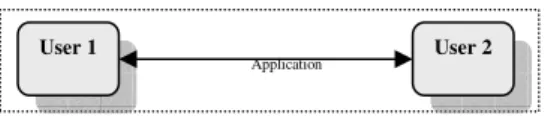
Figure 1 illustrates a system before and after being deployed with EASE. Illus-trated in Figure 1(a) is the system to be protected. It may be a client-server or distrib-uted application. The application may be designed for any particular purpose and may or may not have security functions built into its design. Indeed, while the system may include, for instance, methods to authenticate users, traditionally there are few methods available to enforce security compliance at the client end.
Environmentally-Aware Security Enforcement (EASE) 143
Figure 1(b) illustrates the application in operation with EASE in place. A policy agent, located at the server site, interacts with a security agent located on each plat-form where the application may be operated remotely. The policy server interprets an electronic version of the security policy for the applications that may run on the com-puter platform. The security agent and policy agent communicate with each other via a dedicated, secure communication channel. The policy agent communicates to the application in order to share information through messages and to enable or disable access to the application for any user. In order for the application to operate from any computer platform, the security agent must be present and must be in communication with the policy agent. Each security agent has a set of security (software) “sensors” that monitor different aspects of operation context for the application on its computer platform. Examples of the security policies that sensors and controlling software may monitor and enforce include the following:
• Ensure the operation environment is appropriate for the application. For instance for a Java application, it is important to ensure that the Java runtime version in-stalled is adequate for the application to run correctly. In addition, to prevent se-curity flaws and exploits, the system must ensure that the version of Java in-stalled has not been tampered with.
• In order to protect distribution of copyrighted material or trade secrets, the sys-tem must ensure that when the application is running there are no other applica-tions operating that may be used to garner inappropriate access to intellectual property or the application itself. These applications may include disassemblers, reverse compilers, screen snapshot software, file or system activity monitoring software, etc.
• Ensure that the computer platform running the application remotely is safe from viruses and Trojans. As with the above, this would amount to an enforcement of the security policy before the application is allowed to run.
• Ensure that only certain computers run the application. There may be other meas-ures that can restrict access to the application. The environment’s security policy may restrict computers based upon IP address, MAC address, or computer hard-ware signatures.
• Ensure that the computer upon which the application runs remotely always has a security device installed. (The device may be a smart card, USB security device, other security dongle (wired or wireless). Security enforcement runs in a separate execution thread from the application, regularly.
• The policy agent may add further functions for improving authentication and au-thorization for the application. For instance, it may enforce password changes, or role-based authentication and authorization. The advantage of adding this func-tion would centralize security administrafunc-tion for the applicafunc-tion.
• Another item that may be monitored and reacted upon is an analysis of the situ-ational behavior of all participants. If a user is considered to be behaving in an anomalous way, the application may disconnect the user. In other words, users will remain connected as long as they behave in the fashion expected by the ad-ministrators of the collaborative software system.
144 L. Korba et al.
Fig. 1. This diagram illustrates how EASE may be applied to an existing application 3.2 Implementation
To demonstrate EASE, we have created a software prototype. This section describes the implementation of the prototype.
This work builds upon the research and prototype development described in [3]. The web-based shop-floor monitoring and control program is called Wise-ShopFloor and is further described in [4]. A much simplified block diagram for the Wise-ShopFloor is shown in Figure 2. Web clients may access a variety of shopfloor
Fig. 2. Three-tiered architecture for e-manufacturing (Wise-Shopfloor) before the addition of EASE Web Client Web Server Application Servers Robotic Device 1 Robotic Device 3 Robotic Device 2 Robotic Device 4 Web Client Web Client Internet EASE Application User 1 User 2 Policy Agent Context Security Agent Sensors Context Security Agent Sensors Application User 1 User 2
a) The application environment with two users, 1 and 2 connected through the application
Environmentally-Aware Security Enforcement (EASE) 145
equipment (e.g. robots, milling machines) via a web interface. Users are provided with three dimensional visualizations of the operations of machinery for control or operation purposes. The system uses a client-server architecture. The clients use a web browser. Java 3D provides the 3 dimensional visualizations of all machine opera-tions. Java servlets form an application server used to access the various different machine tools. Before EASE was applied to the prototype, the primary security fea-ture of the Wise-ShopFloor application was based on simple password authentication access control. The objective of our work was to add monitoring of the contexts of application execution and using the monitoring results to control context-aware access to the application.
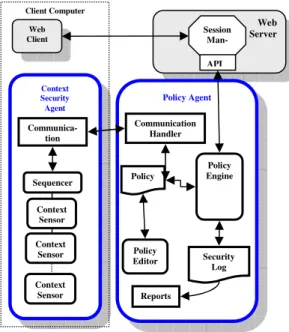
Fig. 3. This diagram illustrates the components comprising the system we build to provide Environment-Aware Security Enforcement (EASE)
Figure 3 illustrates our approach for adding EASE to the Wise-ShopFloor applica-tion. The Session Manager is the key place connecting EASE with the applicaapplica-tion. The interface consists of a simple application programmer interface (API). Figure 4 illustrates some of the components of the Policy Agent (PA) and Context Security Agents (CSA). The PA interprets policy, communicates with all context CSAs (one for every computer connected remotely to the application). Communication handlers at both the PA and CSA exchange commands, alarms and policy information. De-pending on the nature of the policy, it is either interpreted at the PA where upon, the PA sends a message to the CSA to perform a policy compliance check, or it is sent to the CSA if a policy is to be scheduled regularly. In the latter case, the CSA schedules the appropriate sensor to perform the test periodically, signaling the PA when the test fails. When a sensor test fails, the PA sends a message to the session manager to deal
Context Security Agent Client Computer Web Client Web Server Session Man-Policy Agent API Communica-tion Communication Handler Policy Engine Policy Policy Editor Security Log Context Sensor Context Sensor Context Sensor Sequencer Reports
146 L. Korba et al.
with the consequence of the failure and ultimately provide feedback to the user. A policy statement in its simplest form contains the name of the sensor test, the fre-quency of the test, the consequence of its failure and the message that is sent to the Web Client for display as a pop-up window indicating a security failure. The failure may result in a warning to the user, or a message indicating that the application has disconnected.
The PA also houses a policy editor for creating and changing policies. Each rule is named and applied to operate with a single machine connected to the Wise-ShopFloor Application. Rules may also be applied to users. The rule is applied to one of the two tasks associated with most machines: Monitor or Control. The action associated with the rule may be either to permit or deny the selected task on the machine. As many sensors as required may be added to the rule. For each sensor, the administrator se-lects the sensor test to be applied, the expected response for the test, and the message to be sent to the application user if the test fails.
4 Previous Work
Two general research areas attributable to EASE are policy-based management (EASE uses policy rules to manage its operation) and pervasive/ubiquitous computing security (EASE enforces security based upon user and computer platform contexts).
McDaniel and Prakash have described an architecture for security policy enforce-ment [5]. Named “Antigone”, the architecture offers a modular approach for adding security event detection modules. The system uses a transport layer mechanism and security-related events for handling by the detection modules. The authors describe optimization methods to reduce overheads in the architecture. Antigone is intended to be built around applications. With Antigone, the intended target for the security en-forcement is appropriate behavior of the application as opposed to EASE where the target for enforcement is beyond the application extending to the context of work station operation and user behavior.
An example of an attempt to provide security enforcement for a computer platform at least at the level of the file system is given by Wolthusen [6]. The system described in this paper provides mandatory access control, encryption and auditing of file activ-ity on an individual file basis for a distributed system. The system that the author has developed provides a holistic approach for handling file activity for the Windows NT file system. Ostensibly, the technology could be applied as a file context sensor for EASE, taking advantage of our effective management interface. While this approach would provide little or no advantage for the Wise-ShopFloor application, it would be advantages when EASE is adapted for distributed applications that have local file management requirements.
Schneider describes a practical way to enforce security policies by monitoring sys-tem and application processes by automata for safety-critical syssys-tems [7]. Each automaton is intended to deal with a security policy. The author describes and defines security policies as being “specified by giving a predicate on sets of executions. A target S satisfies security policy P if and only if P(∑S ) equals true.” This definition
Environmentally-Aware Security Enforcement (EASE) 147
policies into the conjunction of separate mechanisms used to enforce each of the com-ponent parts holds for our work. In addition, EASE targets enforcing security policies for distributed applications, whether they are safety critical or not. Moreover, EASE is not concerned with the policies for the application, per se, but rather those security policies applied to the execution environments for applications. The context sensors in EASE are automata-like in operation.
Covington et al. describe a context-aware security architecture (CASA) for emerg-ing applications [8]. Similar to our work, CASA employs different sensors that moni-tor resources, systems and physical sensors to measure different contexts for partici-pants in the application. CASA also uses context and object management layers as well as services for object and environment roles activation that influence an authori-zation service. The overall objective of this work is to provide more adaptive security services. With EAVE, we present and demonstrate a straight-forward approach for adding and managing security for a distributed, shared workspace using context and an agent-based methodology.
5 Discussion and Conclusions
There has been considerable research and development of policy management sys-tems for network management and security management. However, there has been little work in the area of enforcement of security policies. The work that has been done in this area often involves incorporating security enforcement into the systems early on; at the beginning of the design process. In this work we take a new ap-proach we call: Environment-Aware Security Enforcement (EASE): a fusion of work in policy-based management and enforcement and the context-based security research in pervasive computing. EASE offers a means of providing security policy enforcement for legacy applications. As was shown with our target Wise-ShopFloor application, the interface with the existing application was a simple API added to the legacy system to provide control over a user’s authorization to use the applica-tion and messaging through the applicaapplica-tion for user feedback. The result nicely integrates the security enforcement functionality of EASE with the original applica-tion funcapplica-tionality.
EASE extends the security functionality of the target application to which it is ap-plied by providing context-based security enforcement features. A variety of logical sensors may be applied to different aspects of a user’s operating environment. Tests and enforcement measures may be taken to assure that the user is maintaining certain security requirements for operating an application even if the location of the user is outside the organizational physical and virtual boundaries.
The current proof-of-concept prototype demonstrates a limited number of sensors in operation. These sensors currently include: Java virtual machine integrity, operat-ing system version, MAC and IP addresses. Future work will involve developoperat-ing a more comprehensive set of sensors, including ones to determine whether or not an individual user is doing inappropriate or unexpected activities based upon system call information and social network analysis [9].
148 L. Korba et al.
Acknowledgements
The authors acknowledge the National Research Council of Canada for its support of this work through their collaborative grant program with the National Science Council of Taiwan (2002-2005). We gratefully acknowledge the contribution of our collabora-tors in the NRC Integrated Manufacturing Technologies Institute for constructing the hooks in their prototype software required for our implementation. We also acknowl-edge the assistance of Myroslav Palenychka in the development of the prototype dur-ing his Jan.-Apr., 2005 work term within the Information Security Group.
References
1. Fuchs, L, Geyr, W., Richter, H., Poltrock, S. Frauenhofer, T., Daijavad, S. Enabling inter-company team Collaboration. Enabling Technologies: Infrastructure for Collaborative Enter-prises, 2001. Proceeding tenth IEEE International Workshop on WET ICE 2001, Cambridge, June 20-22, 2001, pp. 374-379.
2. Xu, Y., Song, R., Korba, L., Wang, L., Shen, W., Lang, S., Distributed Device Networks with Security Constraints, IEEE Transactions on Industrial Informatics, 2005 (Accepted).
3. Shen, W., Lang, S., Korba, L., Wang, L., and Wong, B., 2000, "Reference Architecture for Inter-net Based Intelligent Shop Floors," Proceedings of the SPIE International Conference on Net-work Intelligence: Internet-Based Manufacturing, Vol. 4208, pp. 63-72.
4. Wang, L., Song, H. Cunningham, A. Development of Wise-ShopFloor for Web-based
Monitor-ing and Control, Technical Report from the Integrated ManufacturMonitor-ing Technology Institute, Na-tional Research Council of Canada, IMTI-TR-023 (2004/02) January, 2004 (41 pages).
5. McDaniel, P., Prakash, A. A flexible architecture for security policy enforcement, Proceedings of the DARPA Information Survivability Conference and Exposition, Washington, DC, April, 2003, pp. 234-239, vol. 2.
6. Wolthusen, S.D. Security Policy Enforcement at the file system level in the Windows NT
operat-ing system family, Proceedoperat-ings of the 17th Annual Computer Security Applications Conference,
New Orleans, Dec 10-14, 2001.
7. Schneider, F.B. Enforceable Security Policies, ACM Transactions on Information and System Security (TISSEC), Vol. 3, Iss. 1, February, 2000, pp. 30-50.
8. Covington, M.J., Fogla, P., Zhan, Z., Ahamad, M. A context-aware security architecture for
emerging applications, Proc. of the 18th annual Computer Security Applications Conference
(ACSAC’02), Las Vegas, Dec. 9-13, 2003, pp. 249-258.
9. Temdee, P., Korba, L. Of Networks, Interactions and Agents: An Approach for Social Network
Analysis, Proc. 6th International Conference on CSCW in Design, London, Ontario, July 12-14, 2001.