HAL Id: hal-00601635
https://hal.archives-ouvertes.fr/hal-00601635
Submitted on 20 Jun 2011HAL is a multi-disciplinary open access archive for the deposit and dissemination of sci-entific research documents, whether they are pub-lished or not. The documents may come from teaching and research institutions in France or abroad, or from public or private research centers.
L’archive ouverte pluridisciplinaire HAL, est destinée au dépôt et à la diffusion de documents scientifiques de niveau recherche, publiés ou non, émanant des établissements d’enseignement et de recherche français ou étrangers, des laboratoires publics ou privés.
Fewer infants than older patients in paediatric
randomised controlled trials
François Angoulvant, Florentia Kaguelidou, Stephane Dauger, Corinne Alberti
To cite this version:
François Angoulvant, Florentia Kaguelidou, Stephane Dauger, Corinne Alberti. Fewer infants than older patients in paediatric randomised controlled trials. European Journal of Epidemiology, Springer Verlag, 2010, 25 (8), pp.593-601. �10.1007/s10654-010-9480-2�. �hal-00601635�
Original research article
Fewer Infants than Older Patients in Paediatric Randomised Controlled Trials
François Angoulvant MD,*a,b Florentia Kaguelidou MD,a Stephane Dauger MD PhD,c
Corinne Alberti MD PhDa
a
AP-HP, Hôpital Robert Debré, Unité d’épidémiologie clinique, Université Denis Diderot-Paris VII, Unité INSERM CIE5, 48 bd Sérurier 75019, Diderot-Paris, France
b
AP-HP, Hôpital Robert Debré, Pôle de Pédiatrie Aiguë et Médecine Interne, Service d’Accueil des Urgences Pédiatriques, Université Denis Diderot-Paris VII, 48 bd Sérurier 75019, Paris, France
c
AP-HP, Hôpital Robert Debré, Pôle de Pédiatrie Aiguë et Médecine Interne, Service de Réanimation et Surveillance Continue Pédiatriques, Université Denis Diderot-Paris VII, 48 bd Sérurier 75019, Paris, France
* Corresponding author:
Dr François ANGOULVANT
Service d’Accueil des Urgences Pédiatriques, Hôpital Robert Debré, 48 Boulevard Sérurier, 75019 Paris, France
Tel: 33 1 40 03 22 72 – Cell: 33 6 24 38 78 14 – Fax: 33 1 40 03 47 44 E-mail: [email protected]
Financial disclosure or conflict of interest for all authors: None
ABSTRACT
To determine whether the youngest age groups are less likely to be included in paediatric randomised controlled trials (PRCTs) than older children, we conducted a PubMed search using the keyword “randomised controlled trial” and the limit “all child: 0 – 18 years”. We retrieved 417 articles published in 2006 in 34 leading journals classified as general medical journals, paediatric medical journals, or specialist medical journals. We arbitrarily selected 144 articles, at random. For each study, we evaluated population age characteristics (central tendency, range, and dispersion), study design, sample size and topic. Of the 144 studies, only 82 were first reports of paediatric randomised controlled trials (PRCTs). Among the other studies, many were done in adults. Of the 82 PRCTs, only 11% included newborns and 26% infants; 59% included children and 39% adolescents. Using the same search strategy to retrieve PRCTs in the same journals in the last four months of 2009 retrieved 66 PRCTs, of which 17% included newborns, 24% infants, 61% children and 55% adolescents. The three health conditions most often reported were respiratory diseases, infectious diseases, and mental and behavioural disorders. In 34 leading journals, PRCTs were significantly less likely to include newborns and infants than older paediatric patients. Given the huge impact of PRCTs on paediatric health, additional efforts are needed to promote studies in newborns and infants, as well as studies of the impact of recent European and American regulations
designed to encourage paediatric drug trials.
Key Words: Age groups; Randomised Control Trial; Infant; Newborn; Research Design
List of abbreviations
GMJ General medical journals
PMJ Paediatric medical journals
PRCT Paediatric randomised controlled trial
RCT Randomised controlled trial
INTRODUCTION
Clinical trials have led to major changes in clinical practice. In paediatrics, a well-known example is childhood acute lymphoblastic leukaemia, in which 5-year survival has improved from 25% to more than 80% as a result of management changes tested in
multicenter trials.[1] Unfortunately, the number of paediatric trials remains small.[2] At least 50%[3-5] of drugs prescribed in children are used off-label or unlicensed, and many data on drug pharmacokinetics and toxicity are extrapolated from adult studies to paediatric
populations.[3-5] Awareness of this gap in paediatric research [2, 6, 7] led to legislative and regulatory changes in the USA,[8] Europe,[9] and Australia,[10] with the goal of encouraging paediatric research. Nevertheless, many studies indicate that the number of high-quality randomised controlled trials (RCTs) remains lower in paediatric patients than in adults.[11-13] For example, among the 32 RCTs investigating antiepileptic drugs for the add-on treatment of drug-resistant partial epilepsy, only 5 involved evaluations in both children and adults.[14]
Studies that focus specifically on the paediatric population are crucial. Paediatric patients differ from adults in many ways, including body composition, body-surface-area to weight ratio, and maturation of organ systems and enzymatic pathways. Furthermore,
considerable differences exist across the paediatric population; adolescents (12-18 years),[15, 16] for instance, are very different from neonates (0-27 days) or infants (28 days-23
months).[4] A case in point is the expression of drug-metabolising enzymes such as UDP glucuronosyltransferase, which changes with age.[4] The greatest differences in drug pharmacokinetics and pharmacodynamics compared to adults occur for neonates and infants.[4] Thus, there is an urgent need to improve the number and quality of studies conducted in paediatric populations,[17] particularly in neonates and infants.[12, 18]
We hypothesised that neonates and infants were less likely to be included in paediatric RCTs (PRCTs) than older paediatric patients. To test this hypothesis, we reviewed a subset of
PRCTs published in 34 leading journals in 2006. We evaluated study design, objective, sample size, and geographic location. To assess the impact of recent regulations designed to encourage paediatric drug trials, we retrieved the PRCTs published in the same journals during the last 4 months of 2009.
METHODS
Literature Search
An electronic search of MEDLINE was conducted using PubMed to identify all RCTs published in 2006 in 34 high-impact-factor journals. We chose the general medical journals (GMJs), paediatric medical journals (PMJs), and specialist medical journals (SMJs) that had the highest impact factors in their category, as a high impact factor is a good predictor of impact in the field of paediatrics and of high study quality.[19] Information on the journals, including impact factors, was obtained from the Institute for Scientific Information’s Journal Citation Reports® for 2005 (http://www.isiwebofknowledge.com/). We required an impact factor of 7.0 or higher for GMJs and SMJs. Since PMJs had lower impact factors, we arbitrarily chose a lower cut-off of 3.0 corresponding to the 90th percentile of PMJ impact
factors listed in the 2005 Journal Citation Reports®. Furthermore, we chose journals that
published at least ten RCTs in patients belonging to any age group, in 2006. We conducted our search with the keyword “randomised controlled trial”. Limits, in addition to 2006 for year of publication, were “Humans” and “All child: 0-18 years”. Letters, comments, and editorials were excluded. We identified 417 articles labelled as PRCTs including 90 (22%) in GMJs, 176 (42%) in PMJs, and 151 (36%) in SMJs. We arbitrarily chose to select a random sample of 35% of the PRCTs published in 2006, in keeping with an earlier study,[20] instead of a 3-month sample.[11] We used a computer-based random selection strategy stratified on journal category. This strategy selected 31 articles in GMJs, 60 in PMJs, and 53 in SMJs (144 articles in all). The numbers of articles with the journal categories, names, and impact factors
are shown in Table 1. One of us (FA) read the titles and abstracts of the 144 articles. When the information in the title and abstract suggested that the study was a PRCT, the full-length article was read. Articles that included at least one patient aged 0 to 18 years and that constituted first trial reports were selected. We excluded studies that included no paediatric patients (even when the endpoint was assessed in a child, i.e., in newborns of pregnant
women included in the study) and articles that supplied additional information on a previously reported trial. For each excluded article, we recorded the reason for exclusion. Figure 1 is the flow chart of the articles. We developed a standardized data collection form based on a review of the relevant literature then calibrated it based on 10 articles. Data were then extracted from the selected articles to the form by one of us (FA), who is a certified paediatrician. Among the data extracted from each article were the characteristics of the population, with special
attention to age, for which we recorded the central tendency (mean or median), range, and dispersion (standard deviation or interquartile range). We also recorded the number of
patients, male-to-female ratio, topic of the study (determined using a list published by the 10th
International Statistical Classification of Diseases and Related Health Problems,[21] continent where the study was done, type of intervention (treatment, diagnosis, or prevention), and whether age-related subgroup analyses were performed. We classified the studies based on the age groups included, using the following definitions: neonates, 0-27 days; infants, 28 days-23 months; children, 2-11 years; and adolescents, 12-18 years [15, 16]. Preterm babies were defined as babies born before 37 weeks of gestation [15, 16]. If the mean or median age, or at least part of the age range, was contained within the interval defining an age group, the study was classified as including at least that age group. Incomplete age data were handled as follows. When only one end of the age range was known, we used this value and the interval separating it from the mean to identify the age group. When some of the included patients were younger than 18 years, but the minimum age was missing, and when the maximum and mean ages were either missing or greater than 18 years, the study was classified as a PRCT in
an unspecified age group. We did not evaluate whether the treatments studied in the older age groups were relevant to the younger age groups. We tested interobserver variability of our data extraction method by having one of us (FK), who was blinded to the results of the initial data extraction, independently extract data from a random sample of 35% of the 144 articles. We also performed a MEDLINE search using the same strategy to identify PRCTs published in the same 34 journals between 1st September 2009 and 31st December 2009. We chose a
4-month period to obtain about one-third of PRCTs published in 2009, as we included 35% of PRCTs published in during 2006 in the same journals. To maximize the likelihood of
detecting an impact of the recent regulations, we chose the latest possible time period, that is, the last 4 months of 2009. We identified 66 PRCTs, for which we recorded the age groups and topics.
Statistical Analysis
Qualitative variables were described as numbers (percentages) and quantitative variables as medians (range and interquartile range). Our assessment of interobserver variability
showed perfect agreement for the identification of PRCTs (Kappa =1) and substantial agreement for the main extracted items (Kappa =0.70; 95% confidence interval [95%CI], 0.62-0.79). We used Fisher’s test to compare age-group distributions in PRCTs published in 2006 and 2009.
RESULTS
Selected Articles
Of the 144 articles, 82 were found to be PRCTs. The 62 other articles were done in adults or were not first reports of RCTs (Figure 1); therefore, they were excluded from the analysis.
Study characteristics
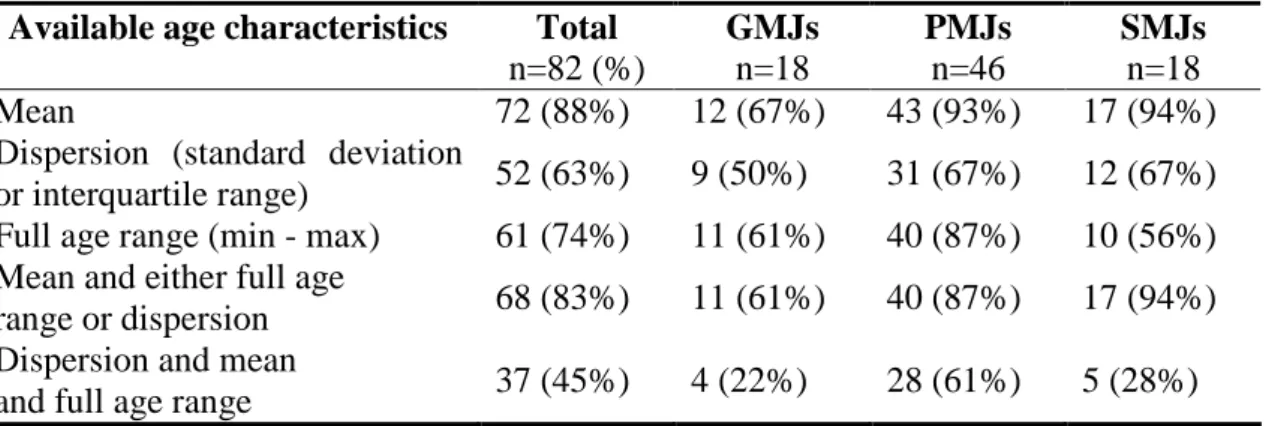
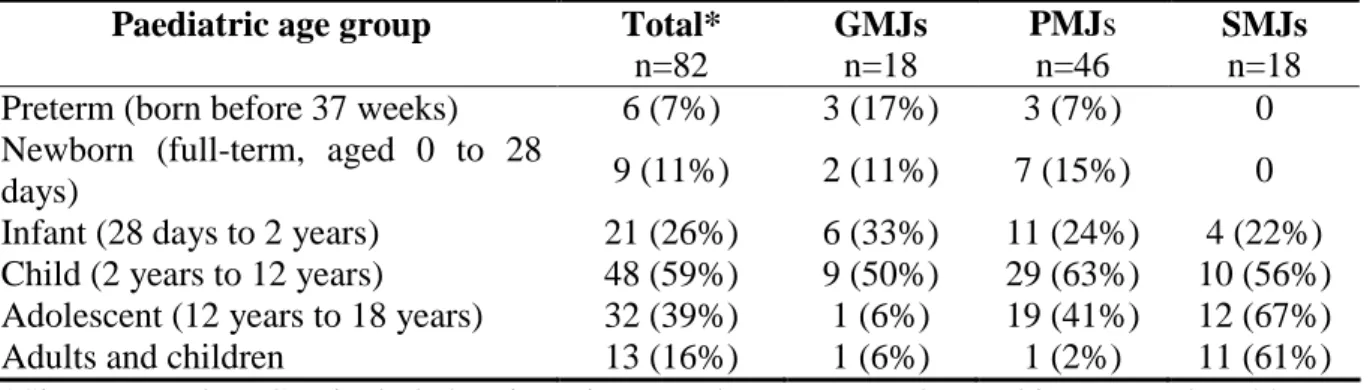
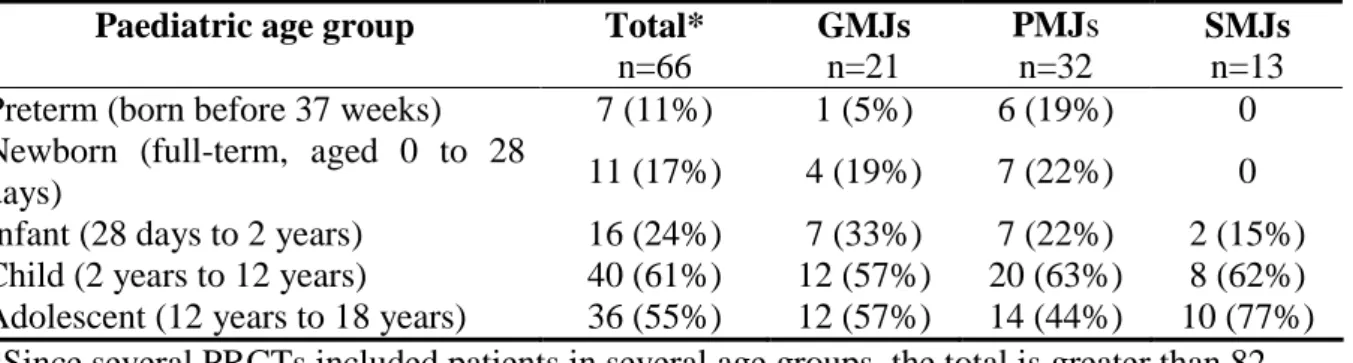
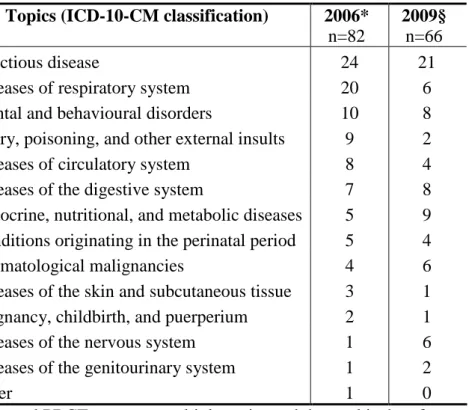
Reported age characteristics in the 82 articles are shown in Table 2. A single paediatric age group was included in 46 studies, two paediatric age groups in 29 studies, and three paediatric age groups in 4 studies. Of the 13 studies that included both adults and paediatric patients, three did not provide sufficient data to determine the age group of the paediatric participants. Among the 44 PRCTs published in 2006 that included either patients from at least two paediatric age-groups or both adults and children, 6 reported age-related subgroup analyses. The distribution of age groups is shown in Table 3 for the 2006 sample of PRCTs and in Table 4 for the 2009 sample. Far fewer studies were done in neonates and infants than in older paediatric patients. There was no statistically significant difference in age-group distribution between 2006 and 2009 (p=0.77). Sample size ranged from 22 to 69,274, with a median of 196. The male-to-female ratio was available for 67 studies and ranged from 0.1 to 0.91 with a median of 0.53. Topics of the PRCTs published in 2006 and 2009 are listed in Table 5. The most widely studied topics were infectious diseases (15 on vaccines), respiratory diseases (including 19 on asthma), and mental and behavioural disorders. Only 2 studies dealt with surgical conditions. In 2006, trials on asthma and vaccines contributed 29% of all trials. Most of the 12 trials on rare diseases included both paediatric patients and adults. Of the 66 therapeutic trials, 53 evaluated drugs, most of which had already been used in paediatric patients or adults. Among the remaining trials, 14 assessed preventive or educational interventions and 2 assessed diagnostic tools. Of the 82 trials, 41 (50%) were done in North
America, 27 (33%) in the European Union, 12 (15%) in Asia, 5 (6%) in Africa, 5 (6%) in Australasia, and 4 (5%) in Latin America. The total exceeds 82 because seven studies
involved at least two regions. In four articles, the geographic region where the study was done was not clearly described. For 58 of the 66 PRCTs published in the last four months of 2009, inclusion started before 1st January 2007 suggesting little or no impact of regulations enacted
in 2007.
DISCUSSION
PRCTs published in 34 leading journals in 2006 and during the last four months of 2009 were less likely to include neonates and infants than children or adolescents. A review of articles published in 2005 in six leading general and specialist journals showed that studies performed in adults were significantly more likely than paediatric studies to be RCTs,
systematic reviews, or studies of therapeutic interventions.[11] Compared to studies in adults, studies in paediatric patients are fewer, less well designed, and less well reported.[12] In addition to this previously described paucity of high-quality paediatric studies, we found that few paediatric studies focused on the youngest patients. Drug pharmacokinetics and
pharmacodynamics differ significantly between adults and paediatric patients and across paediatric age groups.[4, 22] Drugs that are effective and safe in adults or older paediatric patients may be neither in neonates and infants. For instance, the administration in the 1950s of chloramphenicol to neonates in a total daily dosage based on experience with adults caused the potentially fatal side effect known as grey baby syndrome related to liver enzyme
immaturity.[23] However, many drugs are not tested in paediatric patients, who must therefore be given drugs off-label. In a multicenter study of 344,094 inpatients in tertiary paediatric hospitals in the United States, at least one drug was used off-label in 78.7% of the overall study population.[5] The younger the child, the greater the difference with adults.
Both the nature and the dosage of drugs must be adapted to the specific characteristics of each paediatric age group. About 20% of drug prescriptions written for paediatric patients are written for infants,[24] and the use of unlicensed drugs is highest among children younger than 1 year.[25] Among drugs used in neonates, up to 90% may be given off-label.[26] The prevalences of the various health conditions in each age group were estimated based on several indicators. In a study of annual outpatient visit rates between 1993-1995 in the USA, rates were highest among patients younger than 1 year of age (800 visits per 100 children versus 200 visits per 100 children aged 5 to 14 years).[27] The main diagnoses in this study were middle ear infections (especially in patients younger than 1 year), injury (especially in patients older than 5 years), asthma (with similar rates in infants, preschoolers, and school-age children), and attention deficit disorders.[27] In 2006 in the USA, 155 000 children were admitted for asthma and contributed 5.6% of all admitted children; there were also 593 000 emergency room visits of children for asthma, contributing 2.3% of all paediatric emergency room visits.[28] The numbers of admissions and visits were highest among the youngest patients and decreased with advancing age, although the prevalence of asthma was higher in school-age children and adolescents.[28] A hospital discharge survey performed in the USA in 2005 showed that 45% of neonates had at least one illness or risk-related diagnosis.[29] Common diagnoses were perinatal jaundice (20%), respiratory conditions (11%), disorders related to prematurity (8%), and congenital anomalies (8%).[29]. The prevalence of chronic conditions was studied over 6 years in the USA in children aged 2 years at inclusion.
Prevalences were 2% to 3.6% for asthma, 11.9% to 13.3% for obesity, 1% to 4.7% for mental and behavioural disorders, and 3.9% to 5.7% for other physical conditions.[30] Fewer data are available on the worldwide scale. A study of major causes of death in children younger than 5 years[31] showed that diarrhoea and pneumonia each contributed 17% of deaths, followed by other infections (12%), severe neonatal infections (11%), prematurity (11%), birth asphyxia and trauma (8%), malaria (7%), measles (4%), injuries (4%), and nutritional deficiencies.
Thus, chronic health conditions predominate in older children, whereas acute and severe illnesses are more common in the youngest patients. Therefore, although neonates and infants contribute a smaller proportion of the paediatric population than do older age groups, their specific characteristics require a large amount of research attention. Clearly, there is an urgent need for high-quality studies in neonates and infants. Nevertheless, despite a few initiatives to promote research in neonates,[32] most paediatric studies are done in children and
adolescents, as shown by a study of 253 trials conducted to obtain paediatric exclusivity extensions.[33] Drugs studied in these trials are mainly used in older children and adolescents for conditions such as hypertension, systemic autoimmune disorders, and gastrointestinal disorders.[33] We identified important deficiencies in the reporting of age characteristics of populations included in PRCTs. In 17% of the PRCTs published in 2006, at least one major age characteristic was missing. Furthermore, 40% trials included more than one paediatric age group. In this situation, detailed information on the number of participants in each age group is crucial. Inadequate information on age characteristics limits the external validity and therefore the usefulness of PRCTs.[12] Finally, of the 13 trials that included both adults and paediatric patients, 12 did not specify the number of each. Only 6 PRCTs involved age-related subgroup analyses. In many PRCTs, sample sizes were too small for valid subgroup analyses. The three health conditions most often studied in PRCTs were respiratory diseases, infectious diseases, and mental and behavioural disorders, in keeping with earlier data.[33] Asthma and vaccines contributed 29% of the trials in our study. Studies of asthma were done chiefly in children and studies of vaccines in infants. Although surgery is a high-cost intervention, only 2 trials investigated surgical treatments. Similarly, there were few studies of diagnostic procedures. We excluded 62 of the 144 initially selected articles. Many of the excluded articles reported studies in adults, although they were associated with paediatric keywords (e.g., “adolescent”). Differences in age-group definitions further complicate the identification of PRCTs on Medline. For example, the age range for adolescence is 12 to 18 years according
to the ICH definition used by the US Department of Health[16] and European Medicines Agency[15] and 13 to 18 years according to the Medical Subject Headings (MeSH, United States National Library of Medicine (http://www.nlm.nih.gov/mesh/meshhome.html) used for PubMed search limits. There is clearly a need for standardizing age-group definitions.[12] Reporting of age characteristics in PRCTs also needs to be improved, to ensure easy identification of paediatric age groups included in trials. Nevertheless, we were able to determine the age groups in most of the trials selected for our study. We excluded RCTs in pregnant women. Although RCTs performed during pregnancy are numerous and often relevant to paediatrics, for instance in the field of HIV infection, they are not influenced by new legislation about paediatric research. Low publication rates of PRCTs done to obtain exclusivity extensions have been found.[33] PRCTs of interventions whose use is well established in adults may be unlikely to be accepted for publication by peer-reviewed
journals. Publication bias may occur when the studies are conducted in narrow fields or with small effect sizes or when they fail to show efficacy of the study intervention.[34] These sources of publication bias are often present in paediatric trials, especially in the youngest age-groups. Thus, our focus on published RCTs is a limitation of our study.
Because we focused on paediatric journals having high impact factors, most
subspecialty paediatric journals were excluded. PRCTs may have been published in these excluded journals. However, only data published in peer-reviewed journals are likely to have a major impact on clinical practice.[11, 33] Labelling issues constitute only the most visible part of the far-reaching deficiencies that characterize paediatric clinical research. Because the rules applying to drug use are more restrictive than in other fields (e.g., there is no equivalent of labelling in surgery), the imbalance in labelling between adults and children and across paediatric age groups is more easily recognizable, compared to other problems affecting paediatric research. Labelling requires published studies, and labelling inadequacies constitute a marker for the more extensive problems that affect paediatric clinical research.
Only 13 of the 148 trials identified in our study were done in preterm babies. Survival is increasing among extremely immature newborns, in whom drug handling and toxicity differ markedly from those in older patients. High-quality studies in immature babies are needed to determine the risk/benefit profile of drugs and the mechanisms of drug toxicity.[35]
Limitations on blood sampling are among the specific challenges raised by
pharmacodynamic, pharmacokinetic, and pharmacogenetic studies in preterm babies.[36] However, methods have been devised to circumvent this problem.[37]
The need for special attention to paediatric drugs was recognized in the 1990s. The Food and Drug Administration Modernization Act of 1997 (FDAMA) required the FDA to specify which drugs must carry paediatric labelling. The Best Pharmaceuticals for Children Act (BPCA) passed in 2002 encourages more studies in children and promotes the development of treatments for children; it offers extended exclusivity to pharmaceutical companies that
perform studies in children. The Pediatric Research Equity Act (PREA) of 2003 allows the FDA to require paediatric drug trials sponsored by pharmaceutical companies when such studies are not performed despite incentives and publicly funded mechanisms.[38] The Food and Drug Administration Amendments Act of 2007 (FDAAA) extends applicability of the BPCA and PREA authority to 2012. The paediatric exclusivity program in the USA provided paediatric data for 59 drugs between 2002 and 2004, and the cost of the PRCTs was offset by the net returns from the additional 6 months of exclusive marketing rights.[39] This program seems effective for high-cost diseases that also exist in adults, such as asthma,[40, 41] but may be less useful for conditions not seen in adults. Other types of program are needed to encourage research in neonates and infants. Since 2006 (the year chosen for our first study), new laws and regulations (FDAAA, EMEA paediatric initiative, and FP-7) have been enacted to promote clinical research in paediatrics. However, our evaluation of PRCTs published in late 2009 found no changes in age-group distribution compared to 2006. However, only 12%
of the 2009 PRCTs had inclusion periods that started in or after 2007. Thus, the time interval may have been too short to detect an effect of the new regulations.
CONCLUSION
Paediatric health issues vary across age group: infectious diseases and the need for immunizations are crucially important in the youngest children, whereas mental and behavioural disorders chiefly affect older children. Newborns and infants were less often included in RCTs published in 2006 and in the 4 last months of 2009 than older paediatric patients, although their specific characteristics entail a need for specific studies. Additional efforts are needed to promote research in neonates and infants. Further studies designed to evaluate the impact of recent regulations may provide insight into the best means of encouraging PRCTs conducted in the youngest age groups and published in high impact factor journals. Furthermore, age group definitions must be standardized and improvements made in the reporting of age characteristics in PRCTs.[42]
REFERENCES
1. O'Leary M, Krailo M, Anderson JR, Reaman GH. Progress in childhood cancer: 50 years of research collaboration, a report from the Children's Oncology Group. Seminars in oncology. 2008;35:484-493.
2. Caldwell PH, Murphy SB, Butow PN, Craig JC. Clinical trials in children. Lancet. 2004;364:803-811.
3. Conroy S, Choonara I, Impicciatore P, Mohn A, Arnell H, Rane A, et al. Survey of unlicensed and off label drug use in paediatric wards in European countries. European Network for Drug Investigation in Children. Bmj. 2000;320:79-82.
4. Rakhmanina NY, van den Anker JN. Pharmacological research in pediatrics: From neonates to adolescents. Advanced drug delivery reviews. 2006;58:4-14.
5. Shah SS, Hall M, Goodman DM, Feuer P, Sharma V, Fargason C, Jr., et al. Off-label drug use in hospitalized children. Archives of pediatrics & adolescent medicine. 2007;161:282-290.
6. Wilson JT. An update on the therapeutic orphan. Pediatrics. 1999;104:585-590.
7. Salazar JC. Pediatric clinical trial experience: government, child, parent and physician's perspective. Pediatr Infect Dis J. 2003;22:1124-1127.
8. Best Pharmaceuticals for Children Act. 107th Cong (January 4, 2002) ed.
9. Better Medicines for Children – proposed regulatory actions in paediatric medicinal products. Brussels: European Commission; 2002.
10. AAMC. Principles for Protecting Integrity in the Conduct and Reporting of Clinical Trials. Approved by AAMC Executive Committee. 2005.
11. Martinez-Castaldi C, Silverstein M, Bauchner H. Child versus adult research: the gap in high-quality study design. Pediatrics. 2008;122:52-57.
12. Klassen TP, Hartling L, Craig JC, Offringa M. Children Are Not Just Small Adults: The Urgent Need for High-Quality Trial Evidence in Children. PLoS medicine. 2008;5:e172.
13. Cohen E, Goldman RD, Ragone A, Uleryk E, Atenafu EG, Siddiqui U, et al. Child vs adult randomized controlled trials in specialist journals: a citation analysis of trends, 1985-2005. Archives of pediatrics & adolescent medicine. 2010;164:283-288. 14. Rheims S, Cucherat M, Arzimanoglou A, Ryvlin P. Greater response to placebo in
children than in adults: a systematic review and meta-analysis in drug-resistant partial epilepsy. PLoS medicine. 2008;5:e166.
15. EMEA. Note for Guidance on Clinical investigation of medicinal products in the
Paediatric Population (E11): The International Conference on Harmonisation of Technical Requirements for Registration of Pharmaceuticals for Human Use; 2002.
16. ICH. U.S. Department of Health. FDA. Guidance for Industry E11 Clinical investigation of medicinal products in the Pediatric Population. The International Conference on
Harmonisation of Technical Requirements for Registration of Pharmaceuticals for Human Use 2000.
17. Rivara FP, Alexander D. Randomized controlled trials and pediatric research. Archives of pediatrics & adolescent medicine. 2010;164:296-297.
18. The International Forum of Standards for Research with Children. [cited December 7, 2009]; Available from: http://www.ifsrc.org/
19. Lee KP, Schotland M, Bacchetti P, Bero LA. Association of journal quality indicators with methodological quality of clinical research articles. Jama. 2002;287:2805-2808. 20. Gow RM, Barrowman NJ, Lai L, Moher D. A review of five cardiology journals found
that observer variability of measured variables was infrequently reported. Journal of clinical epidemiology. 2008;61:394-401.
21. WHO. International Statistical Classification of Diseases and Related Health Problems 10th Revision Version for 2006.
22. Johnson TN. The development of drug metabolising enzymes and their influence on the susceptibility to adverse drug reactions in children. Toxicology. 2003;192:37-48.
23. Weiss CF, Glazko AJ, Weston JK. Chloramphenicol in the newborn infant. A physiologic explanation of its toxicity when given in excessive doses. The New England journal of medicine. 1960;262:787-794.
24. t Jong GW, Eland IA, Sturkenboom MC, van den Anker JN, Strickerf BH. Unlicensed and off-label prescription of respiratory drugs to children. Eur Respir J. 2004;23:310-313. 25. Schirm E, Tobi H, de Jong-van den Berg LT. Risk factors for unlicensed and off-label
drug use in children outside the hospital. Pediatrics. 2003;111:291-295.
26. Barr J, Brenner-Zada G, Heiman E, Pareth G, Bulkowstein M, Greenberg R, et al. Unlicensed and off-label medication use in a neonatal intensive care unit: a prospective study. American journal of perinatology. 2002;19:67-72.
27. Freid VM, Makuc DM, Rooks RN. Ambulatory health care visits by children: principal diagnosis and place of visit. Vital and health statistics. 1998:1-23.
28. Akinbami LJ, Moorman JE, Garbe PL, Sondik EJ. Status of childhood asthma in the United States, 1980-2007. Pediatrics. 2009;123 Suppl 3:S131-145.
29. DeFrances CJ, Cullen KA, Kozak LJ. National Hospital Discharge Survey: 2005 annual summary with detailed diagnosis and procedure data. Vital and health statistics. 2007:1-209.
30. Van Cleave J, Gortmaker SL, Perrin JM. Dynamics of obesity and chronic health conditions among children and youth. Jama. 303:623-630.
31. WHO. Global health risks: mortality and burden of disease attributable to selected major risks. 2009.
32. Anand KJ, Aranda JV, Berde CB, Buckman S, Capparelli EV, Carlo W, et al. Summary proceedings from the neonatal pain-control group. Pediatrics. 2006;117:S9-S22.
33. Benjamin DK, Jr., Smith PB, Murphy MD, Roberts R, Mathis L, Avant D, et al. Peer-reviewed publication of clinical trials completed for pediatric exclusivity. Jama. 2006;296:1266-1273.
34. Ioannidis JP. Why most published research findings are false. PLoS medicine. 2005;2:e124.
35. Ward RM, Lane RH, Albertine KH. Basic and translational research in neonatal pharmacology. J Perinatol. 2006;26 Suppl 2:S8-S12.
36. de Wildt SN, Ito S, Koren G. Challenges for drug studies in children: CYP3A phenotyping as example. Drug discovery today. 2009;14:6-15.
37. Thingvoll ES, Guillet R, Caserta M, Dicenzo R. Observational trial of a 48-hour
gentamicin dosing regimen derived from Monte Carlo simulations in infants born at less than 28 weeks' gestation. The Journal of pediatrics. 2008;153:530-534.
38. Politis P. Transition From the Carrot to the Stick: The Evolution of Pharmaceutical Regulations Concerning Pediatric Drug Testing. Widener Law Review 2005;12:271. 39. Li JS, Eisenstein EL, Grabowski HG, Reid ED, Mangum B, Schulman KA, et al.
Economic return of clinical trials performed under the pediatric exclusivity program. Jama. 2007;297:480-488.
40. Lozano P, Sullivan SD, Smith DH, Weiss KB. The economic burden of asthma in US children: estimates from the National Medical Expenditure Survey. The Journal of allergy and clinical immunology. 1999;104:957-963.
41. Stevens CA, Turner D, Kuehni CE, Couriel JM, Silverman M. The economic impact of preschool asthma and wheeze. Eur Respir J. 2003;21:1000-1006.
42. Begg C, Cho M, Eastwood S, Horton R, Moher D, Olkin I, et al. Improving the quality of reporting of randomized controlled trials. The CONSORT statement. Jama. 1996;276:637-639.
FIGURE LEGEND
Table 1. Number of articles published in 2006 retrieved in Medline using PubMed and
identified as paediatric randomised controlled trials
Name of journal n of PRCTs
New England Journal of Medicine 27
Lancet 21
Journal of the American Medical Association 7
Annals of Internal Medicine 2
BMJ 25
Archives of Internal Medicine 8
Sub-Total for GMJs (n=6) 90
Pediatrics 79
Journal of the American Academy of Child and Adolescent Psychiatry
30
The Journal of Pediatrics 28
Archives of Pediatrics & Adolescent Medicine 22 The Pediatric Infectious Disease Journal 17
Sub-Total for PMJs (n=5) 176
Archives of General Psychiatry 6
Gastroenterology 6
Journal of Clinical Oncology 16
Circulation 3
Lancet Neurology 4
Blood 19
Lancet Infectious Disease 0
Hepatology 2
Lancet Oncology 2
Journal of the American College of Cardiology 5 American Journal of Respiratory and Critical Care Medicine
6 The American Journal of Psychiatry 18
Diabetes 2
Diabetes care 11
Gut 3
The Journal of Allergy and Clinical Immunology 31
Annals of Neurology 1
Brain 1
Arthritis and Rheumatism 5
European Heart Journal 3
Journal of the American Society of Nephrology 3 Arteriosclerosis, Thrombosis, and Vascular Biology 1 Annals of the Rheumatic Diseases 2
Sub-Total for SMJs (n=23) 151
Table 2. Availability of age characteristics in 82 paediatric randomised controlled trials, by
journal category
Available age characteristics Total
n=82 (%) GMJs n=18 PMJs n=46 SMJs n=18 Mean 72 (88%) 12 (67%) 43 (93%) 17 (94%)
Dispersion (standard deviation
or interquartile range) 52 (63%) 9 (50%) 31 (67%) 12 (67%) Full age range (min - max) 61 (74%) 11 (61%) 40 (87%) 10 (56%) Mean and either full age
range or dispersion 68 (83%) 11 (61%) 40 (87%) 17 (94%) Dispersion and mean
Table 3. Description of paediatric age groups included in 82 paediatric randomised controlled
trials, by journal category in 2006.
Paediatric age group Total*
n=82 GMJs n=18 PMJs n=46 SMJs n=18 Preterm (born before 37 weeks) 6 (7%) 3 (17%) 3 (7%) 0 Newborn (full-term, aged 0 to 28
days) 9 (11%) 2 (11%) 7 (15%) 0
Infant (28 days to 2 years) 21 (26%) 6 (33%) 11 (24%) 4 (22%) Child (2 years to 12 years) 48 (59%) 9 (50%) 29 (63%) 10 (56%) Adolescent (12 years to 18 years) 32 (39%) 1 (6%) 19 (41%) 12 (67%) Adults and children 13 (16%) 1 (6%) 1 (2%) 11 (61%) *Since several PRCTs included patients in several age groups, the total is greater than 82 (100%).
Table 4. Description of paediatric age groups included in 66 paediatric randomised controlled
trials, by journal category in the last four months of 2009.
Paediatric age group Total*
n=66 GMJs n=21 PMJs n=32 SMJs n=13 Preterm (born before 37 weeks) 7 (11%) 1 (5%) 6 (19%) 0 Newborn (full-term, aged 0 to 28
days) 11 (17%) 4 (19%) 7 (22%) 0
Infant (28 days to 2 years) 16 (24%) 7 (33%) 7 (22%) 2 (15%) Child (2 years to 12 years) 40 (61%) 12 (57%) 20 (63%) 8 (62%) Adolescent (12 years to 18 years) 36 (55%) 12 (57%) 14 (44%) 10 (77%) *Since several PRCTs included patients in several age groups, the total is greater than 82 (100%).
Table 5. Topics of the PRCTs
Topics (ICD-10-CM classification) 2006*
n=82
2009§
n=66
Infectious disease 24 21
Diseases of respiratory system 20 6
Mental and behavioural disorders 10 8 Injury, poisoning, and other external insults 9 2
Diseases of circulatory system 8 4
Diseases of the digestive system 7 8 Endocrine, nutritional, and metabolic diseases 5 9 Conditions originating in the perinatal period 5 4
Haematological malignancies 4 6
Diseases of the skin and subcutaneous tissue 3 1 Pregnancy, childbirth, and puerperium 2 1
Diseases of the nervous system 1 6
Diseases of the genitourinary system 1 2
Other 1 0
* Several PRCTs concern multiple topics and the total is therefore greater than 82. § Several PRCTs concern multiple topics and the total is therefore greater than 66.
Figure 1
GMJs: n=31 PMJs: n=60 SMJs: n=53
=> 144 full-length articles assessed for eligibility 417 articles published in 2006 identified as PRCTs in MEDLINE using PubMed GMJs: n=90 PMJs: n=176 SMJs: n=151 GMJs 18 PRCTs included PMJs 46 PRCTs included SMJs 18 PRCTs included 13 Exclusions 13 adult RCTs 14 Exclusions 3 adult RCTs 5 previously reported RCTs 5 not RCTs 1 other 35 Exclusions 20 adult RCTs 10 previously reported RCTs 5 not RCTs 82 articles studied Random sample of 35% in each journal category