HAL Id: tel-01232555
https://tel.archives-ouvertes.fr/tel-01232555
Submitted on 23 Nov 2015
HAL is a multi-disciplinary open access
archive for the deposit and dissemination of sci-entific research documents, whether they are pub-lished or not. The documents may come from teaching and research institutions in France or abroad, or from public or private research centers.
L’archive ouverte pluridisciplinaire HAL, est destinée au dépôt et à la diffusion de documents scientifiques de niveau recherche, publiés ou non, émanant des établissements d’enseignement et de recherche français ou étrangers, des laboratoires publics ou privés.
Louis Dupuy
To cite this version:
Louis Dupuy. Sustainability and International Trade. Economics and Finance. Université de Bor-deaux, 2014. English. �NNT : 2014BORD0087�. �tel-01232555�
POUR OBTENIR LE GRADE DE
DOCTEUR DE
L’UNIVERSITÉ DE BORDEAUX
ÉCOLE DOCTORALE de SCIENCES ÉCONOMIQUES, GESTION et DÉMOGRAPHIE (E.D. 42)
SCIENCES ÉCONOMIQUES
Par Louis DUPUY
Soutenabilité et Commerce International
Sustainability and International Trade
Sous la direction de Jean-Marie Cardebat, Professeur des universités Soutenue le 16/06/2014
Membres du jury :
Mme. CALMETTE, Marie-Françoise, Professeur des Universités, Université de Toulouse I, Présidente
M. AYONG LE KAMA, Alain, Professeur des Universités, Université Paris Ouest-Nanterre, Rapporteur M. HANLEY, Nicholas, Professor of Economics, University of Stirling, Rapporteur
M. ATKINSON, Giles, Professor of Environmental Policy, London School of Economics, Examinateur
Remerciements/Acknowledgements
C’est un lieu commun de dire qu’il est difficile de s’y retrouver après 5 années de travail, quand vient l’heure d’exprimer ce qui n’a pas forcément été dit avant. A la difficulté habituelle des remerciements s’ajoute ici une difficulté linguistique, qui place le défenseur de la langue française dans une situation pour le moins ironique. La solution la plus simple, sans faire d’entorse au protocole, a été de respecter la stricte séparation des langues.
English speakers are therefore directed straight to page iii, les francophones peuvent quant à eux commencer au paragraphe suivant.
Je commencerais naturellement par remercier le Professeur Jean-Marie Cardebat pour son encadrement et son soutien durant ces 5 années. J’ai beaucoup apprécié la pleine liberté d’action qu’il m’a laissé, assumant une orientation de thèse qui pouvait paraître hasardeuse. Il a ensuite pris le temps nécessaire pour se plonger dans un sujet qui ne lui était qu’en partie familier, et ce document ne serait pas ce qu’il est sans ses nombreuses remarques et suggestions. Je voudrais également le remercier plus personnellement pour la confiance qu’il continue à me prodiguer et j’espère que nous continuerons notre fructueuse (et souvent drôle) collaboration.
Je voudrais ensuite remercier le Professeur Marie-Françoise Calmette d’avoir pris la prési-dence de mon jury de thèse. Je voudrais également remercier les Professeurs Alain-Ayong Le Kama et Nicholas Hanley pour avoir accepté la charge de rapporteurs. Je remercie également le Professeur Giles Atkinson et M. Pierre Régibeau d’avoir accepté de venir compléter mon jury de soutenance. J’ai beaucoup apprécié les remarques orales et écrites formulées par l’ensemble du jury, qui m’ont déjà permis de mieux cerner les forces et faiblesses de mon travail. Les membres du jury m’ont remercié de leur avoir soumis un travail approfondi et de qualité. Je voudrais à mon tour les remercier sincèrement de l’avoir lu en détail et de façon critique, faisant ainsi cas d’un travail de longue haleine qui, je l’espère, ne sera pas complètement inutile.
Je voudrais ensuite remercier les membres du LAREFI, à commencer par le Professeur An-toine Bouët, directeur du LAREFI, de m’avoir accueilli durant ces 5 années. Le souci constant du Pr. Bouët d’encourager les doctorants (et également les jeunes docteurs !) dans leurs re-cherches, y compris contre une administration souvent décourageante, marquera mon passage à Bordeaux. Je voudrais remercier particulièrement Ion Lapteacru et Cristina Badarau pour leurs conseils avisés sur les parties les plus techniques de ma thèse. Les chapitre 3 et 4 n’existeraient probablement pas sans leurs suggestions et corrections. J’espère avoir pris un peu de la rigueur avec laquelle ils m’ont aidé. Remerciements également à Pierre-Henri Faure pour m’avoir écouté me plaindre (souvent) et avoir su dédramatiser de nombreuses situations par une référence bien
placée à ses chers sommets Alpins.
Je voudrais également remercier Michel Cazals, le Pr. Pascal Kauffmann et le Pr. Michel Dupuy pour m’avoir donné l’occasion de découvrir le métier d’enseignant et pour m’avoir donné toute latitude pour le faire le mieux possible. Je remercie particulièrement Michel Cazals pour nos nombreux échanges sur le métier et pour une vision partagé sur les étudiants et sur notre responsabilité vis-à-vis d’eux et le Pr. Pascal Kauffmann pour l’amitié de ses remarques sur l’existence en général. J’ai enfin une pensée particulière pour le Pr. Sophie Brana, qui a suivi mon parcours depuis la troisième année de licence et m’a toujours encouragé, depuis lors, dans les moments plus faciles (ex. lors des séminaire à Barèges) comme dans les moments de doute. Vient maintenant le tour de mes camarades doctorants ! Soutiens des moments difficiles, à la fois ressources humaines et matérielles, ils sont le sel sans lequel l’aventure serait bien trop solitaire. Un grand merci donc à Alain, Alexandre, Amel, Ibrahima, Irena, Marinette, Max, Melissa, Nathaniel, Thomas, Viola et Yi, simplement pour avoir été là. Je ne suis pas nécessairement un grand expansif, mais je souhaite ainsi qu’ils sachent m’avoir aidé à plus d’un titre, et souvent sans le réaliser. Une "spéciale dédicace" à l’équipe du bureau R 172, pour les discussions très sérieuses (la politique macroéconomique de la zone euro), sérieuses (le paiement des corrections de copies) et beaucoup moins sérieuses (le démantèlement de la filière albanaise). Les années passeront, mais le souvenir de la deuxième famille des années thèse restera. Dans un contexte souvent morose pour la profession, c’est déjà ça. Une pensée aussi pour un lointain parisien au parcours parallèle au mien.
Après la deuxième famille, vient le temps de rendre hommage à la première. Patience. Un mot qui a probablement été souvent prononcé derrière moi, quand j’étais perdu dans un raisonnement, contrarié par un obstacle, voir purement et simplement absent. Qu’il me soit donc permis de remercier mes proches pour leur patience avant tout ! Ces cinq années de transition, des études vers la "vraie vie", n’ont pas toujours été faciles, mais nous avons maintenant un beau parcours devant nous.
Et bien sûr, merci à celle qui me fait l’honneur de partager mon existence depuis maintenant plus de 7 ans, me supportant au propre comme au figuré. Merci de tes attentions et de ton soutien de tous les jours.
Now that this PhD thesis is drawing to a close, it strikes me as obvious that it would not have happened without the interventions and help of so many people, who all contributed to the final result. It is fair to say that my three stays in the United Kingdom and the people I was lucky to meet there had a defining influence on the final result.
I would start by thanking Pr. Matthew Cole from the University of Birmingham for his supervision of my master’s dissertation. It is by working under his supervision that I realised how fascinating (and addictive) research is. I would like to thank my temporary supervisors in the University of Nottingham who welcomed me for a total of 9 months there. Pr. Bouwe Dijkstra first, who believed in my potential when I had not much to show for. His decision allowed me to discover a whole new scale of investigation in research. If there is any ambition in my PhD, it is mostly thanks to him.
I am in so many ways in debt towards Pr. Daniel Bernhofen who, as head of the GEP, welcomed me a second time in Nottingham to finish the writing up of my doctoral work. His relentless questioning, his rigour and his great impressive knowledge of international trade issues all had a defining influence on my approach to the international trade side of this work. I most certainly hope that our intellectual collaboration, and friendship, will endure.
Last but not the least, I thank Prs. Giles Atkinson and Nick Hanley for their invaluable help on the sustainability side of my work. It strikes me as an extraordinary act of faith that three years ago they both accepted to meet me and took my very early work seriously. For a PhD student in France, it was an impressive moral and intellectual boost without which, I am not sure I would have persevered. Let me thank them again for this, and for giving me opportunities since then to work with them.
Finally I would like to thank the great community of the Nottingham University PhD students, especially the honourable people of the famous B51 office. Let me thank all whom I met: Anna, Christian, Christoph, Daniel, Emilija, Felix, Francesco, Jeroen, Jonathan, Milan, Pascale, Samantha, Tim, Tobias and Steven, and especially those whose friendship is standing brilliantly the test of time. Let Natasha, Hiroshi, Zouheir be particularly thanked, and I take this opportunity to wish for the best for their future careers.
is inevitable, the end product of the enormous, inexorable forces of history and technology beyond anyone’s control.” Dr. Michio Kaku, theoretical physicist.
titutions.
Classification-JEL – B13,F11,F17,F18,Q01,Q32,Q33,Q37,Q51,Q56,Q58
L’´emergence du paradigme de la soutenabilit´e `a partir des ann´ees 1970 est um chan-gement majeur pour l’analyse ´economique actuelle. La d´efinition d’un d´eveloppement durable implique de prendre en compte `a la fois les moyens et des fins du d´eveloppement humain. La soutenabilit´e est l’´etude des moyens du d´eveloppement, qui viennent ensuite servir des fins socialement d´efinies. Les pr´eoccupations li´ees `a la soutenabilit´e font par-tie de la pens´ee ´economique depuis le 19`eme si`ecle, mais deviennent avec la mont´ee des questions environnementales un ´el´ement clef de la th´eorie ´economique. L’´etude de la soutenabilit´e demande la prise en compte de questions normatives, li´ees aux besoins des g´en´erations futures, notamment les questions de justice et d’´equit´e d’acc`es aux droits et au ressources de la soci´et´e. L’analyse ´economique standard doit donc ˆetre ´etendue.
L’´etude du commerce international part de l’observation que le monde n’est ni un ensemble d’ˆıles sans liens entre elles, ni un espace parfaitement int´egr´e et unifi´e. Ce fait a d’importantes cons´equences sur la th´eorie de la soutenabilit´e, qui est habituelle-ment d´efinie en ´economie ferm´ee. Le commerce international a connu de nombreuses mutation dans son histoire r´ecente, devenant d’inter-industriel intra-industriel puis infra-firme. La gestion sociale des facteurs reste cependant de la responsabilit´e des ´Etats, une source potentielle de conflits entre optimalit´e domestique et globale. La gestion domes-tique peut ne pas ˆetre syst´emadomes-tiquement optimale, notamment si les ´Etats ne parviennent pas `a ´epargner et r´einvestir une part suffisante de la rente issue des ressources naturelles (Hartwick 1977). Le probl`eme est plus aigu encore dans un contexte d’´economie ou-verte : il n’existe alors plus d’institution ´etatique centrale pour superviser la gestion des ressources non-renouvelables.
Il semble alors n´ecessaire de recenser et d’expliciter les m´ecanismes qui relient les ´evolutions du commerce international `a la soutenabilit´e. Cette th`ese a pour but de recenser et d’expliciter les m´ecanismes par lesquels le commerce international peut influencer du-rablement la soutenabilit´e. Nous sugg´ererons des amendements autant th´eoriques qu’em-piriques aux indicateurs et aux th´eories de la soutenabilit´e sur la base des m´ecanismes de commerce pr´esent´es.
La soutenabilit´e est issue de la combinaison d’une th´eorie de la valeur et d’une th´eorie des moyens, la th´eorie du capital. La th´eorie du capital est d’abord formul´ee par Fisher
(1906), comme la synth`ese de nombreuses contributions et courants de pens´ee durant la seconde moiti´e du 19`eme si`ecle. La th´eorie du capital formalise les interactions entre les humains et leur environnement. Chaque ´el´ement constitutif de l’environnement constitue un stock, qui est une part de la richesse. Chaque instrument de richesse constituant ce stock est form´e, aliment´e ou maintenu par un apport de mati`ere ou d’´energie (outgo) et g´en`ere un flux de services (income) parfois qualifi´e de revenu ou de b´en´efices. Ces instru-ments de richesse prennent valeur dans le cadre des m´ecanismes de march´e, formalis´e par une th´eorie, actuellement utilitariste, de la valeur. Cette valeur provient de la rencontre des pr´ef´erences des agents, de leurs utilit´es et besoins individuels. Une allocation de valeur par le march´e dans le cadre de la th´eorie utilitaire g´en`ere une distribution optimale des ressources, au sens de Pareto : la plus grande satisfaction possible du plus grand nombre, compte tenu des droits de propri´et´es constat´es.
Les ´Economistes ´ecologistes les premiers ont propos´e une alternative `a la th´eorie uti-litariste, sur la base d’objections concernant les possibilit´es de substitution (parfaite, im-parfaite, impossible) entre diff´erents instruments de richesse. Certains, suivant les conclu-sions de Georgescu-Roegen(1971), proposent un proc´ed´e d’allocation des ressources al-ternatif, bas´e sur la d´egradation thermodynamique de l’environnement. Nous sugg´erons que malgr´e l’opposition souvent postul´e dans la litt´erature entre ´economie environnemen-tal et ´economie ´ecologique, les deux courants pourraient se retrouver dans une th´eorie du capital convenablement d´efinie. L’industrie ´ecologique est un premier exemple au cr´edit de cette assertion. Il est n´eanmoins certain qu’une th´eorie de la valeur alternative est re-quise pour refl´eter les pr´eoccupations concernant l’´equit´e, la justice (Rawls 1971) et le niveau de substituabilit´e r´eel entre plusieurs instruments.
La soutenabilit´e `a l’`ere de la mondialisation
Le commerce international est bas´e sur la notion d’avantage comparatif (Ricardo 1817). Un avantage comparatif conduit le pays consid´er´e `a se sp´ecialiser dans le bien ou le facteur procurant un avantage `a l’´echange vis-`a-vis d’un partenaire. L’avantage comparatif est consid´er´e comme donn´e dans les th´eories traditionnelles du commerce international. Des contributions plus r´ecentes ont int´egr´e l’impact de la distribution dans le temps et dans
”diversification des sp´ecialisations”, de ne pas concentrer `a l’exc`es ses avantages compa-ratifs dans un nombre trop restreint de secteurs, facteurs ou biens. Cette diversification est obtenue par une politique avis´ee de r´einvestissement et de maintenance des instruments de richesse. Il s’agit ici de g´erer la part de ressources non-renouvelables et renouvelables, du capital ´economique, social et environnemental. La politique de r´einvestissement des revenus du capital et de maintenance est donc d´eterminante pour la formation des avan-tages comparatifs, alors que les avanavan-tages comparatifs cr´e´es des incitations fortes `a la sp´ecialisation qui peuvent contredire les imp´eratifs de la soutenabilit´e.
Cette potentielle contradiction intemporelle est plus pr´egnante encore du fait des derni`eres ´evolutions du commerce international, qui prend de plus en plus la forme d’une ”chaine d’approvisionnement internationale”. Chaque pays se retrouve ainsi d´epositaire d’une part du processus de production d’un bien, au lieu d’accueillir l’ensemble du processus et de faire commerce de biens de consommation ou d’´equipement achev´es. les pays riches en ressources naturelles sont ainsi incit´es `a prendre part au commerce international principa-lement en tant que fournisseurs de ressources naturelles, ce qui peut contraindre ou limiter leur d´eveloppement par le changement structurel.
L’´etude du paradoxe de la sp´ecialisation est ´egalement d’importance pour la th´eorie du commerce international dans la mesure o`u le commerce des ressources naturelles repr´esente une part en augmentation du commerce mondial, alors que les pays riches en ressources naturelles repr´esentent d´ej`a une part importante de la population mondiale. Le commerce international cr´ee majoritairement de l’interd´ependance entre les pays et non des relations de d´ependance pures. Une th´eorie de la soutenabilit´e en ´economie ou-verte, qui serait juste et ´equitable, demande donc le r´etablissement de la compatibilit´e entre la formation de sp´ecialisations productives en lien avec le commerce international et le changement structurel requis pour un d´eveloppement durable. Si cet ´equilibre ne peut ˆetre trouv´e, le commerce international ne peut pr´etendre b´en´eficier `a tous les acteurs de la chaine d’approvisionnement mondiale.
de la soutenabilit´e
Le paradigme de la soutenabilit´e faible, bas´e sur la vision n´eoclassique, est le principal paradigme de la th´eorie de la soutenabilit´e. Ce paradigme est bas´e sur la combinaison de la th´eorie du capital et de la th´eorie utilitariste de la valeur. Nous nous nous basons cette tradition et sa traduction dans l’Epargne Nette Ajust´ee (ENA) pour proposer un mod`ele global de soutenabilit´e, mettant en avant les cinq dimensions de la soutenabilit´e.
Le mod`ele se soutenabilit´e faible est issue des contributions de Dasgupta and Heal
(1974), Solow(1974) etStiglitz(1974) qui forment le mod`ele DHSS, la base jusqu’`a ce jour des ´etudes en soutenabilit´e faible. Le mod`ele est rapidement compl´et´e par la r`egle de Hartwick (Hartwick 1977, Asheim et al. 2003) qui prescrit le r´einvestissement de la rente issue des ressources naturelles en capital produit, afin de maintenir le niveau de la richesse globale et assurer la soutenabilit´e. Reste `a estimer cette rente et plus g´en´eralement l’´evolution des diff´erents instruments de richesse disponibles dans l’´economie consid´er´ee.
Le premier indicateur de soutenabilit´e est l’Epargne Nette Ajust´ee (ENA) propos´ee parPearce and Atkinson(1993) suivant le mod`ele deSolow(1974). L’ENA est d’abord un projet empirique, avant de trouver une justification th´eorique dans les travaux d’Hamilton and Clemens(1999). Des doutes persistent quant `a la capacit´e de l’ENA de pr´edire la sou-tenabilit´e future (Ferreira and Vincent 2005). L’ENA est cependant l’indicateur d’´equit´e interg´en´erationnelle le plus robuste actuellement disponible. L’ENA est l’h´eriti`ere directe des deux principales traditions du paradigmes de la soutenabilit´e faible, supplantant le produit net national vert (Dasgupta 2009). L’indicateur est calcul´e par la Banque Mon-diale (The World Bank 2011), qui le propose dans une base s´epar´ee (Wealth Accounting Database) et comme Indicateur de D´eveloppement dans le Monde (IDM).
Les institutions ont un rˆole instrumental pour la soutenabilit´e, notamment dans les pays riches en ressources naturelles (Van Der Ploeg 2011). Nous offrons une lecture du cadre d’analyse propos´e par Acemoglu and Robinson(2012) pour analyser l’impact des institutions extractives et inclusives sur la soutenabilit´e. L’´evolutions des institutions se fait par incr´ements successifs, qui peuvent favoriser la concentration graduelle de la ri-chesse dans un partie de la population. Ce ph´enom`ene rend l’accaparement de la rente par une ´elite plus probable et le r´einvestissement optimal de cette rente moins probable. Cette tendance potentielle est rendue plus probl´ematique par des droits de propri´et´es mal d´efinis (Ostrom 1990), particuli`erement pour les biens publics et les espaces communs.
tionnelle (g´en´eralement des r´evolutions). Les analyses bas´ees sur la notion d’´equilibre de long terme ne semble donc pas les plus adapt´ees pour l’analyse de la soutenabilit´e si des contrˆoles efficaces concernant les ´evolutions institutionnelles sont impossibles.
Nous nous int´eressons ensuite aux cons´equences potentielles de ces ´equilibres mul-tiples et de l’incertitude pour la soutenabilit´e, suivant en cela le chemin trac´e par Hicks
(1946). Nous concluons `a la validit´e des objections formul´ees par Georgescu-Roegen
(1971) sur l’importance de la locomotion qui devraient ˆetre prises en compte dans les ´etudes de soutenabilit´e. Les analyses contrefactuelles (Hamilton et al. 2006), bas´ees sur des indicateurs en valeur courante et en valeur pr´esente autour de l’ENA et de la richesse globale semblent les plus adapt´ees pour capturer la multiplicit´e des sc´enarios envisa-geables.
Nous concluons cette pr´esentation par la pr´esentation de notre cadre int´egr´e pour la soutenabilit´e. La soutenabilit´e repose sur cinq dimensions qui doivent ˆetre consid´er´ees de fac¸on conjointe et ´equitable :
— Le maintien d’un niveau de consommation constant en valeur sur l’horizon consid´er´e. — Le maintien d’un niveau de richesse global en valeur sur l’horizon consid´er´e.
— Le contrˆole du niveau effectif de substituabilit´e r´eel — Le maintien d’une ´equit´e interg´en´erationnelle — Le maintien d’une ´equit´e intrag´en´erationnelle.
Les institutions organis´ees sur le principe de la subsidiarit´e sont les plus adapt´ees pour (et potentiellement les seules capables de) fournir le cadre n´ecessaire `a la r´ealisation de ces cinq dimensions.
2
Commerce International et soutenabilit´e : exploration
des liens
Nous avons propos´e un cadre d’analyse coh´erent regroupant les diff´erentes dimen-sions de la soutenabilit´e en ´economie ferm´ee. Nous allons maintenant transcrire ce sch´ema dans un cadre d’´economie ouverte. La litt´erature est d’ors et d´ej`a riche de contributions pr´esentant les liens entre la soutenabilit´e et le commerce international partant d’autres champs d’analyse. Nous tentons une synth`ese sur la base des dimensions de notre cadre
Le corpus le plus important `a ce jour est le corpus regroupant les contributions sur les liens entre commerce international et impacts environnementaux (pollution a´erienne, des sols et de l’eau). Bas´e sur le mod`ele deCopeland and Taylor(1994), cette litt´erature d´ecrit l’´evolution d’un syst`eme ´economique face aux dommages environnementaux, selon les effets d’´echelle, de technique et de composition. Le mod`ele apporte un important ´eclairage sur les d´ebats concernant la courbe de Kuznets environnementale et l’hypoth`ese des havres de pollution.
Vient ensuite, en termes de contribution, la litt´erature analysant l’´economie des res-sources naturelles dans un cadre d’´economie ouverte. Cette litt´erature regroupe les r`egles de soutenabilit´e en ´economie ouverte (Asheim 1986) et les ´etudes sur l’impact de la volati-lit´e des prix mondiaux (Hartwick 1995,Vincent et al. 1997) sur les sentiers d’exploitation des ressources naturelles. Cette litt´erature trouve un d´ebouch´e empirique dans les ´etudes sur le contenu en ressources naturelles des flux commerciaux (Proops et al. 1999), qui donne aujourd’hui lieu `a des calculs de ”soutenabilit´e virtuelle” (Atkinson et al. 2012) `a comparer aux taux d’ENA domestiques.
Notre proposition de synth`ese commence par une revue des contributions, moins nom-breuses, concernant le rˆole des instruments de politique commerciale dans un contexte de soutenabilit´e (Flaaten and Schulz 2010). Nous pr´esentons ensuite l’impact de l’ouverture ´economique sur les cinq dimensions de la soutenabilit´e. Les textes du corpus traitant de la soutenabilit´e en ´economie ouverte sont bas´es sur l’hypoth`ese implicite que le monde se dirige vers l’unification de l’espace en un march´e commun : l’alternative serait l’en-fermement dans le cadre national. Ce mouvements serait inexorable du fait des gains d’efficience et de bien-ˆetre attendus.
La r´ealit´e, qui justifie les ´etudes du commerce international est un entre-deux im-parfait. Pour faire face `a cette situation, de nouveaux m´ecanismes institutionnels sont requis, pour ´eviter les ph´enom`enes de polarisation des ressources dans certaines r´egions ou groupes de population de par la monde. Ces m´ecanismes incluent notamment des po-litiques de redistribution/r´einvestissement : ils doivent contrer la tendance du commerce international `a redistribuer la richesse `a l’encontre des imp´eratifs de soutenabilit´e. Cette n´ecessit´e est rendue plus pressante encore par la place prise par l’incertitude sur les temps futurs ou concernant le niveau r´eel de substituabilit´e entre les diff´erentes instruments de ri-chesse. Face `a ces limites ind´epassables des m´ecanismes de march´e, l’usage d’instruments de politique commerciale nous semble justifi´e, dans le respect du principe de pr´ecaution.
ouverte
Nous pr´esentons un mod`ele global d’´evaluation du changement structurel dans un contexte d’´economie ouverte. Ce mod`ele nous permet d’explorer diff´erents sentiers de d´eveloppement, bas´es sur diverses r`egles de soutenabilit´e et de r´einvestissement.
La litt´erature sur la soutenabilit´e s’est tourn´ee vers les mod`eles dynamiques ( Che-viakov and Hartwick 2009) pour ´etudier les dynamiques d’accumulation des diff´erents instruments de richesse. Parmi les variables d´eterminantes pour cette classe de mod`eles, le niveau des taux d’escompte pour la formation des dynamiques doit ˆetre correctement ´evalu´e (Bogmans and Withagen 2010). Nous nous basons pour la r´ealisation de notre mod`ele sur diff´erentes contributions de la litt´erature n´eoclassique sur la croissance, de la litt´erature sur la soutenabilit´e et de la litt´erature sur les mod`eles Heckscher-Ohlin de commerce international.
Nous partons du mod`ele propos´e parCu˜nat and Maffezzoli(2004) pour construire un mod`ele associant une composante dynamique (qui r´egie l’accumulation des instruments de richesse) et une composante statique (qui d´etermine les prix des facteurs). Nous pro-posons quatre instruments de richesse synth´etiques (le travail, le capital produit, le capital ´epuisable renouvelable et le capital ´epuisable non-renouvelable). Nous ´evaluons les dy-namiques d’accumulation sous l’hypoth`ese d’´egalisation des prix de facteurs mondiaux, et lorsque cette hypoth`ese est viol´ee : les prix de facteurs sont alors d´etermin´es pays par pays.
Le mod`ele produit des sentiers d’expansion pour chaque instrument de richesse, selon une r´esolution s´equentielle. On consid`ere une distribution exog`ene des instruments de ri-chesse `a la premi`ere p´eriode. Les prix des facteurs et des biens sont d’abord d´etermin´es dans la composante statique. Ils sont ensuite utilis´es pour d´eterminer le niveau de chaque instrument de richesse `a la p´eriode suivante et ainsi de suite. Lors de la r´esolution, un ins-trument de richesse est accumul´e de fac¸on endog`ene dans chaque pays, les autres suivent un profil d’accumulation contraint (exog`ene). Cette m´ethode nous permet d’´evaluer la convergence potentielle des niveaux de consommation et de richesse lorsque l’asym´etrie dans la distribution des instruments (qui est la base de la sp´ecialisation internationale dans un mod`ele Heckscher-Ohlin) se r´eduit par les politiques de r´einvestissements. Nous com-parons notamment le cas o`u les deux pays repr´esentatifs accumulent de fac¸on endog`ene le mˆeme instrument au cas o`u ils accumulent deux instruments diff´erents.
tant d’une r´eduction sym´etrique de l’asym´etrie de la distribution des instruments de ri-chesse exog`enes dans les deux pays. Nous ´etudions ´egalement des situations de variation asym´etrique de cette distribution, que ce soit dans le sens d’une accumulation ou d’une d´ecumulation plus rapide d’un facteur exog`ene dans un des deux pays.
Nous concluons tout d’abord qu’une forte asym´etrie de la distribution des instruments de richesse est pr´ejudiciable aux deux pays, que ce soit en autarcie ou en libre-´echange. Ce constat repose sur la technologie de production, qui suppose que l’ensemble des in-trants sont requis dans le processus de production global. Dans ce cadre, s’ouvrir au libre-´echange r´eduit le niveau de consommation dans les deux pays lorsque l’asym´etrie de la distribution de la richesse est ´elev´ee.
Ce r´esultat d´ecoule de la n´ecessit´e de se sp´ecialiser dans la production de certains biens interm´ediaires pour former un avantage comparatif. Les pays produisent donc un segment de la gamme de biens interm´ediaires et importent les autres. La baisse de la consommation globale vient des coˆuts engendr´es par la complexification de la structure de production. Nous comparons ensuite les ´equilibres de long terme entre forte et faible asym´etrie dans la distribution des instruments de richesse et concluons que les deux pays perdent moins `a s’ouvrir `a l’´echange lorsqu’ils accumulent le mˆeme facteur de production.
Nous pr´esentons la possibilit´e que des pays riches en ressources naturelles qui se concentrent sur la sauvegarde de leur capital naturel puissent passer par un changement structurel et se trouver relativement et absolument mieux en autarcie qu’en libre ´echange. Ce r´esultat sugg`ere que dans un cadre dynamique, les pays qui se sp´ecialisent dans les instruments accumul´es au cours du changement structurel ont un avantage par rapport `a ceux qui d´ependent d’un instrument dont le stock doit ˆetre r´eduit dans le cadre du chan-gement structurel. Dans ce cadre dynamique, les cons´equences en termes de soutena-bilit´e de sp´ecialisations diff´erentes ne sont pas les mˆemes. Nous constatons ´egalement une r´eduction du volume des ´echanges avec la r´eduction de l’asym´etrie de la distribution des dotations factorielles, un r´esultat conforme aux pr´edictions standards des mod`eles Heckscher-Ohlin.
Le fait que les pays se retrouvent face `a des niveaux de consommation et de richesse plus faibles en ´echange ne signifient pas que les sentiers d’expansions en libre-´echange sont en tout point inf´erieurs. Les prix de facteur ´evoluent pour refl´eter la raret´e globale (et non plus seulement domestique) ce qui produit des gains `a l’´echange pour les
le r´einvestissement de ces gains dans le financement du changement structurel, suivant la logique de r´einvestissement des rentes et la r`egle de Hartwick. Ceci ne signifie cependant pas que l’ensemble des gains de l’´echange doivent ˆetre ´epargn´es puis r´einvestis. Les gains venant d’un progr`es technique Hicks-neutre (qui am´eliore la productivit´e toutes choses ´egales par ailleurs) ne sont pas concern´es.
4
Soutenabilit´e, institutions et interd´ependance dans les
processus de d´eveloppement
Nous avons conclu le chapitre pr´ec´edent en soulignant la n´ecessit´e d’´epargner et de r´einvestir certains des gains `a l’´echange international. Le volume des ´echanges prove-nant de l’asym´etrie dans la distribution des facteurs diminue `a mesure que cette mˆeme asym´etrie se r´eduit. Cette diminution du commerce inter-industriel bas´e sur les facteurs s’est en fait accompagn´ee empiriquement de l’´emergence d’un commerce intra-industrie, entre pays ayant une distribution des facteurs similaire. Nous explorons les cons´equences de ce fait du point de vue de la soutenabilit´e.
Le mod`ele d’Ethier(1982) nous permet d’´evaluer l’incidence des rendements d’´echelle croissants sur les conclusions pr´esent´ees au chapitre pr´ec´edent. Nous concluons que mˆeme si les rendements croissants ne changent pas l’allocation des facteurs dans une perspec-tive statique, ils ont un effet important sur les sentiers des prix de facteur en dynamique. Consid´er´ee p´eriode par p´eriode, l’allocation des facteurs ne change pas avec les rende-ments d’´echelle, mais les variations de prix entre les p´eriodes cr´e´eent en dynamique un r´esultat diff´erent.
En cons´equence, les gains `a l’´echange issus des rendements d’´echelle croissants doivent eux aussi ˆetre ´epargn´es et r´einvestis. Il est ´egalement possible qu’un pays progresse plus rapidement que ses partenaires dans la voie du changement structurel. Les partenaires seraient alors potentiellement maintenus dans une sp´ecialisation condamn´ee `a l’obsoles-cence `a long terme. Les partenaires commerciaux ont alors moins de ressources pour entreprendre le changement structurel sur le long terme, `a rebours de leurs int´erˆets de court terme de surcroit.
Nous pr´esentons ensuite bri`evement la litt´erature sur la mal´ediction des ressources
merce international et des institutions. L’explication privil´egi´ee par la litt´erature pour la mal´ediction des ressources est institutionnelle. Nous d´efendons la th`ese que les facteurs institutionnels et les incitations du commerce international jouent de concert et sont im-possibles `a distinguer sur le plan logique. La mal´ediction des ressources ne peut ainsi se comprendre que du fait de l’interd´ependance internationale g´en´er´ee par le commerce.
Pour appuyer cette th`ese, nous proposons un test ´econom´etrique bas´e sur le com-merce ”intra-industriel” des biens intensifs en ressources naturelles. Nous montrons que le commerce inter-industriel domine pour ces biens dans les pays riches en ressources na-turelles. Ce r´esultat nous emm`ene `a conclure que les pays riches en ressources naturelles r´eduisent l’asym´etrie de leur distribution d’instrument de richesse par une diminution ab-solue du stock de capital naturel et non par une diminution relative li´ee `a la hausse des autres stocks. Nous sugg´erons donc d’utiliser la structure des ´echanges internationaux, notamment la diff´erence entre commerce inter et intra-industrie dans les biens intensifs en ressources naturelles, comme un indicateur d’insoutenabilit´e du d´eveloppement.
Nous proposons finalement d’utiliser une exp´erience naturelle pour distinguer l’im-portance respective de l’abondance en ressources naturelles et des ´evolutions institution-nelles pour expliquer la trajectoire en terme de soutenabilit´e d’un pays donn´e. Selon nous, la chute de l’Union Sovi´etique cr´ee une rupture critique commune `a l’ensemble des an-ciennes r´epubliques socialistes, ce qui permet une analyse des ´evolutions `a partir d’une base commune dix ans apr`es1.
Les diff´erences de taille des stocks de capital naturel entre les ex-r´epubliques sont ´egalement observables. Nous choisissons comme cadre d’analyse la F´ed´eration de Russie et montrons comment sa performance en terme de soutenabilit´e (estim´ee grˆace `a l’ENA) se rapproche de pays proches sur le plan institutionnel mais pauvres en ressources natu-relles et non de pays riches en ressources natunatu-relles mais sans liens institutionnels. Nous pr´esentons finalement des sc´enarios d’investissement contrefactuels pour la F´ed´eration de Russie en suivant la m´ethode utilis´ee par Hamilton et al. (2006) et la Banque Mondiale (The World Bank 2011). Nous concluons que la comparaison des trajectoires d’investis-sement contrefactuelles devrait faire partie int´egrante de toute ´etude de soutenabilit´e, afin d’appr´ehender pleinement les cons´equences cumulative des d´ecrochages par rapport aux strat´egies de r´einvestissement optimal. Nos r´esultats sugg`erent que la mal´ediction des
res-1. Ce d´elai est retenu pour des raisons de disponibilit´e des donn´ees et pour ´eviter les chocs de court terme li´es a la dislocation de l’Union Sovi´etique
Conclusion
Nous avons propos´e au cours de l’exposition de notre th`ese une exploration des nom-breux liens entre le commerce international et la soutenabilit´e. D’un point de vue th´eorique, la soutenabilit´e est bas´ee sur l’application de la th´eorie utilitariste de la valeur `a la th´eorie du capital. La th´eorie du capital permet de conceptualiser la relation entre l’homme et son environnement. Nous montrons comment la soutenabilit´e est en fait la gestion sens´ee est ´equitable des moyens du d´eveloppement. Il s’agit plus pr´ecis´ement de maintenir un niveau de consommation et de richesse en valeur, d’encourager et de renforcer l’´equit´e intrag´en´erationnelle et interg´en´erationnelle et de contrˆoler le niveau de substituabilit´e physique entre les instruments de richesse.
Nous choisissons l’Epargne Nette Ajust´ee (ENA) comme indicateur de soutenabilit´e de r´ef´erence pour ´evaluer la fac¸on dont des ´economies ouvertes au commerce interna-tional voient leurs sentiers de d´eveloppement ˆetre modifi´es. Nous montrons que l’ouver-ture commerciale devrait donner lieu `a plus d’´epargne et d’investissements et que les gains `a l’´echange provenant de modifications du syst`eme de prix relatif domestique ne devraient pas ˆetre consomm´es. Nous pr´esentons finalement des impacts plus larges des flux commerciaux sur les sentiers de d´eveloppement, soulignant l’importance de prendre en compte les rendements d’´echelle. Nous ´etudions ´egalement l’imbrication des effets du commerce international et des ´evolutions institutionnelles `a la racine de la mal´ediction des ressources et d’une gestion sous optimale des ressources naturelles dans les pays o`u elles sont abondantes.
Pour mieux comprendre l’importance des institutions, nous proposons d’utiliser la dis-location de l’Union Sovi´etique comme exp´erience naturelle. Nous montrons que l’´evolution de l’ENA en F´ed´eration de Russie suit de plus pr`es celle de ses voisins institutionnelle-ment proches (et ce quelque soit leur dotation en ressources naturelles) que celle des pays de part le monde ayant un niveau de dotation en ressources naturelles similaire. Nous pr´esentons enfin une ´etude contrefactuelle des sentiers de d´eveloppement en Russie, pro-posant d’utiliser cette m´ethode de fac¸on syst´ematique pour ´evaluer la soutenabilit´e des pays dans un contexte d’incertitude et d’impr´ecision des donn´ees nationales concernant la richesse globale et la d´epr´eciation r´eelle des actifs, naturels ou autre.
soin de proposer une th´eorie pour relier les ´evolutions institutionnelles et les mod`eles de soutenabilit´e existants. Un tel mod`ele permettrai de calculer pr´ecis´ement la contribu-tion du commerce internacontribu-tional `a la soutenabilit´e, permettant une identificacontribu-tion des flux commerciaux allant `a l’encontre de la pr´eservation de la richesse globale. Utilis´ee avec des indicateurs en valeur pr´esente pour ´evaluer les fins du d´eveloppement, l’ENA pour-rait alors l´egitimement ˆetre consid´er´ee comme l’indicateur repr´esentant l’´evolution de la soutenabilit´e des moyens du d´eveloppement.
D. Acemoglu and J. A. Robinson. Why Nations Fail : The Origins of Power, Prosperity, and Poverty. Crown Publishers, New York, 2012. 6
K. J. Arrow, P. Dasgupta, L. H. Goulder, K. J. Mumford, and K. Oleson. Sustainability and the Measurement of Wealth. 2010. 14
G. B. Asheim. Hartwick’s Rule in Open Economies. The Canadian Journal of Economics, 19(3) :395–402, 1986. 8
G. B. Asheim, W. Buchholz, and C. A. Withagen. The Hartwick Rule : Myths and Facts. Environmental and Resource Economics, 25(2) :129–150, 2003. 6
G. D. Atkinson, M. Agarwala, and P. Mu˜noz. Are national economies (virtually) sus-tainable ? : an empirical analysis of natural assets in international trade. In Inclusive Wealth Report 2012 Measuring progress toward sustainability, chapter 5, page 370. Cambridge University Press, Cambridge, UK, 2012. ISBN 9781107683396. 8
C. Bogmans and C. A. Withagen. The Pollution Haven Hypothesis. A Dynamic Perspec-tive. Revue Economique, 61(1) :93–114, 2010. 9
A. F. Cheviakov and J. Hartwick. Constant per capita consumption paths with exhaustible resources and decaying produced capital. Ecological Economics, 68(12) :2969–2973, 2009. 9
B. R. Copeland and S. M. Taylor. North-South Trade and the Environment. The Quarterly Journal of Economics, 109(3) :755–787, 1994. 8
A. Cu˜nat and M. Maffezzoli. Neoclassical growth and commodity trade. Review of Economic Dynamics, 7(3) :707–736, 2004. 9
P. Dasgupta. The Welfare Economic Theory of Green National Accounts. Environmental & Resource Economics, 42(1) :3–38, 2009. 6
P. Dasgupta and G. Heal. The Optimal Depletion of Exhaustible Resources. Review of Economic Studies, 41(128) :3, 1974. 6
W. J. Ethier. National and International Returns to Scale in the Modern Theory of Inter-national Trade. The American Economic Review, 72(3) :389–405, 1982. 11
S. Ferreira and J. R. Vincent. Genuine Savings : Leading Indicator of Sustainable Deve-lopment ? Economic DeveDeve-lopment and Cultural Change, 53(3) :17, 2005. 6
O. Flaaten and C. E. Schulz. Triple win for trade in renewable resource goods by use of export taxes. Ecological Economics, 69(5) :1076–1082, 2010. 8
N. Georgescu-Roegen. The Entropy Law and the Economic Process. Press, Harvard University, 1971. 4,7
K. Hamilton and M. Clemens. Genuine Savings Rates in Developing Countries. World Bank Economic Review, 13(2) :24, 1999. 6
K. Hamilton, G. Ruta, and L. Tajibaeva. Capital Accumulation and Resource Depletion : A Hartwick Rule Counterfactual. Environmental and Resource Economics, 34(4) :517– 533, July 2006. ISSN 0924-6460. 7,13
J. M. Hartwick. Intergenerational Equity and the Investing of Rents from Exhaustible Resources. The American Economic Review, 67(5) :972–974, 1977. 3,6
J. M. Hartwick. Constant Consumption Paths In Open Economies With Exhaustible Re-sources. Review of International Economics, 3(3) :275–283, 1995. 8
J. Hicks. Value and Capital : An inquiry into Some Fundamental Principles of Economic Theory. Clarendon Press, Oxford, 2nd edition, 1946. 7
E. Ostrom. Governing the Commons : The Evolution of Institutions for Collective Action. Cambridge University Press, 1990. 6
D. W. Pearce and G. D. Atkinson. Capital theory and the measurement of sustainable development : an indicator of ”weak” sustainability. Ecological Economics, 8(2) :103– 108, 1993. 6
J. L. R. Proops, G. Atkinson, B. F. v. Schlotheim, and S. Simon. International trade and the sustainability footprint : a practical criterion for its assessment. Ecological Economics, 28(1) :75–97, 1999. 8
J. Rawls. A Theory of Justice. University of Harvard Press, 1971. 4
D. Ricardo. On the Principles of Political Economy and Taxation. John Murray, London, 1817. 4
R. M. Solow. Intergenerational Equity and Exhaustible Resources. The Review of Econo-mic Studies, 41 :29–45, 1974. 6
The World Bank. The Changing Wealth of Nations : Measuring Sustainable Deve-lopment in the New Millennium. The World Bank, Washington D.C., 2011. ISBN 9780821384886. 6,13
F. Van Der Ploeg. Natural Resources : Curse or Blessing ? Journal of Economic Literature, 49(2) :366–420, June 2011. ISSN 0022-0515. 6,12
J. R. Vincent, T. Panayotou, and J. M. Hartwick. Resource depletion and sustainability in small open economies. Journal of Environmental Economics and Management, 33(3) : 274–286, 1997. 8
Table of Contents
General Introduction 1
1 The Emergence of Sustainability 43
2 International Trade and Sustainability 99
3 International Trade and Structural Change 161
4 Sustainability and Interdependence 265
General Conclusion 359
Bibliography 373
A Resources allocation in the static model 397
B The static equilibrium conditions 399
C Recursive equilibrium for the dynamic model 403
D The distribution of wealth in countries worldwide 407
E Diagrams of the simulations in chapter 3 417
F Trade settings and scenarios in chapter 3 431
H Fixed effects across specifications 439
I Metadata for the econometric regressions 451
J Robustness tests with sub-samples 453
K Lists of countries and comparison groups 459
L Cross-country comparisons and the counterfactual study in chapter 4 463
List of tables 466
List of figures 470
List of boxes 471
General Introduction
I
t is now widely acknowledged that the last 40 years of human history saw a dramatic change in the relationship between mankind and the planet. Some have considered this change to be a new geological age, called the anthropocene1. The anthropocene is characterised by theemerging capability of mankind to modify the environment and the living conditions on earth, as opposed to previous eras where environmental shocks such as ice ages where imposed on mankind, who adapted usually by migrating.
The answer to this new state of the planet took the form of a push for sustainable devel-opment, as a way to mitigate the consequences of potentially harmful human action on vital components for the survival of all in the environment. The landmark definition for sustain-able development was proposed by the United Nations World Commission on Environment and Development (WCED) which produced in December 1987 a resonating report, Our Common Future. The publication, sometimes refereed to as the Brundtland report after the chair of the commission, defined sustainable development as “The development that meets the needs of the current generation without compromising the ability of future generations to satisfy theirs” (World Commission on Environment and Development 1987).
Sustainable development was to be a new coordinated effort to achieve a development that would be equitable and lasting for both developed and developing countries. Thirteen years later, the Millennium Summit propelled the Millennium Development Goals (MDG) as an expression of this imperative. The MDG are quantifiable targets for countries, the expression of sustainable development in observable dimensions. TheWorld Commission on Environment and Development (1987) definition is very broad and consensual, but by no means operational. The key concept is obviously development, already ambiguous before even considering whether it is sustainable or not. As a full-scale report would be necessary to review the definitions of development, we will focus in this introduction on the most common conceptions.
To economists, development is the process by which emerging economies catch-up with advanced economies. Development is a multi dimensional concept, encompassing several aspects of life. Development is to be understood as the nexus maximising the individual’s possibilities of development inside a social fabric, situation, context that itself is made efficient in terms of resources and guaranteeing a harmonious cohabitation of the individuals. Development is
1. The anthropocene then starts at the end of the eighteenth century, with the industrial revolution in the United Kingdom. It is worth noting that the term anthropocene is gaining momentum in the scientific community, but is not yet recognised as a proper geological age.
therefore to be understood as the ultimate goal of the human species. As a species, humans are by definition biologically homogeneous, but they exist in an impressive diversity of social organisations and individual behaviours.
This implies that development can differ in nature and objectives across geographic situa-tions and social groups. Different social structures can promote different forms of development, depending on the interactions between individuals and society, or groups within the wider so-ciety. To use a Marxist analytical tool, the superstructures of different social groups can differ and the resulting perceptions of development and development processes themselves are likely to differ. Common goals do not (and probably should not) guarantee an uniformity of social forms and implementation procedures.
Two broad categories of development have been highlighted in the course of western history (Rampnoux 2010). The first tradition dates back to ancient Greece. Greek philosophers be-lieved the world was slowly decaying from its peak: the best possible option was to temporarily stall decline. Ancient Romans on the other hand believed in expansion and progress. Those two opposite traditions still coexist today, although the dialogue is biased by the de facto victory of the idea of progress after the rise of Humanism and the Enlightenment.
Today, societies envision development as either an eternal expansion based on technical progress, economic growth and growing population or a form of symbiosis with the environment which precludes extensive growth. In this second scenario, human beings reach rapidly a state of symbiosis with the environment and an ever reproducing steady state society unfolds2.
In both cases, but more acutely in the first one, the question of the sustainability of devel-opment arises quickly. Sustainability here is in very general terms, an unaltered and controlled evolution of the dimensions by which development is assessed. If development is understood in the Greek sense, then sustainability is merely preventing degradation (homoeostasis). In the Roman sense, sustainability becomes creating the conditions for the driving forces of progress and expansion to sustain that expansion.
Development can therefore be translated as the question of sustaining the means to an end, leaving us with the need to define the reality behind those terms. This has been the mainstream understanding amongst economists at the very least. The ends of development are described using a theory of social and individual needs and wants. The means are described by a theory of the relationship between human capabilities and the material and immaterial environment. Putting it another way, the question of the ends is the question of why would humans interact
2. This distinction does not take into account societies striving for the return of an old order from the past, an idealised level of past development. The Greeks already knew that reaction was unworkable.
with their environment. The question of the means is the question of how to apprehend those interactions.
It seems intuitive that a growing amount of means will allow for bigger ends or make current ends easier to achieve. But a simple reference to the classical laws of matter (Georgescu-Roegen 1971) makes the point that extensive growth of means cannot last for ever. In a similar vein, the possibility of the needs and wants of society growing beyond its ability to satisfy them has been debated since at least Malthus (1817). As explained by Wrigley (2010), classical economists, especially David Ricardo, had total faith in the law of diminishing returns and predicted any growth in means would ultimately stall, as the environment could not handle infinite growth. Wrigley(2010) shows that an extensive growth process existed in Europe from the 1500’s onwards. This process was however barely perceivable as it was limited by the energy available to “fuel” the transformation of matter, i.e. the production processes developing in those emerging economies. Hence, energy is often described as the most basic mean of social groups.
At this stage a first interesting parallel can be drawn. Development as advertised in the MDG is the Roman form of development and the object of development economics. Sustain-able development is the recognition of the physical fact that development, although de facto happening in a diversity of ways, face limits in terms of means. Therefore, if ends are to be reached, some rules concerning the means are to be set to reflect on the realities of the social and physical environment. Similarly, the study of the means originally targeted the condition of the “Roman”, i.e. continuous, expansion of the means. This is the study of economic growth. As studies of economic growth gained momentum (Solow 1956), a very “Greek” realisation that there could be limits to economic growth gained traction. The seminal work here is obvi-ously the firstMeadows et al.(1972) report on The Limits to Growth. Although the predictions of the report were proven wrong (see chapter 1, section I.2), the general message is still valid. This first report lead to the emergence of sustainability as an object of scientific investigation. Sustainable Development is the characterisation of the Roman progress of mankind in all its dimensions once all the potential constraints to expansion have been taken into account. Sim-ilarly, sustainability is the study of the means, expansion, depletion and allocation, that are instrumental to sustainable development. Following this distinction and definition of terms, this thesis is not concerned with sustainable development, but with sustainability.
We stressed the possibility of different groups having different conceptions of development, creating different superstructures as a result. Even if common ground is found about the best way to describe global needs and wants as in the MDG, the conceptual goals are still a matter of debate. The picking of these goals and the resulting social management is presented in
chapter 1, section II.1. Social scientists describe the sets of rules, conventions and habits as institutions, less associated with the Marxist theory than superstructure. We will from now on use that term to describe those elements independently of the theories describing the needs, wants and means. Note that institutions (as many dimensions of development in this thesis), have both an instrumental value and an intrinsic value. The intrinsic value comes from the ends, the social goals the institutions fulfil (tribunals exist to materialise the ideal of justice) and the instrumental value comes from the contribution to allocation and conflict resolution issues (tribunals are a legal conflict resolution mechanism critical to the existence of property rights).
Sustainable development in its common meaning has an ambiguous status. The definition in the Brundtland report stresses the complexity of defining development by not defining it. It adds the constraint of sustainability to what can either be understood as a process, a path, the co-evolution of a set of variables, indicators and phenomena or a state, a social condition. Finding a way out of this ambiguity is beyond the scope of this thesis, but it is worth re-moving it from the start. We consider, quite similarly to Dasgupta (2001), that development is associated with the global process or path characterising the evolution of a society. This path is characterised and determined by elements and decisions reaching beyond the object of economics.
We consider the economics of sustainable development to study a subset of variables and dimensions related to the means put in motion to achieve the broader social goals of develop-ment, as set by individuals and society as a whole. It is to mark this distinction that we will use the expression sustainable development when referring to those broader goals and aspira-tions and sustainability when referring to a sustainable management of the means. Beyond the fundamental goal of clarity of expression, the distinction matters for two reasons.
First, it provides a first way to define the object of sustainability economics and a refutation of the idea that all decisions are in essence economic decisions. Economic analysis should, in our view, always be ambitious in scale but modest in scope. Economic issues are always delimited by social choices, materialised by law, customs and culture. Second, the distinction is useful to have when considering variables of interest in empirical studies. It helps to differentiate between variables related to the instruments, the means, and those related to the goals, the finality set by society for development. All in all, sustainability appears as a subtopic of sustainable development.
It is no accident that the first book which endeavoured to propose both a theory of social and individual needs and wants and a theory of the relationship between human capabilities and the
material and immaterial environment is considered the first and founding step of economics3.
Adam Smith’s Inquiry into the Nature and Causes of the Wealth of Nations in 1776 proposed operational definitions for the concepts of value and wealth, describing how a given social organisation (around the “invisible hand”) provided the prerequisites for the development of nations.
Smith (1776) defined wealth as “the annual produce of the land and labour of the society” and proposed a theory of value to define this produce based on labour. This was the first step of a debate, still not closed, about the true nature of wealth and value. From Adam Smith onwards, economics as a social science has always been an endeavour to combine a social theory of value with instruments to allocate resources in line with this theory. We review in chapter
1 the combination of capital theory and the neoclassical theory of value as the basis for weak sustainability analysis.
I The building blocks of sustainability
Economic theory coined several concepts to build a theory of means and ends. As those concepts are still at the very core of sustainability, it seems useful to understand their origin and the phenomena they refer to. In the first part of this section we present the key concepts of wealth and income as integrated into capital theory, based on the early works of Fisher
(1906). We then review utilitarianism, the theory of value at the core of neoclassical economics. We conclude by presenting the ecological economics critique, which provided sustainability with a raison d’être by emphasizing the potentially limited substitutability between different instruments of wealth.
I.1 Wealth, capital theory and income
First, chronologically and logically comes the theory of the means in economics. We use the umbrella term “capital theory” although legitimate objections could be made against this use. A first objection is that some of the cited authors did not think of their contribution in terms of capital theory. A second objection is that the term capital is associated with an economic system, capitalism, that is usually defined as an economic organisation, more encompassing than a “simple” theory of means4. A third objection is that capital theory as it is understood
3. As suggested byDasgupta(2001, p.30).
4. In a presentation on the 4th of June 2013 on the future of capitalism at the London School of Economics, Pr. John Kay suggested that the term capitalism had lost any use as a concept, as the reality of the 21stcentury
today is concerned with more and less of “capital” at the same time, than we are considering here (see for example Bliss et al. (2005)).
To objection number two, which seems to us to be the most legitimate, we answer that sustainability is precisely about providing a framework that can interact with different economic systems (different in terms of institutions and/or superstructure). To all three objections, we answer that it is only by limiting the use of the word capital (or by using another word for it) to the quintessential properties of it, that much confusion can be avoided and the concept be put to good use. The aim of this section is precisely to show how a single conception of capital and wealth appears to be a sound foundation for sustainability.
As hinted in the previous paragraph, capital theory is plagued with endless controversies. The definition of wealth proposed above by Smith(1776) “the annual produce of the land and labour of the society”, suggest that wealth and capital are both related to production and the ability to generate value. Prior to Smith, the Physiocrats thought differently. RichardCantillion
(1755) and Francois Quesnay (1758) defended the idea that land was the only source of value and the ultimate constraint on economic and societal activity. Only the surplus generated from land could allow the “unproductive classes” to prosper and provide manufactures.
In essence, the Physiocrats were defending the idea that value can only emerge from land as manufacturing is merely about passing value extracted from land to the consumers. Capital, associated with the manufactures, was therefore non productive. The debate continues after Smith5. Briefly into the twentieth century, an important contribution is brought by Fisher
(1906) in The Nature of Capital and Income. His goal is to define value, income and wealth in a theory that is internally consistent.
His concepts have been the implicit or explicit (depending on the author) foundation of the neoclassical theory of value, exposed below. Fisher starts by emphasising the link between wealth and property rights. Ownership is the cornerstone of any capital theory because own-ership creates the right to use according to one’s will. “A property right is the right to the chance of obtaining some or all of the future services of one or more articles of wealth”(Fisher 1906, p.22).
According to Fisher, wealth needs only fulfilling two conditions: it must be material and it must be owned. Wealth is instrumental in providing services to the human mind, and this is the only reason for wealth accumulation. The objects composing wealth are called instruments of wealth. Instruments of wealth yield services which are “the desirable changes effected (or
was the dissociation of ownership and control of the means of production.
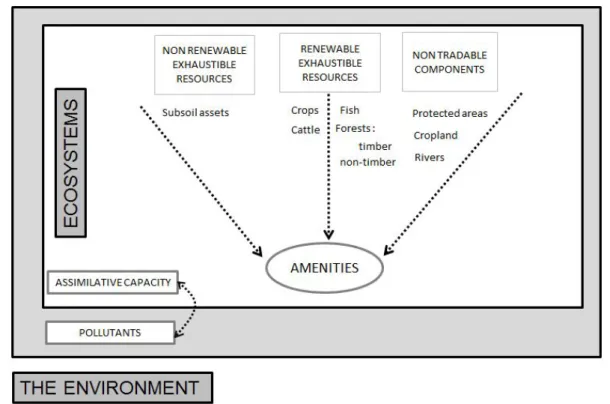
the undesirable changes prevented) by means of that instrument” (Fisher 1906, p.19). Wealth being defined extensively as Fisher did, property rights are the rights to the uses of wealth for its services. The desirability of those services are entirely subjective and depend on the user, but the desirable service is objective and in principle observable and measurable. Each of those instruments are items of capital. There can be several forms of capital or instruments of wealth: Fisher distinguishes between land, commodities and human-beings (Figure 1). It is worth stressing that, as made clear by the classification, what would be considered consumption goods in modern terms are part of wealth for Fisher as they are material and can be owned. They are an instrument of wealth and therefore they are capital. The time during which an instrument can provide services to the human mind makes no difference of nature: all goods are to be classified as capital. As for services, they are considered to be income provided by another instrument of wealth, which is the human body. What contemporary writers identify as a service is therefore not different from the services provided by capital.
Instead of calling services only services provided by the capital item which is the human body, services are the services provided by any form of capital. Satiety provided by an apple to the human body is a service provided by an item of capital to another. It should by now be clear that wealth and capital are synonymous in Fisher’s analysis. The materiality between both concepts is indeed not different in nature, but Fisher tends to save the use of the term capital as an adjective for some instruments of wealth. For example, the instrument of wealth named money is money capital.
“Wealth is wealth only because of its services. And services are services only because of their desirability in the mind of man, and of the satisfactions which man expects them to render”(Fisher 1906, p.41). Capital is a fund, or stock of wealth at any given period of time. It yields a service of wealth, which is a flow. When capital yields a flow of services, the flow is called “income”. When capital is abounded by disservices rendered to it, the flow is called “outgo”. An essential property of capital in Fisher’s theory is its fungibility. The same fund of capital can take any physical form (or immaterial in the case of money) as income and outgo from one flow to the other seamlessly.
It is equivalent to hold capital in the form of two houses and turn it by income flows from those two house into money, then triggering income from money into shares from a listed company. Capital exhibits perfect substitutability between funds of capital. We cannot stress enough that any use of Fisher’s theory without explicit alteration of the concept of capital has therefore build-in the assumption of perfect substitutability.
Property (direct or via titles such as shares) to wealth gives right to part of the services generated by this wealth. As those services may not be of direct use to the owner (i.e. he
Figure 1: A Classification of Wealth Instruments
may not have desirability for those) some forms of capital were invented so as to make different services fungible in an integrated system of exchanges. Prominent amongst those means is obviously money, which in modern terms solves the problem of the double coincidence of wants. In this narrow definition, money is an intermediate instrument in exchanges which has the particularity of being accepted against other services in any transactions in a given area.
For example when a fund of money is debited as the agent adds a monetary flow to it, it is called outgo or disservices as those are services provided by the agent to his fund of money. When the agent uses this capital and money is credited, it is a service provided by this capital in money form to him. As it comes to him it raises his income at that time (flow of service from his money-capital to him) and with that extra income he can in turn get outgo from another form of capital (in an exchange of flows) which may provide a direct service. “if the outgo is in monetary form it is called expense; if it is in the form of human exertion it is called labor. It includes all of what economists have called cost, i.e. labor, trouble, expense, and sacrifices of all kinds” (Fisher 1906, p.119-120).
Wealth can be measured in physical units, weights units or space units, depending on what is most accurate. Those units must not be confused with qualitative dimensions which are not used to characterise an instrument, but to characterise the difference between two instruments. Fertile and non fertile lands are two different instruments and not one instrument with different characteristics. If one objects to this on the basis that some services have a single provider (Fisher uses the example of a Sarah Bernhardt performance), the logical conclusion is that this service is obviously unique as it can be provided by only one instrument. Instruments of wealth can then be measured in monetary units.
Fisher introduces a link to relate monetary value to transfers. “An article of wealth is said to be transferred when it changes owners”. So the notion of transfer is linked to the notion of ownership. Reciprocal transfers, which are the majority of transfers, are called exchanges. The price of the exchange is obtained by dividing the two physical quantities of wealth involved in the exchange to obtain a relative price. The price is in physical units or monetary units depending on the units used to measure the quantities of wealth. The product of quantities and price involved in the exchange is called the value of the amount exchanged.
Fisher does without a mechanism to set the quantities and therefore the prices involved in the exchange. He only considers that when entering a transaction, the seller has one price in mind (the ask price) and the buyer has a price at which he would like to buy (the bid price). The price at which the transaction takes place should be the half-way price. It is observable in recorded transactions. When such a price does not exist the observer should ask potential exchangers about their bid and ask prices (which is in fact willingness to pay (WTP)
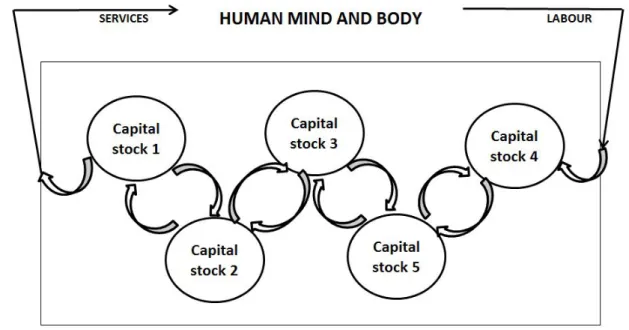
Figure 2: Income and Outgo in Fisher’s theory of capital
Source: Author from Fisher (1906)
and willingness to accept compensation (WTAC) and therefore contingent valuation) or try to make an appraisal by any means available. This is a first suggestion that when prices are not available and an estimate of wealth is needed, contingent valuation based on estimates of the WTP and the WTAC is legitimate.6
Fisher builds on this basis his theory of the rate of interest which he calls a value return, as it is the ratio of two quantities expressed in monetary terms (Fisher 1906, p.184). It is worth noting that the question of the value of income between the occurrence of income flows is treated at length by Fisher in the chapter 14 about interest. Fisher makes a difference between income and earnings to explain why and how capital value fluctuates when income flows are anticipated, which is the common case when capital is yielding annuity payments. The Fisher theory of capital and income is an internally consistent theory to link wealth and income. The main elements are summarised in figure 2.
As noted above there is no mechanism to determine prices in Fisher’s theory. Value is just price times quantities, but quantities are assumed to be available to the individual to start with, as in an Edgeworth Box. Growth in the modern sense happens in the economy only as capital is able to yield higher anticipated income flows, without the reason for this being explicitly specified by Fisher.
After Fisher, the next author to propose a critical contribution to the concept of capital is John R. Hicks. In Value and Capital, Hicks (1946) makes a critical assessment of the concept of income. Discussing income, savings and depreciation he justifies his decision to abstain from using those in his attempt to characterise economics by stating he does “not believe that they are suitable tools for any analysis which aim at logical precision” Hicks (1946, p.171). He justifies his aversion, stressing income can indeed be clearly defined in static analysis or at the steady state. Income is then equal to one person’s receipts. “If a person expects no change in economic conditions, and expects to receive a constant flow of receipts, the same amount as he receives this week, it is reasonable to say that that amount is his income” (Hicks 1946, p.172). Uncertainty or irregularity in the payment of receipts creates the need to differentiate be-tween what is income and what is to be dedicated to maintaining capital constant. Why the focus on maintaining capital constant? According to Hicks, the purpose of income calculation is to “give people an indication of the amount which they can consume without impoverishing themselves” (Hicks 1946, p.172). Income defined as such is the upper-bound of “legitimate” spending. He also argues that if one is paid every month, this doesn’t mean that the income of the three weeks before the week of payment is zero7. In Value and Capital income is meant to
be an operational concept, an indicator of what would be in the common sense a sustainable way of life. A person consuming more than its income can expect to be worse-off in the week after the current week, and the other way around for a person consuming less than income.
But what would be the definition of income if it is to serve this practical purpose? Hicks offers three approximations, called income number 1, 2 and 3:
1. Income 1 is the “capitalized money value of the individual’s prospective receipts”Hicks
(1946, p.172). In contemporary terms, income can be calculated as the net present value derived from net interests on capital i.e. once investment to keep capital constant is subtracted from income. Income is then “the maximum amount which can be spent during a period if there is an expectation of maintaining intact the capital value of prospective receipts” (Hicks 1946, p.173).
7. Although Fisher’s difference between realized income and earned income dispenses with this problem (Fisher 1906, p.255)