Characterizing Cobalamin Cycling by Antarctic
Marine Microbes across Multiple Scales
by
Deepa Rao
S.B., Earth, Atmospheric, and Planetary Sciences, Massachusetts Institute of Technology, 2012 M.A., Communication, Culture, & Technology,
Georgetown University, 2014
Submitted in partial fulfillment of the requirements for the degree of Doctor of Philosophy
at the
MASSACHUSETTS INSTITUTE OF TECHNOLOGY and the
WOODS HOLE OCEANOGRAPHIC INSTITUTION May 2020
© Deepa Rao, 2020. All rights reserved.
The author hereby grants MIT and WHOI permission to reproduce and to distribute publicly paper and electronic copies of this thesis document in whole or in part in any
medium now known or hereafter created.
Author . . . .
MIT–WHOI Joint Program in Oceanography/Applied Ocean Science and Engineering Massachusetts Institute of Technology and Woods Hole Oceanographic Institution May 21st, 2020
Certified by. . . . Dr. Michael J. Follows
Chair, Joint Committee for Biological Oceanography Massachusetts Institute of Technology Thesis Supervisor
Accepted by . . . . Dr. Michael J. Follows
Chair, Joint Committee for Biological Oceanography Massachusetts Institute of Technology
I dedicate this thesis to my loving family who have continued to inspire me to aim high, work hard, and always be curious.
Characterizing Cobalamin Cycling by Antarctic Marine
Microbes across Multiple Scales
by
Deepa Rao
Submitted to the MIT–WHOI Joint Program in Oceanography/Applied Ocean Science and Engineering on May 21st, 2020,
in partial fulfillment of the requirements for the degree of Doctor of Philosophy in Biological Oceanography
Abstract
Highly productive marine microbial communities in the coastal Southern Ocean sustain the broader Antarctic ecosystem and play a key role in Earth’s climate via the biological pump. Regional phytoplankton growth is primarily limited by iron and co-limited by cobalamin
(vitamin B12), a trace cobalt-containing organometallic compound only synthesized by some
bacteria and archaea. These micronutrients impact primary production and the microbial ecology of the two keystone phytoplankton types: diatoms and Phaeocystis antarctica. This thesis investigates microbe-driven cobalamin cycling in Antarctic seas across multiple spatio-temporal scales. I conducted laboratory culture experiments with complementary proteomics
and transcriptomics to investigate the B12-ecophysiology of P. antarctica strain CCMP 1871
morphotypes under iron-B12co-limitation. We observed colony formation under higher iron
treatments, and a facultative use of B12-dependent (MetH) and B12-independent (MetE)
methionine synthase isoforms in response to vitamin availability, demonstrating that this
strain is not B12-auxotrophic. Through comparative ’omics, we identified a putative MetE
protein in P. antarctica abundant under low B12, which is also found in other marine microbes.
Across Antarctic seas, community-scale cobalt and B12uptake rates were measured by 57Co
radiotracer incubation experiments and integrated with hydrographic and phytoplankton pigment data. I observed significant correlations between uptake fluxes and environmental variables, providing evidence for predominantly diatom-driven uptake of these micronutrients in warmer, fresher surface waters with notable regional differences. To date, this work is the most comprehensive attempt to elucidate the processes governing the co-cycling of cobalt
and B12in any marine system. At the ecosystem-scale, I developed and tested a hypothesis
of micronutrient-driven community dynamics through a trait-based model with cross-feeding interactions. The model demonstrates how the observed seasonal succession of springtime P.
antarctica from solitary to colonial cells, bacterioplankton, and summertime diatoms may be
explained by the microbial cycling of iron, dissolved organic carbon, and B12. Overall, this
dissertation provides new information about the micronutrient-driven ecology of Antarctic marine microbes and adds to our understanding of the interconnections between organismal life cycle, trace metals, and trace organics in marine environments.
Thesis Supervisor: Dr. Michael J. Follows
Acknowledgments
My training as a scientist during my time in the MIT–WHOI Joint Program (2014-2020) and the work presented in this dissertation were financially supported by the Academic Programs Office (APO) at the Woods Hole Oceanographic Institution (WHOI) and various funding agencies. My first semester was supported by the WHOI Von Damm Fellowship (2014). Subsequent years and endeavors were supported by awards from the Gordon and Betty Moore Foundation to Professor Michael Follows (Award 3778, M.J.F.) and Simons Collaboration on Computational Biogeochemical Modeling of Marine Ecosystems (Award 549931, M.J.F.); National Science Foundation (NSF) grant to Dr. Stephanie Dutkiewicz (Grant number 1434007, S.D.), and NSF Office of Polar Program (OPP) grant to Dr. Makoto Saito (M.S.) for the CICLOPS research expedition (OPP-1643684, OPP-1643845, and OPP-1644073).
I appreciate the institutional resources provided by MIT and its Department of Earth, Atmospheric, & Planetary Sciences (EAPS), and by WHOI and its Department of Biological Oceanography and Department of Marine Chemistry & Geochemistry. The generous support of these institutions along with travel grants afforded me the opportunities to learn from, engage with, and become part of a global scientific network. Thank you to the University of Hawai’i, Center for Microbial Oceanography: Research and Education (C-MORE), and Augoron Institute for funding my participation in the 2015 Summer Course on Microbial Oceanography. This was my first experience conducting science at sea. Thank you to the Gordon Research Conferences for supporting my attendance at the Marine Microbes meetings in 2016 and 2018. I look forward to being the Co-Chair of the Gordon Research Seminar for Marine Microbes in our rescheduled meeting in 2022. I am grateful for the opportunities afforded to me to attend several summer courses and conferences in microbial ecology, oceanography, complex systems, and science communication during my dissertation. In particular, my summers spent at the C-MORE Summer School for Oceanography (2015) in Hawai’i and the Santa Fe Institute’s Complex Systems Summer School in New Mexico broadened my horizons. One of the most rewarding and enriching experiences of my Ph.D. has been the opportunity to become part of a global network of Earth scientists. When I took my first steps on Antarctica at McMurdo Station, I did not expect to run into several friends and colleagues from various stages in my scientific career. A special thanks to MIT and WHOI for giving creative minds room to grow, connect, and share resources to study and solve some of the most complex challenging of our time, especially when it comes to understanding our planet and its changing climate.
A huge thank you to the incredible administers and members of the collective MIT EAPS and WHOI communities. I would like to especially acknowledge the Deans, Department Heads, and current and former members of EAPS, its science writers, and staff in headquarters, including Helen Hill, Roberta Allard, Jane Abbot, Kris Kipp, Vicki McKenna, Jennifer Fentress, Lauren Hinkel, Brandon Milardo, Darius Collazo, Angela Ellis, and Maggie Cedarstrom. A huge thanks to the staff at WHOI’s APO,
especially Julia Westwater and Lea Fraser, as well as Mary Zawoysky for helping us students navigate the Joint Program and all of its quirks. Thank you for making these environments a welcome place for so many of us.
It has hard to believe that 10 years ago, I decided to become an EAPS undergraduate major after taking an eye-opening field course with Professors Tim Grove and Sam Bowring. I am so glad to have been an undergraduate researcher in the lab of Professor Ron Prinn, working with (now) Professor Laura Meredith in the labs of Professors Bosak and Ono for my senior year research project. It is thanks to Professor Penny Chisholm and her undergraduate ecology course that I found my place at MIT and learned that I could combine research in microbial ecology, biogeochemistry, and climate in an interdisciplinary way to understand the Earth system. Although EAPS is a small department, it has been an incredible environment in which to learn, grow, and contribute to during my decade at MIT. Around 5 years ago I also became part of the MIT-WHOI community. Thank you to Dr. Amala Mahadevan for welcoming me as a guest student in 2014 and for being a wonderful guide, confidant, and mentor throughout my time at WHOI as my summer advisor and finally my thesis defense chair in 2020. Finally, I would like to thank the maintenance and custodial staff for not only keeping the institutes functioning, but for making me feel safe during many late nights working alone at MIT and WHOI.
I would like to thank my advisor Professor Mick Follows for his guidance, wisdom, support, optimism, and mentorship over these past 6+ years since I first emailed him to learn more about microbial oceanography. I remain as inspired by the Darwin model that you and Dr. Stephanie Dutkiewicz developed as the day I first read that publication. Mick, you gave me the opportunity of a lifetime to pursue this dissertation and spend my days examining and understanding our biosphere and the complex network of marine microbes that shapes our living planet. Having your encouragement throughout this process gave me the courage I needed to continue even when the path forward was unclear. I will always look fondly back on our many sessions puzzling over equations quickly scribbled on your white board as to never let an enticing idea escape, conversations about the global ramifications of the world’s smallest organisms, and our mutual excitement over good science writing and art. Thank you for trusting in me, and giving me the creative freedom to develop the research in this dissertation. I have learned so much from you and look forward to applying this knowledge throughout my career.
I also want to thank Dr. Mak Saito who welcomed me into his lab group and became an incredible mentor for a large portion of my dissertation. Mak, since I first contacted you to discuss my thesis proposal, it was clear that you have a positive spirit , collaborative mindset, and fearless approach to tackling scientific problems. I have enjoyed observing your mentorship style and approach in the lab, whereby you encourage everyone and embrace experimentation, challenging questions, and exploration. Thank you for the opportunity to learn new techniques, and especially for integrating me into your group for the CICLOPS research cruise to Antarctica. It has been a joy to be part of your lab and I am excited for the scientific discoveries that await in all that data.
Dutkiewicz, Professor Serguei Saavedra, and Professor Alex Worden. Steph, thank you for your many helpful discussions on numerical methods, phytoplankton physiology, ecological modeling, and for your advise and feedback throughout my dissertation’s development. A special thanks to Serguei and Alex, who have provided critical feedback on the research presented in this thesis. Alex, I look forward to collaborating more to examine our much-loved multifarious marine microbes. I have enjoyed working with all of you and learning how to approach problems from your unique perspectives.
I also want to acknowledge my past mentors over the course of my scientific training. Thank you to my undergraduate mentor Professor Laura Meredith for introducing me to field microbial ecology and the Harvard Forest, which holds a special place in my heart; Professor David Ribes for introducing me to the field of Science, Technology, and Society and to the gateway book Alien Ocean, which lead me on this journey into microbial oceanography; Professor Linda Garcia who advised me during my M.A. in Georgetown and who encouraged my scholarly examination of the integration of science and art for education; and Catherine Smith and J. Bob Cook, my earth science and biology teachers from middle school and high school who always went the extra mile to share the wonders of the natural world with their students in creative ways and with an excess of witty puns.
I am grateful to have participated in the CICLOPS research cruise aboard the R/V Nathaniel B. Palmer as we sampled Antarctic coastal environments from the Amundsen Sea to Ross Sea and Terra Nova Bay. Without the captain, crew, and Antarctic Support Staff, our scientific research would not be possible—and the cruise would have been far less entertaining. A special thank you to Jamee Johnson for her help in keeping our scientific research equipment up and running and to Matt Pullen for being a great companion during sleepless, sunlit Antarctic nights filled with restless emperor penguins waiting to discovered. Finally, thank you to our chief scientist Professor Jack DiTullio for rallying the crew and scientists with optimism and humor, being a wealth of knowledge in Antarctic ecosystems, and for generally being a great role model.
I would like to thank all the members of the Follows and Saito Labs—former and current—for being excellent colleagues in the pursuit of science. A special thanks to Emily Zakem, Jon Lauderdale, Chris Follett, Rogier Braakman, David Talmy, Greg Britten, and Zhen Wu for many helpful and insightful discussions on modeling microbial metabolisms. To the newest members of the Follows Lab, Ari Krinos and Lexi Jones, I am excited to see the wonderful directions that your research will lead you to. I would also like to thank Dawn Moran, Matt McIlvin, Marissa Kellogg, Natalie Cohen, Becca Chimel, and Mike Mazzotta for sharing their tacit lab knowledge with me as I learned trace metal clean methods, Antarctic algal culturing secrets, proteomics, and bioinformatics analyses. I especially thank Dawn for training me in the early days of my algal culture work and her crucial help in experiments, as well as Matt for being the resident mass spectrometry guru. Science is an inherently collaborative endeavor and I could not ask for better colleagues and mentors.
To my friends at MIT, WHOI, Cambridge, and beyond, thank you for being an inspiring, hilarious, and supportive lot of clever and caring humans. A special thanks to Sam Fried, Fatima Hussain, Laura Weber, Casey Zakroff, Anya Sharifo-Birger, Ari
Schlesinger, Julia Titarelli, Mara Freilich, Margaret Duffy, Mukund Gupta, Rohini Shivamoggi, Hanny Rivera, Jenny Panlilio, Megan May, Emily Zakem, Cherry Gao, and so many more friends and colleagues around the world. Some of my favorite memories in the Joint Program outside of the lab are playing games, traveling, cooking, painting, hiking, riding bikes, musing, and laughing with you all. To my office mates over the years, especially the cohort of 54-1519, thanks for making coming to work enjoyable, full of interesting conversations, and overly ambitious workout challenges. I also want to share how heartwarming of an experience it was to see the 100+ smiling faces of so many people from different aspects of my life join for my online dissertation defense in the midst of a global pandemic. Thank you to my community, near and far.
Last but not least, I thank my loving extended family for their never-ending support, especially my parents, Drs. Ramachandra and Shashikala Rao, and my husband Dr. Robert Haussman. This Ph.D. is possible because of your support, humor, and many cups of morning coffee and midnight chai. Thank you for making this dream of mine a reality. Mom and Dad, thank you inspiring me to always grow, set lofty goals, and value the friends and family that make life a joy to share. You have and always will be with me throughout my all of life’s adventures. Even when I was in the Antarctic, I was fortunate enough to be able to send you photos and share a part of that incredible experience with you all. Mom and Dad, you inspire me to strive towards the best version of myself so I can extend the love and support you have given me.
Robert, you are the greatest addition to my life. I could not imagine a more brilliant, kindhearted, understanding, and wonderfully silly person to build a life with. Thank you for your support, LATEX wizardry, and patience throughout this
dissertation process. Along with you comes wonderful and loving parents, Ken and Teresa Haussman, sisters Nicole and Amanda, and great nieces and nephews. Thank you to the Haussmans for welcoming me with open arms into the family. Our wedding last year was the happiest period of my life, and I am so thankful to have grown our multicultural family and brought together more friends and family from around the world to celebrate the occasion. Our many conversations about science, Mother Earth, and the cosmos have expanded my mind and heart. Your support throughout this Ph.D. has allowed me to grow as a scientist and as your loving spouse. We have had quite the adventure so far together and I look forward to all our future holds.
Over the course of this dissertation, there have been several difficult periods, but thankfully more occasions to celebrate victories, small and big. I made it through those challenging times with the support of my family. Despite being thousands of miles apart from my parents and husband, across different states, opposite ends of the country, and even at the bottom of the world, they have always been a phone call away. I am glad that I can now add another Dr. Rao to our family.
Contents
List of Figures 13 List of Tables 15 Chapter 1: Introduction 17 1.1 Motivation . . . 17 1.2 Background . . . 18 1.3 Thesis Overview. . . 24Chapter 2: Phaeocystis antarctica has a flexible vitamin B12 ecophysiology: A multi-omic study reveals its response to iron and cobalamin stress 29 Abstract . . . 30 2.1 Introduction . . . 30 2.2 Methods . . . 33 2.3 Results . . . 39 2.4 Discussion . . . 58 2.5 Conclusion . . . 61 2.6 Supplemental Materials. . . 63
Chapter 3: Patterns of microbial community driven cobalt and cobalamin uptake in Antarctic seas 69 Abstract . . . 70
3.1 Introduction . . . 71
3.2 Materials & Methods . . . 73
3.3 Results . . . 75
3.4 Discussion . . . 96
3.5 Conclusion . . . 103
3.6 Supplemental Materials. . . 104
Appendices . . . 110
3.A Ecological cobalt and cobalamin cycles in Antarctic marginal seas . . 110
Chapter 4: A model of micronutrient-driven seasonal succession
of Antarctic marine microbial communities 117
Abstract . . . 118
4.1 Introduction . . . 118
4.2 Methods: Model Development . . . 126
4.3 Results & Analysis . . . 135
4.4 Conclusion . . . 143
4.5 Next steps in model development . . . 144
4.6 Supplemental Figures . . . 149
Chapter 5: Conclusion and Future Directions 151 5.1 Thesis Overview. . . 151
5.2 Dissertation Findings . . . 153
5.3 Broader Implications and Future Outlook. . . 157
List of Figures
1-1 Chemical structure and variants of cobalamin . . . 20
1-2 Research strategy . . . 25
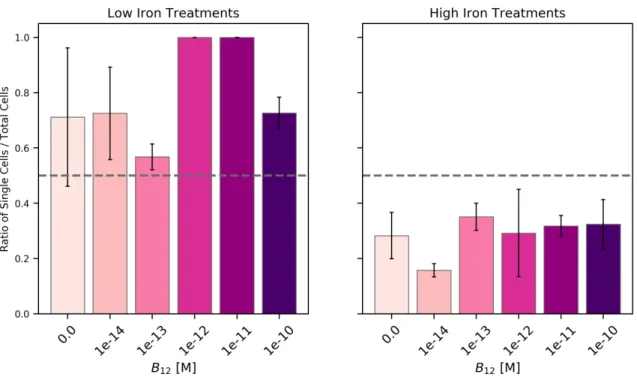
2-1 P. antarctica morphotype ratios in Fe-B12culture treatments . . . 40
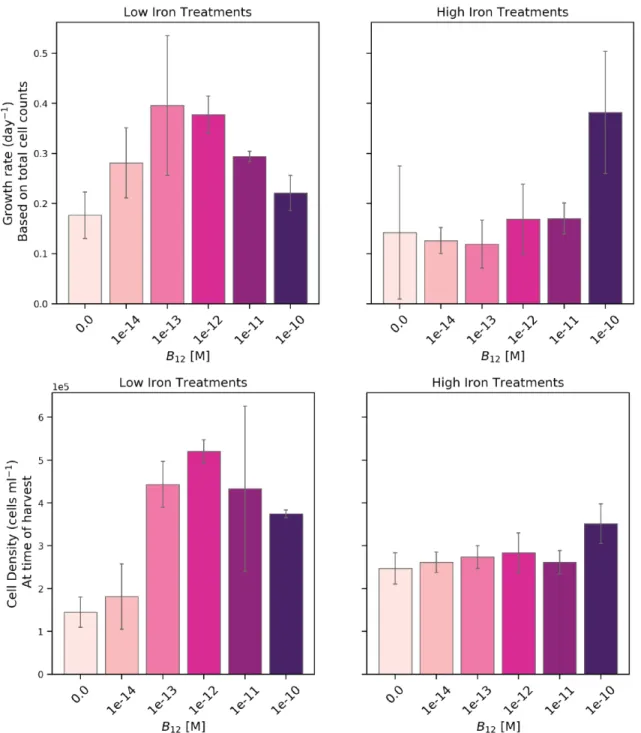
2-2 P. antarctica growth rate and cell density at time of harvest . . . 41
2-3 PCA analysis of culture transcriptomes . . . 42
2-4 Methionine synthase isoform gene expression and protein abundance patterns . . . 44
2-5 Venn diagram of significantly differentially abundant proteins between -/+ B12. . . 45
2-6 C1 metabolism proteins affected by B12 . . . 47
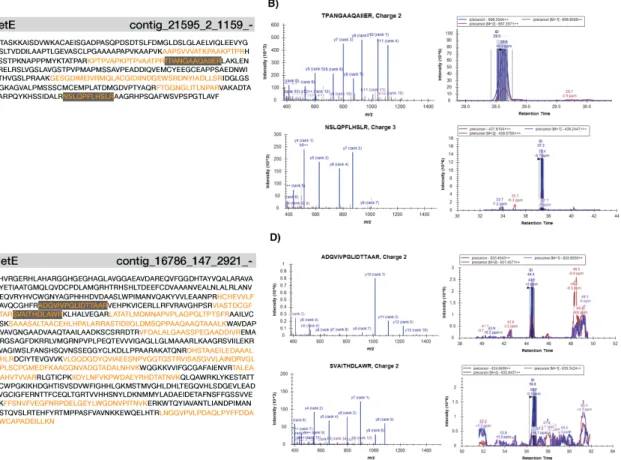
2-7 Scatter plot of differentially abundant proteins under -/+B12, low iron 50 2-8 Scatter plot of differentially abundant proteins under -/+B12, high iron 51 2-9 MA plots of P. antarctica proteomes in response to -/+ Fe and B12 . 52 2-10 Two putative MetE protein contigs . . . 54
2-11 Putative MetE protein domains . . . 55
2-12 Phylogenetic tree of putative MetE protein . . . 57
2-13 Growth curves of P. antarctica cultures . . . 63
2-14 Heme biosysnthesis pathway in responsive to -/+ B12 . . . 65
2-15 Detailed putative MetE portein domain . . . 66
2-16 Protein sequence of in silico putative MetE construct . . . 66
2-17 Phylogenetic tree of putative MetE protein without the canonical diatom MetE. . . 67
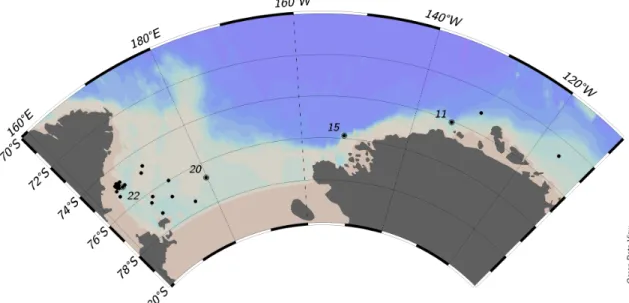
3-1 CICLOPS research expedition stations where radiochemical uptake rates were measured . . . 76
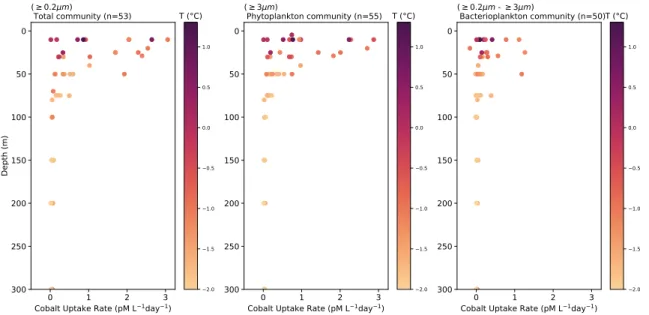
3-2 Vertical profiles of the Amundsen–Ross Transect: Hydrographic properties,57Co and57B12 uptake rates, and Cototal . . . 77
3-3 Water masses of the Amundsen Sea, Ross Sea, Terra Nova Bay, Antarctica 78 3-4 CICLOPS phytoplankton chemotaxonomic pigment concentrations. . 80
3-5 Size-fractionated surface percent57Co uptake rate . . . 84
3-6 Size-fractionated surface Co uptake rate . . . 84
3-7 Total Co vs. % 57Co uptake rate for the Amundsen–Ross Transect . . 85
3-8 Size-fractionated surface percent57B12uptake rate . . . 86
3-10 Relationship of % 57Co and57B12 uptake with salinity . . . 90
3-11 Diatom bloom in Station 22 detected by chemical proxies . . . 92
3-12 Profiles of radiochemical uptake measurements in stations along the Amundsen–Ross Transect . . . 93
3-13 Percent uptake rates of 57Co and 57B12 vs. chemotaxonomic diatom and P. antarctica pigments. . . 94
3-14 Percent 57Co uptake rate vs. chemotaxonomic pigments in the Amundsen–Ross Transect . . . 95
3-15 Cobalt uptake rates vs. chemotaxonomic pigment concentrations . . . 97
3-16 Regional correlations between Cototal and phytoplankton pigments . . 98
3-17 Regional correlations between 57Co uptake and P. antarctica indicator pigment 19-Hex . . . 99
3-18 Percent 57B12 uptake vs. diatom indicators fucoxanthin and biogenic silica . . . 100
3-19 A hypothesis of micronutrient-driven seasonal succession in coastal Antarctic marine microbial communities . . . 101
3-20 Map of all stations during CICLOPS (NBP-1801) cruise . . . 105
3-21 Profiles of percent 57B12uptake in the total community (≥ 0.2 µm size fraction) . . . 106
3-22 Profiles of percent 57Co uptake in the total community (≥ 0.2 µm size fraction) . . . 107
3-23 The coastal Antarctic marine ecological cycle of cobalt and B12. . . . 110
3-24 Water mass characterization of CICLOPS CTD measurements . . . . 114
3-25 Water masses of the Amundsen Sea, Ross Sea, Terra Nova Bay with neutral density values . . . 115
3-26 Surface water masses of the Amundsen Sea, Ross Sea, Terra Nova Bay 116 4-1 Life cycle transitions in P. antarctica and seasonal abundance in the Ross Sea, Antarctica . . . 122
4-2 Model framework . . . 127
4-3 Allometric scaling relationships . . . 128
4-4 Resource concentration in the diffusive boundary layer . . . 129
4-5 Function describing transition from P. antarctica solitary to colonial cells133 4-6 Steady state model solutions with a set of fixed iron supply rates. . . 136
4-7 Iron supply rate in the seasonal model . . . 138
4-8 Seasonal succession pattern of model microbial types . . . 139
4-9 Seasonal succession pattern of model microbes and resources . . . 140
4-10 Seasonal cycle of model microbial populations and resources . . . 141
4-11 A hypothesis of micronutrient-limited seasonal succession in Antarctic marine microbial communities . . . 144 4-12 Seasonal succession of microbial population with varying iron supply rate149
List of Tables
3.1 Comparison of dissolved cobalt concentrations and percent57Co uptake from CICLOPS and CORSACS . . . 82 3.2 Summary of potential cobalt and cobalamin uptake rates . . . 89 3.3 Concentrations of dissolved cobalt chemical species during CICLOPS 108 3.4 Concentrations of dissolved cobalt chemical species during CICLOPS
by region. . . 109 4.1 Model variables and parameters . . . 131 4.2 Model parameter values and allometric relationships. . . 148
Chapter 1
Introduction
“It is interesting to contemplate an entangled bank, clothed with many plants of many kinds, with birds singing on the bushes, with various insects flitting about, and with worms crawling through the damp earth, and to reflect that these elaborately constructed forms, so different from each other, and dependent upon each other in so complex a manner, have all been produced by laws acting around us.”
— Charles Darwin (On the Origin of Species by Natural Selection, or the Preservation of Favoured Races in the Struggle for Life, 1859, XIV:489)
1.1
Motivation
The global ocean microbiome is the emergent result of a complex network of ephemeral interactions in an ever-changing environment. Marine microbial ecosystems are driven by the primary production of phytoplankton, a diverse set of photosynthetic microbes comprising both cyanobacteria and eukaryotic microalgae. Although phytoplankton form the base of ocean food webs, drive the biogeochemical cycling of nutrients, and are responsible for nearly half of global carbon fixation, they are not metabolically independent (Droop,1957;Field et al.,1998). Most microalgae (indeed most lifeforms on Earth) are auxotrophic for some biologically-derived metabolites, requiring an external source of these compounds to grow because they cannot synthesize them
de novo. These essential metabolites include vitamins, co-factors, and amino acids,
which are considered “trace organics” in seawater due to their low concentrations as a result of high flux through producers and consumers in the ecosystem. Nutritional auxotrophy is commonplace in natural microbial communities.
In particular, coexisting algae and bacteria interact in multifarious ways, often based on the synergistic exchange of metabolites and organic carbon (Worden et al., 2015). To fulfill their nutritional needs, marine microbes have adapted to acquire trace organics from their environment and often do so by engaging in loose syntrophic and cross-feeding interactions or close symbiotic relationships. Syntrophy is the “critical interdependency between producer and consumer,” according to Dolfing(2014) and
includes interactions that range from specific and close-knit (e.g., associated bacteria on an alga) to non-specific and distributed (e.g., metabolite exchanges within a mixed community). Classical ecological theory describes these nutrient-cycling interactions according to the successional exchange of electron donors. For example, the emergent Winodgradsky column from a collection of microbes self-assembling into an ecosystem structured along a redox reaction gradient. However, recent insights have broadened the scope of nutritional interactions between microbes to include nutrient competition, syntrophic exchange of metabolic byproducts, and cross-feeding of essential metabolites like vitamins and amino acids from prototrophs to auxotrophs (Seth and Taga, 2014; Zengler and Zaramela, 2018). Indeed, studies have determined that trace organics can affect community composition and primary primary production on regional scales (Bertrand et al., 2007; Gobler et al., 2007; Moore et al., 2013; Panzeca et al., 2006; Sañudo-Wilhelmy et al.,2006). Thus, microbial interactions involved in cycling organic resources are a vital component of the global carbon cycle that ultimately influence Earth’s climate system.
Examining the network of ecological interactions, particularly those involved in cycling trace organics and overcoming resource limitation, can aid our understanding of the structure and function of marine microbial communities. By tugging at these “invisible threads” that connect marine microbes, we can start to reveal the complex network of interconnections that shape the microbial ocean. This thesis focuses on one thread—cobalamin, more commonly known as vitamin B12—and its cycling through
Antarctic marine microbial ecosystems.
Vitamin B12is a prime example of interspecies nutritional dependence in the global ocean. Unlike other metabolites, B12is only synthesized de novo by bacterioplankton,
yet most microalgae require this vitamin to grow. The Southern Ocean and productive Antarctic seas have ecological and environmental conditions that increase the potential for B12-limitation, with wide-ranging consequences for biogeochemistry and carbon
cycle feedbacks. The research studies presented herein examines the Antarctic B12 system using three complementary approaches: (1) a laboratory study of the B12 ecophysiology of a keystone phytoplankton species Phaeocystis antarctica, (2) field-based in situ uptake rates of B12 and its metal center cobalt in Antarctic seas, and (3) a numerical model of micronutrient-driven seasonal succession of dominant Antarctic marine microbes based on iron and B12 dynamics.
1.2
Background
Understanding the potential impact of B12 in marine ecosystem requires one to start with the biochemistry of B12and follow the threads that lead to an understanding of
its ecological role. From prokaryotic origins, B12 is cycled in a complex way through an entire economy that has evolved to traffic the vitamin and connect producers to consumers and even those that salvage and recycle components of this costly molecule (Giovannoni,2012).
B12is an ancient molecule that has been an active part of life on Earth for billions of years. Biochemical and phylogenetic analyses date B12to having evolved 2.7–3.5
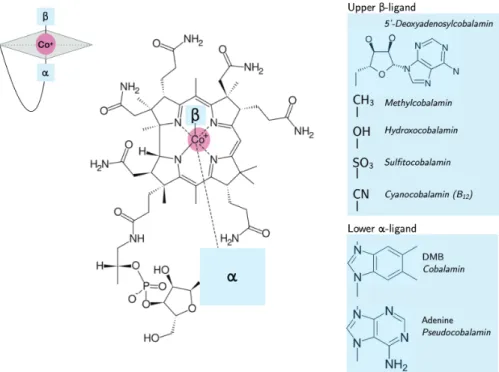
billion years ago in anaerobes in an Archaean Ocean that was low in oxygen and relatively high in trace metals like iron and cobalt. B12 is an intricate organometallic molecule whose function relies on its structure and the metal chemistry of a rare Co atom positioned in the center of a corrin ring (Fig.1-1). Cobalt a bio-essential metal that is primarily used in B12, despite being a trace element in Earth’s crust (about 20 ppm on average) and ocean (ranging from 10 pM to 100 pM) (Carr and Turekian, 1961;Hazen et al.,2017;Saito et al.,2002,2004,2010). In seawater, B12is even more scarce, measured in the range of <1 pM to 10 pM as a result of environmental and ecological forcings (Sañudo-Wilhelmy et al.,2012).
B12and its chemical variants act as nutrients, co-factors, and co-enzymes in concert with proteins to infer specialized enzymatic functions. In prokaryotes, B12 is used in several key metabolic processes, including carbon and nitrogen catabolism, one-carbon metabolism, methylation, and the synthesis of methionine, bacteriochlorophyll, and nucleotides; these uses are nicely reviewed in Shelton et al. (2019). In eukaryotes, B12 is primarily a co-factor used in methylmalonyl-CoA (MCM), and type II ribonucleotide reductase (RNR II), and B12-dependent methionine synthase (MetH). Another B12 -independent isoform (MetE) of methionine synthase exists and will be discussed in detail in the following sections. The cobalt atom in the corrin ring changes its oxidation state, enabling unique carbon radical chemistry that is used in metalloenzymes and methyltransferases (Kräutler, 2005).
B12is the largest and most structurally complex vitamin in nature. It is costly in
terms of inorganic resources, genes, proteins, and energy to synthesize and assimilate. The chemical formula of cyanocobalamin (C63H88CoN14O14P) makes clear the large quantity of nitrogen atoms and a rare Co; other co-factor forms of B12require even
more nitrogen. De novo B12 synthesis requires approximately 20 genes and over 30 enzymatic steps, depending on the anaerobic or aerobic pathway and diversity of the genetic pathway (Raux et al., 2000). Additional genes are involved in B12-transport
and B12-dependent enzymes. Furthermore, B12 is exclusively synthesized by select bacteria and archaea, at a substantial metabolic cost (Roth et al., 1996).
Based on genomic analyses, cobalamin biosynthesis in the ocean is carried out by three groups: heterotrophic bacteria, chemoautotrophic Thaumarchaeota, and phototrophic cyanobacteria (Heal et al.,2017). Prochlorococcus, the most abundant photosynthetic organisms on Earth with a highly streamlined genome, synthesizes pseudocobalamin (pB12) along with its cyanobacterial relatives. pB12 uses adenine for the lower ligand compared to DM (see Fig.1-1) and is not bioactive in eukaryotic algae without molecular remodeling (Heal et al., 2017). Deeper in the water column, Thaumarchaeota are the dominant producers of B12(Doxey et al.,2015). The ultimate source of B12 to euphotic zone seawater is de novo synthesis by bacterioplankton. However, in Antarctic waters, without cyanobacteria, bacterial and archaeal B12
production likely play a more important role (Doxey et al., 2015).
The oceanographic abundance of B12 and Co in seawater is the result of environmental sources and sinks, with surface ocean rates largely driven by marine microbial activity. The related Co and B12 cycles in Antarctic systems is briefly summarized here and reviewed in depth in Chapter 3, Appendix 3.A. Cobalt is the least abundant inorganic nutrient in the ocean, as a result of low input fluxes and
Figure 1-1: The structure of cobalamin consits of a central corrin ring and Co atom center,
with variable upper and lower ligands. Cyanocobalamin (commonly referred to as vitamin
B12, B12, or simply cobalamin) has a -CN upper 𝛽-ligand and DMB lower 𝛼-ligand. The
𝛽-ligands are interchangable and can be modified for specific biochemical reactions. The
𝛼-ligand distinguishes cobalamain (DMB) and pseudocobalamin (Adenine), the latter is
synthesized by cyanobacteria. The figure is modified fromWatanabe (2007).
its removal by biological uptake, chemical scavenging, and photo-degradation. In most oceanographic regions Co concentration has a hybrid-type profile, reflecting uptake as a nutrient in the euphotic zone, accumulation at the base of the euphotic zone due to remineralization, and a decreasing amount with depth due to scavenging via co-oxidation with manganese-oxidizing bacteria. Whereas B12 has a consistent nutrient-like profile, being consumed in the sunlit ocean and accumulating or constant with depth. This combination of factors increase the potential for B12-limitation in
Antarctic waters, including: reduced B12production as a result of no cyanobacteria and low heterotrophic bacterial densities, high photodegradation due to high UV-radiation, low atmospheric inputs due to ice cover and low continental dust, and the heterogeneous availability due to varied sea-ice environments.
Since an early stage, both Co and B12 have been “institutionalized” or “locked in” to the course of evolution, leaving many auxotrophs dependent on B12-producers
(Eschenmoser, 1988). But, life has also evolved a range of metabolic strategies to cope with the scarce and variable biologically-derived B12supply. Multiple coexisting B12-strategies exist in modern lifeforms to take advantage of B12or escape this vitamin
requirement entirely. The main use of B12 in cells is for methionine synthase, and B12-auxotrophy primarily stems from which methionine synthase isoform(s) (MetE or MetH) an organism encodes in its genome.
To deal with the scant, variable environmental supply of B12, eukaryotic algae have three potential strategies: 1) escape B12-requirements by only having MetE, 2) be B12-dependent by only having MetH, or 3) be flexible by maintaining both MetE
and MetH isoforms. Most microalgae only have MetH and are thus B12-auxotrophs, rendered completely dependent on a local exogenous/environmental supply of B12 from associated or neighboring bacterioplankton (Croft et al., 2005, 2006). Some microalgae are flexible and facultatively inter-replace MetH and MetE in response to B12availability, as observed in P. tricornutum, and C. reinhardtii (Bertrand et al.,2013; Bunbury et al.,2020). No microalgae are B12-independent. Though all land plants and
fungi are because they only contain MetE and B12-independent proteins. Organisms that have both MetE and MetH have a flexible ecophysiology to B12availability, but at the added costs of maintaining and regulating MetE protein synthesis (Aretakis et al., 2019). In highly seasonal Southern Ocean environments, with variable bacterioplankton B12production and environmental conditions, having a B12-flexible ecophysiology could infer an important competitive advantage. This curious split between marine and land plants and the inter-domain metabolic dependence between marine eukaryotic algae and bacterioplankton, highlights the fact that the biogeochemistry and ecological interactions underlying B12-cycling in the ocean are of fundamental importance to
marine microbial ecosystems.
Since the early days of algal culturing, it has been known that most algae require a culture medium supplemented with trace metals like iron (Fe) and cobalt (Co) and organic micronutrients like cobalamin (B12) in order to grow (Droop,1957). Over half of eukaryotic algae and approximately one third of bacteria are B12-auxotrophs, indicating that bacterioplankton are also major B12 consumers in the ocean (Croft et al., 2005;
Ho et al.,2003). A literature survey and culture experiment of multiple algal lineages by Croft et al. (2005) found that dinophyta, haptophyta, heterokontophyta, and chlorophyta lineages had a higher proportion of species deemed to be B12-dependent,
and coccolithophorids and dinoflagellates have high cellular quota and requirements for Co (Ho et al.,2003). Cyanobacteria have a higher Co requirement than eukaryotic phytoplankton, which is expected due to their pB12synthesis (Saito et al.,2002;Sunda
and Huntsman, 1995).
The genetic basis for B12 auxotrophy is due to the loss of the B12-independent isoform of methionine synthase (MetE), which has been lost multiple, independent times throughout evolutionary history in many different environments, suggesting a consistent ambient supply of B12 (Helliwell et al.,2011). An important note is that while auxotrophic eukaryotic algae have lost the ability for de novo synthesis vitamins B1 (thaimine) and B7 (biotin), B12-auxotrophy is the result of the loss of meteE gene (Croft et al., 2006; Helliwell et al., 2013). An experimental evolution experiment in C. reinhardtii demonstrated that after 500 generations in B12-replete media, the
culture lost its functional copy of meteE, rendering it a B12-auxotroph (Helliwell et al., 2015). To overcome B12-limitation, auxotrophs invest in uptake mechanisms, symbiotic relationships, or the ability to salvage B12components from the environment.
Vitamin salvaging is an adaptation that allows microbes to overcome B12limitation by assimilating B12 vitamers or degradation products and converting them into bio-active forms. Both auxotrophic microalgae and bacterioplankton have acquired the
genes in the latter steps of B12 biosynthesis, which infer the genetic potential to remodel cobalamin compounds, via horizontal gene transfer (HGT) from prokaryotes that (Heal et al., 2017;Swithers et al.,2012; Vancaester et al.,2020). A comparative genomics analysis of 11,000 bacteria species found that while a large majority (86 %) had B12-dependent enzymes, only a fraction (37 %) were predicted to have the full biosynthetic pathway, and a smaller percentage (17 %) had the end of the pathway to salvage B12 (Shelton et al., 2019). Due to the persistence of B12 throughout evolution, the vitamin has a range of uses in prokaryotes and fewer, though significant uses, in eukaryotes; however, its scarcity has necessitated B12-independent alternatives that
also come at a fitness cost. For B12-auxotrophs, salvaging cobalamin is a solution that allows for B12-dependent enzymes with only a partial cost of biosynthesis.
The general finding that cobalamin uptake, use, and salvage is more widespread than cobalamin synthesis, suggests that distributing the large cost of B12 production to a subset of species is metabolically beneficial from a community- or ecosystem-perspective (Giovannoni,2012). The Black Queen Hypothesis presented byMorris et al. (2012) provides a compelling framework in which to discuss the fitness benefits and
costs of various B12-strategies and is nicely reviewed in Giovannoni(2012). Briefly, the hypothesis posits that nutritional dependencies arise as a result of adaptive gene loss when the vitamin is consistently produced and available due to a microbial community member. Interestingly, the more energetically expensive and/or rare a metabolite, the more likely it is to enable a stable and mutually-beneficial cross-feeding relationship between auxotrophs. This was demonstrated in a pairwise co-culture of E. coli amino acid auxotrophs in a beautiful study by Wintermute and Silver (2010), Mee et al. (2014) and later in Sacchromyces cerevisiae by Shou et al. (2007). As detailed, B12is
an expensive metabolite that is synthesized by only some prokaryotes in the ocean, providing an essential function for some populations and ultimately benefitting the overall community. These nutrient exchange networks highlight the need to examine microbes from a systems perspective and understand the individual roles within a larger distributed metabolism at a community level.
As an aside, it is important to note that interspecies interactions involving the exchange of B12 are not limited to marine systems, highlighting a widespread phenomenon in nature for nutrient cross-feeding. The human gut microbiome has bacteria that synthesize and salvage B12 in the large intestine, yet in humans B12
can only be absorbed in the small intestine. This revealed that corrinoid compounds affect the gut microbial ecology, “separate” from the hosts’ nutritional needs, but with possible feedbacks on host health (Degnan et al., 2014). Recent comparative ’omics into the microbiome of lichen Lobaria pulmonaria found that bacteria are also a key part of the symbiosis between algae and fungi, and supply B12 to algae, along with growth hormones, pathogen defense, and nutrients including nitrogen, phosphorous, and sulfur (Grube et al.,2015). Lichens are varied, ubiquitous, and an ancient symbiotic partnership between algae, fungi, and bacteria. High levels of B12 are found in the dense phytoplankton growth on the underside of sea ice, produced by bacteria and cycled among algae (Taylor and Sullivan,2008). Cicadas depend on symbiotic bacteria for essential vitamins and amino acids, and indirectly depends on B12 due to its auxotrophic symbiont H. cicadicola that synthesized B12 and only has
MetH (McCutcheon et al., 2009). In the ocean, in situ nutrient dependencies are challenging to study, but lab-based co-cultures have revealed symbiotic relationships between B12-producing bacteria and photosynthate-providing algae could produce a
stable coexistence (Croft et al.,2005;Grant et al.,2014;Helliwell et al.,2014;Kazamia et al., 2012). A recent study even confirmed that land plants, which do not need B12 for their metabolisms, uptake B12 and store it in vaculoues, with a possibility for
release into soils, which could affect their root microbiomes (Lawrence et al., 2018). These examples support the notion that expensive metabolites form the foundation of stable co-existence between metabolically-dependent partners (Wintermute and Silver, 2010).
However, while nutritional auxotrophies may shape microbial interactions in a community, the environment always selects. In ever-changing environments like the ocean, ecosystem conditions determine whether or not an organisms’ B12-strategy has a higher fitness benefit or cost. In microalgae, the distribution of B12-auxotrophs across species has no phylogenetic pattern, suggesting instead that environmental conditions select for the B12-strategy. A prime example is that diatoms in the Southern Ocean more often contain MetE and MetH, relative to diatoms from other oceanographic regions that are more likely to contain just MetH (Ellis et al.,2017; Vancaester et al., 2020).
The Southern Ocean has a unique set of ecological and environmental conditions that preclude it to B12-limitation. In the study of Co and B12 biogeochemistry,
Antarctic waters are considered an end member due to their extreme conditions and seasonal dynamics (Saito et al., 2010). A specific combination of factors increases B12 -limitation potential in Antarctic waters, including: reduced B12production as a result
of no cyanobacteria and low heterotrophic bacterial densities, high photodegradation due to high UV-radiation (approximate half life of B12 is 4 days in the surface ocean), low Co inputs due to ice cover and low atmospheric dust inputs, the heterogeneous spatial availability due to varied sea-ice environments, and a highly variable, seasonal B12 production by bacterioplankton due to ecological dynamics. The related Co and B12cycles in Antarctic systems are reviewed in depth in Chapter 3and Appendix 3.A.
The same conditions that make the Southern Ocean susceptible to B12-limitation, can also provide an advantage to some community members. Bacterioplankton may be relieved of cobalt limitation, due to a lack competition from cyanobacteria. This would be reflected in comparatively low Co uptake rates compared to other oceanographic regions. Cobalt limitation can limit B12 production, as observed in the North Atlantic Ocean (Panzeca et al.,2008).
Over the past thirty years of nutrient amendment experiments in the Southern Ocean, scientists have determined that these systems are primarily limited by iron (Fe) and co-limited at times by B12 (Bertrand et al.,2013; Martin,1990;Moore et al.,
2013; Panzeca et al., 2006; Sedwick et al., 2000). Iron was found to be limiting to both P. antarctica and diatoms at concentrations of <0.2 nM, but P. antarctica had sufficient iron at 1 nM (Sedwick et al., 2000). Along the Antarctic Peninsula, was the first report of Fe-B12 co-limitation, followed by a similar results in the Ross Sea in soon after (Bertrand et al., 2007, 2011b; Panzeca et al., 2006). In the Ross Sea, P.
growth, specifically the species Pseudonitzschia subcurvata (Bertrand et al.,2007). In McMurdo Sound, a diatom-dominated community at the sea ice edge was limited by both Fe and B12(Bertrand et al., 2015). One may wonder why be a B12-auxotroph in
Antarctic waters at all? Diatoms are a dominant bloom-forming species in this region, both in sea ice and in seawater. Diatoms are considered to be opportunists, with some of the highest growth rates among phytoplankton. Maintaining B12-dependent
metabolic pathways infers a fitness benefit an can enable increased growth rate, under conditions of sufficient/replete B12 and other micronutrients like Fe. To date, the B12 ecophysiology of polar diatoms is better studied compared to other important regional phytoplankton that also likely require B12(Croft et al.,2006), including dinoflagellates, cryptophytes, and the bloom-forming colonial haptophyte Phaeocystis antarctica.
Our understanding of B12dynamics in the ocean has progressed over the past decade,
but several challenges remain. A major challenge is measuring the often picomolar or subpicomolar concentrations of B12 in seawater. Advances in mass spectrometry methods combined with solid phase extraction and liquid chromatography have enabled the detection of B12and its vitamers at natural concentrations (Gómez-Consarnau et al., 2018; Heal et al., 2014; Suffridge et al., 2017). However, the standing stock of the vitamin is the remainder after it has been assimilated by microbes. A major outstanding question is, what is the flux of B12 into biomass? Furthermore, what are the ecological or environmental conditions that drive B12 demand and uptake? In order to mechanistically understand the demand, we must examine what are the nutritional needs and resulting B12-ecophysiologies of keystone phytoplankton and bacterioplankton. Finally, for Antarctic systems, how much of community production and assembly dynamics are governed by micronutrients, specifically Fe, Co, and B12?
A holistic understanding of the biogeochemistry of B12 and its climate consequences requires an integrated approach across spatial, temporal, and biological scales to connect the metabolisms of individual species with the network of organic nutrient exchange in the environmental context that determines the relative fitness of marine microbes.
1.3
Thesis Overview
Given the potential for this region to be co-limited by Fe and B12, it is important to understand the economy of B12 between bloom-forming phytoplankton and bacterioplankton in Antarctic waters. Studying the underlying micronutrient limitation of Antarctic phytoplankton communities is especially important now, as anthropogenic climate change accelerates the melt rates of glaciers and sea ice, which could fundamentally alter the micronutrient balance, ecosystem structure, and potential for carbon export. B12is an essential part of microbial ecology in marine systems. Despite the important role of nutrient cycling of trace organics among marine microbes, these metabolites are not yet integrated into global ocean ecosystem models. This thesis seeks to address that gap by using B12as a model metabolite to examine the dynamics and consequences of nutrient exchange in natural seawater communities.
of the Antarctic B12biogeochemical cycle using targeted measurements in laboratory and field experiments and the development of a model with which to examine B12 -driven ecosystem dynamics. This thesis was designed to examine algal-bacterial B12
cycling from multiple spatial-temporal perspectives (summarized in Fig.1-2) with the aim of gaining a more holistic understanding. The motivation and research strategy are summarized in this section.
Figure 1-2: This thesis aims to take a holistic approach to the study of B12 cycling in
Antarctic coastal ecosystems by marine microbes. This complex system is multi-scale in nature and requires a multi-scale approach. By using methods that cut across spatial, temporal, and biological scales, the discrete analyses can be combined into a more continuous understanding of the complex system. The various scales examined in this work are presented along with the methods used at those scales.
Lab Component: B
12ecophysiology of P. antarctica
P. antarctica is a keystone Antarctic phytoplankton that forms massive blooms
in its colonial life stage. This region is demonstrated to be co-limited by iron (Fe) and B12, yet this important species’ B12 needs were not examined through laboratory studies. I grew P. antarctica cultures across a wide range of B12conditions
found in the ocean, and measured its metabolic response through life cycle analysis, proteomics, transcriptomics, and physiological observations. The B12dose-response experiment was conducted at low and high iron concentrations, that were previously demonstrated to engender the solitary or colonial morphotype, respectively (Bender et al., 2018). This multi-factor micronutrient limitation experiment resulted in a matrix of observations that enable the comparison of not only B12-ecophysiology under
different iron conditions, but also a comparison across the dominant life cycle stages. We discovered a putative MetE in P. antarctica, which was previously thought to only contain MetH, and furthermore show that this protein sequence is present in a range of other polymorphic, flagellated microalgae and other prokaryotes as well. We identify proteins that significantly respond to B12and demonstrate that P. antarctica has a flexible B12 ecophysiology.
Field Component: Co and B
12uptake
in natural seawater communities
Both Co and B12are scarce and rapidly cycled in the surface ocean. In order to better
constrain the flux of these micronutrients into the marine microbial community in Antarctic coastal water environments, in situ uptake rates were measured using the radiotracer incubation method with 57Co. The spatial and depth coverage, along with the size-fractionated analysis, makes this dataset the largest of its kind. This data, integrated with hydrographic and phytoplankton chemotaxonomic data enables the exploration of potential drivers of B12 and Co uptake. The highest uptake rates were
measured in the surface ocean(≥100 m) in regions of fresher, warmer waters. Both
57
Co and57B12 uptake were significantly correlated with diatom indicator pigments
and biogenic silica. Regional differences were found between uptake patterns in the Amundsen Sea, Ross Sea, and Terra Nova Bay, corresponding to the hydrographic conditions and local marine microbial communities. Interested readers are directed to Appendices 3.A and 3.Bfor a review of the ecological Co and B12cycles in Antarctic
coastal environments and a water mass characterization of continental slope waters sampled during the CICLOPS research expedition for the analysis in Chapter 2.
Model Component: Micronutrient drivers of seasonal
succession in Antarctic marine ecosystems
Prior studies have posited that the microbial community succession pattern is due to seasonal changes in irradiance, mixed layer depth, and iron (Arrigo et al., 1999; Petrou et al., 2016). An alternative hypothesis to the existing paradigm of coastal Antarctic marine microbial community succession is developed based on the findings in Chapters 2 and 3. This novel hypothesis is described and tested in a numerical ecosystem model model in Chapter 4. Using this model, the expected seasonal succession pattern emerges without invoking mixed layer depth or light levels, as other hypotheses have suggested. This hypothesis proposes that micronutrient supplies of Fe and B12drive the observed seasonal succession from P. antarctica solitary cells to colonies, bacterioplankton that grow on dissolved organic carbon from community detritus, and then B12-auxotrophic diatoms. A P. antarctica functional type is modeled
based on an Fe-dependent transition between morphotypes and a diffusive boundary layer that affects nutrient uptake, especially of large colonies composed of many cells (Bender et al.,2018; Ploug et al.,1999). Though relatively simple, this model demonstrates how co-existence is possible due to phytoplankton and bacterioplankton model types’ growth being limited by distinct micronutrients and that a system of cross-feeding interactions of resources can result in the seasonal succession pattern observed in the coastal Antarctic region.
In the remainder of this dissertation, I elucidate some of the ecological drivers of cobalamin cycling in Antarctic marine ecosystems. Chapter2 examines the iron and
B12 ecophysiology of P. antarctica morphotypes using transcriptomics and proteomics approaches and show that this species is not auxotrophic for B12. Chapter 3 reports the largest set of measured uptake rates of Co and B12 conducted in Antarctic seas
using radiotracer incubations, and finds that hydrographic and ecological conditions that support a pattern of diatom-driven, community-level uptake rates. Chapter 4 combines the insights of the first two chapters to inform the development of a numerical model of micronutrient-driven seasonal succession in Antarctic marine microbial communities. Taken together, the results of these studies provide a novel perspective on B12-limitation and B12-cycling in Antarctic marine microbial communities with
Chapter 2
Phaeocystis antarctica has a
flexible vitamin B
12
ecophysiology:
A multi-omic study reveals its
response to iron and cobalamin
stress
“. . . it became clear to me that plankton ecologists fall out into two groups: Those who delight in finding the patterns in nature that can be explained by size, and those who delight in finding exceptions to the established size-dependent rules. . . The simplicity of the general relationships serves as a stable backdrop against which the exceptions can shine. By understanding the forces that have driven the design of these exceptions, we can begin to understand the ecology that has shaped past and present planktonic ecosystems.”— Sallie W. Chisholm (1992).
Context: The data presented in this chapter was produced during my time as a guest student in the Saito Lab at WHOI. I first thank Mak Saito and Mick Follows for the opportunity to pursue this collaboration through which I was able to use trace metal clean methods, algal culturing techniques, cutting edge proteomics methods, and bioinformatics analyses to examine the iron and B12metabolism of P. antarctica.
I thank Dawn Moran for invaluable guidance and assistance in growing P. antarctica cultures under trace metal clean conditions; Matt McIlvan for his expertise in mass spectrometry methods and performing shot-gun and targeted proteomics; Andy Allen and Zoltan Fussy for processing the transcriptomic data, developing a transcriptomic assembly, guidance on transcriptomic analysis, collaboration in constructing the phylogenetic tree of a putative protein identified in this study, and providing the initial algal cultures. The phylogenetic methods were provided by Z. Fussy. I also thank Natalie Cohen and Arianna Krinos for assistance in bioinformatics methods used throughout this study.
Abstract
Phaeocystis antarctica is a keystone phytoplankton species in coastal Antarctic marine
microbial ecosystems where it dominates early-season blooms. In this oceanographic region, phytoplankton growth is primarily limited by iron and can be co-limited by cobalamin (vitamin B12). While several studies have examined the iron metabolism
and colony formation of P. antarctica, its ecophysiology in response to B12 has not been experimentally explored. We present the results of a laboratory culture study and complementary transcriptomic and proteomic analyses of its B12-responsive metabolism.
Predominantly solitary and colonial cultures were grown under low and high iron conditions, respectively, and over a wide range of B12 concentrations. Proteomic and transcriptomic analyses revealed that P. antarctica maintains both methionine synthase isoforms—B12-dependent MetH and a putative B12-independent MetE—and
inter-replaces them in response to cobalamin availability. Furthermore, numerous proteins were significantly differentially abundant in response to limited or replete B12, including proteins involved in methionine cycling, methyltransferase reactions,
and cell cycle regulation. A previously unrecognized MetE protein sequence was identified via proteomics and an in silico construct was found in the transcriptomic assembly. A phylogenetic analysis of this putative metE gene revealed homologues in heterotrophic bacterioplankton and eukaryotic algae, including three P. antarctica strains, other haptophytes like Emiliania huxleyi, and a range of protists that have flagella and polymorphic life cycles. The phylogenetic pattern of this putative MetE implies a potential metabolic connection to flagella and cell cycle regulation. This study confirms that Phaeocystis antarctica strain CCMP 1871 is not auxotrophic for B12. Indeed, this P. antarctica strain has the metabolic capability to grow in the
absence of and in low concentrations of B12. Instead, it has a flexible B12-ecophysiology, which is advantageous in the seasonally variable Antarctic waters that are prone to B12
-limitation. These results have important implications for the micronutrient limitation of natural P. antarctica populations, patterns of seasonal succession, and ecosystem dynamics in Antarctic marine microbial communities.
2.1
Introduction
The coastal Southern Ocean is a region of seasonally high primary productivity that impacts global climate. Phytoplankton blooms develop in the coastal Antarctic polynyas, large expanses of open water surrounded by sea ice, which emerge with the onset of austral spring. During this time, increased sunshine, iron availability, and warmer temperatures create favorable growth conditions in the typically high-nutrient, low-chlorophyll waters. It is well documented that Antarctic marine microbial communities are primarily limited (and thus driven) by light and iron—but at times can be co-limited for the organic nutrient cobalamin (vitamin B12) (Arrigo et al.,2012;
Bertrand et al.,2007, 2011a,b, 2015; Martin,1990; Sedwick et al., 2000). Cobalamin is a biologically-derived organic nutrient that is only produced by some bacteria and archaea, but is an essential nutrient for most eukaryotic microalgae. Indeed, nearly
half of all surveyed marine protists are B12-auxotrophs, which require the vitamin but are unable to synthesize it de novo. Consequently, many algae depend on a consistent B12supply from local bacterioplankton, which in turn depend on phytoplankton for
a supply of dissolved organic carbon compounds (Croft et al., 2006). Furthermore, the standing stock of B12 in seawater is scant and variable, ranging on the order of <1 pM to 10 pM (Panzeca et al.,2009). Given the varied cobalamin needs of marine phytoplankton, vitamin B12 has the potential to limit primary productivity, alter microbial community structure, and influence regional biogeochemistry with important climate feedbacks.
In this study, we investigate the B12 requirements of Phaeocystis antarctica, a keystone phytoplankton species that forms massive, sustained blooms in the Antarctic Southern Ocean. Here, P. antarctica grows in near monospecific blooms on the order of 107 cells L−1 that can last through the austral summer (Schoemann et al.,2005). P.
antarctica blooms directly impact regional marine microbial ecology, broader ecosystem
dynamics, the biogeochemical cycling of carbon, nutrient, and sulfur cycles, and the potential carbon export to the deep ocean. The highly-productive P. antarctica cells can quickly draw down CO2 concentrations to below 100 ppm through their collective photosynthesis and have the potential to assimilate twice as much CO2 per
mole of phosphate from seawater as diatoms (Arrigo et al., 1999, 2003;Schoemann et al.,2005; Smith et al., 2003; Yager et al., 2016). This productivity is a source of organic carbon and nutrients to the marine microbial food web, and consequently has the potential to affect the growth and succession of bacterioplankton and other phytoplankton species (Ducklow et al., 2001; Kirchman et al., 2000; Rousseau et al., 2007). P. antarctica, like other haptophyte algae, is an important regional producer of dimethylsulfoniopropionate (DMSP), which has several uses in algal cells, including cryoprotectant, osmolyte, and antioxidant (DiTullio et al.,2000). Importantly, DMSP is the precursor of dimethyl sulfide (DMS), a climatically-active gas crucial to the sulfur biogeochemical cycle and a contributor to cloud nucleation. The micronutrient controls on P. antarctica bloom dynamics therefore have regional and global implications for carbon and nutrient cycling and climate.
Given the important role of P. antarctica in Antarctic marine microbial ecology and biogeochemistry, examining how B12 influences its growth (as single cell and colonial morphotypes) is necessary to understanding the B12-driven community dynamics in
Antarctic marine microbial ecosystems. The development of P. antarctica blooms is primarily a life cycle event. P. antarctica has a polymorphic life cycle that alternates between free-living solitary, flagellated cells and colonial cells living on a mucilaginous matrix. Free-living single cells are motile nanoplankton of 2–6 µm in diameter that are propelled by two flagella and one haptonema. These cells metamorphose into larger, nonflagellated colonial cells of 4–6 µm in diameter. These colonial cells are uniformly distributed in the inner periphery within the colony matrix, positioned about one cell width from the external “skin” of the colony (Zingone et al., 2011). P. antarctica can grow as a continuum of colony sizes, with diameters spanning the micron-scale up to visible millimeter-scale colonies (Schoemann et al.,2005).
In eukaryotic algae, B12-auxotrophy stems from cells only containing the B12 -dependent isoform of methionine synthase (MetH); the other isoform is B12-independent
methoinins synthase (MetE) (Croft et al., 2005). Cobalamin is thought to be directly used in a few key enzymes: B12-dependent methionine synthase (MetH), class II ribonucleotide reductase (RNR II), and methylmalonyl-CoA-mutase (MMCM). Both protein isoforms of methionine synthase are metalloenzymes that catalyze the conversion of 5-methyltetrahydrofolate and homocysteine into tetrahydrofolate and methionine, respectively, which thereby links methionine and folate cycles. MetE and MetH are not homologous and though they achieve the same function, MetE has a much lower catalytic efficiency, by 100-fold (Bertrand et al.,2013;Gonzalez et al.,1992). For algae, methionine is an essential amino acid for protein synthesis, the precursor to S-adenosylmethionine (SAM/AdoMet)—a key methylating agent/methyl donor and radical source involved in DNA methylation, vitamin B1 (thiamine) synthesis, and DMSP biosynthesis. Methionine synthase is important for one-carbon metabolism and folate recycling and B12 is also indirectly involved in a range of cellular functions pertaining to protein, RNA, and DNA synthesis and regulation (Bertrand et al.,2011a, 2013;Romine et al., 2017).
To deal with the scant, variable environmental supply of B12, eukaryotic algae have three potential strategies. Most microalgae only have MetH and are thus B12 -auxotrophs, rendered completely dependent on a local exogenous/environmental supply of B12from associated or neighboring bacterioplankton (Croft et al.,2005,2006). Some microbes are flexible and inter-replace MetH and MetE in response to B12 availability, as observed in P. tricornutum, and C. reinhardtii (Bertrand et al., 2013; Bunbury et al., 2020). No microalgae are completely B12-independent (there is one known exception of a red algal species), though all land plants and fungi only contain MetE and B12-independent proteins. Whether or not an algal species maintains MetE has
no phylogenetic pattern, and is likely a result of environmental selection and B12 availability (Helliwell et al., 2011).
Recent studies support the notion of biogeographical selection pressures to maintain MetE, as indicated by a significantly larger proportion of Southern Ocean diatoms having both methionine synthase isoforms relative to other oceanographic regions (Ellis et al.,2017). Organisms that have both MetE and MetH have a flexible ecophysiology to B12 availability, but at the added costs of maintaining and regulating MetE protein synthesis (Aretakis et al., 2019). In highly seasonal Southern Ocean environments, with variable bacterioplankton B12production and environmental conditions, having a
B12-flexible ecophysiology could infer an important competitive advantage. This region has relatively higher cobalt availability, suggesting that the trace metal is likely not limiting to B12 synthesis (Saito et al., 2002). This curious split between marine and
land plants and the inter-domain metabolic dependence between marine eukaryotic algae and bacterioplankton, highlight the fact that the biogeochemistry and ecological interactions underlying B12-cycling in the ocean are of fundamental importance to
marine microbial ecosystems.
What role does B12 have in the ecology of P. antarctica blooms in Antarctic waters? Prior to this study, the ecophysiology of P. antarctica in response to B12
limitation had not been examined in culture. Recent micronutrient studies focused on the iron-responsive metabolism in P. antarctica strains CCMP 1871 and CCMP 1374 (Bender et al., 2018), and manganese and iron limitation in strain CCMP 1374 (Wu
et al.,2019), Zn-Co co-limitation (Saito and Goepfert,2008), and acclimiation to light (Sedwick and DiTullio,1997; Sedwick et al., 2000). A recent study using bioinformatic analyses reported that no haptophyte maintains both MetE and MetH, and that there is widespread B12-auxotrophy among this lineage (Nef et al.,2019); however, there was no experimental component examining the B12-responsive metabolism of P. antarctica in laboratory cultures. This study addresses that gap.
We conducted laboratory-based experiments with Phaeocystis antarctica strain CCMP 1871 to examine changes in its transcriptome and proteome in response to vitamin B12 availability under low and high iron conditions. The combination of
iron and cobalamin stress was chosen over other nutrients because of observed co-limitation in Antarctic seawater communities, specifically of Fe-B12 limitation in diatoms (Bertrand et al., 2007, 2012). A multifactor experimental design enabled the examination of morphotypes’ B12-responses in cultures that were predominantly flagellates (low iron) or colonial (high iron). We confirm that this strain is not auxotrophic for vitamin B12, as determined by growth rate and regulation of key B12
-related proteins involved in methionine and folate cycles (a key part of C1 metabolism). We also present the set of significantly differentially abundant proteins (DAPs) and discuss their potential metabolic roles. These proteins are candidates for B12-deficiency
biomarkers that may depend on life cycle stage. Finally, this study identified a novel putative MetE in P. antarctica that is also found across other marine eukaryotes and prokaryotes. The complementary transcriptomic and proteomic approach used in this study is an effective way to examine the physiological response of cultures to environmental stimuli and to assess their genetic potential (Koid et al., 2014). The complex, polymorphic life cycle of Phaeocystis species requires close inspection to understand the ecophysiology of solitary and colonial cells in response to nutrient limitation. A holistic view of P. antarctica ecology and its morphotypes is necessary to inform interpretations of field observations and predictive models of community structure.
2.2
Methods
2.2.1
Experimental overview
P. antarctica strain CCMP 1871 was grown in constant light (200 µmol photons m−2s−1), at 4 °C, in trace-metal clean culture conditions across a range of six B12concentrations
at low and high Fe, resulting in twelve total co-limitation treatments. The cultures were monitored with subsamples used to measure relative fluorescence units (RFUs); cell counts of single, colonial cells, and numbers of colonies via microscopy; and harvested for proteomes and transcriptomomes.
2.2.2
Study organism
All experiments were conducted using axenic cultures of P. antarctica strain CCMP 1871 provided by the Allen Lab that was originally acquired from the Provasoli-Guillard