Federal Department of Foreign Affairs FDFA
Swiss Agency for Development and Cooperation SDC Staff of the Directorate
Country Evaluation
Cooperation Strategy Bangladesh
2008 – 2012
Federal Department of Foreign Affairs FDFA
Swiss Agency for Development and Cooperation SDC Staff of the Directorate
Country Evaluation
Cooperation Strategy Bangladesh
2008 – 2012
Contents:
I Evaluation Abstract
II Management Response and Agreement at Completion Point III Evaluators’ Final Report
Annexes
Evaluation Process
Evaluations commissioned by the Swiss Agency for Development and Cooperation (SDC) Senior Management were introduced in SDC in 2002 with the aim of providing a more critical and independent assessment of SDC activities. These Evaluations are conducted according to the OECD DAC Evaluation Standards and are part of SDC's concept for implementing Article 170 of the Swiss Constitution which requires Swiss Federal Offices to analyse the effectiveness of their activities. Joint SDC/SECO programs are evaluated jointly.
SDC's Senior Management (consisting of the Director General and the heads of SDC's departments) approves the Evaluation Program. The Corporate Controlling Section, which is outside of line management and directly reporting to the Director General, commissions the evaluations, taking care to recruit evaluators with a critical distance from SDC.
Country strategy evaluations
The Corporate Controlling Section of the SDC has evaluated a range of Cooperation Strategies in the past. In view of the decentralization of program steering responsibilities to Swiss cooperation offices, a new “peer” concept of country programme evaluation is currently being piloted. These evaluations are realized by a team consisting of an external consultant as well as SDC internal peer persons.
The goal of the country strategy evaluations is to enhance the coherence of Swiss development cooperation in regard to national development priorities.
The main purposes of such evaluations are: learning (evaluation concept based on peer exchange represents an added value for learning), steering and strategic management (Swiss cooperation offices and operational divisions benefit from their contribution especially to the definition of a new cooperation strategy), accountability (results of these evaluations are synthesized to report on the Federal Council Dispatch on international development cooperation).
The evaluation results are based on the analysis of existing documents and are augmented by a field visit which includes peer exchanges and semi-structured interviews along the four Evaluation Areas: EA1 Context analysis, EA2 Relevance and appropriateness of projects/programmes with regard to the current strategy, EA 3 Implementation of the strategy and its portfolio and EA 4 Results achieved in relation to the results at country level. The Final Evaluators' Report is published together with the management response of the head of the responsible operational unit.
Timetable
Step When
Approach Paper of the evaluation October 2011
Desk study and inception report November 2011 – January 2012 Peer review on-site and final report February 2012
Final evaluation report May 2012
I
Long Evaluation Abstract
Donor SDC – Swiss Agency for Development and Cooperation
Report title Country Evaluation. Cooperation Strategy Bangladesh 2008 – 2012
Geographic area Bangladesh
Sector Country programme
Language English
Date November 2012
Authors Hans Rudolf Felber (team leader) – ETH Zurich. NADEL (www.nadel.ethz.ch)
Chrystel Ferret, Regula Baebler, Mathias Rickli – SDC (www.deza.admin.ch)
Subject Description
In correspondence to SDC’s new concept (SDC 2012a) and content and question guide (SDC 2012b), this country evaluation aims to assess the Swiss contribution of the Cooperation Strategy (CS) 2008-2012 to the national development results of Bangladesh as well as the strategic and operational steering mechanism of the Swiss Cooperation Office (SCO), and to identify good practices and innovative approaches.
The programme under review consists of the two domains “Employment and Income” (E&I) and “Local Governance” (LGov). The evaluation also covers the special theme “Disaster Risk Reduction (DRR) and Humanitarian Aid” and the transversal theme “Gender”. Due to the Federal Dispatch to increase the Confederation’s Official Development Assistance (ODA) budget (0.5% ODA Bill) in 2010, additional funds were made available for development interventions in water/sanitation and climate change. The total CS budget for Bangladesh from 2008-12 amounts to around 120 million Swiss Francs.
Evaluation Methodology
Fact-finding, analysis and reporting are guided by the above-mentioned guidelines that define key questions and methods for the four Evaluations Areas (EA): EA1 Context analysis, EA2 Relevance and appropriateness of projects with regard to CS, EA3 Implementation of the CS, and their portfolio, and EA4 Results of the CS in relation to the results at country level.
The Inception Report, which summarises the findings of an extensive document review of key documents such as the annual reports and evaluation reports, was a basis for the field mission in Dhaka, held from 12-20 February 2012, and carried out by a team of one independent consultant and three peers from SDC. It consisted of interviews and two one-day workshops with SCO staff, representatives of national partners and other donor agencies.
Major Findings and Conclusions
The cooperation programme is coherent with Bangladesh’s development priorities, the latest national policy reforms, and Switzerland’s policies and aid strategies. SCO pro-actively responds to emerging changes in the context and demonstrates high awareness for continuous context analysis to adapt and steer the CS. Because of Bangladesh’s political and security risks it would be appropriate to develop and periodically review development scenarios (EA1).
The split of funds between the two main domains E&I and LGov is adequate and the size of projects has increased as required by SDC. Both domains show a high level of coherence between the project outcomes and the domain objectives. However, the potential synergies between and within the domains could be improved. SCO recognises the strategic importance of the complementary use of different aid modalities at different levels (micro, meso and macro): the execution mandates for developing approaches at local level, the contributions to local NGOs for validating the developed approaches and the co-financial arrangements of multi-donor projects for up-scaling. As (at SDC level) the different aid modalities are not well defined, it is impossible to make a clear breakdown of the modalities, their monitoring and strategic planning nor of their evolution over time. Making good use of SDC’s expertise and developed innovative approaches associated with a relevant policy dialogue reinforces leverage despite a limited budget compared to other donors. DRR mainstreaming is integrated in E&I and LGov domains where relevant. Projects in the climate change sector are non-core interventions and need special attention in order to assess their contributions to the objectives of the CS (EA2).
SCO is well positioned in the domains. SDC’s outcome orientation is appreciated by the national implementing agencies. Gender mainstreaming management in the programme could be mentioned as a model and builds a good basis for the upcoming CS 2013-2016. Although in general the SCO has suitably absorbed the important budget increase for the CS (55%), the evaluation team identifies several challenges. The quality of reviews and evaluation is uneven. They need to be improved regarding design, implementation and reporting. Although the relationship between the SCO and Swiss implementing agencies is very good, the bidding process has changed former partners to customer and contractor. Staffing is critical. The number of national staff is small and it seems SCO BD is not a desirable duty station (EA3).
As the CS has neither a results framework nor a well-defined CS monitoring system, it was difficult to get a valid and reliable picture of the results achievement at CS and domain levels and the contribution made to country development results. However, after two one-day workshops with the relevant project partners and SCO staff, the resulting overall assessment of the results and the identification of key success and hindering factors provided a good basis for defining the results framework for the new CS 2013-2016 (EA4).
Recommendations and Lessons Learned
Recommendations to SCO-Bangladesh
• Whenever possible and appropriate, synergies in view of the result framework between and within the domains E&I and LGov should be fostered. The sub-domains Market Development and Skills Development should be kept in the same domain (E&I) following the logic of SDC’s E&I Mid-term orientation (2009-2012).
• Conduct political economy analysis and develop and review periodically risk development scenarios (EA1).
• The projects implemented in the climate change sector should be assessed by external evaluation to estimate their contribution to the CS objectives (EA2).
• Build up an adequate and functional Monitoring and Evaluation system at CS level with a appropriate mix of diverse instruments (key indicators, project monitoring, evaluations and reviews, impact studies for innovative interventions) (EA3).
• The new CS 2013-2016 should build on achievements in terms of SCO’s role as a niche player in emerging topics within domains and themes for which SCO is well positioned.
• Sustainability issues should be addressed not only in planning, but also during the whole PCM Cycle and by means of ex-post evaluations (EA4).
Recommendations and lessons learned at institutional level of SDC
• Define a consistent categorisation system of aid modalities (type of support, main form of cooperation) in CS/MTP. Conduct case studies on the different aid modalities regarding flow of funds to beneficiaries and analysis of overhead costs (EA2).
• Unpredictable budget increases, time constraints and limited human resources can unintentionally influence the mix of modalities and the expected high quality of “Swiss” interventions. Tendering processes may lead to favouring budget contribution supports instead of execution by mandates. Scaling up successful innovations might therefore in some cases be more beneficial than the constant search for new innovations (EA2). • Guarantee a balanced involvement of Swiss implementing agencies so that they have
the critical number of projects and financial volumes needed to be well positioned in SDC’s priority themes and puts them in the position to invest in innovation and up-to-date practices. At the same time this may offer job opportunities for young Swiss professionals (EA3).
• Human resources management is critical to SCOs for handling new themes (e.g. climate change) and increasing budgets. Capacity development of SCO staff should remain a priority in the human resource policy (EA3).
• To enhance the assessment of results achievements and to promote institutional learning, SDC/SCOs small action credit lines should also be considered as a strategic instrument for conducting baseline studies, quality monitoring systems, impact assessment and/or ex-post evaluation. This would contribute to strengthening evidence-based decision-making and the appraisal of sustainability aspects (EA4).
II Management Response
Management Response to the Country Evaluation Cooperation Strategy Bangladesh 2008-2012
By Regional Cooperation: South Asia Division Regional Cooperation: Quality Assurance
Humanitarian Aid Department: Asia and America Division SDC Dhaka Office
General
We wish to thank the Evaluation Team for a thorough analysis of the Cooperation Strategy Bangladesh 2008-2012, and their valuable input and recommendations for the forthcoming Strategy 2013-2017. We generally agree with the findings, and provide our detailed observations in the table below.
Overall, the issues raised in the recommendations will be addressed in the Cooperation Strategy Bangladesh 2013-2017.
This evaluation was the first one done with a new concept of CS Evaluations developed by SDC head office. Due to its pilot character, the evaluation of the CS Bangladesh will also provide elements needed to adjust and further develop the ‘CS evaluation concept and processes’. These elements will be discussed separately and are not tackled in the present Management Response.
Evaluation Abstract
The statement that the CS has no “well-defined monitoring system” is factually wrong and contradicts the much more balanced description of the monitoring system in chapter 2, point 3.3 (pg. 26-27). In the forthcoming CS, the Monitoring System will be based on the integrated Results Framework.
For the statement regarding the involvement of Swiss Implementing Agencies, we refer to the respective point in the table below.
Note:
The management response reflects the position of SDC’s South Asia Division unless otherwise indicated by:
SCO: Swiss Cooperation Office Dhaka
QA – Quality Assurance & Aid Effectiveness Section of SDC HA – Humanitarian Aid Department of SDC
Evaluation Area 1: Context analysis
Purpose: Appraise how well the CS reflects the development priorities of the partner country and the policies of the Federal Council
Dispatch (FCD).
General response regarding evaluation area 1:
The Cooperation Office in Dhaka (SCO) agrees in principle with the findings and conclusions of Evaluation Area 1.
Recommendations to SCO – Bangladesh: Management Response
As SCO is well positioned, the two present thematic domains (E&I, LGov) should remain the base for consolidating and further developing the portfolio. The domain E&I should keep its poverty focus at the individual and community levels, While the governance domain should increasingly and complementarily address issues at the national level.
This is foreseen in the new CS
Even though the two E&I sub-domains Market Development and SD are following partly different implementation logic, they should be kept in the same domain (E&I) following the impact logic of SDC’s E&I Mid-term orientation (2009-2012) (SDC 2009b, p. 2/11).
The new CS will address the 2 fields of intervention as distinct domains. The main rationale for this decision is the expected increase in monitoring and reporting quality
Conduct selective research such as Political Economy Analysis, especially in the area of governance at the local and the national level. It should include aspects like social and economic inequality, property rights, power relations, regional disparities, system of exchange and markets, the state apparatus, the political parties, institutions and powers (see PED Network: Political Economy and Development). It is recommended that such research is conducted at the early stage of the new CS formulation process. Whenever possible the study should be conducted with other donors and in partnership with national partner organisation.
Develop different scenarios (at domain and CS levels) taking into account Bangladesh’s major risks and conduct periodic scenario reviews accordingly.
This is foreseen in the new CS
Evaluation Area 2: Relevance and appropriateness of projects with regard to CS
Purpose: Appraise the coherence of the project portfolio with the CS and its relevance for achieving the country/domain objectives.
General response regarding Evaluation Area 2: The SCO agrees in principle with the conclusions and many of the recommendations directed to SCO. Some observations concerning skills development suggest that the review team has not fully appreciated the history and rationale of the shift from non-formal education to skills development.
Recommendations to SCO – Bangladesh: Management Response
The future CS needs to be clear about the integration of the DRR programme into the new CS in accordance with the propositions made in the MTR of the DRR programme (SCO-BD 2011): a) DRR as a transversal theme (DRR mainstreaming), b) DRR / climate change as a new domain, c) DRR as part of a new transversal theme “climate change”. The role of DRR will depend as well on the availability of funds (decision of respective allocations by Humanitarian Aid, Regional Cooperation and Global Cooperation).
The new CS will be based on option a), i.e. DRR will be mainstreamed wherever sensible and feasible. Climate change adaptation will continue to be addressed as an important non-core part of the programme.
HA: For this, the adequate human resources will be made available by HA (also to ensure a follow-up of limited humanitarian DRR activities beyond 2012).
Whenever possible and appropriate, synergies between and within the domains E&I and LGov should be fostered.
In a programme with distinct fields of intervention – with different target groups and approaches – and without consistent geographic cluster regions, the scope for substantial synergies on domain level is limited. The programme exploits synergies where possible between projects (same geographic area, same target group, same implementing partner).
The new CS foresees more systematic exchange between Swiss-funded projects in the field of monitoring for results and gender mainstreaming.
It seems obvious, that interventions in core domains should become more „disaster-proof” and that the resilience of communities and beneficiaries needs to be addressed in the new CS 2013-2016. A clear position on how to go about it has to be carefully analysed (e.g. mainstreaming, targeting, contributing) and take place in dialogue with the Global Programme Climate Change and the DRR focal point at the Humanitarian Aid Department.
Resilience issues are (and will continue to be) addressed in the realm of DRR mainstreaming mostly in the Markets for the poor portfolio and the WatSan sub-portfolio.
HA: we are fully in line with this recommendation and expresses its readiness to offer support in terms of DRR mainstreaming expertise through its thematic network and in coordination with the CCA network.
Due to the non-core character of the projects implemented in the climate change sector (framework of the 0.5% bill to parliament), external evaluations should assess to what extent they are effective and efficient and how they relate to corresponding to SDC’s Global Programme Climate Change.
QA: External evaluations are, by SDC’s definition, not carried out by the operational line. Hence, the recommendations should mention ‘reviews’ only.
The exploration of public-private partnerships and the base of the pyramid approach need continued attention, especially in the E&I domain. The “small action” credit line should not be used to pilot and test innovative interventions lasting more than a year. It means that SCO shouldn’t use this credit line, if an entry proposal cum opening credit would be more appropriate.
We agree with the observation re. PPDPs, but cannot really follow the argument re. “small actions” vs. entry proposal
QA: Opening credits should not primarily be used to finance small pilots and testing, but rather for the preparation of a main credit phase.
Due to the strategic orientation of SCO to generate innovations, which can be upscaled in the future, it is crucial that a good pro-active knowledge management is practiced (e.g. updated information in ARs, website, facebook, specific notes).
We fully agree, this is already an SCO priority
Key approaches applied in SCO’s programme are strategic elements for upscaling initiatives. It is therefore recommended that for these strategic approaches the intervention logics are tested with more rigorous evaluation methods (e.g. with control / comparison groups). This conclusion is especially valid for the interventions in the VSD area, in which increased employability and income needs to be proved (e.g. with tracer studies).
We agree in principle. The recommendation will be kept in mind when developing the M+E system in parallel to the results framework under the new CS
In the light of the new CS 2013-2017, there is a need to better specify key terms to facilitate project management and communication with partners i) Poverty: Poor and poorest, working poorest; ii) Market: labour market, product market, export market; Skills acquisition: formal, no formal, and informal.
This is foreseen in the new CS
M4P’s strategic directions should be enhanced through involved projects of the MD-sub-domain (mainly Katalyst, Samriddhi): i) integrating more poor women into the market systems; ii) facilitating systemic policy and regulatory change; iii) learning from the experience with new kinds of market actors/scale agents; iv) embedding the M4P approach in the development process in BD.
We agree in principle – with a caveat re. point IV), where SDC’s leverage is limited
Recommendations to SDC - E&I network: Management Response
Addressing gender equality as a transversal theme in M4P interventions is a high priority but remains a challenge. It is strongly recommended that this issue be addressed in the E+I network (according to Mueller 2011).
SCO: we agree, this is already an SCO priority
Recommendations to SDC – at institutional level: Management Response
Agree a clear characterisation system of aid modalities (type of support, main form of cooperation) in CS. Apply the system in strategic planning, monitoring and reporting of the system in CS.
We, for our internal monitoring, have prepared a characterisation of Aid Modalities that is very useful (and may be used as an inspiration for meaningful characterisation of SAP Characteristics):
Annex to Controlling Matrix GSA_ Aid Modalities - Annex F of GSA 2009-2012
QA: we agree with the recommendation. An update is appropriate also in the context of the SAP project and international standards (DAC, IATI).
Conduct case studies on strengths and weaknesses of the different aid modalities in terms of flow of funds to beneficiaries and analysis of
overhead costs. QA: we suggest the following: This issue should be followed in the context of post Busan monitoring, evaluations and discussions. It can be a topic in certain thematic networks of SDC (e.g. health) and might include case studies by SDC.
Evaluation Area 3: Implementation of the CS, and their portfolio
Purpose: Appraise the efficiency of the portfolio management by the SCO and its contribution to an optimal achievement of results.
General response regarding evaluation area 3: SCO agrees in principle with the conclusions and most recommendations. The observation re. a changed nature of relations with Swiss implementing partners as a result of Reo 2 is not entirely clear
Recommendations to SCO – Bangladesh: Management Response
The CS programme is diversified in terms of number of projects, aid modalities and implementing agencies. In order to build an adequate and functional Monitoring and Evaluation system at CS level, it is appropriate to set up a structure which builds on the current one and is composed of diverse instruments and methods such as:
– the formulation of a selected number of key indicators at outcome and impact level per CS domain
– adequate monitoring systems of individual projects (with baseline data, targets, reliable sources of information)
– quality end-of-phase reports (EPR)
– quality evaluations and reviews, complemented by ex-post evaluations for strategic interventions and information on sustainability
– focused evaluations or thematic studies on what SCO doesn’t know and not on what is already covered by monitoring.
– impact study to test intervention logics for innovative approaches, using rigorous methods to separate, in quantitative terms, the effects of intervention from other influences (“counterfactual”).
We agree, this is foreseen in the new CS. Details will be clarified when developing the M+E system in parallel to the results framework under the new CS
QA: we agree in principle with this recommendation. Regarding impact studies: those should best be undertaken jointly (other donors) or – even better – should be country led. Beneficiary assessments are also foreseen to play an increasing role in M+E systems of SCO at project and domain level.
This CS Monitoring system needs to be set up for the new CS 2013-2017 by the end of 2012. It should also include elements that monitor influences on policies (see Jones 2011). At the same time, it should serve learning at the CS level, strategic steering and accountability purposes.
SCO should consider implementing a pilot Cost-Benefit Analyses (CBAs), especially in suitable interventions of the E&I portfolio and other interventions where appropriate (e.g. multi-purpose shelters in DRR1).
While we are not entirely convinced about the CBA method we fully agree (and already largely address) considerations of effectiveness and value-for-money throughout all portfolios. HA: In the framework of the MTR of the DRR programme in spring 2011, it was decided that a CBA related to the multipurpose cyclone shelters would be conducted in 2012. The planning has already started and the results of the CBA will be shared with relevant stakeholders in Bangladesh as well as SDC internally.
The quality of evaluations and review reports needs to be improved. SCO might make a contribution, together with other like-minded donors, to building up national evaluation capacities in partnership with a national training institute.
We agree with the observation re. the quality of reviews. The issue is addressed by applying more rigorous results orientation criteria in the TORs for reviews and the profile of reviewers.
The new CS 2013-2017 should build on achievements in terms of SCO’s role as a clever niche player, current domains and (current) themes for which SCO is well positioned, and of an adequate mix of aid modalities, corresponding to the political and ODA context and the management capacities.
This is foreseen in the new CS
Staffing needs to be carefully revised to face the new challenges in the framework of the new CS 2013-2017 Adjustments are required in the number of Swiss and national experts, additional competencies (climatechange, water), and better gender balance (including Swiss staff, relevant for SDC HQ recruitment process).
We agree – this has been achieved thanks to the recent recruitment of two new programme staff members and the replacement of another programme staff member and one financial.
HA: we agree that specific competences are required to effectively implement the programmes within the new CS and assure quality as well as added value. HA intends to provide resources regarding DRR mainstreaming (NPO; min. for one year).
Regarding gender mainstreaming: efforts should be made on the monitoring of results in terms of reducing gender inequalities in the two domains.
We agree, this is already an SCO priority
1
Recommendations to SDC – at institutional level: Management Response
The performance of Swiss implementing agencies should be increasingly assessed in regard to their capacities to enhance local organisations and institutions (producer associations, local NGOs, local governance institutions, private sector organisations) and their interaction.
Guarantee a balanced involvement of Swiss implementing agencies so that they have the critical number of projects and financial volumes needed to be well positioned in SDC’s priority themes - able to invest in innovation and up-to-date practices. At the same time this may offer job opportunities for young Swiss professionals.
Whereas we wonder whether this issue really relates to the purpose of the evaluation, we would like to stress that SDC is bound to respect the Procurement Rules and Regulations of the Swiss Federal Administration. The selection of Contractors must occur according to a clear set of criteria which are designed to serve the purpose of the project. Strengthening Swiss Competency may well be one of the criteria. Likewise, the performance of the contractor regarding the capacity development of local partner institutions may be one of the selection criteria (see above recommendation)
For cases of mismanagement of funds, corruption and other governance problems, transparent communication should be made with other implementing agencies of the concerned SCO in order to prevent such occurrences.
We agree – this is done on the level of the Country, and, if need is and in the case of international / multilateral organizations, on the level of the partner organization.
Evaluation area 4: Results of the CS – in relation to the results at country level
Purpose: Appraise and compare the contribution of the Swiss Cooperation portfolio, at the output and outcome level, to the achievement of
development results of the partner country
General response regarding Evaluation Area 4: SCO agrees in principle with the conclusions and recommendations
Recommendations to SCO – Bangladesh: Management Response
Formulate the results framework for the new CS 2013-2017 with results statements at output and outcome level covering all important aspects of the CS: main domains, special themes, gender, climate change and water/sanitation interventions.
This is foreseen in the new CS.
HA: we agree with this recommendation and wishes to additionally recall that climate change and DRR are closely related, with particular overlapping concerns, and should therefore be conceptually linked in the strategy.
Sustainability issues need to be addressed systematically during the whole PCM Cycle and not only in planning (so too with ex-post evaluations). Regardless of the aid modality, the standards for assessing sustainability should be the same for all interventions.
We agree, this is already an SCO priority
Recommendations to SDC – at institutional level: Management Response
To enhance the assessment of results achievements and promote institutional learning, SDC/SCOs should conduct and promote more baseline studies, quality monitoring systems and impact assessments with before-after and/or with-without comparison study designs.
QA: we agree in principle with the recommendation. Specific activities (like baseline studies, impact assessments) need to be planned and resourced. They should be either part of the monitoring concept of the respective Cooperation Office or decided in the context of the annual reporting exercise. Impact assessments can also be based on beneficiary assessments and should be done jointly or with country lead as a first option.
SDC/SCOs should use more impact assessment and/or ex-post evaluation to appraise sustainability aspects. The small action credit
line may be used for this purpose. QA: we suggest to take up this point (at the institutional level) in the context of the current study on sustainability run by the federal finance administration.
16th October 2012 Elisabeth von Capeller Head of South Asia Division
III Evaluators’ Final Report
The Evaluation report for the country evaluation of the Cooperation Strategy Bangladesh 2008 – 2012 has been elaborated in collaboration with Corporate Controlling Section and
a consultancy team constituted by ETH-NADEL and Peers from SDC.
ETH NADEL
Hans Rudolf Felber [email protected]
Peers
Mathias Rickli [email protected]
Chrystel Ferret-Balmer [email protected]
Regula Bäbler [email protected]
ii
Acknowledgements
The evaluation team wishes to thank all those who contributed to this pilot country evaluation.
The open-minded cooperation with the Corporate Controlling Section, the South Asia Division and the management and staff of the Swiss Cooperation Office of Dhaka was essential and much appreciated. We are very grateful for the logistical and administrative support during the preparation and the smooth implementation of the field mission.
We would also like to thank the representatives of SDC’s partner organisations, national and international implementing agencies for their participation and kind collaboration during the interviews, and for sharing their insights at the domain result workshops.
Last but not least, we also thank the SDC peers of the evaluation team. They engaged themselves actively in the preparation stage and undertook the intensive field mission. The main findings of the evaluation are a result of our collaborative efforts.
iii
Table of Contents
Abbreviations (see also Project List in Annex 1) ...vi
Glossary ...viii
Evaluation Abstract ...ix
1. Introduction ... 12
1.1 Objectives of the CS Evaluation... 12
1.2 Methods and structure of the report ... 12
1.3 Overview of the Cooperation Strategy Bangladesh 2008 - 2012 ... 13
2. Findings, Conclusions and Recommendations ... 15
Evaluation Area 1: Context analysis ... 15
1.1 Positioning and adaptation of CS with respect to country context and Swiss policies ... 16
111. Coherence of the CS, its domains and transversal themes with the development priorities set by the partner country ... 16
112. Coherence of Switzerland’s foreign-policy objectives for Bangladesh ... 17
113. Coherence of the CS with the principles of the Federal Council Dispatch and SDC policies ... 17
114. The most important changes in the context, their effects on the CS and adaptions undertaken ... 17
1.2 Quality of context analysis ... 20
Evaluation Area 2: Relevance and appropriateness of projects with regard to CS ... 22
2.1 Relevance of projects ... 24
211. Structure of the project portfolio ... 24
212. Complementary use of different types of support and main forms of cooperation ... 25
213. Role of none-core interventions in the country programme ... 27
214. Appropriateness of the main approaches applied in the domains ... 28
215. Comparative advantages of SDC and state-of-the-art practices ... 29
216. SDC’s position in the country compared to other donors (refer also to 351) ... 29
2.2 Consistency of projects objectives with Results Framework of the domain ... 29
221. Coherence of the project portfolio with the results framework of the domains of the CS ... 29
2.3 Transversal themes at the level of CS/MTP and the domains ... 30
231. How relevant are the selected transversal themes and how are they integrated in the CS and the domains? ... 30
Evaluation Area 3: Implementation of the CS, and their portfolio ... 32
3.1 Allocation and management of financial resources ... 34
311. Correspondence of the actual financial volumes of the projects and of the domains with the amounts defined in the CS ... 34
iv
312. Balance of SCO between efficiency and delivering quality aid ... 35
313. Cost-benefit analyses or other tools used for assessing efficiency ... 35
3.2 Management performance ... 36
321. Steering decisions of the country programme when results differ considerably from planning ... 36
322. Contribution of Swiss expertise to the quality of the implementation of the CS ... 36
3.3 Quality of the CS/MTP monitoring system and evaluations and reviews ... 36
331. Relevance and efficiency of the CS monitoring system process. Relevance of the domain indicators ... 36
332. Monitoring and progress reporting on Gender ... 37
3.4 Quality of evaluations and reviews ... 38
3.5 Relationship management ... 38
351. Role of SCO within the donor community ... 38
352. Information sharing on the achievement of results with the governments of the partner countries, the Swiss community, and other relevant stakeholders . 39 353. Cooperation between SCO and implementing agencies (contracting) ... 40
354. Cooperation of the Swiss Governmental Agencies in the country ... 41
3.6 Human resources management ... 41
361. Appropriateness of the team composition and competences of SCO staff ... 41
362. Capacity development for selected local partner organisations and its contribution to result achievement of the CS ... 43
363. Appropriateness and allocation of resources for transversal themes ... 43
Evaluation Area 4: Results of the CS – in relation to the results at country level... 45
4.1 Domain Results, Effectiveness, and Swiss contribution to Country Results ... 46
411. Employment and Income ... 46
412. Local Governance ... 48
4.2 Sustainability and scaling up ... 50
421. Generated innovations scaled up through policy dialogue, alliances, networking and dissemination ... 50
422. What has been done at country level to enhance the sustainability of the investments of SDC? ... 51
v
Annexes
Annex 1: List of projects per domain and code of external evaluations and reviews ... 53
Annex 2: Detailed working schedule for field mission Bangladesh ... 55
Annex 3: Synopsis Result Framework of the CS Bangladesh 2008-2012 ... 58
Annex 4: Basic statistical data of Bangladesh ... 59
Annex 5: Duration of Projects for the two domains E&I / LGov and the Projects of the 0.5% Bill to Parliament ... 60
Annex 6: Types of Support per domain and special theme ... 62
Annex 7: Main forms of cooperation per domain and special theme ... 64
Annex 8: Characteristics of main forms of cooperation ... 66
Annex 9: Information on main approaches applied in the domains and themes (214) ... 67
Annex 10: SDC Bangladesh Portfolio Map ... 70
Annex 11: Coherence of Project Outcomes with Outcomes of the Respective Domains .... 71
Annex 12: Assessment of evaluations and reviews carried out in BD 2008-2011 ... 73
Annex 13: Staff composition: Swiss field office (FO) and project staff in numbers (Full-time-equivalent) ... 75
Annex 14: Results of the E&I workshop ... 76
Annex 15: Results of the LGov workshop ... 82
Tables Table 1: Budget distribution according to aid modalities (source: CS Bangladesh) ... 25
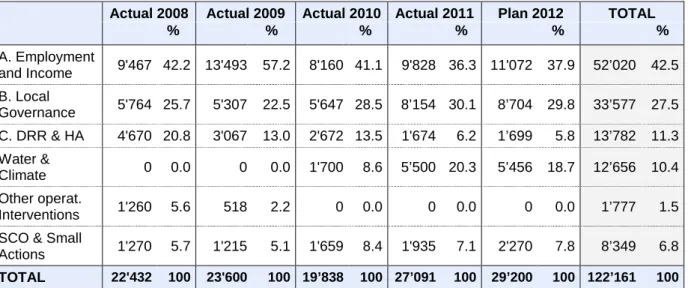
Table 2: Disbursement 2008-2011 and budget 2012 in ‘000 CHF (Source: SAP) ... 34
Table 3: Actual expenses for SCO office in million CHF (Source: SAP) ... 35
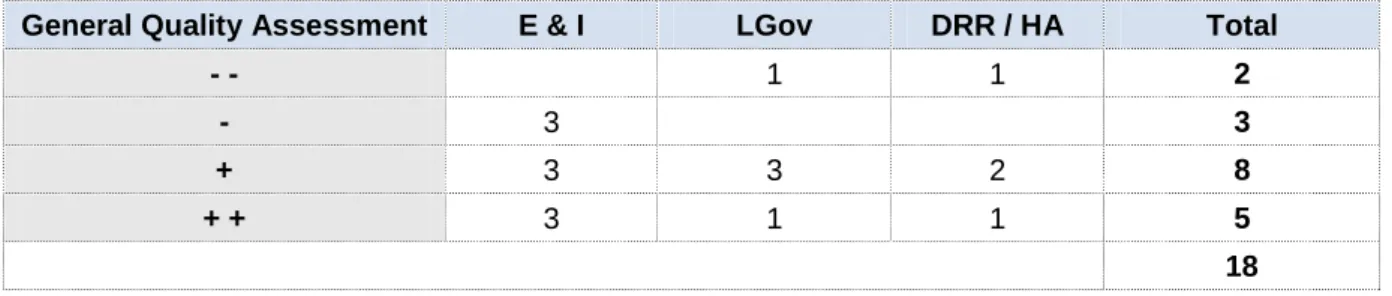
Table 4: General assessment of evaluations and reviews, used for the CS ... 38
Table 5: Project volume implemented by Swiss implementing agencies. ... 41
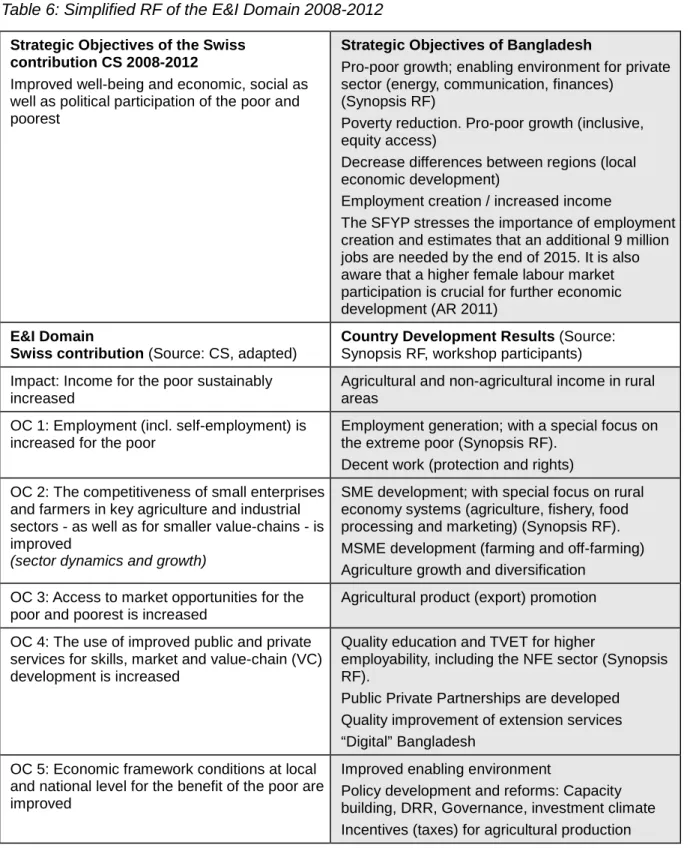
Table 6: Simplified RF of the E&I Domain 2008-2012 ... 47
Table 7: Simplified RF of the LGov Domain 2008-2012 ... 49
Table 8: LGov Domain: Reformulated Swiss contribution outcomes ... 50
Figures Figure 1: Framework for assessing context changes, used by SCO BD ... 17
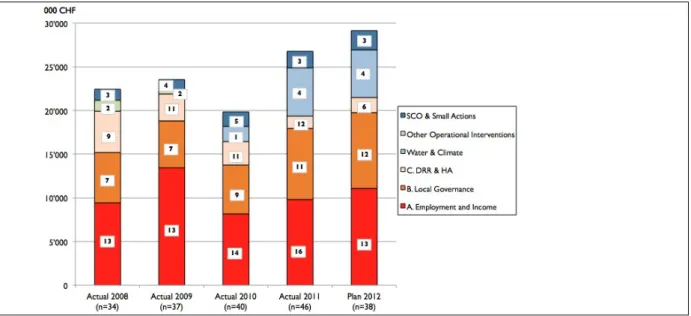
Figure 2: Financial characteristics by domain/theme (with number of projects) ... 24
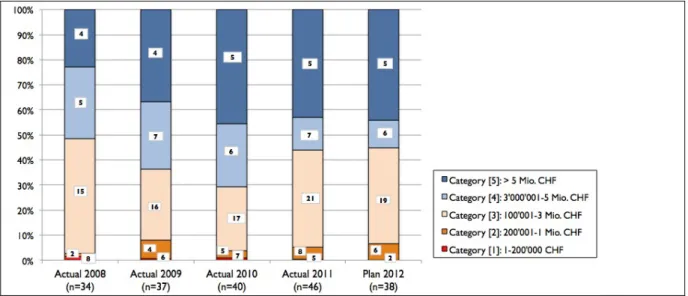
Figure 3: Number of projects according to amounts disbursed/planned over the CS period ... 25
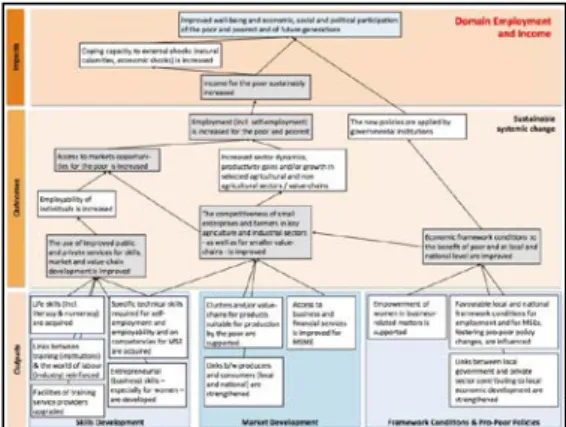
Figure 4: Logic model of E&I domain ... 46
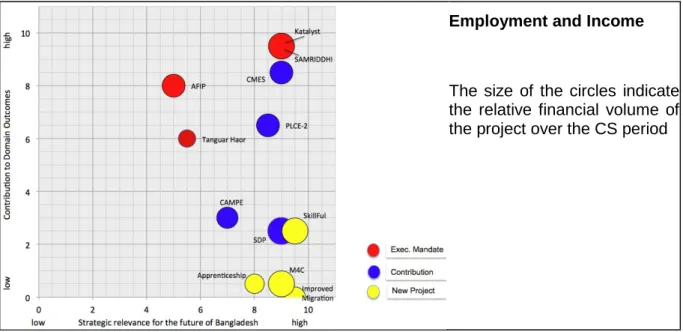
Figure 5: E&I portfolio assessment by workshop participants ... 48
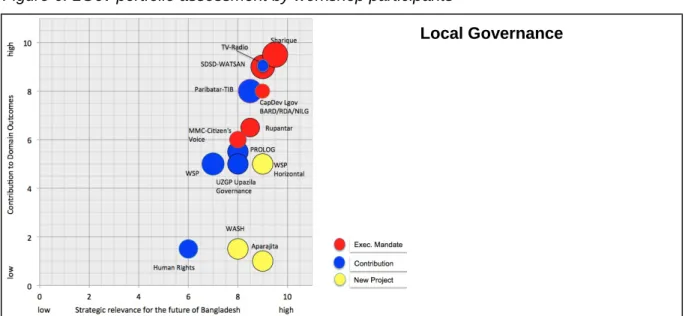
Figure 6: LGov portfolio assessment by workshop participants ... 50
Box Box 1: Findings from the meta-evaluations in regard to efficiency... 35
vi
Abbreviations (see also Project List in Annex 1) ADB Asian Development Bank
AusAid Australian Agency for International Development
AR Annual Report
ASHRAI NGO for the strengthening of Adivasis’ development BCCRF Bangladesh Climate Change Resilience Fund BCCSAP Climate Change Strategy and Action Plan
BD Bangladesh
BMET Bureau of Manpower, Employment & Training
BMZ Bundesministerium für wirtschaftliche Zusammenarbeit und Entwicklung (Federal Ministry for Economic Cooperation and Development)
CBO Community Based Organisations
CHF Swiss franc
CS Cooperation Strategy
CVA Citizens' Voice and Accountability DAC Development Assistance Committee DFID Department For International Development DCED Donor Committee for Enterprise Development
DP Donor Partner
DRR Disaster Risk Reduction
EA Evaluation Area
EDA Eidgenössisches Departement für auswärtige Angelegenheiten (Federal Department of Foreign Affairs)
E&I Employment and Income EPR End-of-Phase Report
EU European Union
FM Female community mentor
FCD Federal Council Dispatch (Südbotschaft) GNI Gross National Income
GoB Government of Bangladesh
HA Humanitarian Aid
HQ Headquarter
ICS Internal Control System
INGO International Non Governmental Organisation IR Inception report
IDA International Development Association ILO International Labour Organisation JCS Bangladesh Joint Cooperation Strategy JPO Junior Professional Officer
LCG Local Consultative Group LED Local Economic Development
vii LGov, LG Local Governance
LGI Local Governance institution LSP Local Service Providers
M4C Making Markets Work for the Chars M4P Making Markets Work for the Poor
MERV Monitoring entwicklungsrelevanter Veränderungen
MD Market Development
MTP Medium-Term Programmes
MTR Mid-Term Review
NFE Non-Formal education
NGO Non Governmental Organisation NPO National Project Officer
OC Outcome
ODA Official Development Assistance
OECD Organisation for Economic Co-operation and Development OMR Office Management Report
OP Output
PBA Political Economy and Development PED Programme Based Approach
PLCE Post Literacy and Continuing Education RBA Rights Based Approach
RC Regional Cooperation
Reo Reorganisation
RF Results Framework
SD Skills Development SCO Swiss Cooperation Office
SDC Swiss Agency for Development and Cooperation SD Skills Development
SECO Staatssekretariat für Wirtschaft (State Secretariat for Economic Affairs) SFYP Sixth Five-Year-Plan
SHA Swiss Humanitarian Aid Unit
UNDP United Nations Development Programme
UP Union Parishad
ToR Terms of Reference
TVET Vocational Education and Training SWAp Sector-Wide Approach
SEY-WO-SE Self Employed Youth and Women’s Social Enterprise“ VSD Vocational skills development
VSD-E Vocational skills development Evaluation
viii
Glossary
UP Union Parishad (council) (lowest tier of rural elected local government) A union comprises nine wards and approximately 30 villages. There are approximately 4466 UPs with an average population of 27'000. Upazila Upazila is the administrative unit of local government (in rural areas)
between Union and District (Zila) level). It is administered by civil servants. There are about 508 Upazilas in Bangladesh
ix
Evaluation Abstract
Subject Description
In correspondence to SDC’s new concept (SDC 2012a) and content and question guide (SDC 2012b), this country evaluation aims to assess the Swiss contribution of the Cooperation Strategy (CS) 2008-2012 to the national development results of Bangladesh as well as the strategic and operational steering mechanism of the Swiss Cooperation Office (SCO), and to identify good practices and innovative approaches.
The programme under review consists of the two domains “Employment and Income” (E&I) and “Local Governance” (LGov). The evaluation also covers the special theme “Disaster Risk Reduction (DRR) and Humanitarian Aid” and the transversal theme “Gender”. Due to the Federal Dispatch to increase the Confederation’s Official Development Assistance (ODA) budget (0.5% ODA Bill) in 2010, additional funds were made available for development interventions in water/sanitation and climate change. The total CS budget for Bangladesh from 2008-12 amounts to around 120 million Swiss Francs.
Evaluation Methodology
Fact-finding, analysis and reporting are guided by the above-mentioned guidelines that define key questions and methods for the four Evaluations Areas (EA): EA1 Context analysis, EA2 Relevance and appropriateness of projects with regard to CS, EA3 Implementation of the CS, and their portfolio, and EA4 Results of the CS in relation to the results at country level.
The Inception Report, which summarises the findings of an extensive document review of key documents such as the annual reports and evaluation reports, was a basis for the field mission in Dhaka, held from 12-20 February 2012, and carried out by a team of one independent consultant and three peers from SDC. It consisted of interviews and two one-day workshops with SCO staff, representatives of national partners and other donor agencies.
Major Findings and Conclusions
The cooperation programme is coherent with Bangladesh’s development priorities, the latest national policy reforms, and Switzerland’s policies and aid strategies. SCO pro-actively responds to emerging changes in the context and demonstrates high awareness for continuous context analysis to adapt and steer the CS. Because of Bangladesh’s political and security risks it would be appropriate to develop and periodically review development scenarios (EA1).
The split of funds between the two main domains E&I and LGov is adequate and the size of projects has increased as required by SDC. Both domains show a high level of coherence between the project outcomes and the domain objectives. However, the potential synergies between and within the domains could be improved. SCO recognises the strategic importance of the complementary use of different aid modalities at different levels (micro, meso and macro): the execution mandates for developing approaches at local level, the contributions to local NGOs for validating the developed approaches and the co-financial arrangements of multi-donor projects for up-scaling. As (at SDC level) the different aid modalities are not well defined, it is impossible to make a clear breakdown of the modalities, their monitoring and strategic planning nor of their evolution over time. Making good use of SDC’s expertise and developed innovative approaches associated with a relevant policy dialogue reinforces leverage despite a limited budget compared to other donors. DRR mainstreaming is integrated in E&I and LGov domains where relevant. Projects in the climate change sector are non-core interventions and need special attention in order to assess their contributions to the objectives of the CS (EA2).
x
SCO is well positioned in the domains. SDC’s outcome orientation is appreciated by the national implementing agencies. Gender mainstreaming management in the programme could be mentioned as a model and builds a good basis for the upcoming CS 2013-2016. Although in general the SCO has suitably absorbed the important budget increase for the CS (55%), the evaluation team identifies several challenges. The quality of reviews and evaluation is uneven. They need to be improved regarding design, implementation and reporting. Although the relationship between the SCO and Swiss implementing agencies is very good, the bidding process has changed former partners to customer and contractor. Staffing is critical. The number of national staff is small and it seems SCO BD is not a desirable duty station (EA3).
As the CS has neither a results framework nor a well-defined CS monitoring system, it was difficult to get a valid and reliable picture of the results achievement at CS and domain levels and the contribution made to country development results. However, after two one-day workshops with the relevant project partners and SCO staff, the resulting overall assessment of the results and the identification of key success and hindering factors provided a good basis for defining the results framework for the new CS 2013-2016 (EA4).
Recommendations and Lessons Learned
Recommendations to SCO-Bangladesh
• Whenever possible and appropriate, synergies in view of the result framework between and within the domains E&I and LGov should be fostered. The sub-domains Market Development and Skills Development should be kept in the same domain (E&I) following the logic of SDC’s E&I Mid-term orientation (2009-2012).
• Conduct political economy analysis and develop and review periodically risk development scenarios (EA1).
• The projects implemented in the climate change sector should be assessed by external evaluation to estimate their contribution to the CS objectives (EA2).
• Build up an adequate and functional Monitoring and Evaluation system at CS level with a appropriate mix of diverse instruments (key indicators, project monitoring, evaluations and reviews, impact studies for innovative interventions) (EA3).
• The new CS 2013-2016 should build on achievements in terms of SCO’s role as a niche player in emerging topics within domains and themes for which SCO is well positioned.
• Sustainability issues should be addressed not only in planning, but also during the whole PCM Cycle and by means of ex-post evaluations (EA4).
Recommendations and lessons learned at institutional level of SDC
• Define a consistent categorisation system of aid modalities (type of support, main form of cooperation) in CS/MTP. Conduct case studies on the different aid modalities regarding flow of funds to beneficiaries and analysis of overhead costs (EA2).
• Unpredictable budget increases, time constraints and limited human resources can unintentionally influence the mix of modalities and the expected high quality of “Swiss” interventions. Tendering processes may lead to favouring budget contribution supports instead of execution by mandates. Scaling up successful innovations might therefore in some cases be more beneficial than the constant search for new innovations (EA2). • Guarantee a balanced involvement of Swiss implementing agencies so that they have
the critical number of projects and financial volumes needed to be well positioned in SDC’s priority themes and puts them in the position to invest in innovation and up-to-date practices. At the same time this may offer job opportunities for young Swiss professionals (EA3).
xi
• Human resources management is critical to SCOs for handling new themes (e.g. climate change) and increasing budgets. Capacity development of SCO staff should remain a priority in the human resource policy (EA3).
• To enhance the assessment of results achievements and to promote institutional learning, SDC/SCOs small action credit lines should also be considered as a strategic instrument for conducting baseline studies, quality monitoring systems, impact assessment and/or ex-post evaluation. This would contribute to strengthening evidence-based decision-making and the appraisal of sustainability aspects (EA4).
1. Introduction
1.1 Objectives of the CS Evaluation
The objectives of the evaluation of the Cooperation Strategy Bangladesh (CS BD) 2008 – 2012 correspond to SDC’s new guidelines on country evaluations (SDC 2012a, 2012b): – To assess through a mutual learning process whether SDC, together with its partners, is
reaching the strategic objectives, as defined in the CS, and how efficient the strategic and operational steering mechanisms of the Swiss Cooperation Office (SCO) are put in place. – To assess to what extent the Swiss contribution makes a significant contribution to the
national development results and to identify the key factors which foster or hinder aid performance and results achievements.
– To identify good practices and innovative approaches and to share experiences made in managing the CS.
Due to its pilot character, the evaluation should also provide the elements needed to adjust and further develop the “CS evaluation concept” (SDC 2012a) and the “Content and question guide” (SDC 2012b).
The country strategy evaluation has three purposes: i) to promote institutional learning, ii) to provide inputs for the definition of the new CS 2013 – 2016, and iii) to provide information – together with other country evaluations - for reporting on the Federal Council Dispatch (FCD).
1.2 Methods and structure of the report
Fact-finding, analysis and report writing are guided by the above mentioned “Content and question guide” (SDC 2012b) which defines key questions and related methods/tools for the four Evaluations Areas (EA), which are as follows: EA 1 Context analysis, EA 2 Relevance and appropriateness of projects with regard to CS, EA 3 Implementation of the CS, and their portfolio, and EA 4 Results of the CS – in relation to the results at country level.
Care was taken that the methods chosen effectively capture all the interrelations between the socio-political context and the SCO performance.
To focus the evaluation process on important issues to be addressed, SCO-BD selected five priority issues, which are as follows:
1. Quality of context analysis and to what extent it corresponds to good practice of SDC (1212)
2. Appropriateness of main approaches applied in the domains, correspondence to current practices (214)
3. Quality of the CS monitoring system, relevance of the domain indicators and the reliability of monitoring data (331 – 334)
4. Role of SDC within the donor community (341)
5. Scaling up of innovations generated by field experience through policy dialogue, alliances, networking and dissemination (431).
Preparation Phase
The Inception report (IR; SDC 2012c), compiled by the international consultant in cooperation with involved SDC resource persons, summarises the findings of the document analysis of annual reports (AR) of the SCO; of project evaluations and reviews (Annex 1: List and code of projects with evaluation/reviews references); as well as other documents such as end-of-phase reports (EPR), studies and joint evaluations. Another important source of information was the Mid-term Review report of the CS (SCO-BD 2010). During the
2
preparation phase, a national consultant established a donor matrix with information on the financial commitments for differents sectors.
In preparation for the two workshops on results achievements in the two areas of intervention: “Income and Employment (E&I)” and “Local Governance (LGov)”, notes were prepared which included logic models for these two domains.
Field mission in Bangladesh (12 – 20 February 2012)
The evaluation team, consisting of an international consultant and three SDC cadres, held a 10-day field mission in Dhaka, Bangladesh in February 2012. During the field mission a series of semi-structured interviews and two workshops were conducted. The analytical frameworks and the questionnaires were assigned to the different evaluation team members depending on their areas of competence. The detailed working schedule and the people met are summarised in Annex 2. Unfortunately, due to a sabbatical leave that had been decided long in advance, the regional DRR coordinator was not present in the SCO at the time of the evaluation field mission and the DRR issues could not be assessed to their full extent.
At the end of the field mission the preliminary findings or “key impressions” were presented to the SCO in a debriefing session, providing an opportunity for discussion and feedback.
Reporting
Report writing was coordinated by the international consultant. The structure of the report3 is as follows: Evaluation abstract, 1. Introduction, 2. Findings, conclusions and recommendations regarding the four Evaluation Areas, 5. Lessons learnt. The latter provides the elements needed for the formulation of the upcoming CS 2013 – 2016.
1.3 Overview of the Cooperation Strategy Bangladesh 2008 - 2012
Elaborated in 2007, the CS 2008-2012 does not include a Results Framework (RF) following the SDC’s guidelines (SDC 2010). However, a Synopsis Results Framework was added in the annual report (AR) for 2009 (Annex 3). This simplified RF provides an overview of strategic objectives and priorities of the CS.
The CS 2008-2012 focuses on two domains: – Domain A: Employment and Income (E&I) – Domain B: Local Governance (LGov)
The main focus of SDC in the E&I area is on the creation and the stabilisation of employment and self-employment opportunities for poor and disadvantaged adults, in particular women, as well as on enabling their access to profitable and decent labour perspectives (SCO-BD 2009a). After the mid-term review in October 2010, two sub-domains were defined: market development and skills development.
The LGov domain aims to reinforce governance particularly at a local level through the participation of citizens in political decision making processes and improved service performance of local government structures. Promoting policy reforms which address pro-poor issues and creates favourable conditions for broad participation of different actors is also a priority of this domain.
Given the high incidence of natural disasters and the threats posed by climate change, SDC included in the CS a disaster preparedness and prevention measures in its programme. A “specific” DRR programme 2010-2012 was established (Bangladesh is one of the 8 countries for piloting SDC’s DRR tools). Since 2007 SDC has been maintaining a standby response capacity for Humanitarian Aid (HA) within SCO in Dhaka.
Gender Equality and HIV/AIDS were initially set as cross-cutting themes.
3
The total amount of the overall disbursement for 2008 – 2011 plus the budget for 2012 comes to CHF121,89 million, which is substantially higher than the indicative budget of the CS (CHF 77,5 million).
2.
Findings, Conclusions and Recommendations
Evaluation Area 1: Context analysisPurpose: Appraise how well the CS reflects the development priorities of the partner
country and the policies of the Federal Council Dispatch (FCD).
Conclusions
– The CS is relevant. The two domains (E&I, LGov), the special theme DRR and Gender as a transversal theme are coherent with Bangladesh’s development priorities, the latest national policy reforms, and Switzerland’s policies and aid strategies. (1.14)
– SCO pro-actively responds to new and emerging changes in the context in regard to national policy and ODA environment and is very well aware of donor context. (1.1) – The dynamic policy reform processes have provided a positive environment for further
developing the CS domains, their project portfolio and other CS themes. (1.1)
– There is an increased need for harmonising the donor interventions in order to avoid uncoordinated aid supports, especially in the area of Skills Development (SD), which has become a priority for many donors (ADB, WB, EC, SDC, DFID). (1.1)
– The additional funds available through the 0.5% Bill to Parliament for increased disbursement was seen as an opportunity for developing SDC’s BD programme (1.1) – HIV/AIDS as a transversal theme was dropped partly as a result of a low prevalence rate
but mainly due to this theme being widely covered by other specialised organisations and integrated in appropriate programmes of partners (AR 2010, p.18; SDC South Asia Division Guidelines 2009). (1.1)
– In regard to the quality of context analysis, the following conclusions can be taken:
o High awareness of SCO management and domain teams for continuous context analysis in order to make adequate adaptation of the CS and domains.
o Good context analysis during CS mid-term review in October 2010 (SCO-BD 2010) and in the Annual Reports (ARs). However, the assessments of the political and security risks; influences of regional and international trends on the poverty situation/development; and scenarios in the event of major risks haven’t been systematically done.
o Continuous exchange with a broad range of stakeholders and use of different methods to closely follow context changes.
o Project implementing agencies are delivering updated contextual information from the local level. So far little information on real power relation at UP and district levels is available, especially in regard to decision-making processes relating to effectiveness and pro-poor decentralisation. (1.2)
Recommendations
To SCO – Bangladesh:
– As SCO is well positioned, the two present thematic domains (E&I, LGov) should remain the base for consolidating and further developing the portfolio. The domain E&I should keep its poverty focus at the individual and community levels, While the governance domain should increasingly and complementarily address issues at the national level. – Even though the two E&I sub-domains Market Development and SD are following partly
different implementation logic, they should be kept in the same domain (E&I) following the impact logic of SDC’s E&I Mid-term orientation (2009-2012) (SDC 2009b, p. 2/11). – Conduct selective research such as Political Economy Analysis, especially in the area of
governance at the local and the national level. It should include aspects like social and economic inequality, property rights, power relations, regional disparities, system of exchange and markets, the state apparatus, the political parties, institutions and powers
4
(see PED Network: Political Economy and Development). It is recommended to conduct such research at the early stage of the new CS formulation process. Whenever possible the study should be conducted with other donors and in partnership with national partner organisation.
– Develop different scenarios (at domain and CS levels) taking into account Bangladesh’s major risks and conduct periodic scenario reviews accordingly.
1.1 Positioning and adaptation of CS with respect to country context and Swiss policies
111. Coherence of the CS, its domains and transversal themes with the development priorities set by the partner country
The mid-term review of the CS (SCO-BD 2010) explains the evolution of the domains and special / transversal themes of the cooperation programme in Bangladesh well (BD).
Domain Employment and Income (E&I)
In regard to the sub-domain Market Development (MD), the Poverty Reduction Strategy Paper II with its subsequent Sixth Five-Year-Plan 2011-2015 (SFYP) aim to strengthen market oriented production, promoting solutions for a sustainable use of land resources (including the issues of rights on equitable access to land), fostering agriculture, and setting rural development into the frame of good local governance structures.
Concerning the sub-domain Skills Development (SD), the reformed Skills Development Policy 2010-2015 is recognised and supported by government, industry and other stakeholders. It aims at empowering all individuals to access decent employment and to ensure Bangladesh’s competitiveness in the global market through improved skills, knowledge and qualifications.
Even though E&I’s project portfolio included several projects in the education sector (Basic life skills for youth and adults, Non-formal education (NFE), including education for all, and vocational training), the specific domain objectives did not clearly include this focus in the original CS (p.13).
Domain Local Governance (LGov)
By 2008 the transitional government had managed to establish a legal framework in favour of the local governance structures (Union Parishad UP) that had existed for 200 years. SDC has chosen to support the implementation of this framework, and has taken water as one entry point. According to the SFYP and other policy and strategy papers (see Chap. 412.), the GoB is committed to improved Local Governance with better performing LGov institutions (LGI). In regards to decentralisation, the national policy papers are less clear and the term is politically sensitive to some extent.
In addition the GoB opened up opportunities for more transparency and responsiveness of LGIs to the citizens by approving a right to information act and by setting up a National Human Rights Commission.
Special theme: Disaster Risk Reduction and Humanitarian Aid (DRR / HA)
BD’s National Plan for Disaster Management 2010-20155 is an outcome of the national and international commitments made by the Government of Bangladesh (GoB) for addressing the Disaster Risks comprehensively. DRR is a key issue for the GoB at all levels. The emphasis is on (i) bringing a paradigm shift in disaster management from the conventional response and relief practice to a more comprehensive risk reduction culture and (ii) strengthening the capacity of the BD disaster management system by improving the response and recovery management at all levels.
5
Due to BD’s situation as one of the world’s most vulnerable countries to natural hazards and disasters, SDC has maintained a standby response capacity for Humanitarian Aid in the SCO in Dhaka (HA) since 2007.
Transversal theme Gender
Women in particular face social, economic and institutional barriers to decision making; this includes dependency on male patronage, vote hijacking, voter harassment, poor political education, subordination in elected bodies, and unsatisfactory quota arrangements at local and central government levels (CVA 2008, p.14).
The SFYP and the recently approved Gender Policy of Bangladesh name Gender equality as requiring highest priority and it stipulates gender equality mainstreaming in all sectoral interventions, as well as the need to remove policy and social biases against women in all spheres (AR 2011, p.5).
112. Coherence of Switzerland’s foreign-policy objectives for Bangladesh
“From the mid-1990s, economic contacts with BD have been intensified. There was an upswing in the jute, textile and chemicals sectors and several Swiss companies began to invest in BD. Bilateral trade has been expanding steadily for several years now. This trend is supported by a number of economic agreements. Switzerland remains very active in the development sector”6.
113. Coherence of the CS with the principles of the Federal Council Dispatch and SDC policies
The CS BD is coherent with the Federal Council Dispatch (FCD) regarding BD as a priority country, with the recommendations concerning the thematic focus (Employment and Income, Promotion of Democracy and Rule of Law), and the focus on poverty reduction.
In regard to SDC’s policies the CS programme matches well with the later formulated SDC’s South Asia Division’s Guidelines South Asia 2009-2012 (SCO-BD 2009, p.1).
114. The most important changes in the context, their effects on the CS and adaptions undertaken
The ToR of this CS evaluation do not require an in-depth analysis of context changes. These changes and their effect on the CS were examined during the CS mid-term review (SCO-BD 2010) and related conclusions were drawn. However, together with the SCO management and staff in charge of the domains, the evaluation team identified some key context changes, which have had strong effects on the CS.
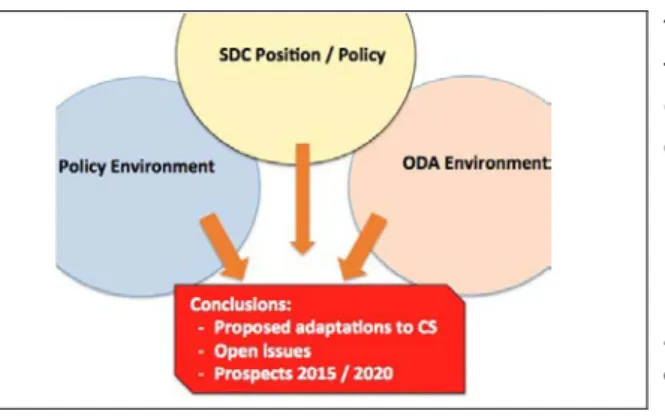
The context changes have been analysed in terms of the policy environment in BD, the Official Development Assistance (ODA) environment and SDC’s position in order to make decisions for CS adaptations.
Figure 1: Framework for assessing context changes, used by SCO BD
For complimentary information see also basic information with relevant macro data at country level (Annex 4).
6
Context changes in Policy environment (SCO-BD 2010)
Following the period under a Caretaker Government (2006-2008), which was characterised by high levels of political uncertainty, malpractice and inefficiencies, a quite dynamic policy reform process was undertaken by the current Awami League Government.
The GoB has formulated pro-poor policies and declared its awareness of the specific needs of marginalised groups (women, ethnic minorities, landless). However, the GoB is acting according to the classical “trickle-down-from-growth” approach. The political elites still keep control of power and politics; often empowerment of all Bangladeshis seems to be a mere a lip service. Nevertheless, it is fair to mention that elections for district governments (Upazila) took place, and democratisation process are on going through the support to local governance.
Even though the Corruption Perception Index has been improving over the last years (2005: 1.7; 2011: 2.7), corruption is still on a critical high level. The relation between the government and the big NGO community is critical; power control and corruption dominate the scene instead of the needed partnership approach.
GoB and many governmental projects use NGOs as implementing agencies. Development has been successful in BD not least because the GoB was and is open to partnerships with NGOs. NGOs themselves are also certainly not free of problems. Some are involved in political activism and corruption. Many NGOs have problems of internal governance and accountability.
Context changes in ODA environment
Due to a deficit in implementation capacities, net ODA flow decreased from about USD 2.07 billion in 2008 to 1.4 billion in 2010, with IDA, ADB, United Kingdom, EU, Japan and United States as the largest donors. However, the country is by no means aid dependent, with net ODA accounting for only 1.3% of GNI7. By comparison, annual remittances and foreign direct investment are both well above ODA.
The Joint Cooperation Strategy 2010-2015 (JCS), approved by the GoB and the donors in 2010, should allow a better coordination (division of labour) and will open opportunities for more alignment. A jointly agreed “Development Results Framework” is now part of the 6th Five-Year Plan, which constitutes an improved basis for mutual accountability on ODA outcomes” (AR 2011, p.1-2).
However, the evaluation of the implementation of the Paris Declaration (OECD-DAC 2010) states that the choice of sectors, programmes and modalities of delivery is often determined by the Donor Partners (DPs) rather than by the GoB. There has not been any joint systematic assessment of the management and absorptive capacity of a different mix of modalities or of their relevance and effectiveness.
In the framework of the multi-donor initiative “Strengthening Public Expenditure Management Program”, a de facto joint assessment of the feasibility of budget aid was made. The assessment concludes, with the acceptance of all donors, that the conditions for budget support were generally not in place in Bangladesh.
The OECD-DAC (2010) states that stakeholder participation, at the formulation and implementation stages of individual development projects, is virtually non-existent. The preparation and design of aid-financed projects also remain largely donor dependent and often donor driven.
7