HAL Id: hal-01779612
https://hal-amu.archives-ouvertes.fr/hal-01779612
Submitted on 3 May 2018
HAL is a multi-disciplinary open access
archive for the deposit and dissemination of
sci-entific research documents, whether they are
pub-lished or not. The documents may come from
teaching and research institutions in France or
abroad, or from public or private research centers.
L’archive ouverte pluridisciplinaire HAL, est
destinée au dépôt et à la diffusion de documents
scientifiques de niveau recherche, publiés ou non,
émanant des établissements d’enseignement et de
recherche français ou étrangers, des laboratoires
publics ou privés.
To cite this version:
Thierry Woignier, Florence Clostre, Luc Rangon, Magalie Lesueur Jannoyer. Natural Nano Materials
Trapp Pollutants in Soils. INTERNATIONAL JOURNAL OF ENERGY and ENVIRONMENT,
North Atlantic University Union, 2017, 11, pp.160-167. �hal-01779612�
Abstract—Persistent pesticides led to long term pollution of soils and consequently contaminate rivers, groundwater, ecosystems and finally human beings. Volcanic soils (andosols) are generally more polluted than the other kinds of tropical soils but data show that andosols release less pesticides to percolating water and crops. Andosols contain amorphous clays (allophane) which present unique structures and physical properties compared to crystalline clays. Allophane aggregates have physical features very close to that of nano porous materials like synthetic gels: large pore volume and water content, a broad pore size distribution, a high specific surface area and a fractal structure. The aim of the study was to show the influence of the features (nano materials structure, shrinkage during drying) of these natural gels on the pesticide retention. Our study confirms that the soil to crop pesticide transfer is lower in andosols compared to other volcanic soils. Associated to high organic matter content, the allophane microstructure favor pollutants (chlordecone) accumulation in soils. We put forth the importance of the nano porous features of allophane (the associated tortuous microstructure) but also the pore collapse during drying, for pollutant trapping in soils.
Keywords- natural nanomaterials, pesticide, pollution, chlordecone, allophanic clay, andosols.
I. INTRODUCTION
HE fate of pesticides is an important environmental issue because large quantities of pesticides are applied to agricultural soils to control pest and insects. Organochlorine pesticides are persistent organic pollutants (POP) [1], which are not only toxic but also are biomagnified through the food chain [2]. Even if the use of such pesticides has been forbidden for decades, soils still are a reservoir of pollution and continue to contaminate rivers, groundwater, ecosystems and finally human beings [3].
A wide range of pesticides has been used on tropical volcanic soils and different authors showed that andosol displayed higher sorption capacity than other soil types [4]-[7]. Paton et al. [4], found that dichlorophenol and pentachlorophenol were tightly bound to the organic fractions
a, Aix Marseille Univ, Univ Avignon, CNRS, IRD, IMBE, Marseille,
Franceb IRD, IMBE, Campus Agro Environnemental Caraïbes B.P. 214 Petit
Morne, 97235, Le Lamentin, Martinique
c
Cirad, UPR fonctionnement agroécologique et performances des systèmes de culture horticoles, Campus Agro Environnemental Caraïbes B.P. 214 Petit Morne, 97232, Le Lamentin, Martinique
d
Cirad UR HortSys, TA B-103/PS4, Boulevard de la Lironde, 34398 Montpellier Cedex5, France
Corresponding author. Thierry Woignier -Campus Agro Environnemental Caraibes B.P. 214 Petit Morne, 97235, Le Lamentin, Martinique
Tel.: +596 596423034; fax: +596 596423001. E-mail address: [email protected]
within the andosols, which could have binding affinity several orders of magnitude greater than other soils. In Mexico, for two organophosphorous insecticides, parathion and cadusafos, the amounts of bound residues were greater in the andosols compared with the vertisols [5]. Prado et al. [6] also demonstrated that andosol showed a higher atrazine sorption capacity than vertisol with Kd values roughly one order of magnitude higher.
In French West Indies, sorption of cadusafos was also higher in andosol than in nitisol [7]. Similarly, for the organochlorine insecticide chlordecone, andosol showed higher contents than the vertisols and nitisols [20,3]. Chlordecone (CLD) was used years ago in order to control pests [3,20]. This neurotoxic and carcinogenic molecule [2] still persists in the soil and contaminates crops, water resources and ecosystems thus leading to human exposition through food. Andosols are generally more polluted than the other kinds of tropical soils but recent data have shown that andosols release less CLD to percolating water and crops than other volcanic soils [3], [22]. One explanation of these retention effect proposed in the literature is the high organic content of andosols because of the high affinity between CLD and soil organic carbon (SOC). However, andosols contain clay (allophane) that presents unique structures and physical properties compared to crystalline clays.
In the case of parathion, cadusafos and 2,4-dicchlorophenoxyacetic acid [5],[8], the presence of allophane clay (the constitutive clay of andosols), seems to increase pesticide sorption. Allophane is also known to be an adsorbent for polluting chemical species [9] including phosphates [10],[11], arsenates [12],[13], sulphates, molybdates, chromates and selentes [2]. The AlOH and SiOH groups on the allophane surface have interesting properties with respect to boron adsorption [9],[10]. Allophane has an adsorption ability for benzene derivatives [17] but also for the removal of fluoride from water [18]. Recently, allophane nanoparticles were chemically synthesized as an adsorbent of organic pollutants [14]-[16] and synthetic allophane were also studied for boron removal from water [19]. Allophane has been found to be effective in the stabilization of C in soil and composts, offering perspectives for carbon sequestration technology [25]. Allophanes are naturally occurring nanoparticles formed through the alteration of volcanic parent materials. Allophane is an amorphous alumino silicate, the unit cell of which appears as spheroids with diameter close to 5 nm [23] forming aggregates with a fractal structure [24]. Some researchers described allophane aggregates as “gel like“ [26]. The clay in its natural state consists of aggregations of spherical allophane
Thierry Woignier
a,b, Florence Clostre
c, Luc Rangon
a,b,
Magalie Lesueur Jannoyer
c,dNatural Nano Materials Trapp Pollutants in Soils
aggregates is around 100 nm and it exists a clear analogy between allophane aggregates and synthetic silica gels [29],[23],[24]. Transmission electron microscopy image shows the occurrence of allophane nano spheres with a diameter of about 5 nm, the allophanic particles aggregate and form clusters [23], [25]. Small Angle X-rays Scattering (SAXS) results shows that the allophane aggregates are fractal clusters with fractal dimension close to 2.5-2.7 [31]. The tortuous structure of the allophane aggregates is typically in the mesopore range 5-100 nm.
Our study hypothesizes that, besides the well-known effect of soil organic content on CLD retention, the features of this natural gel “allophane” favor pollutants accumulation in soils. The purpose of this work is to: 1) describe some physical properties of the allophane clay, 2) put forth the importance of the natural gel properties of allophane clay (microstructure, large water content, pore collapse during drying) for pollutant trapping, 3) discuss the synergy “soil organic content-allophane microstructure” on the pesticides retention in tropical volcanic soils.
II. EXPERIMENTAL
A. Soil samples
We sampled several andosols (allophane soils) and for comparison nitisols (containing halloysite clays) in Martinique (14°40 N, 61°00 W) in the vicinity of the “Montagne Pelée” volcano. These different soils are representative of the main polluted soils found in French West Indies [2,20]. The soils we selected were known to be historically polluted by CLD. The soil samples were retained in closed containers to avoid evaporation.
Organic carbon contents were measured by dry combustion using a CHN chromatograph analyzer (Thermo Finnigan Flash EA 1112, thermo Finnigan Italia, Rodano, Italy).
The allophanic content was measured by the method of Mizota and van Reewijk [32] using Al and Si content extracted by oxalate and pyrophosphate and measured by ICP-AES (Inductively Coupled Plasma Atomic Emission Spectroscopy ICAP 6500, Thermo Scientific, France). The soils samples covered the allophane range 0 to 26 % (w/w basis).
The shrinkage curve during drying was measured according to the following procedure. The water saturated soil samples were placed on a balance to measure loss of water during drying. In parallel, the linear shrinkage in the height and diameter of each sample was measured by three spot lasers. The data were recorded and converted to specific volume and water content.
The crystalline and amorphous structure was studied by X-rays diffraction (Cu Kα) with a Philips PW 1830 and the presence of allophane was characterized by Infrared Spectroscopy. The apparatus used was an IR-FT Nicolet 510P spectrometer and the samples were diluted in KBr pellets with a 5 10-3 mass ratio.
by size three different organo mineral fractions: < 50 µm size, 50-200 µm size and > 200 µm size. Three replicates of each fraction were prepared.
B. Transfer Experiments
Soil to plant transfer coefficients were determined on andosol and nitisol for two crop models: sweet potato [33] and carrot. Tubers and corresponding soil were sampled and the CLD content analyzed. Six replicates were prepared on nitisol and 15 on andosol. Soil to plant transfer coefficient is the mean value of the ratio of the pesticide concentration in plant to the pesticide concentration in soil expressed in mg.kg-1 of fresh matter / mg.kg-1 of dry soil. For the experiments the soil contamination ranges from 0.7 to 7.2 mg/kg of dry soil in andosols and from 0.1 to 2.7 mg/kg of dry soil in nitisols. CLD concentration in soils and crops samples were analyzed by the LDA26 (Valence, France) as described in [33]. All statistical analyses were performed using XL STAT 2012.6.08 (Addinsoft 1995-2012). ANOVA and Tukey Honestly Significant Difference tests (p<0.05) were used to compare means of transfer for the different soil types and to assess the difference of CLD content in the different soil fractions for each soil type. The linear regressions and ANOVA were used to assess the equation of the linear models and the significance of the explanatory variable.
C. Porous properties
Porous and structural measurements generally require dried solid samples. A preliminary study [30] has shown that the CO2 supercritical drying is necessary to preserve the
mesoporosity of soils. A critical point dryer (CPD 010, Balzers, Liechtenstein) was used in a procedure such as previously described [30]. The pore size distribution of the sample was calculated from the N2 adsorption-desorption curves (Micromeritics ASAP 2010) BJH (Barret–Joyner– Halenda) analysis [34]. The soil powder was placed in a test tube to degas for 24 hours at 50°C in a vacuum of 2-4 μm Hg. The scanning electron micrographs were obtained with a Cambridge stereo scan 360 scanning electron microscope.
III. RESULTS AND DISCUSSION
A. Soils characterization
Allophane are normally referred to as X-rays amorphous materials but for some authors it could give weak and broad X-rays traces at a lattice spacing d close to 3.3 and 2.25 Å [19],[27],[28].
Figure1: X-rays typical diffractogram of volcanic soils samples. Counts versus lattice spacing d (Å)
Figure 1 shows a typical X-rays spectrum that we obtained on the studied andosols and nitisols, the general trend of the andosol spectrum is a clear evidence of bulges of the base line between 2 and 7 Å, attributed to non-crystalline solids, allophane and/or imogolite [35]. The X-ray diffraction spectrum for nitisols showed peaks at 4.45 and 7.4 Å that were attributed to the clay halloysite [36],[37]. Volcanic soils contain different types of poorly crystalline aluminosilicate minerals like imogolite (Al/Si = 2), proto imogolite and allophane. Imogolite forms 2 nm hollow tubes, while allophane forms spheres [38]. Different allophane structures have been identified based on their chemical composition: Al-rich allophane (Al/Si ~ 2) also called “proto imogolite allophane” since the local structure is similar to that of imogolite [39]. Allophane with a lower Al/Si ratio is called Si-rich allophane [40,41]. Transmission electron microscopy [30] showed no imogolite structure features, such as hollow tubes of 2 nm in diameter. The X-Ray’s data showed no diffraction peaks, 8 Å and 12 Å, related to imogolite or to proto imogolite respectively [42],[43].
A method to reveal the occurrence of allophane and the absence of imogolite is the infrared spectroscopy (FTIR). In the literature [35],[44],[45], it has been shown that characteristic bands like 506, 577 and a shoulder at 970 cm-1 are the signature of allophane. These bands are also accompanied by a broad band in the silanol stretching region (around 3500-3700 cm-1). Figure 2 shows the typical FTIR spectrum recorded for the studied andosols. The spectrum reveals the shoulder at 970 cm-1 (Si-O stretching), the bands in the range 500-600 cm-1 and broad band in the silanol region, characteristics of allophane. Moreover the IR spectra of the different studied andosols do not present doublets of the band at 577 and 967 cm-1 characteristic of the imogolite structure [43]-[45].
Figure 2: Infra-red typical spectra of volcanic soils. Transmittance in arbitrary units versus wavelength in cm-1.
Thus, we can deduce that the major part of the poorly crystalline content measured by the method by oxalate and pyrophosphate extraction [32] is allophane and not imogolite or proto imogolite.
(a)
(b)
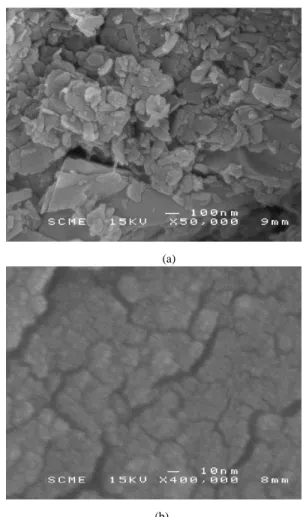
Figure 3 Scanning electron Microscopy of volcanic soils: nitisols (a) and andosols (b)
Figure 3 shows the scanning electron microscopy of typical andosol and nitisol samples. Wada [23] describes the allophane particles as follows: the unit cell appears as spheroids with diameter between 3 and 5 nm clearly different of the platelet-like microstructure of phyllosilicate clays like
halloysite particles and can be considered as nanomaterials. These alumino silicates have a high pore volume (~ 70%) and develop large specific surface. From a structural point of view, light and X-rays scattering data demonstrate that allophane aggregates have fractal geometry [22]-[24],[31]. Thanks to these data we proposed an analogy between these natural nano porous materials and synthetic mineral gels [30].
B. Allophane: a natural mineral “gel “
A synthetic gel of silica, is a two phase solid-liquid material, amorphous and extremely porous with 70 to 99 % of porosity. Its bulk density is typically in the range 0.1 and 0.5 g.cm–3 and specific surface are in the range of several hundreds of m2g-1 [30]. The gel network can be described as an assembly of fractal clusters (~50 nm) built by the aggregation of small particles (~1-2 nm). The porosity is totally open and spans over the range of the micro to the macroporosity [30]. Allophane is derived primarily from the in situ weathering of volcanic materials. Allophane particles are obtained by the leaching of amorphous volcanic materials [43] leading to oversaturated solutions which form sols [46]. Karube et al. [24],[47]-[48] studied allophane aggregation using light scattering. These authors reported that allophane particles occurred in primary clusters of unit particles like a string of beads several nanometers in size. They also pointed out that secondary clusters could be formed when flocculation occurred and estimated the diameter of the cluster to be 150-200 nm.
Allophane aggregates have physical features very close to that of synthetic gels. As explained above allophane aggregates have fractal geometry and can be described as clusters formed by aggregation of small particles. These “natural gels” have a bulk density close to 0.5 g.cm-1 [23] and develop a large specific surface area as high as 700 m2g-1 [30]. The formation of the two kinds of network seems different: the polymerization of silicic acid for the silica gels and a corrosion mechanism for the allophane. In the case of the silica sol-gel process, the organosilicon is hydrolyzed and the silicic acid polymerizes into discrete particles that aggregate into chains and networks while for allophane, the weathering leads to over-saturated solutions which precipitates, the fine particle size and the predominance of glass favor formation of amorphous phases [49]. Nevertheless, in both cases the porous network is obtained by the aggregation of colloidal particles whatever the way of formation of these particles. Moreover, the literature showed that it is possible to synthesize allophane by the sol-gel process [45].
In conclusion, allophane aggregates have morphological features very close to that of synthetic gels: large pore volume
that these peculiar “gel” properties are likely involved in the pesticides trapping process.
C. Influence of allophane clay on soil pore properties
Recent work [50] have shown that the microstructure of allophane clay has an influence on the soil porous properties. The pore volume Vp and the specific surface area S determined after supercritical drying were clearly correlated to the allophane contents. The specific surface area could be as high as 180 m2.g-1 and pore volume close to 2 cm3.g-1.
Figure 4: Pore size distributions of a set of andosols with different allophane contents %: 0.5 (▲), 5 (●), 12 (-), 23 (■). The allophane aggregates are highly porous in the range of the mesoporosity [25]. Figure 4 shows that the pore size distribution of a set of andosols ranges from 5 to 70 nm. Pore size distribution and mesopore volume increase with an increase in allophane content. The pore size distribution also shifts to larger pore sizes with an increase in allophane content. These results are in agreement with hierarchical aggregation, where larger and larger allophane clusters lead to an increasing volume of pores and to a broadening of pore size distribution. These observations are compatible with fractal organization of the allophane aggregates. This kind of aggregation process leads to a microstructure similar to a labyrinth with a high tortuosity and the extent of the labyrinth structure (i.e. the extent of the fractal clusters) increases with the allophane content [50].
D. Results of transfer experiments
Soils derived from volcanic materials have a high potential for agricultural production because of their properties (high exchange capacity, high phosphate absorption and organic matter content). Pest control technology, which was originally
developed from temperate climates, was introduced into the tropics without considering the fragility of the ecosystems. Some pesticides whose pollution potential has long been underestimated are now recognized to pose serious human health and environmental problems. For example, chlordecone was extensively used to control pests mainly in banana plantations. CLD persists in the soil and contaminates crops and water resources [2],[3],[20]-[22], thus leading to human exposure through food. Research has been focused on chlordecone transfer from soils to crops and data shows that the capacity of soils to contaminate plants depends not only on the chlordecone content of the soil, but also on the concerned type of soil [3],[22],[33].
Cultivated plant nitisol andosol
Lettuce [22] 0.0064 ( 0.0014) 0.0023 (0.0015) Cucumber [52] 0.08 (0.5) 0.05 (1) Carrot 0.31 ( 0.05) 0.87 (0.13) Sweet potatoes 0.039 ( 0.012 0.014 (0.0075)
Dasheen [51] 0.122 ( 0.06) 0.0326 ( 0.026)
Table 1. Mean CLD transfer from soil to crop (mg.kg-1 dry soil) according to the soil type (andosol or nitisol), dispersion index in brackets
The literature [22],[33],[51],[52] shows that crops contamination shows different CLD contents according to the considered crop, organ and soil type. The most contaminated crops are roots and tubers then cucurbits and leaf vegetables (Table 1). Observing CLD transfer in soil and plant, a general assessment is that andosol tends to retain CLD higher than other soils. For the two crops of this studies, we observed a highly significant difference between the two types of soil (P < 0.0001): transfer from andosol is lesser than from nitisol (table 1) with a ratio close to 2 for sweet potato and 3-5 for carrot.
These results show that: 1) Andosols are generally more contaminated than nitisols and 2) andosols release less pollutant to plants than halloysite soils. In the literature, one explanation for this retention effect is the high organic content of andosols combined with the high affinity of the pesticide for soil organic matter [3, 33]. The soil-water partition coefficient relative to organic C content (Koc) partly accounts for this process [3]. However, Koc is a global concept behind which lies a series of explanations (hysteresis; organic matter content; composition of organic matter, etc…), which may make it possible to compare soils, but do not explain the origin of the differences. So, the question remains: what is the direct influence of allophane properties on the retention of pesticides in the soil?
E. Influence of allophane properties on the pesticides
retention
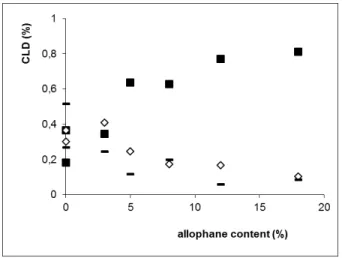
To put forth the importance of the allophanic microstructure we fractionated different nitisols and andosols soils in 3 classes: fraction size higher than 200 μm (class a), between 50 and 200 μm (class b) and lower than 50 μm (class c). In figure 5 we followed the CLD concentration in the different a, b and c fractions with increased soil allophane contents. For nitisol samples (0% allophane content on the figure 5), CLD concentrations are showing small differences between b and c fractions, these two fractions are not significantly different from the a fraction. The figure 5 shows that the CLD increases in the c fraction but is quite constant in the a and b fractions; 80% of the CLD content is retained in the c fraction (“allophane fraction”) [60]. These differences are due to the fact that the c size class is rich in allophane aggregates. These results confirm the effect of the allophane content on the CLD retention [50].
Figure 5: Evolution of the chlordécone content in the different classes of size versus allophane content. a (-), b (◊),
and c (■).
As already explained, CLD and similar pesticides tend to bind with soil organic matter due to of their hydrophobicity. Previous study [60] have shown than the fraction c, the “allophane fraction” is rich in organic matter and we could assume that the large CLD concentration in fraction c is the consequence of a high soil organic content. As expected, figure 6 shows a positive correlation between CLD and SOC in andosols (P<0.01and r2=0.68). These results could indicate that the SOC is the explanation for the higher CLD content in andosols.
However, in figure 6 the CLD content of the andosols class c is also plotted versus SOC. These samples have clearly a higher CLD content at a given SOC. The CLD concentration in the andosols c fraction is systematically higher than the general trend. The results stress the fact that the high organic matter content in andosols is not the only effect and we propose that the allophane tortuous microstructure plays also a role in the CLD retention.
0 2 4 6 8 10 12 14 16 0 2 4 6 8 10 CL D ( mg / kg -1 D S) SOC (%)
Figure 6: CLD concentration versus SOC in volcanic soil samples (▲) and in the c size class of andosols (■).
The structural properties of the mineral matrix with which pollutants are associated may influence pollutant bioavailability and retention in soils [54]-[56]. The decrease in pesticide bioavailability has often been explained by slow diffusion in small pores and can be physically explained as the result of the pollutant entrapment [57]-[59]. Data revealed greater physical protection and adsorption of persistent pesticides in nanosized structures. We have seen in section B that the allophane aggregate microstructure resembles a labyrinth at the nm scale. This description suggests that the accessibility in the allophane microstructure decreases because of this nano materials microstructure. The combination of pore size and network tortuosity may be a key feature in the inaccessibility of pesticides to microorganisms.
F. High water content and collapse during drying Another distinctive property of allophane clay is involved
in the high trapping of pesticides: the high water content and the associated pore collapse during drying. Figure 7 shows the large increase of the water content versus the allophane content, the results expresses that the allophane clay is like a sponge with water content as high as 180%.
Figure7: Water content in volcanic soils versus allophane content
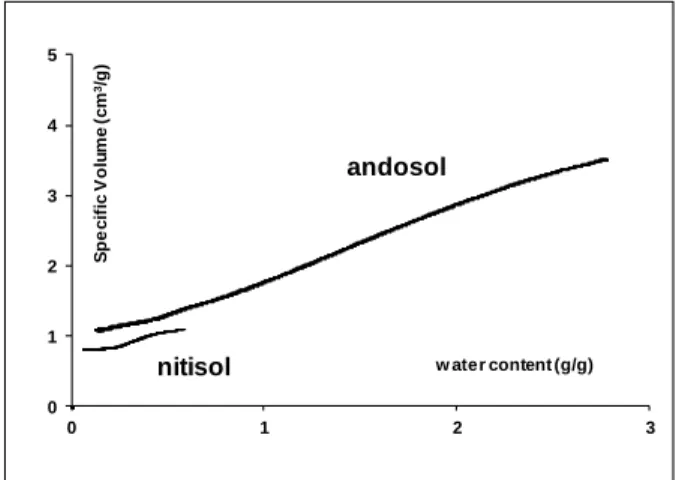
Moreover, figure 8 compares the drying curve between an andosol and a nitisol and shows clearly a specific volume and water content loss 4-5 times larger than for the nitisol. Figure 8 shows that during a classical drying, and because of the large water content, the andosol exhibits an important shrinkage which modifies the soil physical properties. This shrinkage comes from capillary stresses during the drying, in the pores and from the large compliance of the porous solids. This behaviour is typical of the mineral gels like silica gels [61].
0 1 2 3 4 5 0 1 2 3 S p e ci fi c V o lu m e ( cm 3/g ) w ater content (g/g) andosol nitisol
Figure 8: Drying curves of typical andosol and nitisol It must be noted that if the shrinkage is quite reversible for nitisols, in the case of andosols, the shrinkage is irreversible and a large part of the pore volume is lost. To quantify the amplitude of the volume irreversibly lost after drying we have rewetted the soils samples at room temperature during two days and measured the final water content. The water content after drying and rewetting was compared with the initial water content and allowed to calculate the water content lost and consequently the lost pore volume (Fig. 9).
Figure 9 shows that the irreversible volume shrinkage is related to the allophane content in volcanic soil and can be higher than 50%. These results show that a large part of the volume collapse should be attributed to the shrinkage of the allophane aggregates. The loss of this pore volume affects the pesticide bioavailabilty. One would expect the pore structure to have an influence on the mechanism of pesticide diffusion and sorption. In this case, changes in the soil pore volume should affect the flow and diffusion processes and pesticide transport thereby changing pesticide bioavailability.
Figure 9: Irreversible volume shrinkage versus allophane content
The main structural consequence of the shrinkage is the progressive contraction of the allophane aggregates associated with closure of the mesopores. Consequently, the capillary strain collapses the clay microstructure and hence affect the transport properties within the clay aggregates. As a results, possible exchange and chemical reactions able to degrade the pesticides should be poor. This reduced accessibility might partially account for the containment process. The chemical affinity for organic matter associated with low transport properties inside allophane aggregates and the collapse of mesopores, play a role in the entrapment of pesticides in andosols.
IV. CONCLUSION
A wide range of pesticides have been used for tropical volcanic soils and the general agreement is that the pesticide sorption behavior is most pronounced in andosols. In this work we have confirmed that andosols retain and trap more pesticides than other kinds of soils. The study confirms that there are clear correlations between the soil chlordecone content, soil organic content and allophane microstructure (natural gel features). The bioavailability of each pesticide is related to the intrinsic physical-chemical properties of the pollutant (water solubility, chemical affinity with soil organic matter, and poor biodegradability). We show that the structural properties of the mineral matrix (nano size sponge) with which the pollutants are associated may also influence pollutant bioavailability and retention in soils. As mentioned above the more accepted explanation for the retention effect reported in the literature is the high affinity of the pesticide for soil organic carbon. However, physical parameters like poor transport properties inside clay aggregates and porosity closing could participate to the overall pesticide sequestration. The nano porous structure of the porosity slows down access to trapped pesticides by enzymes and microorganisms. Moreover, after a strong drying, the andosols porosity irreversibly collapses. So, during the cycle of dry and wet seasons the
allophane aggregates could collapse because of the drying and rewetting process. This shrinkage, which increases with the allophane content, can participate to the whole pesticides trapping in andosols by the closing of the porosity. Future research for pollutants degrading microorganisms and other bioremediation tools to clean up polluted soils should take into account these different aspects of volcanic soils, large soil organic content, poor CLD accessibility and collapse of the meso porosity.
ACKNOWLEDGMENT
Funding was provided by the French Chlordecone National Plan (“JAFA” project), the French National Research Agency (“Chlordexco” project) and the French Ministry for Overseas development (MOM).
.
REFERENCES
[1] R. Madaj, E. Sobiecka, H. Kalinowska, Lindane, kepone and pentachlorobenzene: chloropesticides banned by Stockholm convention,
Int. J. Environ. Sci. Technol. ,2017, https://doi.org/10.1007
[2] R. Dallaire, G. Muckle, F. Rouget, P. Kadhel, H. Bataille, L. Guldner, S. Seurin, V. Chajès, C. Monfort, O. Boucher, J.P Thomé, S. W. Jacobson, L. Multigner, S. Cordier, Cognitive, visual, and motor development of 7-month-old Guadeloupean infants exposed to chlordecone, Environm.
Res. 118 2012, pp. 79-85.
[3] Y.-M. Cabidoche, R. Achard, P. Cattan, C. Clermont-Dauphin, F. Massat, J. Sansoulet, Long-term pollution by chlordecone of tropical volcanic soils in the French West Indies: A simple leaching model accounts for current residue, Environ. Pollut. 157,2009, pp.1697-1705. [4] G.I Paton, CJ Paterson, A Winton, et al. Distribution, bioavailability and
behavior of persistent organic pollutants in Andosols: with specific reference to Iceland. In: Arnalds HÓaÓ, editor. Volcanic Soil Resources
in Europe., 2004, pp. 108-109.
[5] A Olvera-Velona, P. Benoit , E Barriuso , et al. Sorption and desorption of organophosphate pesticides, parathion and cadusafos, on tropical agricultural soils. Agronomy for Sustainable Development 28, 2008, pp. 231-238.
[6] B. Prado, C. Duwig , C Hidalgo C, et al. Transport, sorption and degradation of atrazine in two clay soils from Mexico: Andosol and Vertisol. Geoderma 232–234, 2014, pp. 628-639.
[7] J Fernandez Bayo, C. Saison, C. Geniez . Sorption characteristics of chlordecone and cadusafos in tropical agricultural soils. Current
Organic Chemistry 17, 2013, pp. 2976-2984.
[8] C. Duwig, K. Muller, I. Vogeler, Communications in Soil Sci. Plant
Anal. 37, 2006, pp.15
[9] L. Reinert, F. Ohashi, M. Kehal, J.L. Bantignies, C. Goze-Bac, L. Duclaux, Appl. Clay Sci. 54, 2011, pp. 274
[10] C.J. Clark, M.B. McBride, Clays Clay Miner. 32, 1984, pp.291 [11] T. Henmi, P.M. Huang, Appl. Clay Sci. 1, 1985, pp. 133 [12] E. Opiso, T. Sato, T. Yoneda, J. Hazard. Mater. 170, 2009, pp.79 [13] Y. Arai, D.L. Sparks, J.A. Davis, J.A., Environ.Sci. & Technol.
39,2005, pp. 2537
[14] E. G. Garrido-Ramirez, M.V. Sivaiah, J. Barrault, S.Valange, B.K.G. Theng, M. Soledad Ureta-Zañartu, M.de la Luz Mora. Micropor.
Mesopor. Mater. 162, 2012, pp.189
[15] M.C. Diez, M.L. Mora, S. Videla, Water. Res. 33, 1999, pp.125 [16] J. Espinoza, E. Fuentes, M. Baéz, Environ. Pollut. 157, 3387 [2009] [17] H. Nishikiori, J. Shindoh, N. Takahashi, T. Takagi, N. Tanaka,T. Fujii T Adsorption of benzene derivatives on allophane. Appl Clay Sci 43[2],2009,pp.160-163.
synthesised allophanes. Appl Clay Sci 54 [3–4] , 2011, pp.274-280. doi:http://dx.doi.org/10.1016/j.clay.2011.10.002
[19] S. Kaufhold , R. Dohrmann , Z.Abidin , T.Henmi ,N. Matsue , L.Eichinger, A. Kaufhold , R.Jahn , Allophane compared with other sorbent minerals for the removal of fluoride from water with particular focus on a mineable Ecuadorian allophane. Appl Clay Sci 50 [1], 2011,pp.25-33
[20] D. Brunet, T. Woignier, M. Lesueur Jeannoyer, L. Rangon, B. Barthes, Determination of soil content in chlordecone [organochlorine pesticide] using near infrared reflectance spectroscopy [NIRS], Environ. Pollut. 157 ,2009, pp. 3120-3125.
[21] S. Coat, D. Monti, P. Legendre, C. Bouchon, F. Massat, G. Lepoint, Organochlorine pollution in tropical rivers (Guadeloupe): Role of ecological factors in food web bioaccumulation, Environ. Pollut. 159,2011, pp. 1692 - 1701.
[22] T. Woignier , F. Clostre , H. Macarie , M. Jannoyer, Chlordecone retention in the fractal structure of volcanic clay. J Hazard Mater 241– 242 , 2912, pp. :224-230. doi:10.1016/j.jhazmat.2012.09.034
[23] K WadaK The distinctive properties of Andosol. Advances in soil
science,1985, pp 173-229
[24] Y. Adachi, J. Karube J , Application of a scaling law to the analysis of allophane aggregates. Colloids Surf Physicochem Eng Aspects 151 [1-2], 1999, pp.43-47
[25] M. Calabi-Floody, J.S. Bendall, A.A.Jara, M.E.Welland, B.K.G.Theng, C. Rumpel, M.d L. Mora Nanoclays from an Andisol: Extraction, properties and carbon stabilization. Geoderma 161 (3–4), 2011, pp. 159-167. doi:http://dx.doi.org/10.1016/j.geoderma.2010.12.013 [26] K.B. Wallace, Structural behaviour of residual soils of the continually
wet Highlands of Papua New Guinea. Geotechnique 23, 1973, pp. 203-218.
[27] G.G. Lindner, H. Nakazawa, S. Hayashi, Hollow nanospheres, allophanes ‘All-organic’ synthesis and characterization. Microporous
and Mesoporous Materials 21, 1978, pp. 381-386.
[28] E.G. Garrido-Ramirez , M.V. Sivaiah , J. Barrault, et al. Catalytic wet peroxide oxidation of phenol over iron or copper oxide-supported allophane clay materials: Influence of catalyst SiO2/Al2O3 ratio.
Microporous Mesoporous Mater 162, 2012, pp.189-198. doi:http://dx.doi.org/10.1016/j.micromeso.2012.06.038
[29] C.J. Clark, M.B. McBride, Cation and anion retention by natural and synthetic allophane and imogolite. Clays and Clay Minerals 32,1984, pp. 291-299.
[30] T. Woignier, G. Pochet , H. Doumenc , Allophane: a natural gel in volcanic soils with interesting environmental properties. Journal of
Sol-Gel Science and Technology 41, 2007, pp. 25-30.
[31] T. Chevallier, T. Woignier , J. Toucet ,. Fractal structure in natural gels: effect on carbon sequestration in volcanic soils. Journal of Sol-Gel
Science and Technology 48, 2008, pp. 231-238.
[32] C. Mizota, L.P. Van Reewijk, Clay mineralogy and chemistry of soils formed in volcanic material in diverse climatic regions. Soil Monograph n°2, International Soil Reference and Information Center, Wageningen, 1989.
[33] Y.M. Cabidoche , M. Lesueur-Jannoyer, Contamination of Harvested Organs in Root Crops Grown on Chlordecone-Polluted Soils.
Pedosphere 22, 2012, pp. 562-571.
[34] S. Brunauer , P.H. Emmett , E.Teller , Adsorption of gases in multimolecular layers. J Am Chem Soc 60 [2], 1938, pp.309-319. doi:10.1021/ja01269a023
[35] I. Barois, D. Dubroeucq ,P. Rojas , P. Lavelle , Andosol-forming process linked with soil fauna under the perennial grass Mulhembergia macroura. Geoderma 86, 1998, pp.241-260. doi:10.1016/s0016-7061[98]00044-5
[36] D. Dubroeucq, D. Geissert, P. Quantin , Weathering and soil forming processes under semi-arid conditions in two Mexican volcanic ash soils.
Geoderma 86, 1998, pp. 99-122. doi:10.1016/s0016-7061[98]00033-0
[37] Y. Onodera, T. Iwasaki, A Chatterjee, T. Ebina, T. Sato,, T. Suzuki, H. Mimura , materials prepared from allophane soil: I. Preparation and characterization of silver/phosphorus–silver loaded allophanic
[38] M. Nanzyo, R. Dahlgren, S. Shoji, In Volcanic Ash Soils.
Developments in Soil Science edited by S. Shoji, M. Nanzyo, R.
Dahlgren (Elsvier, Amsterdam), 1991, p145
[39] R.L. Parfit , T. Henni , Clays and Clay Miner. 28,1980, pp. 285. [40] M.F. Brigatti, E. Galán, B.K.G. Theng,in Developments in Clay
Science, edited by y F. Bergaya and G. Lagaly ,2006 , pp. 19
[41] E. Montargès-Pelletier, S. Bogenez, M. Pelletier, A. Razafitianamaharavo, J. Ghanbaja, B.S. Lartiges, L. Michot, Colloids and Surf. A 255, 2005, pp. 1.
[42] P.D.G. Cradwick, V.C. Farmer,J.D. Russell,C.R. Masson, K.Wada , N. Yoshinaga , Imogolite, a Hydrated Aluminium Silicate of Tubular Structure. Nature Physical Science 240, 1972, pp. 187-189. doi:10.1038/physci240187a0
[43] C. Levard ,E. Doelsch , I. Basile-Doelsch ,Z. Abidin , H. Miche , A. Masion ,J. Rose , D. Borschneck , J.Y.Bottero, Structure and distribution of allophanes, imogolite and proto-imogolite in volcanic soils. Geoderma 183–184, 2012, pp. 100-108. doi:http://dx.doi.org/10.1016/j.geoderma.2012.03.015
[44] P. Gustafsson, P. Bhattacharya, D.C. Bain, A.R. Fraser, W.J. McHardy, Podzolisation mechanisms and the synthesis of imogolite in northern Scandinavia, Geoderma. 66,1995, pp.167 -184.
[45] L. Denaix, I. Lamy, J.Y. Bottero, Structure and affinity towards Cd2+,
Cu2+ Pb 2+ of synthetic colloidal amorphous aluminosilicates and their
precursor Colloids and Surfaces A: Physicochemical and Engineering
Aspects, 15, 1999, pp. 315 -325.
[46] V.C. Farmer, D.G. Lumdson, Eur. J. Soil Sci. 52, 2001, pp. 77 [47] J. Karube, Trans. Jpn.Soc .Irrig. Drain. Reclam. Eng. ,99,1992, pp. 17 [48] J. Karube, Irr. Engi. and Rural Planning ,11,1987, pp. 57
[49] S.Shoji, M. Nanzyo, Y. Shirato, T. Ito, Chemical kinetics of weathering in young andisosl from northeastern Japan using 10°C normalized soil age , Soil Sci. 155, 1993, pp. 53-60.
[50] T. Woignier, F. Clostre, , P. Fernandes, et al. Environ Sci Pollut Res , 2017, pp. 1-12 https://doi.org/10.1007/s11356-017-9370-1
[51] F. Clostre, P. Letourmy, M. Lesueur-Jannoyer, Organochlorine [chlordecone] uptake by root vegetables. Chemosphere 118, 2015, pp. 96-102.
[52] F. Clostre , P. Letourmy, B. Turpin, et al. Soil Type and Growing Conditions Influence Uptake and Translocation of Organochlorine [Chlordecone] by Cucurbitaceae Species. Water, Air, & Soil Pollution 225, 2014 pp. 1-11.
[53] S.Uchida , K. Tagami , Iodine transfer from agricultural soils to edible part of crops. Proceedings in Radiochemistry A Supplement to
Radiochimica Acta 1:, 2011, pp. 279-283.
[54] R. Peters, J.W. Kelsey, J.C. White, Differences in p,p′-DDE bioaccumulation from compost and soil by the plants Cucurbita pepo and Cucurbita maxima and the earthworms Eisenia fetida and Lumbricus terrestris. Environmental Pollution 148, 2007, pp. 539-545. [55] N. Chung, M. Alexander , Effect of soil properties on bioavailability
and extractability of phenanthrene and atrazine sequestered in soil.
Chemosphere 48:, 2002, pp. 109-115.
[56] C. Liu , H. Li , B.J. Teppen, et al. Mechanisms Associated with the High Adsorption of Dibenzo-p-dioxin from Water by Smectite Clays.
Environmental Science & Technology 4 , 2009, pp.: 2777-2783.
[57] M. Arias-Estevez, E. Lopez-Periago, E. Martinez-Carballo, J. Simal-Gandara, J.C. Mejuto, L. Garcia-Rio, Agric. Ecosyst. Environ. 123, 2008, pp.247 [2008]
[58] E. Puglisi, F. Cappa, G. Fragoulis, M Trevisan, A.A.M. Del Re,
Chemosphere 67,2007, pp. 548
[59] B.J. Reid, K.C. Jones, K.T. Semple, Environ. Pollut. 108, 103 [2000]. [60] I. Basile-Doelsch, R. Amundson, W.E.E. Stone, C.A. Masiello, J.-Y. Bottero, F. Colin, F. Masin, D. Borschneck, J.D. Meunier, Mineralogical control of organic carbon dynamics in a volcanic ash soil on La Reunion, Eur. J. Soil Sci. 56 ,2005, pp. 689-703.
[61] C.J. Brinker, G.W. Scherer, Sol-gel science: the physics and chemistry of sol-gel processing, Academic Press, 1990.