Characterization of Unstructured Video
byGiridharan Ranganathan Iyengar
S. M. Media Arts and Sciences Massachusetts Institute of Technology September 1995
SUBMITTED TO I TE PROGRAM IN MEDIA ARTS AND SCIENCES,
SCHOOL OF ARCHITECTURE AND PLANNING IN PARTIAL FULFILLMENT OF THE REQUIREMENTS FOR THE DEGREE OF
DOCTOR OF PHILOSOPHY AT THE
MASSACHUSETTS INSTITUTE OF TECHNOLOGY June 1999
@1999
Massachusetts Institute of Technology. All rights reserved.A
Program in Media Arts and Sciences April 30, 1999
Certified by: / r
Accepted by:
Chairperson,
Andrew B. Lippman Apociate Director, MIT Media Laboratory
/
IThesis Supervisor
,. , - , -. -- . . .
-Stephen A. Benton Allen Professor of Media Arts and Sciences Departmental Committee on Graduate Students Program in Media Arts and Sciences
MASSACHUSETTS INSTITUTE
OF TECHNOLOGY
JUN 14
199
LIBRARIES__
Author:Title: Characterization of Unstructured Video Author: Giridharan Iyengar
Submitted to the Program in Media Arts and Sciences, School of Architecture and Planning
in partial fulfillment of the requirements for the degree of Doctor of Philosophy
April 30, 1999
Abstract
In this work, we examine video retrieval from a synthesis perspective in co-operation with the more common analysis perspective. Specifically, we target our algorithms for one particular domain- unstructured video material. The goal is to make this unstructured video available for manipulation in interesting ways. I.e, take video that may have been shot with no specific intent and use it in different settings. For example, we build a set of interfaces that will enable taking a collection of home videos and making Christmas cards, Refrigerator magnets, family dramas etc out of them.
The work is divided into three parts. First, we study features and models for characteri-zation of video. Examples are VideoBook with its extensions and Hidden Markov Models for video analysis. Secondly, we examine clustering as an approach for characterization of unstructured video. Clustering alleviates some of the common problems with "query-by-example" and presents groupings that rely on the user's abilities to make relevant con-nections. The clustering techniques we employ operate in the probability density space. One of our goals is to employ these techniques with sophisticated models such as Bayesian Networks and HMMs, which give similar descriptions. The clustering techniques we employ are shown to be optimal in an information theoretic and Gibbs Free Energy sense.
Finally, we present a set of interfaces that use these features and groupings to enable brows-ing and editbrows-ing of unstructured video content.
Thesis Supervisor: Andrew B. Lippman Associate Director, MIT Media Laboratory.
Characterization of Unstructured Video by Giridharan Iyengar Reader: Rosalind W. Picard Associate Professor Program in Media Arts and Sciences
Reader:
Robert A. Ulichney Senior Consulting Engineer Cambridge Research Laboratory Compaq Corporation
Contents
1 Introduction and Motivation
1.1 The Problem Statement . . . . 1.2 M otivation . . . . 1.3 Questions raised and addressed in this thesis . . . . 1.4 Thesis contributions . . . . 1.4.1 Content Clustering Engine . . . . 1.4.2 B row ser . . . . 1.5 R oad m ap . . . .
2 Related Work in Content-based Retrieval of Images and Vi 2.1 Annotation based approaches . . . .
2.1.1 Relational database extended with image features . . . 2.1.2 Text-assisted image features based systems . . . . 2.2 Feature similarity based approaches . . . . 2.2.1 Color based techniques . . . . 2.2.2 Approaches based on Texture, Shape and other features
7 . . . . 16 . . . . 17 . . . . 20 . . . . 21 . . . . 22 . . . . 23 leo 24 . . . . 25 . . . . 25 . . . . 26 . . . . 28 . . . . 28 . . . . 29
2.2.3 Apriori classification to improve performance . . . . . 2.3 Video event detection and representation . . . . 2.3.1 Video shot/scene detection and key frame extraction . 2.3.2 Browsing and summarization of video.. . . ... 2.3.3 Content-based video retrieval . . . .
2.4 Bayesian Networks for Content Characterization . . . .
3 Video Content Characterization
3.1 VideoBook: An experiment in characterization of vid 3.1.1 Feature extraction and representation . . . . 3.1.2 Query and Retrieval Experiments . . . . 3.2 Evolving discriminators for video sequences . . . . . 3.2.1 Evolution of VideoBook discriminators . . . . 3.2.2 Performance of the evolved discriminators . . 3.3 HMMs for characterizing video sequences . . . . 3.3.1 Television Sports/News classifier . . . . 3.3.2 Action/Character movie trailer classifier . . . 3.4 Controlled retrieval using VideoBook . . . .
3.4.1 Classification of Trailers using KL divergence
3.4.2 Joint grammar and visual query . . . .
eo . . . . . . . . . . . . . . . . . . 44 . . . . 4 6 . . . . 4 9 . . . . 5 1 . . . . 56 . . . . 5 7 . . . . 58 . . . . 64 . . . . 7 1 . . . . 73 . . . . 73
3.5 Why probabilistic descriptions? . . 75
4.1 Why clustering for unstructured video?
4.2 Introduction to Distribution Clustering . . . . 82
4.3 Hard partition clustering . . . . 83
4.3.1 Clustering using KL divergence . . . . 83
4.3.2 Clustering using Euclidean norm . . . . 86
4.4 Hierarchical soft clustering . . . . 88
4.4.1 Framework for probabilistic clustering . . . . 88
4.4.2 Soft distribution clustering . . . . 91
4.5 Agglomerative distribution clustering . . . . 94
4.5.1 Hard bottom-up hierarchical clustering . . . . 96
4.5.2 Soft bottom-up hierarchical clustering . . . . 97
4.6 Clustering experiments . . . . 102
4.6.1 Clustering Algorithms . . . . 103
4.6.2 Performance evaluation . . . . 106
5 Browser and Editors for Unstructured Video 117 5.1 Representation of unstructured video . . . . 118
5.2 Architecture of the System . . . . 119
5.2.1 Cluster Browser . . . . 120
5.2.2 Centroid Browser . . . . 121
5.2.3 Still editor module . . . . 122
5.2.4 Collage editor module . . . . 123
9 . . . . 80
5.2.5 Movie editor module . . . .
6 Conclusions and Future Work
6.1 C ontributions . . . . 6.2 Future W ork . . . .
A Likelihood of data under a novel distribution
B Convexity of KL divergence Bibliography Acknowledgments 124 129 129 130 131 133 135 140
List of Figures
1.1 Outline of proposed system . . . . 22
3.1 Spatio-temporal chunk representation of video . . . . 45
3.2 Key frame from the last five seconds of the Television news sequence . . . . 48
3.3 Key frame from the closest match for the above query sequence . . . . 49
3.4 Key frame from the next closest matching sequence . . . . 50
3.5 Key frame from the sports query sequence . . . . 51
3.6 Key frame from the next closest matching sports sequence . . . . 52
3.7 Tree representation of an expression . . . . 53
3.8 Example of a crossover operation. Two subtrees are exchanged . . . . 54
3.9 Example of a mutation operation. The top operator is changed . . . . 55
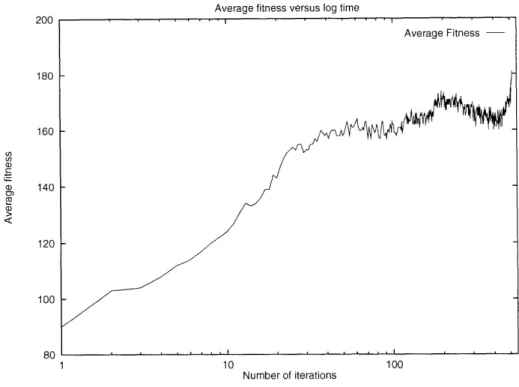
3.10 Plot of average fitness versus log time (number of iterations) . . . . 56
3.11 One of the 12 Low Action training templates . . . . 61
3.12 One of the 12 High Action training templates . . . . 62
3.13 Histograms of the two projections for the 24 training template frames . . . 63
3.14 Plot of average shot length versus motion energy . . . . 68 11
Histogram of the ME/SL ratio for the trailer "circle"... . . . .. The two estimated pdfs. Green curve is the "character" pdf and the red curve is the "action" pdf . . . . Sample query shot for w = 0.5 . . . . Corresponding retrievals for w = 0.5. Note a similarity value closer to 1 im plies a better m atch . . . .
Plot of 3 vs. Number of clusters indicating cluster regimes. . . . . . Dendrogram representing the agglomerative clustering algorithm. . . Sample images in the test database. . . . . Sample Rotated and Noisy Images. The Top 2 Images are Rotate degrees. Bottom Right Image is the Noisy Version of the Bottom Le Sample database image and its 25% sub-image used for query. . . . . ROC plot for scaled query. All but the Hard AM plot are co-located ft
100% line. . . . .
by 45 Image.
at the
4.7 ROC plot for rotated query. All but Hard AM are n ROC plot for subimage query. . . . . ROC plot for 15% pixel distortion query. . . . . ROC plot for contrast change query. . . . . ROC plot for additive gaussian noise query. . .
Architecture of the browser/editor application . Cluster browser view of movie shots database Cluster browser view of home video database
ear the top . . . . 113
. . . . 114 . . . . 115 . . . . 116 . . . . 116 . . . . 119 . . . . 121 . . . . 121
5.4 Centroid browser showing some shots in the "field" cluster. 1 3.15 3.16 3.17 3.18 4.1 4.2 4.3 4.4 4.5 4.6 . . . . 95 . . . . 96 107 109 110 . . . . 112 4.8 4.9 4.10 4.11 5.1 5.2 5.3 122
5.5 Centroid browser showing some shots in the "living room" cluster . . . . 123
5.6 Original still picture of butterfly . . . . 124
5.7 KL collage of the butterfly . . . . 125
5.8 Original still picture of turtle . . . . 126
5.9 KL collage of the turtle . . . . 127 5.10 Automatically generated 2-minute summary of the home video collection. . 128
List of Tables
3.1 Performance of the evolved discriminators . . . . 3.2 Confusion matrix for training set . . . . 3.3 Confusion matrix for test set . . . . 3.4 Table of average shot lengths, motion energy and KL distances . . . .
3.5 iMDB classification: "A" is action oriented and "C" is character oriented Classification results for the 3-node HMM model . . . .
Final classification of trailers using the SKL distance . . . .
Cluster experiments for scaled query image . . . .
Cluster experiments for query image rotated by 45 degrees .
Cluster experiments for sub image query . . . .
Cluster experiments for 15% pixel distortion . . . .
Cluster experiments for contrast change query . . . .
Cluster experiments for query image distorted with gaussian
. . . . 72 . . . . 74 . . .. . . . 111 . . .. . . . 111 . . . . 112 . . . . 113 . . . . 114 noise . . . . . 115 3.6 3.7 4.1 4.2 4.3 4.4 4.5 4.6
Chapter 1
Introduction and Motivation
1.1
The Problem Statement
Understanding the structure of video (more generally, media) is a fundamental problem that is worthy of research without any underlying application in mind. There are things that we simply cannot glean from a microphone or camera, and they cross all potential uses. For example, we cannot yet place a microphone in front of an orchestra and deduce the score. Similarly, we cannot yet meaningfully quantify the relationship between two video sequences; we neither know the elements that we are comparing nor do we have strong metrics for evaluating our conclusions. These are long-term research issues marked by incremental steps peppered with occasional breakthroughs.
It is of considerable value to proceed by solving particular and useful real-world problems, especially if they can help us understand the larger issue better. For example, we learn about biology and life by trying to treat a disease. We may wish to remove the sound of a cough from a concert very specifically, or we may wish to match a face before a camera with one in a database. These problems have been posed by questions of surveillance but a good solution both helps and teaches. In other words, these issues meet specific needs and
at the same time enhance our ability to build structure out of media.
In this thesis we choose one such specific domain: unscripted and casually recorded video and one solution: a representation that permits it to be catalogued, searched and assembled into a variety of motion and still presentations. This material is what often fills the reels of consumer camcorders. I argue that this is a useful situation for the following reasons: It is looking at video retrieval from a synthesis point of view as opposed to the analysis view. Also, such video has no scripted structure to facilitate its navigation and therefore makes the problem more interesting. Further, it can be solved by using the machine to help sort, manipulate and select images that support or suggest an idea.
The focus of the thesis is therefore, making video useful. The idea is to build a set of tools that analyze, characterize, and prepare footage shot with a camera for unanticipated uses. We are targeting fun as the utility of the material. The idea is to take this ensemble of raw stuff and use it in interesting ways that are not just making a sequence out of them. Some of the possible uses of such unscripted/unstructured video are: Make a time slice of a person or a series of events, select a group of shots and make a postcard out of them, make a collage of shots, make a Salient Still, storyboard etc. Some of these outputs may be used to guide other constructions of the material. For example, the storyboard may form the basis of a family drama. The construction process may suggest ways to efficiently encode and transmit the resulting sequence.
1.2
Motivation
Recently, the technology of transmitting and storing high-bandwidth media such as video has far outpaced our ability to meaningfully manipulate it. This situation is going to worsen in the near future. For example, NASA's Earth Observing System will generate 1 Terabyte of image data per day when fully operational. A content-based system is required to effectively navigate and retrieve information from such immense repositories. In addition,
video is becoming the medium of choice for recording human experience, both personal and collective. This position occupied by video will only be strengthened with the availability of future high-bandwidth smart networks. Moreover, a promise of digital technology is that bits of one kind can be converted to bits of another kind. I.e, a still image can be created from a video sequence or a collage can be made from a collection of stills. This thesis derives its motivation from these facts and strives to make day-to-day communication using video simple and intuitive.
1.3
Questions raised and addressed in this thesis
Unlike scripted video (such as movies and commercials), video that has been shot for the simple purpose of recording an event or place has no structure or meta-data to facilitate its access. Frequently, the only method of access is a linear navigation through the entire contents. While this may be acceptable for passive watching of video, the paucity of struc-tural information renders it useless for later retrieval and reuse. Moreover, the commercially available non-linear editing systems are oriented towards structured video. They are good for editing but not useful for navigating and creation of structure where none was present to begin with. Further, such systems take video sequences and create another sequence out of them and are not geared towards other types of outputs. In contrast, content-based retrieval systems hold the promise to wade through large repositories of imagery. Media Streams [8] is a video representation language with special attention to the issue of creating a global, reusable video archive. It amply illustrates the usefulness of having structure in video for retrieval and reuse. However, it relies on manual annotation to add structure to video. The work done by Bobick, Iyengar, and others [2, 20, 21, 23] characterizes video based on the action in addition to the content. Once the video has been characterized using these techniques, retrieval becomes feasible albeit possibly imprecise. However, precision is not a problem as long as the retrieval is useful. With useful retrieval, comes reusability of video and transformation to other types of representations (such as stills, collages, storyboards etc).
These uses require two things: a mechanism to characterize and classify the content and a suitable navigational aid through the content. In addition, each output format requires a dedicated composer/editor. The characterization techniques developed by us may be well suited for the first task since they analyze both content and action [20, 21,
231.
Since the underlying content is going to be used in unanticipated ways, the task of building a browser to navigate through the content is formidable. Some of the traditional approaches towards indexing and annotation are ill-suited for this purpose. Annotation is time and labor-intensive, and may not be usable for all types of applications. Moreover, annotation based systems have to deal with operator subjectivity [43]. Systems that explicitly model video and permit browsing using simple language (such as the Vasconcelos' plain English browser [62]) often have a limited vocabulary by design and therefore cannot support any unintended query. When the video is structured, we can rely on editing artifacts and other structural cues to characterize the video. For example, see Ref. [23] for examples of using hidden markov models to analyze newscasts and sports and to classify movie trailers either as character or action movies. Ref. [64] exploits the script information present in television situational comedies to characterize content. These systems, make reasonable structural assumptions about the nature of particular types of video and exploit them in their classification. Such assumptions will not be valid for unstructured video in general.In contrast, query-by-example systems coupled with user-feedback are better suited to this task since they do not make any assumptions of the nature of use of the content. However, these systems suffer a couple of limitations. In order to provide flexibility, such systems frequently permit direct access to the features and their weighting in the query-retrieval process. This is non-intuitive and often counter-productive. Another limitation is that query-by-example systems start by presenting a random sampling of the database and then tune themselves with user interaction. Presenting a useful first page is a difficult problem since it has to be representative of the database. This is particularly important as the size of the database increases. Any small set of samples cannot meaningfully represent the database well. Sclaroff et al. [6] refer to this as the page-zero problem. The notion of serendipitous discovery of the "right" image/video in the query-by-example paradigm gets
weak if the initial subset that is presented is not representative. Moreover, such systems typically search over the entire database before returning the results. This implies that the computational requirements grows with the database size. In addition, we also need to examine issues such as the right feature set and the minimum number of features to guarantee good retrieval. This thesis does not address this issue of feature space selection, but it does address the page-zero problem by employing clustering for browsing.
Query-by-example pays the price by relying on lower-level features. The gap between the machine representation and the human perception is wider compared with model-based approaches. Another important problem with query-by-example is that it has not charac-terized or abstracted the database in any particular way. It searches the entire database every time a query is presented. While there are efficient search techniques to reduce this search complexity, the problem of not having generalized and abstracted the data remains. The abstraction problem can be addressed by allowing the system to learn via user iteraction and propagate newly learned labels. This can be viewed as the system having the ability of "short term memory". This system achieves the happy middle ground between pure query-by-example with no assumptions at one end and Bayesian modeling with structural assumptions at the other extreme.
Our approach to tackling the unstructured video problem has been to use clustering tech-niques to create multiple groupings of the video. Clustering is a natural way to organize massive quantities of data and to take advantage of the cognitive abilities of the user. For example, let us suppose that the user presents a video collection that is made up of shots from a typical home video. It is reasonable to expect that good clustering algorithms will group all shots that have similar features together. For example, most shots taken indoors will be in one cluster and most shots taken outdoors will be in another cluster, purely from the color features. The user views these clusters and attaches labels. The clustering algo-rithm relied on the user's ability to make inferences and attach cognitive meaning. This is not to say that it will work all the time. Some clusters may be such that we cannot provide clean labels. The interesting point is that from the perspective of extracting alternative
outputs from the video (like collages, storyboards, still pictures and video dramas), it is not important that all clusters make cognitive sense to the user.
In addition, these groupings can also be augmented by specifically designed higher-level model-based approaches such as the ones in [23, 62]. Once video is thus clustered, we manipulate and access it via a set of specialized application modules that enable us to synthesize alternate outputs from video. In order to achieve these, we choose a common framework that supports these different techniques: probabilistic descriptions derived from extracted features. These probabilistic descriptions range from simple histograms of fea-tures at one end to joint density estimates from a Bayesian network at the other extreme. Using probabilistic descriptions provides us with some advantages apart from being able to combine descriptions with differing levels of complexity.
" They are robust to missing/corrupted data. That is, they can handle dropped frames, corrupted blocks etc. Their performance degradation is gradual.
" They can be multimodal. That is, an image and a video sequence can be treated similarly. An image can be used to query for video and vice-versa.
" They enable multiple groupings. For example, a picture of a crowd taken outdoors can be categorized both as a picture of a crowd and as an outdoors picture. Probabilistic descriptions provide confidence estimates for each type of categorization which is then used for multiple groupings.
" They are well understood and provide intuitive explanations and reasoning similar to the way humans relate to data.
1.4
Thesis contributions
In this thesis, we group the contributions into three distinct sections. We first present tech-niques for classification of video by content. These techtech-niques range from simple
features-based approaches most suited for unstructured video to semantics-features-based models most suited to classification of structured video such as newscasts and sportscasts. We then examine a clustering technique in the probability density space. This technique treats video sequences as a probability density along a specific feature or groups of features and partitions all the video sequences in the database along these groups of features. The final part is the applica-tion front-end that combines the features and models with the density clustering to enable access into unstructured video and permits the kinds of manipulations that we envisaged earlier.
To summarize, the contributions of this thesis are:
9 A suite of (expandable) classification techniques that analyze video by action/content etc.
9 A clustering approach that takes as inputs probability density models of images and video sequences and groups them in this density space. This approach is not lim-ited to image and video but is generally applicable to all domains that model data as probability densities. We present 3 different clustering algorithms based on this approach.
e A browser to search through the video content. This browser comprises a set of dis-plays to enable users to create and view possible outputs of such a system. Examples include a movie display, a stills display, and a collage display.
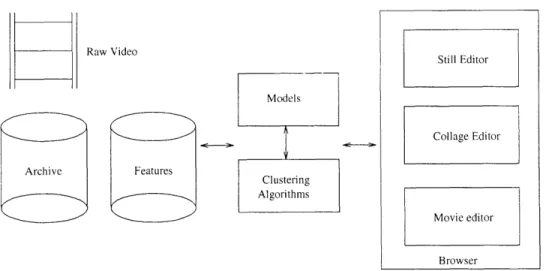
Figure 1.1 shows the outline of the proposed system.
1.4.1 Content Clustering Engine
Under the proposed model, when a video is entered into the system, it is analyzed and a set of features are extracted from it. These features are stored as indices associated with the video. For each such extracted feature, a probability density representation is computed.
Raw Video Archive Features Still Editor Collage Editor Movie editor Browser
Figure 1.1: Outline of proposed system
The clustering engine groups this collection of density functions using the distributional clustering algorithms presented in Chapter 4. Thesc groupings are made available to the browser and are the starting point for enabling structure in unstructured video.
1.4.2 Browser
The browser provides direct, low level access to the content. It is a framework for molding video into new packages. It is extensible in the different tools and metrics that it offers to search through the content. The browser supports multiple output formats, each with a specialized display module.
Stills module
The stills module provides the user with an interface to search the database and locate a particular still image. This image then can be used a regular still image - it can be printed, manipulated using tools such as Photoshop.
Collage module
The collage module is an extension of the stills module. It permits constructions such as a storyboard or a collage from the material. This storyboard can be used by the Movie module to put together a video sequence.
Movie module
The Movie module suggests movies by piecing together a storyboard from the clustered video shots. This storyboard can be seen as an alternative to summarization and a launching pad for movie constructions.
1.5
Road map
The rest of the thesis is organized as follows. Chapter 2 reviews some of the current work in video and image characterization. Chapter 3 presents my work in video characterization and makes the case for probabilistic descriptions. Chapter 4 motivates the relative entropy based clustering algorithms that constitute the primarily technical contribution of this thesis. The next chapter details the application that uses these clustering techniques for constructing interesting alternate outputs from video. Summary and future work are detailed in 6
This thesis can be read in multiple ways. If you accept the argument of clustering for unstructured video, you can skip directly to Chapter 5. For more details on the clustering algorithms used, it is recommended that you read Chapter 4. For a broad overview of content-based retrieval and reasons why we selected probabilistic representations for clus-tering, please read Chapters 2 and 3.
Chapter 2
Related Work in Content-based
Retrieval of Images and Video
In this chapter, we categorize some of the major work in image and video retrieval. Content-based retrieval is motivated by the ever-increasing availability of images and video sequences in our information networks. Ideally, we want to be able to specify arbitrarily complex queries and yet expect meaningful answers.
Image and Video retrieval techniques can be roughly categorized as
" Annotation based approaches. These emphasize the usage of textual annotation for retrieval of similar images. They either use textual databases modified to handle images or guide a visual query by weighting the image features with contextual text.
* Feature similarity based approaches. These extract features from images and video and define similarity in this feature representation.
" Video event detection based techniques. These extract significant events in a sequence such as cuts, fades and dissolves and use this description to summarize the
video content. In addition, the extracted key frames are represented using features and the problem of video retrieval is often turned into one of image retrieval on these extracted key frames. This approach can be seen as decomposing video retrieval into a two stage process - extraction & representation of significant events in video as still images and constrained retrieval of these still images.
e Bayesian Inference based approaches. These approaches impose prior knowledge about the feature content for particular classes of images and video (such as outdoors, closeups, sports, action movie) and turn the task of detecting similarity into Bayesian Inference.
We will study illustrative examples from each approach. In addition, we will review some complete system perspectives.
2.1
Annotation based approaches
2.1.1
Relational database extended with image features
The Chabot/Cypress [38] system integrates relational database retrieval concepts with color analysis techniques. This system was initiated to study storage and retrieval of vast collec-tions of digitized images at the Department of Water Resources, State of California. Each image is accompanied by extensive meta data (including the date of the photograph, photog-rapher, location and format of the original image). The goal of this system was to augment an entirely manual operation that was in place prior to Chabot. The queries on this system ranged from highly specific, asking for images of a particular location at specified times to generically arbitrary such as "sunsets". Chabot was built on top of an object-oriented database called Postgres which permits SQL-like queries. In addition, simple functions written by the user can be registered into the database and be used on images at query time. For example, the Chabot system had functions written to compute color histograms.
In addition, Chabot permitted creation of new "concepts" using these functions and SQL constructs. The shortcoming with Chabot (and its later variation, Cypress) is that it relied primarily on the metadata for its queries. If a user had to search on "concepts", they had to specify it in terms of metadata and/or in terms of simple primitives (such as range of color values). The system did not attempt to connect the annotation with visual primitives.
2.1.2 Text-assisted image features based systems
In contrast, the Piction system [55] adopted the approach of assisted vision. It focused on a computational model for understanding pictures based on accompanying descriptive text. In their approach, "understanding" is defined as identifying relevant people and objects. They use the caption information to prime a vision system by providing a context. Similarity between query and captioned images is based on 4 distinct sources of information:
" Inexact text content (from descriptive caption,-).
" Exact objective text (from manually entered keywords).
" Inexact image similarity (based on extracted image features).
" Exact image-based objective term (objects/people identified by the vision system via descriptive captions).
Reliance on multiple sources of information can counter the problems with a purely textual system. E.g, "Four aircrafts performing daredevil stunts at the Air Show. President Clinton took part in the celebrations ..." implies to the human user that the picture will not contain President Clinton but a purely textual system will bring this as a match for a query on Bill Clinton. However, a vision system (if it works) will be unable to identify a face in the picture and therefore return lower similarity for this caption. The limitation with this approach is that even simple descriptive captions need a good natural language processing capabilities to properly guide a vision system. At present, our understanding of both computer vision
and natural language processing is far from the level of sophistication needed to make this system work effectively. The authors report 65% performance on a small database of newspaper caption images.
LaCascia et al [6] combine visual features with textual statistics into a single index vector for content-based searches of a WWW image database. Latent Semantic Indexing (LSI) is used to capture the textual statistics in the HTML document. They assign importance to the text surrounding an image in the HTML document based on its proximity and the HTML tag type. A weighted term-image matrix is created for each such image in the document. Singular value decomposition (SVD) is then used to decompose the term-image relationships into a set of linearly independent vectors. This resultant LSI vector provides the context associated with an image and is combined with the computed visual feature vectors. The extracted visual statistics are the color histogram and the dominant orientation histogram. To reduce the dimensionality of feature vectors, they perform principal component analysis (PCA) and select a smaller subspace. The global feature vector consists of the LSI textual vector and the PCA color and directionality vectors. They then use a k-nearest neighbors algorithm to match the query with the images. In addition, relevance feedback is used to select the appropriate weighting functions for the various similarity values (text, color and directionality). The authors use this combined approach to mitigate the page-zero problem associated with query-by-example systems. Since this approach does not rely on such a close connection between the image features and textual features as the Piction system, a simpler text retrieval technique such as LSI works fairly well. However, this system relies on the extensive textual annotation that is typical in HTML documents with embedded images. For systems where there is no access to contextual text (such as unstructured video, as in our problem) this approach is not suitable. We next examine image retrieval systems that rely primarily on image features (such as color and texture) for retrieval.
2.2
Feature similarity based approaches
In these systems, the problem of retrieval is phrased as finding appropriate features that can be extracted from images and defining similarity functions in these feature spaces such that two images whose features are "close" are visually similar to humans as well.
2.2.1
Color based techniques
One of the most commonly used feature for content-based retrieval is the color histogram of the image. It is reasonable to expect that visually similar images will have similar color compositions and therefore histograms are expected to be revealing. Color histograms have several other advantages - invariance to size, scale and rotation of images that makes them attractive for content-based retrieval. Also, they are compact relative to the size of the image. They have been shown to perform very well. Once the image is described as a histogram in the colorspace, we can choose one of many different similarity measures to rank images. Swain and Ballard
[57]
introduced Histogram Intersection, which is equivalent to the Manhattan distance (L1 norm )for normalized histograms. Other commonly used measures are all the L, norms, with L2 and L1 being the most common[27, 50], the x2estimate[3] and the KL divergence[25]'. One of the problems using color histograms directly is that a slight shift in the feature values can result in large differences using any of these commonly used similarity measures. The QBIC system [12] attempts to counter for that by using a quadratic distance measure that quantified the similarity between bins. However, the quadratic distance similarity results in a significantly higher computation at the retrieval stage. Jain and Vailaya [27] proposed an image smoothing approach to relate the histogram bins. A similar approach has been proposed by Zabih et al [41]. In this thesis, we will present another general approach to quantify the inter-bin similarity [22, 25]. This technique, along with [27] and [41] can be viewed as a preprocessing step in the computation of the histogram.
'We note here that the X' estimate is related to the KL divergence. It can be shown that it is the
Unlike the quadratic distance, these techniques result in an efficient computation during the retrieval stage.
While histograms are compact and very good for image retrieval, a major shortcoming with them is the lack of local information. It is easy to pick example images with similar histograms that are visually very different. For example, consider an image of a fabric that has alternate stripes of blue and green. This image will most likely have a histogram similar to a landscape image of a lawn and sky. This is because the histogram does not record the local structure of colors but only the global composition. The color coherence vector [41, 40] is a refinement of the histogram where the colors are split into two components: coherent and incoherent. Coherent component of a color are defined as those color pixels occuring in a neighbourhood of the same color pixels. Now the histogram distance is dependent on both these components. This will differentiate the images in the above example since the coherence vector encodes the composition along with the count. A further refinement on the histogram is the Color Correlogram [18] which records the probability of a color occuring in a specified neighbourhood of another color. As one would expect, each description increases in complexity and requires higher computation both for characterization and retrieval. A commonly adopted approach is to use the histogram first to select a set of candidates, and then refine further with color coherence vectors or correlograms on this smaller set to bound
the computational requirements.
2.2.2
Approaches based on Texture, Shape and other features
While histograms are compact and efficient, in some particular domains they are not as useful. For example, in grey scale image retrieval, the illumination histogram is not very discriminating. In specific domains, other features have been explored for retrieval with better performance than using color histograms. The Photobook system [42] was used to query and identify frontal face images in a database of about 6000 images. It computed the eigenvector decomposition for this face space. Then, the face images in the database
are represented in terms of projections onto these eigenfaces. Distance between two faces is the distance between the projection coefficients. In later variations, Photobook was extended to handle textures, shapes and faces, each with its separate representation. For shape representation, the objects were modeled by building a finite element representation. The stiffness matrix that results from FEM is used to create the eigenvectors in this shape space. This representation is used for query and retrieval of objects. For textured images, Photobook uses a Wold decomposition based representation which decomposes textures along directionality, periodicity and randomness. For each category of images, Photobook creates a semantics-preserving representation. This is a very powerful idea. However, one drawback is that for each class of images, a new set of features have to be extracted that best describe that class. In specific domains, such as face retrieval, this is not a problem and this technique works very well. However, for general images such as the Corel database, a single semantics-preserving representation may not exist.
The FourEyes system [37] extended the Photobook by incorporating a collection of models (they term it the society of models) and learning the pertinent weighting scheme between models for a particular query using relevance feedback. They employed this approach to counter any systematic bias the features might have introduced and at the same time to incorporate any bias that the user might want to introduce for a particular task. One mode of interaction of this system is to learn labelling from a small collection of samples by getting feedback from the user and then propagating this labelling usefully across the entire database. This learning can be viewed as "short term memory" where the learning of a concept lasts a particular session. In contrast, a Hidden Markov or a Bayesian Network approach that we review later can be seen as a mechanism of incorporating "long term memory" where the concepts are learned and used over the life of the system. Human-in-the-loop is a very useful idea, especially because it permits optimization of queries based on the particular task at hand.
In [53], Smith and Chang presented a general framework for spatial and feature based queries. The general approach is to parse the picture into a collection of regions or objects
and perform queries that are constrained both spatially and in features. For example, a sunset image on the ocean can be specified as an orange colored circular region spatially located above a rectangular blue region. A similar region-based approach was presented by Carson et. al [5, 13] for querying images of animals and highly textured objects. The region-based approach was motivated in part by the need to move away from low-level descriptors to something closer to human reasoning. It is desirable to extract descriptors from imagery that can enable higher-level reasoning. However, it is unclear if such combined spatial-feature approaches provide that since they require the query to be broken down into a description in terms separable regions. A particular query might have multiple descriptions in terms of these simple regions. For example, there can be many kinds of sunsets over ocean being just one of them. Another problem is that many images from unrelated categories might have similar descriptions in terms of such spatial regions.
For texture image retrieval, Liu and Picard [32] proposed the retrieval of the Brodatz texture images using Wold decomposition for characterization of texture. Each texture image is decomposed into the three axes of periodicity, directionality and randomness. A probability model along these axes is built to characterize images. Ma and Manjunath
[35] proposed using Gabor decomposition for texture image representation and retrieval. Gabor filters have compact support both in frequency and time and and can be tuned to different orientations and scales. Statistics over a range of scales and orientation forms a representation of texture and this is used for retrieval of textured images. The authors use a distance function similar to the Mahalanobis distance to compute similarity between images.
Jain and Vailaya [27] use edge histogram as a representation of shape in images. A Canny edge detector provides local orientation information which is used to build an edge his-togram. This is used for content-based retrieval of trademark images, where shape is a very relevant feature. In order to account for rotations, they shift the histogram bins and define similarity between two shape histograms as the smallest distance across all shifts. However, even in these images where shape is quite relevant, the authors claim better performance
with color histograms. A combined shape and color histogram based approach has the ad-vantages (and the computational complexity) of the two techniques and it results in better performance than either color or shape alone.
2.2.3
Apriori classification to improve performance
Visual features based techniques such as histograms, coherency vectors etc do not account for semantic similarity in the content. In many cases, if the class labels are known apriori, visually better retrieval can be achieved. For example, if the query image belongs to the class of man-made objects, visually better matches can be obtained using color histograms if we restrict the search to the subset of the database containing man-made objects. Szummer and Picard [58] proposed a technique of classification of pictures as Indoor vs Outdoor images. This technique extracts a collection of features from images (color histograms, MSAR and DCT coefficients) and performs a k-nearest neighbor classification to identify images as indoor/outdoor. An incoming query image can then be classified into one of these two categories and then queried on a subset of the database. This process can be repeated to limit the database further and thereby get both computational savings and better results. This approach was employed by Vailaya et al [1] where they hand-labeled a collection of images into a hierarchy. A probability model for each class in the hierarchy is estimated using sample images and Vector Quantization. The query image is sent to the appropriate branch in the hierarchy based on these probability models and then a retrieval based on color histograms and coherency vectors is attempted on the subset. One of the problems with this approach is that the creation of hierarchy and the class labels by hand can be a laborious task. However, this can be countered by performing the labeling on a representative subset and then using an automated procedure to label the rest of the database. More importantly, the assumption of the hierarchy requires that the classes be mutually exclusive and that is not true in general. For example, an image can belong to both the sunset and forest classes. In reality, each image will more likely belong to many
for each label for each image. For example, with 80% certainity, the image is a sunset and with 70% certainity, the image is a forest etc.
Liu and Dellaert [34] present a similar classification approach for retrieval of 3D neurora-diological CT images. They exploit the fact that CT images of normal human brains are fairly symmetrical compared to the pathological ones. As opposed to apriori classification, their approach is to use a similarity function that is useful for classification as well. The intuition is that a function that classifies well will probably retrieve similar images. They estimate a probability model over the extracted features and use this to both classify and retrieve images.
2.3
Video event detection and representation
The examples in the previous two sections are primarily still image representation and retrieval systems. These techniques have been extended to handle video sequences with limited success. The field of video retrieval is nascent. Some the pecularities of video that make it harder are - more data to handle, the concept of similarity is harder to specify since there is the added dimension of time.
One of the commonly adopted approaches to video retrieval is to extract significant events from video, such as shots. The intuition behind such a description is that a shot is a single camera stream and therefore can be represented with a still image. Once a video sequence is represented in terms of shots, still image techniques can be employed for query and retrieval.
The two additional orthogonal tasks that result from such a decomposition are - video shot detection and key frame selection. The video sequence is then summarized by a collection of key frames with associated features for every key frame.
In addition to content-based retrieval, browsing is an important application for video. The rationale for browsing is that in interactive applications, it is useful to provide a quick
sum-mary before committing the extensive network resources required to send the full rate video to the consumer. If a storyboard or a summary representation is sufficient to distinguish between video sequences, then only those video sequences that are desired need to be sent at full rate. In this thesis, we make use of browsing as the interaction paradigm with video. Browsing can be seen as an alternative (even a complement) to query-by-example. Instead of specifying queries in terms of possibly non-intuitive primitives, browsing presents a view into the video database and enables identification and selection of material.
2.3.1
Video shot/scene detection and key frame extraction
Shot detection in a video sequence can be performed either in the compressed representation of video such as MPEG or in the uncompressed form. A shot is often the most easy to extract unit of video information. It represents a single camera viewpoint and therefore color, motion etc are expected to be revealing. In uncompressed domain the popular techniques use color histograms, dominant motion, motion compensated pixel differences to detect shot changes
[4].
These shot change detection algorithms exploit the lack of continuity that accompanies a change in camera viewpoint and editing. For example, it is reasonable to expect that the dominant motion in a video shot, which represents the camera's action, changes from shot to shot. Similarly, the colorimetry of the scene changes with camera viewpoint change. Therefore, there is lack of continuity in the color values of a sequence at the shot boundary. Shahraray[51]
proposes a shot change detection technique where the two adjacent frames that are compared are divided into rectangular blocks and a motion and intensity values from these blocks are used to determine a match. If two blocks have similar motion and intensity values, a value of 0 is returned and a 1 indicates a severe mismatch. The cumulative similarity (or dissimilarity) is the sum of similarities over these blocks. A shot change is flagged if this dissimilarity rises above a threshold. A gradual transition is similarly flagged when the dissimilarity rises above a smaller threshold and stays above this smaller threshold for a set of frames before falling below the plateau. The main advantage of this technique is that it combines both intensity and motion parametersin evaluating a shot change and therefore this technique is quite robust. Zabih et al [69] propose a technique using edge information to detect shot transitions. The intuition behind this technique is that during cuts and dissolves, new intensity edges appear far from the location of old edges and old edges disappear far from the location of new edges. They use this to classify a set of edge pixels as incoming or outgoing. Scene cuts are located by looking for local peaks in the maxima between incoming and outgoing pixels. Prior to computing the edge pixels, the authors compensate for the motion by computing the dominant motion. This is ensure that camera operations such as pan and zooms do not contribute to false shot detections. Shot change detection algorithms in the uncompressed domain can be computationally expensive. Moreover, such changes in color and motion etc can be extracted directly from the compressed representation.
Shot change detection in MPEG compressed video is based on statistics of the DCT co-efficients or motion estimation parameters. Some examples are inner product of DCT coefficients of I frames as a measure of frame similarity, number of intra coded P frame blocks versus the number of inter coded blocks, number of forward predicted B frame blocks versus the number of backward predicted blocks, variance of DCT coefficients etc. Some approaches also partially reconstruct the frame from the DC coefficients and use histograms on these frames to perform scene cut detection. For a comprehensive comparison of some of the popular techniques for shot change detection please refer to [15]. Yeo and Liu [65] propose a technique of extracting a DC frame from the compressed stream. This DC frame is created by inverting the 1st DCT coefficient of each block. In a sense, this is equivalent to creating a low pass version of the frame. Since only one coefficient is used, the inverse transform operation can be done in real-time or faster. The authors show that this low pass image is adequate for performing shot change detection. This technique is more robust than relying on the transform parameters completely and yet retains the advantage of the significant computational savings offered by not decoding the entire compressed stream. A key characteristic of all shot change detection algorithms is the assumption about the effect the shot change has on the extracted features. Most of these assumptions are valid for abrupt shot changes but gradual changes such as dissolves are especially hard for all
algorithms
[15].
Moreover the compressed domain techniques are highly dependent on the specific encoder and the output quality[15].
Once the video events have been detected using a shot change algorithm, the next task is to represent these shots by key frames. These key frames are both used for browsing and for content-based retrieval. For key frame selection, many proposals have been suggested first frame, last frame, middle frame, closest to average frame, the two furthest frames etc. One of the most sophisticated technique for key-frame extraction is presented in [71] where the authors use unsupervised clustering to group frames in a shot and select frames from these clusters. There is no clear evidence that any of the proposed set of techniques have a significant advantage over the others, once a video sequence has been parsed into a collection of shots.
2.3.2 Browsing and summarization of video
Zhong et al [70] propose a hierarchical clustering technique for video. Representative shots from each level in the hierarchy form the icons at that level. These icons enable browsing into the video content. The input to their system is a contiguous video presentation (such as a news broadcast). They begin by performing a shot detection to extract shots from the video sequence. A representative frame for each shot is chosen and features associated with this frame are used for the hierarchical clustering process. The features they use for clustering are the color histogram, motion orientation histogram and motion mean and variances. They employ a fuzzy K-Means algorithm for clustering. This is an interesting technique for browsing into the video content and related to our work. However, relying on features from a single representative frame may not capture the temporal import of the event. Also, the motivation for the fuzzy cost function that they employ is unclear.
Yeung et al [66, 68, 67] proposed the Scene Transit"ion Graph (STG) as a model for orga-nizing and browsing video. The STG is a representation where the component shots of the video are organized into related groups and the transitions between the shots is indicative
of the video content. For example, assume that a video sequence is made up of a dialog scene, an action scene followed by another dialog scene. Each of these component scenes is made up of many shots. For example, the dialog scene will typically have two or three camera viewpoints, each representing a shot. A simple parsing of the video sequence into shots does not convey the presence of a dialog. Whereas, if the representative images from each shot is examined, the dialog scene might cluster into two/three groups of shots (one for each camera viewpoint). The authors use this intuition to cluster related shots and create a scene transition graph where each node represents a group of related shots. Exam-ination of this graph makes it more apparent that the underlying event is a dialog/action scene etc and thereby provides a better summary of the video content. This works well for structured content. For unstructured video, the premise on which the STG rests is invalid and therefore cannot be applied. Interestingly, the authors also argue against using a single representative frame per shot [66] as it loses key temporal structure and can potentially classify related shots as different because of bad choice of the key frame. The authors, instead, use multiple key frames selected on the basis of the amount of activity within the shot. A shot with more action will have more key frames to represent it. This is a mecha-nism to compromise between the computational complexity of using the full rate video and the lack of information in a single key frame.
Pope et al
[45]
describe a scheme for summarizing video content using mosaics. The mosaic is a static snapshot built from aggregating the frames in a video shot. Moving objects are then placed into the mosaic to create an alternative video representation. In their scheme, the incoming video is segmented into shots and the static content of each shot is used to create the mosaic. The dynamic content is segmented, tracked and overlaid onto this mosaic to provide a mechanism for semantic event detection (such as collisions, chases, suspicious activity). This approach is targetted towards aerial surveillance and reconnaissance missions. The mosaicing process works well for relatively static shots with significant overlaps to ensure quality registration. In addition, since sensor inputs (such as GPS co-ordinates) are frequently available, an orthorectified mosaic using a physical model of the region surveyed is also used. Once the images comprising a shot are registeredand compensated for camera motion, pixels of significant coherent residual motion are marked as dynamic objects. Each such contiguous region of moving pixels is modeled by it size, velocity, overall shape and color in order to track it over multiple frames. A typical representation of each object is extracted from these model parameters and overlaid into the mosaic. This technique of tracking objects relies on the fact that they occupy a relatively small fraction of the overall size of the frame.
2.3.3
Content-based video retrieval
Content-based retrieval of video, as we mentioned earlier, is often turned into the simpler problem of image retrieval on extracted key frames. The basic idea is to extract a collection of shots from a video sequence, represent each shot by a key frame. Once the key frames are selected, a set of features for each key frame are extracted and used for queries and retrieval.
Dimitrova and Abdel-Mottaleb [11] present a technique for extraction of signatures from MPEG and MJPEG compressed video sequences. These signatures are extracted from the DC coefficients and motion information of representative blocks in a video frame. The authors extract signatures from video clips (a clip is a small sequence, possibly made up of a few shots) using two techniques: a signature for every I frame in the clip or a signature for every key frame in the clip. The I-frame only signatures tend to be longer because there can be potentially many more I-frames than shots in a video clip. A set of window pairs are selected apriori. These window pairs are arbitrarily chosen macro blocks within the frame. For each window pair, the DC coefficients and the block motion vector form the signature. The frame signature is the concatenation of the set of window pair signatures. Similarity between two video clips is expressed in terms of similarity between these signatures. A major advantage with this representation is that the signature is fast to compute (since no decompression is required) and search. However, the signature seems highly dependent on the MPEG encoding parameters used. For example, the same video sequence which has
been encoded using two different MPEG parameters will not necessarily result in signatures that are proximal. In contrast, a color histogram might be more revealing in this case. Because of its computational simplicity, it might be useful to use this technique as a filter to select candidate matches and then refine the smaller subset further with a more expensive approach.
Vailaya et al [61] propose a similar approach for query by video clip (once again a clip is defined as a small video sequence). They use both a key frame based approach and a uniform subsampling approach for content-based retrieval. In the key frame based approach, a set of key frames are extracted from the query clip using shot change detection. In the uniform subsampling approach, the query and the database are temporally subsampled identically. Both the clip and the database are represented by the set of these subsampled frames. For the purposes of further discussion, these subsampled frames can be called "key frames". For each key frame the color, texture and motion associated with it are used to compute similarity between the the query key frame and the database key frames. For color, euclidean distance between histograms is used for similarity. For texture, the euclidean distance between the edge direction histograms (edges computed using a Canny edge detector) is used. For motion, the euclidean distance between the optical flow histograms is used as the similarity measure.
Similar video clips are the ones whose consecutive key frames are similar to the key frames of the query clip. In the case where the query and the database sample have the same number of key frames, the dissimilarity between the two is the cumulative dissimilarity between the features of the key frames. Because the query clip and the database clips are likely to have different number of key frames, they define a similarity measure that depends on the closest key frames in the query and sample and also on the difference in the number of key frames between them.
The general problem with key-frame based techniques for video retrieval is that such tech-niques lose important information that is present in the evolution of video. For example,