
HAL Id: hal-00296810
https://hal.archives-ouvertes.fr/hal-00296810
Submitted on 9 Aug 2005
HAL is a multi-disciplinary open access
archive for the deposit and dissemination of
sci-entific research documents, whether they are
pub-lished or not. The documents may come from
teaching and research institutions in France or
abroad, or from public or private research centers.
L’archive ouverte pluridisciplinaire HAL, est
destinée au dépôt et à la diffusion de documents
scientifiques de niveau recherche, publiés ou non,
émanant des établissements d’enseignement et de
recherche français ou étrangers, des laboratoires
publics ou privés.
Integrating water quality models in the High Level
Architecture (HLA) environment
K.-E. Lindenschmidt, F. B. Hesser, M. Rode
To cite this version:
K.-E. Lindenschmidt, F. B. Hesser, M. Rode. Integrating water quality models in the High Level
Architecture (HLA) environment. Advances in Geosciences, European Geosciences Union, 2005, 4,
pp.51-56. �hal-00296810�
(HLA) environment
K.-E. Lindenschmidt1, F. B. Hesser2, and M. Rode2
1GFZ GeoForschungsZentrum Potsdam, Section 5.4 – Engineering Hydrology, Telegrafenberg, 14473 Potsdam, Germany 2UFZ Centre for Environmental Research, Department Hydrological Modelling, Br¨uckstr. 3a, 39114 Magdeburg, Germany
Received: 1 August 2004 – Revised: 1 November 2004 – Accepted: 15 November 2004 – Published: 9 August 2005
Abstract. HLA (High Level Architecture) is a computer ar-chitecture for constructing distributed simulations. It facili-tates interoperability among different simulations and simu-lation types and promotes reuse of simusimu-lation software mod-ules. The core of the HLA is the Run-Time Infrastructure (RTI) that provides services to start and stop a simulation ex-ecution, to transfer data between interoperating simulations, to control the amount and routing of data that is passed, and to co-ordinate the passage of simulated time among the sim-ulations. The authors are not aware of any HLA applications in the field of water resources management. The develop-ment of such a system is underway at the UFZ –Centre for Environmental Research, Germany, in which the simulations of a hydrodynamic model (DYNHYD), eutrophication model (EUTRO) and sediment and micro-pollutant transport model (TOXI) are interlinked and co-ordinated by the HLA RTI en-vironment. This configuration enables extensions such as (i) “cross-model” uncertainty analysis with Monte Carlo Anal-ysis: time synchronisation allows EUTRO and TOXI simu-lations to be made after each successive simulation time step in DYNHYD, (ii) information transfer from EUTRO to TOXI to compute organic carbon fractions of particulate matter in TOXI, (iii) information transfer from TOXI to EUTRO to compute extinction coefficients in EUTRO and (iv) feedback from water quality simulations to the hydrodynamic model-ing.
1 Introduction
This paper conceptualizes the integration of computer mod-els used to simulate river water quality in the High Level Ar-chitecture (HLA) platform. There has been an impetus to configure models into modeling systems due to the integra-tive and more holistic approach science has taken to tackle environmental management problems. This is particularly
Correspondence to: K.-E. Lindenschmidt
the case for the management of large river basins (e.g. Euro-pean Water Framework Directive [2000/60/EC]).
HLA is a program specifically developed for the coupling of models into one system (see Fig. 1). The models are rep-resented as Federates (stand-alone computer programs) to and from which information is communicated by the Run Time Infrastructure (RTI), which is the core of the HLA. It provides services to start and stop a simulation execution, transfer data between interoperating simulations, control the amount and routing of data that is passed and co-ordinate the passage of simulated time among the simulations (Kuhl et al., 1999). One particular strength of the RTI is its ability of sequencing command inter-communication amongst the Federates in a very efficient manner. An additional advan-tage is its ease of communication of Federates on different computer systems via a network.
HLA has been used for a number of applications such as: – communication and synchronisation media for
mod-elling of hybrid systems (e.g. water level control in a two tank system) (Borshchev et al., 2002),
– modelling and simulation of processes associated with software system acquisition activities which concerns the funding, management, engineering, system integra-tion, deployment and long-term support of large soft-ware systems (Choi and Scacchi, 2001),
– developing multi-agent systems for applications in mo-bile robotics (Das and Reyes, 2002),
– providing online/real-time location information of streetcars of the public transportation company in Magdeburg, Germany (Klein, 2000),
– traffic reduction schemes based on space-based quanti-zation (Lee and Zeigler, 2002),
– designing simulation environments for human training (esp. military personnel) (Maamar, 2003).
52 K.-E. Lindenschmidt et al.: Integrating water quality models
Fig. 1. The HLA environment (adapted from Petty, 2002).
The authors are unaware of any applications in water qual-ity simulation. A project has been initiated in Germany to develop a flood forecasting system integrating a hydrologi-cal model, GIS (Geographihydrologi-cal Information System) and up-to-date rainfall data (Schulze et al., 2002) but the project is still in its infancy.
In this paper the Water Quality Simulation Program ver-sion 5 (WASP5) is used to illustrate the capabilities gained in the simulation process by integrating its submodels into a HLA federation. The submodels include the hydrody-namics (DYNHYD), eutrophication (EUTRO) and sediment and micro-pollutant transport (TOXI) of surface waters. The HLA implementation induces better interactive transfer of in-formation between the submodels to extend predictive ability and uncertainty analyses. The paper concludes with a com-parison of the HLA method with conventional model cou-pling and object-oriented approaches.
2 Modelling methods
The WASP5 modeling system (Ambrose et al., 1993) is used to simulate the hydrodynamics, water quality and transport of sediment and micro-pollutants in a river. It is a conglom-eration of three models (see Fig. 2):
1. DYNHYD – uses the St. Venant equation (full dynamic wave) to calculate the flow of water through a water body. With the volume continuity equation and Man-nings equation of flow through a channel, mean inter-facial flows ¯Q, water volumes V, mean current velocity ¯v and mean water depth ¯d of each discretized unit can be simulated dynamically. These variables are trans-ferred as input to the two models, EUTRO and TOXI, described next:
2. EUTRO – simulates the transport and transformation of variables important in describing the eutrophication processes (high productivity) in surface waters. Oxy-gen plays a central role in the system and is balanced between sources (production through photosynthesis by phytoplankton growth and re-aeration from the atmo-sphere via the water surface) and sinks (oxygen demand by organic matter and bottom sediments; respiration; ni-trification). The dynamics of nutrients (phosphorus and nitrogen) complement the phytoplankton growth.
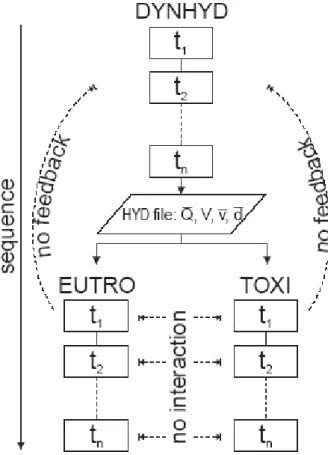
Fig. 2. Sequence of submodel simulations in the original WASP5.
3. TOXI – simulates the transport of sediments and micro-pollutants. Transport processes induce advection, dis-persion and sedimentation and resuspension of particu-late matter to and from the bottom sediments and dif-fusion of dissolved matter between the water body and bottom sediments. These substances may also undergo transformations such as equilibrium sorption, volatiliza-tion, ionizavolatiliza-tion, photolysis, hydrolysis and biodegrada-tion.
The sequence of simulation flow is illustrated in Fig. 2. The hydrodynamic simulation must be completed first to generate interfacial flows, water volumes, mean velocities and mean depths of each discretized unit. These variables are stored in a hydrodynamic file (*.hyd) for subsequent in-put to EUTRO and TOXI.
In its original version, no interaction occurs between EU-TRO and TOXI and feedback from these two models to DYNHYD is also not possible. More flexibility is obtained when these models are coupled together in the HLA platform as shown in Fig. 3. Since the RTI is programmed in the C++ language and the three WASP5 models in Fortran, a wrapper needs to be integrated into each model to allow calls to be made to and from the models by the RTI.
Fig. 3. Implementation of the WASP5 submodels DYNHYD,
EU-TRO and TOXI in HLA.
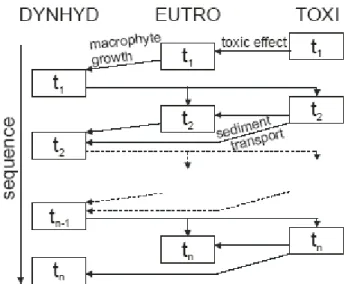
Fig. 4. WASP5 submodel simulation sequence in HLA.
3 HLA implementation
An initial configuration of the simulation sequencing in the HLA environment is shown in Fig. 4. Storage of the hydro-dynamic variables is avoided and can be passed after each time step directly to EUTRO and TOXI. All three models can now be run simultaneously and the simulation time steps are synchronized by the RTI. Hence, for example, the simulation of EUTRO and TOXI at time step 2 (t2) occurs as soon as
the t2simulation of DYNHYD is completed. DYNHYD than
immediately begins simulation of its time step 3 (t3) while
EUTRO and TOXI are computing their t2. There is a saving
in computation time when the three models are networked to-gether and run in parallel on three different processors or on a multi processor computer. Also, Intels® Hyperthreading expedites the simulations.
3.1 Monte-Carlo uncertainty analysis
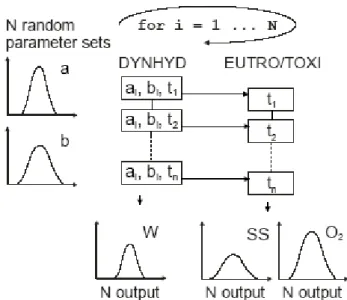
An important advantage of such a configuration is the ex-tensive capabilities it provides for Monte-Carlo uncertainty analysis. The effect of certain variations of change in the parameter values (e.g. Fig. 5a and b) in DYNHYD on the variables in EUTRO and TOXI can now be explored. Up to 10 000 runs of the same simulation are carried out, in which a different parameter setting is chosen for each run. The DYN-HYD parameters are randomly selected from a probability distribution of its values. This evokes a distribution of the EUTRO and TOXI variables (e.g. oxygen O2and suspended
Fig. 5. Monte-Carlo analysis of the WASP5 federation.
Fig. 6. Flow of information from EUTRO to TOXI to calculate foc.
sediments SS), from which the contribution of uncertainty of each parameter on the water quality description can be made. In the conventional simulation sequence (Fig. 2) only an uncertainty analysis of the parameters on the variables of the same model could be made (see for example Linden-schmidt et al., 2003; LindenLinden-schmidt et al., 2004a). With the HLA implementation, “cross-model” uncertainty anal-yses were made possible (Lindenschmidt et al., 2004b and 2004c).
3.2 EUTRO to TOXI interactions
Coupling EUTRO and TOXI together in the HLA environ-ment allows ease of communication between the two models. Figure 6 shows an example of data transfer from EUTRO to TOXI.
The concentration of chlorophyll-a (Chl-a) is a variable in EUTRO which, in many cases, correlates well with the particulate organic carbon (POC) content in the water. By dividing POC with the concentration of suspended sediment
54 K.-E. Lindenschmidt et al.: Integrating water quality models
Fig. 7. Flow of information from TOXI to EUTRO to calculate KE.
(SS) simulated in TOXI, the weight fraction of organic car-bon in suspended matter (foc) is obtained (Ambrose et al., 1993; Chapra, 1997):
f oc = P OS
SS (1)
The partitioning of heavy metals M in the water can now occur between the dissolved phase MDI Sand the organic
car-bon of the particulate phase MOCusing the partition
coeffi-cient KOC Koc=
KD
f oc (2)
This is an extension of the simplified partitioning of heavy metals between the dissolved and total particulate fractions of heavy metals (MDI S and MP ART) using the partition
co-efficient KD: MDI S = 1 1 + KD·SS (3) MP ART = KD·SS 1 + KD·SS (4)
where SS is the concentration of suspended solids. 3.3 TOXI to EUTRO interactions
The transfer of information from TOXI to EUTRO is shown conceptually in Fig. 7. In the original WASP5 version, the extinction coefficient KE of light passing through the water
column is a constant parameter implemented for each dis-cretized unit of the modelled river. With the communication between TOXI and EUTRO, KE can now vary depending
on the chlorophyll-a concentrations Chl-a (µg/l) and phy-toplankton biomass Phyto (mg/l) computed in EUTRO and the suspended solids SS (mg/l) calculated in TOXI (equation modified from Sch¨ol et al., 2002):
KE =0.052 · (SS − P hyto) + 0.013 · Chla + 1.06 (5)
Fig. 8. Feedback from EUTRO and TOXI to DYNHYD.
3.4 EUTRO/TOXI feedback to DYNHYD
An extension of the WASP5 model by Shanahan (2001) in-cludes the variable macrophytes. This allows interacting feedback constructs from EUTRO and TOXI to DYNHYD, shown in Fig. 8. Water bodies laden with many submerged plants may alter the hydrodynamics of the water course. High concentrations of particular micro-pollutants may in-hibit the growth of phytoplankton and macrophytes. Alter-natively, areas of greater or less sediment deposition may also influence the water flows and velocities, especially for shallow water bodies.
4 Discussion: model couplin
Figure 9 shows a comparative exercise between three differ-ent model coupling variants:
1. conventional – models are loosely coupled, in that infor-mation is transferred from one model to another by file storage and retrieval. Additional programming in the model source codes is not necessary. Sequence control is managed by batch files or an external program. 2. object oriented – in the open source project Object
Mod-eling System (OMS) (David, 1997; http://oms.ars.usda. gov/; Hesser and Kralisch, 2003) models are refracted to single processes and only called when required for sim-ulating a particular modeling exercise. The processes act on single represented objects called entities. A cen-tral kernel controls iteration in time and space and the data exchange is realised by global variables without the aid of buffer storage files. The time required for inte-grating new components is low but is extensive for the development of the entire system. Flexibility in the con-figuration of the modeling exercise is high.
Fig. 9. Pros and cons of three model coupling approaches:
conven-tional, HLA and OMS.
3. coupling platform (HLA) – entire models are easily and rapidly integrated into the simulation environment, but efficiency may be compromised since the execution of service and support routines that are similar in several coupled models need to be repeated. Programming in the source code is required to include RTI functionality, which eliminates the need for buffer storage of data for model interaction.
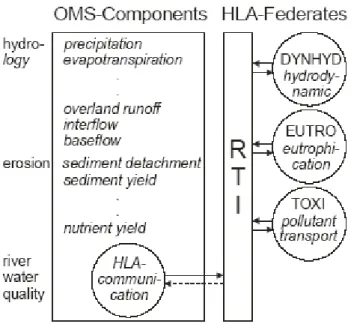
In order to obtain all the advantages of both OMS and HLA environments, a HLA component may be integrated into OMS to allow communication between the RTI and OMS (see Fig. 10). This HLA component would provide the necessary docking station for quick and easy testing of the models performance and capabilities. It also provides a means of coupling modelling systems that are being devel-oped in parallel.
5 Software
The HLA software runs on a PC under Windows 95/98/NT/2000/XP and versions have been compiled for UNIX and LINUX environments. More information can be obtained from https://www.dmso.mil/public/transition/ hlaandhttp://www.pitch.se/.
6 Conclusions
– The HLA platform provides a simple and fast way of coupling models together in a simple modeling system. – Additional capabilities are extracted from modeling sys-tems with several submodels, such as “cross-model” un-certainty analysis and submodel interaction and feed-backs.
– The RTI of a modeling system may serve as a docking mechanism to other modeling systems (such as OMS).
Edited by: P. Krause, S. Kralisch, and W. Fl¨ugel Reviewed by: anonymous referees
Fig. 10. HLA docking port in OMS.
References
Ambrose, R. B., Wool, T. A., and Martin, J. L.: The Water Qual-ity Simulation Program, WASP5: model theory, users manual, and programmers guide, U.S. Environmental Protection Agency, Athens, GA, 1993.
Borshchev, A., Karpov, Y., and Kharitonov, V.: Distributed simula-tion of hybrid systems with AnyLogic and HLA, Future Genera-tion Computer Systems, 18 (6), 829–839, 2002.
Chapra, S. C.: Surface water-quality modeling, McGraw-Hill Com-panies Inc., ISBN 0-07-115242-3, 844 pp., 1997.
Choi, S. J. and Scacchi, W.: Modeling and simulating software ac-quisition process architectures, Journal of Systems and Software, 59 (3), 343–354, 2001.
Das, S. K. and Reyes, A. A.: An approach to integrating HLA fed-erations and genetic algorithms to support automatic design eval-uation for multi-agent systems, Simulation Practice and Theory, 9 (3–5), 167–192, 2002.
David, O.: A kernel approach for interactive-oriented model con-struction in Java, Concurrency: Practice and Experience, 9 (11), 1319–1326, 1997.
European Union, the European Parliament, the Council: Directive of the European Parliament and of the Council concerning estab-lishing a framework for community action in the field of water policy (2000/60/EC), 2000.
Hesser, F. and Kralisch, S.: Das “Object Modeling Sys-tem” zur Kopplung von Modellen mit unterschiedlicher Zeit-und Raumdiskretisierung, in: Simulationstechnik, edited by: Hohmann, R., ASIM 2003, 439444, SCS-European Publishing House, ISBN 3-936150-27-3, 2003.
Klein, U.: Simulation-based distributed systems: serving multiple purposes through composition of components, Safety Science, 35 (1–3), 29–39, 2000.
Kuhl, F., Weatherly, R., and Dahmann, J.: Creating computer simu-lation systems, Prentice-Hall, Englewood Cliffs, NJ, ISBN 0-13-022511-8, 212 pp., 1999.
56 K.-E. Lindenschmidt et al.: Integrating water quality models
Lee, J. S. and Zeigler, B. P.: Space-based communication data man-agement in scalable distributed simulation, Journal of Parallel and Distributed Computing, 62 (3), 336–365, 2002.
Lindenschmidt, K.-E., Schlehf, D., Hesse, C., Baborowski, M., and Guhr, H.: Gew¨assergte-modellierung der Saale, in: Simulation-stechnik, edited by: Hohmann, R., ASIM 2003, 297–302, SCS-European Publishing House, ISBN 3-936150-27-3, 2003. Lindenschmidt, K.-E., Rauberg, J., and Hesser, F.: Extending
un-certainty analysis of a hydrodynamic – water quality modeling system using High Level Architecture (HLA), Water Quality Re-search Journal of Canada, 40(1), 59–70, 2005.
Lindenschmidt, K.-E., Poser, K., and Rode, M.: Impact of morpho-logical parameters on water quality variables using a computer modelling simulation of a regulated, lowland river, Water Sci-ence and Technology, in press, 2004.
Maamar, Z.: Design of a simulation environment based on software agents and the high level architecture, Information and Software Technology, 45 (3), 137–148, 2003.
Petty, D.: Comparing high level architecture data distribution man-agement specifications 1.3 and 1516, Simulation Practice and Theory, 9 (3–5), 95–119, 2002.
Sch¨ol, A, Kirchesch, V., Bergfeld, T., Sch¨oll, F., Borcherding, J., and M¨uller, D.: Modelling the chlorophyll a content of the river Rhine – interrelation between riverine algal production and pop-ulation biomass of grazers, rotifers and zebra musel, Dreissena polymorpha, Internationaler Revue der gesamten Hydrobiologie, 87 (2–3), 295–317, 2002.
Schulze, T., Wytzisk, A., Simonis, I., and Raape, U.: Distributed spatio-temporal modeling and simulation, in: Proceedings of the 2002 Winter Simulation Conference, edited by: Y¨ucesan, E., Chen, C.-H., Snowdon, J. L., and Charnes, J. M., ISBN 0-7803-7614-5, pp. 696–703, 2002.
Shanahan, P. and Alam, M. M.: The Water Quality Simulation Pro-gram, WASP5: model theory, users manual, and programmers guide – Version 5.2 – MDEP (update), Hydraulic and Water Re-sources Engineers, Inc., Waltham, MA, 2001.
von Saleski, M., Warwick, J. J., Hohmann, R., and Lindenschmidt, K.-E.: Parameter uncertainty of a hydrodynamic river model with weirs, Gas- und Wasserfach: Wasser-Abwasser, 145(5), 310–317 (in German), 2004.
![[PDF] Logiciel pour apprendre le trading | Cours Forex](data:image/gif;base64,R0lGODlhAQABAIAAAP///wAAACH5BAEAAAAALAAAAAABAAEAAAICRAEAOw==)