SEVENTEENTH REGULAR MEETING OF THE IABA AND
MEETING OF MINISTERS OF AGRICULTURE OF THE AMERICAS 2013
TECHNICAL DOCUMENT: WATER TO FEED
THE LAND
Buenos Aires, Argentina September 24-27, 2013
IICA/JIA/Doc. 357 (13) Original: Español
3
Version of August 11, 2013
Water to feed the land
Document to support the development of a hemispheric agenda to improve the sustainable use of water in agriculture A contribution from the Inter-American Institute for Cooperation on Agriculture (IICA) to the Inter-American Board of Agriculture (IABA)
5 TABLE OF CONTENTS
Page
Lists of tables, figures and boxes 6
Acronyms 7
Foreword 10
Executive Summary 12
I. Introduction 21
II. Water situation in the Americas 23
A. Water availability 23
B. Main uses of water in the hemisphere 25
C. Infrastructure and storage 27
D. Groundwater and transboundary aquifers 27
III. Water for agriculture: impacts of climate change 30
IV. Use of water in agriculture in the Americas 34
A. Rain-fed agriculture 35
B. Irrigated agriculture 37
C. The water footprint of agricultural activities 39
D. Management of water pollution caused by agriculture 41
V. Innovations to improve water productivity in agriculture 42
A. Productivity of water in agriculture 42
B. Improvements in plant water-use efficiency 43
C. Improved use of water on production units 44
D. Improvements in the conveyance and distribution of water 45
E. Innovation in watershed management 45
VI. Institutional aspects that influence the use of water in agriculture in 47 the Americas
VII. Recommendations 52
A. Recommendation 1: Promote the institutional strengthening of the 52
ministries of agriculture
B. Recommendation 2: Promote integrated water management to 53
6
of climate change
C. Recommendation 3: Strengthen innovation to improve the 54
productivity of water resources in agriculture
D. Recommendation 4: Strengthen the training of human resources in 55
the new paradigms for agriculture
E. Recommendation 5: Mandate IICA to assume responsibility for 55
coordinating the hemispheric agenda on water for agriculture
Bibliography 56
Annexes 61
Annex 1: Regional characterization of water for agriculture 62
Annex 2: Experiences in countries of the Americas that show an 63
integrated use of water in agriculture in preparation for climate change
Annex 3: Water infrastructure in countries of the Americas 76
Annex 4: Examples of the institutional framework that regulates water 81
use in agriculture in selected countries of the Americas
List of tables
Table 1. Water availability in the Americas 24
Table 2. Main uses of water extracted in the Americas 25
Table 3. Irrigated and rain-fed cropland in selected countries of the Americas 35 (data circa 2010)
Table 4. Average global water footprint for some of the principal agricultural 40
crops
Table 5. Average global water footprint of the principal animal products 40
List of figures
Figure 1. Projected changes in precipitation toward the end of the 21st century 32 as a consequence of climate change
List of boxes
Box 1. Integrated water resources management 22
Box 2. Water in rural areas with agricultural and mining activities 26
Box 3. Water Productivity 42
Box 4. Biotechnology: contributions to improve water productivity 43
Box 5. Governance in water resources management 47
Box 6. Changes carried out within Peru’s Ministry of Agriculture that highlight 48 the importance of water in agriculture
Box 7. Argentina: focusing efforts at the provincial and territorial level to 49 improve integrated water management in agriculture
7
ACRONYMS
ALIGN Arable Lands Irrigated and Growing for the Nation (Jamaica)
AMA Agricultural Management Assistance (NRCS-USDA)
ANA National Water Agency (Brazil), National Water Authority (Peru)
AQUASTAT-FAO FAO Global Water Information System
ASA Interlinking of Semi-arid Regions (Brazil)
ASADA Association for the Administration of Community Water Supply
and Sewerage Systems (Costa Rica)
AWEP Agricultural Water Enhancement Program (USDA)
AyA Costa Rican Institute of Water Supply and Sewerage Systems
(Costa Rica)
BMZ Federal Ministry for Economic Cooperation and Development
(BMZ)
CAC Central American Agricultural Council
CAN Andean Community of Nations
CAS Southern Agricultural Council
CBD Convention on Biological Diversity
CCCCC Caribbean Community Climate Change Centre (Dominica)
CNR National Irrigation Commission (Chile)
CONAGUA National Water Commission (Mexico)
CONDESAN Consortium for the Sustainable Development of the Andean
Ecoregion
COOTAD Organic Code for Land Management, Autonomy and
Decentralization (Ecuador)
COSUDE Swiss Agency for Development and Cooperation
DACC Project for Development and Adaptation to Climate Change
(Uruguay)
DGA General Water Directorate (Chile)
DGI General Irrigation Department (Argentina)
DRH/PRONAGRI Director of Water Resources/National Program for Assistance to
Agribusiness (Honduras)
EA-GIRH Andean Strategy for Integrated Water Resources Management
EC Executive Committee
ECADERT Central American Strategy for Rural Area-based Development
ECGIRH Central American Strategy for Integrated Water Resources
Management
ECLAC Economic Commission for Latin America and the Caribbean
EPA Environmental Protection Agency (United States of America)
ERAS Regional Agro-environmental and Health Strategy
ERCC Regional Climate Change Strategy
EU European Union
FAO United Nations Food and Agriculture Organization
GAD Decentralized autonomous governments (Ecuador)
GDP Gross domestic product
8
GIZ Deutsche Gesellschaft für Internationale Zusammenarbeit
(Germany)
GM Genetically modified
GWP Global Water Partnership
IABA Inter-American Board of Agriculture
ICAA Initiative for Conservation in the Andean Amazon
IFPRI International Food Policy Research Institute
IHP International Hydrological Programme
IICA Inter-American Institute for Cooperation on Agriculture
INTA National Agricultural Technology Institute (Argentina)
IPCC Intergovernmental Panel on Climate Change
ISARM Internationally Shared Aquifer Resources Management Initiative
(UNESCO-IAH)
IWRM Integrated water resources management
LAC Latin America and the Caribbean
MAG Ministry of Agriculture and Livestock
MAGA Ministry of Agriculture and Livestock (Guatemala)
MAGAP Ministry of Agriculture, Livestock, Aquaculture and Fisheries
(Ecuador)
MAPA Ministry of Agriculture, Livestock and Supply (Brazil)
MGAP Ministry of Livestock, Agriculture and Fisheries (Uruguay)
MIDA Ministry of Agricultural Development (Panama)
MINAE Ministry of Environment and Energy (Costa Rica)
MINAM Ministry of Environment (Peru)
MMA Mahaica, Mahaicony, and Abary National Irrigation and Drainage
Project (Guyana)
NIDP National Irrigation Development Programme (Jamaica)
NRCS Natural Resources Conservation Service (USDA)
OECD Organization for Economic Cooperation and Development
P1MC One Million Rural Cisterns Program (Brazil)
PACA Central American Agricultural Policy
PCGIR Central American Integrated Risk Management Policy
PISF Project for the Integration of the Río São Francisco into
Watersheds in the Northeast (Brazil)
PRAA Project for Adaptation to the Impact of the Rapid Retreat of
Glaciers in the Tropical Andes
PROCISUR Cooperative Program for the Development of Agrifood and
Agroindustry Technology in the Southern Cone
PROSAP Provincial Agricultural Services Program
SEAM Secretariat of the Environment (Paraguay)
SENAGUA National Water Secretariat (Ecuador)
SENARA National Groundwater, Irrigation and Drainage Service (Costa
Rica)
SICA Central American Integration System
TAC Technical Advisory Committee (GWP)
TCP Technical Cooperation Program (FAO)
9
UNESCO United Nations Educational, Scientific and Cultural Organization
UNFCCC United Nations Framework Convention on Climate Change
USDA United States Department of Agriculture
WHO World Health Organization
WRA/WASA Water Resources Agency/Water and Sewerage Authority (Trinidad
and Tobago)
WTO World Trade Organization
10 FOREWORD
Agriculture is called upon to play a key role in the future of humanity, not only because this activity will produce the food, fibers and much of the energy that will be required in the years ahead, but also because of its contribution to the conservation of natural resources and biodiversity.
Water and agriculture are inextricably linked. Ever since human beings began to domesticate plants, they have tried to find ways of making them more productive. Humankind soon discovered that providing plants with regular amounts of good quality water would make them grow better and produce more food. From that moment on, guaranteeing an adequate supply of water for plants and animals, both in terms of quantity and quality, became one of the main concerns for agriculture.
The need to supply water to plants led to the development of great innovations, intended initially to make better use of rainwater, which gradually resulted in the design and construction of irrigation systems and engineering works, as well as important advances in the knowledge of physiology and the genetic improvement of plants and animals. All this resulted in a range of crops, foodstuffs, fibers and other products that are now essential for human existence.
Unfortunately, the progress of humankind has come at a price. Many human activities, whether through lack of awareness, ignorance, need or ambition, have caused serious damage to ecosystems and the irreversible loss of biodiversity.
The negative impacts of agriculture have also been evident in the loss of soils and in pollution of water sources. There are many examples of these impacts, due especially to the unchecked expansion of agriculture and the use of practices that are harmful to the environment.
In addition, the logical consequence of the burgeoning human population, urban expansion and the growth of other economic activities has been competition for natural resources. This, along with the obvious effects of climate change, has created challenges that are unprecedented in human history. One of those challenges is to produce the food, fibers and energy that society needs in a context of decreasing availability of natural resources, greater social pressures for their conservation and more climate variability.
The purpose of this document, produced by the Inter-American Institute for Cooperation on Agriculture (IICA) with contributions from professionals of Argentina, other IICA member countries and a number of institutions, as well as independent experts consulted on the subject, is to inform the ministers of agriculture of IICA’s member countries about areas of opportunity that will allow agriculture in the Americas to accomplish the three objectives of guaranteeing the supply of food, contributing to the sustainability of natural resources and promoting inclusive development in the countries of our hemisphere.
We realize that this study addresses only the tip of the iceberg. The complex issue of water in agriculture needs to be explored in greater depth through the coordinated and continuous actions of governments, private enterprise, farmers, water users and society in general.
11
We are confident that the proposals presented herein will help the ministers of agriculture to consolidate their leadership and promote initiatives that will ensure sustainable supplies of sufficient, good-quality water for the noble activity of agriculture.
Dr. Victor Villalobos A. Ing. Agr. Lorenzo R. Basso
Director General Secretary of Agriculture
12 EXECUTIVE SUMMARY
Agriculture is called upon to play a key role in the future of humanity, not only by producing the food, fibers and energy that will be required in the years ahead, but also by helping to improve the living conditions of rural dwellers and the use and conservation of natural resources. Given agriculture’s dependence on water, it is essential to devise new paradigms that will revitalize agricultural activities in a context of declining availability of water, growing competition for the resource and greater social awareness of the need to conserve it. The purpose of this document is to identify areas of opportunity to develop an agenda for the Americas designed to improve the use of water in agriculture by means of integrated water resource management.
Situation of water in the hemisphere
With a surface area of roughly 42.3 million km2 and more than 900 million inhabitants, the Americas is endowed with a relative abundance of water (46% of the world’s water resources) and average rainfall of 1084 mm per year. However, the distribution of this resource and per capita availability in the region are uneven, with highly seasonal precipitation and per capita water availability rates that vary greatly, both among the countries and within them.
The estimated water extraction rate in the countries of the hemisphere ranges from less than 1% to more than 15%, with around 70% used in agriculture. Given demographic changes and the development of other economic activities, intersectoral competition for the resource has increased in the region, obliging the countries to increase and boost their capabilities for water extraction, collection, conservation, storage, distribution, purification and recycling, and put in place modern and efficiently managed political and institutional arrangements.
The countries of the Americas have an important water management infrastructure, made up of dams, reservoirs, earth dikes, drainage channels and sluice gates. Precise knowledge of the state of this infrastructure, and the improvements needed, is not available, however. It is urgent, therefore, to create a dynamic information system that will make it possible to ascertain the state of the water infrastructure.
The region’s underground and transboundary aquifers are an important resource whose management should be a priority, to guarantee their sustainability and prevent them from becoming polluted.
In short, the region’s ecological, social, economic, and political wealth and diversity provide an opportunity to identify water management models that can be shared among the countries, enabling them to strengthen their public policies, investment plans and innovation systems.
Water for agriculture: effects of climate change
Climate change is indisputable and poses a global threat, meaning that actions are urgently required to adapt to it and mitigate its impact. The most significant events that can result from climate change and which affect agriculture include floods, droughts, frost, heat waves and hailstorms, as well as variations in the intensity and frequency of hurricanes and in the balance
13
between temperature and rainfall. Latin America and the Caribbean (LAC) is a region that is particularly sensitive to extreme meteorological events.
The problems caused by climate variability will not only affect temperature and precipitation patterns but will also have an impact on the productive capacity of animal and plant species and on the distribution of the human population, which will particularly affect the poor.
Climate change affects agriculture but farming activities also influence the process by producing greenhouse gases (it is estimated that agriculture accounts for around 14% of global emissions of such gases) and their impact on soils, water and biodiversity, altering the carbon and water cycles, and in turn contributing to an increase in the atmospheric temperature. Agriculture also mitigates the effects of climate change, however, since it checks desertification, helps water infiltration, contributes to the conservation of biodiversity and improves carbon capture, among other things.
Climate change is also expected to lead to changes in land use: for example, in hot and humid regions there will be a decrease in the amount of arable land, while in temperate zones it will be possible to grow crops in areas where temperatures do not allow for production at present. The impact of climate change will also vary in relation to the scale of the producer. Smallholders will be the most affected, with limited access to productive assets and located in vulnerable regions. Given the above, agriculture needs develop and implement innovative production systems that prioritize water use. According to some scenarios, unless immediate action is taken, food production could fall by more than 25% by 2050.
Use of water in agriculture in the Americas
Many forms of agriculture are practiced in the Americas by a wide variety of farmers: from subsistence and migratory farming to large-scale commercial agriculture. The structure of agriculture in the countries and the property rights that exists influence the way that water is used in agriculture.
It is estimated that more than 390 million hectares of land are farmed under rain-fed systems in this continent. Despite the increase in acreage and the high yields achieved in some crops and regions, the productivity of rain-fed agriculture is lower than that of irrigated agriculture. In the case of cereals, for example, it is estimated that the productivity of rain-fed agriculture is around 65% of what could be achieved with irrigation.
In order to improve the productivity of this type of agriculture, the countries need to introduce innovative cultural practices and technologies, and tap the traditional knowledge that exists in the hemisphere with regard to crop systems that have proven to be effective for achieving a balance between the quantity of water used in agriculture and availability of the resource. Some of the actions that could be taken to improve the productivity of this type of agriculture are: i) promote the harvesting of water, the conservation of water in situ, and integrated rainwater management; ii) continue to invest in scientific and technological research to develop new varieties (particularly ones that can cope better with droughts or excess water and make optimum use of water) and water use and soil conservation practices; and, iii) review and, if necessary, amend
14
public policies on this issue, considering the implementation of incentives based on the sustainability of water resources, the productivity of agriculture and conservation of the setting. Furthermore, roughly 44 million hectares of land are farmed using irrigation in the Americas, or 12% of the total number of hectares on which crops are grown in the region. Across the board, the efficiency of irrigation water use is less than 40% and irrigation faces complex challenges, despite being one of the many tools that can be used to combat the effects of climate change. As pressure on water resources has increased, efforts have been made to develop methodologies in order to evaluate and quantify the amount of water used in the human activities, including agriculture, and to provide information that makes it possible to take decisions designed to improve management of the resource, invest more intelligently in this area, improve production processes and promote the design of effective public policies. In general, the water footprint is an empirical indicator of how much water is consumed in a given geographical and temporal space, measured over the entire supply chain of the product. Many estimates of the footprint, for both crop and livestock activities, suggest that opportunities exist for making better use of water in agriculture. However, it is important to note that such measurements are only some of the many tools that can be used to that end.
Agriculture is carried out in a “symbiosis” of land and water and is, simultaneously, both a cause and a victim of the pollution of water resources. It contributes to the problem through the discharge of pollutants and sediments into surface water and groundwater, net soil loss as a result of poor agricultural practices, and the salinization and oversaturation of irrigated land. It is a victim because it makes use of wastewater and because of the pollution of surface water and groundwater by other activities, which affects crops and increases the likelihood of diseases being transmitted to consumers and agricultural workers. Solving these problems calls for technological innovations and also systems of reliable, accurate and up-to-date information and data on the quality and amount of water used. Agricultural institutions and the users of water in agriculture normally do not have access to such data; and any information that does exist is usually inaccurate and out of date.
Innovations to improve the productivity of water in agriculture
Increasing the productivity of water in agriculture is essential to reduce the pressure on water resources, curb environmental degradation and improve food security. Innovations that, thanks to their potential, can be used to generate a common cooperation agenda. The innovations in question correspond to four overarching areas of action: i) use of water by plants, ii) improvements in water use on parcels or production units, iii) improvements in the supply and delivery of water, and iv) innovations in watershed management. Efforts in all these areas will make it possible to address the challenges of physical and economic water shortages.
The evidence suggests that if we continue along the traditional path of genetic improvement, we will soon reach the thresholds of productivity or else the progress made will be too slow, given the urgent need to address the effects of climate change and the demands of production. Faced with this situation, the innovations of the future will come from the “new biology,” with the branches of biotechnology, functional genomics, nanotechnology and other specialized fields
15
making significant contributions to improved water productivity and, in the process, releasing supplies of water for other uses.
The second type of innovation developed to improve water use in agriculture is applied at the parcel or farm level. Three general types of actions can be implemented on parcels or farms: i) the application of technologies and techniques aimed at improving soil management (for example, direct planting or zero tillage); ii) improvements in the use of other inputs, particularly fertilizers; and iii) the use of technologies that allow for a more precise and targeted water supply, according to the needs of plants, such as precision irrigation, micro-irrigation and subsurface irrigation. There are also technologies that have proven beneficial in terms of water use, including the techniques generally known as “protected agriculture” and hydroponic crops. The combination of these integrated technologies results in what is termed “precision agriculture.” However, many of these technologies are still unknown to farmers, or are economically inaccessible to them due to their cost or scale of application. Therefore, a task is still pending: to bridge the gap between the theoretical availability of these innovations and their practical application in the field, particularly in small-scale agriculture and in family agriculture, which take place on small parcels.
There is also a third type of innovation related to the way in which water is delivered to farmers, which makes it one of the most important interfaces for cooperation between end users and the institutions responsible for the administration of water resources, and offers opportunities to develop hard innovations (in infrastructure) and soft innovations (the way in which resource management is organized).
At the level of river basins, nations and even of transboundary water resources, major efforts have been undertaken to improve the management of this resource. To this end, many countries are now using geo-referencing and geo-measurement technologies, as well as space technologies and computer models. These technologies are being used with four main objectives in mind: a) to ascertain exactly how much water is available, determine its state and develop management models to help address the challenges of meeting current demand and those imposed by climate change and population growth; b) to support decision-making related to the allocation of resources to different users, generally seeking to support water use for those activities that produce the greatest return or are of greatest importance for human development; c) to conserve resources, both in terms of quantity and quality and health; and, d) to establish early warning systems in order to monitor climate conditions, available volumes of water and the levels of water pollution.
Institutional aspects that influence the use of water in agriculture in the Americas
Protecting, conserving and maintaining the integrity of water resources calls for consistent mechanisms that make it possible to ensure the availability and quality of the water required to meet the needs of the growing human population and the economic activities that help to satisfy those needs. The many and varied systems of governance employed for that purpose are designed to contribute to the interests and objectives of national and global development.
In relation to water for agriculture, the way in which the countries administer water for agriculture also varies, with the ministries of agriculture participating to different degrees in
16
various roles, usually limited to the allocation and operation of water for irrigation. However, recognition of the importance of water in mitigating the effects of climate change, increasing agricultural productivity and responding to the pressure for sustainability has led a number of ministries of agriculture to review their structures and functions. As a result, they have included the coordinated management of irrigation water in their functions as part of a State policy. Notable cases are Ecuador, which has a department exclusively devoted to irrigation and now Peru, which recently restructured the Ministry of Agriculture to convert it into the Ministry of Agriculture and Irrigation.
Two aspects that require particular attention, given their importance in instituting new paradigms to promote the integrated and sustainable use of water in agriculture, are ownership of the resource and the right of the different stakeholders in agriculture (including smallholders and indigenous peoples) to have access to it.
Public policies must guarantee access to water for the different types of agriculture that coexist in each country, and recognition of ethnic groups and traditional cultures. In general, processes of that kind are not institutionalized in the hemisphere. In the best of cases, the involvement of the social sectors, agro-entrepreneurs and civil society in the participatory management of water occurs in isolation and almost exclusively at the level of territories. Furthermore,the even-handed application of principles is generally weak, and there is a systemic failure to include traditional principles and customs.
Some of the areas in which the greatest potential for the development of a hemispheric agenda on water governance exists are as follows:
a. Development of long-term, integrated, State policies for the revitalization of water in agriculture based on solid scientific principles that take into account the nature of the resource and the challenges posed by climate change.
b. Construction of an environment that favors the attraction of investments for the modernization of the water and agro-meteorological infrastructure, as well as the incorporation of new technologies.
c. Public sector support for the creation of the conditions required for the development of new innovations, and the implementation of existing cutting-edge innovations, some of which entail geo-referenced monitoring systems, precision agriculture and the use of new technologies for the development of varieties tolerant to water stress.
d. Government promotion of the renewal and strengthening of education systems in agriculture, including, as a priority, skills development programs for women, producers’ associations and water users, as new human capabilities are required to apply policies and implement innovations.
e. Establishment of information systems, including early warning systems, that make it possible to take timely decisions related to the design of management policies and tools, and the implementation of actions on farms and in territories and production areas.
In devising public policies, governments should adopt a strategy of prioritization and follow-up and a long-term vision, so they do not limit themselves to providing stopgap solutions or adjusting existing policies to the latest trends and currents of opinion.
17 Recommendations
To ensure that agriculture has the water it needs, in terms of quantity and quality, the ministries of agriculture must strengthen their institutional capabilities against a background of limited human, financial and physical resources. This forces them to set priorities and target their interventions at those areas that offer opportunities to make the greatest impact and obtain better returns in relation to the resources used and in response to the pressing needs of producers and of society in general.
Five recommendations are put forward (three general ones, one that is cross-cutting in nature and another related to IICA) that are considered crucial to provide agriculture with the water it needs, both at present and in the future. In making these recommendations, we recognize the steering role and leadership of the ministers of agriculture on the issues of food, competitiveness and sustainability. We consider that the recommendations presented here are the ones that offer the greatest opportunities to generate synergies among the countries and produce positive results in the short and medium term. They also make it possible to target and apply the limited resources available in priority areas and to coordinate and guide the support received from international technical and financial cooperation organizations with clear goals and long-term visions.
A. Recommendation 1: Promote the institutional strengthening of the ministries of agriculture
Given the multiplicity of national institutions involved in water management in IICA’s member countries, in international forums (for example, the CBD, the UNFCCC and the WTO) and the commitments acquired on the issue of water, the first recommendation is to define a hemispheric program to strengthen the capabilities of the ministries of agriculture and support them in the design and implementation of policies and tools for the integrated management of water in agriculture. This would strengthen their capacity for dialogue and consensus building with other economic sectors in their countries and with the international community.
The main purpose of this recommendation is to improve the management capabilities of the ministries of agriculture in order to: i) ensure that the objectives of producers and populations of rural areas are included in national policies and in international agreements; ii) design and implement investment projects in irrigation systems that meet current demands; and iii) ensure that agriculture is provided with the water it requires, in terms of quality and quantity, for the sustainable and competitive production of food, fibers and energy.
In order to accomplish this objective the following actions are proposed:
a. Analyze the current institutional structure, its strengths and weaknesses and identify the areas or aspects that need strengthening in the ministries of agriculture of IICA’s member countries, in relation to water for agriculture.
b. Design, establish and execute an inter-American cooperation program to strengthen the ministries.
18
c. Promote and strengthen existing regional mechanisms for the analysis and definition of common strategies for integrated water resources management in agriculture.
B. Recommendation 2: Promote integrated water management to achieve sustainability in agriculture and address the challenges of climate change
One of the greatest challenges in achieving sustainable agriculture is to ensure that the sector adapts to climate change. Water is a crucial resource for this purpose, and therefore the recommendation is to focus efforts on adapting agriculture to climate change, through the integrated management and rational use of water resources, based on solid scientific principles and respecting the legal frameworks, traditions and culture of countries, communities and indigenous peoples.
To achieve this objective the following actions are considered priorities:
a. Strengthen and, where necessary, develop hydro-meteorological information systems, early warning and risk management systems and climatic scenarios, as the essential basis for the design and implementation of adaptation strategies, including prediction, prevention and preparedness programs related to extreme events that consider the incorporation of new satellite technologies as well as telemetry, geo-processing and geo-referencing technologies, etc.
b. Promote the regional integration of hydro-meteorological information and early warning systems, to make it possible to use global models to forecast hydro-meteorological events more accurately.
c. Promote planning processes in agriculture to facilitate adaptation to climate change and water availability; this should include projects for the diversification, reorganization and relocation of crops, among other alternatives.
d. Strengthen agricultural information systems in order to determine the volume of water assigned to the sector (supply) and improve decision-making on water use, in coordination with the national systems responsible for water resources management.
e. Promote investment to revitalize the irrigation infrastructure (water capture, storage and distribution), including the design of new infrastructure projects and the rehabilitation of existing ones, based on clear performance indicators, as well as social inclusion and environmental impact indicators.
f. Promote investment designed to improve the capture, harvesting and use of water rainwater in rain-fed areas.
g. Foster the organization of irrigators for better water management and the implementation of measures to adapt to climate change.
19
C. Recommendation 3: Strengthen innovation to improve the productivity of water resources in agriculture
It will not be possible to guarantee the supply of food if the production systems throughout the agrifood chain continue to behave as they have until now, particularly given the declining availability of water resources facing agriculture. It is therefore essential to improve water productivity through innovation, which is the objective of the third recommendation.
To achieve this objective it is essential that the countries focus their efforts on:
a. Developing and consolidating information systems and disseminating innovations to improve water use in agriculture, aimed especially at ensuring that these innovations reach the users. To this end, it is essential to expand the use of new information and communication technologies.
b. Promoting the development of public-private partnerships that make it possible to improve efficiency in water use and reduce pollution of water resources.
c. Strengthening and, where necessary, designing capacity building programs to improve water productivity, paying special attention to the different types of agriculture and the different needs of users, and targeting efforts at the watershed level, as the integrating unit.
d. Focusing efforts on the following areas of innovation:
i. Identifying and disseminating local and traditional technologies for the use of water in agriculture.
ii. Promoting precision agriculture.
iii. Generating innovations to improve the knowledge, use and sustainability of the groundwater resources used in agriculture.
iv. Developing innovations in biotechnology (in agriculture, livestock and food production) to improve water productivity.
v. Promoting innovation to improve the recycling and use of recycled water, which should be combined with production of hydraulic energy.
To accomplish these objectives, the ministers of agriculture are urged to continue working to articulate the agricultural innovation systems, and to exercise proactive leadership in defining the allocation of resources and funds for research on water for agriculture, thereby contributing to achieving the higher goal of developing competitive, sustainable and inclusive agriculture.
Recommendation 4: Strengthen the training of human resources in the new paradigms for agriculture
To improve the productivity of water in agriculture and achieve integrated water resource management, all the stakeholders must be highly conversant with the new paradigms for agriculture. In that way, they will be equipped to innovate and solve the new problems that have arisen, or that may arise, in the agricultural sector in a context of high price volatility. Accordingly, the ministers of agriculture are urged to:
20
a. Promote the training of human resources in new paradigms that facilitate the development of a competitive, sustainable and inclusive agricultural sector.
b. Equip producers, especially small and medium-scale farmers, with the skills and expertise required to innovate and thereby achieve the development of intensified and sustainable agriculture.
c. Foster the training of a new generation of agricultural specialists, new scientists and service providers.
d. Recognize the importance of women as key players in integrated water resource management, promoting initiatives that help close gender gaps, improve the inclusion of women in decision-making and achieve full recognition of the rights of rural women, including those related to property, education, and access to productive assets.
Recommendation 5: Mandate IICA to assume responsibility for coordinating the hemispheric agenda on water for agriculture
To boost the efforts of the countries at the individual, regional and hemispheric levels in the area of water for agriculture, an entity is required to help prepare, coordinate and implement the hemispheric cooperation agenda on the subject. Therefore, it is recommended that the ministers of agriculture issue the Inter-American Institute for Cooperation on Agriculture with a special mandate to incorporate such activities into its 2014-2018 Medium-term Plan, and pledge to support efforts to secure the resources that the Institute will require to carry out those activities efficiently.
21 I. INTRODUCTION
Water is, by its very nature, an essential element of life. Around 70% of the earth’s surface is made up of water. In the case of human beings, water accounts for 75% of body weight. In plants, the percentage of water varies from 60% to more than 90%, while in some animals this figure may be over 90%. Without water, there would be no possibility of life on this planet.
By domesticating plants and animals, human beings changed the dynamics of Nature and quickly realized that without water they could not cultivate plants or raise animals for their sustenance. Therefore, one of the first actions taken by humans to modify Nature was to harness, store and deliver water to their crops and animals. Many of the great civilizations flourished in fertile agricultural valleys, where irrigation and water use systems enabled people to produce and trade food in sufficient quantity to permit the development of complex societies.
More than 10,000 years have elapsed since the first plants were domesticated and the first irrigation systems were designed. Much has changed on the planet since then. On the one hand, the population has increased to levels that would have been unimaginable a few years ago and, according to most estimates, will continue to grow until it reaches around nine billion inhabitants within the next 40 years.
As civilization has progressed and human activities have expanded, so too has the destruction of the world’s renewable and non-renewable natural resources. In addition, the pollution of water, soils and the atmosphere, together with climate change, has reached levels that threaten the future of humankind.
Water is essential to combat poverty and hunger, increase agricultural productivity, ensure sustainability and improve living conditions, both in rural and urban areas. Therefore, any event that alters the hydrological cycle will have an impact on human development.
Agriculture is called upon not only to produce the food, fibers and energy that humanity will require in the medium and long terms, but also to help ensure the sustainability of the planet’s natural resources, in order to improve living conditions in rural areas, where the poorest and most vulnerable populations still live, and to contribute to the economic development of people and nations.
On the other hand, agriculture is one of the sectors most vulnerable to climate impacts and highly dependent on natural resources. Changes in rainfall patterns and intensity and other climate phenomena, such as those that are currently responsible for climate change, will severely affect food production. Given agriculture’s enormous dependence on water–this sector uses an estimated 70% of the water extracted worldwide–it is essential to develop new paradigms that will revitalize agricultural activities in a context of declining availability of water, growing competition for this liquid and above all, greater social awareness of the need to conserve it. Discussing and analyzing the subject of water in agriculture is an extremely sensitive and complex matter, given that it spans cultures and social thresholds. It is a public good, but also a private good, and is subject to far-reaching externalities that affect the way in which human beings perceive and interpret the reality that impacts this resource.
22
New paradigms are required for the future, making it essential that the stakeholders in agriculture rethink the way in which water is being used, as well as the challenges and opportunities this implies. It is also urgent to design actions and strategies, through dialogue and inclusion, to ensure that agriculture is provided with a sufficient quantity of good quality water to produce the goods and services that humankind needs, guarantee the sustainability of natural resources and promote inclusive development in the countries of the hemisphere.
The objective of this document is to identify areas in which there are opportunities for developing a hemispheric agenda for the Americas geared towards improving the use of water in agriculture by means of integrated water resources management (Box 1).
Box 1. Integrated water resources management
Integrated water resources management is a process which promotes the coordinated development and management of water, land and related resources, in order to maximize the resultant economic and social welfare in an equitable manner without compromising the sustainability of vital ecosystems (GWP 2000).
This document is the outcome of collaborative work by professionals of IICA, other institutions and the Institute’s member countries, who reviewed and discussed the literature published on this subject and consulted numerous stakeholders and ministries in the Institute’s member countries about their policies and priorities, and the contributions of experts who revised this document and commented on its content.
23 II. WATER SITUATION IN THE AMERICAS A. Water availability
With a surface area of roughly 42.3 million km2 and more than 900 million inhabitants, the Americas extend from Canada and the United States to Argentina and Chile, and include the Caribbean island states. It is one of the regions of the world with the greatest biodiversity and ecological and climatic diversity.
It is endowed with a relative abundance of water, which represents approximately 46% of the world’s water resources (Sánchez-Albavera 2004), and average precipitation is 1084 mm per year. Taking into account all these resources, the average annual amount of water available per capita is almost 30,000 km3. However, the distribution of this resource and its availability in the region are uneven, to such an extent that almost two-thirds of the continent’s territories are considered arid or semiarid zones. These coexist with some of the world’s wettest areas that contain many great rivers–the Amazon, the Mississippi, the Río Bravo/Rio Grande, the Magdalena, the Orinoco, the Sao Francisco, the Paraná, the Uruguay, the Paraguay and the Río de la Plata–and rich reservoirs of water, such as the Great Lakes, and marshlands and river estuaries.
In most of the countries, rainfall is highly seasonal and concentrated in periods of four to five months, during which it is distributed unevenly. For example, in Mexico, Central America and the Caribbean, nearly 50% of the rain falls between August and October, whereas only 7% falls between February and April (WWF 2012). This produces periods with an overabundance of water and others with severe shortages.
Although the average water availability in the Americas would appear to be more than sufficient to guarantee development, the reality is that it varies enormously. There are extreme conditions, such as those prevalent in Haiti and other Caribbean countries, where annual water availability is less than 1700 m3 per person, a situation that contrasts markedly with that of countries such as Suriname, where annual per capita water availability is put at more than 150,000 m3. These differences also influence the way in which countries manage their water resources. Demographic growth, increased water pollution, the expansion of cities, agriculture and industry are seriously affecting the availability of this resource.
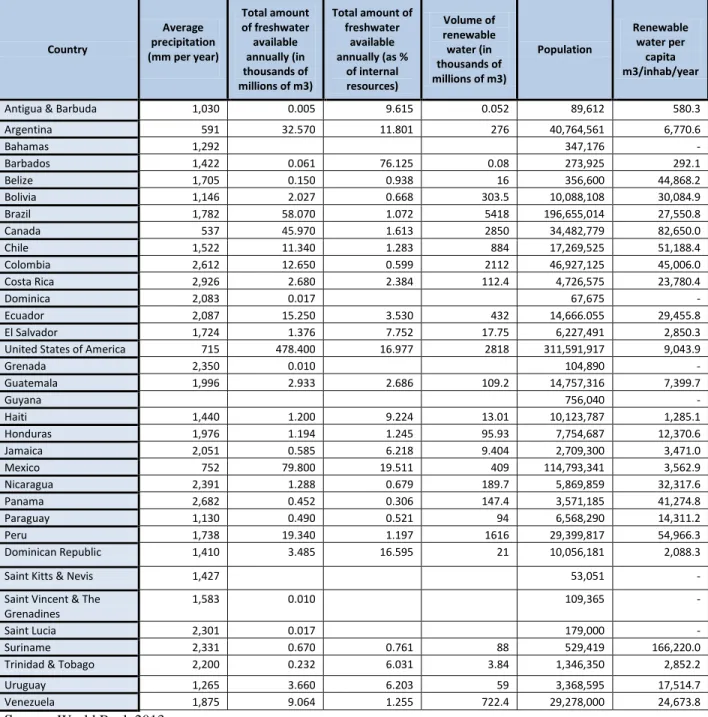
One region that is in a privileged position as far as its water resources are concerned is Central America, where average annual water availability is roughly 23,000 m3 per person (ECLAC 2011), almost three times the world average. However, as in other regions, the distribution of this resource is subject to major annual and seasonal geographic variations, which result in periods of (sometimes extreme) scarcity and others of great abundance, in which even floods occur. While the Caribbean coast enjoys abundant rainfall throughout the year, the Pacific coast experiences dry periods lasting five or more months. Table 1 shows water availability in the countries of the Americas.
One aspect that affects the distribution of water resources in the hemisphere is the forest cover lost through deforestation, which is having an impact on the recharge capacity of the region’s aquifers, increasing the production of sediment and reducing CO2 capture. Eradicating the
24
cultural practices responsible for deforestation in the short term seems to be a complicated task, since such practices are deeply rooted among farmers. This makes the implementation of integrated watershed management difficult. The efforts calls for not only rational water and soil management but also a multi-sectoral approach that would make it possible to focus on aspects such as poverty, the reduction of the gathering and burning of firewood, the promotion and conservation of biodiversity, and the implementation of reforestation programs (Beekman 2011). Another phenomenon that is affecting the availability of water in the hemisphere is climate change, which will be addressed in Chapter III of this document.
Table 1. Water availability in the Americas
Country Average precipitation (mm per year) Total amount of freshwater available annually (in thousands of millions of m3) Total amount of freshwater available annually (as % of internal resources) Volume of renewable water (in thousands of millions of m3) Population Renewable water per capita m3/inhab/year
Antigua & Barbuda 1,030 0.005 9.615 0.052 89,612 580.3
Argentina 591 32.570 11.801 276 40,764,561 6,770.6 Bahamas 1,292 347,176 - Barbados 1,422 0.061 76.125 0.08 273,925 292.1 Belize 1,705 0.150 0.938 16 356,600 44,868.2 Bolivia 1,146 2.027 0.668 303.5 10,088,108 30,084.9 Brazil 1,782 58.070 1.072 5418 196,655,014 27,550.8 Canada 537 45.970 1.613 2850 34,482,779 82,650.0 Chile 1,522 11.340 1.283 884 17,269,525 51,188.4 Colombia 2,612 12.650 0.599 2112 46,927,125 45,006.0 Costa Rica 2,926 2.680 2.384 112.4 4,726,575 23,780.4 Dominica 2,083 0.017 67,675 - Ecuador 2,087 15.250 3.530 432 14,666.055 29,455.8 El Salvador 1,724 1.376 7.752 17.75 6,227,491 2,850.3
United States of America 715 478.400 16.977 2818 311,591,917 9,043.9
Grenada 2,350 0.010 104,890 - Guatemala 1,996 2.933 2.686 109.2 14,757,316 7,399.7 Guyana 756,040 - Haiti 1,440 1.200 9.224 13.01 10,123,787 1,285.1 Honduras 1,976 1.194 1.245 95.93 7,754,687 12,370.6 Jamaica 2,051 0.585 6.218 9.404 2,709,300 3,471.0 Mexico 752 79.800 19.511 409 114,793,341 3,562.9 Nicaragua 2,391 1.288 0.679 189.7 5,869,859 32,317.6 Panama 2,682 0.452 0.306 147.4 3,571,185 41,274.8 Paraguay 1,130 0.490 0.521 94 6,568,290 14,311.2 Peru 1,738 19.340 1.197 1616 29,399,817 54,966.3 Dominican Republic 1,410 3.485 16.595 21 10,056,181 2,088.3
Saint Kitts & Nevis 1,427 53,051 -
Saint Vincent & The Grenadines
1,583 0.010 109,365 -
Saint Lucia 2,301 0.017 179,000 -
Suriname 2,331 0.670 0.761 88 529,419 166,220.0
Trinidad & Tobago 2,200 0.232 6.031 3.84 1,346,350 2,852.2
Uruguay 1,265 3.660 6.203 59 3,368,595 17,514.7
Venezuela 1,875 9.064 1.255 722.4 29,278,000 24,673.8
25 B. Main uses of water in the hemisphere
The estimated water extraction rate in the Americas is only around 7% (Jouralev 2009), with variations ranging from less than 1% (in Paraguay, for example) to more than 15% in Mexico, the United States and some Caribbean countries. Despite these low levels of water extraction, there are signs that some aquifers in the region are already reaching their extraction limits or are becoming highly polluted as a result of large concentrations of population, increased economic activity, inefficient management of water concessions and exploitation permits, lack of oversight and the application of incentives that distort and promote the irrational use of resources.
Nearly 70% of the volume of water extracted from surface and groundwater sources in Latin America and the Caribbean is used in agriculture, followed by water for domestic use and, lastly, the water used in industry, a sector that accounts for only 10% of water use–almost 50% less than in other more developed regions (Jouralev 2009) (Table 2). However, the percentage of water used in agriculture varies from region to region and from country to country: in the Northern Region, water use for agriculture ranges from 12% to 77%, in the Central Region between 28% and 83%, in the Southern Region from 46% to 86%, and in the Caribbean Region between 15% and 83% (percentages estimated based on data from FAO/AQUASTAT 2013).
Table 2: Main uses of water extracted in the Americas
Source: WWAP 2009.
This data suggests that agriculture is the activity that uses the largest proportion of the water extracted, but a fuller analysis is required taking into account the water that returns to the hydrological cycle, since plants do not use 100% of the water. That undoubtedly means that the real amount of water used by agriculture is less than the figure calculated based on the volumes extracted.
It is estimated that, by 2050, over 75% of the continent’s population will live in urban areas. This will generate greater demand for food and water for human consumption, sanitation services, and the production of energy and other satisfiers, a situation that will further increase competition between different sectors for the resource. Agriculture has a leading role to play in ensuring the sustainability of the resource, and could become the key activity for meeting that need. To do so, it must improve the way in which water is used in this activity, in order to release volumes of water for use in other sectors or to reuse the water released by other sectors. These changes in demand will lead to increases in the cost of the resource, so answers will have to be found to the question of how, and by whom, those costs are to be met (Box 2).
Quantity Percentage Quantity Percentage Quantity Percentage
Latin America 13,477 252 178 22.5 26 3.3 47 5.9 0.6 Caribbean 93 13 9 1.1 1 0.1 3 0.4 0.1 North America 6,253 525 203 25.7 252 31.9 70 8.9 2.6 Hemisphere 19,823 790 390 49.4 279 35.3 120 15.2 3.3
Industrial Domestic urban Region Extraction as percentage of renewable resources Total water extracted km3/year
Water extraction (km3/year)
Agriculture
Renewable water resources km3/year
26
In many parts of the world, water resources are already under great pressure. However, the demand for more water will continue to increase, to cover the additional need for food, energy, services and drinking water, so that competition for water is inevitable and is bound to intensify. There is concern that water sources will be reduced even further in regions where water availability has already reached critical levels because of climate change (UN 2011), which will exacerbate poverty and food insecurity.
Box 2. Water in rural areas with agricultural and mining activities
One of the biggest conflicts that occurs between agriculture and mining is related to the use of water, which is accentuated because mining normally takes place in territories with high levels of poverty and low levels of development, in which almost no public services are provided. In such areas, mining companies are usually the first to collect or extract water, affecting its quality and the volumes available for agriculture, especially when farming activities are carried out downstream of mining operations, altering the way in which crop and stock farming are carried out.
With the recognition of these conflicts and growing social awareness of the importance of all sectors having access to the water they need, some mining operations are implementing good water management practices and improving their interaction with agriculture. This has been accompanied by the development of new civil society organizations that monitor the situation with regard to the resource. However, the State needs to implement effective regulatory measures and promote close coordination between the public and private sectors to resolve such conflicts.
As part of this effort, the countries of the Americas must improve water conservation, recycling and purification capabilities, and implement modern and efficient political and institutional arrangements for management of the resource.
Some of the actions that could be implemented to ensure that more efficient use is made of water in agriculture include increased recognition of environmental services, greater use of recycled water, the implementation of better agricultural practices and training for producers with regard to the amount of water that crops actually need during their different phenological stages.
Bilateral treaties and the support of international organizations have made it possible for countries to reach agreement on water use for mutual benefit. In North America, institutional arrangements have been established for Canada-United States and United States-Mexico river basins. In South America, a number of binational agreements are in place, some for the development of hydroelectric projects, including those of Salto Grande (Argentina and Uruguay), Itaipú (Brazil and Paraguay) and Yacyretá (Paraguay and Argentina). It is also important to mention the Amazon Cooperation Treaty, signed by eight countries, as well as the Agreement on the Guaraní Aquifer, signed by Argentina, Brazil, Paraguay and Uruguay, aimed at contributing to the aquifer’s conservation and management.
27 C. Infrastructure and storage
In the countries of the Americas, irrigation infrastructure generally includes reservoirs or dams, earth dikes, wells, drainage channels, sluice gates and secondary channels that deliver water to users. A high percentage of the water used for irrigation is extracted from groundwater tables but there are a large number of works constructed to store surface water, including 68 dams with structures measuring more than 130 meters in height, providing an annual reservoir capacity of 2721 km3. Most of these works are located in the Northern Region. Very little information is available about small reservoirs used to store water for irrigating small parcels.
It is difficult to provide accurate data on the status of the region’s water infrastructure, since complete information is only available for a handful of countries, notably in the Northern Region. The Andean Region has reliable data for Peru, Ecuador and Colombia, while the Southern Region data is available for Brazil, Argentina and Chile. This reflects the urgency of developing dynamic information systems to determine the status of the continent’s water infrastructure. In the case of the Caribbean Region, there is an evident lack of infrastructure for managing water in agriculture.
During the last 20 years, the number of hectares incorporated into irrigated agriculture in the region has declined markedly, from nearly 12 million new hectares under irrigation during the 1970s, to just six million in the first decade of this century. The reasons for these changes are not clear but they could be due, among other things, to the limited attention that the countryside has received over the last 20 years, insecure land ownership and the low rate of return on investments in the sector. It is not easy to obtain and verify clear data on investments of this kind, confirming the need to make the respective information systems more transparent and effective.
Investment in the maintenance of irrigation infrastructure also seems to have declined. This may be inferred from the fact that, in theory, the continent has the infrastructure to irrigate 48 million hectares, but only 39 million hectares are irrigated, due in part to damage in water supply and delivery systems.
As to the type of irrigation infrastructure in place, analysis of the available information shows that nearly 75% of irrigated parcels have infrastructure for surface irrigation, 22% for sprinkler irrigation and only 3% for localized irrigation. Other types of problems exist where the use of surface water for agriculture is concerned, such as the over-allocation of rights and water pollution.
D. Groundwater and transboundary aquifers
The challenges faced in integrating and managing surface water are relatively simple, when compared with those associated with managing groundwater reservoirs, which are a valuable asset for this continent and play an increasingly strategic role in national development. Agriculture continues to be the main user of groundwater; for example, in the United States the sector uses approximately 50% of the groundwater extracted, while in Mexico groundwater is used for one-third of the total irrigated area. Increased pollution of surface water in the hemisphere means that many urban centers increasingly depend on groundwater to meet their needs, but often with inadequate or unreliable supply systems. One of the great challenges facing
28
the countries of the Americas is to develop a system that integrates groundwater and surface water management, and ensures that this is done in a sustainable way.
The application of diverse, and often inconsistent, public policies for the management of groundwater, has given rise to numerous conflicts. Efforts to redistribute groundwater concessions and restrict water extraction activities within sustainable and economically viable limits have been two of the main forces driving the legal and institutional reforms introduced in a number of countries in the region. (Narishan 2008, Jarvis 2006). The case of Mexico stands out, because, historically, in some cases the country granted concessions for more water than it had available, obliging the authorities to adopt a strategy aimed at striking a balance between the quantity available and the amount used, based on the temporary suspension of the free extraction of water throughout the country.
The overexploitation of groundwater leads to other types of problems, such as land subsidence (sinkholes) and salinization, which eventually undermine the good quality of such water.
According to the inventory of transboundary aquifers of the Americas (Puri and Aurelli 2009), there are at least 67 transboundary aquifers in the Americas: 27 in South America, 19 in North America (Canada, Mexico and United States), 12 in Central America and 4 in the Caribbean (Dominican Republic-Haiti). One third of those aquifers are located in arid or semiarid zones. An assessment of underground aquifers shows that 20 transboundary aquifers have been intensively exploited, while 16 that are located in areas with intensive agriculture or in industrial zones, have high salinity rates.
Given the situation, one priority is the need to ensure the sustainable management of transboundary aquifers in areas with water scarcity, particularly in arid and semiarid areas throughout the continent. An example of such areas is the Gran Chaco Americano, the largest semiarid plain in South America, where nearly 80% of the rural population has no access to drinking water, and the problems associated with water scarcity are further compounded by a growing population, intensified soil use and the lack of investment.
Sharing transboundary water resources and ensuring their quality are issues of major importance for inter-American relations. This calls for efforts to strengthen bilateral relations, joint research, information sharing, the development of dispute settlement mechanisms and the signing of new treaties and agreements, as is already occurring in some regions of the hemisphere (e.g., in the Caribbean Region, where the ministers responsible for water meet every year to find joint solutions).
The analysis of the water situation in the Americas confirms that it is impossible for the region to be considered homogeneous and an area where one-size-fits-all measures can be applied. Annex 1 of this document contains a detailed description of the water situation in each subregion of the continent, with emphasis on water management for agriculture.
The region’s ecological, social, economic and political richness and diversity offer an opportunity to identify water resource management models that could be shared by countries to strengthen their public policies, investment plans, and innovation systems.
29
The information analyzed also makes it possible to suggest that certain common problems exist that could be resolved working together, so that future generations are guaranteed sufficient water of good quality to live a full life. For example, reliable databases operating in real time could be created and actions undertaken to regulate competition between different sectors of the economy and the water needed for human consumption.
30
III. WATER FOR AGRICULTURE: IMPACTS OF CLIMATE CHANGE
The Stern Review (2006) warns that climate change poses very serious global risks that call for an urgent global response. The Fourth Report of the Inter-governmental Panel on Climate Change (IPPC 2007) confirms that “warming of the climate system is unequivocal,” that it will affect all the nations of the world, and that urgent action is needed to mitigate and adapt to the new conditions resulting from that process.
The most important extreme events that can result from climate change and which affect agriculture include floods, droughts, frosts, heat waves and hailstorms, as well as variations in the intensity and frequency of hurricanes and in the balance between temperature and precipitation. Latin America and the Caribbean (LAC) is a region that is particularly sensitive to extreme meteorological events (Beekman 2007).
Extreme phenomena–especially more numerous periods of warm nights, intense precipitation and successions of dry days–have seriously impacted LAC in recent years. In this region, “the occurrence of climate-related disasters increased by 2.4 times between 1970-1999 and 2000-2005, continuing the trend observed during the 1990s. Only 19% of the events between 2000 and 2005 have been economically quantified, representing losses of nearly USD 20 billion,” (Williams and Nuttall 2007).
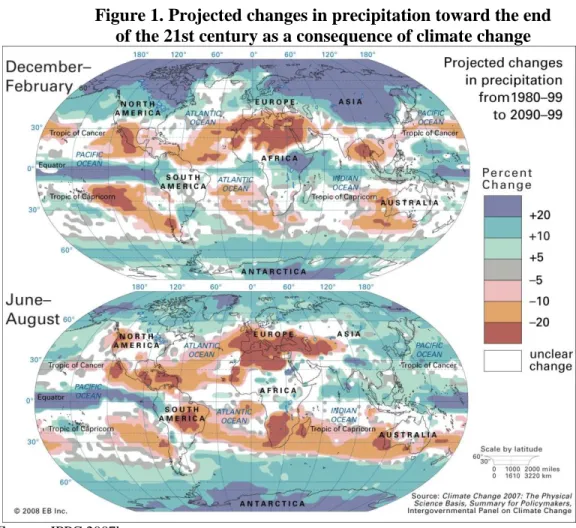
Another effect of climate change is the reduction in rainfall, particularly in areas where it is already insufficient, which would have a serious impact on surface water and groundwater sources. This change will impact how new infrastructure is designed and operated, since using historical models will be of no use in forecasting what may happen in the future.
The problems caused by climate variability will not only affect temperature and precipitation patterns but also have an impact on the productive capacity of animal and plant species and on the distribution of the human population, which will particularly affect the poor.
Higher temperatures, less precipitation and unstable rainfall patterns, rising sea levels and the intensification of extreme weather events–such as droughts and hurricanes–will have an impact on production, infrastructure, livelihoods and the health and security of the population. Furthermore, the changes will weaken Nature’s capacity to provide us with vital resources and services, and ensure the viability of agriculture. In the case of South America, the situation could become more serious, given the disappearance of glaciers and the potential reduction in the volume of flow of the Amazon River.
Among the factors that affect climate variability in Latin America, and which are likely to be accentuated by climate change, are the “twin” events known as El Niño and La Niña, which affect the pattern and intensity of rainfall throughout the continent. In 1997-1998, El Niño increased the frequency of floods, droughts and landslides. Future occurrences of El Niño/La Niña are expected to bring about bigger alterations in rainfall patterns and increase the number of extreme events.
Climate change affects agriculture but farming activities also influence the process by producing greenhouse gases (the World Future Council [2013] estimates that agriculture accounts for