TRANSACTIONS OF THE ROYAL SOCIETY OF TROPICAL MEDICINE AND HYGIENE (1995) 89, 411-414 411
Liver pathology
in rural south-west
Cameroon
4. *.
A Skalsky’, H. I. Joller-Jemelka’, L. Bianchi3 and M. Knoblauch 4 ‘Manyemen General Hospital, Cameroon; Sectaon of Clinical Immunology, Department of Medicine, University Hospital of Zurich, Switzerland; 3Department of Pathology, University Hospital of Basle, Switzerland; 4Department of Medicine, Miinnedorf Hospital, SwitzerlandAbstract
In a prospective study, 102 hospital patients with liver disease were evaluated in West Cameroon, Africa. Blood donors, pregnant women and patients without liver disease served as controls. A total of 757 individ- uals were tested for markers of hepatitis A, B, C and D and for immunological markers (autoantibodies, procollagen III, a-foetoprotein, CA50 antigen, or-1-antitrypsin and antibodies to human immunodeficiency virus types 1 and 2). One-third of the liver disease patients had focal lesions on ultrasound examination. His- tologically, 20 cases of cirrhosis, 14 cases of chronic hepatitis, 15 hepatocellular carcinomas and 17 cases of acute hepatitis were detected. All hepatic patients and virtually all controls had had a previous hepatitis A virus infection. Over 85% of adult patients and controls had at least one marker of hepatitis B virus infec- tion. Over 30% of patients with liver disease had markers of possible hepatitis B virus replication. Anti- hepatitis C virus antibody was present in 18% of hepatic patients and in 6% of controls. Hepatitis C virus infection seems to play an important role in the development of chronic liver pathology; 40% of cirrhotic patients had a combined hepatitis B and C virus infection, Serum autoantibodies were frequently found and were not correlated with the presence of autoimmune liver disease.
Keywords: liver disease, hepatitis A, B, C, D, hepatocellular carcinoma, cirrhosis, Cameroon
Introduction
Data on liver pathology and hepatitis virus serology from rural tropical Africa are scarce. Being impressed by the frequency of liver diseases in patients at the Man- yemen General Hospital in the South-West Province of Cameroon, we conducted a prospective study to eluci- date the nature, aetiology and diagnostic management of liver disease in hospital patients during a period of 2 years.
The study included a standardized clinical investiga- tion, ultrasound examination, liver function tests, liver histology, hepatitis virus and human immunodeficiency virus (HIV) serology, and the determination of several autoantibodies and immunological markers. Blood donors! pregnant women and patients with minor complamts not related to the liver served as controls.
Manyemen is situated in the rural, tropical forest area of the South-West Province of Cameroon. The Presbyte- rian General Hospital at Manyemen has 115 beds and a large primary health care service and serves a population of about 250 000 in a area of 15 000 km2. Falciparum malaria and filarial infections are hyperendemic, whereas parasites invading the liver, such as Schistosoma mansoni
and liver flukes, are rare.
Study design and Methods
We investigated 102 consecutive patients from Sep- tember 1990 to August 1992. Inclusion criteria were clinically suspected liver disease on grounds of jaundice, ascites, right upper quadrant pain or a pathological liver mass. Initially 135 patients were enrolled, but 33 had to be excluded because of incomplete data, erroneous diagnosis or pathological conditions not permitting liver biopsy.
For the history, clinical examination and abdominal ultrasound standardized questionnaires and record forms were used. Ultrasound examination was performed using a Siemens Sonoline@ 1300 linear scanner of 3 MHz. Liver biopsy was either performed ‘blindly’ according to the Menghini technique or under laparoscopic control. The bioDsv soecimens were kew in 10% formalin and later examined by one of us (L.B:).
Basic laboratory determinations were performed ac- cording to the World Health Organization recommend- ations (WHO, 1980); liver function tests were performed with the aid of a Boehringer Reflotron-Photometer@.
For immunological investigations, sera were stored at -4°C and later analysed at the Section of Clinical Immu- nology of the University Hospital, Zurich, Switzerland. Address for correspondence: Dr med. J. Skalsky, Unterdorf- strasse 28, CH-8602 Wangen, Switzerland.
Markers of hepatitis A, B, C and D viruses (HAV, HBV, HCV, HDV) and autoantibodies such as anti-nuclear antibodies (ANA), anti-mitochondrial antibodies (AMA), and anti-smooth muscle antibodies (ASM) were determined by indirect immunofluorescence, anti-M2 antibodies (AM2) by an anti-M2 enzyme-linked immuno- sorbent assay (ELBA) (Elias, Freiburg, Germany), pro- collagen III by P III-peptide radio-immunoassay (RIA) (Boehring, Marburg, Germany), and a-1-antitrypsin with the aid of a BNA-Nephelometer-Analizera (Boehr- ing, Marburg, Germany). HIV-l and HIV-2 antibodies were also investigated, using commercial screening test kits and following the procedures recommended by the manufacturers (Abbott Laboratories, North Chicago, Il- linois, USA). HIV-l and HIV-2 antibodies were deter- mined with the Abbott recombinant HIV-l and HIV-2 enzyme immunoassay. Confirmation was by Western blotting for HIV-l (Du Pont, USA) and HIV-2 (Pasteur, France). Anti-HCV was measured by a second gener- ation ELBA (Ortho Diagnostic), positive results being confirmed by the Chiryon recombinant immunoblot assay second generation HCV test (Chiryon Corporation, USA).
Results
The 102 patients with liver disease consisted of 67 males and 35 females, age range 6 months to 80 years imean 40.5f 19 vears): 64 of 95 eave a historv of regular alcohol intake (hair& industrii beers and’local ialm wine), 7 of 64 reported a blood transfusion, 24 of 60 re- ported a previous episode of jaundice, and 41 of 53 had taken traditional herbal medicines.
Clincialpresentation
The 5 most frequently encountered clinical presenta- tions among 102 patients were jaundice (related to liver disease), 31; right upper quadrant pains, 20; ascites, 17; right upper quadrant tumour, 16; and hepatomegaly, 15.
Abdominal ultrasound examination
Focal lesions such as abscesses, tumors or metastases were found in 34 of the 98 patients examined. Sterile, chocolate-coloured pus could be aspirated in 5 instances. Differentiation between amoebic liver abscess, hepatocel- lular carcinoma (HCC) and malignant lymphoma or metastases was difficult. Puncture and aspiration with a 0.9 mmx70 mm Luer needle was safe and helpful in these cases; no complication occurred.
Liver function tests
412
with liver disease. y-Glutamyltransferase (y-glutamyl- transpeptidase, EC 2.3.2.2) was elevated in 67%, aspar- tate aminotransferase (glutamic-oxalacetic transaminase, EC 2.6.1.1) in 57% and alanine aminotransferase (glu- tamic-pyruvic transaminase, EC 2.6.1.2) in45%.
Bleeding and coagulation times, determined by the Duke/Lee and White methods (WHO, 1980) were nor- mal in all except 3 patients, in whom there was no histo- logical proof of severe, diffuse liver disease.
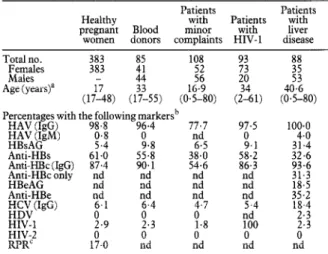
Table 3. Prevalence of serum markers of viral hepatitis, HIV and syphilis in different populations
Patients Patients
$$t::t Blood minor with Patiti~ts liver with
women donors complaints HIV-1 disease
Total no. !2Ees Age (years)a 383 108 93 383 :: 44 :i :?I 2 53 (173148) $55) (O%O) (2%) (,“P;_“80) Histology
Histological diagnoses were made for 98 patients (Table 1). Of the 20 patients with liver cirrhosis, 8 had a
Percentages with th%El8l HAV (IgG)
;f’A@W ;:i
Table 1. Histological diagnoses for 98 hospital patients in Cameroona
Anti-HBs 61.0
Ant/-HBc (IgG) 8Li4
$;m-fk only nd Liver cirrhosis Macronodular Micronodular Unspecified Acute heuatitis 20 : 12 17 Viral * Unspecified
Non-s ecific reactive Specia forms (giant cell) 3 Hepatocellular carcinoma Chronic hepatitis
Chronic active hepatitis Chronic persistent hepatitis Granulomatous hepatitis Secondary biliary inflammation Liver fibrosis
Amoebic liver abscess Alcoholic liver disease
Tropical splenomegaly syndrome
: 11 2 15 Others 14 Burkitt’s lymphoma
Metastatic liver disease (adenocarcinoma) :
Haemosiderosis 2
Liver anor+alies (Caroli syndrome, cysts)
Fatty liver ;
Inconclusive histological diagnosis
HELLP syndrome (combined diagnosis) :
aOccasionally 2 diagnoses were recorded for one patient. bSteatosis as the main histological finding.
concomitant HCC, and 7 patients had HCC in a non-cir- rhotic liver. There was a positive correlation between concomitant cirrhosis and HCC (x2= 11.82; P=O.O0059) (Table 2). Malaria pigment was seen in nearly all the his- tological specimens.
Table 2. Association between hepatocellular carcinoma and liver cirrhosis
Liver cirrhosis Present EE?
Hepatocellular carcinoma No. of patients Present Absent
12
3: ;
98 15 ii:
Serological markers of viral hepatitis and HIV
The results are summarized in Table 3 and the Figure. All patients with liver disease and virtually all controls had had a previous infection with HAV; 25% of the healthy children up to 1 year old, and 90% of those up to 15 years old, who were tested, had anti-HAV antibodies. About 90% of all the liver disease patients, blood donors and pregnant women had a marker of HBV infection.
Significantly more pregnant women and blood donors were positive for anti-hepatitis B surface antigen anti-
Anti-HBe ~;;(I@3 HIV-l HIV-2 RPR’ nd 6.1 0 2.9 1t.0 Iwing markersb 96.4 77.7 0 nd 9.8 6.5 55.8 38.0 90.1 54.6 nd nd nd nd nd nd nd nd nd 6.4 4.7 5.4 0 0 nd 2.3 1.8 100 0 0 0 nd nd nd 97.5 0 9.1 58.2 86.3 100.0 4.0 31.4 32.6 g:; 18.5 35.2 18.4 ::; 0 nd aMean (range in parentheses).
‘nd=Not determined.
‘Rapid plasma reagin test for syphilis; other abbreviations re defined in the text.
body (anti-HBs) than patients, the converse being true for the antigen itself (HBsAg). About 10% of children up to 5 years old were anti-HBs positive, as were about 40% of those aged 15 years. The corresponding figures for anti-hepatitis B core antigen (anti-HBc) immunoglobulin G (IgG) were even higher, 30% and 57% respectively.
0-f 25 s-15 16-25 a25
Age group (years)
Figure. Age distribution of hepatitis markers in hospital patients with minor complaints unrelated to liver disease, Cameroon, 199&1992. Dark grey bars: anti-hepatitis A IgG; light grey bars: anti-hepatitis B core antigen IgG; black bars: anti-hepatitis C IgG.
Among patients with liver disease, markers of possible HBV replication were positive in a high proportion: HbsAg in 31%, hepatitis B e-antigen (HBeAg) in 18%, and anti-HBc (alone) in 31%.
Anti-HDV was found in only 2% of patients with liver disease, but anti-HCV was significantly more common in such patients than in controls (18% versus 6%; PcO.025). Because of the inclusion of children, patients with minor complaints not related to liver disease had a somewhat lower infection rate with HAV, HBV and HCV than the control patients, including the prevalence of HBsAg and anti-HBs.
The prevalence rate of anti-HIV-l among both con- trols and liver disease patients was low, averaging 2%.
Immunological markers
The results are summarized in Tables 4 and 5. Procol- lagen III was elevated in approximately 75% of young people, 63% of blood donors and 53% of liver disease pa- tients. CA50 antigen was elevated in more liver disease patients than in blood donors, but was also present in 38% of children up to 5 years old. Anti-nuclear anti- bodies (ANA) were found in 75% of liver patients but also in 25-35% of controls and youngsters. In 13 liver disease patients the titres were >1:320. AMA and AM2 were found in 22% of liver patients, the corresponding figures for blood donors being 5% and 16% respectively. In none of these patients with ANA or AMA could a
413 Table 4. Prevalence of immunological markers in patients with minor complaints, not related to liver disease in different age groups
Age group (years) O-l 2-5 6-15 16-25 >25
Total no. 19 13 26 15 35
Females 14 3 13 13
Males
Mean age (years) 0.: 31,”
Patients with the following marker? 91:
; 20.3 342-72 ;$~A~GW ; ;1;:y Anti-HBs 1(7.7$ t j 2; y$P, t 10 (38.5;) l; Y) r 3: ;y;opj t Anti-HBc IgG ;g; (Id? “; ~;p;q’ 18 (51.4;) 0 HIV-1 ;I 00 0 1 -) HIV-2 0 (-) 0 c--j {I 0 {I i ;I !! PI11 15 (78.9%) (-) 10 (76.9%) 20 0 (-) 0 i C-1 2.9%) ANA 2 (10.5%) 3 (76.9%) 9 % (23.1%) 11 (73.3%) 13 (37.1%) 0 1 t -1 ;r t1 1; [yp’z”) 4 (26.7%) 5.3%) ; ‘y:o/“’ 2 3 (25.7%) 5.7% 8.6% 2% ;I tj t I 2 7.7; CA50 5 (38.4%) 1 (3.8%) i j
aAMA, anti-mitochondrial antibodies > 1: 19; AM2, anti-M2, antibodies > 10 units/ml; ANA, antinuclear antibodies > 1: 10; ASM, anti-smooth muscle antibodies > 1: 10; CA50, monoclonal anti-CA50 antigen (RIA-gnostm, Behring, Mannheim, Germany) >normal level; oFI’, a-foetoprotein >normal level; PIII, procollagen III peptides >normal level. Table 5. Prevalence of immunological markers in
patients with liver disease and in healthy blood donors Markersa PI11 CA50 a-Foetoprotein ANA AMA AM2 ASM Patients with liver disease 45184 (53.5%) 72/84 (85.7%) 22184 (26.2%) Blood donors 51/81 (63.0%) 3184 (3.5%) 3181 (3.7%) 8150 1165 (1.5%) (16.0%) aFor explanation, see footnote to Table 4.
Table 6. Correlation between hepatocellular carcinoma and anti-
hepatitis C antibody or hepatitis B surface antigen
Total Anti-hepatitis’? Present Absent Hepatitis B surface antigenc Present Absent H;~s~~t+da~~maa Absent % l;’ (28.6%) l$(71,4%) 1; (64.3%) 4; (35.7%) Total 15 61 22 54
“All patients with carcinoma had at least one marker of hepatitis B virus infection.
bCorrelation between carcinoma and anti-hepatitis C: x*=0.8455, P=O.36 ‘Correlation between carcinoma and hepatitis B surface antigen:
y.2=10~42,P=O~O012.
clinical or histological correlation with an autoimmune liver disease be found. Lw-Foetoprotein was significantly commoner in liver disease patients and children up to 5 years old than in controls.
Cirrhosis
HBsAg was present in 47% of patients with cirrhosis, somewhat fewer than patients with HCC. Liver cirrhosis
Table 7. Correlation between liver cirrhosis and hepatitis C virus or hepatitis B surface antigen
Total Present Hepatitis C virus Absent
Hepatitis,B surface anugen Present Absent 19 8 (53%) 11 (18%) 9 (41%) 10 (19%) :z 1; (47%) 5$(X2%) ;; (59%) ‘I; (81%)
was associated in 42% with anti-HCV, indicating a com- bined infection with HBV and HCV (Table 7).
Cirrhosis of the liver was correlated with both HCV in- fection (x2=8.0; P=O.O047) and the presence of HBsAg (x2=4.18; P=O.O41).
All patients with liver cirrhosis, HCC, and chronic ac- tive or persistent hepatitis had at least one serum marker of HBV infection, and 53% (10) of the patients with liver cirrhosis had evidence of a combined infection with HBV and HCV, while 42% (8) of them were HBsAG negative.
Five patients with HCC (38%) showed evidence of combined infection with HBV and HCV, and 5 had mar- kers of HBV infection only.
Of the 7 patients with chronic active and the 3 with persistent hepatitis, 4 and 1, respectively, had markers of both HBV and HCV infection, while 3 and 2, respec- tively, had markers of HBV infection only.
Discussion
Although HAV and HBV had infected virtually every adult and a substantial number of the juvenile persons in our study, about one-third of the patients with liver dis- ease were also affected by some other hepatic disease (Table 1).
Ultrasound proved to be particularly useful in the vis- ualization of focal hepatic lesions, although differentia- tion between amoebic liver abscess, HCC or malignant lymphoma can be very difficult (MISSALEK, 1992). Im- mediate puncture and aspiration can enable a rapid diag- nosis. Thus abdominal ultrasound is an efficient screen- ing diagnostic tool, while laparoscopy is even more helpful in making a definite diagnosis, confirmed by his- tology.
Clinical signs of chronic liver disease, common among Caucasians, such as spider naevi, palmar erythema, loss of abdominal hair, and testicular atrophy are rarely seen in Black Africans (LEEVY et al., 1977). Variceal haemor- rhage, severe disorders of coagulation and portosystemic encephalopathy were not observed in this survey. Elev- ation of y-glutamyltransferase in serum was the most fre- quently abnormal liver function test. Nevertheless, its sensitivity of only 67% among liver disease patients is too low for screening purposes. Bleeding and coagulation time proved also to be of little help in evaluating diffuse parenchymatous liver disease.
Although a substantial number of HBV infections probably occurs in the perinatal period, anti-HBc posi-
414
tivity steadily increases in the first 15 years of life (WHO 1991). The source of infection during this period is not clear. Horizontal spread among small children, skin piercing as a traditional treatment or custom (scarifica- tion, circumcision), and early sexual activity may all play a role (NDUMBE, 1992; KAO et al., 1993; NDUMBE & SKALSKY, 1993):
The HCV infection rate was comparatively low in the control uonulation, esneciallv in childhood, the time at which mos; blood transfusions are given for severe, mala- ria-associated anaemia. Concomitant HCV infection was, however, present in 18% of our patients with liver dis- ease. There was some evidence that the prevalence of anti-HCV antibodies increased with age: 3 of 35 subjects aged over 25 years had anti-HCV IgG, compared with 2 of 73 of those aged 25 years or less (Table 4). This is in agreement with the marked prevalence of anti-HCV in persons over 40 years of age reported in a recent survey of another rural forest area in Cameroon (LOUIS et al., 1994).
Given the high rate of HBV infection in controls and the three-fold increases in prevalence of HCV infection in liver disease patients (a seven-fold increase in cir- rhosis) compared to controls, it may be speculated that HCV infection is of considerable imuortance in the de- velopment of chronic liver pathology.‘The mode of infec- tion with HCV in our population is uncertain. Blood transfusions do not seem to play a major role.
There was a significant positive correlation between liver cirrhosis, HCC and HBsAg, and between liver cir- rhosis and anti-HCV, but only a weak positive correla- tion between HCV infection and HCC.
A high frequency of positive autoantibodies, especially ANA (speckled pattern), has been described previously in regions endemic for falciparum malaria (BOONPUCK-
NAVIC & EKAPANYAKUL, 1984; see also ACETI et al.,
1990). The autoantibodies. however. might also be mar- kers of an autoimmune process, triggered by a previous hepatitis virus infection (LENZI et al., 1991; VENTO et al., 1991). Histologically and clinically, however, we found neither chronic autoimmune hepatitis nor primary biliary cirrhosis in our survey, despite the rather high prevalence of ANA and AM2 autoantibodies among liver disease patients.
The prevalence of a positive rapid plasma reagin test (RPR) for syphilis (17%) and the HCV prevalence of 6% in pregnant women (Table 3) were relatively high. Simi- lar results have been reported from the adult population of Yaounde, the capital of Cameroon, where the sera were tested by Treponema pallidurn haemagglutination (TPHA), a more specific antibody test for syphilis (NDUMBE, 1992), and for hepatitis C antibodies (MEN- CARINI, 1991).
Whether there is a relationship between genital ulcer disease and HCV transmission, as there is for HIV-l transmission, needs further investigation. This was sug- gested by further observations from Yaounde, where the seroprevalence of HCV antibodies among prostitutes was about twice that of pregnant women (NDUMBE & SKAL-
SKY, 1993) and by the fact that, in our cohort, the sero- prevalence of HCV antibodies among pregnant women with a positive RPR was about twice that observed in
RPR negative pregnant women.
Positive HIV-l status seemed not to have an influence on the expression of the different anti-hepatitis anti- bodies, especially HBsAg and anti-HCV, in our study.
As HBV and HCV seem to play an important role in chronic liver disease in the area we investigated, the pre- valence of HBsAg (5.4%) and anti-HCV antibodies (6.1%) in pregnant women, with the risk of vertical transmission (THALER et al., 1992), is of epidemiological importance and supports the introduction of early vacci- nation against HBV and, in the future, if available, HCV in the Expanded Programme on Immunization (WHO, 1991; NDUMBE & YENSHU, 1992).
References
Aceti, A., Taliani, G., Bat, C. & Sebastiani, A. (1990). Anti-
HCV false positivity in malaria. Lancet, 336, 1442-1443. Boonpucknavig, S. & Ekapanyakul, G. (1984). Autoantibodies
in sera of Thai patients with Plasmodium falciparum infection.
Clinical Immunoloat. 58.77-82.
Kao, J. H., Chen,?: J.‘, Ming, Y. L., Teh-Hong Wang &
Ding-Shiun Chen (1993). Sexual transmission of HCV. Lan- cet, 342,622.
Leevy, C. M., Popper, H. & Sherlock, S. (1977). Diseases of the Liver and Biliary Tract. Standardization of Nomenclature; Diag-
nostic Methodology. Chicago: Yearbook Medical Publishers. Len&, M., Johnson, I’. J. & McFarlane, I. G. (1991). Anti-
bodies to hepatitis C virus in autoimmune liver disease; evi- dence of geographical heterogeneity. Lancet, 338,277-280.
Louis, F. J., Maubert, B., Le Hesran, J.-Y., Kemmegne, J.., Delaporte, E. & Louis, J.-P. (1994). High prevalence of anti- hepatitis C virus antibodies in a Cameroon rural forest area.
Transactions of the Royal Society of Tropical Medicine and Hy- giene, 88,53-54.
Mencarini, I’., De Luca, A., Antinori, A., Maiuro, G., Spedini, G., Bailly, C. & Tamburrini, E. (1991). Prevalence of anti- HCV antrbodies in Cameroon. Transactions of the Royal So- ciety of Tropical Medicine and Hygiene, 85,6%655.
Missalek, W. (1992). Ultrasonography in the diagnosis of amoebrc liver abscess and its complications. Tropical Doctor,
22,59-64.
Ndumbe, P. M. (1992). Sexually transmitted infections in se- lected high risk populations in Cameroon. Genitourinary Me- dicine, 68,193-194.
Ndumbe, P. M. & Skalsky, J. A. (1993). Hepatitis C virus in- fection in different populations in Cameroon. Scandinavian
Journal of Infectious Diseases, 25,689-692.
Ndumbe, P. M. & Yenshu, E. (1992). Vaccination and politics.
Lancet, 339,1222.
Thaler, M. M., Choong-Kee Park, Landers, D. V., Wara, D. W., Houghton, M., Veereman-Wauters, G., Sweet, R. L. & Han. I. H. (1992). Vertical transmission of heuatitis C virus. Lance;, 338,‘75C757.
Vento, S., Garofano, T. & Di Perri, G. (1991). Identification of heuatitis A virus as a trigger for autoimmune chronic henatitis type 1 in susceptible ind%duals. Lancet, 337,1183-1187. WHO (1980). Manual of Basic Techniques for a Health Labora-
tory. Geneva: World Health Organization.
WHO (1991). Towards the elimination of henatitis B: a guide to the implementation of national immunization programs in-the develo- ping world. Document issued by the Conference on the Control of Hepatitis B in the Developing World, Yaounde, October 7-11, 1991. Geneva: World Health Orgamzation.
Received 9 November 1994; revised 6 February 1995;