HAL Id: cea-02509747
https://hal-cea.archives-ouvertes.fr/cea-02509747
Submitted on 17 Mar 2020
HAL is a multi-disciplinary open access
archive for the deposit and dissemination of sci-entific research documents, whether they are pub-lished or not. The documents may come from teaching and research institutions in France or abroad, or from public or private research centers.
L’archive ouverte pluridisciplinaire HAL, est destinée au dépôt et à la diffusion de documents scientifiques de niveau recherche, publiés ou non, émanant des établissements d’enseignement et de recherche français ou étrangers, des laboratoires publics ou privés.
Evaluation of aluminide coatings as hardfacing material candidate in sodium fast reactor
F. Rouillard, J.-L. Courouau, B. Duprey, S. Mathieu, Y. Bouizi, M. Vilasi, G. Boissonet, F. Pedraza, I. Proriol-Serre, J.-B. Vogt
To cite this version:
F. Rouillard, J.-L. Courouau, B. Duprey, S. Mathieu, Y. Bouizi, et al.. Evaluation of aluminide coatings as hardfacing material candidate in sodium fast reactor. HTCPM 2016 - 9th International Symposium on High-Temperature Corrosion and Protection of Materials, May 2016, Les Embiez, France. �cea-02509747�
www.cea.fr
EVALUATION OF ALUMINIDE
COATINGS AS HARDFACING
MATERIAL CANDIDATE IN
SODIUM FAST REACTOR
F. Rouillard1, JL. Courouau1, B. Duprey1,
S. Mathieu2, Y. Bouizi2, M. Vilasi2,
G. Boissonnet3, F. Pedraza3,
I. Proriol-Serre4, JB. Vogt4
1- Department of Physics and Chemistry, CEA-Saclay, France 2- Jean Lamour Institute, University of Lorraine, Nancy, France 3- LASIE - University of La Rochelle, France
4- UMET - University of Lille, France
2 MAI 2016
| PAGE 1 CEA | May 2016
This work was funded by NEEDS project (EDF-AREVA-CEA-CNRS)
CONTEXT : NEW HARDFACING ALLOYS FOR
TRIBOLOGICAL APPLICATIONS OF SFR
Sodium-cooled Fast Reactor ASTRID (600 MWe)
Main goals of ASTRID: Multi-recycling of plutonium (uranium ressource preservation) Minor actinide transmutation (nuclear waste reduction)
Enhanced safety (as for Gen III reactors)
Advanced Sodium Technological Reactor for Industrial Demonstration
Many components need to move during : nominal operation
CONTEXT : NEW HARDFACING ALLOYS FOR
TRIBOLOGICAL APPLICATIONS OF SFR
2 MAI 2016
Sodium-cooled Fast Reactor ASTRID (600 MWe)
Core components : 400-500°C, 4 years In former SFRs :
Cobalt base alloy STELLITE but activation under neutron flux
Safety issues during maintenance operation
Research program on coating alternatives
« Candles » : 200 - 400°C, 60 years
EXPECTED PROPERTIES OF
TRIBOLOGICAL MATERIAL
Good friction coefficient Good wear resistance
Good corrosion resistance in Na Good behaviour under irradiation
Good mechanical behaviour : resistance to thermal and mechanical shocks Good adhesion
CEA-AREVA-EDF program :
Thick coatings (2 mm) : Nickel base alloys deposited by PTA or laser Thin coatings (<100 µm) : Aluminides
Fabrication process = robust and vendor = existing or expected in near future
Good compatibility in Na from results obtained during the « golden age » of SFRs in the 70’s and 80’s.
JOINT WORK IN COLLABORATION
BETWEEN 4 LABS
18 MAI 2016
NEEDS | 2 juillet 2015 | PAGE 5
Aluminides coatings synthesis by pack-cementation (IJL) and slurry (University of La Rochelle)
Mechanical testing on coated sample : « Small Punch Test » in Na
Na compatiblity
Tribological properties in Na
Behaviour under irradiation (experiments conducted in Russian BOR60 reactor)
JOINT WORK IN COLLABORATION
BETWEEN 4 LABS
Aluminides coatings synthesis by pack-cementation (IJL) and slurry (University of La Rochelle)
Mechanical testing on coated sample : « Small Punch Test » in Na
Na compatiblity
Tribological properties in Na
Behaviour under irradiation (experiments conducted in Russian BOR60 reactor) 1
2 3
1) ALUMINIDE COATINGS
SYNTHESIS
18 MAI 2016 | PAGE 7
STEEL GRADES AND COATING
%weight
Fe
Cr
Ni
C
Mo
N
Aluminide coating
process
316L(N)
Bal
17 13.2 0.04 2.3
0.06
Pack cementation
T91
Bal
9
0.2 0.1
1
/
Pack cementation
+ slurry
Both coating processes were realized without or with pre Ni plating treatment
PACK-CEMENTATION
– LOW AL ACTIVITY (PC)
18 MAI 2016
| PAGE 9 NEEDS | 2 juillet 2015 Diffusion Gaseous phase Diffusion Gaseous phase Adsorption Desorption SUBSTRATE Metal (solid) Halogen
(gaz) Metallic halide
formation Diffusion Solid phase PACK Silica tube P = 10-1 Pa Substrate “pack” composition : halide activator – CrCl3 – 1 wt% inert powder (Al2O3) – 59 wt% Master alloy (Ni2Al3) – 40 wt% Furnace
When pre nickel plated : 18 µm then vacuum annealed at 400°C before PC
980°C – 4h in air
(muffle furnace)
SLURRY – HIGH AL ACTIVITY (SL)
Wetting > Combustion synthesis > interdiffusion
400°C
650°C 760°C 1050°C
Thermal treatment
Final annealing step to recover the microstructure and the mechanical properties of T91 substrate 5h 3h 1h 1h
SLURRY – HIGH AL ACTIVITY (SL)
2 MAI 2016
CEA | May 2016 Wetting > Combustion synthesis > interdiffusion
Ni & Fe substrates
400°C
650°C 760°C 1050°C
Thermal treatment
Final annealing step to recover the microstructure and the mechanical properties of T91 substrate 5h 3h Micro ha rdn ess ( Hv )
Last step : grit-blasting of the top coat to remove
COATING OBTAINED BY PC ON 316L(N)
Without pre Ni plating
With pre Ni plating
(Fe,Ni,Cr)Al
(Interdiffusion zone with AlN precipitates
Al2O3 and Ni2Al3 particles stuck on the surface
Al2O3 particles embedded in the coating
Composite coating : B2-(Fe, Ni, Cr) Al with « hard » embedded Al2O3 particles Outwards aluminide growth
30 µm
60 µm
25 µm
NiAl
Less particles stuck on the surface Lower outwards aluminide growth rate Thin interdiffusion zone
NiAl
COATING OBTAINED BY PC ON T91
2 MAI 2016
CEA | May 2016 | PAGE 13
Without pre Ni plating
With pre Ni plating
(Fe,Cr)Al
Al2O3 and Ni2Al3 particles stuck on the surface
Al2O3 particles embedded in the coating
30 µm
~ 100 µm
25 µm
NiAl
Less particle stuck on the surface Thin interdiffusion zone
Cracks = due to higher thermal
expansion difference between T91 and NiAl ?
NiAl
(Fe,Cr,Ni)Al, 10µm cracks
Composite coating : B2-(Fe, Cr) Al with « hard » embedded
Al2O3 particles
Outwards aluminide growth Very large interdiffusion zone
COATING OBTAINED BY SL ON T91
Without pre Ni plating
With pre Ni plating
(Fe,Cr)Al – (Fe,Cr)3Al mixture (EDS and XRD analyses)
B2-(Fe, Cr) Al with porosity at the surface
Inwards aluminide growth Surface porosity
120 µm
NiAl
Same thickness (preferential inwards Al diffusion) (Ni,Fe)Al Interdiffusion zone AlN precipitates Porosity 15 µm
2) COMPATIBILITY OF THE
COATINGS IN NA
18 MAI 2016 | PAGE 15
MAIN CORROSION PROCESSES IN HT NA
Dissolution
(governed by solubility)
MAIN CORROSION PROCESSES IN HT NA
2 MAI 2016
CEA | May 2016 | PAGE 17
Dissolution
(governed by solubility)
Oxidation
(governed by oxygen content in Na)
MAIN CORROSION PROCESSES IN HT NA
Dissolution
(governed by solubility)
Oxidation
(governed by oxygen content in Na)
De- or carburisation
(governed by carbon content in Na)
3 main corrosion processes
DISSOLUTION IN NA
2 MAI 2016
CEA | May 2016 | PAGE 19
2 MAI 2016
[Applied chemistry of the alkali metals, Borgstedt, 1987]
Al
Mn
Ni,
Fe,
Cr,
Co
DISSOLUTION IN NA
550°C Al Fe Ni
Cr
wppm
33 0.5 1.5 0.03
Al
Mn
Ni,
Fe,
Cr,
Co
OXIDATION IN NA
2 MAI 2016
CEA | May 2016 | PAGE 21
All « usual » oxides are not stable in Na
18 MAI 2016
CORROSION TEST IN HT SODIUM
Oxygen purified Na by Zr foil getter (600°C) before (3 days) and during sample exposure : [O] < 5 ppm
Cr sample to detect any Al dissolution 2.5 L static Na in Mo crucible
Temperature : 550 °C
Exposure times : 850 h and 4250 h
Glove box
Echantillons
PACK-CEMENTED 316L(N) SAMPLES
2 MAI 2016
CEA | May 2016 | PAGE 23
Equivalent dissolution of 0.2 µm of FeAl
Low mass evolution even after 4250 h Lower mass evolution when pre Ni plated
T91 SAMPLES COATED BY PC OR SL
Same observations as coated 316L(N) T91-SL : tendency for mass gain
Other surface analyses are needed since the
evaluation of the corrosion resistance only by mass evolution interpretation can be very risky for Na
MASS EVOLUTION INTERPRETATION
18 MAI 2016 | PAGE 25 Mass evolution+
-
Formation of ternary compounds (Na-Me-O/C) during exposure
Formation of Na carbonates/hydroxide during washing procedure
Na penetration
Dissolution of metallic elements or ternary compounds during the exposure in Na
Dissolution of metallic elements or ternary compounds during the washing procedure of samples
SEM IMAGES OF 316L(N) –PC
BEFORE AND AFTER EXPOSURE
316L(N) before exposure 316L(N) after exposure in Na – 4250 h
GDOES PROFILES FOR 316L(N)-PC
2 MAI 2016
CEA | May 2016 | PAGE 27
No strong evolution of the surface coating composition as respect to its main elements : Al, Ni, Cr, Fe
Deep penetration of Na > 25 µm in the Al2O3 particles enriched zone :
SEM IMAGES OF 316L(N) - NI - PC
BEFORE AND AFTER EXPOSURE
316L(N) before exposure 316L(N) after exposure in Na – 4250 h
No clear degradation of the coating surface
GDOES PROFILES FOR 316L(N)-NI-PC
2 MAI 2016
CEA | May 2016 | PAGE 29
Same observations as for 316L(N) – PC : no clear evolution of concentrations But lower penetration of Na < 5 µm : dense coating
T91 COATED BY SLURRY
No formation of ternary compounds could be detected (Raman, XRD, SEM-EDX). Only aluminides and Al O
T91 – NI COATED BY SLURRY
2 MAI 2016
CEA | May 2016 | PAGE 31
Lower Na on the surface but penetration and accumulation detected deeper (accumulation in voids ?)
AL DISSOLUTION ?
EDX analysis on Cr sample surface
3 wt% of Al
[from Al
O
, Fe-Ni aluminides]
CONCLUSIONS FROM EXPOSURE TEST
2 MAI 2016
CEA | May 2016 | PAGE 33
No severe degradation of the aluminide coatings
whatever the process used (PC or SL) : Aluminides are
quite stable in HT Na
In good agreement with results from litterature :
Maximum corrosion rate of NiAl on IN718 = 0.75 µm/year at 625°C
[Johnson et al., LIMET 1976]
No evolution of the concentration of Al, Fe, Cr and Ni in the
aluminide deposited on 304, 316 and IN718 alloys after exposure in flowing Na at 400 °C for 3450 h completed by 350 h at 550 °C
[Depierre at al., Materials Science And Engineering 88, 287 (1987)]
But still :
Slight Al dissolution
Na penetration (function of the density of the
CONCLUSIONS FROM EXPOSURE TEST
2 MAI 2016
CEA | May 2016 | PAGE 34
No severe degradation of the aluminide coatings
whatever the process used (PC or SL) : Aluminides are
quite stable in HT Na
In good agreement with results from litterature :
Maximum corrosion rate of NiAl on IN718 = 0.75 µm/year at 625°C
[Johnson et al., LIMET 1976]
No evolution of the concentration of Al, Fe, Cr and Ni in the
aluminide deposited on 304, 316 and IN718 alloys after exposure in flowing Na at 400 °C for 3450 h completed by 350 h at 550 °C
[Depierre at al., Materials Science And Engineering 88, 287 (1987)]
But still :
Slight Al dissolution
Na penetration (function of the density of the
microstucture of aluminides, particles, cracks, …) :
effect of tribological behaviour ?
What about the tribological
SODIUM FACILITY FOR FRICTION-WEAR TESTS
8 FÉVRIER 2016
CEA | 26 avril 2016 | PAGE 35
Glove box
Furnace Weights regulating
SODIUM FACILITY FOR FRICTION-WEAR TESTS
5 mm 9 mm 8 mm 16 mm 30 mm 30 mm SolidWorks316L(N) pin Sliding surface
Arms applying normal force Fn Oscillating
translation movement
8 FÉVRIER 2016
| PAGE 37 CEA | 26 avril 2016
WHAT CAN WE MEASURE ?
Transversal force F
Tneeded for the oscillating translation movement
:
Mass variation : pins and coated sample
Mascroscopic images
Profilometric measurments : lost, gained and deplaced volume of material
Applied FN
Measured FT
f = F
T/ F
NWEAR
EXPERIMENTAL CONDITIONS
Na temperature
200°C
Translation rate
1 mm/s
Tracing length
10 mm
Total distance
4 m
Applied Stress
31 MPa
Pin material
316L(N)
Coated sample
316L(N) or
316L(N)-PC
2 friction tests : with or without coatings
MASS EVOLUTION
2 MAI 2016
CEA | May 2016 | PAGE 39
-8 -6 -4 -2 0 2 4 6 Mas s v ar iatio n (mg)
316L(N)
316L(N)-PC
Adhesive wear
Abrasive wear
sample
Pin Pin
Coated sample
MACROSCOPIC IMAGES
316L(N) - 316L(N)
316L(N) - 316L(N) PC
Lower wear for
316L(N) PC
FRICTION COEFFICIENT MEASUREMENTS
2 MAI 2016
CEA | May 2016 | PAGE 41
~ 1.3
~ 0.9
Lower friction coefficient for 316L(N)-PC
Litterature data in Na chemistry coming from Na loop Oxygen content ?
CONCLUSIONS AND PROSPECTS
2 MAI 2016
Good compatibility of aluminides in Na (up to 550°C)
Good wear resistance and lower friction coefficient than without
coating
Conclusions
What are the influence of the aluminide coating on the wear/friction
properties (nature, roughness) ?
What is the influence of the [O] content in Na on the wear/friction
properties ?
Development of new coatings (additonnal elements) favoring the
DEN DPC
Commissariat à l’énergie atomique et aux énergies alternatives Centre de Saclay| 91191 Gif-sur-Yvette Cedex
Etablissement public à caractère industriel et commercial | RCS Paris B 775 685 019 CEA | May 2016
-0.4 -0.2 0 0.2 0.4 0.6 0.8 1 316L(N) 316L(N) PC T itre de l 'ax e Titre de l'axe
Titre du graphique
Negative Volume Positive volume Highest relief deeper relief2 MAI 2016
CEA | May 2016 | PAGE 45
Test Pin (mg) Coated sample
(mg) Wear 316L(N) - 316L(N) -7 +4 Adhesive wear 316L(N) - coated 316L(N) PC -7 -0.06 Abrasive wear 316L(N) - coated 316L(N) Ni PC -10 +4 Adhesive wear
316LN – 316LN 200°C
Volume + (mm3)
Volume - Gained Relief (µm)
316LN – 316LN PC - 200°C AND 500°C
2 MAI 2016
CEA | May 2016 | PAGE 47
Volume + (mm3)
Volume - Gained Relief (µm)
316LN – 316LN NI PC - 200°C AND 500°C
Volume + (mm3)
Volume - Gained Relief (µm)
2 MAI 2016
CEA | May 2016 | PAGE 49
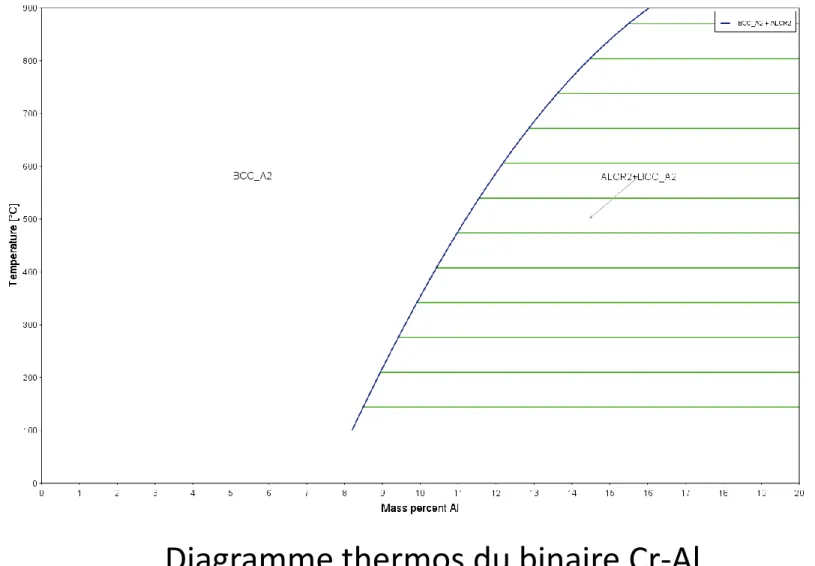
Diagramme thermos du binaire Cr-Al
2 MAI 2016
550°C Al Fe Ni Cr
wppm 33 0.5 1.5 0.03
[Applied chemistry of the alkali metals, Borgstedt, 1987]
Al
Mn
Ni,
Fe,
Cr,
Co
2 MAI 2016
CEA | May 2016 | PAGE 53
DEN DPC
Commissariat à l’énergie atomique et aux énergies alternatives Centre de Saclay| 91191 Gif-sur-Yvette Cedex
| PAGE 54
CEA | May 2016
More information :
www.portail-fluides-supercritiques.com
Innovation Fluides Supercritiques