T A B L E O F C O N T E N T S
GENERALABSTRACT 1
GENERALINTRODUCTION 3
I.1. The complexity of group living 3
I.2. The development of sophisticated decision rules 4
I.3. The Social Brain Hypothesis 6
I.4. The Machiavellian intelligence hypothesis 8
I.5. Is cooperation incompatible with the Machiavellian intelligence hypothesis? 13
I.6. Study species and study site 15
I.7. PhD thesis topic 16
I.8. Thesis chapters 16
I.9. References 19
31
CHAPTER I:SOCIAL NETWORKS AND THEIR DYNAMICS
1. THE INFLUENCE OF DEMOGRAPHIC VARIATION ON SOCIAL
NETWORK STABILITY IN WILD VERVET MONKEYS 31
1.1. Abstract 31
1.2. Introduction 32
1.3. Material and methods 34
1.3.1. Study site and population 34
1.3.2. Data collection 35
1.3.3. Data and statistical analyses 35
1.4. Results 37
1.4.1. Correlations between periods for the grooming network 37 1.4.2. Centrality within the grooming network 38 1.4.3. Strength of dyadic relationships within the grooming network 39
1.5. Discussion 39
1.5.1. Correlations indicate group differences 40 1.5.2. The influence of sex, hierarchy and migration on individual centrality 40 1.5.3. The influence of demographic variation on the strength of dyadic
relationships 41
1.5.4. Similarities and differences among groups 42 1.5.5. Dynamic social network analyses: a new method to quantify social
complexity? 43
1.6. Conclusion 45
1.7. References 47
Figures and Table 53
1.8. Supplemental results, figures and tables 55
1.8.1. Correlations between periods within proximity networks 55 1.8.2. Centrality within the proximity networks 55 1.8.3. Strength of dyadic relationships within the proximity networks 56
2. INTERGROUP VARIATION OF SOCIAL RELATIONSHIPS IN WILD
VERVET MONKEYS: A DYNAMIC NETWORK APPROACH 61
2.1. Abstract 61
2.2. Introduction 62
2.3. material and Methods 65
2.3.1. Study site and population 65
2.3.2. Data collection 66
2.3.3. SIENA model and statistical analyses 66
2.4 Results 70
2.4.1. Triadic closure and degree popularity effects 70 2.4.2. Homophily: Covariate-similarity effect 70 2.4.3. Network rate analyses: How quickly are relationships modified? 70
2.5. Discussion 70
2.5.1. Limited triadic closure and degree popularity effect 71
2.5.2. Homophily within relationships 72
2.5.3. Among-group differences in relationships stability 73
2.5.4. Methodological considerations 73
2.6. Conclusion 74
2.7. Acknowledgments 74
2.8. References 75
Figures and Table 79
CHAPTER II:HIERARCHY KNOWLEDGE
3. THIRD-PARTY RANKS KNOWLEDGE IN WILD VERVET MONKEYS
(CHLOROCEBUS AETHIOPS) 81
3.1. Abstract 81
3.2. Introduction 81
3.3. Material and Methods 83
3.3.1. Study site and population 83
3.3.2. Experimental design 83
3.3.3. Data and statistical analyses 84
3.3.4. Ethical note 84
3.4. Results 85
3.5. Discussion 85
3.5.1. Females know the whole female hierarchy 85 3.5.2. Methodological considerations and perspectives 85
3.6. Acknowledgments 87
3.7. References 89
Figure 91
4. AGE/SEX DIFFERENCES IN THIRD-PARTY RANK RELATIONSHIP
KNOWLEDGE IN WILD VERVET MONKEYS, CHLOROCEBUS AETHIOPS 93
4.1. Abstract 93
4.2. Introduction 94
4.3. Material and Methods 96
4.3.2. Experimental design 96 4.3.3. Playbacks simulating conflicts between two males 97 4.3.4. Playbacks simulating conflicts between two females 97
4.3.5. Data and statistical analyses 98
4.3.6. Ethical note 99
4.4. Results 99
4.4.1. Female knowledge about male hierarchy 99 4.4.2. Male knowledge about female hierarchy 99 4.4.3. Juvenile knowledge about female hierarchy 100
4.5. Discussion 100
4.5.1. Females know about the male hierarchy 101 4.5.2. Males do not seem to know about the female hierarchy 101 4.5.3. Juveniles do not seem to know about the female hierarchy 102
4.5.4. Methodological considerations 103
4.6. Conclusion 104
4.7. Acknowledgments 104
4.8. References 107
Figures and Tables 111
CHAPTER III:INDIVIDUALISED BOXES EXPERIMENTS
5. WILD VERVET MONKEYS TRADE TOLERANCE AND SPECIFIC COALITIONARY SUPPORT FOR GROOMING IN EXPERIMENTALLY
INDUCED CONFLICTS 115
5.1. Abstract 115
5.2. Introduction 116
5.3. Material and Methods 117
5.3.1. Training 117
5.3.2. Data collection 118
5.3.3. Data and statistical analyses 118
5.4. Results and Discussion 119
5.4.1. Effect of grooming on tolerance 119
5.4.2. Effect of grooming on coalitionary support 120
5.5. General conclusions 121
5.6. Acknowledgments 123
5.7. references 125
Figures 129
5.8. Supplemental experimental procedures 131
5.8.1. Study site and group composition 131
5.8.2. Training 131
5.8.3. Experimental design 131
5.8.4. Assessment of relationships quality 132
5.9. Supplemental references 133
6. EVIDENCE FOR FINE-TUNED DECISIONS ON TOLERANCE VERSUS
CONFLICT IN WILD VERVET MONKEY FEMALES 135
6.1. Abstract 135
6.2. Introduction 135
6.3. material and Methods 138
6.3.1. Study site and population 138
6.3.2. Training 138
6.3.3. Data collection 139
6.3.4. Data and statistical analyses 139
6.4. Results 140
6.4.1. Audience effect on tolerance 140
6.4.2. Effect of bondedness and kinship 141
6.4.3. Audience effect on emission of vocalisations during a conflict 141
6.4.4. Punishment from the audience? 141
6.5. Discussion 141
6.5.1. Audience effect on tolerance and vocalisations 142 6.5.2. Interaction between grooming and audience effects 143
6.5.3. Punishment or image scoring? 143
6.6. Conclusion 143
6.7. Methodological considerations and future perspectives 144
6.8. Acknowledgments 144
6.9. References 145
Figures 147
7. TESTING FOR AWARENESS IN RECIPROCITY DECISION RULES: AN
EXPERIMENTAL APPROACH IN WILD VERVET MONKEYS 149
7.1. Abstract 149
7.2. Introduction 150
7.3. Methods 153
7.3.1. Study site and species 153
7.3.2. Training 153
7.3.3. Data collection 153
7.3.4. Data and statistical analyses 154
7.4. Results 155
7.4.1. Vervet monkeys do not seem to be aware of increased tolerance 155 7.4.2. Awareness of coalitionary support or audience effect? 155
7.5. Discussion 155
7.5.1. Methodological considerations 156
7.5.2. Implications of potential future positive results 157
7.6. Conclusion 158 7.7 Acknowledgments 158 7.8. References 159 Figures 163 GENERALDISCUSSION 165 D.1. Summary 165
D.2. The Big picture 167
D.2.2. Dynamic social network analyses: a new way of quantifying social
complexity? 168
D.2.3. Knowledge about third party rank relationships might be sex and age
dependant 170
D.2.4. Evidence for strategic social behaviour in vervet monkeys 172
D.2.4.1. Evidence for direct reciprocity 172
D.2.4.2. Evidence for audience effect 173
D.2.4.3. No evidence for awareness about decision rules 174
D.3. Methodological considerations 175
D.4. Future research 176
D.5. References 179
GENERAL ABSTRACT
In comparison to other vertebrates, primates have a large brain in relation to their body size. It has been hypothesised that the degree of social complexity is the major predictor for such variation. In group living species, individuals face various social challenges which can include finding the right balance between cooperation and competition with other group members. Thus to survive and reproduce individuals would have to show an adapted cognitive flexibility. Following this argument, two parallel hypotheses emerged; the “Machiavellian intelligence” and the “Social brain” hypotheses propose that the social complexity of group living selected respectively for advanced cognitive abilities and an increase in relative brain/neocortex size (i.e. complexity). However, finding a positive correlation between the complexity linked to social life, corresponding advanced cognitive processes and brain size/complexity remains challenging. First, adequate proxies of social complexity that could be applied to various taxa remain to be found. Second, examples of strategic social behaviour such as proposed by the Machiavellian intelligence have been described in many taxa suggesting that more comparative studies are needed to distinguish between advanced cognitive processes and those that could rely on associative learning. Finally, a potential link between cognitive abilities and brain/neocortex size remains largely unexplored.
By studying wild vervet monkeys (Chlorocebus aethiops) in South Africa, the aim of this thesis was to test for the presence of some social knowledge facets in their behaviour. I also wanted to assess their ability to use such knowledge strategically in both cooperation and competition contexts. Vervet monkeys represent an ideal species as they are highly social, have a strict linear female and male hierarchies and are usually very willing to participate in set-up experiments involving food. In Chapter I, I tested the effect of natural migration, births and deaths on the individual centrality and strength of dyadic relationships within the grooming, 1m and 5m proximity social networks (i.e. method 1). I also used a new method (i.e. SIENA; method 2) to test both the network structure and the relationships dynamics. With both methods, I found a strong among-group variation. In addition, results suggest that females and juveniles have more influence than males on the stability at both the individual and dyadic levels, especially within the grooming network. Social relationships might be subject to frequent and significant changes often linked to natural demographic variation. Thus, social network analyses have the potential to capture important aspects of the cognitive social challenges an individual has to cope with. In Chapter II, I conducted rank reversal playbacks to test vervet monkeys’ knowledge about the entire group’s hierarchy. I found that females know about both female and male hierarchies while males and juveniles seem to lack such knowledge about the female hierarchy. Results therefore suggest
2
sex and developmental differences in the extent of third party rank relationships. In Chapter III, I first trained females to consistently approach their personalised boxes to obtain a food reward, which allowed staging potential conflicts by placing two boxes next to each other. With such experiments I could show that subordinates trade grooming for tolerance and coalitionary support and that such trading is modified by the composition of the audience (i.e. individuals within 10m). However data also suggest that subordinates are not able to incorporate the effect of their grooming on dominants’ decision-making to their own advantage.
In summary, the results of this thesis provide important insights on vervet social strategies and underlying cognitive processes. The introduced methodological advances regarding social network analyses and experimentation to reveal social strategies offer a basis for future research on other primate species for comparison. Such data would then be amenable for correlative studies that link the results to brain evolution. In such a way, one can hope to make important progress regarding the major quest: to assess how social complexity, strategic social behaviours and brain size are interlinked.
GENERAL INTRODUCTION
I.1. THE COMPLEXITY OF GROUP LIVING
In vertebrates, there is a great variation in both absolute and relative brain size (Jerison 1973). Primates generally have a large brain for to their body size in comparison to other taxa. A potential explanation relies on the hypothesis that the ecological/physical environment selected for larger brain size (Clutton-Brock and Harvey 1980; Gibson 1986). Primates indeed have to navigate successfully through extended home ranges, learn and recall where and when food is available and potentially use tools in order to get it. Positive correlations between diet and brain size have been found in non-human primates (Clutton-Brock and Harvey 1980), bats (Eisenberg and Wilson 1978) but not in birds (Bennett and Harvey 1985) suggesting some potential flaws to the ecological hypothesis. For example, while group size positively correlates with home range size in primates (Barton et al. 1992), this one does not correlate with the neocortex size (Dunbar 1992). In average, frugivorous species have larger brains than folivorous species (Clutton-Brock and Harvey 1980; Barton 1996) and it has been suggested that frugivory is more complex in the sense that individuals have to remember the spatial but also temporal distribution of fruits. However, recent studies indicated that such arguments are also valid for folivores (Snaith and Chapman 2007; Sayers 2013). Interestingly, folivorous species generally live in smaller groups than frugivorous ones (Janson and Goldsmith 1995). Many species live in stable social groups which has been suggested to be the response of an ecological challenge. Group living provides many advantages, such as a decrease of predation risk and also an increase in competitiveness against other groups of conspecifics over resources (Alexander 1974; van Schaik 1983; Wrangham 1980). As a consequence an individual’s fitness strongly depends on its social interactions (Silk et al. 2003, 2009, 2010). Building upon previous work from Jolly (1966) and Humphrey (1976) an alternative to the ecological hypothesis emerged. It suggests that the complexity of a species’ social environment might have been one important factor that promoted the evolution of brain size. In order to survive and reproduce an individual living in a social group has to find the right balance between intragroup competition, usually over food and mate, and cooperation with other group members, for example against predators. An additional level of difficulty is that an individual has to interact with group members who are also flexible in their decisions to compete or cooperate, leading to a natural selection based on social challenges. In figure 1, I present a summary of how “intelligence” might be linked to social complexity and which proxies of social complexity correlate with cognitive mechanisms and functions.
4
Figure 1. Summary of how social complexity selected for greater “intelligence”. The Machiavellian
Intelligence Hypothesis (i.e. MIH) relies on the development of advanced cognitive abilities while the Social Brain Hypothesis (i.e. SBH) focuses on the functional processes which correspond to brain complexity.
I.2. THE DEVELOPMENT OF SOPHISTICATED DECISION RULES As group size increases, the amount of information an individual needs to process increases accordingly. For example, individuals would have to remember more group members and more relationships, consequently selecting for a greater memory. To be socially competitive, individuals might have to develop more sophisticated decision rules based on social knowledge as they would have to face more potential competitors or co-operators. However, some of these abilities might rely on associative learning and might not need advanced cognitive processes. One of the challenges of group living also relies on the capacity to cooperate with other group members. Cooperation can depend on the quality of kin and non-kin relationships which has been referred as “friendship” (Silk 2002; Seyfarth and Cheney 2012) or “bondedness” (Shultz and Dunbar 2007, Dunbar and Shultz 2010). Such relationships are important in the sense that 1) an individual has to remember its own relationships with other group members which might be cognitively challenging in large groups and 2) they have an influence on an individual’s fitness (Silk et al. 2003, 2009, 2010). For example, coalition formation, which is the alliance of two or more individuals against a third party, might be used to increase access to mates and food, or to challenge or maintain a dominance rank (reviewed in Bissonnette et al. 2015). This latter case is largely supported by the enormous amount of coalitions across taxa that involved a target
subordinate to both coalition partners (Bissonnette et al. 2015). Such behaviour is considered as a low-cost and opportunistic way of reinforcing dominance rank and preventing own injury as the target is rather unlikely to retaliate (Cheney 1977; Watts 2002). Interactions usually take place within a communication network (McGregor 2005) adding a level of social complexity. So called “audience effect”, in the sense that an individual alters its behaviour according to the audience composition, is a capacity that seems to be present in various taxa (Matos and Schlupp 2005; Zuberbühler 2008). Audience could be used to increase social prestige or to encourage it to intervene. For example, in a client-cleaner fish interaction, cleaners (Labroides dimidiatus) seem to be more cooperative with their client if another potential future client is eavesdropping (Bshary and D’Souza 2003). Such behaviour has been observed in both cooperative (Pinto et al. 2011; Wedekind and Milinski 2000) and competitive contexts (Dzieweczynski et al. 2005; Slocombe and Zuberbühler 2007). Relationship quality could also influence how knowledge is transferred among group members. So called social learning, which is “the learning that is influenced by observation of, or interaction with, another animals or its products” (Heyes 1994) allows the creation of group-level behaviours and potentially traditions. For example, in primates, knowledge about food processing techniques is transferred from mother to infant (van de Waal et al. 2012). Social learning ability is wide spread and has been described in many taxa including mammals, birds, fish and insects (Galef and Laland 2005; reviewed in Galef and Heyes 2004). Similarly, tactical deception has been considered as an advanced cognitive process. It is defined as "acts from the normal repertoire of an agent, deployed such that another individual is likely to misinterpret what acts signify, to the advantage of the agent” (Byrne and Whiten 1988). For example, despite the absence of food, male chickens (Gallus gallus) sometimes produce food calls to attract females to increase their mating opportunities (Gyger and Marler 1988). Such deceptive behaviour seems to be rather elaborated and potentially intentional but could also be based on simple associative learning. Besides primates (Byrne and Whiten 1985; Whiten and Byrne 1997), examples of tactical deception that might rely on associative learning are present in birds (Bugnyar and Kotrschal 2002; Flower et al. 2014), fish (Bshary 2011) and cephalopods (Brown et al. 2012). While it is necessary to distinguish between simple cognitive abilities from more advanced ones, it remains challenging to design experiments that would allow testing for the presence/absence of intentionality.
Although all these behaviours and abilities might rely on basic associative learning, they seem to have been developed to cope with the complexity of a social environment and to increase an individual’s own fitness. Such arguments are part of the two major hypotheses that attempt to explain the differences in brain size
6
and advanced cognitive abilities across taxa: the “Social brain” (Dunbar 1992; Barton and Dunbar 1997) and “Machiavellian intelligence” (Byrne and Whiten 1988; Whiten and Byrne 1997). Initially, it was assumed that these hypotheses were relevant only to primates. However, several analyses suggested that they might also apply to other mammals such as cetaceans, carnivores and bats (Marino 1996; Dunbar and Bever 1998; but see Schultz and Dunbar 2007 for carnivores). Although both hypotheses rely on the idea that the social challenges of group living might be the prerequisite of the evolution of cognitive skills, which were developed to increase an individual’ own fitness, together with larger brains/neocortex, they may emphasise different aspects of sociality and cognition. While the Social brain hypothesis focuses on the relationship between social complexity and brain size or parts of it, the Machiavellian intelligence suggests that the complexity of a social life selected for advanced cognitive abilities, which could be related to “intelligence”. This corresponds to the development of some strategic behaviours such as manipulation and tactical deception (Byrne and Whiten 1988; Whiten and Byrne 1997), while de Waal (1982, 2007) used the term “Machiavellian” to describe some subtle manoeuvring to gain alliances in chimpanzees (Pan troglodytes).
I.3. THE SOCIAL BRAIN HYPOTHESIS
The Social Brain hypothesis (Dunbar 1992; Barton and Dunbar 1997) focuses on adaptive function of social complexity which corresponds to an increased brain/neocortex size. The neocortex (i.e. part of the cerebral cortex) is involved in higher function such as sensory perception, spatial reasoning, conscious thought and language. Studies sometimes evaluate the neocortex ratio which is the ratio of the neocortex size compared to the rest of the brain. Positive correlations between brain size or part of it and some parameters meant to represent social complexity have been found. In primates, neocortex (Dunbar and Shultz 2007) and relative brain size (Shultz and Dunbar 2007) correlates with group size and neocortex size also positively correlates with grooming clique size (Kudo and Dunbar 2001). In carnivores, bats (Dunbar and Bever 1998) and cetaceans (Marino 1996) neocortex ratio correlates with group size, while a following study found that in carnivores, ungulates and bats (Shultz and Dunbar 2007) relative brain size is much more strongly associated with pair-bonding. Deaner et al. (2007) found a positive correlation between absolute brain size and general learning abilities in primates. In birds, relative brain size is much more strongly associated with pair-bonding and social cohesion rather than group size (Emery et al. 2007; Shultz and Dunbar 2010a). In fish, some studies suggest that brain size differences might correlate with mating system, parental care type, habitat complexity and interspecific
competition (Pollen et al. 2007; Shumway 2008; Gonzalez-Voyer et al. 2009), but also that social environment selects for larger brain parts (i.e. tecta optica) compared to individually reared fish (Gonda et al. 2009). The enormous amount of positive correlations across taxa makes a general interpretation rather difficult. Other puzzling results suggest that social complexity might not have been the only factor selecting for larger brain size. For example, within carnivores, relative brain and neocortex size are bigger within the highly solitary bear family, than within some other much more gregarious families (Dunbar and Bever 1998). Whilst group size correlates with brain size in primates (Kudo and Dunbar 2001), it does not in birds (Beauchamp and Fernandez-Juricic 2004). It is therefore possible that another factor, such as the ecological/physical environment, might have co-selected for larger brains.
What also remains challenging is finding an accurate method to quantify social complexity. A majority of the studies used “group size” as a quantitative measurement (Dunbar 1992, 1995). Others made some qualitative comparisons between different social systems, such as fission-fusion (Barrett et al. 2003; see also Aureli et al. 2008) or mating patterns (Shultz and Dunbar 2006; 2007), while some focused on more precise social components linked with the complexity of relationships such as bondedness (Shultz and Dunbar 2007; Dunbar and Shultz 2010), rate of coalitions (Dunbar and Shultz 2007; Connor 2007) or deception (Byrne and Corp 2004). An interesting study found a positive correlation between grooming clique size based on social network analyses and neocortex ratio (Kudo and Dunbar 2001). Although social network analyses are a promising tool to study the complexity driven by the social environment only few studies applied it in relation to a more cognitive aspect (Lehmann and Dunbar 2009; Lehmann and Ross 2011; Pasquaretta et al. 2014). Despite some new propositions and ideas, the measurement of social complexity remains challenging. While it has been largely used across taxa, the proxy group size might not truly reflect the social complexity as group members might not interact similarly with each other if interacting at all. Other measures might be unfortunately limited to some species, preventing some necessary comparative studies, while others might not be directly linked with cognition. Similarly to social complexity, the measurement of intelligence or cognitive abilities has been largely debated (Shultz and Dunbar 2010b). Most studies linked to the Social brain hypothesis focused on the absolute (Deaner et al. 2007) or relative brain size (Amstrong 1985) or eventually the size of specific parts of it. It includes the neocortex in mammals (Dunbar 1992, 1995), the forebrain (Beauchamp and Fernandez-Juricic 2004) and hippocampus (Krebs et al. 1989) in birds. Therefore, there seems to be a disagreement on what needs to be measured to quantify “intelligence”. Some indeed suggest that measuring the whole brain might
8
not help to understand how specific behaviours were developed, while some raised the issue that some studies focused on part of the brain that were potentially not responsible for the tested cognitive behaviour (see Healey and Rowe 2007 for a review). For example, when considering relative brain size, shrews, which are the smallest mammals, have up to 10% of their body mass while for humans it represents 2% (van Dongen 1998). However, more recently, new technological advances allow considering other parameters such as cell density, cortical thickness or number of connections to quantify “intelligence” (Roth and Dicke 2005; Schnack et al. 2015). Future studies should reveal if one of them represent an accurate measurement.
I.4. THE MACHIAVELLIAN INTELLIGENCE HYPOTHESIS
The Machiavellian intelligence hypothesis in its broader term regroups a large list of advanced cognitive processes though which an individual could exploit its social environment (Byrne and Whiten 1988; Whiten and Byrne 1997), although some of these adaptations might be interlinked with the challenges proposed by the physical environment (see Figure 1). This for example includes flexibility, innovation, social learning, imitation, culture, social problem solving, self-awareness, social knowledge and theory of mind. A refined form of the hypothesis emphasises the development of strategic capacities to increase an individual’s own fitness, such as coalition formation and tactical deception (de Waal 1982). Here I present a brief review of the cognitive abilities proposed by the Machiavellian intelligence hypothesis and discuss the implication of the results at the end. As mentioned previously, social learning, coalition formation, audience effect and tactical deception might rely on associative learning. I do not discuss them below in further detail unless they clearly rely on some advanced cognitive processes.
A basic adaptation is to possess some cognitive flexibility which is “the ability to adapt the cognitive processing strategies to face new and unexpected conditions in the environment” (Cañas et al. 2003). Classic examples include task switching, multitasking, finding a new solution to a problem, creating new knowledge or eventually tools. Cognitive flexibility has been demonstrated in primates (see Reader and Laland 2011 for a review), cetaceans (Marino et al. 2007), bats (Ratcliffe et al. 2006) and other mammals (Kappeler et al. 2013), birds (Sol et al. 2005; Watanabe 2006; Bond et al. 2007), fish (Bshary 2011; Bshary et al. 2014; Patton and Braithwaite 2015), reptiles (Leal and Powell 2012 but see Vasconcelos et al. 2012) and invertebrates (Menzel et al. 2007; De Marco and Menzel 2008; Pahl et al. 2010) and seems therefore very widespread (see Roth 2015 for a review). However, not all these studies are comparable as they used different methodologies to test for the presence of cognitive flexibility.
Innovation has been defined as “a solution to a novel problem or a novel solution to an old problem” (Kummer and Goodall 1985; Reader and Laland 2003), for example, the creation of a tool to get access to previously inaccessible food. Innovations are scarce and rather unpredictable and therefore very difficult to observe or test. As a result, most successful studies came from anecdotal observations from the literature, including mammals, birds and fish (Reader and Laland 2003) or potentially from captivity (Manrique et al. 2013). Few recent studies, however, manage to implement an experimental approach in a natural environment in birds (Webster and Lefebvre 2001; Morand-Ferron et al. 2011) and mammals (Benson-Amram and Holekamp 2012; Thornton and Samson 2012; Huebner and Fichtel 2015). Innovation from an individual might spread to others by social learning (Galef and Heyes 2004) which in turn can be developed though imitation (Hurley and Chater 2005) or teaching (Caro and Hauser 1992). A tradition has been defined as a learned behaviour by multiple individuals that persists across time and potentially generations (Fragaszy and Perry 2003). Similarly to social learning, the presence of traditions has been found in mammals, birds, fish and insects, including very well-known examples such as the potato washing in Japanes macaques (Macaca fuscata) (Kawai 1965), the opening of milk lids by blue tits (Cyanistes caeruleus) (Hinde and Fisher 1951) or the song dialects in white-crowned sparrows (Zonotrichia leucophrys) (Marler and Tamura 1964) and whales (reviewed in Rendell and Whitehead 2001). Examples often rely on observational data (Hobaiter et al. 2014) or experiments in captivity (Whiten and Mesoudi 2008) but two recent experimental studies demonstrated the spread of traditions in the wild (vervets: van de Waal et al. 2013; great tits (Parus major): Aplin et al. 2014). While the idea of social learning and traditions is largely accepted, the term “culture” in animals is more debated and to this day the definition depends mostly on the authors (Whiten et al. 2011).
Innovation could emerge from the capacity of problem-solving, in the sense that the individual understands and solves a novel problem. Such capacity has been found in mammals (primates: Völter and Call 2012; Seed et al. 2009; bottlenose dolphins (Tursiops truncates): Kuczaj et al. 2015; meerkats (Suricata suricatta): Thornton and Samson 2012; spotted hyenas (Crocuta crocuta): Benson-Amram and Holekamp 2012) but also in birds, especially corvids (Taylor et al. 2009 but doubt about causal reasoning), and parrots where a species living in a fission-fusion society (Forpus conspicillatus) outperformed three other species (Krasheninnikova et al. 2013), and more recently in a tropical lizard species (Anolis evermanni) (Leal and Powell 2012, but see Vasconcelos et al. 2012). However, many studies emphasised the fact that such capacities might be depend
10
upon individual traits and again completely excluding associative learning remains challenging.
Self-awareness is considered as a highly cognitive ability and usually tested with a mark on the animal’s body that can only be seen with the help of a mirror. Such capacity has been successfully demonstrated in apes (Gallup 1970; Suarez and Gallup 1981; see Anderson and Gallup 2015 for a review), bottlenose dolphins (Reiss and Marino 2001), killer whales (Orcinus orca) (Delfour and Marten 2001), Asian elephants (Elephas maximus) (Plotnik et al. 2006) and most recently magpies (Pica pica) (Prior et al. 2008) and ants (Cammaerts and Cammaerts 2015). However, this was successfully demonstrated only in few individuals and usually interest was lost very quickly, while results on gorillas (Gorilla gorilla gorilla) provided contradictory results (Swartz and Evans 1994; Posada and Colell 2007) throwing a doubt about the level of understanding. Strong critics suggest that individuals do not have to integrate a sense of self to pass the mirror test. According to them a positive reaction might be due to a connection between seeing the same body moves as its own and if there is a spot on the body in the mirror then there might be a spot on its own body (Povinelli and Cant 1995).
Similarly to self-awareness, theory of mind (Premack and Woodruff 1978) is one of the most cognitively evolved capacities and is the ability to attribute a state of mind to another individual, which suggests some understanding of intentionality or causality. Except for humans, such capacity has been shown in chimpanzees (see Call and Tomasello 2008; Heyes 2014 for a review). However, positive results have been largely debated because simpler explanation could not be ruled out (Povinelli and Vonk 2003), because of the artificial design of the experiments, the involvement of humans as partners or the small sample size. The theory nowadays covers a wide range of social cognitive processes (Tomasello et al. 2003) rather than the strict definition of attribution to beliefs and desires. For example, recent studies tested whether chimpanzees know what others see (Hare et al. 2000) or know (Crockford et al. 2012; Schel et al. 2013). Scrub-jays (Aphelocoma californica) hide food multiple times after being observed by a potential pilferer and do so only after having experienced a thieving experience, while naïve birds do not show such behaviour (Emery and Clayton 2001). However, even such results might be criticised because individuals could respond to the identity of the partner rather than their perception or simply because of an inappropriate experimental design. For example, a chimpanzee taking food that an opponent cannot see might do so because of some understanding of the relationship between seeing and knowing or because of some basic learning that the opponent is motivated to defend the food it is looking at. Gaze following is a behaviour that could allow interpreting mental states and therefore is well studied. Apart from apes, such
behaviour is present in other primates (Tomasello et al. 1998; Flombaum and Santo 2005), mammals (Bräuer et al. 2004; Kaminski et al. 2005; Tschudin et al. 2001; Held et al. 2001), in corvids (Bugnyar 2013; von Bayern and Emery 2009) and even tortoises (Wilkinson et al. 2010; see Seyfarth and Cheney 2015 for a review). However, how social complexity is linked with gaze following is still poorly understood and there is still little evidence that animals have the capacity to make a connection between seeing and knowing.
Social knowledge is a broad subject that regroups multiple capacities such as some already cited above, but also individual and kin recognition, third party and third party rank relationship knowledge. Third party relationship knowledge is an important basic requirement for sophisticated social strategies and is the knowledge not only of one’s own relationships with all other group members but also of the relationships between other group members. In general, individuals obtain such information through ‘eavesdropping’ on social interactions in a communication network (McGregor 2005). Individual (Tibbetts and Dale 2007; Wiley 2013) and kin (Hepper 2005) recognition is widespread across taxa. In some species, for example, after a conflict, redirection of aggression occurs often against an aggressor’s kin, which suggests some strategic retaliation (primates: Cheney and Seyfarth 1990; Cheney and Seyfarth 1999; Schino and Marini 2014; hyenas: Engh et al. 2005). Examples of recognition of each other’s associative patterns or bondedness might be more limited but is present in primates (Bachmann and Kummer 1980; Cheney and Seyfarth 1990; Tomasello and Call 1997; Crockford et al. 2007; Wittig and Boesch 2010; Wittig et al. 2014) and birds (Galef and White 2000; Mennill et al. 2002). Using playbacks experiments, Crockford et al. (2007), showed that subordinate male baboons (Papio hamadryas ursinus) can assess consortships temporally and spatially and achieve mating with the females that are separated from the dominant male, which indicates some awareness about the quality of some relationships even if transient. Recognition of the entire dominance hierarchy within a group is present in various taxa and is usually gained through transitive inference: if A is above B and B is above C, then deduction can be made that A is above C. Evidence has been provided for mammals (Davis 1992; Engh et al. 2005), birds (Paz-y-Miño et al. 2004; Massen et al. 2014) and even fish (Grosenik et al. 2007). However, so far, a lot of studies focused on primates (Gillian 1981; Cheney and Seyfarth 1990; Cheney et al. 1995; Silk 1999; Bergman et al. 2003; Schino et al. 2006; Slocombe and Zuberbühler 2007). Coalition formation based on third party rank relationships is considered as cognitively complex because to be highly successful, individuals have to choose the most appropriate partner, which may differ from one situation to the next. A focus has been particularly given to primates (reviewed in Bissonnette et al. 2015) but
12
coalitonary support also exists in other mammals, such as dolphins, some carnivores, elephants and birds (reviewed in Smith et al. 2010; Bissonnette et al. 2015).
Finally, tactical deception is the most strategic behaviour described by the Machiavellian intelligence hypothesis (Byrne and Whiten 1988; Whiten and Byrne 1997). It is however very difficult to prove the consciousness of such behaviour and although many anecdotal studies suggest its presence in various species (Byrne and Whiten 1988; Whiten and Byrne 1997). Wheeler’s study (2009) on capuchins (Cebus apella nigritus) relies on an interesting experimental design but again, associative learning could not be ruled out. So far the best example has been found in chimpanzees, where victims exaggerate their screams in the presence of an audience that outranks or has a similar rank of this of the aggressor (Slocombe and Zuberbühler 2007).
Some of the capacities described above fit without any doubt the Machiavellian intelligence hypothesis and positive results on social learning, culture, social knowledge and also cooperation are abundant. However, the lack of systematic comparative studies between species still prevents to explain the presence of such big variation in brain size/complexity even between social species. The few studies that tested how advanced cognitive processes are linked with brain size/“intelligence” and the usual measurement of social complexity such as group size found puzzling results. A brand new experimental study described a positive correlation between relative brain size and capacity of problem solving (Benson-Aram et al. 2016) although the problem (i.e. puzzle box) was not intrinsically linked with social complexity. While deception rate (Byrne and Corp 2004) and coalition formation (Dunbar and Shultz 2007) also correlate with the neocortex ratio, frequencies of social learning, innovation and tool use correlate with absolute and relative volume of executive brain (i.e. neocortex plus striate cortex) (Reader and Laland 2002). Interestingly no correlation between group size and social learning was found (Reader and Laland 2002). In birds, frequency of tool use and innovation are positively correlated with relative brain size (Lefebvre et al. 2002, 2004; Sol et al. 2005). Although some of these results seem to support the Machiavellian intelligence hypothesis, the correlation between deception rate and neocortex ratio seems rather meaningless saying that small brained species such as fish and some birds seem to use it regularly (Munn 1986; Bshary 2011; reviewed in Evans 1997). In fish there is also little evidence that strategic behaviour correlates with an enlarged brain (Chojnacka et al. 2015). The study from Byrne and Corp (2004) relies on a large panel of anecdotal studies which reliability might be discussed due to the lack of systematic in the data collection. For example, Wheeler (2009) found a higher frequency of deception in capuchins than
previously reported in studies based on anecdotes. Most importantly, as previously mentioned, tactical deception in its simpler form might rely on associative learning and likely to be well spread while intentional tactical deception seems to be rare in non-human species. Although positive correlations were found between brain size and innovation, tool use or problem solving, such abilities are more related to physical/ecological complexity rather than the social one. The lack of correlation between group size and social learning again suggests that group size might not be accurate enough to quantify social complexity. For example, capuchin monkeys show a good capacity of tool use and cooperation compared to baboons and macaques which live in much larger groups. Therefore, it would be important to focus on the study of abilities that correspond to social complexity and develop a powerful methodology that quantifies such complexity across diverse taxa. Advanced cognitive processes defined by the Machiavellian intelligence hypothesis seem to be widespread within vertebrates and to some extent within invertebrates making results difficult to interpret. The lack of systematic data collection makes it unfortunately impossible to demonstrate if such abilities are somehow linked with brain complexity or “intelligence”. Positive evidence in one species might reflect an adaptation to its ecology while in another the same cognitive process might have evolved because of the complexity of its social environment. It becomes important to develop multiple experiments in a systematic way that could be applied to various species and the remaining challenge would be to quantify the different processes for correlational analyses with brain size/complexity.
I.5. IS COOPERATION INCOMPATIBLE WITH THE MACHIAVELLIAN INTELLIGENCE HYPOTHESIS?
Within an evolutionary context, explaining helping behaviours that benefit the recipient at some cost to the donor (i.e. helping based on investments) has been a great challenge. Both the kin selection (Hamilton 1964) and the reciprocity (Trivers 1971) concepts provide an evolutionary explanation to helping, respectively within related and unrelated individuals. While evidence for kin selection seems to be strong and wide spread (reviewed in Dugatkin 1997), it remains challenging to test for cooperation in the sense that both partners invest mutually in a contingent way and some previous studies might have described a so called “pseudo-reciprocity” rather than direct reciprocity (Wilkinson 1984; Milinski 1990; Hemelrijk 1994; Barrett et al. 1999; Schino and Aureli 2010; Cheney and Seyfarth 2010; reviewed in Raihani and Bshary 2011). Another theory that attempts to explain the evolution of helping behaviours for direct benefits (further termed cooperation) is the generalised reciprocity theory (Hamilton and
14
Taborsky 2005; Pfeiffer et al. 2005; Rutte and Taborsky 2007). In contrast to direct reciprocity, generalised reciprocity does not require advanced cognitive skills such as partner recognition or memory of previous interactions. Such reciprocity indeed implies that an individual is more likely to help a random partner after having experienced helping from another random partner. Positive examples have been so far found in humans (Yamagishi and Cook 1993; Bartlett and De Steno 2006), primates (chimpanzees: Claidière et al. 2015; capuchins: Leimgruber et al. 2014) and rats (Rattus norvegicus) (Rutte and Taborsky 2007). However, this theory remains largely unexplored and some other studies that attempted to test it failed to find positive results (Milinski et al. 1990; de Waal 1997), which suggests that it might evolve, but only under particular conditions. Recently, primatologists in particular have argued that primates might make decisions based on emotional states rather than on precise book-keeping of previous events. Following this theory, helping may lead to return helping either due to a short-term increase in positive emotions (‘attitudinal reciprocity’; de Waal 2000), or because long-term bonds lead to increased helping due to general positive emotions (‘emotional book-keeping’; Schino 2007). However, what remains well accepted is that group living individuals have to choose between cooperation, competition or a potential neutral behaviour when interacting with each other. This requires individual recognition, assessing current and remembering previous interactions (i.e. bookkeeping) and the ability to assess the situation context to select appropriately from the behavioural repertoire. This latter capacity has been developed in more detail in the concept of social competence (Taborsky and Oliveira 2010; Bshary and Oliveira 2015). In conclusion, cooperation is also an important part of the Machiavellian intelligence hypothesis.
Allogrooming (i.e. grooming hereafter) is a behaviour used in various species to remove ectoparasites (Mooring et al. 1996; Zamma 2002), but also to create and maintain social bonds (Kosfeld et al. 2005; Soares et al. 2010; Madden and Clutton-Brock 2011). Studies suggest that grooming could be exchanged for other commodities such as grooming itself (Silk et al. 1999; Barrett et al. 1999; Henzi and Barrett 1999; Schino et al. 2009), food (de Waal 1997), mating opportunities (Hemelrijk et al. 1992; Gumert 2007; Norscia et al. 2009), tolerance (Henzi and Barrett 1999; Watts 2002; Ventura et al. 2006; Port et al. 2009; Tiddi et al. 2011) and coalitionary support (Seyfarth 1977; Seyfarth and Cheney 1984; Hemelrijk 1994; Cheney et al. 2010; Schino 2007). Given that such trading increases an individual’s own benefit, it can be studied within the Machiavellian intelligence hypothesis framework. However, most of the previous studies rely on correlational data or on experiments in captivity and experimental studies in the wild still remain largely unexplored.
I.6. STUDY SPECIES AND STUDY SITE
As it stands, baboons and chimpanzees are large brained species no matter which criteria are used (neocortex ratio: Dunbar 1992, 1998; absolute brain size: Deaner et al. 2007). Therefore, the question arises in how far detailed knowledge about the relationships between other group members is restricted to large brained species. Here, I studied vervet monkeys (Chlorocebus aethiops), which with respect to brain size are an average guenon (Stephan et al. 1989) and hence quite an average Old World monkey. Vervet monkeys’ distribution is spread from central Africa to the South and their home range size varies from 0.1 to a few square kilometres (Struhsaker 1967). Group size average for this thesis was around 40 individuals with a sex ratio biased towards females. All three groups lived in overlapping home ranges which should prevent any environmental factor of having an influence on the study. Vervets represent an ideal species to run field experiments as they are usually kin on participating in experiments involving food and they have strict and linear female and male hierarchies. Both rank hierarchies were regularly assessed with the help of behavioural observations during conflicts in natural and experimental contexts. During the thesis, I had the opportunity to see few females spontaneously leaving their natal group, but generally females remain in their natal group throughout their lives and form close bonds (i.e. matrilines) with their offspring. Males on the other hand migrate multiple times from sexual maturity and throughout their lives (Cheney and Seyfarth 1990). The monkeys were habituated to observers since the beginning of the project in 2010. All individuals were identified by facial characteristics. Data collection and experiments were all conducted in the private game reserve of Mawana, Kwazulu Natal, South Africa.
Published evidence suggests that vervets may already be quite sophisticated in their social strategies. They know the matriline membership of other individuals (Cheney and Seyfarth 1980; Cheney and Seyfarth 1986), females recognise the voice of their own offspring and of others’, social learning is used to transfer knowledge to the new generation and matrilines seem to be the key unit for social transmission (van de Waal et al. 2010, 2012, 2013). Vervets also form coalitions (Walters and Seyfarth 1987; Cheney and Seyfarth 1983, 1990), and an early playback experimental study suggests that recent grooming interactions might have an influence on the formation of coalitions (Seyfarth and Cheney 1984). Interestingly, it has been documented that, during a conflict, similarly to various species (Chapais et al. 1991; Watts 2002; Schino et al. 2007) support is usually given to the high-ranking individual (Cheney 1977; Cheney 1983). Such strategy might be developed to prevent any injury to itself (Cheney 1977).
16
I.7. PHD THESIS TOPIC
Using MIH and SBH as conceptual frameworks, the main aim of this PhD thesis was to study various aspects of social cognition in vervet monkeys which would be transferable to multiple species. By applying the same methodology on different species/taxa, one could finally think about testing correlations between social complexity, advanced cognitive processes and brain/neocortex size. Although they may emphasise different aspects of sociality and cognition, the “Social brain” and the “Machiavellian intelligence” hypotheses agree on the prediction that social complexity promoted the evolution of larger brains or “intelligence”, which somehow is thought to be correlated with brain size or parts of it. While new technological advances allows us to consider other parameters such as cell density or number of connections to measure “intelligence”, the alternatives proposed to quantify social complexity have been limited. Interestingly, many studies focused on cooperation, but the “Machiavellian” or strategic parts of the Machiavellian intelligence have been rather neglected. Finally, the studies that did focus on this aspect provided rather little convincing evidence that the cognitive abilities proposed by the hypothesis are positively correlated with an enlargement of brain/neocortex size. In consequence, the aim of this study was to 1) propose new methods based on dynamic social network analyses which could be used to quantify social complexity, 2) test some aspects of the social knowledge of the studied species and 3) assess if they use this knowledge strategically as suggested by the Machiavellian intelligence hypothesis.
I.8. THESIS CHAPTERS
In Chapter I, I tried to identify new parameters that can be measured in different taxa to provide an indicator of social complexity. I therefore proposed two potential methods of social network analyses which integrate some temporal dynamics that is a consequence of a constant natural demographic variation. In many species, one sex migrates at sexual maturity to prevent inbreeding and usually integrates into a new group. Migration can happen multiple times throughout life. New generations regularly also integrate into the group, while other individuals disappear naturally, which in consequence might drastically modify the group composition. Such dynamics correspond to the social complexity described by Jolly (1966) and Humphrey (1976) in the sense that social environment is not only less predictable than the physical one because it does not only depend on the different partners but also on the quality of their relationships (i.e. kinship, rank, bondedness). The cognitive challenge related to keeping track of these relationships should be smaller if these are stable over time than if they are highly variable. Social network analysis is a recent methodology and also a
powerful tool that enables describing and quantifying relationships among individuals within a social group. Some studies on female baboons (Papio cynocephalus ursinus) strongly suggest that maintaining strong and stable relationships correlates with increased offspring survival (Silk et al. 2003, 2009) and longevity (Silk et al. 2010). Interestingly, in the same species, females form stable bonds with their preferred partners while these bonds are more prone to variation with less preferred partners (Silk et al 2012). While these studies suggest how important the management of relationships is, they also allow realising how complex this management could be if the group composition is regularly modified. As a consequence, I analysed the influence of immigration, emigration, births and deaths on the individual centrality and on the stability of dyadic relationships strength over periods of three months and during two years (i.e. method 1). I also assessed the social networks structure and stability with the RSiena method that allows analysis of the creation and destruction of the relationships within a network according to various individual attributes such as sex, matriline, hierarchy and age (i.e. method 2). This method is capable of analysing the dynamics of a social network and may help understanding the evolution of the different relationships with time.
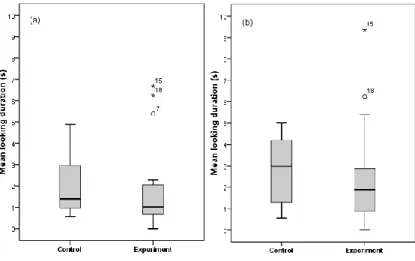
The aim of Chapter II was to assess what vervet monkeys know about third party relationships. Such knowledge may be an important prerequisite for strategic decision making, which was the topic of Chapter III. As it stands, individual recognition is a basic requirement which has been demonstrated in many taxa (Tibbetts and Dale 2007; Wiley 2013), similarly to kin recognition (Mateo 2004). Third party relationships knowledge, on the other hand, might be more limited to some species or taxa, including mammals, birds and fish. Such knowledge would make many strategic decisions more efficient, like adjusting behaviour to audience composition in reputation-making interactions, to pick most suitable partners for grooming and coalitions and also for some forms of tactical deception. Within despotic (i.e. with a strict hierarchy) societies in particular, knowing the whole hierarchy within a social group would be of a great benefit. I therefore reproduced a playback experiment successfully performed on baboons (Bergman et al. 2003) to assess if vervet monkeys know the whole hierarchy within their group. The idea was to play to a subject two sequences of conflicts. The control sequence involved a conflict in line with the hierarchy where the dominant produces vocalisations to aggress a subordinate which, because of the stress, produces a distress call. The experimental sequence involved a rank reverted conflict in which the subordinate aggresses the dominant. By analysing how long the subject spent looking towards the speakers, I could tell if the subject found the sequence in line with the reality or not. With this experimental set up I could test: 1) the females’ knowledge about the
18
female hierarchy, 2) the females’ knowledge about the male hierarchy, 3) the males’ and 4) the juveniles’ knowledge about the female hierarchy.
The aim of Chapter III was to test what individuals do with their knowledge of kinship, hierarchy and potentially bondedness that is in line with the strategic capacities described by the Machiavellian intelligence. Some studies suggest that cooperation in primates relies strongly on emotions, build up from long-term bonds (i.e. emotional bookkeeping (Schino 2007)) or eventually short-term positive interactions (i.e. attitudinal reciprocity (de Waal 2000)). However, as studies usually focus on one or the other, it is difficult to assess the relative importance of each of them. To test how individual use their social knowledge and potentially developed strategic capacities, I present a new experimental design. Adult females were first trained to approach a personal box, identifiable by unique, coloured patterns, to access high quality food. During the experiments, two boxes were placed next to each other to induce the potential for a conflict through forced proximity. The major questions asked in this Chapter are: 1) Do vervets trade grooming for other commodities such as tolerance or support? 2) Do they manipulate their behaviour according to who is around (i.e. audience effect)? 3) If grooming is indeed exchanged for other commodities, are they aware of it and therefore capable of manipulating their grooming partner for present or future benefit? The results of this study describe cognitive abilities in vervet monkeys and might help to understand if tactical strategies are more developed within a competition or a cooperation context. The results also encourage similar experiments to be run in different species. This may be only through the comparison of different capacities in multiple species/taxa that a clear correlation between these abilities and brain size or parts of it could be tested.
In summary, the social network analyses should allow us to describe how complex the social system of vervet monkeys is. Both experiments should give us a better idea of their cognitive abilities and if they can make use of these in a more strategic way. Taken together, these analyses should draw a general picture of the relation between social complexity and some cognitive processes proposed in the Machiavellian Intelligence Hypothesis. This could lead to further between-species comparative studies to better understand the evolution of cognitive abilities and how these are linked with social complexity and, ultimately, brain size.
I.9. REFERENCES
Alexander, R. D. (1974). The evolution of social behavior. Annual review of ecology and systematics, 325-383.
Anderson, J. R., & Gallup Jr, G. G. (2015). Mirror self-recognition: a review and critique of attempts to promote and engineer self-recognition in primates. Primates, 56(4), 317-326. Aplin, L. M., Farine, D. R., Morand-Ferron, J., Cockburn, A., Thornton, A., & Sheldon, B.
C. (2015). Experimentally induced innovations lead to persistent culture via conformity in wild birds. Nature, 518(7540), 538-541.
Armstrong, E. (1985). Relative brain size in monkeys and prosimians. American Journal of Physical Anthropology, 66(3), 263-273.
Aureli, F., Schaffner, C. M., Boesch, C., Bearder, S. K., Call, J., Chapman, C. A., Connor, R., Di Fiore, A., Dunbar, R. I., & Henzi, S. P. (2008). Fission‐fusion dynamics. Current Anthropology, 49(4), 627-654.
Bachmann, C., & Kummer, H. (1980). Male assessment of female choice in hamadryas baboons. Behavioral Ecology and Sociobiology, 6(4), 315-321.
Barrett, L., Henzi, P., & Dunbar, R. (2003). Primate cognition: from ‘what now?’to ‘what if?’. Trends in cognitive sciences, 7(11), 494-497.
Barrett, L., Henzi, S., Weingrill, T., Lycett, J., & Hill, R. (1999). Market forces predict grooming reciprocity in female baboons. Proceedings of the Royal Society of London. Series B: Biological Sciences, 266(1420), 665-670.
Bartlett, M. Y., & DeSteno, D. (2006). Gratitude and prosocial behavior helping when it costs you. Psychological science, 17(4), 319-325.
Barton, R., Whiten, A., Strum, S., Byrne, R., & Simpson, A. (1992). Habitat use and resource availability in baboons. Animal Behaviour, 43(5), 831-844.
Barton, R. A. (1996). Neocortex size and behavioural ecology in primates. Proceedings of the Royal Society of London B: Biological Sciences, 263(1367), 173-177.
Barton, R. A., & Dunbar, R. I. (1997). 9 Evolution of the social brain. Machiavellian intelligence II: Extensions and evaluations, 2, 240.
Beauchamp, G., & Fernández-Juricic, E. (2004). Is there a relationship between forebrain size and group size in birds? Evolutionary Ecology Research, 6(6), 833-842.
Bennett, P., & Harvey, P. (1985). Relative brain size and ecology in birds. Journal of Zoology, 207(2), 151-169.
Benson-Amram, S., Dantzer, B., Stricker, G., Swanson, E. M., & Holekamp, K. E. (2016). Brain size predicts problem-solving ability in mammalian carnivores. Proceedings of the National Academy of Sciences, 201505913.
Benson-Amram, S., & Holekamp, K. E. (2012). Innovative problem solving by wild spotted hyenas. Proceedings of the Royal Society of London B: Biological Sciences, 279(1744), 4087-4095.
Bergman, T. J., Beehner, J. C., Cheney, D. L., & Seyfarth, R. M. (2003). Hierarchical classification by rank and kinship in baboons. Science, 302(5648), 1234-1236. doi: 10.1126/science.1087513
Bissonnette, A., Perry, S., Barrett, L., Mitani, J. C., Flinn, M., Gavrilets, S., & de Waal, F. B. (2015). Coalitions in theory and reality: a review of pertinent variables and processes. Behaviour, 152(1), 1-56.
Bond, A. B., Kamil, A. C., & Balda, R. P. (2007). Serial reversal learning and the evolution of behavioral flexibility in three species of North American corvids (Gymnorhinus cyanocephalus, Nucifraga columbiana, Aphelocoma californica). Journal of Comparative Psychology, 121(4), 372.
20
Bräuer, J., Call, J., & Tomasello, M. (2004). Visual perspective taking in dogs (Canis familiaris) in the presence of barriers. Applied Animal Behaviour Science, 88(3), 299-317.
Brown, C., Garwood, M. P., & Williamson, J. E. (2012). It pays to cheat: tactical deception in a cephalopod social signalling system. Biology Letters, rsbl20120435.
Bshary, R. (2011). Machiavellian intelligence in fishes. Fish Cognition and Behavior, 277-297.
Bshary, R., & D’souza, A. (2003). Cooperation in communication networks: indirect reciprocity in interactions between cleaner fish and client reef fish. Paper presented at the Animal Communication Networks.
Bshary, R., Gingins, S., & Vail, A. L. (2014). Social cognition in fishes. Trends in cognitive sciences, 18(9), 465-471.
Bshary, R., & Oliveira, R. F. (2015). Cooperation in animals: toward a game theory within the framework of social competence. Current Opinion in Behavioral Sciences, 3, 31-37. Bugnyar, T. (2013). Social cognition in ravens. Comparative cognition & behavior reviews,
8, 1.
Byrne, R., & Whiten, A. (1985). Tactical deception of familiar individuals in baboons (Papio ursinus). Animal Behaviour, 33(2), 669-673.
Byrne, R. W., & Corp, N. (2004). Neocortex size predicts deception rate in primates. Proceedings of the Royal Society B: Biological Sciences, 271(1549), 1693.
Byrne, R. W., & Whiten, A. (1988). Machiavellian intelligence: social complexity and the evolution of intellect in monkeys, apes and humans. Oxford: In Oxford University Press Call, J., & Tomasello, M. (2008). Does the chimpanzee have a theory of mind? 30 years
later. Trends in cognitive sciences, 12(5), 187-192.
Cammaerts, M., & Cammaerts, R. (2015). Are ants (Hymenoptera, Formicidae) capable of self recognition? Journal Of Science, 5(7), 5121-5532.
Canas, J., Quesada, J., Antolí, A., & Fajardo, I. (2003). Cognitive flexibility and adaptability to environmental changes in dynamic complex problem-solving tasks. Ergonomics, 46(5), 482-501.
Caro, T. M., & Hauser, M. D. (1992). Is there teaching in nonhuman animals? Quarterly review of biology, 151-174.
Chapais, B., Girard, M., & Primi, G. (1991). Non-kin alliances, and the stability of matrilineal dominance relations in Japanese macaques. Animal Behaviour, 41(3), 481-491.
Cheney, D. L. (1977). The acquisition of rank and the development of reciprocal alliances among free-ranging immature baboons. Behavioral Ecology and Sociobiology, 2(3), 303-318.
Cheney, D. L. (1983). Extra-familial alliances among vervet monkeys. Primate social relationships, 278-286.
Cheney, D. L., Moscovice, L. R., Heesen, M., Mundry, R., & Seyfarth, R. M. (2010). Contingent cooperation between wild female baboons. Proceedings of the National Academy of Sciences, 107(21), 9562-9566.
Cheney, D. L., & Seyfarth, R. M. (1980). Vocal recognition in free-ranging vervet monkeys. Animal Behaviour, 28(MAY), 362-367. doi: 10.1016/s0003-3472(80)80044-3
Cheney, D. L., & Seyfarth, R. M. (1986). The recognition of social alliances by vervet monkeys. Animal Behaviour, 34(6), 1722-1731.
Cheney, D. L., & Seyfarth, R. M. (1990). How Monkeys See The World: Inside The Mind Of Another Species. Chicago: University of Chicago Press.
Cheney, D. L., & Seyfarth, R. M. (1999). Recognition of other individuals’ social relationships by female baboons. Animal Behaviour, 58(1), 67-75.